Cape May
Cape May, United States
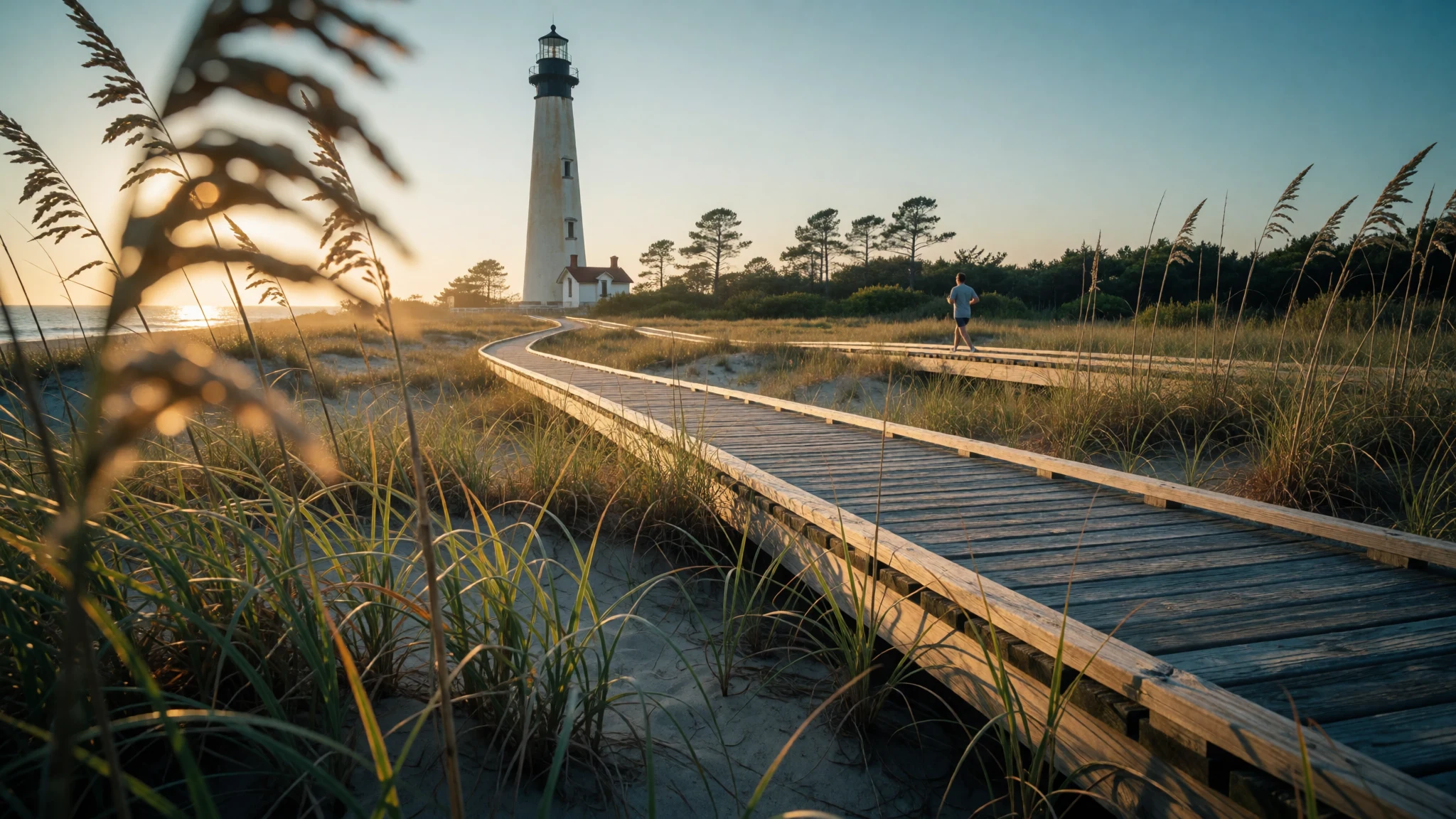
Cape May is a walkable seaside town at New Jersey's southern tip, with Victorian streets, a broad beach and seasonal bird migration.
The place
Cape May sits at the southern tip of the Cape May Peninsula in New Jersey, where the Atlantic Ocean meets the mouth of Delaware Bay. It is a seaside resort rather than a conventional town. The year-round population is only about 2,800, yet the whole place is organised around visitors, and in summer its streets hold many times that number. It belongs to South Jersey, and for Philadelphia families it has long been the natural weekend escape to the sea. The entire municipality, not just a core of old streets, is protected as the Cape May Historic District, a National Historic Landmark, because so much Victorian timber building survives. Walking is the right way to see it. The land stands only about three metres above sea level, so the ground is flat, the blocks are short and a bicycle covers everything. Porches, turrets and painted trim line the residential streets, while Beach Avenue faces the water with a row of big guesthouses. The Washington Street Mall, a pedestrian shopping strip, forms the commercial centre, with cafes, ice-cream counters and gift shops. Beyond the built-up area the character changes. Salt marsh, tidal creeks, dunes and a working harbour give the peninsula a quieter, wilder edge, and the point is a stopover for migrating birds. Honest expectations help. July and August bring crowds, traffic and heavy demand for rooms, and many restaurants and shops run seasonally, so the town feels very different in deep winter, when much of it is shuttered and calm. Spring and autumn are the compromise: open enough to be useful, quiet enough to be pleasant.
Its story
Cape May takes its name from Cornelius Jacobsen Mey, a Dutch captain who sailed and mapped this shoreline in the early seventeenth century; 1611 is the date recorded for its founding. Before him the peninsula belonged to the Kechemeche, a Lenape people who lived along the coast. Dutch claims under the banner of New Netherland were later overtaken by English-speaking settlers, among them colonists who came down from New England. By the eighteenth century, people from Philadelphia were already travelling south to take the sea air, which is why Cape May is counted among the early American seaside resorts. The grand-hotel era arrived in the nineteenth century. Congress Hall opened in 1816 and set the tone, and the railway that reached the town in 1863 made the journey far easier. The community began life as Cape Island and took the name Cape May in 1869. That same year a fire started in a shop on Washington Street, and a second blaze later in the century destroyed more of the hotel district. Rebuilding was quick and in the fashionable style of the day, which explains the dense collection of Victorian houses with ornate wooden trim that stands there now. The modern preservation movement grew from a volunteer campaign that rescued the Emlen Physick Estate from demolition. Since then the architecture has stopped being old stock to be replaced and become the town's main reason for existing as a destination.
What to see
- Cape May Lighthouse — West of the town centre
The lighthouse is the third to have stood on its spot, and the arts organisation MAC now runs it and has been restoring it. Climbing the tower is the best way to grasp how flat and watery the peninsula is, with ocean, bay and marsh around it. Check the MAC website for opening and ticket details. - Cape May Bird Observatory — North-west of the centre
The observatory is the birding hub of the peninsula. Wind currents and the shape of the coast funnel migrating birds over the point, so spring and autumn bring the busiest watching. Staff run walks and talks and can point beginners to good spots. Bring binoculars and insect repellent, and check its own site for current hours. - Emlen Physick Estate — Central Cape May
The Emlen Physick Estate is a Victorian house of 1879 designed by the architect Frank Furness. Volunteers saved it from demolition, and MAC now cares for it. It makes a sensible first stop for understanding the style that defines the streets around it, and guided visits are run, so check the MAC site for times.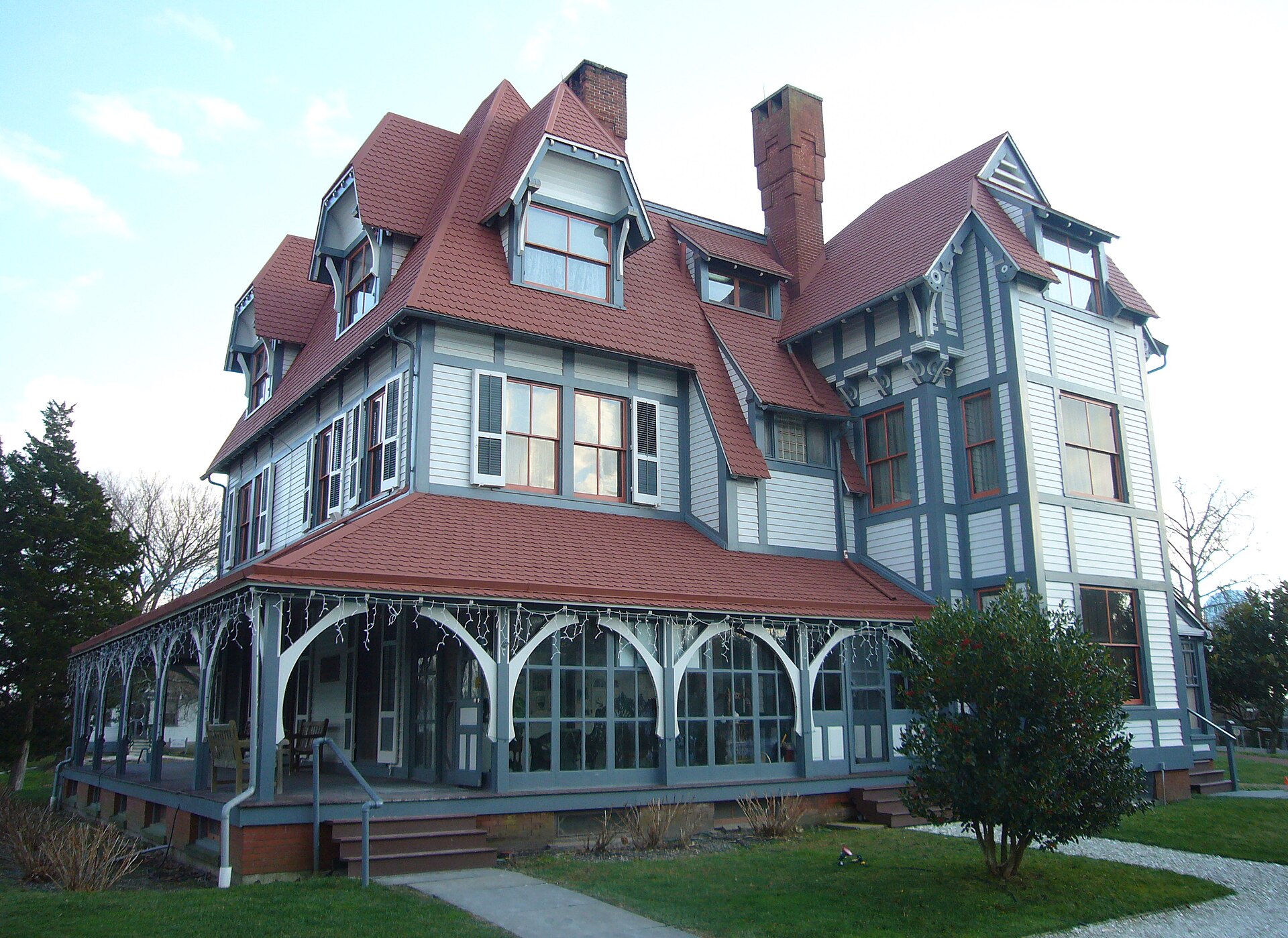
- Harriet Tubman Museum — Lafayette Street
The Harriet Tubman Museum occupies a former Baptist church on Lafayette Street. It adds a very different strand of history to a town better known for guesthouse porches and beaches. It is small and easily combined with a walk through the nearby streets. Check the museum's own channels for opening arrangements before visiting.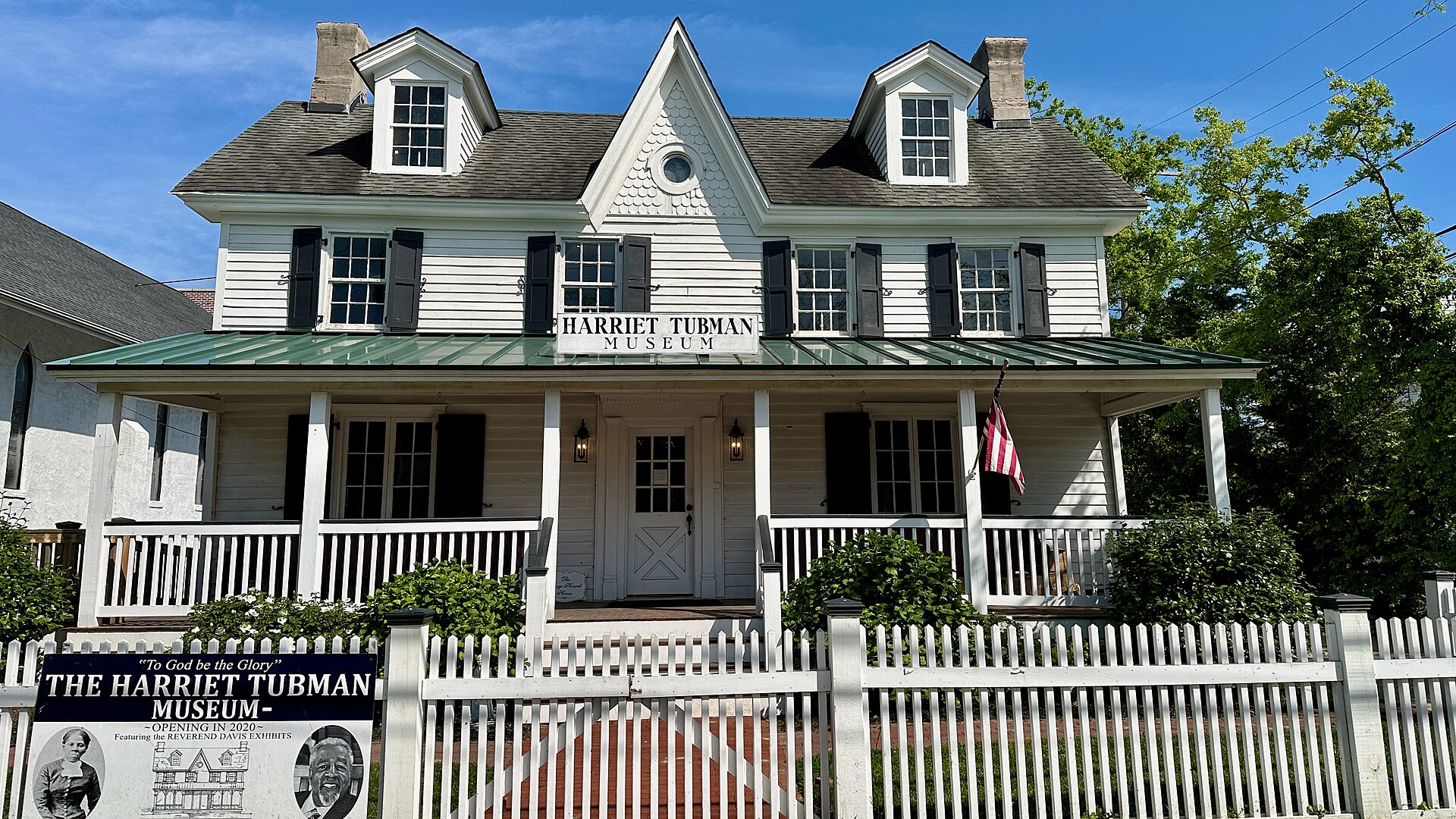
- Salt marsh boat tour — Harbour and back-bay waters
Small boats take passengers into the tidal salt marsh behind the town, where the shoreline is reeds, mud and shallow channels rather than sand. One operator uses a boat called the Skimmer. Trips are aimed at finding the marsh's wildlife, so bring a hat, sun cream and binoculars, and book ahead in summer.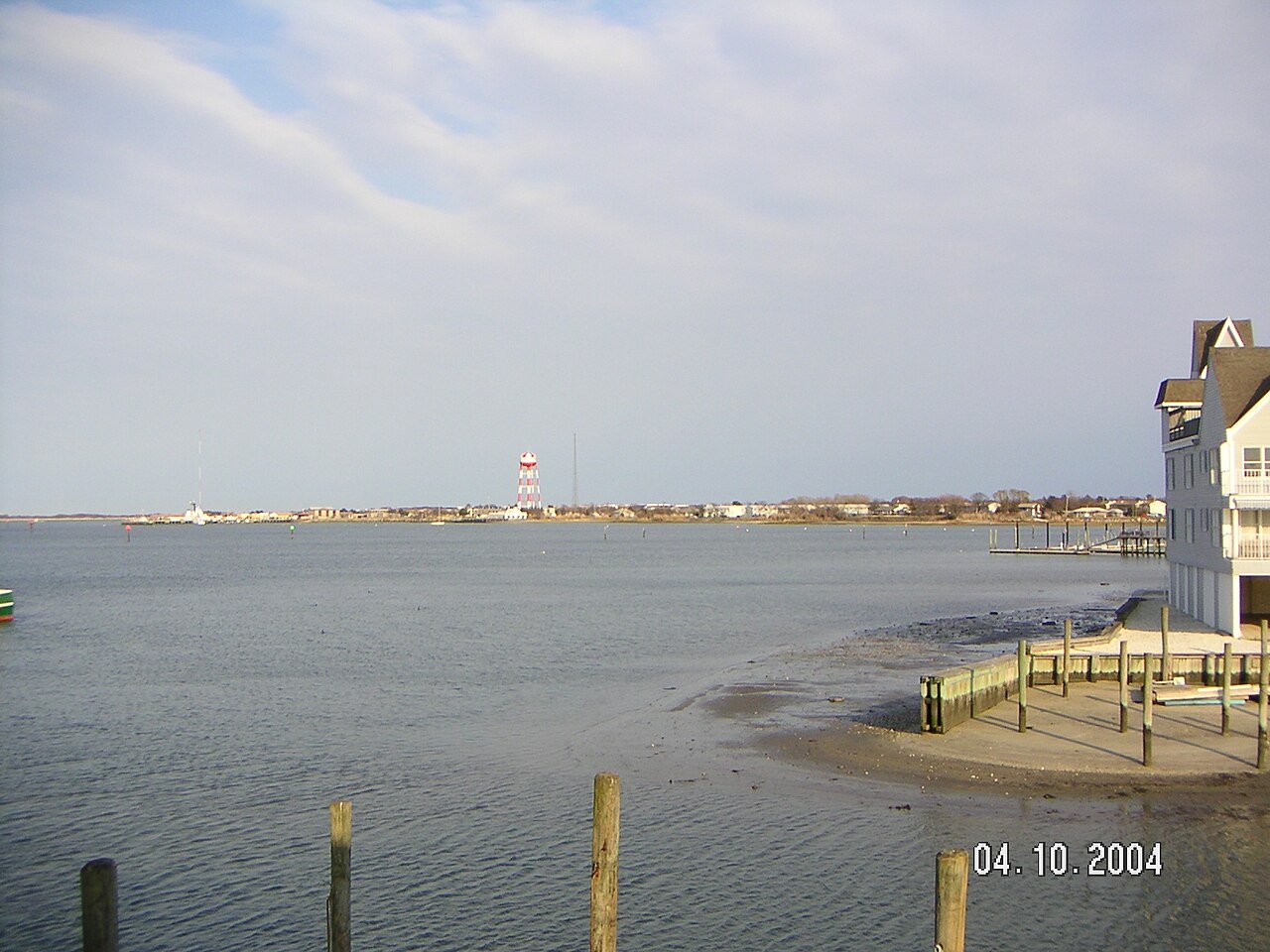
- Washington Street Mall — Town centre
The Washington Street Mall is the pedestrian spine of the town, lined with shops, cafes and ice-cream counters. It is the area burned in the fire of 1869 and rebuilt in the style that followed. Mornings are quieter; summer evenings are crowded and lively. It also links easily to the beach and the harbour on foot.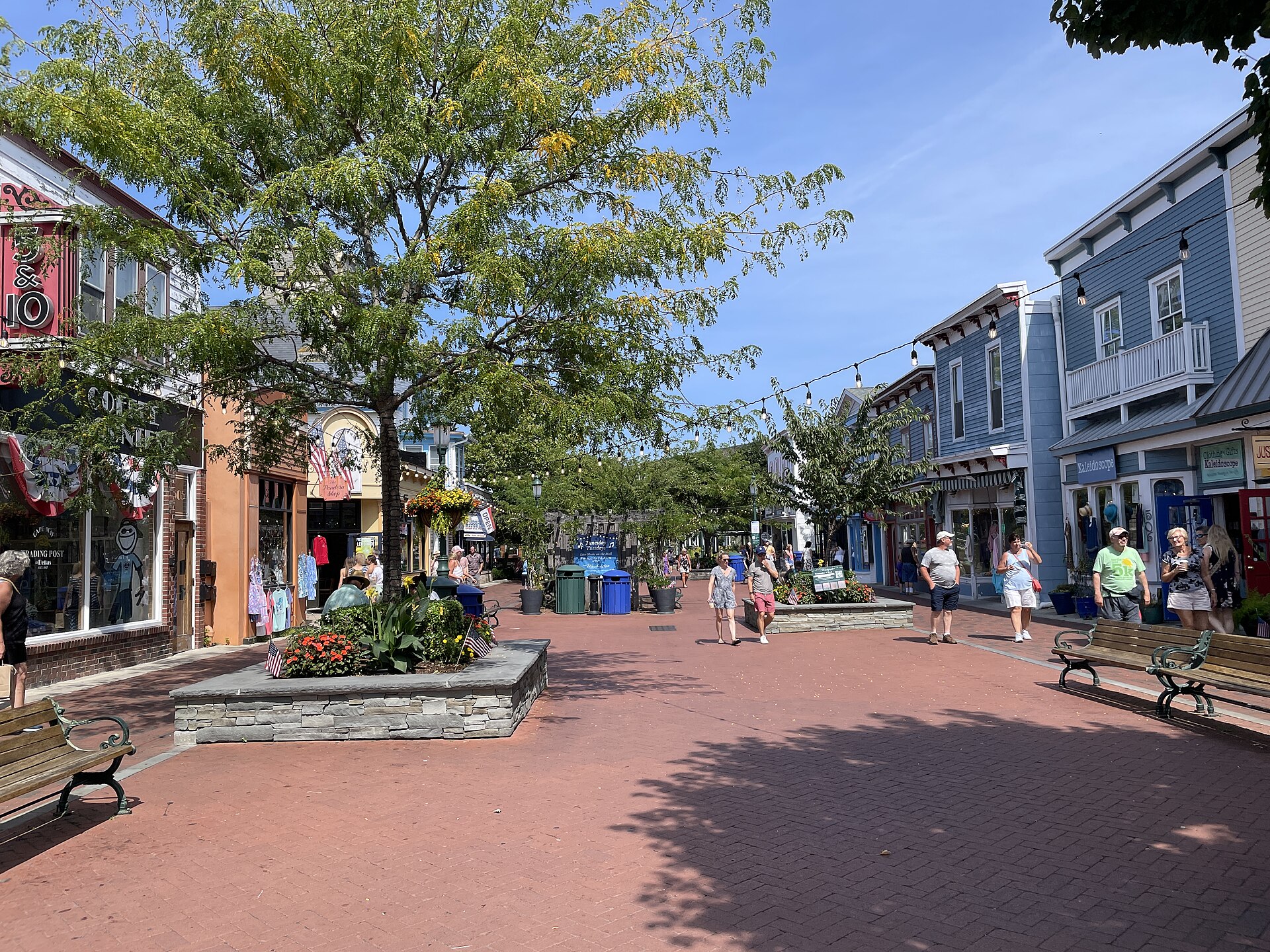
Culture
Cape May is known for its Victorian gingerbread houses, so called for their carved wooden trim, and for an arts calendar that is surprisingly full for a town of about 2,800 residents. Music is a strong thread. The Cape May Jazz Festival and the Cape May Music Festival bring performers in, and a film festival adds screenings. Cape May Stage, a professional company founded in 1988, performs at the Robert Shackleton Playhouse near the corner of Bank and Lafayette Streets, and a second professional theatre company, specialising in American classics and new plays, runs seasons through summer, autumn and spring. Much of the town's civic energy goes into preservation. The organisation known as MAC, the Mid-Atlantic arts and humanities group, began in 1970 when volunteers saved the Emlen Physick Estate, built in 1879, from demolition. It now runs house tours, lighthouse visits and events. The Harriet Tubman Museum adds a further layer of local history that the guesthouse streets alone do not tell. The general tone is relaxed and courteous, with a family-holiday informality in summer and a more settled, residential feel once the season ends. Many of the grand old buildings are private homes or working guesthouses, so respect for residents matters, and keep to the pavements, do not step onto porches or lawns for photographs, and keep noise down on residential streets at night.
What to wear
Cape May has no regional costume or textile of its own, so the useful history is that of the Victorian seaside resort. In the era of the grand hotels, holidaymakers wore cotton and linen, hats against the sun and, for bathing, modest costumes that covered most of the body. That heritage lives on mainly in the architecture, and period dress may appear at heritage events, so check programmes if that interests you. Today the town dresses for the beach. Locals and visitors wear shorts, T-shirts, sundresses, sandals and caps by day, with swimwear kept to the sand and a cover-up for walking into shops and cafes. Evenings are smart-casual: a linen shirt or light dress is plenty, and few restaurants expect more. For a visit, plan around sun, wind and flat walking. Pack sun cream, sunglasses and a hat for summer, plus a windproof layer for spring and autumn, when the sea breeze cools quickly after sunset. Comfortable shoes suit the many short walks, and trainers or closed shoes are better for bike rides, the marsh and bird walks, where long trousers also help against insects. No dress code applies at the main sights, though a cover-up is polite in a museum or church.
What to eat
- Seafood platter — Waterfront and harbour-side restaurants
Fried or grilled fish, shrimp and scallops are the standard order at a shore restaurant here, usually with chips and slaw. Harbour-side places let you eat close to the boats that supply them. Many restaurants open seasonally, so call ahead outside summer. - Crab cakes — Seafood restaurants around town
A crab cake is a patty of shredded crab bound lightly and pan-fried or baked, served with sauce and salad. It is a staple of Mid-Atlantic coastal menus and shows up on both casual and more formal Cape May dining rooms. - Pancake breakfast — Family cafes and guesthouse dining rooms
Pancakes are a regular on the breakfast scene, thick, with syrup or fruit and eaten before a day on the beach. Cafes in the centre fill early on summer weekends, so a queue is normal at peak times. - Pizza and Italian dishes — Casual eateries across the centre
Pizza slices, baked pasta and red-sauce Italian cooking are easy to find on almost any block. They suit a quick, cheaper meal between beach and walk, and many places serve takeaway for eating on a bench. - Ice cream and saltwater taffy — Washington Street Mall and beach-side stalls
Ice-cream counters and sweet shops line the pedestrian mall, with soft scoops, sundaes and chewy saltwater taffy, a traditional New Jersey shore sweet. They are busiest on warm evenings, when the street becomes an after-dinner stroll.
Plan it
Best time. Late May to early October is the main season: the beach is at its best and most restaurants keep to regular opening. June is lively but less packed than July and August, and September and October are calmer and good for migrating birds. Winter is quiet and many places close.
How long. 2–3
Getting there. The nearest commercial airport is Atlantic City, roughly an hour's drive away; Philadelphia International is the larger gateway, a longer drive, with Newark and Baltimore-Washington further off. A small local airfield, Wildwood, handles private aircraft. The closest rail station is Atlantic City, so the last leg is by car or bus. Check the city website, capemaycity.com, for local information.
Budget. mid
Tips
- Book rooms well ahead for summer weekends, when demand is high
- Check restaurant opening before visiting outside late May to early October
- Visit streets and the lighthouse early in the day to avoid the crowds
- Bring binoculars and insect repellent for bird walks and marsh trips
- Hire a bicycle: the town is flat and compact
Etiquette
- Stay on pavements and off private porches and lawns when photographing the houses
- Keep noise low in residential streets at night
- Follow beach rules and signs, especially near dunes and nesting areas
Nearby
Sources
- Wikidata Q138548 (CC0)
- Wikipedia: Cape May, New Jersey (rev 1385700382) (CC BY-SA 4.0)
- Wikivoyage: Cape May (rev 5396878) (CC BY-SA 4.0)
- Photo: Cape May Beach Ave from the sea (Smallbones) (CC0 1.0)
- Photo: Relief location map of the USA (Uwe Dedering) (CC BY 3.0)
- Photo: Cape May Harbor (Townsnda) (Public domain)
- Photo: Emlen Physick Estate (Staib) (CC BY 3.0)
- Photo: Washington Street Mall (Dough4872) (CC BY-SA 4.0)
- Photo: Cape May Historic District welcome sign (Zeete) (CC BY-SA 4.0)
- Photo: Harriet Tubman Museum (Zeete) (CC BY-SA 4.0)
- Photo: Cape May Rotary Park (Plantsmushrooms) (CC BY 4.0)


