Canmore
Canmore, Canada
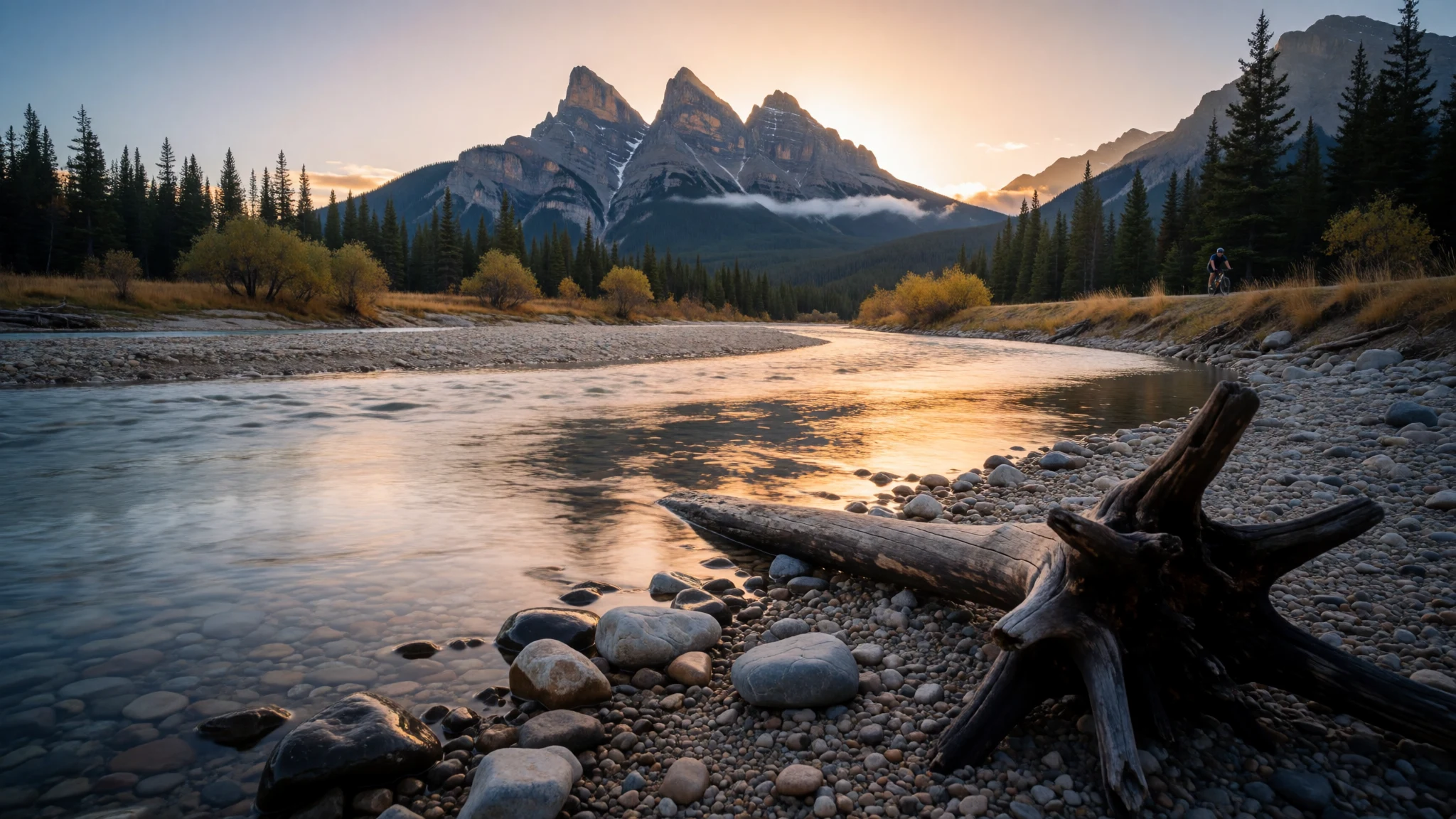
Canmore is a former coal town in the Bow Valley, now a working mountain base for hiking, paddling and Nordic skiing beside Banff National Park.
The place
Canmore sits in the Bow Valley of the Alberta Rockies, a short drive west of Calgary and just outside the southeast edge of Banff National Park. Kananaskis Country wraps around its western and southern sides, so the town feels squeezed between protected land and steep limestone walls. About 16,000 people live here, though newer counts run higher, and that gap says something: Canmore keeps growing, and how much growth is acceptable is a constant local argument. Developers have pushed for more housing on the slopes, the town has resisted, and one large project ended up in a lawsuit. The result is a place that works as a mountain town, a commuter base and a second-home community all at once. Main Street shows the mix, with outdoor-gear shops, independent cafes, pubs and galleries, and the Three Sisters peaks looming over the roofline. Canmore is calmer than its neighbour Banff, which makes it a practical base for walking, skiing and paddling, but it is not cheap. Rooms follow the usual mountain-resort pattern and fill early on summer weekends and school holidays. Winters are long and properly cold. Summer days are pleasant with chilly nights, and wildfire smoke can haze the views in some years. The town's website, canmore.ca, carries current trail, closure and event notices.
Its story
Canmore took its name in 1884, when a Canadian Pacific Railway director chose it as a nod to Malcolm III of Scotland, whose nickname comes from Gaelic words usually rendered as something like "big head". The railway had reached the valley, and coal was what turned a siding into a settlement. A mining charter arrived in 1886 and the first mine opened the following year. For close to a century the town ran on coal, and miners' families set its character. Incorporation as a town came in 1965. Law enforcement arrived early too: a North-West Mounted Police barrack stood on Main Street from the 1890s, was left empty in 1927, and was restored in 1989. The local museum now looks after it. By the late 1970s demand for coal had faded, and the last operator, Canmore Mines Ltd., closed in 1979. Alberta's safety and reclamation rules then led to most of the pit buildings being cleared, so the industry left few visible marks beyond a lamp house and some old portals in the hillside. A new chapter began when Calgary won the 1988 Winter Olympics and Canmore was given the Nordic skiing events. The Games left a ski centre and a steady stream of visitors and newcomers, and over the following decades a mining town became a resort and getaway community built on construction and tourism.
What to see
- Grassi Lakes Trail — Southeast edge of town
A short, popular walk climbs from a car park just outside Canmore to a pair of small lakes with clear green-blue water, set under a rock face often dotted with climbers. It is busy at midday in summer, so go early. Wear proper shoes, as the path is rocky and can be icy in shoulder seasons.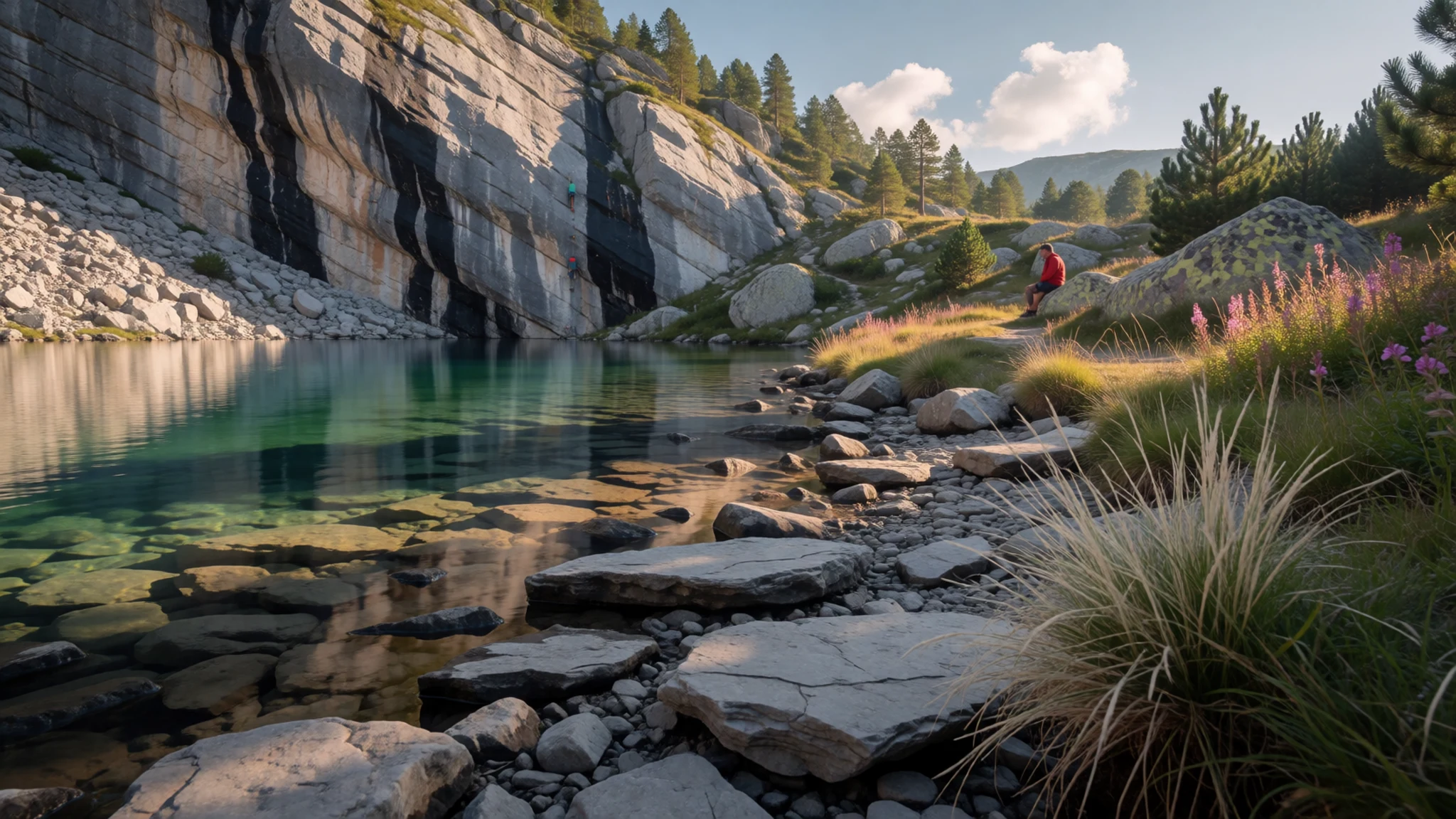
- Canmore Nordic Centre Provincial Park — Above the west side of town
Built for the Nordic events of the 1988 Winter Olympics, this is now a public network of trails above town. Winter brings cross-country skiing and snowshoeing, and in summer the same routes serve walkers, runners and mountain bikers. Check the official site for grooming reports, trail status and any fees.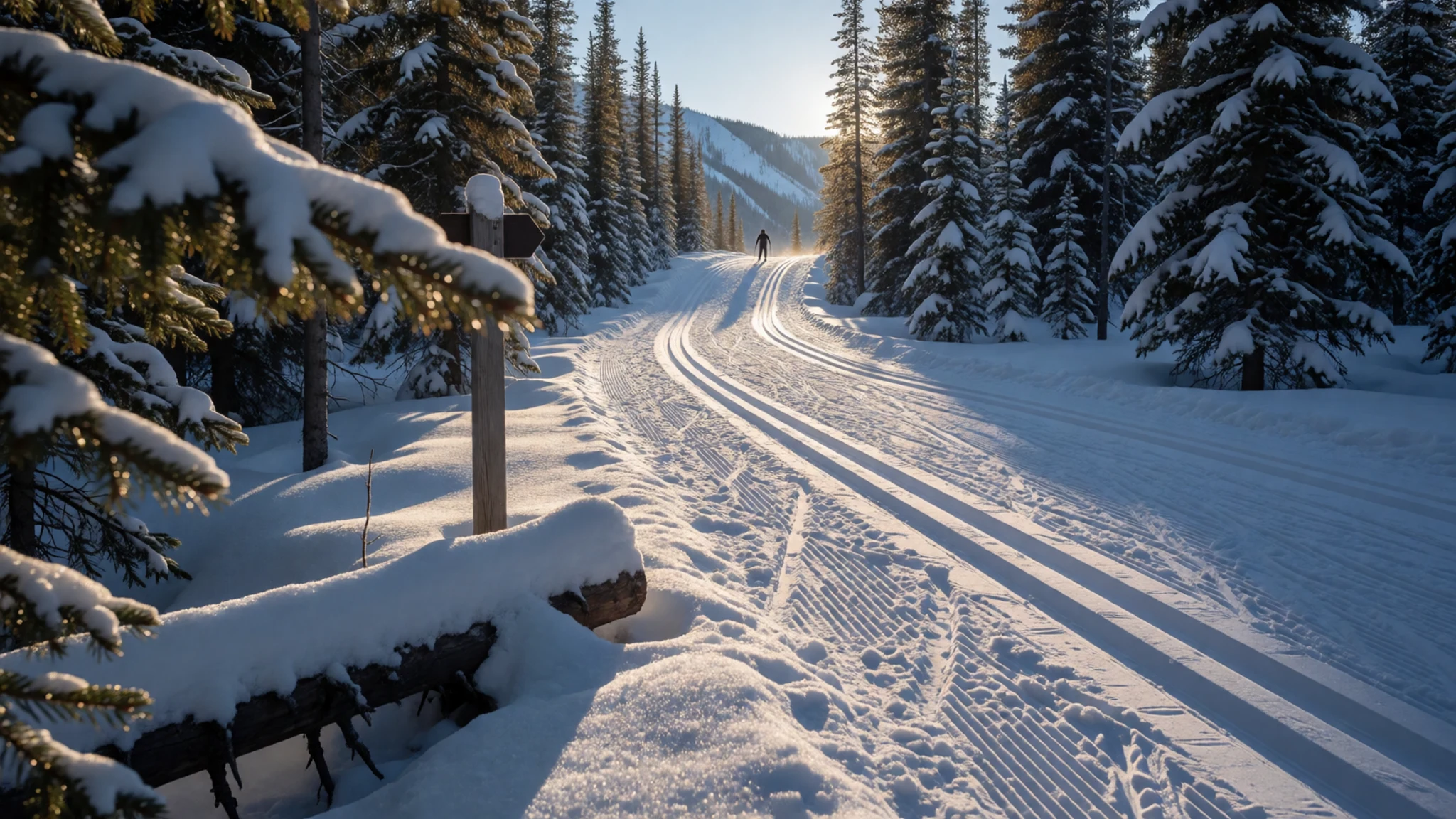
- Main Street and the Big Head sculpture — Downtown
The old commercial street is the easiest way to get a feel for Canmore on foot, with cafes, galleries and gear shops in low buildings and the peaks filling every gap between them. Near the bridge over Policeman's Creek, the Big Head sculpture is a nod to the town's name.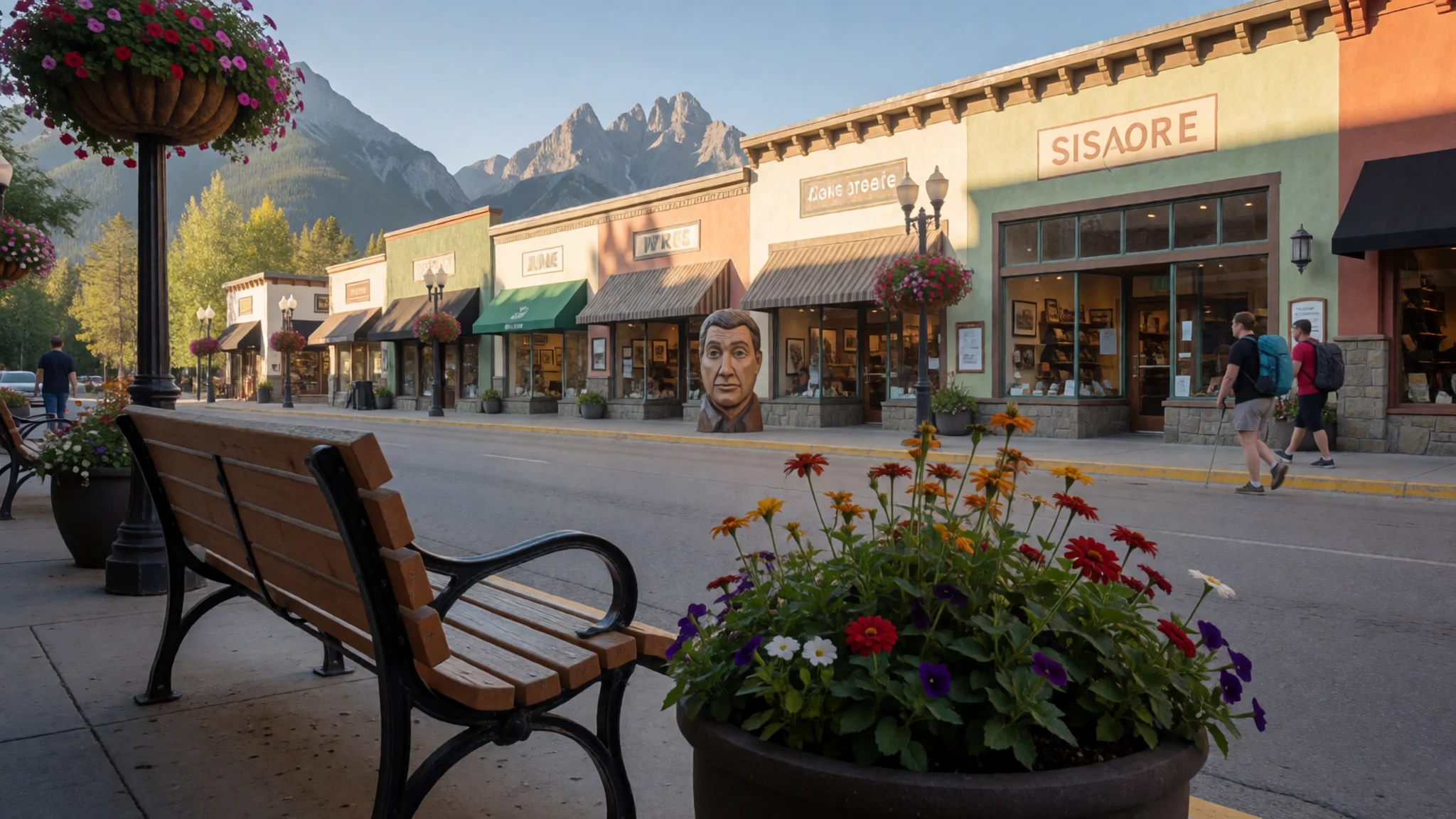
- North-West Mounted Police barrack — Main Street
This modest building on Main Street is a reminder of Canmore's frontier and mining years. It was restored in 1989 and is cared for by the local museum, so ask there about opening arrangements. It is quick to see, and a good companion to the museum's displays on geology and heritage.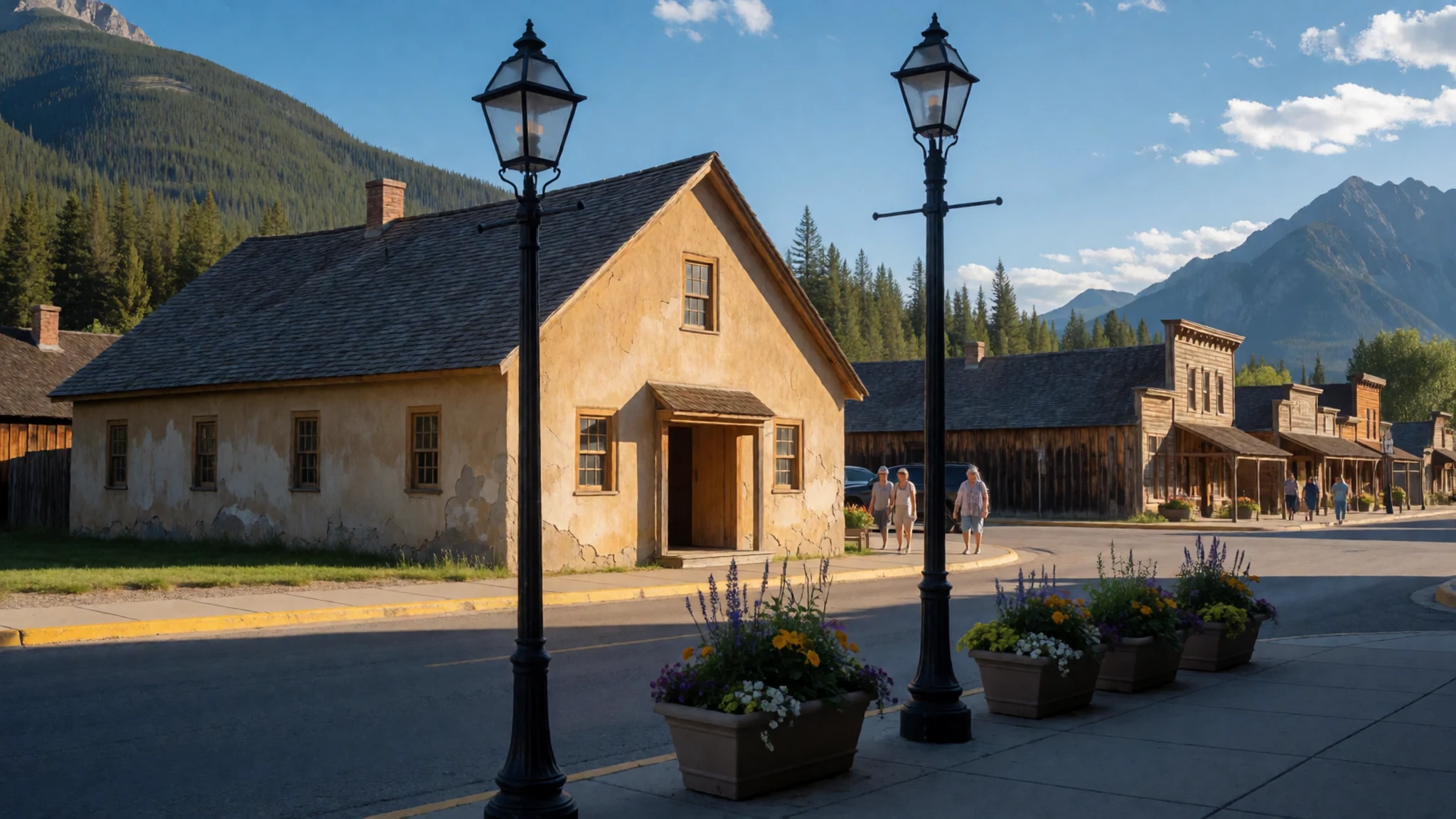
- The Three Sisters skyline — Visible across the whole town
Three pointed summits dominate the view from the valley floor and appear in countless photographs of the town. The clearest views come from the town's edges and nearby paths on sunny mornings, when low light picks out the rock layers. Afternoon cloud often builds and hides the tops.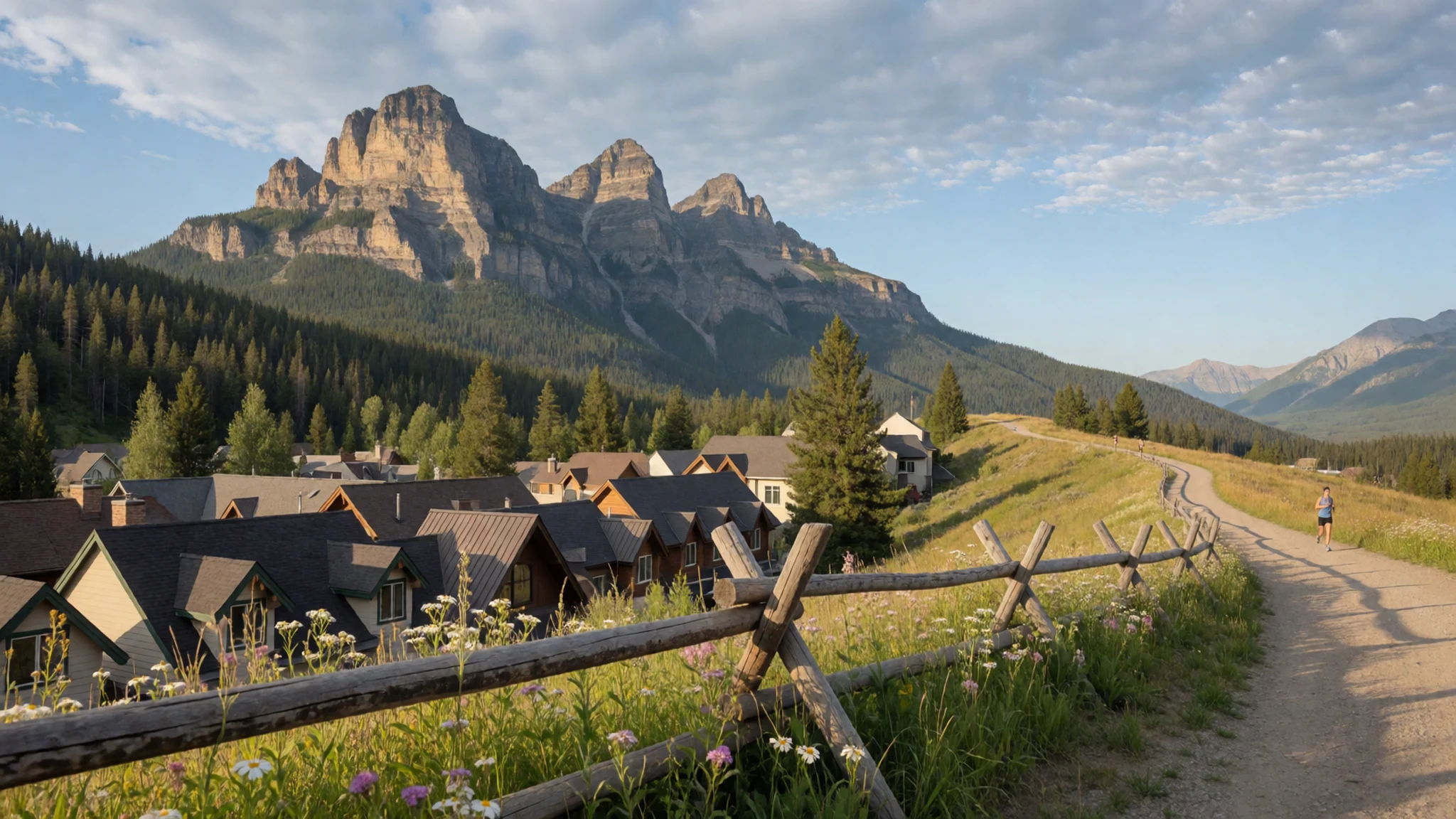
- Rafting and sled-dog outings — Operators based in town
Several local operators run guided river trips and dog-sled rides, which suit visitors who want a taste of the mountains without a long hike. Seasons are short and conditions change with snow cover and river levels, so book ahead and confirm what each trip involves on the operator's own website.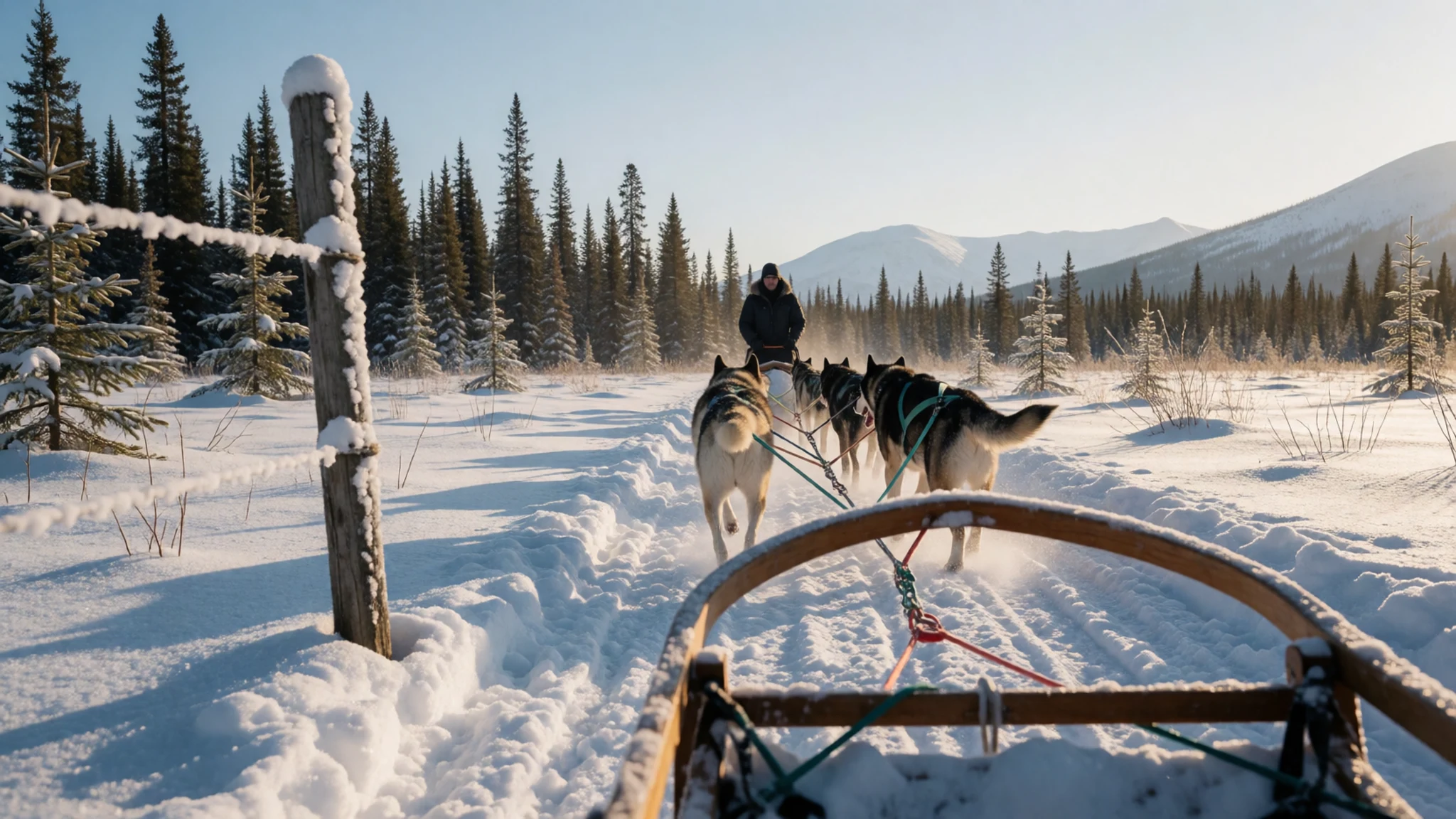
Culture
Canmore's culture is shaped by the mountains and by its working past. The Canmore Museum and Geoscience Centre, in the civic centre, acts as the town's keeper of heritage, with objects, archives and exhibitions that cover the mining era and the rock beneath it. The town has an unusually large number of writers, painters and photographers, drawn by the light and the landscape, and small galleries on and around Main Street show their work. The British roots of the name and the miners' history still show in the pubs, where Yorkshire pudding and fish and chips sit on menus beside local beer. Canmore is also familiar to film audiences: productions shot in the area include Brokeback Mountain, Legends of the Fall, Open Range and The Last of Us, and some local guides will point out filming spots. Daily life revolves around the seasons. Winter means skiing before work, summer means long evenings on trails, and in between come muddy weeks when many shops and tour operators close or cut their hours. Wildlife is part of everyday culture too. Elk wander through streets, and bears and cougars use the valley, so residents are used to checking trail notices and carrying bear spray. Keep well back from elk and other wildlife, never feed them, and store food and rubbish securely so animals are not drawn into town.
What to wear
Canmore has no single traditional costume of its own. The Rockies are the long-time homeland of Indigenous peoples such as the Stoney Nakoda, whose ceremonial dress uses hide, beadwork and ribbon, and visitors may see such pieces in museums or at cultural events rather than on the street. The mining era left a workwear tradition instead: wool, canvas and heavy boots, which echoes in the plaid shirts and sturdy jackets still common today. What people actually wear now is outdoor clothing, worn everywhere. Residents move from trail to cafe in technical layers, fleece, shell jackets, hiking trousers and trail shoes, and nobody dresses up for dinner. Smarter outfits appear only for weddings and events. A visitor should dress for rapidly changing weather. Even on a warm summer day the mornings and evenings are cool, and a shower or snow flurry can arrive quickly at altitude. Pack a base layer, a warm mid-layer, a waterproof shell, a hat and light gloves, with sun protection and sunglasses for bright days. Footwear matters more than anything else: broken-in hiking shoes or boots with good grip are needed for rocky paths, and winter visitors should add insulated boots and traction aids for icy pavements. Pubs and restaurants are casual, and no special modest dress is expected anywhere in town.
What to eat
- Yorkshire pudding with roast beef — British-style pubs near Main Street
A British-style pub favourite that suits the town's Scottish-named, mining-era roots. Expect a tall, crisp pudding with roast meat and gravy, a warming plate after a cold day outdoors. Look for it on pub menus around Main Street.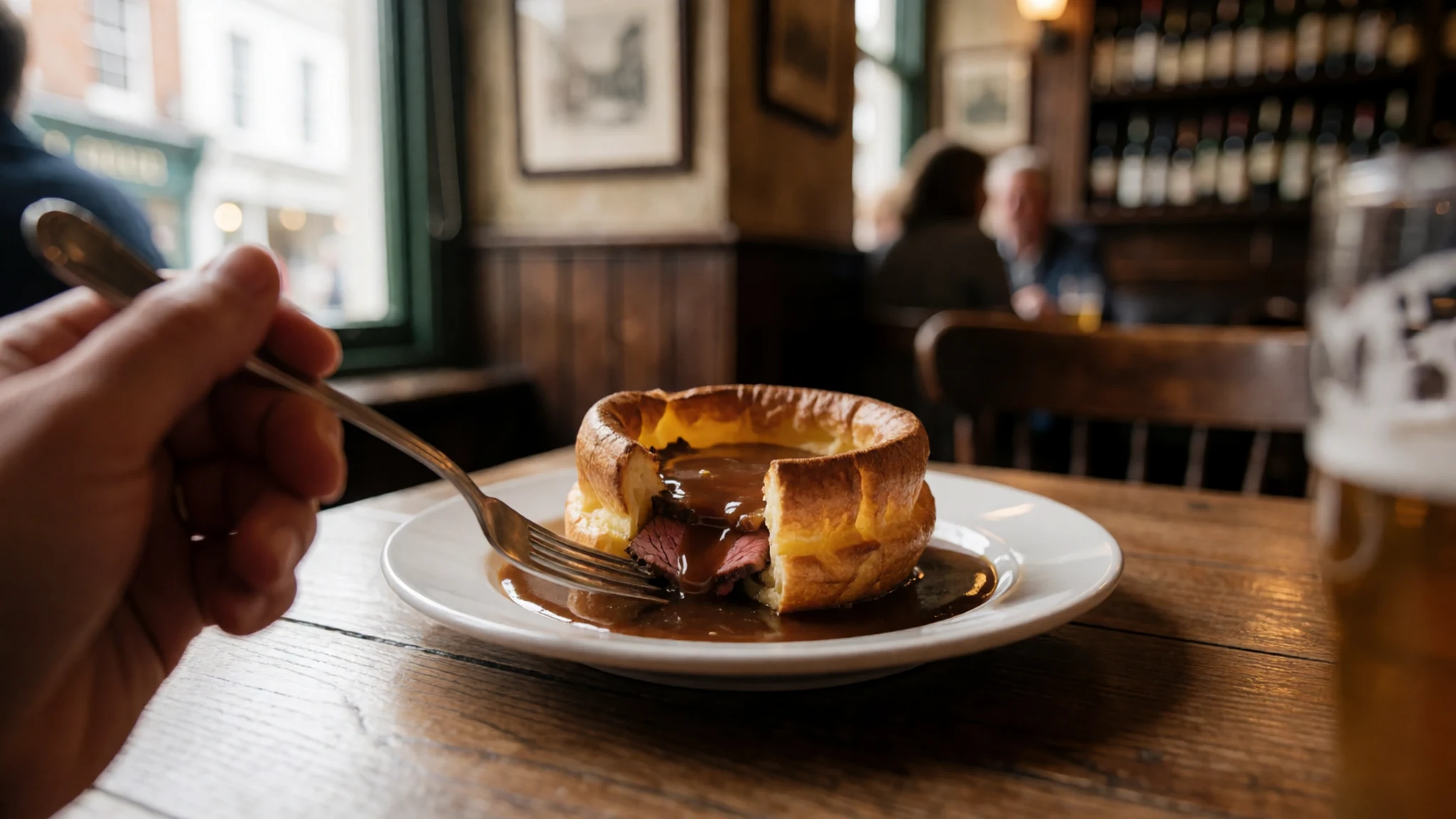
- Fish and chips — Pubs and casual grills downtown
Battered fish with thick chips, usually served with tartar sauce and mushy peas or coleslaw. It is a straightforward, filling meal that many local pubs do well, and the portions are generous enough to share after a long hike.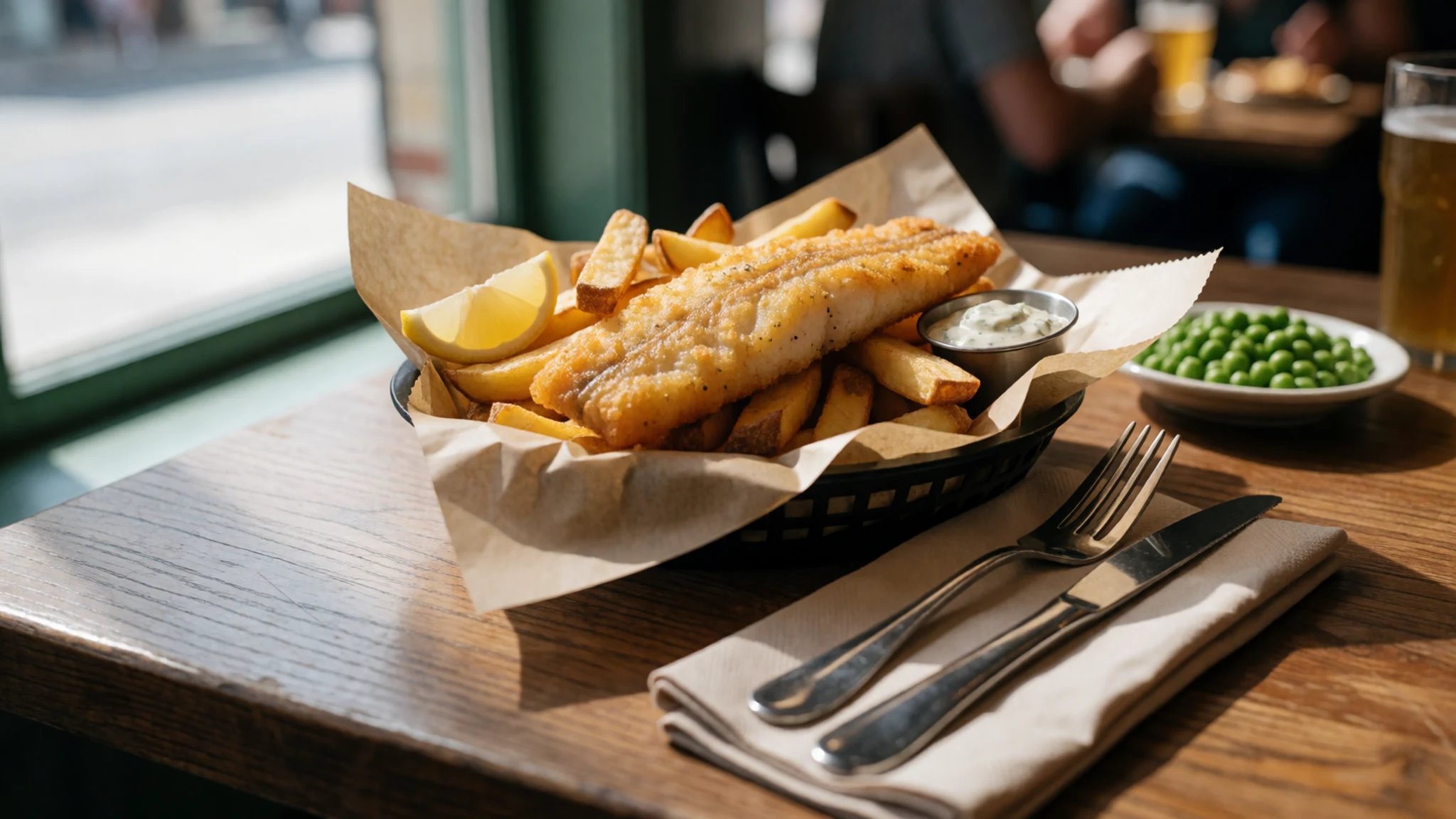
- Alberta beef steak — Steakhouses on the edges of town
The province is cattle country, and steakhouses in and around town serve cuts grilled to order with potatoes and vegetables. It is the dressier option in Canmore and best booked ahead in peak season, especially on weekends. - Brew-pub beer and shared plates — Brew pubs and bars along Main Street
Canmore's pubs and brew pubs pour local and regional beers and serve wings, burgers and nachos meant for sharing. The mood is relaxed and sociable, and many places keep kitchens open late in ski season. - Coffee and baked goods — Independent cafes in the downtown core
Independent coffee shops are scattered through downtown, selling espresso drinks, pastries, muffins and sandwiches. They open early for hikers collecting a flask and a snack, and make a good, unhurried breakfast stop before a trail day.
Plan it
Best time. June to September for hiking, paddling and long daylight, with July and August the warmest and busiest. December to March suits skiing and snowshoeing but is properly cold. Spring thaw and late autumn can be muddy, grey and quiet, with some trails and tours closed.
How long. 2–3
Getting there. Fly to Calgary International Airport, then hire a car or book a shuttle west along the Trans-Canada Highway into the Bow Valley. Drivers coming from the Pacific side approach via Golden and through Banff National Park, where a park pass may be needed; check the official park site.
Budget. mid
Tips
- Book rooms well ahead for July, August and winter holidays, as the town fills quickly
- Start popular trails such as Grassi Lakes early to avoid midday crowds and parking pressure
- Carry layers and water even on short walks, because weather and temperature change fast
- Check trail, wildlife and wildfire notices on canmore.ca before heading out
- Cards are widely accepted in town, but carry a little cash for small stalls and car parks
Etiquette
- Give elk, bears and other wildlife plenty of space and never feed them
- Keep dogs on a lead where signs require it and pick up after them
- Stay on marked trails and take all rubbish back with you
Nearby
Sources
- Wikidata Q991515 (CC0)
- Wikipedia: Canmore, Alberta (rev 1374263443) (CC BY-SA 4.0)
- Wikivoyage: Canmore (rev 5434359) (CC BY-SA 4.0)
- Photo: Une vue de la ville de Canmore, Vintotal (CC BY-SA 2.0)
- Photo: Canmore from Lady MacDonald Teahouse, Daniel Patterson (CC BY 3.0)
- Photo: North West Mounted Police barrack, Canmore, Glenlarson (Public domain)
- Photo: Three Sisters, Rocky Mountains, Canmore, Bhasker Garudadri (CC BY 3.0)
- Photo: Main Street Canmore looking east (Public domain)
- Photo: Big Head sculpture, Canmore, Glenlarson (CC BY-SA 4.0)
- Photo: CPCanmore (CC BY 3.0)
- Photo: Canmore seen from East End of Rundle, Khoshhat (CC BY-SA 4.0)


Wildlife
- Elk (animal)
The elk, also called the wapiti, is a huge deer: the second biggest in the whole deer family, and among the largest land animals of North America. In Canmore, elk simply wander through the streets, so you may meet one without even leaving town. Locals stay sensible about the wild company they share the valley with, reading trail notices before they set out and carrying bear spray, and a visitor who follows their example will watch more calmly and more safely.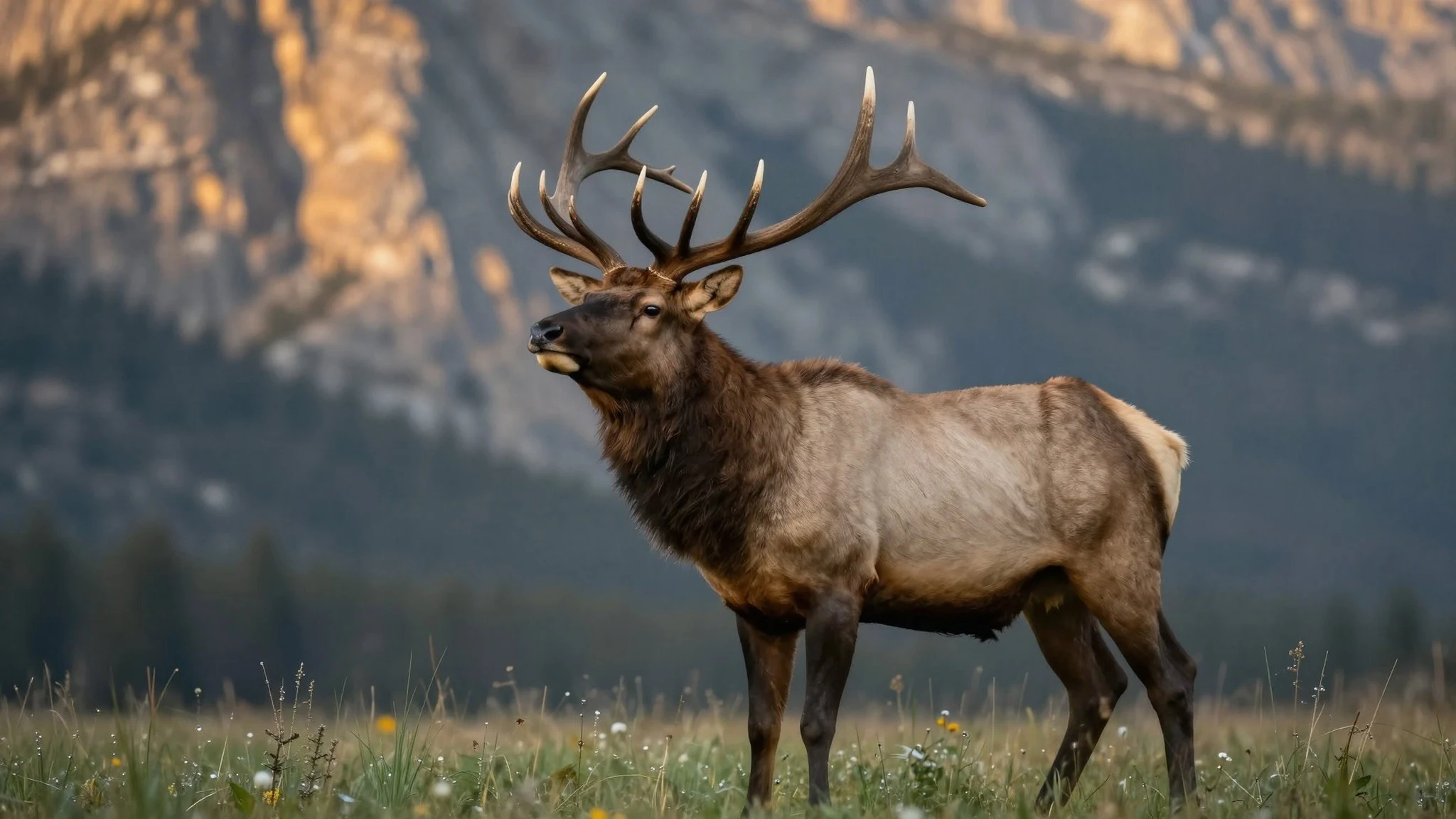
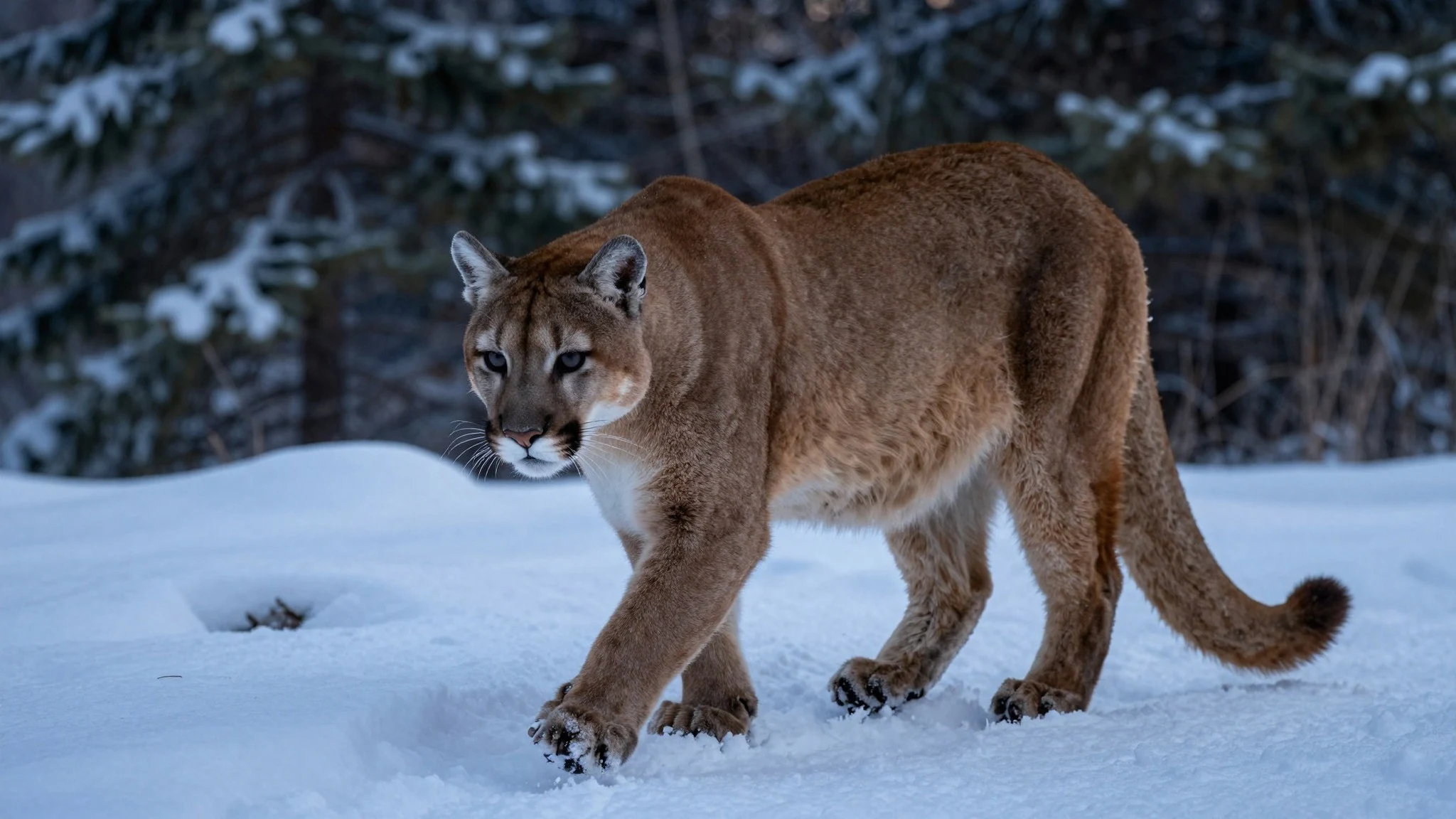
- Cougar (animal)
The cougar, also called the puma or mountain lion, is a big wild cat, far bigger than any cat that curls up on a sofa. It uses the Canmore valley, and it likes thick undergrowth and rocky ground, though it will also stroll across open country. Locals check trail notices and carry bear spray before heading out, and a traveller who does the same will be better prepared for sharing its home.