Camden, Maine
Camden, Maine, United States
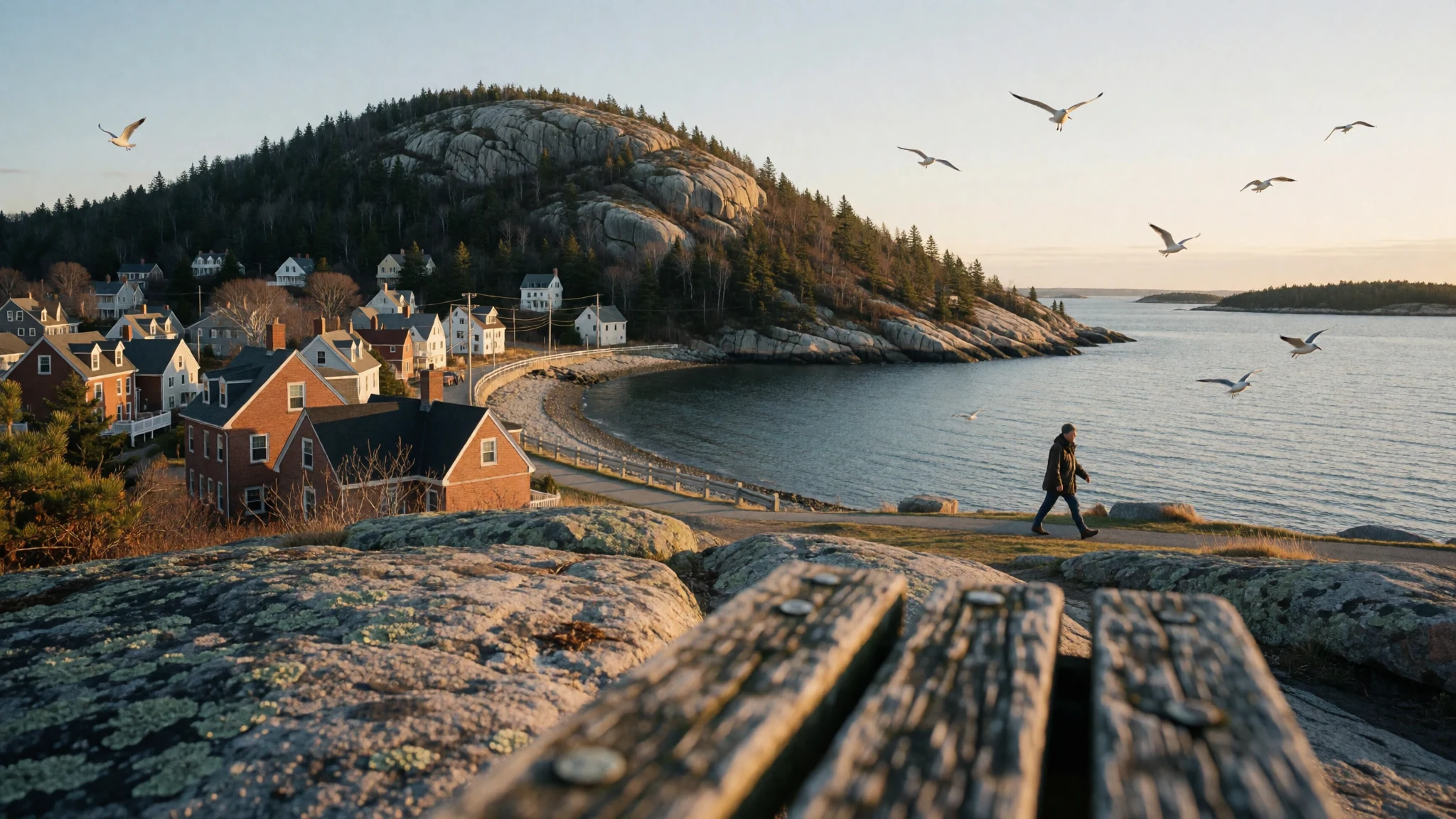
Camden is a Maine harbour town where wooded hills meet Penobscot Bay, good for schooner sailing, short hikes and quiet evenings.
The place
Camden is a small town on Penobscot Bay in Maine, with a year-round population of 5232 and a harbour that fills with masts every summer. The setting is the reason people come: wooded hills drop almost straight to the water, and the Megunticook River tumbles into the harbour through the middle of town. Mount Megunticook, Mount Battie and the lakes behind them mean that a walk, a swim and a sail can all fit into one day. The town's recorded elevation is 63 m, though that figure hides how steeply the ground rises behind the waterfront. The coast here is rocky rather than sandy, so the shore is mostly granite ledge, cliff and small coves, and the one public beach within town limits, Laite Beach, is modest. Main Street runs close to the water, lined with shops, galleries, bakeries and inns in brick and clapboard buildings. The coastal highway, US Route 1, cuts the town in two, so traffic in July and August can crawl. Camden is easy to like and also easy to find crowded: high-summer weekends bring day-trippers, schooner passengers and tour groups, and parking near the harbour fills early. Outside summer the place is much quieter, many seasonal businesses shorten their hours or close, and the bay turns grey and cold. Travellers who like boats, hiking and low-key evenings tend to be happiest here; anyone wanting nightlife or big-ticket sights will find it thin.
Its story
Camden's story begins with the bay. Native communities used the coast and forests of Penobscot Bay long before Europeans settled, and the mouth of the Megunticook River was a natural spot for a harbour. European settlement came late, after the French and Indian War, when James Richards built a house beside the river mouth and other families cleared difficult, steep farms on the slopes behind. During the American Revolutionary War the town gained strategic value: after Castine fell to the British following the failed Penobscot expedition, Camden became a rallying point for American troops under Major George Ulmer, and British raiders burned a local sawmill. The Massachusetts General Court incorporated the town in 1791 and named it after Charles Pratt, Earl Camden, a member of the British Parliament who defended colonial rights. In a later war with Britain, defenders placed a gun battery on Mount Battie. Through the nineteenth century the river drove mills, and Camden became an industrial harbour of shipyards, textile works and lime production; one yard launched the first six-masted schooner. From the late nineteenth century wealthy families from northeastern cities began spending summers here and built large houses along the shore, turning a working town into a resort. The poet Edna St. Vincent Millay lived here for a time, and the Conway House, an eighteenth-century Cape Cod style home, is now a history museum that keeps the memory of the earliest settlers.
What to see
- Mount Battie — Above the town, north-west of the harbour
Mount Battie rises directly behind Camden, with a road to the summit for drivers and a footpath for walkers. The top gives a wide view over the town's roofs, the harbour and the islands of Penobscot Bay. Driving up carries a small fee, so check the official site; hiking is free. Go early on a clear morning, since haze and fog can erase the view.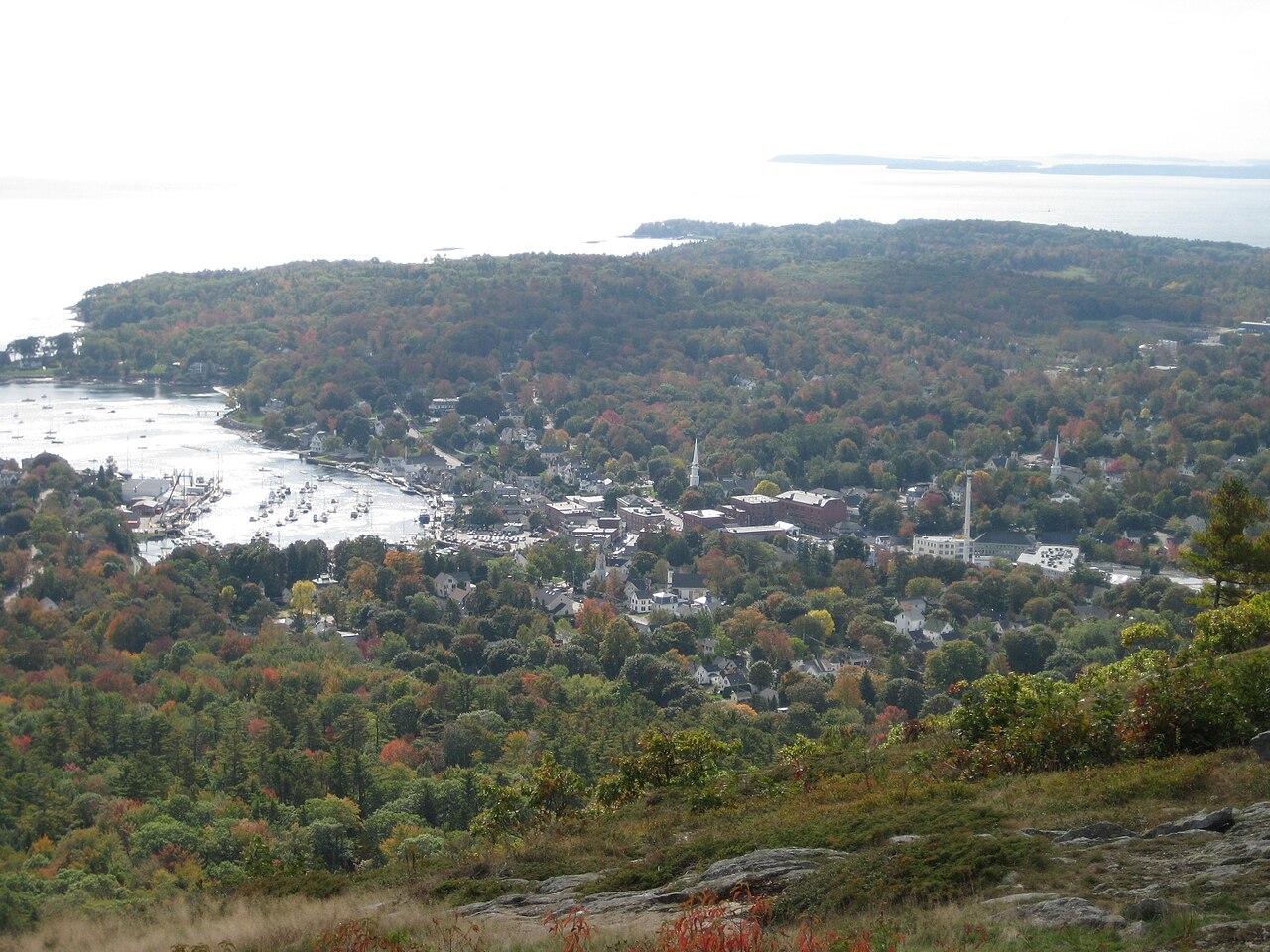
- Camden Harbour and Harbour Park — Waterfront, foot of Main Street
Camden Harbour is the heart of the town, a sheltered basin of yachts, lobster boats and passenger schooners. Harbour Park gives a free place to sit and watch the boats come and go. Early morning is calmer, before day-trippers arrive, and the light on the water and hills is at its best.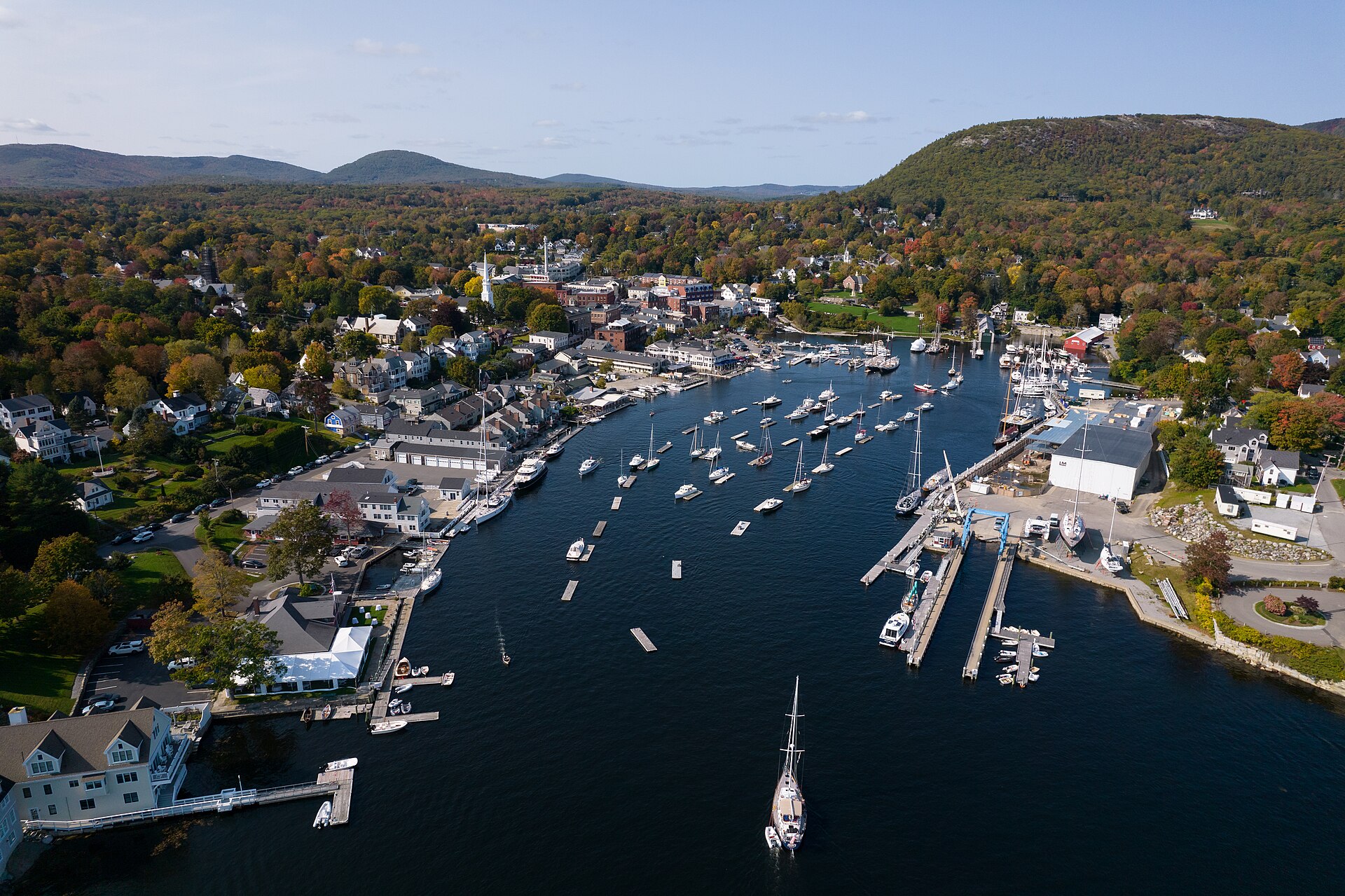
- Bald Mountain and Mount Megunticook — Hills west of the town
Bald Mountain and Mount Megunticook offer longer, quieter walks than Mount Battie, with open granite summits and views across the bay. Trails cross roots and bare rock that turn slippery after rain, so wear shoes with grip, carry water, and start early if the forecast shows afternoon cloud or wind.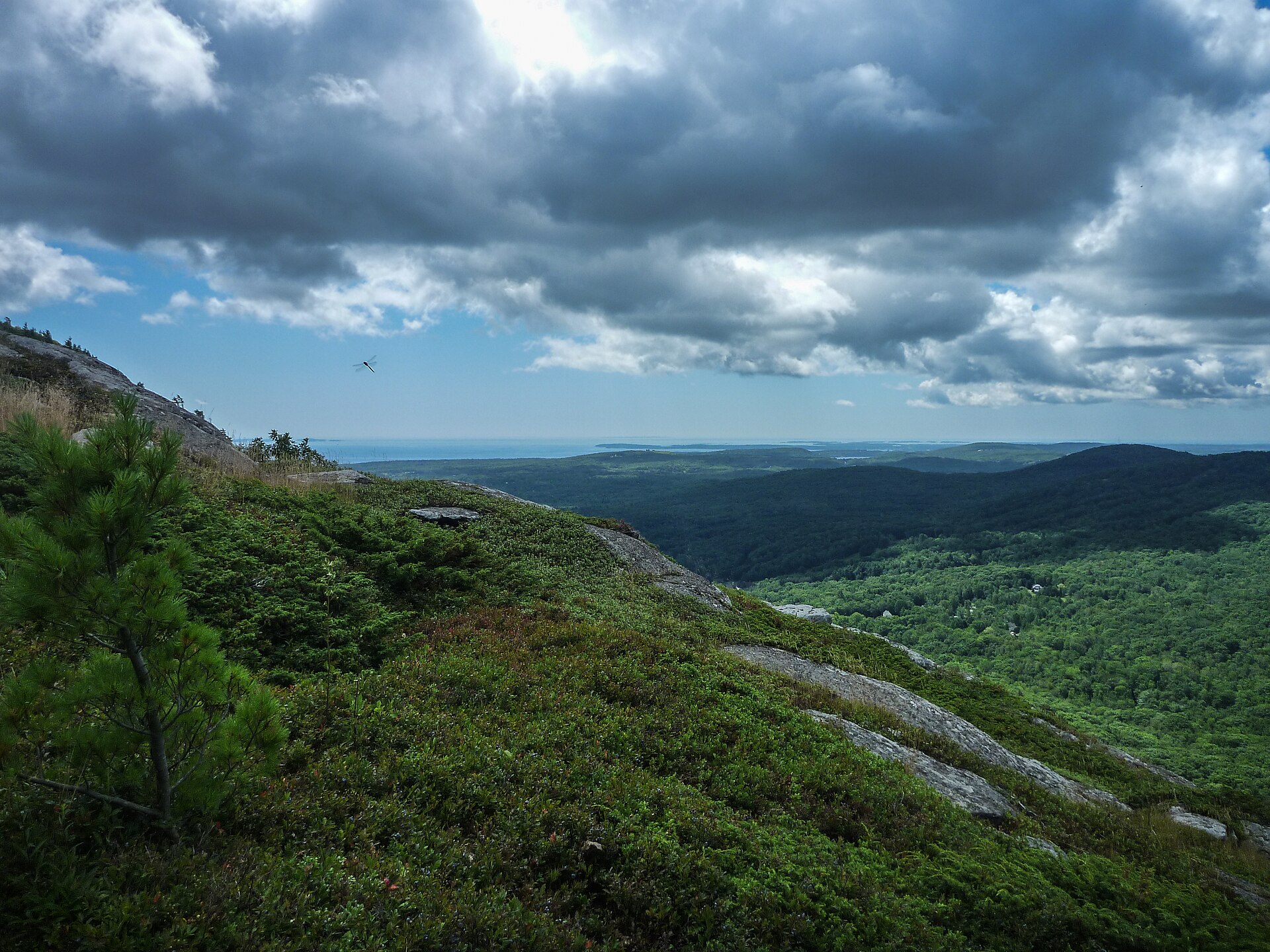
- Laite Beach — Shoreline just outside the town centre
Laite Beach is the one beach within town limits open to the public, a small, rocky-edged strip on the bay rather than a long stretch of sand. The water stays cold even in summer. It suits a picnic, a paddle and a view of passing sailboats, and it is far less crowded than the harbour. - Library Park and the Centre Green — Town centre, near the harbour
Library Park and the Centre Green are two of Camden's three public parks, set close to the harbour. The library building and its landscaped grounds are worth a slow look for the architecture, and the lawns make a calm stop between shops and the water. Both are free and open to everyone. - Sailing on Penobscot Bay — Departures from Camden Harbour
Many boats are available for charter, and traditional schooners take passengers out into Penobscot Bay for a morning, an afternoon or longer. Seen from the water, the hills and islands show why the town draws sailors. Book ahead in July and August, and bring warm layers even on sunny days.
Culture
Camden's culture mixes working harbour, summer resort and small-town arts scene, and the three still sit side by side. Fishing and boatbuilding shaped the town long before holidaymakers arrived, and lobster boats still share the harbour with yachts and traditional schooners that carry passengers into the bay. From the late nineteenth century, families from northeastern cities spent summers here, and their taste for yachting, gardens and libraries left a mark on the architecture and the parks. The poet Edna St. Vincent Millay is part of that story, and the Camden International Film Festival keeps the arts tradition alive with documentary screenings that draw filmmakers from well beyond Maine. Local manner is friendly but reserved, in the usual New England way: people greet shop staff, make small talk about weather and tides, and tend not to push. The year-round population of 5232 is proud of the quiet season, and many residents volunteer to keep libraries, parks and community events going. Weather is a constant topic, because fog, gales and storm surges decide what the harbour can do on any given day, and visitors who ask about the tide or the wind usually get a thoughtful answer. Treat working wharves and lobster gear as someone's livelihood: stay off private docks and never touch traps, buoys or boats without the owner's permission.
What to wear
Camden has no folk costume in the sense of a named regional dress, but the town's working past left a recognisable wardrobe. Fishermen and sailors wore oilskin coats, sou'westers, thick wool jerseys and rubber boots, and waxed cotton, wool and oilcloth still define coastal Maine style. Summer residents added their own layer: striped cotton, navy blazers, canvas deck shoes and straw hats, which survive as the smart-casual boating look seen around the harbour in July. Today most people dress for the weather first. Locals wear fleece, quilted jackets, jeans, waterproofs and sturdy boots, with a woollen hat even in early autumn. Evenings in restaurants are casual, and a clean jumper and trousers are as dressy as most people get. Visitors should pack in layers, because a sunny afternoon can turn cold and foggy within an hour once the wind comes off the water. Bring a proper waterproof jacket, a warm sweater even in August, and sunglasses and a hat for time on boats. Footwear matters: shoes with grip are needed for the granite ledges and for the trails up Mount Battie and Mount Megunticook, where roots and bare rock get slippery in rain. Winter visits call for insulated boots, gloves and a windproof coat. No dress code applies in churches or most public places, though swimwear stays at the beach.
What to eat
- Steamed lobster — Lobster shacks and seafood eateries near the harbour
Lobster is the dish of the Maine coast, boiled or steamed whole and served with melted butter, a cracker and a bib. Look for harbourside lobster shacks and casual seafood eateries around Camden, and ask what was landed that day. - Lobster roll — Takeaway counters and cafés around the harbour
Lobster meat in a toasted, split-top bun, dressed with mayonnaise or butter depending on the cook. Casual eateries and takeaway counters near the water serve it; ask which style they make before ordering. - Fish or clam chowder — Harbourside cafés and waterfront restaurants
A creamy, peppery soup of potato, onion and white fish or clams, welcome on a foggy day. It appears at harbourside cafés and on seasonal menus that lean on local ingredients. - Wild blueberry pie — Bakeries and cafés on Main Street
Maine's small wild blueberries go into pies, muffins and pancakes in summer. Try the bakeries and cafés along Main Street, where fruit pastries often sell out by afternoon. - Local oysters and seasonal fish — Waterfront restaurants in the town centre
Oysters and fish from the Gulf of Maine turn up on seasonal menus, with daily specials depending on what the boats bring in. Waterfront restaurants in town use local ingredients where they can.
Plan it
Best time. July–September for sailing, swimming and open shops, though it is busiest then; late September–October for cooler, quieter days and autumn colour. Winters are cold and storm-prone, and the bay can flood the waterfront in surges, so many seasonal businesses close.
How long. 2–3
Getting there. The nearest airport is the small regional airfield at Owls Head, a short drive south, with flights from Boston and New York. Concord Coach Lines buses run from Portland, and Amtrak serves Boston's North Station, but a car makes the last leg easiest along US Route 1.
Budget. high
Tips
- Book rooms and schooner trips well ahead for July and August
- Climb Mount Battie early in the morning for clearer views and fewer cars
- Check the official site (https://www.camdenmaine.gov/) for summit road fees, parking and local notices
- Carry layers and a waterproof, since fog and wind arrive fast off the bay
- Lock your car and keep luggage out of sight, as opportunistic theft is the main risk
Etiquette
- Stay off private docks and do not touch lobster traps or buoys
- Greet shop and restaurant staff politely, as is normal in small-town New England
Nearby
Sources
- Wikidata Q2007905 (CC0)
- Wikipedia: Camden, Maine (rev 1385733128) (CC BY-SA 4.0)
- Wikivoyage: Camden (Maine) (rev 5396658) (CC BY-SA 4.0)
- Photo: Camden ME aerial 2008 (Dudesleeper / Talk) (CC BY 3.0)
- Photo: Camden Maine October 2021 (King of Hearts) (CC BY-SA 4.0)
- Photo: Bald Mountain, Maine (Peachoftree) (CC BY 3.0)
- Photo: 20020713 30 Camden, Maine (David Wilson) (CC BY 2.5)
- Photo: December 2022 storm surge (Alison McKellar, 52593495052) (CC BY 2.5)
- Photo: December 2022 storm surge (Alison McKellar, 52593495522) (CC BY 2.5)
- Photo: December 2022 storm surge (Alison McKellar, 52593503417) (CC BY 2.5)
- Photo: December 2022 storm surge (Alison McKellar, 52593504867) (CC BY 2.5)


