Austin
Austin, United States
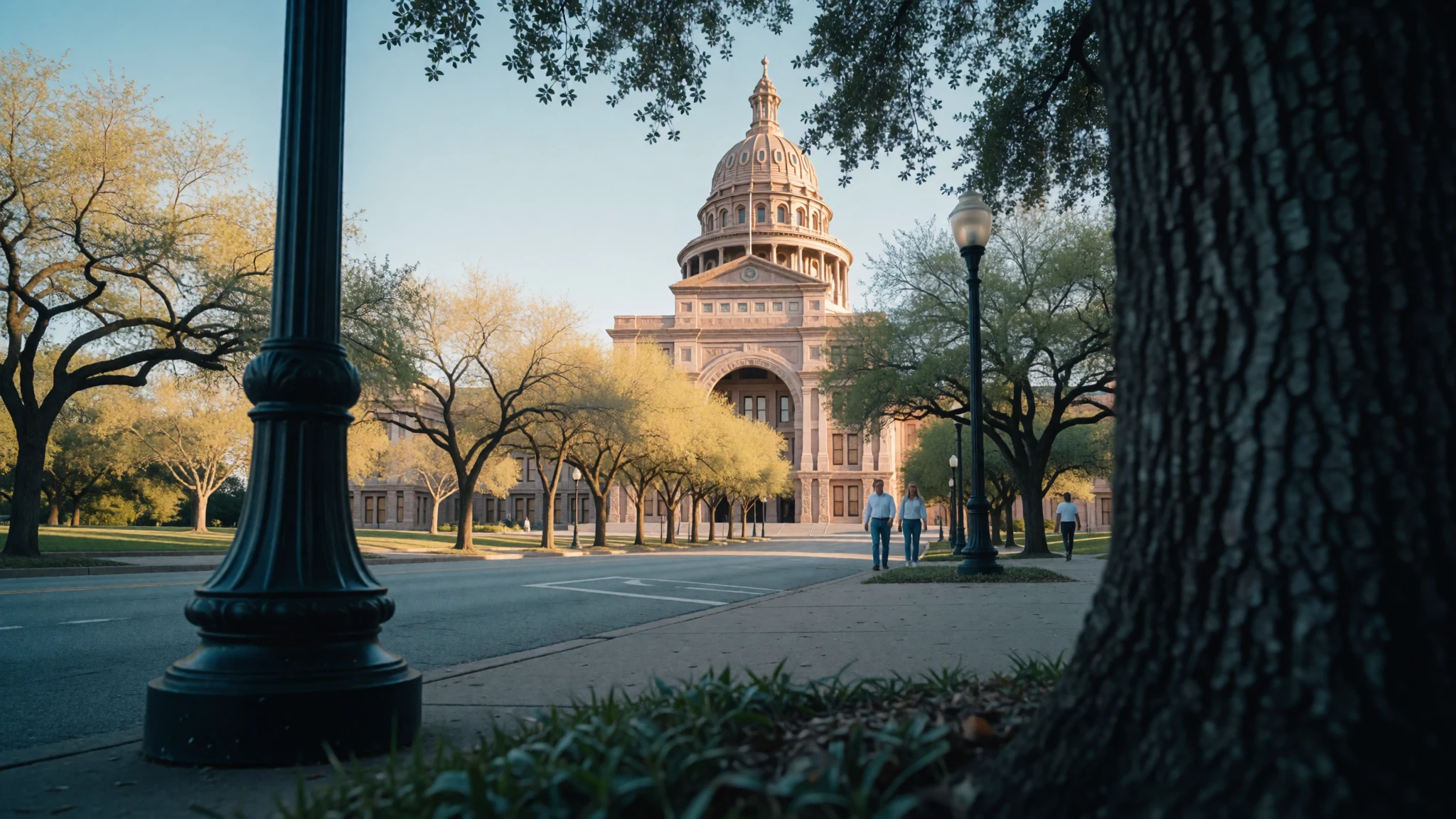
Austin offers live music, spring-fed swimming holes, smoky barbecue and a lakeside downtown in a Texas capital that still prizes its oddness.
The place
Austin is the capital of Texas, a city of 961,855 people that sits about 149 m above sea level, where the rolling Texas Hill Country meets flatter farmland to the east. Residents call themselves Austinites. The Colorado River runs through the middle of town and has been dammed into a chain of lakes. Lady Bird Lake, right beside downtown, is the one locals walk, run and paddle around, while Lake Travis lies upstream to the west. Spring-fed Barton Springs, McKinney Falls and Lake Walter E. Long add more water, which matters in a state better known for dust and distance. The downtown core is compact: glass towers, the domed Capitol at the head of a broad avenue, and bars and music venues packed along the streets between. The University of Texas campus sits just to the north. South of the river, neighbourhoods such as South Congress and Zilker are low-rise and leafy, while East Austin has changed quickly, with taquerias and galleries now sharing blocks with new apartments. Rapid growth defines recent years, bringing technology employers, traffic and rising rents. Austin and San Antonio are joined by the main north–south interstate, so the two cities increasingly read as one long urban corridor. It is a car-oriented place overall, though downtown and the lakeside trails are easy on foot.
Its story
Austin's human history is far older than its role as a capital. Excavations across the area, notably at the Gault Site north of the city, show people of the Clovis culture living here around 9200 BC, and digs at the French Legation in downtown found evidence of use during the Archaic period. When a Spanish expedition reached the Colorado River near today's city in 1709, it met several Indigenous groups, among them the Yojuan, Simomo and Tusonibi. Spain made few lasting settlements here, and the river valley stayed largely in Indigenous hands for some time afterwards. The modern town grew from a settlement dated to 1835 in the facts, and it was incorporated in 1839 as the capital of the young Republic of Texas, named after Stephen F. Austin, an early promoter of American settlement in Texas. The site was chosen for its river, its hills and its position between the older centres of the east and the open frontier to the west. Once Texas joined the United States, the city kept its status as state capital, and government and the University of Texas became its steadiest employers. Later, music venues drew performers and audiences, and technology firms followed, turning a mid-sized university town into one of the fast-growing big cities of the country. Many Austinites still argue loudly about what that growth has cost.
What to see
- Texas State Capitol — Downtown, north end of Congress Avenue
The Texas State Capitol stands at the head of Congress Avenue, a domed building of pink granite approached by a long tree-lined walk. Entry to the grounds is free, and the lawns are popular with joggers and picnickers. Check the official state site before visiting for tour times and security arrangements.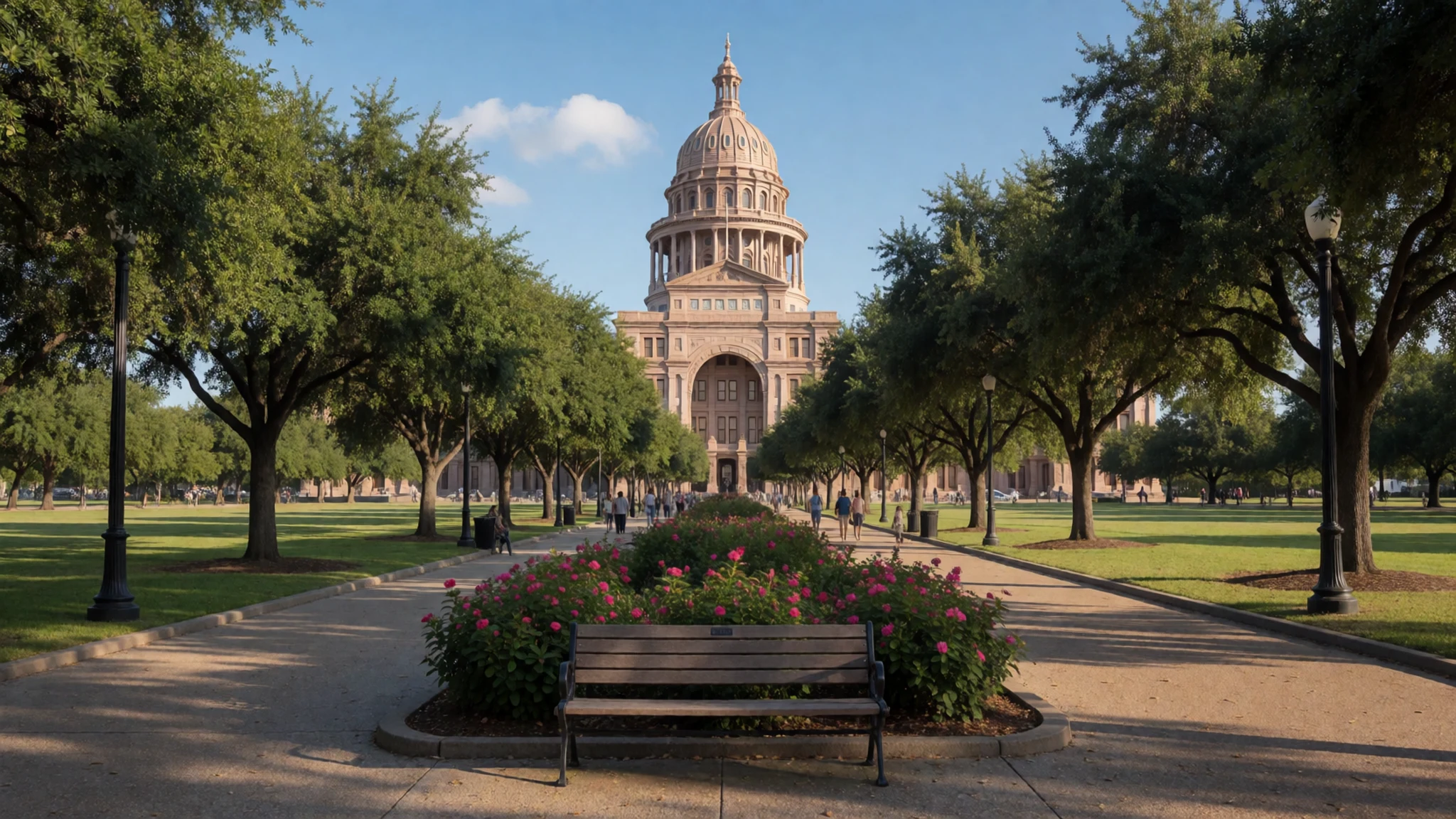
- Zilker Park and Barton Springs — South of Lady Bird Lake
Zilker Park is Austin's big communal lawn, with the downtown skyline visible across the water. Barton Springs, in the same park, is a spring-fed pool that stays cool even in the heat of a Texas summer. Weekends are busy, so go early, and check the city website for closures and fees.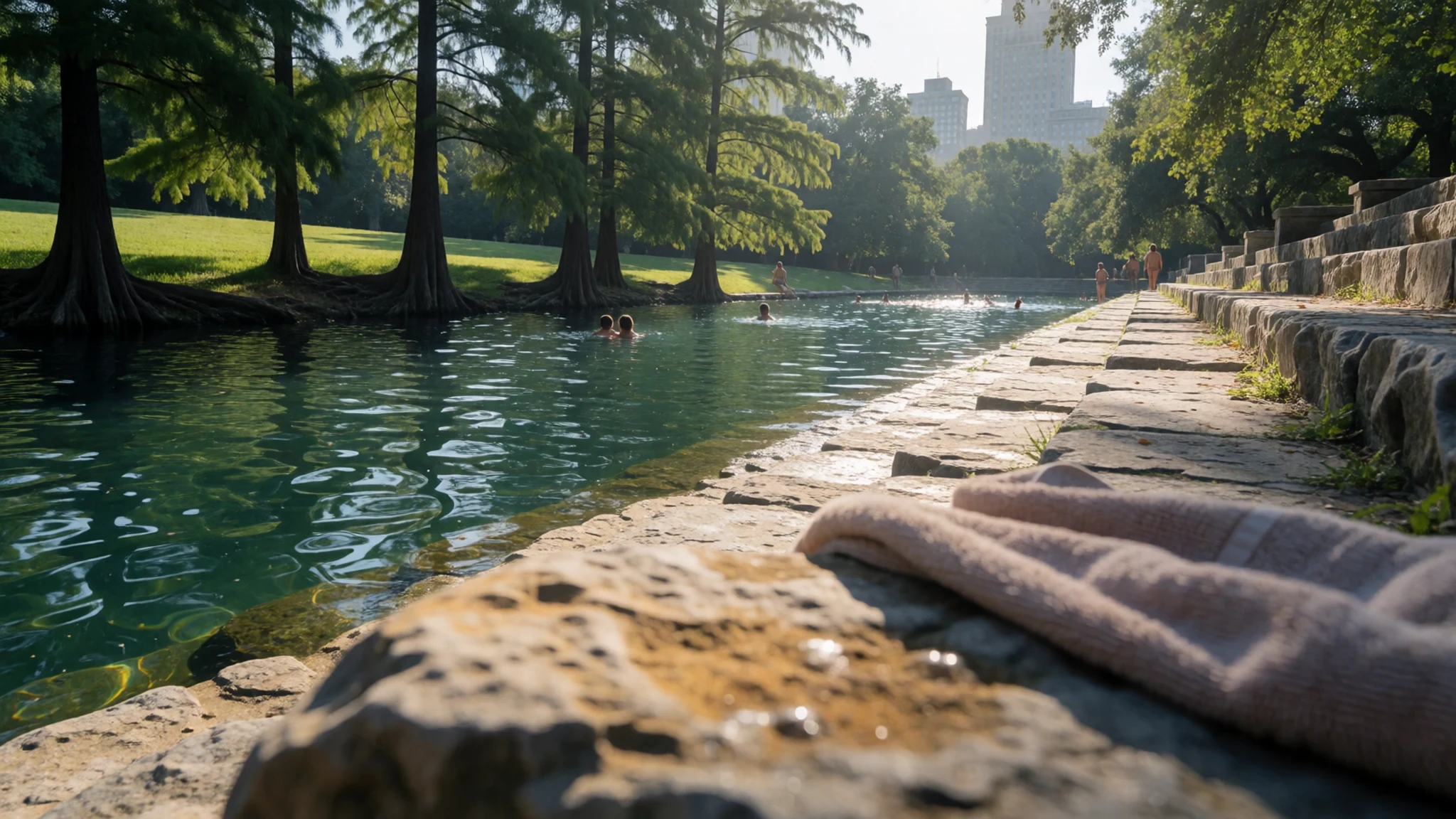
- University of Texas Tower — University campus, north of downtown
The Main Building's clock tower is the landmark of the University of Texas campus and can be seen from many parts of central Austin. The surrounding lawns and plazas are good for a slow wander on a cooler day. Access to the tower itself is restricted, so check the university site for visitor arrangements.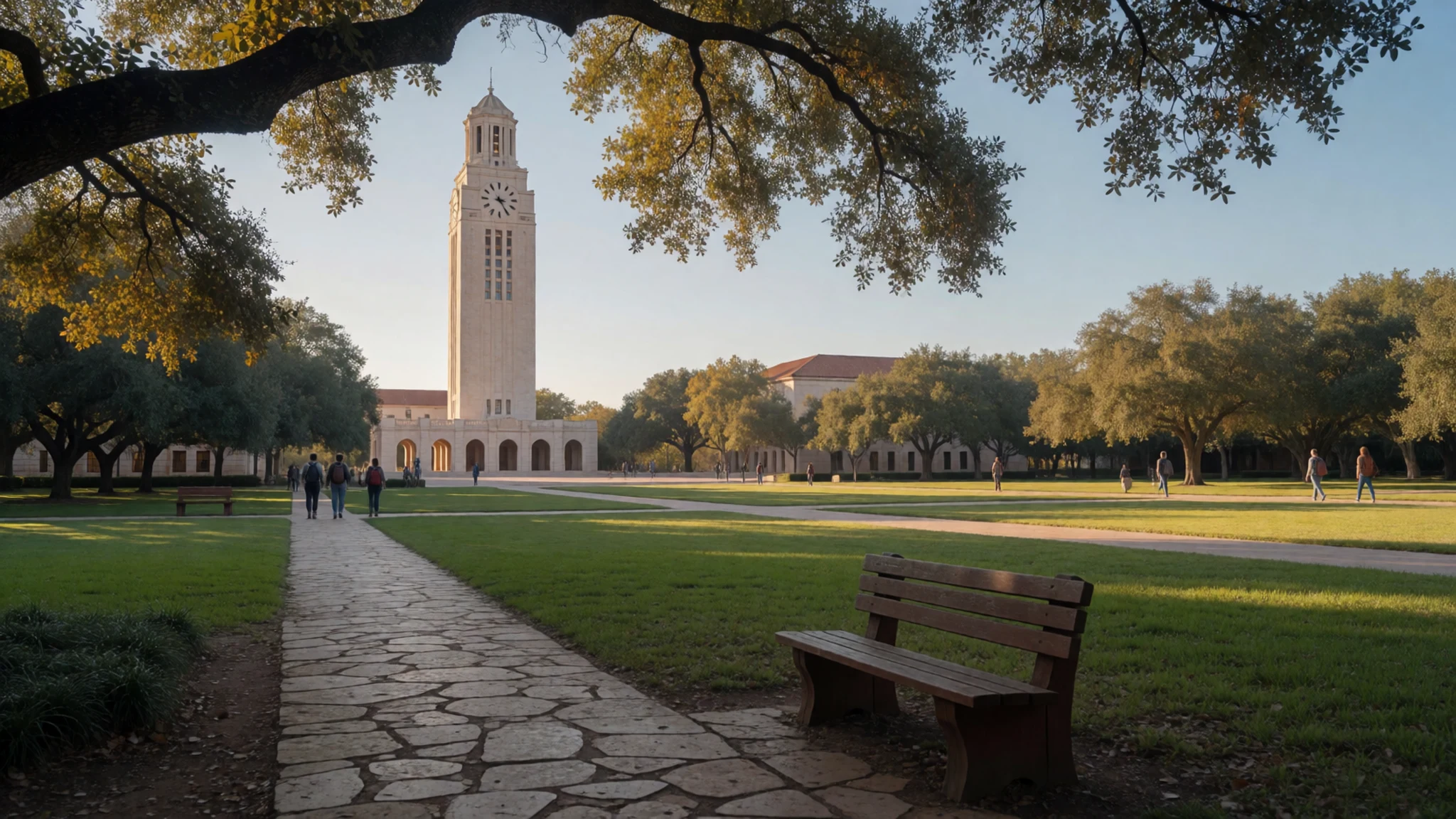
- Paramount Theatre — Congress Avenue, downtown
The Paramount Theatre is an old downtown playhouse that now hosts film, comedy, music and touring shows. Its marquee is one of the more photogenic corners of Congress Avenue after dark. Even without a ticket, the street around it is lively in the evening, with other venues and restaurants close by.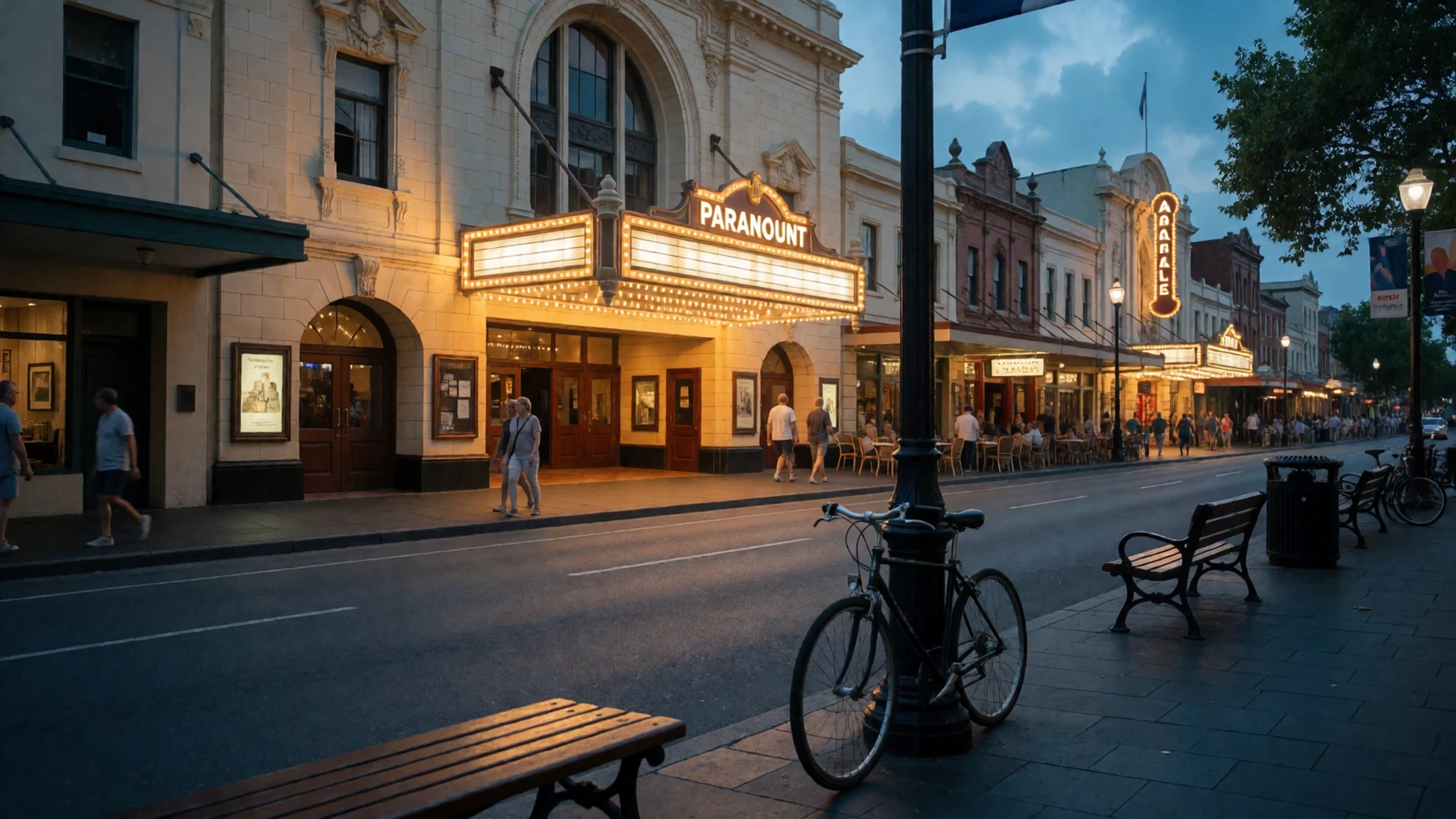
- Laguna Gloria — West of downtown, on Lake Austin
Laguna Gloria is the former home of Clara Driscoll, a lakeside villa set in gardens and listed on the National Register of Historic Places. Today the grounds are used for outdoor sculpture and quiet walks beside the water. It is a calmer option than the city centre, and opening arrangements should be checked in advance.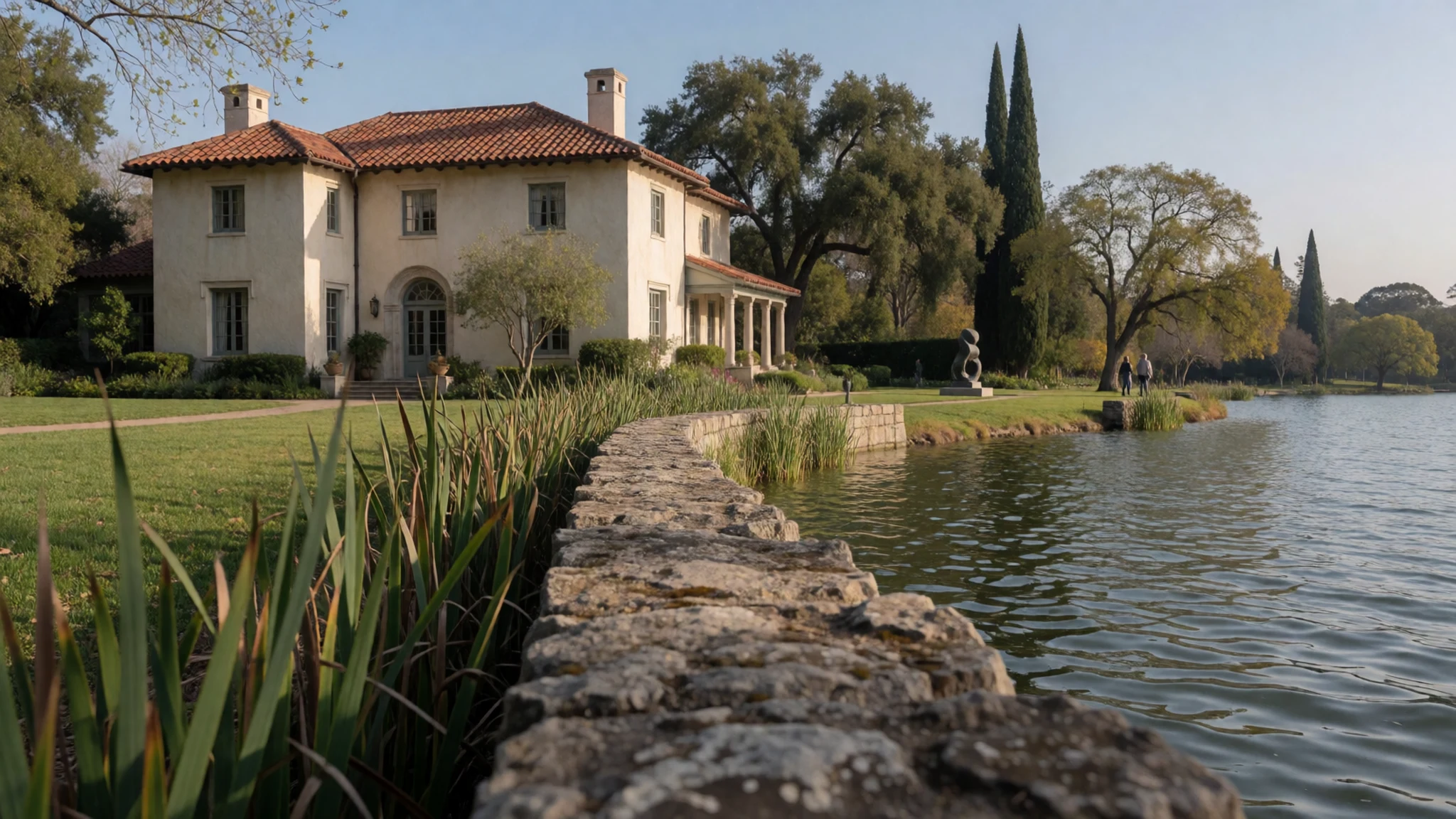
Culture
Austin's best-known local motto is "Keep Austin Weird". It began as a plea from two residents, a librarian and his wife, worried about commercialism and over-development, and it became a rallying cry for independent shops, cafés, studios and music venues. It now appears on T-shirts and bumper stickers, but plenty of locals still use it seriously, mainly to argue for protecting neighbourhoods, creeks and old buildings from rapid growth. The city has a long habit of public protest against projects thought to harm the environment or the cultural landscape, and council meetings and town halls can be lively. Live music is part of ordinary life here, from large festivals to small bars where a band plays most nights of the week. The city is also a university town and a government town, so students, legislators and technology workers share the same pavements and queues. Outdoor life matters too: people swim in springs, paddle on the lake and walk the shoreline trails at dawn and dusk. Conversation tends to be friendly and direct, and strangers often talk readily at bars and food counters. Many residents are proud of Austin's mix of Texan, Mexican and newcomer influences, though they are just as ready to debate how much the city has changed. Tip bar and restaurant staff in the usual American way, and ask before photographing musicians or other patrons at small venues.
What to wear
Austin's traditional dress is Texan Western wear, shaped by ranching and by neighbouring Mexico. The classic pieces are hard-wearing denim, cotton pearl-snap shirts, leather belts and boots, and felt or straw hats that shade the face in summer. Embroidered blouses and guayabera shirts, loose cotton shirts with pleats down the front, reflect Mexican influence and are worn at celebrations and warm-weather events. Boots and hats are often kept for rodeo season, weddings and dance halls rather than daily use. What people actually wear now is mostly casual: shorts, T-shirts, sundresses, sneakers and sandals, with band shirts and vintage finds from local thrift shops giving the streets their character. Office dress is relaxed, and even smart restaurants rarely demand jackets. Visitors should dress for the weather first. Summer is hot and humid, so light cotton or linen, a brimmed hat, sunglasses and sunscreen are all useful, and a thin layer helps against fierce indoor air-conditioning. Comfortable walking shoes suit the downtown pavements and lakeside trails, while closed shoes are better for rocky Hill Country paths. In winter, evenings can turn cool and the occasional cold snap needs a proper jacket. There is no strict dress code at churches or public buildings, though modest, tidy clothing is sensible at the Capitol and for any religious service.
What to eat
- Texas barbecue brisket — Smokehouses and barbecue joints across the city, often with queues at midday
Beef brisket smoked slowly over wood is the Texan benchmark, served sliced by weight on butcher paper with pickles, onions and white bread. Popular smokehouses can sell out, so go early. Sausage and ribs are common alongside it.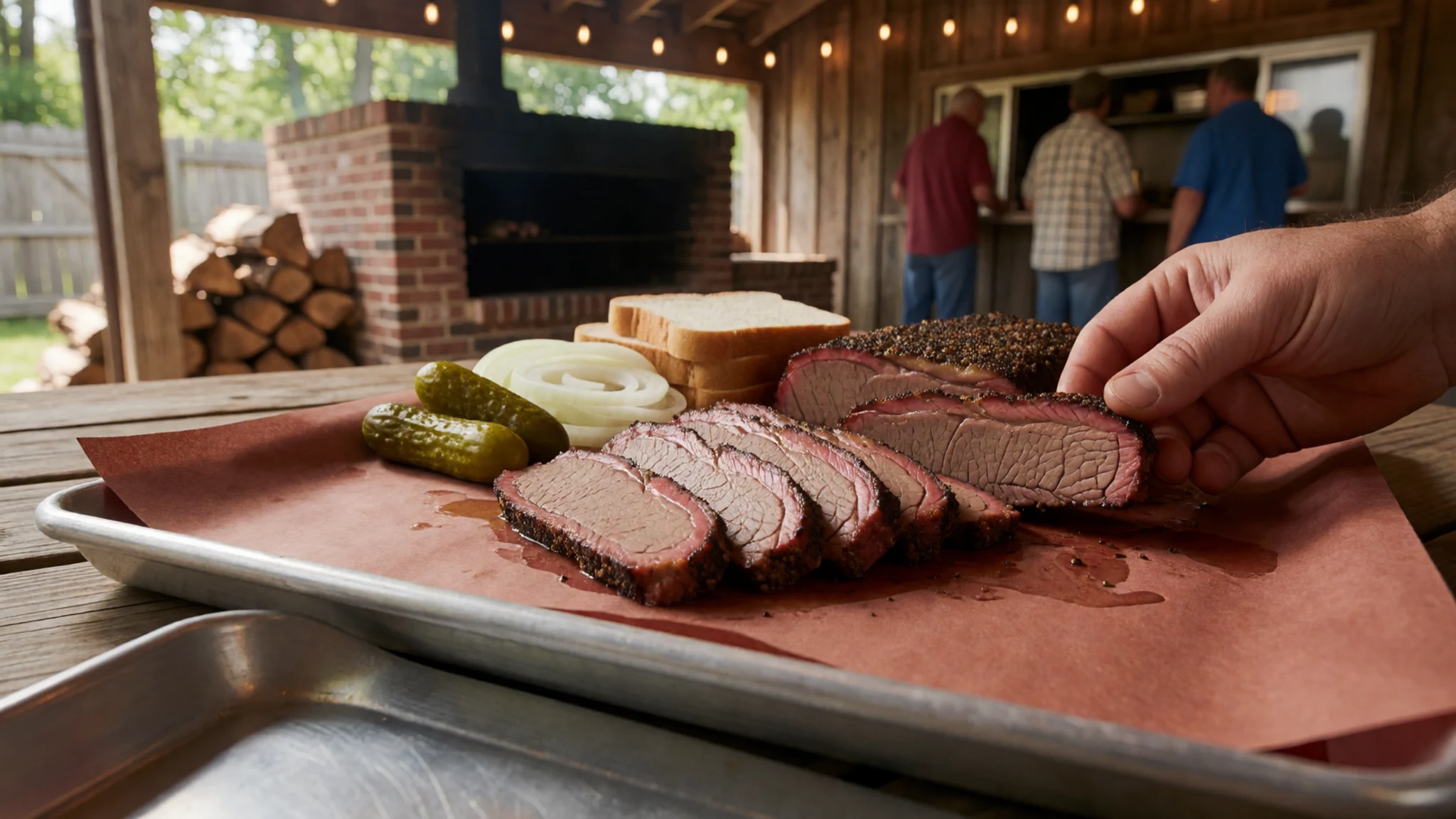
- Breakfast tacos — Taquerias and food trucks, especially in East Austin
Soft flour or corn tortillas folded around scrambled egg, potato, beans, cheese, bacon or chorizo make a cheap morning staple. Locals order several at a time with salsa on the side. Many places stop serving them by late morning.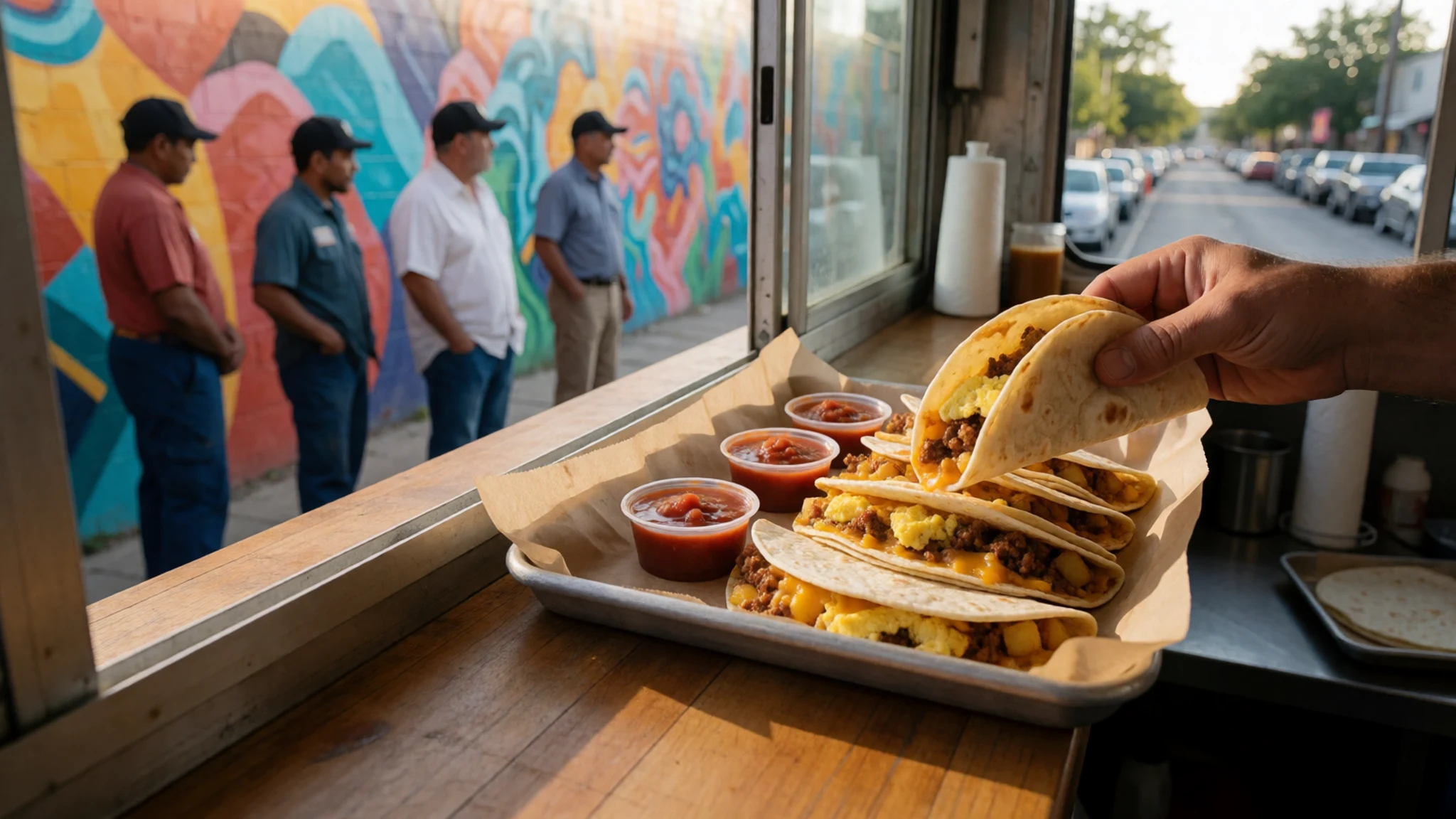
- Tex-Mex queso and enchiladas — Long-running Tex-Mex restaurants around South Congress and the city centre
Tex-Mex here means melted cheese dip with chips, cheese or beef enchiladas under chilli gravy, and sizzling fajitas. It is hearty and shareable, usually served with rice and refried beans. Vegetarian versions are easy to find. - Kolaches — Bakeries and roadside kolache shops on the routes out of town
Brought by Czech settlers to Texas, these soft yeasted buns come filled with sausage and cheese, or with fruit and sweet cheese. They are a good road-trip snack and a morning option for visitors heading to the Hill Country. - Local craft beer — Taprooms south of downtown and farm breweries in the Hill Country
Austin has a lively brewing scene, with taprooms in the SoCo area and farmhouse breweries a short drive west among the hills. Local beers are on tap in many bars across town, so ask for a flight to sample a few.
Plan it
Best time. March–May and October–November, when days are warm rather than fierce and outdoor swimming, walking and live music are at their best. Summer is long, hot and humid, and winter is mild with occasional cold snaps.
How long. 2–3
Getting there. Fly into Austin's main airport, where the Barbara Jordan Terminal serves most airlines and a smaller South Terminal handles a few low-cost carriers; a city bus, taxis and ride-share cover the last leg to downtown. By road, Austin sits on the main interstate between San Antonio to the south and Dallas to the north, with Houston to the east. Check austintexas.gov for city information.
Budget. mid
Tips
- Book weekend accommodation early during major festival periods, when prices rise and rooms run short.
- Visit Barton Springs and lakeside trails early, before the midday heat and the weekend crowds.
- Carry water and sun protection from spring to autumn, as shade is limited on the trails.
- Arrive early at popular barbecue smokehouses, since the best items can sell out before afternoon.
- Plan on hiring a car or using ride-share for areas outside the downtown core.
Etiquette
- Tip restaurant and bar staff in the usual American way.
- Ask before photographing people at music venues and in small bars.
- Respect posted rules at springs, lakes and parks, including those on glass, dogs and swimming areas.
Nearby
Sources
- Wikidata Q16559 (CC0)
- Wikipedia, Austin, Texas (rev 1386830348) (CC BY-SA 4.0)
- Wikivoyage, Austin (rev 5433644) (CC BY-SA 4.0)
- Skyline of Austin, Texas (cropped), Quintin Soloviev (CC BY 4.0)
- Texas capitol walk, Nv8200pa (CC BY 4.0)
- Driskill Hotel, ajay_suresh (CC BY 4.0)
- Austin skyline from Zilker Metropolitan Park, Mwyzykowski0821 (CC BY-SA 4.0)
- The Clock Tower, Peter Hansen (CC BY 3.0)
- Paramount Theater, Austin, Daderot (CC0 1.0)
- Laguna Gloria, Alexandra Velten (CC BY 3.0)
- Relief map of Texas, Nzeemin (CC BY 3.0)


