Arecibo Observatory
Arecibo Observatory, United States
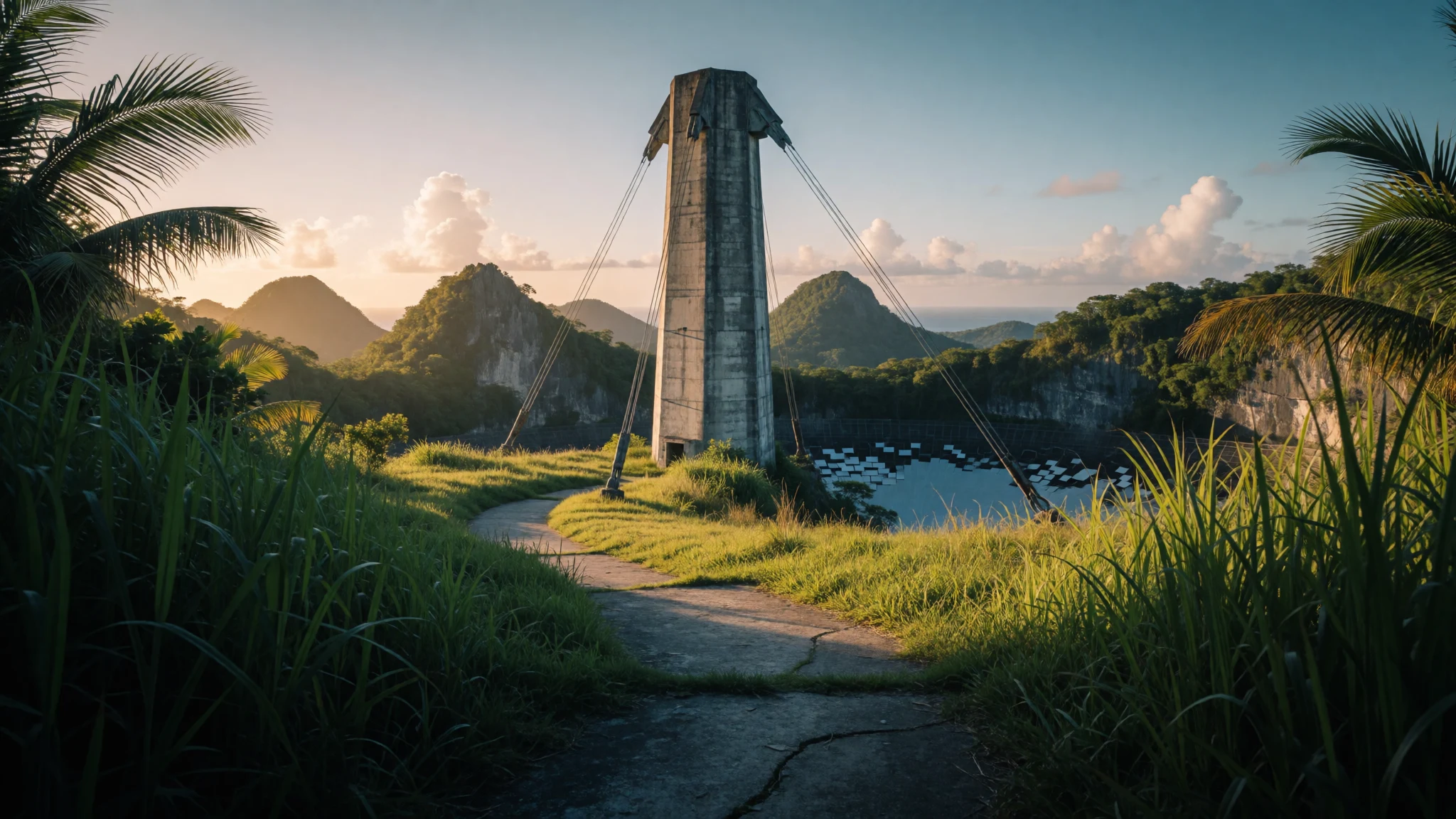
Arecibo Observatory in Puerto Rico held a giant radio dish in a limestone sinkhole; the site and its story still repay a visit.
The place
Arecibo Observatory sits in the hills of northern Puerto Rico, inland from the town of Arecibo, at an elevation of 498 m. It is owned by the US National Science Foundation and has carried several names over the years, including the National Astronomy and Ionosphere Centre. Its famous instrument was a spherical dish, about 305 m across, laid into a natural sinkhole in the limestone. Far above it, a platform slung from cables carried the receivers and radar transmitters, and it could be steered to follow targets across the sky. Opened in 1963, the dish spent decades studying the upper atmosphere, planets, asteroids and distant radio sources. Two support cables snapped in 2020 and the dish collapsed that December. It has not been rebuilt; the stated plan is an educational facility on the site. Other sections of the observatory kept operating, including the visitor centre, a lidar setup, and a radio telescope of smaller size. The approach is a mountainous, fairly isolated road, though it is reasonably well signposted. The surrounding country is limestone karst, all rounded green hills and sinkholes, which explains how a bowl this size found a natural home here. Visitors should expect a place of memory as much as machinery: an empty hollow, what remains of the structure above it, and exhibits about what was learned. Opening arrangements have changed in recent years, so check the official site, https://www.naic.edu/, before setting out.
Its story
Arecibo Observatory began as a Cold War question. In the 1950s the US defence research agency wanted a way to detect missiles passing through the ionosphere, the electrically charged upper layer of the atmosphere, and it hired Cornell University to study a large radar probe. The idea grew into a two-purpose instrument: an ionospheric radar that doubled as a general radio telescope. Building began in 1960 and the site opened formally in 1963 as the Arecibo Ionospheric Observatory. Within a decade the military handed it to the National Science Foundation, which kept Cornell as manager and renamed it the National Astronomy and Ionosphere Centre, widely shortened to NAIC. NASA later added money for planetary radar work, and the dish went on to study the upper atmosphere, nearby planets, asteroids and distant radio sources. An asteroid now carries the observatory's name in recognition of that work on bodies in the Solar System. Funding was never secure. NASA withdrew its support at one point, the foundation talked of cutting its share and closing the site, and academics and politicians campaigned against that until NASA recommitted money for tracking near-Earth objects. The end came in 2020. One support cable broke in August and another in November, the foundation decided to retire the dish, and it fell in December. Rebuilding was later ruled out, and the plan is for an educational facility to take its place.
What to see
- The observation deck and the empty dish — Barrio Esperanza, Arecibo
The observation deck at Arecibo Observatory looks over the sinkhole where the great dish once lay. Since the collapse, the view is of green karst walls, what is left of the structure and a great deal of sky. Come expecting absence rather than machinery, and read the signs to picture what once hung overhead.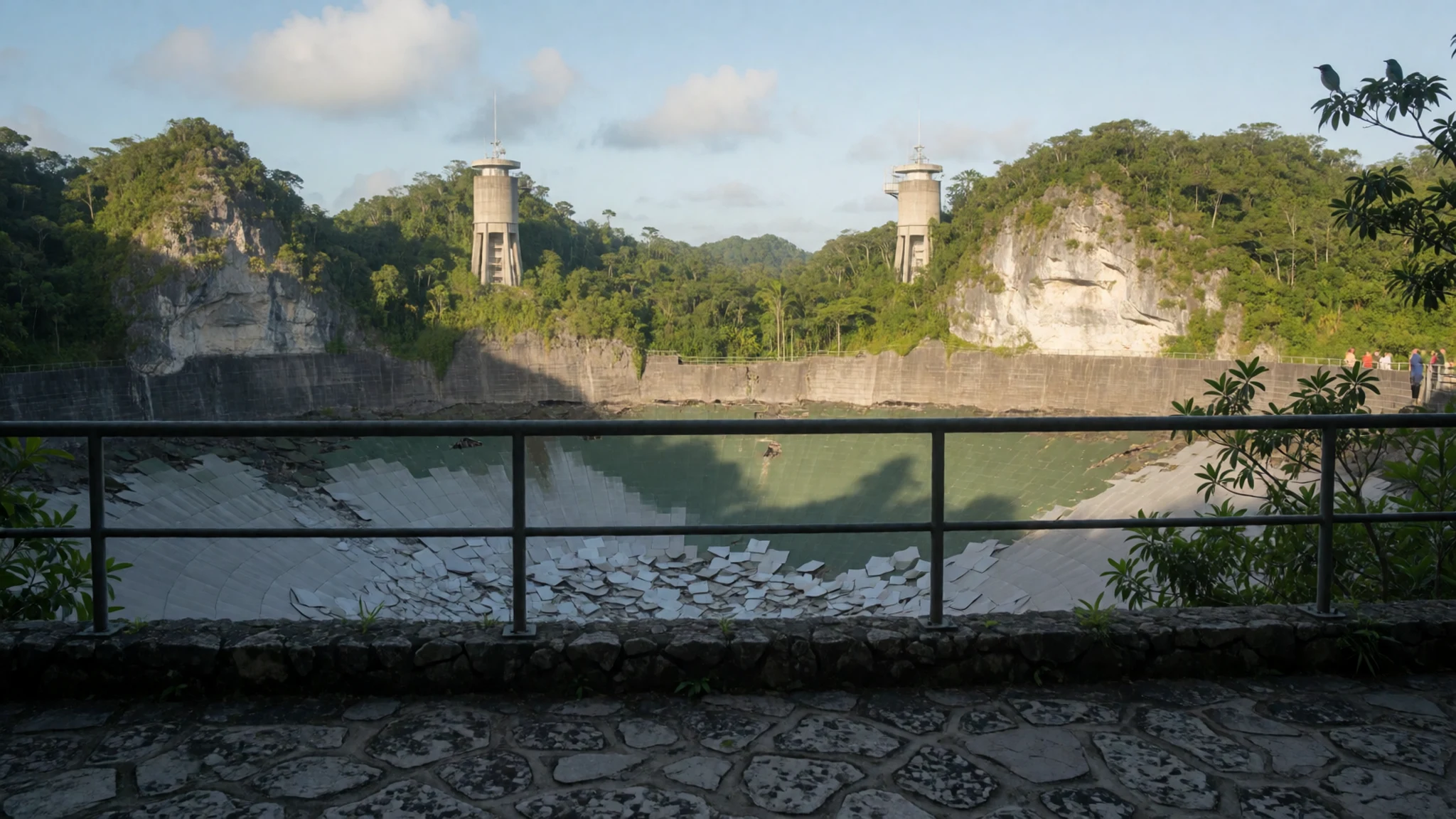
- Visitor centre and exhibits — Arecibo Observatory site
The visitor centre at Arecibo Observatory stayed in operation after the dish fell. Exhibits cover the ionosphere, planetary radar and the science done here, and a slice of the Allende meteorite is among the objects on display inside. Check the official site for current opening before driving up the mountain road.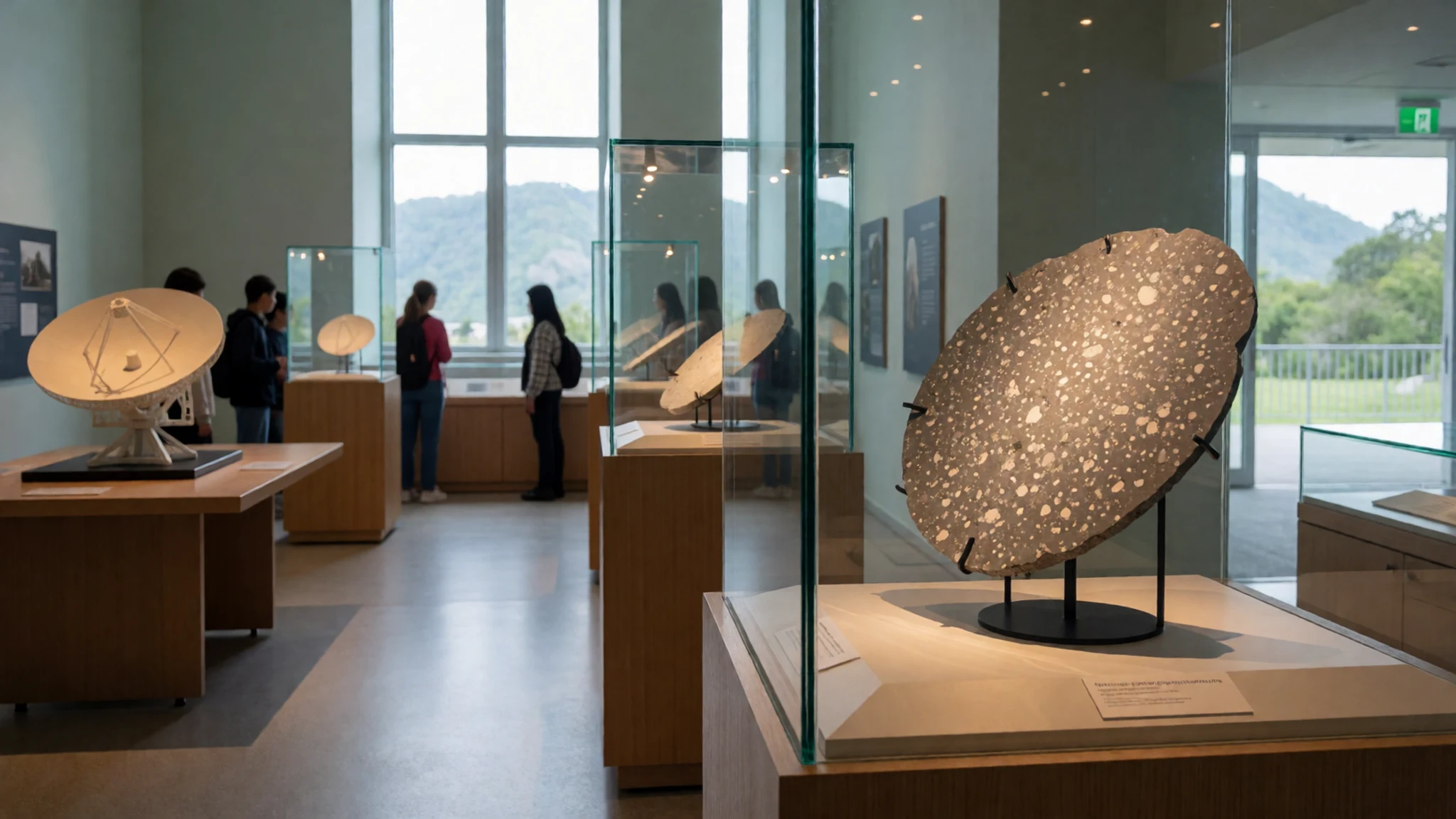
- Arecibo town centre — Arecibo pueblo
The old centre of Arecibo, on the north coast, has a historic Catholic church, a Spanish-style plaza for sitting and watching the town go by, and municipal buildings with shops along the surrounding streets. It makes an easy half-day after the observatory, and an ordinary eatery here suits a lunch stop.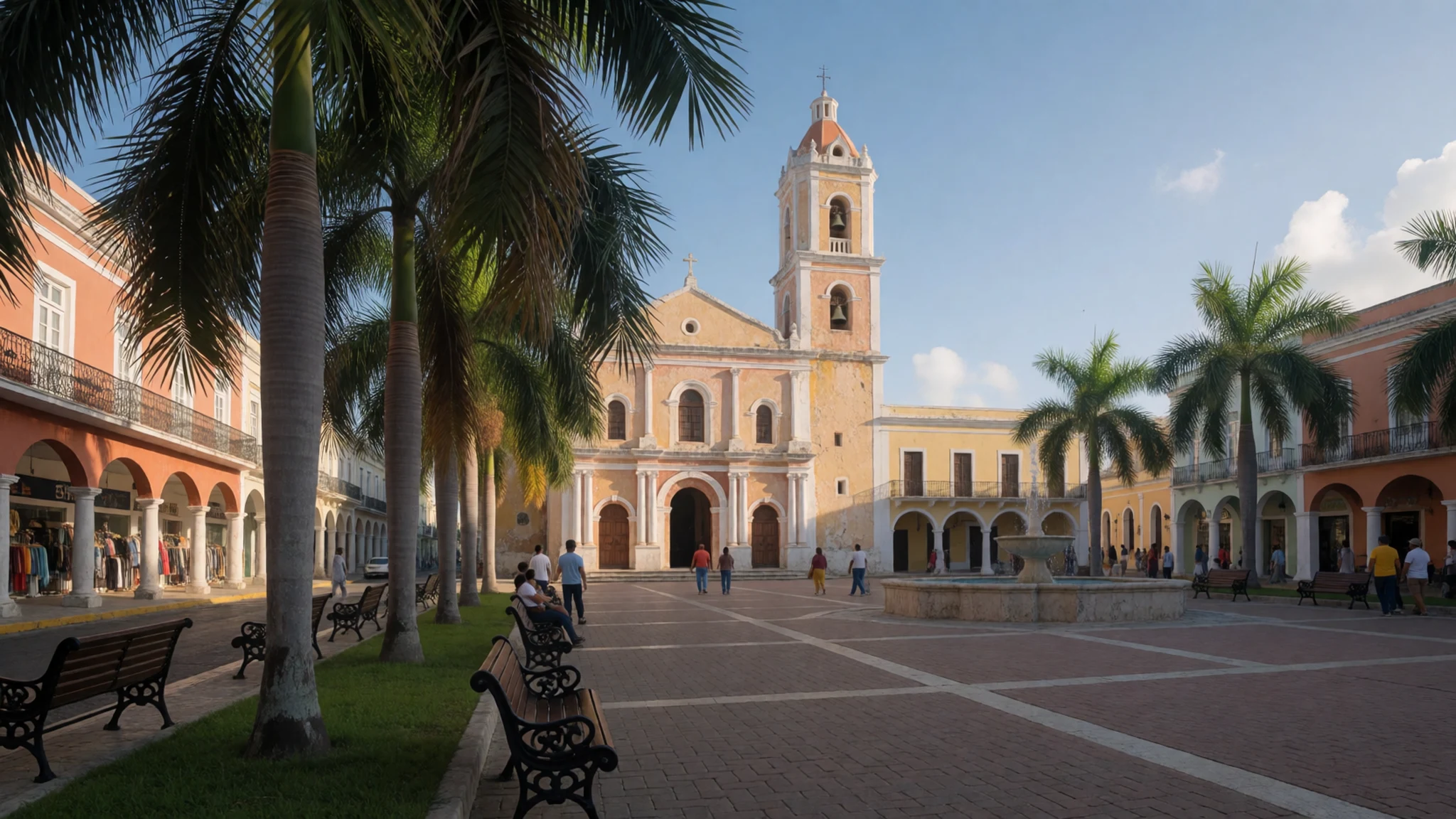
- Arecibo Lighthouse and Historical Park — Arecibo coast
Arecibo Lighthouse and Historical Park is a cultural theme park built around the old lighthouse on the coast. It presents scenes from Puerto Rico's history, and the seaside setting makes it a sensible companion to the observatory for a family day. Check the park's own site for opening times.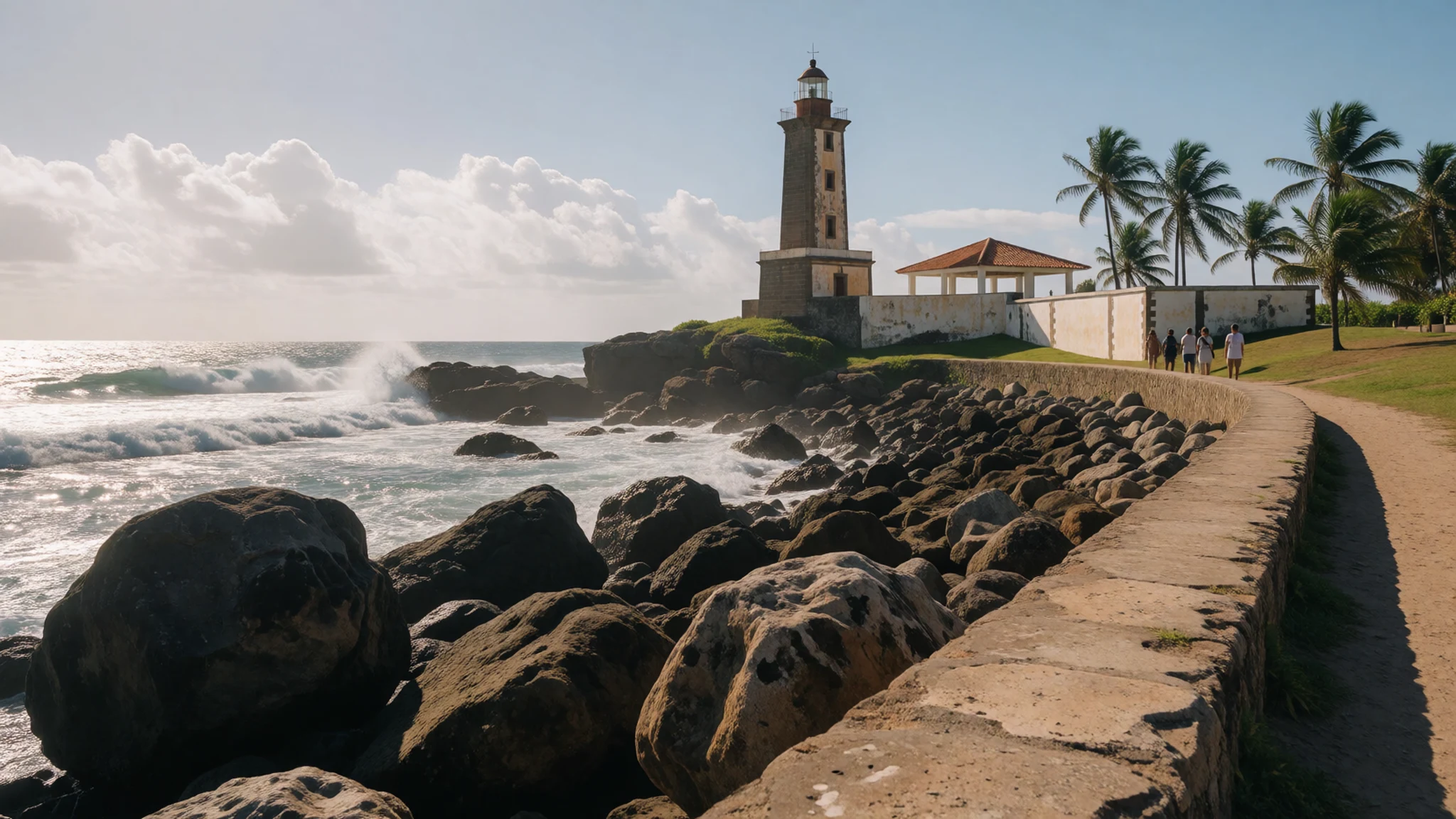
- Río Camuy Cave Park — Hills south of Arecibo
Río Camuy Cave Park lies in the forested hills south of Arecibo and is a large cave system. Take a packed lunch, as visitors report a wait to get in. Cave visits are usually run in timed groups, so check the park's official site for booking and opening before setting out.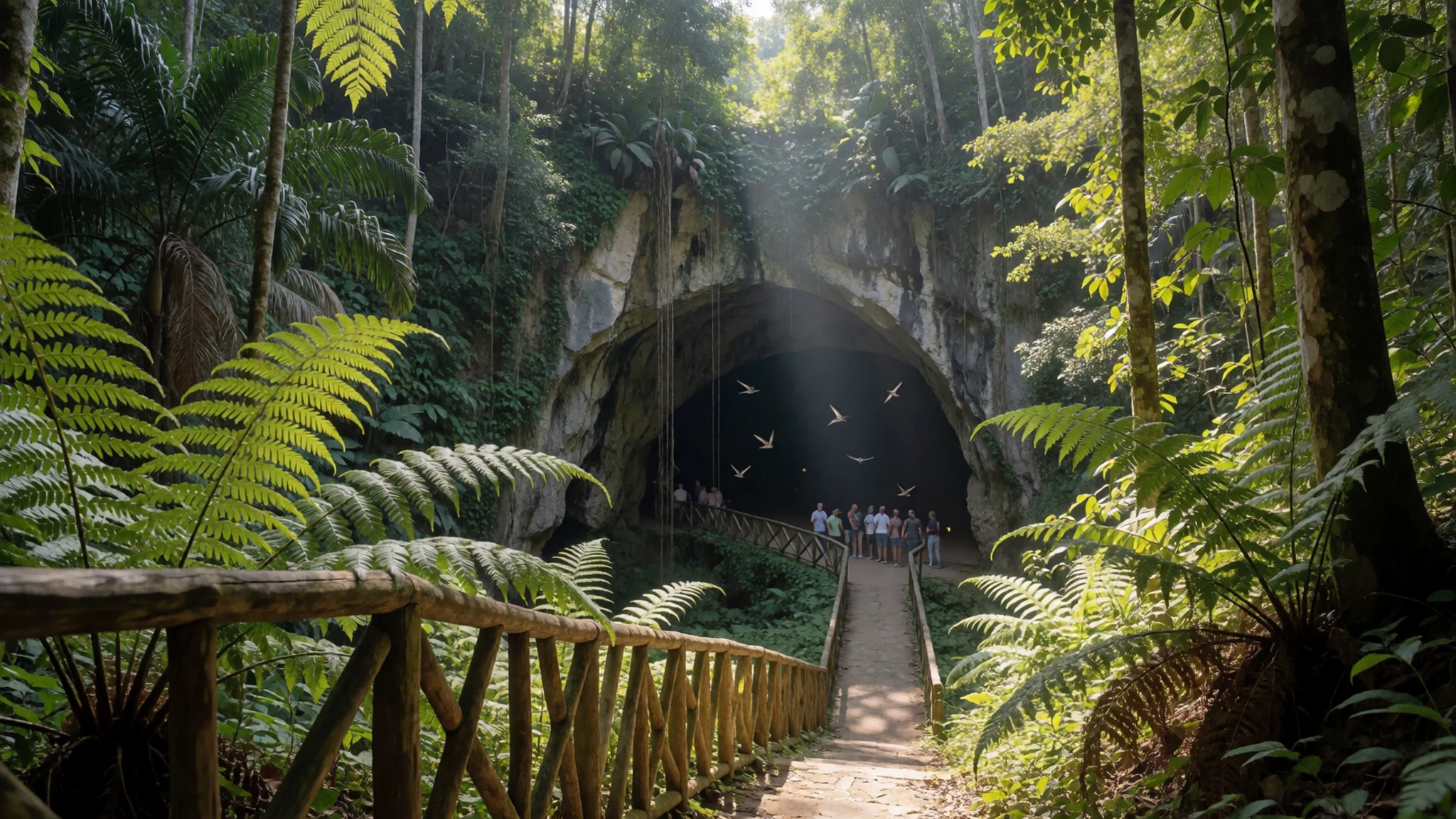
- Cambalache Forest Reserve — East of Arecibo
Parts of Cambalache Forest Reserve, a state forest east of Arecibo, are open for hiking, mountain biking, camping and bird-watching. It gives some shade and green after the exposed coast. Trails vary, so ask locally about conditions after rain, and carry water and insect repellent.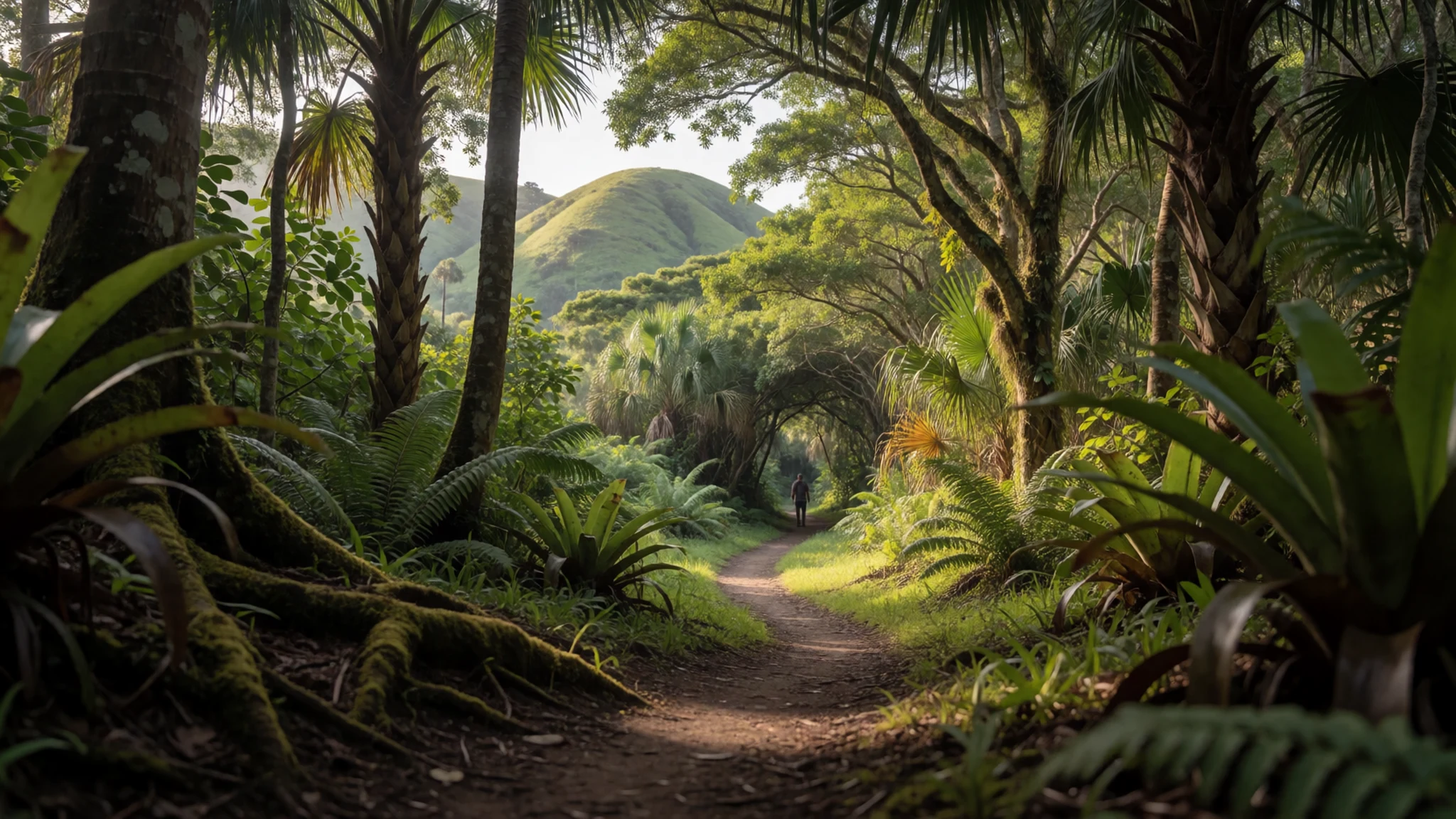
Culture
Arecibo Observatory sits in a part of the world where the culture is a layered one. Puerto Rico is a US territory with Spanish as the everyday language and English widely understood, and its heritage draws on Taíno, Spanish and African roots. That mix shows in music, with bomba and plena rooted in the island's African traditions and salsa a point of local pride, and in food, festivals and family life. Around Arecibo, the observatory has long been a source of local pride and of skilled jobs, and its loss in 2020 was felt as a community matter, not only a scientific one. Staff and neighbours are often glad to talk about what the dish meant, so a little curiosity goes a long way. Greetings matter: a friendly buenos días when entering a shop or a small eatery is expected, and conversations tend to be unhurried. Sundays can be quiet in the town centre, with families heading to church or to the coast, and public holidays bring crowds to beaches and plazas. Rural roads in the hills are narrow and winding, and drivers there are used to locals who know every bend, so patience is appreciated. At Arecibo Observatory, follow staff directions and signs, stay behind the barriers at the edge of the sinkhole, and ask before photographing staff or anyone's family.
What to wear
Dress around Arecibo Observatory and the north coast of Puerto Rico is shaped by heat, humidity and rain. Traditional dress is mostly seen at festivals and in folk performance. The jíbaro, the figure of the island's rural interior, is pictured in a cotton shirt and trousers with a woven straw hat called a pava. The guayabera, a pleated and pocketed shirt in cotton or linen, is still worn at celebrations and by many older men. Dancers of bomba and plena wear wide, ruffled cotton skirts, and fine bobbin lace known as mundillo is used as trim. Everyday wear now is casual: shorts, T-shirts, sundresses, sandals and caps, with a pressed shirt or dress kept for church, weddings and business. Visitors should pack light, breathable cotton or linen, and a wide-brimmed hat or cap with sunscreen for the exposed viewing areas. Bring a light waterproof jacket, because showers arrive quickly in the hills, especially in the wetter months. Closed shoes with grip suit wet paths, car parks and forest trails better than flip-flops. Swimwear belongs on the beach, not in town. In Arecibo's historic church, cover bare shoulders and remove your hat, as you would in any Catholic church on the island. Evenings by the coast can be breezy, so a thin layer is useful.
What to eat
- Mofongo — Restaurants serving criollo cooking around Arecibo
Mofongo is fried green plantain mashed with garlic and oil, often with pork crackling, and served with a seafood or meat filling or broth. It is filling and rich. Look for it in restaurants serving traditional island cooking, along the coast around Arecibo.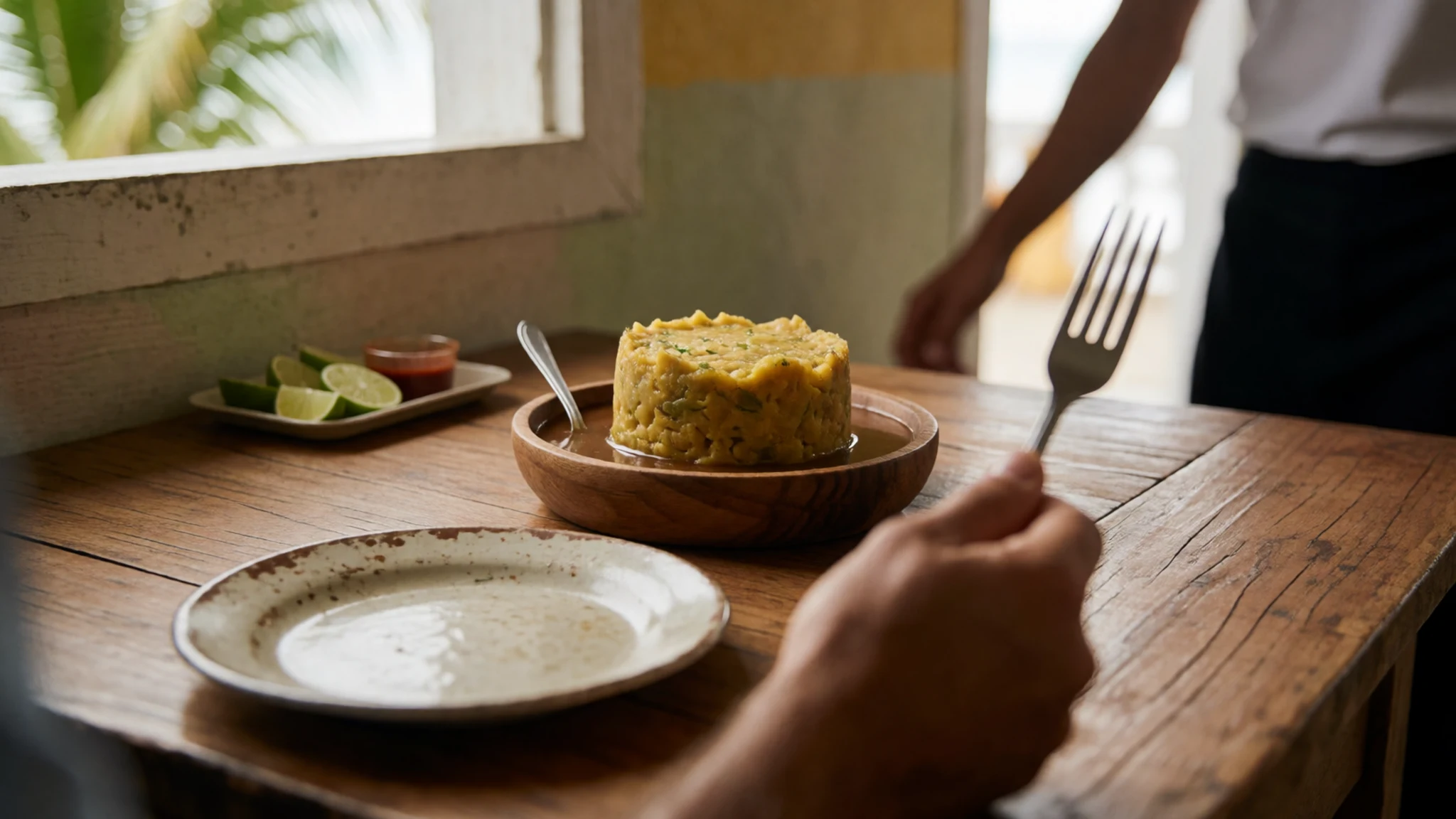
- Fried red snapper (pargo frito) — Seaside restaurants on the Arecibo coast
A whole red snapper, fried until crisp and served with tostones or rice. Seaside restaurants near Arecibo's lighthouse are known for fresh seafood cooked to order, and a fried snapper there is a good order to try with a view of the water.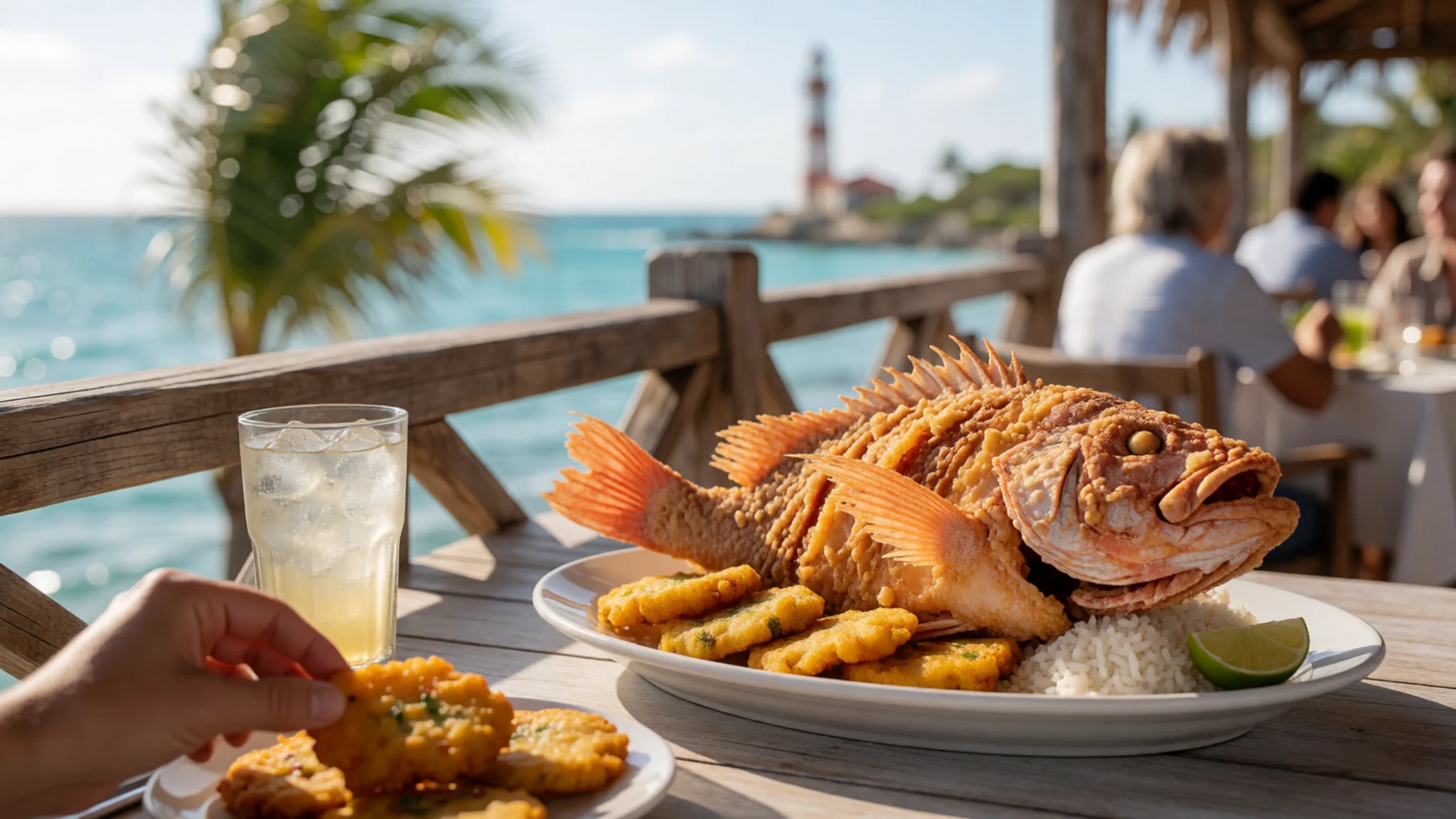
- Alcapurrias — Roadside kiosks (kioskos) along the north coast
Alcapurrias are fritters made from grated green banana and root vegetable, filled with seasoned meat or crab and fried until crisp outside and soft within. They are a snack to eat standing up, best fresh from the pan. - Tostones — Almost any local restaurant or kiosk
Tostones are slices of green plantain fried, flattened and fried again until golden and crunchy. They come salted as a side with fish or meat, or with a garlic dip, and appear on almost every menu in the area. - Piña colada — Seaside bars and restaurants on the coast
Pineapple, coconut and rum blended with ice, and a drink Puerto Rico is proud of. It is sweet and cooling in the heat. Order one at an ocean-view bar on the coast after the drive down from the observatory, and ask for it without rum if you prefer.
Plan it
Best time. December to April is usually the drier, less humid stretch and the easiest for hill roads and outdoor viewing. Hurricane season runs from June to November, with heavy rain and heat, so check forecasts and the official site before going.
How long. 1
Getting there. Fly into Luis Muñoz Marín International Airport at San Juan, then drive west for about an hour (roughly 80 km) on the main expressway to Arecibo, and finish on the signposted mountain road to the observatory. Rafael Hernández Airport at Aguadilla on the west coast is an alternative. A hire car is the practical choice.
Budget. mid
Tips
- Check the official site, https://www.naic.edu/, for what is open before you drive up; access has changed since 2020
- Go in the morning, before the afternoon heat and showers build
- Carry water, sun protection and a light rain jacket, as shade is limited at viewing areas
- Hire a car and fill the tank in town; the last stretch is a winding hill road with few services
- Keep some cash for roadside kiosks and small eateries
Etiquette
- Stay behind barriers and follow staff and signage at the edge of the sinkhole
- Ask before photographing staff or local families
- Greet people with a buenos días when entering a shop or small eatery
Nearby
Sources
- Wikidata Q102327045 (CC0)
- Wikipedia: Arecibo Observatory (rev 1382933246) (CC BY-SA 4.0)
- Wikivoyage: Arecibo (rev 5359206) (CC BY-SA 4.0)
- Photo: Arecibo radio telescope, Mariordo (Mario Roberto Durán Ortiz) (CC BY-SA 4.0)
- Photo: Panorama of Arecibo telescope from observation deck, Evilkalla (CC BY 3.0)
- Photo: Arecibo Observatory sign at entrance gate, Mutante (CC BY-SA 4.0)
- Photo: Arecibo radio telescope observatory, David Broad (CC BY 3.0)
- Photo: Arecibo Observatory, Chris Amelung (CC BY 2.5)
- Photo: IEEE sign at Arecibo Observatory, Chris Amelung (CC BY 2.5)
- Photo: The Allende meteorite slice, Xmerc226 (CC BY-SA 4.0)
- Photo: Arecibo Observatory parking lot, Mariordo (Mario Roberto Durán Ortiz) (CC BY-SA 4.0)


