Writing-on-Stone
Writing-on-Stone, Canada
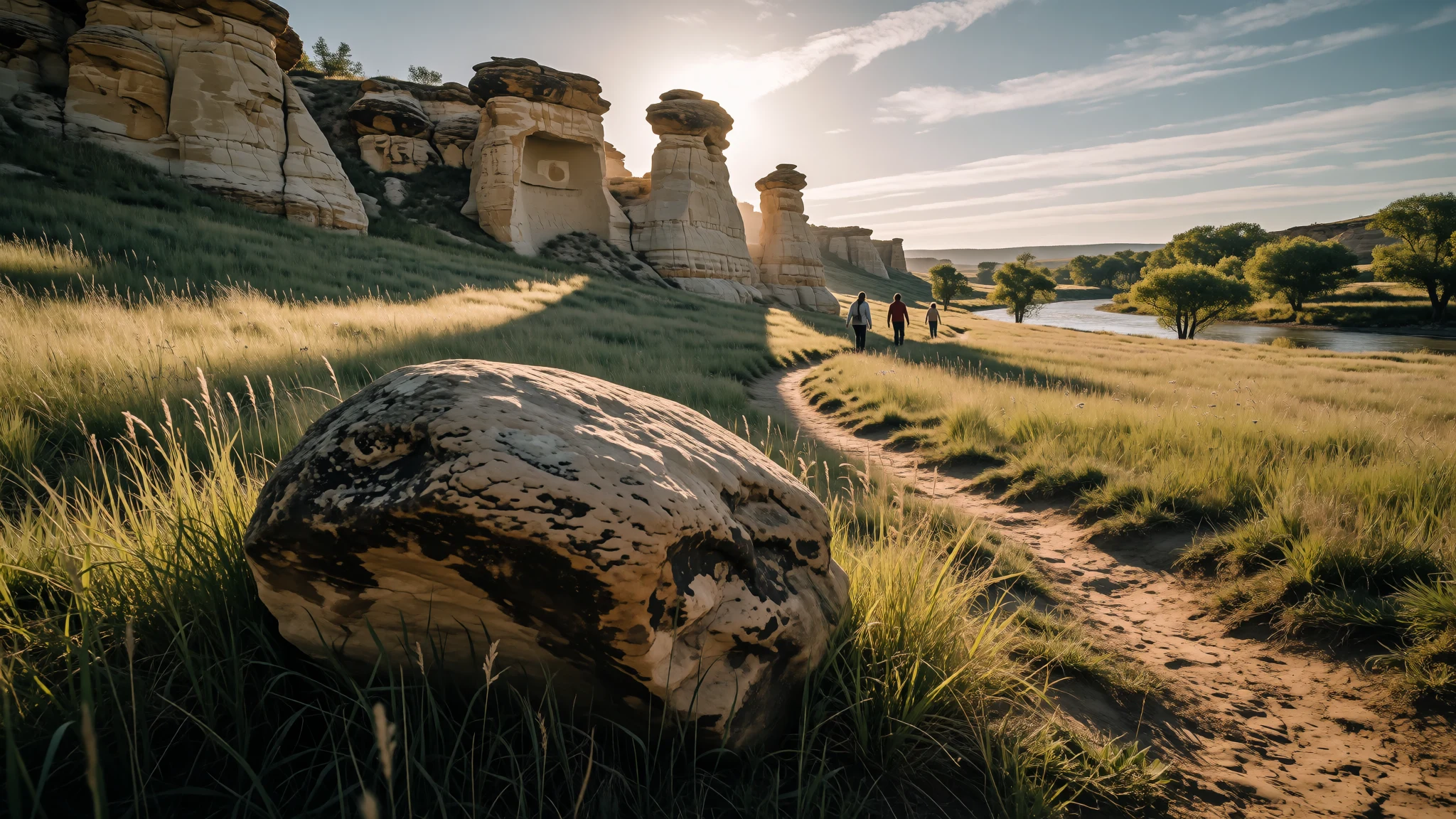
Writing-on-Stone is a quiet prairie river valley where Blackfoot carvings and paintings still cover the sandstone, in a place that remains sacred.
The place
Writing-on-Stone Provincial Park lies on the southern Alberta prairie, near the Montana border, where the Milk River has carved a shallow valley into otherwise open grassland. Sandstone cliffs and odd, eroded pillars called hoodoos line the water, and many of the rock faces carry carvings and paintings made over a very long span of time. The park is both a stretch of protected native prairie and a cultural landscape, and the Blackfoot hold it sacred. Their name for it, Áísínai'pi, means roughly 'it is pictured', and the same ground is also a National Historic Site of Canada. The park was created in 1957, and the UNESCO World Heritage listing followed in 2019. Lethbridge is the nearest city of any size, and the village of Milk River is the last small community on the way. Nothing about the approach is busy. The land is flat and wide, and then the valley opens suddenly below the road. What the park offers is quiet: a campground, a visitor centre, a few short trails, a river for paddling and a great deal of sky. Summer afternoons are hot and the prairie gives almost no shade, though the cottonwoods along the water are noticeably cooler. Much of the densest rock art sits in a protected zone entered only with a guide, so a visit is as much about listening as looking. Anyone expecting a theme park will be surprised; anyone happy to walk slowly and read the landscape tends to leave thoughtful.
Its story
Writing-on-Stone has been a gathering and crossing place for a very long time, with evidence of people in the Milk River valley going back about 9,000 years. The Blackfoot most likely made many of the carvings (petroglyphs) and paintings (pictographs), and Shoshone travellers passing through may have added some. The images record journeys, battles and encounters with spirits. The Blackfoot understood the cliffs and hoodoos as dwelling places of powerful beings, which is part of why the valley was treated with such respect. It also made practical sense as a stop. The coulees gave shelter from wind, and game and berries were plentiful, so groups moving with the seasons paused here. Most use was brief, though tipi rings and a medicine wheel suggest some people stayed longer. From around 1730, horses, metal goods and guns began to arrive on the western plains, and the rock art changed with them. Riders and hunters on horseback appear, and warriors are drawn without the protective shields of earlier scenes. The later story is more administrative. In 1887 the North-West Mounted Police, forerunner of the Royal Canadian Mounted Police, set up a post here to deter whisky smuggling across the border and to watch for horse raids. Neither problem became serious, and the officers spent their days on grass-fire duty, returning strays and patrolling a long, empty frontier. The post has since been rebuilt on its original site.
What to see
- Guided rock art tour — Protected Áísínai'pi zone
Writing-on-Stone holds more than fifty petroglyph sites and thousands of individual works, and most of them can only be reached with a park guide. A small amount of art is visible from a public walkway. Check the official site for how tours are booked before travelling.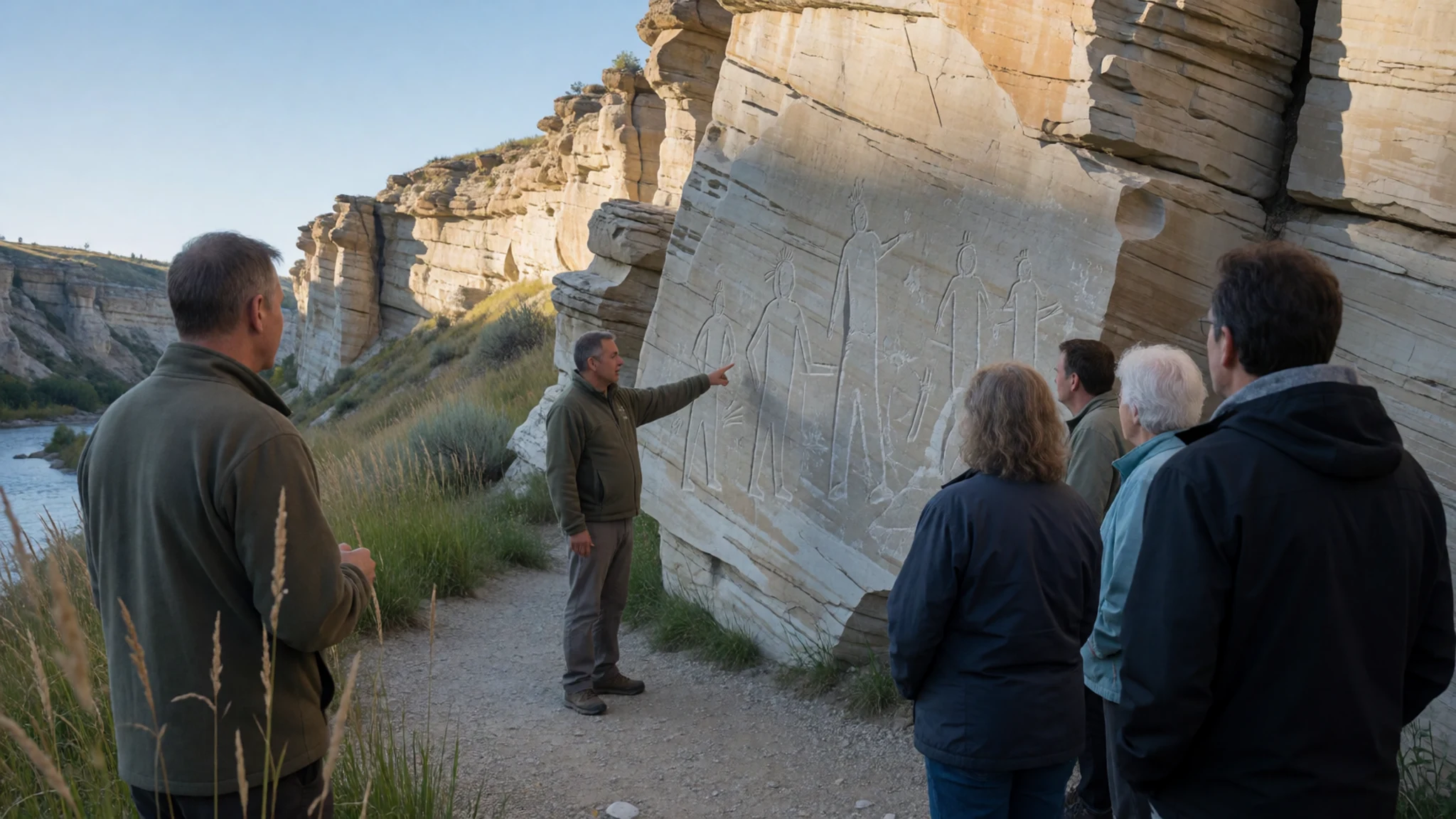
- Battle Scene — Rock face above the river
The best-known panel is a long carved scene of rival groups facing one another, with figures on foot and on horseback, camps and weapons. It is nearly three metres long and shows how the art took in horses and guns. Look closely at the horse detail, and at the tiny people.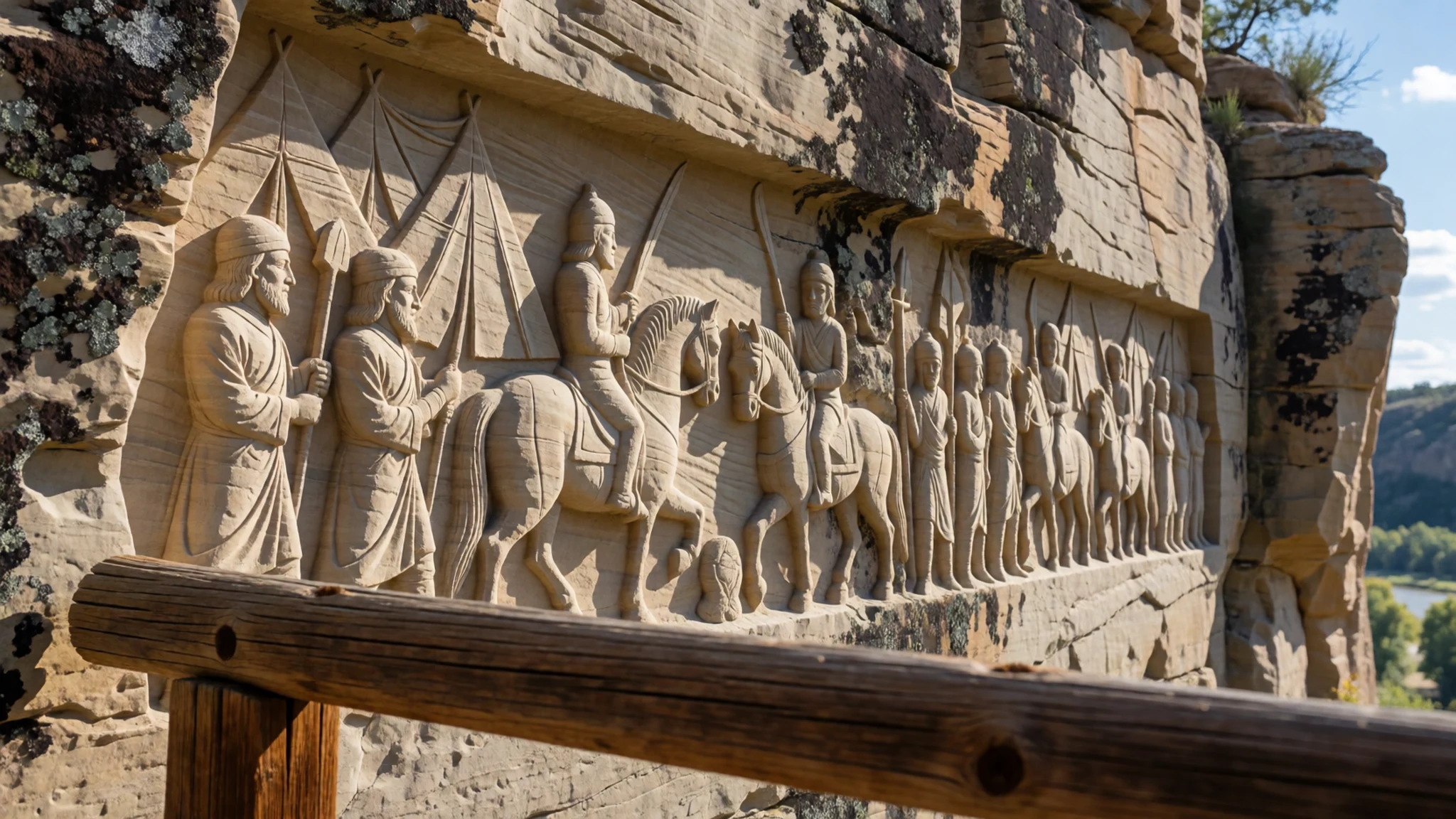
- Hoodoo Trail — Valley floor and benchland
This is the main walking route through the park's best scenery. It winds past hoodoos, sandstone cliffs, rock art, upland grassland and coulees beside the river. It is a gentle walk but fully exposed, so carry water, wear a hat, and keep to the path in long grass.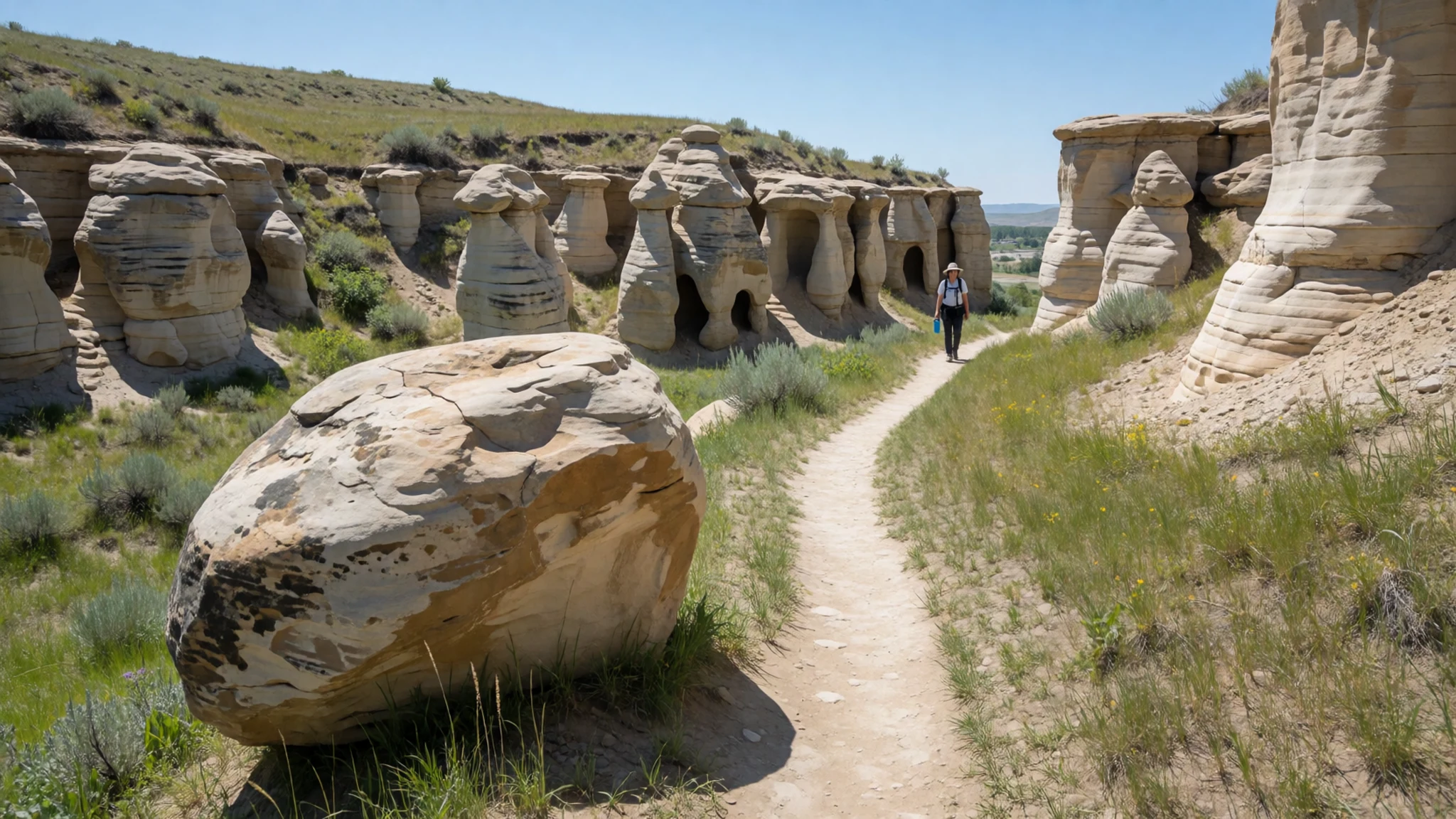
- Milk River — Valley floor
The river is the reason the valley exists, and it is a pleasure in its own right. In summer people paddle, tube or wade in it, but conditions change, so check them first. Cottonwoods shade the banks, and the water makes a good place to sit and absorb the cliffs.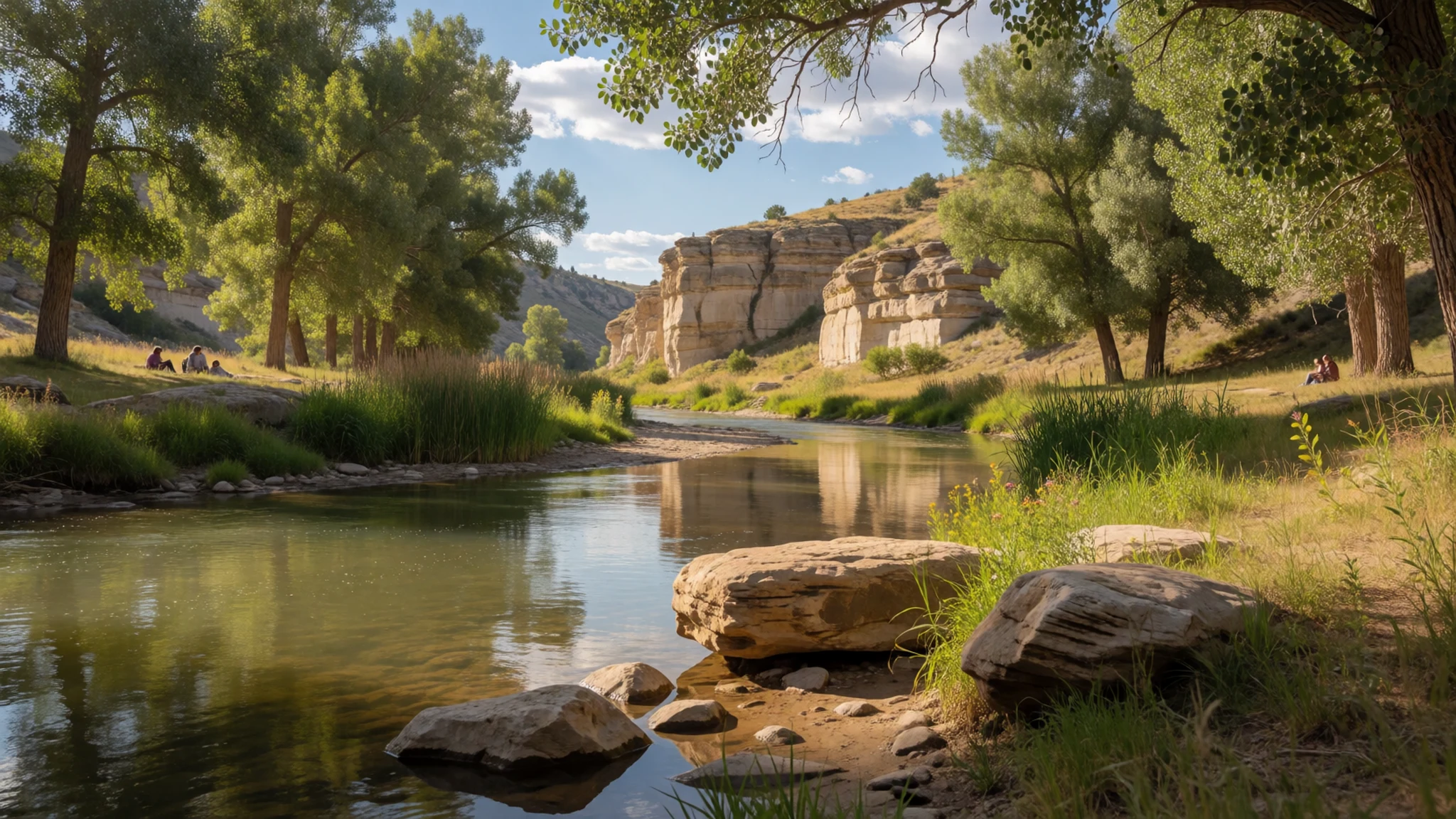
- North-West Mounted Police outpost — Near the river, original site
A reconstructed police outpost stands on the spot where the original post once operated, rebuilt after the first one burned down. It is a small, modest building, but it adds a colonial-era chapter to a landscape otherwise read through Blackfoot history, and it is worth a short stop.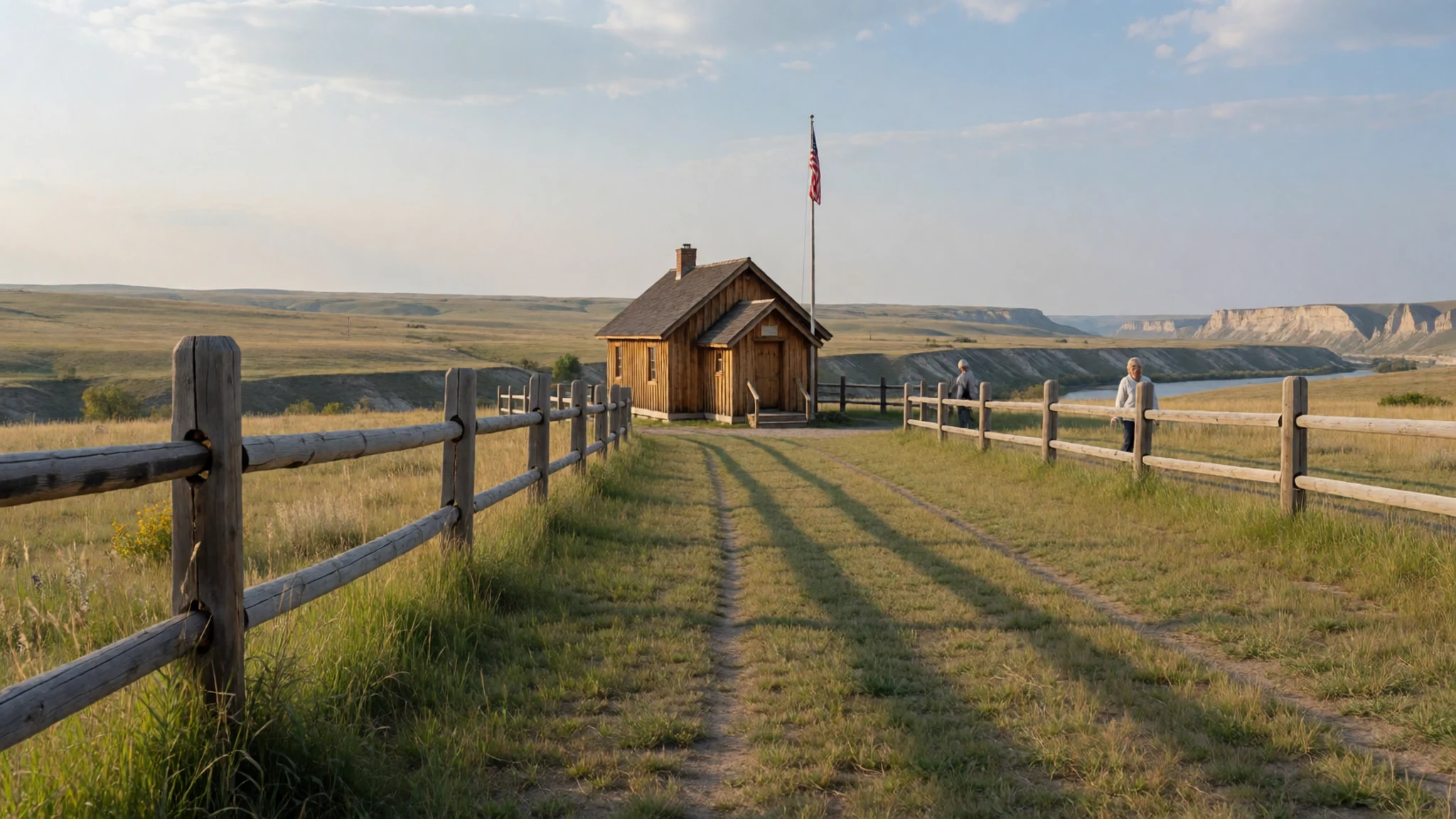
- Backcountry hiking zone — Across the river
A large backcountry area of rolling grassland, hoodoo fields and narrow canyons lies across the river. There are no built trails, only game trails, and reaching it means wading the river at your own risk. Call at the visitor centre for a map and current advice first.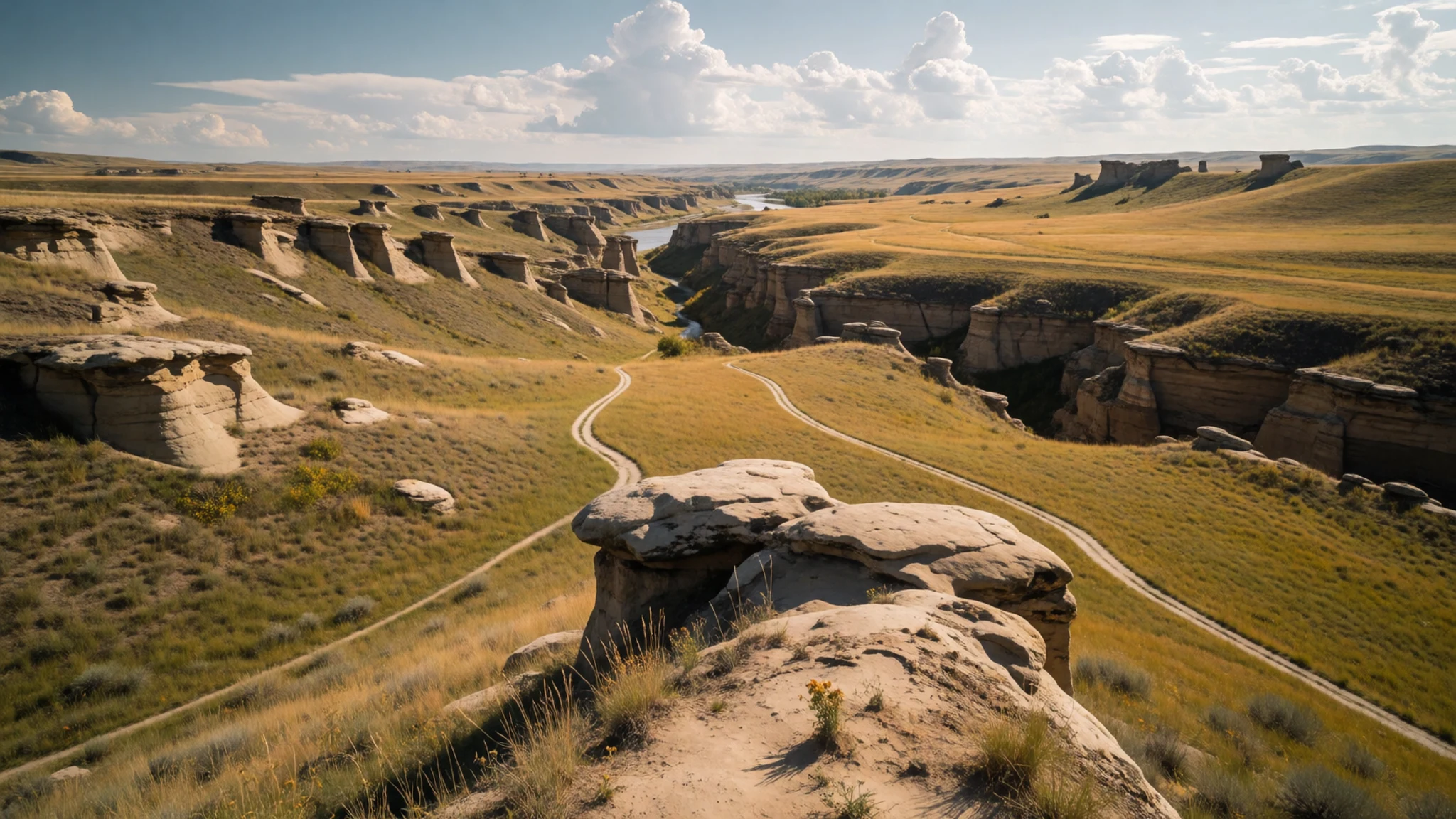
Culture
Writing-on-Stone is, above all, a sacred place, and that shapes how the park is run and how it should be visited. For the Blackfoot, the cliffs and hoodoos are the homes of spirits, and the carvings are a living record rather than an antique. The park's Blackfoot name, Áísínai'pi, speaks of a place that is pictured or written, and the images are read as messages from people who came before. Other Indigenous nations, including the Shoshone, also passed through, and the art holds many hands. Interpretation here is increasingly shared with Blackfoot voices, so tours and displays are worth taking seriously rather than treating as a quick photo stop. Alongside the older art sit later marks, including a carving of a car dated to 1924, which is a reminder that the tradition continued well into the modern era. The landscape also carries the history of the police post and of the prairie cattle country around it, but those layers sit beneath the Indigenous presence rather than above it. Silence suits the place. Visitors tend to speak quietly on the trails without being asked, and that instinct is right. Damaging cultural material can bring serious penalties, so the rules about staying on marked routes and leaving objects where they lie are not formalities. Never touch, trace, chalk or add to the carvings, and leave any artefact you find exactly where it lies.
What to wear
Writing-on-Stone sits in Blackfoot territory, and traditional Blackfoot dress was made mainly from tanned animal hide, especially bison and deer. Garments were decorated with porcupine quillwork and later with glass beads, and bison robes gave warmth in winter. Feathered headdresses and beaded regalia belong to ceremony and honour, and are worn today at powwows, dances and other gatherings rather than as everyday clothes. Everyday dress across southern Alberta is plain and practical: jeans, work shirts, boots, caps and sturdy jackets, with ranching-style hats common in the farming towns near the park. Ordinary clothes in this region are chosen for sun, wind and dust rather than fashion. Visitors should dress for exposed prairie. A wide-brimmed hat, sunglasses and sun cream matter more than anything else in summer, and light long sleeves and trousers help against both sun and sharp grass. Closed, sturdy shoes are strongly advised because of the park's rattlesnakes, which are shy but best avoided, so sandals are for the riverbank only. Evenings cool down quickly on the prairie, and spring and autumn can be cold, so carry a warm layer. There is no formal dress code, but modest, practical clothing suits a place of spiritual importance, and swimwear belongs at the water, not on the trails.
What to eat
- Bannock — Indigenous cultural events and community gatherings in southern Alberta
Bannock is a simple fried or baked bread, long part of Indigenous cooking across the prairies. It is dense, warm and a little chewy, often eaten plain or with jam. Look for it at powwows, cultural events and stalls run by Blackfoot communities.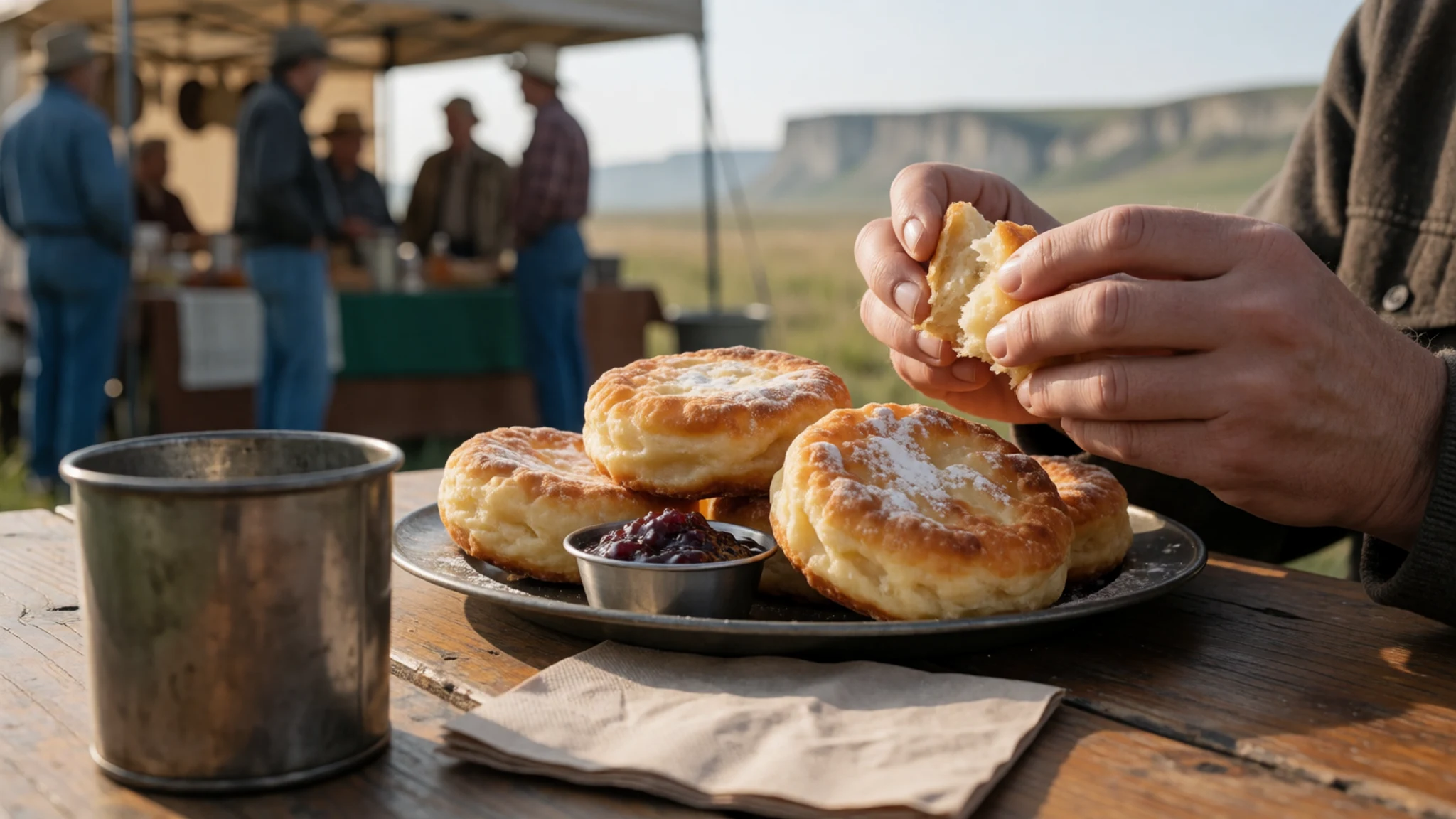
- Saskatoon berry pie — Bakeries and cafés in prairie towns such as Milk River and Lethbridge
The saskatoon is a native prairie berry, dark purple and slightly almond-tinged, and it makes a classic Alberta pie. Small-town cafés and bakeries serve it in slices, often with ice cream. Berries were also gathered in this valley long before the pie existed.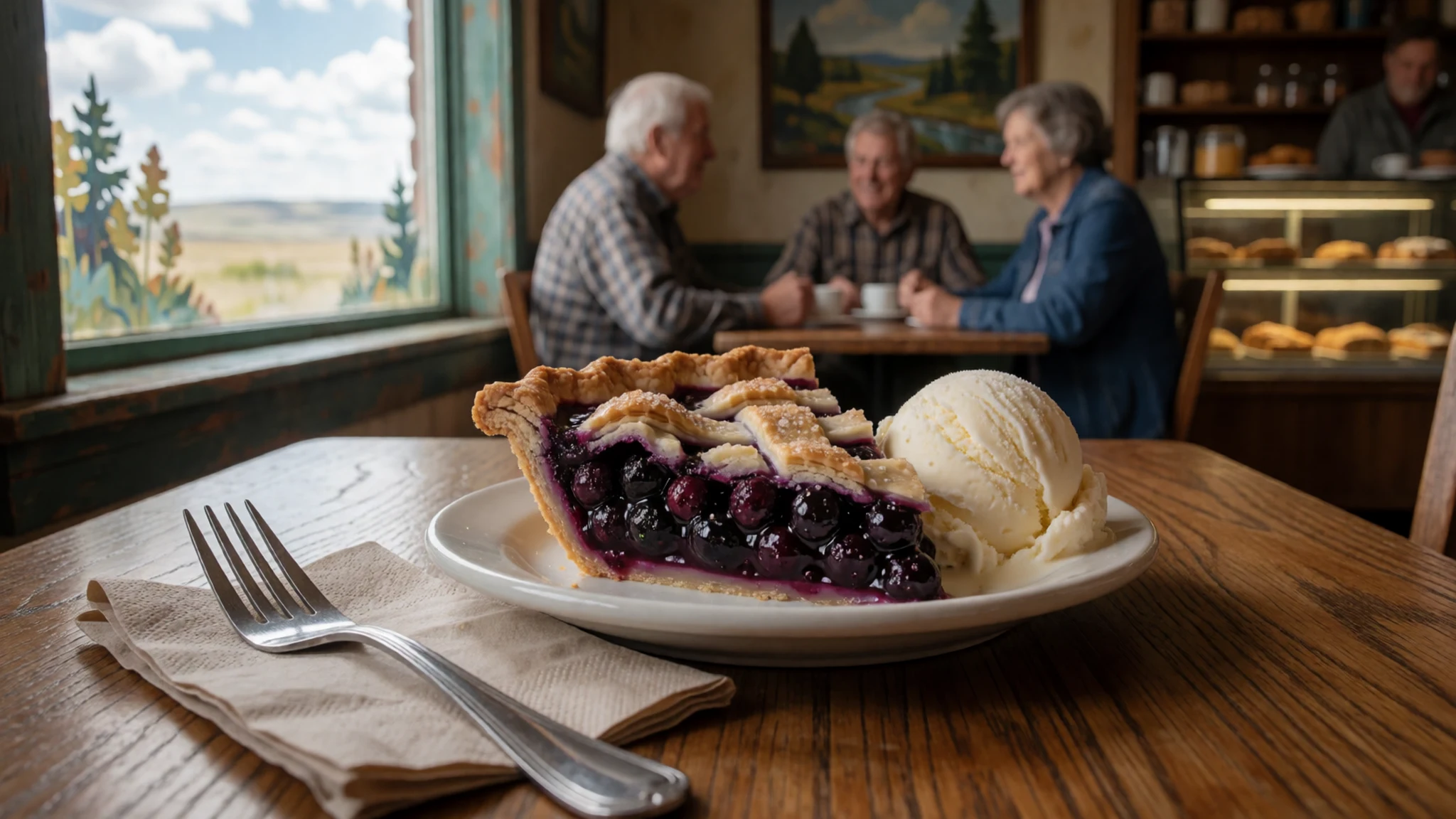
- Alberta beef — Diners and steakhouses in Lethbridge and the farm towns on the way
Southern Alberta is cattle country, so beef is the obvious local meal, from burgers in roadside diners to steaks in town restaurants. It is hearty and unfussy. Order it plain, with chips or baked potato, and expect generous portions. - Bison stew or burger — Restaurants and cafés in Lethbridge, and Indigenous-run food stalls
Bison was central to Blackfoot life, and the meat is lean and rich. It appears as stew, burgers or sausages in some Lethbridge restaurants and at cultural events. The flavour is close to beef but deeper, and well suited to cold evenings. - Campfire cooking — The park campground, with supplies bought in Milk River or Lethbridge
Food near the park is limited, so many visitors bring groceries and cook at the campground. Sausages, foil-wrapped vegetables and toasted marshmallows are standard. Stock up in town beforehand, and keep food sealed and stored away from wildlife.
Plan it
Best time. May and June for green grass, long light and bearable heat; September for calmer, cooler days and fewer visitors. July and August are hot and exposed with little shade, and winter is cold and quiet, so check what is open before going.
How long. 1–2
Getting there. Calgary has the nearest large airport, and Lethbridge is the nearest city, with its own small airport. There is no practical public transport, so hire a car, drive to Lethbridge, continue to the village of Milk River, then follow the signed road east to the park gate.
Budget. low
Tips
- Check the official site (http://www.albertaparks.ca/writing-on-stone/) for how to book the guided rock art tour, which is the only way into much of the best art
- Bring plenty of water and sun protection, as the valley has little shade in summer
- Fill the fuel tank and buy groceries in Lethbridge or Milk River beforehand, as services near the park are limited
- Watch where you step and keep out of long grass and rock crevices, because prairie rattlesnakes live here
- Check river conditions before paddling, tubing or wading across to the backcountry
Etiquette
- Treat the carvings as sacred: never touch, trace or add marks to them
- Leave any artefact where you find it and tell park staff
- Keep to marked trails and speak quietly near the rock art
Nearby
Sources
- Wikidata Q8038519 (CC0)
- Wikipedia: Writing-on-Stone Provincial Park (rev 1378909800) (CC BY-SA 4.0)
- Wikivoyage: Writing-on-Stone Provincial Park (rev 5242546) (CC BY-SA 4.0)
- Bob rulz, Hoodoos in Writing-on-Stone Provincial Park, Alberta (Public domain)
- Matthias Süßen, Áísínai'pi National Historic Site of Canada - rock carvings (CC BY 3.0)
- Lucy Rowed, Writing-on-Stone Provincial park (CC BY-SA 4.0)
- Wheateater, Milk River in Alberta (Public domain)
- eileenmak, Battle Scene petroglyph, detail (CC BY-SA 4.0)
- eileenmak, Car (1924 First Nations art) (CC BY 2.5)
- MensaGlobetrotter, Writing on Stone 2025-07-19 (CC BY-SA 4.0)
- eileenmak, Horse detail from the Battle Scene (CC BY 2.5)


