Varadero
Varadero, Cuba
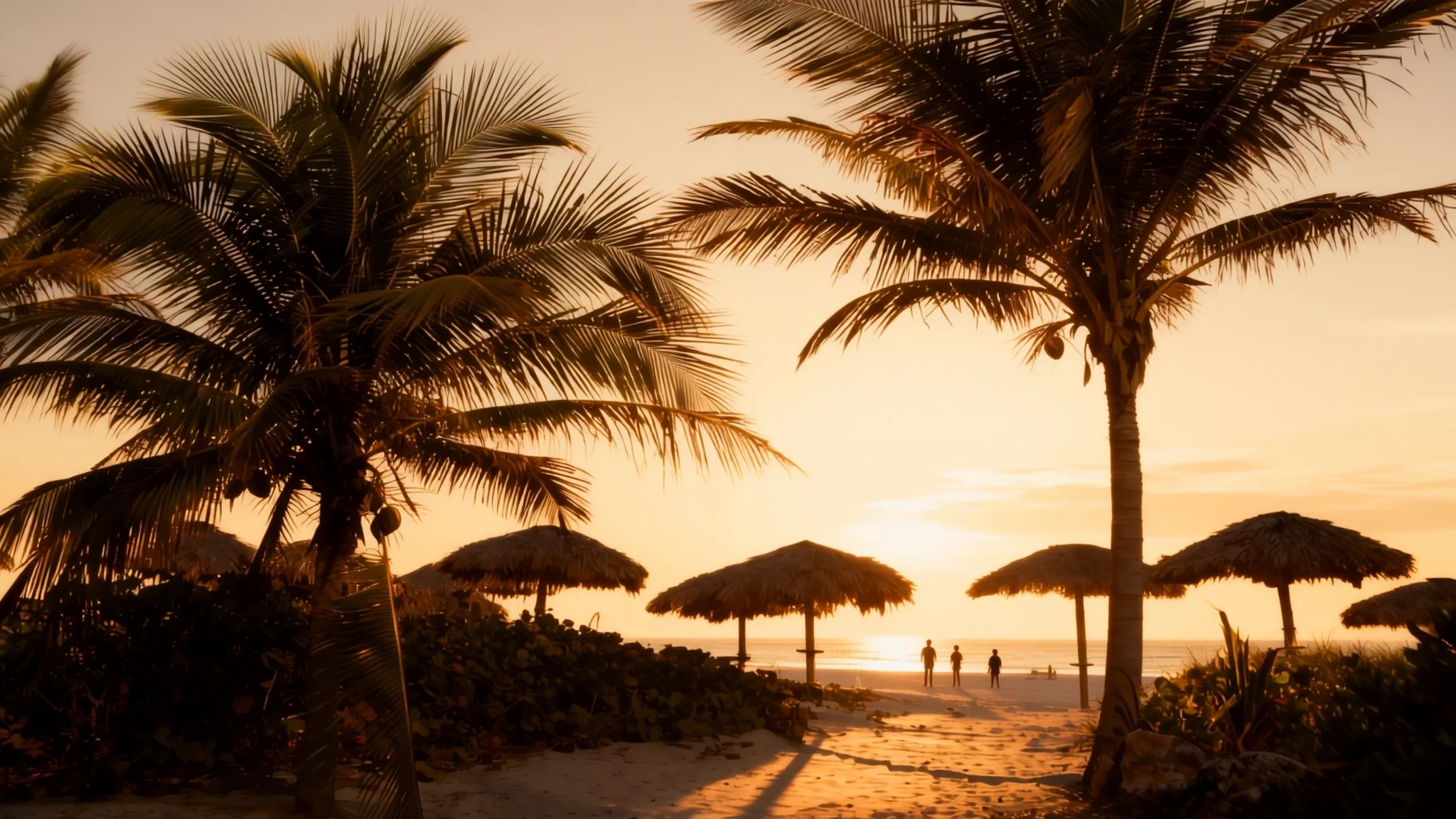
Varadero is Cuba's long sand peninsula in Matanzas, a resort beach between open sea and a sheltered bay.
The place
Varadero is the resort town strung along the Hicacos Peninsula in Matanzas province. The land has the open Straits on the ocean side and the enclosed Bay of Cárdenas on the other, so a walk across the spit meets water twice. Hotels and their gardens take much of the seaward edge. The older town sits towards the mainland end, with a small centre, a marina and a public park. From the air the shape is simple: a road and a thin line of buildings held between two different kinds of water. The beach is pale and fine, and the sea stays shallow for a long way out, light turquoise over sand and darker blue further off. A broken reef knocks down much of the swell, which makes the bathing gentler than on a fully exposed shore. Wind off the water is the main relief when the sun is high, and real shade is mostly whatever a garden has planted. Between the resort entrances, open stretches of sand are where local families swim. Most arrivals meet the place from the bridge that ties the peninsula to the mainland, hotel blocks showing beyond the span. In town the streets are low: shops, houses, a church, and Parque Josone, green space around an old mansion and a lake. Towards the far tip the buildings thin and scrub takes over. Varadero is a beach town made for staying on the sand, with ordinary Cuban life continuing in the streets that serve the hotels. In the drier months the shore is busy. When rain and the chance of storms return, the same coast simply quietens.
Its story
Varadero was first recorded in 1555 as a dry dock, not as an international resort. Fishing boats worked the bay, salt came off the coastal flats for the Spanish fleet from 1587, and on 5 December 1887 ten families from Cárdenas were allowed vacation homes so the hot weeks could be spent on the ocean beach. The settlement at the root of the peninsula grew around that work and that habit. Visitors were already coming in the 1870s to an elite resort on the shore. Better-off households, some of them from Havana, built holiday houses on a bathing beach that was already a resort. Larger hotels lined the ocean side and the name travelled past Matanzas. After 1959 the mansions taken over by the state became museums, and the Park of the 8000 Cubicles opened for Cubans and foreign visitors together. Through the 1960s and 1980s Varadero was a centre of concerts, festivals and sport, and an International Carnival ran in the 1980s. The sand did not move. The guests did. Foreign hotel firms eventually returned in partnership with Cuban state companies. All-inclusive complexes spread along the spit, the shoreline open to everyone, and flights began to deliver visitors almost to the peninsula. The town at the mainland end stayed the place where workers live, and where someone staying in a complex can still find an ordinary street. The resort and the town now need each other. The first wooden houses, with their red roofs, can still be seen along Avenida 1ra. The pattern is what remains. A narrow local bathing shore was scaled up into a resort, and people still arrive the same way: off the mainland, across the bridge, and onto the sand.
What to see
- Varadero Beach — Ocean side of the Hicacos Peninsula
Varadero Beach is the ocean shore of the peninsula, pale sand running past hotel frontages and public gaps alike. The water stays shallow well out from the towel line and is generally clear over the sand. Resorts set out chairs in front of the complexes, while other stretches stay open. Mornings are quieter, before the sun climbs and the beach fills.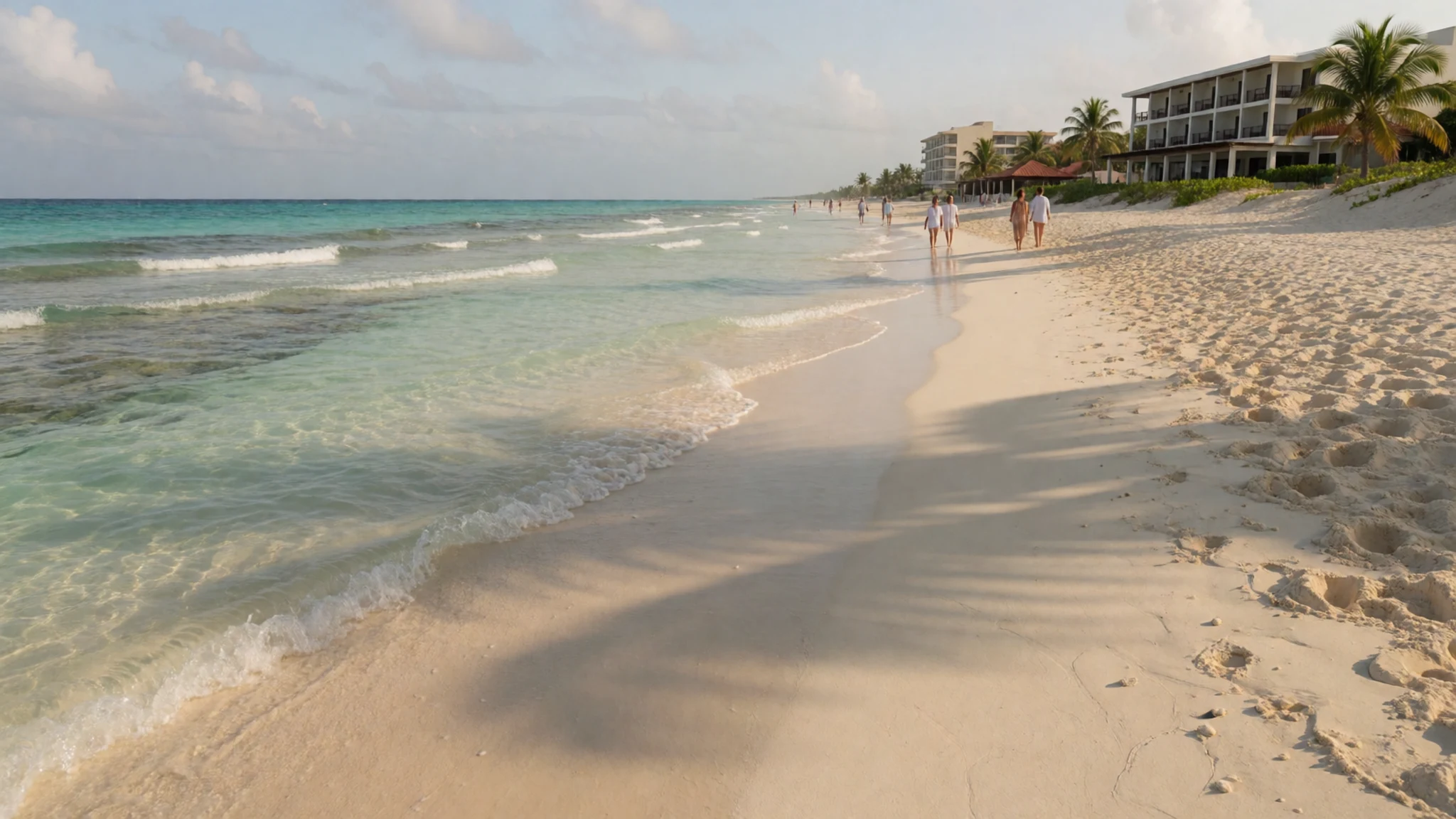
- Hicacos Peninsula — The whole sand spit north-east of the mainland bridge
The Hicacos Peninsula is the ground Varadero stands on, a narrow spit with open sea to the north and the Bay of Cárdenas to the south. From above, hotels, a road and golf grass fill that width, and the sand reads as a bright rim on darker water. Towards the tip, buildings give way to low scrub and rock.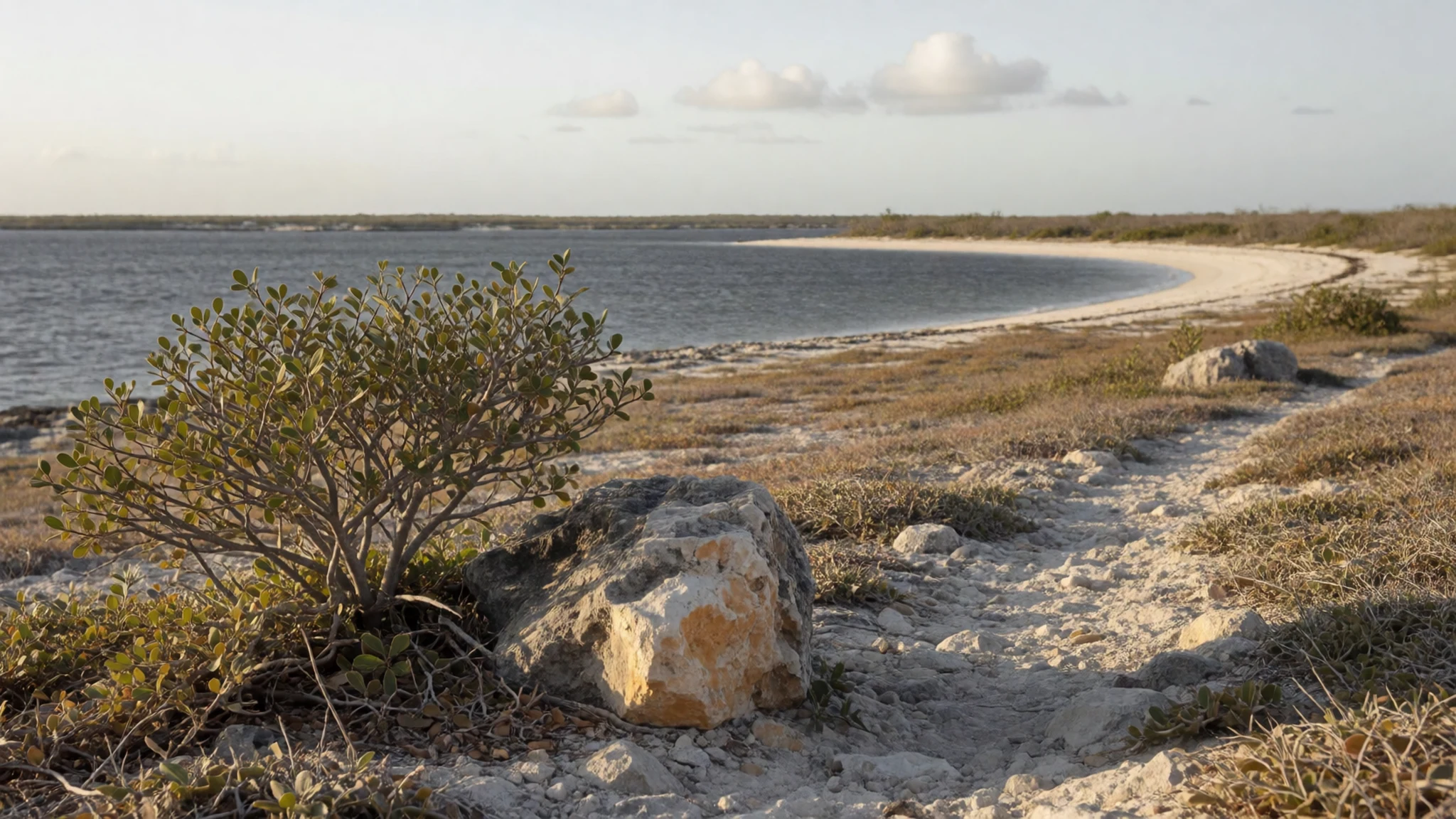
- Parque Josone — Older town, towards the mainland end
Parque Josone sits in the older part of Varadero, a landscaped park around a former mansion and a small lake. Trees and boats on the water give shade in a town that has very little. Small cafés face the lake. Residents and visitors share the paths, so the park feels like the town rather than a hotel garden.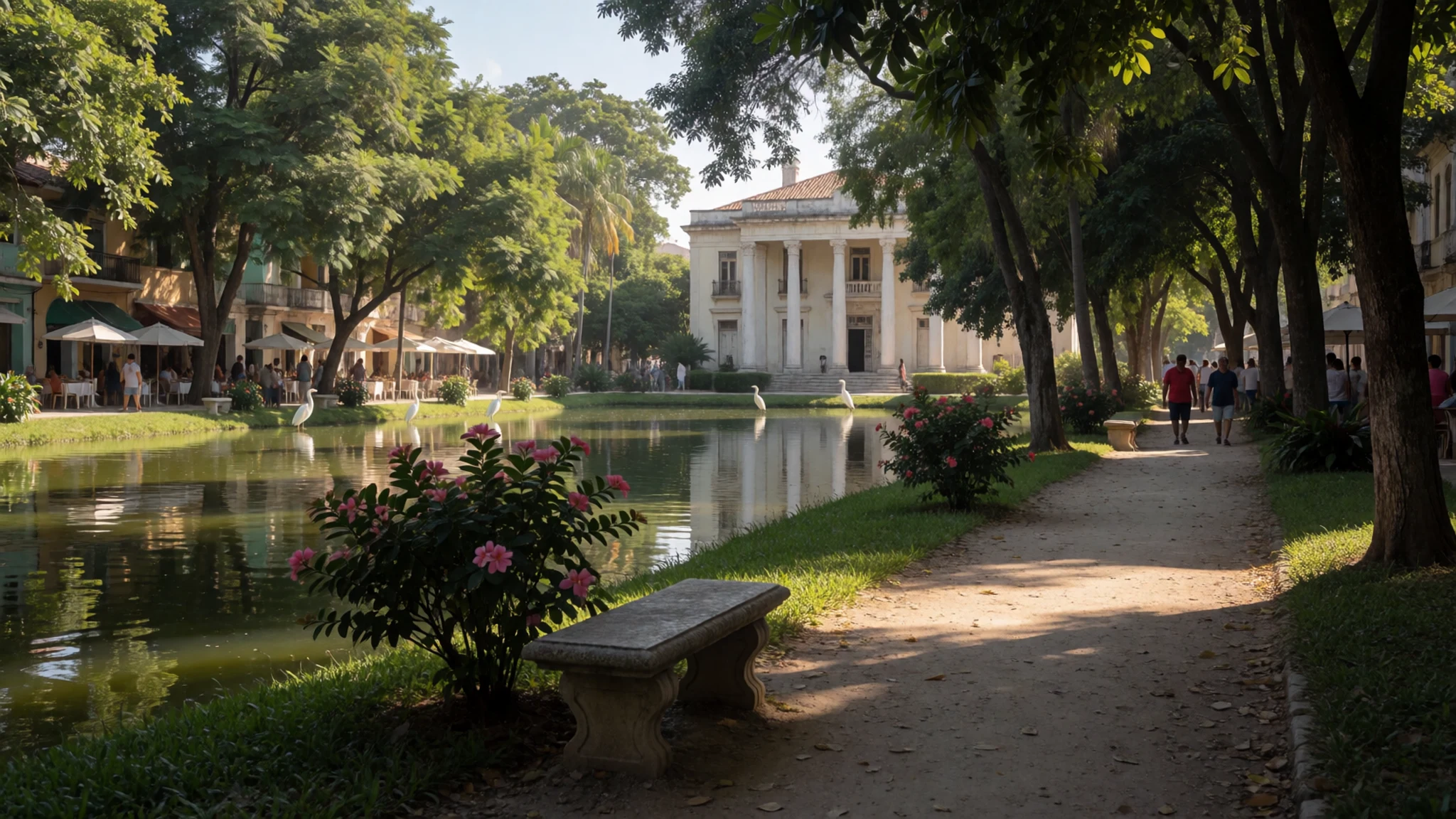
- The bridge from the mainland — Causeway linking the peninsula to the Via Blanca
The bridge on the road from Havana is Varadero's main approach, a long span across the water that separates the peninsula from the mainland. Past the crossing, the hotel line comes into view and the shape of the place is suddenly plain. The same span carries staff back towards town at the end of a shift.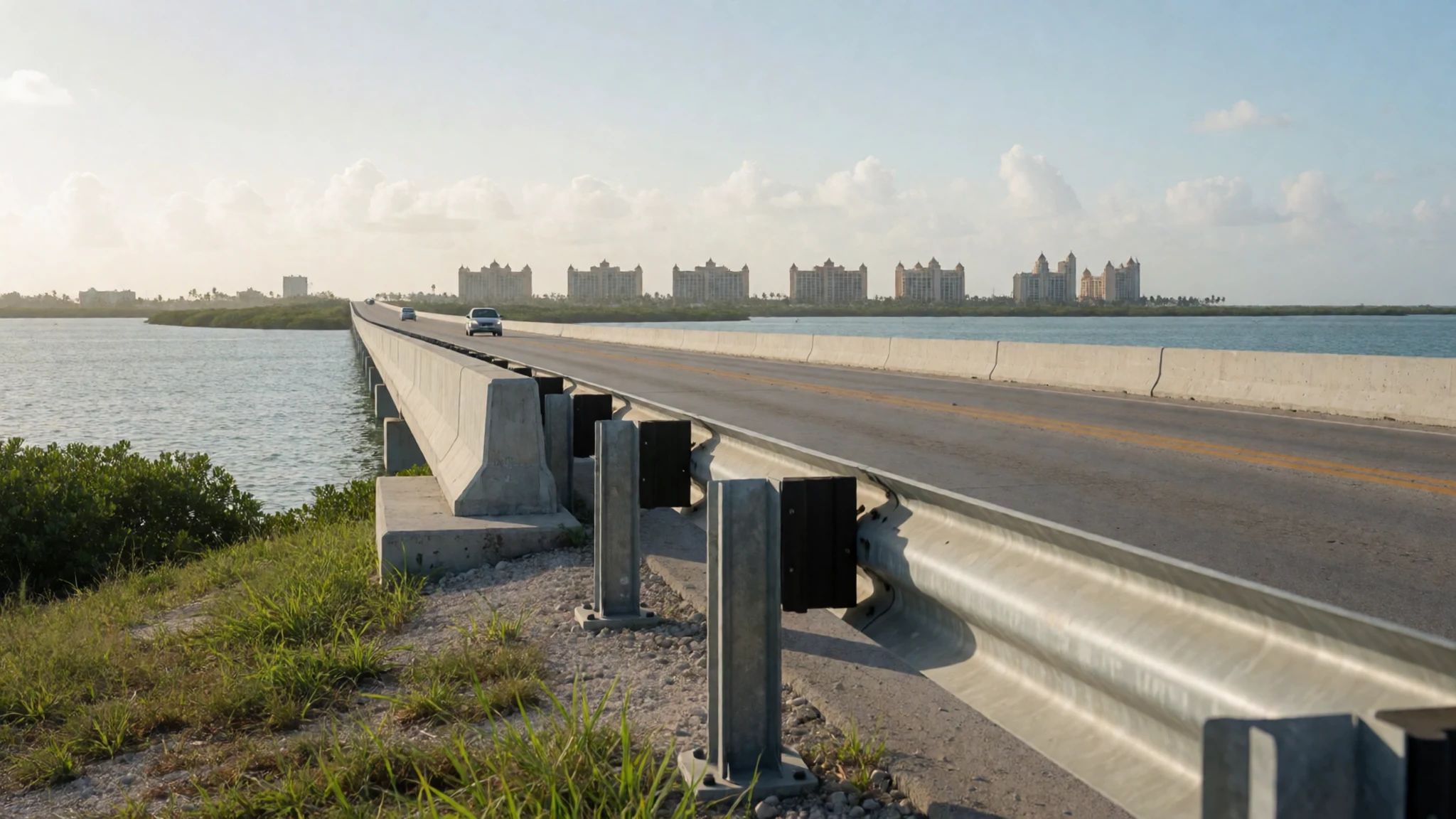
- Varadero golf course — Inland band of the peninsula
The golf course in Varadero sets green fairways between the pale beach and the inland side of the peninsula. Palms and ponds use ground that is never far from salt water, and the sea wind is part of play. For anyone not holding a club, the point is the colour: a kept lawn among sand, scrub and hotel roofs.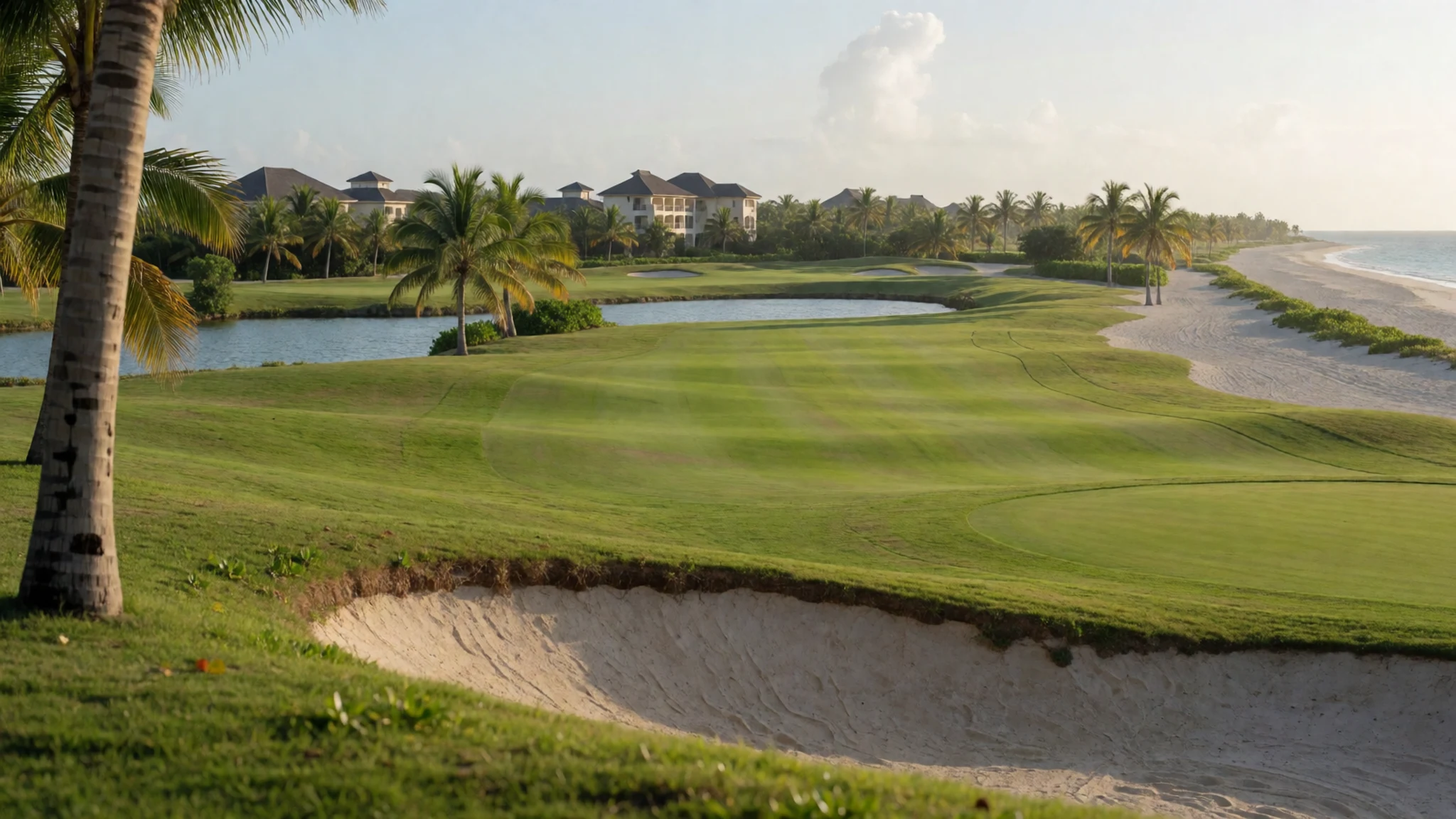
Culture
Varadero lives by Cuban habits inside a resort economy. Son, salsa and rumba are working music, played by live groups on hotel terraces and in small town venues, not only as a track behind a bar. Spanish is the language of the street and of home. English appears where staff meet foreign guests, then drops away. Conversation is direct, and humour is quick. Religious life follows the wider Cuban pattern, Catholic devotion alongside Afro-Cuban practice, kept mostly in family and community settings. A church marks the older centre. Visitors more often meet the informal economy tourism creates: musicians, drivers, craft sellers and people offering to arrange almost anything a stranger might want. Kindness and salesmanship can look the same. A plan should be agreed in plain words before anyone leaves a public spot with a new acquaintance, and a firm refusal ought to end the matter. The day bends around the heat. Morning and late afternoon belong to the beach, the middle hours to shade, and the evening to a late dinner and then music. Cuban families use the public sand as well, so the shore is not only a foreign reserve. Hotel gates and the town pass each other all day. Ask before you photograph anyone in Varadero, and never treat a religious ceremony or a private gathering as scenery.
What to wear
Traditional dress in Varadero is ordinary Cuban dress, not a costume made for the beach. The piece with a name and a textile history is the guayabera: a men's shirt in cotton or linen, worn untucked, with vertical pleats and pockets, in white or a pale colour. It is for weddings, official days and a smarter evening, and it is useless on the sand, where linen sticks and the pleats fill with grit. Women dress traditionally in light cotton, a simple bata at home and, for a fiesta, a ruffled dress that shares its cloth and movement with the rumba costume. Palm-straw hats, including the yarey, belong to the same hot-weather clothing. Daily dress is plainer. Residents wear T-shirts, cotton dresses, jeans and trainers, or a hotel uniform at work. Swimwear stays on the beach. In town, adults usually cover up. Visitors should pack for heat, sun and cold indoor air. Swimwear is for the beach and the pool; a shirt, a cover-up or a light dress is what to put on for a shop, a church or a restaurant. A hat matters at midday. Sandals suit the sand and the streets. A clean guayabera, or any simple linen shirt, is enough for a nicer dinner, and heavy dark cloth is wrong for this climate.
What to eat
- Ropa vieja — Paladares in town and Cuban menus inside the resorts
Ropa vieja is Varadero's household plate of shredded beef, cooked slowly in a tomato and pepper sauce rather than eaten as a beach snack. Paladares in town, and the Cuban side of hotel menus, serve it with rice. Sweet plantain often shares the plate.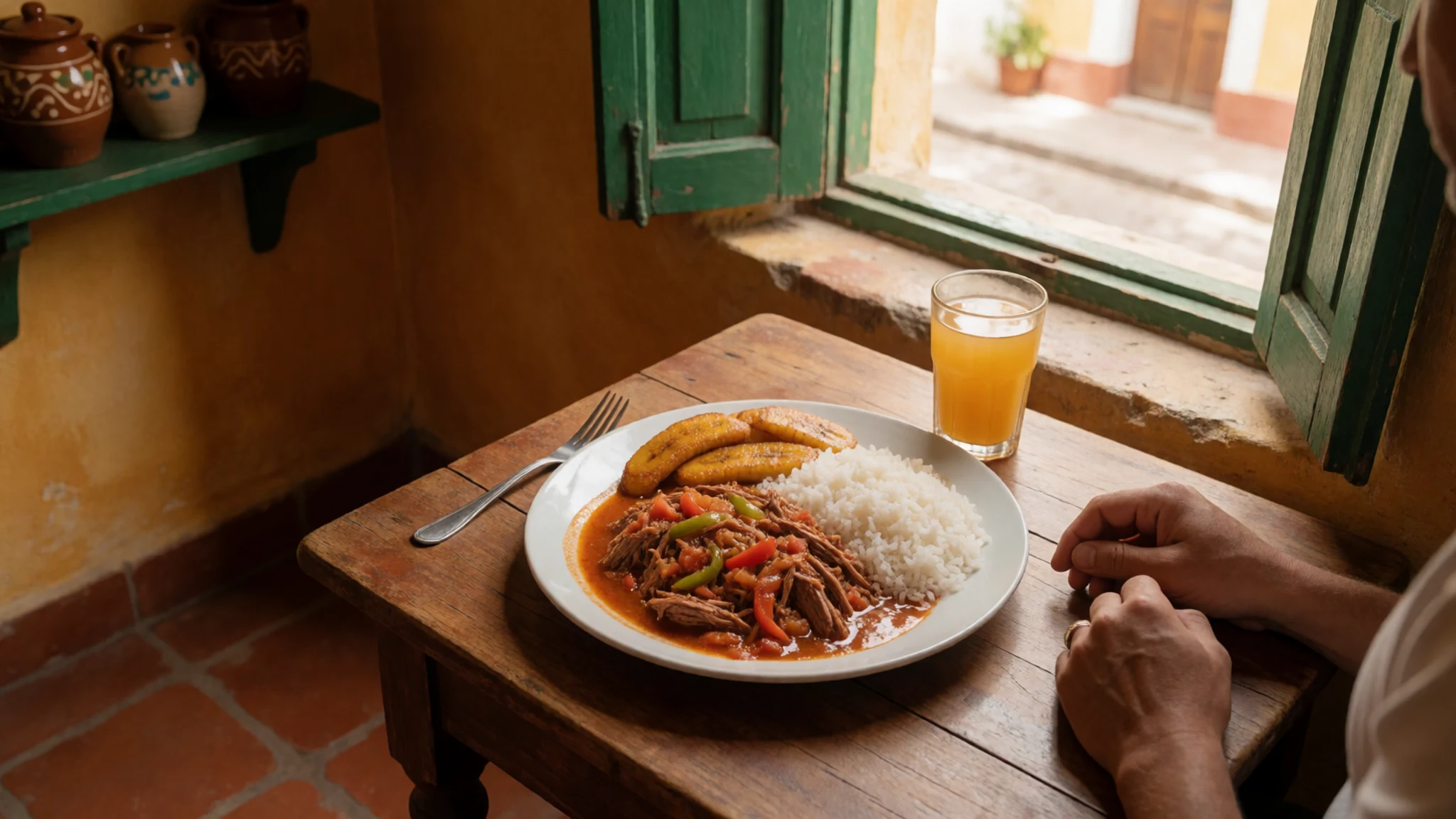
- Moros y cristianos — Beside meals at paladares in the town
Moros y cristianos, black beans cooked with rice, is the plate under or beside almost everything else in Varadero. The name is the dish: dark beans and white rice, finished with onion, garlic, pepper and a little cumin. A good pot tastes savoury and slightly sticky.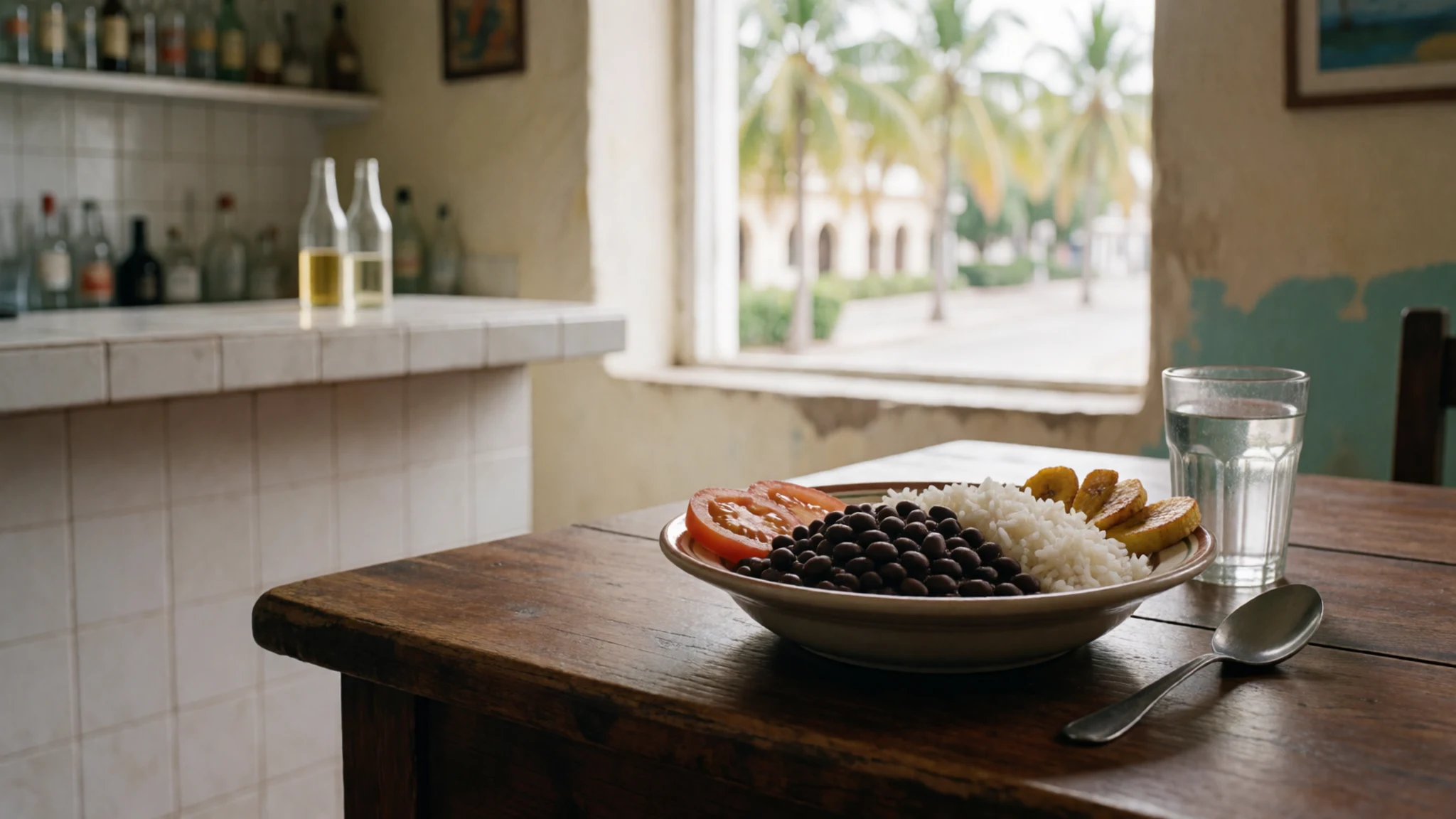
- Tostones and maduros — Beach grills and town paladares
Tostones in Varadero are green plantain sliced, fried, flattened and fried again until crisp. Maduros, the ripe plantain, come out soft and sweet. Both turn up at paladares and at beach grills that cook Cuban food rather than only international snacks. - Grilled fish — Beach grills and paladares facing the bay
Grilled fish is Varadero's plain coastline meal, often a whole fish or a thick steak cooked with lime, garlic and a little oil. Beach grills and bay-side paladares are the places to look. Freshness matters more than a complicated sauce. - Flan de leche — Restaurant menus in the resorts and in town paladares
Flan de leche is a baked milk custard with a soft caramel top, and it closes a meal in Varadero the way it does across Cuba. Hotel restaurants and town paladares both keep a version. A home-style one is denser and less sugary than a mass-produced sweet.
Plan it
Best time. Varadero is at its most comfortable from December through March, January the mildest and March the driest, with less sticky heat and fewer soaking afternoons. April and June are the hottest by day, August the warmest at night, and May to October is wetter, with September the wettest month.
How long. four to five
Getting there. Varadero is served by Juan Gualberto Gómez Airport, on the mainland beside the peninsula, with direct flights in season. From Havana the Via Blanca runs east to the bridge onto the Hicacos Peninsula. Taxis and hotel transfers cover that last leg.
Budget. mid
Tips
- Reserve dry-season stays early, because the popular flight weeks fill first.
- Take the public beach in the morning, before the heat and the busiest vendor hours.
- Carry some cash for craft stalls, taxis and small eateries that cannot take a card.
- Step outside the hotel compound: the park and the bay side sit a short hop from the sand.
- If a storm watch is announced, follow the hotel's guidance and stay off the open beach.
Etiquette
- Ask before you photograph people, including musicians and sellers.
- Put a cover-up on away from the beach and the pool, above all in a church or a restaurant.
- Let a clear no end a sales pitch, and keep bargaining friendly.
- Leave shells, sand and plants where they are, especially towards the quieter tip.
Nearby
Sources
- Wikidata, Varadero (CC0)
- Wikipedia, Varadero (CC BY-SA 4.0)
- Wikivoyage, Varadero (CC BY-SA 4.0)