Santiago de Cuba
Santiago de Cuba, Cuba
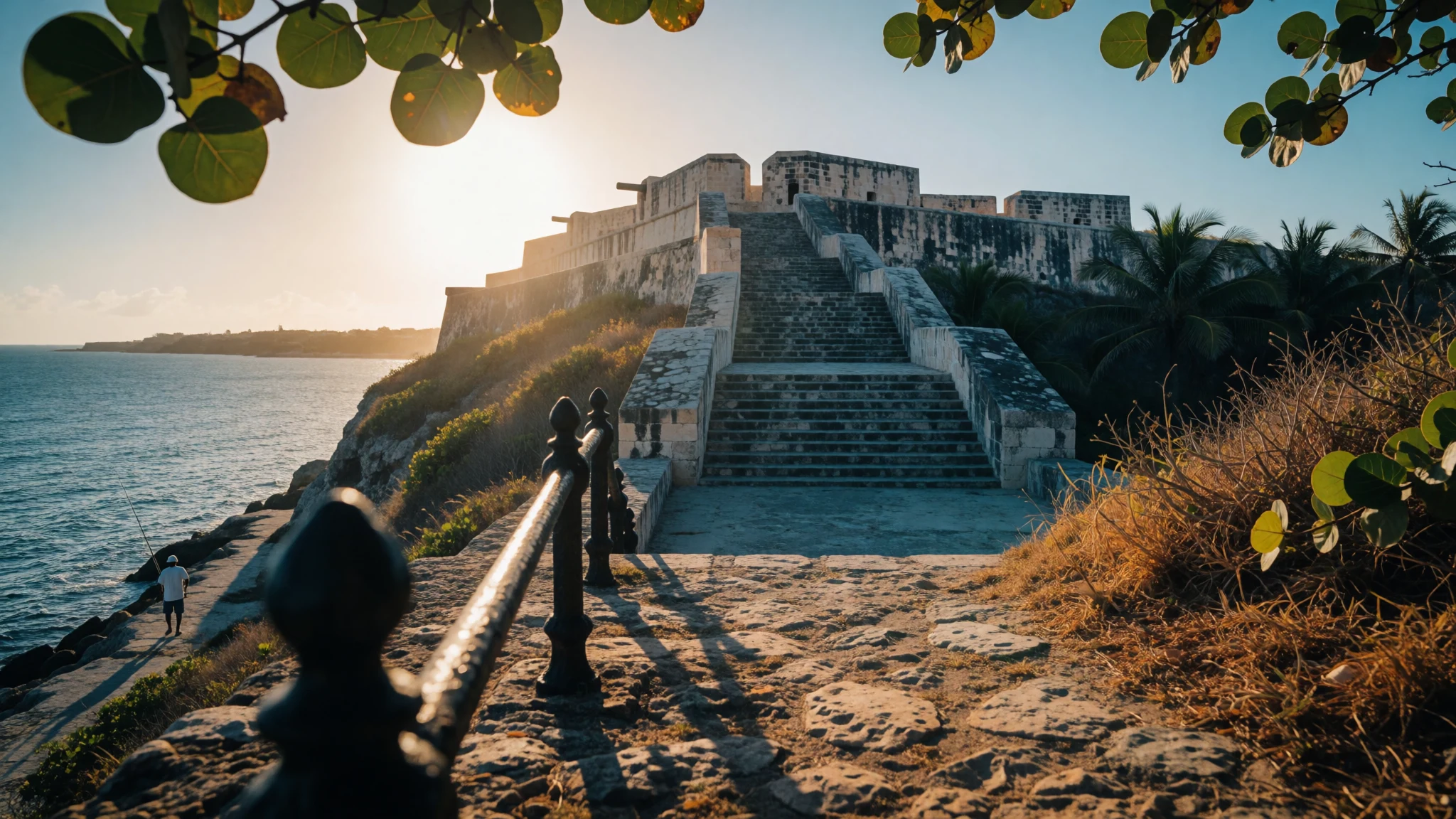
Santiago de Cuba is a hot, musical port city of steep streets and old forts, where Cuba's story is told far from Havana.
The place
Santiago de Cuba sits in the south-east of the island, about 870 km from Havana, on a bay that opens onto the Caribbean. The Sierra Maestra crowds in from the landward side, so the city climbs and drops over steep streets, and its centre stands 82 m above sea level. About half a million people live here, which makes it the second city of Cuba and the capital of its province. The municipality is large and takes in villages and old pilgrimage and mining settlements such as El Cobre, El Caney and Siboney, so a day out from the centre can mean a stretch of coast, a hillside church or a battlefield park. The climate is hot and humid, and the bay holds that heat. Afternoons are slow, and much of life moves to doorways, plazas and rooftops after dark. This is a working port, not a resort: cranes, rusting hulls and fish stalls share the waterfront with bars that serve rum and cheap beer. The mood is more Afro-Caribbean and more openly musical than in the capital, and rhythm drifts out of windows at almost any hour. Visitors expecting polish find peeling colonial façades, patched pavements and the occasional power cut. Those who stay a few days find conversation, dancing and a city that does not perform for tourists. Because it is far from Havana, most people reach it by a long road or rail journey and then stay several days.
Its story
Santiago de Cuba was founded in 1514 by the Spanish conqueror Diego Velázquez de Cuéllar, and it was among the first towns on the island. A fire damaged the young settlement soon afterwards, and it was rebuilt at once. Expeditions to Mexico under Juan de Grijalba and Hernán Cortés set out from here, and Hernando de Soto later sailed from the same coast for Florida. A cathedral rose in 1528, and between 1522 and 1589 Santiago served as the capital of the colony before Havana took over that role. A harbour that sheltered ships also drew attackers: French forces plundered the town in 1553, English raiders did the same in 1603, and English ships under Christopher Myngs struck again in 1662. Late in the eighteenth century and early in the nineteenth, settlers from France and Britain added to the mix. The largest wave came in 1803, when about eighteen thousand people fled Saint-Domingue as the Haitian revolution reached its end. They included French colonists, free people of colour and freed Africans, and they brought coffee-growing skills, music, dance and cooking that still colour the city's culture. In later centuries Santiago became a base for Cuba's independence movements and for the revolution that triumphed in 1959, which is why plaques, statues and small museums to rebels are scattered across its hills.
What to see
- Parque Céspedes — Historic centre
Parque Céspedes is the square where Santiago de Cuba gathers: the cathedral on one side, the old Casa de Diego Velázquez on another, with cafés and music rooms along the edges. Benches fill by evening. Fidel Castro announced the revolution's victory from the town hall here in 1959. Come at dusk, when the heat eases.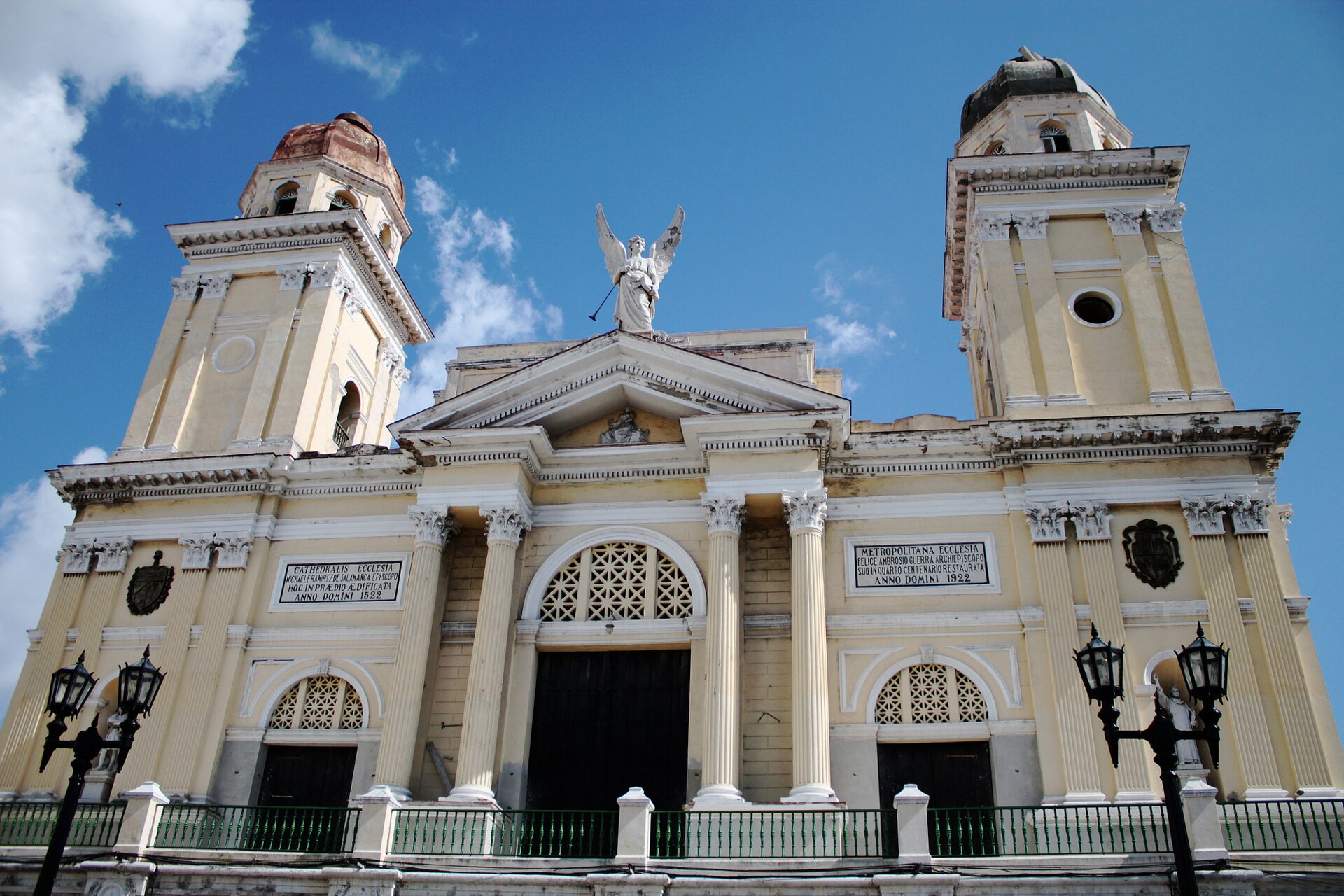
- Museo Provincial Emilio Bacardí Moreau — Historic centre
This museum near the central plaza grew from the collection of the Bacardí family, whose rum business began in the city in 1862. Expect paintings, historical objects and local history in an old-fashioned setting. Opening arrangements change, so ask locally or check the city website. It makes a cool, shaded pause in the middle of the day. - Balcón de Velázquez — Historic centre, west side
Balcón de Velázquez is a terrace above the old centre with a clear view over the rooftops to the bay. It is a short walk from the main square, so it fits easily into a stroll through the historic streets. Go late in the afternoon for softer light on the water, and bring a drink. - San Juan Hill — East of the centre
San Juan Hill is a hillside park east of the centre, tied to the Spanish-American War. Old cannon, monuments and souvenir stalls dot the grass, and the slope gives wide views back toward the city. It is easy to reach by taxi, and an hour or so is enough. Mid-morning heat is strong, so carry water. - Castillo San Pedro de la Roca — Bay entrance, south-west of the city
Castillo San Pedro de la Roca, also called El Morro, is a coastal fortress on a cliff at the mouth of the bay. Its terraces, stairways and gun platforms look out over water once crossed by pirates and navies. It lies outside the city, so a taxi is needed, and it can be paired with a trip up to La Gran Piedra, a large rock in the mountains.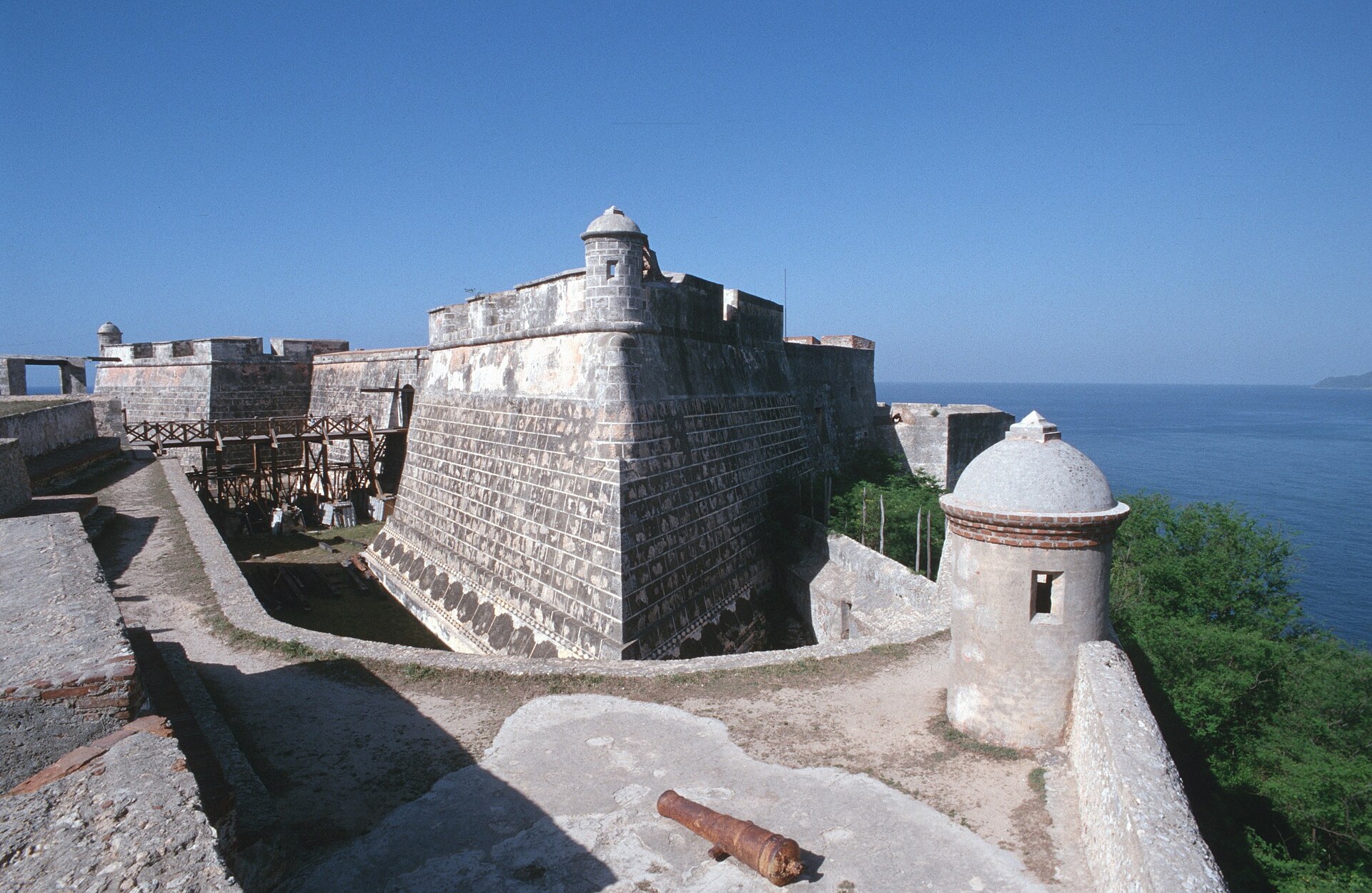
Culture
Santiago de Cuba has a deep musical and literary life, and much of it still happens on the street. The poet José María Heredia was born here, and the Teatro Heredia carries his name; its façade bears a mural portrait of Juan Almeida Bosque, a commander in the revolution. Several of the singers and guitarists who appeared in the film Buena Vista Social Club, including Compay Segundo, Ibrahim Ferrer and Eliades Ochoa, came from the city or nearby villages, as did the trova songwriter Ñico Saquito. That tradition of son and trova survives in small music rooms, courtyards and on the plaza benches, where an impromptu guitar session is normal. The Bacardí rum brand began here in 1862, and the family's art collection now fills a museum. Afro-Cuban faith and the Catholic church sit close together in daily life, most visibly at El Cobre, whose shrine draws pilgrims from across the island. The city's carnival, held in July, is loud, hot and crowded, with processions, brass bands and drumming. Haitian and French influence from the early nineteenth century still shows in dance and food. When a musician plays at your table or on the street, tip a little in cash, and ask before photographing anyone, especially at religious ceremonies.
What to wear
Santiago de Cuba has no single formal costume, but a few garments carry local meaning. The guayabera, a loose cotton or linen shirt with pleats and four pockets, is worn by older men for celebrations and formal occasions, and by musicians on stage. Dancers and carnival groups wear bright ruffled cotton and satin, with sequins, feathers and head-wraps that echo Afro-Cuban and Haitian-Caribbean traditions. Religious devotees may dress in white for certain ceremonies. Day to day, most people dress for the heat: light shorts, sleeveless tops, sandals and cotton dresses, with a dressier shirt or dress for an evening out. Clothing is often mended and reused, and neat, pressed outfits matter more than labels. Visitors should pack breathable fabrics such as cotton and linen, a sun hat and sunglasses, and comfortable shoes with grip, since pavements are uneven and the hills are steep. Sandals are fine for most days, but closed shoes help at the fortress and on hillside paths. Cover shoulders and knees when entering a church or the shrine at El Cobre. Evenings stay warm, so a thin layer is only needed for air-conditioned buses and rain showers.
What to eat
- Lechón asado — Weekend street fair, Avenida Victoria de Garzón
Whole roast pig is the centrepiece of weekend celebrations in Santiago de Cuba. It is cooked slowly until the skin is crisp and the meat is tender, then carved and served with rice and beans. Look for it at the weekend street fair on Avenida Victoria de Garzón. - Pescado frito — Street fair stalls and harbour-side eateries
Cuban-style fried fish is usually a whole local catch, dusted and fried until crisp, then served with lime, rice and fried plantain. It is simple, filling and best eaten fresh. Try it at the weekend street fair or at a family-run restaurant near the harbour. - Pollo frito — Weekend street fair and local snack counters
Fried chicken, Cuban style, is seasoned with garlic and citrus before frying, which gives it a sharp, salty flavour. It is a cheap, quick meal sold from stalls and counters. Eat it hot, with a cold drink, and bring cash. - Chicharrones — Weekend street fair, Avenida Victoria de Garzón
Fried pork rinds are puffed, salty and crunchy, sold by the bag or served as a side. They suit a walk around the fair or a beer in the evening. Buy them warm from a vendor, as they lose their crispness quickly in the humidity. - Congrí with roast pork — Paladares and family-run restaurants across the city
Congrí is rice cooked together with black or red beans, then served with roast pork, yuca or salad. It is the standard home plate in the east of the island. Family-run restaurants, known as paladares, often serve it with generous portions.
Plan it
Best time. December to March is the most comfortable stretch, with lower humidity and cooler evenings. Summer is hot and humid, and the Atlantic hurricane season runs from June to November. July brings carnival, with crowds and higher demand for rooms.
How long. 3–4
Getting there. Santiago de Cuba has its own airport, with domestic flights from Havana; check current schedules. By road, the local bus from Havana takes about 15 hours and the express overnight service about 12. Trains run only every few days and are often late, so confirm timings locally. From the station or bus stop, a taxi is the easiest last leg, especially to the remote bus station.
Budget. low
Tips
- Carry plenty of cash in small notes, as cards are not widely accepted
- Drink bottled or filtered water and carry a bottle on hot days
- Do sightseeing early or late, and rest in the shade at midday
- Book rooms ahead for July carnival and for holiday weeks
- Expect power cuts and slow connections, and keep a torch handy
Etiquette
- Ask before photographing people, especially during religious ceremonies
- Dress modestly in churches and at the shrine in El Cobre
- Tip musicians and guides in cash
Nearby
Sources
- Wikidata Q117040 (CC0)
- Wikipedia: Santiago de Cuba (rev 1379928507) (CC BY-SA 4.0)
- Wikivoyage: Santiago de Cuba (rev 5417428) (CC BY-SA 4.0)
- Photo: Castillo del Morro, Santiago de Cuba — Glogg, Peter, Switzerland (CC BY 2.5)
- Photo: View of Santiago de Cuba and sky at night — Alex Cano (CC BY-SA 2.0)
- Photo: Cathedral of Santiago — Miguel Castiblanco (CC BY 3.0)
- Photo: Casa de Diego Velázquez — Maesi64 (CC0 1.0)
- Photo: Museo de la Lucha Clandestina — Christian Pirkl (CC BY-SA 4.0)
- Photo: Church of El Cobre — Z thomas (CC BY-SA 4.0)
- Photo: Island of Cayo Granma — Yulka-lucia (CC BY-SA 4.0)
- Photo: Locator map of Santiago de Cuba municipality — Dэя-Бøяg (CC BY 3.0)


