Cayo Coco
Cayo Coco, Cuba
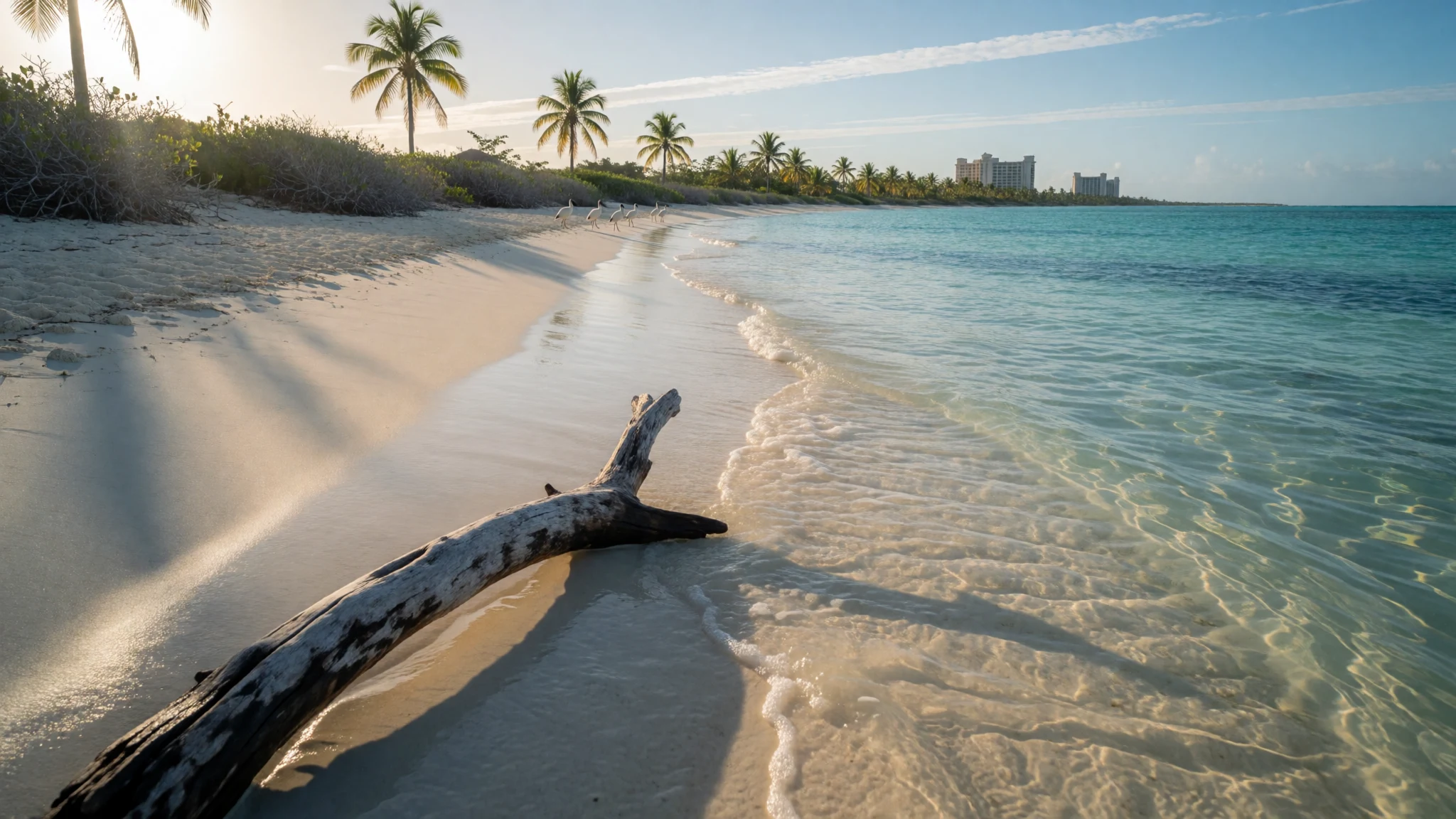
Cayo Coco is a flat, causeway-linked Cuban island of white beaches, flamingo shallows and all-inclusive resorts, best for sun, not for seeing everyday Cuba.
The place
Cayo Coco sits off the north coast of central Cuba, in Ciego de Ávila Province, and belongs to the Jardines del Rey chain, the King's Gardens. Its surface area is about 370 square kilometres, and the land barely rises above the sea; the highest point recorded is 4 metres. The name comes from the white ibis, which Cubans call coco. Much of the interior is still swamp and scrubland where wild cattle wander, and flamingos feed in the shallow water between the island and the mainland. The built-up part is a strip of large international resorts along the beaches, mostly run by foreign companies, with the island's own airport close by. Administration is handled from Morón, the nearest real town, on the mainland. One man-made causeway, 27 kilometres long, joins the island to the rest of Cuba, and a security checkpoint controls entry. Two shorter causeways link it to neighbouring cays: Cayo Guillermo to the west and Cayo Romano to the east. That isolation shapes everything. Cayo Coco is comfortable, tidy and sunny, but it is a resort enclave rather than a window onto ordinary Cuban life, and anyone wanting the latter should plan a day in Morón or Ciego de Ávila. Winter is the busy season, when many Canadians and Europeans arrive to escape the cold. A reef along the north coast also draws divers.
Its story
Cayo Coco was a pirates' refuge before it was a holiday destination. Buccaneers used its creeks and scrub as a hideout in the early colonial period, and later a small community of fishermen and charcoal makers lived here. That settlement ended in 1955, when the island's fresh water ran short; the charcoal market then faded as electricity reached more of Cuba after the Revolution. The island stayed quiet until the state decided to build tourism here. A causeway to the mainland opened in 1988, taking 16 months to build and swallowing millions of cubic metres of rock, and resort construction followed. The first resort opened in 1993 and is now called the Colonial. Not every arrival was welcome: an exile group opposed to the Cuban government fired machine guns at it in the following years, though no one was hurt. The causeway also troubled environmentalists, because it slowed the tidal flow and altered the salt and temperature balance of the bay. Gaps were cut through it to let water move again, and flamingos still feed in the shallows, though they are seen less often than before. Literature adds another layer. Ernest Hemingway used Cayo Coco and neighbouring Cayo Guillermo as settings for Islands in the Stream and The Old Man and the Sea. In 2017 Hurricane Irma struck, damaging the resort strip, the airport and the nearby towns of Ciego de Ávila and Morón.
What to see
- The Cayo Coco beaches — North shore, Cayo Coco
Long stretches of pale sand run along the island's north shore, backed by low scrub and shallow, warm water. Most of it sits in front of the resorts, so a walk along the shoreline is the easiest way to find quieter patches. Shade is scarce, so a hat matters.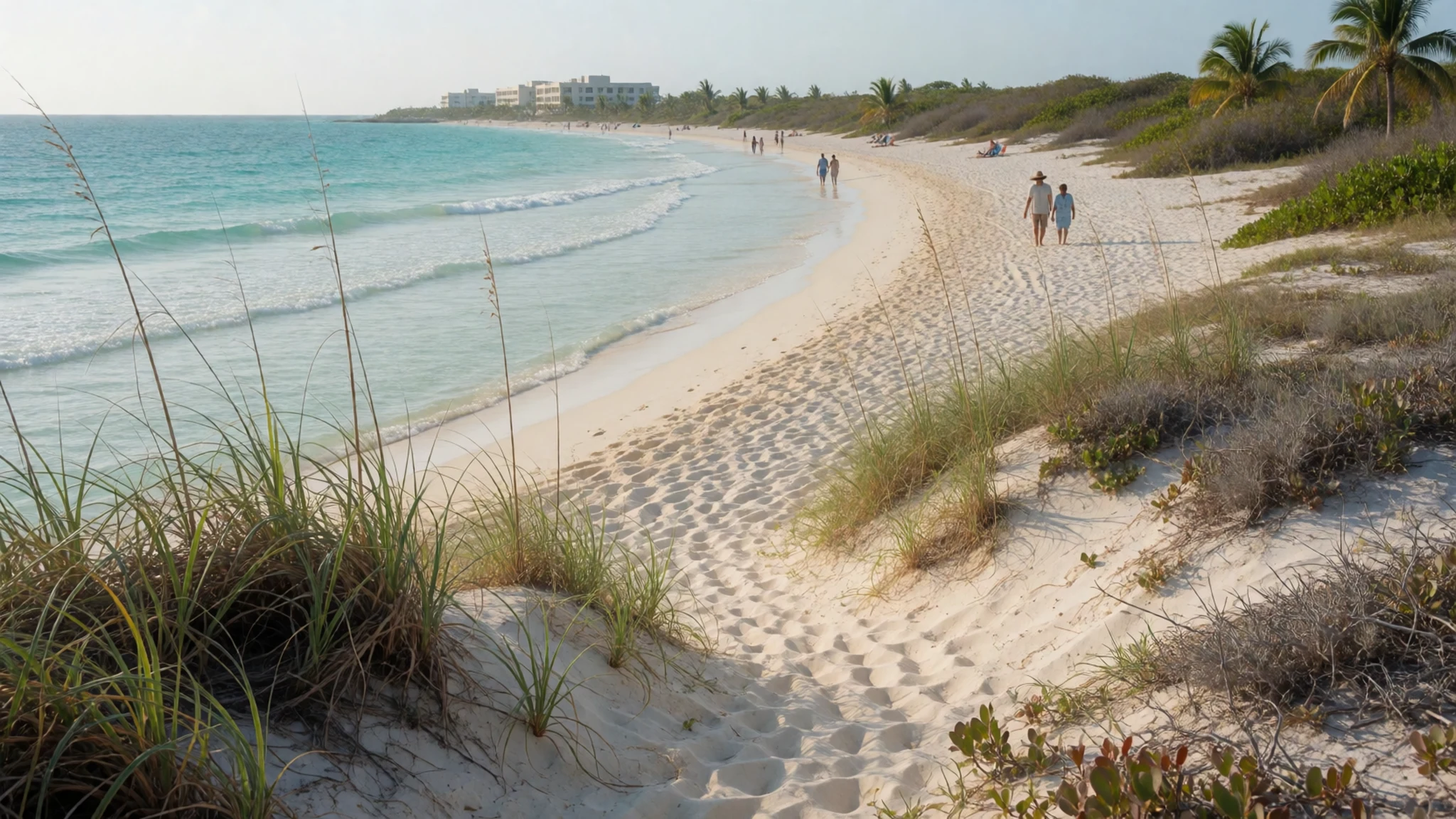
- Playa Pilar — Cayo Guillermo
This beach on neighbouring Cayo Guillermo is the day trip most visitors make. A local hop-on, hop-off bus runs from the resorts but is slow because it stops at each one, and a catamaran trip is an alternative depending on that day's itinerary. Loungers on the sand are charged for.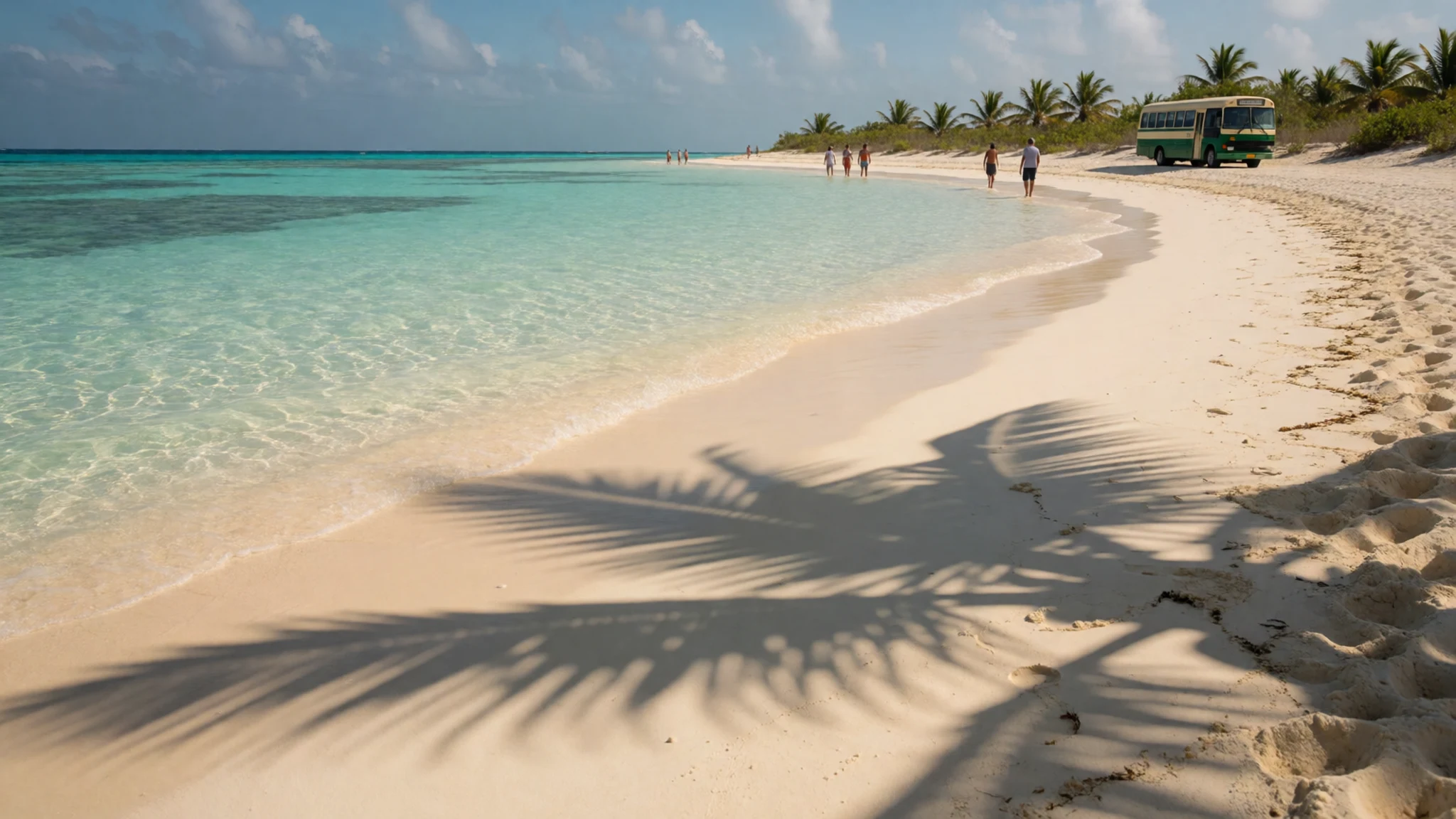
- The causeway and Bay of Dogs — Between the mainland and Cayo Coco
The road across the Bahía de Perros is an experience in itself: flat, straight and surrounded by water. Wild flamingos still feed in the shallows and can sometimes be spotted from the road, though less often than before the causeway altered the water flow.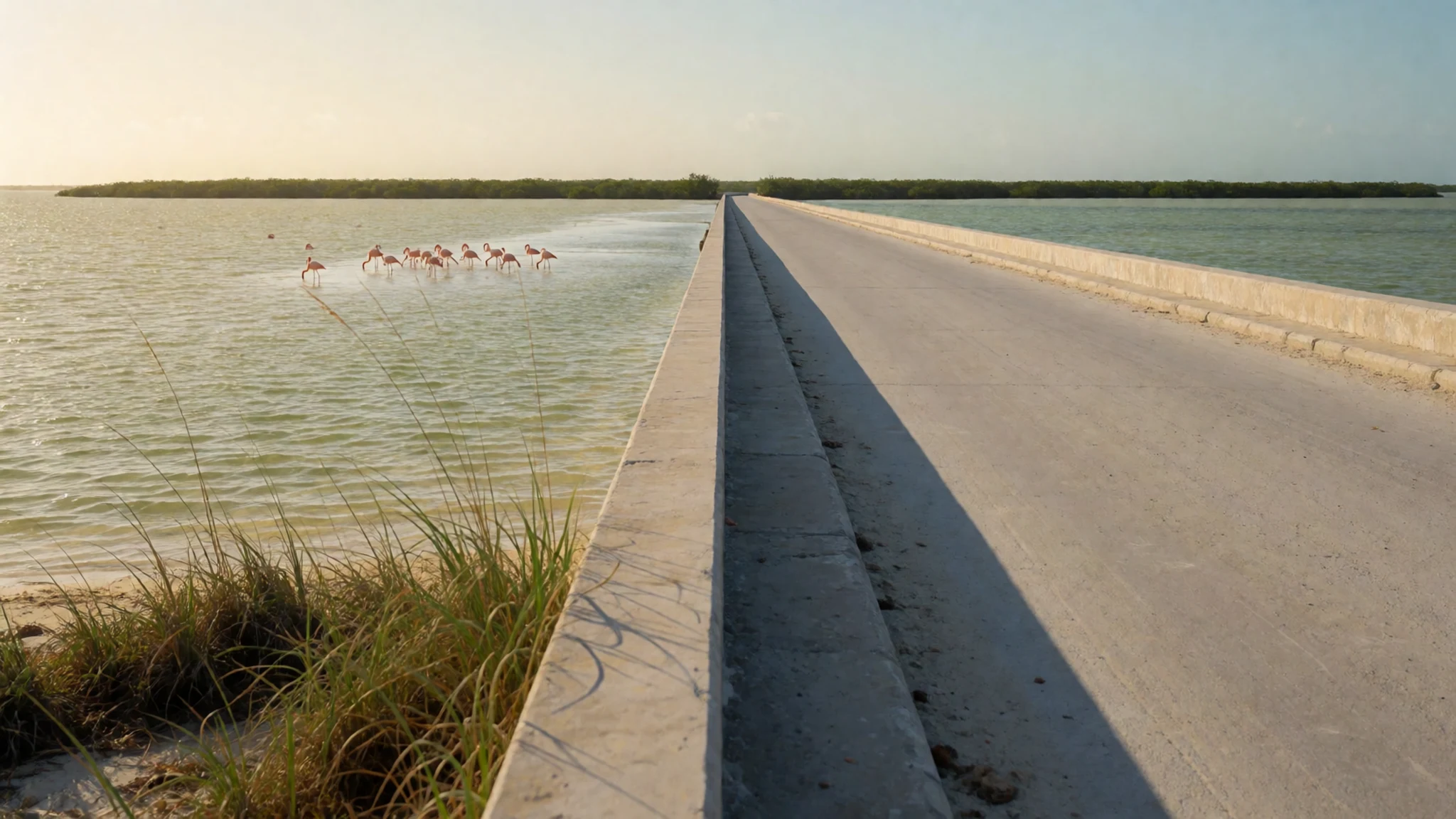
- Morón — Morón, mainland
The nearest town is the best place to see how Cuba lives away from the resorts. Many resorts organise tours, and taxi drivers will put together inexpensive trips for small groups, sometimes including a visit to a country farmhouse. Agree the route and the return before setting off.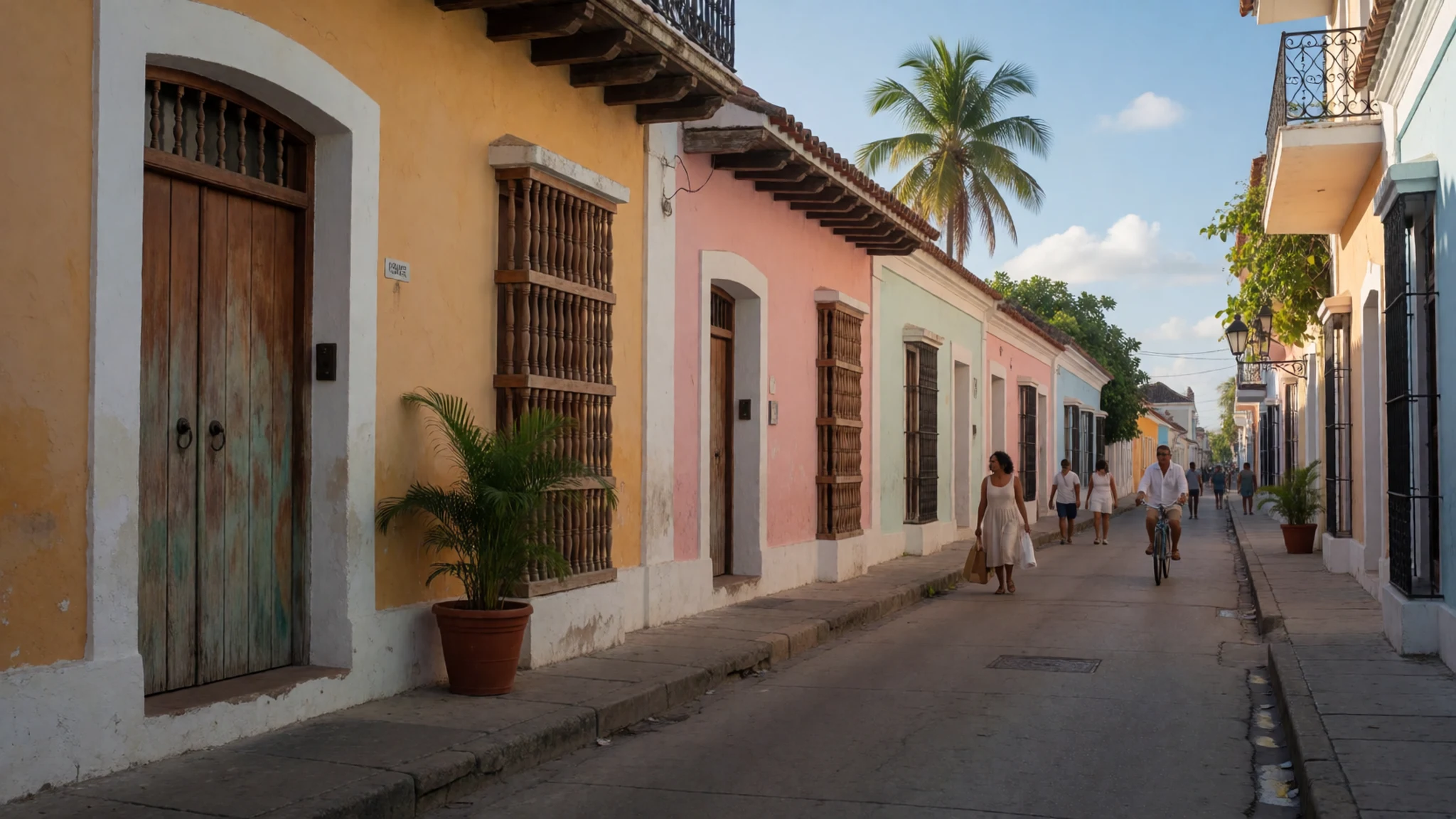
- The north-coast reef — Offshore, north coast
A large coral reef lies off the north coast and attracts divers from around the world. Dive operators work from the resorts, so ask at the activities desk about sites, conditions and whether beginners can join. Calm mornings usually give the clearest water.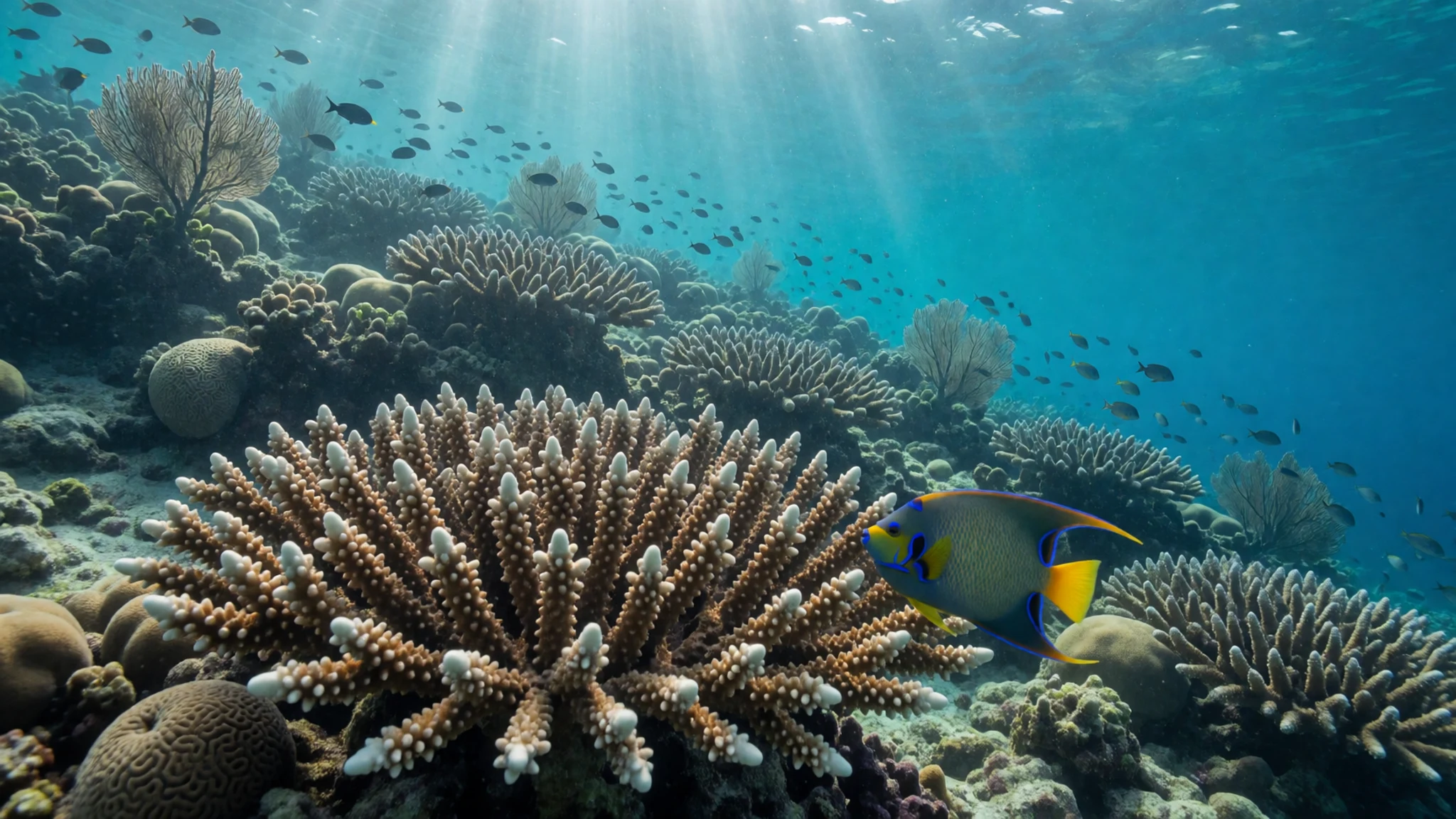
Culture
Cayo Coco has little culture of its own, and it is worth saying so. For most of the twentieth century it was a place of fishermen and charcoal makers, and the resort era is recent. What visitors meet on the island is a blend: Cuban staff, foreign-managed resorts and entertainment aimed at holidaymakers, from dance lessons and aqua fitness to evening shows. Music is the most natural way into Cuban life here. Live bands play salsa and son in many resort bars, and a cavern converted into a nightclub, reached by transport from most resorts, is a local curiosity. The Hemingway connection is another thread, since the writer used the surrounding cays as settings for two of his books, and Cuban guides tend to mention it with pride. For a fuller picture, spend a day on the mainland. Morón has the everyday rhythm of a Cuban town, with shared taxis, small private eateries and people sitting out in the evening. Cuba is also a country where resources are limited, which shows in what is on shelves and menus, and patience with that goes a long way. Staff in resorts and tour drivers depend on tips, so carry small notes; and on the island itself, flamingos and wild cattle are best left alone. Tip staff and guides in small amounts, ask before photographing people in Morón, and keep a respectful distance from flamingos in the bay.
What to wear
Cayo Coco has no distinct local dress, so the useful reference is Cuba as a whole. The classic garment is the guayabera, a loose cotton or linen shirt with pleats and four pockets, worn untucked by men at celebrations, in offices and on hot evenings. Women traditionally favour light cotton dresses and skirts, with brighter, more elaborate outfits for carnival and dance festivals that draw on Spanish and Afro-Cuban heritage. Today, most people wear what suits the heat: shorts, T-shirts, sandals and simple dresses, with a smarter shirt or dress for a night out. Resort staff wear uniforms. A visitor will mostly live in swimwear and a cover-up by day, and the main risk is the sun rather than modesty. Pack a wide-brimmed hat, sunglasses, high-factor sun cream and a light long-sleeved shirt for evenings, when mosquitoes appear. Sandals are fine on the sand, but water shoes help on rocky or coral patches. Air-conditioned rooms and restaurants can feel cold, so bring a thin layer. If you plan a day in Morón or Ciego de Ávila, trade the beachwear for a T-shirt and knee-length shorts or a loose dress, as towns are more conservative than the resorts. Bring spare sun cream, medicines and anything you particularly rely on, because shops can be thinly stocked.
What to eat
- Roast pork (lechón asado) — Resort buffets and private restaurants in Morón
Slow-roast pork is the centrepiece of Cuban celebration meals, usually seasoned with garlic and sour orange. Look for it on resort buffets, and on the menu at small private restaurants in Morón. It is rich and mild rather than spicy.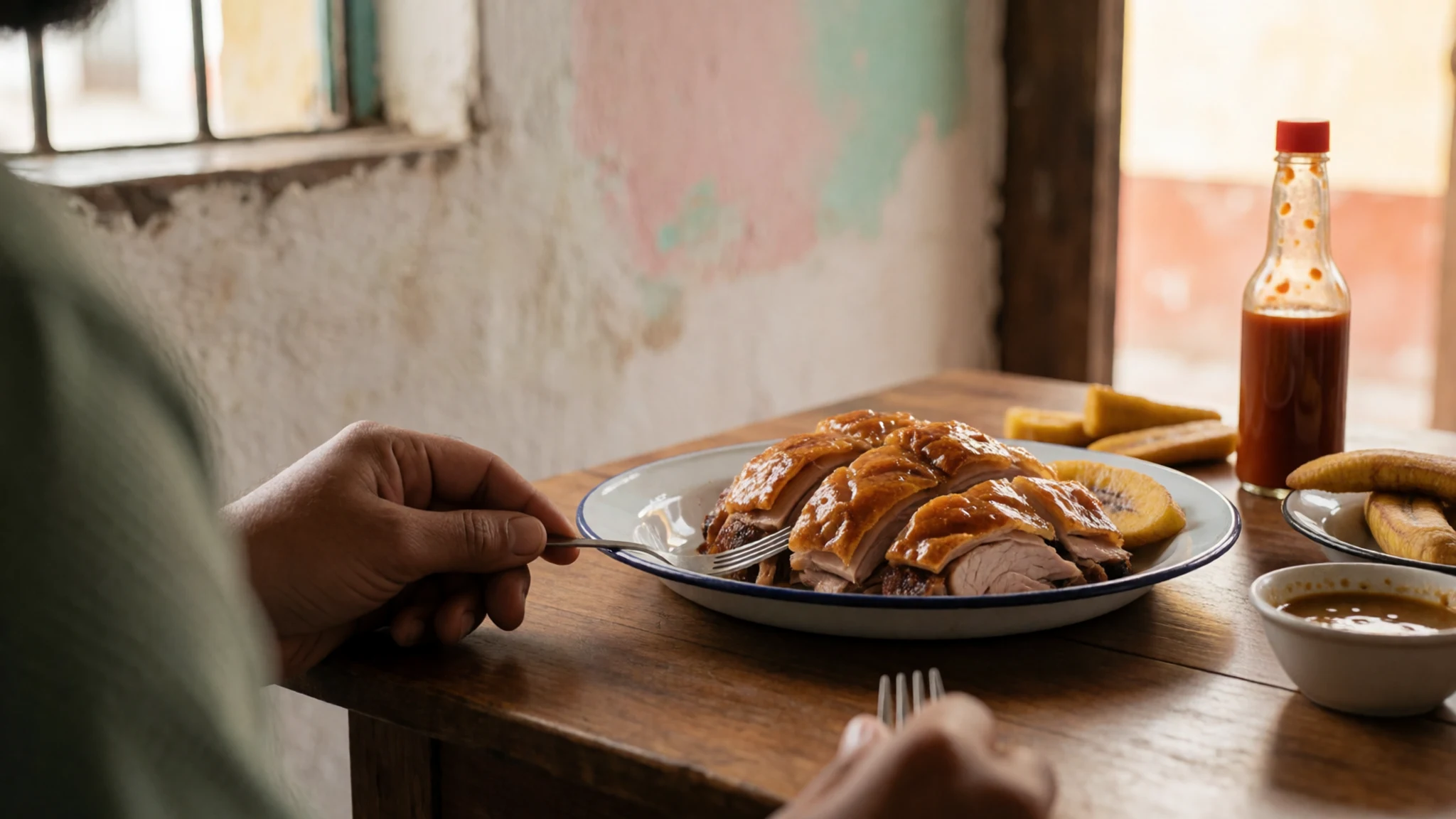
- Moros y cristianos — Almost every meal, including resort buffets
Black beans cooked with white rice, the everyday side dish across Cuba. It is mild and filling, and appears at almost every meal. A few dashes of hot sauce from your own bag will lift it.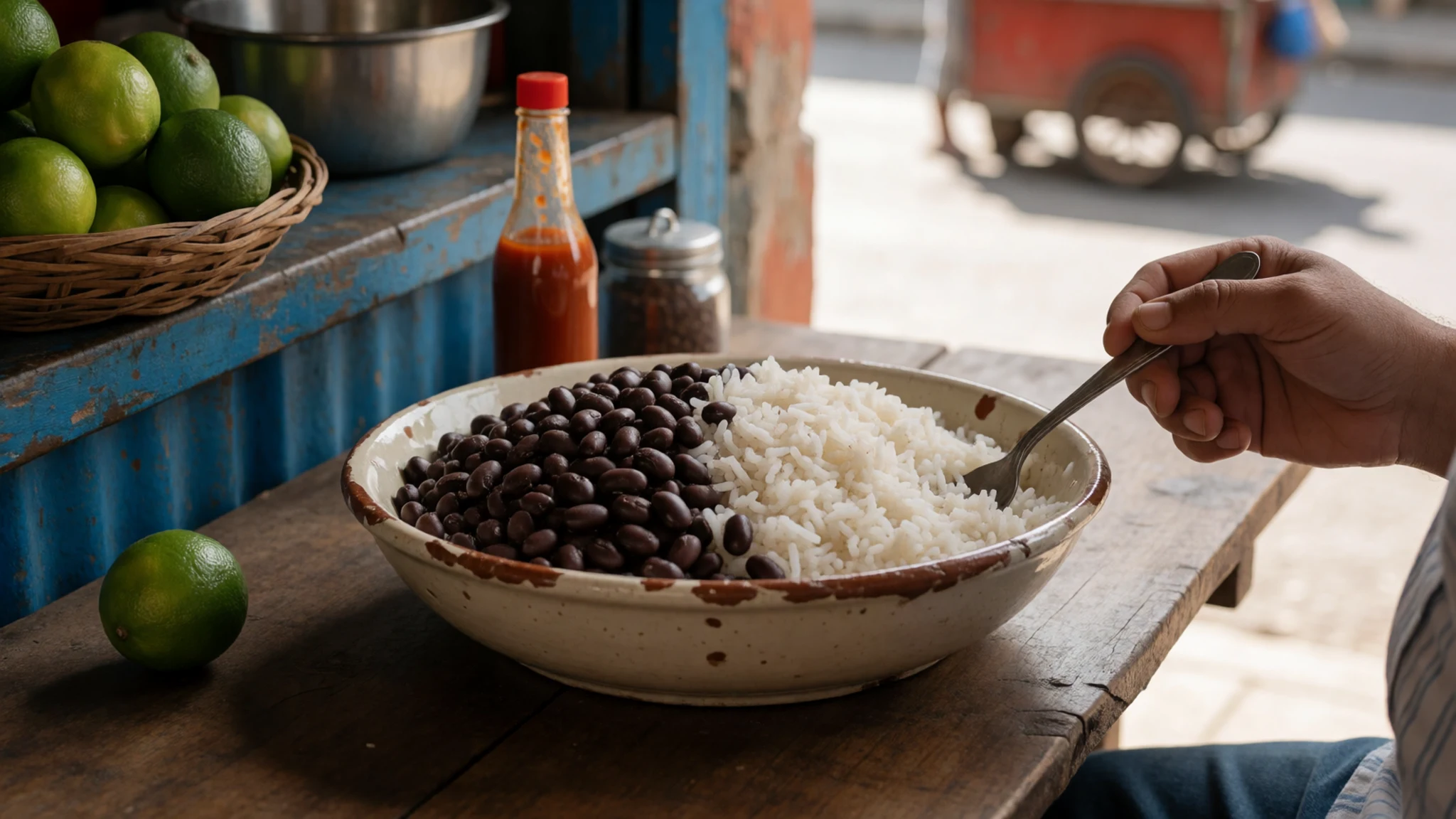
- Grilled fish — À la carte restaurants and beach grills
Fish is common on the coast, and the reef and shallows supply plenty. It is normally grilled simply with lime and garlic. Ask at the à la carte restaurants in the resorts what was landed that day. - Ropa vieja — Private restaurants in Morón and resort buffets
Shredded beef stewed in a tomato and pepper sauce, served with rice. The name means old clothes, a reference to the stringy meat. It suits the mild, unspiced character of Cuban cooking and is easy to find. - Fresh tropical fruit and juice — Resort breakfast buffets and roadside stalls on the mainland
Fruit is plentiful, if the selection varies with the season: guava, mango, papaya and pineapple appear at breakfast and in juices. Choose what looks ripe, and drink cold fruit juice in the heat of the day.
Plan it
Best time. December to April is the best window: it is the dry, most comfortable season, which is why so many visitors come to escape northern winters. Summer is the hottest and wettest time, and the hurricane season runs into the autumn; Irma struck in September.
How long. 4–7
Getting there. Fly to Jardines del Rey Airport (CCC) on the island, served by charters and scheduled flights from Canada and from European cities including London, Manchester and Glasgow. The last leg is a resort transfer by road on the island. Overland, Morón is the nearest town on the mainland.
Budget. mid
Tips
- Book winter weeks well ahead, as resorts fill with visitors escaping cold weather elsewhere
- Bring sun cream, insect repellent, medicines and favourite seasonings, as shops can be thinly stocked
- Check before travelling that your bank cards will work in Cuba, and carry some cash in small notes for tips and excursions
- Book mainland tours and Playa Pilar trips through the resort activities desk, and allow for the slow local bus
- Cover up at dusk, when mosquitoes are most active
Etiquette
- Tip resort staff, guides and drivers in small amounts
- Ask before photographing people, especially in Morón
- Keep your distance from flamingos and do not feed wildlife
Nearby
Sources
- Wikidata Q1052012 (CC0)
- Wikipedia: Cayo Coco (rev 1377767407) (CC BY-SA 4.0)
- Wikivoyage: Cayo Coco (rev 5185654) (CC BY-SA 4.0)
- Photo: Beach on Cayo Coco island, Cuba (Rickybolgia) (Public domain)
- Photo: Back View of Tryp (gueco8288) (CC BY 3.0)
- Photo: bar central tryp cayo coco (carlos adan) (CC BY 3.0)
- Photo: bar piscina tryp cayo coco.. (carlos adan) (CC BY 3.0)
- Photo: barra tryp cayo coco.cuba (carlos adan) (CC BY 3.0)
- Photo: Cayo Coco in Cuba (Scott Willis) (Public domain)
- Photo: Beach front Tryp (gueco8288) (CC BY 3.0)
- Photo: Causeway to Cayo Coco, Cuba (mausgalaxy) (CC BY-SA 2.0 de)


Wildlife
- American flamingo (animal)
Remember the American flamingo as the Caribbean's big wading bird, a close cousin of the Chilean and greater flamingos. On Cayo Coco it feeds in the shallow waters lying between the island and the Cuban mainland, beyond the swampy interior. I cannot say which season or time of day suits it best. Go with a local guide, stand well back, stay quiet so it keeps feeding, and never offer it food.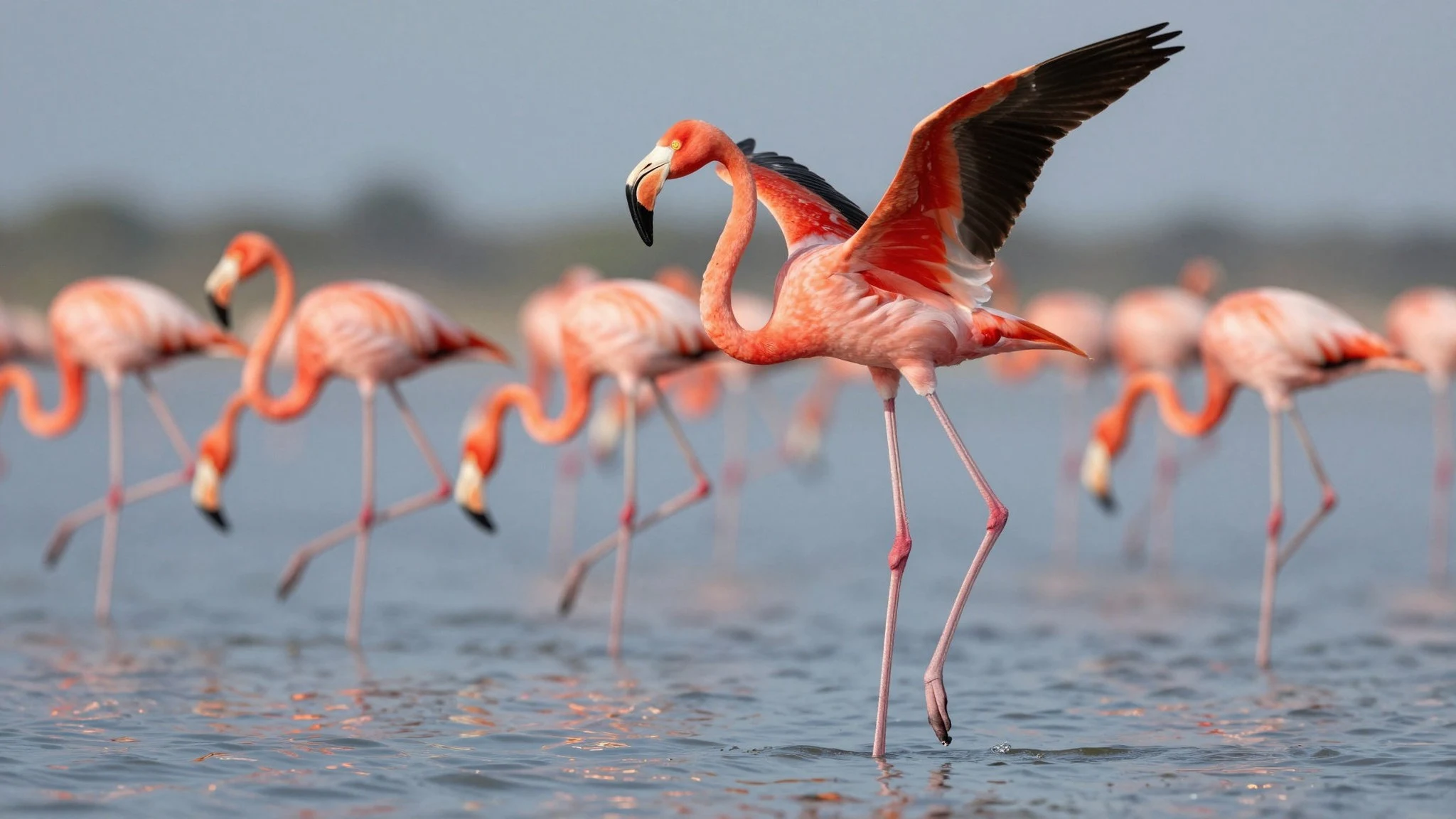
- American flamingo (bird)
Remember the American flamingo as the Caribbean's big wading bird, a close cousin of the Chilean and greater flamingos. On Cayo Coco it feeds in the shallow waters lying between the island and the Cuban mainland, beyond the swampy interior. I cannot say which season or time of day suits it best. Go with a local guide, stand well back, stay quiet so it keeps feeding, and never offer it food.