Jardines de la Reina
Jardines de la Reina, Cuba
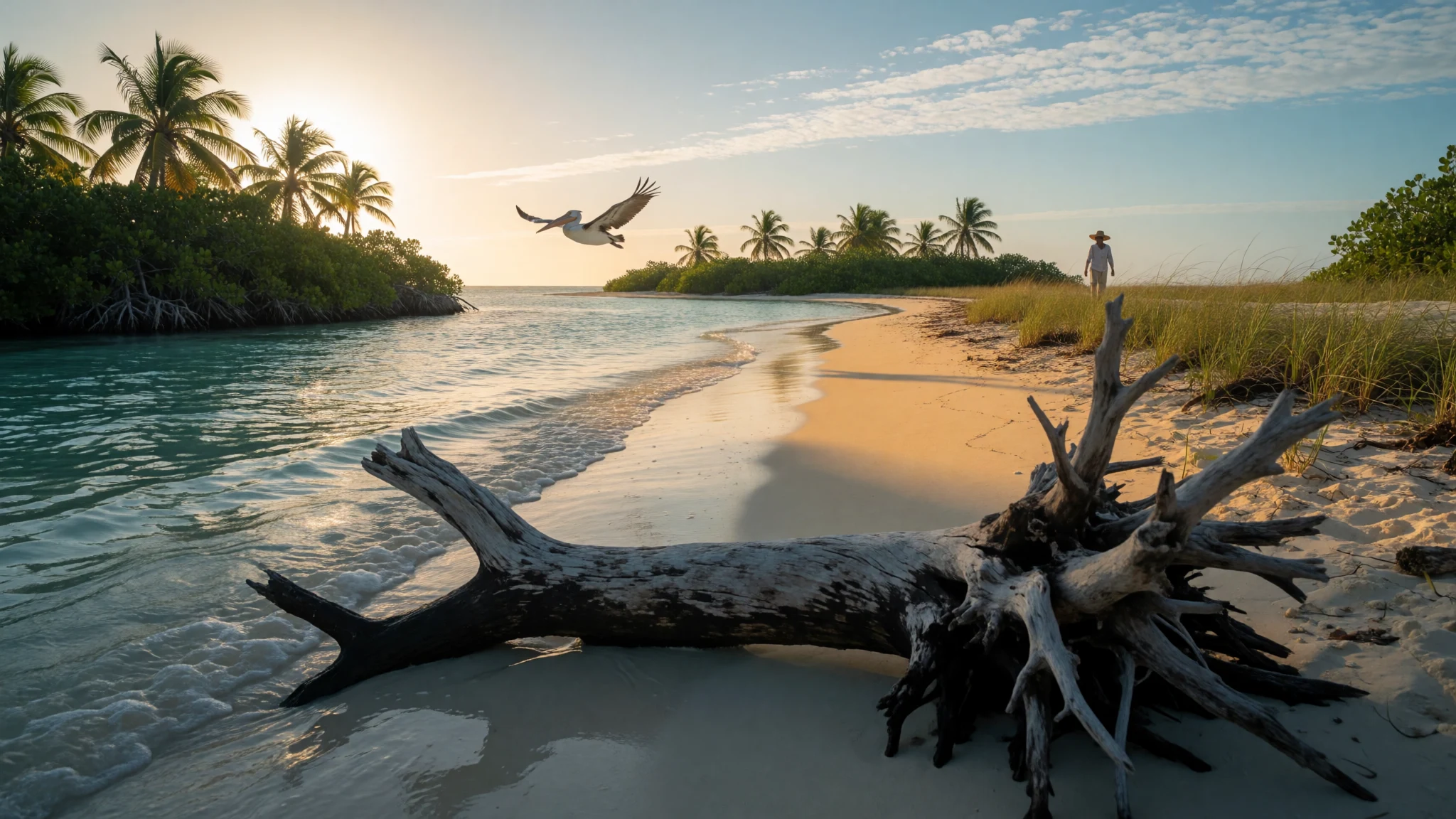
Jardines de la Reina is a Cuban archipelago of low mangrove cays and coral reefs, reached only by boat, where divers meet sharks and groupers.
The place
Jardines de la Reina, the Gardens of the Queen, is an archipelago off the south coast of central Cuba, shared between the provinces of Camagüey and Ciego de Ávila. It stretches in a long arc parallel to the mainland, with the Gulf of Ana María to the north-west, the Gulf of Guacanayabo to the south and the Caballones Channel at its western end. Hundreds of cays make it up, most of them low, flat and sandy, topped with clumps of palm, pine and shore grasses and edged with mangrove. One part of the group is known as the Laberinto de las Doce Leguas, the Labyrinth of the Twelve Leagues, a name that suits the tangle of channels and shallows. Between the cays lie coral reefs, and below the surface the seabed drops into canyons, pinnacles and caves, with sponges and black coral on the reef. Ashore, the wildlife is modest and easy to miss: iguanas, and water birds such as pelicans, spoonbills, gulls and herons. The jutia, a large rodent related to guinea pigs, lives on Cuban islands including these. Since 2010 the whole area has been a national park. There are no towns, no roads and no day-trip crowds. The elevation is about one metre, so the horizon is simply sea and sky, and the experience is a boat, a reef and a great deal of open water.
Its story
The story of Jardines de la Reina begins with a name. Christopher Columbus sailed past these cays and named them for Isabella I of Castile, the Queen of Spain, which is how the Gardens of the Queen got their title. The islands were too low, sandy and short of fresh water to tempt settlers, so the archipelago stayed uninhabited and lightly visited for a very long time, used mostly by fishers from the Cuban coast. That emptiness is a large part of why the reefs survived in the condition they did. Some years before the park existed, a marine reserve was declared over much of the area. The cays also became known as a favourite fishing spot of Fidel Castro. Access stayed small and controlled, which in practice meant few boats, few anchors and little netting. In 2010 the archipelago became a national park, Parque Nacional Jardines de la Reina, within the Cuban national parks system. The rules today are strict by design: fishing is catch-and-release fly fishing only, and visitors arrive through tour operators rather than on boats of their own. The story here is therefore less about monuments than about restraint, a stretch of the Caribbean that stayed quiet because nobody built on it, and then because the state chose to keep it that way.
What to see
- The reefs and walls — Offshore reefs along the archipelago
Jardines de la Reina is known above all for its reefs. Beyond the shallow coral between the cays, the seabed falls away into canyons, pinnacles and caves, with sponges and black coral on the walls. Divers go for the groupers and for sharks, including endangered species, and operators brief everyone on conduct before the first dive.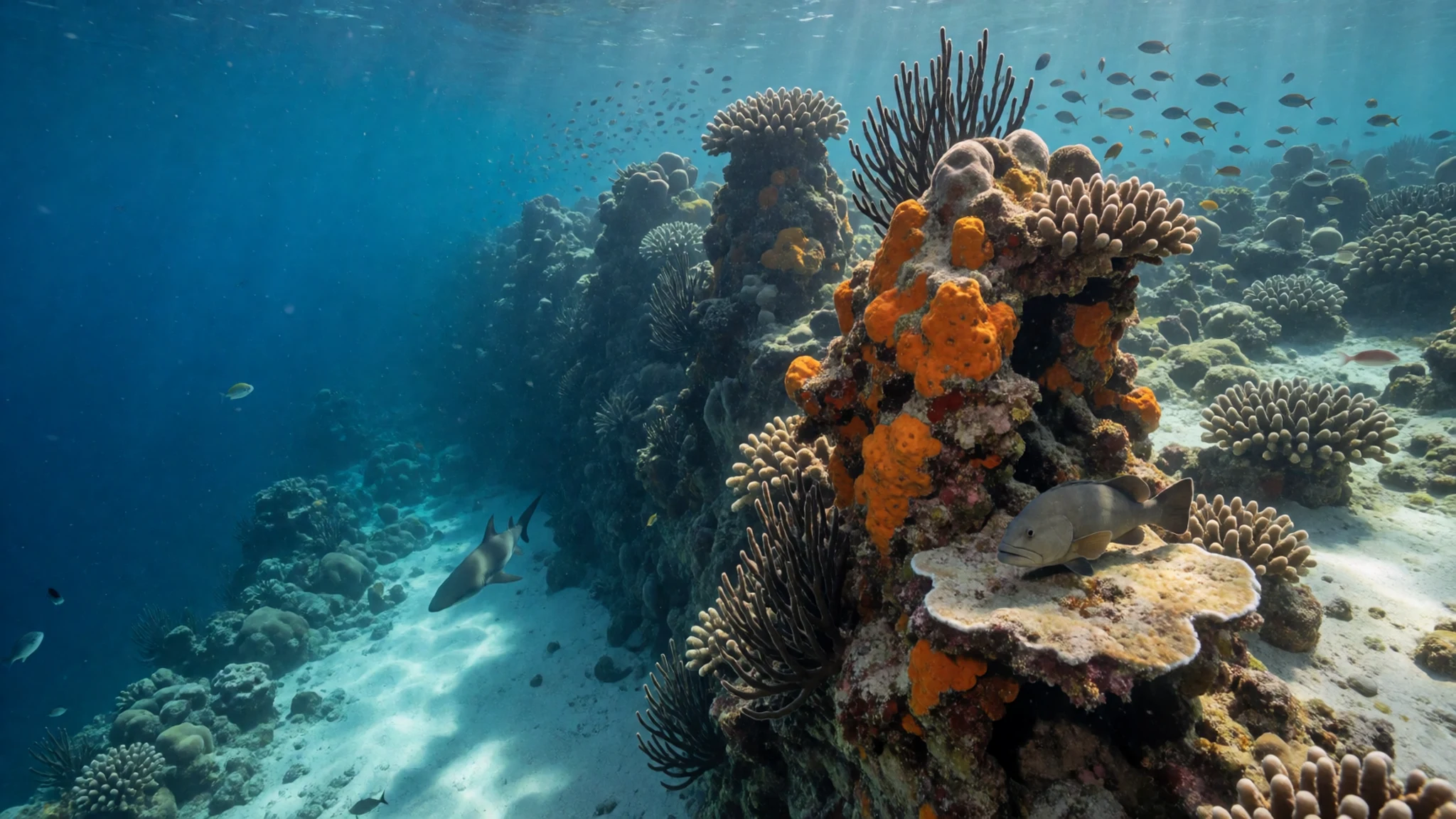
- Fly-fishing flats — Shallow flats between the cays
Fishing in Jardines de la Reina is catch-and-release fly fishing only. Anglers work the shallow flats from small boats, chasing bonefish and snapper as well as several kinds of grouper. The park was a favourite of Fidel Castro, and the strict rules are what keep the flats productive. Ask the operator about guides and tackle before booking.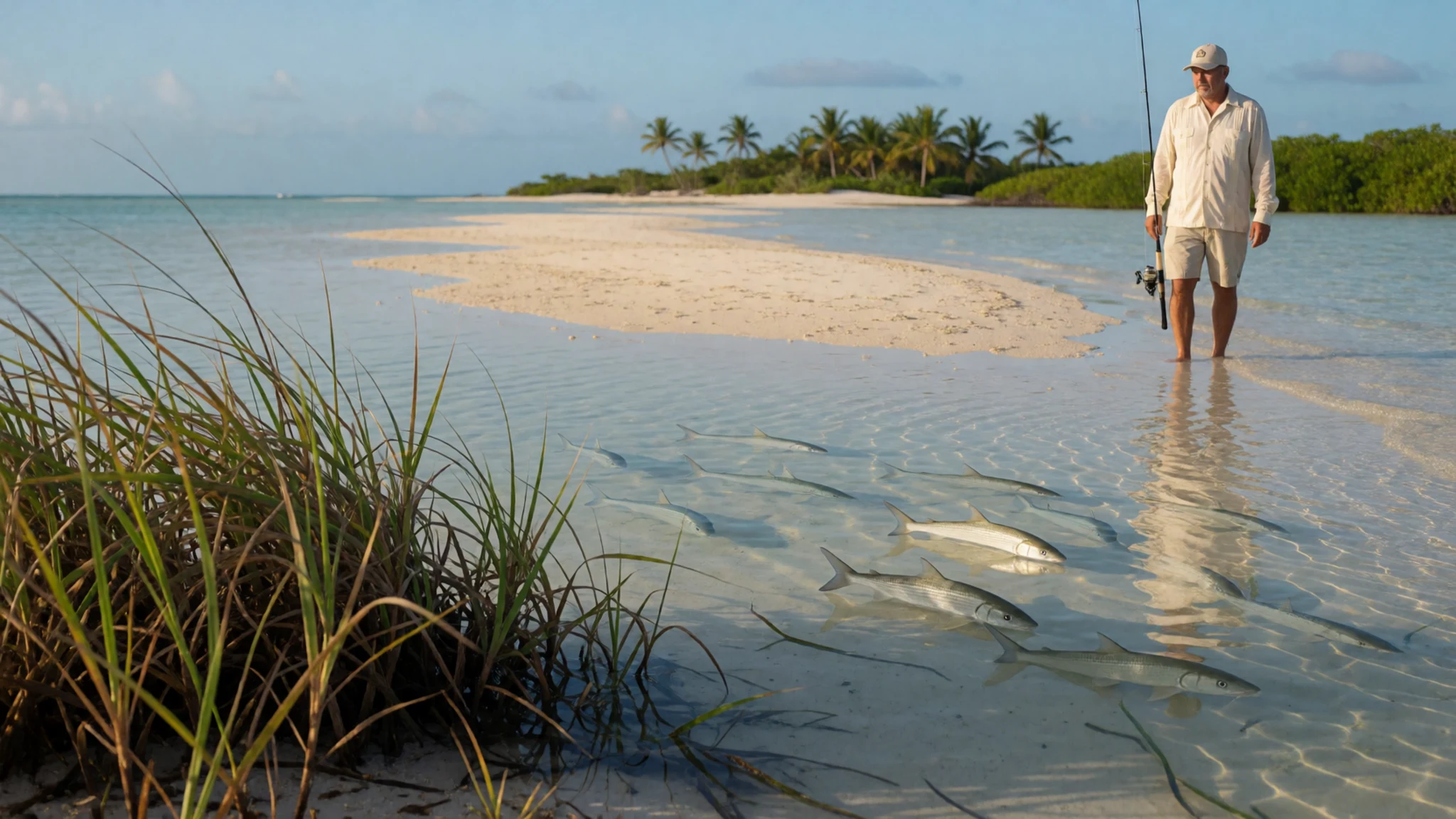
- Mangrove channels and crocodiles — Mangrove shorelines of the cays
Among the mangroves of Jardines de la Reina the American crocodile is a regular resident, and guides take small boats into the channels to look for it. Spoonbills, herons and pelicans feed along the same edges. Keep a respectful distance, keep hands inside the boat and let the guide set the pace.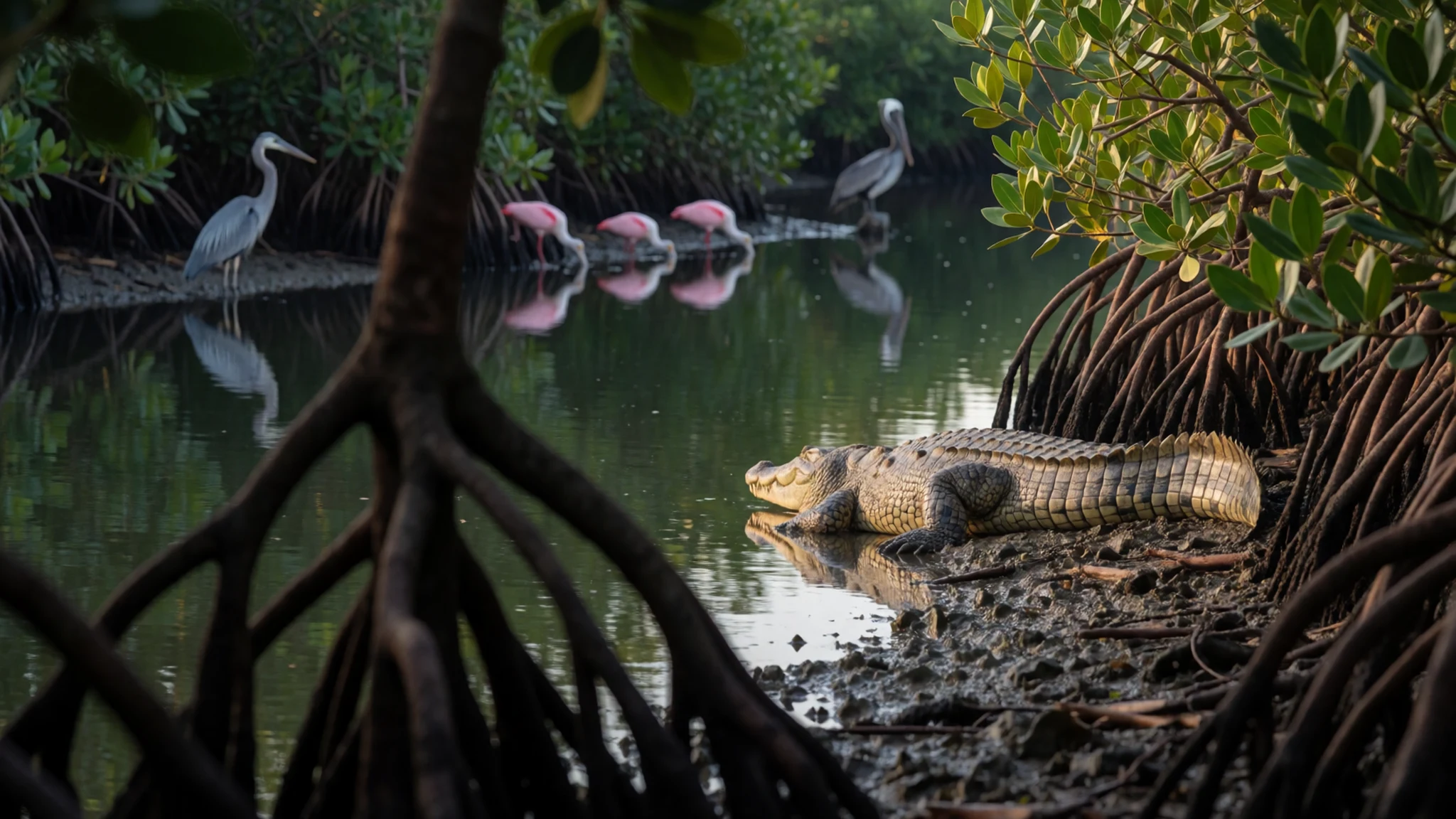
- Cayos Pingües and the eastern cays — South-eastern end, off Santa Cruz del Sur
From orbit, the cays near Santa Cruz del Sur show as pale ribbons of sand and dark mangrove ringed by turquoise shallows. On the water they are low, flat islets with palm and pine, soft beaches and very little shade, so a hat, long sleeves and plenty of sun cream matter more than any other kit.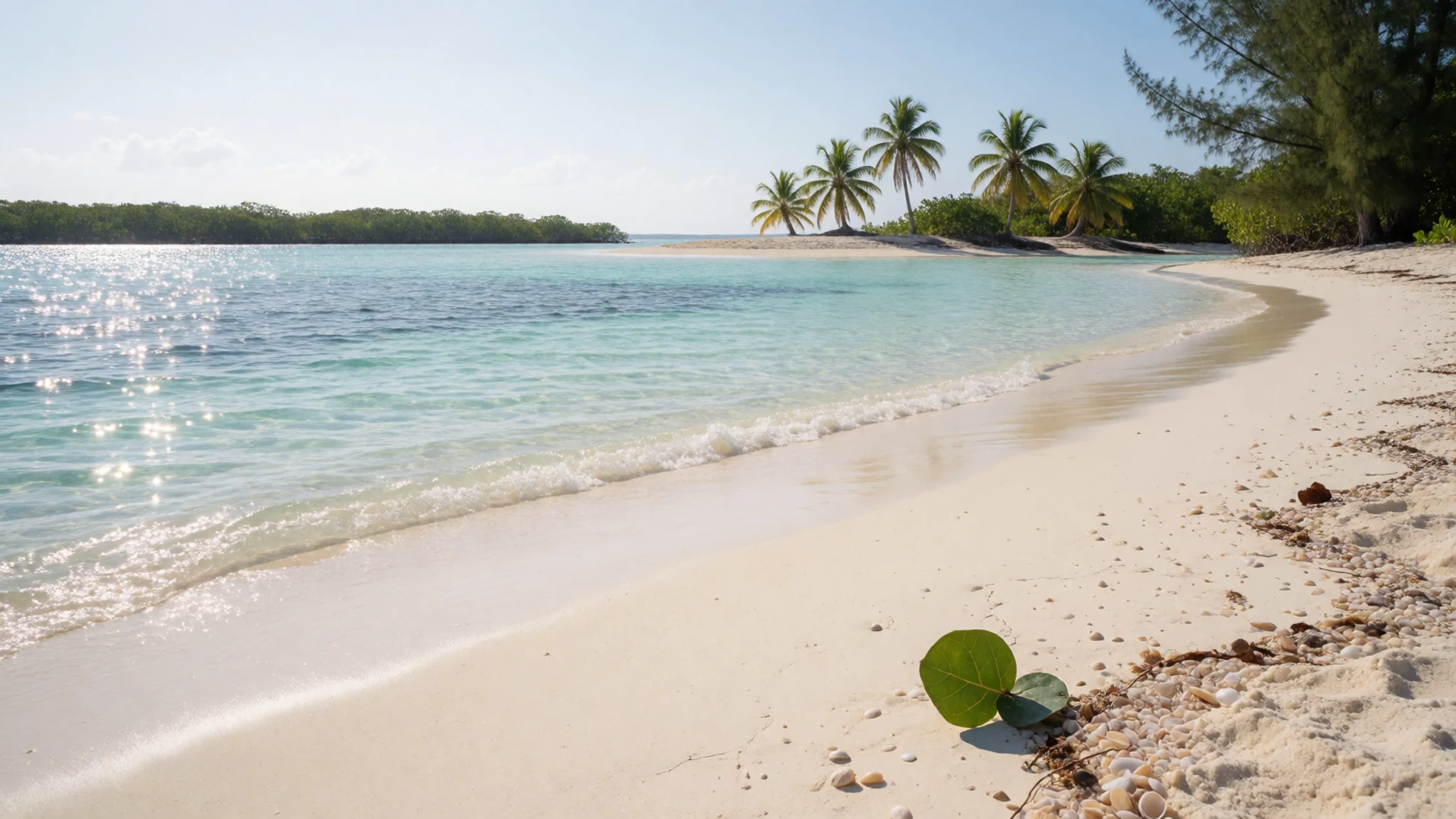
- Cayo Caballones and the western cays — Western end of the archipelago
Cayo Caballones, Cayo Grande and Cayo Bretón mark the western end of Jardines de la Reina, close to the Caballones Channel. From above they form a chain of low green islands split by narrow channels. Because boats usually come from the port at Júcaro, this end is a common first stop on trips.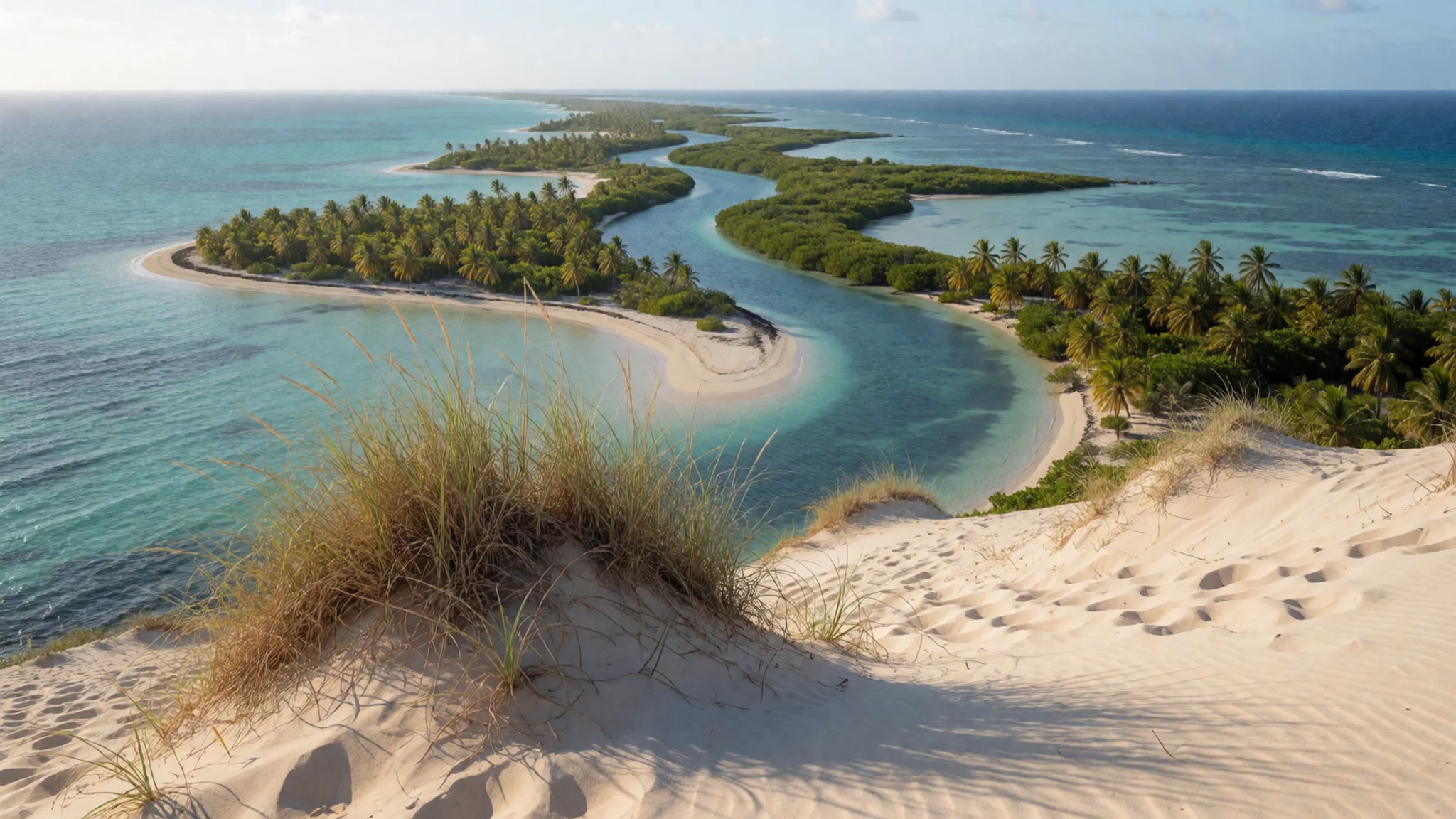
Culture
Jardines de la Reina has no villages of its own, so the culture a visitor meets is that of the Cuban south coast and of the people who work these waters: boat crews, fishing guides, dive staff and the cooks on board, many of them from the nearby provinces. Expect a relaxed, talkative atmosphere. Music tends to be on somewhere, usually son or salsa from a small speaker, and strong coffee in tiny cups is the start of any morning. Conversation often turns to the sea, to the weather and to what was seen on the last dive. The journey itself is part of the experience, with a long bus ride from Havana and a transfer from the port, and many travellers stay a night or two in a family-run casa particular on either side of the trip. There is also a quiet conservation culture here. Guides are proud of the catch-and-release rule, of how few boats are allowed, and of the sharks and groupers that still gather on the reefs. Questions about how the park is managed are usually welcomed. Follow your guide's briefing on every dive and fishing outing, never touch or stand on coral, and release every fish exactly as shown, because the rules protect the reef you came to see.
What to wear
Jardines de la Reina has no resident community, so there is no local costume tied to the cays; the dress that matters is Cuban. The classic garment is the guayabera, a loose cotton or linen shirt with pleats and patch pockets, worn untucked in the heat and still common at celebrations and in older men's wardrobes. Rural Cuban men have long worn straw hats against the sun. What people wear now is simpler: shorts, T-shirts, sandals and light dresses, often bright, with a strong sense of style in Havana and the larger towns. Boat crews wear practical shirts and caps. For a visitor, the sea and sun decide everything. Pack a long-sleeved, quick-drying shirt, a wide-brimmed hat with a strap, sunglasses, reef-safe sun cream and water shoes or sandals with a grip, since decks are wet. Divers should bring their own rash vest or wetsuit if they prefer it, and a light layer for the evening breeze. In towns and at any church, shoulders and knees covered is a courteous default. A dry bag protects cameras and phones, and light long trousers help against mosquitoes at dusk.
What to eat
- Pescado frito or grilled fish — Eateries in port towns such as Júcaro and coastal towns
Fish is the obvious order on the Cuban south coast, usually snapper or a similar white fish, fried whole or grilled with garlic and lime. Meals on board depend on the operator, so ask what is served. On land, look for it on simple menus.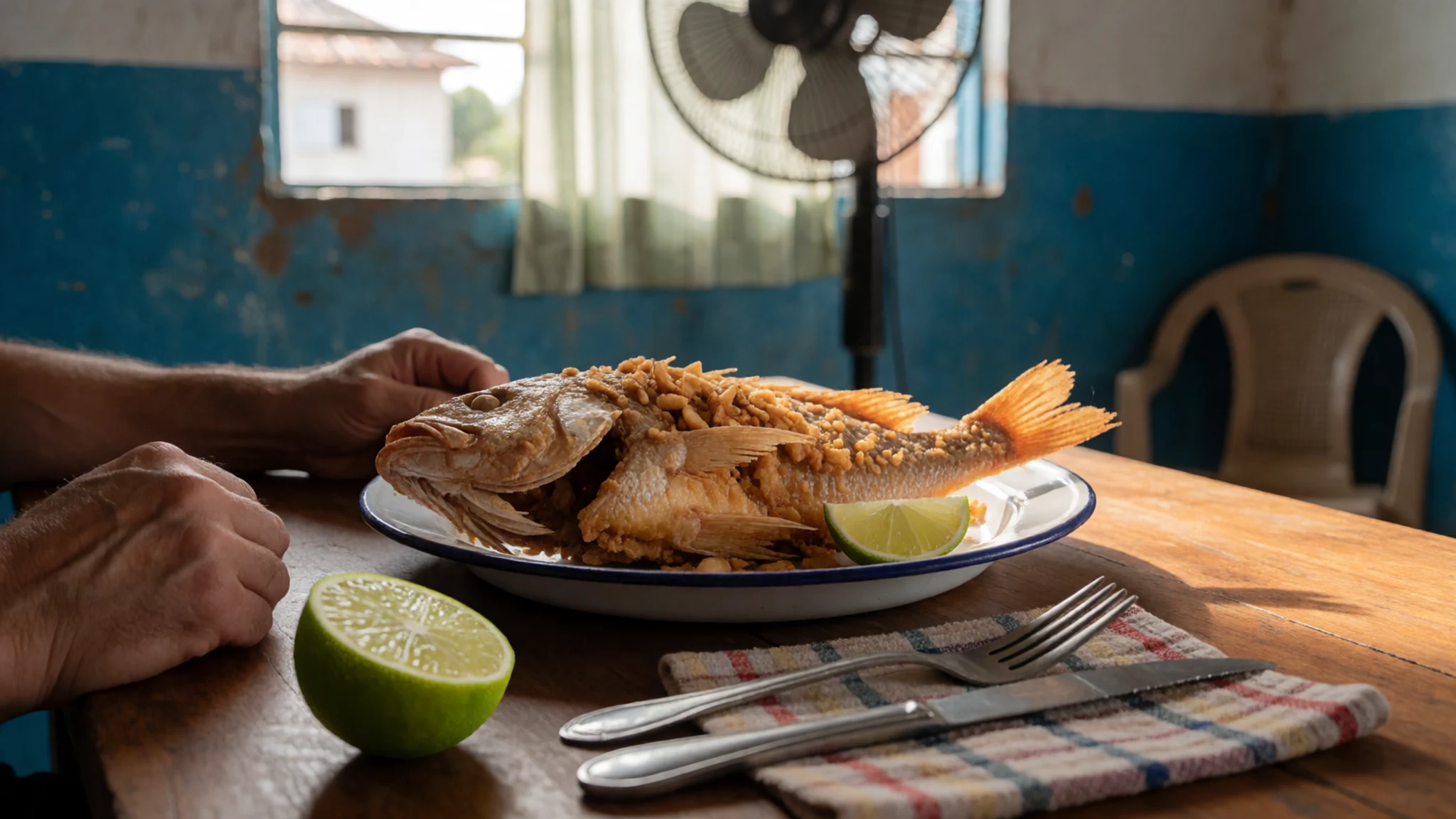
- Arroz congrí — Family-run restaurants (paladares) and casas particulares
Rice cooked together with beans, seasoned with garlic, onion and cumin, is the everyday side across Cuba. It is filling and mild, and a good partner for fish or roast pork after a morning on the water.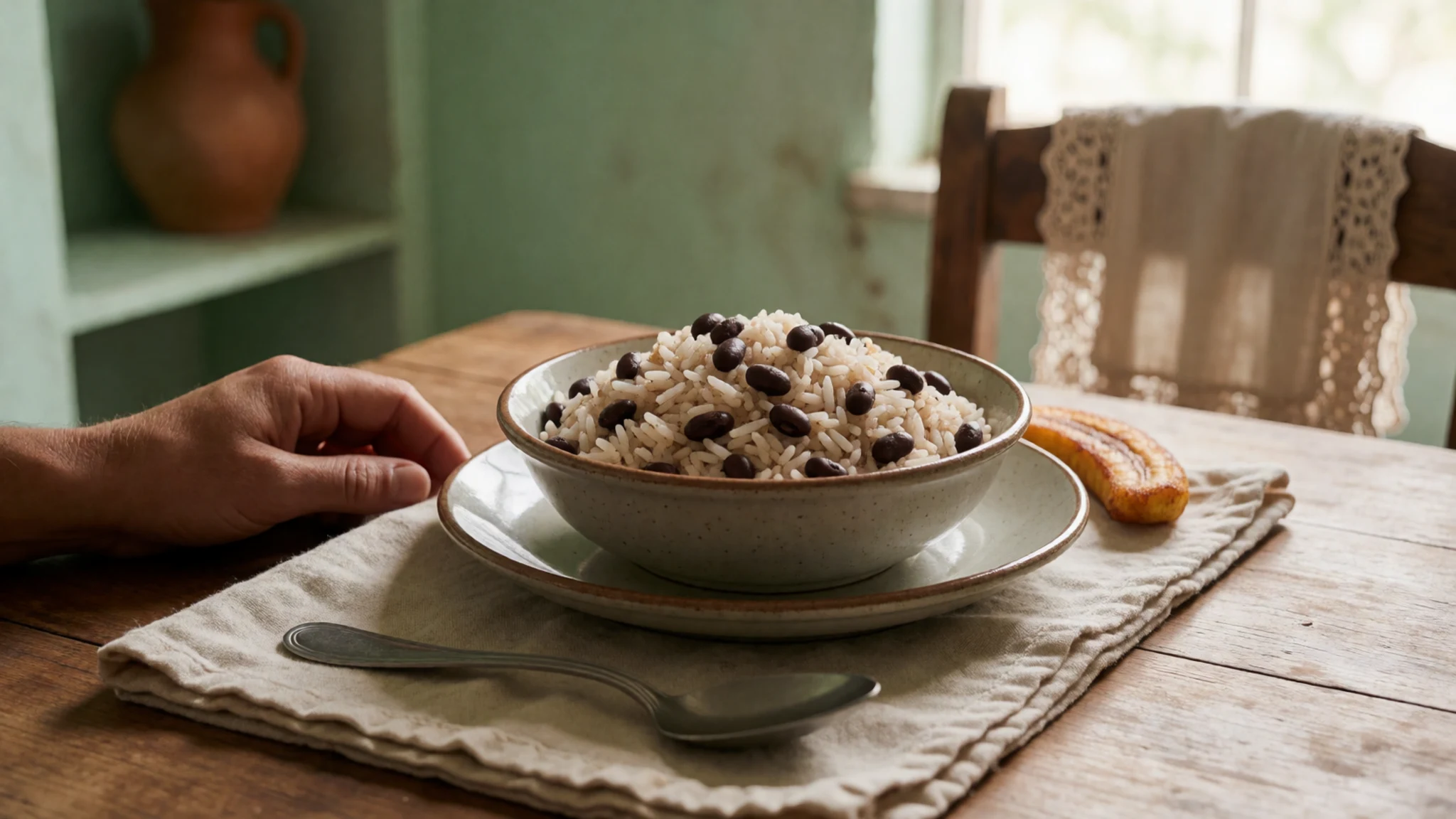
- Ropa vieja — Paladares in Havana and other towns
The name means old clothes, and it describes shredded beef slow-cooked in a tomato, pepper and onion sauce. It is a Cuban staple, usually served with rice and fried plantain, and a dependable choice before or after the boat trip. - Tostones and mariquitas — Street stalls and simple cafeterias
Plantain appears at most Cuban tables, either pressed and fried into thick tostones or sliced thin into crisp mariquitas. They are salty, filling and cheap, and make a good snack for the long bus ride. - Café cubano — Cafetería windows, casas particulares and on board
A small, sweet, very strong espresso, often sugared as it brews. Operators and crews start the day with it, and it is as useful as any alarm clock before an early boat departure.
Plan it
Best time. Late November to April is the better window: drier, cooler and generally calmer at sea. Hurricane season runs from June to November, and the summer months are hot, humid and more likely to bring rough weather that can cancel trips. Check conditions with your operator.
How long. 4–7
Getting there. Fly into Havana, then take a long bus ride to Júcaro, the usual port, northwest of the archipelago; tour operators normally arrange this. From Júcaro, divers board a live-aboard cruiser, which is slower, while anglers often take a faster boat.
Budget. high
Tips
- Book through a licensed tour operator well ahead, because visitor numbers are limited and trips run on fixed schedules
- Bring enough cash for the whole trip, and check with your bank before travelling, as foreign cards can be unreliable in Cuba
- Pack sea-sickness remedies, strong sun protection and any medication you need, since there are no shops or pharmacies on the cays
- Ask your operator what is included, such as meals, equipment and transfers, before paying
- Keep a dry bag for phones and cameras on small boats
Etiquette
- Never touch, stand on or collect coral, shells or marine life
- Follow catch-and-release rules exactly and handle fish as your guide shows
- Take all rubbish back to the boat, and keep a respectful distance from crocodiles and nesting birds
Nearby
Sources
- Wikidata Q1638699 (CC0)
- Wikipedia: Jardines de la Reina (CC BY-SA 4.0)
- Wikivoyage: Jardines de la Reina National Park (CC BY-SA 4.0)
- Photo: View of Cuba, Jardines de la Reina, cayo Caballones (ISS Expedition 6, NASA) (Public domain)
- Photo: American crocodile in Jardines de la Reina, Borut Furlan (CC BY-SA 4.0)
- Photo: View of Cuba, cayos Pingues (ISS Expedition 9, NASA) (Public domain)
- Photo: View of Cuba, cayos Pingues, Santa Cruz del Sur (ISS Expedition 9, NASA) (Public domain)
- Photo: View of Cuba, Santa Cruz del Sur, cayos Pingues (ISS Expedition 30, NASA) (Public domain)


Wildlife
- American crocodile (animal)
The American crocodile is a large reptile, and the most widely spread crocodile in the Americas. In Jardines de la Reina it is a regular resident among the mangroves, and guides take small boats along the channels to look for it. The notes give no season or hour, so ask your guide what to expect. Watch from the boat, keep a respectful distance, stay quiet and follow your guide's advice. Never feed it.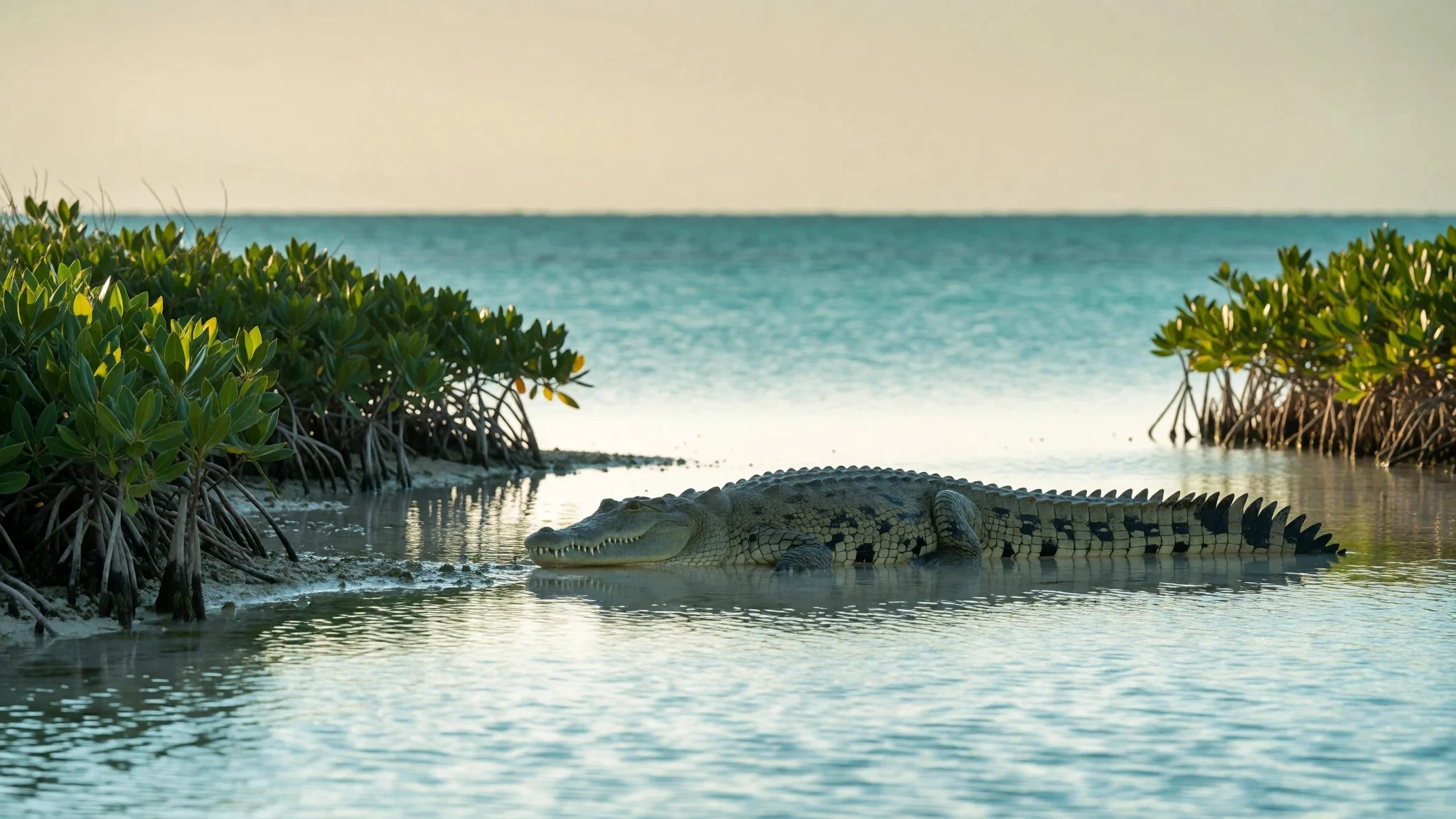
- Brown pelican (bird)
The brown pelican is a large bird that catches its meals by diving into the water. In Jardines de la Reina you may find it feeding along the same edges as spoonbills and herons. Look for a white head and, in breeding dress, a dark neck. The notes give no season or time of day, so ask your guide. Watch quietly from a distance, never feed it, and follow your guide.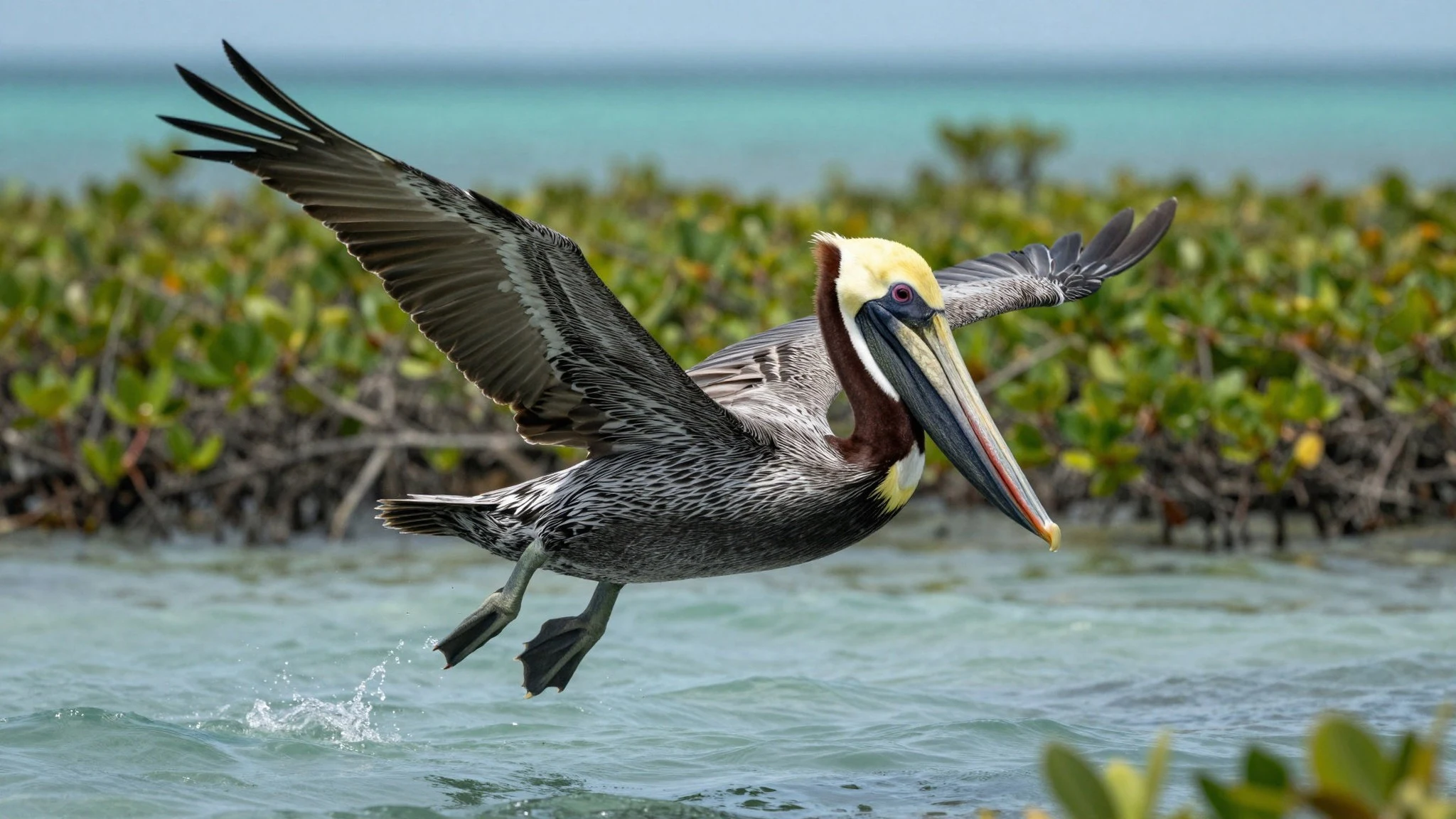
- Jutia (animal)
The jutia is a big, furry, rat-like animal that is a cousin of the guinea pig. It lives on Cuban islands, including those of Jardines de la Reina, and usually goes about in pairs, eating leaves, fruit and bark, and sometimes small animals. The notes do not say when it is seen, so ask your guide. Keep your distance, speak softly, move slowly and let your guide lead the way. Never offer it food. - Roseate spoonbill (bird)
The roseate spoonbill is a sociable wading bird whose pink colour comes from what it eats. In Jardines de la Reina it feeds along the edges, sharing them with herons and pelicans. The notes do not say which season or hour is best, so ask your guide. Watch from a good distance, stay quiet so the birds are not startled, and let your guide choose the spot. Never feed it.