Tara River Canyon
Tara River Canyon, Montenegro
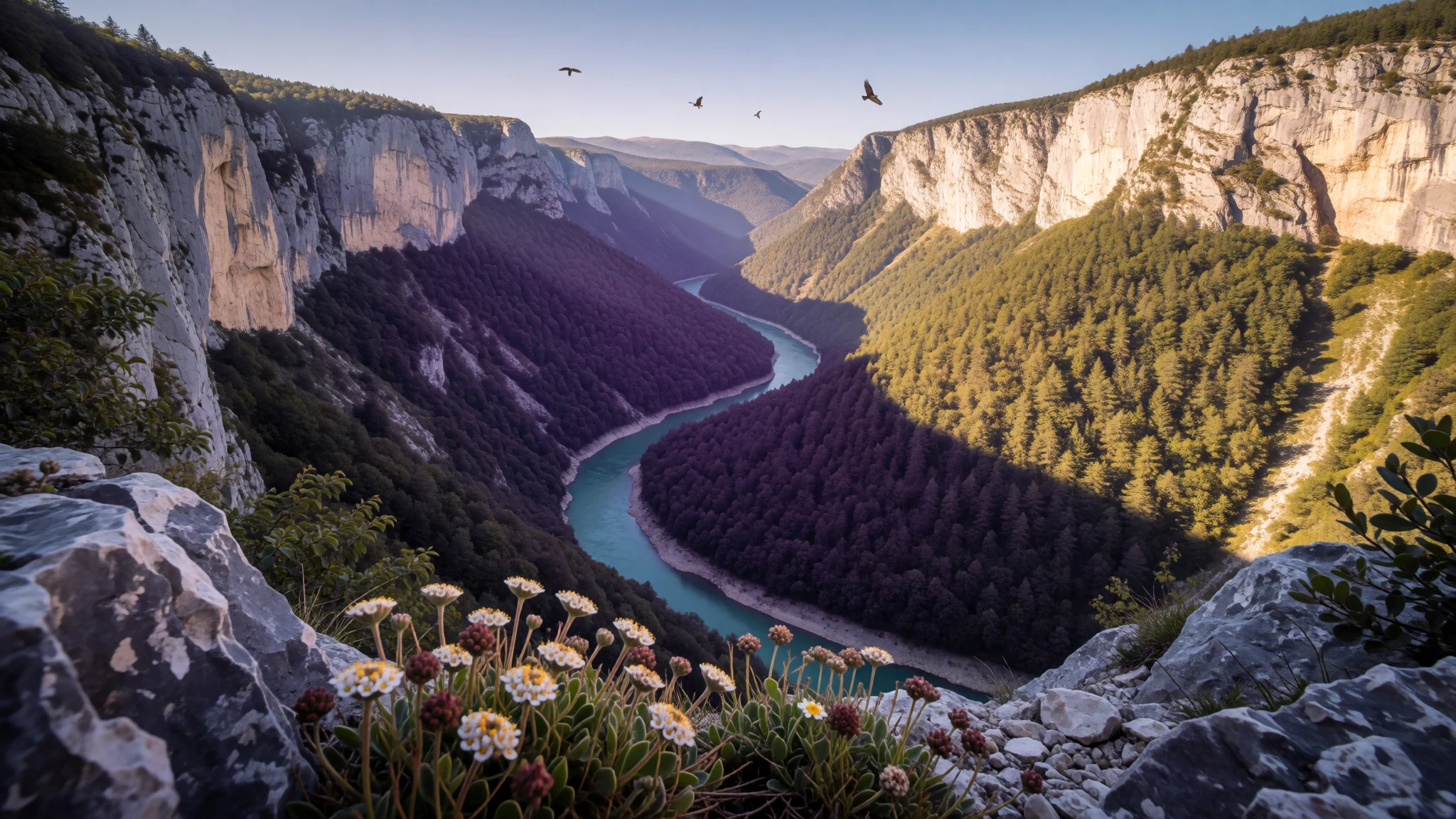
Tara River Canyon is a vast green gorge in northern Montenegro where you can raft turquoise rapids beneath forested walls.
The place
Tara River Canyon cuts through the mountains of northern Montenegro and runs on to the border with Bosnia and Herzegovina. The river that carved it, the Tara, joins the Piva near Hum to become the Drina. Most of the gorge lies in Montenegro, and the final stretch forms the frontier between the two countries.
The canyon is long, and the sources describe it as stretching over eighty kilometres, with walls reaching up to about 1,300 metres in depth. That makes it one of the deepest river canyons in Europe, and the one most often called the deepest in continental Europe. Its nickname, the Tear of Europe, comes from the clarity of the water.
The most dramatic rock walls belong to the Ljubišnja range, and the canyon sits inside Durmitor National Park, which is a UNESCO World Heritage Site. On the Bosnian side the gorge is protected as Tara Nature Park.
The river itself is lively. It falls steadily along its course, collects water from many springs and short tributaries, and produces dozens of rapids and cascades, with names such as Crna Vrela, Bijela Vrela, Djavolje Lazi, Sokolovina and Bijeli Kamen. Whitewater ranges from gentle grades to genuinely splashy ones.
The setting is quiet and rural. Villages are small, forests are thick with pine and beech, and the nearest real town for most visitors is Žabljak, a mountain base used for hiking in summer and skiing in winter. Cell signal can vanish in the gorge, and distances by road are longer than the map suggests.
Its story
Tara River Canyon has been shaped over a very long time by water working through limestone. The river keeps cutting downward, fed by springs along its banks, and the result is a gorge whose walls rise far above the current. The Tara is the main character here, and its journey ends where it merges with the Piva to form the Drina.
For most of history the canyon was a barrier more than a destination. Mountain communities in this part of Montenegro lived by herding, with villages linked by footpaths, churches and old roads rather than by modern highways. The gorge divided valleys, and crossing it meant long detours. Infrastructure arrived late, and that shows in how many routes are still tracks.
The canyon's modern identity came with protection and with outdoor travel. Durmitor National Park, which includes the finest rock walls, is listed by UNESCO, and the Bosnian side has its own nature park. Alongside conservation came rafting, first on traditional wooden boats and later on rubber rafts, which turned the river into the area's best-known activity.
The river also has a human footnote in its name. Locals and writers call it the Tear of Europe because the water is so clean, and that reputation shapes how people behave around it. Rafting companies tend to ask visitors to carry out their rubbish, and the sense that the river is a shared treasure between two countries is strong. Today the canyon is a place where old shepherding country meets adventure tourism, often within sight of each other.
What to see
- Rafting the Tara — Along the river, Montenegro side
Rafting is the classic way to meet the canyon. Trips run on rubber rafts, and some operators also offer older wooden-style boats. The rapids range from easy to lively depending on season and water level, and the walls above are best seen from the river itself. Check the operator's safety briefing and kit.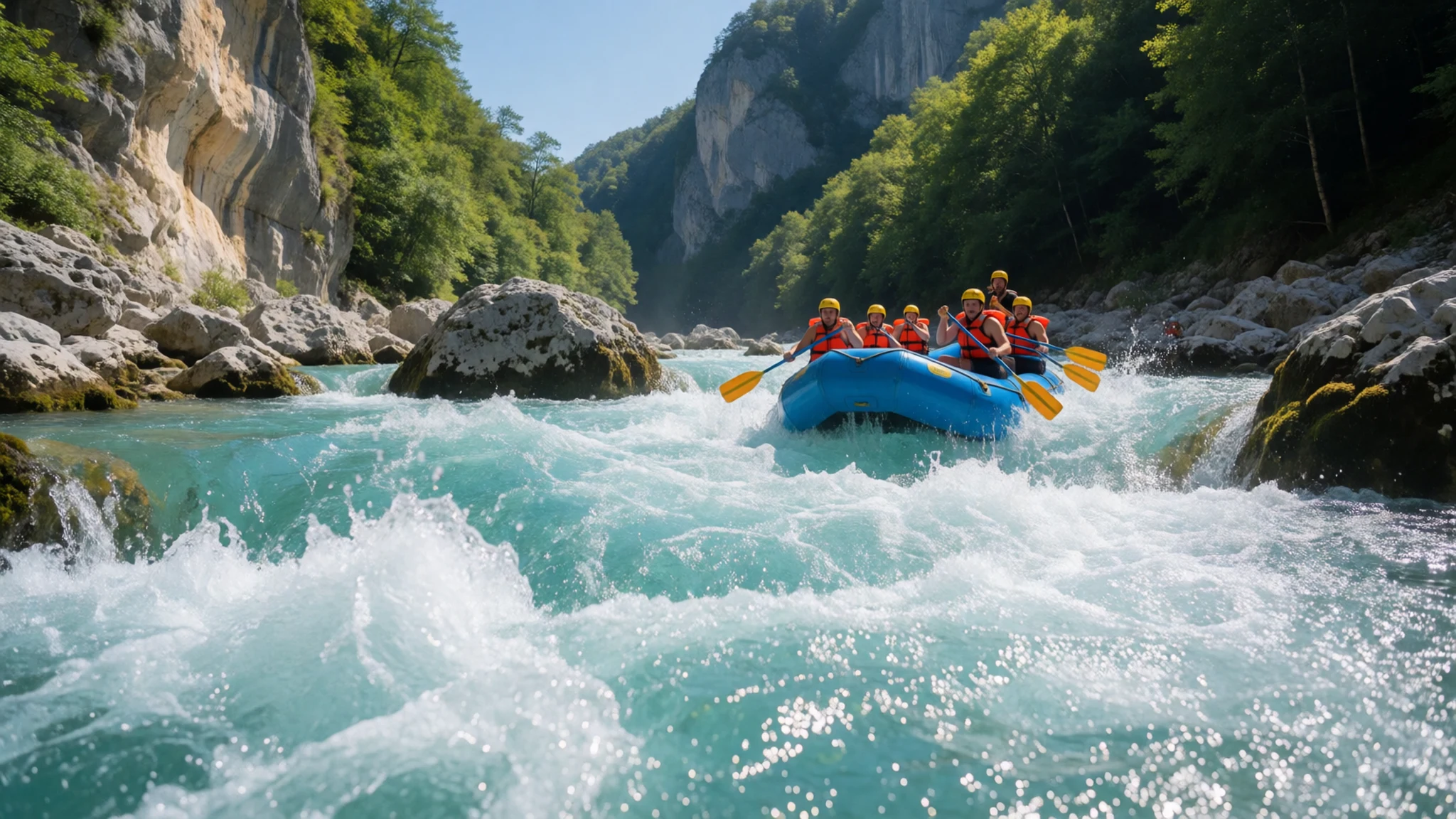
- Canyon viewpoint at Mištrevac — Canyon rim, near Žabljak
One well-photographed viewpoint looks down into the gorge from the rim, giving a sense of its depth that river level cannot. The drop is steep, the forest dense, and the river appears as a thin ribbon far below. Go early in the day, when the light is clear and car parks are quieter.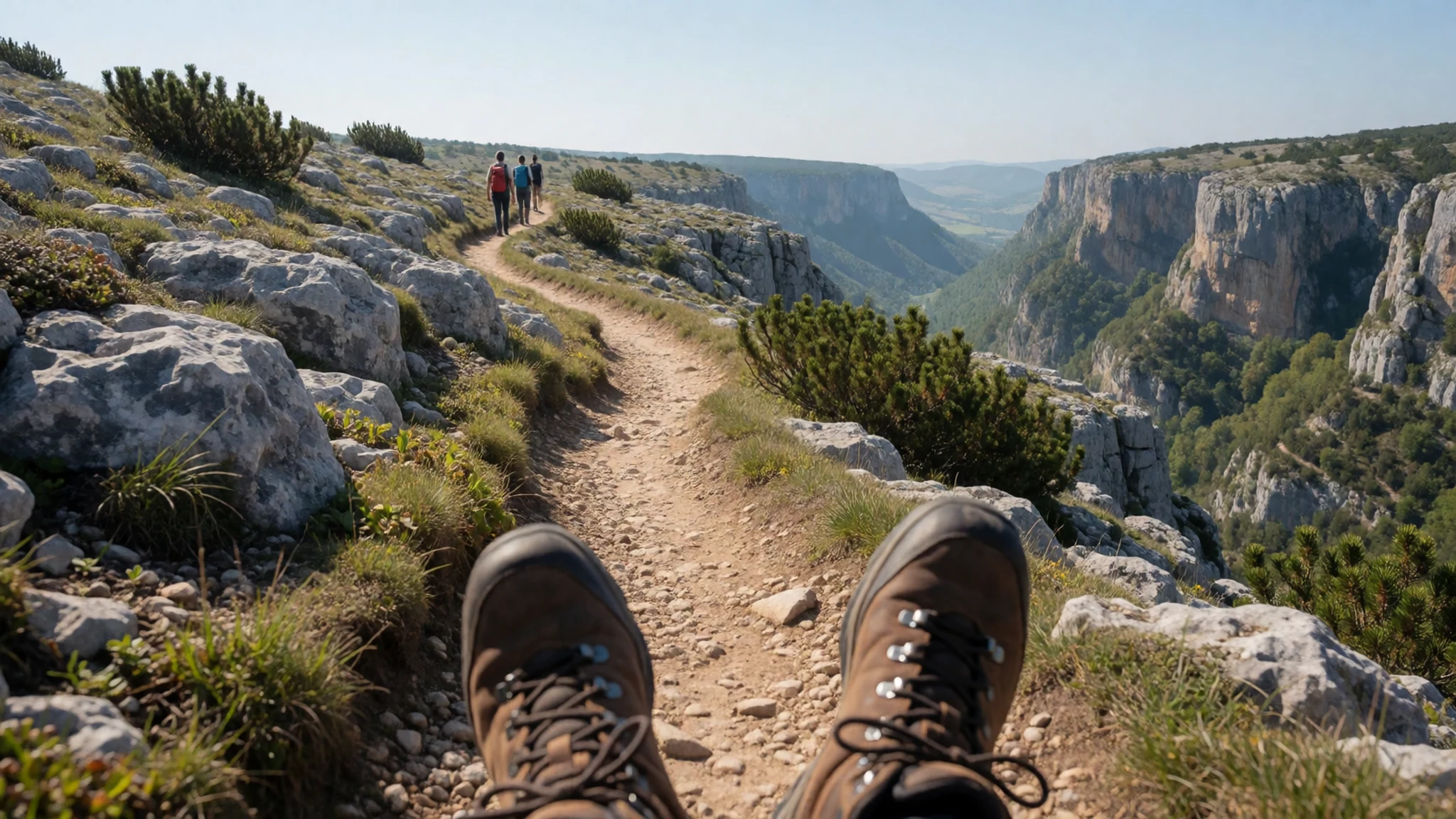
- Durmitor National Park — Around Žabljak
The canyon lies within this UNESCO-listed park, whose rock walls and forests reward a day of walking. Waymarked paths link viewpoints, lakes and villages, and conditions change quickly with weather. Check the park's official information for access and any entry arrangements before setting out.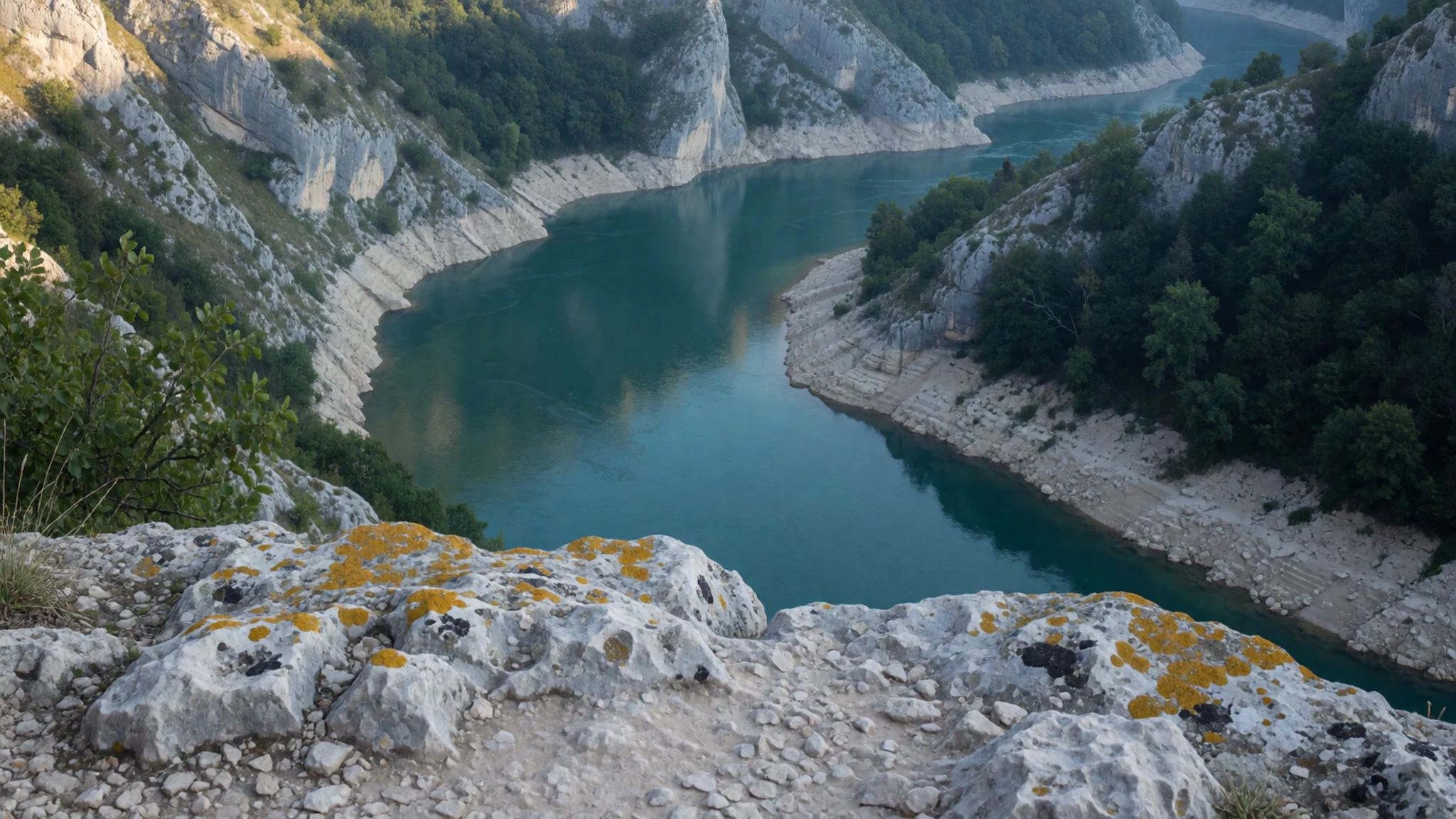
- Ljubišnja rock walls — Northern canyon
The most dramatic cliffs of the canyon belong to the Ljubišnja range. They are best appreciated from the river or from rim paths, where the pale stone contrasts with dark forest. Binoculars help, and so does a guide who knows which stretches are accessible on foot.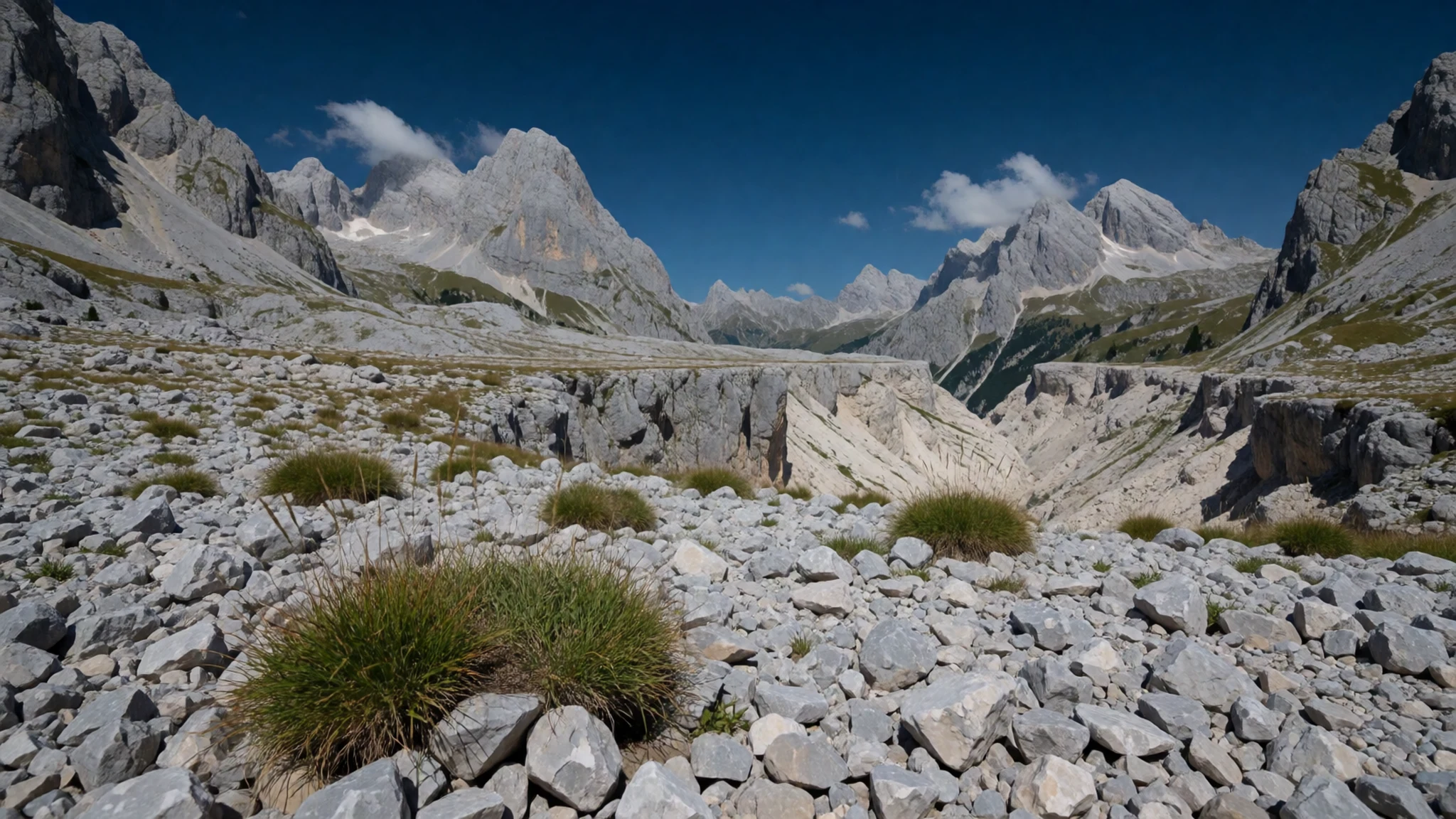
- Tara Nature Park, Bosnian side — Bosnia and Herzegovina bank
On the Bosnian bank the canyon is protected as a nature park, with quieter villages and fewer visitors. Crossing the border at the gorge is not casual, so plan routes by road and carry your passport. It suits travellers who want a calmer, less commercial view of the same river.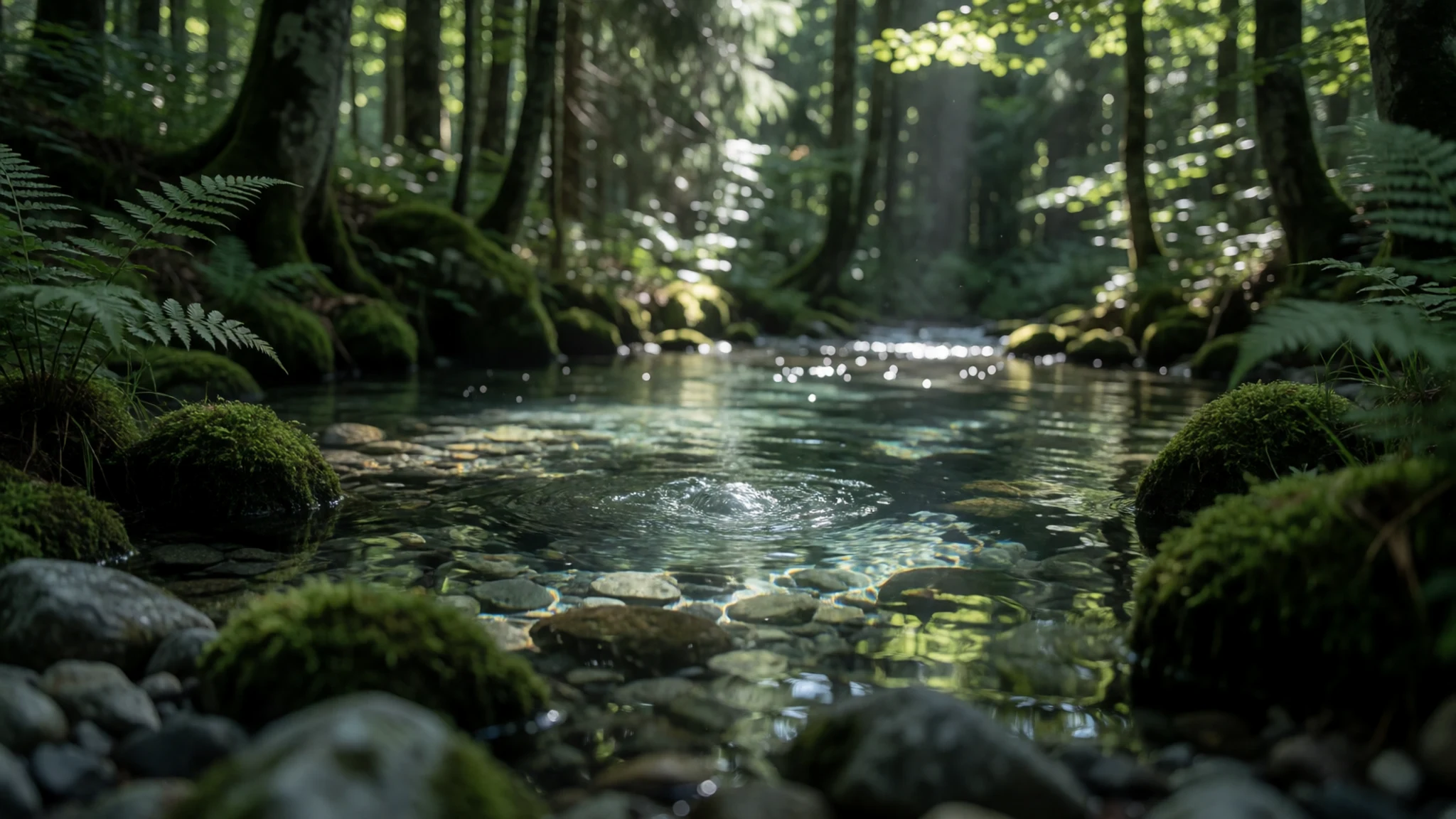
Culture
Tara River Canyon sits in a part of Montenegro where mountain life still shapes manners. Hospitality is central: guests are offered coffee, food and often a glass of rakija, a plum spirit that is stronger than many visitors expect. Refusing outright can seem cold, so accepting a small amount and sipping slowly is the usual compromise.
Villages around the gorge have traditionally lived from herding sheep and growing potatoes and hay, and many households still keep animals. Churches and monasteries in the region are Orthodox, and local people take them seriously as places of worship rather than sightseeing stops.
Toasting has its own etiquette. People clink glasses and look each other in the eye, and being visibly drunk is considered poor form. Conversation is direct and friendly, and visitors who greet people with a simple hello in Montenegrin or Serbian usually get a warm response.
The river is also a shared cultural symbol across the Montenegrin and Bosnian border, and rafting guides tend to talk about it with real pride. Mountain weather, long distances and slow roads mean that plans are loose and hosts are relaxed about time.
When you visit a monastery or church near the canyon, cover your shoulders and knees and speak quietly inside.
What to wear
Tara River Canyon is mountain country, so traditional dress here belongs to the wider Montenegrin highland tradition. Men's costume historically included a woollen waistcoat and cap, and women wore embroidered woollen or linen garments with aprons and head coverings. These are now seen mostly at festivals, folk performances and weddings rather than in daily life.
Everyday clothing is practical and casual. Locals wear jeans, fleeces, work boots and waterproof jackets, and guides on the river wear quick-dry kit and neoprene. In towns such as Žabljak, people dress neatly but without fuss, and sportswear is normal in cafes.
Visitors should dress for the activity and the weather. For rafting, wear swimwear or quick-dry layers under the wetsuit and spray jacket most operators supply, plus shoes that can get wet and stay on, such as old trainers or water sandals. Flip-flops are a poor choice. For walking on rim paths, bring sturdy shoes with grip, a hat and sun protection, since the exposed rock is hot in summer.
Nights are cool even in July, and mornings in the gorge can be chilly, so pack a fleece and a light waterproof. For visits to monasteries and churches, bring a scarf or shirt that covers shoulders and a skirt or trousers that cover knees. Short trousers are generally not accepted inside public institutions.
What to eat
- Boiled lamb — Village taverns around Žabljak
Boiled lamb is a staple of the northern mountains, cooked slowly until tender and served simply with broth or potatoes. It is hearty food for cool evenings and rafting days. Look for it in village taverns and family-run restaurants around Žabljak.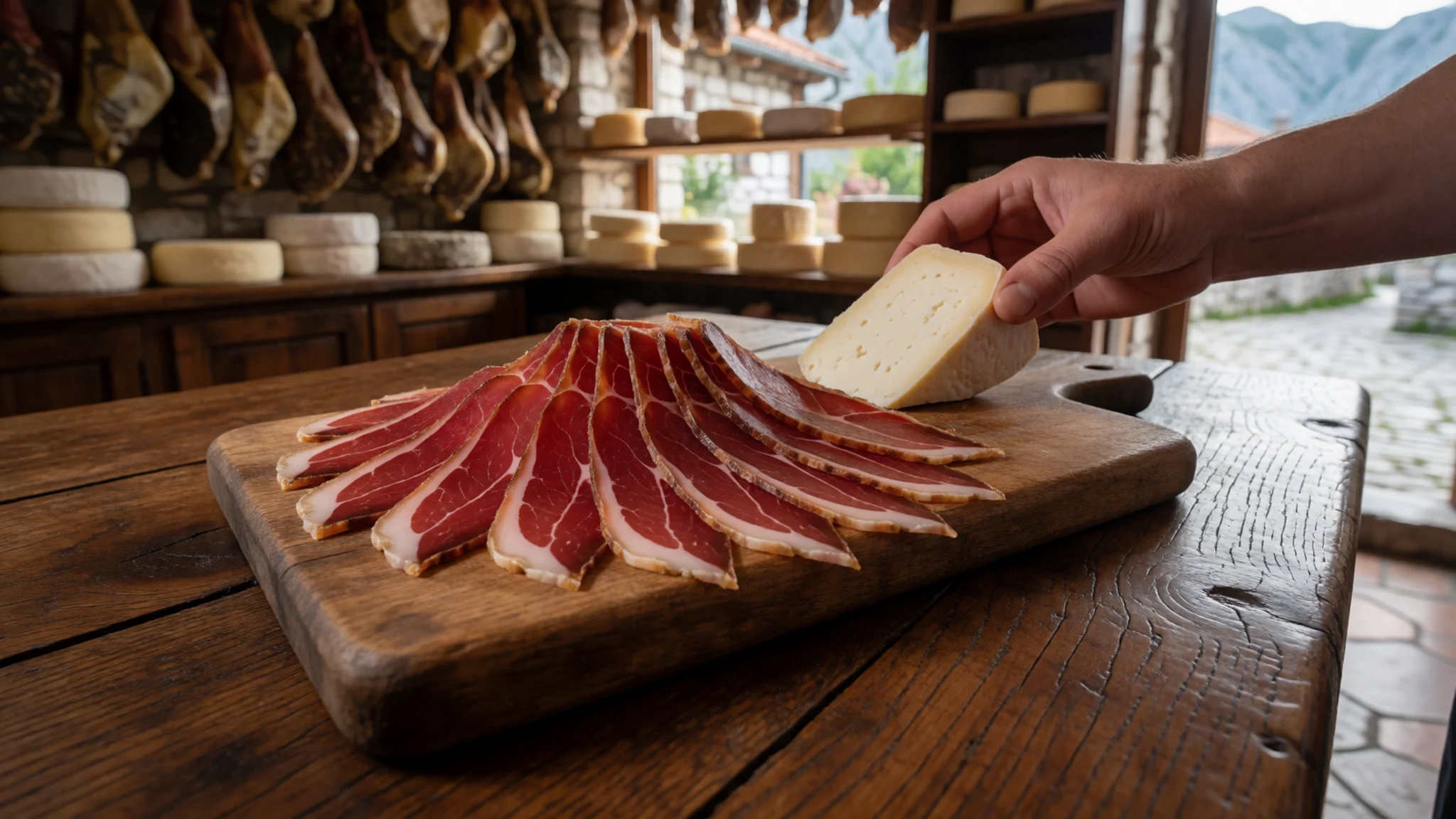
- Lamb cooked in milk — Traditional national restaurants in mountain towns
Lamb cooked in milk is a northern speciality in which the meat is simmered gently in milk until soft and mild in flavour. It is rich and comforting, and best eaten with bread. Ask for it at traditional restaurants that serve national cuisine in the mountain towns.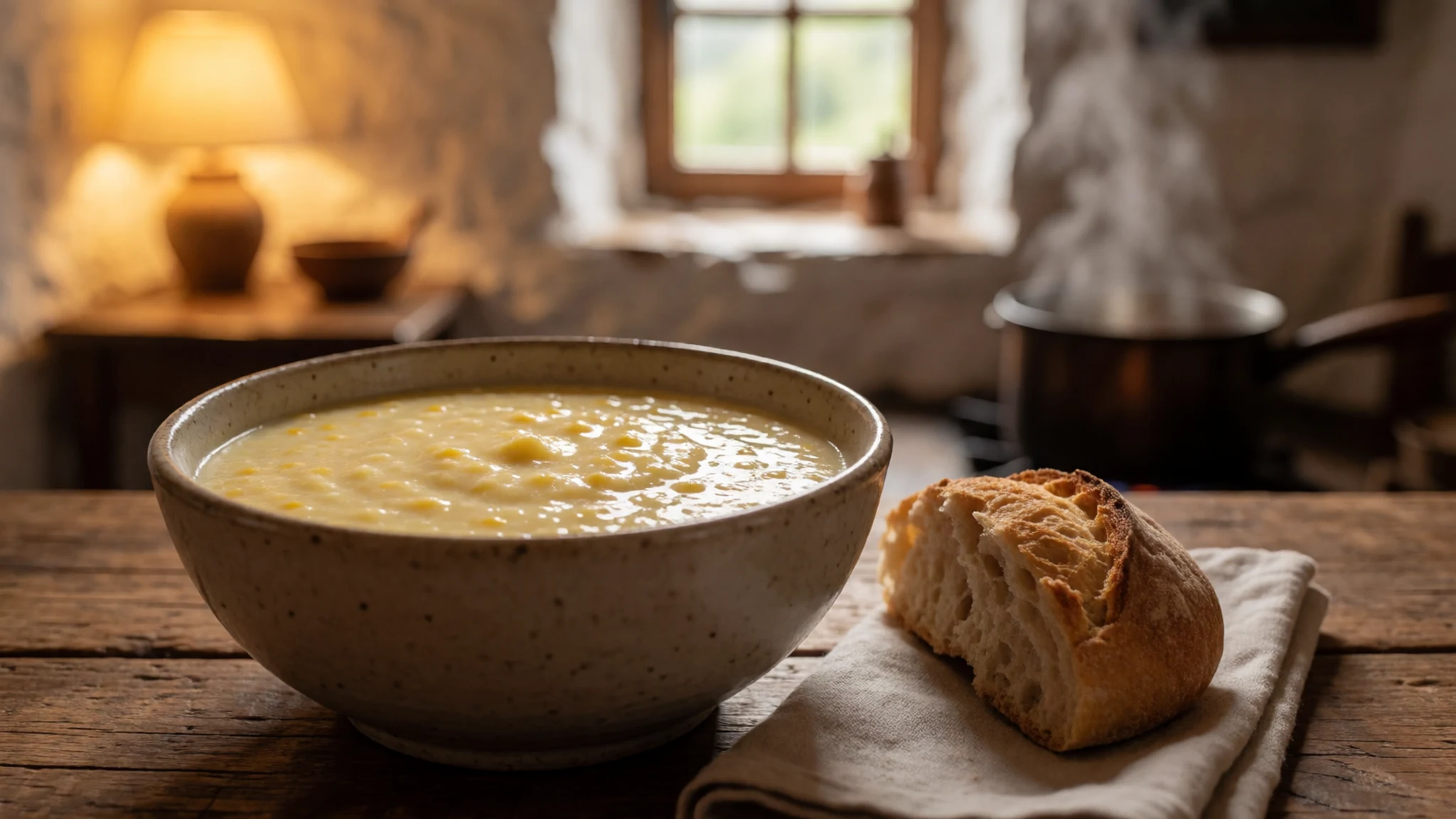
- Cicvara — Family guesthouses and village eateries
Cicvara is a buttery corn porridge, often served with fresh cream and sometimes cheese. It is filling, plain and deeply rooted in mountain cooking. It makes a good breakfast or a slow lunch after a morning of walking, and is common in family guesthouses. - Potatoes with cheese and cream — Guesthouses and mountain restaurants
Boiled potatoes served with local cheese and fresh cream are simple, filling and typical of the north, where potatoes grow well. The cheese is often tangy and salty. It is usually offered as a side or a light meal in guesthouses and mountain restaurants. - Pljevlja cheese — Local markets and mixed starter platters
Pljevlja cheese is a regional cheese from the northern mountains, often served as a cold starter with smoked ham and bread. It has a firm, salty character that goes well with raw onion and a glass of local spirit. Look for it at markets and as part of mixed platters. - Donuts with honey — Roadside cafes and family restaurants
Small fried donuts served with honey, and sometimes dried figs, are a traditional dessert in Montenegro. They are sweet, warm and simple, and make a good finish to a heavy meal. Try them at roadside cafes and family restaurants.
Plan it
Best time. June to September is the usual rafting season, when the water is warm enough and roads are clear. July and August are the busiest and hottest, while June can have higher water. Winters are cold and snowy in the mountains, and most river activity stops.
How long. 2–3
Getting there. Fly into Podgorica, the nearest main airport for most visitors, then continue by road to Žabljak, the usual base, which takes a few hours on mountain roads. A hire car or pre-booked transfer is easiest. Buses run on main routes, so check current timetables locally.
Budget. mid
Tips
- Book rafting ahead in July and August, when operators fill up
- Start viewpoint visits early to avoid haze and crowds
- Carry some cash for villages and small guesthouses, as cards are not always accepted
- Bring a warm layer, as mountain evenings are cool even in summer
- Allow extra time for winding mountain roads
Etiquette
- Take your rubbish with you, since the river's clean water is a point of local pride
- Cover shoulders and knees when entering monasteries and churches
- Accept a small drink of rakija graciously and sip it slowly
Nearby
Sources
- Wikidata Q2574575 (CC0)
- Wikipedia: Tara River Canyon (rev 1383663624) (CC BY-SA 4.0)
- Wikivoyage: Montenegro (rev 5388259) (CC BY-SA 4.0)
- Milan Radovic, Kanjon reke Tare (CC BY-SA 4.0)
- Jasmine Halki, Diving and rafting on Tara River Canyon (CC BY 2.5)
- Alexkom000, Tara River Canyon 1 (CC BY 4.0)
- Alexkom000, Tara River Canyon 2 (CC BY 4.0)
- Alexkom000, Tara River Canyon 3 (CC BY 4.0)
- Alexkom000, Tara River Canyon 4 (CC BY 4.0)
- Alexkom000, Tara River Canyon 5 (CC BY 4.0)
- Alexkom000, Tara River Canyon 6 (CC BY 4.0)


