Durmitor
Durmitor, Montenegro
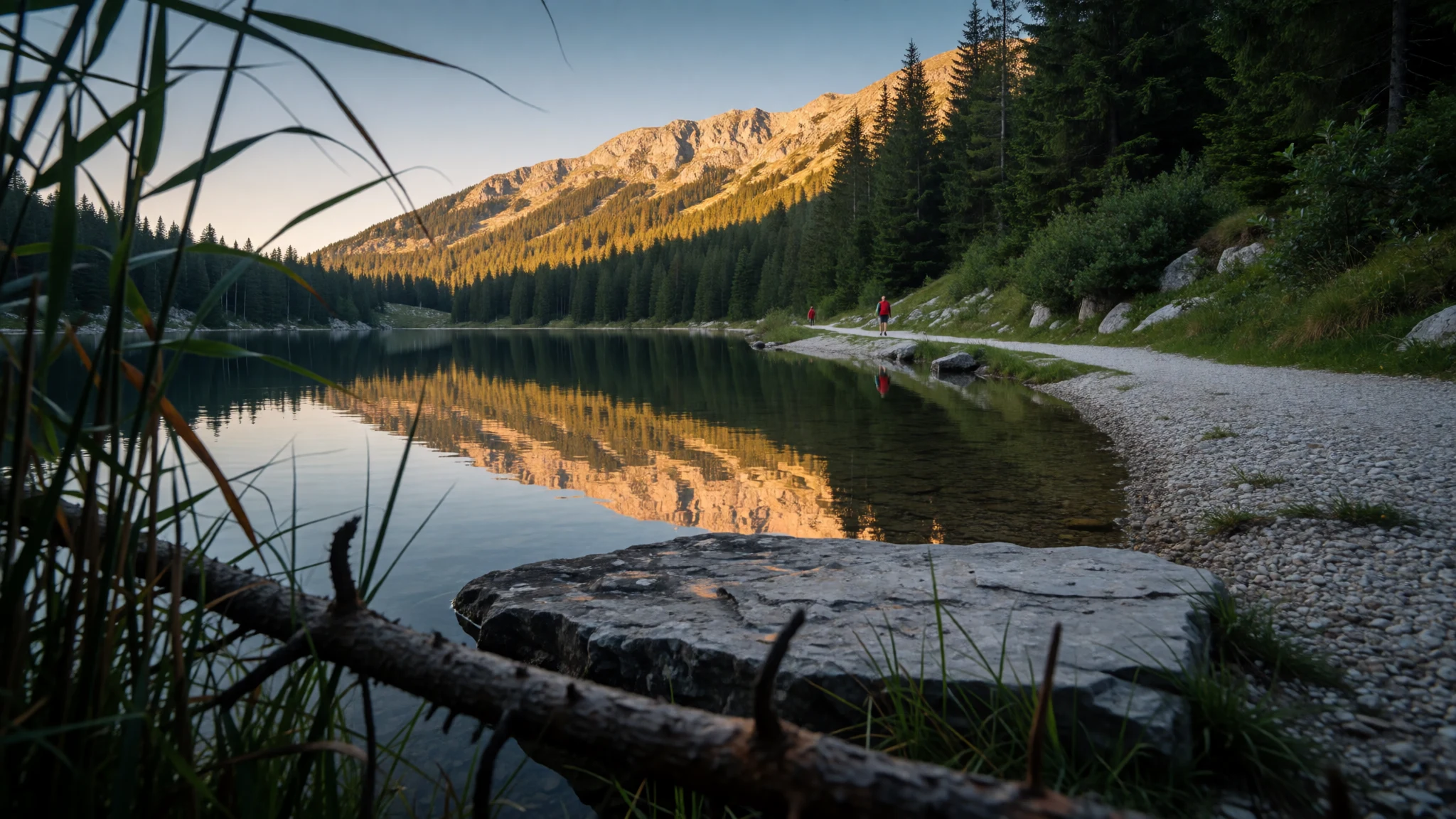
Durmitor is Montenegro's mountain heartland: limestone peaks, glacial lakes and deep river canyons within reach of one small town.
The place
Durmitor is a limestone massif in north-western Montenegro, part of the Dinaric Alps. Its highest summit, Bobotov Kuk, stands at 2,523 m. The range is hemmed in by three canyons: the Tara to the north, the Piva to the west and the Komarnica to the south. That gives the whole area a fortress-like shape, with the high ground cut off by deep gorges on three sides.
To the east the mountains ease into a high plateau of about 1,500 m known as Jezerska površ, the Plateau of Lakes. Beyond it rises Mount Sinjavina. Most of the massif lies inside the municipality of Žabljak, a small town that serves as the base for walkers in summer and skiers in winter.
The massif also gives its name to Durmitor National Park, founded in 1952 and inscribed as a World Heritage Site in 1980. The park is the centre of mountain tourism in Montenegro, so July and August bring the most visitors, though the scale of the terrain absorbs them well once you leave the roadside viewpoints.
The landscape is a mix of bare grey rock, summer pasture, dark conifer forest and small lakes locally called 'eyes of the mountain'. Weather changes fast at altitude, and snow can linger well into the warm months in sheltered hollows. It is a place for walking, rafting and slow driving rather than for ticking off a single monument.
Its story
Durmitor's story is bound up with the country around it. Montenegro's rulers kept their independence through the long Ottoman centuries, and that independence was formally recognised at the Congress of Berlin in 1878. Mountain terrain like this was a large part of how a small people held out: steep ground, few roads and scattered villages made conquest costly.
Later the country became part of the Kingdom of Serbs, Croats and Slovenes, which was renamed the Kingdom of Yugoslavia in 1929, and then of the various Yugoslav federations that followed. Montenegro regained its independence after a referendum in May 2006, so the nation you visit today is quite young as a modern state, even though its roots go back many centuries.
The mountain itself entered the modern story of protection in 1952, when the national park was created. Recognition as a World Heritage Site came in 1980. Those dates matter to visitors because they explain why the area feels managed: marked trails, a park authority, and a town geared to hikers rather than to beach crowds.
Until fairly recently the interior relied on footpaths linking villages, churches and pastures instead of a dense road network. Many of those old routes are now the walking trails. Walking them is the closest you get to the older rhythm of the region, when people moved flocks up to the high pastures for summer and came back down before the snow.
What to see
- Tara River Canyon — North of Durmitor, near Žabljak
The Tara cuts the northern edge of the massif, and the canyon is the most dramatic reason to come. Viewpoints along the road show the drop clearly. Rafting trips run through it in the warmer months, using rubber boats on a route that is long enough for a full day on the water.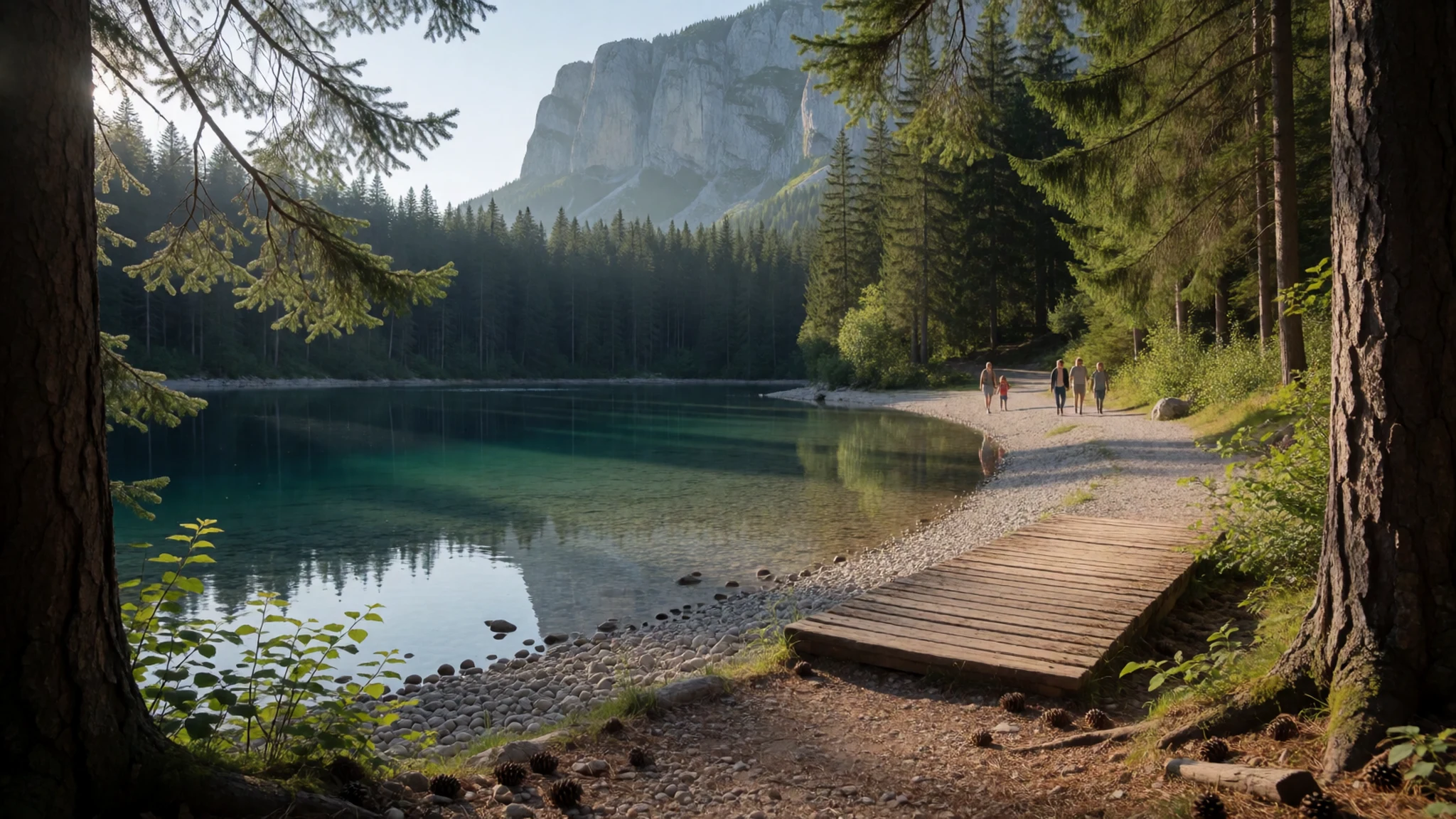
- Black Lake (Crno jezero) — Near Žabljak
The best-known lake of the Plateau of Lakes sits in pine forest just outside Žabljak. A level path circles it in an easy walk, so it suits families and anyone acclimatising. Peaks rise behind the dark water, and the reflections are best in calm early morning light.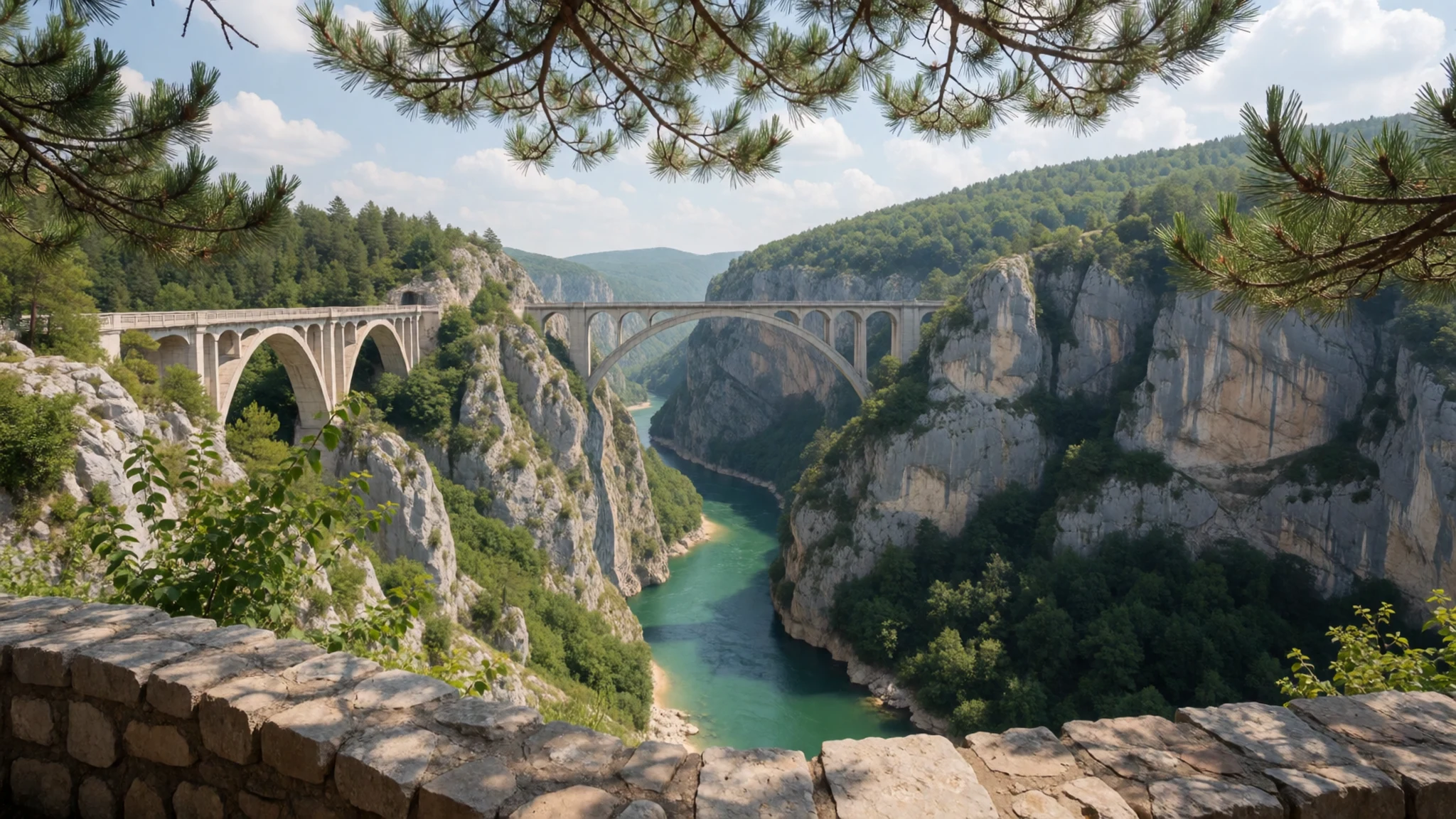
- Bobotov Kuk — Central Durmitor
The highest point of the massif, at 2,523 m, is reached by a long day's walk with steep, rocky sections. Go only in settled weather, start early and carry layers, since conditions turn quickly. Views take in the plateau, the lakes and the canyons falling away on every side.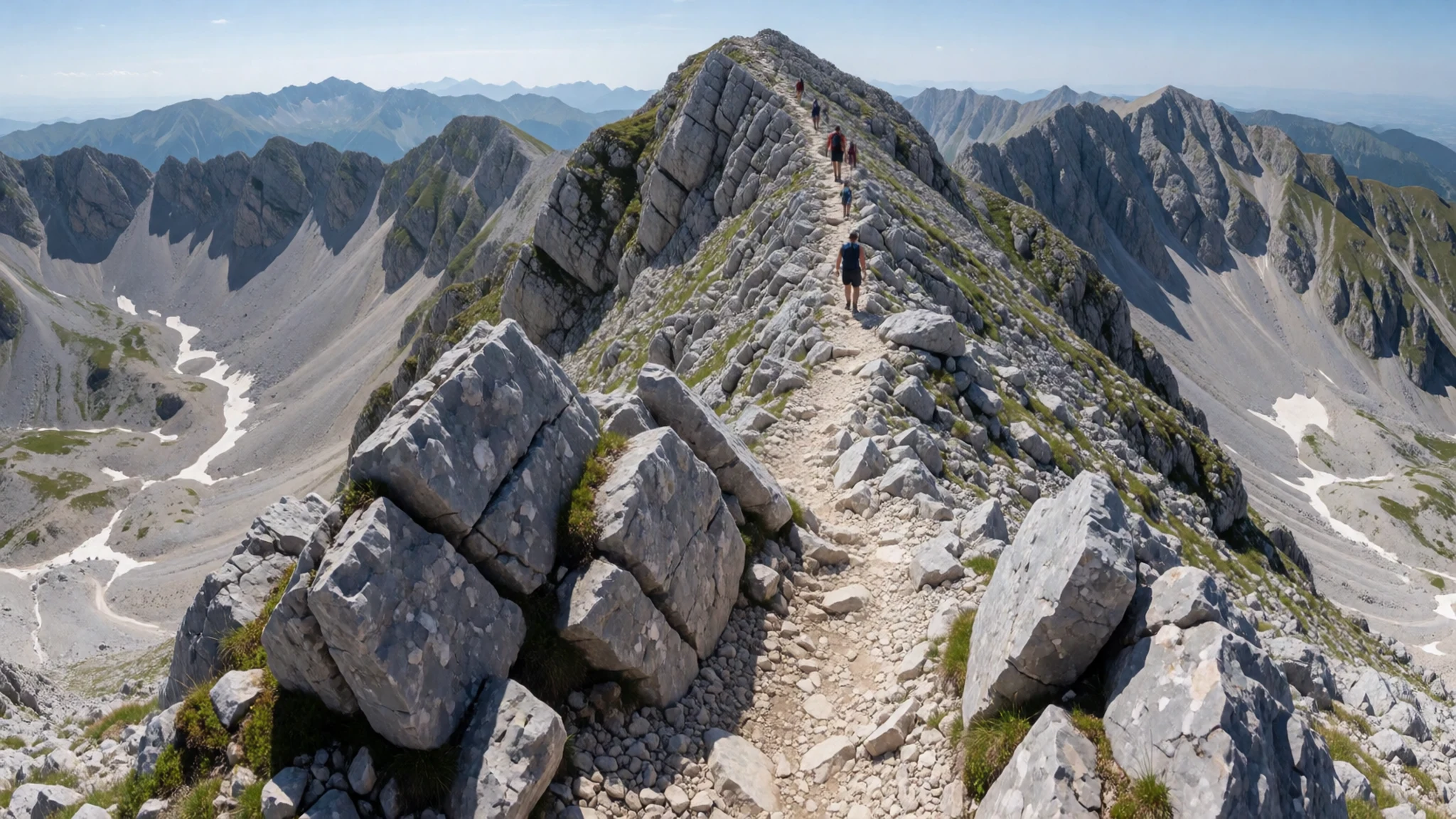
- Piva Canyon — West of the massif
West of the peaks, the Piva canyon gives a quieter alternative to the Tara. The road along it passes through tunnels and over viewpoints, and the water below is a deep green. It is best taken at a slow pace, with stops, rather than as a rush from one lookout to the next.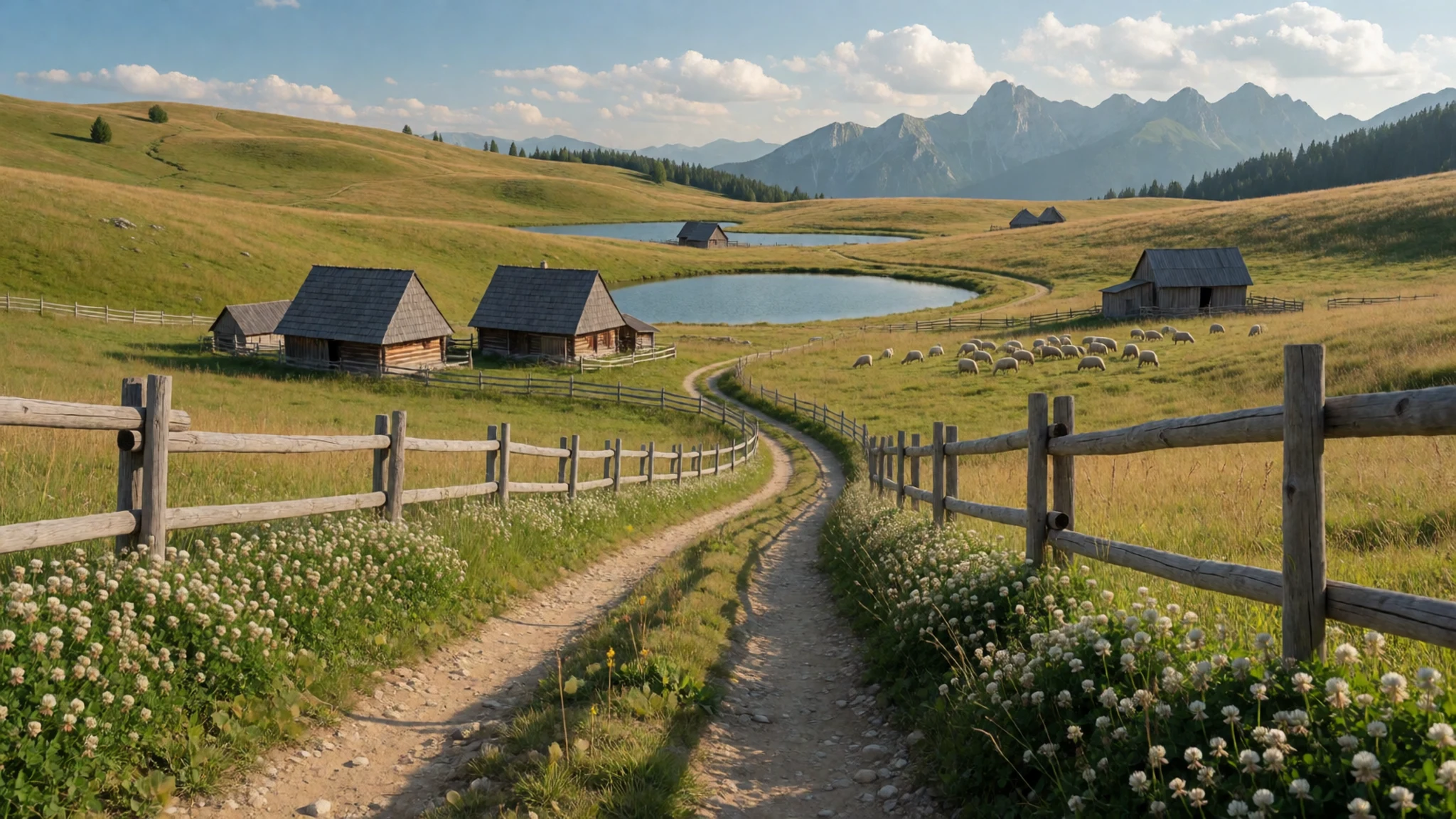
- Plateau of Lakes (Jezerska površ) — East of the main peaks
The high plateau to the east of the peaks holds the park's scattered lakes and open pasture. Trails here are gentler than those on the summits and suit a relaxed day with a picnic. Mount Sinjavina forms the eastern backdrop, with long views over grass and rock.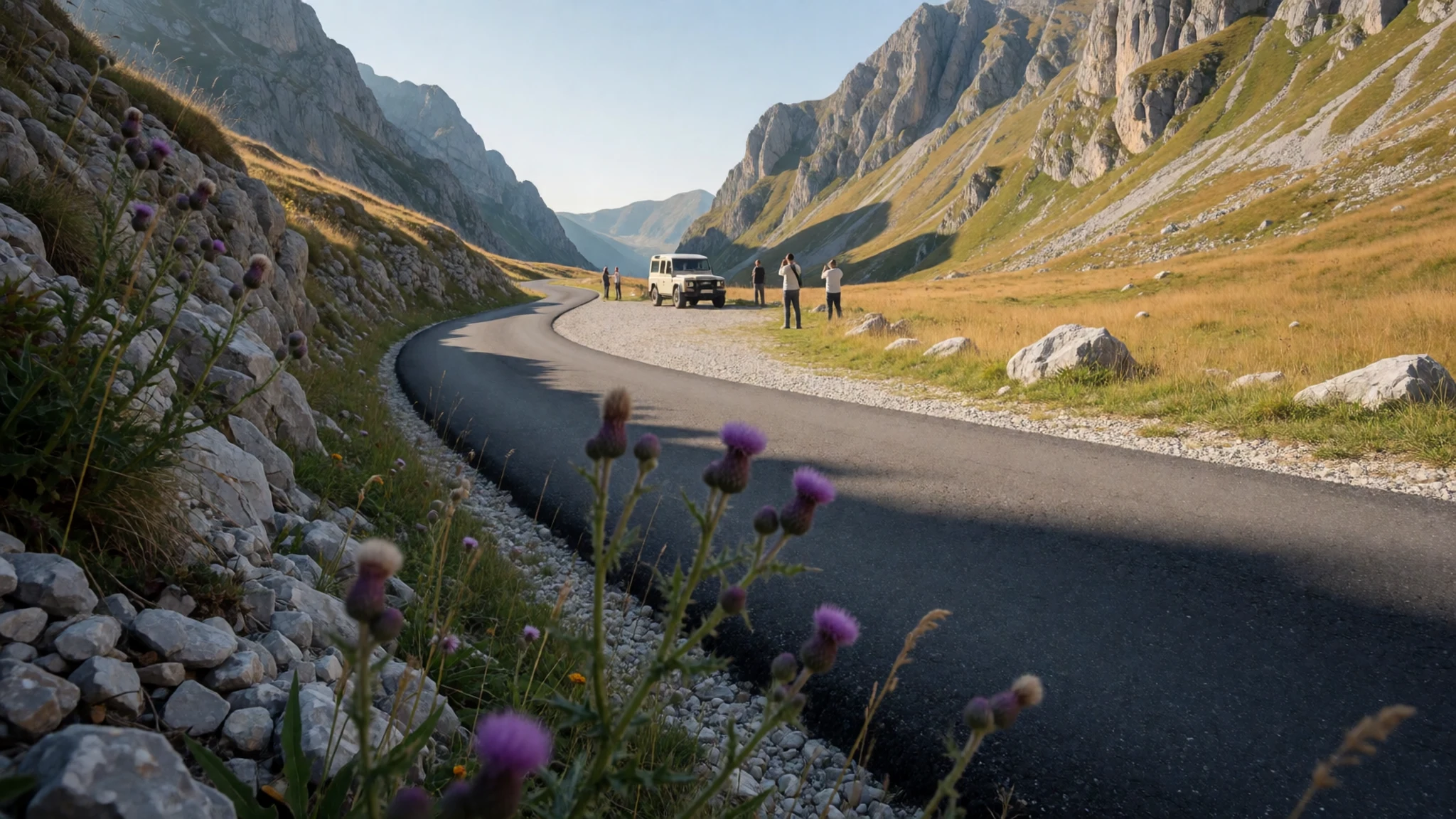
Culture
Durmitor sits in the Montenegrin highlands, where life has long revolved around livestock, family and hospitality. Mountain villages kept their own customs for centuries, and visitors still meet that old habit of welcoming a guest with food and a drink before any business is done. Conversations are often warm, direct and unhurried.
Montenegro is multicultural and multiethnic. All citizens can be called Montenegrin, though the word is also used for a particular ethnic group, so it helps to ask people about themselves rather than assume. Churches and monasteries across the country are still active places of worship, not just sights.
Drinking is part of social life, and rakija, a plum spirit that is often very strong, may be offered at a table. Sipping is preferred to emptying a glass in one go, and being visibly drunk is looked down upon. When glasses are raised, people look one another in the eye as they clink them; avoiding eye contact can seem disrespectful.
Short trousers are usually not accepted inside public institutions such as hospitals, and modest dress is expected in monasteries and churches. In the mountains, dress is practical and unfussy. If you are offered a drink or a small plate by a host, accept at least a little and sip slowly, and cover your shoulders and knees before entering any monastery or church.
What to wear
Durmitor has no single costume that visitors will see on the street, but traditional Montenegrin dress still appears at festivals, weddings and folk performances. Men's outfits typically include a embroidered waistcoat and a cap, while women's include layered skirts and decorated aprons, usually in wool, linen and cotton with woven or embroidered trim. Mountain life favoured thick wool for warmth.
In daily life, people in Žabljak dress for the weather: fleeces, waterproof jackets, sturdy boots and sensible trousers. Nothing is formal, and in town you will see hikers, farmers and families in much the same practical clothes. In cities and on the coast, dress is more fashionable, but the mountains stay casual.
For a visit, think in layers. Summer days can be warm at lower levels yet cold and windy on the summits, and sudden rain or even snow is possible high up. Bring a waterproof shell, a warm mid-layer, a hat and sun protection. Footwear matters most: wear proper walking boots with good grip for rocky trails, and keep trainers for the lakeside paths. In winter, add insulated gloves, thermal layers and waterproof boots. Carry a scarf or light cover-up if you plan to enter a monastery or church, and avoid very short shorts there.
What to eat
- Njeguški pršut — Traditional restaurants and konobas in Žabljak
Smoked, air-dried ham from the Njeguši area, sliced thin and served as a cold starter. It is salty and rich, and usually comes with local cheese. A good first taste of Montenegrin cured meats.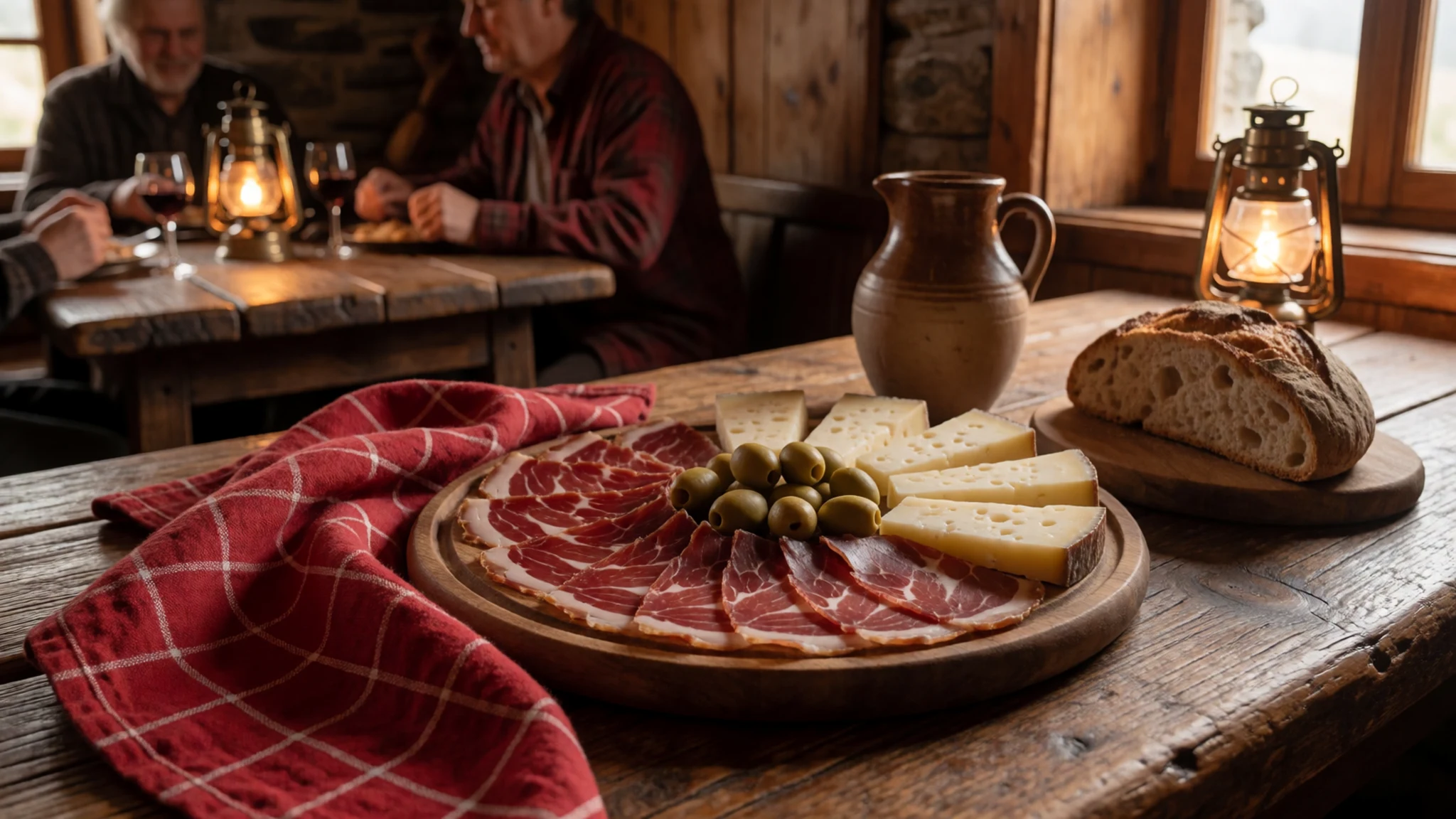
- Cicvara — Family-run eateries around Žabljak
A buttery corn porridge cooked with cheese and served with fresh cream. It is hearty mountain food, made for cold days and long walks. Expect it at family-run places that cook traditional northern dishes.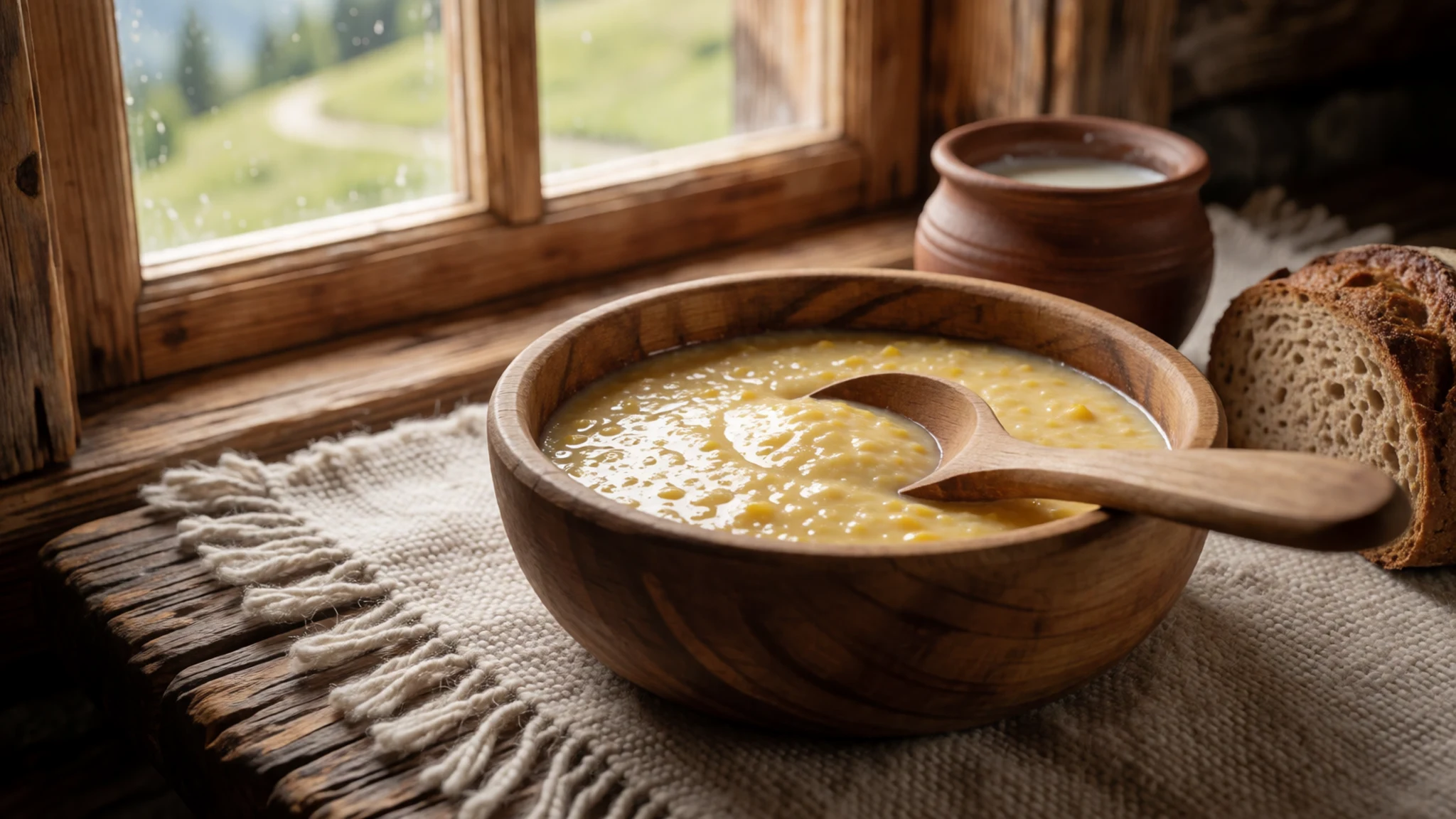
- Boiled lamb and lamb in milk — Traditional mountain restaurants
Lamb is the centrepiece of northern cooking, either simply boiled or slowly cooked in milk. The meat is tender and mild, and it is often served with potatoes. Order it at traditional restaurants. - Potatoes with cheese and cream — Small restaurants and guesthouses in the highlands
A simple dish of boiled potatoes served with local cheese and fresh cream. It is plain but satisfying, and suits vegetarians. You will see it on many mountain menus, often as a side. - Pljevaljski and njeguški cheese — Roadside stalls and local shops near the park
Local cheeses are served as starters or with bread. Each has its own character, from firm and salty to creamier styles. Buy some to take on a hike, as they travel well.
Plan it
Best time. June to September for walking, when trails are mostly clear of snow and the lakes are easy to reach. July and August are busiest. Winter, roughly December to March, suits skiing at Žabljak, but the high peaks then need real mountain experience.
How long. 2–4
Getting there. Most visitors fly into Podgorica, the capital, then continue by road to Žabljak, the park's base town; check current bus and transfer options locally. Many also arrive by road from Croatia, or by sea from Italy. Hiring a car gives the most freedom in the mountains.
Budget. mid
Tips
- Start walks early, since afternoon weather in the mountains can turn quickly
- Carry water, snacks and layers, as there are few shops on the trails
- Carry some cash for small guesthouses and roadside stalls
- Book accommodation ahead for July and August and for the ski season
- Check the park authority's website for current trail and weather information
Etiquette
- Take your rubbish with you and stay on marked paths
- Sip rakija rather than draining the glass, and meet eyes when you clink
- Cover shoulders and knees at monasteries and churches
Nearby
Sources
- Wikidata Q212836 (CC0)
- Wikipedia: Durmitor (rev 1381124788) (CC BY-SA 4.0)
- Wikivoyage: Montenegro (rev 5388259) (CC BY-SA 4.0)
- Photo 01 — Michael Tyler (CC BY-SA 2.0)
- Photo 02 — Andrea Polereczky (CC BY 3.0)
- Photo 03 — FrDr (CC BY-SA 4.0)
- Photo 04 — Дмитрий Мозжухин (CC BY 3.0)
- Photo 05 — Sadko (CC BY-SA 4.0)
- Photo 06 — Andrija12345678 (CC BY-SA 4.0)
- Photo 07 — Andrija12345678 (CC BY-SA 4.0)
- Photo 08 — Andrija12345678 (CC BY-SA 4.0)


