Podgorica
Podgorica, Montenegro
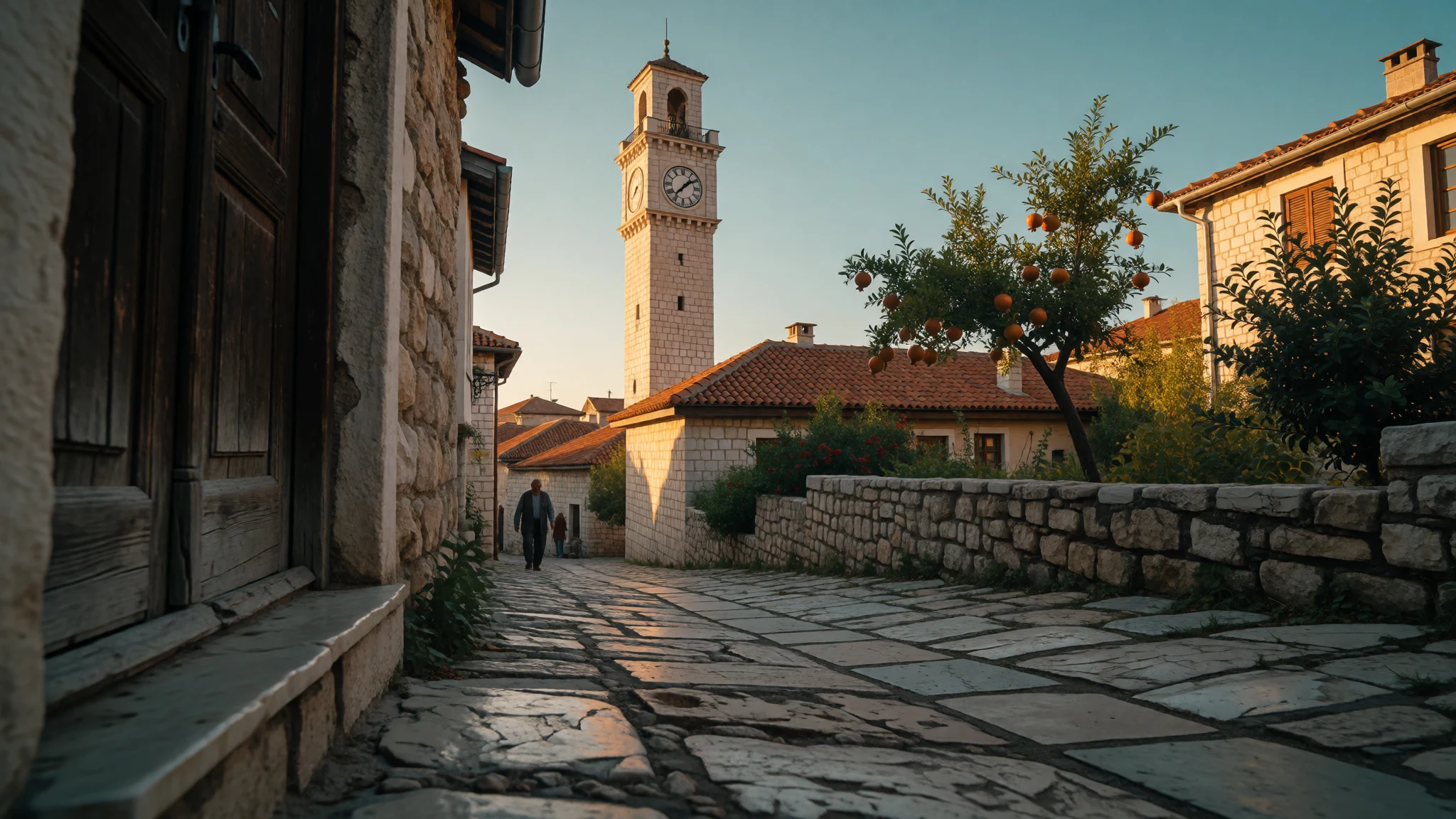
Podgorica is a small, flat, unshowy capital where Ottoman lanes, Yugoslav concrete and café evenings sit beside the road to mountains, lake and coast.
The place
Podgorica is the capital of Montenegro, home to about 151,000 people and sitting only 49 m above sea level on the plain where the Ribnica river runs into the Morača. The Dinaric Alps begin to rise just to the north, while the Zeta Plain opens southwards towards Lake Skadar and the Adriatic. That position explains most of what the city is: a crossroads. Roads and the railway from the coast, the mountains and the interior all meet here, and the country's main international airport is close by. Most visitors pass through on the way to somewhere prettier, and it is easy to see why, but that undersells it.
The centre is compact and walkable. A pedestrian spine of shops and cafés runs through the middle, the old Ottoman quarter survives as a small tangle of lanes beside the rivers, and the rest is mostly mid-century and newer blocks laid out when the town was rebuilt as a capital. Do not expect a skyline of palaces. What the place offers is ordinary life at a human scale: office workers drifting to terraces at the end of the day, students, families walking the evening promenade. It is also the centre of the country's education, science and healthcare, so it feels busier and younger than its size suggests.
Summers are properly hot, so the plain can feel like a baking dish in July and August, while the surrounding mountains stay cooler. Cetinje, the old royal capital, keeps much of the national heritage, so Podgorica works best as a base and a first taste rather than a museum city.
Its story
Podgorica sits where several river valleys, the lowlands by Lake Skadar and the route to the Adriatic come together, and that is the thread running through its long history. Illyrian and Roman settlement came first, and over the following centuries the area passed through Byzantine, Bulgarian, Serbian and Venetian hands, often more than once. Its fortunes were those of a frontier town: useful, contested and rarely at peace for long.
The Ottomans took control in 1474 and held the town, with a break of de facto autonomy under the Bushati family, until 1878. They gave it the character that still shows in the old quarter: a walled market town with mosques, a clock tower and narrow curving streets, built beside the rivers. In 1878 the town passed to the Principality of Montenegro, and the country later became a kingdom.
The twentieth century was harsher. The town changed hands several times in the two world wars, and was heavily damaged in the second. After the war it was renamed Titograd in 1946 and made capital of the Montenegrin republic within socialist Yugoslavia. A small town was rebuilt and expanded quickly, with industry and wide new streets, and the population grew until it held a large share of the country. The old name came back in 1992. In 2006 Podgorica became the capital of independent Montenegro, a status it still wears lightly.
What to see
- The old Ottoman quarter and clock tower — Stara Varoš, near the Ribnica
Podgorica's old Turkish town is a small survivor of the pre-war market town, with mosques, a clock tower and lanes that bend rather than run straight. It takes under an hour to wander. Go in the morning, when the narrow streets are quiet and the light is soft on the stone.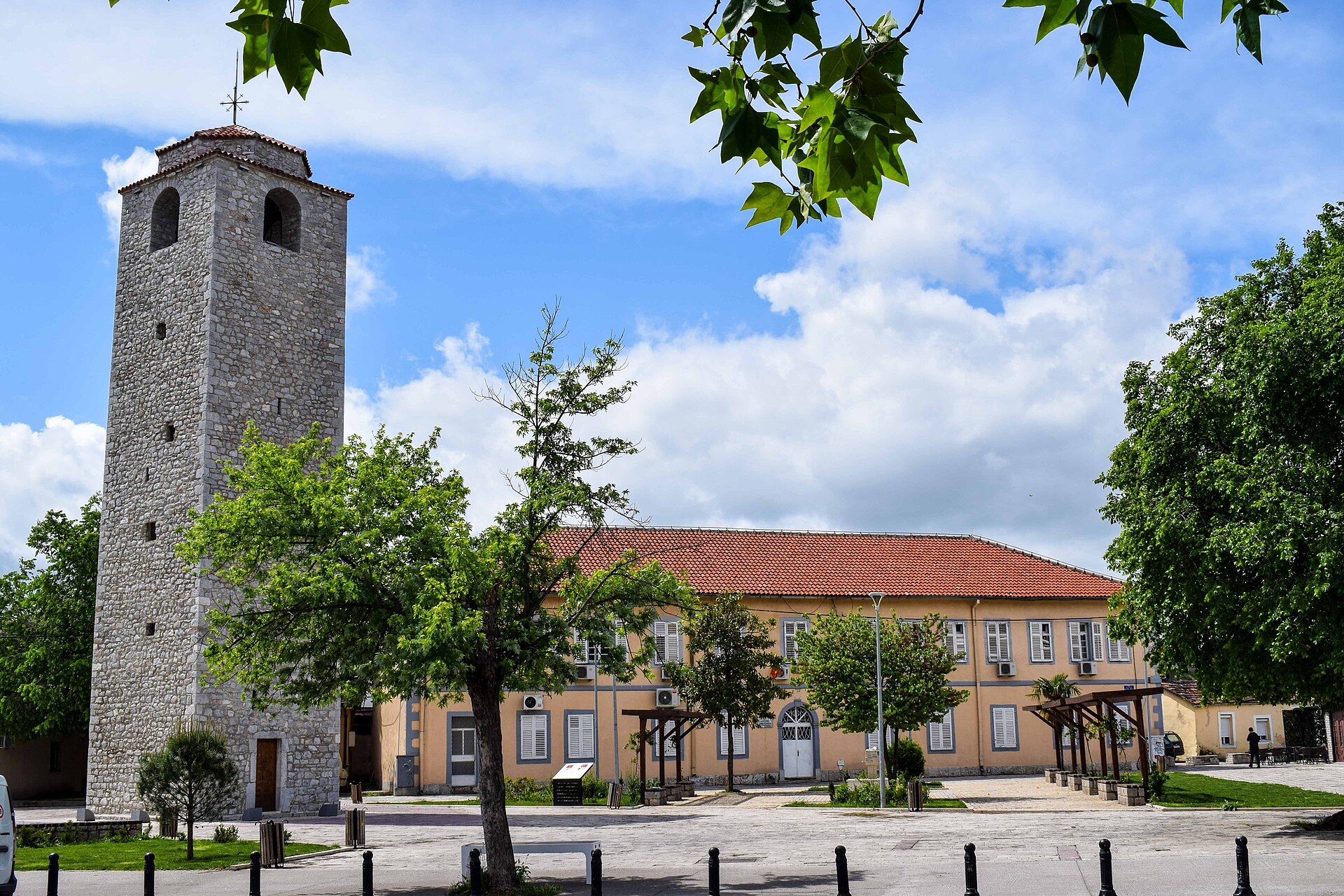
- Skaline and the old bridge — Where the Ribnica meets the Morača
At Skaline the Ribnica joins the Morača, and an Ottoman bridge crosses the smaller river beside the ruins of an old fortified town. There is little to read on site, so it rewards curiosity rather than a checklist. It is a pleasant, shaded riverside stop on a hot afternoon. - Trg Republike — City centre
The central square is where the city gathers once the working day is over. Cafés and cheap eateries fill the edges, and the mood is relaxed and chatty rather than polished. It is a good place for a first evening: order something cold, watch the passeggiata, and get a feel for local rhythms. - Hercegovačka pedestrian street — City centre
This car-free street runs through the middle of the modern centre, lined with shops, bakeries and café tables. It has no single landmark, and that is the point: it shows everyday Podgorica at walking pace. It is busiest in the late afternoon, and shade from the trees helps in summer. - St George's church — Slopes of Gorica hill
The church stands on the slopes of Gorica, the hill that gave the city its name, and is dated to the tenth century. It is modest in size and a calm contrast with the streets below. Come for the setting and the view over the plain rather than for grand architecture.
Culture
Podgorica is the main stage for Montenegrin cultural life, even if it is not the country's oldest cultural centre. The National Theatre anchors the performing arts, and the City Theatre includes a children's theatre and a puppet theatre. Museums are modest in scale and worth an hour rather than a day. The City Museum, founded in 1950, is organised around archaeology, ethnography, history and cultural history, and holds finds from Illyrian and Roman times. Anyone wanting deeper royal and national heritage will usually head to Cetinje.
Daily culture is more about café life than institutions. Coffee is slow, meetings run long, and the evening walk through the centre is a social event. Hospitality matters: being invited to a table, or to a glass of home-made spirit, is an act of friendliness, and refusing too bluntly can feel cold. Conversation tends to be direct and humorous, and people are generally proud of their small country and its mountains, so questions about the landscape go down well.
The city's religious life is mixed. Orthodox churches, mosques and Catholic churches all exist within a short distance, a legacy of centuries of shifting rulers and neighbours. Politics and the Yugoslav past are lived memory for many people, so it is wise to listen before offering opinions.
When visiting a church or mosque in Podgorica, cover your shoulders and knees, keep your voice low, and ask before photographing worshippers or the interior.
What to wear
Traditional Montenegrin dress belongs mostly to festivals, folk ensembles and national occasions rather than the working week. Men's costume centres on a embroidered waistcoat worn over a white shirt, wide trousers or breeches, a sash, and a small round cap, often in dark and red tones, with leather opanci, the soft hide shoes of the mountains. Women's festive dress uses wool and linen, layered skirts, embroidered aprons and decorated bodices, with heavy braid and metalwork trim. Colours and patterns vary between regions, and these outfits are best seen at folklore events and in the city museum.
Everyday clothes in Podgorica are plain and European: jeans, trainers, light shirts, and smarter outfits for evenings, when people dress up a little to sit on café terraces. Younger people follow familiar global style, and fitness gear is common on the evening promenade. Suits appear around government and business, but the city is informal.
Visitors should plan for heat. In summer, loose cotton or linen, a hat, sunglasses and sun cream matter more than style. Spring and autumn can bring rain, so pack a light waterproof layer. Comfortable closed shoes are best for the uneven stone of the old quarter and for hill walks. For churches and mosques, bring a scarf or shirt that covers shoulders, and wear trousers or a skirt below the knee. Beachwear belongs on the coast, not in the city centre.
What to eat
- Wood-fired pizza — Pizzerias in the streets around the centre
Italian influence runs deep here, and wood-fired pizzas are a staple of Podgorica's evenings. Bases are thin, toppings simple, and portions generous. A fine, cheap first meal after arriving, and easy to share. - Grilled meats and ćevapi — Grill restaurants and casual eateries across the centre
Small grilled sausages and skewered meats arrive with flatbread, chopped onion and often a soft white cheese. It is quick, filling Balkan fare, best with a salad on the side in summer. - Njeguši-style cured ham and cheese — Traditional Montenegrin restaurants
Smoked, air-dried ham and sharp mountain cheeses are served as a starter board with olives and bread. The flavour comes from mountain curing and sheep's or cow's milk. Order it with a glass of local wine. - Cicvara and kajmak — Restaurants serving home-style Montenegrin dishes
A hearty dish of cornmeal cooked with cheese and cream, often served with kajmak, a rich, salty clotted dairy cream. It is mountain food, heavy and warming, and best shared when the weather turns cold. - Fish from Lake Skadar — Restaurants specialising in local fish, in town or on the lake road
The lake south of the city supplies carp, bleak and other freshwater fish, grilled or fried and served with greens and potatoes. Ask what is local and in season; some restaurants also serve sea fish from the coast.
Plan it
Best time. April–June and September–October, when the days are warm without the heavy heat of July and August; winter is cooler and wetter, and most useful for city breaks and mountain trips.
How long. 1–2
Getting there. Podgorica Airport is the country's main international gateway, close to the city. A shuttle bus linked to flight times, or a taxi, covers the last leg to the centre. The city is also a rail and road hub, with intercity coaches arriving at the main bus terminal.
Budget. mid
Tips
- Buy shuttle tickets from the terminal machine where possible, and agree any taxi fare before getting in
- Plan sightseeing for the morning, since midday heat in summer can be tiring
- Carry some cash for small cafés and bakeries, though cards are common in larger places
- Use Podgorica as a base for day trips to the coast, Lake Skadar and the mountains
- Check the city's official site, podgorica.me, for events and current information
Etiquette
- Cover shoulders and knees in churches and mosques
- Ask before photographing people, especially at worship
- Greet staff in shops and cafés before ordering
Nearby
Sources
- Wikidata Q23564 (CC0)
- Wikipedia: Podgorica (rev 1383724735) (CC BY-SA 4.0)
- Wikivoyage: Podgorica (rev 5414561) (CC BY-SA 4.0)
- Podgorica iz Momišića — Milos58 (CC BY 3.0)
- Panoramic view of Podgorica — Savo Prelevic (CC BY 4.0)
- Natural History Museum of Montenegro, Sahat Kula — Liridon (CC BY-SA 4.0)
- Partisans Monument in Podgorica — Desemeus (CC BY-SA 4.0)
- Royal Palace in Podgorica — Sailko (CC BY 3.0)
- Podgorica — Alex Alishevskikh (CC BY-SA 2.0)
- Independence Square in Podgorica — Desemeus (CC BY-SA 4.0)
- Municipal building and monument to Marko Miljanov Popović — Ssaajjkkoo (CC BY-SA 4.0)


