Ostrog Monastery
Ostrog Monastery, Montenegro
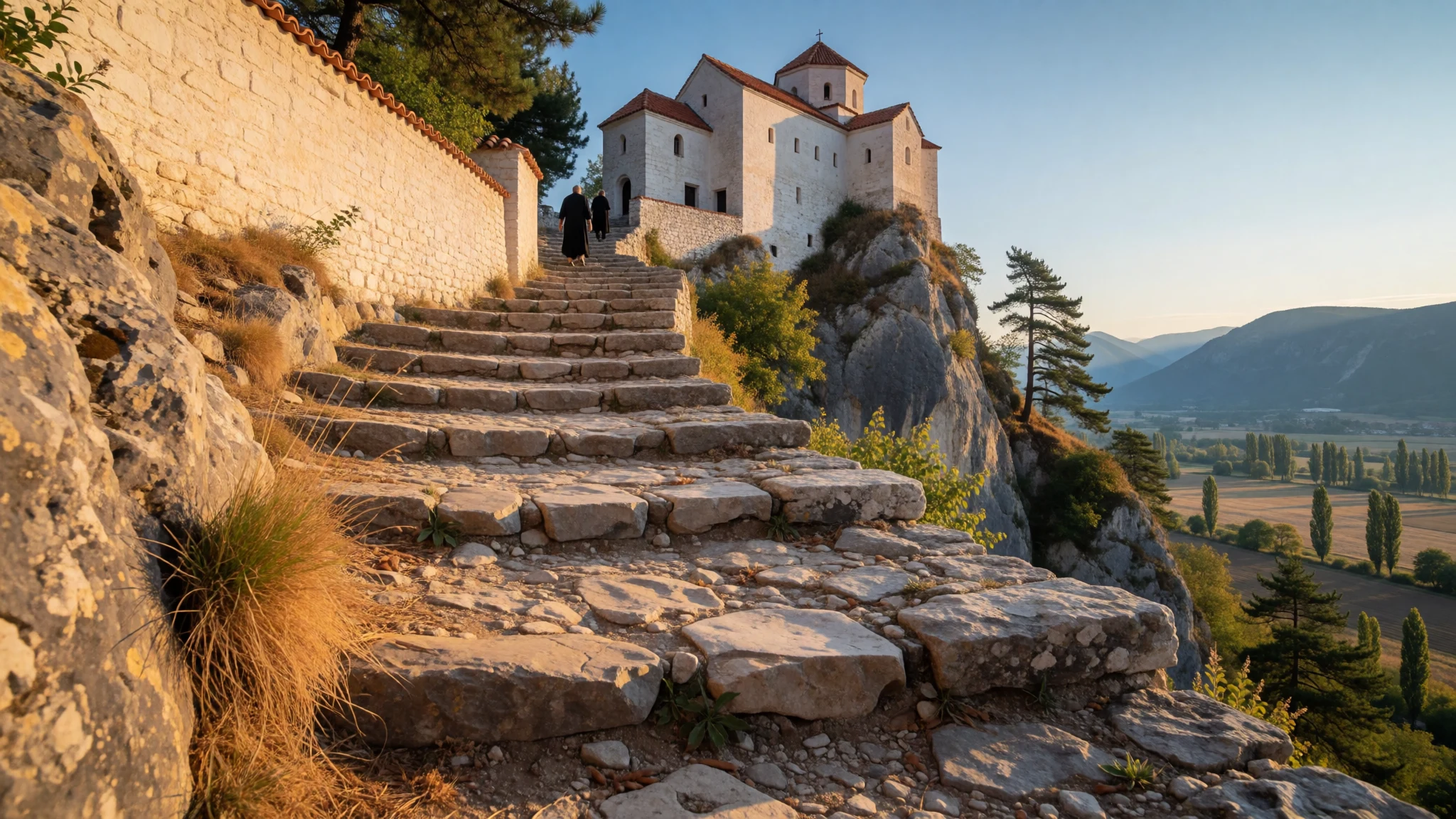
Ostrog Monastery clings to a sheer cliff in Montenegro, where pilgrims of several faiths climb to pray beside the relics of a saint.
The place
Ostrog Monastery sits in the rock face of Ostroška Greda, a near-vertical cliff above the Bjelopavlići plain in Montenegro, not far from the town of Danilovgrad. It belongs to the Serbian Orthodox Church and is dedicated to Saint Basil of Ostrog, whose relics rest inside. The buildings fall into two clusters. The lower monastery stands near the main car park and the road. The upper monastery is tucked into the cliff far higher, its pale walls seeming to grow out of the stone. Between them runs a path of steps cut into the rock, steep but not technical. Pilgrims have long walked it barefoot, and many still do.
What sets Ostrog apart is who comes. Orthodox Christians form the core, but Catholics and Muslims arrive too, drawn by stories of healing and relief from hardship after praying near the saint's body. Visitor numbers run to about a million a year, so the place is rarely empty, and summer weekends and saints' days bring long queues for the relic church. Early mornings are calmer.
Facilities are modest. The monastery runs a hostel for overnight stays, and a few eateries sit lower down the valley road. Views from the upper terrace sweep across the plain, and on clear days the light on the pale rock is a reward in itself. Ostrog works as a place of worship first and a sight second, and visitors who treat it that way tend to have the better day.
Its story
Ostrog Monastery was founded in the early seventeenth century by Vasilije Jovanović, the Metropolitan of Herzegovina, who is now venerated as Saint Basil of Ostrog. He settled on a ledge high in the cliff, and the monastery appears on a map of Montenegro made not long afterwards. Vasilije died here later in the same century, and some years after his death he was glorified. His body lies in a reliquary inside the cave church of the Presentation of the Theotokos, which remains the focus of every pilgrimage.
A fire destroyed much of the complex, and the monastery took its present look when it was rebuilt in the years between the two world wars. The two small cave churches survived and are the heart of the site. The frescoes in the Presentation church date from the late seventeenth century. The church of the Holy Cross, in a cave on the upper level, was painted by a master named Radul, who worked with the cave's natural shape and laid paint directly onto the rock and the south wall.
The Second World War left its own marks. German forces looted gold from the monastery, and it later sheltered a Chetnik detachment. When those men surrendered on a promise that their lives would be spared, Partisans killed them at Ostrog. It is a grim episode that sits oddly beside the site's present reputation for peace.
What to see
- Church of the Presentation — Upper monastery
The cave church of the Presentation holds the reliquary of Saint Basil, and it is the reason most people make the climb. The space is small and dim, with late seventeenth-century frescoes on the walls. Expect a slow, quiet queue, especially at weekends, and keep moving once you have prayed.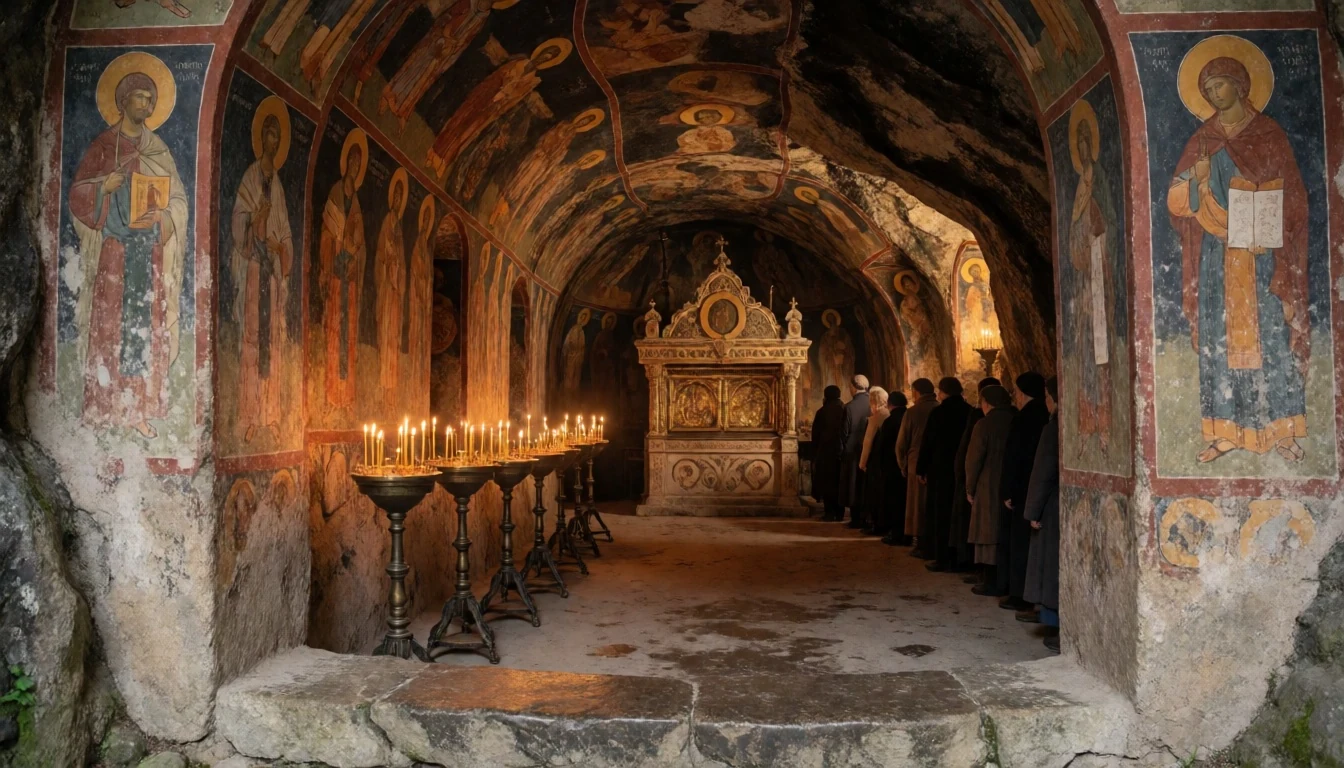
- Church of the Holy Cross — Upper monastery
Higher in the cliff, this cave church was painted by the master Radul, who followed the curves of the rock instead of smoothing them. Frescoes run straight onto the stone and the south wall. It is tiny, so visits are brief, but the effect of paint meeting raw rock is unusual.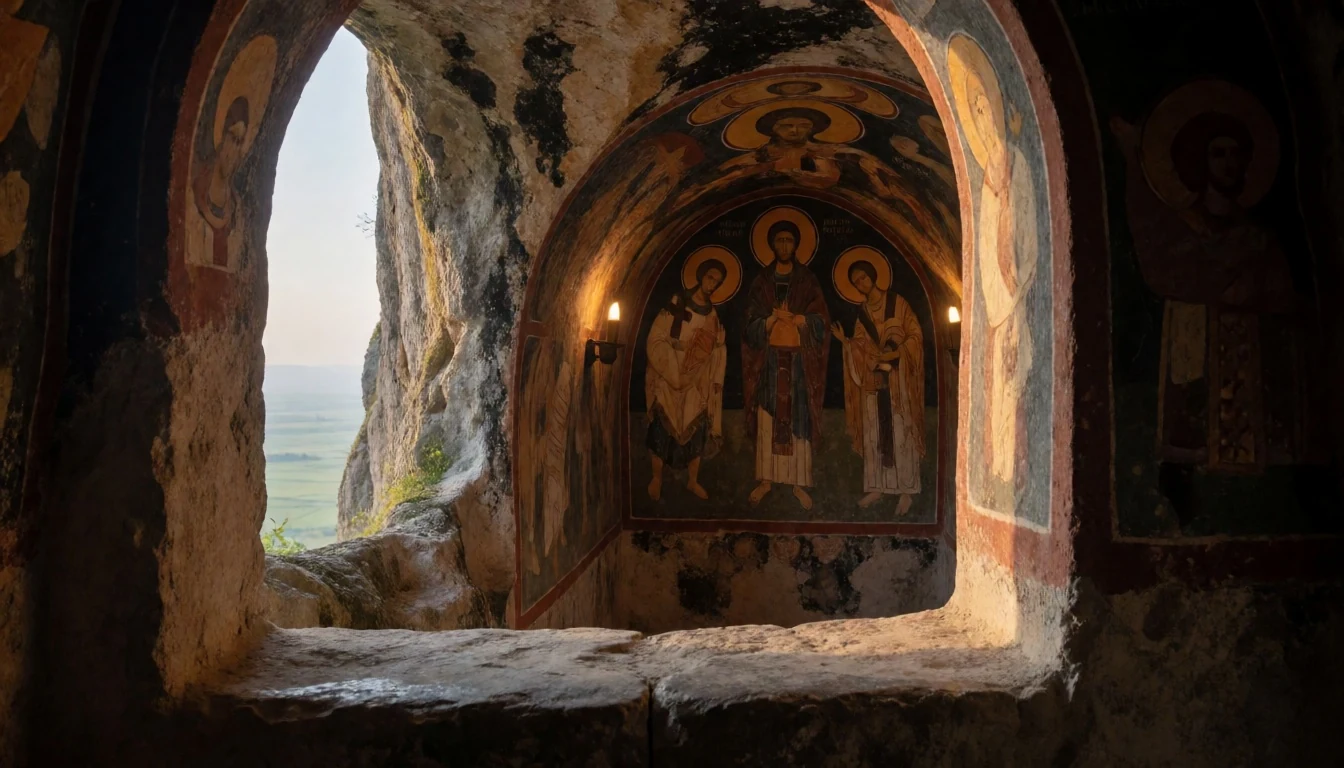
- The upper terrace and plain — Upper monastery terrace
The open esplanade in front of the upper monastery looks down over the Bjelopavlići plain far below. Pilgrims rest here after the climb, and it is the best place to understand how steep the cliff really is. Clear mornings give the sharpest view, while afternoon haze softens it.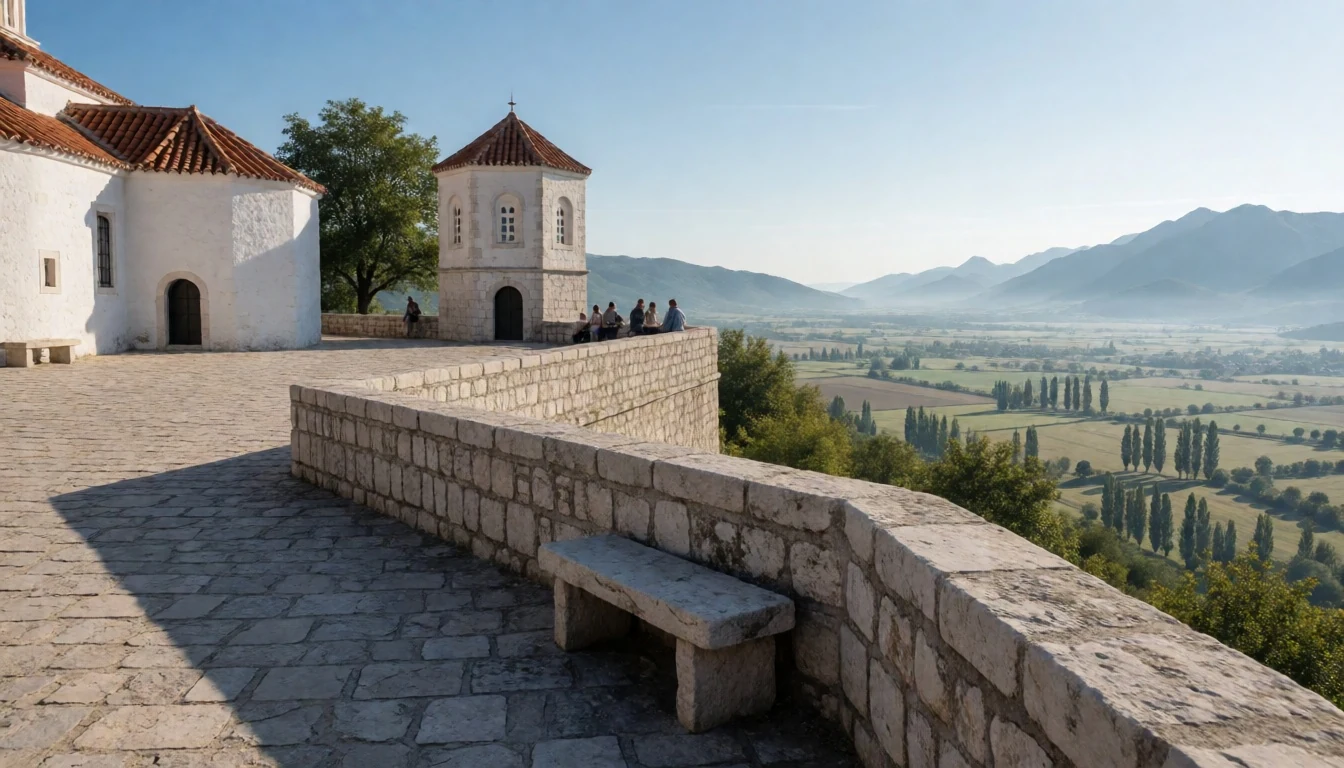
- The lower monastery and chapel — Lower monastery
The lower monastery, beside the main car park, is where many visitors begin. A chapel and a cluster of monastic buildings stand here, and the setting among trees feels very different from the bare rock above. Some pilgrims leave their shoes here and start the barefoot walk up to the higher buildings.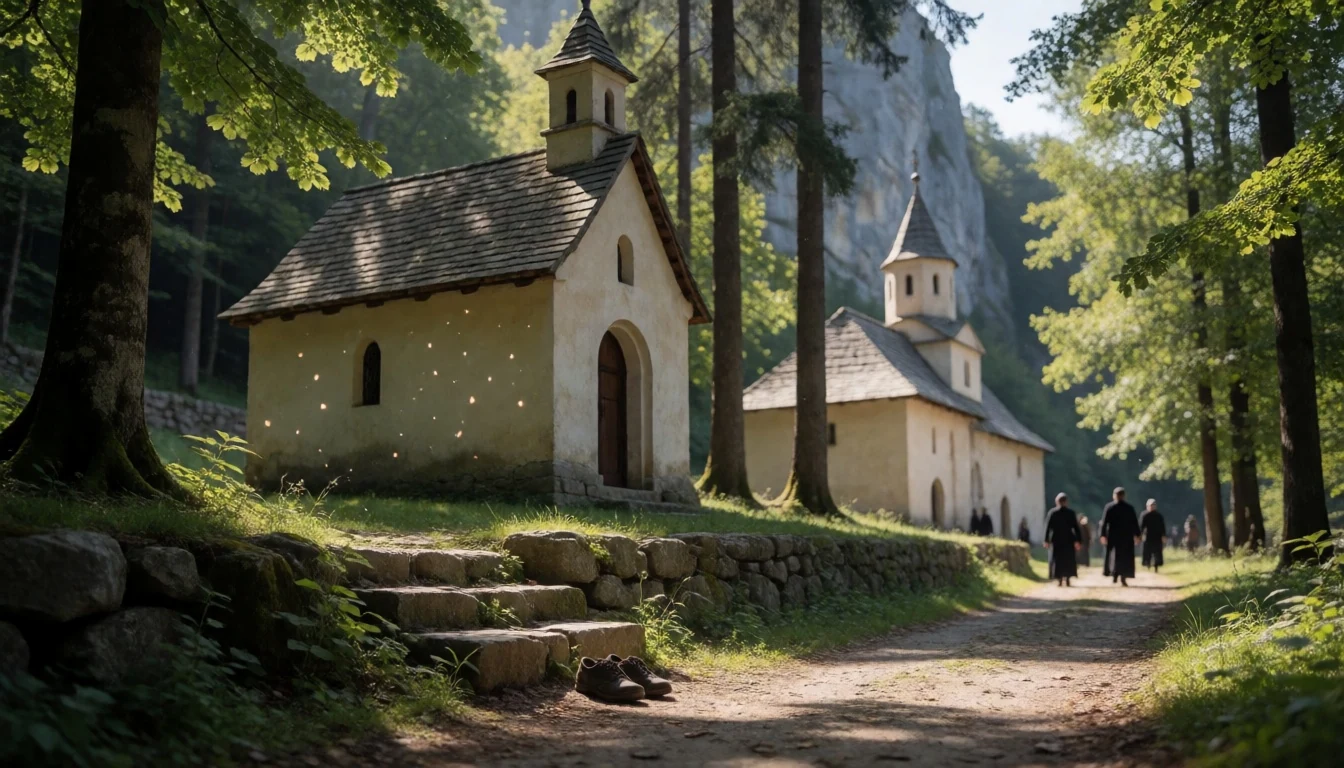
- The stepped path between the monasteries — Between lower and upper monasteries
The route linking the lower and upper monasteries is mostly steps cut into the rock, steep but short on technical difficulty. It passes through shade for much of the way. Walking it, with pilgrims of all ages beside you, says more about Ostrog than any single building does.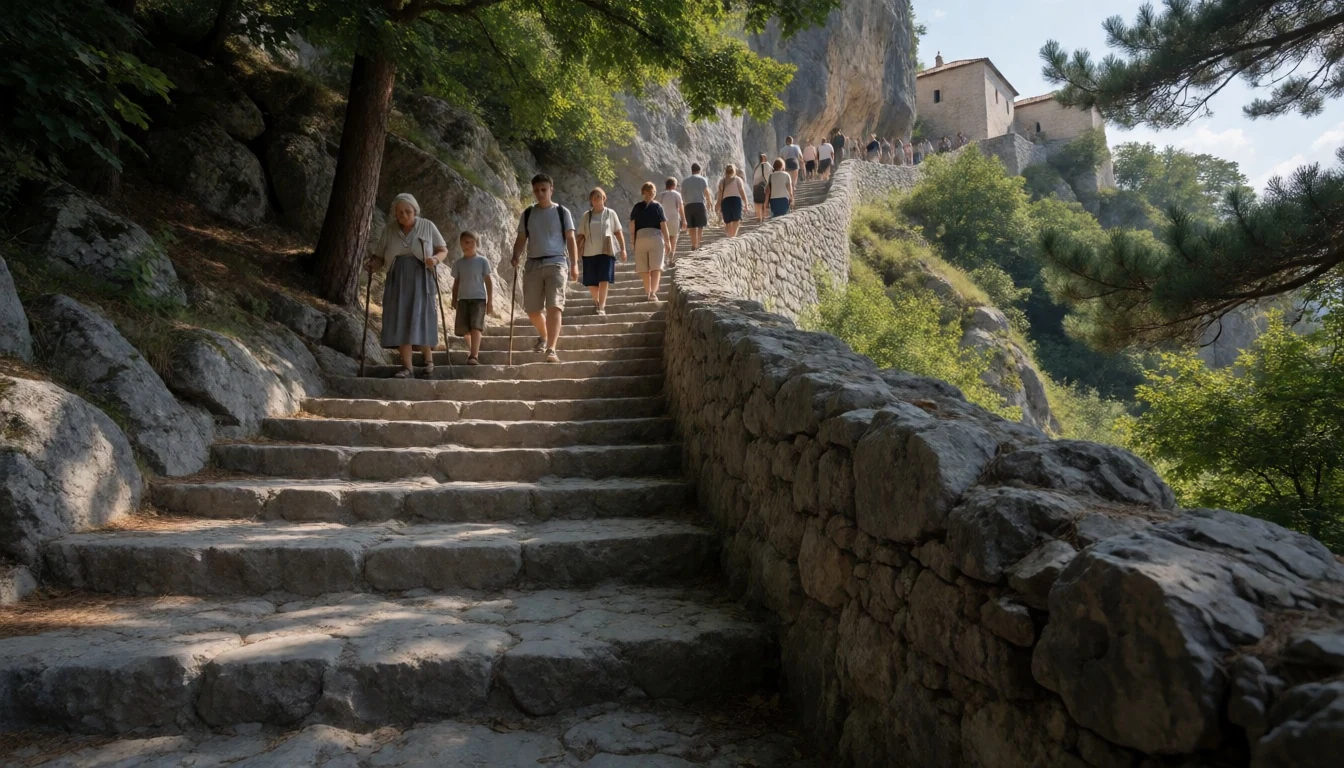
Culture
Ostrog Monastery is first of all a working Serbian Orthodox monastery, and its culture is one of pilgrimage. People come to pray before the relics of Saint Basil, light candles, kiss icons and cross themselves in the Orthodox manner. Many believe prayer beside his body has brought healing or eased their troubles, and this belief is shared across faiths. Catholics and Muslims join Orthodox Christians in the queue, which gives the monastery an unusually mixed congregation for the region.
The tradition of walking up barefoot from the lower monastery is a personal act of devotion, not a requirement, and nobody expects visitors to copy it. Before entering the relic church, many pilgrims bring gifts for the monks, such as blankets, clothes or toiletries, and some stay overnight in the hostel as part of their pilgrimage. The monks live and work here year-round, so the grounds are a home as well as a destination.
The atmosphere is quiet and unhurried even when crowded. Conversations drop to murmurs near the churches, and the line for the relics moves slowly because each person takes a moment alone with the saint. Photography inside the cave churches is usually discouraged, and signs and monks will tell you where it is not welcome.
In the churches, keep your voice low, cover your shoulders and knees, remove any hat, and do not take photographs unless a sign or a monk clearly says you may.
What to wear
Around Ostrog Monastery, the traditional dress of Montenegro survives mainly in festival costume and folk groups. Men's outfits are built around a close-fitting embroidered waistcoat, wool trousers and the Montenegrin cap, a round black cap with a red top. Women's costume uses wool and linen in layered skirts, aprons and decorated waistcoats, with embroidery marking the finer pieces. These clothes appear at weddings, folk events and national celebrations, not in daily life.
What people actually wear now is plain and practical. Pilgrims come in everyday clothes, often in dark or muted colours, with women frequently wearing long skirts or loose trousers and a light scarf. Many travel in family groups straight from long coach or car journeys, so comfort wins over style. Monks wear black Orthodox robes and head coverings.
Visitors should dress for both the climb and the church. Wear sturdy shoes with good grip, because the path between the monasteries is steep rock steps and gets slippery after rain. Summer is hot on the exposed cliff face, so bring a hat and water, but carry a light layer for the cool cave interiors. In the churches, shoulders and knees should be covered. Women may like to carry a scarf for the head, and men should take off hats. Shorts, sleeveless tops and beachwear are best left in the car.
What to eat
- Grilled meats — Roadside restaurants in the valley below the monastery
Montenegrin grills of ćevapi, sausages and skewered meat are the staple of the restaurants along the valley road. They arrive with flatbread, raw onion and a simple salad. Expect plain, smoky food that suits a day of climbing.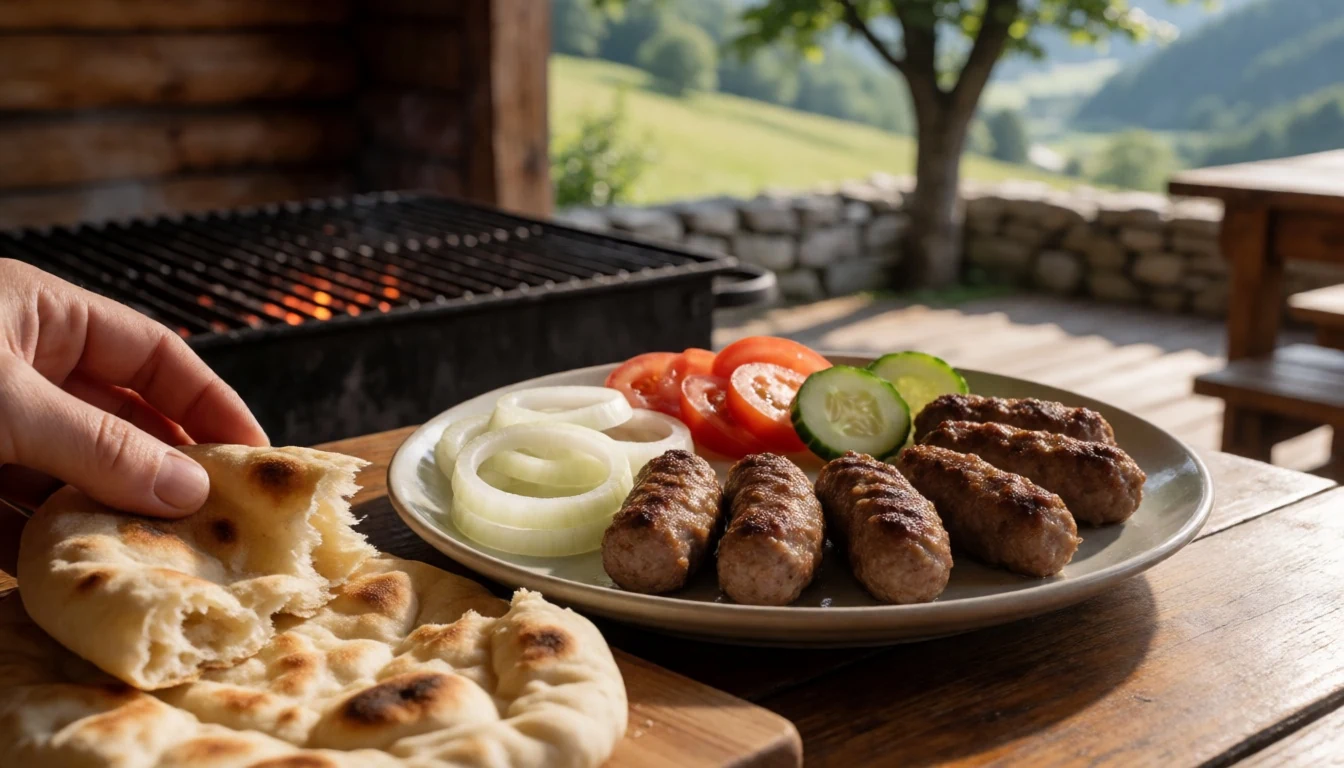
- Kačamak — Traditional eateries around Nikšić and Danilovgrad
A thick, warming dish of cornmeal and potato, often served with cheese and cream. It is rustic highland food, filling and best on a cool day. It often appears on menus in mountain restaurants and village eateries.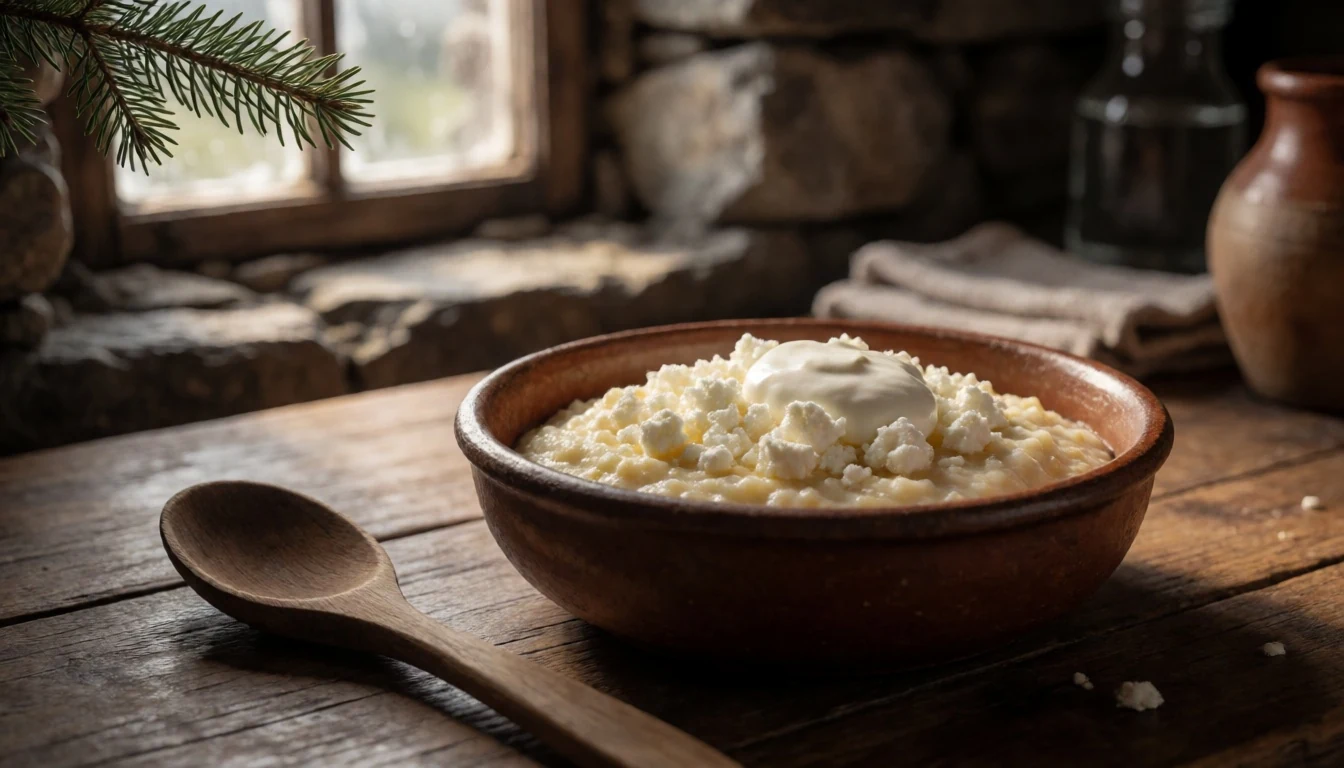
- Njeguši-style ham and cheese — Restaurants with a view over the plain and village shops en route
Smoked, air-dried ham and local cheeses make a good cold plate, served with bread and olives. The ham is salty and deeply smoky, the cheese sharp or creamy depending on the village. - Lamb cooked under the sač — Family-run restaurants in the Bjelopavlići plain
Lamb or veal slow-roasted beneath an iron bell covered in embers is a Montenegrin celebration dish. It usually needs ordering in advance and is more of a sit-down meal than a quick bite. - Hostel meals — The monastery's own hostel
The monastery provides food for those staying in its hostel, and the meals are simple, meat-free and filling in the Orthodox tradition when fasting applies. They are part of the pilgrim experience.
Plan it
Best time. April–May and September–October, when the days are warm enough for the climb without the heat of high summer. Midsummer is hot on the exposed cliff and crowded with pilgrims, and winter can be cold and wet on the steps.
How long. 1
Getting there. Fly into Podgorica, the nearest airport, then take a bus towards Nikšić and ask the driver for the Ostrog stop, or a taxi. By rail, a train from Podgorica reaches Ostrog station, followed by a steep walk through forest to the lower monastery and a further climb to the upper one. Trains are infrequent and return tickets are bought on board, so check the timetable.
Budget. low
Tips
- Arrive early in the day to avoid the longest queues for the relic church, especially at weekends and on saints' days.
- Bring your own food and water, as supplies on the mountain can be thin outside busy days.
- Allow generous time if you walk from the station, and plan your return around the last train.
- Wear shoes with grip for the steep rock steps, and carry a light layer for the cool cave interiors.
- Check the official website, http://manastirostrog.com/, for current opening arrangements and hostel booking.
Etiquette
- Dress modestly: cover shoulders and knees, and remove hats inside the churches.
- Keep your voice low and do not photograph worshippers or the relics unless clearly permitted.
- Walking barefoot is a personal act of devotion, not a requirement for visitors.
Nearby
Sources
- Wikidata Q1257434 (CC0)
- Wikipedia: Ostrog Monastery (rev 1379108342) (CC BY-SA 4.0)
- Wikivoyage: Mount Ostrog (rev 5344634) (CC BY-SA 4.0)
- Ostrog Monastery — Alexey Komarov (CC BY 3.0)
- Ostrog monastery, Montenegro — Diego Delso (CC BY 3.0)
- Monastère au Montenegro — William Hall (Public domain)
- Esplanade of the Ostrog monastery — Diego Delso (CC BY 3.0)
- View from Ostrog to Bjelopavlići plain — Etan J. Tal (CC BY 3.0)
- A mosaic from the Upper Ostrog monastery — Tamtam90 (Public domain)
- A road tunnel in Montenegro near Ostrog — Tamtam90 (CC BY-SA 4.0)
- Chapel below the Ostrog monastery — Diego Delso (CC BY 3.0)


