Sehlabathebe National Park
Sehlabathebe National Park, Lesotho
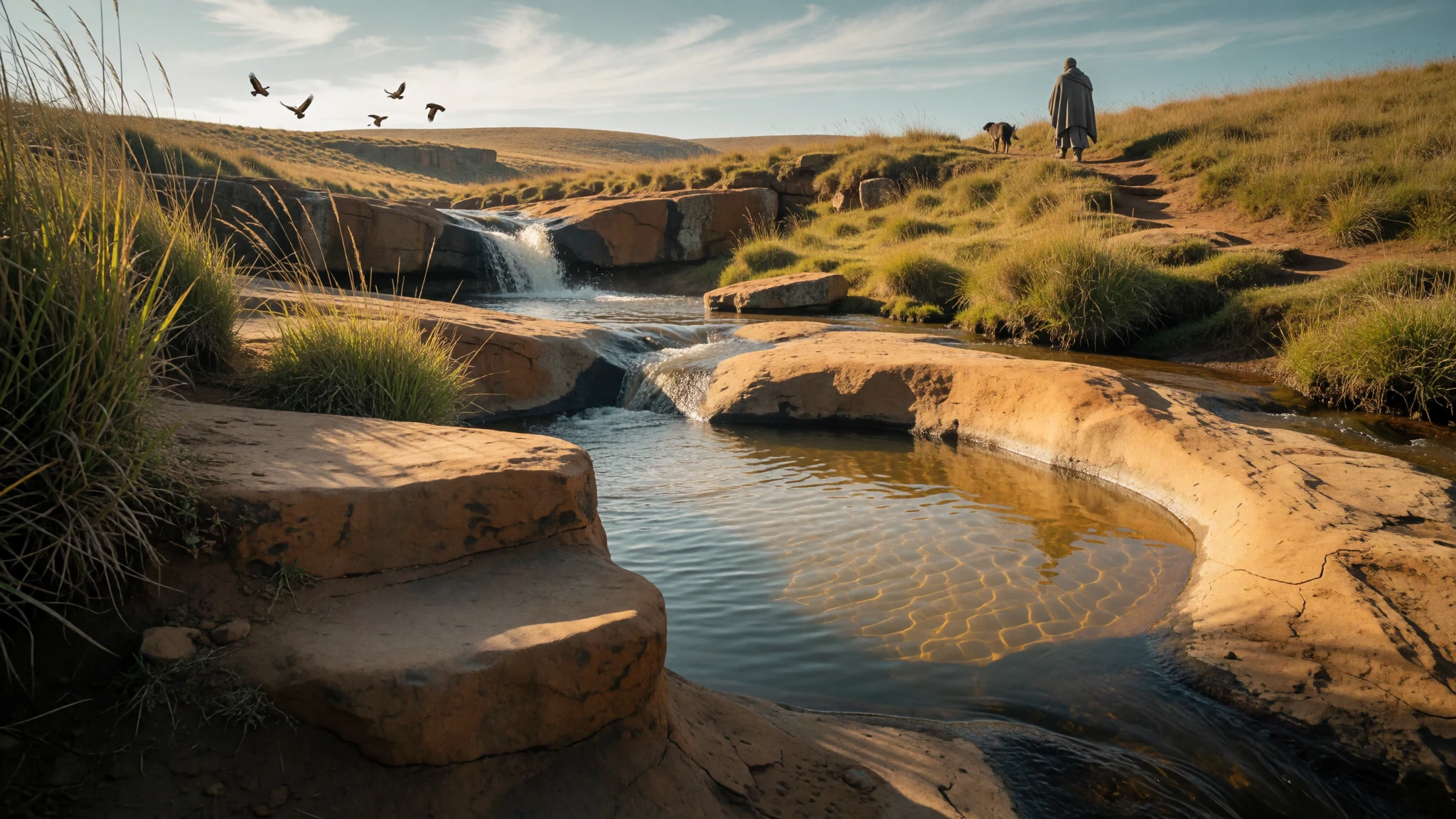
Sehlabathebe National Park is a quiet, high Lesotho grassland of rock pools, waterfalls and San rock paintings, reached on foot, horseback or rough tracks.
The place
Sehlabathebe National Park sits in the far south-east of Lesotho, in Qacha's Nek District, among the Maloti Mountains. The average elevation is about 2,400 metres, so the air is thin, the nights are cold and the weather turns quickly. What the park offers is space rather than grand spectacle: rolling grassland of several kinds, broken by sandstone outcrops that wind and water have carved into ledges and hollows, with rock pools and small waterfalls tucked between them. The vegetation is Afro-alpine and sub-alpine, a mix of tough grasses, herbs and low plants suited to altitude. Wildlife is modest in size but significant for conservation. Vultures circle over the cliffs, and the Maloti minnow, a small fish, is among the endangered species the park shelters. The park matters beyond its borders too, because the wider catchment supplies freshwater to Lesotho, South Africa and Namibia. Sehlabathebe (Sesotho: Pitso ea sechaba sa Sehlabathebe) forms part of the Maloti-Drakensberg Transboundary World Heritage Site, whose larger share lies across the border in South Africa's uKhahlamba-Drakensberg Park. Visitors are few. There is no town inside the boundary; the nearby settlements of Sehlabathebe and Mavuka have more lodging. The park suits people who like walking, riding or fishing and are comfortable with long distances and limited services. Cloud, cold and mud are normal here, and any plan needs slack in it.
Its story
Sehlabathebe National Park has been walked across and sheltered in for a very long time. The San people, hunter-gatherers of the southern African mountains, painted on protected rock faces, and at least 65 sites in the park carry their work. Those images are the main reason the area counts as cultural heritage as well as a nature reserve. The park itself is far younger. It was set up on 8 May 1969, three years after Lesotho became independent, and took its name from a settlement just to the west. For decades, the site functioned as a wildlife refuge and national park despite lacking official legal backing; its status was only formally recognized with the National Park Act of 2001. International recognition came later. The park was inscribed in 2013 as part of the Maloti-Drakensberg Transboundary World Heritage Site, joining the much larger uKhahlamba-Drakensberg Park on the South African side. That listing links Sehlabathebe to a wider mountain landscape rather than treating it as an isolated reserve. Its story since has been shaped by remoteness. Roads are rough, visitor numbers are small, and the long journey that frustrates some travellers has also kept development away. The grassland, the pools and the paintings remain much as earlier generations would have recognised them, which is exactly what the protection was meant to secure.
What to see
- San rock art sites — Throughout the park
Sehlabathebe National Park holds at least 65 recorded San rock art sites, usually on sheltered sandstone overhangs. The paintings are fragile and often faint, so a local guide helps with finding them and reading what they show. Ask the park office which sites are open to visitors, and never touch the pigment.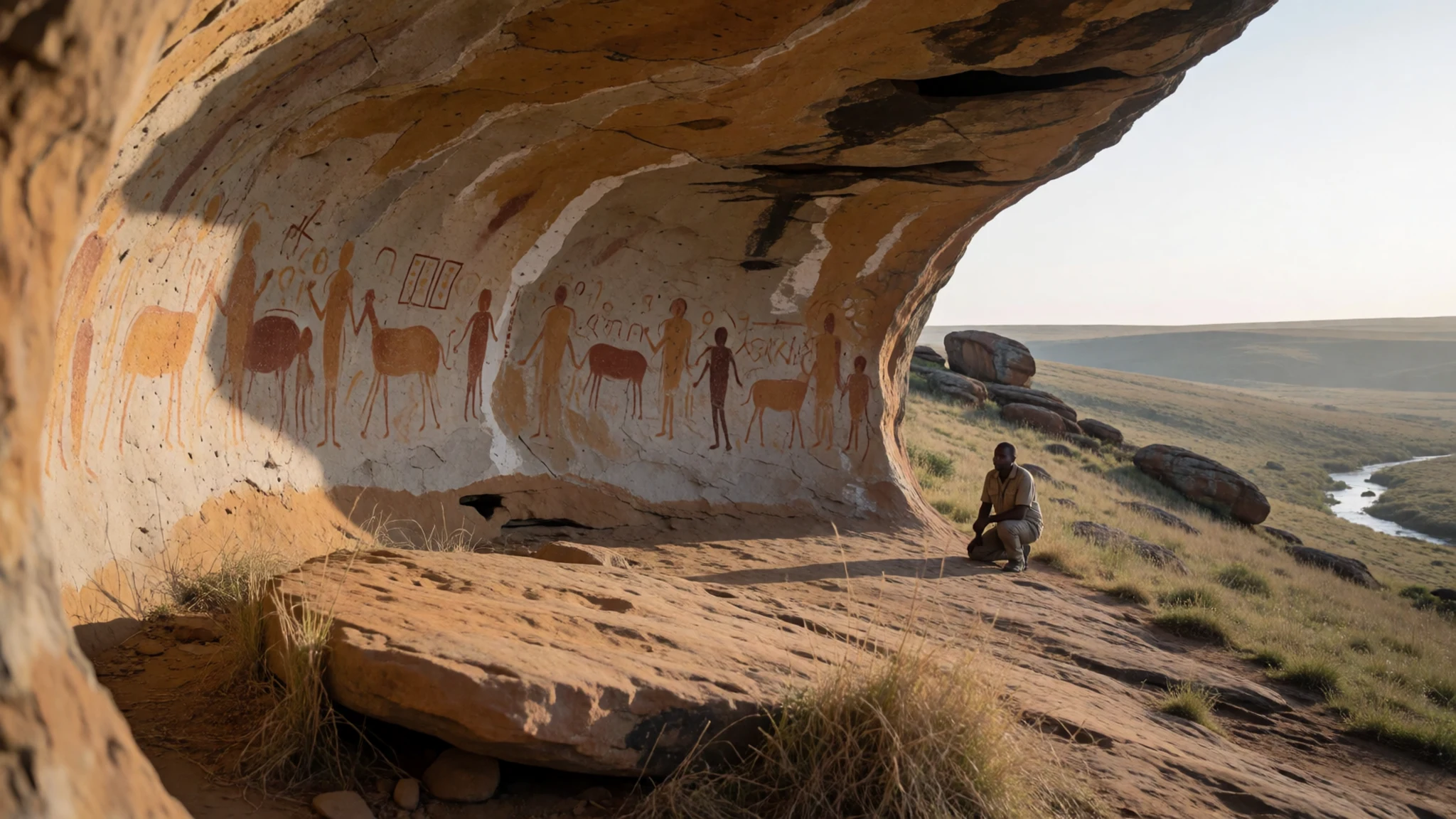
- Rock pools and waterfalls — Stream valleys within the park
Streams crossing the plateau drop into rock pools and small waterfalls, and the sandstone around them is worn into smooth steps and bowls. Walks to them mostly cross open grass with little shade, so both strong sun and sudden storms need planning. Water here is cold even on warm days.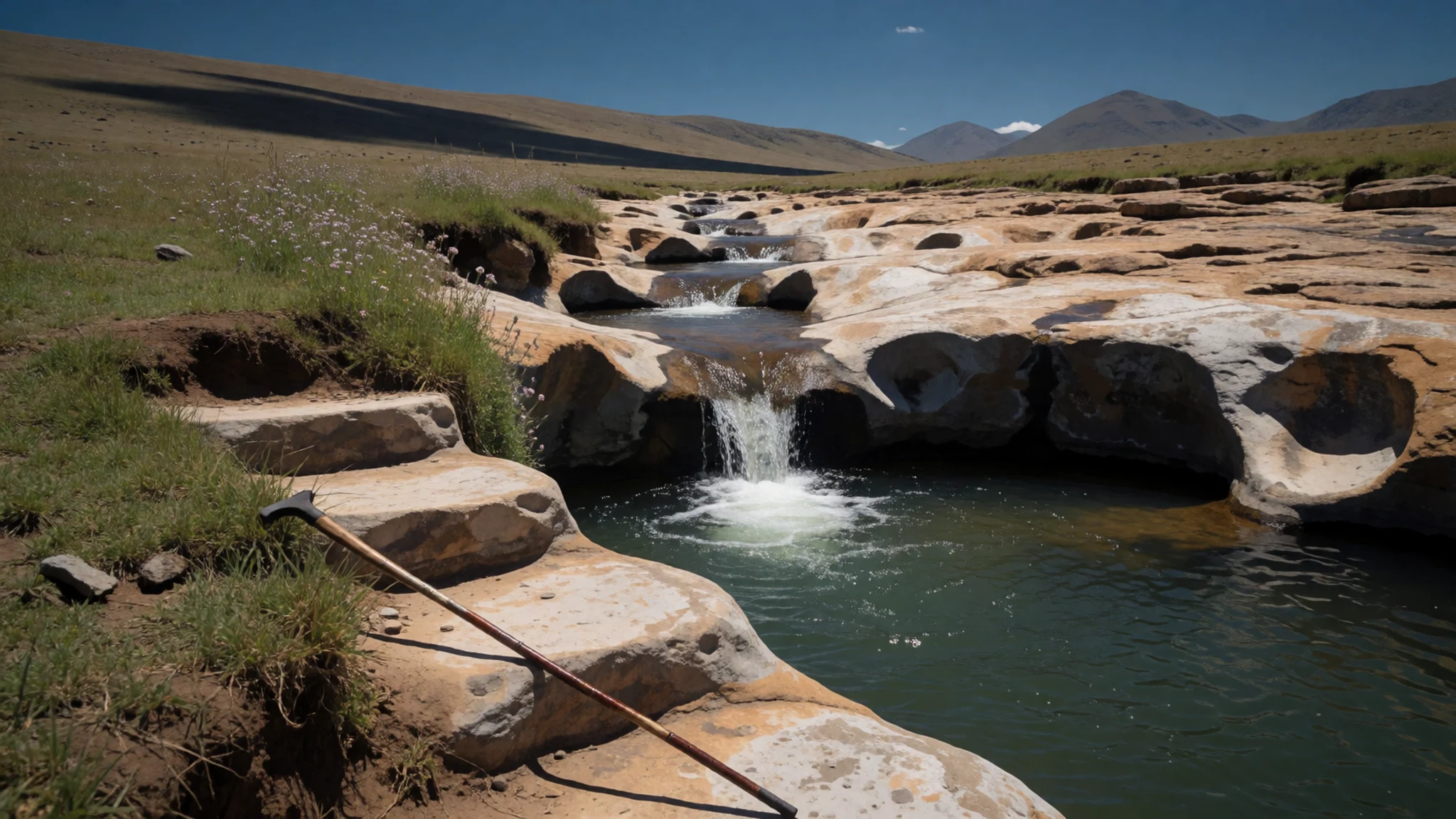
- Sandstone formations — Rocky outcrops across the plateau
Wind and water have shaped the sandstone of Sehlabathebe National Park into arches, caves and freestanding blocks. Light is best early and late, when the pale rock warms to amber against the grass. The stone is soft, so stay on established paths and view the formations from below rather than climbing them.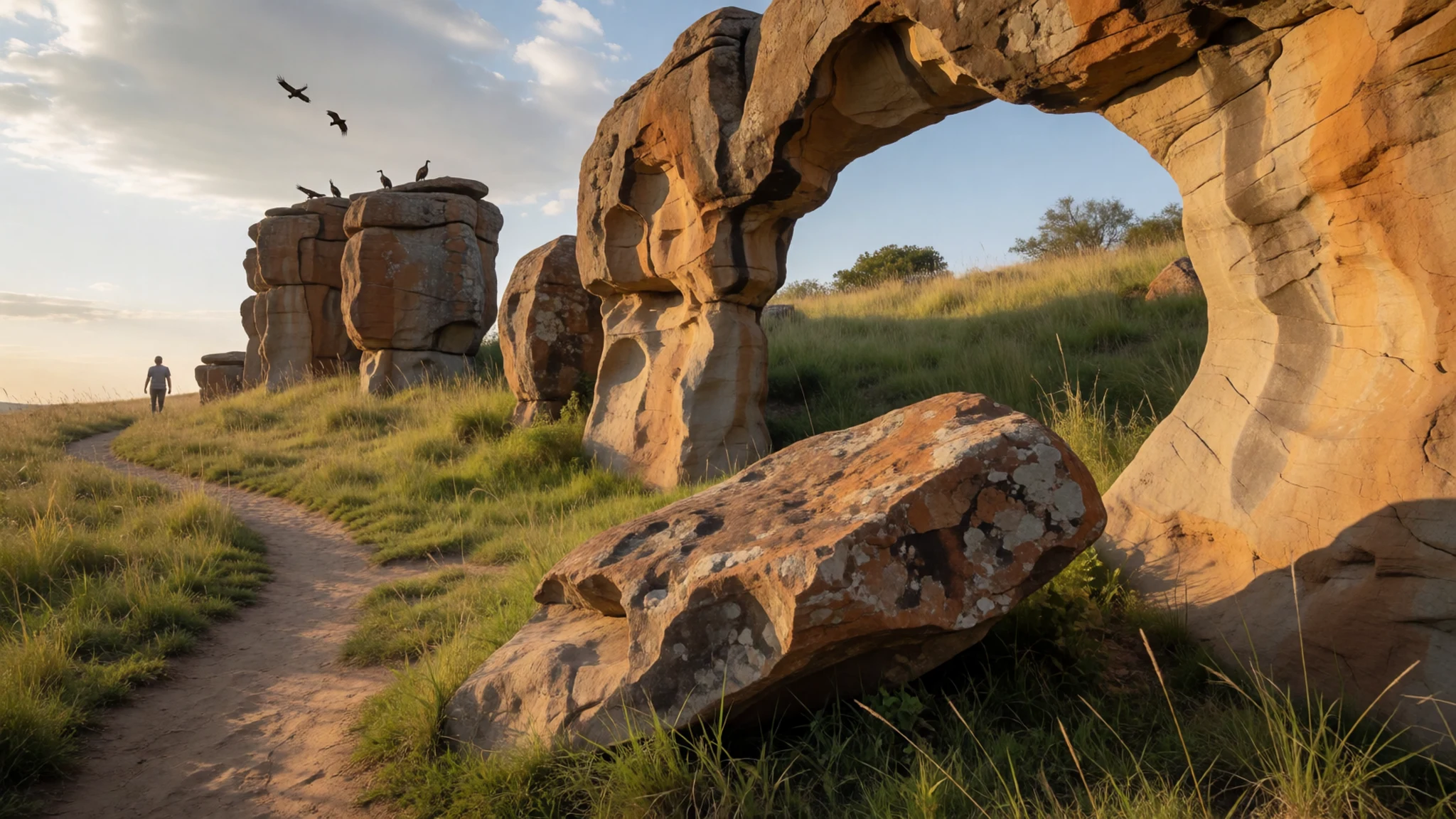
- Vultures and Afro-alpine plants — Cliffs, ridges and streams
Cliffs and ridges are the places to watch vultures riding the air, while the endangered Maloti minnow lives in the cold streams below. The Afro-alpine and sub-alpine plants are most varied in the warmer, wetter months. Binoculars matter more here than a long lens, and patience matters more than either.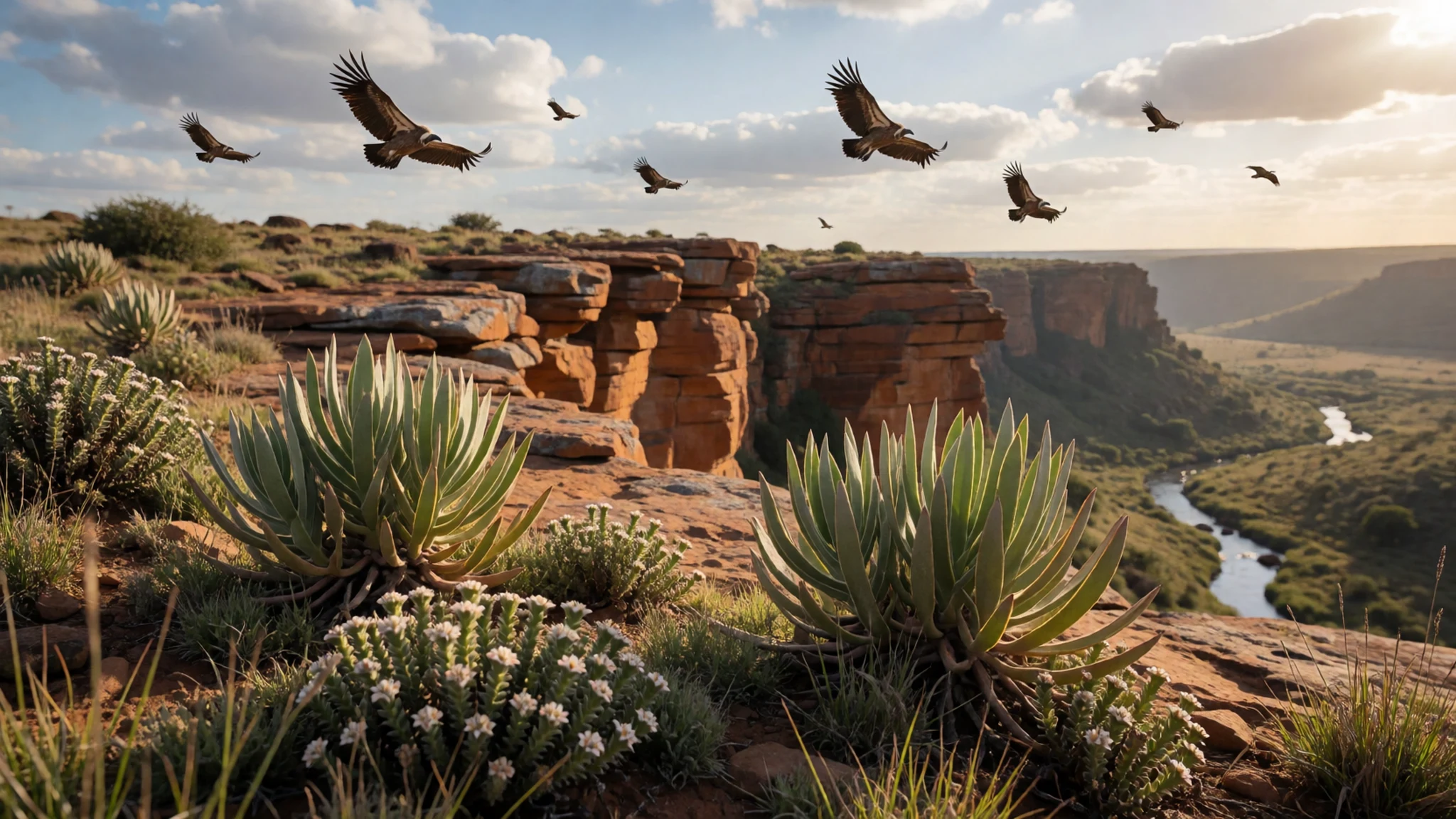
- Dawn from Sehlabathebe House — Near the park's edge
The early-morning view from Sehlabathebe House shows the park at first light: bare, folded grassland under a very large sky, with mist often settled in the hollows. Staying close enough to catch dawn is worthwhile, since cloud can build as the day warms and soften the long views.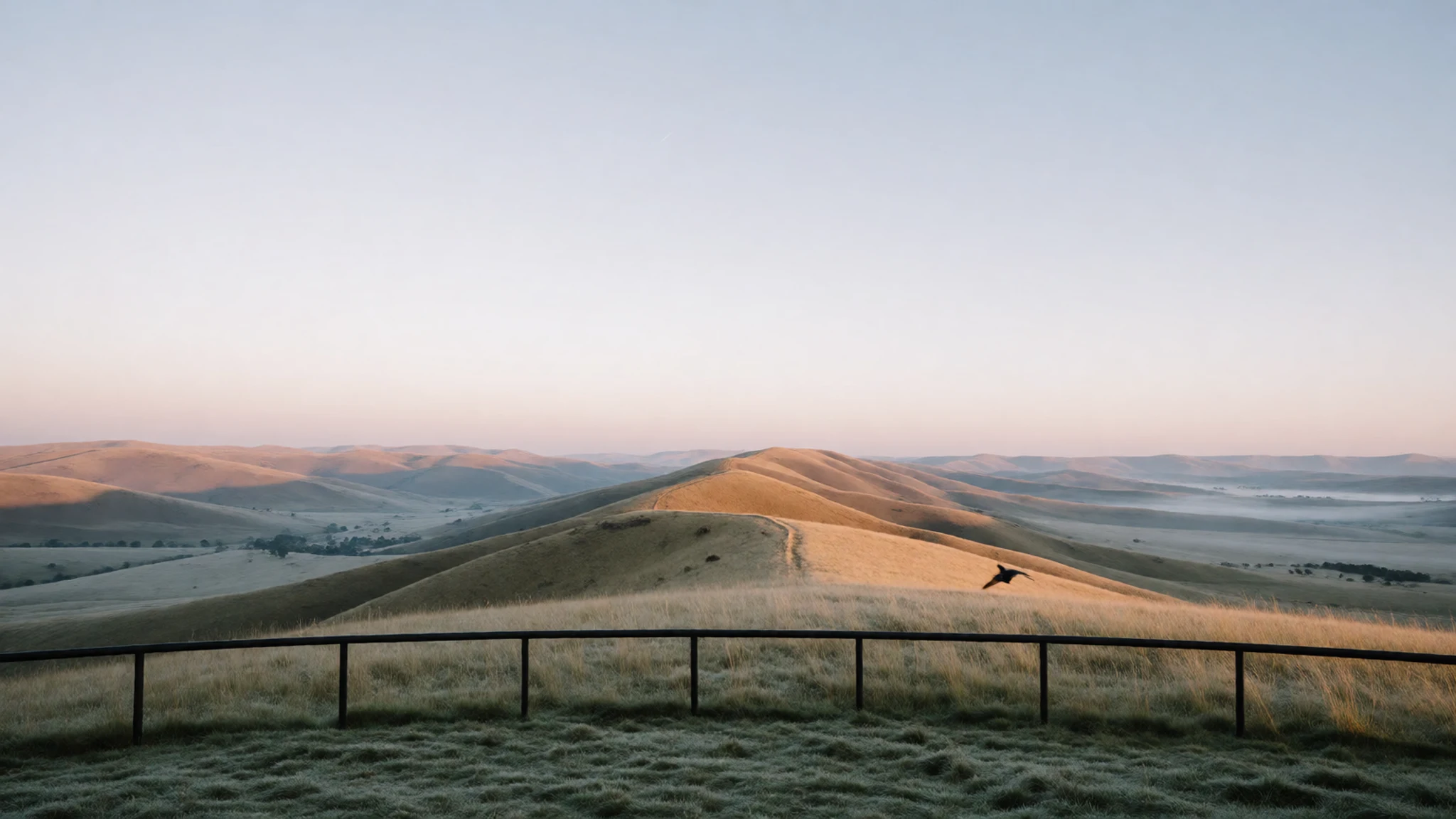
- Fishing — Streams and pools in the park
Fishing is a popular activity at Sehlabathebe National Park. Anglers should check current rules, permits and which species may be taken with the park office or the Department of Environment, since the Maloti minnow is endangered. Bring warm layers, because wind off the water chills quickly even in sunshine.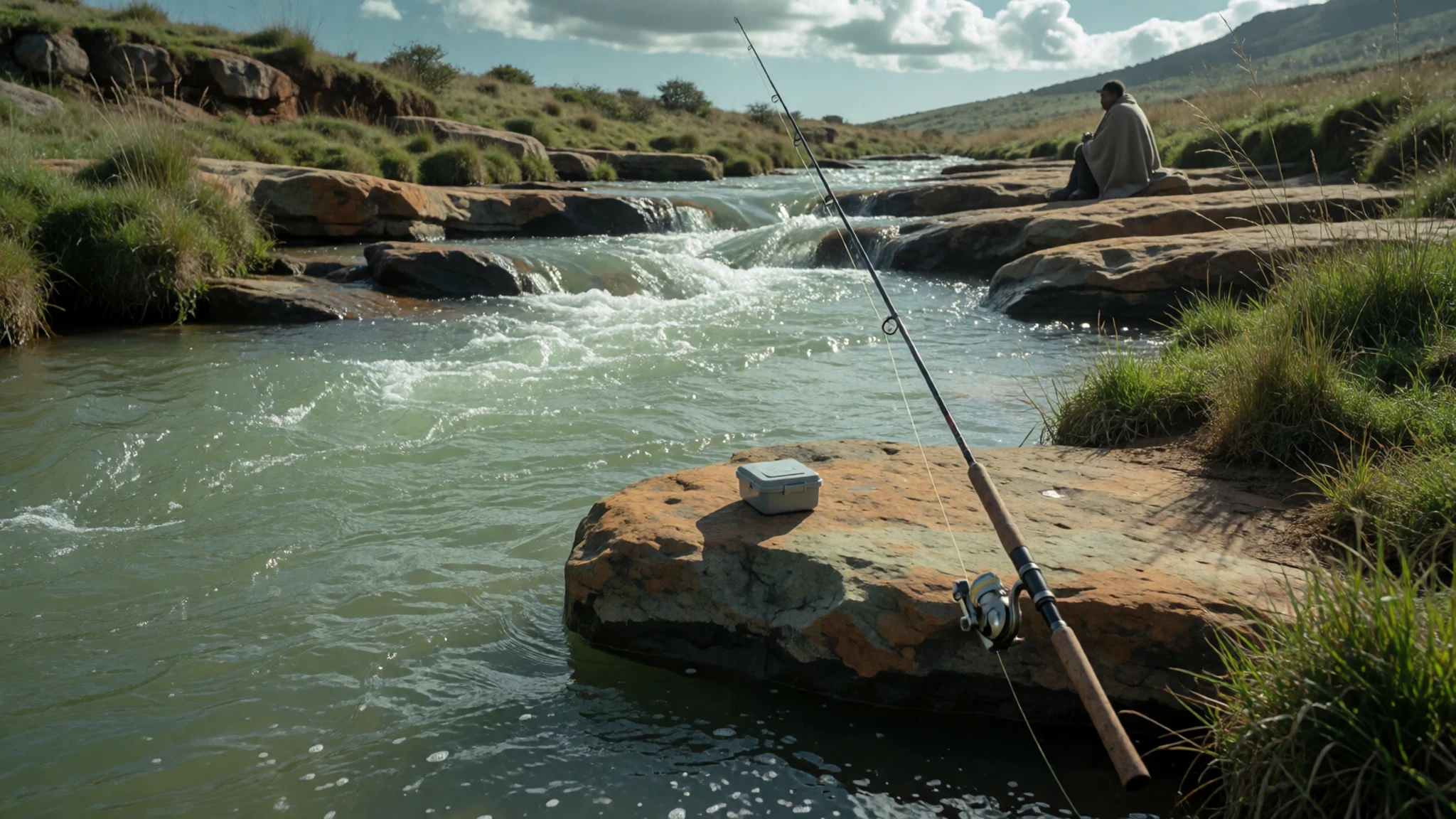
Culture
Sehlabathebe National Park lies in a part of Lesotho where Sesotho is the language of daily life and livestock still shape the rhythm of the day. The settlements around the park, including Sehlabathebe and Mavuka, are home to Basotho families who graze cattle, sheep and goats on the surrounding grassland and travel on foot or on small, sturdy horses. Riding is a traditional way to cross this country, and a pony trek follows a practice that long predates tourism. An older layer of culture belongs to the San people, whose paintings survive on rock faces in the park. Researchers commonly read many San images as tied to ritual, healing and the spirit world rather than as decoration, which is a good reason to treat the sites quietly. Manners count for a lot in the villages: greetings come before business, and a handshake or nod with a few words of Sesotho is received warmly. Hospitality is real but resources are thin, so visitors who arrive self-sufficient and pay fairly for guiding, horses and lodging do the most good. Funerals, church gatherings and other community events may be under way near the park, and these are private. Greet people with a friendly 'Lumela' before asking for directions or a photograph, never photograph anyone without permission, and keep your hands off the rock paintings.
What to wear
Traditional Basotho dress at Sehlabathebe National Park and the villages around it centres on the blanket (seanamarena), a thick wool or wool-blend wrap with bold geometric patterns, pinned at the shoulder. It is worn daily for warmth in the highlands and for weddings, funerals and other ceremonies. The conical Basotho hat, the mokorotlo, woven from grass, is the other familiar piece, seen more at celebrations and in souvenir form than on every head. Today herders and farmers usually wear a blanket over practical modern clothes, with rubber boots, woollen hats or balaclavas and sometimes a plastic raincoat. In settlements, jeans, jackets, tracksuits and school uniforms are common. A visitor should dress for altitude and changeable weather. Wear layers, with a fleece or wool mid-layer and a waterproof shell that is genuinely rainproof. Carry a sun hat and sunscreen, because there is little shade and the sun is strong at this height. Winter trips call for gloves, a warm hat and thermal underlayers. Sturdy, broken-in walking boots with ankle support suit the tussocky grass and wet rock. In villages, covering shoulders and knees is polite. Buying a blanket or hat locally supports makers, but ask about the price before agreeing.
What to eat
- Papa with moroho — Village homes, lodges and small eateries in Sehlabathebe and Mavuka
Papa is stiff maize porridge, the staple of Basotho meals, eaten with the hands or a spoon beside moroho, cooked leafy greens. Expect it wherever hosts feed visitors, and ask lodges in advance, since stocks in the highlands are limited.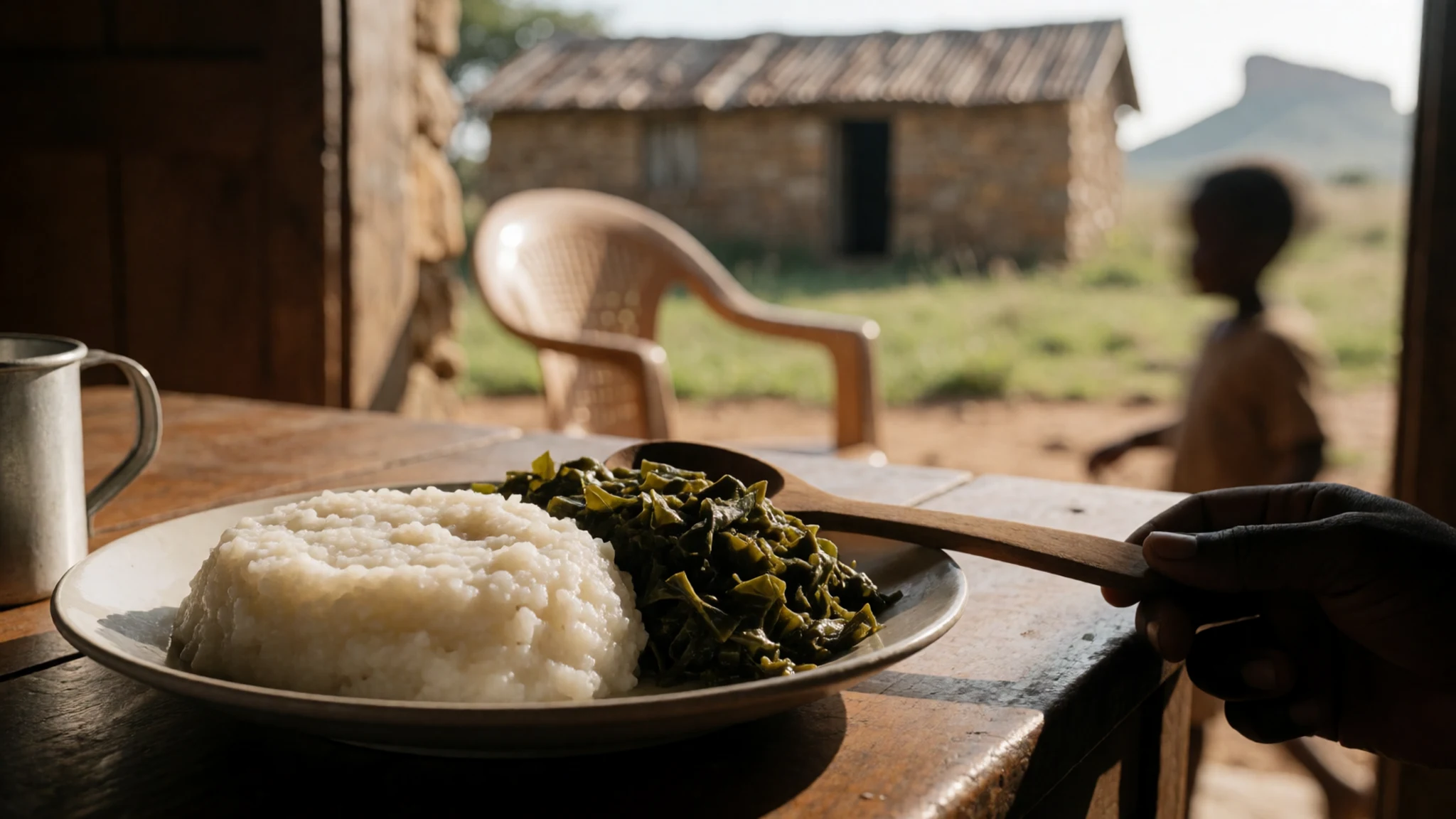
- Motoho — Village homes and small shops in the nearby settlements
Motoho is a lightly sour fermented porridge made from sorghum or maize meal, drunk or eaten with a spoon, often at breakfast. It is filling and cooling, and its tang takes a few mouthfuls to get used to.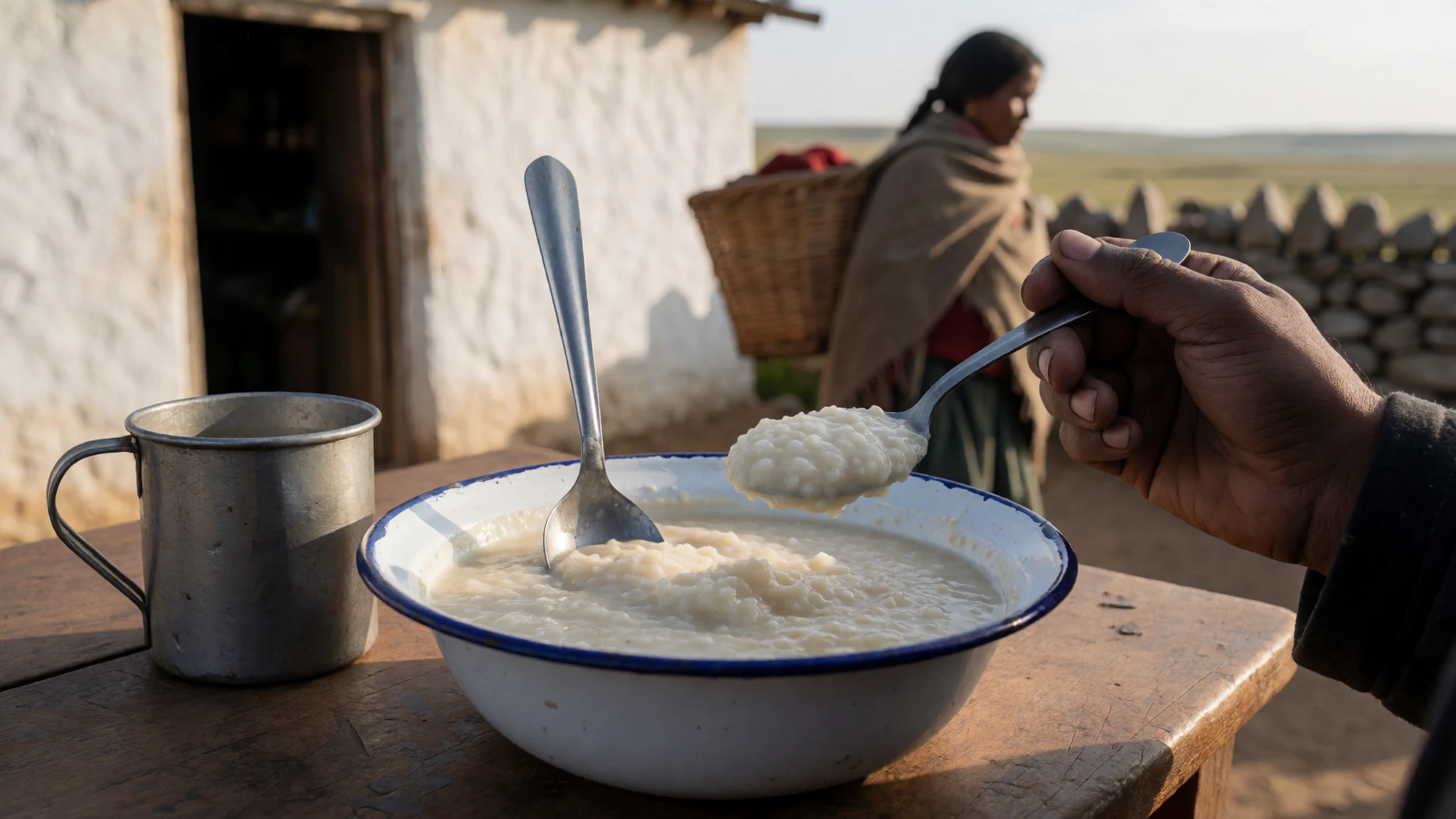
- Likhobe — Family kitchens and lodge meals arranged in advance
Likhobe is a plain, hearty dish of boiled maize kernels and beans, sometimes seasoned lightly. It is home cooking at its simplest, practical fuel for a day of walking or riding in cold, high country. - Makoenya — Roadside sellers and small village shops
Makoenya are fried dough cakes, golden outside and soft within, sold as a quick snack and good with tea. Fresh ones are best, so buy them from whoever is cooking that day. - Roast mutton or chicken — Lodges and guesthouses near the park, by arrangement
Meat cooked over an open fire is the usual celebration food in the region, served with papa and a relish or salad. At a lodge it normally needs booking ahead, so mention it when reserving.
Plan it
Best time. October–November and March–April are the gentler windows for walking and riding, with milder days and clearer light. Summer afternoons in the Maloti bring thunderstorms and mist, and winter is cold at this altitude, with hard frost and possible snow. Check the forecast before setting out.
How long. 2–3
Getting there. Fly into Maseru, or into Durban or Johannesburg in South Africa, then continue by road. The last leg is rough: high-clearance four-wheel-drive vehicles reach the park either from Thaba-Tseka in central Lesotho or from the South African side. Others arrive on foot or horseback, or with a South African tour company working the Drakensberg. Ask the Department of Environment about current road conditions.
Budget. mid
Tips
- Bring all food, fuel and cash with you, because services near the park are limited
- Book lodging, guides and horses ahead, and check current rules with the Department of Environment
- Pack for sun, rain and cold in the same day, and carry a waterproof layer on every walk
- Carry plenty of water and allow time to adjust to the altitude
- Tell someone your route before heading out, as mobile signal is unreliable
Etiquette
- Greet villagers and herders before asking for help or directions
- Ask before photographing people, homes or animals
- Leave rock paintings untouched and keep to established paths
Nearby
Sources
- Wikidata Q284817 (CC0)
- Wikipedia: Sehlabathebe National Park (rev 1362905399) (CC BY-SA 4.0)
- Wikivoyage: Sehlabathebe National Park (rev 5430846) (CC BY-SA 4.0)
- Early Morning view from Sehlabathebe House, Graham Maclachlan, via Wikimedia Commons (CC BY 3.0)

Wildlife
- Cape vulture (animal)
Think of the Cape vulture as a great bird of southern Africa that needs our care, since it is listed as vulnerable. In Sehlabathebe National Park, scan the cliffs and ridges, where it rides the air in wide circles and nests on the rock faces. Keep well back, stay quiet, and let a local guide lead you to a good viewpoint. Never offer it food, and never approach a nest. - Maloti minnow (animal)
A small fish with a big name, the Maloti minnow is endangered and very precious. In Sehlabathebe National Park it lives in the cold streams below the cliffs and ridges, so look down at the water rather than up at the sky. Stand back from the bank, stay quiet and still, and ask a guide to show you a good place to watch. Never feed the fish, and never drop anything into its water. - Cape vulture (bird)
Think of the Cape vulture as a great bird of southern Africa that needs our care, since it is listed as vulnerable. In Sehlabathebe National Park, scan the cliffs and ridges, where it rides the air in wide circles and nests on the rock faces. Keep well back, stay quiet, and let a local guide lead you to a good viewpoint. Never offer it food, and never approach a nest.