Ha Baroana
Ha Baroana, Lesotho
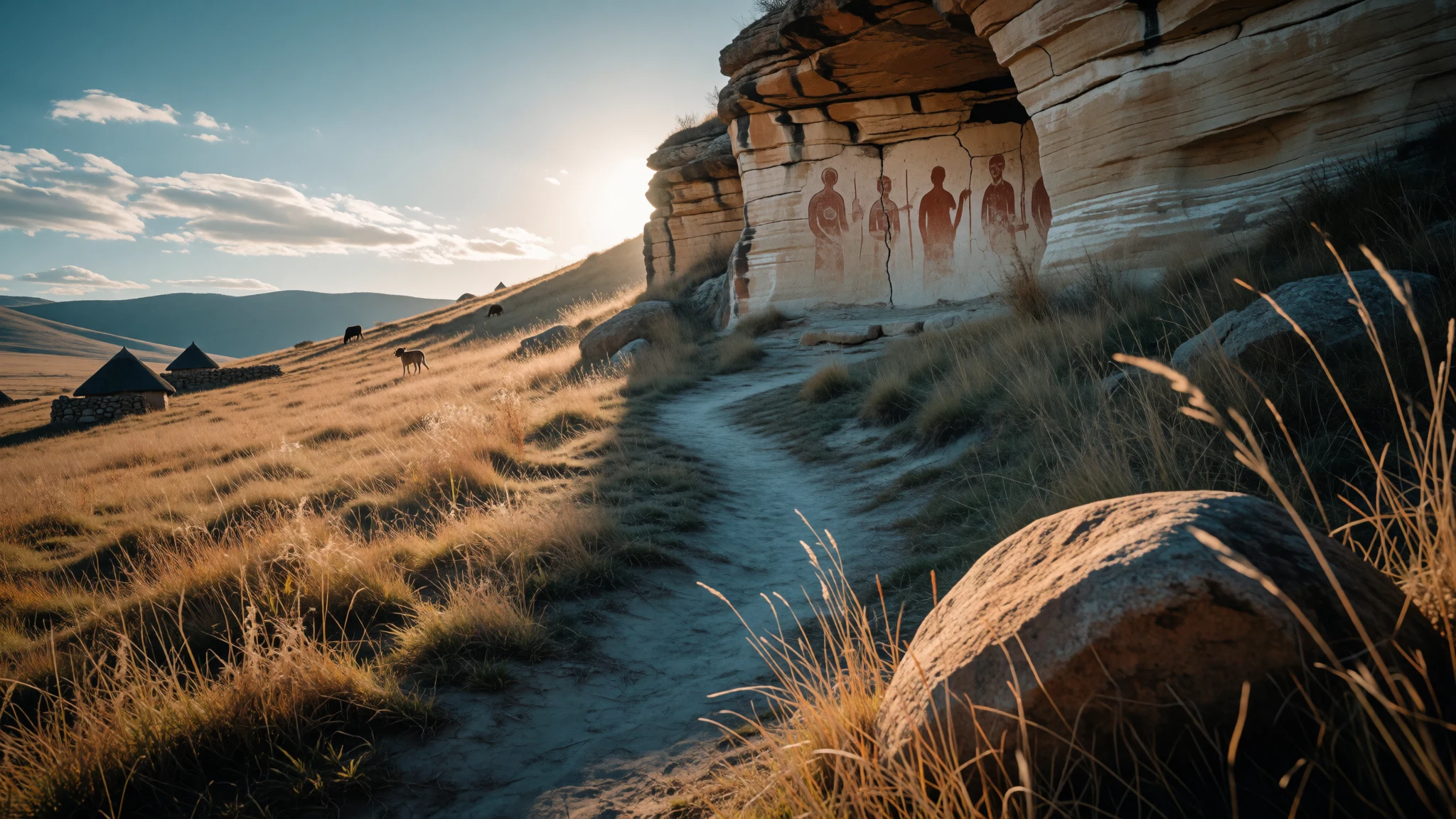
Ha Baroana is a small sandstone shelter near Maseru where San painters left faint human and animal figures roughly 2,000 years ago.
The place
Ha Baroana lies east of Maseru in Lesotho, close to the village of Nazareth. It is a rock art site: a sandstone shelter whose walls carry painted figures, mostly people and animals, made by San hunter-gatherers who lived in these hills long before the Basotho arrived. The paintings are usually dated to about 2,000 years ago, though dating rock art is inexact and the figure is best read as a rough guide.
The setting matters as much as the pigment. Lesotho is a mountain kingdom entirely surrounded by South Africa, and the land around the shelter is open and rolling, with grazing slopes, small fields, herding paths and outcrops of pale rock. The shelter itself is modest and quiet. It suits a slow hour of looking rather than a full day of sightseeing, and the images are weathered, reddish-brown and faded, so they take a few minutes of patient looking before they resolve into shapes.
The name is commonly linked to the San, whom Sesotho speakers call Baroa, which fits a place long associated with the earlier inhabitants of the valley. Similar painted shelters are scattered across Lesotho, and comparing them helps researchers follow how San painters worked in these uplands. Ha Baroana's main advantage for a traveller is access: it is within reach of the capital, so it works as a half-day trip from Maseru rather than an expedition. The trade-off is condition. Weather and past damage have left the paintings partial, so visitors who want spectacle tend to be disappointed, while those who enjoy quiet archaeology, a short country walk and a glimpse of village Lesotho tend to leave pleased.
Its story
Ha Baroana was painted by San hunter-gatherers, whose communities moved through the highlands of southern Africa for a very long time. The paintings here are usually placed about 2,000 years ago. The painters ground mineral pigments, mostly iron-rich earths, and applied them to the sandstone with fine tools, so the colours are earthy reds, browns and ochres rather than anything bright.
The subjects are people and animals. Many researchers read such images as more than a record of hunting or daily life. Across southern Africa, San painting is often linked to spiritual belief, to healers who entered trance, and to animals that carried symbolic weight. A figure on a rock wall may therefore be doing two jobs at once, showing something seen and something felt. Nobody can claim certainty about any single image, and honest guides say so.
Later centuries brought change. Farming and herding communities, including the ancestors of the Basotho, settled the same hills, and San communities declined, moved away or merged with their neighbours. The paintings stayed on the rock, and over time they became part of the local landscape, known to villagers and later recorded by outsiders. Today the shelter is documented as one of Lesotho's rock art sites and is of interest to people studying San artistic traditions.
What survives is fragile. Rain, wind, lichen and human contact all wear at the pigment, and the surface of the rock is not stable. That is why the story of Ha Baroana now includes protection as well as discovery: the paintings are old, but they are not permanent.
What to see
- The painted shelter — Near Nazareth village
The main attraction at Ha Baroana is the sandstone shelter itself. Faded figures of people and animals sit on the back wall in reddish-brown tones. Stand a little way back, let the eye adjust, and the outlines begin to separate from the stone. Morning or late afternoon light helps.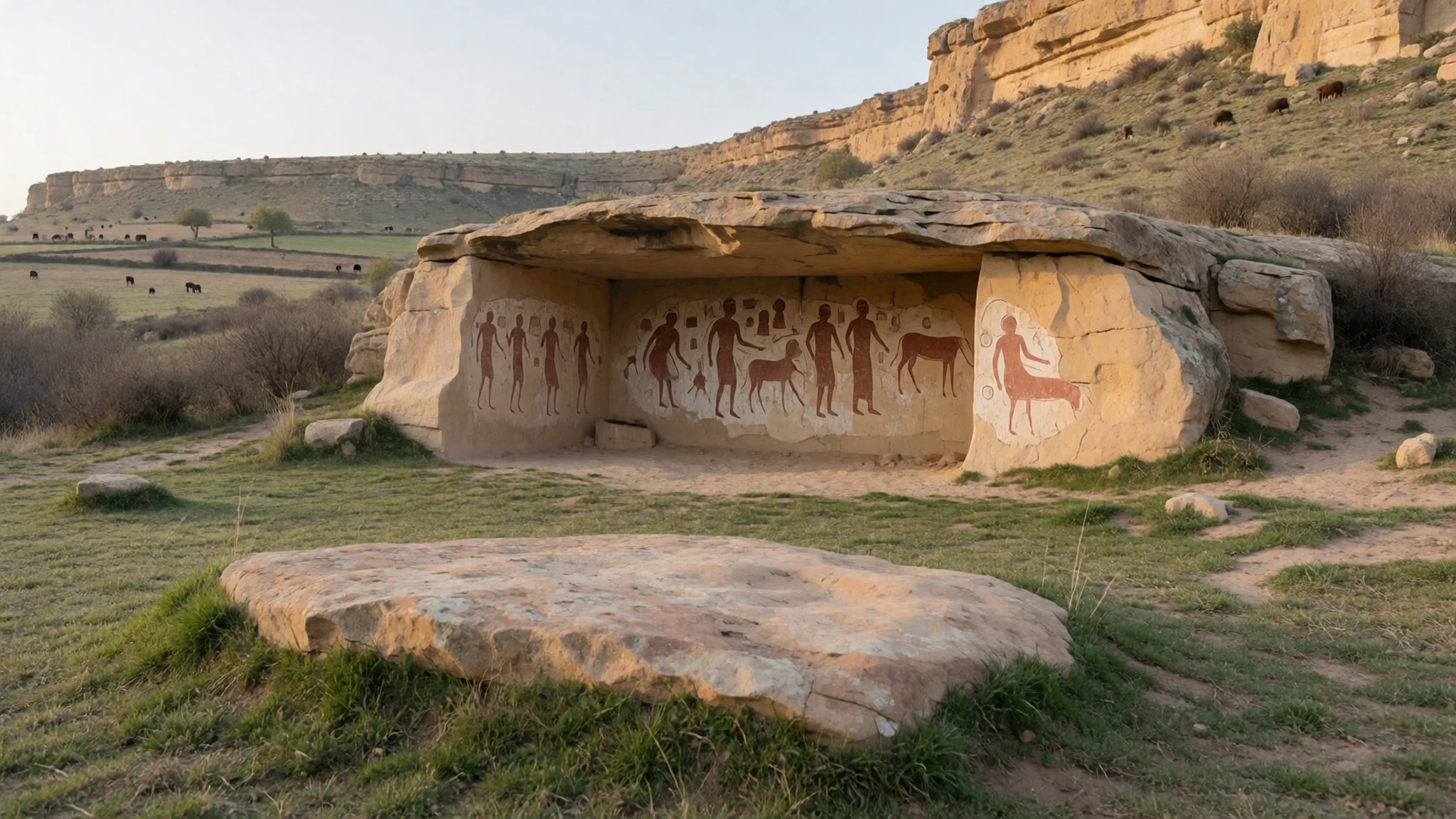
- The human figures — Painted wall of the shelter
Among the images are human forms, some slender and some in groups, reflecting how the San painters pictured themselves and their communities. Look for posture and clothing details, which can hint at activity. Many researchers connect such figures to ritual or healing as well as everyday life.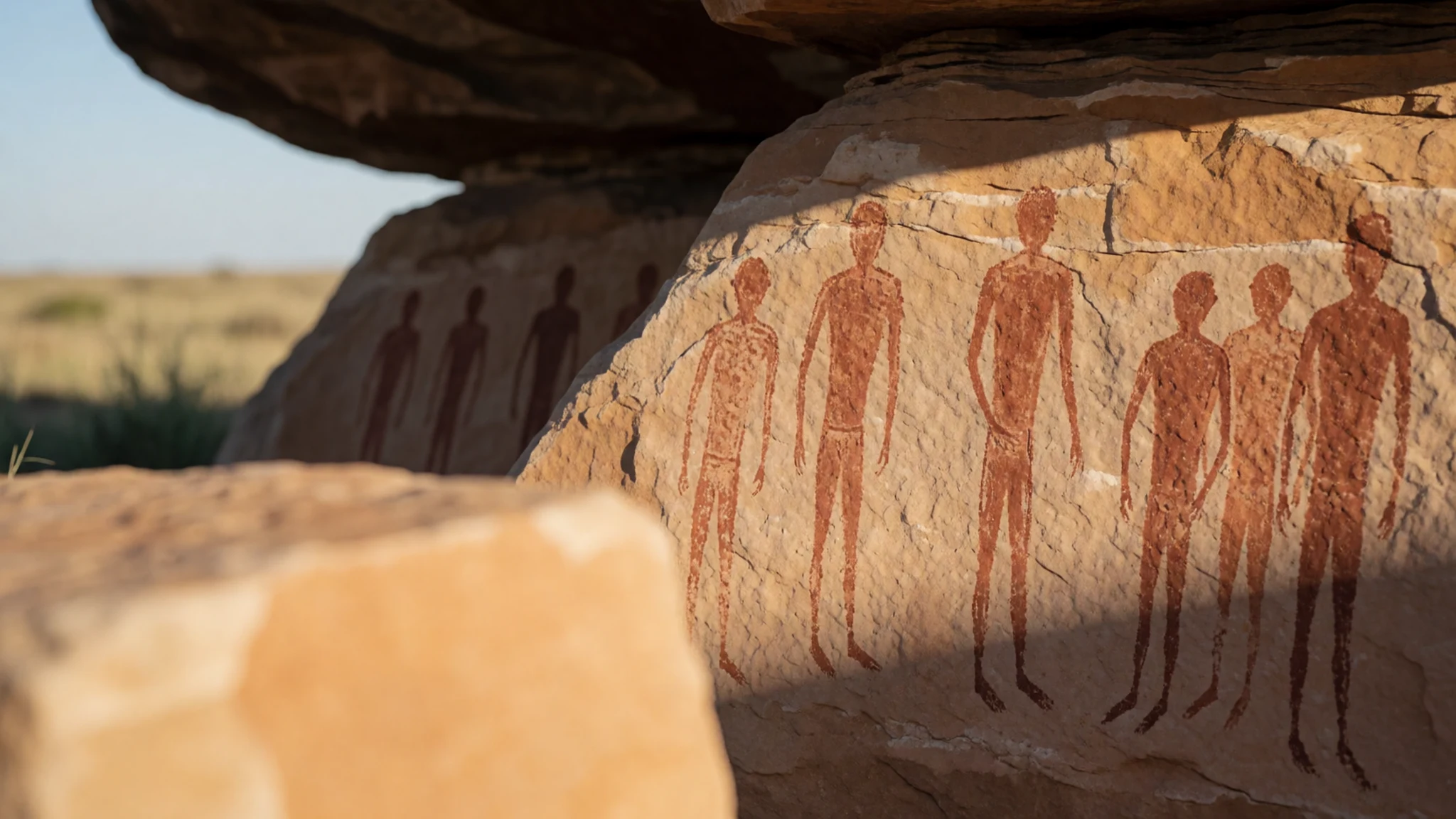
- The animal paintings — Painted wall of the shelter
Animals are painted here alongside the people, and their shapes are often easier to read than the fine detail. Antelope-like forms are typical of San art in the region. A guide can point out which outlines are clear and which are only traces of pigment.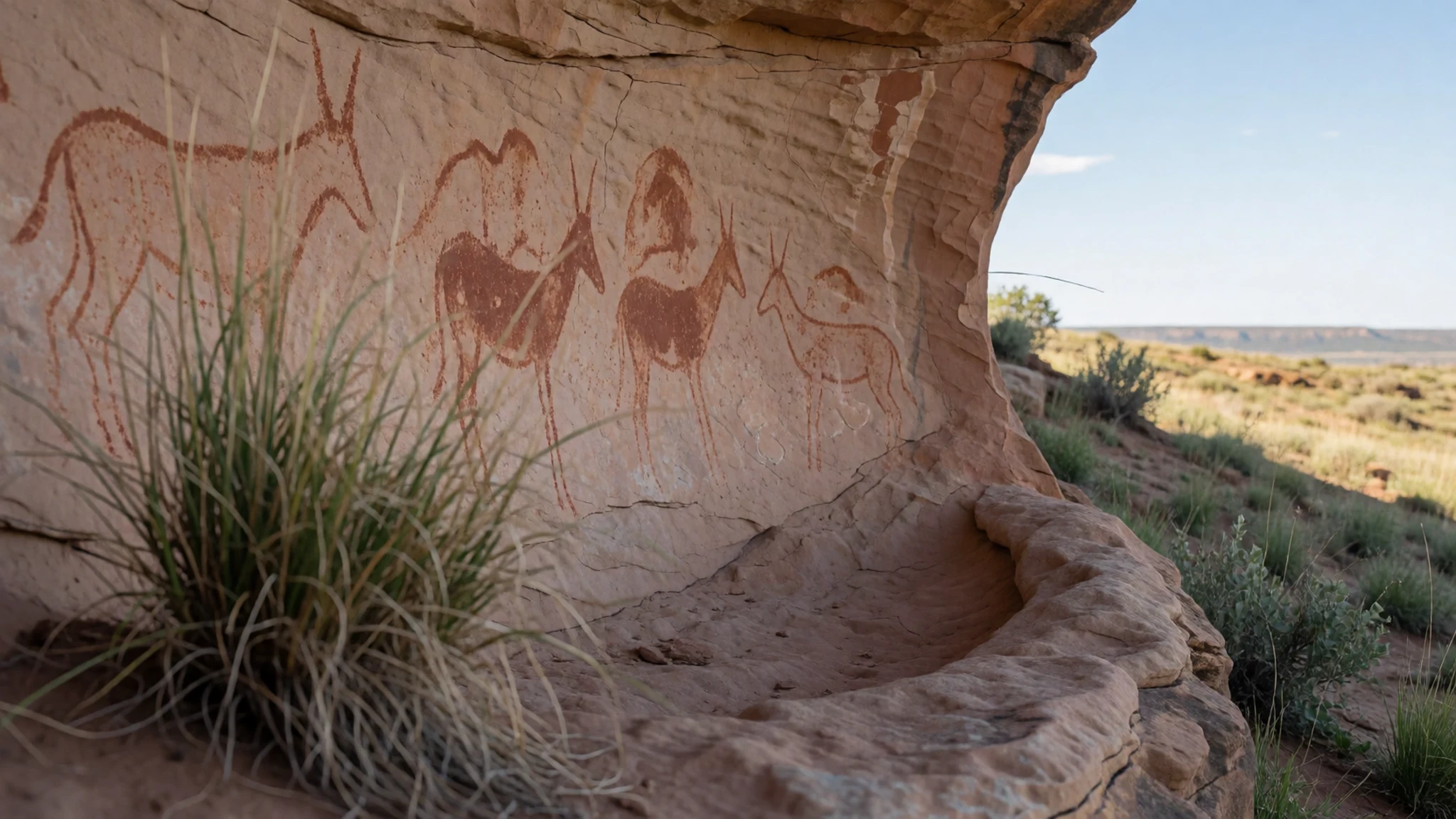
- The surrounding slopes — Hills east of Maseru
The hillside around the shelter is worth the walk for its own sake. Grass, rock and open sky frame the site, and the view helps explain why a rock overhang made a good place to shelter and to paint. Sturdy shoes make the short approach easier.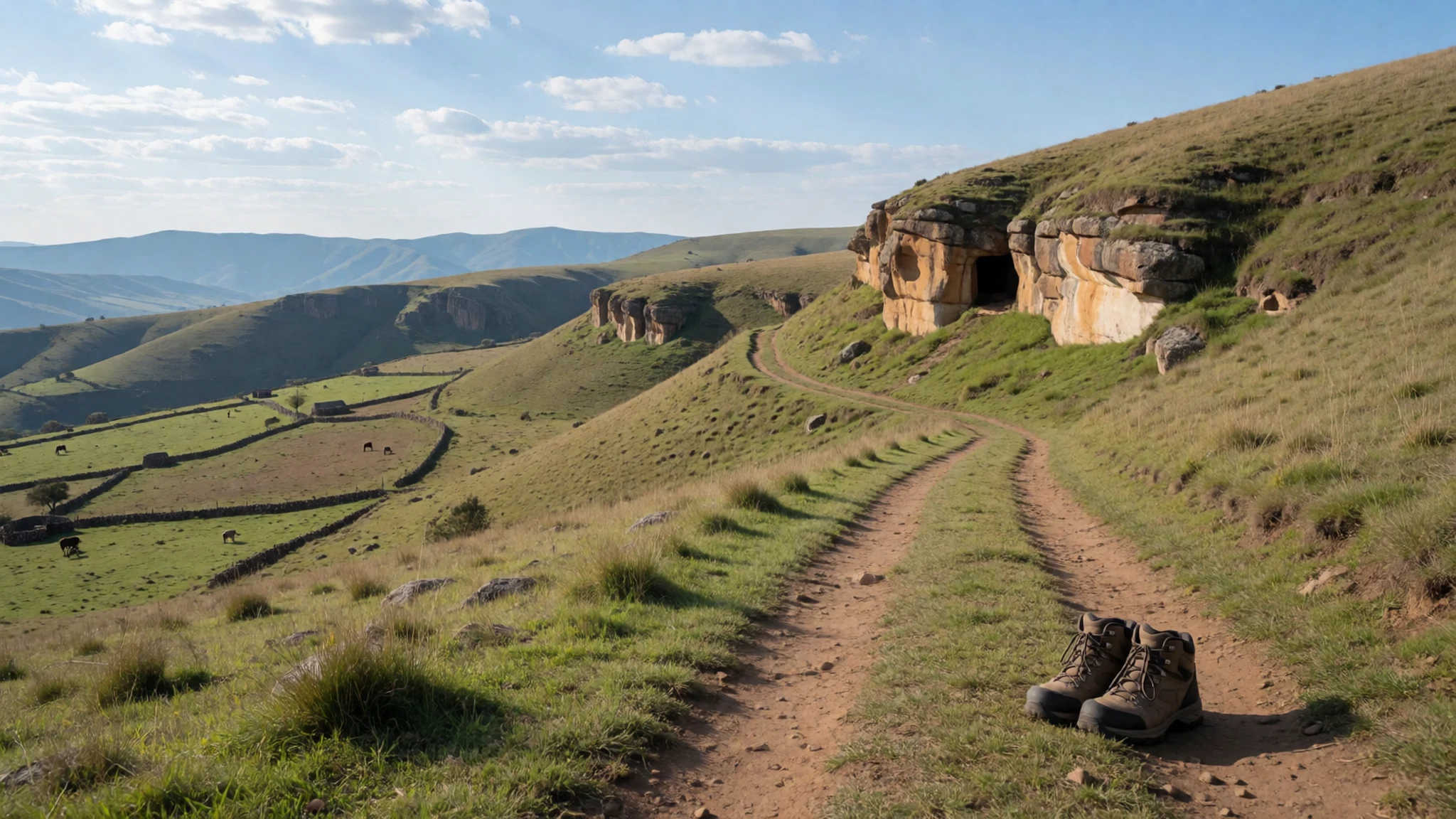
- Nazareth village — Nazareth
Nazareth is the nearest community and the practical base for the visit. Asking locally, and ideally arranging a guide, brings useful knowledge and supports people who live beside the site. Village paths, livestock and small fields give a calm picture of rural Lesotho.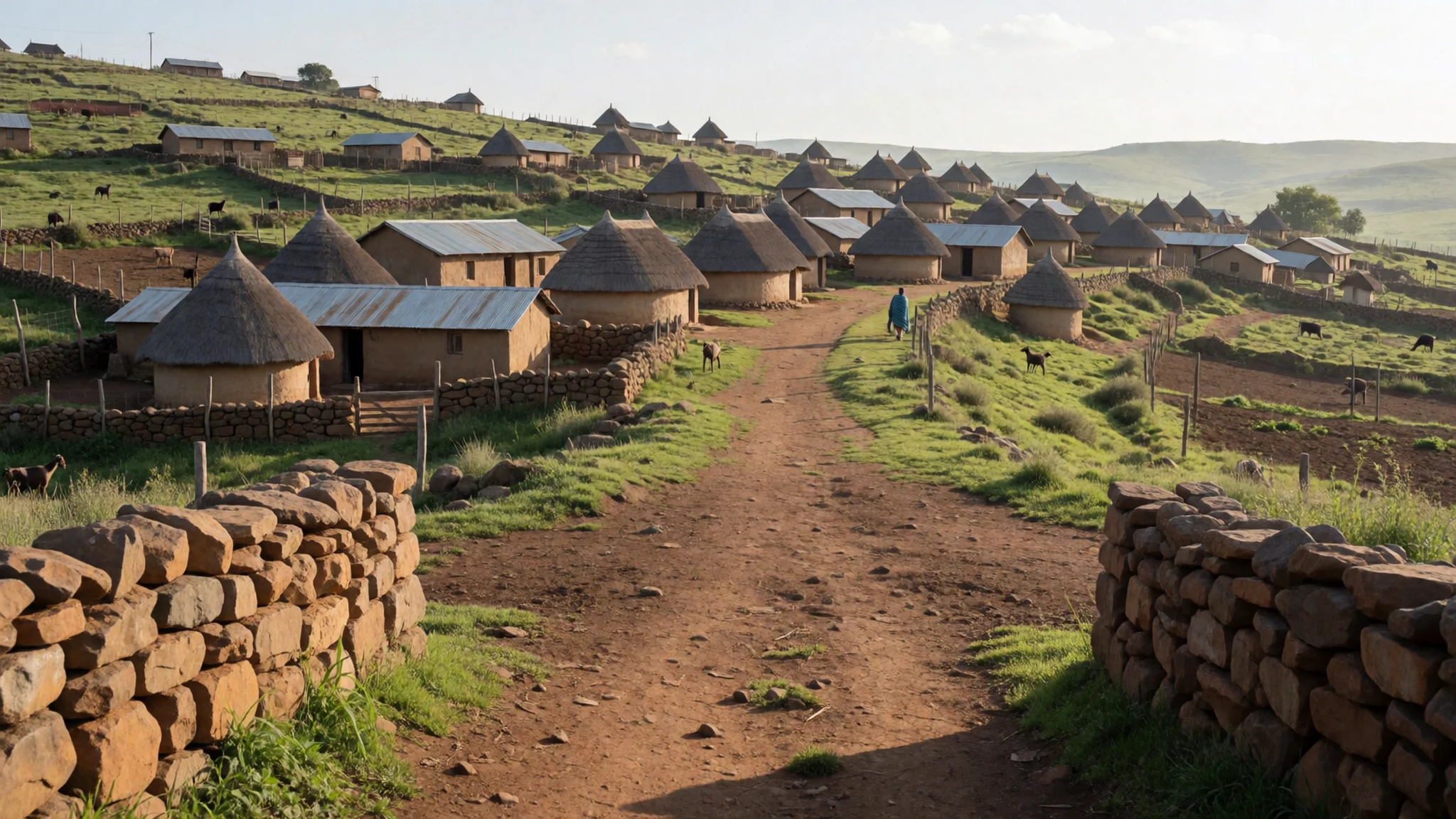
Culture
Ha Baroana sits where two heritages meet. The paintings belong to the San, whose art is among the oldest continuing traditions of image-making in southern Africa. The land around them is home to Basotho villagers, who speak Sesotho, farm and herd, and have their own long relationship with the shelter. Many local people know the site as a place linked to the earlier inhabitants, and the name itself points that way.
San paintings are widely understood as expressions of belief rather than simple pictures. Researchers often connect them to trance, healing and the spiritual significance of certain animals, though individual meanings remain debated. It is better to approach the shelter as a place of meaning than as an open-air gallery, and to treat any single explanation with some caution.
Village life nearby follows its own rhythm. Greetings matter in Lesotho, and a polite hello, in Sesotho if possible, goes a long way. Livestock is often looked after by herders, who may be young and who may be wearing blankets and gumboots against the weather. Asking before photographing people, and showing the picture afterwards if they wish, is the courteous way to do it.
Protection is a live concern. Rock art cannot be repaired, only preserved, and every careless touch or splash of water adds to the wear. Visitors who treat the shelter with restraint help it last. Do not touch, wet, chalk or trace the paintings, and follow your guide's instructions about where to stand.
What to wear
Ha Baroana is a good place to notice Basotho dress, which is distinctive and still worn daily in the countryside. The best-known garment is the Basotho blanket, a heavy woollen or wool-blend wrap with bold geometric patterns, usually fastened at the shoulder with a large pin. It is both warm clothing and a marker of status and occasion, and it is worn for weddings, initiation, funerals and everyday herding. The conical straw hat called the mokorotlo is the other classic piece, woven from grass and now a national emblem.
What people wear now is a mixture. In Maseru, expect ordinary shirts, jeans, dresses and work clothes. In villages around Nazareth, blankets over practical clothes, woollen hats and rubber boots are common, especially in cold or wet weather. Women often wear printed cotton dresses, and shweshwe, a stiff patterned cotton popular across the region, is a familiar sight at gatherings.
For a visitor, comfort and modesty both matter. Wear sturdy walking shoes or light boots, since the approach is over uneven ground that can be slippery after rain. Bring layers: highland mornings can be cold, and the weather changes quickly. A sun hat and sunscreen are useful in summer, and a waterproof jacket is wise in the wet season. In villages, knee-length shorts or skirts and covered shoulders are respectful. Nothing special is required at the shelter itself, but quiet, plain clothing helps visitors blend in and keeps attention on the paintings.
What to eat
- Papa — Village homes, local eateries and canteens around Maseru
Papa is stiff maize porridge, the staple of Lesotho meals. It is eaten with the hands or a fork, often rolled into a ball and used to scoop up stew or greens. It is filling, plain and the base of most home cooking.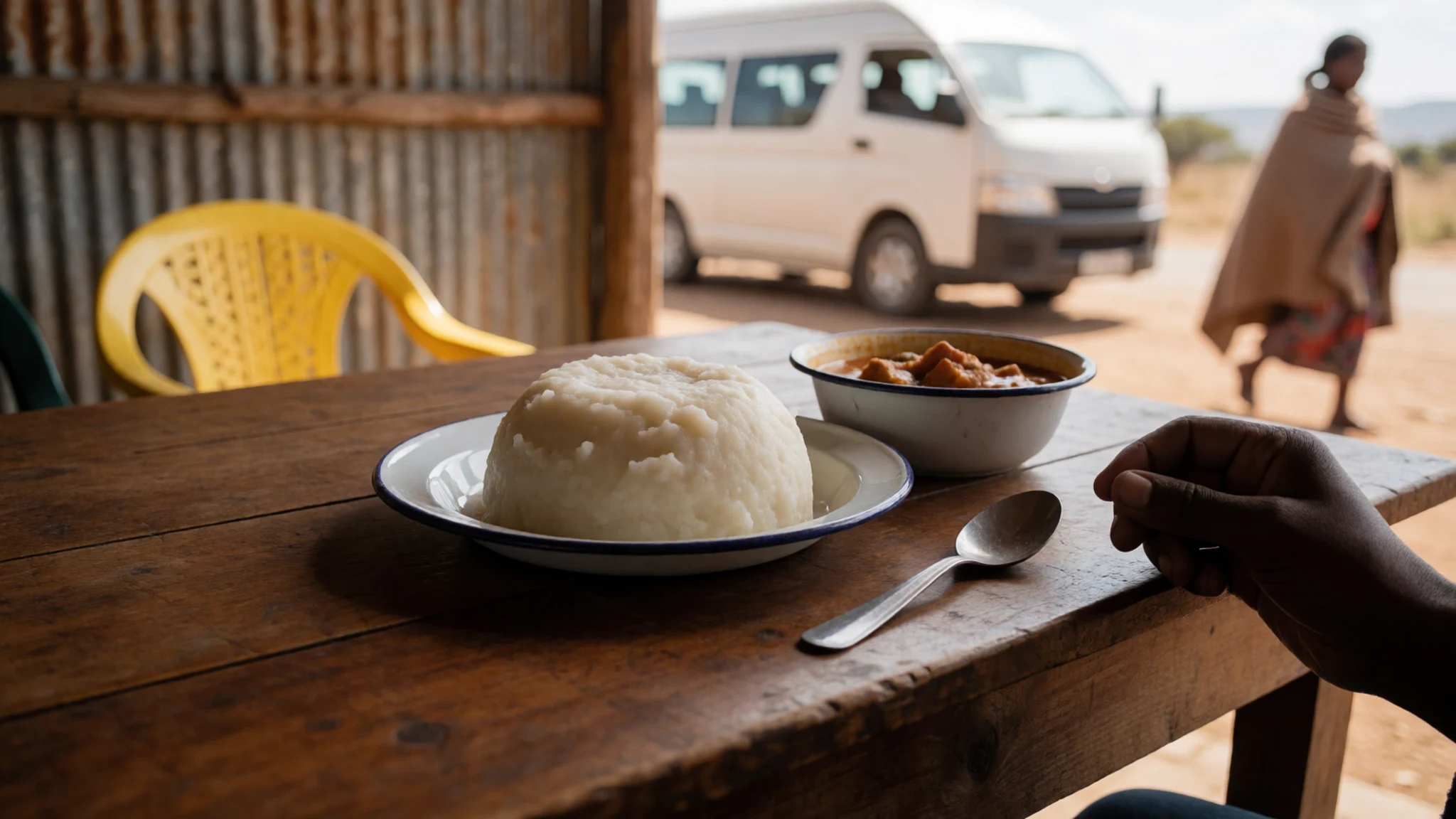
- Moroho — Home kitchens, market stalls and everyday eateries
Moroho means cooked greens, often wild or garden leaves simmered with onion and a little oil. It appears beside papa as a side dish and is a good option for vegetarians. Flavours are simple, and seasoning varies from household to household.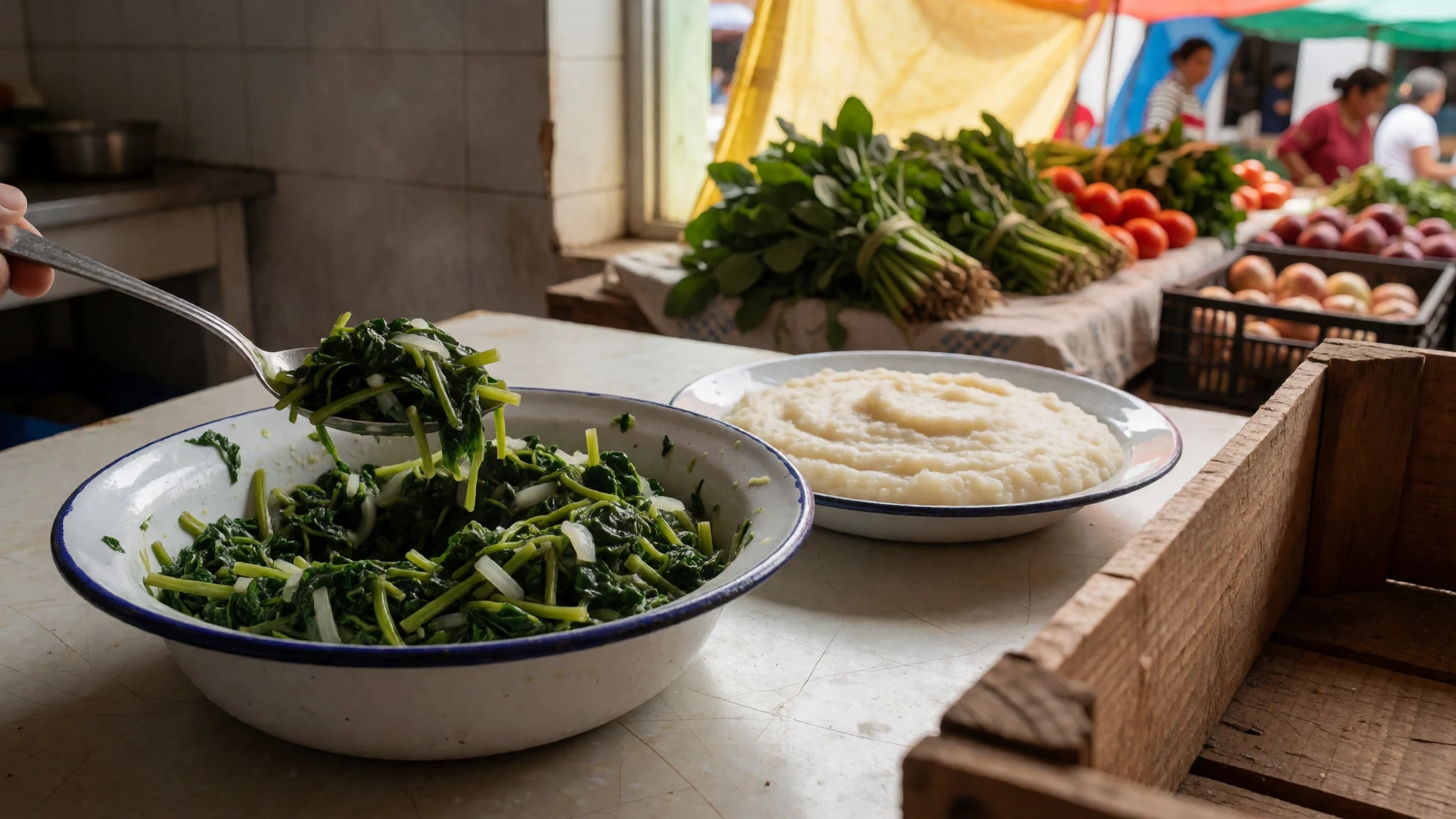
- Likhobe — Village kitchens and informal local eateries
Likhobe is a hearty dish of boiled maize kernels and beans, cooked slowly until soft. It is a traditional country food, practical for cold weather, and often served as a main meal or alongside meat. It is plain and filling rather than spicy. - Motoho — Neighbourhood shops and roadside sellers near Maseru
Motoho is a slightly sour drink or thin porridge made from fermented sorghum or maize meal. It is a traditional refreshment, popular on cool mornings and after work, and tastes tangy with a smooth, thick texture. Try a small portion first. - Lamb or mutton stew — Local eateries in Maseru and larger villages
In the highlands, where sheep and goats are kept in numbers, slow-cooked mutton or lamb stew is a regular meal. It is usually served with papa or bread, and the broth carries the flavour. Ask for it at the end of a morning's walk.
Plan it
Best time. March to May and September to October, when days are usually mild and the ground is easier to walk on. Summer brings warm days and afternoon storms that can make paths slippery, and winter nights and mornings can be cold, so pack layers in any season.
How long. 1
Getting there. Fly to Moshoeshoe I International Airport near Maseru, or cross by road from South Africa, with Bloemfontein the usual large airport on that side. From Maseru, drive or take a taxi east towards Nazareth village, then continue on foot or by local guide to the shelter. A hired car with a driver is the simplest option.
Budget. low
Tips
- Ask in Nazareth or at a Maseru guesthouse about arranging a local guide before you set off
- Start in the morning so you have time in good light and can return before afternoon storms
- Carry cash in small notes for guides and village purchases, since cards are unreliable in rural areas
- Bring water, sun protection and a layer for wind, as there is little shade or shelter on the approach
- Check the current access arrangements with the local tourism office, as they can change
Etiquette
- Do not touch, wet or mark the paintings
- Ask before photographing villagers or herders
- Greet people you meet and follow your guide's directions at the shelter
Nearby
Sources
- Wikidata Q5636416 (CC0)
- Wikipedia: Ha Baroana (rev 1335006835) (CC BY-SA 4.0)
- Wikivoyage: Lesotho (CC BY-SA 4.0)
- Photo 01: Ha Baroana, Graham Maclachlan (CC BY 3.0)
- Photo 02: Ha Baroana, Graham Maclachlan (CC BY 3.0)
- Photo 03: Ha Baroana, Graham Maclachlan (CC BY 3.0)
- Photo 04: Ha Baroana, Graham Maclachlan (CC BY 3.0)
- Photo 05: Ha Baroana, Graham Maclachlan (CC BY 3.0)
- Photo 06: Ha Baroana, Graham Maclachlan (CC BY 3.0)
- Photo 07: Ha Baroana, Graham Maclachlan (CC BY 3.0)
- Photo 08: Ha Baroana, Graham Maclachlan (CC BY 3.0)


