Saona Island
Saona Island, Dominican Republic
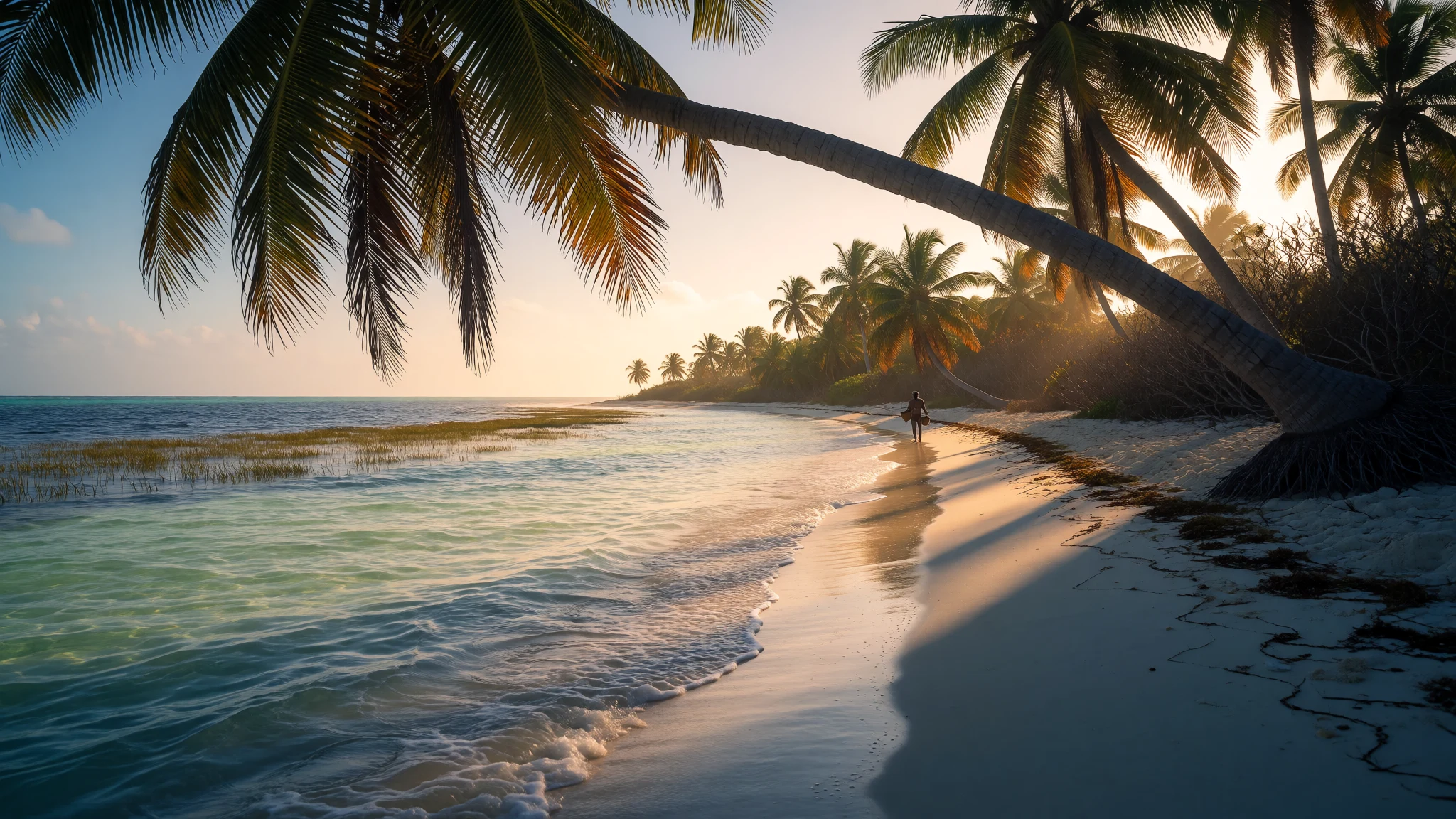
Saona Island is a palm-lined Dominican beach reached by boat, with shallow clear water and a small fishing village.
The place
Saona Island lies just off the south-eastern coast of the Dominican Republic, in the province of La Altagracia, separated from the mainland by a narrow channel. It forms part of Cotubanamá National Park, the protected area once called Parque Nacional del Este, so most of the interior stays as wild bush, four kinds of mangrove, semi-humid and salted forest, palm forest and lowland rainforest rather than resort land. The only inhabited village is Mano Juan, a small village of timber houses, a chapel and a school, where fishing families live and where many day boats pause, with a naval base at Catuano as the other permanent settlement.
Visitors know Saona Island for its beaches. Pale sand runs for long stretches behind water shallow enough to wade, with coconut palms along the back of the beach and seagrass underfoot a little further out. In settled weather the colour of the sea grades from light green over sand to blue beyond the drop. Landings are informal: catamarans and speedboats nose onto the beach, crews set tables in the shade, and passengers walk ashore. The sheltered side, towards the channel and Bayahibe, is where most of those boats arrive. The ocean side is windier and less used.
Heat and glare are the other facts of a day on Saona Island. Shade is the line of palms and the canopies the crews bring, not a boardwalk of cafés. Fresh water is limited outside the village, so boats carry drinking water and a set meal. Mobile signal is patchy.
Its story
Saona Island carries a name that points to Savona, a port on the Ligurian coast of Italy, attached to this coast during the early Spanish voyages in the Caribbean. Long before those ships, Taíno communities fished and farmed the eastern end of Hispaniola. The park that now includes Saona Island is called Cotubanamá after a cacique of Higüey who fought the Spanish settlements in that region.
After the pacification of 1502, Saona Island stood empty for centuries. It had no permanent inhabitants, and it was not a harbour of merchants or a square of stone churches. In 1944 the first buildings rose, and Mano Juan became a working village of boats, timber houses and, later, a chapel and a school. The land around them was set aside as a national park to keep dry forest, mangroves and the marine shallows from being cleared for resorts. That decision is why the interior still looks like park and the coast still looks like a beach.
Tourism reached Saona Island from the other direction, once airports and resort lodgings rose at Punta Cana and La Romana and the harbour at Bayahibe filled with excursion boats. A short crossing put resort guests on sand that the park had kept free of high-rises. The day trip hardened into a routine: a stop in a shallow natural pool in the channel, then a landing for lunch, then the run home. Mano Juan sells cold drinks and grilled fish to that passing trade and keeps its own life when the boats leave.
What to see
- Mano Juan — southern shore
Mano Juan is the only village on Saona Island, a cluster of timber houses, a chapel and a school set just inland from the beach. Fishing still frames ordinary days, and so does the arrival of excursion boats. Visitors walk the sandy lanes, buy a cold drink or grilled fish, and leave the same afternoon. Residents have the place back once the boats turn for the mainland.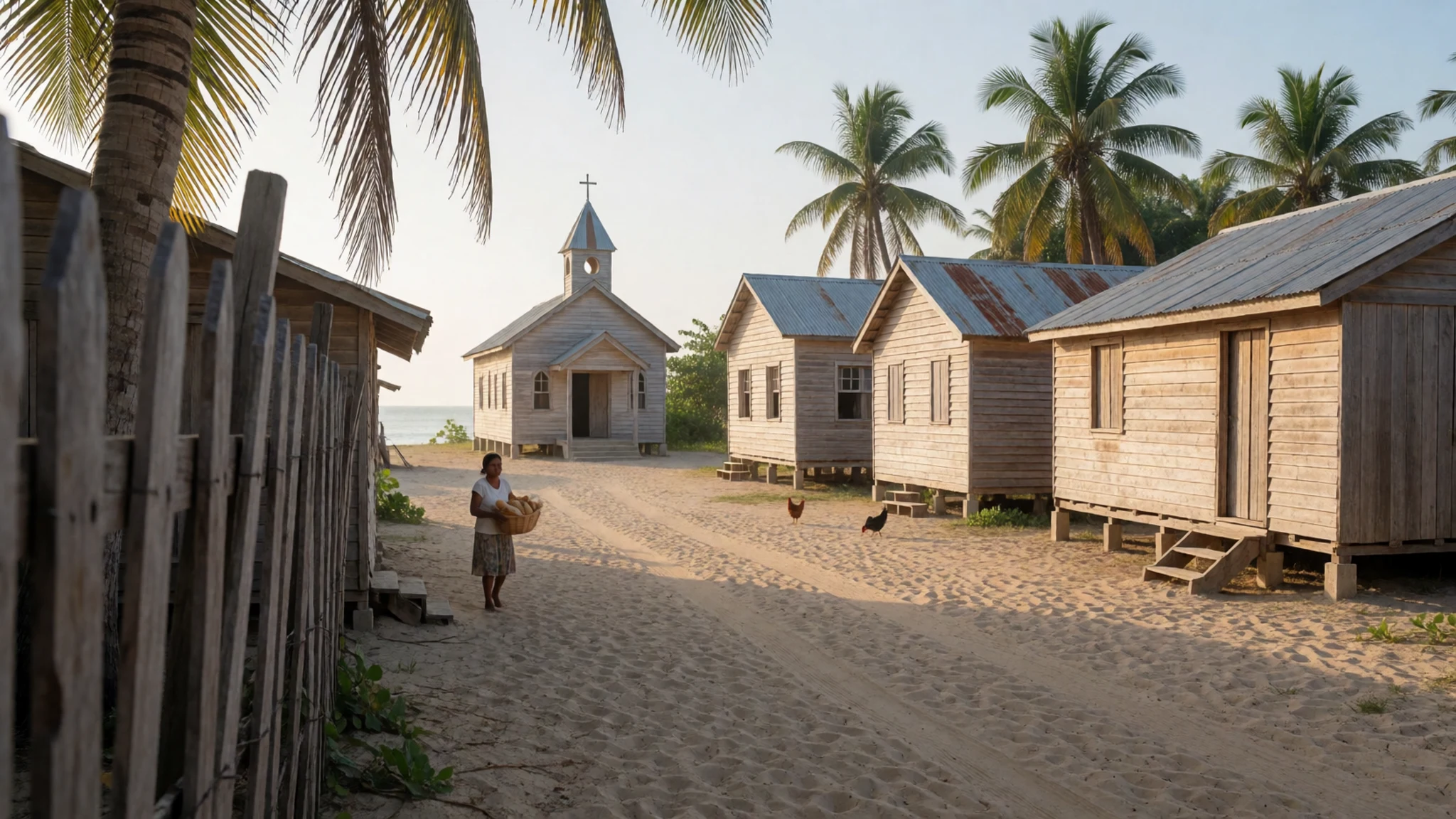
- The main beach — southern coast near Mano Juan
The main beach on Saona Island is the long pale strand where most catamarans and speedboats put their passengers ashore. Palms lean over the sand, the water stays shallow for a long wade, and the crews set lunch in the shade. By late morning it is a busy working beach, with music, buffet tables and people in from several resorts at once.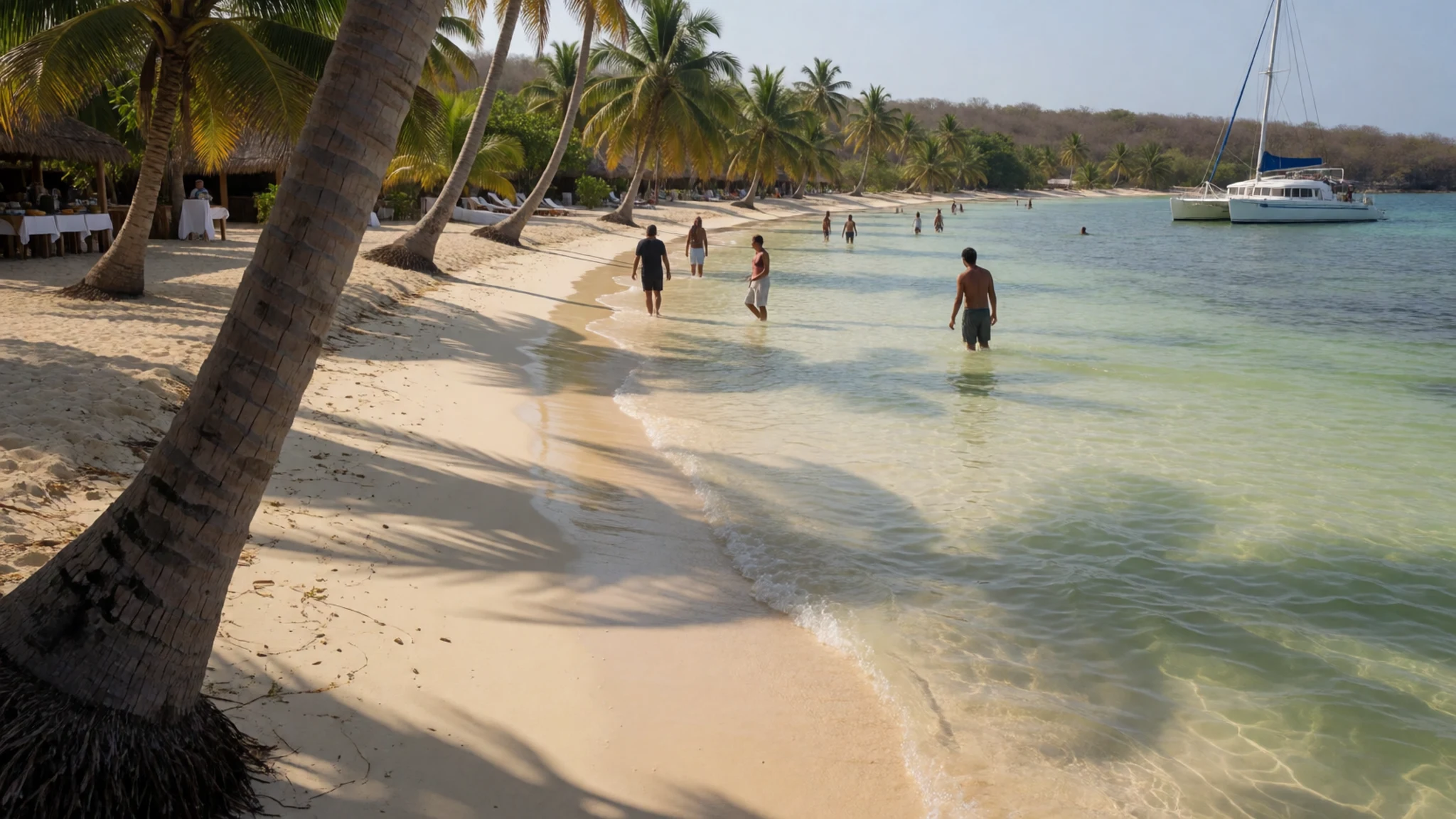
- The natural pool — channel between the island and the mainland
The natural pool is a shallow sandbar in the channel between Saona Island and the mainland, where boats pause. Waist-deep water lies over pale sand, and on still days starfish rest on the bottom in plain sight. Crews treat it as the swim stop: passengers climb off, stand in the water and climb back on. Standing on coral, lifting starfish and wearing harsh sunscreen all wear this spot down quickly.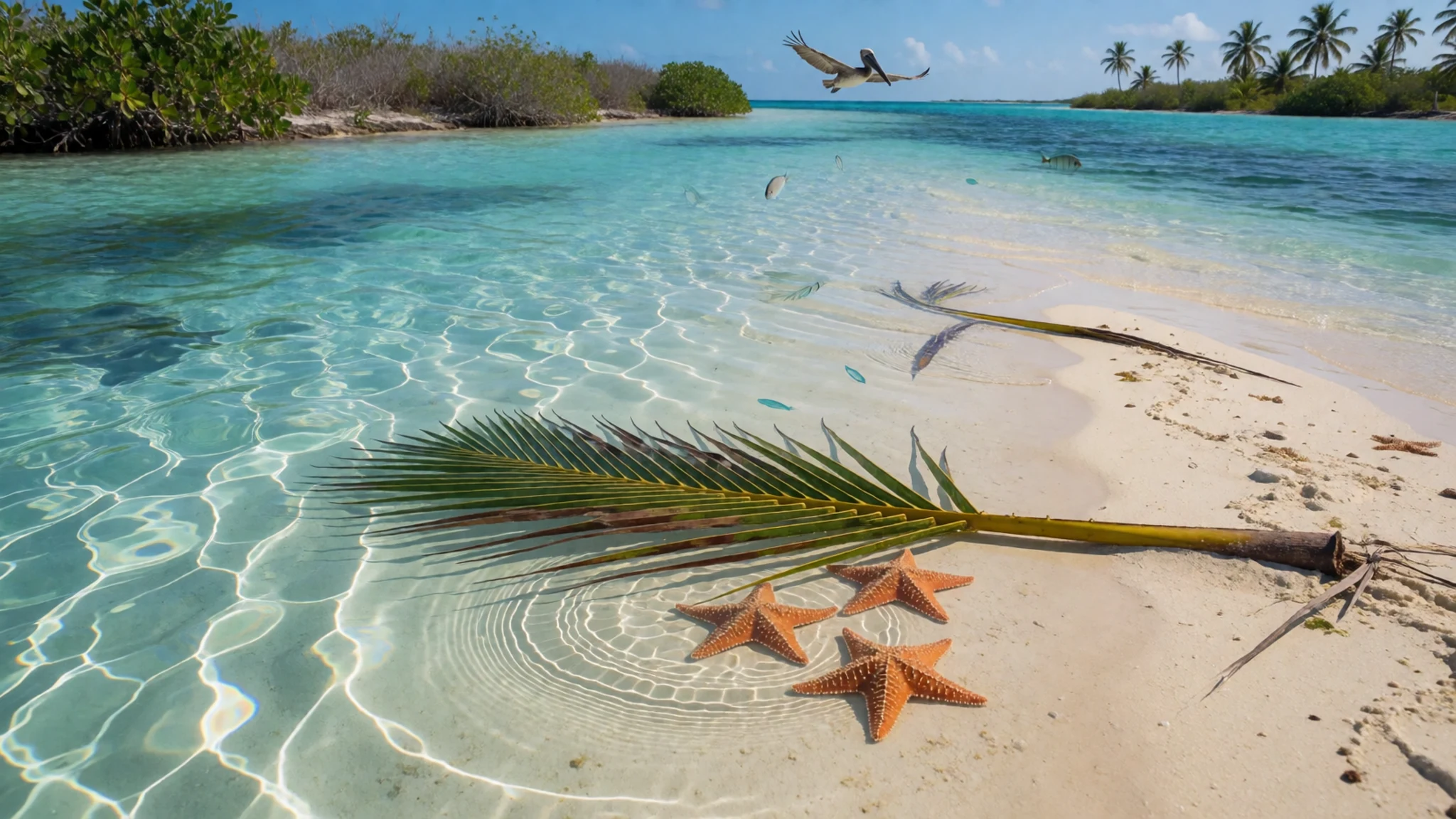
- The quieter palm shore — ocean-facing south and east coasts
Away from the main lunch landing, Saona Island keeps longer, quieter stretches of palm-backed sand. The trade wind is stronger on the ocean side, the water is choppier, and there is no buffet line under the trees. Some boats beach here when the main strand is crowded, and walkers come out from Mano Juan along the shore. Shade is palms only, with no drink stand along the way.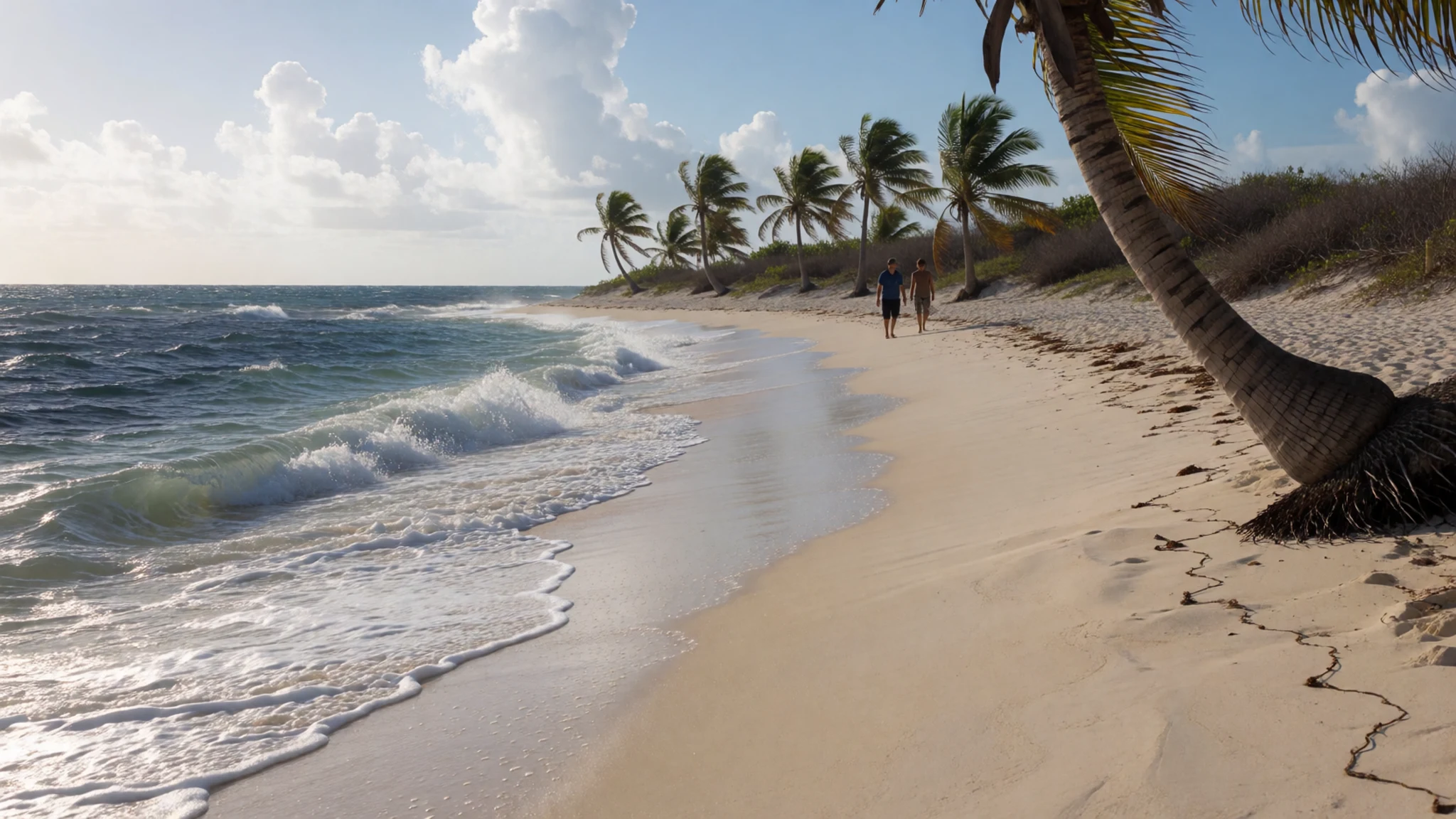
- Mangrove and park edge — interior and sheltered inlets
Saona Island's interior is Cotubanamá National Park, not a trail network with signs and cafés. Dry coastal scrub and mangrove inlets sit behind the beaches, and the same protected area continues onto the mainland peninsula with its caves and forest. What a boat day shows of the park is that rule in practice: leave shells, keep off coral, and expect no resort buildings on the sand.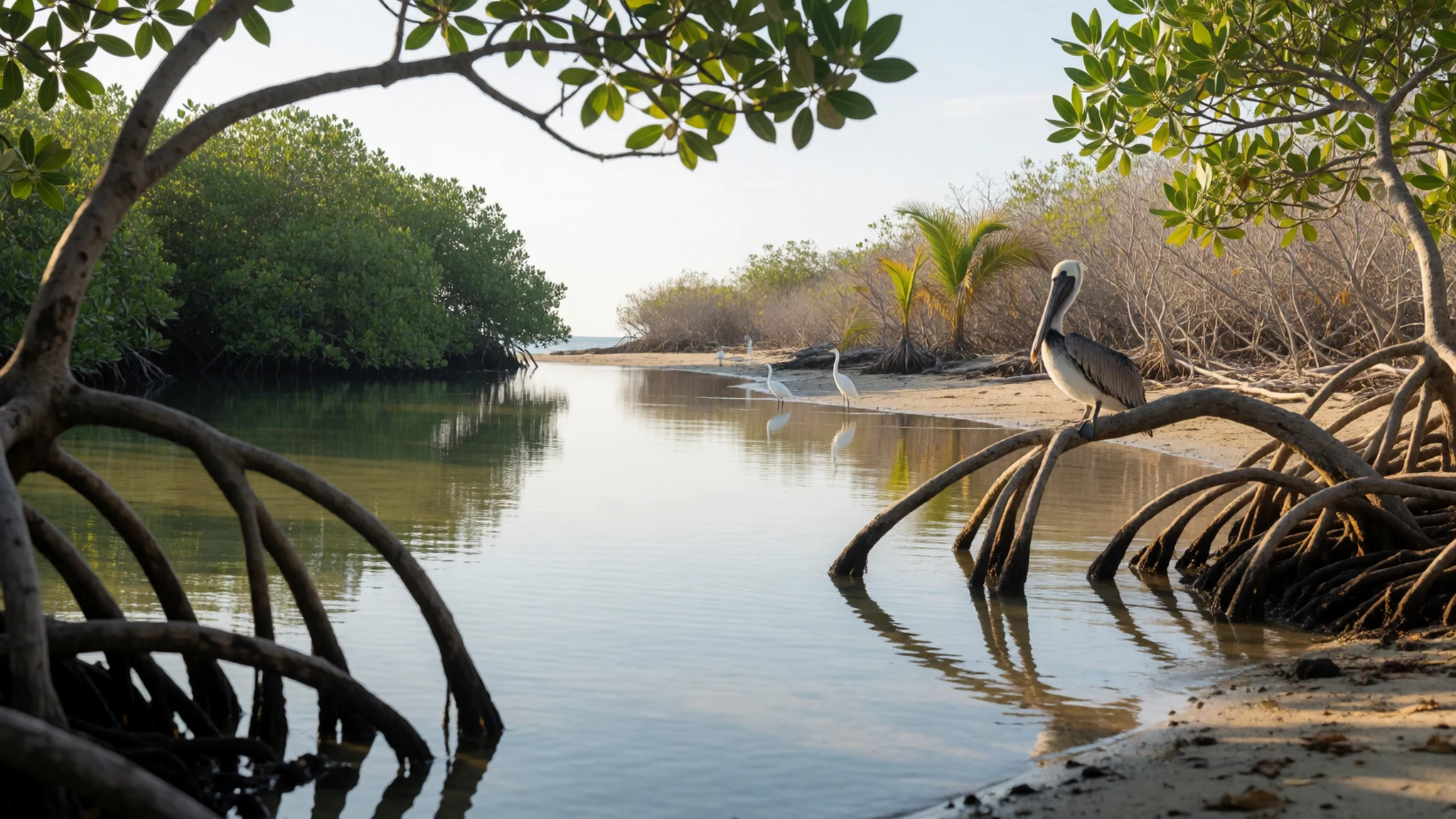
Culture
Saona Island shares the everyday culture of the Dominican Republic and then narrows it to a park, a village and a fleet of day boats. Spanish is the language, with Caribbean rhythm and plenty of English on the excursion crews who work the resort trade. Merengue and bachata come aboard with the speakers; on shore, Mano Juan is quieter, a Catholic village with a chapel, a school and the ordinary routines of fishing families.
The other culture on Saona Island is the culture of the visit. Boats from Bayahibe, La Romana and Punta Cana run a familiar script: music on the crossing, a swim in the natural pool, a fixed lunch, a little time for the beach, and the ride back. Crews are used to large groups, tips and questions about starfish. That script can drown out the place. The island is also a national park with a small resident community, and the people who live in Mano Juan are not staff hired for the afternoon.
Baseball, dominoes and a Sunday pace belong to the village even when the beach is loud. Rum and cold beer are the social drinks of the boats and the stalls, as they are across the Dominican Republic. Treat Saona Island as someone's home ground inside a park — ask before you photograph residents, and leave starfish, coral and shells where they are.
What to wear
Saona Island has no court costume of its own; dress follows the Dominican Republic, then the beach. For a celebration on the mainland, men wear the guayabera, a lightweight pleated shirt of cotton or linen, worn untucked, and women wear bright cotton dresses, sometimes the ruffled festival skirt of a traje típico with a full petticoat. Those clothes belong to weddings, patron-saint days and folklore shows.
What people wear on Saona Island now is hot-weather clothes. Residents favour shorts, T-shirts, caps and sandals; baseball shirts are as common here as anywhere in the country. Crews on the catamarans wear swim shorts and branded tops they can soak. Visitors arrive already in beach clothes: swimsuits, cotton cover-ups, linen shirts, straw or baseball caps, and sandals that can go in the sea. The look is informal, salty and practical.
A visitor to Saona Island should dress for sun, spray and a village. Swimwear is right on the beach and in the natural pool; a shirt or wrap is the decent choice when walking through Mano Juan or stepping into the chapel. The crossing is windy and the midday sun is direct, so a hat, a light long sleeve and footwear that can get wet all earn their place. Heels and pale suede belong on the mainland. Reef shoes help on rock or seagrass, and a cover-up saves shoulders on the ride home.
What to eat
- Pescado con coco — fish eateries in Bayahibe and set lunches on the boats
Pescado con coco is fish simmered in coconut milk with garlic, pepper and lime. It is the coastal plate people link with Saona Island, though many boats serve a plainer grilled catch at the set lunch. The coconut stew shows up more often at fish eateries in Bayahibe.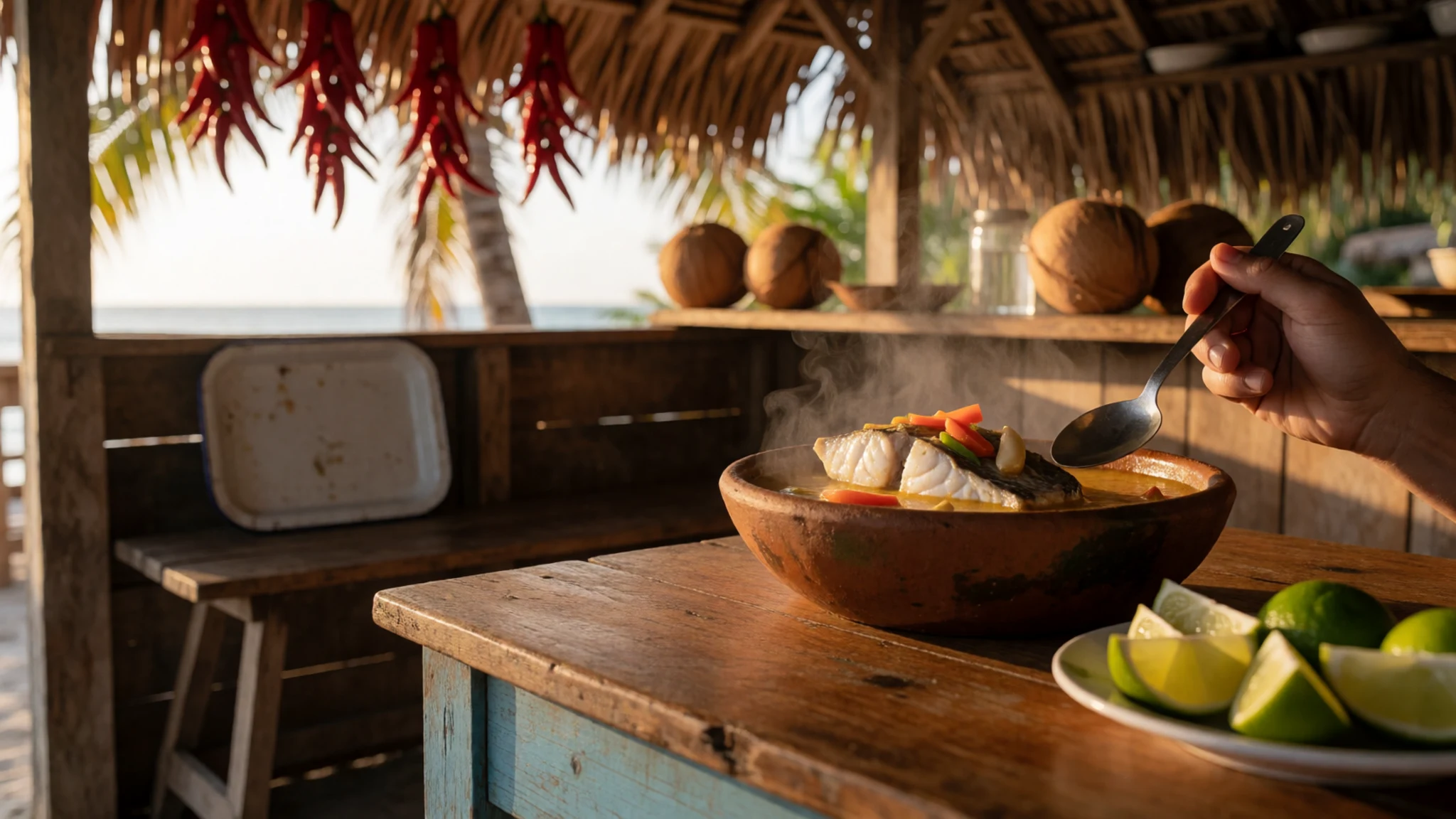
- Pescado frito — Mano Juan stalls and beach grills
Pescado frito is whole fish, scored and fried until the skin is crisp, served with lime, yuca or tostones and a vinegar sauce. On Saona Island it is the plate Mano Juan can cook when a boat is in, and the plate to choose if the set buffet looks tired.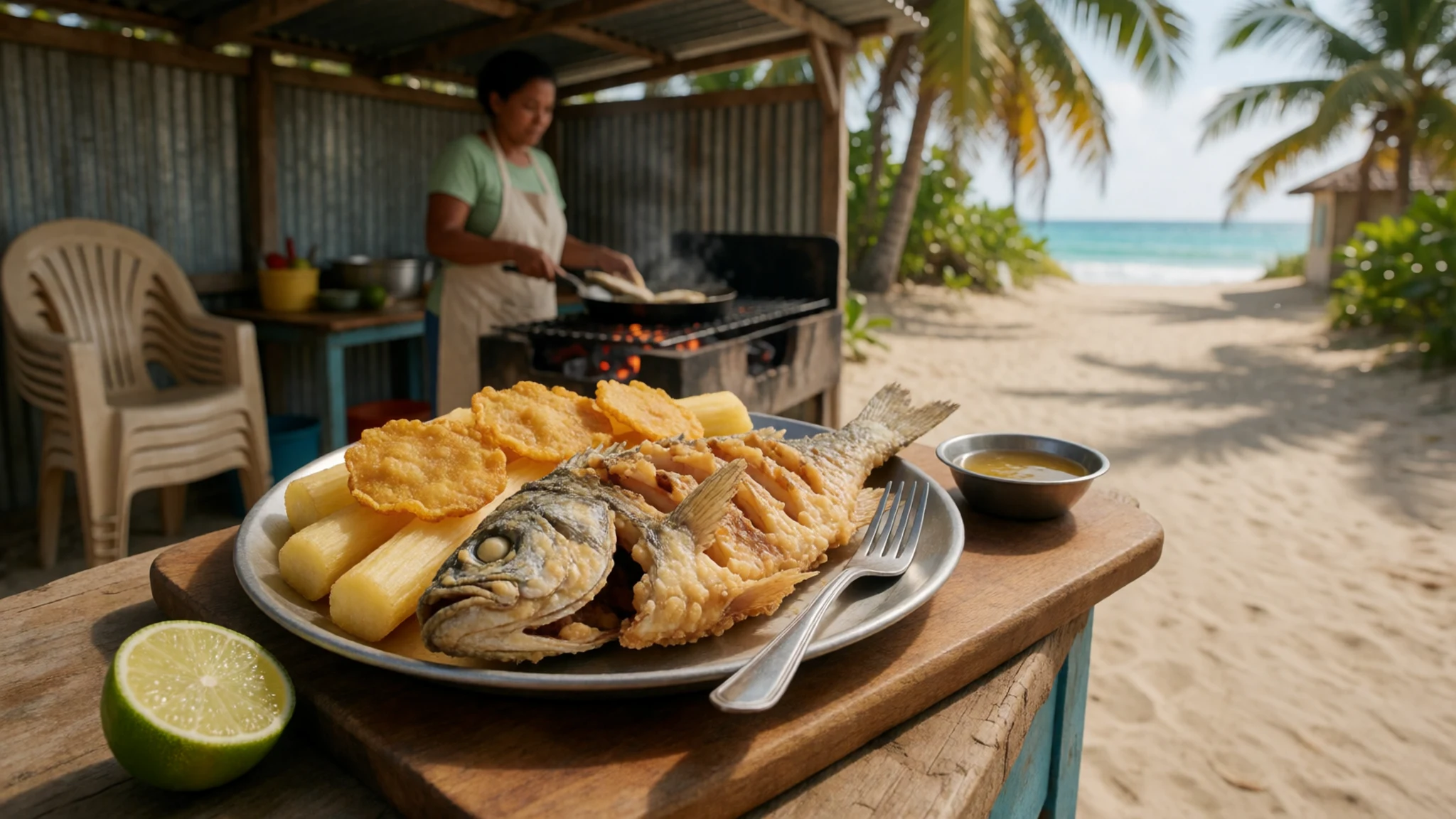
- La bandera — comedores in Bayahibe and La Romana
La bandera is the Dominican plate: rice, stewed beans and meat, with salad on the side. The name means "the flag", after the colours on the plate. It is mainland food, not a Saona Island speciality, and a comedor in Bayahibe serves it better than the boat buffet. - Tostones — Mano Juan stalls and boat lunch tables
Tostones are green plantains fried, flattened and fried again, salty and crisp, with lime. On Saona Island they come beside grilled fish at Mano Juan stalls and in the set lunch boats serve under the palms. They are the starch of a beach day, more filling than another sugary drink. - Casabe — village houses in Mano Juan and shops in Bayahibe
Casabe is a flat, dry cassava bread inherited from Taíno cooking and still eaten across the Dominican Republic. On Saona Island it belongs with fish and garlic sauce more than with the sweet snacks sold to boat groups. It keeps in the humidity, which suits a fishing village.
Plan it
Best time. December to April is the drier, less humid stretch on Saona Island, with more reliable sun and a better chance of a smooth crossing. May to November is wetter, August is the hottest month and November the wettest, February and March are the most comfortable, and from June through October severe storms bring a real risk of cancelled boats. The sea stays warm in every month.
How long. 1–2
Getting there. Fly into Punta Cana, La Romana or Santo Domingo, then travel by road to Bayahibe, the usual departure harbour for Saona Island. The last leg is a catamaran or speedboat across the channel. Some excursions also leave from La Romana and, less often, from the Punta Cana coast. Check the operator for the day's pier and departure, since weather decides whether the boat runs.
Budget. mid
Tips
- Book the boat ahead in the dry season and on public holidays, when the popular catamarans fill.
- Take an early departure if a quieter beach matters; the main landing is busiest late in the morning.
- Carry cash for stalls in Mano Juan and for crew tips; card payments are not the pattern on the beach.
- Bring drinking water, a hat and reef-safe sunscreen, because shade and taps are limited on the sand.
- If the channel looks rough, deal with seasickness before boarding; the beach can be calm when the crossing is not.
Etiquette
- Ask before photographing people in Mano Juan.
- Leave starfish, shells and coral where they are, and do not stand on the reef.
- Wear a cover-up in the village and at the chapel.
- Take rubbish back to the boat.
Nearby
Sources
- Wikidata (CC0)
- Wikipedia (CC BY-SA 4.0)
- Wikivoyage (CC BY-SA 4.0)
Wildlife
- Cushion sea star (animal)
The cushion sea star is a red starfish that looks like a cushion with arms, and it is an animal without a backbone, not a fish. Around Saona Island you can find it resting on pale sand in shallow, waist-deep water, most easily on still days when the surface is calm. Watch from a respectful distance, move slowly and quietly, and go with a local guide. Never feed it, and leave it where it lies.