Cabarete
Cabarete, Dominican Republic
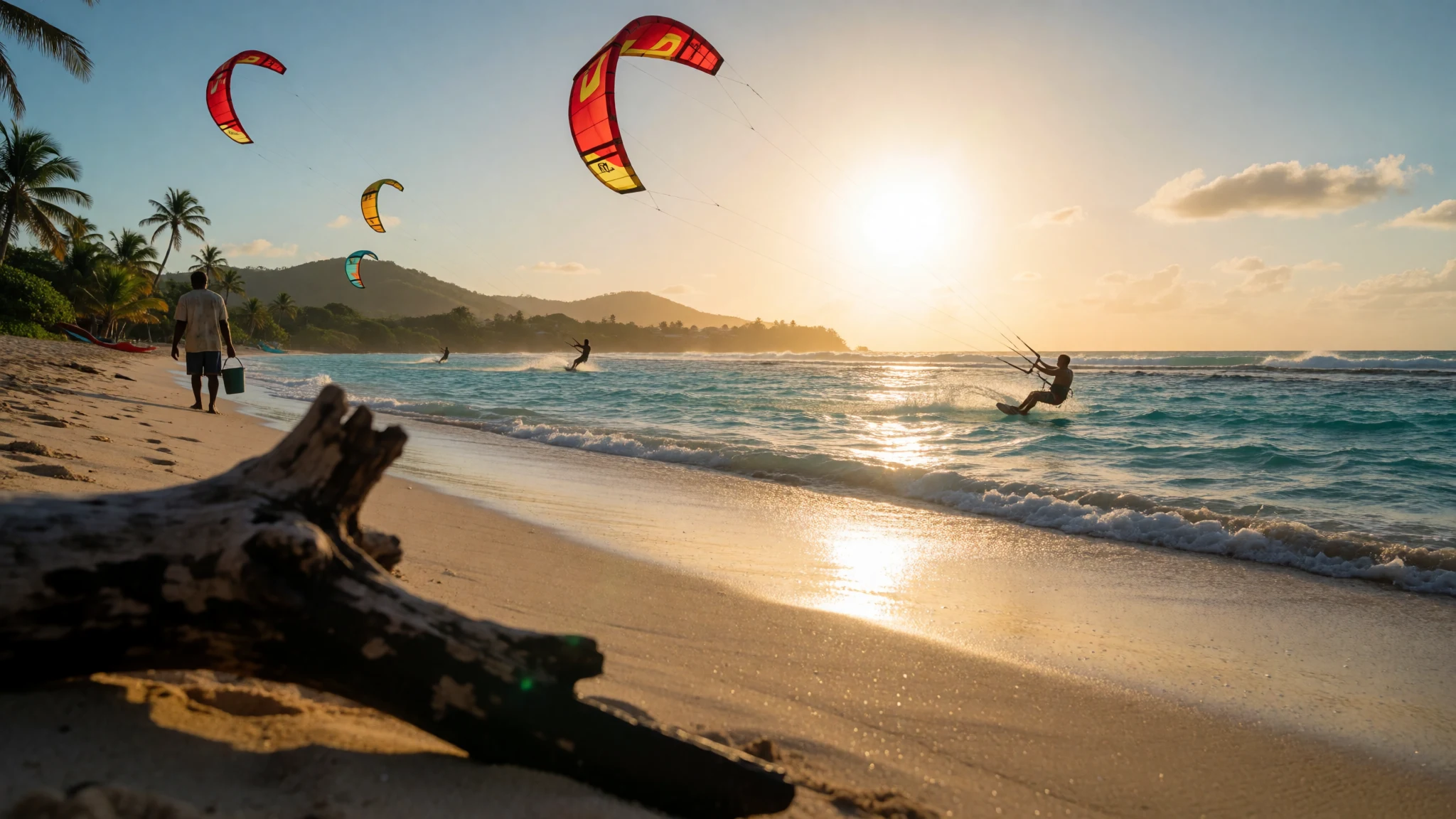
Cabarete is a small Dominican beach town where steady wind and reef waves draw kitesurfers, windsurfers and surfers, with local food just inland.
The place
Cabarete is a town on the north coast of the Dominican Republic, in Puerto Plata province. Wikidata gives it a population of 4,094 and an elevation of 12 metres, so this is a small, low-lying place whose fame is out of proportion to its size. It is also tagged as a kitesurf spot, which sums up its purpose. Life runs along one road, Camino Cinco, which locals call Calle Principal, with the beach on one side and shops, bars and eateries on the other. Puerto Plata airport is about 18 km away.
The coast splits into three zones, each with its own character. Cabarete Bay is the windsurfing water. Bozo Beach, the north-western half of the bay, and Kite Beach, further along, are where kitesurfers launch. Kite Beach is flatter but has a smaller play area because the reef lies close to the sand; Bozo Beach is choppier and gives more open water. Around 33 schools share the bay and Kite Beach, and the wind is reported to blow on about 300 days a year, which explains the amount of gear and the number of instructors on the sand.
Behind the beach the surroundings take in mountains and lagoons, though most days are spent on the water or in the cafés facing it. The mood is casual and international: sunburnt instructors, long lunches, music after dark. Midday is hot, so shade and water matter more than the sea breeze suggests.
Its story
Cabarete's recorded history begins in 1835. That year the merchant Zephaniah Kingsley set up the settlement on land he held as an estate called Mayorasgo de Koka. Kingsley had built his fortune in Florida, and he arrived with his mixed-race family and 53 people he had freed from his plantations there. The move took place while Jean Pierre Boyer was running the island's government. Kingsley later brought a further 100 enslaved people to the colony.
His wife, Anna Kingsley, kept a beach cottage close to the harbour. The family left a lasting trace: descendants of the Kingsleys, and of the people who were freed, still live in the area. It is an unusual thread for a surf town, and it sits quietly beneath the tourist layer that most visitors see.
The newer chapter is about air and water. Steady wind and reef-sheltered water turned the bay into a base for windsurfing, then kitesurfing, while nearby Playa Encuentro became known for surfing. Paddleboarding and wing foiling joined in more recently. The bay has hosted international windsurfing world-cup events and a multi-sport competition called Master of the Ocean, which counts wing foiling, paddleboarding, kitesurfing, windsurfing and surfing together.
So Cabarete has two histories that rarely meet in conversation: a nineteenth-century settlement of freed families, and a late-twentieth-century boom built on wind. Both are visible if you know where to look, one in the neighbourhoods and family names, the other on every stretch of sand.
What to see
- Cabarete Bay — Town centre, along Camino Cinco
Cabarete Bay is the windsurfing end of town, where rigs launch from the sand in front of the bars and schools along the main road. The reef shelters the inner water, which also suits beginners and paddleboarders. It is the stage for the town's international competitions. Check the day's wind with a school before booking a lesson.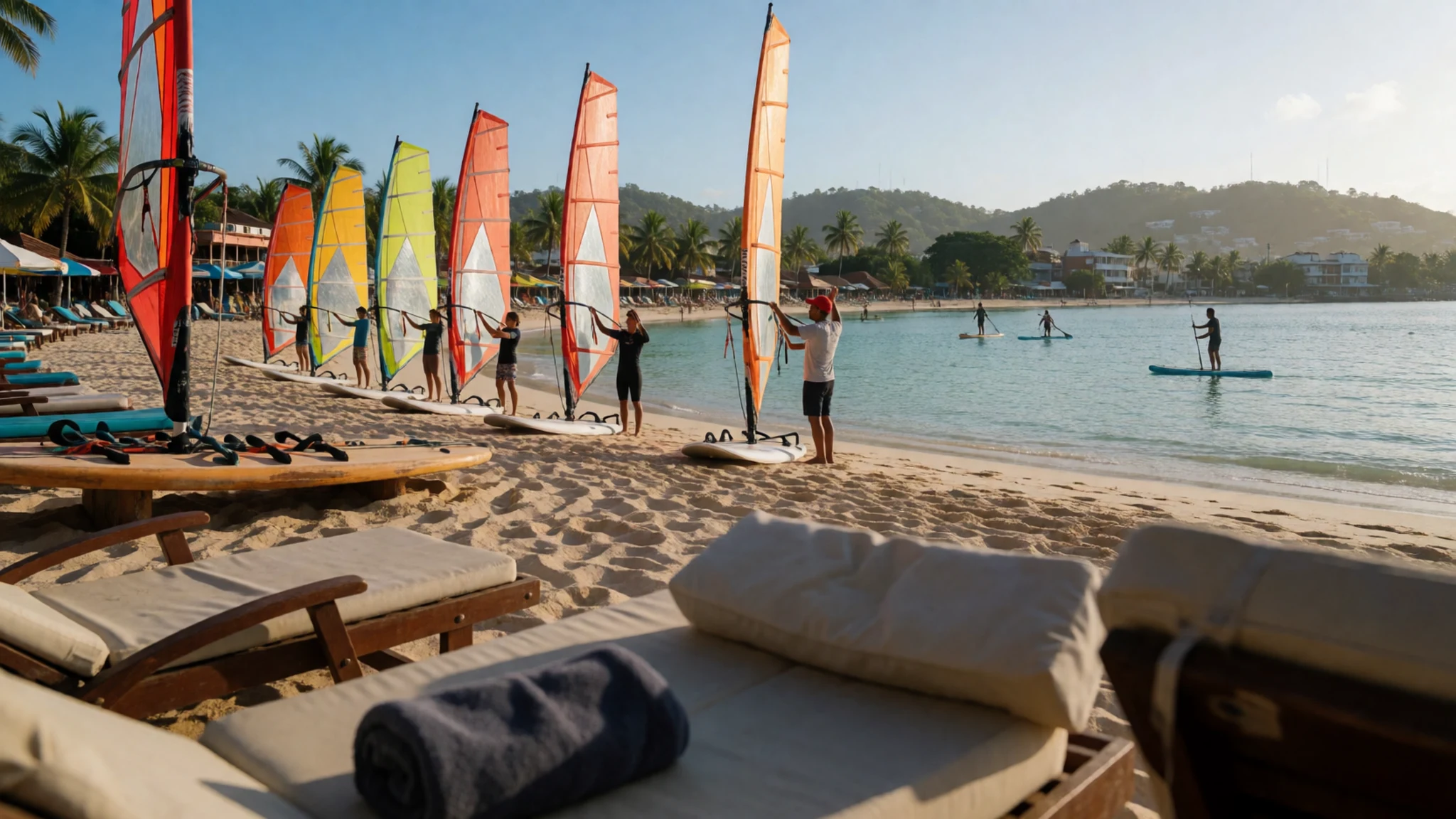
- Bozo Beach — North-western half of Cabarete Bay
Bozo Beach is the north-western half of the bay and mainly a kitesurfing spot. The water is choppier than at Kite Beach, but the reef sits further out, which leaves a wide open area to ride in. Waves break on the reef, so wave kitesurfing is possible. Less experienced riders should ask a school which end suits their level.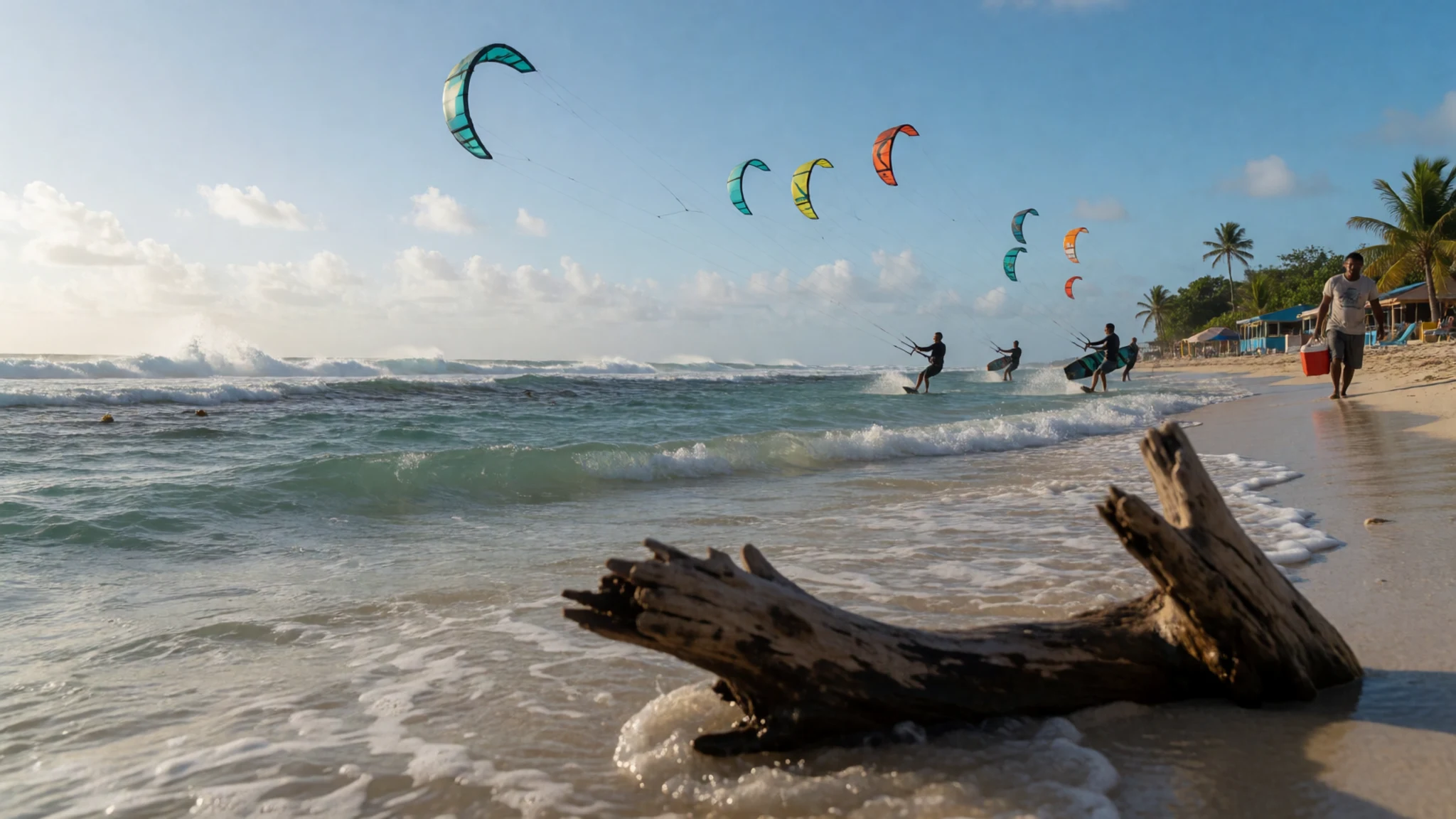
- Kite Beach — West of the town centre
Kite Beach lies a short way along the coast from the town centre and is home to several kitesurfing schools, including ones teaching to IKO standards. The water is flatter than at Bozo Beach, but the reef is close to the shore, so the riding area is smaller and crowded kites need care. Watching from the sand is rewarding too.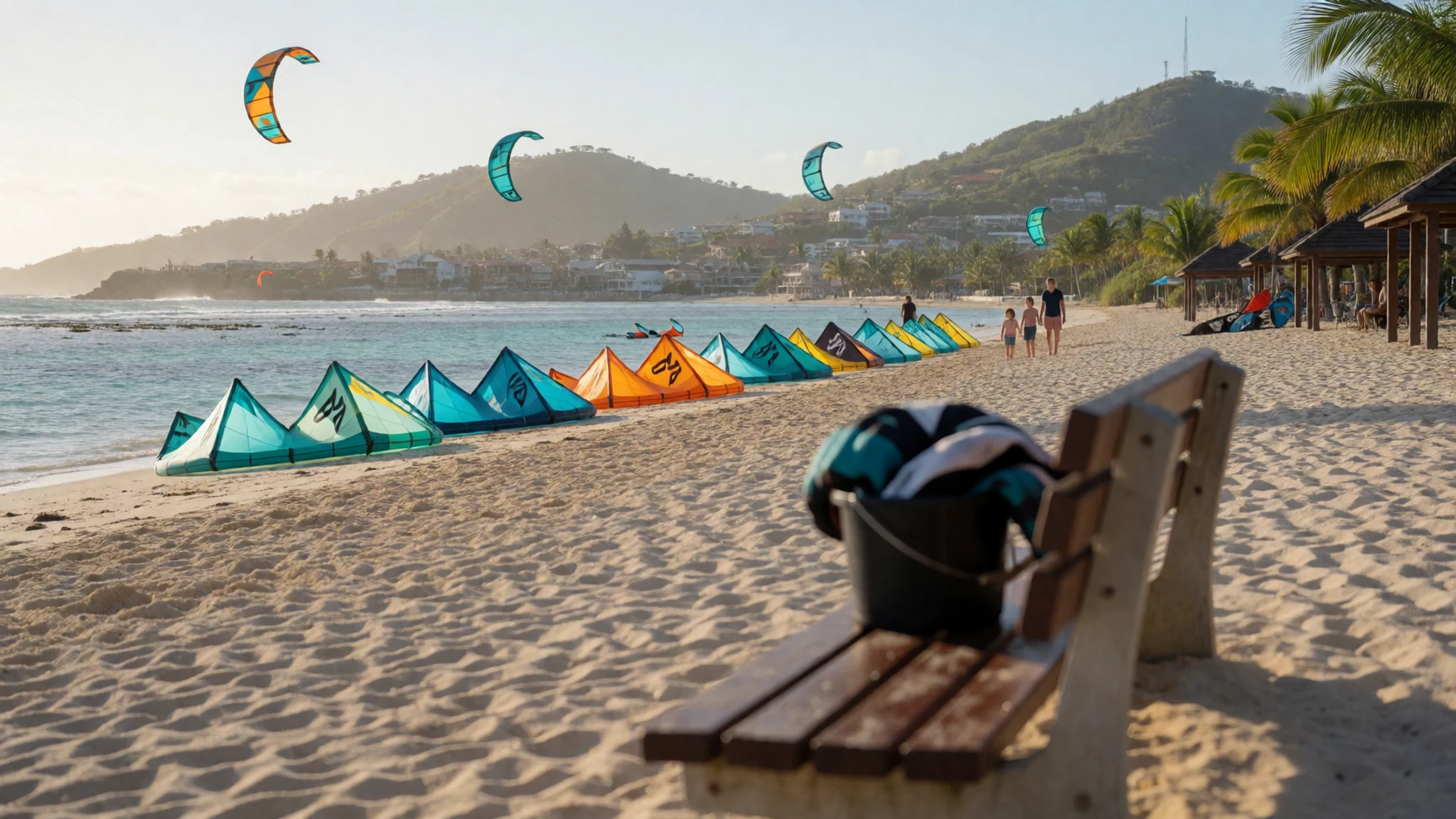
- Playa Encuentro — West of Cabarete, along the coast
Playa Encuentro is about 6 km from the town centre and is the surfers' beach. It is described as having waves on roughly 300 days a year, with five main breaks, so beginners and experienced surfers can each find a suitable spot. Several schools there give lessons and rent boards. A short taxi ride gets you there.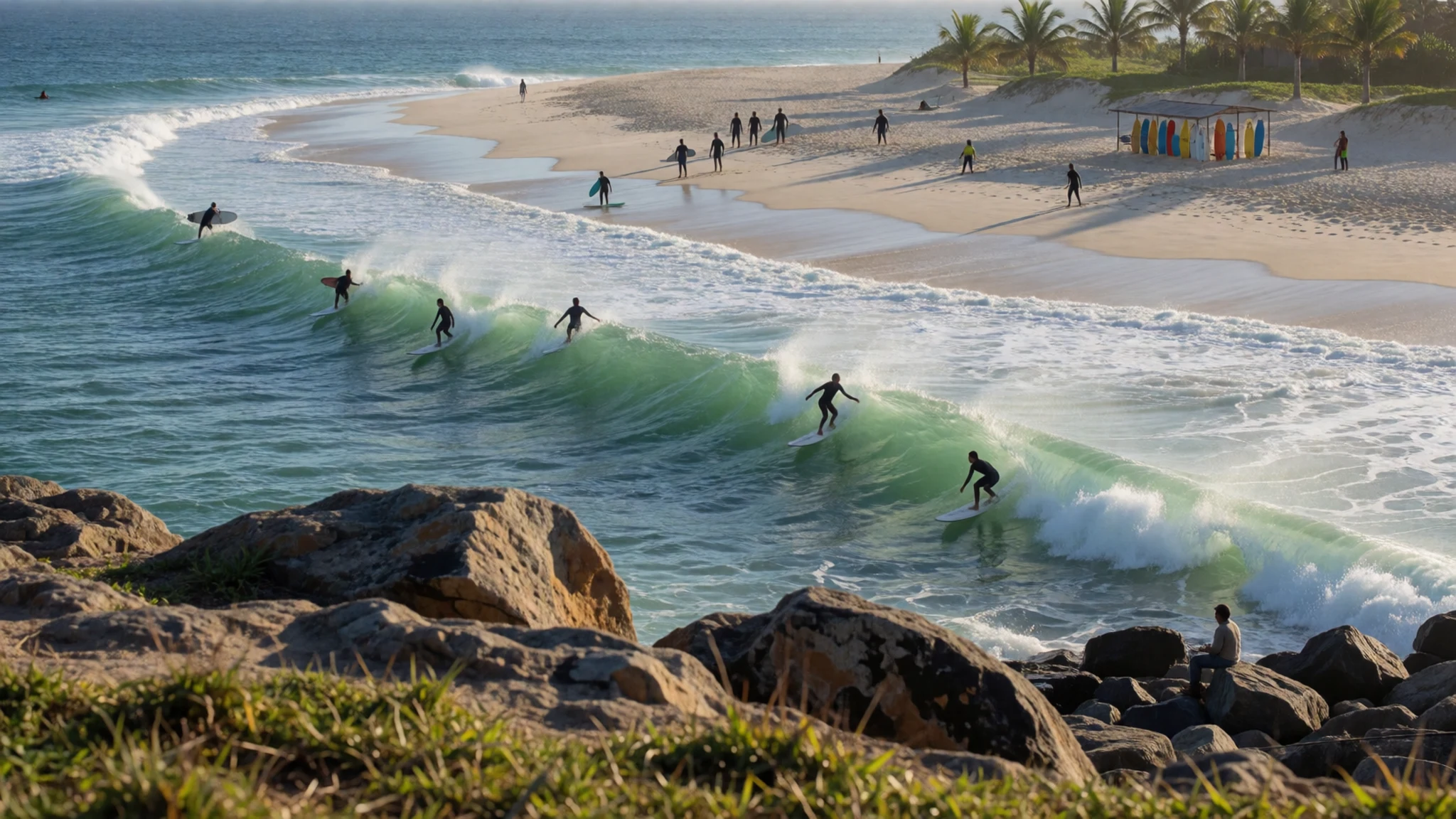
- Stand-up paddleboarding on the reef — Inside and along the reef off Cabarete Bay
When the wind drops, stand-up paddleboarding takes over. The flat water inside the reef is calm enough for first attempts, while experienced paddlers can ride the waves that break on the reef itself. Schools along the bay rent boards. A rest day on the water gives a very different view of the coast.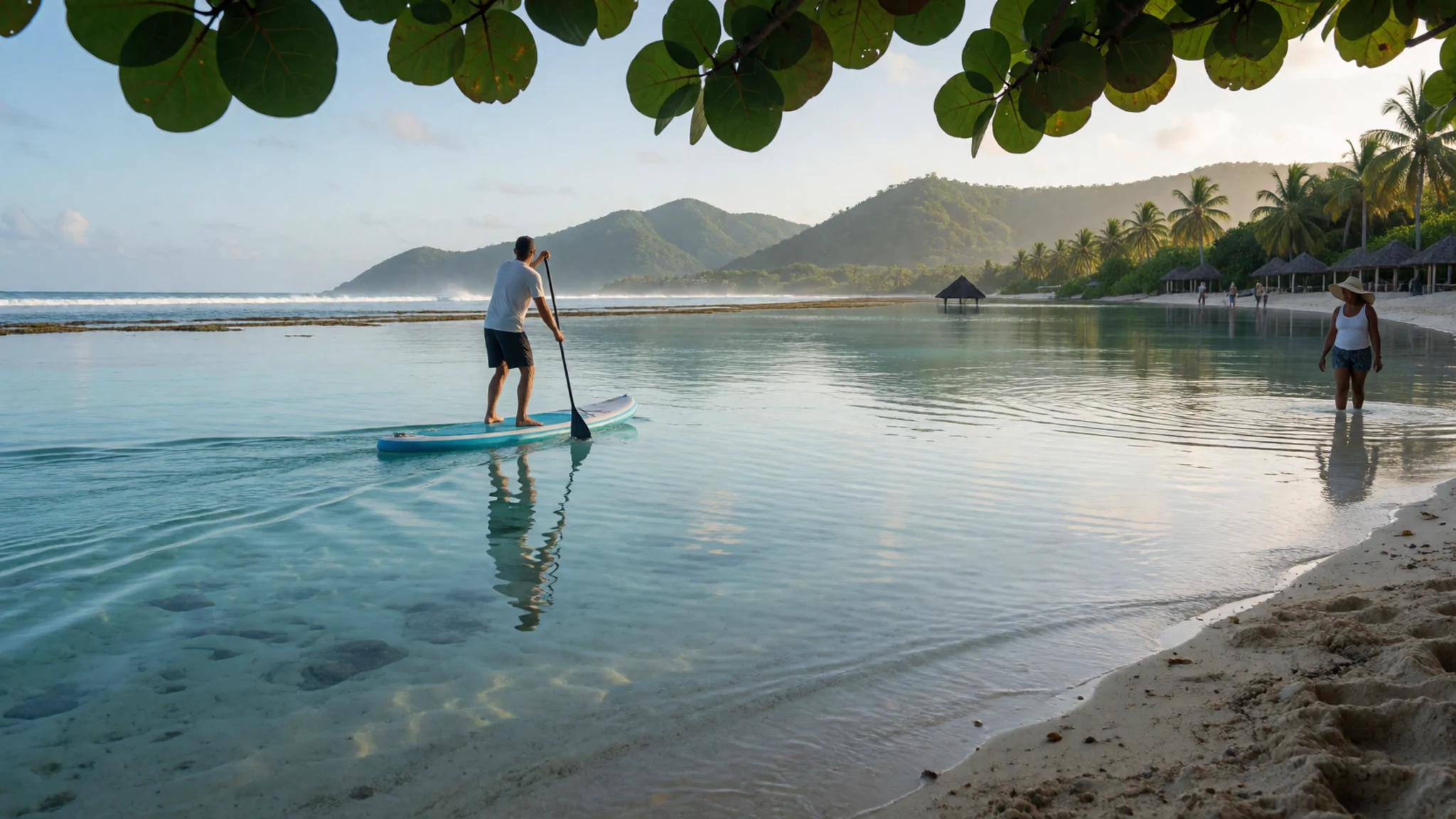
Culture
Cabarete's culture is two layers laid on top of each other. The first is Dominican: Spanish-speaking, Afro-Caribbean in its roots, and organised around family, music and long meals. The second is the international crowd of kiters, surfers and residents who have settled here, which is why several languages are heard along the beach road. The town's older story, the settlement founded by freed families in 1835, explains part of that Afro-Caribbean heritage, and descendants of those families still live in the area.
Day-to-day local life happens a street back from the sand: corner shops, neighbourhood eateries, domino tables and speakers playing merengue and bachata. Sport is a kind of local identity too, with surf, wind and kite competitions bringing a regular international crowd. After dark the bars and discos along the main road fill with a mix of residents and visitors, and Presidente beer, Brugal rum and the herbal aperitif mamajuana are the usual drinks. Evenings are loud and sociable rather than formal.
Greet people with a friendly 'buenas' when you walk into a shop or eatery, and ask before photographing anyone.
What to wear
Cabarete has no costume of its own, so its traditional dress is the wider Dominican folk wardrobe, which appears at festivals, school events and dance shows. Women's folk dress is a full, ruffled skirt in bright cotton or printed fabric, often with a head wrap; men wear a white shirt, light trousers and a straw hat. Carnival costume in the Puerto Plata region leans on satin, bold colour and painted papier-mâché masks.
Day to day, people in Cabarete dress for heat and water. Board shorts, rash vests, sundresses, flip-flops and caps are the everyday look along the beach, and instructors often live in wetsuit tops. Locals tend to smarten up for an evening out, with pressed shirts, jeans or dresses, rather than going out in beachwear.
Visitors should pack light cotton or linen, a wide-brimmed hat, sunglasses and strong sun protection. A rash vest helps on kite and surf sessions, and water shoes are useful where reef lies close to shore. Put a shirt or cover-up on when leaving the beach for shops or eateries. A light layer is handy for breezy evenings, and shoulders and knees should be covered when visiting a church.
What to eat
- La Bandera Dominicana — Locally owned eateries on Camino Cinco and in the neighbourhoods behind it
The national lunchtime plate: rice, beans and a portion of meat, often with a salad or fried plantain on the side. It is filling, cheap by beach-town standards and consistent from place to place. Eat it where locals do, at simple eateries on the main road.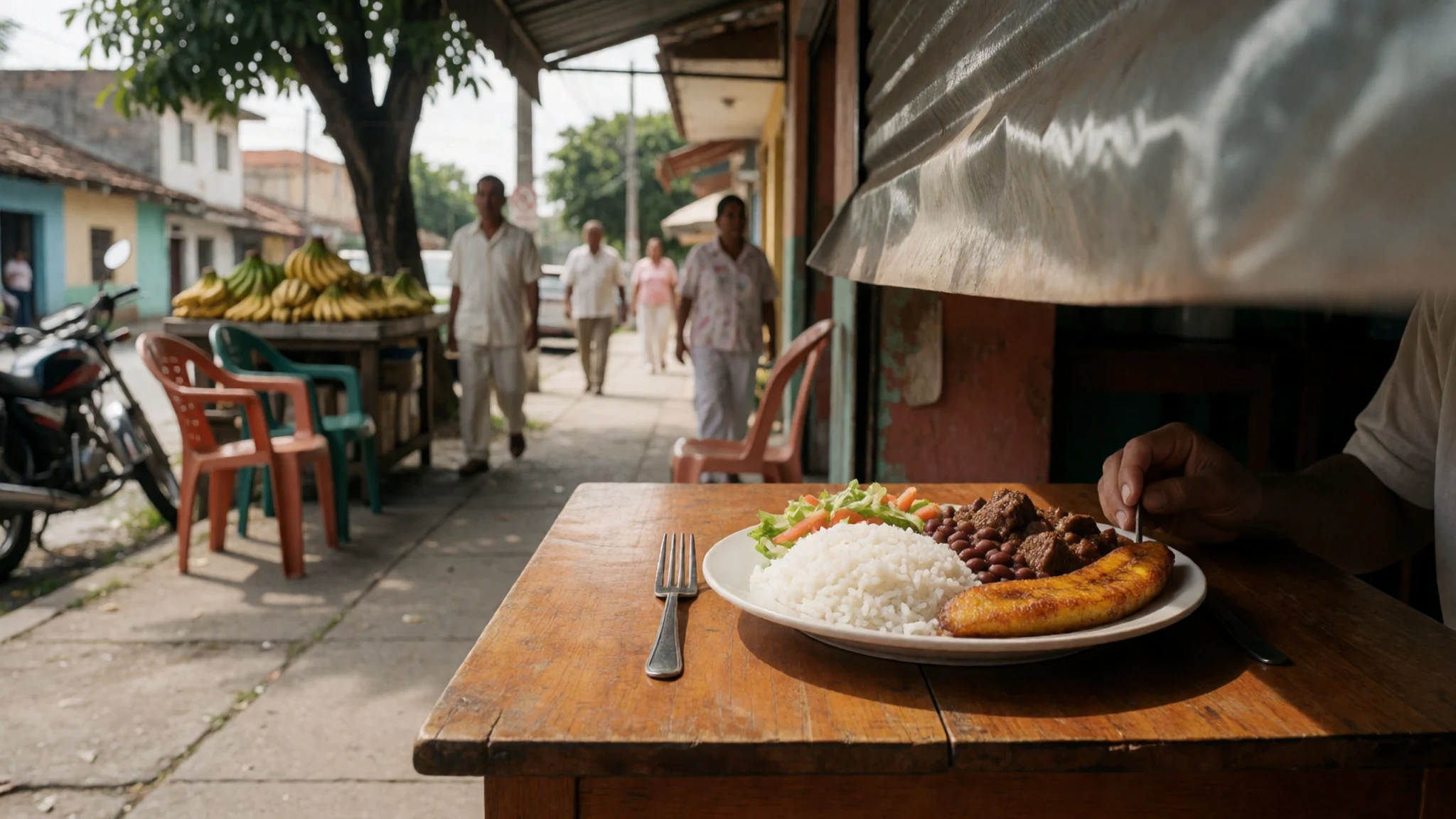
- Pica pollo — Local eateries on the main road and in residential streets
Crisp fried chicken, the standard comfort food of the island, usually served with tostones or fries. Portions are generous and it is easy to share. Locally owned places do it best, and it is rarely found on the beachfront itself.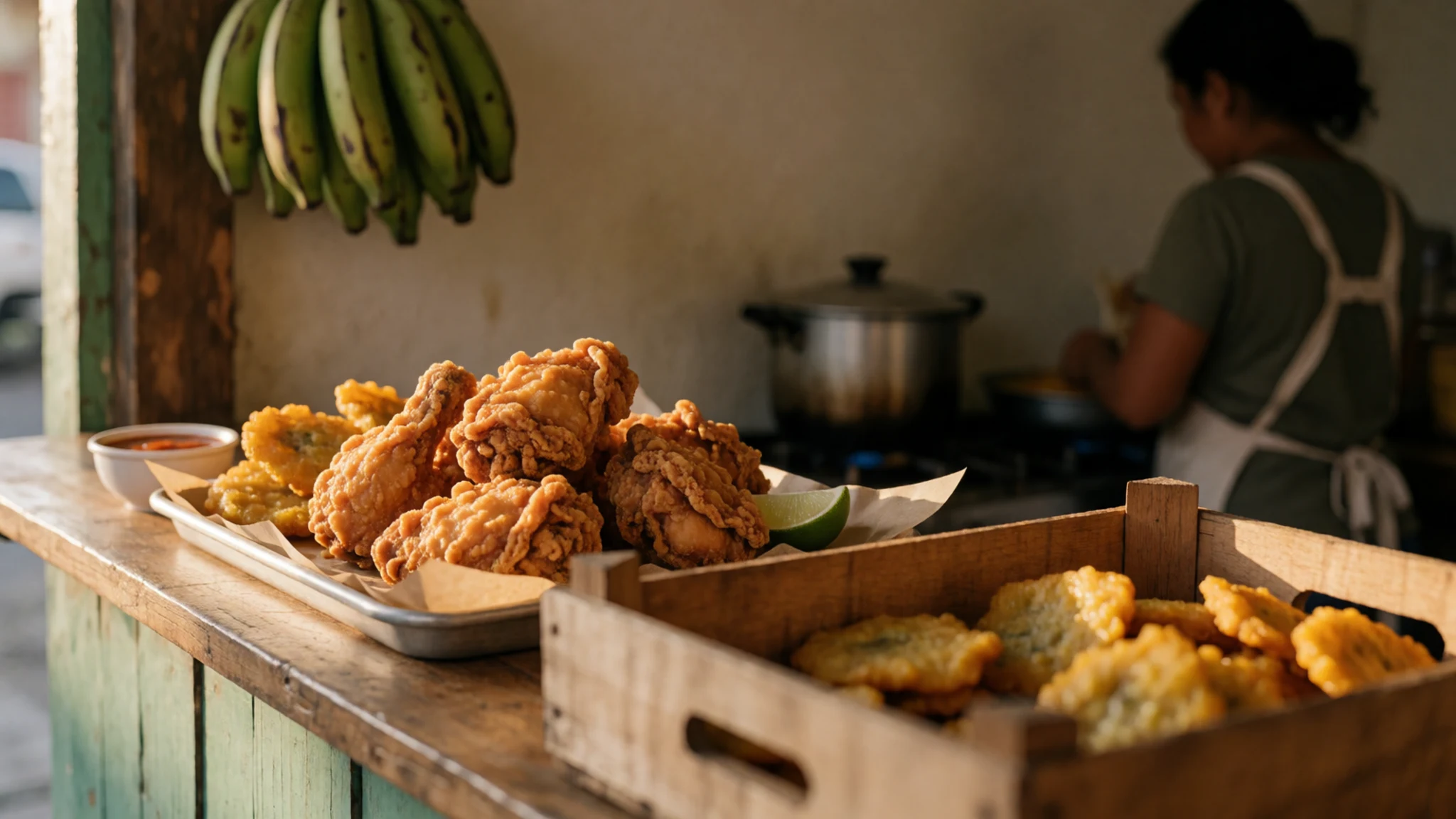
- Mangú — Breakfast counters and family-run cafés away from the beach
Mashed boiled plantain, soft and slightly sweet, usually served at breakfast with fried cheese, salami or eggs and pickled onions. It is a good start before a morning on the water, and a staple in homes and simple cafés alike. - Sancocho — Neighbourhood eateries, especially at weekends or on festival days
A thick meat-and-vegetable soup that is traditionally kept for special occasions, so it is not always on the menu. If a neighbourhood eatery is cooking it, order it with rice. It is heavy, slow-cooked food that rewards a long lunch. - Fried fish — Beachfront restaurants and simple local eateries
Whole fish fried until crisp and served with rice, salad and plantain. Beach restaurants offer the best views, though they are often foreign-owned and dearer, while local eateries serve it plainly and for less. Ask what came in that day. - Mamajuana — Bars and restaurants along the main road
A locally made aperitif, a mix of rum, wine and honey steeped with bark and herbs, served after meals at many restaurants. Sweet, strong and slightly medicinal in flavour, it is best taken in a small glass. Presidente beer and Brugal rum are the other local staples.
Plan it
Best time. January to March for drier, less humid days, and July and August when kiters look for the strongest wind, though those months are hotter and fall in hurricane season, so check forecasts. The wind is reported on about 300 days a year, so most months are workable for water sports.
How long. 3–5
Getting there. Fly to Puerto Plata airport (POP), about 18 km away, then take a taxi along Camino Cinco. Santiago airport (STI) is the alternative, with a longer taxi ride, or a bus to Sosua followed by a shared minibus (gua gua) towards Cabarete. If you arrive at night, ask the driver to go through Puerto Plata rather than over the mountain road.
Budget. mid
Tips
- Agree the taxi fare for the whole car before you set off, and check fares into Puerto Plata, Santiago and Santo Domingo before booking flights.
- Book kite or surf lessons a day ahead in busy months, and ask the school which beach has the best conditions that day.
- Eat inland: locally owned eateries on the main road and in the neighbourhoods tend to be cheaper than foreign-owned beachfront restaurants.
- Carry some Dominican pesos for local eateries, shared minibuses and small shops.
- Drink bottled or filtered water, wear strong sun protection, and call the airline on the day of departure to confirm your flight time.
Etiquette
- Greet people with 'buenas' when you enter a shop or eatery.
- Ask before photographing local people.
- Give kiters and windsurfers plenty of space on the beach, and ask a school before launching your own kite.
Nearby
Sources
- Wikidata Q459919 (CC0)
- Wikipedia: Cabarete (rev 1373548413) (CC BY-SA 4.0)
- Wikivoyage: Cabarete (rev 5385987) (CC BY-SA 4.0)
- Photo: Cabarete, Dominican Republic — Alex Proimos (CC BY 2.5)
- Photo: People in Cabarete, Sosua, Dominican Republic beach (CC0 1.0)
- Photo: Physical Location map Dominican Republic — Alexrk2 (CC BY 3.0)
- Photo: Cabarete nightlife, Ocean Manor resort — Sandra Cohen-Rose and Colin Rose (CC BY 2.5)
- Photo: Kitesurfing Cabarete — Loupiot77 (CC BY 3.0)
- Photo: Kitesurfer am Strand von Cabarete — Reimar Hoven (CC BY 3.0)
- Photo: Hotel Alegria in Cabarete — Brent (CC BY 2.5)
- Photo: Cabarete, Dominican Republic — Miguel Montojo M. (CC BY 3.0)


