Las Terrenas
Las Terrenas, Dominican Republic
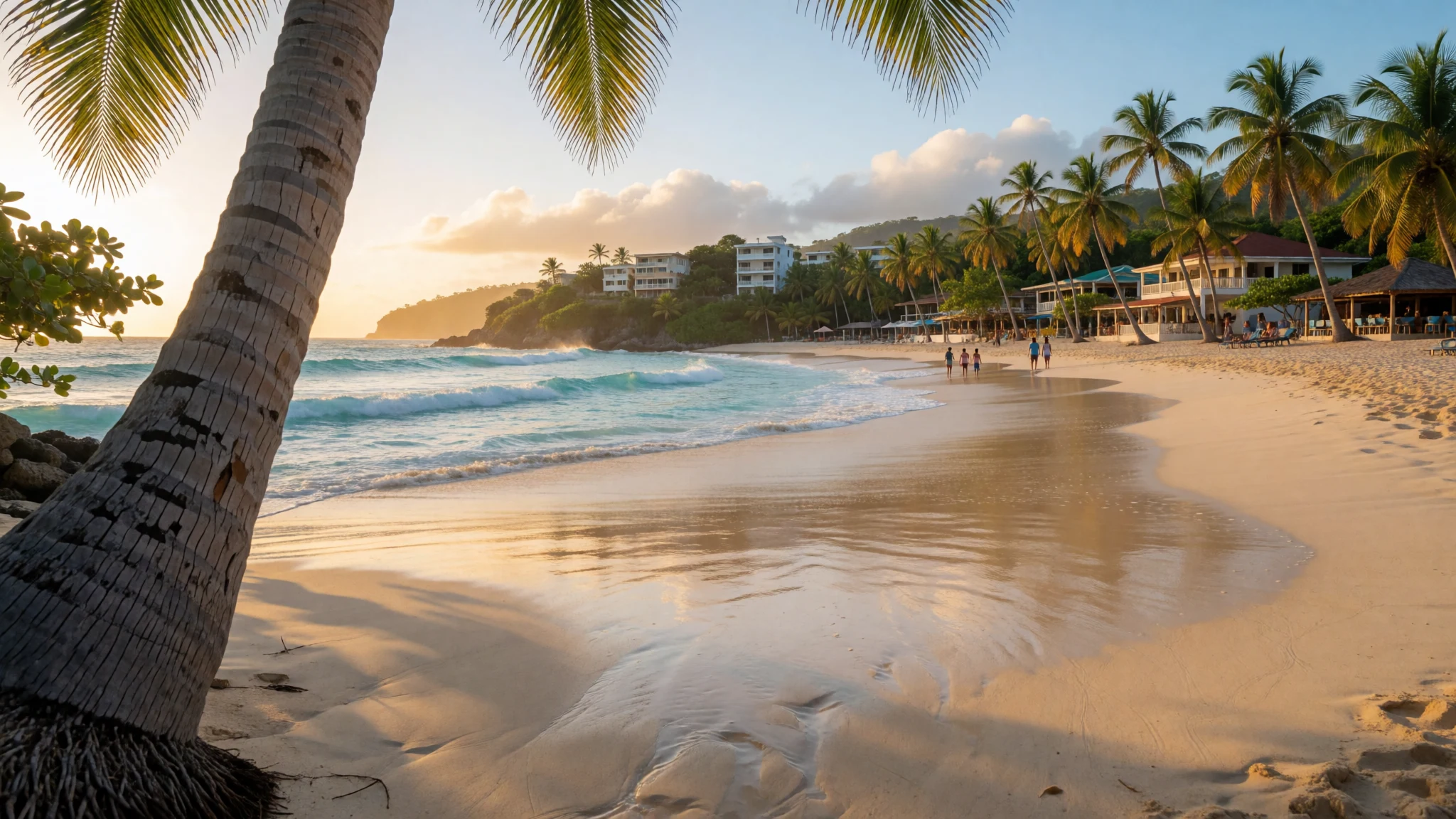
Las Terrenas is a relaxed palm-fringed beach town on the Samaná Peninsula, where small guesthouses and local life matter more than big resorts.
The place
Las Terrenas sits on the north coast of the Samaná Peninsula, in the far northeast of the Dominican Republic. About 19,000 people live here, at roughly 17 metres above sea level. The town is a loose grid of streets behind a run of palm-lined beaches, with a small river reaching the sea near the centre and dividing the older fishing quarter from the busier tourist streets. Most lodging is modest in scale: guesthouses, apartments and cottages a short walk from the sand, rather than the large all-inclusive complexes associated with Punta Cana. That gives the town a lived-in feel. Dominican families on holiday share the beaches with visitors from Europe and North America, and Spanish carries most conversations, though French and some Haitian Creole are heard in shops and bars. Much of the population is of Afro-Caribbean descent. The peninsula was remote for a long time. A highway from Santo Domingo, finished in 2012, cut the drive to about two hours, and building has moved quickly since. High season runs roughly from December to March, when prices rise and the main beaches fill by midday. Outside those months the town is quieter but stays open. Heat is constant, the sea is warm, and the pace is unhurried. The centre is easy on foot; for the farther beaches, locals use motoconchos, small motorbike taxis, and visitors can do the same.
Its story
Las Terrenas began as a small, isolated fishing settlement on a coast with no road link to the rest of the country. In 1946 the government of Rafael Trujillo moved rural families here to work as farmers and fishermen, and that resettlement is the usual date given for the modern town. The name is generally traced to a French term for a landowner, a reminder that French speakers arrived and stayed. They were not the only newcomers. The wider Samaná area carries layers of Taino, Spanish, West Indian and African ancestry, and the mix shows in the food, the music and the languages heard in the street. For decades the peninsula stayed cut off by its mountains, which kept the coast quiet and the fishing economy intact. The change came with better roads and, above all, the highway completed in 2012. Fishermen's cabins along the shore have gradually become bars, restaurants and small shops, and the beach front is now mostly given over to visitors. Fishing has not disappeared, though. Boats still go out from the river-mouth area, and the old fishing quarter keeps a character separate from the tourist streets. The town's story is therefore a recent one: a settlement planned from above, reshaped by foreign residents, and now run increasingly by its own entrepreneurs.
What to see
- Playa Las Terrenas — Town centre
The central beach runs along the heart of the tourist streets, with beach-front terraces and boats pulled up near the river mouth. It is the easiest place to start: shaded tables, calm water most days and constant foot traffic. It gets busy and a little commercial in high season, so mornings are better.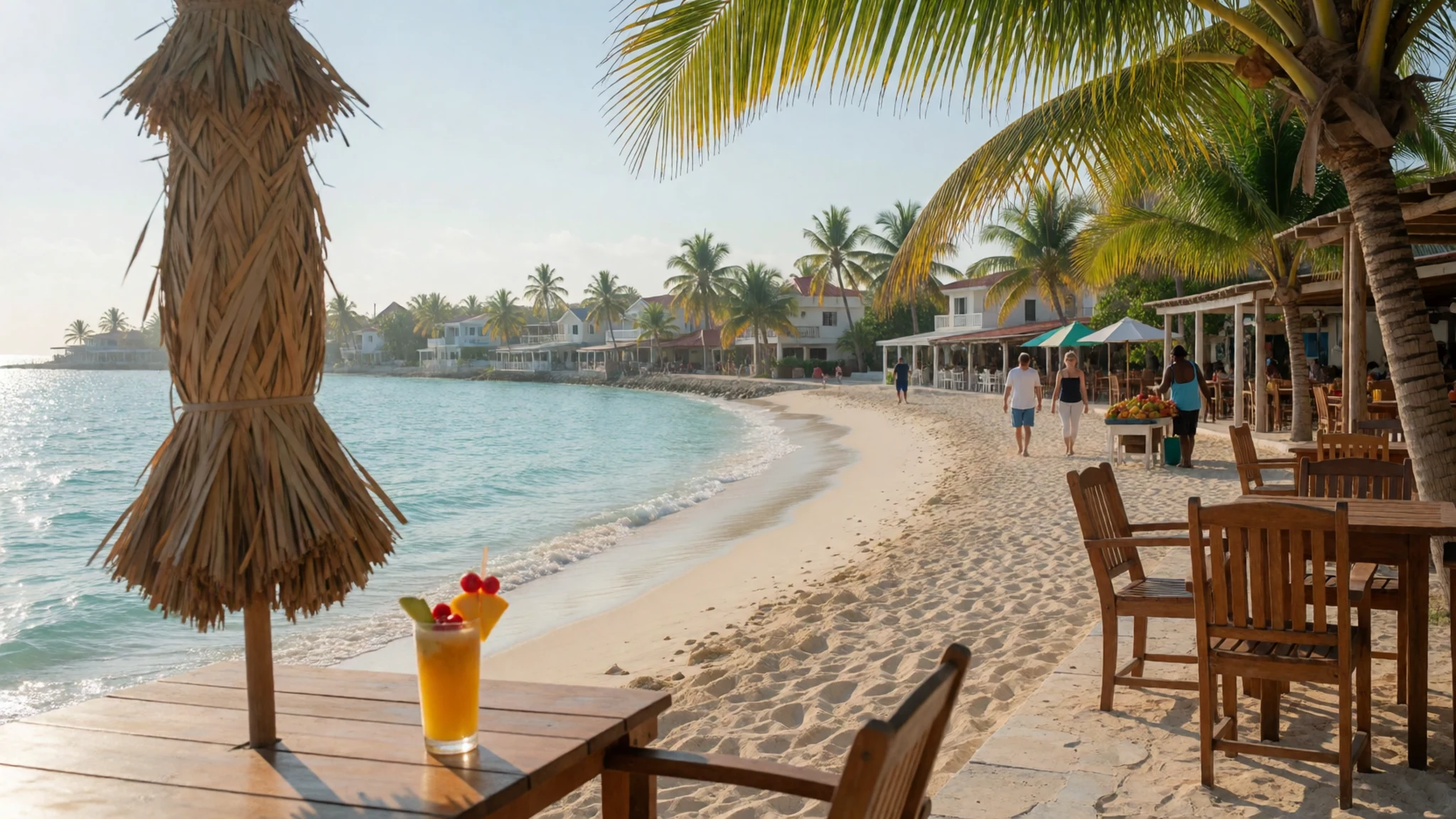
- Playa Bonita — East of the centre
Often the most talked-about beach in the area, Playa Bonita is a long, fairly straight stretch with waves good for playing in, and a calmer end for slower swimming. Reach it on foot along the coast or by a short motoconcho ride. Weekends bring local families, so expect music and company.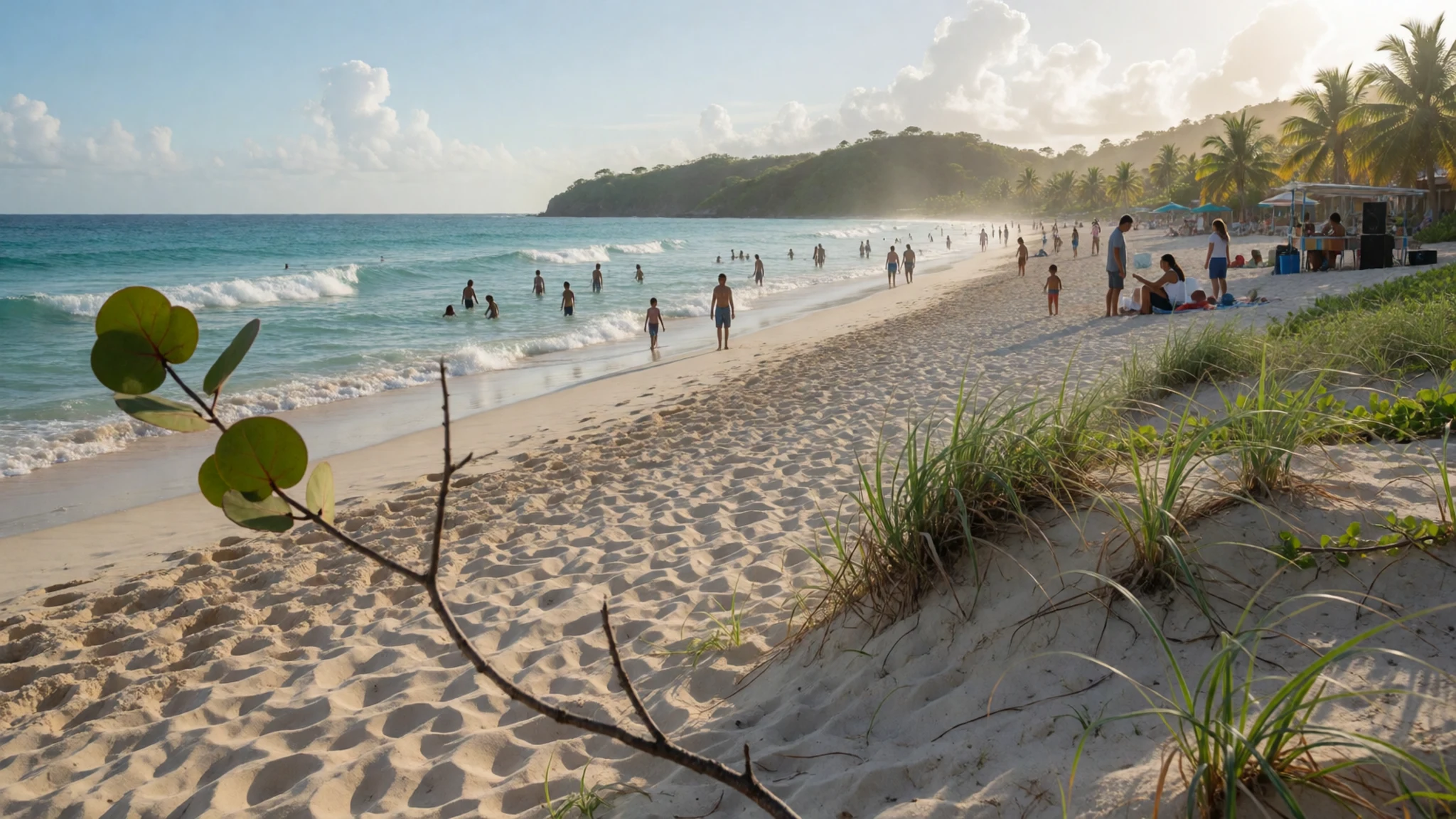
- Playa Escondida — Beyond Playa Bonita
A small trail from the far end of Playa Bonita leads to this quieter cove, whose name means hidden. The sand is wide and the crowds thinner, but shade is scarce, so bring a hat, water and sun protection. The trail is short but unsigned, so ask locally before setting off.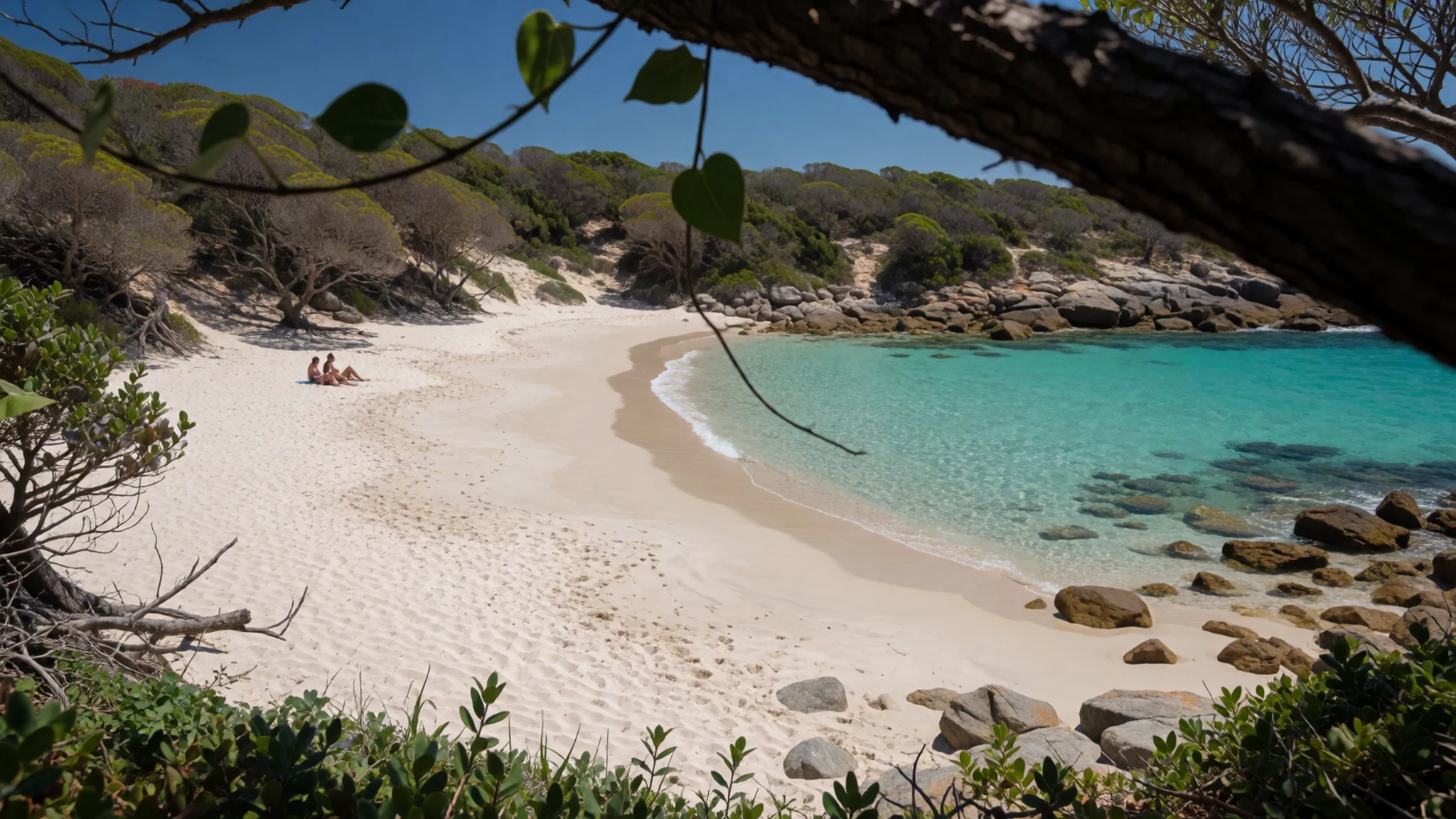
- Playa Las Ballenas — West of the centre
Just around the point to the west, this beach has broad sand, plenty of coconut palms and a calmer, more residential mood than the centre. It suits long walks and unhurried afternoons. A few beach bars sit near the point, and the water is usually gentle.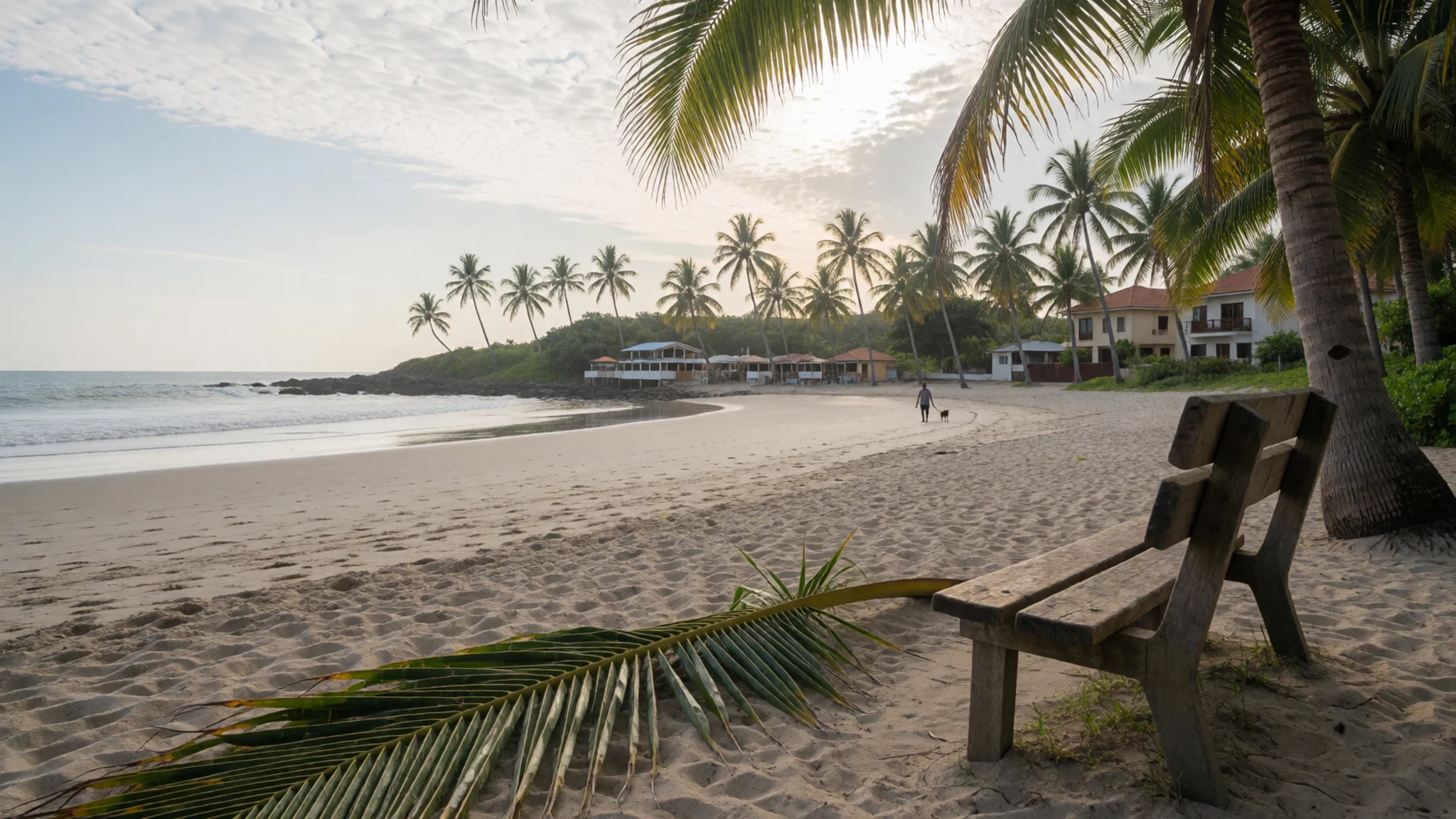
- Salto El Limón — About 20 km east, near the village of Limón
A group of waterfalls in forest, also called Cascada Limón, reached only by dirt trails on foot or on horseback from several starting points. The main fall drops into a swimming pool, with smaller ones nearby. Wear shoes with grip, expect mud after rain, and check current local arrangements for access and fees.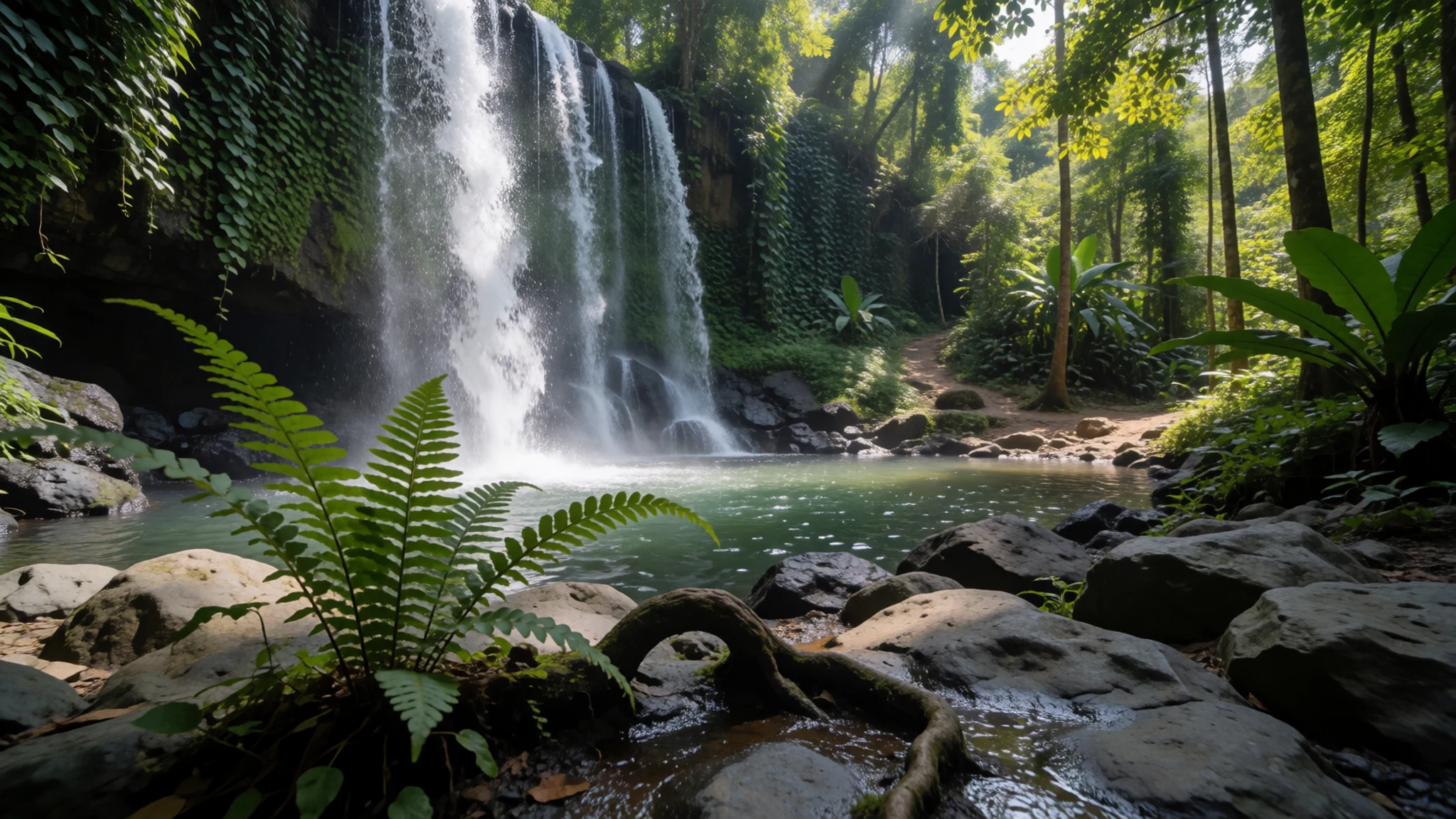
Culture
Las Terrenas has a culture shaped by the Dominican Republic's mix of Taino, Spanish and African heritage, with French and other European settlers adding to it. Everyday life is lived mostly in Spanish, with Haitian Creole present among part of the community and French and Italian often heard from long-term foreign residents. Music is everywhere: merengue and bachata spill from colmados (corner shops), bars and passing motorbikes, and dancing is a normal part of an evening rather than a performance. Family and neighbourhood ties matter, and greetings are warm; people usually say buenos días or buenas tardes when entering a shop or joining a queue. Religion is mostly Catholic, with strong evangelical communities, and saints' days and local festivals can close streets for processions or music. The town's character is split between the older fishing quarter, where work still follows the tides, and the tourist streets, where bars and restaurants set the rhythm. Baseball is the national passion, and a match on a local field draws a crowd. Pace of service is relaxed, and patience goes further than insistence. Politeness is valued, so a greeting before any request is expected. Greet people with a friendly buenos días or buenas tardes before asking for anything, and ask before photographing individuals, especially fishermen and children.
What to wear
Las Terrenas has no single everyday costume. The Dominican Republic's traditional dress appears mostly at festivals, carnival and folk dance shows, where women wear wide, ruffled skirts in bright cotton and men wear light shirts and straw hats. Carnival costumes, with elaborate masks and bold colours, are the best-known textile tradition in the country, and the Samaná area has its own local celebrations. In daily life, people dress for heat: shorts, sundresses, loose cotton shirts, flip-flops and sandals, with football shirts and baseball caps common among men. Locals often dress up a little for church, for evenings out or for dancing, and beachwear stays near the beach. Visitors should pack light, breathable fabrics, a wide-brimmed hat, sunglasses and high-factor reef-safe sun protection, since the sun is strong all year. Swimwear is fine on the sand, but a shirt or wrap over it is more polite in town, in shops and in restaurants. Sandals suit the beaches, while shoes with good grip are better for the muddy trails to the waterfall. A light rain jacket helps in wetter months, and a light layer is useful for air-conditioned coaches. For church visits or local celebrations, cover shoulders and knees.
What to eat
- Pescado frito — Beach-front eateries and the fishing quarter near the river mouth
Whole fried fish, usually served with tostones, rice and salad, is the town's signature meal. The catch comes from boats working this coast. Ask what came in that day, and expect to eat with your hands in simpler places.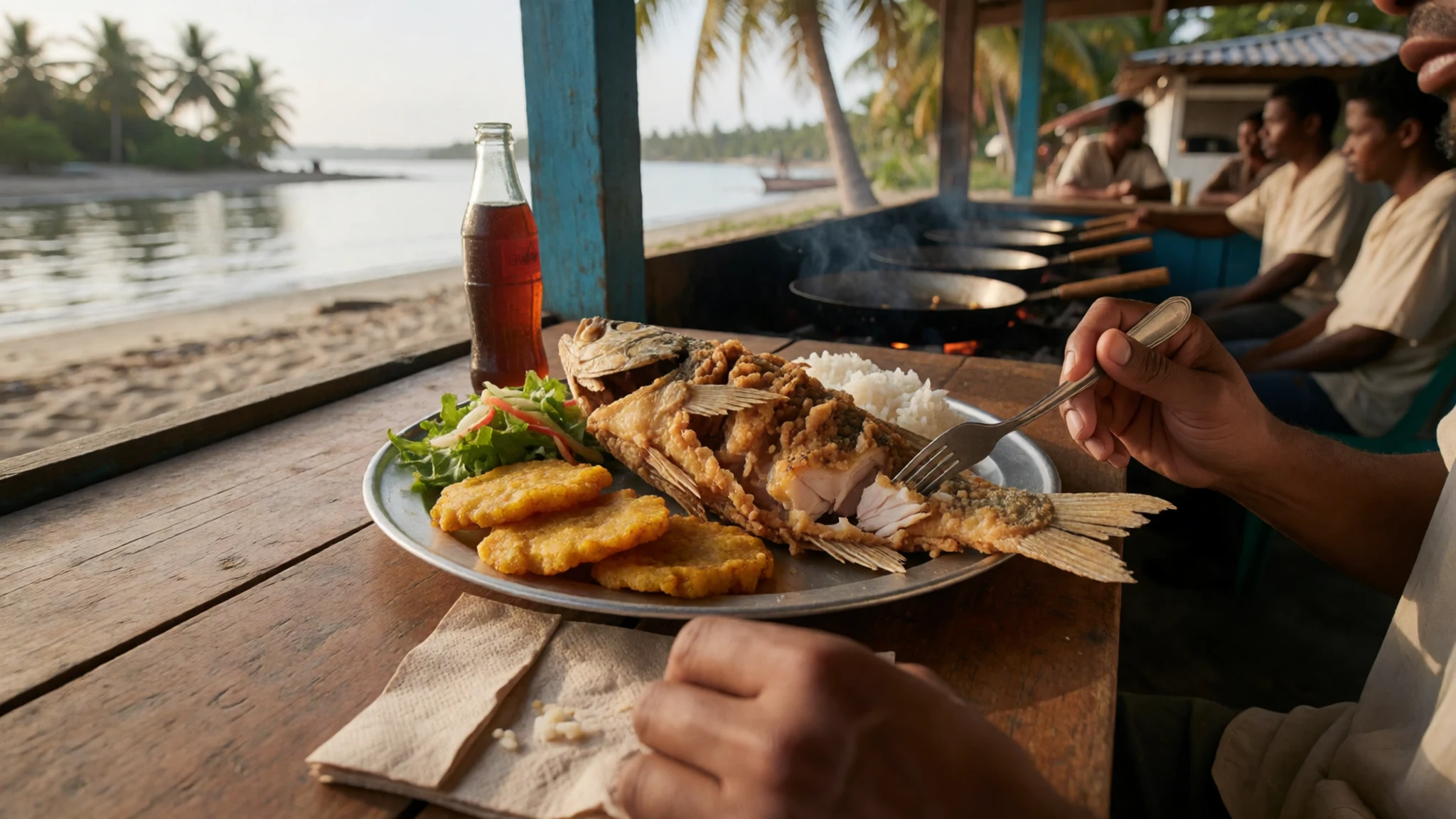
- Tostones — Any beach restaurant or roadside stall
Twice-fried green plantain slices, flattened and salted, served as a side to fish and meat or as a snack with a dip. They are crisp outside and soft inside, and they appear on almost every table in town.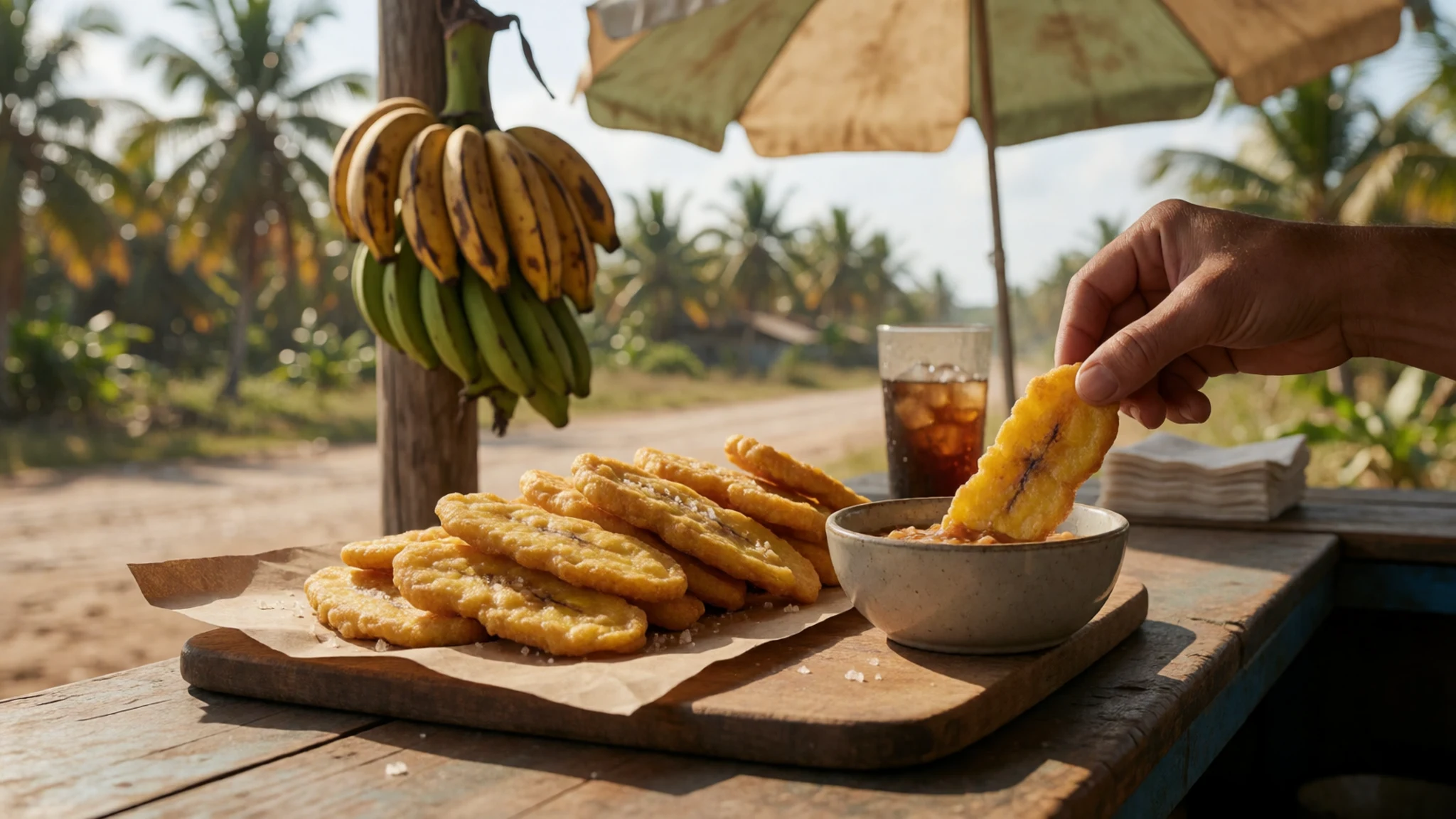
- La bandera dominicana — Small local eateries in the downtown streets
The everyday Dominican plate: white rice, stewed beans and a portion of meat or fish, often with salad. It is filling and cheap, and eaten at lunchtime in the simple cafés away from the beach. - Chimi burger — Street stands and burger carts in the town centre
A Dominican street burger, often topped with cabbage and sauce, sold from carts and small stands. Pulled-pork sandwiches and grilled meat share the same corners in the evening, and the stands are popular with locals. - Fresh fruit juice and fruit plates — Small cafés and juice counters in the downtown streets
Juices made to order from local fruit such as passion fruit, pineapple and papaya, and plates of cut fruit, make an easy breakfast or snack. Fresh coconut water from beach vendors is another cooling option on hot afternoons.
Plan it
Best time. December to March is the dry, sunny high season, with cooler evenings and the busiest beaches. April and May are quieter and still pleasant. Summer is hotter and more humid, with heavier showers, and the Atlantic hurricane season runs through autumn, so check forecasts before booking.
How long. 3–5
Getting there. Fly to Samaná El Catey International Airport (AZS), then take a pre-arranged transfer or taxi by road to Las Terrenas. Agree the fare before setting off. From Santo Domingo, an air-conditioned coach and local shared minibuses (guaguas) run to the town; check the operator for current times and fares.
Budget. mid
Tips
- Book lodging early for December to March, when the best-placed guesthouses fill
- Go to the main beaches in the morning, before the midday crowds and heat
- Carry some cash in pesos for small eateries, motoconchos and market stalls
- Drink bottled or filtered water and use strong sun protection
- Take a taxi or arranged transfer after dark rather than walking quiet beach roads
Etiquette
- Greet people with buenos días or buenas tardes before asking for anything
- Ask before photographing local people, especially fishermen and children
- Agree the fare before getting on a motoconcho or into a taxi
Nearby
Sources
- Wikidata Q1806486 (CC0)
- Wikipedia: Las Terrenas (rev 1373700563) (CC BY-SA 4.0)
- Wikivoyage: Las Terrenas (rev 5427290) (CC BY-SA 4.0)
- Photo: Las-Terrenas.jpg (UR3IRS) (CC BY 3.0)
- Photo: Dominican Republic relief location map (Alexrk2) (CC BY 3.0)
- Photo: Las Terrenas, Dominican Republic (mbosio) (CC BY 2.5)
- Photo: Pueblo-Pescadores-Las-Terrenas (Yoryi1997) (CC BY-SA 4.0)
- Photo: Parque Las Terrenas (reyperezoso) (CC BY-SA 2.0)
- Photo: Hotel en las terrenas (Yoryi1997) (CC BY-SA 4.0)
- Photo: Casa de Giles in Las Terrenas (rey perezoso) (CC BY-SA 2.0)
- Photo: Cocos nucifera Las Terrenas (Captain-tucker) (CC BY 3.0)


