Praslin
Praslin, Seychelles
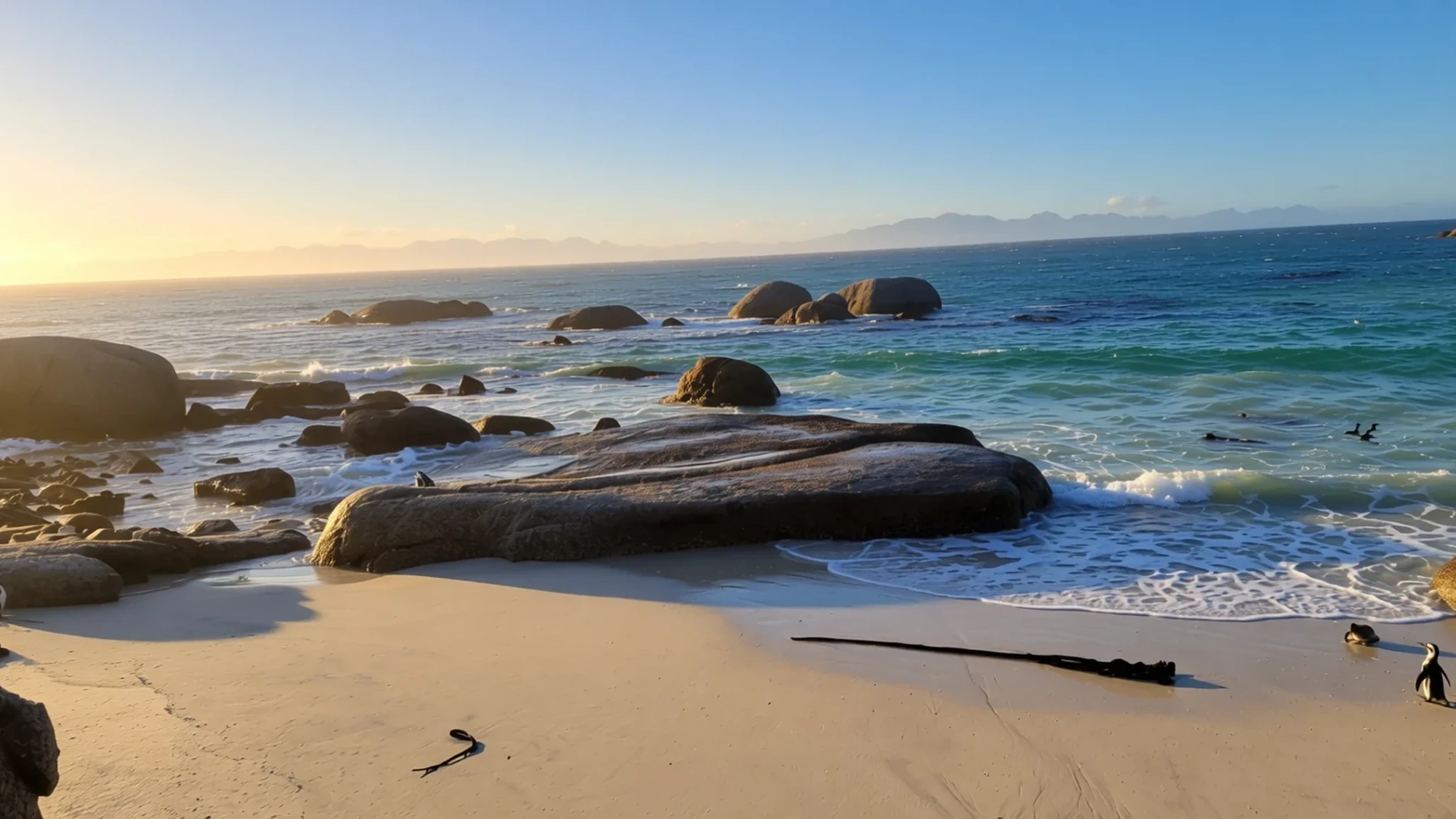
Praslin is granite coves, coco de mer forest and a slower pace than the busier Seychelles capital island.
The place
Praslin sits in the Indian Ocean among the inner islands of the Seychelles, a ridge of ancient granite that breaks into coves, headlands and a green interior. The coast folds into pocket beaches where pale sand meets grey boulders and takamaka and coconut palms lean over the water. The north holds the wide, boulder-framed curve of Anse Lazio, the quieter Anse Georgette and the long, shallow shelf of Côte d'Or, where the village life of Anse Volbert sits behind the beach; the far northwest tucks Petite Anse Kerlan among rocks; the south and west turn wilder, with Grande Anse taking the weather.
Inland, the island rises into hills rather than mountains, and the road that links Baie Sainte Anne in the east with Grand Anse in the west climbs and dips through forest. Baie Sainte Anne is the ferry harbour and the practical heart; Grand Anse is the other main settlement, with the airstrip nearby. Between them, Vallée de Mai holds a dense stand of coco de mer palms, their heavy double nuts hanging in the canopy, with forest birds moving through the understorey.
The sea around Praslin is clear over sand and patched with coral where the granite drops away. In the drier months the southeast trades put a chop on exposed shores and leave leeward coves calmer; in the wetter months showers come in bursts and the heat sits closer. The northern beaches fill when the weather is kind, then empty by late afternoon, while the interior stays quiet.
Its story
Praslin entered the written record through sailors who used the Seychelles as a stop on Indian Ocean routes. Arab and later European charts marked the islands before settlement. The French claimed the group and named this island for a noble house, Praslin, replacing an earlier name that only noted its palms. Coco de mer nuts had been washing onto distant beaches for ages and were sold as curiosities, yet the trees themselves grew here, and the French administration treated the nut as a controlled good.
Settlement on Praslin followed the wider islands: a small post, then coconut plantations worked by enslaved Africans and, after emancipation, by a Creole people of African, Malagasy, European and Indian origin. Church life, the Creole language and the coconut crop organised the days long before anyone came for a beach holiday. When Britain took the islands from France, flags changed faster than habits, and Seselwa remained the speech of kitchens and the harbour.
Independence left politics on Mahé. Praslin stayed an island of fishers, smallholders and, in time, guesthouses. The palm forest, once cut and raided, was set aside as a reserve and is now why many visitors walk inland. Tourism overtook copra, bringing jobs and a split between resort headlands and the older villages. Boats still leave Baie Sainte Anne for nearby islets, and the coco de mer is both an emblem of the islands and a tree in a narrow valley.
What to see
- Anse Lazio — north coast
Anse Lazio is the wide northern beach of Praslin, pale sand held between granite boulders and palms. Morning water is often calm enough for swimming and a little snorkelling among the rocks. By midday, shade under the trees fills with day visitors, then the bay thins towards evening. The headlands at either end are a short scramble. Shells and coral are best left in place.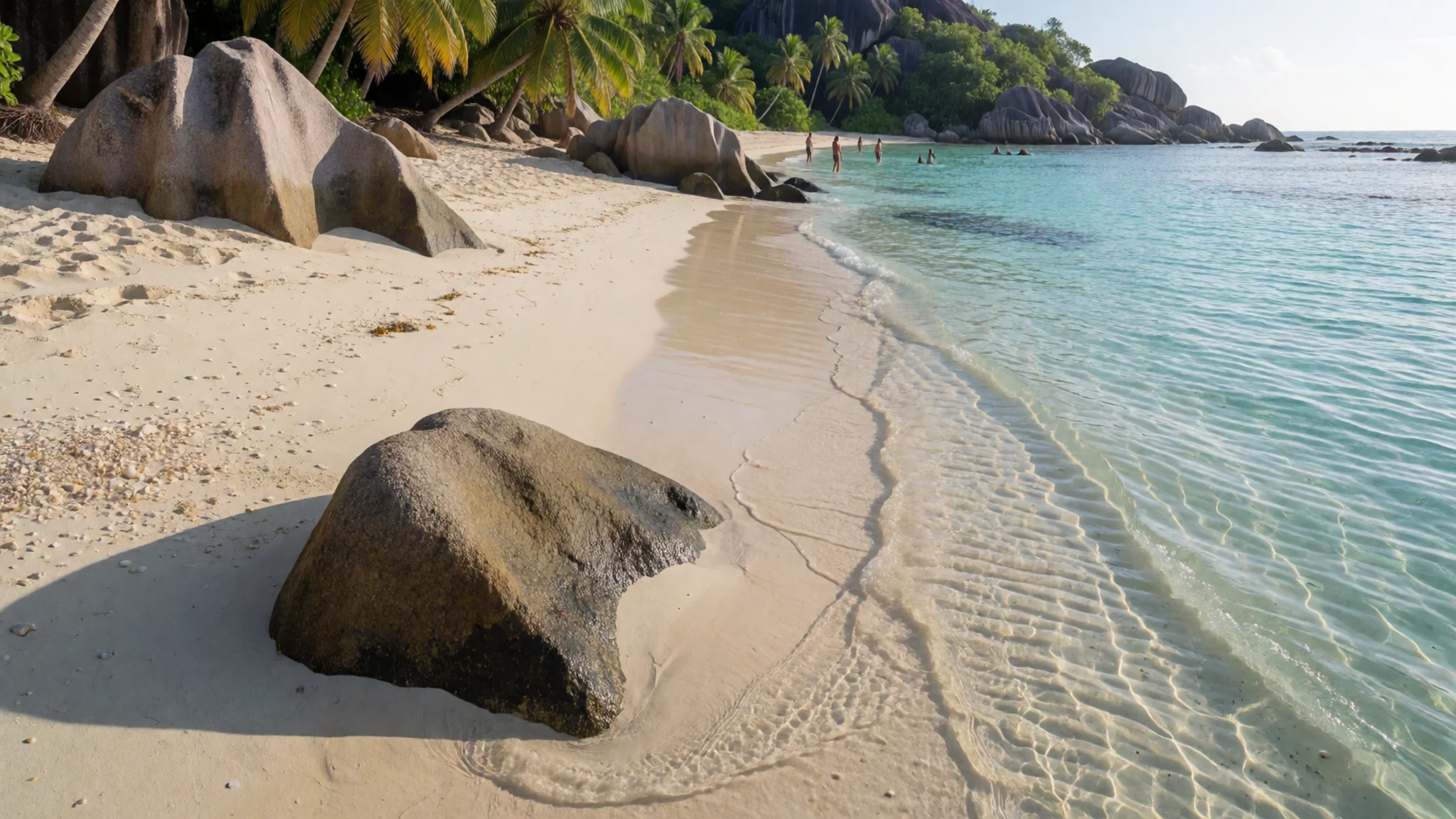
- Anse Georgette — northwest coast
Anse Georgette lies on the northwest shore of Praslin, a cove of sand and granite set off from the main coast road. The usual approach crosses the grounds of a resort on the headland, with the beach itself open to visitors. On a still morning the water is clear, and the side rocks suit a mask and snorkel. Shade is scarce, and a swim is the usual visit.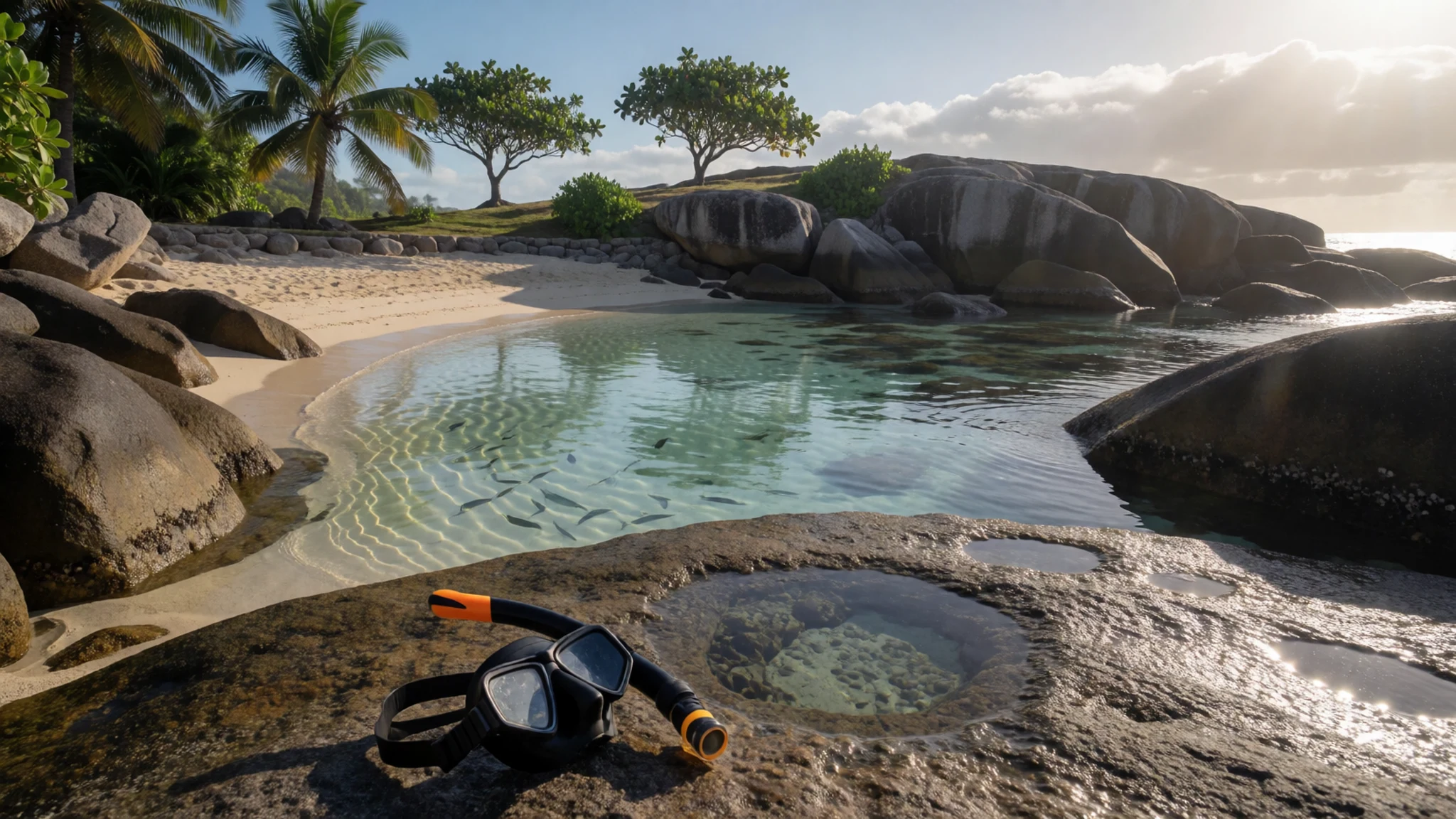
- Vallée de Mai — interior between Grand Anse and Baie Sainte Anne
Vallée de Mai is the palm forest in the interior of Praslin, a dense valley of coco de mer. Paths climb under a high canopy where female trees carry heavy double nuts. Black parrots and smaller birds work the shade, which stays cooler than the coast. A walk here fills much of a morning. Fallen nuts stay on the ground; taking one is illegal.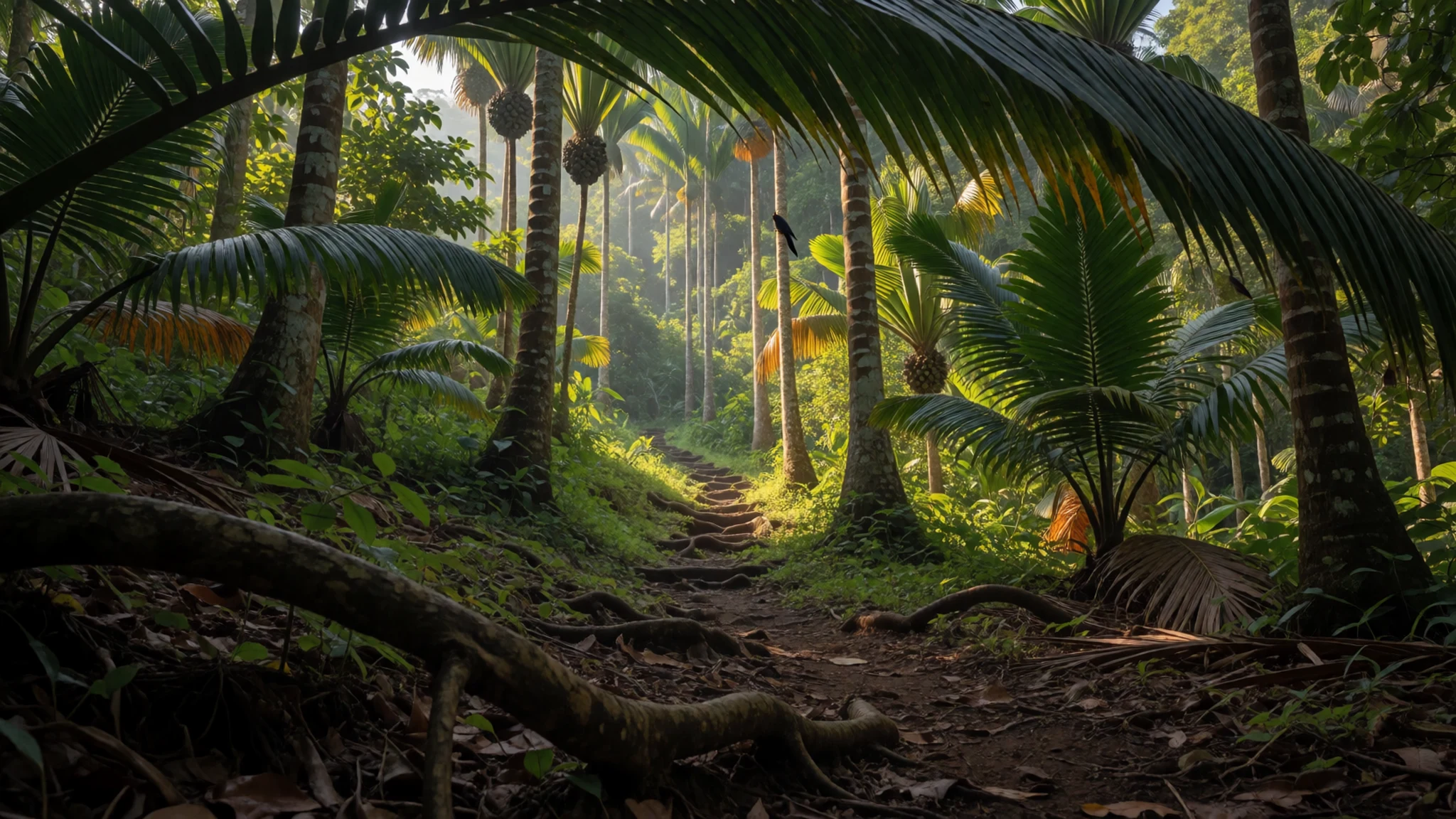
- Côte d'Or — east coast
Côte d'Or, also called Anse Volbert, is the long north-coast beach of Praslin, with the village spread along the road behind the sand. The reef lies well offshore, so the swimming shelf is broad and shallow, which suits a slow morning in the water. Guesthouses, dive shops and small eateries line the landward side, and boats leave here for the islets of Curieuse and St Pierre.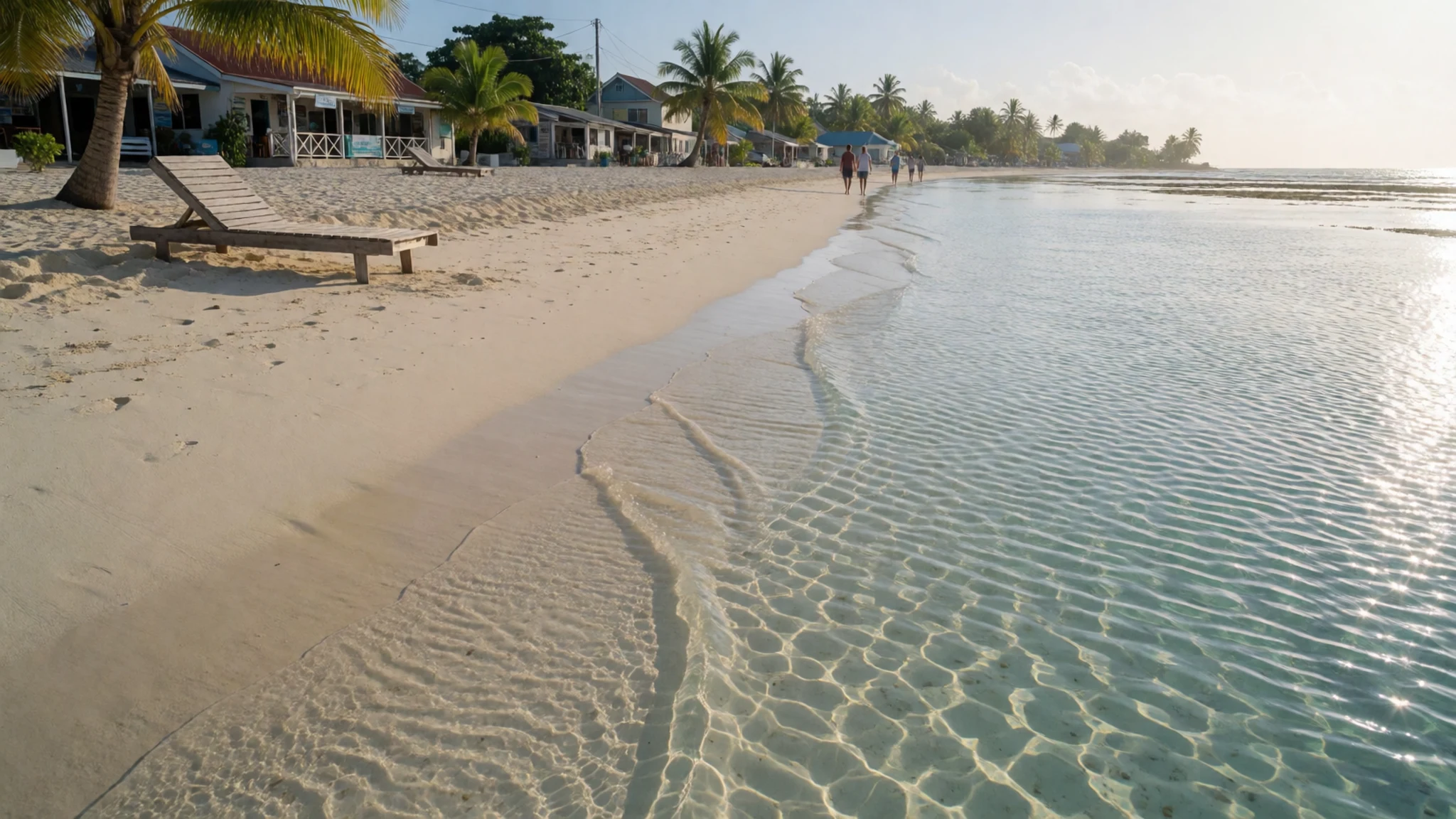
- Petite Anse Kerlan — northwest coast
Petite Anse Kerlan is a small northwest beach on Praslin, set under granite with palms and a resort lawn behind the sand. The strand narrows at high water and opens as the tide falls. Snorkelling off the rocks is worthwhile when the sea is calm. People who are not staying usually walk in from the next cove or ask at the gate.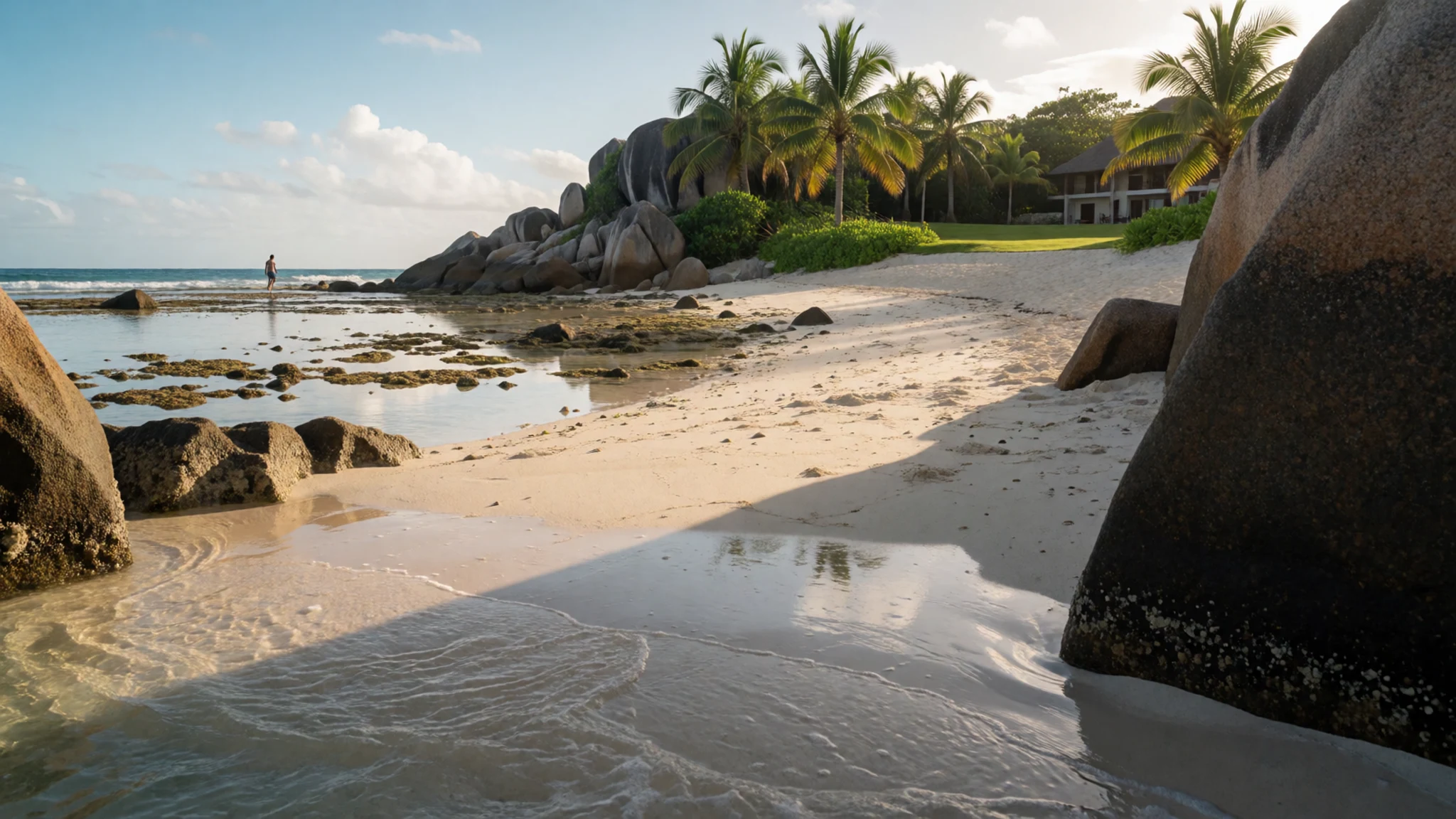
Culture
Praslin shares the Creole culture of the Seychelles and lives it at village scale. Seselwa, a French-based Creole, is the language of the market, the jetty and the home; English and French appear in schools, offices and on signs. Most islanders are Christian, and Sunday morning still gathers people at the church in Baie Sainte Anne or Grand Anse, with a slower afternoon afterwards. Music leans to moutya and sega, drum-led dances that turn up at weddings, festivals and the occasional beach gathering rather than as a nightly show. Food, kinship and the Church organise more of the week than the resort calendar does.
The coco de mer is a cultural object as well as a tree: a symbol in the national imagination, a regulated nut, and a source of stories about the forest. Islanders are used to visitors, and also to visitors who treat every cove as a backdrop. Dress modestly and keep cameras down inside churches on Praslin, and ask before you photograph a person.
What to wear
Praslin's traditional dress belongs to Seychellois Creole life rather than to a court costume. For moutya and sega, women wear full cotton skirts and bright printed blouses, often with a headscarf, while men wear loose white shirts and dark trousers; the cloth is light, floral or geometric, and made to move when the drum starts. Those outfits appear at weddings, national days and parish feasts, not on an ordinary market morning.
What people wear on Praslin now is beach-island clothing with a village edit. Residents move between shorts, T-shirts, sundresses and flip-flops; staff at resorts add a smart polo or a simple dress. Swimwear is normal on the sand and looks out of place in a shop, a church or on the bus. School uniforms and Sunday clothes are smarter and more covered.
A visitor does well in breathable cotton, a hat and sandals that can cope with hot sand and rough granite. Swimwear is for the beach; a shirt and a wrap or light trousers are the right layer for villages, ferries and churches. The forest path is shaded and can be damp, so shoes with a grip beat new leather. Evenings stay warm, and a light rain jacket earns its place in the wetter months.
What to eat
- Grilled bourzwa — beach barbecues and simple eateries on Côte d'Or and in Grand Anse
Grilled jobfish, known locally as bourzwa, is the everyday fish of Praslin: a firm white fillet cooked over coals with a little chilli and lime. It turns up at beach barbecues and in simple eateries along Côte d'Or and in Grand Anse, usually with rice or a salad.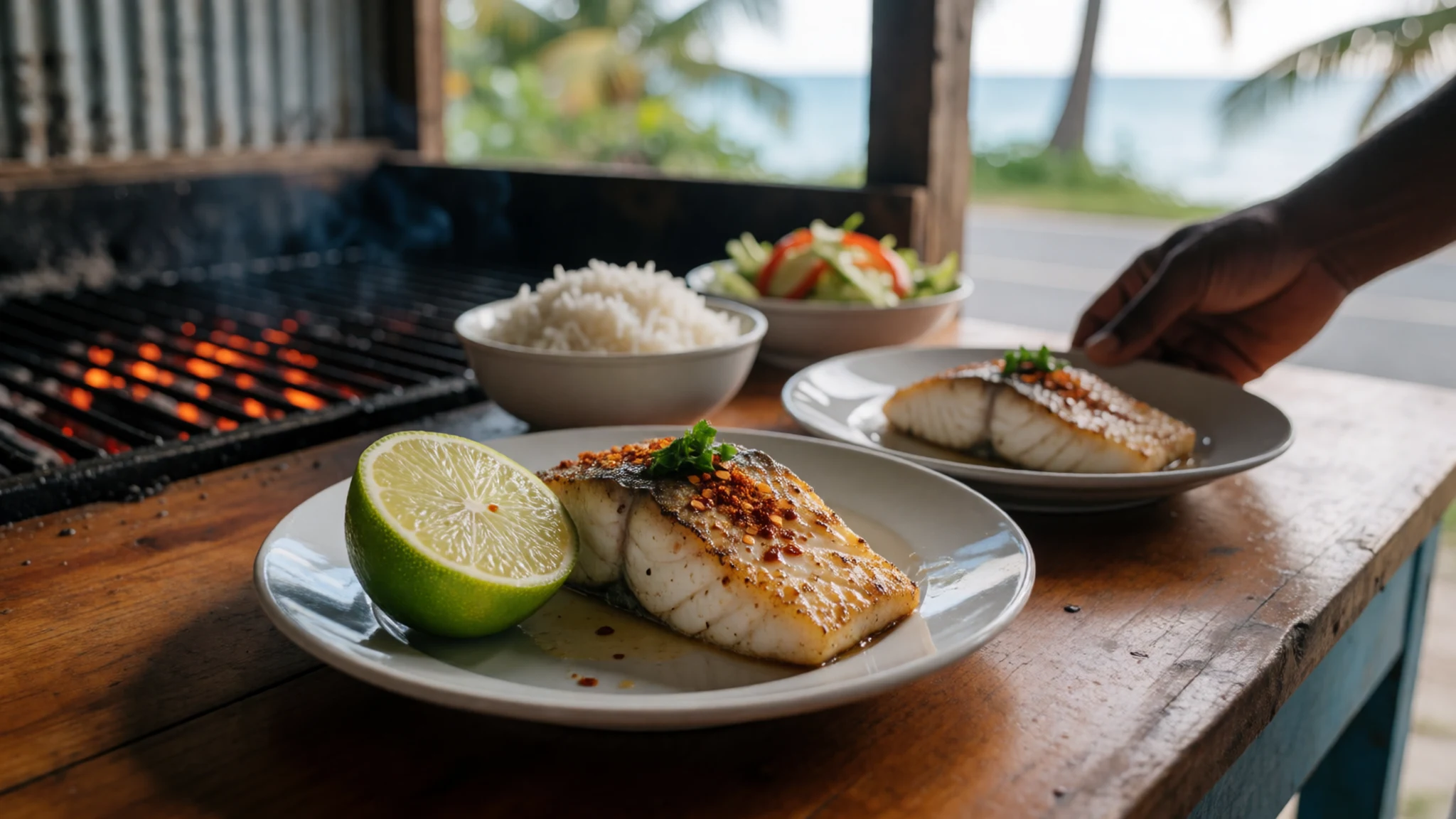
- Kari zourit — village eateries in Baie Sainte Anne and Grand Anse
Kari zourit is octopus curry, a Creole staple on Praslin, simmered in coconut milk with garlic, ginger, chilli and turmeric. It is served with rice and a sharp pickle or chutney. Village eateries around Baie Sainte Anne and Grand Anse cook it more often, and hotter, than resort kitchens.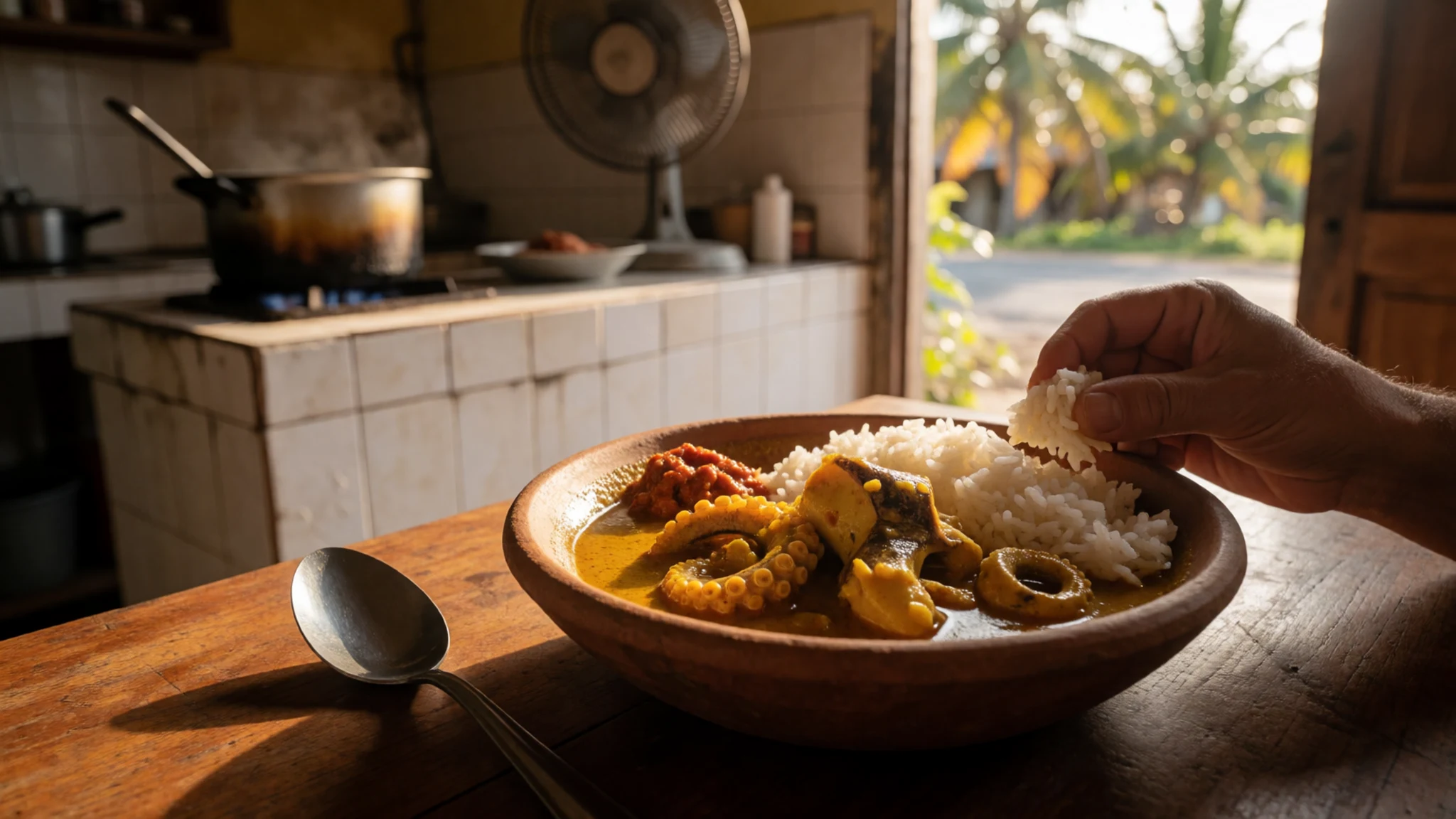
- Ladob — family-run eateries in the villages
Ladob is a coconut-milk dish of Praslin home cooking, made with ripe plantain or breadfruit and sometimes salted fish in a savoury version. The sweet bowl is a pudding; the savoury one sits beside rice. Family-run eateries in the villages are the place to ask for it. - Satini reken — older eateries in Grand Anse and Baie Sainte Anne
Shark chutney, satini reken, is a strong Creole side still made on Praslin from boiled shark, bilimbi or lime, onion, chilli and turmeric. It comes in a small salty bowl beside grilled fish. Older eateries in Grand Anse and Baie Sainte Anne still serve it. - Grilled lobster and prawns — evening beach grills on Côte d'Or and resort kitchens
Grilled lobster and prawns are the celebration plate on Praslin, split over coals and finished with garlic butter or a Creole spice mix. They appear at evening beach grills on Côte d'Or when the boats have done well, and on resort menus written for visitors.
Plan it
Best time. On Praslin the drier, breezier months, roughly May to October, suit walking and the northern beaches, though the southeast trades can stir exposed shores. From about November to April the island is warmer and wetter, with heavier showers and often calmer water for boats.
How long. 3–4
Getting there. International flights land on Mahé at Seychelles International Airport. From there, Praslin is a short domestic flight to Praslin Airport, near Grand Anse, or a ferry from Victoria to the harbour at Baie Sainte Anne. On the island the last leg is a taxi, a hire car or the local bus along the coast road.
Budget. high
Tips
- Book the palm-forest visit and any domestic flight or ferry ahead of the drier months, when seats go first.
- Start for Anse Lazio early; the shade and the car park fill before the heat does.
- A hire car or a driver helps: the beaches sit on a hilly coast road, and buses are infrequent.
- Carry cash for small eateries, stalls and the bus; cards are more reliable at resorts.
- Take reef-safe sunscreen, drinking water and shoes with a grip for granite and forest paths.
Etiquette
- Cover shoulders and knees in churches, and put the camera away during a service.
- Ask before photographing people, including fishers and children.
- Leave coco de mer nuts, shells and coral where they are.
- Keep swimwear for the beach, and wear a shirt in villages, shops and on the ferry.
Nearby
Sources
- Wikidata (CC0)
- Wikipedia: Praslin (CC BY-SA 4.0)
- Wikivoyage: Praslin (CC BY-SA 4.0)
Wildlife
- Black parrot (animal)
The Seychelles black parrot is a medium-sized, dark-feathered parrot found nowhere in the world except Seychelles, and it is the national bird. Islanders call it kato nwar, and it is also known as the Praslin parrot. It was once thought to be a kind of lesser vasa parrot, but researchers now think it has lived apart for a very long time. Look for it alongside smaller birds in the shade, which stays cooler than the coast. - Black parrot (bird)
The Seychelles black parrot is a medium-sized, dark-feathered parrot found nowhere in the world except Seychelles, and it is the national bird. Islanders call it kato nwar, and it is also known as the Praslin parrot. It was once thought to be a kind of lesser vasa parrot, but researchers now think it has lived apart for a very long time. Look for it alongside smaller birds in the shade, which stays cooler than the coast.