Aride Island
Aride Island, Seychelles
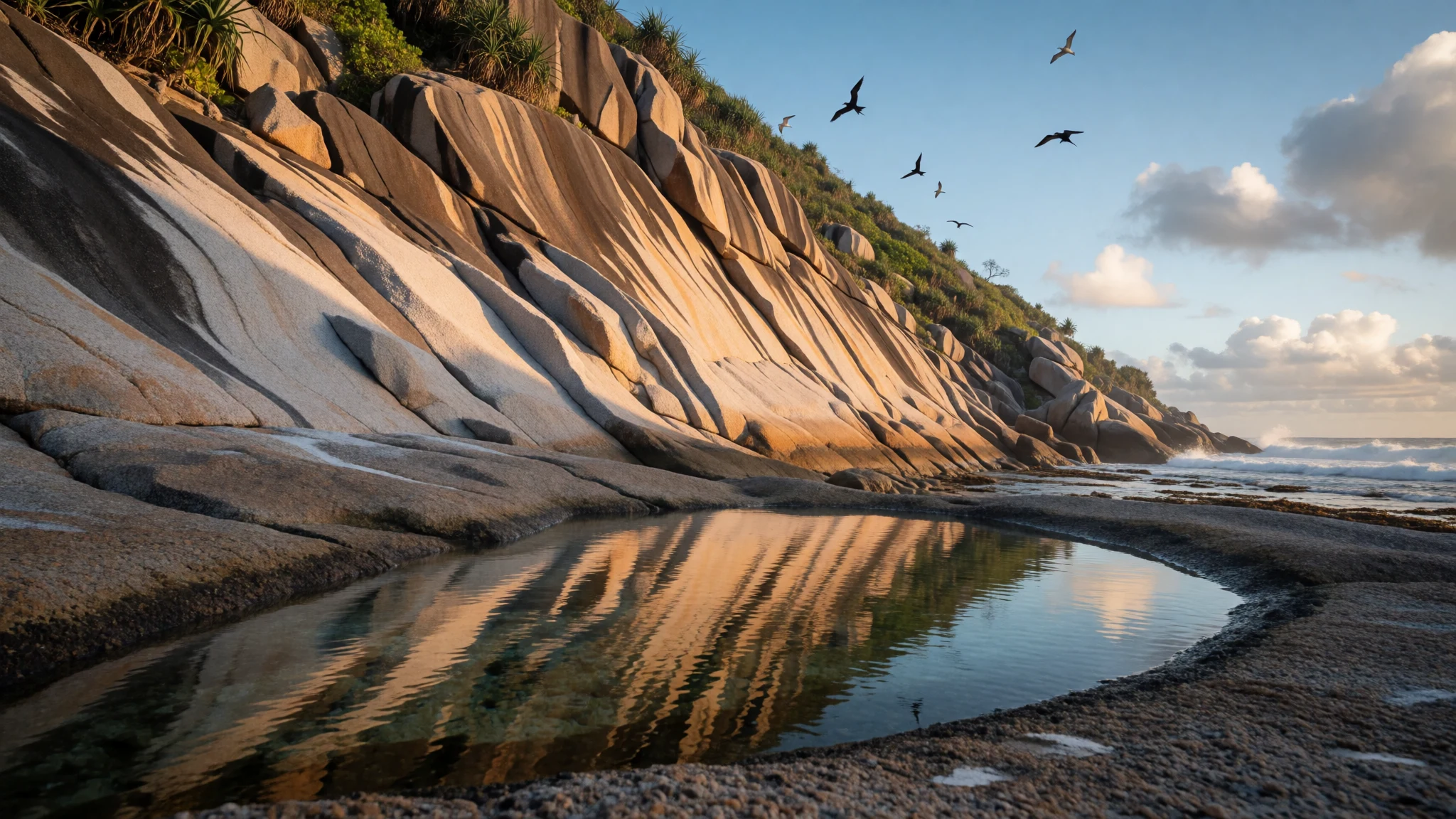
Aride Island is a small granite nature reserve north of Praslin, where seabirds, frigatebirds and lizards far outnumber the six people who live there.
The place
Aride Island is the northernmost of the Seychelles' granite islands, a 68-hectare patch of forest and rock that climbs to 135 m above the Indian Ocean. Six people live here, all of them staff of the nature reserve run by the Island Conservation Society of Seychelles. Administratively it belongs to the Grand'Anse district of Praslin, the larger neighbouring island that serves as the jumping-off point. Nobody sleeps here except the resident staff, so a visit is a day trip by boat, with the night spent back on Praslin. The island has a single beach, and it faces south. That matters between June and September, when the south-east trade winds are at their strongest and getting ashore through the swell becomes awkward. Some days the crossing may simply not happen. The draw is wildlife rather than sand. Seabirds nest here in large colonies, non-breeding frigatebirds circle overhead in numbers, and lizards are thick on the ground and along the trails. Rats never reached the island, which has spared the nesting birds and reptiles the usual island predator. There is no resort and no hotel, so the place feels closer to a field station than a holiday destination. Anyone wanting a swimming beach is better served by Anse Lazio or Côte d'Or on Praslin, and should treat Aride as the half-day that justifies the boat. Praslin also has the Vallée de Mai palm forest, which pairs well with a morning on Aride.
Its story
Aride Island first shows up by name on nautical charts drawn after French exploring voyages in 1770 and 1771. The earliest written description came in 1787 from Jean-Baptiste Malavois, the French commandant of Seychelles, who dismissed it as little more than rock and scrub. Between 1817 and 1829 it may have served as an informal leper colony. In 1868 the Irish naturalist Perceval Wright called, and both the island's own gardenia and one of its endemic lizards now carry his name. In 1883 the British painter Marianne North worked here and noted a single large tree, where the island's workers took shelter from the sun. Coconut palms were then planted across much of the island and copra became its business. Dogs, pigs, cats and chickens arrived with the settlers, though rats, luckily, did not. Meanwhile sooty tern eggs were gathered for close to a century, with as many as 220,000 taken in a season. Nesting seabirds dwindled and every endemic land bird disappeared. The turn came in 1967, when the owner, Paul Chenard, stopped the egg harvest and declared a reserve. Christopher Cadbury bought the island in 1973 on behalf of a British nature-trust body. In 1979 Seychelles law made it a Special Reserve, with a marine zone of 200 m around the shore and penalties, including prison, for harming or disturbing wildlife. Management passed to the Island Conservation Society in 2003, ownership to its UK charity in 2006, and in 2008 the island was leased back to the Seychelles society.
What to see
- The south-facing landing beach — South coast of Aride Island
Aride Island's only beach faces south, and every visit begins here. In calm months boats come close and passengers step ashore to be met by reserve staff. Between June and September the south-east trades push swell onto this shore, so landings can be delayed or cancelled. Build some slack into the plan.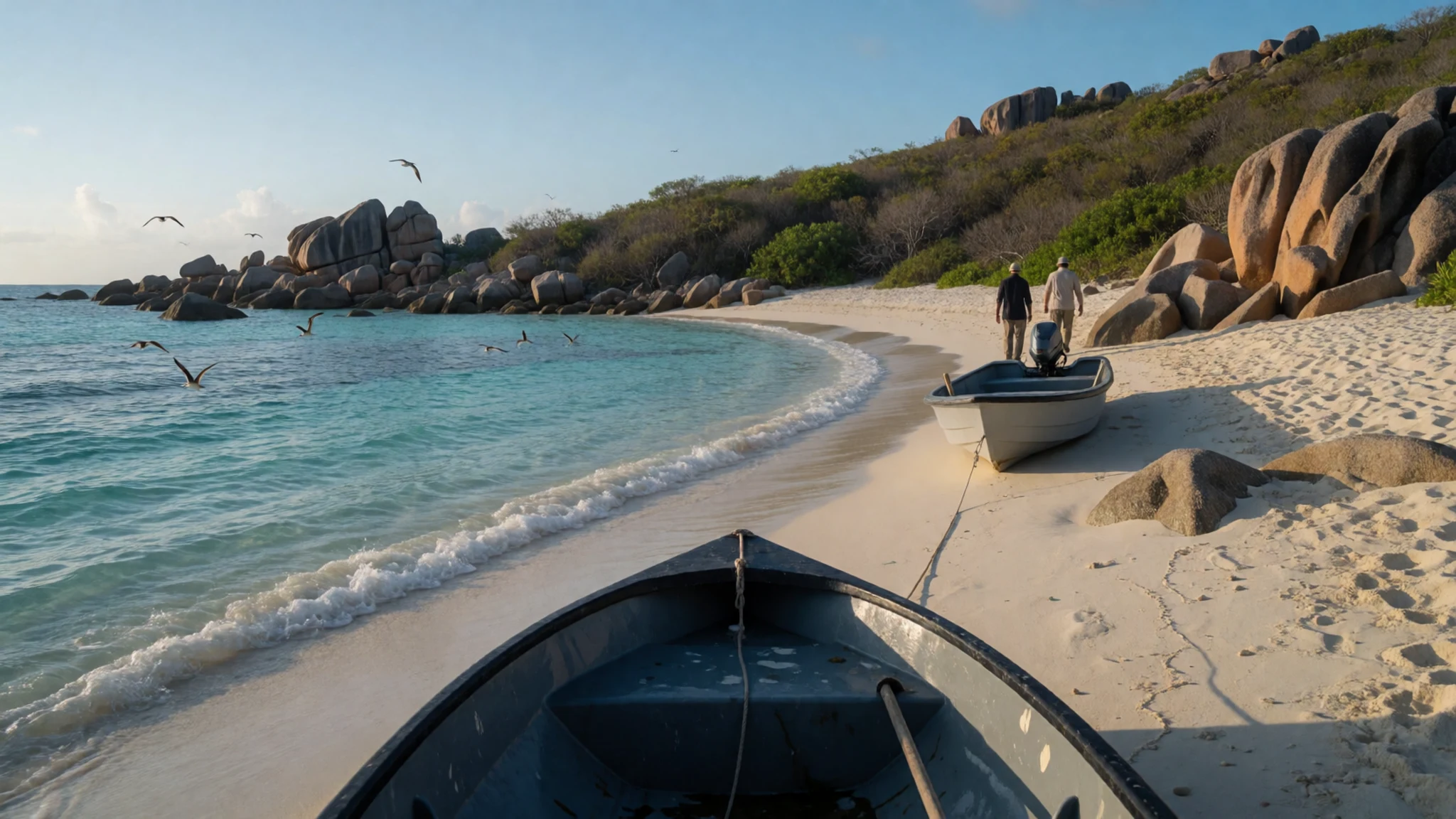
- The Cadbury house and settlement — Settlement, Aride Island
A wooden plantation house stands above Aride's small settlement, and it is among the last of its type to survive in Seychelles. A commemorative plaque nearby honours Christopher Cadbury, whose 1973 purchase set the reserve on its present course. It is a quiet place to learn how the island was rescued.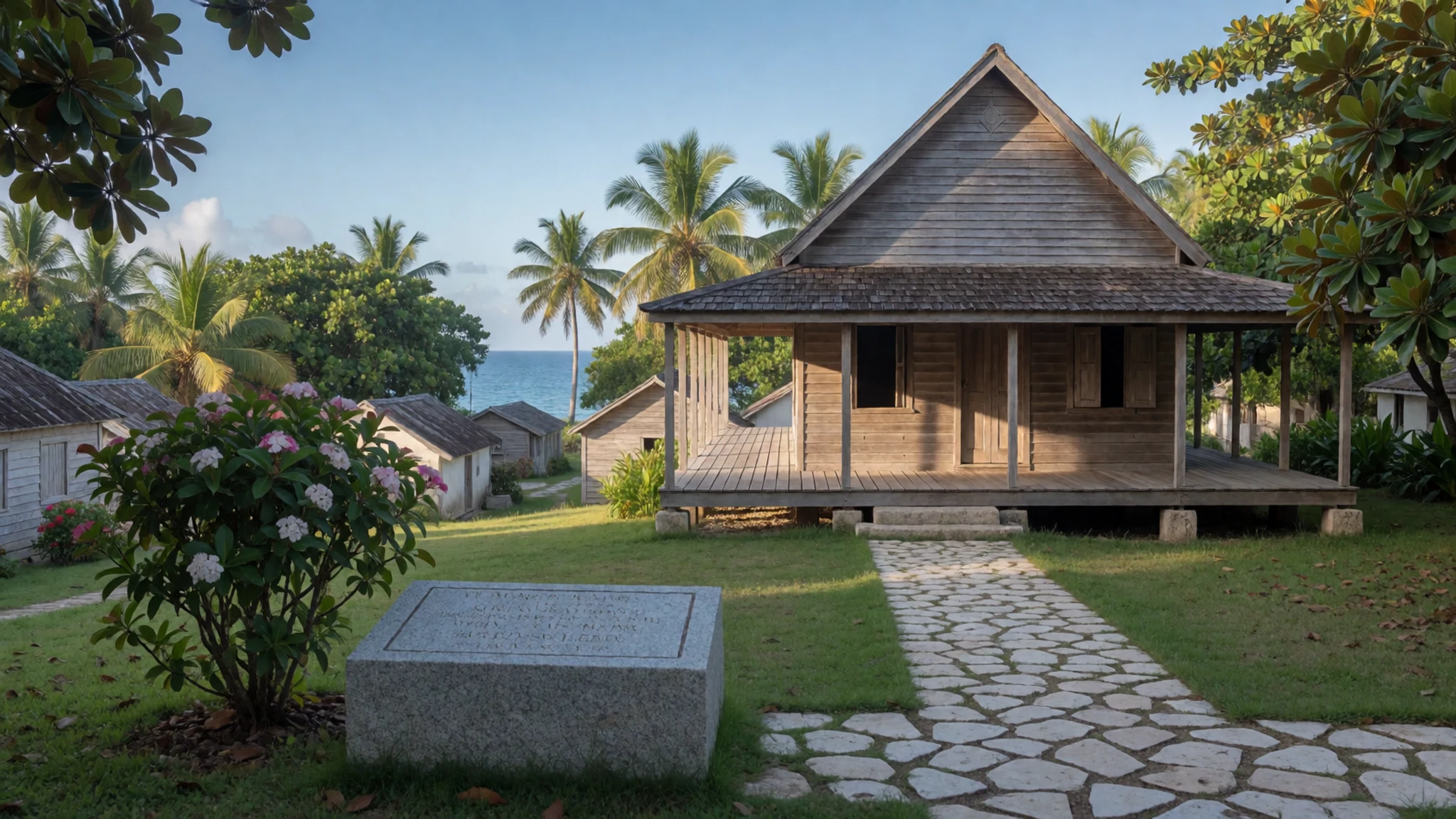
- Gros la Tête granite cliff — Gros la Tête, Aride Island
The granite cliffs at Gros la Tête show the bedrock that makes Aride one of the Seychelles' granite islands rather than a coral cay. Thin, paler bands of rock run through the darker stone, which makes it a good stop for anyone curious about geology as well as birds.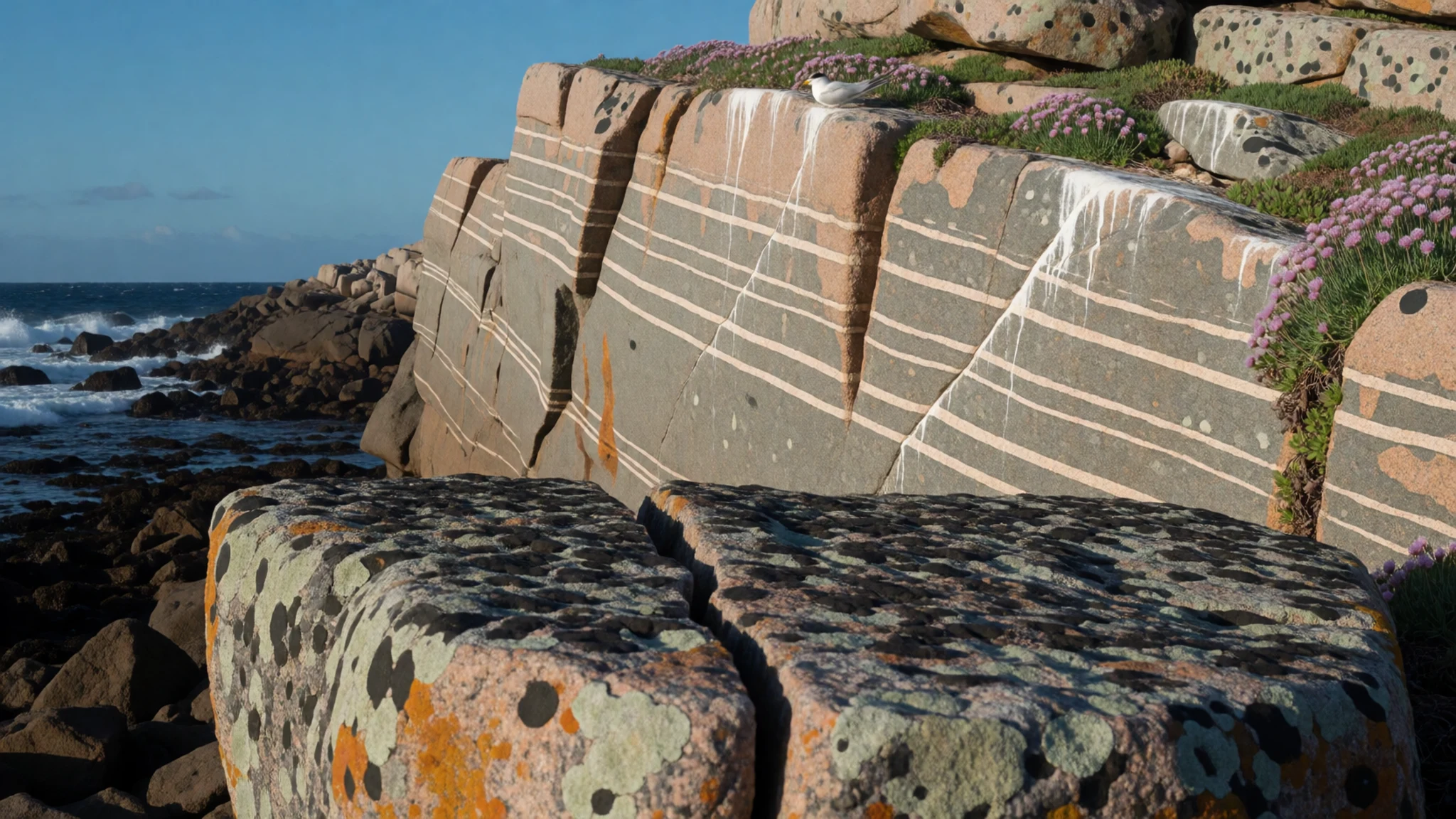
- Forest trails and vine-hung trees — Interior trails, Aride Island
Inland, narrow paths run beneath trees draped in lianes, a long way from the bare rock Malavois described in 1787. Look for Wright's gardenia, which grows nowhere else, and watch the ground for lizards. Guides from the reserve staff explain what is native and what is not.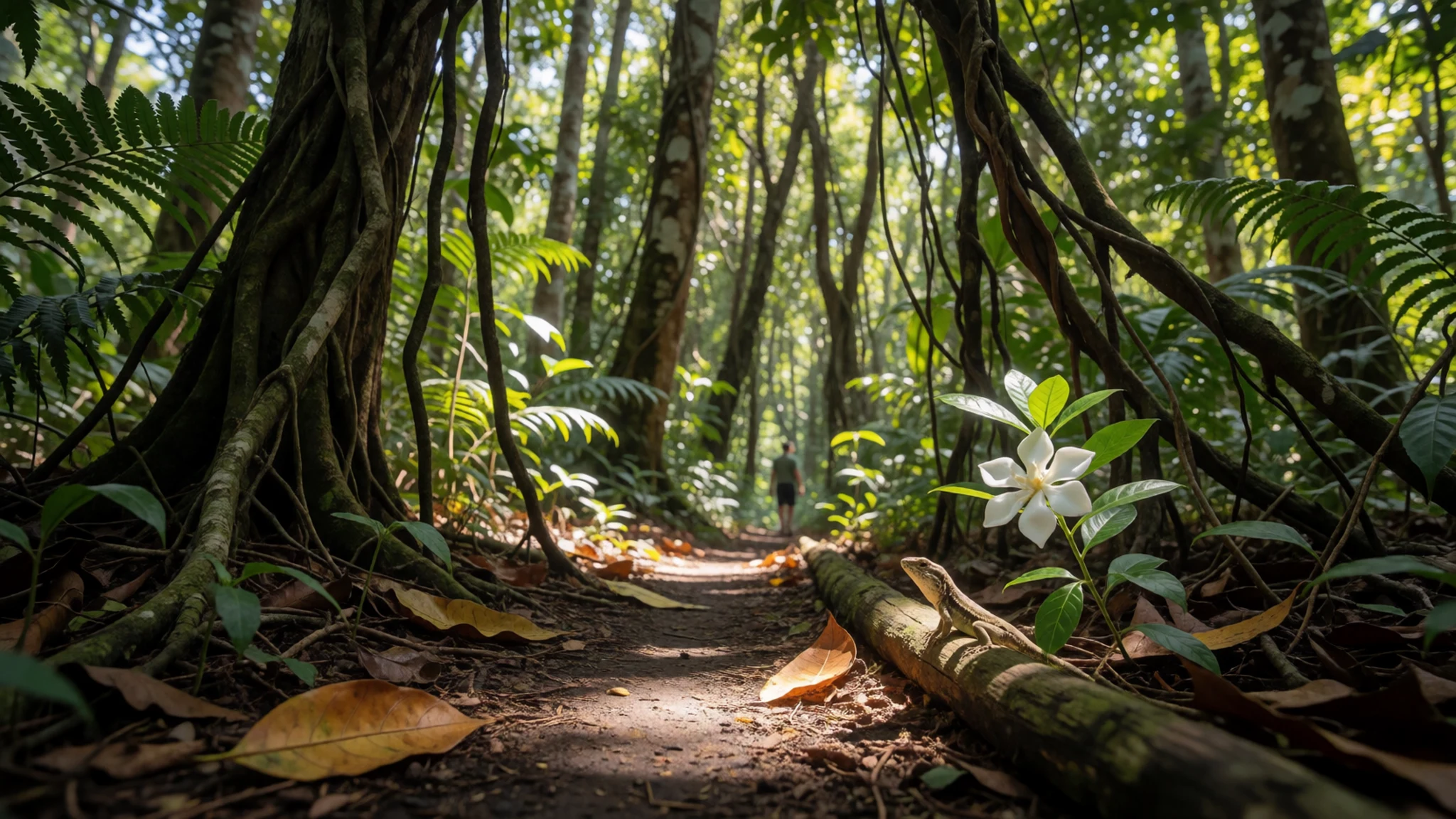
- Vallée de Mai, Praslin — Praslin, south of Aride Island
The Vallée de Mai on Praslin is a palm forest of coco de mer and five other endemic palms, with leaves reaching 14 m long. It is also a place to look for the rare Seychelles black parrot. Many visitors combine it with a boat day to Aride.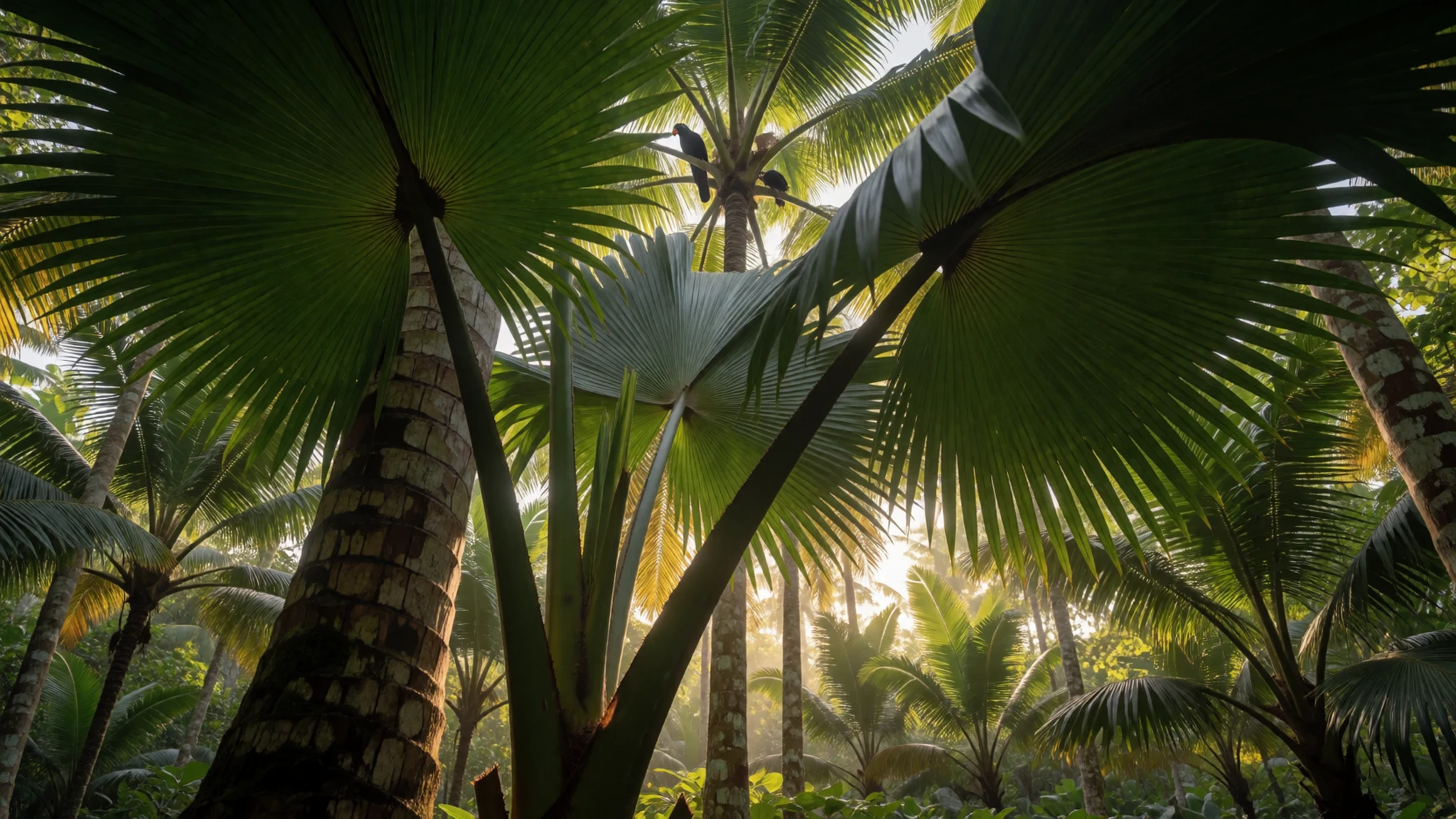
Culture
Aride Island has no village life in the usual sense. Its six residents are conservation staff, and the culture of the place is that of a field station: early starts, shared chores, and a daily routine fitted around the birds and the weather. Meals lean on fish, with locally grown produce and everything else carried across by boat from Praslin, so supplies depend on the sea being kind. The longer story of the island is one of use and then restraint. Coconut planting and decades of egg collection gave way after 1967 to protection, now written into Seychelles law, with penalties for killing or disturbing wildlife. The plaque to Christopher Cadbury near the old plantation house is the island's nearest thing to a monument, and the staff are keen to talk about the work behind it. For a wider look at Seychellois life, Praslin is the better place. Its museum covers local traditions and has a garden of medicinal plants, and the island's cafés and eateries serve Creole cooking that blends seafood, curry and coconut. Back on Aride, the mood is practical and low-key, closer to a nature walk than a sightseeing tour. Stay on the marked paths, keep well back from nesting birds and never chase or pick up an animal, because disturbing wildlife on the reserve is a legal offence.
What to wear
Aride Island has no clothing tradition of its own, since its residents are reserve staff, so the useful context is Seychelles as a whole. Traditional Creole dress, with light cotton and printed fabrics and long full skirts and head wraps for women, now appears mainly at festivals and in music and dance performances rather than in daily life. Everyday wear across Praslin and Mahé is relaxed and tropical: shorts, T-shirts, cotton sundresses and sandals, with swimwear kept to beaches and boats. On Aride the staff wear practical field clothes, such as quick-dry shirts, long trousers and sturdy shoes, that stand up to scrub and sun. Visitors should dress the same way. Bring a light long-sleeved shirt and a hat against the equatorial sun, and wear closed shoes or grippy sandals for the trails, which can be uneven and dusty. The boat landing may mean wading ashore, so pack quick-drying shorts and a dry bag for your camera and phone. Neutral colours are less likely to startle nesting birds than bright ones. For evenings on Praslin, a clean shirt or sundress is enough at most restaurants, though some nightclubs ask for closed shoes and no caps.
What to eat
- Octopus curry — Creole restaurants along Praslin's Côte d'Or and Grand'Anse
A well-known Creole dish on Praslin, with octopus simmered in a spiced, coconut-leaning sauce and served with rice. It suits the Seychelles habit of cooking whatever the boats bring in that morning.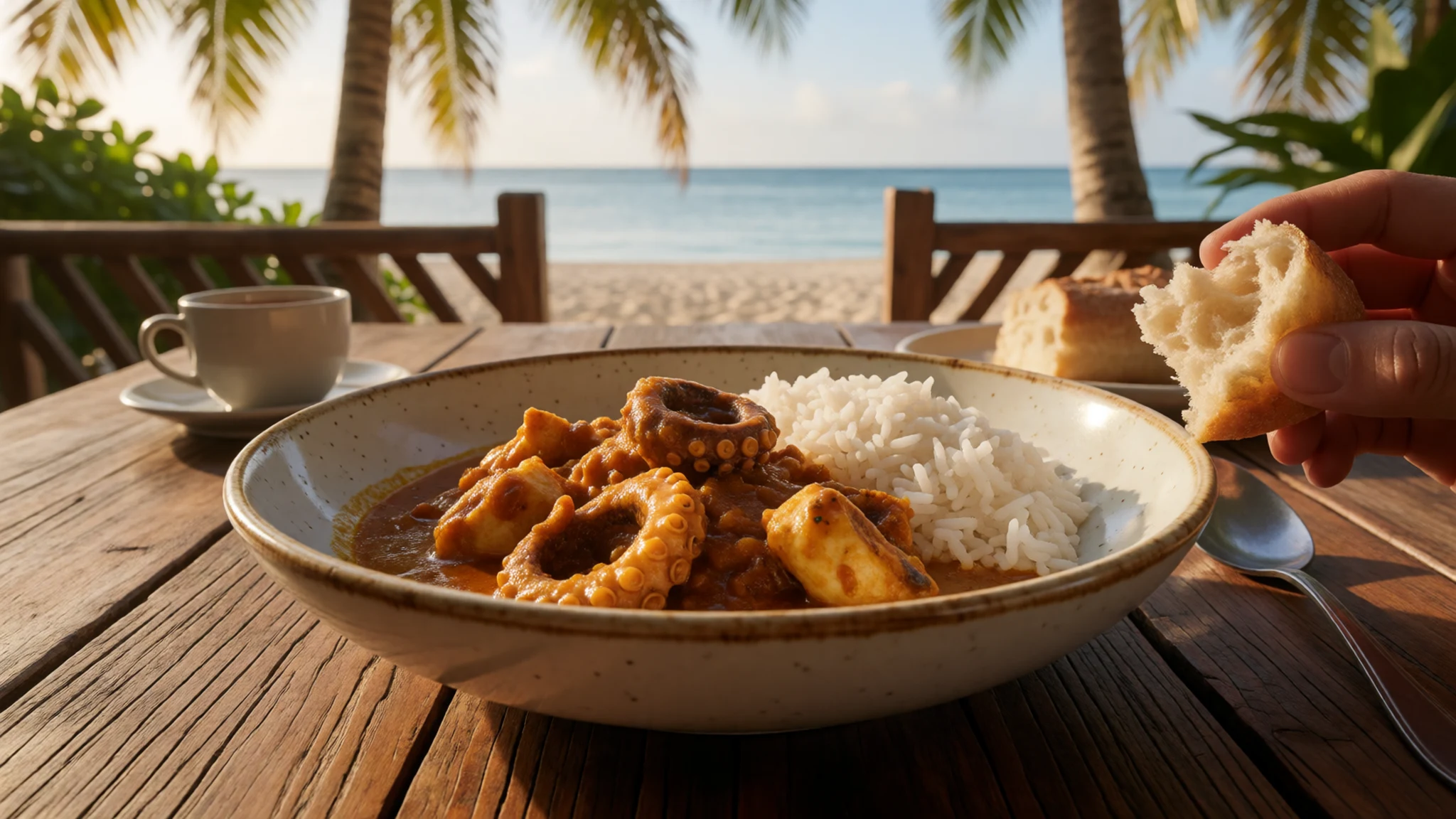
- Grilled fresh fish — Beachfront restaurants on Praslin
Fish is the staple of island meals here, and the simplest way to eat it is grilled whole with lime, garlic and a side of rice or breadfruit. Ask what was landed that day rather than choosing from a fixed menu.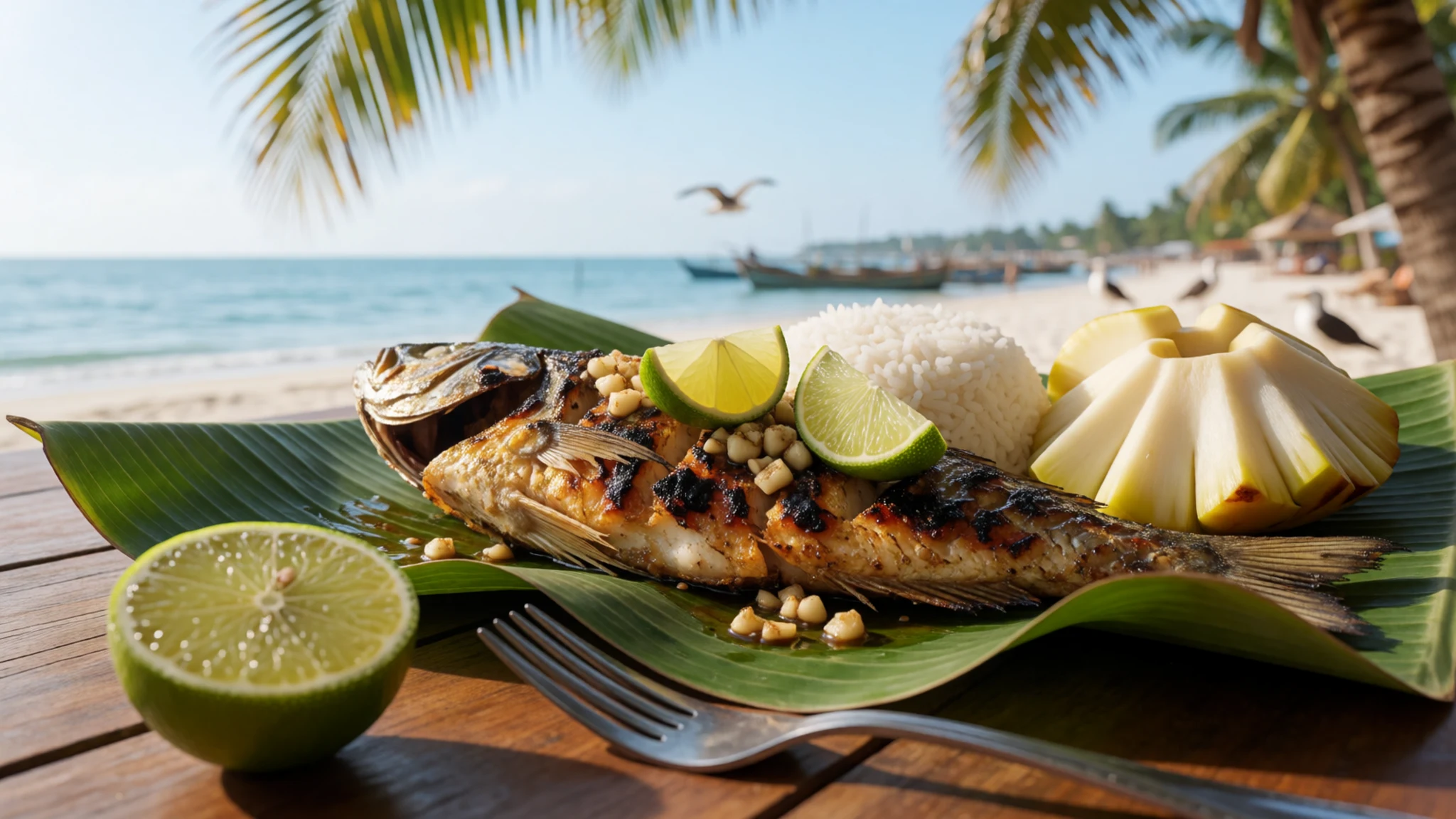
- Seafood and vegetable curries — Family-run eateries and restaurants across Praslin
Creole curries mix local fish, shellfish or vegetables with spices and often coconut milk. Vegetarian and vegan versions are widely available on Praslin, so it is easy to eat well without meat or fish. - Fresh bread and pastries — Cafés and bakeries near the Côte d'Or seafront
Breakfast on Praslin often means warm bread and pastries, a practical choice before an early boat to Aride, where there is nowhere to buy food. Pack a snack as well, since the crossing and walk burn energy. - Local fruit juice and tea — Praslin Museum garden and beachside cafés
Tropical fruit juice, pressed from whatever is in season, pairs well with a visit to Praslin's museum garden, where tea is also served. Expect to drink plenty of water as well, since the sun and humidity are relentless.
Plan it
Best time. April–May and October–November, when the south-east trade winds that make landings awkward between June and September have eased. Ask your boat operator about sea conditions, since the beach faces south.
How long. 2–3
Getting there. Fly or take a ferry from Mahé to Praslin, landing at Praslin Airport (Grande Anse) or the ferry pier. Aride Island is then a day trip by boat from Praslin; there is no overnight stay for visitors.
Budget. high
Tips
- Book the boat trip ahead through a Praslin operator and check with the Island Conservation Society of Seychelles for landing arrangements
- Aim for calm months, and keep a spare day in case swell cancels the crossing
- Bring water, sun protection and a snack, as there is nowhere to buy food on the island
- Wear closed shoes or grippy sandals and carry a dry bag for the landing
- Combine Aride with Praslin's Vallée de Mai or Anse Lazio on another day
Etiquette
- Stay on the marked paths and keep your distance from nesting birds
- Do not touch, chase or feed any animal, since disturbing wildlife is an offence on the reserve
- Take all litter back with you
Nearby
Sources
- Wikidata Q581089 (CC0)
- Wikipedia: Aride Island (rev 1381998228) (CC BY-SA 4.0)
- Wikivoyage: Aride Island (rev 5386175) (CC BY-SA 4.0)
- Ile Aride aux Seychelles — Remi Jouan (CC BY-SA 2.5)
- Aride island — Epukas (Public domain)
- Granite rock in the cliff of Gros la Tête — Etan J. Tal (CC BY-SA 4.0)
- Seychelles large map — Unknown author (Public domain)
- Aride Island, Seychelles (north of Praslin) Geocover 2000 — NASA (Public domain)
- Maison de Christopher Cadbury sur l'ile Aride — Remi Jouan (CC BY-SA 2.5)
- Arbre avec des lianes sur l'Ile Aride — Remi Jouan (CC BY-SA 2.5)
- Plaque commémorative de Christopher Cadbury — Remi Jouan (CC BY-SA 2.5)


Wildlife
- Sooty tern (animal)
The sooty tern is a seabird that lives almost its whole life in the air, skimming the waves for food and coming ashore only to breed. On Aride Island its eggs were once collected for nearly a hundred years, so a gentle visit matters today. The notes do not say which months or hours suit it best, so ask your guide. Keep well back, speak softly, follow your guide's path, and never feed the birds.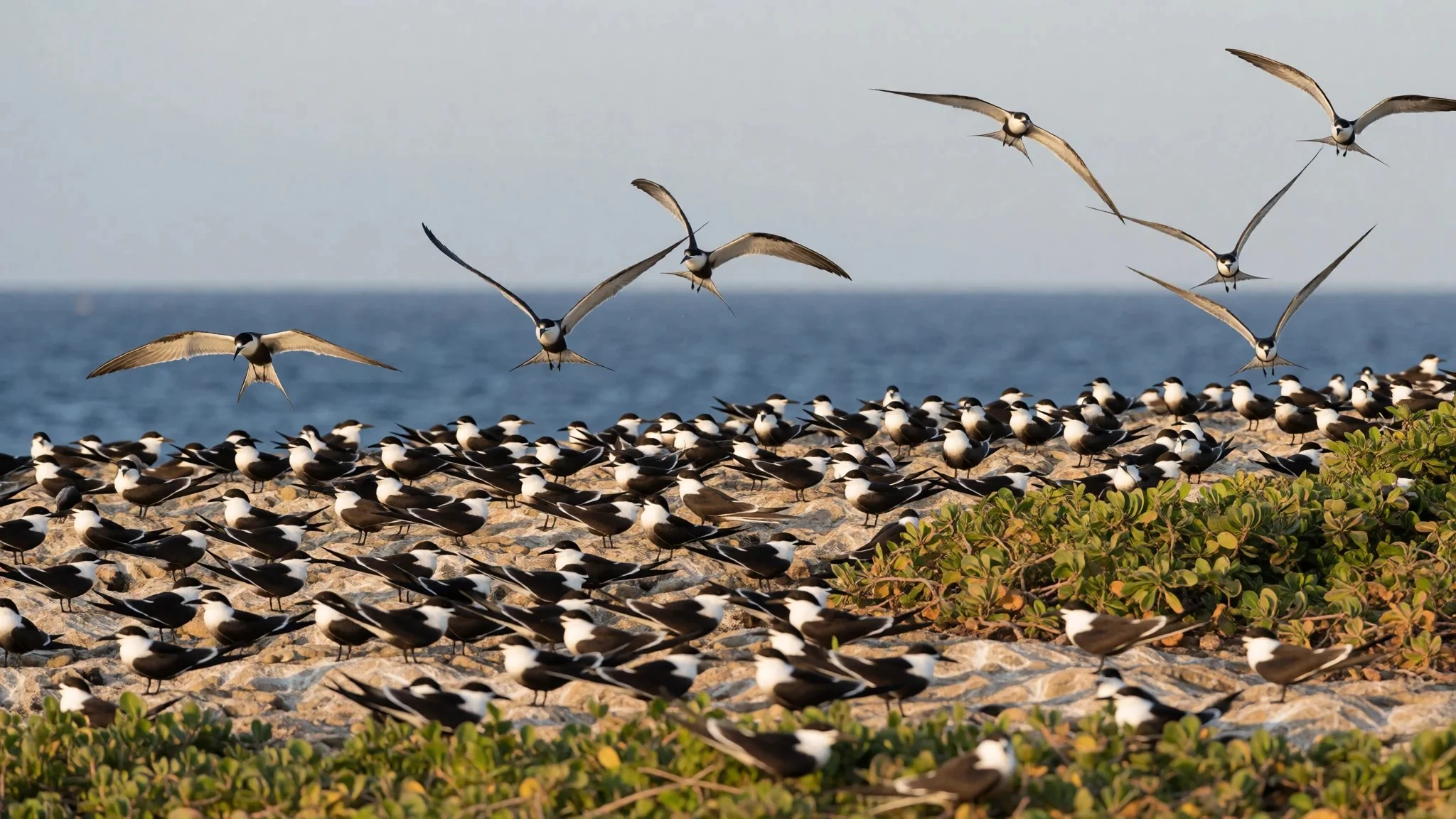
- Sooty tern (bird)
The sooty tern is a seabird that lives almost its whole life in the air, skimming the waves for food and coming ashore only to breed. On Aride Island its eggs were once collected for nearly a hundred years, so a gentle visit matters today. The notes do not say which months or hours suit it best, so ask your guide. Keep well back, speak softly, follow your guide's path, and never feed the birds. - Great frigatebird (animal)
The great frigatebird is a big seabird that spends its days soaring over the sea like a living kite. On Aride Island, birds that are not nesting wheel high overhead in good numbers, so look up, while others raise their young in the island's busy seabird colonies. The notes give no season or time of day, so ask your guide when they are best seen. Watch from a respectful distance, keep your voice low, stay with a guide, and never offer food. - Great frigatebird (bird)
The great frigatebird is a big seabird that spends its days soaring over the sea like a living kite. On Aride Island, birds that are not nesting wheel high overhead in good numbers, so look up, while others raise their young in the island's busy seabird colonies. The notes give no season or time of day, so ask your guide when they are best seen. Watch from a respectful distance, keep your voice low, stay with a guide, and never offer food.