Cousin Island
Cousin Island, Seychelles
Cousin Island is a small Seychelles reserve where a rescued plantation became a refuge for rare birds, nesting seabirds and a walkable beach.
The place
Cousin Island lies about 2 km off the west side of Praslin in the Seychelles, and it is small enough to cross on foot in a short morning. Its area is 29 ha, all of it protected as a Special Reserve under Seychelles law. Nature Seychelles, a Seychellois non-profit affiliated to BirdLife International, runs it, and the island is recognised as an Important Bird Area, which sets the tone for any visit: this is a place for watching wildlife rather than for resort leisure.
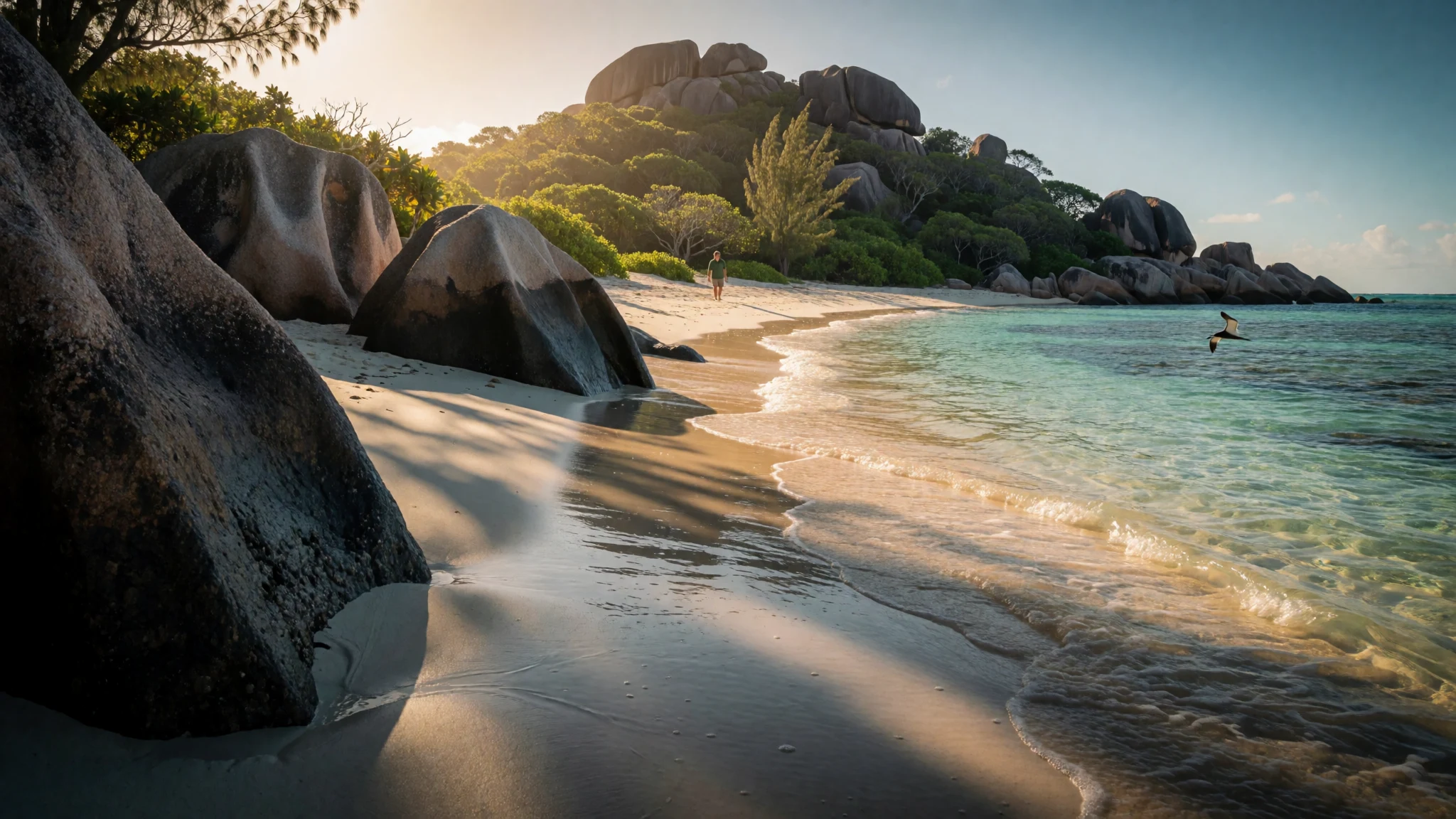
Geologically it is a fragment of the granite that underpins the inner Seychelles, not a flat coral cay. A hill rises to 69 m in the southern half, and native woodland covers the plateau around it. A sandy beach rings most of the shoreline, while the south coast is rocky. Inland there are mangroves and three little freshwater marshes, useful to birds that need somewhere to drink and feed. In the water, a marine reserve protects the coral reef out to 400 m from the shore.
Practically, Cousin is a managed visit. Boats come over from Praslin, groups land on the beach and walk set paths with a ranger, and the reserve sets its own rules on numbers and timing, so current arrangements are best checked with Nature Seychelles. Visitors should not expect cafés, shops or beds on the island. The heat is steady all year, the woodland shade is welcome, and the day is built around the crossing, the walk and the wildlife.
Its story
Cousin Island owes its present state to a rescue. For a long time it was worked as a coconut plantation, and clearing land for the crop stripped away much of the native vegetation. The Seychelles warbler, a small songbird found only in the islands, paid for it: the population fell to just 26 birds, close to extinction.
In 1968 the International Council for Bird Preservation, the body now known as BirdLife International, bought the island outright. Rather than replant, its managers took out the young coconut trees and let native woodland return by itself. Birds came back as the habitat did. In 1975 the island was formally declared a special reserve, which gave the recovery a legal footing.
Since then Cousin has become a reference case. Universities and research organisations use it as a field base, and its management has been the subject of many case studies. The International Coral Reef Action Network treats it as a demonstration site, and its ecotourism programme has picked up honours from Condé Nast and from Tourism for Tomorrow. The island is also linked, through the Island Conservation Centre on Praslin, to other privately owned islands that hold endemic wildlife. That centre, paid for by a World Bank and Global Environment Facility project, uses exhibitions, schooling and work with community groups to explain why such places matter. The lesson most often drawn from Cousin is simple: buy the land, stop the farming and give nature time.
What to see
- The landing beach — Shoreline of Cousin Island
The sandy beach rings most of Cousin Island, and it is where boat landings happen and the ranger's briefing begins. The sand is shared with wildlife, so the walk along it is slow and watchful. The rocky southern shore makes a contrast, with no real beach and waves breaking over dark granite.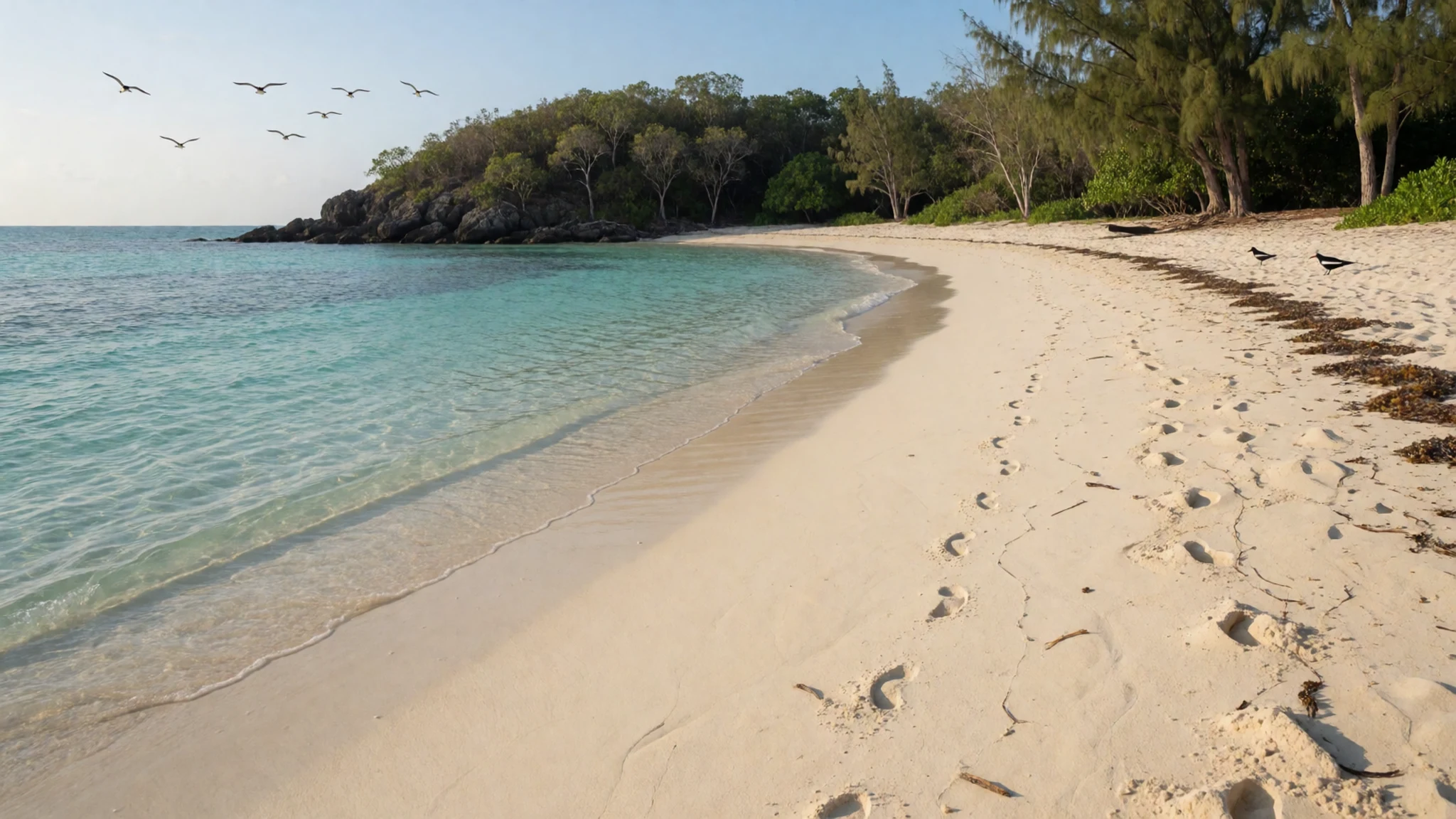
- The native woodland and banyan — Central plateau
The plateau woodland is the recovered heart of the island, native trees growing where coconut palms once stood. Paths run through it in dappled shade, which matters in the heat. A banyan with hanging roots and a broad crown is easy to spot, and a good place to pause and look up.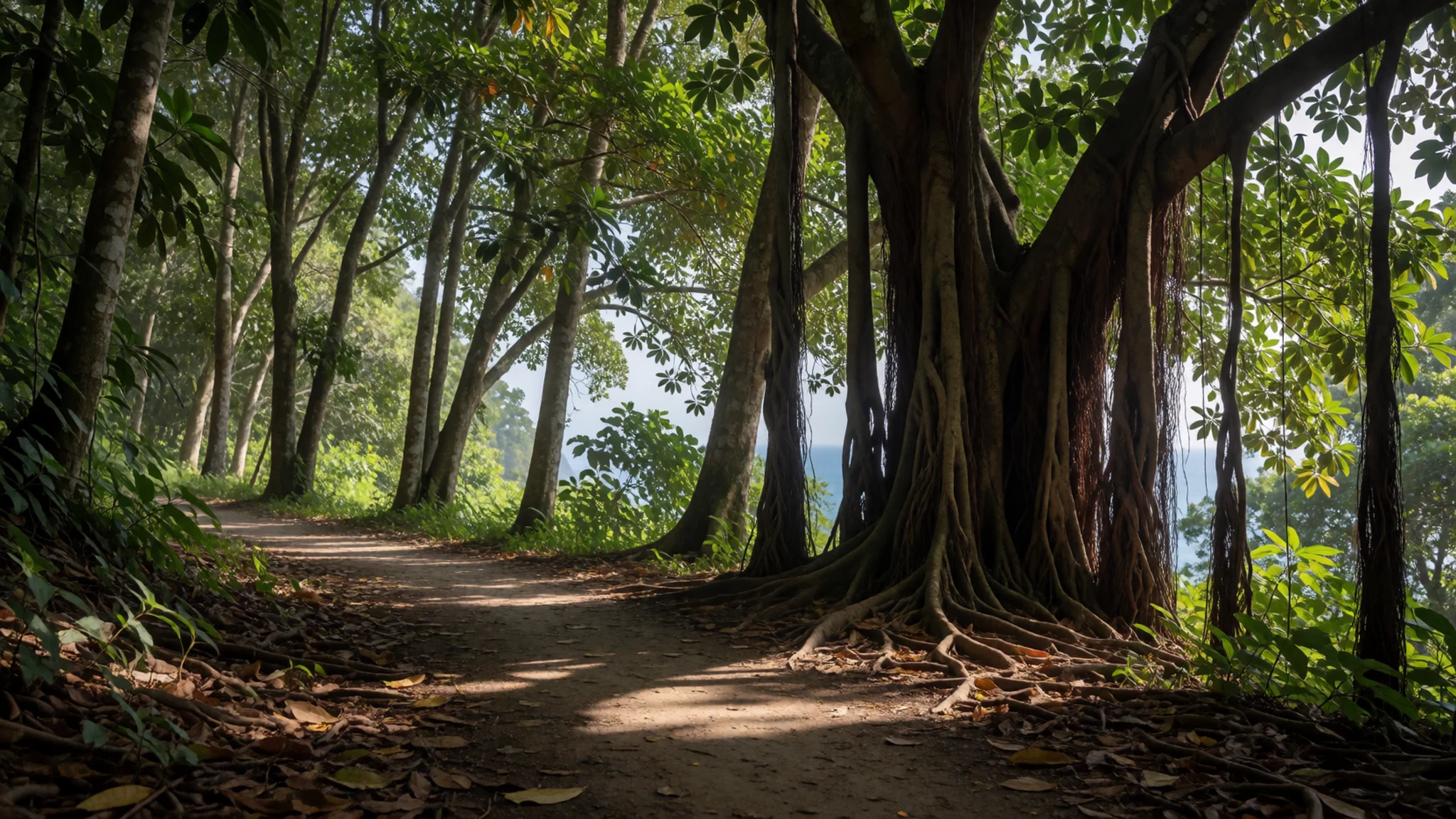
- Brown noddies and tropicbirds — Woodland and shoreline
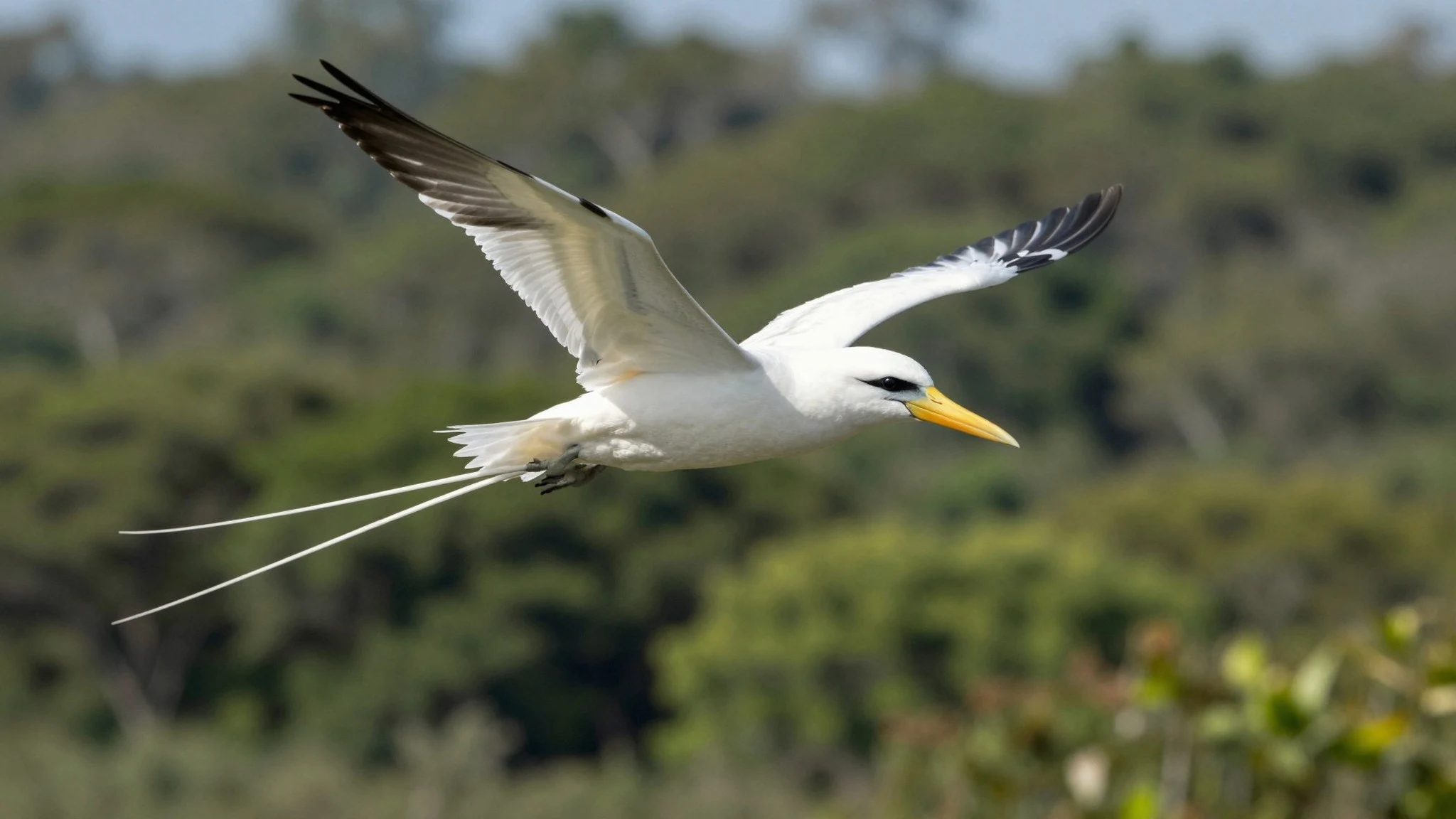
Brown noddies nest on Cousin, and adults can be seen sitting tight on their nests. White-tailed tropicbirds, slim white birds with long tail streamers, also nest here, and one was photographed on its nest in August. Nesting seasons shift through the year, so ask the ranger what is active on the day.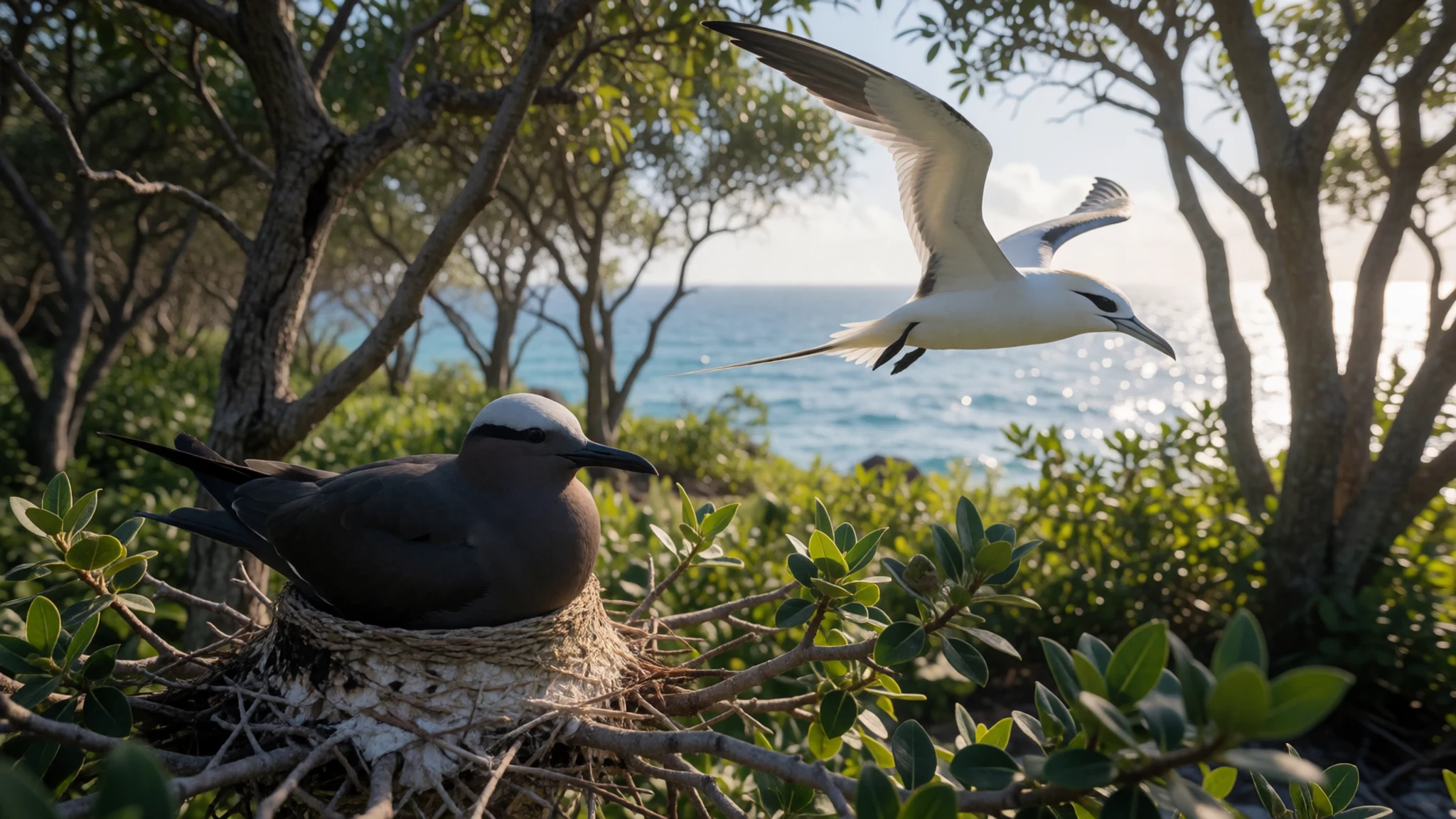
- Seychelles magpie robin and warbler — Woodland paths
Two songbirds carry the island's conservation story. The Seychelles warbler was down to 26 birds before the island was bought for nature, and the black-and-white Seychelles magpie robin is also seen here, often on the ground. Both are small and quick, so patience and a pair of binoculars help.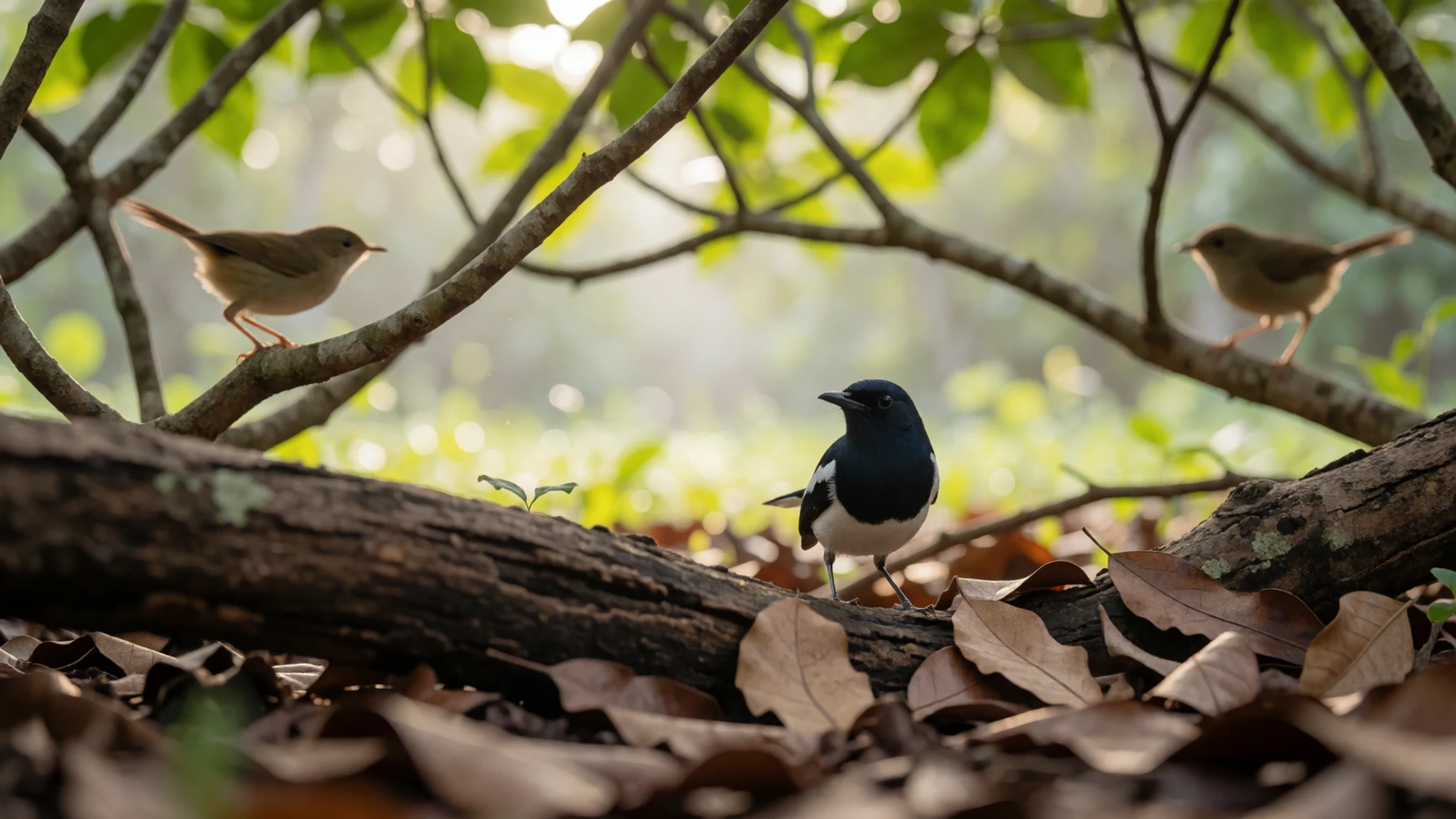
- The marine reserve — Waters around the island
The marine reserve reaches 400 m out from the shoreline and protects the coral reef around Cousin. Most visits are on dry land, so the reef is something to know about rather than a guaranteed snorkelling stop. Ask the boat operator or Nature Seychelles whether getting in the water is allowed on the day.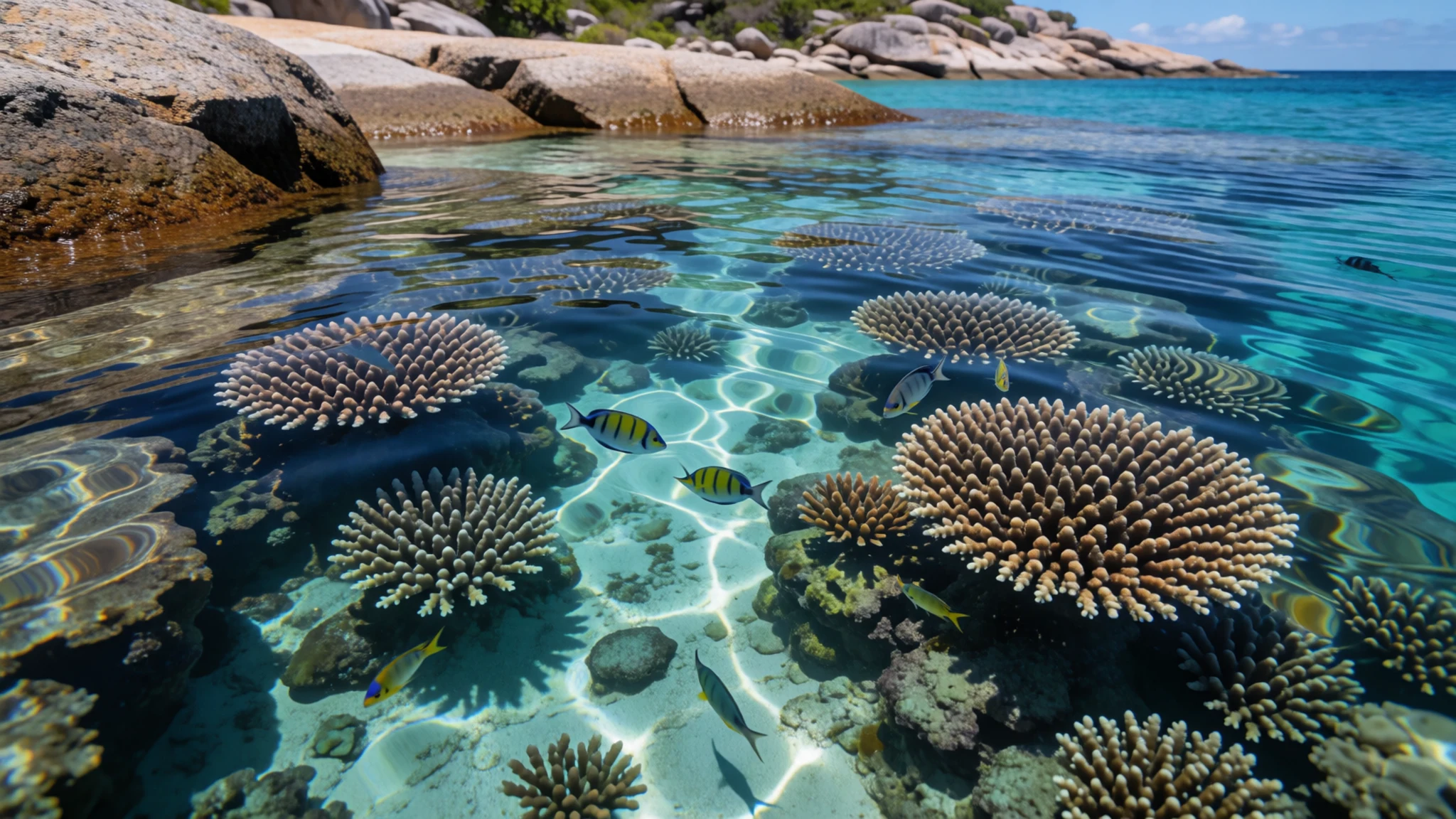
Culture
Cousin Island has no village and no resident community in the usual sense, so its culture is that of the Seychelles as reached through Praslin, together with a strong conservation ethic. Seychellois life blends African, European and Asian influences, and Seychellois Creole (Kreol) is spoken alongside English and French. On Praslin, boat crews, guesthouse owners and guides carry much of the local knowledge that visitors meet on the way to the island.
On Cousin itself the culture is that of a reserve. Rangers and wardens working for Nature Seychelles live by the island's rhythms: counting birds, watching nests, controlling invasive plants and briefing groups. Their pride in the recovery is plain, and questions are usually welcome. Conservation here is not abstract; it is the reason the woodland exists at all.
Beyond the reserve, Praslin and its neighbours keep Creole traditions of music, storytelling and cooking, with sega and moutya heard at festivals and evening gatherings. The Island Conservation Centre on Praslin adds context through its displays and education work, and is a sensible stop for anyone wanting to understand how Cousin fits into wider efforts across the islands. Respect for sea and land is part of everyday talk, and visitors who share that attitude tend to find conversations easy.
Stay on the marked paths, keep a respectful distance from nesting birds, and take nothing away from the island, not even a shell or a feather.
What to wear
Cousin Island has no dress code of its own, so fashion here means Seychellois Creole dress, everyday wear on Praslin, and what suits a day among birds. Traditional Creole dress for women is usually described as a full skirt and fitted blouse in bright printed or checked cotton, often with a headscarf, and it is worn mainly at festivals, folk performances and cultural events. Men's festive wear is simpler: a patterned or plain cotton shirt with light trousers.
Day to day, people on Praslin wear light cotton and linen, shorts, sundresses, sandals and flip-flops, with swimwear on the beaches and cover-ups when walking into villages or eating out. The look is relaxed and made for heat.
For a visit to Cousin, comfort and respect for wildlife matter more than style. Pack a light long-sleeved shirt and long, quick-drying trousers or a skirt for sun and insects, a wide-brimmed hat and sunglasses. Muted greens, browns and greys disturb birds less than bright colours. Landings are usually onto sand from a boat, so sandals that strap on securely are useful, with closed shoes with grip for the woodland paths. Bring a light rain layer, since showers can pass through at any time of year. Swimwear is fine on beaches, but cover up when visiting villages or churches.
What to eat
- Creole fish curry — Family-run eateries and beach cafés on Praslin
A fish curry cooked with tomato, onion, garlic, ginger and spices, often with coconut, and served with rice. It is the everyday dish of the islands, and the local catch varies with the day's boats.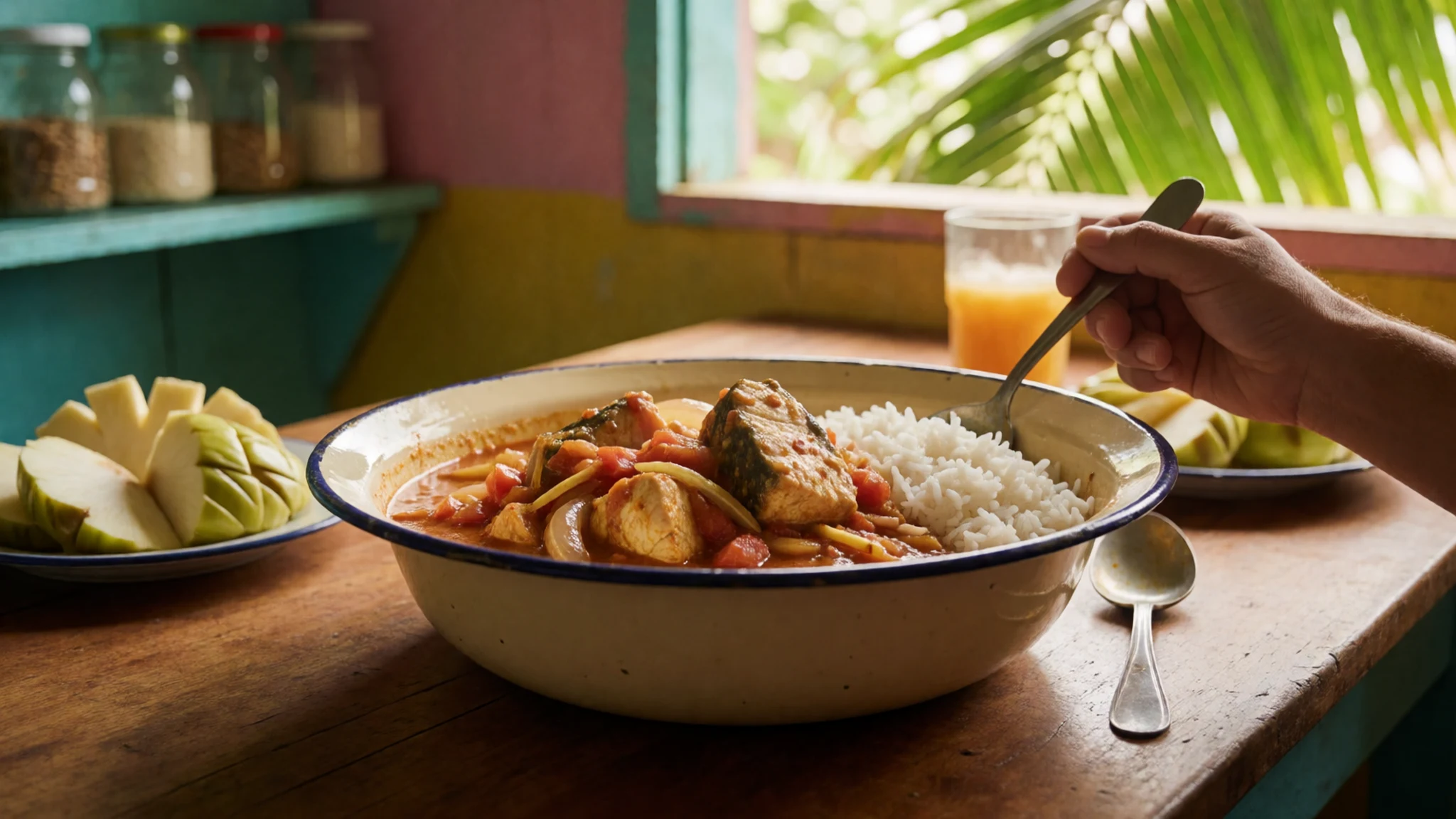
- Grilled fish with Creole sauce — Roadside and beachfront restaurants around Baie Sainte Anne
Whole or filleted fish cooked over heat and served with a tangy sauce of tomato, onion, chilli and herbs. Simple, fresh and best eaten with rice and a salad, preferably near the sea.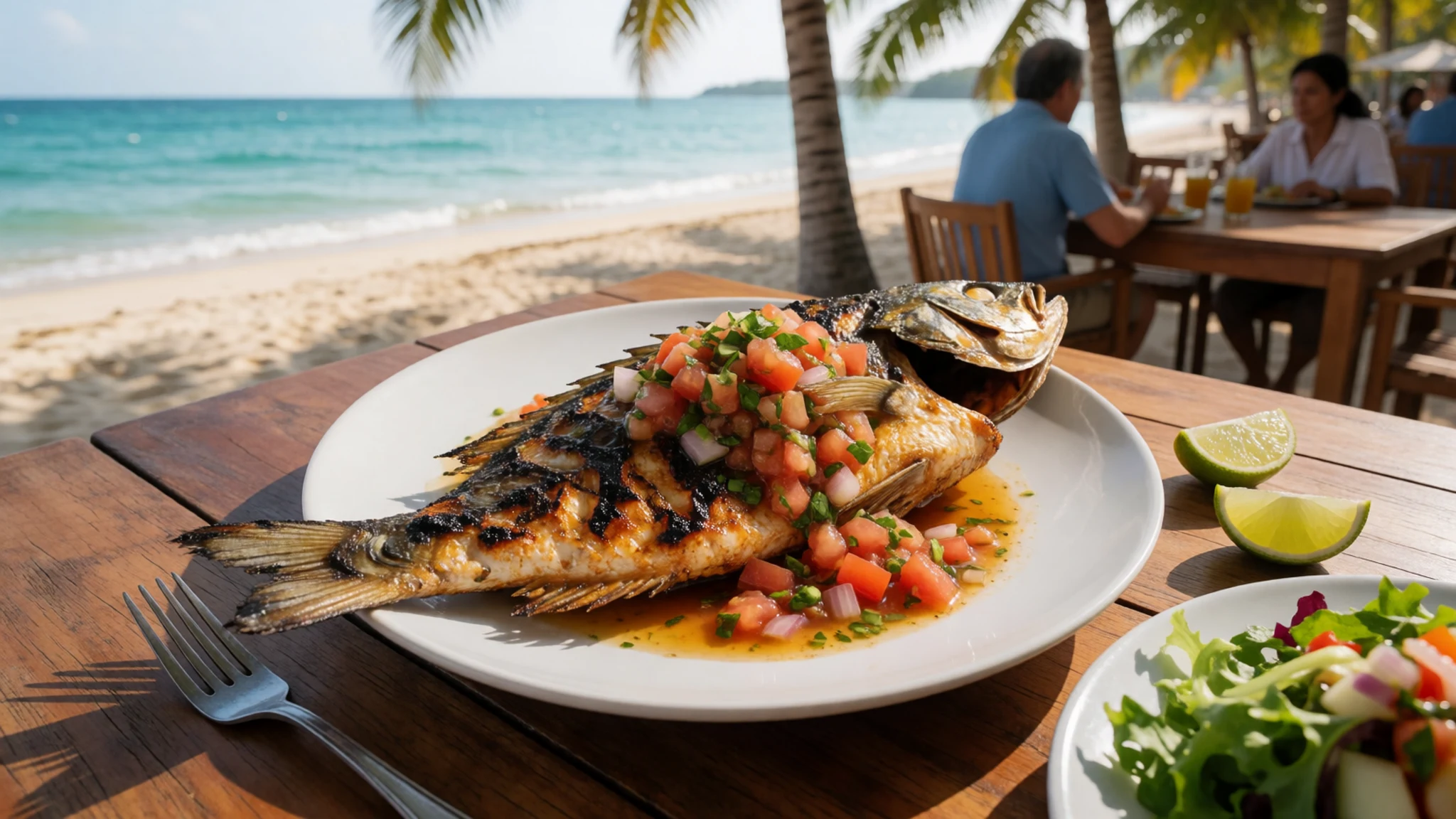
- Octopus curry (kari zourit) — Local Creole restaurants on Praslin
Octopus simmered until tender in a spiced, often coconut-based sauce. It is milder than it sounds and a good choice for anyone wanting something typically Seychellois rather than a standard resort menu. - Ladob — Home-style eateries and family tables during festivals
A sweet dish of banana or plantain, sometimes with sweet potato or cassava, cooked slowly in coconut milk with sugar, vanilla and spice. It is served warm as a dessert or a snack. - Breadfruit — Local markets and takeaway stalls on Praslin
Breadfruit is a starchy fruit that Seychellois cooks roast, boil, fry into chips or add to curries. It has a mild, potato-like flavour and is a staple side that soaks up sauces well.
Plan it
Best time. April–May and October–November, when the monsoon winds ease between seasons and seas are usually calmer for the short crossing. It is hot and humid all year; the northwest monsoon months bring more rain, and the southeast trade winds can make the water choppier. Seabird nesting varies through the year, so ask Nature Seychelles what is on.
How long. 1–2
Getting there. Fly to Mahé, then take a domestic flight or ferry on to Praslin. The last leg is a boat across the roughly 2 km of water from Praslin to Cousin, arranged through Nature Seychelles or a local operator.
Budget. high
Tips
- Check the current visiting arrangements with Nature Seychelles before travelling, as access to the island is managed and may change
- Book the boat and ranger well ahead in the busier months
- Go early, when it is cooler and the birds are most active
- Carry drinking water, sun protection and binoculars, as there are no facilities on the island
- Keep some cash for boat crews and guides, and ask in advance what cards are accepted
Etiquette
- Follow the ranger's instructions and keep to the marked paths
- Keep clear of nests and never handle wildlife
- Take all litter away with you
Nearby
Sources
- Wikidata Q595444 (CC0)
- Wikipedia: Cousin Island (rev 1385792711) (CC BY-SA 4.0)
- Photo: Cousin Island, Seychelles (Dreizung) (CC BY 3.0)
- Photo: Aldabra Giant Tortoise (Yotcmdr) (Public domain)
- Photo: White-tailed tropicbird (PINTofCARLING) (CC BY-SA 4.0)
- Photo: Seychelles Magpie Robin (Adrian Scottow) (CC BY-SA 2.0)
- Photo: Brown Noddy on nest (fred_pnd) (CC BY 2.5)
- Photo: Banyan tree (Marion Schneider & Christoph Aistleitner) (Public domain)
- Photo: Brown noddy (Marion Schneider & Christoph Aistleitner) (Public domain)
- Photo: Seychelles Magpie Robin, female (CC BY 3.0)
- Wikivoyage (CC BY-SA 4.0)


Wildlife
- Seychelles magpie robin (animal)
The Seychelles magpie robin is a rare, middle-sized bird in black and white, a little like a small waiter hopping about in a dinner suit. It belongs to the granite islands of the Seychelles, and on Cousin Island you will often spot it on the ground, so keep your eyes low as you walk. To watch it well, stay quiet, keep a respectful distance, follow your guide, and never feed it.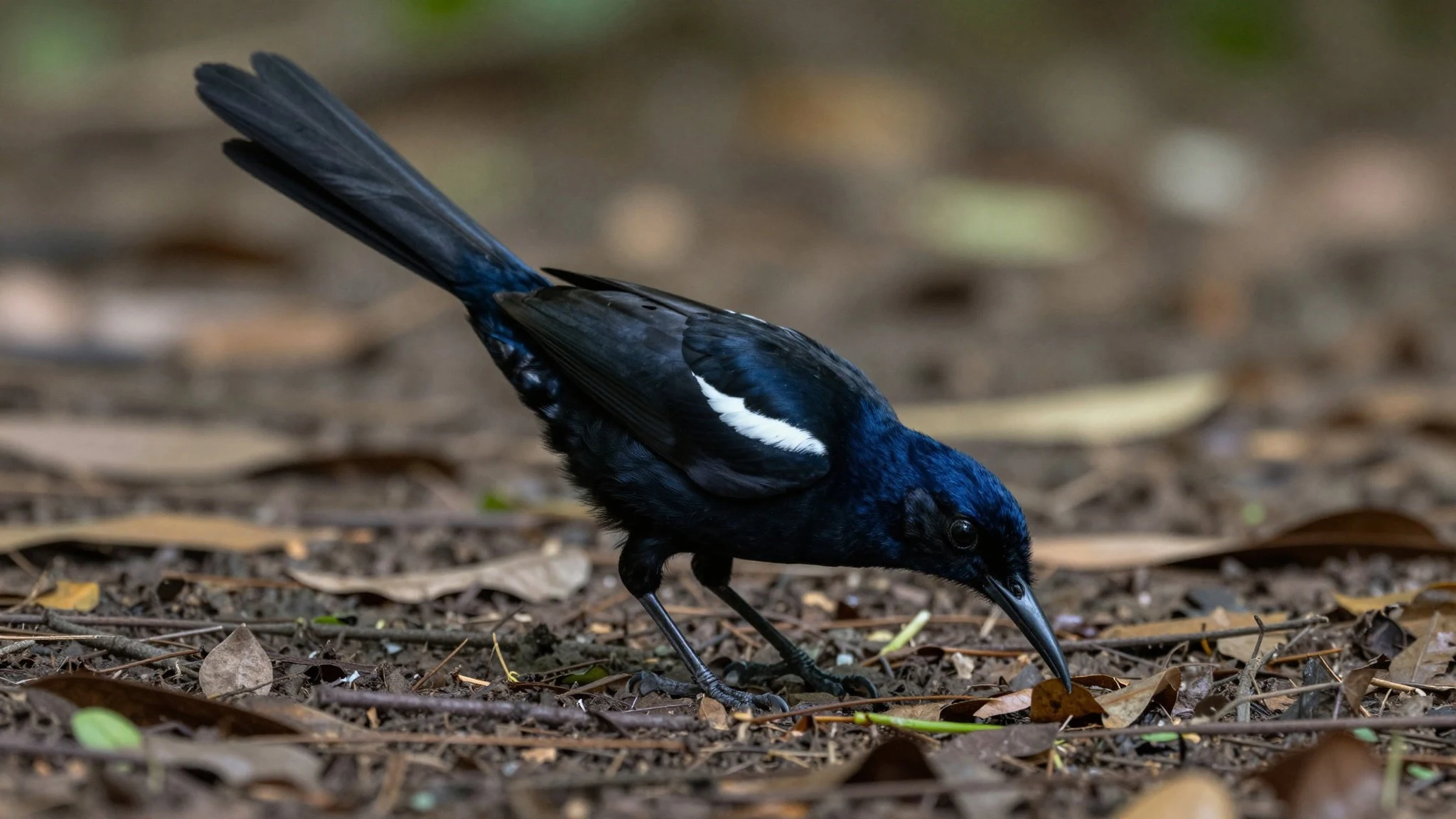
- White-tailed tropicbird (bird)
The white-tailed tropicbird is a small, slender white seabird that trails two long, ribbon-like feathers behind it. It nests on Cousin Island, and one was photographed sitting on its nest in August. The notes do not say where on the island or at what time of day to look, so ask your guide. Watch from a good distance, speak softly, keep still so the bird stays settled, and never feed it.