Desroches Island
Desroches Island, Seychelles
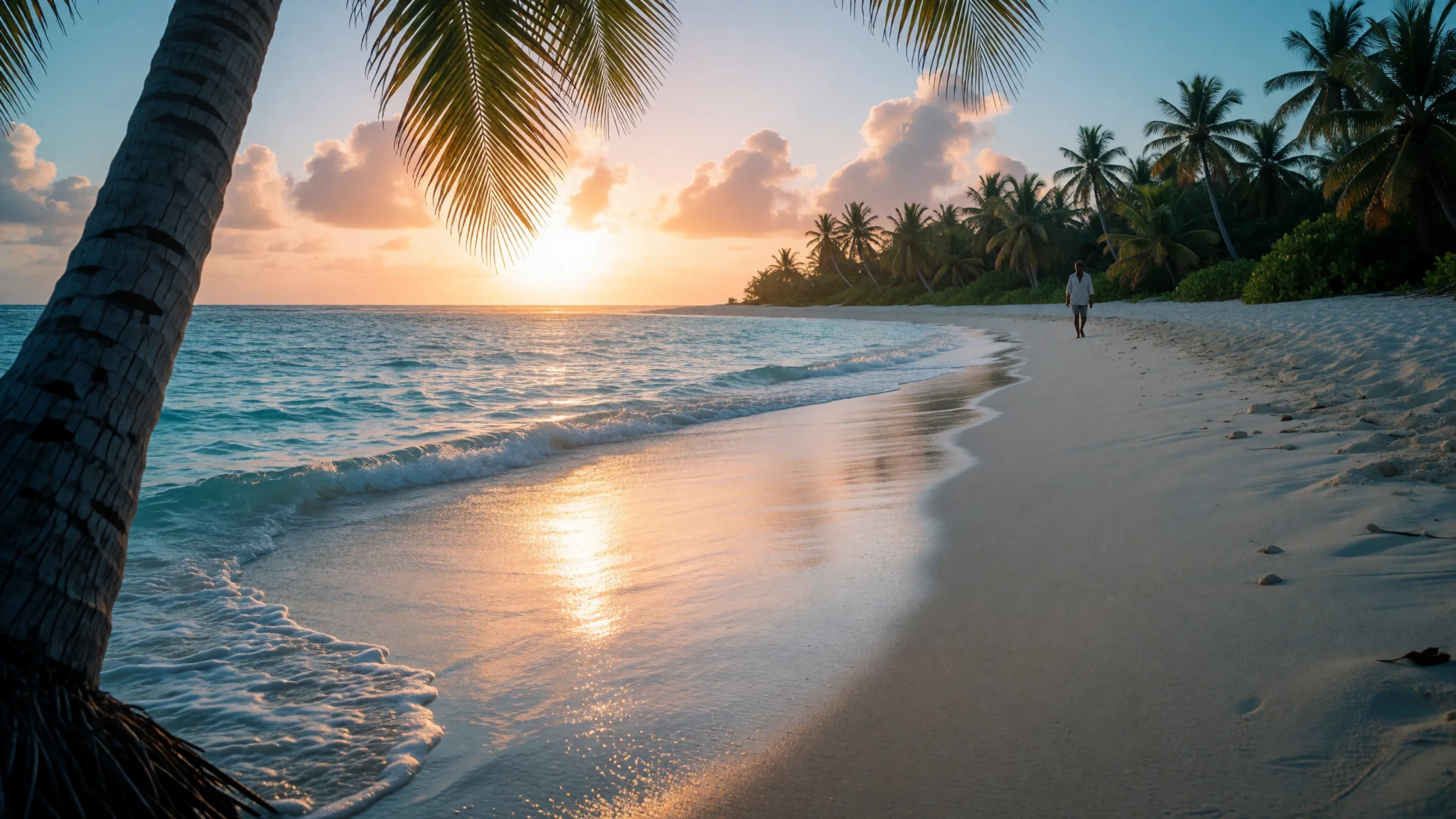
Desroches Island is a flat, palm-covered coral island in the Amirantes, with a ring of fine sand, a reef lagoon and almost no one around.
The place
Desroches Island is the main island of the Amirantes, a chain in the Outer Islands of Seychelles, lying about 227 km south-west of Victoria, the capital on Mahé. It is a flat coral island about 5.5 km long, and a band of fine sand runs round its circumference of roughly 13 km. Nothing on it rises more than a few metres, so the view from almost anywhere is sand, palm, sea and a very large sky.
The island is located on the southern rim of an atoll-style reef. A deep channel lets boats reach the lagoon, and to the north a shallow patch called Shark Rocks keeps navigators alert. Beyond the reef the seabed drops away into very deep water.
Sand moves naturally from the south-western end of the island towards the north-east. The north point therefore keeps growing, and satellite images show new vegetation there, almost all of it native, while other stretches of shore slowly thin.
People are few. About 300 people live on the island, and it runs mainly as a resort with a conservation team working alongside it. There is no town, no market and no traffic, and distances are short enough to cover on foot or by bicycle.
The climate is warm all year. January to May is the hottest spell and December to February the wettest. From June to November a steady south-east wind blows, which makes the days feel cooler and the sea rougher on exposed shores. June to September is noticeably drier than the rest of the year.
Its story
Desroches Island took its present name in 1771, when La Biolière, captain of the French ship Étoile du Matin, called it Île des Roches. He was honouring the governor of Île de France and Île Bourbon, which are now Mauritius and Réunion. British mariners knew it instead as Wood Island, after its dense tree cover. A French captain's compliment to an official and a British nickname for the vegetation are the oldest records of how outsiders saw the place.
The island's early economy was copra, the dried flesh of coconut that is pressed for oil, and a first settlement was established in 1835. Like the other Amirantes, Desroches became part of the separate colony of Seychelles in 1909.
In 1965 Britain detached it to create the British Indian Ocean Territory, with the aim of making room for a military base shared with the United States. The island went back to Seychelles in 1976, when the country became independent.
Tourism arrived modestly, with a lodge on Lodge Beach in 1972. The property was later renovated, extended and sold on several times, and in 2016 it passed to Four Seasons.
A second purpose began in 2009, when the Island Conservation Society opened a conservation centre. Its work includes turtle monitoring, bird counts, restoring native plants and relocating Aldabra giant tortoises, backed by an endowment fund. Plantation, politics, resort and research all left marks on the same small strip of sand.
What to see
- Lodge Beach — Resort side of the island
Lodge Beach is where the island's first tourist lodge opened, and it remains the centre of visitor life. The sand is fine and pale, and the water stays shallow for a good distance. Mornings are calm, so this is the natural place for a first swim and a slow walk along the shore.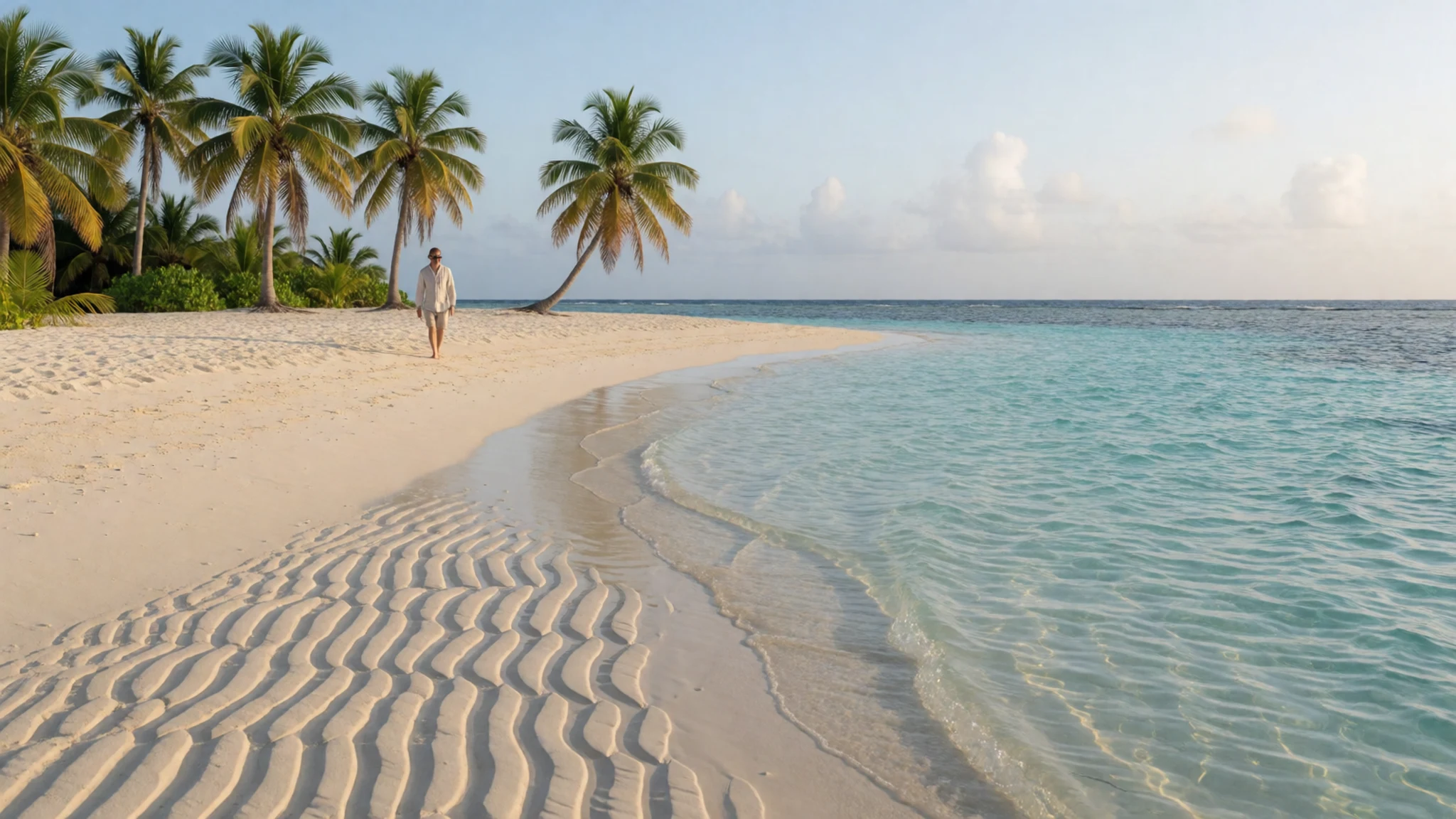
- Madame Zabre Beach — Western shore
Madame Zabre Beach lies on the western side, where the sunsets are. Its units are privately owned residences, so the stretch feels quiet and uncrowded. Visitors come for the long views over open water and for evening light. Check locally which parts of the shore are open to walkers before setting out.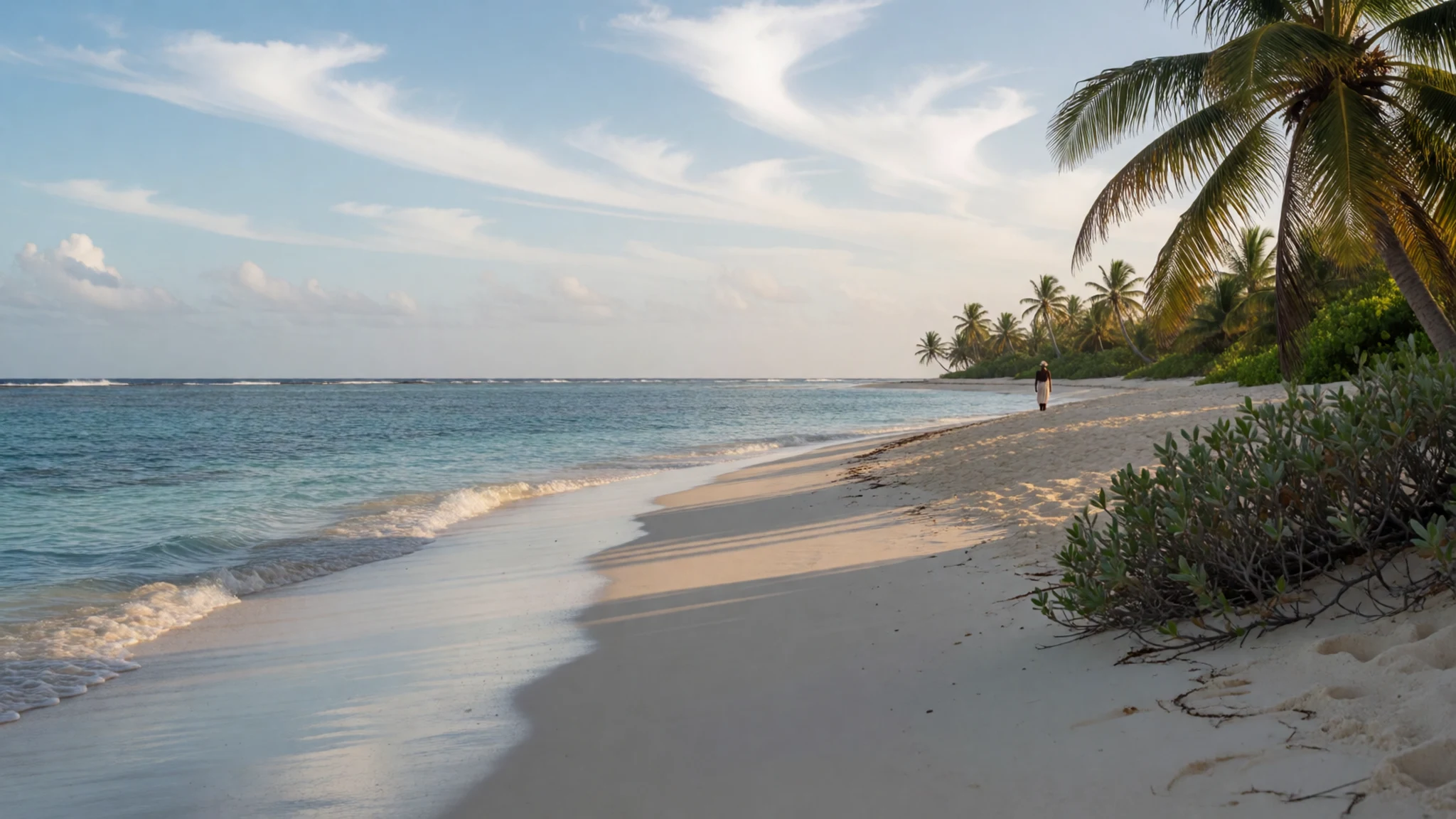
- North Point (Pointe Hélène) — North-eastern tip
North Point is the tip where drifting sand keeps building new beach, and where the vegetation is almost entirely native. It makes a good walk to watch how the shoreline changes. Birds and turtle tracks are common sights. Stay on open sand, keep clear of planting and leave nesting areas alone.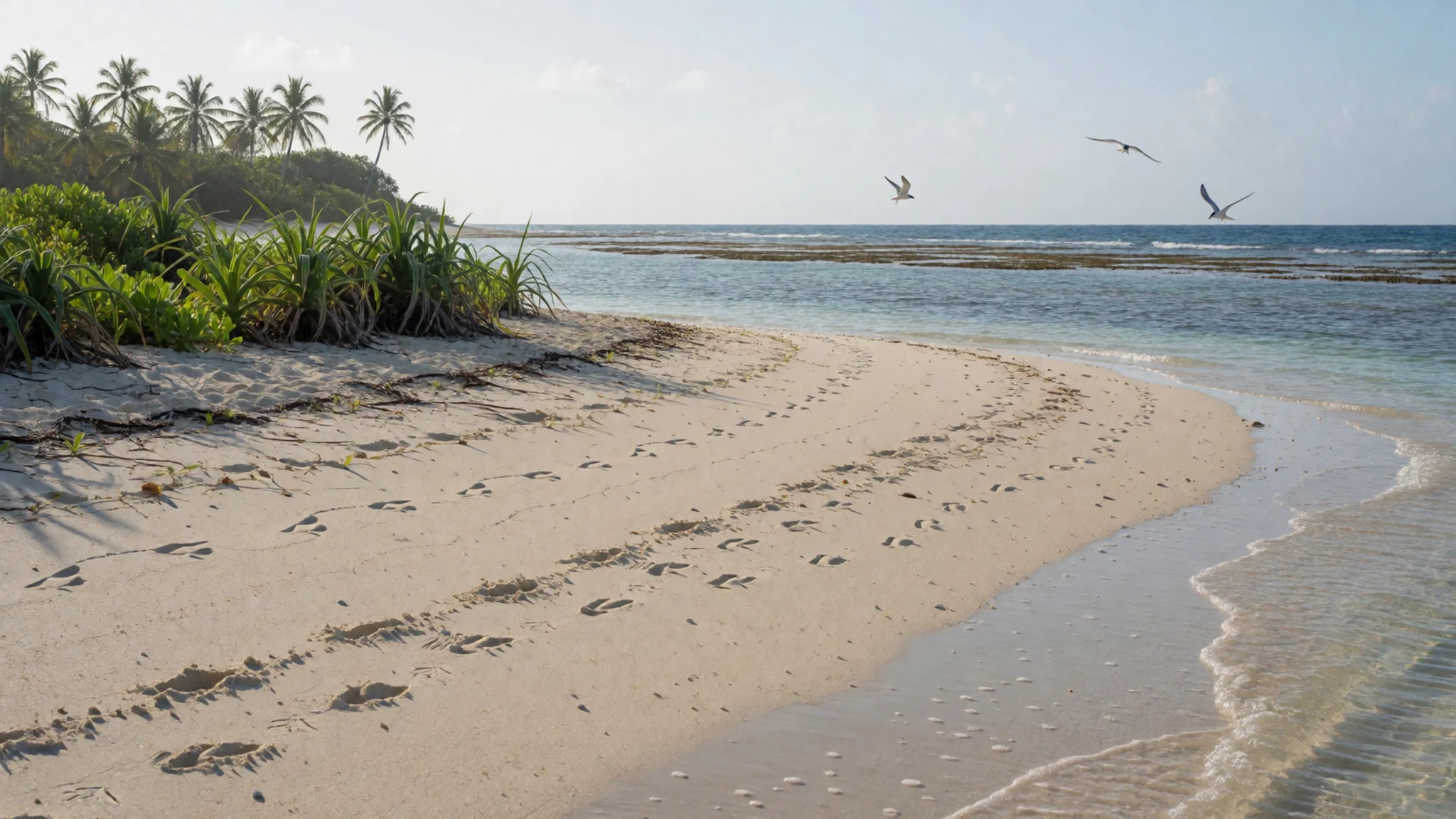
- Conservation Centre — Central island
The conservation centre, opened in 2009 by the Island Conservation Society, is the base for turtle and bird monitoring, island restoration and the Aldabra giant tortoise programme. It is worth asking at the resort whether staff offer talks or guided walks. They explain why some beaches and plantings are protected.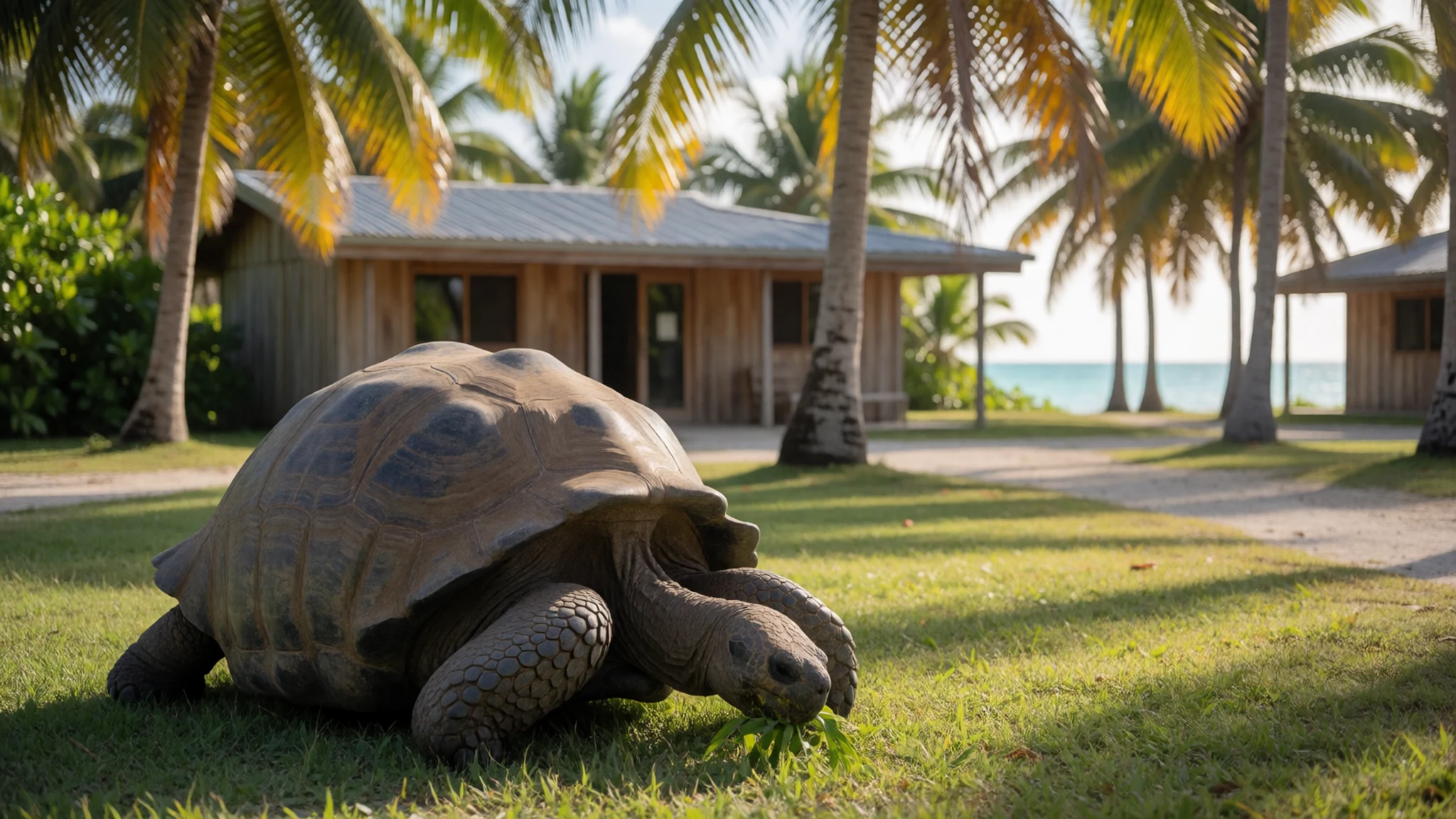
- The airstrip — Central island
The runway is the island's front door, and nearly every visitor arrives on a small plane from Mahé. It cuts a straight line across a landscape with almost no other straight lines. A walk or ride along its edge, outside flight times, shows how thin and flat the island is from end to end.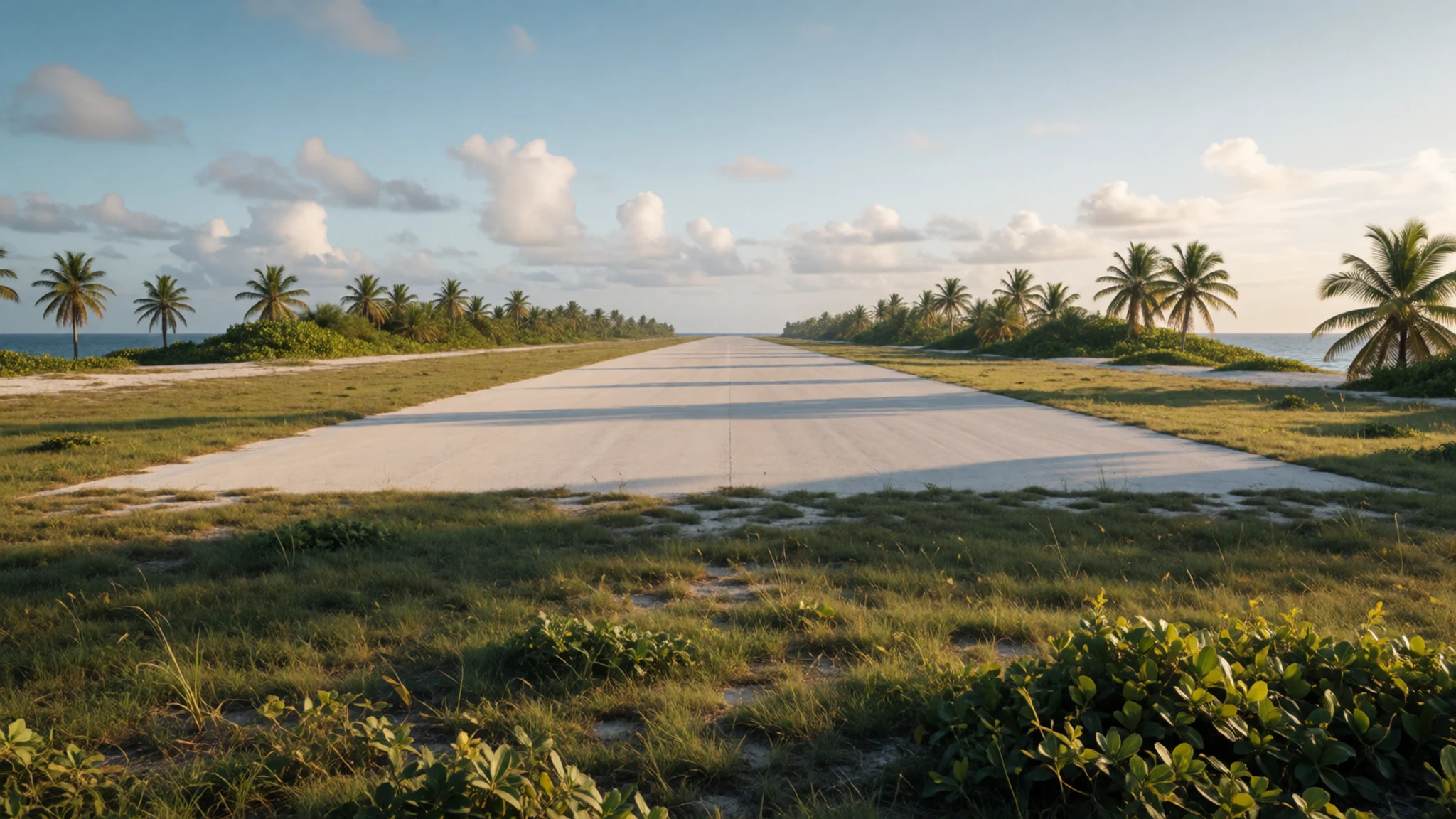
Culture
Desroches Island has no old town or temple quarter. Its culture is that of Seychelles as a whole, shaped by a plantation past and by the people who came to work it. Seychellois Creole (Kreol) is the everyday language, spoken alongside English and French, and many of the staff on the island come from Mahé and the other inner islands. Conversations are relaxed, and a few words of Kreol are received warmly.
The island's older layer is the copra economy that began with a settlement in 1835. Its newer layers are the lodge that opened in 1972 and the conservation centre of 2009. Together they make Desroches a place defined by work with the sea: coconut harvesting in the past, hospitality and wildlife monitoring now. Conservation staff are the people most likely to explain turtles, tortoises, birds and the changing shoreline, and their talks are the closest thing to local heritage interpretation.
Community life is small and quiet. With only a handful of residents and a few visitors at a time, courtesy matters more than ceremony. Greet staff by name where possible, ask before photographing anyone, and treat the island's protected areas as the main point of the place rather than as scenery.
On the beaches, keep to marked paths and open sand, never disturb nesting turtles or take shells, coral or tortoises, and keep lights, noise and dogs well away from them after dark.
What to wear
Desroches Island is too small and too recently settled to have a dress tradition of its own, so the relevant tradition is Seychellois Creole. At festivals, such as the Festival Kreol held around October, women wear long, full skirts with fitted bodices in bright printed cotton, often with a matching headwrap, and men wear light cotton shirts. Cotton and linen suit the heat, and the colours tend to be floral or strongly patterned. This formal Creole dress is mostly seen at celebrations on the main islands rather than on Desroches itself.
Day to day, people on the island wear what the climate demands: shorts, light shirts, sandals and hats for the resort staff and conservation team, and uniforms for service work. On work days the conservation team favours quick-drying fabrics and closed shoes for field walks. Swimwear is normal on the beaches, and evenings are casual.
Visitors should pack for sun, salt and heat rather than for occasions. Bring light, loose cotton or linen, a wide-brimmed hat, sunglasses and a long-sleeved shirt for the midday sun. Reef-safe sun cream protects both skin and the lagoon. Reef shoes are useful for rocky stretches and shallow coral, and flip-flops or sandals are enough for the sand. A light rain jacket covers the wetter months from December to February, and a windproof layer helps on boat trips when the south-east wind blows. Cover shoulders and knees when visiting local communities on the main islands. Small aircraft usually carry soft bags better than rigid cases, so pack light.
What to eat
- Grilled fish with Creole sauce — Beachside restaurants on the island
Freshly caught reef or open-water fish is grilled and served with a tomato, onion, garlic and ginger sauce. It is simple island cooking, usually offered with rice and a green salad. Ask the kitchen what was landed that morning, since the choice follows the catch.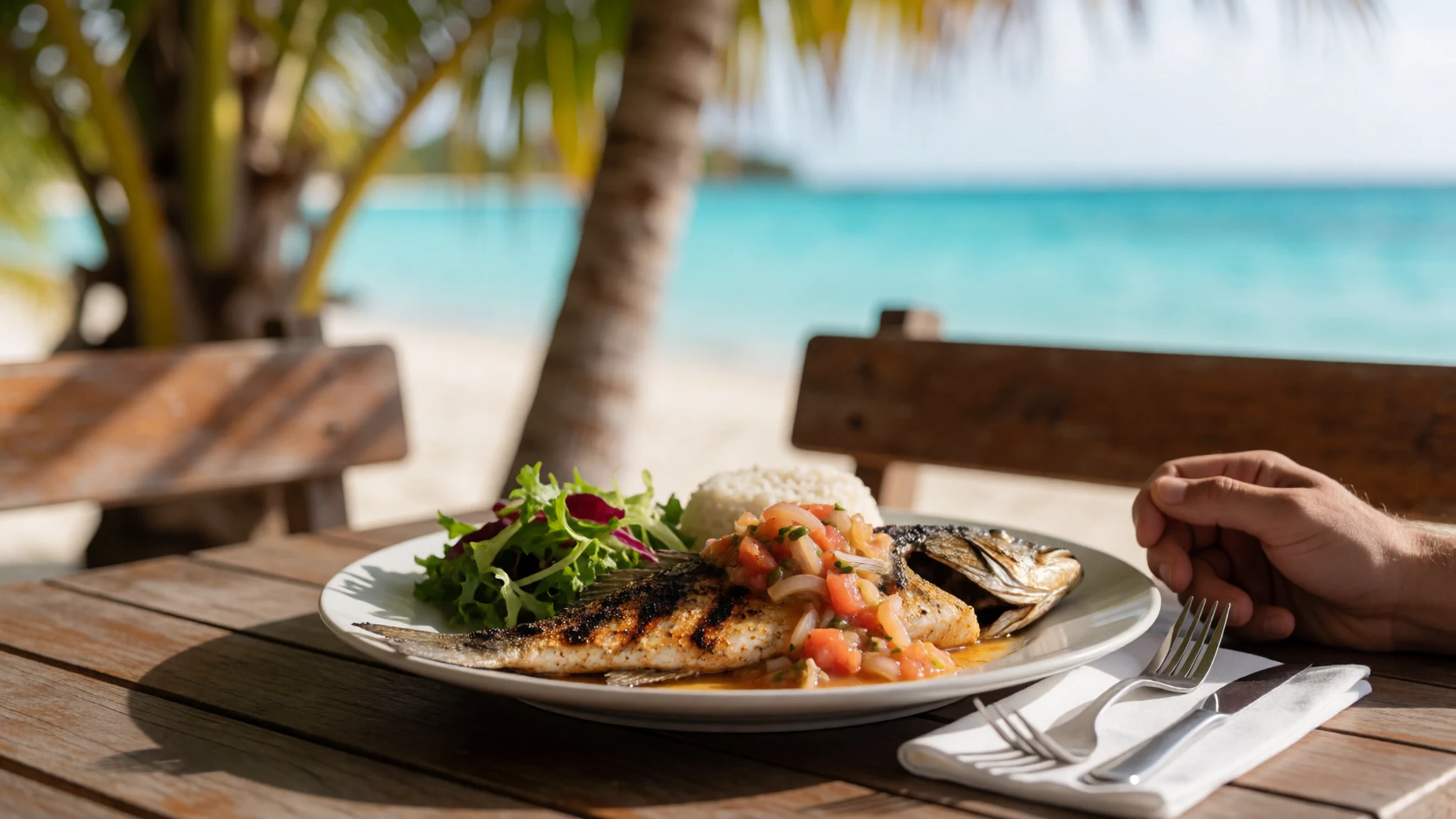
- Octopus curry — Resort dining rooms and Creole menus across Seychelles
A Seychellois favourite is octopus simmered in a spiced coconut sauce until tender, often with curry leaves and turmeric. It is rich but not fiery, and is normally eaten with rice. Look for it on Creole nights and at lunch buffets.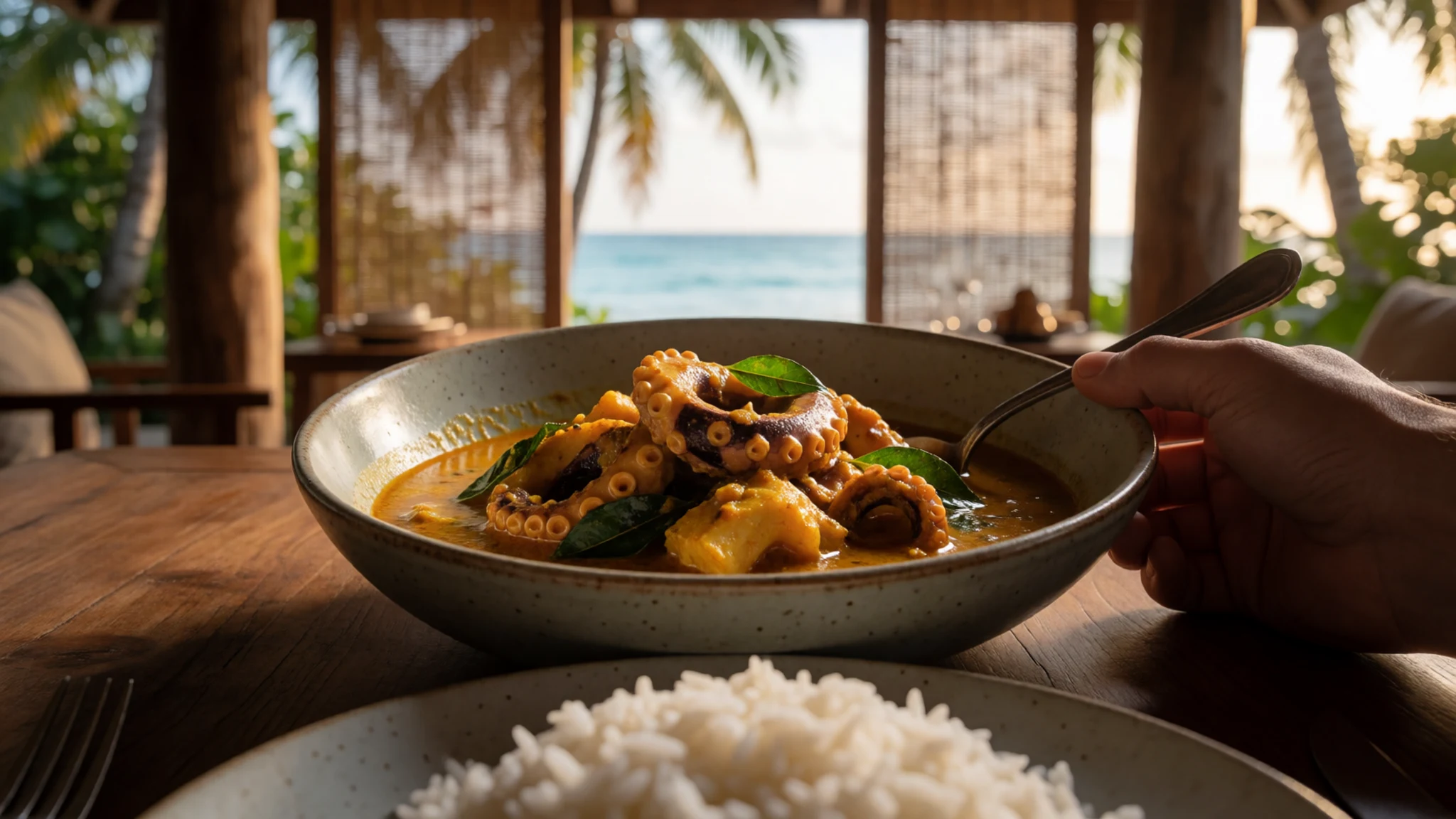
- Satini reken (shark chutney) — Creole home-style tables and special-menu evenings
A traditional Seychellois dish of cooked shark flaked with lime juice, onions and spices. It has a sharp, tangy flavour and is often eaten with rice. Sourcing varies, so ask staff how the fish is obtained. Many visitors choose other seafood instead. - Ladob — Dessert tables and local celebrations
A sweet Creole dessert of plantain, sweet potato or cassava cooked slowly in coconut milk with sugar, vanilla and nutmeg. Served warm or cool, it is the usual way to finish a Creole meal and a good use of the island's coconut heritage. - Fresh coconut and tropical fruit — Breakfast tables and beachside stalls
Coconut water straight from the nut, along with mango, papaya, banana and breadfruit in season, is the easiest local food to find. Coconut recalls the island's copra past. Fruit is best eaten at breakfast, when it is cool and freshest.
Plan it
Best time. April–May and October–November, when the south-east wind is easing and the rain is lighter. December to February is the wettest spell, January to May is hottest, and June to November brings a steady wind that can make the sea rougher. June to September is the driest stretch.
How long. 3–5
Getting there. Fly into Seychelles International Airport on Mahé, then take a short flight in a small aircraft to Desroches's own airstrip, roughly 227 km south-west. There is no road or ferry link, so book the transfer with the resort or an airline and check the official site for current schedules.
Budget. high
Tips
- Book the island flights early, since small aircraft have limited seats and strict baggage allowances
- Carry soft bags and keep luggage light
- Bring reef-safe sun cream, a hat and insect repellent, as shade is limited on open beaches
- Take cash and cards from Mahé, as there are no shops or banks on the island
- Expect rougher water on exposed shores from June to November and check conditions before swimming or boating
Etiquette
- Keep to marked paths and open sand, and do not disturb nesting turtles or birds
- Never take shells, coral or live animals from the beach or reef
- Ask before photographing staff or other guests
Nearby
Sources
- Wikidata Q620506 (CC0)
- Wikipedia — Desroches Island (rev 1379795200) (CC BY-SA 4.0)
- Wikivoyage — Desroches Island (CC BY-SA 4.0)
- Photo: Desroches (Acp at German Wikipedia) (CC BY 3.0)
- Photo: Seychelles large map (Public domain)
- Photo: Desroches ISS022 (NASA) (Public domain)
- Photo: Desroches beach (Pieter Visser) (Public domain)
- Photo: Admiralty Chart No 724 (UK Hydrographic Office) (Public domain)
- Photo: Madame Zabre Beach (David Jones) (CC BY 2.5)
- Photo: North Point (David Jones) (CC BY 2.5)
- Photo: The runway at Desroches airport (David Jones) (CC BY 2.5)


Wildlife
- Aldabra giant tortoise (animal)
Picture a living boulder that walks very slowly: the Aldabra giant tortoise, among the biggest tortoises on Earth and a native of Seychelles. Conservation work on Desroches includes moving tortoises to new homes, so they are part of the island's recovery story. Nothing here says when or where you will meet one, so enjoy any encounter as a happy surprise. Keep to marked paths while you look, and never pick up or take a tortoise away.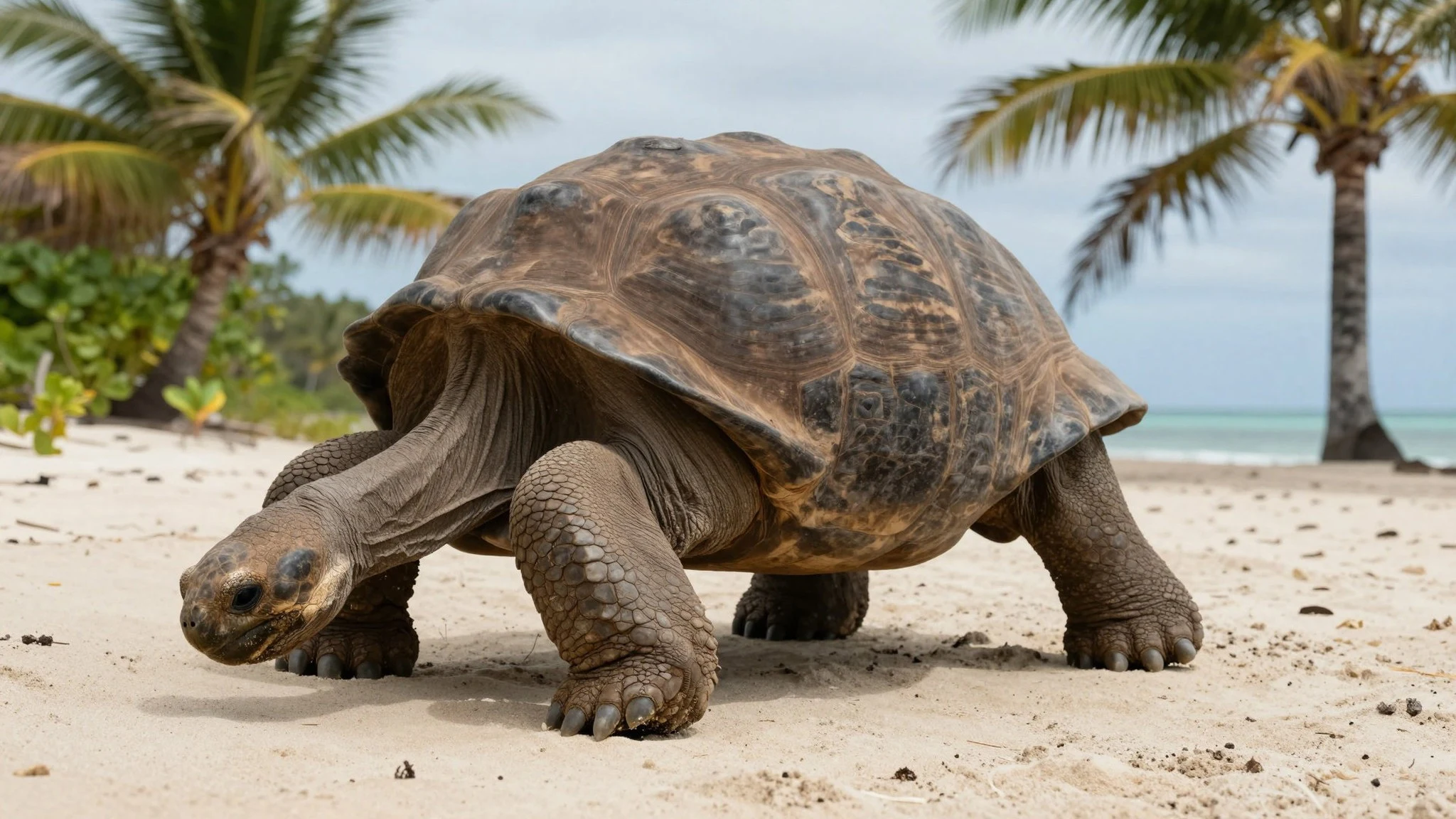
- Green sea turtle (animal)
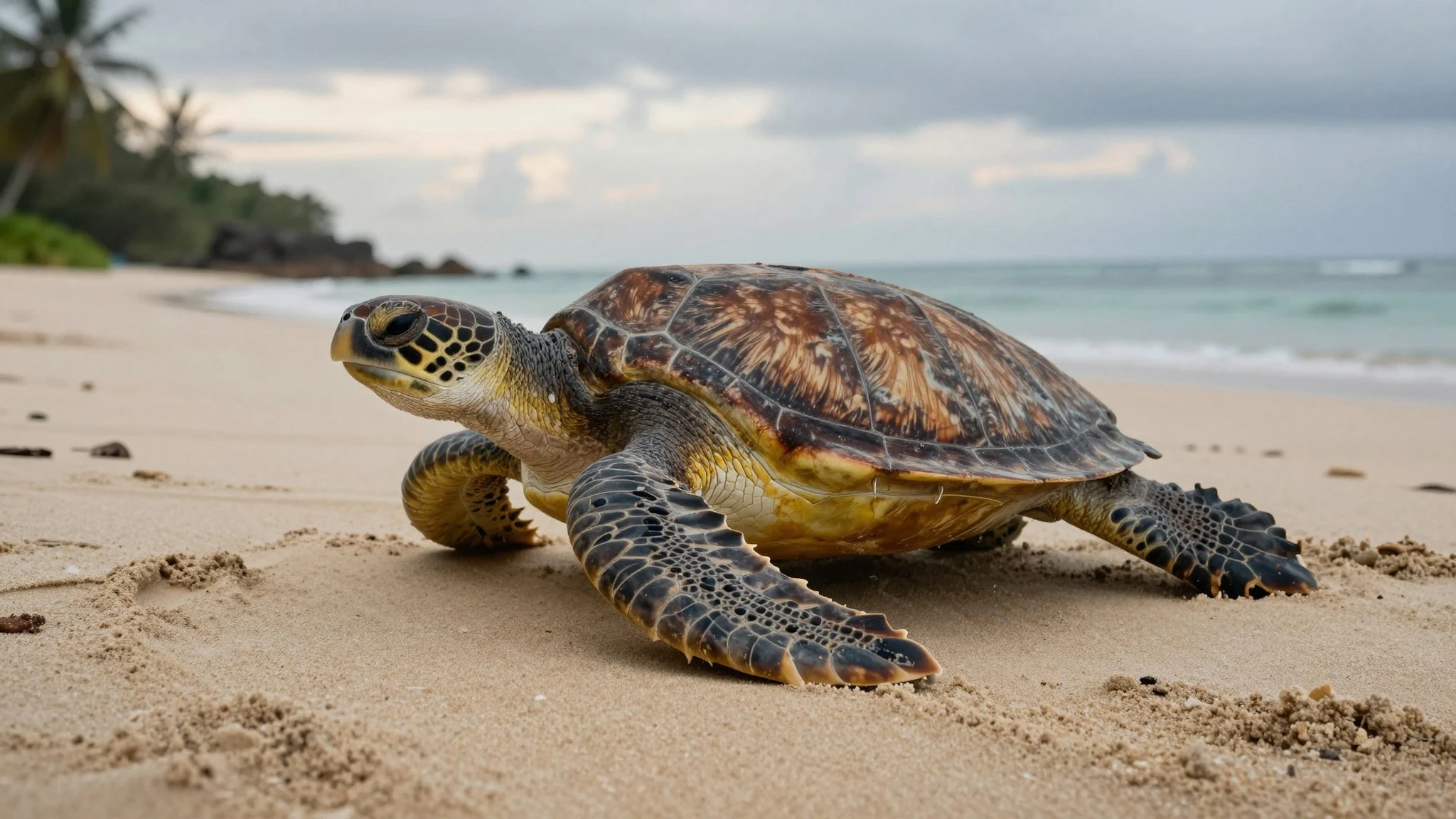
The green sea turtle is a big sea turtle named for the green-tinted fat under its shell, not its olive-to-black back, because it eats only seagrass. Desroches' beaches are where nesting turtles may be found, though no season is given here. After dark, keep lights, noise and dogs well away. Stay on waymarked paths and bare sand, never disturb a nesting turtle, and take no shells or coral home.