Farquhar
Farquhar, Seychelles
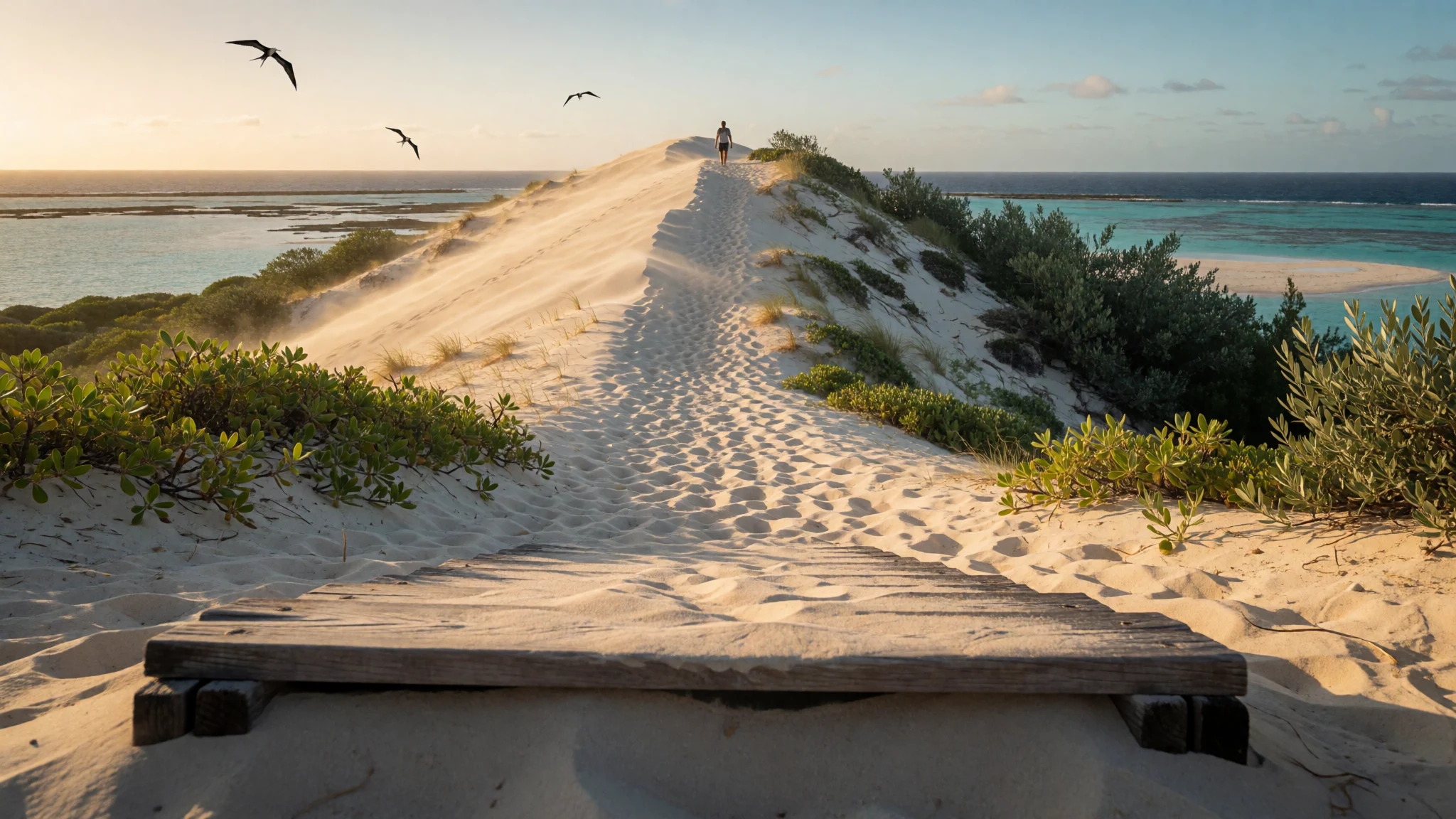
Farquhar is a remote Seychelles atoll of sand dunes, a vast lagoon and almost no one, reached mainly by fly-fishing guests.
The place
Farquhar Atoll sits in the southern Indian Ocean, a ring of low islands wrapped around a very large lagoon. It belongs to Seychelles, but the distances are the point: about 770 km south-west of Mahé and the capital Victoria, 258 km north of Madagascar, and roughly 1,000 km from the East African mainland. Nobody arrives by accident. The whole atoll covers 170.5 square kilometres, yet only 8.357 square kilometres of that is land; the rest is shallow water, reef and lagoon. That ratio shapes everything. The islands are thin strips of sand and scrub arranged in a long curve down the eastern side. North Farquhar and South Farquhar are the biggest, with the small Manaha islets between them and Goëlettes further south. On the far western edge lie Sable and the little Trois Islands group. Height is modest, as on any atoll, but the dunes are an exception, rising to over 23 metres, which on a coral island feels like a proper hill. There is no town and no ordinary tourism. The practical reality is a small lodge used by guests on catch-and-release fly-fishing trips run with Alphonse Fishing Company, so most visitors come with rods rather than beach towels. Expect heat, wind, salt and sun with little shade, and a quiet broken mainly by birds and surf. Honest summary: this is a place for people who want remoteness and accept the logistics and cost that come with it.
Its story
Farquhar Atoll entered European records in 1504, when the Portuguese navigator João da Nova met the Outer Islands while leading an expedition towards India. For a long time afterwards the atoll carried a vague version of his name. The present name dates from 1824 and honours Robert Townsend Farquhar. Fishing camps were set up on North Island in 1850, and the atoll then spent years in an awkward limbo, with both Mauritius and Seychelles claiming it. In 1881 officials in Seychelles argued that the atoll, with several other outer islands, should be run from Victoria. The owners were based in Mauritius and objected, but after a long political dispute they lost, and administration passed to Seychelles. By 1960 the village at the northern tip of South Island had been abandoned. From 1965 until Seychelles became independent in 1976, Farquhar was part of the British Indian Ocean Territory. Basic infrastructure was renovated in 2004, and in 2014 the Island Conservation Society opened a conservation centre on North Island. The hardest chapter came on 16 April 2016, when Cyclone Fantala crossed the atoll. It is recorded as the strongest tropical cyclone in the south-western Indian Ocean. The storm surge wrecked most buildings, leaving the cyclone shelter standing. The Islands Development Company then rebuilt the infrastructure, including the guest accommodation for fishing groups.
What to see
- The lagoon from above — The whole atoll
The first thing to grasp about Farquhar is its scale, and the clearest view is from the air or from satellite imagery. The lagoon dwarfs the land, and the pale flats, channels and reef edge show how the atoll is built. On a flight in, look for the long eastern curve of islands.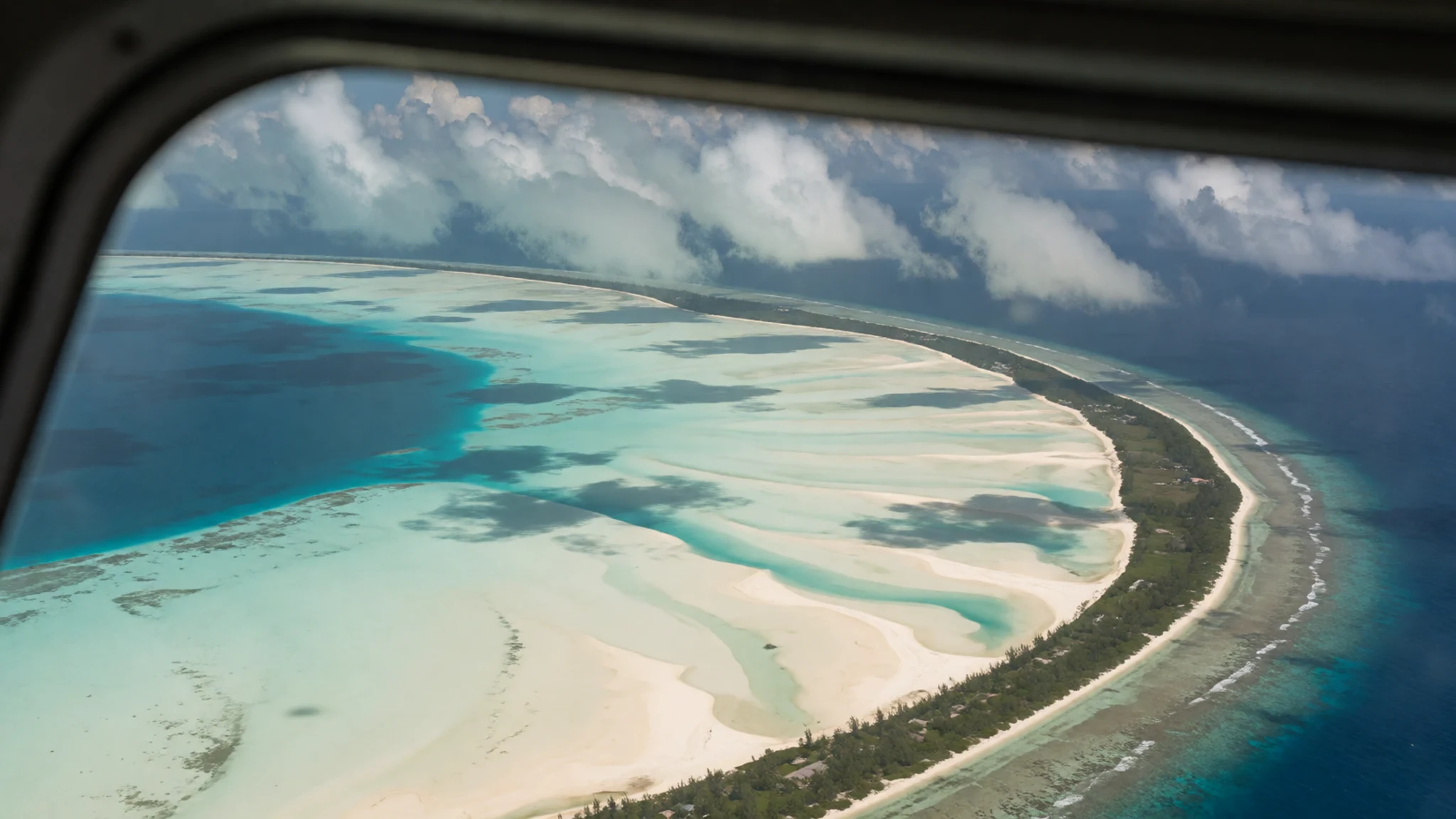
- North and South Farquhar — Eastern arc of the atoll
These two are the largest islands, strung along the eastern side of the atoll. Walking is easy but shadeless, so a hat matters. The old settlement on South Island was abandoned by 1960, and a quiet walk there gives a sense of how people once tried to live on this coral.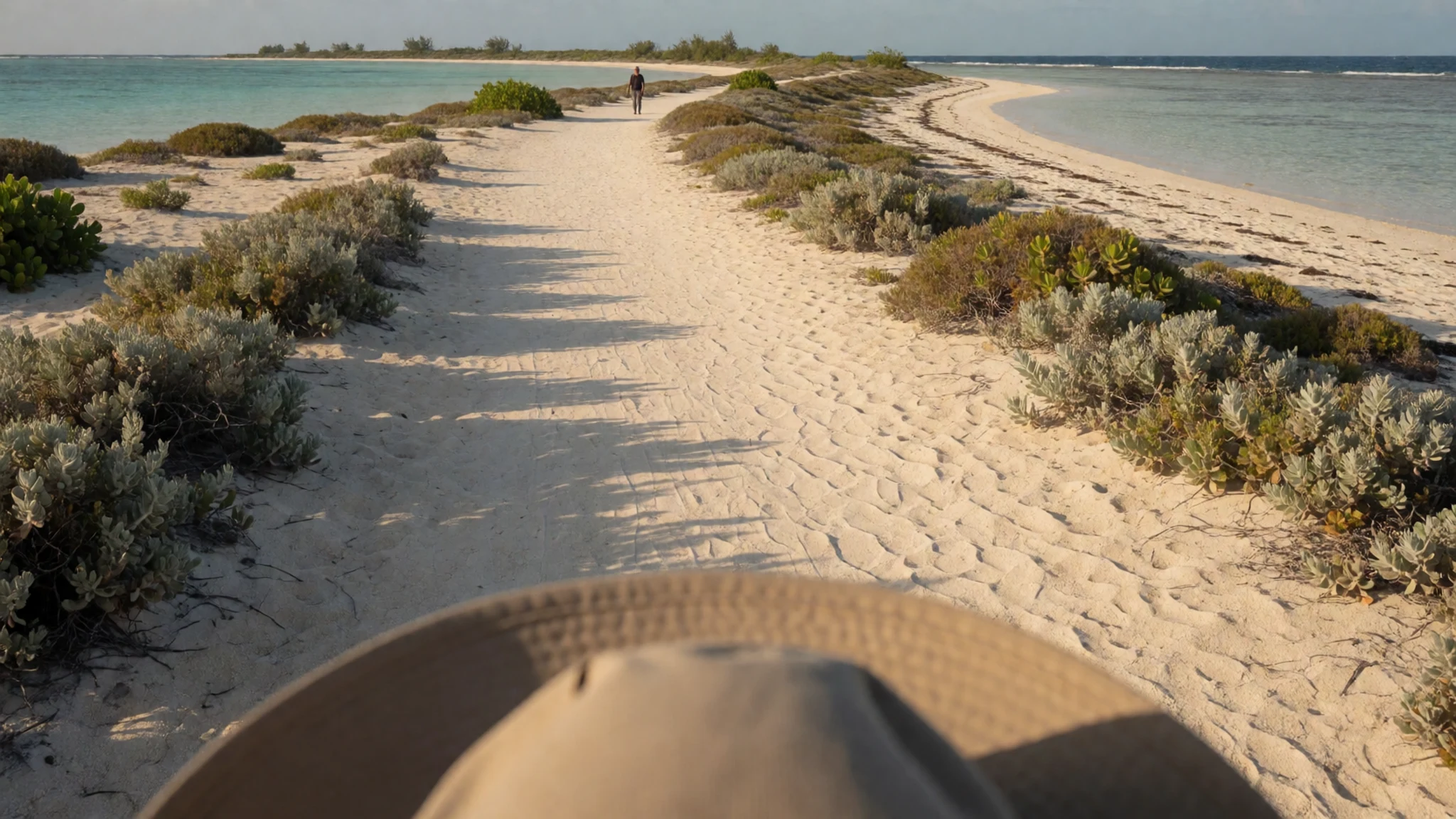
- The high dunes — Dune ridges on the islands
Farquhar is known for sand dunes that climb past 23 metres, remarkable on an island otherwise barely above the waves. They are shaped by wind and held together by hardy coastal plants. Stay on existing paths, since the vegetation is what keeps the sand from simply drifting away.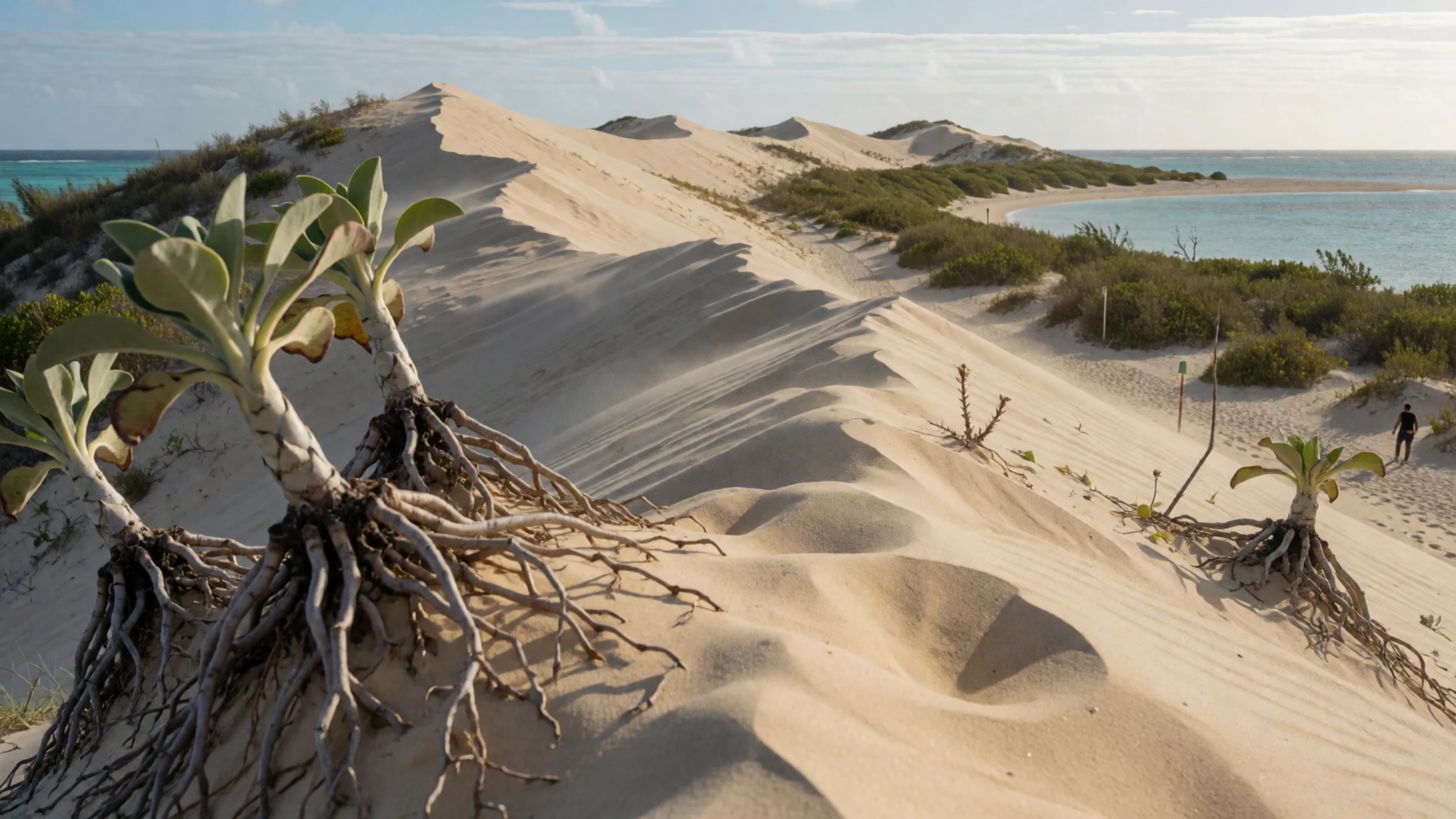
- Manaha and Goëlettes — Central and southern curve
Between the two big islands lie the small Manaha islets, with Goëlettes further south. These smaller islands suit patient observers: seabirds, crabs and the edge of the reef are the main events. Visits depend on the lodge and the tides, so ask the guides what is accessible that day.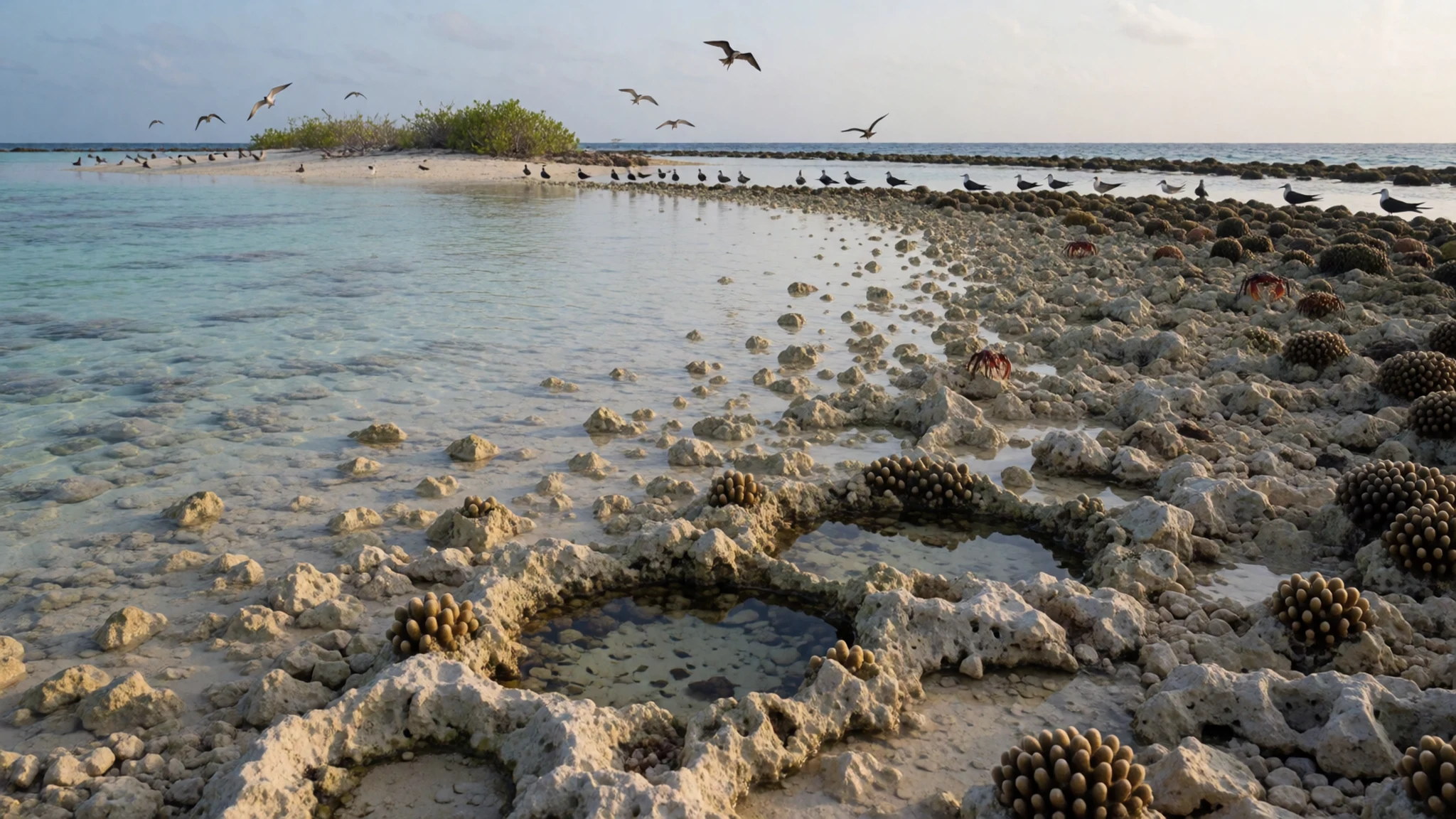
- Sable and the Trois Islands — Western edge of the atoll
On the far western side of the lagoon, Sable and the small Trois Islands group sit apart from the main curve. They are reached by boat across the shallows, which makes the lagoon's size obvious. Wind and water depth decide whether a trip is sensible, so it is the guides' call.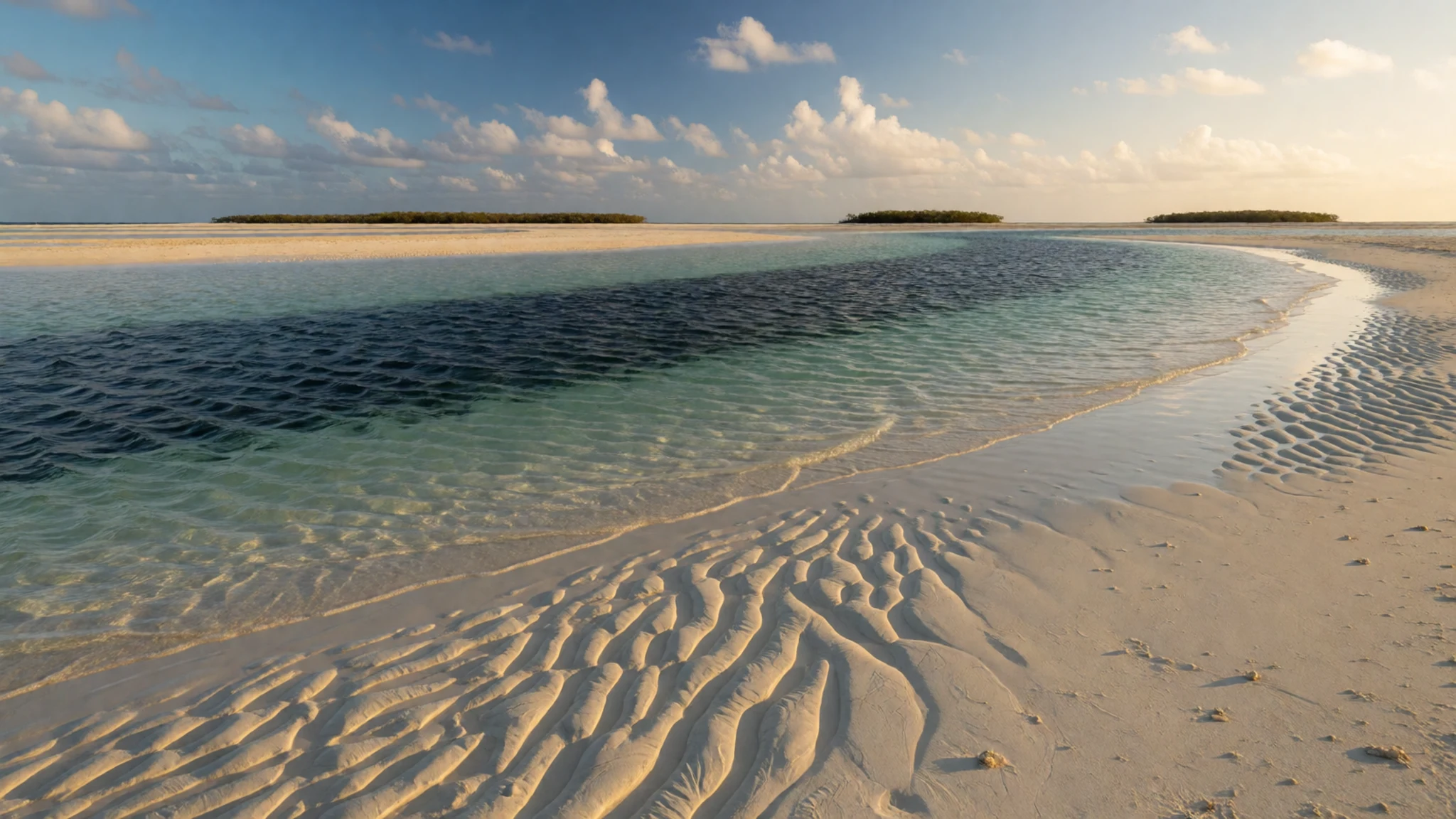
- The 1879 Admiralty chart — Public-domain archive image
Before visiting, it is worth looking at the British Admiralty sea chart of the Farquhar group, surveyed in 1878 by officers of HMS Fawn. It shows the reef, the inner harbour entrance and the soundings that mariners relied on, and reads like a portrait of the atoll's hazards.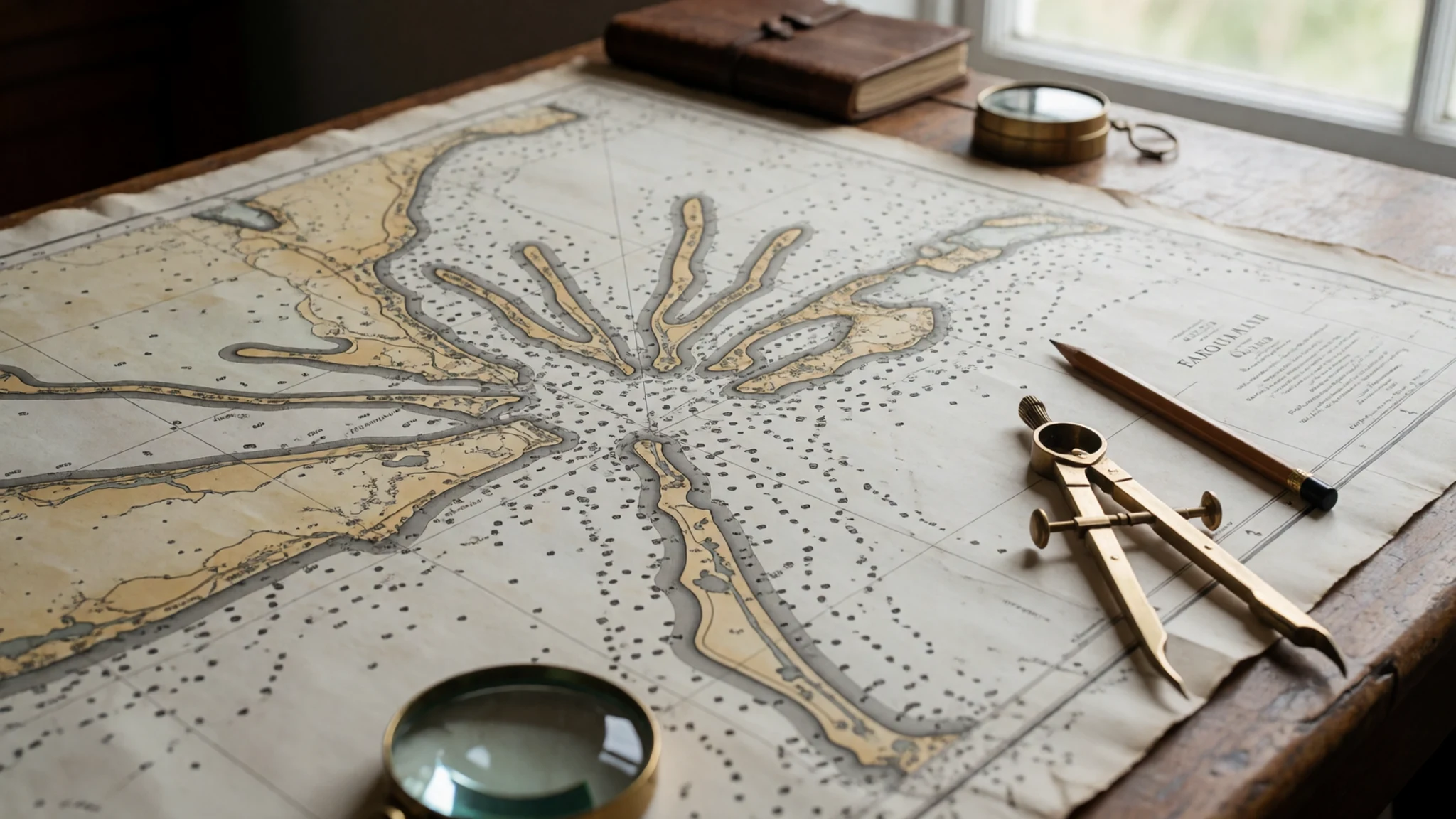
Culture
Farquhar Atoll has no permanent community today, so its culture is really that of the wider Seychelles, carried here by the staff, boat crews and guides who work on the islands. Seychellois Creole, a French-based language, is the everyday speech among Seychellois, alongside English and French. The atoll's human story is one of temporary work: fishing camps, plantation-era settlement, and a village that emptied by 1960. Today the rhythm is set by tides, weather and the demands of the fishing programme. Conservation is part of the culture here too. A centre run by the Island Conservation Society opened on North Island in 2014, and the idea that these islands are fragile and best left as undisturbed as possible is shared by many who work on the Outer Islands. The memory of Cyclone Fantala in 2016 is also very present, since staff have had to rebuild from the storm. Meals, music and conversation at the lodge tend to be relaxed, humorous and unhurried, in the island manner. Visitors will notice how much depends on teamwork when supplies and people have to cross such a distance. Handle every fish with wet hands, keep it in the water as much as possible, and follow your guide's instructions on release, because this is a catch-and-release operation.
What to wear
Farquhar has no resident population, so there is no local costume tied to the atoll itself. The traditional dress belongs to Seychelles Creole culture on the main islands: for women, long skirts and dresses in bright printed cottons, often with a headscarf, worn mainly at festivals, dance performances and national celebrations. Men may wear light cotton shirts in similar prints on those occasions. These are ceremonial clothes now rather than daily wear. What people actually wear on Farquhar is practical. Staff and guides dress in quick-drying shirts, shorts or lightweight trousers, caps and sturdy sandals or boat shoes. Anglers wear long sleeves and wide-brimmed hats against relentless sun. A visitor should pack the same: long-sleeved, breathable, light-coloured shirts, a buff or neck cover, polarised sunglasses, a hat with a chin strap for the wind, and strong sun protection that is kind to reefs. Wading calls for proper wading boots or neoprene booties, because coral and shell can cut bare feet. Shorts and swimwear are fine at the beach and lodge, though covering up for meals and around staff is polite. Bring a light waterproof jacket for squalls and for crossing the lagoon by boat. There are no shops on the atoll, so forgotten kit stays forgotten.
What to eat
- Fish curry with coconut — Lodge meals; home-style eateries on Mahé
A staple of Seychellois cooking: fresh fish simmered in coconut milk with turmeric, tamarind and garlic. It is mild, rich and tangy, and served with rice. Expect it at the lodge, and at family tables and eateries on Mahé.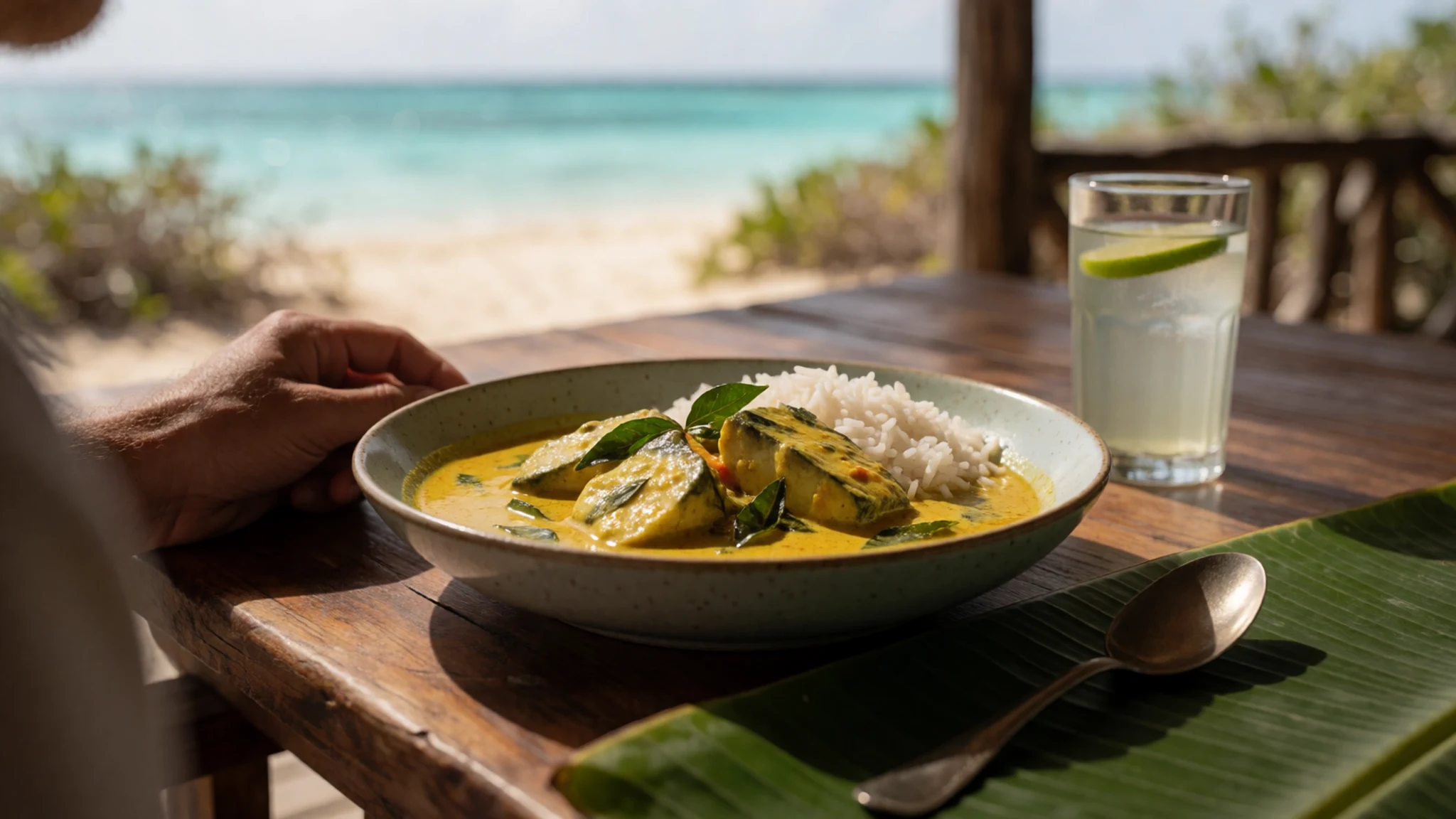
- Grilled fish with creole sauce — Lodge kitchen; beachside grills on the main islands
Whole or filleted fish grilled over heat and served with a tomato, onion and chilli sauce. The catch is usually the day's, so what arrives depends on the boats. It is simple, smoky and generous with spice.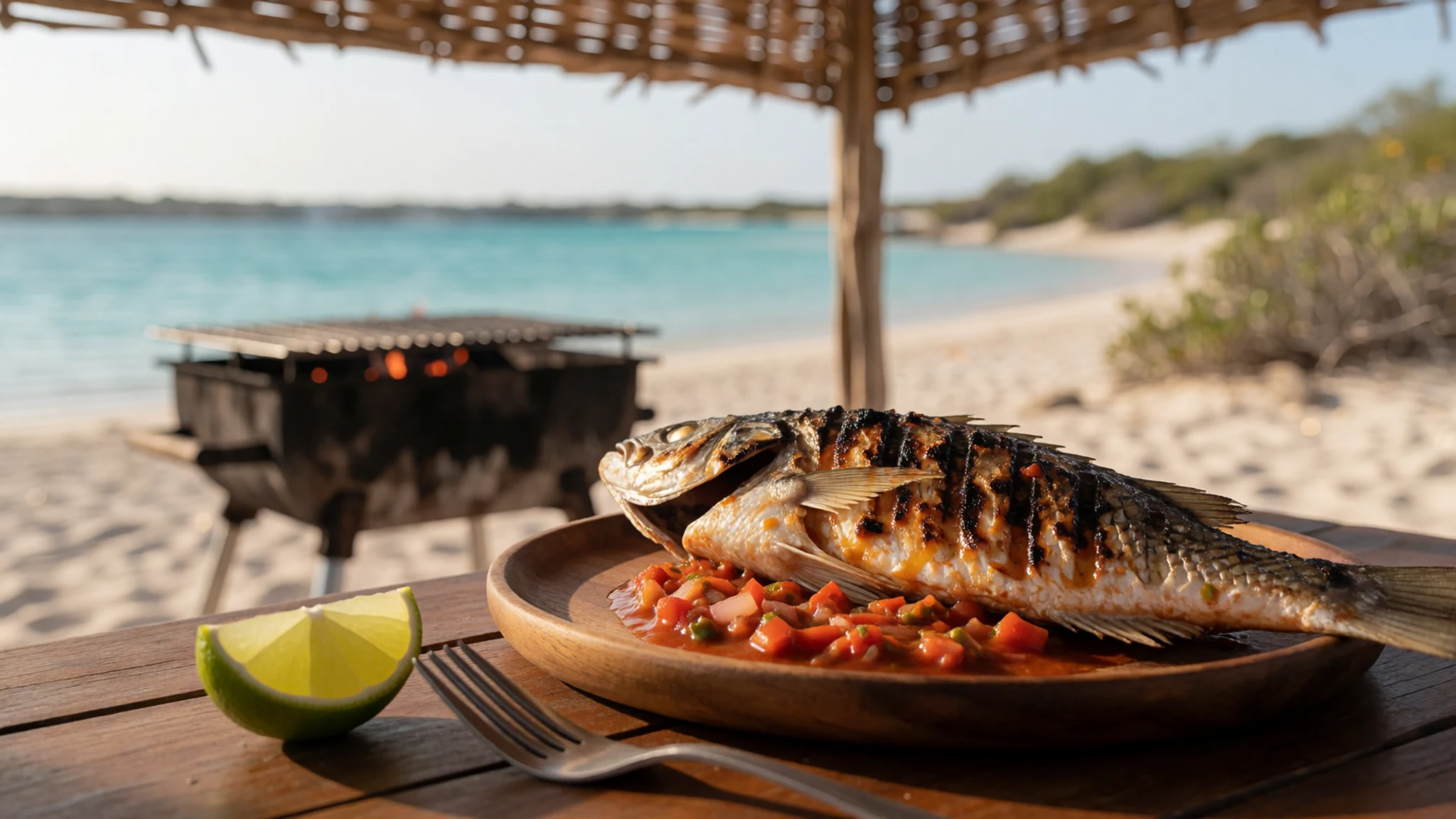
- Octopus curry — Creole restaurants and eateries around Victoria
Octopus is cooked slowly in a spiced coconut sauce until tender, a favourite across Seychelles. The sauce is often darker and sharper than fish curry, with ginger and lime. Order it with rice and a side of satini. - Satini — Served as a side at most Creole meals
A fresh, tangy relish made from shredded green mango, fish or octopus, with lime, onion and chilli. It sits alongside curries and grilled fish as a sharp counterpoint, and varies from cook to cook. - Ladob — Home cooking; market stalls and cafés in Victoria
A sweet Creole dessert of banana, sweet potato or cassava cooked slowly in coconut milk with sugar, nutmeg and vanilla. It is comforting rather than elegant, and may be served warm or cold.
Plan it
Best time. Roughly May to October, when the south-east trade winds bring drier and more settled weather than the northern-hemisphere winter. November to April is the cyclone season for this part of the Indian Ocean, and Farquhar was badly damaged in April 2016. Fishing conditions also vary by month, so ask the operator for current guidance.
How long. 4–7
Getting there. There is no public transport to Farquhar. Access is arranged through the fishing operator, Alphonse Fishing Company, for guests staying at the lodge. International visitors normally fly to Mahé first, then the operator organises the onward leg across the Outer Islands. Check the operator's official site for current routes and booking terms.
Budget. high
Tips
- Book through the operator well ahead, since places are limited and the logistics are complex
- Pack everything you need, because there are no shops, and bring spare fishing leaders, sunscreen and any medicines
- Carry cash and cards for Mahé, but expect little to buy on the atoll itself
- Start early on the flats, when the wind is usually lighter and the light easier to read
- Bring a refillable bottle and ask the lodge about drinking water
Etiquette
- Follow the guides' instructions on handling and releasing fish
- Do not take shells, coral or sand, and stay on marked paths in the dunes
- Keep clear of nesting birds and report any litter you find
Nearby
Sources
- Wikidata Q941936 (CC0)
- Wikipedia: Farquhar Atoll (rev 1383963401) (CC BY-SA 4.0)
- NASA Farquhar Atoll photo (Public domain)
- Seychelles large map (Public domain)
- Farquhar Group, 1879 Admiralty chart (cropped) (Public domain)
- Indian Ocean Islands off the north coast of Madagascar, 1879 chart (Public domain)
- ISS002-E-5333 View of Seychelles (Public domain)
- ISS002-E-5580 View of Seychelles (Public domain)
- ISS002-E-6914 View of Seychelles (Public domain)
- ISS002-E-9777 View of Seychelles (Public domain)
- Wikivoyage (CC BY-SA 4.0)


