Phimai
Phimai, Thailand
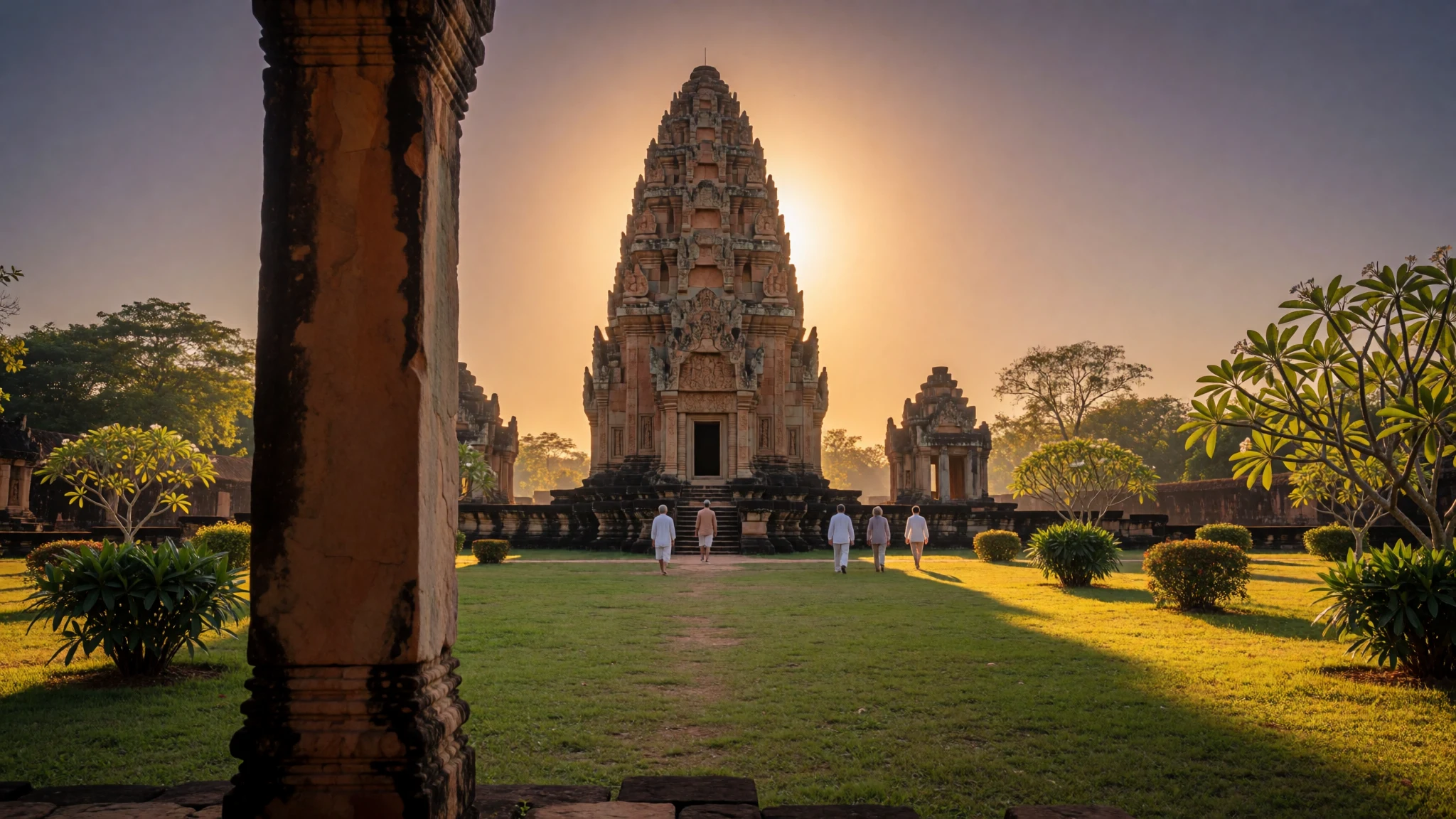
Phimai is a Khmer temple town in north-eastern Thailand, where a quiet sandstone sanctuary stands among shops, noodle stalls and a shady banyan grove.
The place
Phimai sits in Nakhon Ratchasima province, on the dry Khorat plateau of north-eastern Thailand, the region known as Isan. It is a small town rather than a city: low shopfronts, a street plan that still follows the outline of an old walled enclosure, and a Khmer temple complex right in the middle instead of on the edge. That placement is what makes the place unusual. Motorbikes and shared pickup taxis pass beside the old south gate, and the sanctuary is part of the town's daily geography rather than a separate attraction behind car parks and barriers.
The surrounding landscape is flat and agricultural, mostly rice paddies, cassava and sugar cane, with the Mun river and its tributaries shaping the land. Heat is the dominant fact of the climate. The hot months from March to May bring punishing afternoons, the rains arrive mid-year and turn the fields green, and the cooler dry season from November brings clear skies and comfortable walking.
Most visitors come from Bangkok, or from Nakhon Ratchasima, often called Khorat, either as a day trip or as an overnight stop on a longer loop through Isan's Khmer ruins. Crowds are modest compared with Angkor: mainly Thai school groups and domestic tourists at weekends and festival times, with a trickle of foreign travellers. Family-run guesthouses cater to them, and evenings are quiet, with a small night market, a few bars and early closing.
Phimai works best as a slow stop. A morning at the ruins before the heat builds, noodles for lunch, the banyan grove in the late afternoon and a walk beside the old moat at dusk make a full day without any strain.
Its story
Phimai was a significant provincial centre of the Khmer world, and its sanctuary shows how far that world reached across the Khorat plateau. Long before Thailand took its present shape, this region lay within the orbit of the empire based at Angkor, and a network of roads tied outlying towns to the capital. Phimai stood on one of those routes, and the temple built here was laid out with the care of a royal project rather than a village shrine.
The builders used sandstone for carved doorways and lintels and laterite for walls and foundations, and they set the main tower on an axis facing toward Angkor. Many Khmer temples were dedicated to Hindu gods, but Phimai was designed around Mahayana Buddhist imagery. Hindu motifs appear too, and the carved lintels mix Buddhist figures with scenes from Hindu epics, a sign of how faiths overlapped in the region.
As Khmer power faded, control of the plateau passed to other kingdoms, and eventually the area came under the rulers of Ayutthaya and later Siam. The temple stayed in use as a Buddhist site and the town kept living around it, which helped stop the structure being swallowed by forest. In modern times Thailand's Fine Arts Department studied the complex, put fallen stones back in place using careful records, and opened the site as a historical park.
The restoration is visible. Some towers look crisp, others are weathered, and the line between original and rebuilt stone is part of the experience. The site also makes a quiet point: the Khmer past belongs to Thai history as well as to Cambodia's.
What to see
- Phimai Historical Park (Prasat Hin Phimai) — Town centre
The central sanctuary is the reason most people come. A tall main tower stands in a walled courtyard of pale sandstone and darker laterite, ringed by galleries and smaller shrines. Look closely at the carved lintels over the doorways. Go early, as there is little shade, and check the official site for opening arrangements.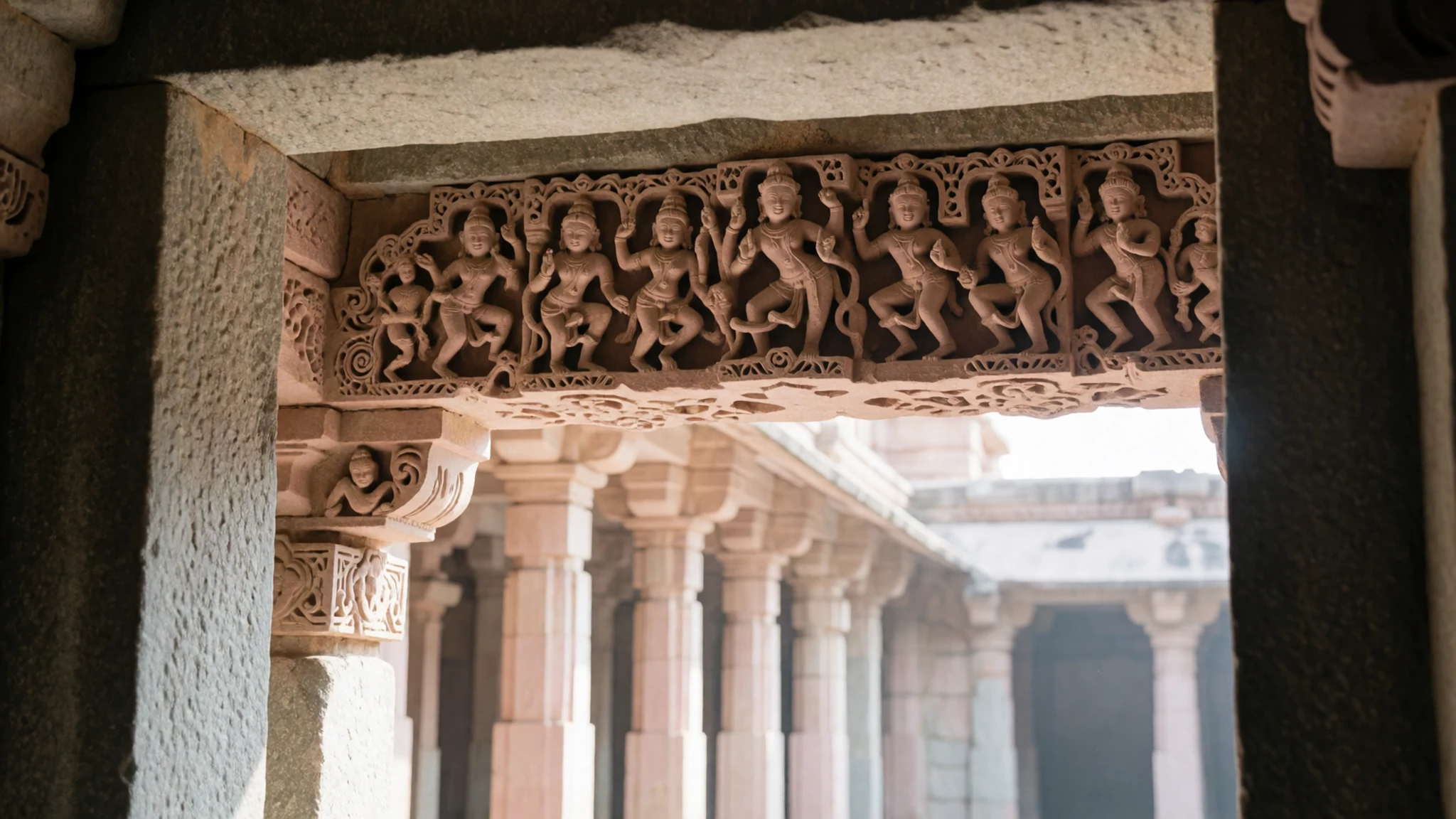
- Phimai National Museum — Near the historical park, east of the centre
This museum holds carved lintels, statues and everyday objects recovered from the temple and from other Khmer sites in the region. It is the best place to see sculpture at close range and in the cool, which also helps make sense of what is still standing outside. Check the museum's current opening days before travelling.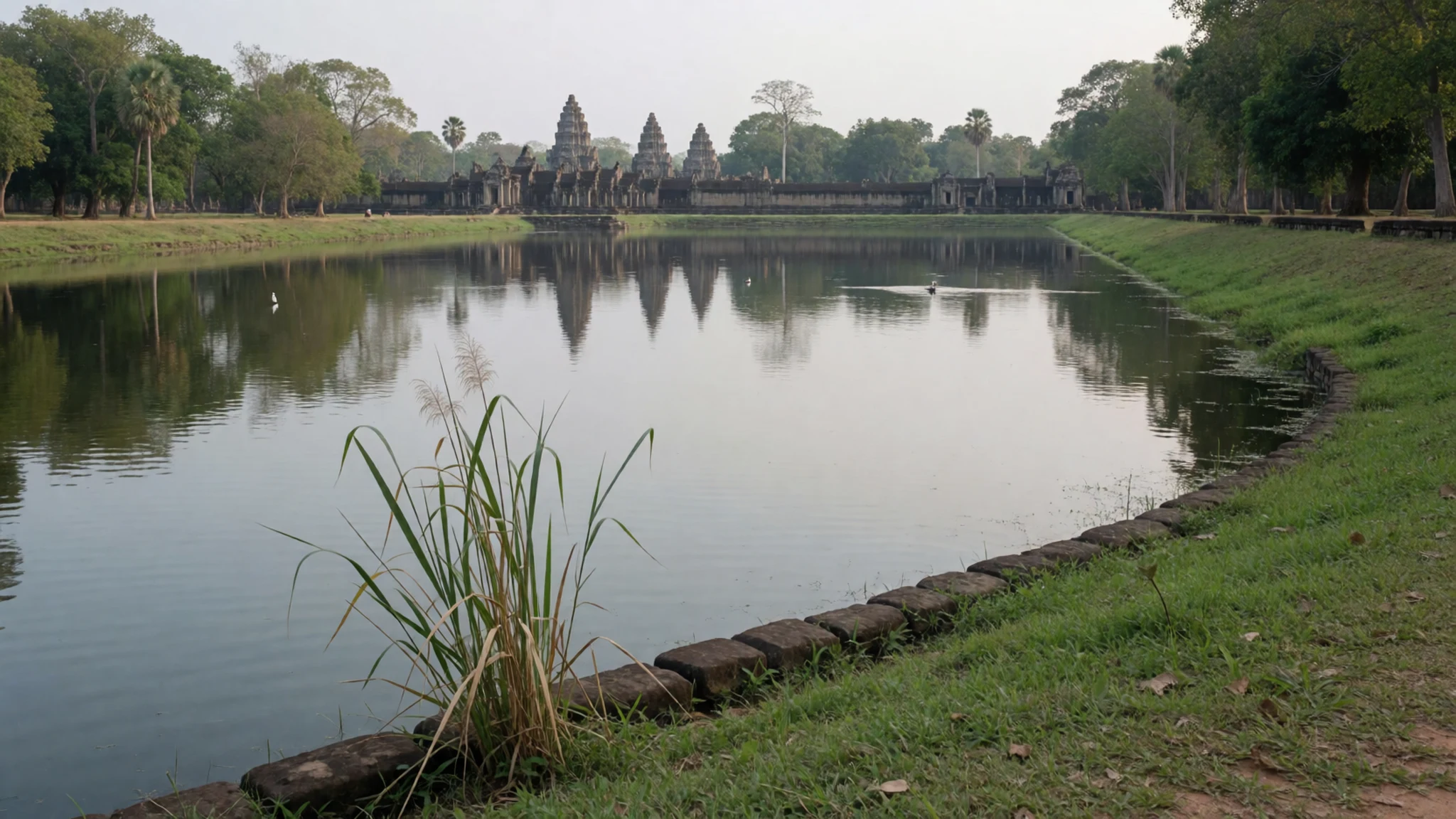
- Sai Ngam banyan grove — Just outside town, beside a lake
One enormous banyan has spread over a small island by a lake, its aerial roots forming a shaded maze of trunks and arches. Locals come here to walk, picnic and make offerings. It is a restful late-afternoon stop after the ruins, and a good place to escape the midday heat.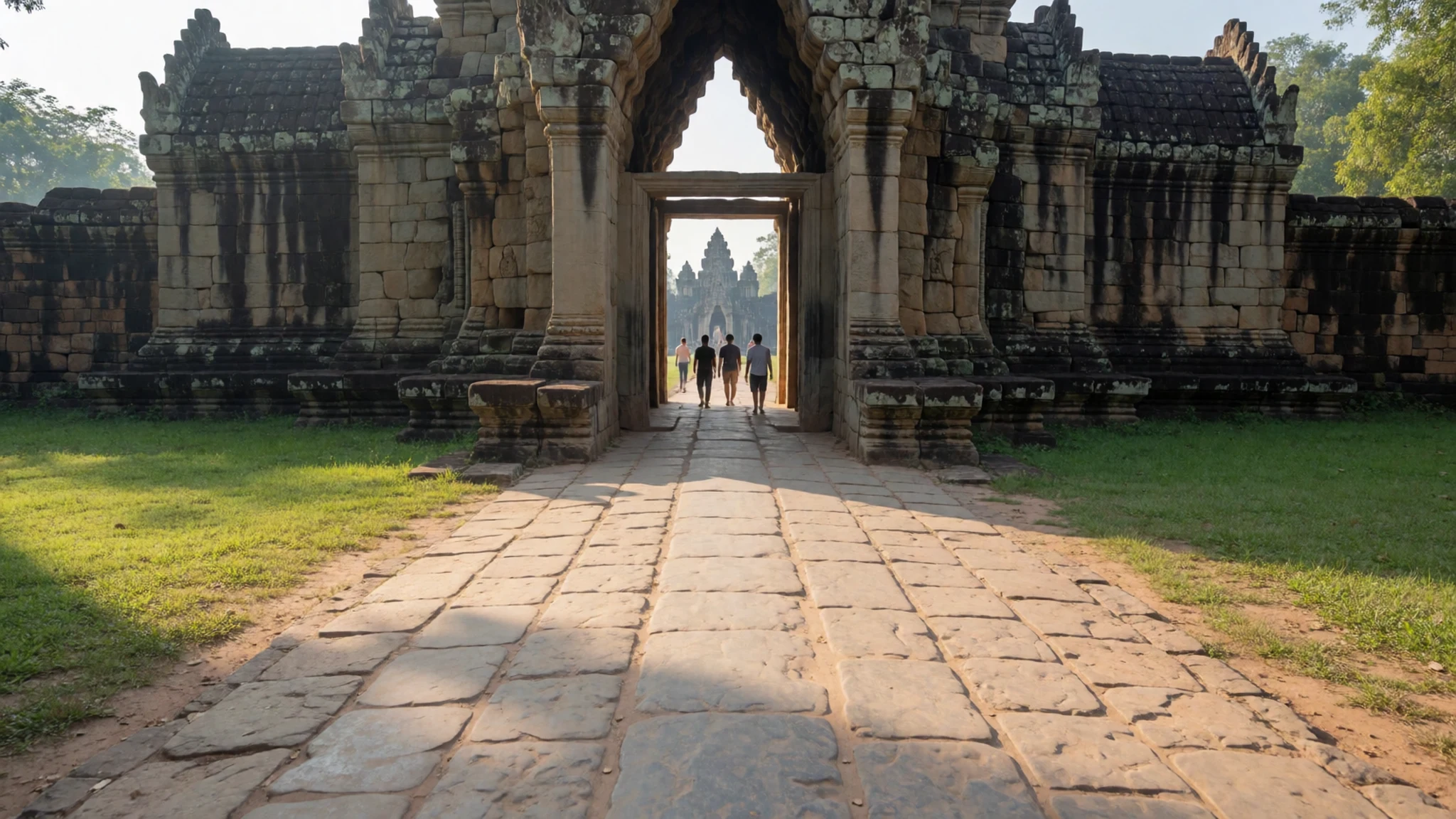
- Pratu Chai, the old south gate — South edge of the old enclosure
Pratu Chai is the surviving gateway of the old town wall, and the approach to the sanctuary still passes through it. The brick and stone gate is a handy marker of how the ancient town was laid out. Stand here to see traffic, vendors and ruins all share the same road.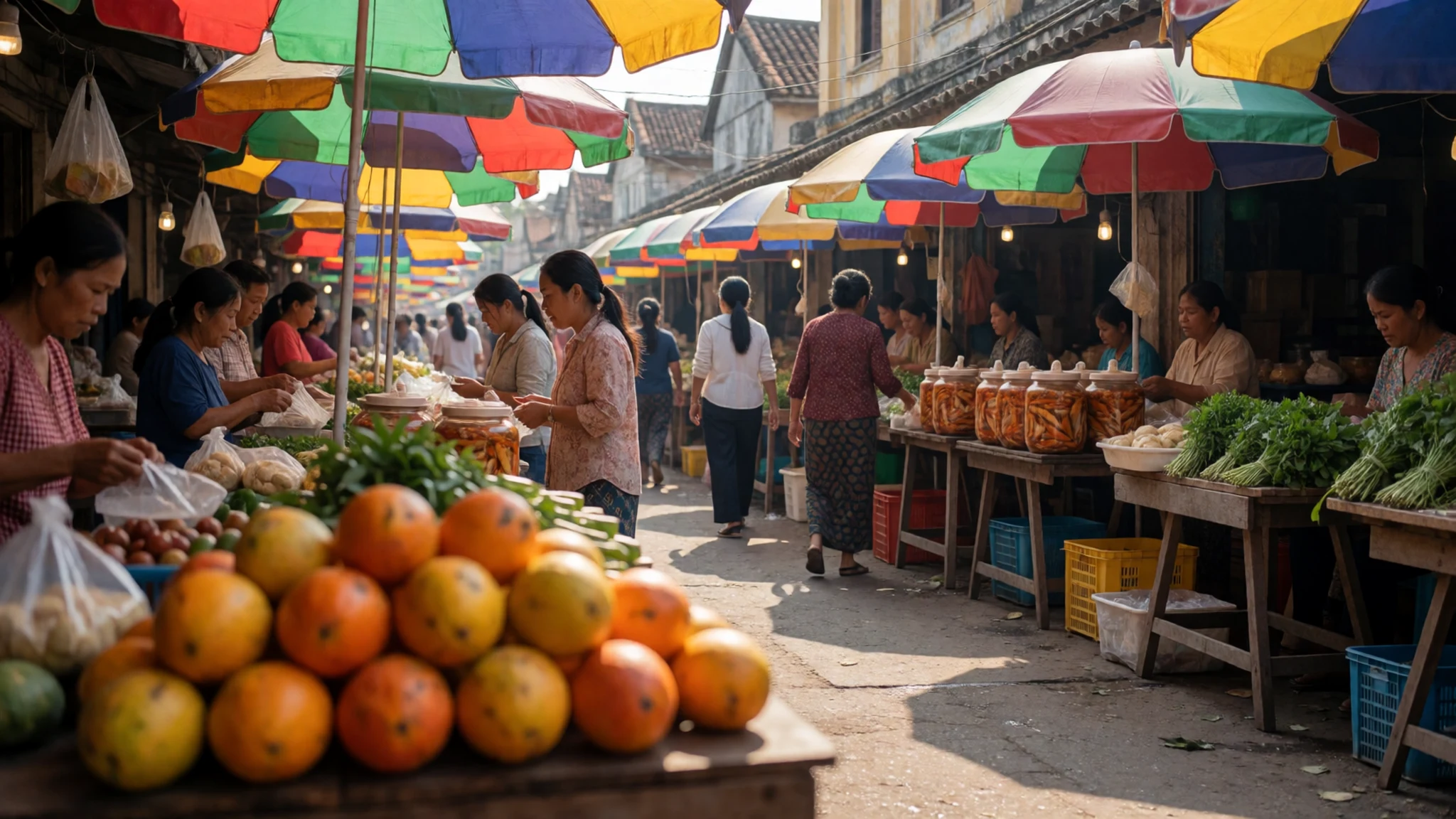
- Tha Nang Sra Pom — Northern side of the old enclosure
This is a stone-lined landing and pond area beside the old walls, associated with ritual bathing in the town's history. It is a calm corner, shaded in places, where families sit on weekends. The site is modest and is best combined with a stroll along the moat and wall remains.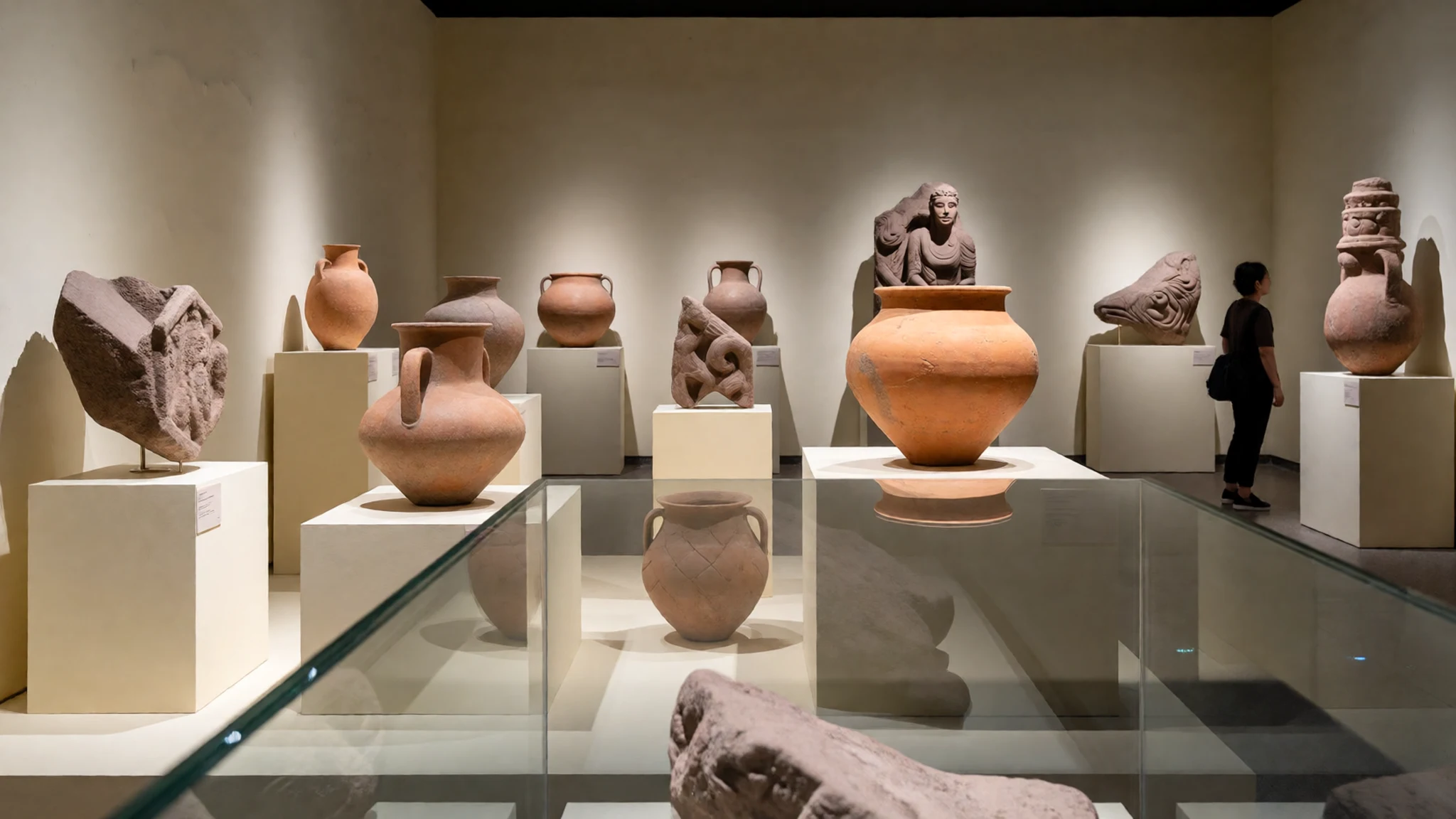
Culture
Phimai belongs to Isan, the north-eastern region of Thailand, whose culture sits between Thai, Lao and Khmer traditions. Many residents speak Isan, a language close to Lao, at home and Thai at school and work. The Khmer past is visible in the ruins, but daily life is firmly Thai Buddhist: monks collect alms in the early morning, small spirit houses stand outside shops and homes, and temples (wat) are social as well as religious centres.
Music and festivals carry the regional character. Mor lam, an Isan folk style with fast rhythms and a reed mouth organ called the khaen, is heard at fairs and weddings. Songkran in April and Loy Krathong in November are celebrated here as across the country, and the town usually stages its own festival around the historical park in the cooler months, often with light and sound shows. Dates change, so check local listings before planning around it.
Hospitality is relaxed and unhurried. A smile and a slight wai, palms together at chest height, is the usual greeting, and bargaining at markets is gentle rather than fierce. Agricultural rhythms still matter: harvest and planting seasons shape when families travel and when events are held.
At the sanctuary, cover your shoulders and knees, keep off the carved stonework and any Buddha images, never point your feet at a shrine, and step quietly where worshippers are making offerings.
What to wear
Phimai's traditional dress follows the wider Isan pattern. Women wear the pha sin, a tubular wrapped skirt, often in mudmee silk, an ikat cloth in which the thread is tie-dyed before weaving so that patterns appear as soft, feathered edges. Cotton woven in checks, and cloth dyed with indigo, are also common. A shawl called a pha biang is draped over one shoulder. Men may wear the pha khao ma, a checked cotton cloth used as a waist wrap, headscarf or towel. These clothes are worn at weddings, temple festivals, school and civic events, and by dance groups, and many offices and schools encourage woven local cloth on set days.
Day to day, people dress for heat and fieldwork. Cotton T-shirts, light trousers, long-sleeved shirts and wide-brimmed hats are standard, while school and government uniforms are widespread. Younger people wear jeans, sports tops and branded trainers much as elsewhere in Thailand, and shoulders and knees are generally covered in public.
Visitors should pack for sun and for temples. Loose cotton or linen in light colours works well, with shirts that cover the shoulders and trousers or skirts that reach below the knee for the sanctuary and any wat. Wear sandals or shoes that slip off easily, but with grip, because the ruins have uneven stone and sandy paths. Bring a hat, sunglasses and a light rain layer in the wet season, and a thin extra layer for cool evenings between November and January.
What to eat
- Kuaitiao Phimai — Morning stalls and small noodle eateries around the town centre
The town's signature dish is made with wide, soft sheets of steamed rice noodle, folded around a filling of minced pork, with a savoury sauce, fried garlic and herbs on top. It is served as a breakfast or light lunch and tastes mild, which makes it a good start.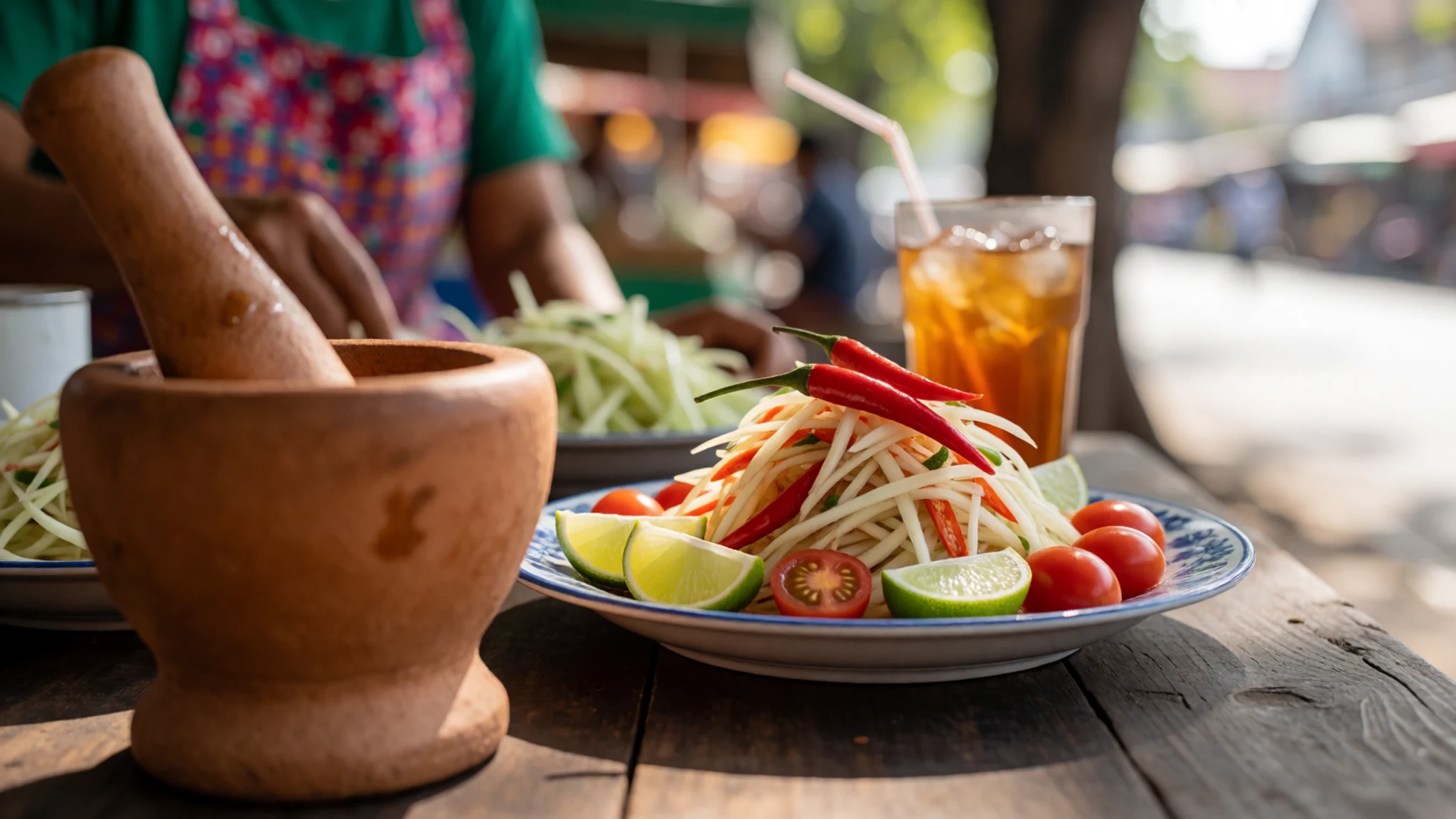
- Som tam — Market stalls and roadside stands, especially at lunchtime
Green papaya salad is pounded to order in a mortar with chilli, lime, fish sauce and palm sugar. The Isan style is sharp, salty and often fiery, sometimes with fermented fish. Ask for it mild if chilli is a concern, and eat it with sticky rice.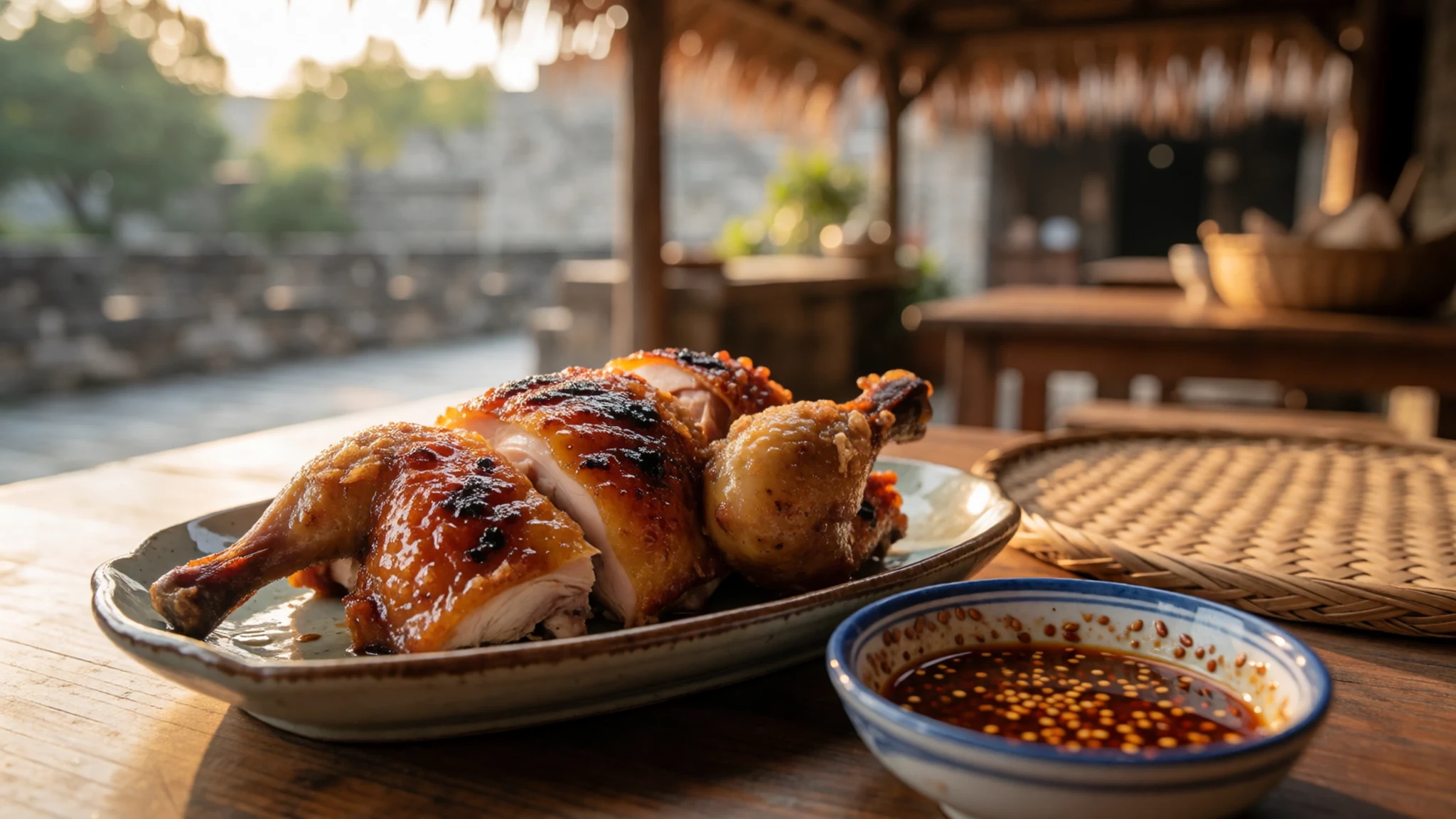
- Gai yang with khao niao — Roadside grill stalls on the edge of town and around the market
Chicken is marinated in garlic, pepper and coriander root, then grilled slowly over charcoal until the skin crisps. It is served with sticky rice, which is rolled into small balls by hand and dipped into a spicy sauce. A cheap, filling lunch. - Larb — Isan restaurants and evening food stalls
This minced meat salad, usually pork, chicken or beef, is tossed with lime juice, chilli, roasted ground rice, mint and spring onion. It is bright, tart and toasty, and is normally eaten with sticky rice and raw vegetables on the side. - Sai krok Isan — Night market and street grills
These small fermented sausages of pork and rice have a gentle sourness and are grilled until lightly charred. They are served with fresh ginger, chilli and cabbage leaves to cut the richness, and make a popular evening snack.
Plan it
Best time. November to February is the cool, dry season, with clear skies and the most comfortable temperatures for walking the ruins. March to May is very hot, and the rains arrive roughly from May to October, turning fields green but bringing downpours and humidity.
How long. 1–2
Getting there. Fly to Bangkok, then continue to Nakhon Ratchasima (Khorat) by bus or train; check current schedules for the best option. From Khorat's bus station, local buses run to Phimai, and taxis or hired cars are also available. Phimai is straightforward as a day trip from Khorat, and an overnight stay lets you see the ruins at dawn.
Budget. low
Tips
- Visit the historical park early, before the heat and the weekend tour groups arrive
- Carry cash for market stalls and small eateries, as many do not take cards
- Bring water, sun protection and a hat, as shade at the ruins is limited
- Check the official site or local listings for opening days and festival dates before travelling
- Hire a bicycle or take a short motorbike taxi ride between the park, museum and banyan grove
Etiquette
- Dress modestly at the sanctuary and any temple, with shoulders and knees covered
- Remove shoes before entering active shrine buildings and do not touch Buddha images
- Ask before photographing monks or local people, and keep voices low in temple grounds
Nearby
Sources
- Wikidata (CC0)
- Wikipedia — Phimai (CC BY-SA 4.0)
- Wikivoyage — Phimai (CC BY-SA 4.0)