Phanom Rung
Phanom Rung, Thailand
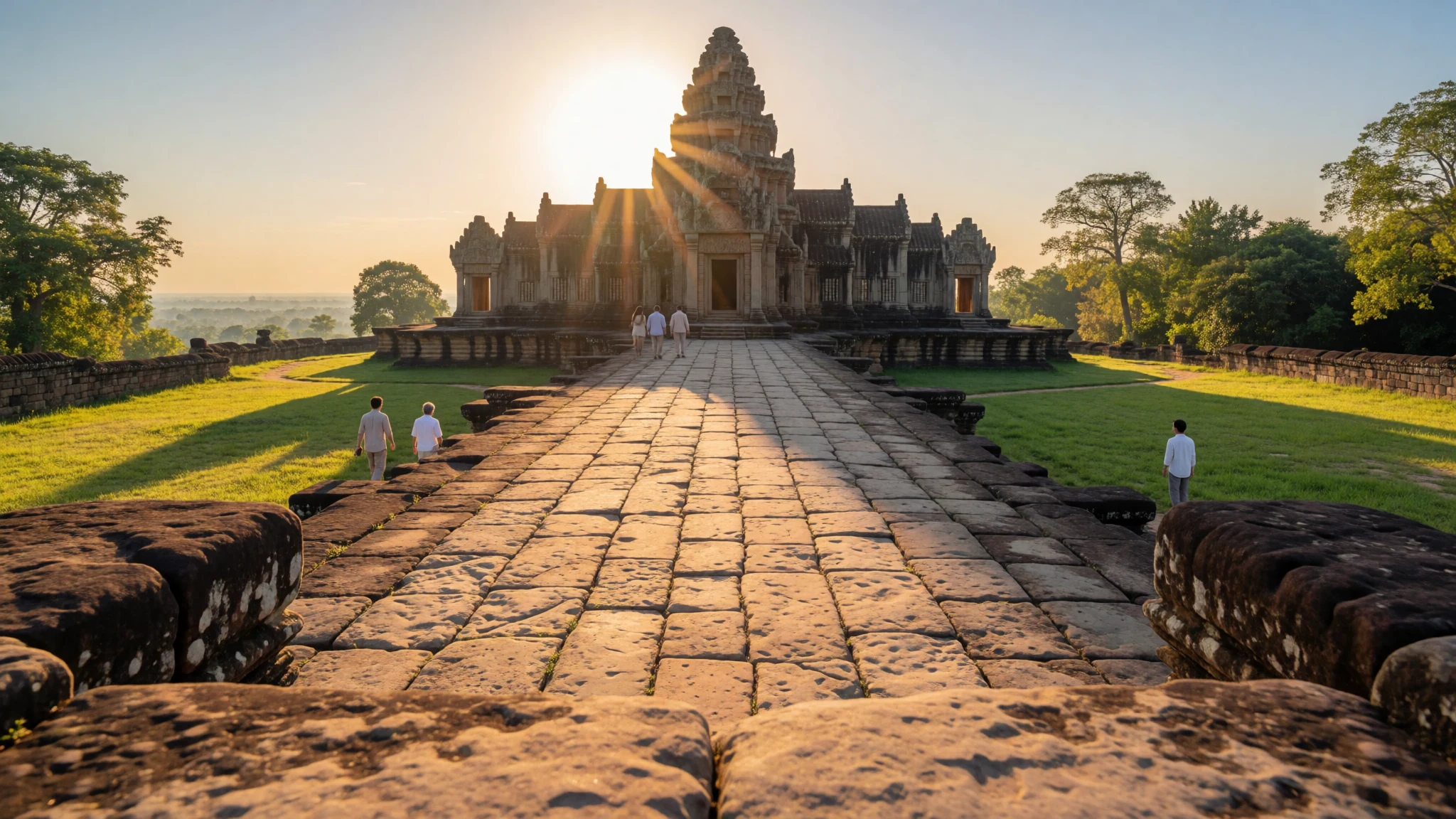
Phanom Rung is a Khmer-era Shiva temple on an extinct volcano in Isan, quieter than Angkor and easy to pair with a rural drive.
The place
Phanom Rung Historical Park sits in Buriram Province, in Isan, the broad north-eastern region of Thailand. The temple, known in Thai as Prasat Hin Phanom Rung (ปราสาทพนมรุ้ง), crowns the rim of an extinct volcano, so the whole approach is a gentle climb above flat farmland. Wikidata classes it both as a historical park of Thailand and as an archaeological site, and that is a fair description: it is a managed, tidy park, not a ruin swallowed by forest.
The buildings are sandstone and laterite. The sandstone has weathered to pinkish-grey and carries the fine carving, while the rougher laterite forms walls, platforms and foundations. The layout follows the usual Khmer plan: a long processional way, a stone bridge, steps, galleries, and then the central sanctuary with smaller shrines and two library buildings around it. Most of the structures are in good order because they were carefully put back together in modern times.
The temple was first a Hindu shrine to Shiva and later served Buddhist worship, and both traditions are visible in the carvings. The setting does a lot of the work. From the upper terrace the land drops away in every direction, and on a clear morning the view across rice fields is as memorable as the stonework.
The nearest town is Nang Rong, which has nothing to see in itself but works well as a base, with simple eateries and places to sleep. Most visitors arrive by taxi or motorbike, spend a morning on the hilltop and then move on to a second Khmer sanctuary down on the plain. Compared with the big-name Khmer sites, the crowds are thin, though tour coaches do arrive mid-morning and the sun on bare stone can be fierce.
Its story
Phanom Rung was built in stages over several centuries, and scholars have sorted the phases by reading the carved decoration, the architectural style and the surviving inscriptions. The earliest parts are brick foundations from the tenth century. A small sanctuary followed in the eleventh century. The great central tower was raised under King Suryavarman II in the twelfth century, the same period as the best-known temples of the Khmer heartland. The two library buildings belong to the thirteenth century.
That last century also brought King Jayavarman VII, who is linked to a string of practical buildings around the mountain: a pavilion where royalty changed their robes, a hermitage at Nong Bua Ray, a hospital called an Arokayasala, and a rest house with a fire, where travellers could shelter at the foot of the hill. These stood along the road connecting Angkor with Phimai. Taken together, they suggest the hill was a regional centre with real administrative weight, not just a remote shrine.
After the Khmer power faded, the site passed into a Buddhist context and the buildings were left to decay. Stones tumbled, vegetation crept in, and carvings were lost or displaced. The modern story is one of patient rebuilding. Thailand's Department of Fine Arts spent many years on a restoration that ended in the late twentieth century, and the park was formally opened by Princess Maha Chakri Sirindhorn. Later, Thailand put the temple forward to UNESCO for consideration as a possible World Heritage Site. That is a nomination for the future, not an inscription, so the park does not currently carry that status.
What to see
- The processional approach and naga bridge — Lower terrace of the historical park
At Phanom Rung, the climb starts on a long stone walkway lined with lotus-bud pillars, leading to a cross-shaped terrace with a bridge guarded by multi-headed serpents. Walking it slowly is the best way to understand how pilgrims were meant to arrive: gradually, with the tower growing ahead.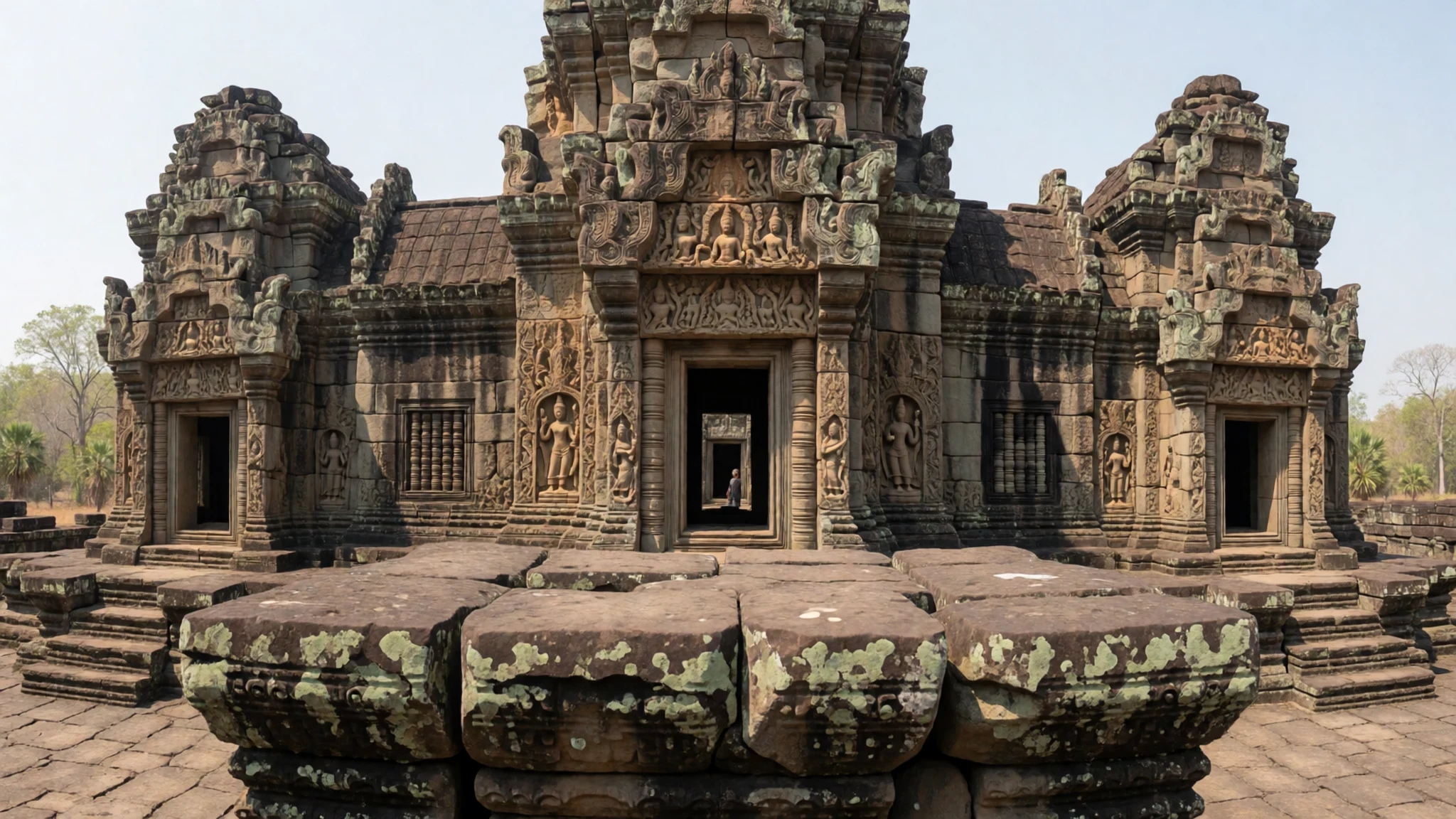
- The central sanctuary — Summit of the hill, inside the historical park
The main tower at Phanom Rung is the heart of the temple, the shrine to Shiva that gives the site its purpose. Its sandstone walls are densely carved, and the porches and doorways frame views through to the interior. Go early, before the stone heats up and the groups gather.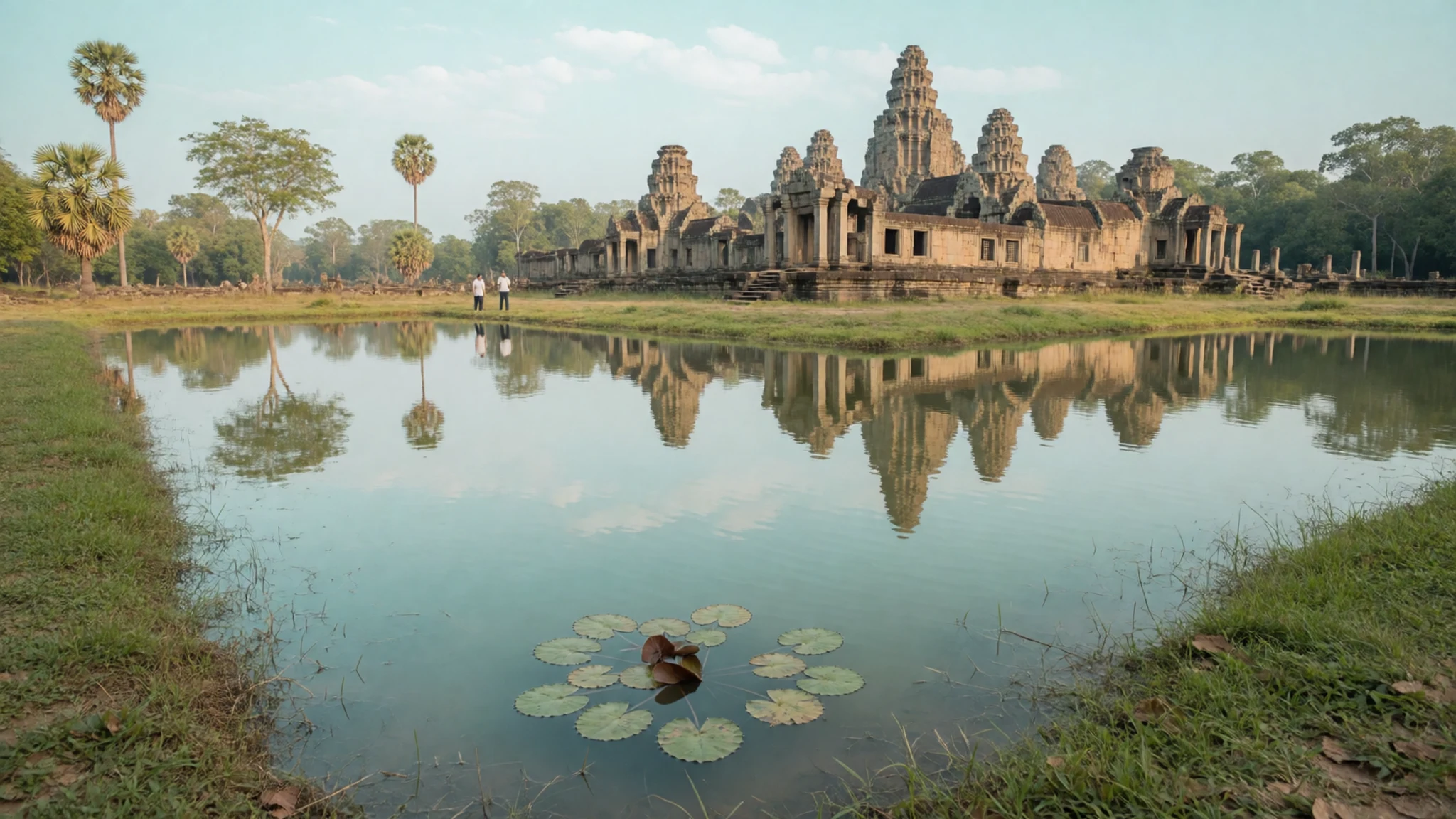
- Carved lintels and pediments — Doorways of the main tower and the smaller shrines
The doorways at Phanom Rung carry some of the finest relief work on the hill. Look up at the lintels and pediments for scenes from Hindu stories, including figures of Shiva and Vishnu, and for small guardian and dancer figures. A short walk round the outside of the tower rewards patience and good light.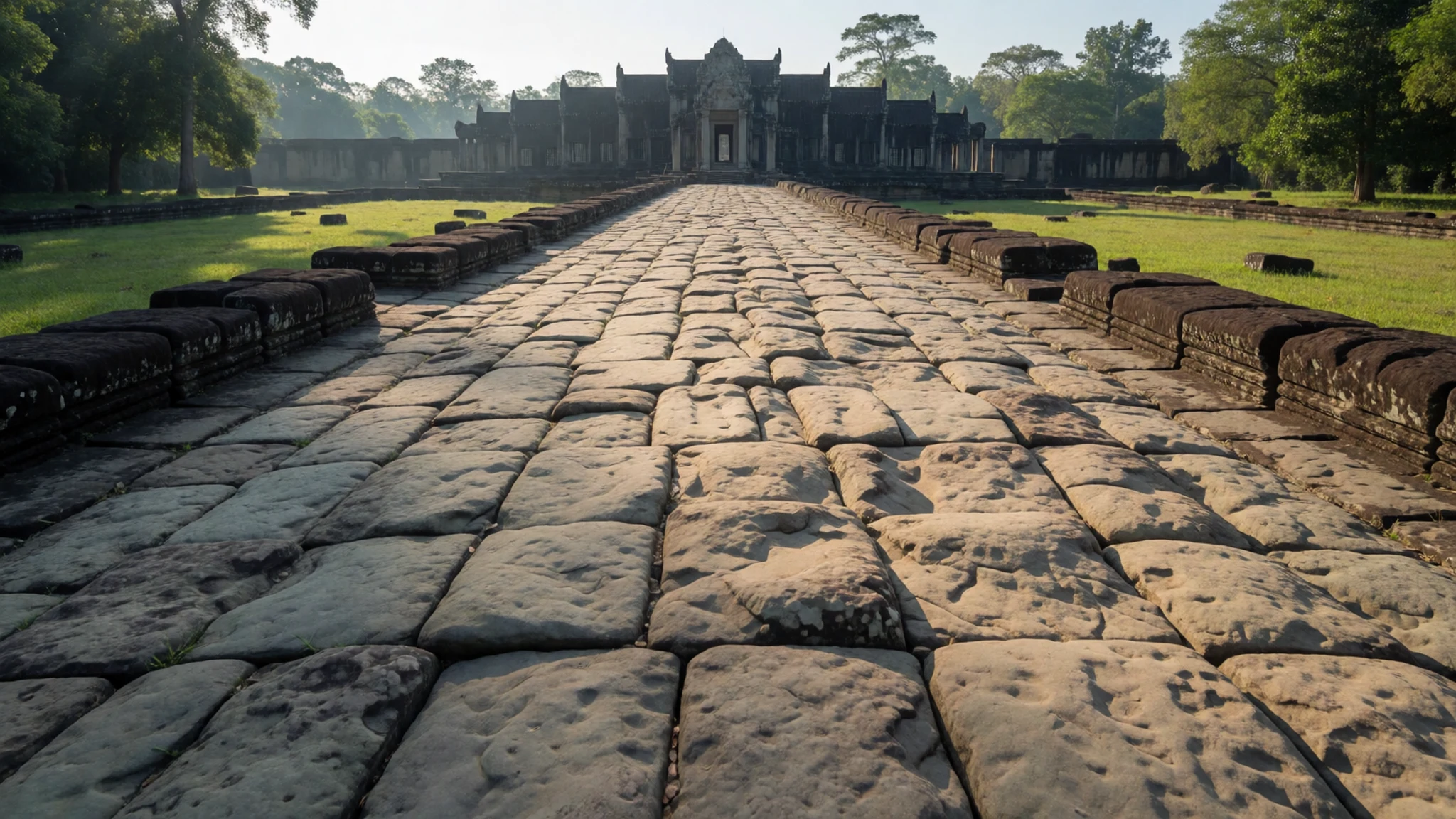
- Libraries and minor shrines — Courtyard around the main sanctuary
Around the central tower at Phanom Rung stand the two thirteenth-century library buildings and several smaller sanctuaries, some built of earlier brick. They are less photographed but show how the complex grew in layers, and the lower, shadier corners offer a break from the sun.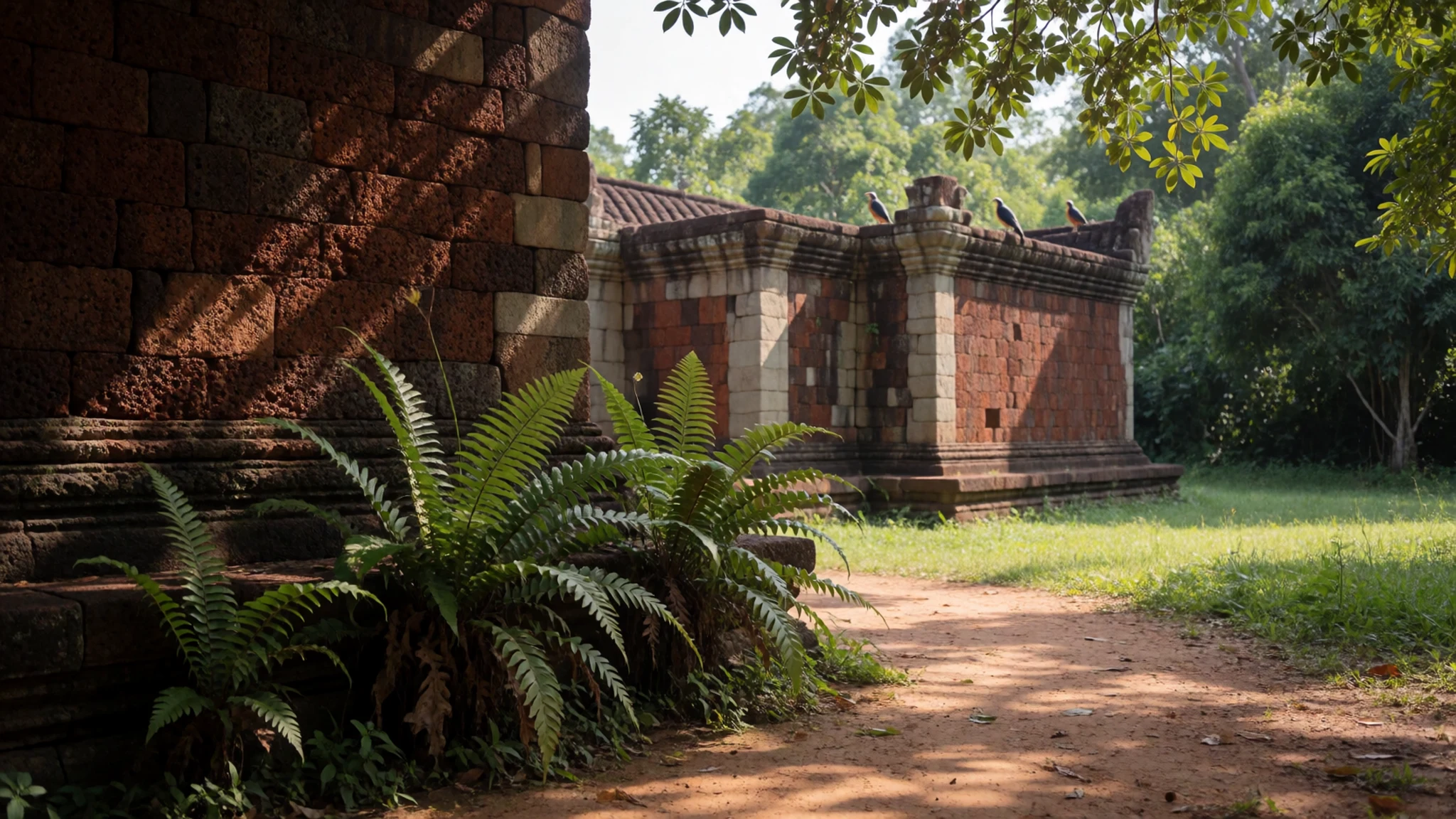
- Prasat Hin Mueang Tam — Plain south-east of Phanom Rung, near Nang Rong
Prasat Hin Mueang Tam is a smaller Khmer sanctuary on the plain below Phanom Rung, with well-proportioned buildings and ponds in front. It makes a calm second stop, and the site's information centre, set between the school and the lake outside the park, is worth finding. Check the official site for any combined ticket.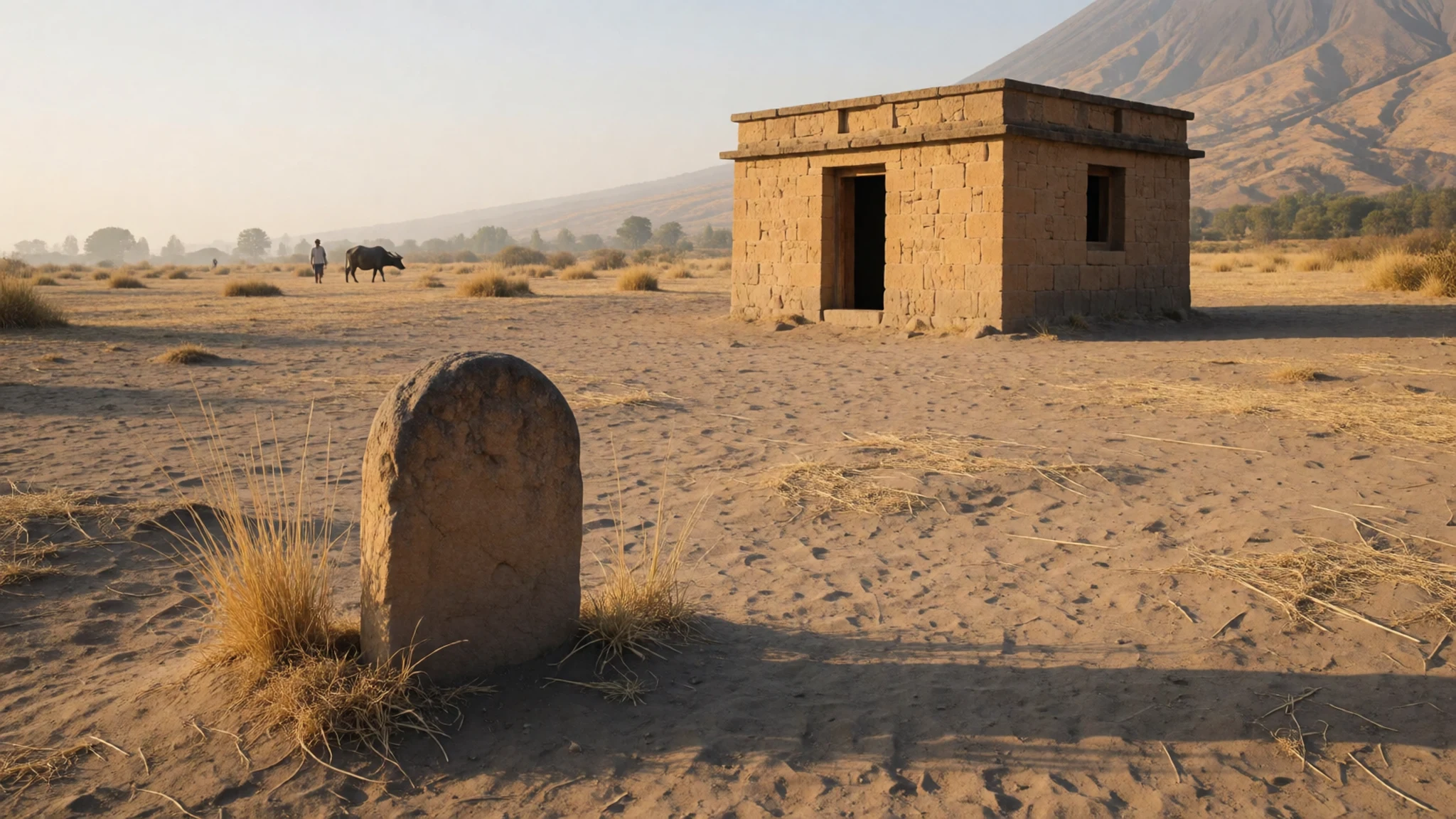
Culture
Phanom Rung is first of all a Shiva temple, and Hindu symbolism runs through the architecture. The tower represents a sacred mountain, the home of the gods, and the long walkway and bridge mark the passage from the everyday world to a holy one. The lintels show deities, serpents and scenes from epic stories, so the stonework reads as a kind of teaching text for people who could not read.
The site later became a Buddhist place, and Thai visitors treat it with the respect given to any religious ground. Many come to make offerings, and incense or flowers may be left near the shrines. Local history is also taught through the park's own exhibits, which are worth a few minutes.
The temple belongs to a wider Khmer cultural world that stretched across what is now Cambodia, Thailand and beyond, and Isan carries that inheritance in place names, language traces and architecture. Isan itself has a strong regional identity, with its own food, music and dialect, and a day here is also a chance to see rural Thailand beyond the usual tourist circuit.
Ceremonies and festivals sometimes take place at the park, especially around the spring sun-alignment period when the sanctuary's doorways line up with the sunrise. These can mean more people and some restricted areas, so it is best to check the Fine Arts Department's official site before planning around one. On ordinary days, the atmosphere is calm and unhurried. Cover your shoulders and knees, keep your voice low near the shrines, and never climb on or lean against the carved stonework.
What to wear
In Phanom Rung and the wider Isan region, traditional dress centres on handwoven textiles. Silk and cotton are woven on household looms, and the best known styles include mudmee, a tie-dyed weft pattern, and patterned wrap skirts called pha sin. Women wear these on festival days, at weddings and on formal occasions, often with a fitted blouse and a shawl. Men may wear a wrapped cloth called a pha khao ma, a checked cotton piece that also serves as a sash or head covering in the fields.
Day to day, people in Nang Rong and the villages around Buriram dress practically. Cotton shirts, lightweight trousers, long skirts and sun hats are common, along with long sleeves to keep off the sun. Students and officials wear uniforms. Smart, modest clothes appear for temple visits and ceremonies, and many younger people wear ordinary modern clothing in the town.
For a visit, the heat decides most things. Choose breathable cotton or linen, a wide-brimmed hat and sunglasses, and carry water. Because Phanom Rung is a religious site, shoulders and knees should be covered, so lightweight long trousers or a long skirt and a shirt with sleeves are sensible. Wear sturdy sandals or trainers with good grip: the stone steps and paving are uneven, can be slippery after rain, and get very hot in the afternoon. A light scarf is useful for sun or modesty.
What to eat
- Som tam — Roadside stalls and market eateries around Nang Rong
Som tam, the pounded green papaya salad, is an Isan staple at Phanom Rung's regional table. Chilli, lime, fish sauce and peanuts make it sharp, sour and fiery, so ask for it mild if needed. It is usually made to order at small roadside stalls.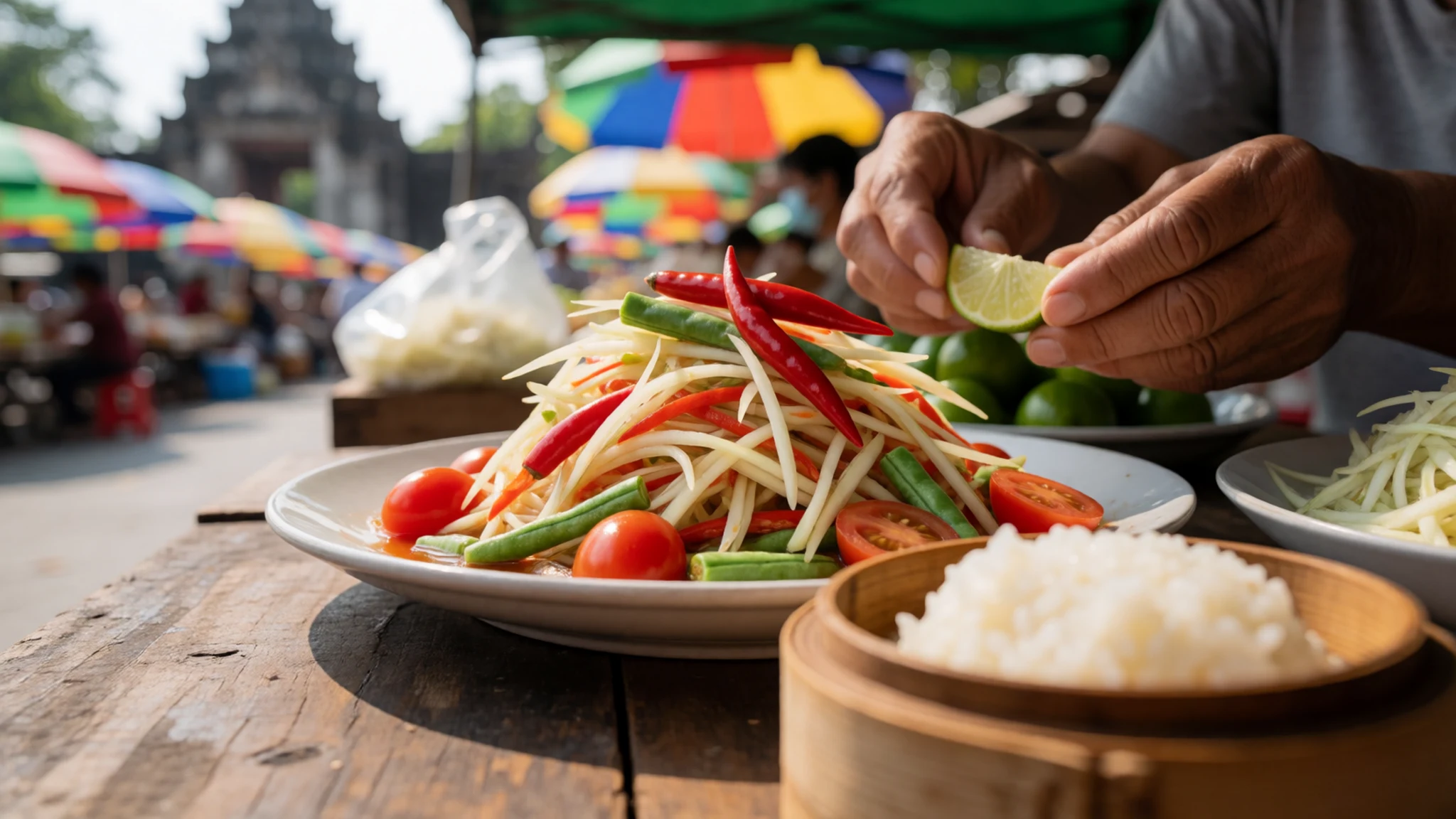
- Gai yang — Grill stalls near the town market and along main roads
Gai yang is chicken marinated in garlic, pepper and herbs, then grilled slowly over charcoal until the skin is crisp. It is the classic partner for som tam and sticky rice, and it suits a quick lunch after the climb.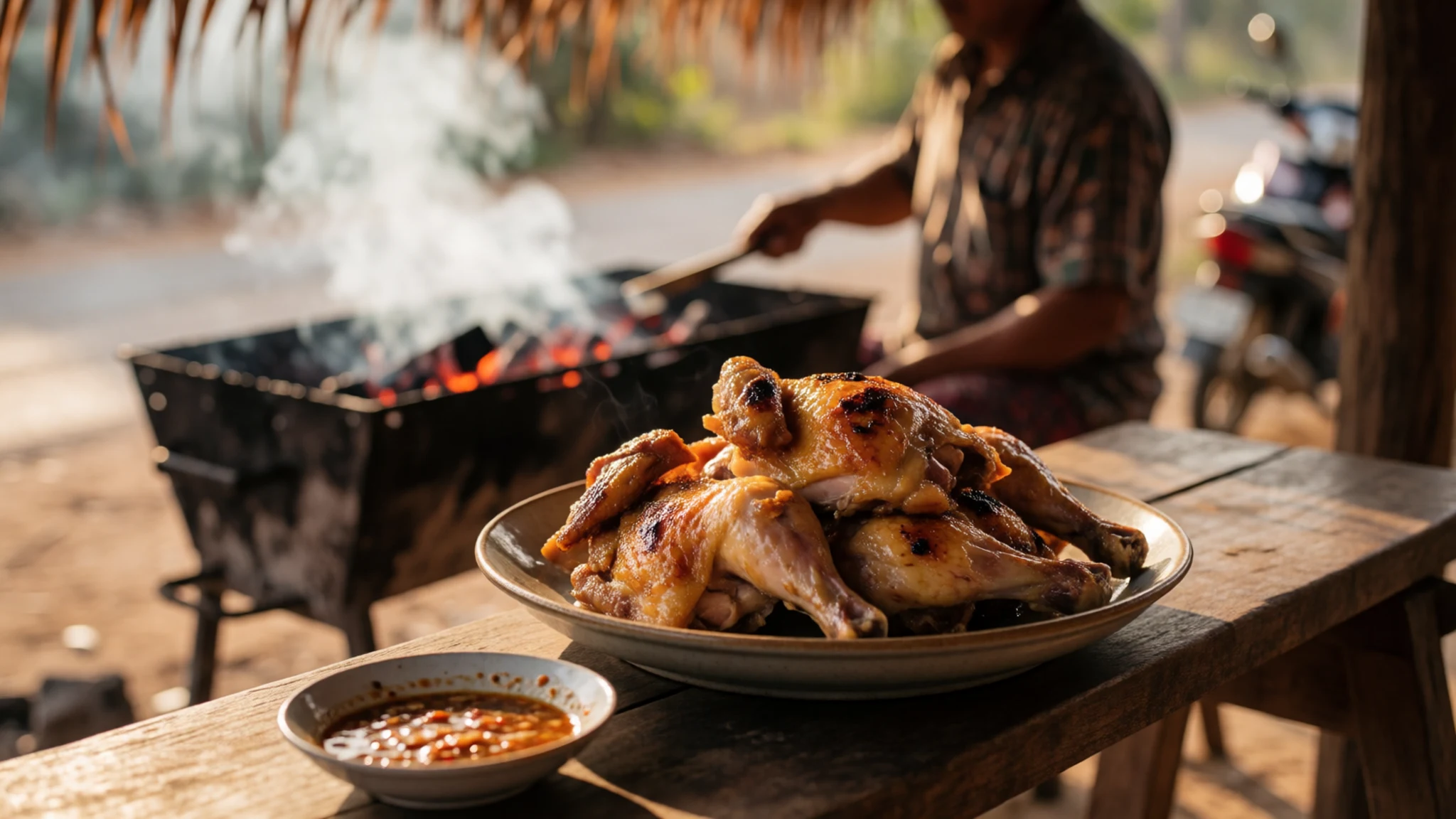
- Larb — Local Isan eateries in Nang Rong
Larb is a minced-meat salad, tossed with lime, toasted ground rice, chilli and fresh herbs such as mint. It is served warm or at room temperature and is both tangy and nutty. Pork and chicken are common; the dish is rarely suitable for vegetarians. - Khao niao (sticky rice) — Morning market and almost every local eatery
Khao niao, sticky rice, is the everyday grain of Isan, steamed in a woven basket and eaten by hand, rolled into small balls. It goes with nearly every grilled or salad dish, and it is also a handy, filling snack for the road. - Fresh fruit and sweet snacks — Market stalls in Nang Rong and roadside stands near the park
Fruit stalls sell cut pineapple, watermelon and other seasonal fruit, cold and ready to eat, which is welcome in the heat. Small sweets made with coconut and rice are also sold in bags. Vegetarians may find the main eateries limited, so snacks help.
Plan it
Best time. November to February is the most comfortable stretch, with cooler mornings and drier skies for a day of walking on open stone. March to May is very hot, and the rainy season brings humidity and sudden downpours, though the countryside is greener.
How long. 1–2
Getting there. Buriram and Nakhon Ratchasima are the nearest larger cities, both reachable by rail and road from Bangkok. From either, continue to Nang Rong, the practical base, then take a taxi or hired motorbike for the last stretch up the hill. Tuk-tuks are scarce, so arrange your return when you book.
Budget. low
Tips
- Start at dawn or soon after opening to avoid both the heat and the tour buses
- Carry water, a hat and cash for small stalls, since card payment is unreliable in the countryside
- Check the Fine Arts Department's official site for current opening hours, fees and any combined ticket for Mueang Tam
- Agree the driver's waiting time and return plan before setting off, as few drivers speak English
- Vegetarians should carry snacks and ask clearly about ingredients, as eatery menus lean on meat and fish sauce
Etiquette
- Cover your shoulders and knees at the shrines
- Do not climb on or touch the carved stonework
- Keep voices low and give worshippers space near offerings
Nearby
Sources
- Wikidata Q2084809 (CC0)
- Wikipedia: Phanom Rung Historical Park (rev 1381570800) (CC BY-SA 4.0)
- Wikivoyage: Phanom Rung (rev 5238709) (CC BY-SA 4.0)
- Photo 01-place-phnomrungprasat.jpg — Thanyakij at Thai Wikipedia (Public domain)
- Photo 02-.jpg — Салига Павло (Public domain)
- Photo 03-phanom-rung-buriram-thailand-01.jpg — PhilipNalangan (CC BY-SA 4.0)
- Photo 04-phanom-rung-buriram-thailand-02.jpg — PhilipNalangan (CC BY-SA 4.0)
- Photo 05-phanonrung9.jpg — Tousleso (CC BY 3.0)
- Photo 06-prasat-hin-phanom-rung-pano-5.jpg — Ddalbiez (CC BY-SA 1.0)
- Photo 07-phanom-rung-wikimedia-commons.jpg — Benh LIEU SONG (CC BY 3.0)
- Photo 08-phanom-rung-buriram-thailand-06.jpg — PhilipNalangan (CC BY-SA 4.0)


