Pha Taem National Park
Pha Taem National Park, Thailand
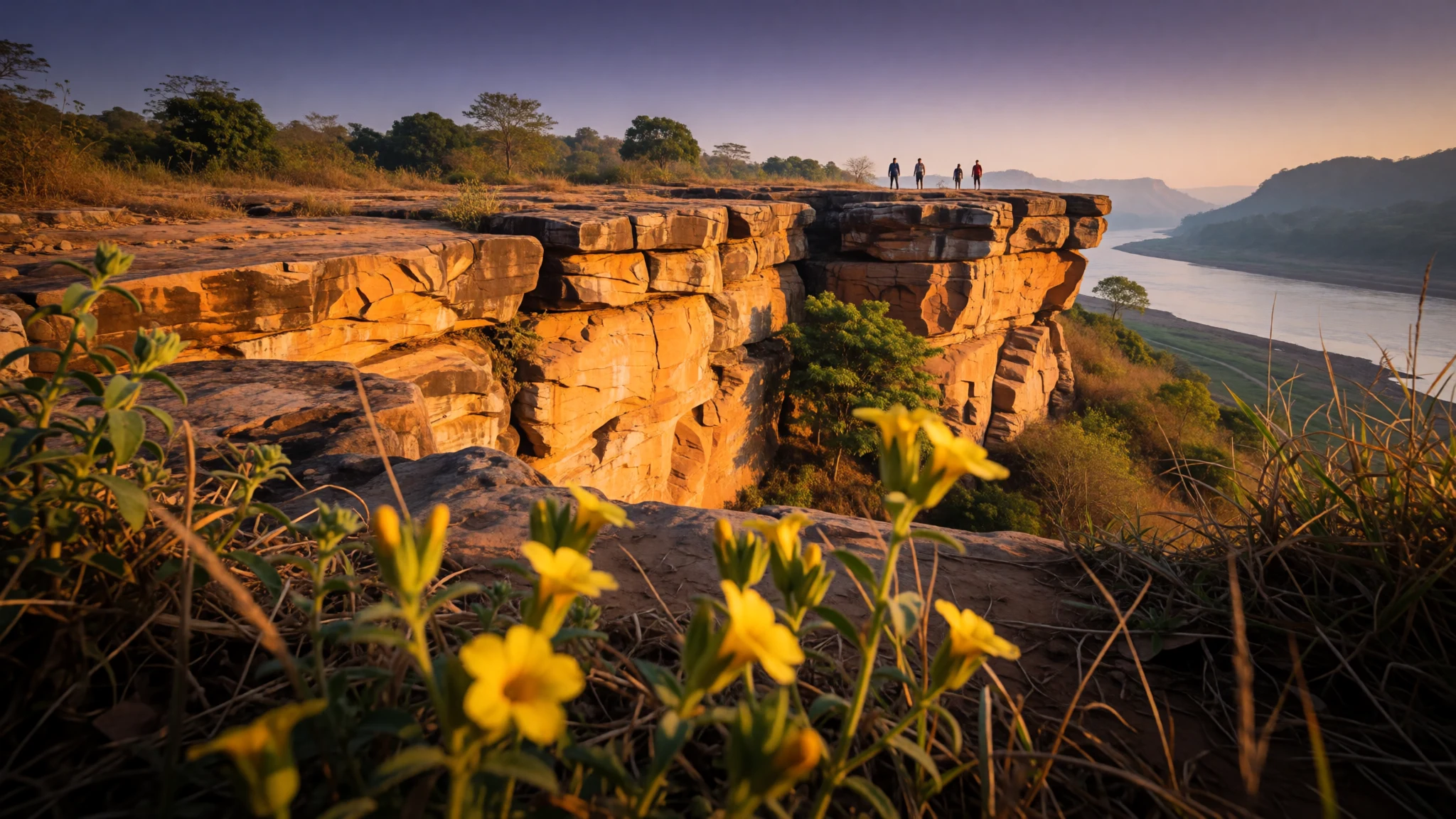
Visit for ancient cliff paintings, dramatic Mekong river vistas, and the first sunrise of the year in Thailand.
The place
Pha Taem National Park sits on the rugged edge of Ubon Ratchathani Province in northeast Thailand, where the landscape drops away to meet the Mekong River. Across the water lies the Phou Xieng Thong National Protected Area in Laos, making the park a natural frontier. The terrain is defined by a mix of Dipterocarp forests and striking sandstone formations that have been weathered into surreal shapes over millennia. It is a place of stark contrasts, where dense greenery meets open, sun-baked cliffs.
Visitors come to Pha Taem National Park for its blend of natural curiosities and deep antiquity. The park is famous for its extensive galleries of prehistoric rock art and its unique geological features, including strange mushroom-shaped rocks. It is also home to what is described as the largest flower field in Thailand, which transforms the landscape into a vibrant tapestry during the right season. The park is particularly crowded during the New Year period, as many people travel here specifically to witness the first sunrise of the year to touch Thai soil. Because it is located far from the typical tourist hubs of the south or the centre, the park offers a quieter, more authentic glimpse into the wilder side of Isan. The heat can be intense on the exposed cliff walks, but the reward is a panoramic view of the river valley that feels timeless.
Its story
The history of Pha Taem National Park is steeped in both prehistoric mystery and local superstition. For generations, the area was avoided by local peasants who believed the cliffs were a prohibited zone, guarded by holy spirits. This reputation earned the site the nickname 'Mountain of Death', as locals feared that anyone who trespassed into the forbidden heights would fall ill or perish. This fear kept the area largely undisturbed until modern researchers took an interest in the region.
Academic teams from Silpakorn University's Department of Archaeology eventually ventured into the wilderness to study the cliffs. They uncovered a treasure trove of prehistoric paintings, some estimated to be between 3,000 and 4,000 years old. The word 'Taem' itself refers to the act of drawing or stamping with colour, a fitting name for a site that serves as an ancient canvas. These artworks are divided into four main groups, with the most extensive gallery stretching for 180 metres and featuring over 300 individual images. The paintings depict a world of humanoid figures and animals, including the giant Mekong catfish, providing a window into the lives of the people who inhabited this river basin thousands of years ago. What was once a feared mountain of death has transitioned into a sanctuary of heritage, preserving the earliest artistic expressions of the region's inhabitants amidst the dense forests and sandstone peaks.
What to see
- Prehistoric Rock Art — the cliff-edge trails
The primary draw of Pha Taem National Park, these red-ochre paintings stretch across sandstone cliffs. The images depict ancient life, animals, and human figures from millennia ago. Walking the trail to see these galleries provides a sense of deep time against the backdrop of the river.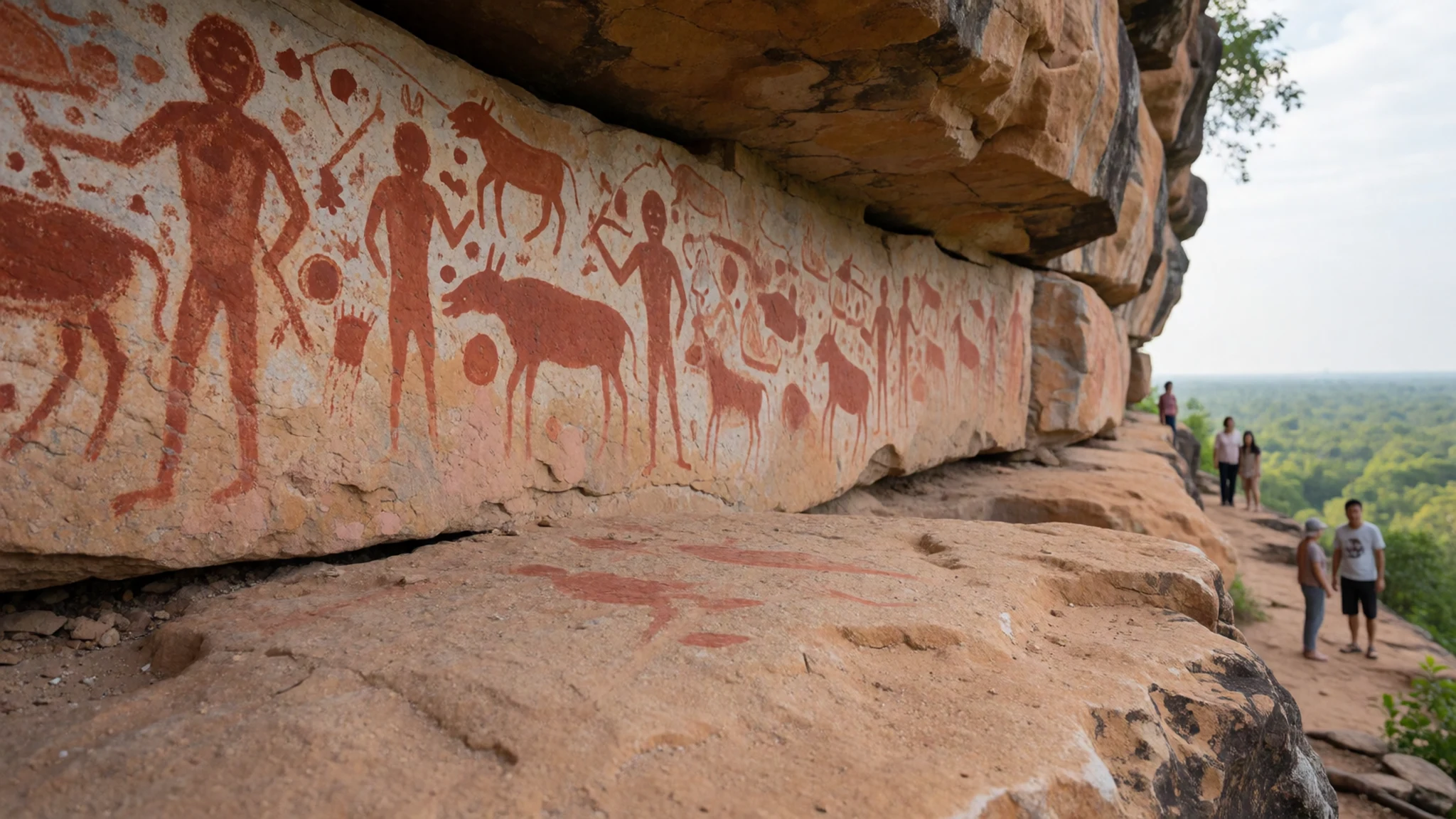
- Cha Na Dai Cliff — the northern heights
This high vantage point offers some of the most dramatic views in the park. From the summit, you can look out over the rolling hills and the meandering Mekong River. It is a popular spot for photographers, especially during the early morning mist.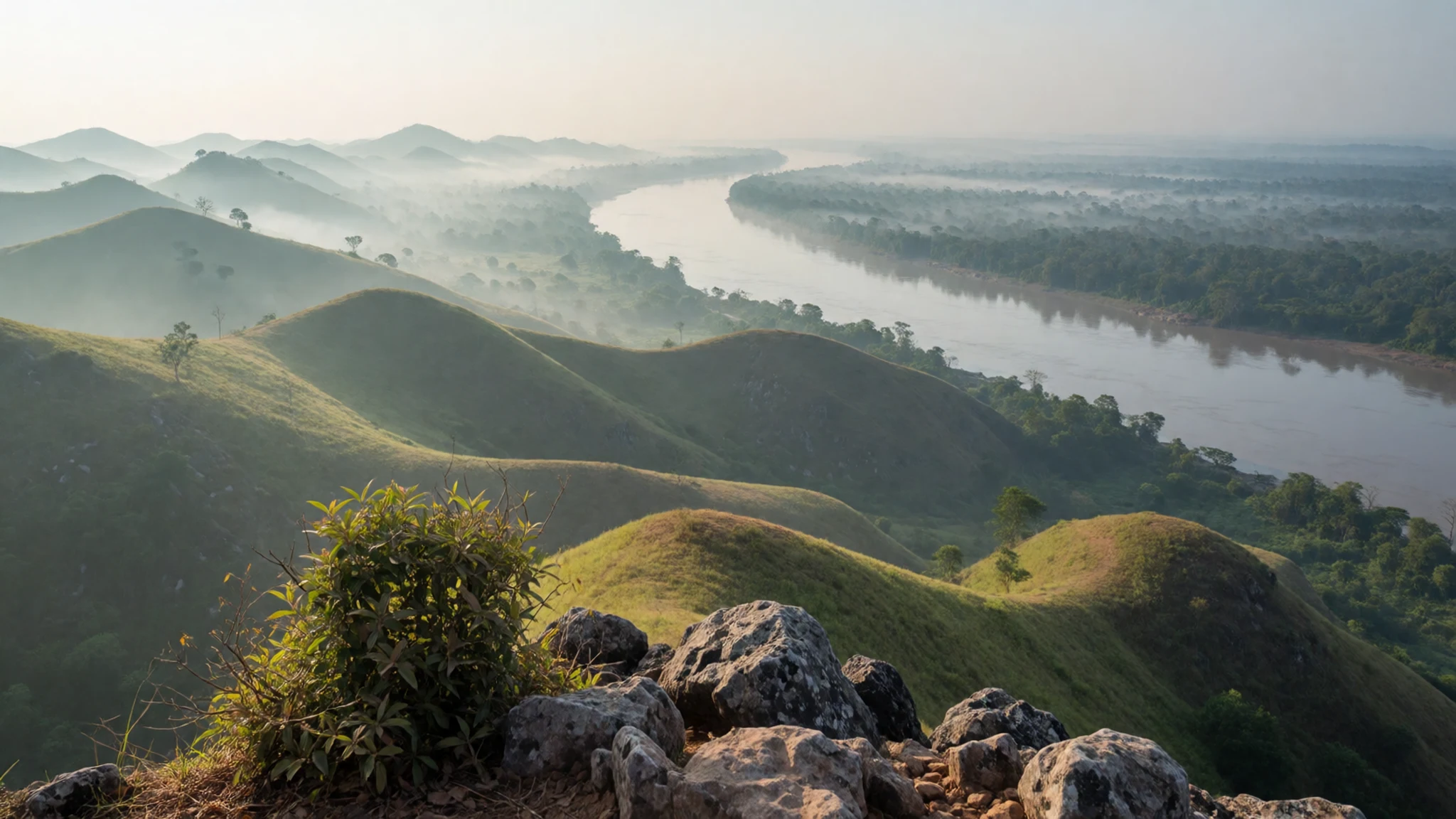
- Mushroom Rocks — the sandstone plateaus
Created by differential erosion of sandstone, these strange, top-heavy formations look like giant fungi emerging from the earth. They are scattered across the park's plateau and provide a surreal, otherworldly atmosphere for those exploring the geological side of the park.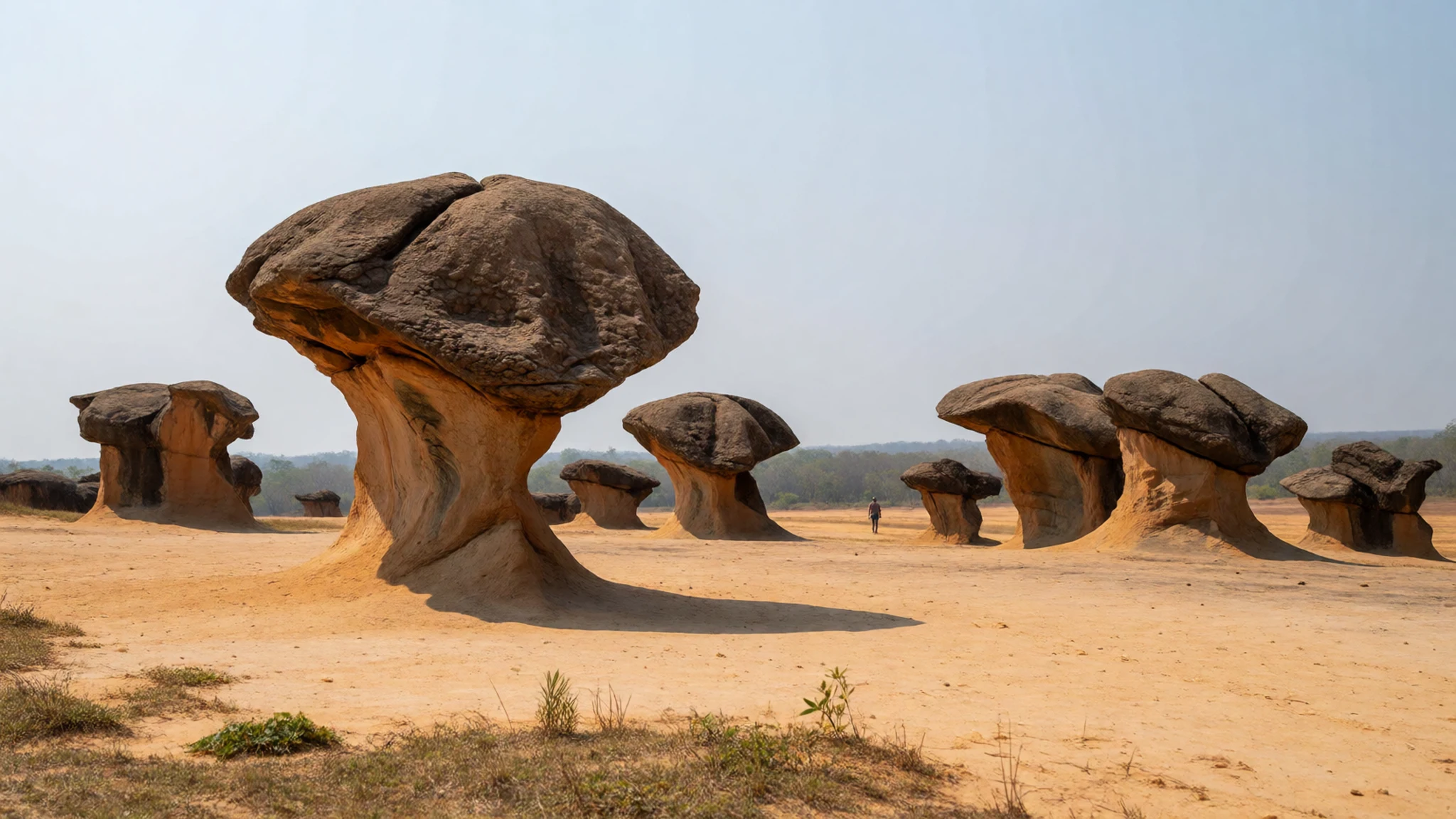
- The Flower Fields — the park's meadow areas
Renowned as the largest flower field in Thailand, this area bursts into colour during the cooler months. The contrast of bright blooms against the rugged forest backdrop makes it a favourite for nature lovers and those seeking a softer side of the wilderness.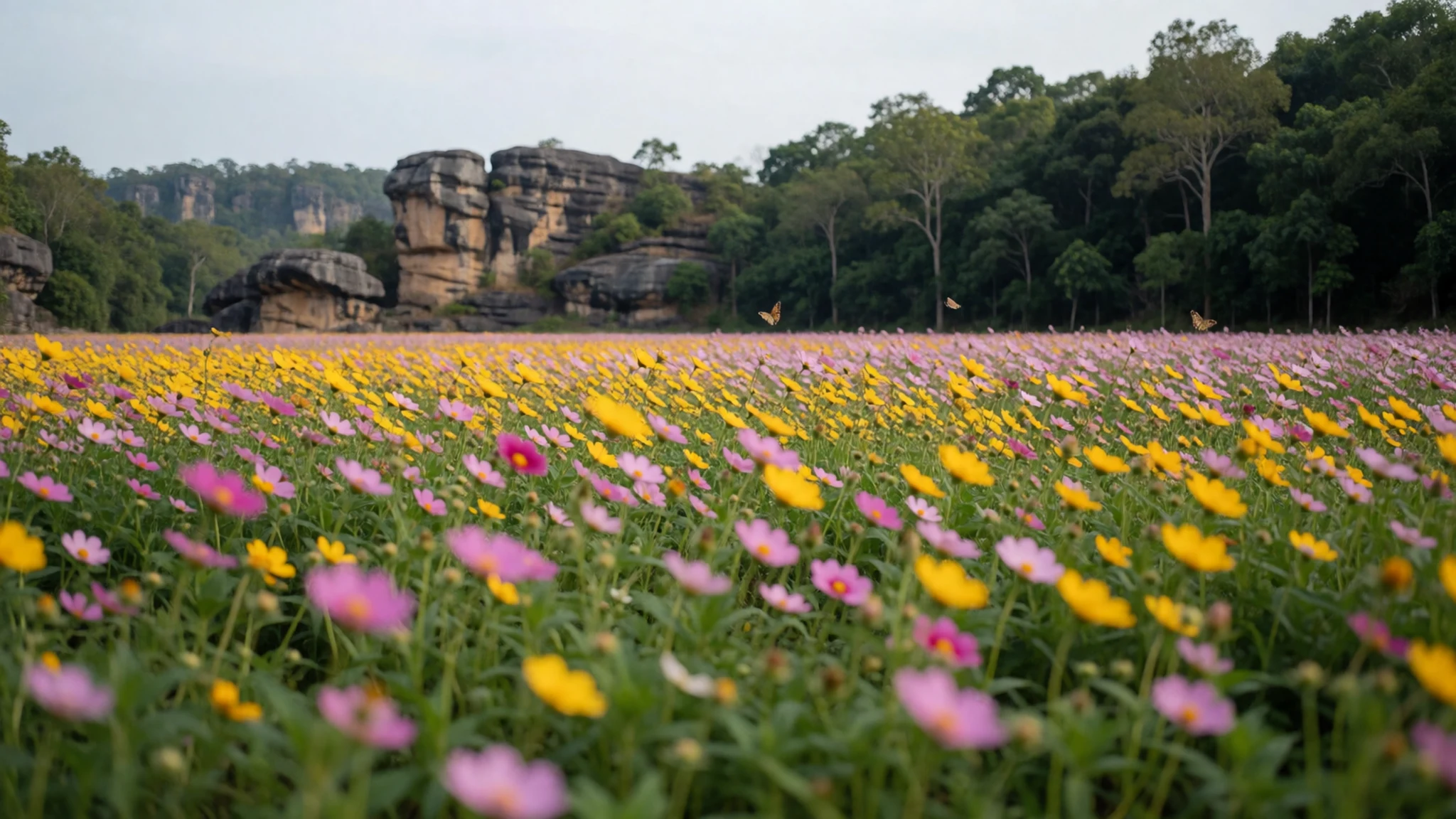
- Mekong River Border — the riverbank overlooks
The park boundary follows the river, offering a clear view of the Laotian shore. Watching the river traffic and the remote villages across the water highlights the park's role as a gateway between two nations and a corridor for wildlife.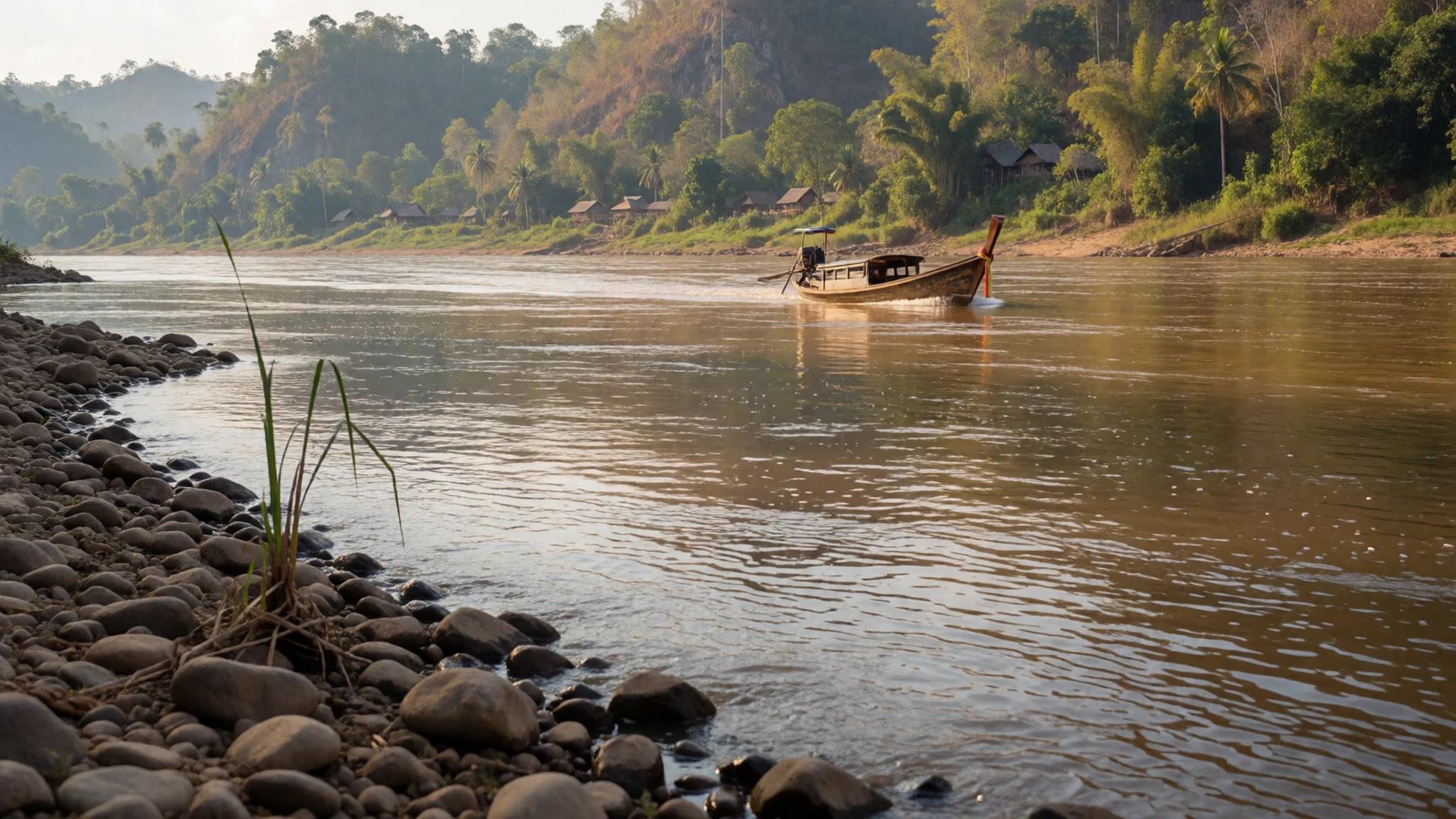
Culture
The culture surrounding Pha Taem National Park is reflective of the wider Isan region, where life is closely tied to the rhythms of the Mekong River. People here are known for their warmth and a polite, indirect way of communicating. This 'saving face' is central to social interactions; a smile or a nod of agreement often signifies politeness rather than complete understanding or consent. In this part of Thailand, there is a deep respect for the unseen world, and the park's history as a 'prohibited' spiritual site still lingers in the local consciousness. Visitors will find a community that is humble and welcoming, though they may be hesitant to offer direct criticism or disagreement. Understanding this subtlety helps in building genuine connections with the locals who manage the park and run the small eateries nearby. When visiting the prehistoric sites, remember that these are treated as heritage treasures. Please stay on the designated paths and avoid touching the ancient rock paintings.
What to wear
Traditional dress in the Ubon Ratchathani region is characterised by Isan textiles, specifically hand-woven silk and cotton. Many locals wear 'pha khao ma', a multi-purpose checkered cloth draped over the shoulder or tied around the waist, used for everything from wiping sweat to carrying goods. In villages, you will see women wearing sarongs made from locally dyed threads, often featuring intricate geometric patterns. Today, most people wear casual, modern clothing—t-shirts and lightweight trousers—especially those working in the park. For visitors, the key is practicality. The terrain is rocky and can be slippery, so sturdy walking shoes or hiking boots are essential. Given the exposed nature of the cliffs and the intense tropical sun, lightweight, breathable clothing that covers the shoulders and legs is recommended to avoid sunburn. A wide-brimmed hat and a light jacket are useful for the early morning sunrise trips, as the plateau can be surprisingly chilly before the sun climbs.
What to eat
- Suki Hotpot — local eateries near the park gate
A popular Thai-style steamboat featuring a variety of meats, vegetables, and glass noodles simmered in a savoury broth. It is a communal meal often found in chain eateries and local restaurants near the park entrance.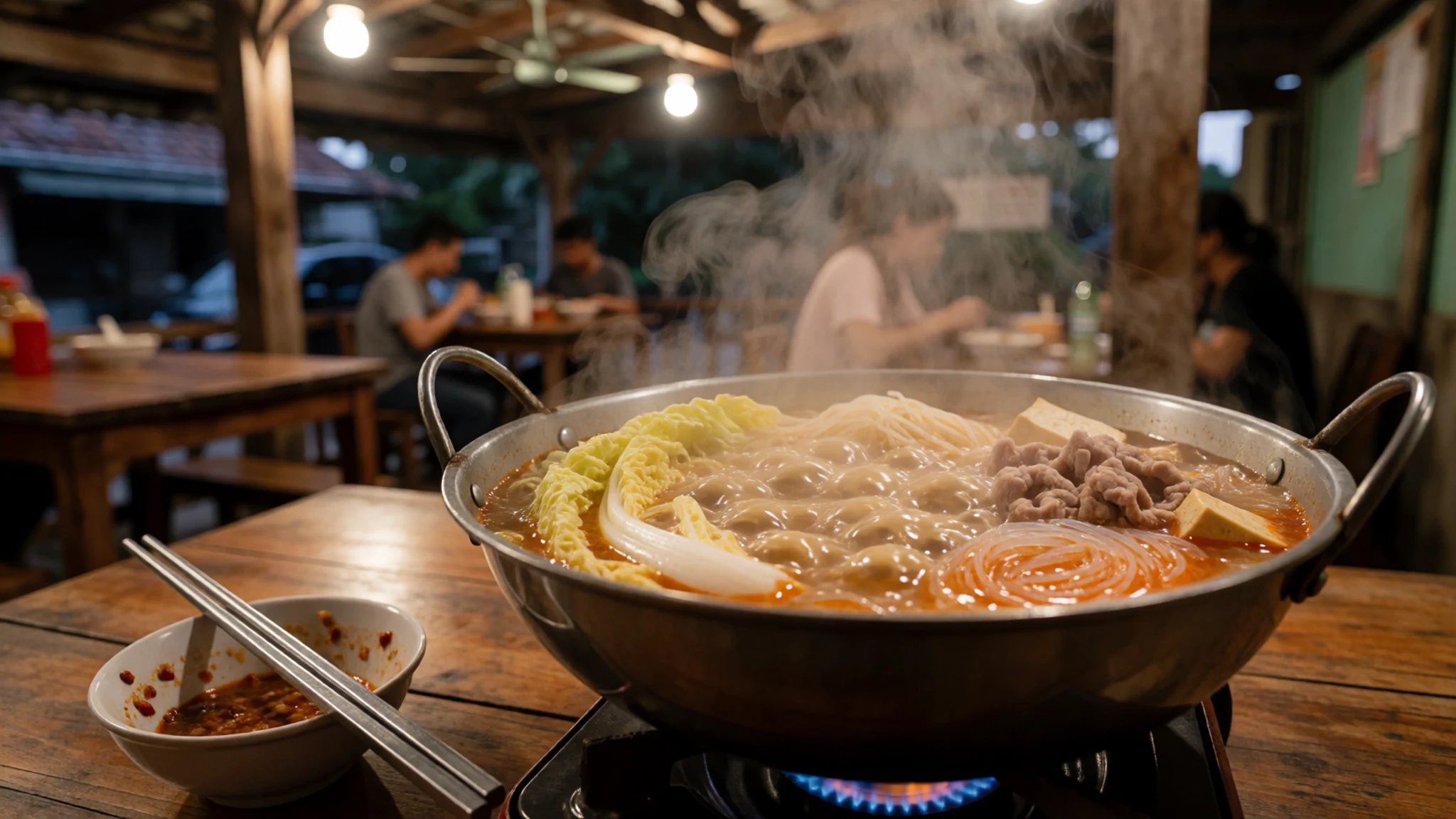
- Boat Noodles (Kuaytiew Ruea) — street stalls in the village
Rich, intensely flavoured noodles served in small bowls. Traditionally sold from boats, these are now available at small street-side stalls and offer a quick, spicy, and very affordable meal for hikers.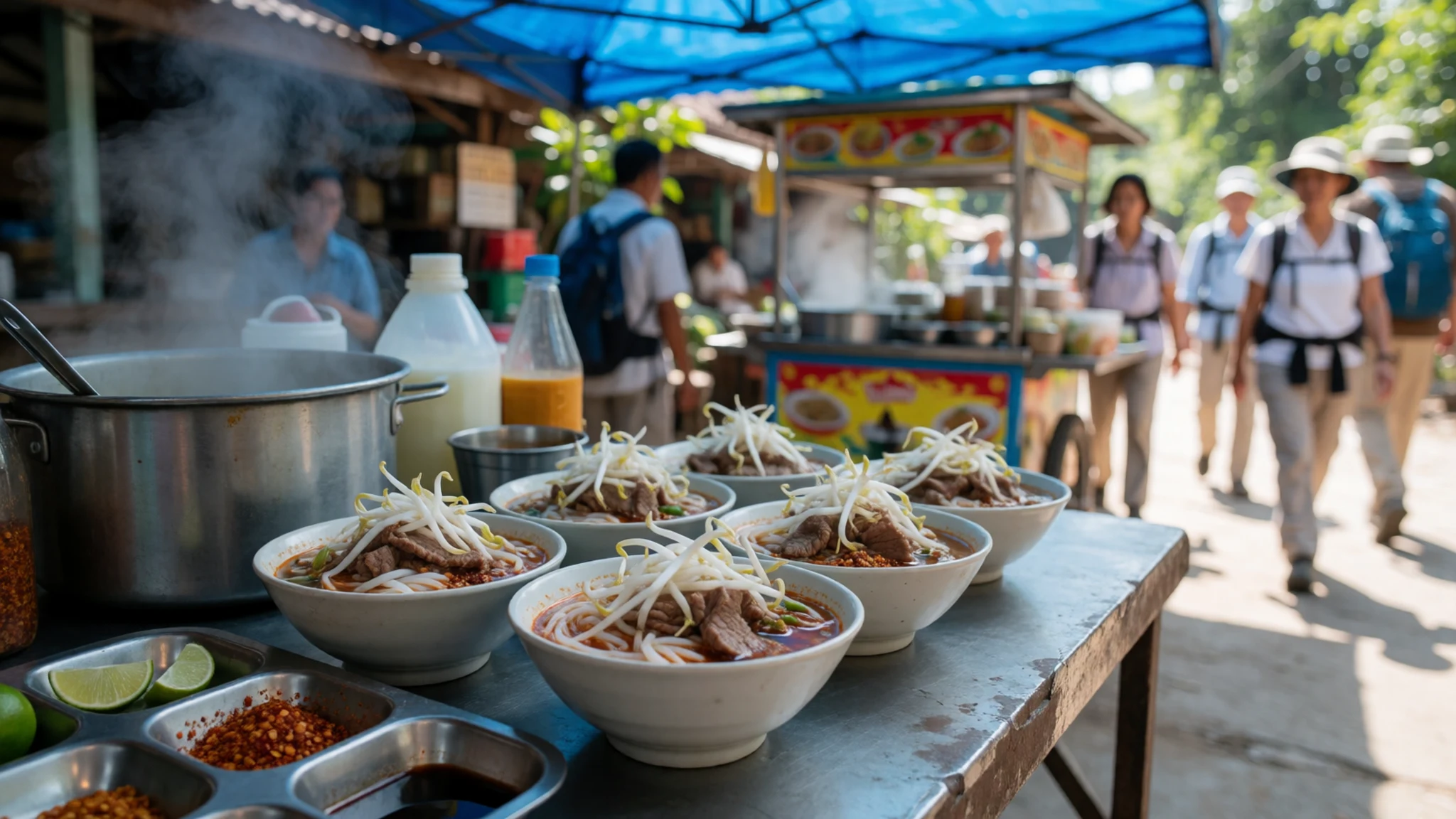
- Thai-style Salads (Yam) — local markets and small cafes
Zesty, spicy salads that combine fresh herbs, lime juice, and fish sauce with proteins like seafood or minced pork. These refreshing dishes are perfect for cooling down after a long walk under the sun. - Thai-flavoured Shaved Ice — dessert cafes in the nearby town
A modern treat consisting of finely shaved ice topped with local flavours such as mango, coconut, or durian. These are highly popular among younger crowds and provide a sweet, icy respite from the heat. - Isan Grilled Meats — roadside grills near the park
Smoky, marinated pork or chicken grilled over charcoal, typically served with sticky rice and a spicy dipping sauce. This is the quintessential fuel for travellers exploring the northeast of Thailand.
Plan it
Best time. November to February is ideal for the cooler temperatures and the blooming flower fields; avoid the peak New Year crowds if you prefer solitude.
How long. 1–2
Getting there. Fly into Ubon Ratchathani Airport, then hire a car or take a local bus/taxi for the drive to the park in the Khong Chiam district.
Budget. low
Tips
- Arrive at the cliffs before 6 am to beat the heat and see the sunrise
- Carry plenty of water as there are few facilities on the rock art trails
- Bring cash for entrance fees and local food stalls
- Wear sunscreen and a hat; there is very little shade on the plateau
- Check the official park website for seasonal flower bloom dates
Etiquette
- Do not touch or attempt to 'clean' the prehistoric paintings
- Dress modestly when visiting local villages around the park
- Keep noise levels low to avoid disturbing wildlife and other visitors
Nearby
Sources
- Wikidata Q1968973 (CC0)
- Wikipedia (CC BY-SA 4.0)
- Wikivoyage (CC BY-SA 4.0)