Morne Diablotin National Park
Morne Diablotin National Park, Dominica
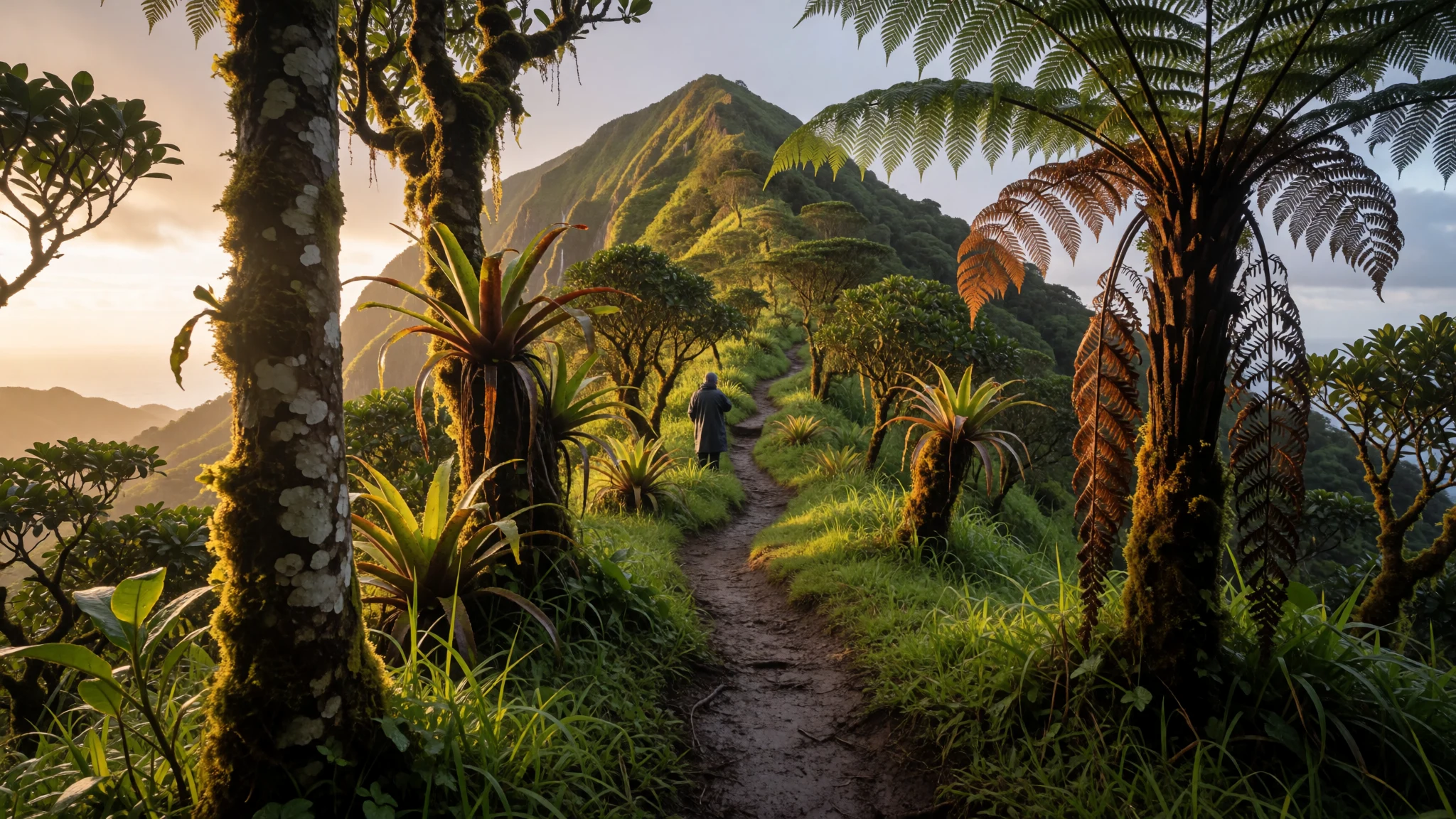
Morne Diablotin National Park is a wet mountain forest on Dominica where endemic parrots still cross the canopy above a hard trail.
The place
Morne Diablotin National Park covers the high forest of northern Dominica, a steep volcanic island in the eastern Caribbean. The park takes its name from Morne Diablotin, the mountain that rises into cloud above the villages of the leeward coast. Trails leave the heat of the lowlands and enter a wet forest where the canopy stays green through the year and the path is often slick with mud. Tree ferns, tall trunks of gommier and chatanier, and a thick layer of leaf litter close over the walker. Higher up, the trees shorten, moss thickens on the branches, and wind off the Atlantic pushes cloud across the ridge. On a clear break the view opens towards the coast and the neighbouring ridges; on a typical morning the mountain keeps its weather to itself. The forest shelters the sisserou, or imperial amazon, and the jaco, or red-necked amazon, parrots found on Dominica and watched for along the trails. Smaller birds are easier to see along the lower trail. The Syndicate side, on the western approach, is the usual place to start, with a short forest walk as well as the long climb towards the summit. Portsmouth and the villages along the coast supply beds, food and guides, and Roseau, the capital, is the usual base for travellers coming from the south. Rivers cut the lower slopes and the rain turns the path into a slow walk. Morne Diablotin National Park suits people who want forest, birds and a hard trail.
Its story
Morne Diablotin National Park sits on a mountain whose name remembers both a bird and a fear. French speakers on the island called the black-capped petrel the diablotin, a seabird whose night calls sounded unearthly. The mountain took the same name, and stories of a devil in the cloud gathered around it. The name stayed on the maps. People were in these forests long before that French label. The Kalinago, the indigenous people of Dominica, used the northern woods as hunting and travelling country, and the island still tells its story with that older presence in view. Colonial timber cutting, small farms and later roads pressed wild forest uphill, until the steep wet slopes around the morne were what remained of the old canopy. That remaining forest is where the sisserou and the jaco held on. Keeping the birds meant keeping the mountainside: the nesting trees, the fruiting canopy and the quiet under it. The park is that promise given a boundary, looked after by the island's forestry service, with guides from the nearest villages doing the daily work on the paths. A walk in Morne Diablotin National Park is time spent in habitat, with any wide view arriving only if the cloud lifts. Visitors who come only for a summit photograph often meet cloud, and the birds remain the clearer reason the boundary was drawn. The forest carried a dark name for years and later became a refuge for parrots the island claims as its own.
What to see
- Syndicate Nature Trail — Syndicate, western flank
The Syndicate Nature Trail is the gentle entrance to Morne Diablotin National Park, a loop under tall rainforest on the western flank. Visitors often come at dawn, when the sisserou and the jaco are heard and sometimes seen crossing gaps in the canopy. The path is easier than the summit climb, yet it is still wet, rooted and slippery. Standing still and listening does more here than hurrying.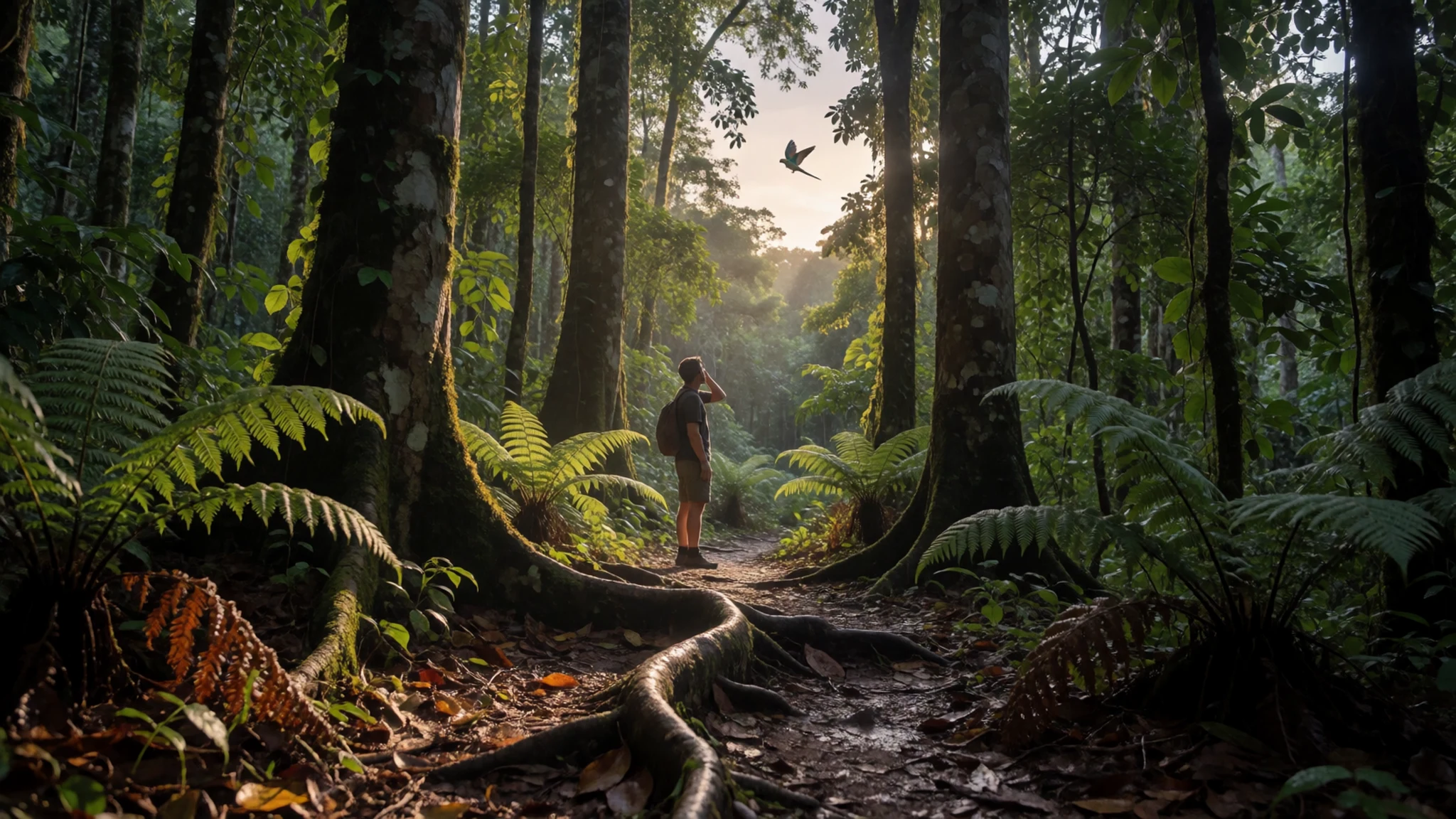
- Morne Diablotin summit trail — Syndicate approach to the summit
The summit trail in Morne Diablotin National Park leaves the Syndicate forest and climbs through montane woodland towards the clouded top of the mountain. Roots, mud and steep steps make it a slow walk, and cloud often closes the view after a hard climb. Guides from the nearby villages know which gullies flood and when to turn back.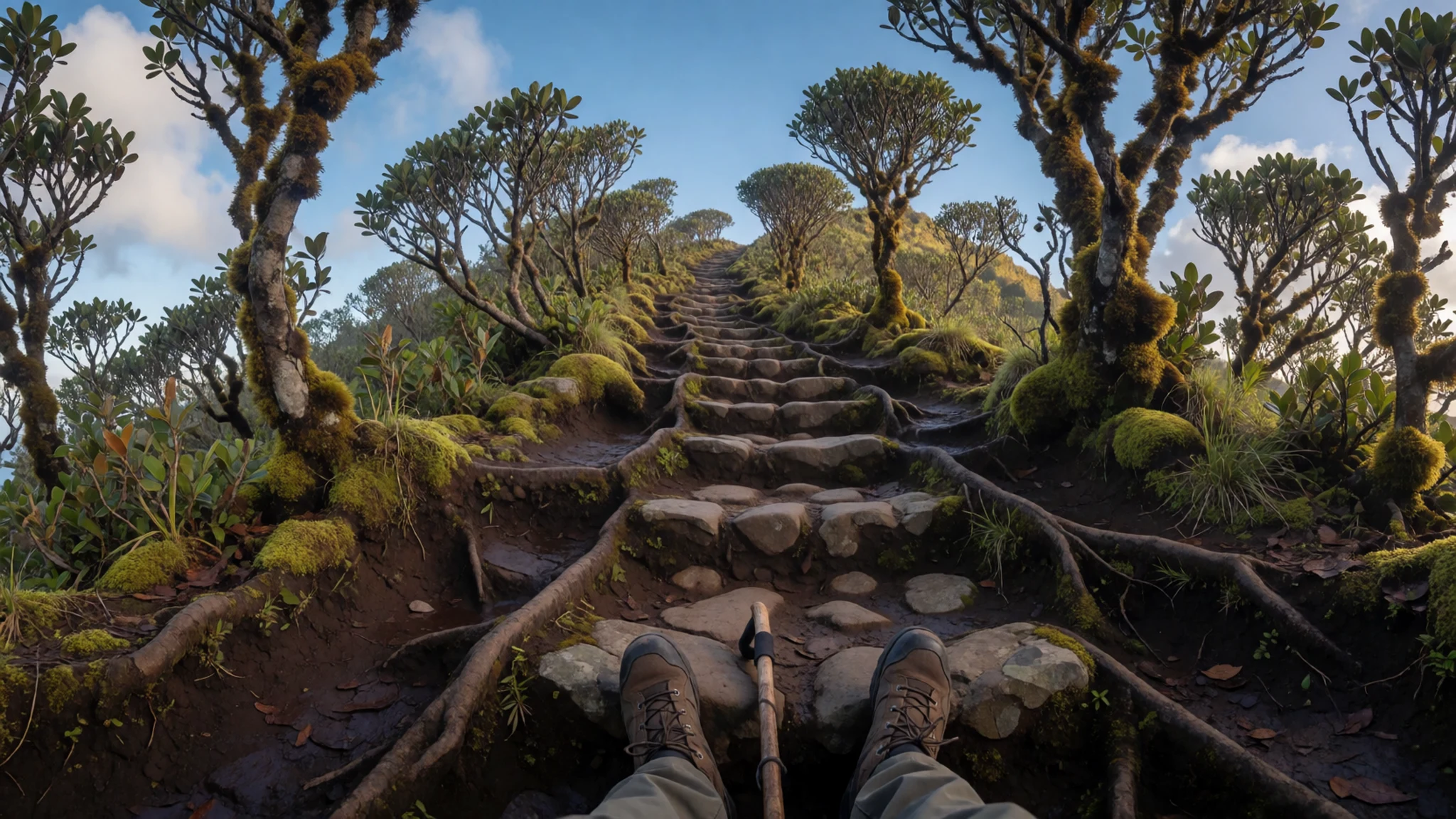
- Lesser Antillean flycatcher — Syndicate forest interior
The Lesser Antillean flycatcher lives in the forest of Morne Diablotin National Park and is easier to notice than the shy parrots. It perches upright, then darts for an insect and often returns to the same branch. A park photograph shows the bird in that setting, alert on a perch among green leaves. Quiet edges of the Syndicate trail are the realistic place to look.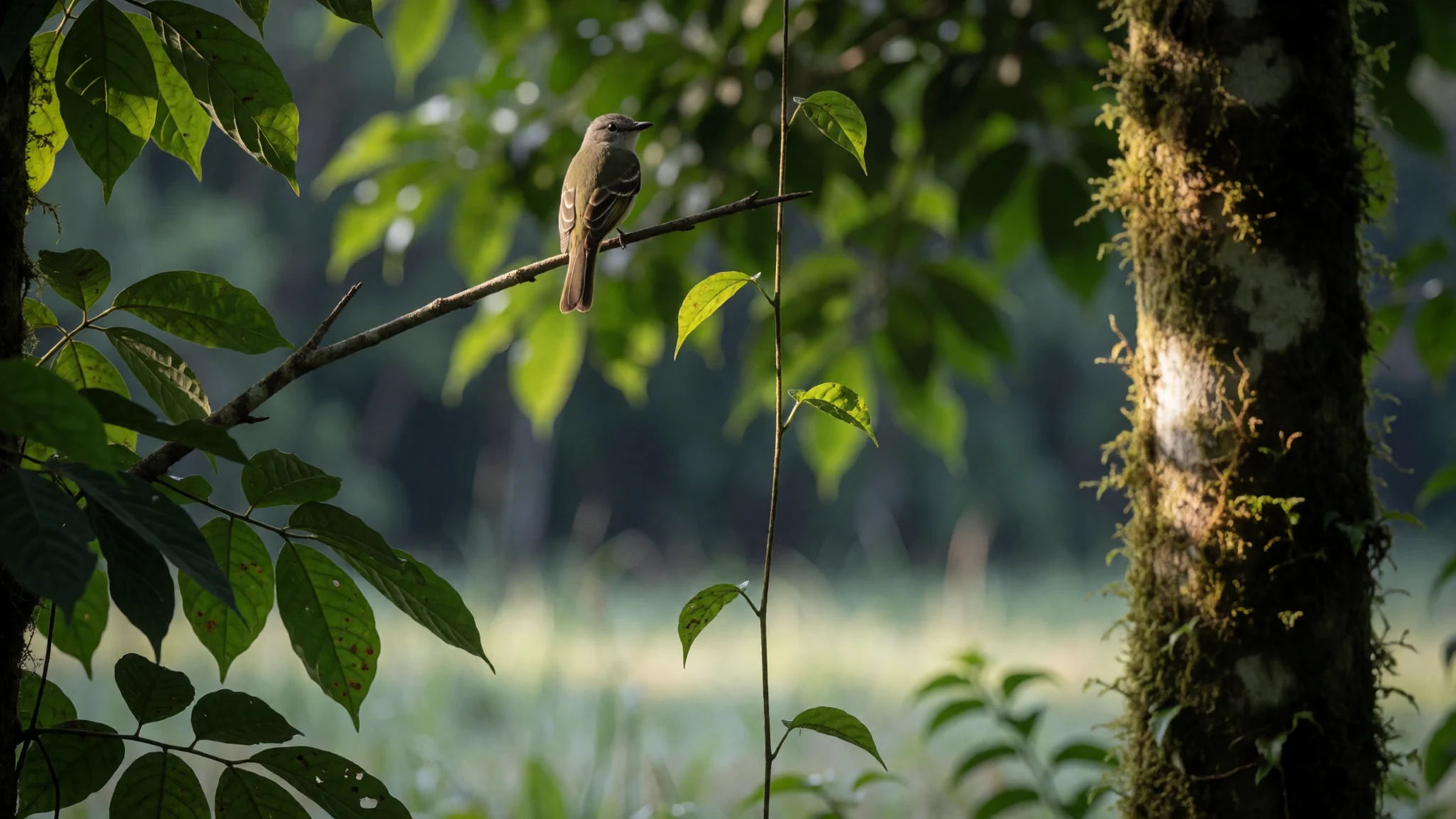
- Bananaquit — Forest edge and village gardens beside the park
The bananaquit is a small, busy nectar-feeder often seen around Morne Diablotin National Park, including at the forest edge and in village gardens just outside the boundary. A park photograph shows it feeding on an orange, typical of how bold this bird can be around fruit. Dark above, with a pale stripe over the eye, it flicks through flowers and fruit rather than sitting still.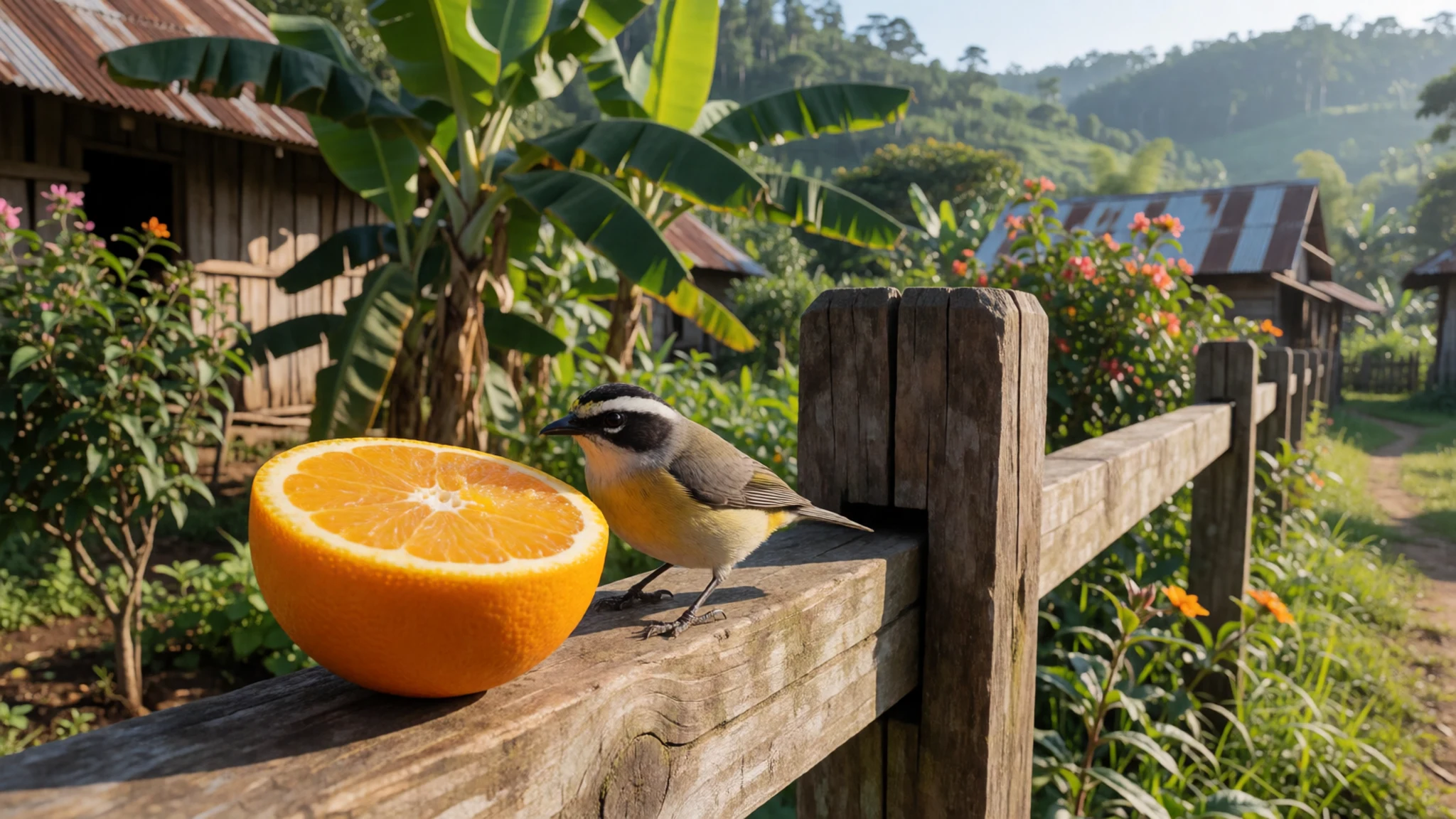
- Dawn parrot watch — Syndicate ridge
Dawn on the Syndicate ridge is the practical way to look for parrots in Morne Diablotin National Park. The sisserou is the larger, darker bird, more often heard than seen, while the jaco is smaller and a little more willing to cross an open gap. A guide who knows the calls will notice them long before a newcomer does.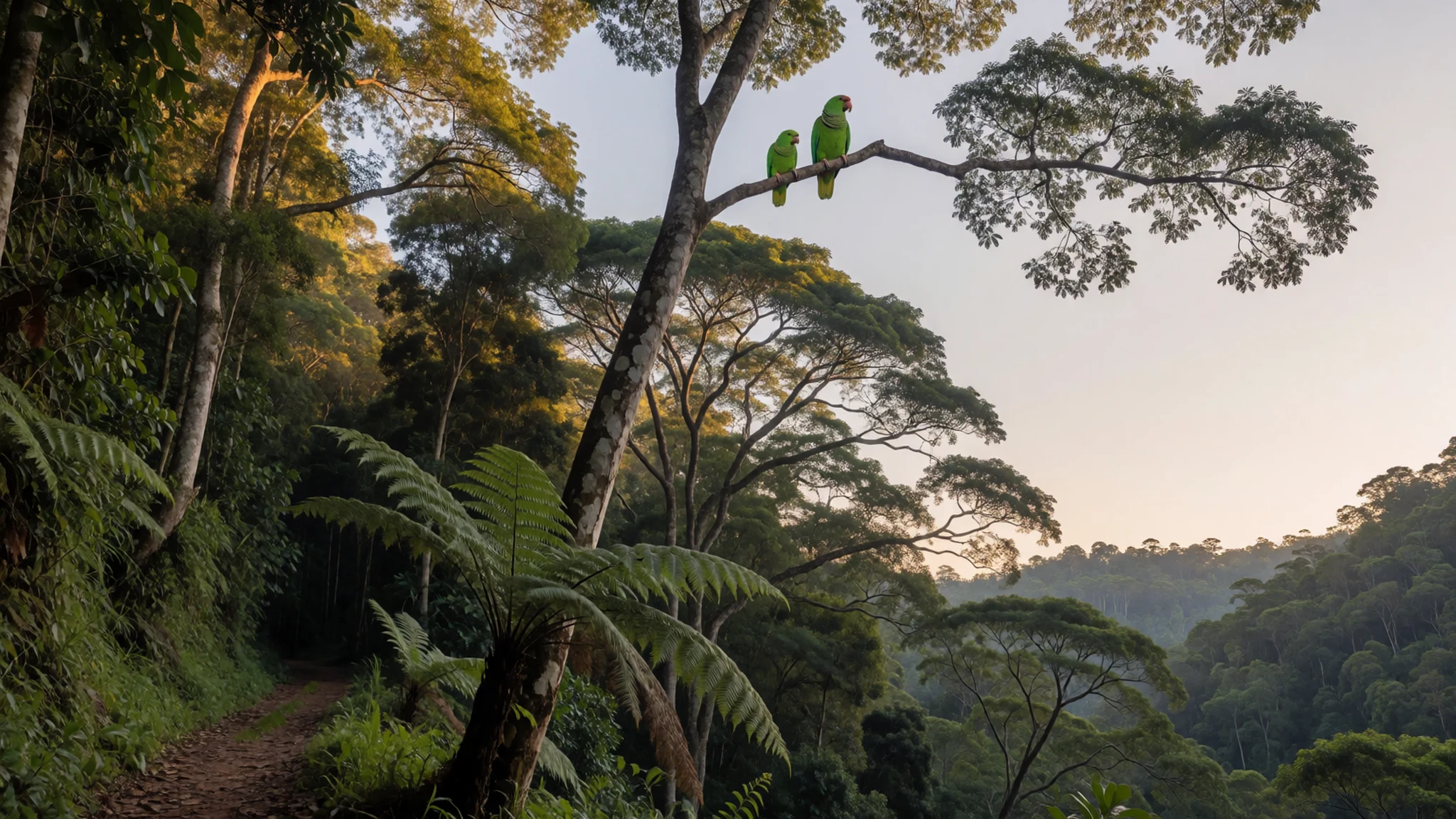
Culture
Morne Diablotin National Park is bound up with Dominica's sense of itself, a place where Creole village life and a still-wild interior sit side by side. English is the official language, but Dominican Creole, Kwéyòl, is what many families speak at home, and French place-names cover the map from the years before British rule. The Kalinago community keeps the indigenous thread of that history visible, while the north beside the park is a string of small farming villages. People grow bananas, citrus, roots and bay, and they treat the mountain as both a workplace for guides and a presence in local stories. The sisserou is the national bird, and its image carries the idea that the high forest is a living charge rather than empty scenery. Church, carnival and village fêtes mark the year on the coast; inside the park the custom is quieter. Guides often come from those villages, and hiring a guide is how a walk supports the people who live with the mountain. Ask before you photograph people in the villages, stay on the marked trail, and do not call or feed the parrots.
What to wear
Morne Diablotin National Park is a mud-and-rainforest day, but the dress Dominica still brings out for ceremonies is the wòb dwiyèt, the national Creole costume. Women wear a full skirt and a blouse in bright Madras cotton, the plaid cloth that came into the islands through colonial trade, with a white chemise underneath, a foulard at the shoulders, and a Madras headtie whose pattern is tied with care. Men may wear a Madras sash or shirt with formal clothes for the same occasions: independence events, carnival and weddings, rather than an ordinary morning in the forest. Day to day, people in the villages near the park wear what the heat suggests: T-shirts, light cotton shirts, shorts or trousers, a cap against the sun, and rubber boots when the ground is wet. For a visitor the mountain asks for different clothes from the coast. A visitor needs long trousers the undergrowth will not shred, a shirt that can soak, and boots with a grip, because the trail is slick clay and roots. A light rain jacket is more useful than an umbrella. Sandals belong in town. If the day also includes a church or a village celebration, shoulders should be covered and the muddy clothes changed for something cleaner afterwards.
What to eat
- Green fig and saltfish — Village cookshops towards Syndicate and simple eateries in Portsmouth
Green fig and saltfish is the plate to look for after a day in Morne Diablotin National Park. Green fig means green banana, boiled beside flaked salted cod, onion, pepper and herbs. It is everyday food. Village cookshops towards Syndicate and simple eateries in Portsmouth serve it.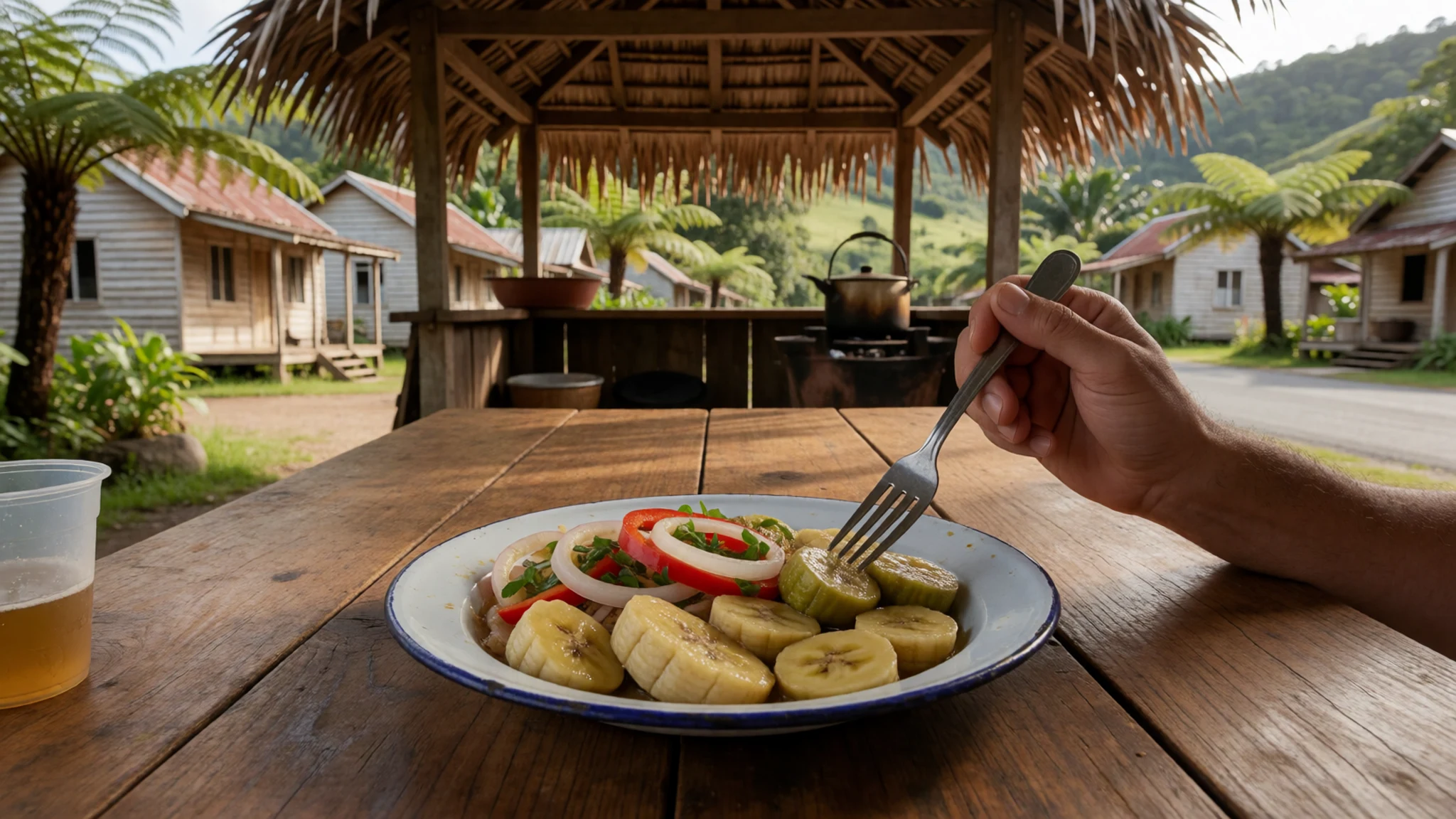
- Callaloo — Village cookshops and market stalls in Roseau
Callaloo is a thick green soup built on dasheen leaves, a natural plate after Morne Diablotin National Park. Cooks simmer the leaves with coconut milk, okra and herbs, sometimes adding crab or salted meat. Village cookshops and market stalls in Roseau sell it at lunch.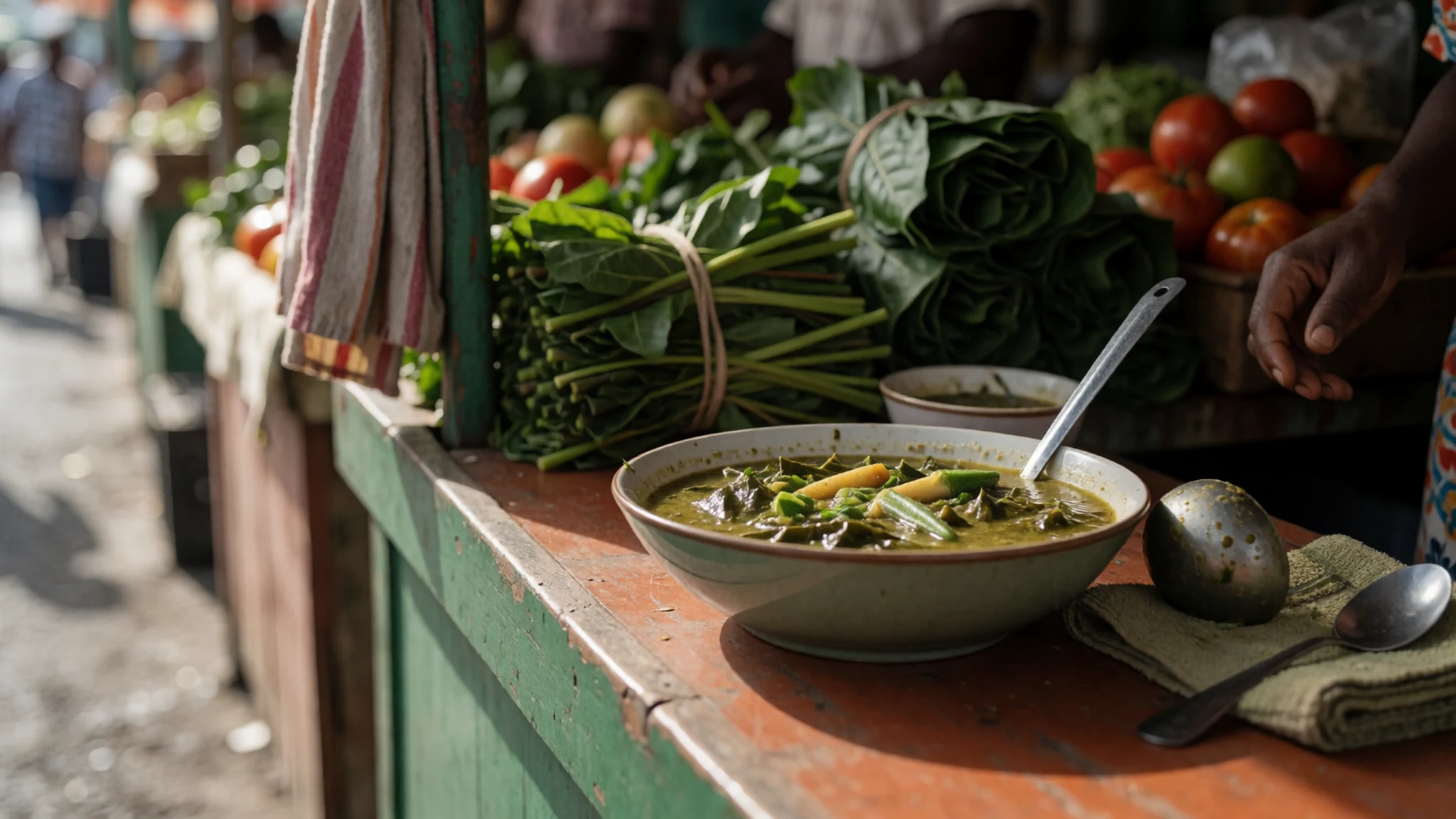
- Provisions — Roadside cookshops near the Syndicate road
Provisions is the boiled ground food of the villages around Morne Diablotin National Park: dasheen, yam, sweet potato, plantain and breadfruit, often with salted fish. It is hearty and mild. Roadside cookshops near the Syndicate road serve it at midday. - Bakes and saltfish — Morning stalls in Portsmouth and Roseau
Bakes are fried dough rounds, and with saltfish they are the breakfast for a dawn start at Morne Diablotin National Park. The saltfish is scrambled with onion and pepper. Morning stalls in Portsmouth and Roseau sell them wrapped, ready to eat on the way to the trail. - Accra — Market stalls in Roseau and fry-stands in Portsmouth
Accra are crisp saltfish fritters, a snack rather than a full plate after Morne Diablotin National Park. Seasoning, pepper and onion go into the batter with the fish. Market stalls in Roseau and fry-stands in Portsmouth sell them through the late morning.
Plan it
Best time. The drier part of the year is the kinder time to walk in Morne Diablotin National Park. Paths stay muddy, but storms are less constant and a clear morning is more likely. In the wetter months rain is heavier, the clay slicker, and trails more often closed by weather.
How long. 2–3
Getting there. Most travellers reach Dominica through Douglas-Charles Airport at Marigot, in the north-east, or the smaller airstrip at Canefield near Roseau. The last leg is by road to the Syndicate entrance on the western side of Morne Diablotin National Park, via Portsmouth or the coast road. A hired car or a guide's vehicle is the realistic way to the trailhead. Ask the Forestry, Wildlife and Parks Division about the road and the trail before setting out.
Budget. mid
Tips
- Arrange a local guide before a summit attempt in the park
- Set off at dawn, because afternoon cloud and rain make the walk down harder
- Carry drinking water from the village, and do not count on streams
- Bring cash for guides, cookshops and small shops
- Leave the route with someone in the village, because phone signal fades on the mountain
Etiquette
- Stay on the trail so the nesting forest is left undisturbed
- Do not play bird calls or offer food to wildlife
- Carry every piece of rubbish back out of the park
Nearby
Sources
- Wikidata (CC0)
- Wikipedia (CC BY-SA 4.0)
- Wikivoyage (CC BY-SA 4.0)
Wildlife
- Sisserou (animal)
The sisserou, or imperial amazon, is Dominica's own parrot, so special that it appears on the national flag. Remember it as the flag bird. It is found nowhere else on Earth, and so few remain that it is critically endangered. In Morne Diablotin National Park, watch for it from the trails, though it is larger, darker and often heard before it is seen. Keep well back, stay quiet, go with a local guide, and never feed it. - Jaco (animal)
The jaco, or red-necked amazon, is a parrot with a splash of orange-red at its throat, like a little scarf. It belongs to Dominica alone and is a touch smaller than the sisserou. It is vulnerable, and the law fully protects it. In Morne Diablotin National Park, look for it along the trails, where it is a bit bolder about crossing open gaps. Keep your distance, stay quiet, go with a guide, and never feed it. - Sisserou (bird)
The sisserou, or imperial amazon, is Dominica's own parrot, so special that it appears on the national flag. Remember it as the flag bird. It is found nowhere else on Earth, and so few remain that it is critically endangered. In Morne Diablotin National Park, watch for it from the trails, though it is larger, darker and often heard before it is seen. Keep well back, stay quiet, go with a local guide, and never feed it. - Jaco (bird)
The jaco, or red-necked amazon, is a parrot with a splash of orange-red at its throat, like a little scarf. It belongs to Dominica alone and is a touch smaller than the sisserou. It is vulnerable, and the law fully protects it. In Morne Diablotin National Park, look for it along the trails, where it is a bit bolder about crossing open gaps. Keep your distance, stay quiet, go with a guide, and never feed it.