Scott's Head
Scott's Head, Dominica
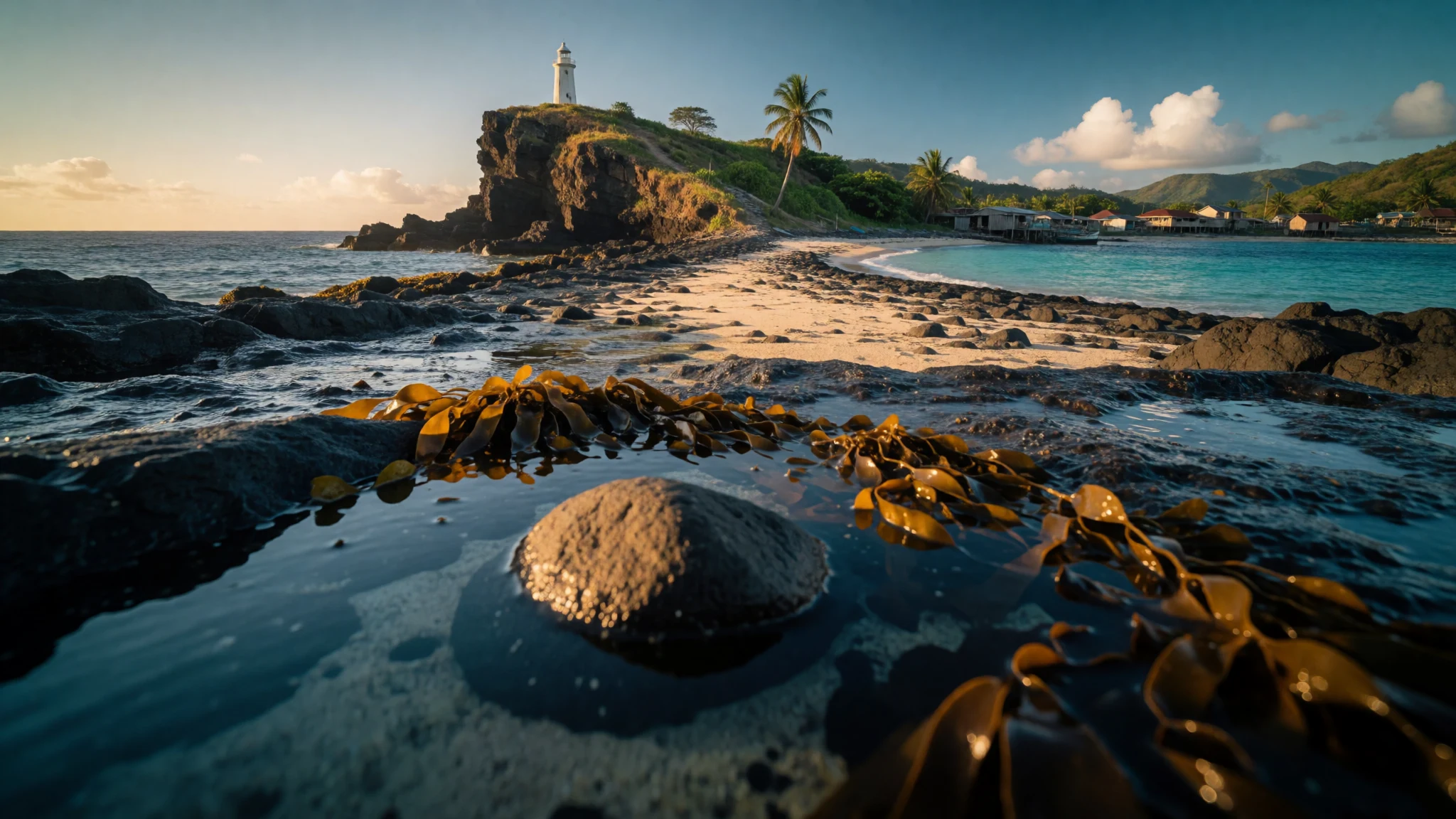
Scott's Head is a Dominican fishing village where a narrow neck of land leads to a fort-topped headland and reef-rich water for snorkelling.
The place
Scott's Head is a small fishing village at the south-western tip of Dominica, in Saint Mark Parish, facing Soufrière Bay. The village shares its name with the rocky headland beside it, a peninsula joined to the main island by a narrow neck of land, the kind of formation geographers call a tombolo. Locals and visitors say "Scott's Head" for both. The older Kalinago name, Cachacrou, is usually explained as "that which is eaten by the sea", a fitting label for a spot where the Caribbean Sea and the Atlantic Ocean meet and wear at the same rock from two sides.
Life here is quiet and tied to the water. Fishing is the main livelihood, and the road towards Roseau is the only real artery. Most visitors come for the day from elsewhere; there are a few cottages in the village, but they are not widely advertised, and there is little to do after dark. Roseau is roughly an hour away by road, which makes the trip manageable as an outing from the capital.
The bay in front is protected as the Soufrière Scotts Head Marine Reserve, and it is the reason divers and snorkellers make the journey. Above the water, a short climb up the headland leads to a small lighthouse, some telecommunications equipment and the tumbled remains of a fort, with views back over the village and along the coast. The village also marks the start of the Waitukubuli National Trail and of a sea-kayaking trail, so walkers and paddlers pass through as well. In June or July the village holds a feast for Saint Peter, and Dive Fest brings divers and freedivers together for competitions, food and music.
Its story
Scott's Head carries two names from two very different histories. The Kalinago, who lived on Dominica long before European ships arrived, called the headland Cachacrou. The present name comes from George Scott, a British officer who served in the force that took the island from France and later became its lieutenant governor. Under his direction a fort, Fort Cachacrou, was built on the headland, looking out over the sea towards Martinique, which the French still held to the south.
The position made it a front line. Britain and France passed Dominica back and forth, and in 1778 French forces came for it again. Scott's Head was where they struck first. Accounts tell of French residents of the island who visited the British garrison beforehand, got the soldiers drinking and quietly jammed the cannon with sand. The French ships crossed from Martinique, and the fort fell the next morning to an attack the garrison was in no state to resist. The victors fired a celebratory signal, and that sound was the first warning the British in Roseau, to the north, had that an invasion had begun. A few years later the island went back to Britain under the Treaty of Versailles.
Time and weather have been unkind to the fort. Much of it has slid down the cliff into the sea, which fits the meaning of the old Kalinago name. What survives is a scatter of broken walls and a small cannon near the top, a modest reminder of how much once depended on this small point of land.
What to see
- Snorkelling in Soufrière Bay — The bay beside Scott's Head village
The reef water around the headland is the main reason to come. Coral grows close to shore, and swimming round the point at a casual pace takes about an hour. Jellyfish appear in some seasons, so ask local fishermen about conditions before getting in. Bringing your own mask and snorkel is easier than hunting for rental gear in the village.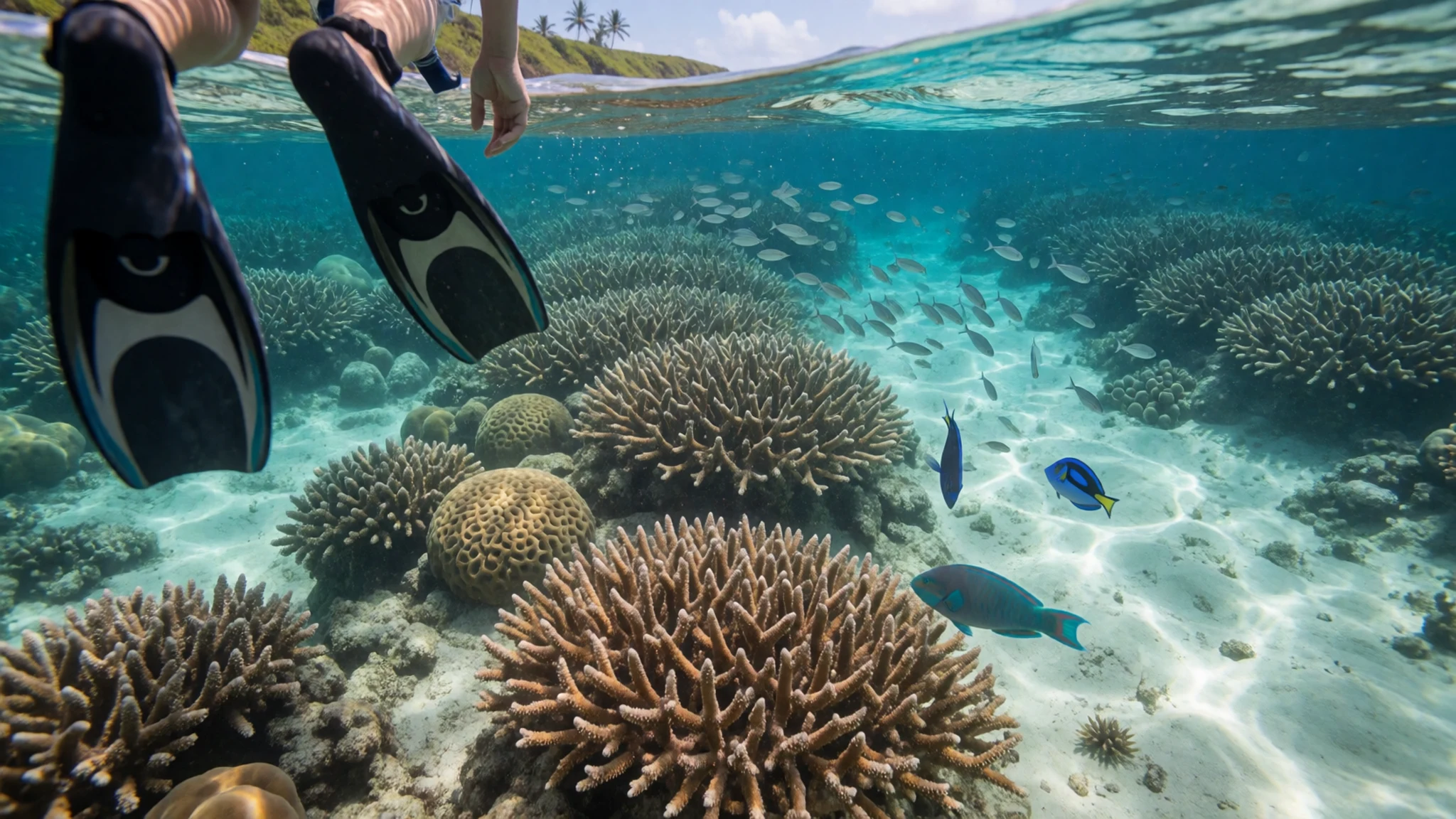
- Diving the drowned crater — Soufrière Scotts Head Marine Reserve
Divers use the curve of the bay, which sits in the flooded remains of an old volcanic crater. The seabed drops away steeply beside the coral-lined rim, and shore entry is possible for those carrying their own equipment. Visibility and currents vary, so go with a licensed operator unless you are an experienced diver. Dive Fest adds competitions each year.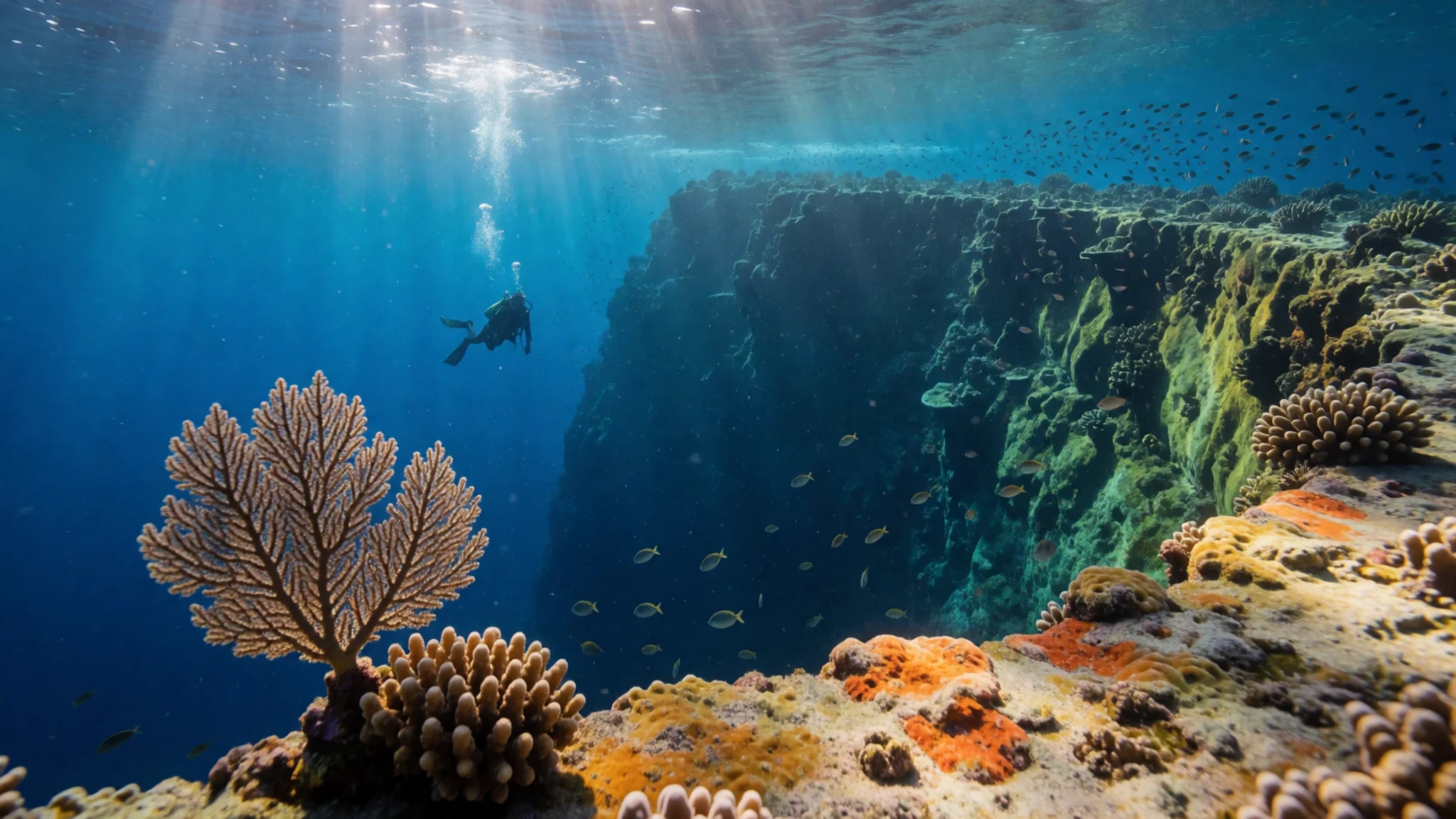
- The headland climb and lighthouse — The Scott's Head peninsula
A short, easy path leads up the peninsula to a small lighthouse and the telecommunications equipment on top. The effort is rewarded with views back over the village, across Soufrière Bay and, on clear days, out over open sea. Go early or late in the day, as the exposed slope has little shade.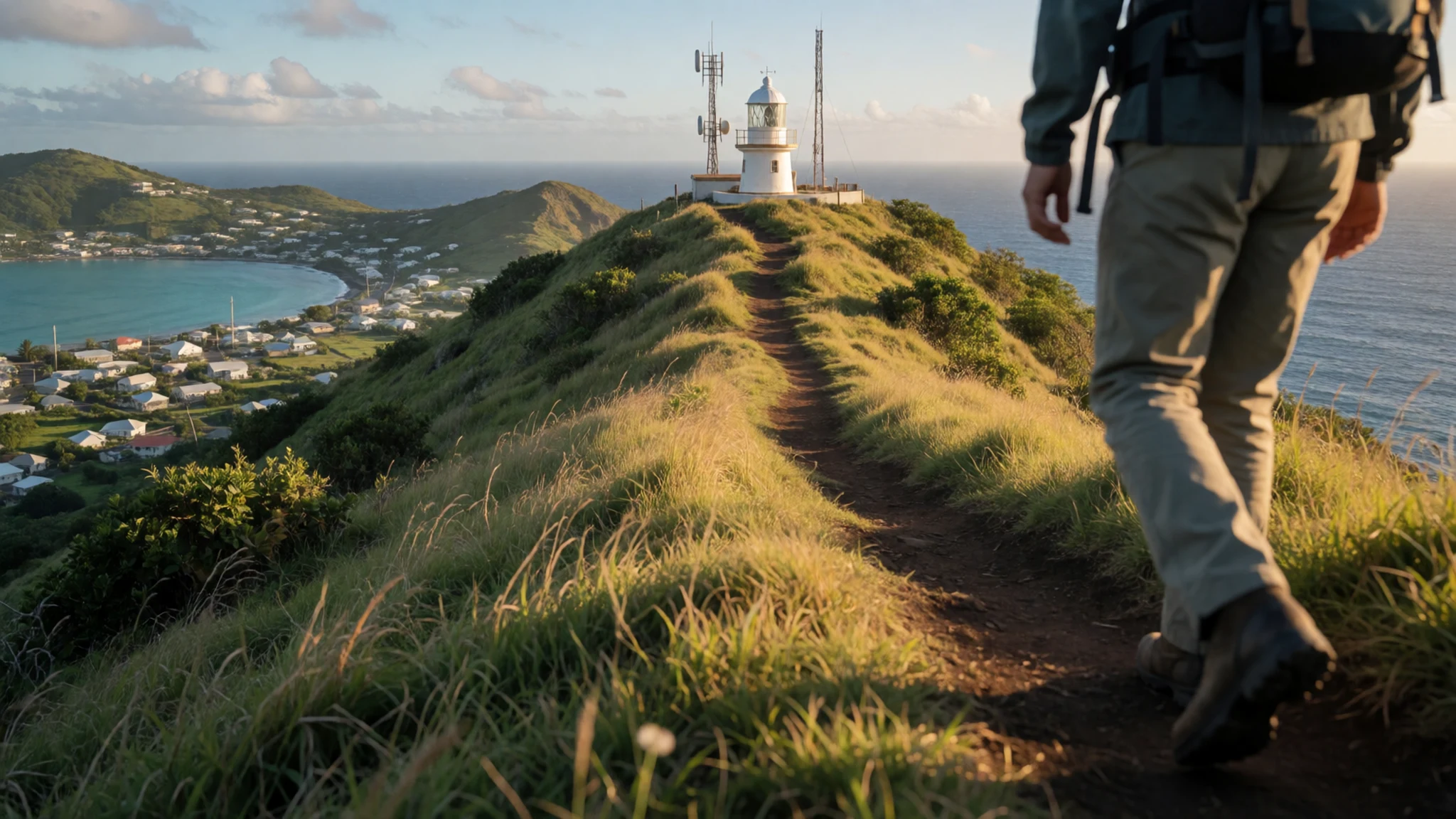
- Fort Cachacrou ruins — Top of the Scott's Head peninsula
Near the summit lie the remains of the old British battery. Much of the fort has fallen into the sea, but low walls and a rusting cannon survive, and the headland's outlook over the sea routes to the south explains why it mattered. Watch your footing near the cliff edge, where the ground is unstable.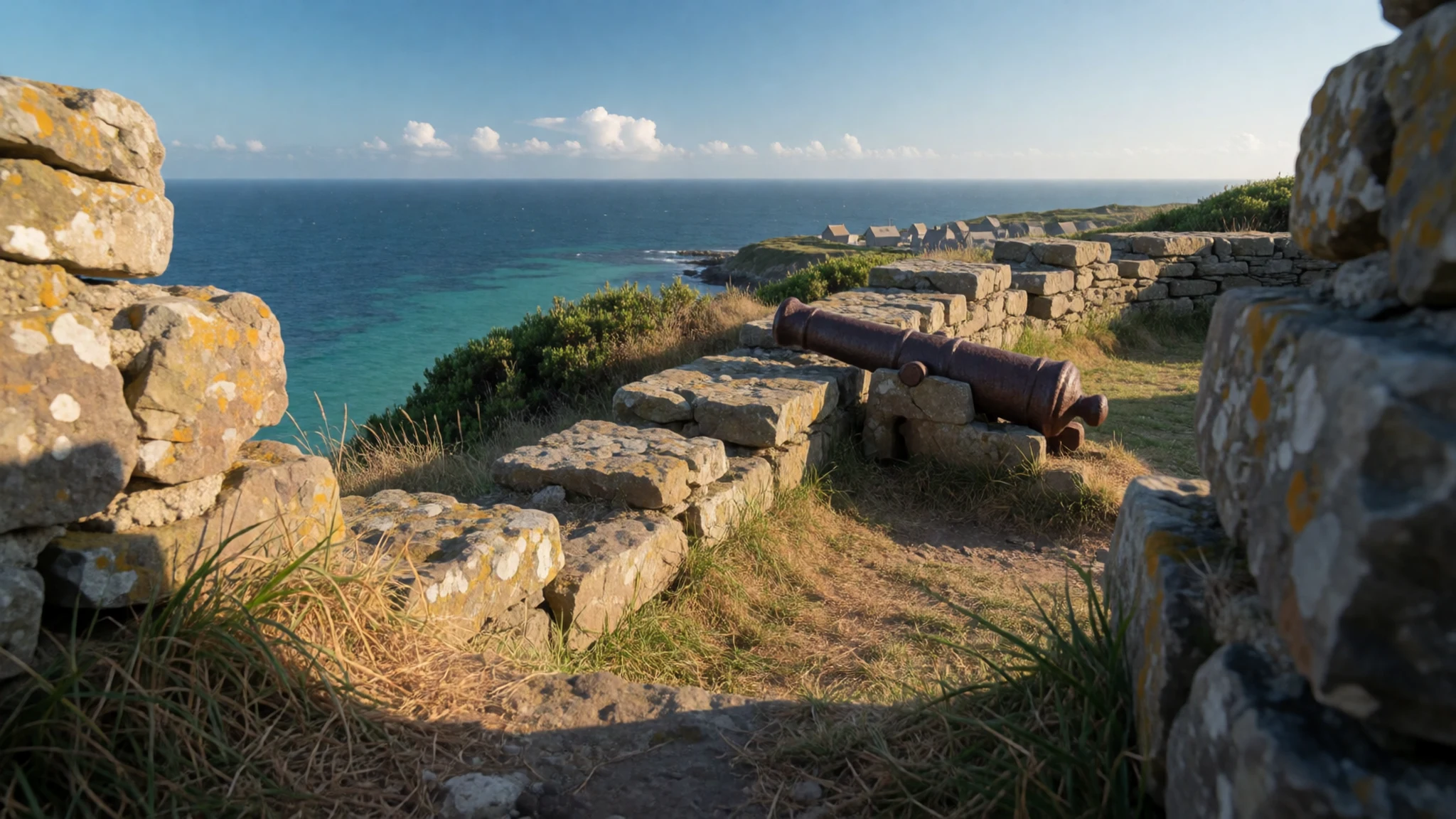
- The village shore and the isthmus — Scott's Head village
Walk the village's single road to see working fishing life: boats along the shore and the narrow neck of land that joins the headland to the island. The best views of the whole peninsula come from near the village, looking across the isthmus, and the view from above looks back the other way.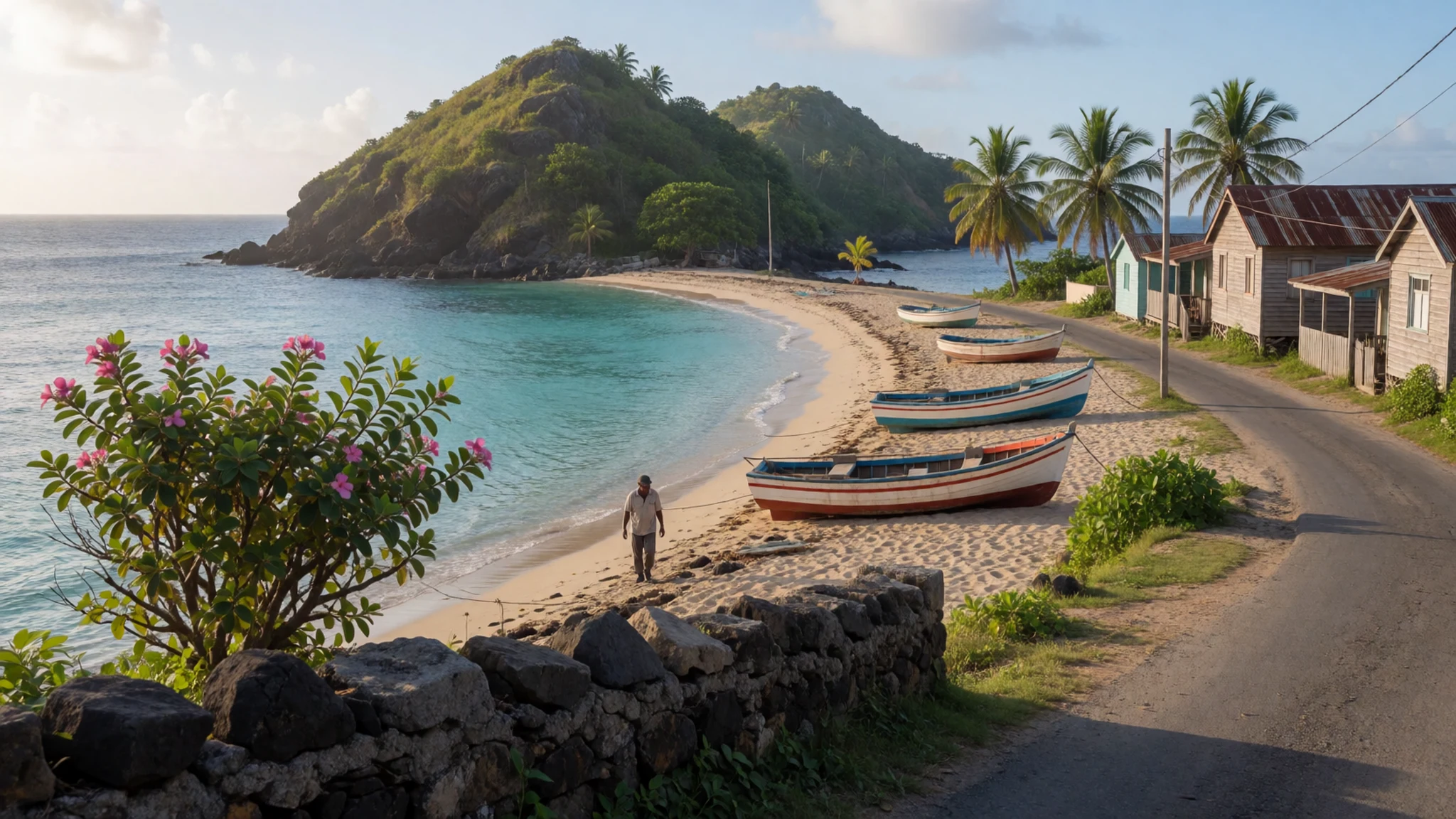
- First stage of the Waitukubuli National Trail — Trailhead at Scott's Head village
The long-distance Waitukubuli National Trail begins here. Its first segment heads inland towards Soufrière Estate and is best treated as a half-day walk, with water, a hat and sturdy shoes. Those who want only a taste can walk part of it and return by the same route.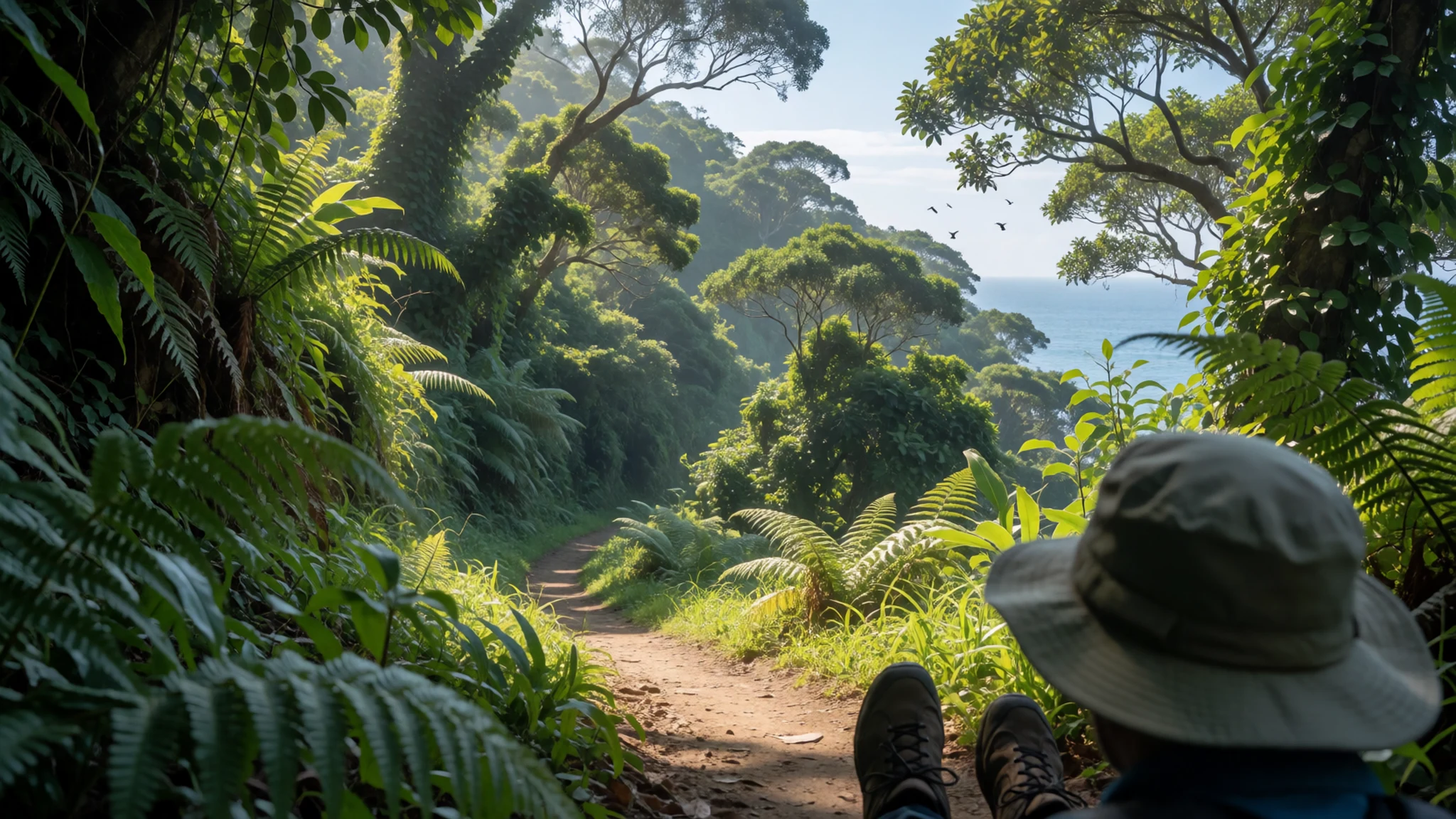
Culture
Scott's Head is a working fishing village, and daily life follows the sea. Mornings begin at the shore, where boats go out and return, and catches are sold or shared close to the road. English is the official language, while Kwéyòl, the French-based Creole of Dominica, is also heard in everyday talk, a trace of the years when the island changed hands between France and Britain.
Two events mark the village year. In June or July the community keeps the feast of Saint Peter, the fisherman apostle, with church and neighbourhood celebrations. Dive Fest turns the bay into an arena for scuba and freediving contests, with music and food on land. Both bring more people into a village with few beds, so anyone planning around them should arrange a place to stay early.
The Kalinago name Cachacrou is a reminder that this coast was inhabited long before the fort was built, and Dominica still has a Kalinago community elsewhere on the island. Scott's Head itself is small and familiar, a place where people know one another and a greeting counts for a lot.
Greet people you pass in the village before asking for anything, and ask before photographing fishermen, their catch or their boats.
What to wear
Scott's Head dresses the way a small Caribbean fishing village does: simply, and for heat and salt water. Dominica's traditional costume is the wob dwiyet, a Creole dress made from madras, a checked cotton, worn with a matching headwrap and often a shawl. It appears mostly at cultural and national celebrations rather than on an ordinary weekday.
Day to day, people wear shorts, T-shirts, light cotton shirts and sandals. Fishermen favour waterproof boots and old, practical clothes that can take sun, spray and fish scales. For church and for the feast of Saint Peter, people dress up, in pressed shirts, dresses and often hats.
Visitors should pack for sun, sea and rough ground. Quick-drying clothes, a hat, a rash vest or long-sleeved swim top and reef-friendly sun cream suit the water, and water shoes help on rocky entries. Sturdy trainers or walking shoes are better than sandals for the headland path and fort ruins, where the ground is loose. A light rain jacket is useful, as showers can arrive without warning. Swimwear is for the shore and boats; a shirt and shorts or a wrap should go on before walking through the village, and covered shoulders and knees are appropriate for church.
What to eat
- Fresh grilled or fried fish — Roadside shacks on the road towards Roseau
Catch from the bay is cooked simply, usually grilled or fried and served with local sides such as rice, plantain or provisions, which here means starchy root vegetables. Portions depend on what the boats brought in, so ask what came in that morning.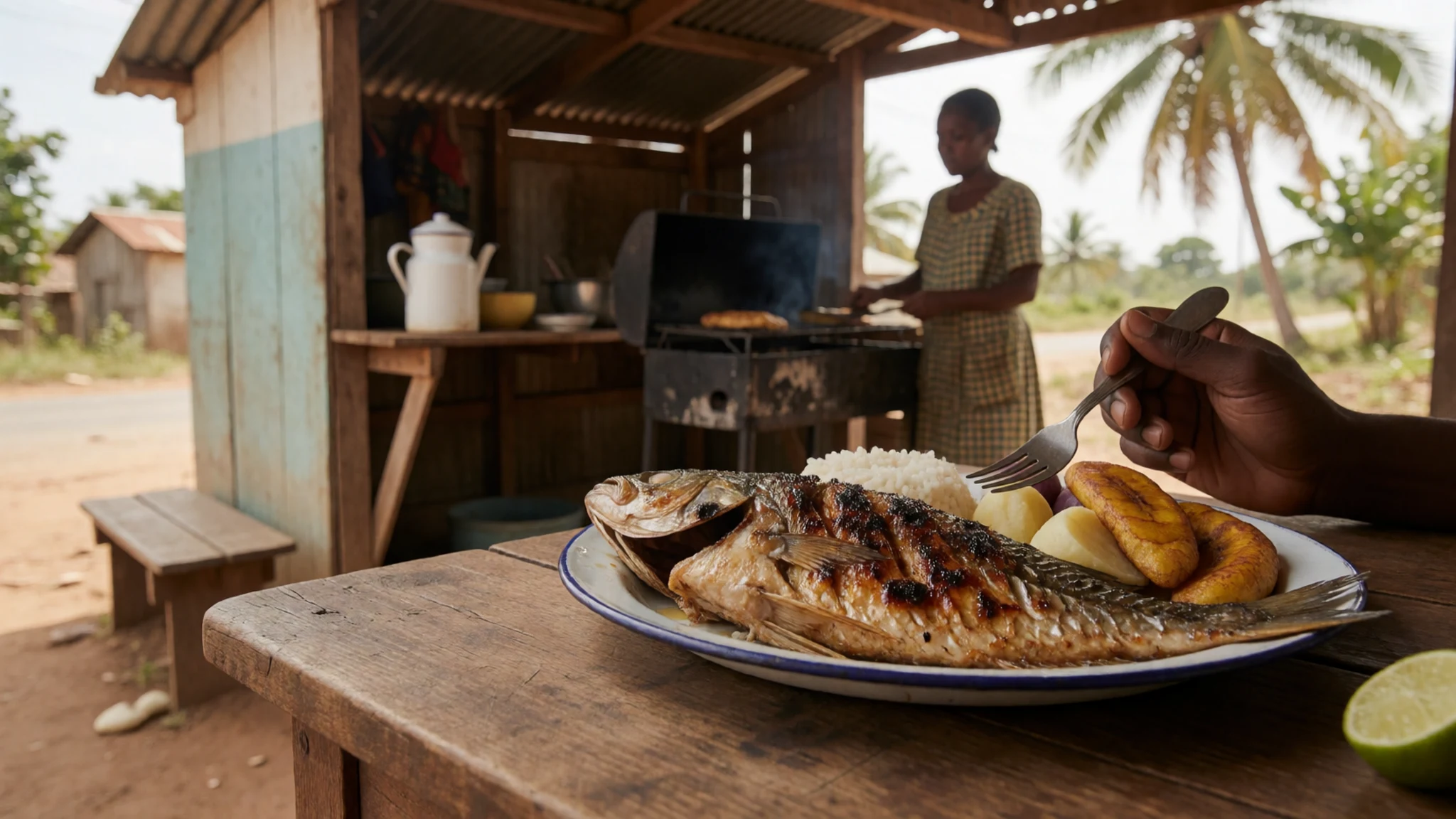
- Lobster and octopus — Small seafood restaurants in the village
Small restaurants in the village serve freshly caught lobster and octopus, usually a step up in cost from the roadside shacks. Lobster is seasonal in much of the Caribbean, so availability varies; it is worth asking before planning a meal around it.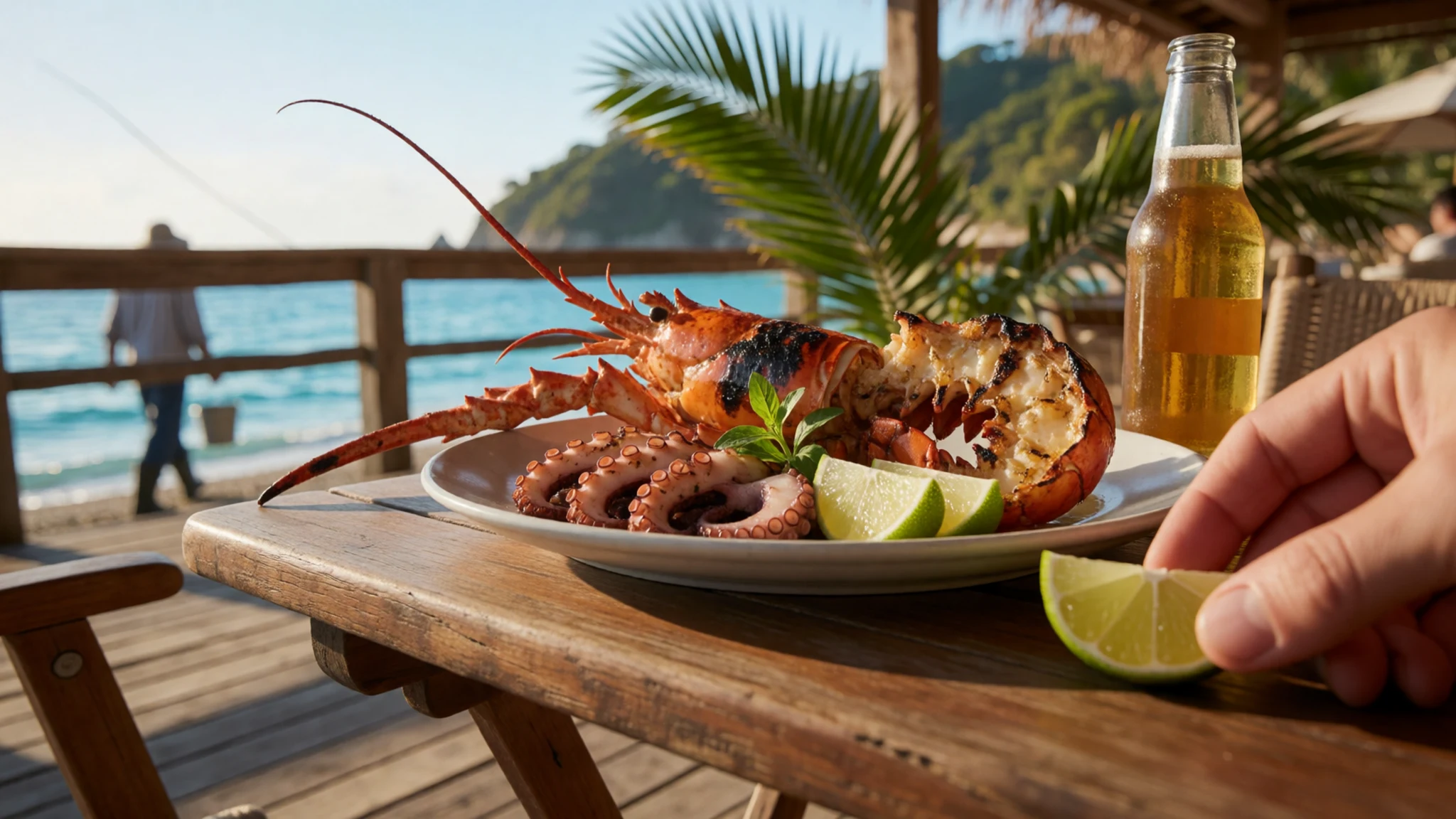
- Callaloo soup — Small local restaurants and home-style eateries
A green soup made from callaloo leaves, often with coconut milk and sometimes crab or salted meat, it is a staple of Dominican home cooking. Expect a thick, savoury bowl, good after a morning in the water. Availability depends on the day. - Bakes and fried snacks — Snack stalls and shacks along the main road
Fried dough rounds called bakes are a common quick bite, often filled with saltfish or other fillings. They travel well, which suits a day of snorkelling or a walk on the trail. - Kubuli beer and local rum — Village bars and restaurants
Bars and restaurants pour Kubuli, Dominica's own beer, and local rum such as Soca, alongside bottles from Martinique and Trinidad. A cold beer by the shore is the easy end to a day on the water.
Plan it
Best time. February to May is generally the drier, calmer stretch for snorkelling and diving. June to November is the wetter, hurricane-season half of the year, though the feast of Saint Peter falls in June or July if you want the village at its liveliest.
How long. 1–2
Getting there. Fly to Dominica, then travel to Roseau, the capital. From Roseau it is about an hour by road to Scott's Head, either by hired car or taxi, or by maxi (minibus) from downtown Roseau towards Soufrière and Scott's Head. The road is curvy and narrow in places, so drive slowly.
Budget. mid
Tips
- Bring your own mask and snorkel; informal rental from locals is possible but not something to count on.
- Climb the headland early or late, and carry water, as the slope is exposed.
- Carry cash for shacks and small stalls, as card payment cannot be assumed.
- Most visitors stay elsewhere and come for the day; if staying overnight, arrange a cottage in advance.
- Ask locals about jellyfish and currents before swimming round the headland.
Etiquette
- Greet people in the village before asking questions or favours.
- Ask before photographing fishermen, their boats or their catch.
- Keep off the coral and take care near cliff edges and the old fort walls.
Nearby
Sources
- Wikidata Q3503868 (CC0)
- Wikipedia: Scotts Head, Dominica (rev 1352347070) (CC BY-SA 4.0)
- Wikivoyage: Scott's Head (rev 3704210) (CC BY-SA 4.0)
- Photo: Village from head (Schwarzerkater) (CC BY 2.5)
- Photo: Scotts Head Dominica (Aneil Lutchman) (CC BY-SA 2.0)
- Photo: Scotts Head, Dominica 005 (Postdlf) (CC BY 3.0)
- Photo: Fort Cachacou, Scotts Head Dominica 6 (XeresNelro) (CC BY-SA 4.0)
- Photo: Scotts head from village (unknown author) (CC BY 2.5)
- Photo: Fort Ruins, Scotts Head Dominica (XeresNelro) (CC BY-SA 4.0)
- Photo: Scott's Head (Charlottea) (CC BY 3.0)
- Photo: ScottHead (Junglebay) (CC BY 3.0)


