Kalinago Territory
Kalinago Territory, Dominica
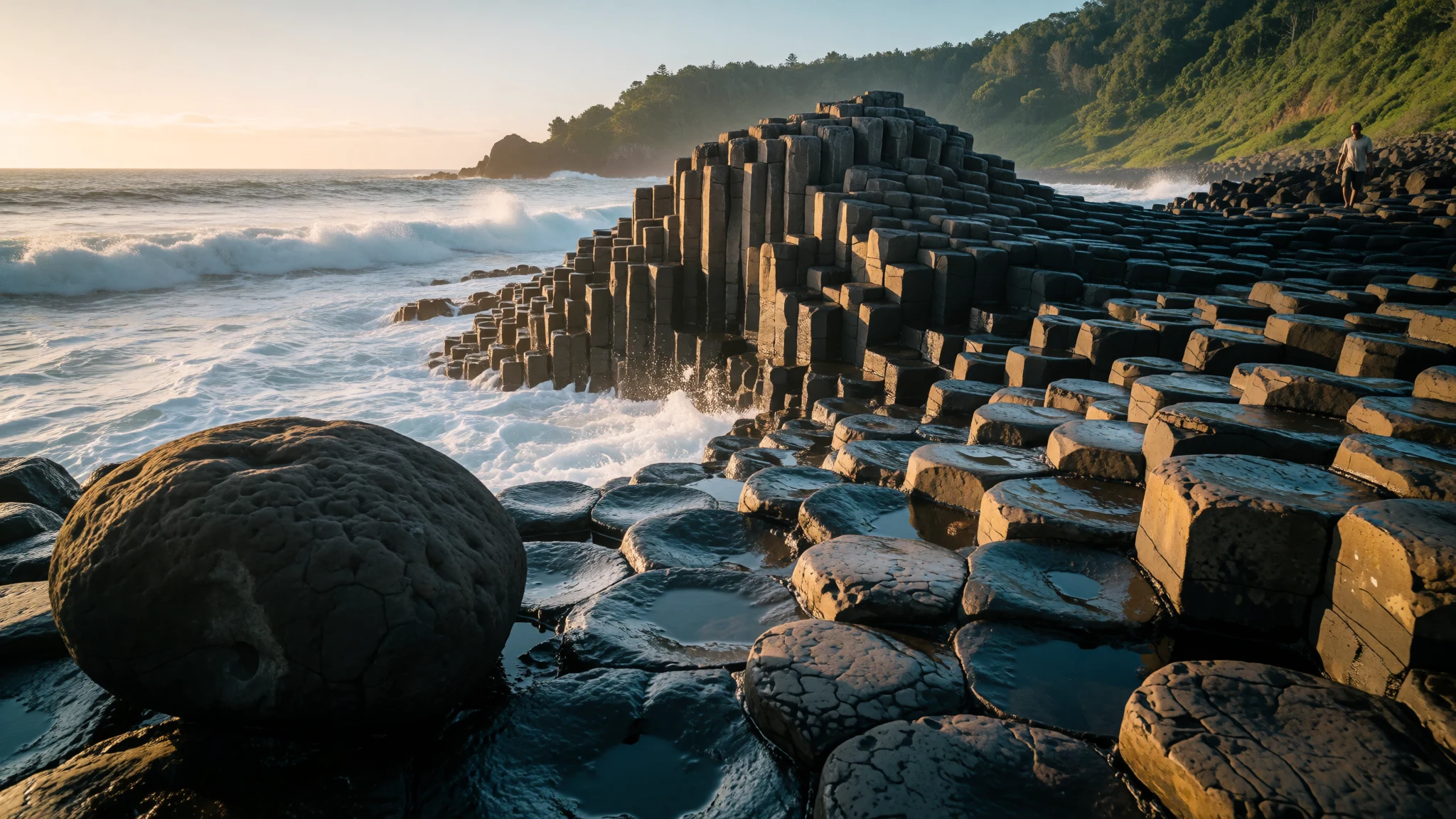
The Kalinago Territory is a living Indigenous district on Dominica's Atlantic coast, where basketry, story-sites and village roads are the visit.
The place
The Kalinago Territory lies on the Atlantic side of Dominica, in the Lesser Antilles, and it is the home ground of the Kalinago people. The shore faces open ocean, so the coast is rocky and the surf runs heavy, a different sea from the calmer Caribbean side of the island. Hamlets follow a narrow road and the short river valleys behind it. Salybia is the main village and the seat of the Kalinago Council; Bataka, Crayfish River, St. Cyr, Gaulette River, Mahaut River, Sinecou and Concord sit nearby, each a cluster of houses against steep, forested slopes. Rain comes off the ridges in fast rivers that still feed fishing and the old work of preparing cassava. This is a lived-in district, not a resort coast. Churches, a school, small shops and family yards stand beside workshops where larouma reed is split and coiled into baskets. The east-coast road is the way in: narrow, green, and slow when rain has slicked it. People share it with minibuses, children and visitors looking for the cultural village or a weaver. In the valleys the shade is deep; on the headlands the wind is constant and the light is hard. Showers are brief in the drier part of the year and stubborn in the wetter part. Guests are welcome at the places kept for them, and the rest of the territory is simply home.
Its story
The Kalinago Territory is the present home of a people who once lived throughout the Lesser Antilles. They have long known Dominica by the name Waitukubuli, often explained as meaning that the island's body stands tall. The people call themselves Kalinago. Carib was an outsiders' name, and for years the district was officially the Carib Territory, a label that still turns up on old signposts and in older books. Spanish, French and British ships all reached the island. Its steep, wet interior was difficult country to clear and hold, and Kalinago communities remained here after they had lost ground on flatter islands. As a legal district the territory took shape under British administration, when land was set aside as a reserve and local affairs passed to an elected chief and the Kalinago Council. That council still meets at Salybia. Mission churches share the villages with older stories. English and Kwéyòl, the island's French Creole, are the everyday languages; the Kalinago language is no longer a mother tongue, though words remain in craft, food and place-names. A coast story tied to a basalt stair tells of a great serpent that came ashore and showed the people where to live. Dugout canoes and cassava pressed until it was safe to bake carried ordinary life alongside those churches. Chief Anette Sanford is the first woman to serve as Kalinago chief. A cultural village built for guests was destroyed by a hurricane and later rebuilt by a community keeping old forms on its own land.
What to see
- Salybia — Salybia
Salybia is the main village of the Kalinago Territory and the seat of the Kalinago Council. A church, a school and small shops make it the centre of daily life, and the coastal road brings visitors through on the way to weavers or the cultural village. The houses are homes. A fitting visit keeps to the road, offers a greeting, and leaves yards alone.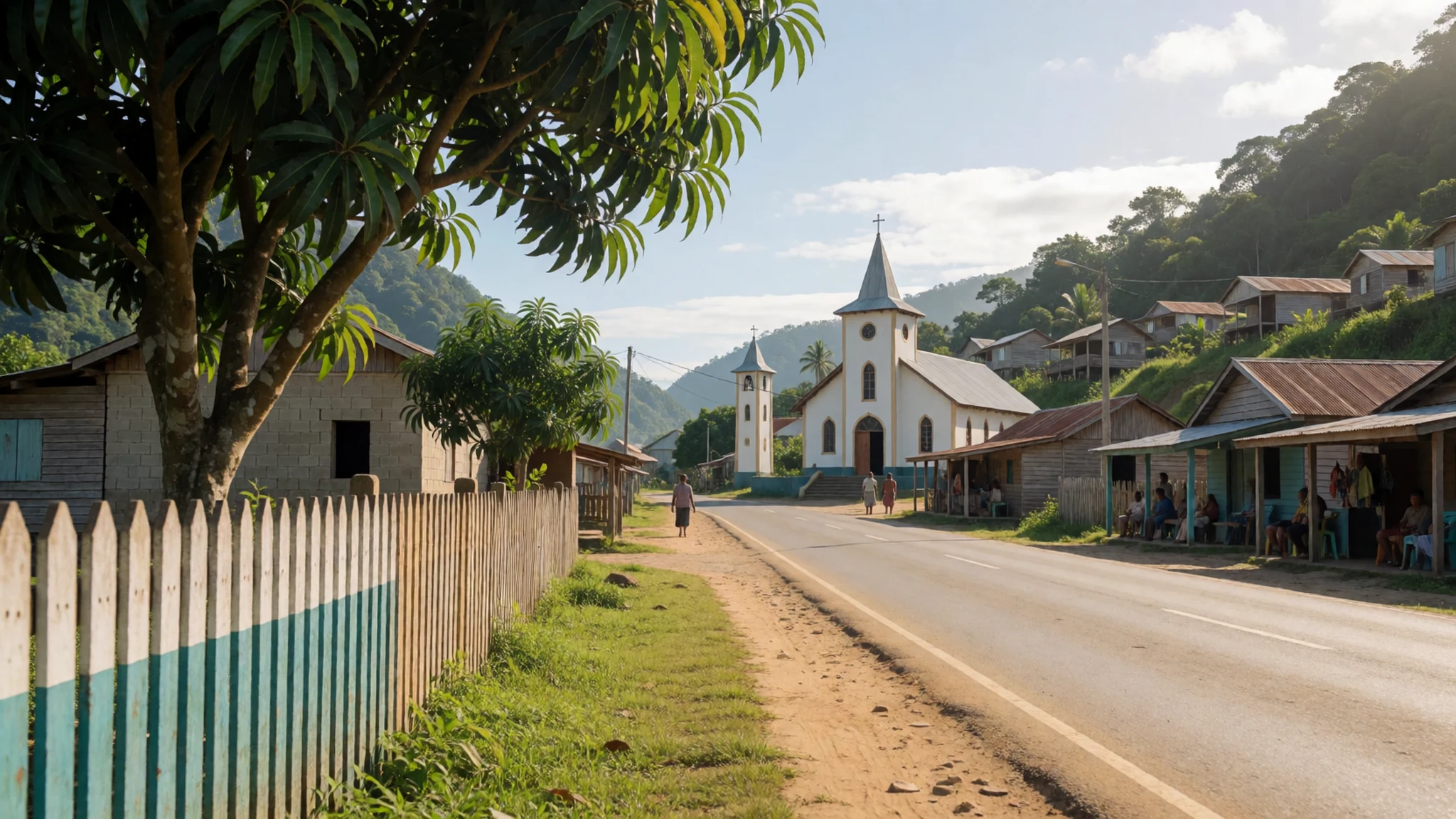
- Kalinago Barana Autê — Crayfish River
The Kalinago Barana Autê is the cultural village of the Kalinago Territory, set by the Crayfish River so guests can see traditional building, cassava work and dance without entering private homes. Timber-and-thatch houses, a karbet for gatherings and craft stalls sketch an older pattern of living. A hurricane destroyed the village and the community rebuilt it. Guides explain the houses and the cassava press.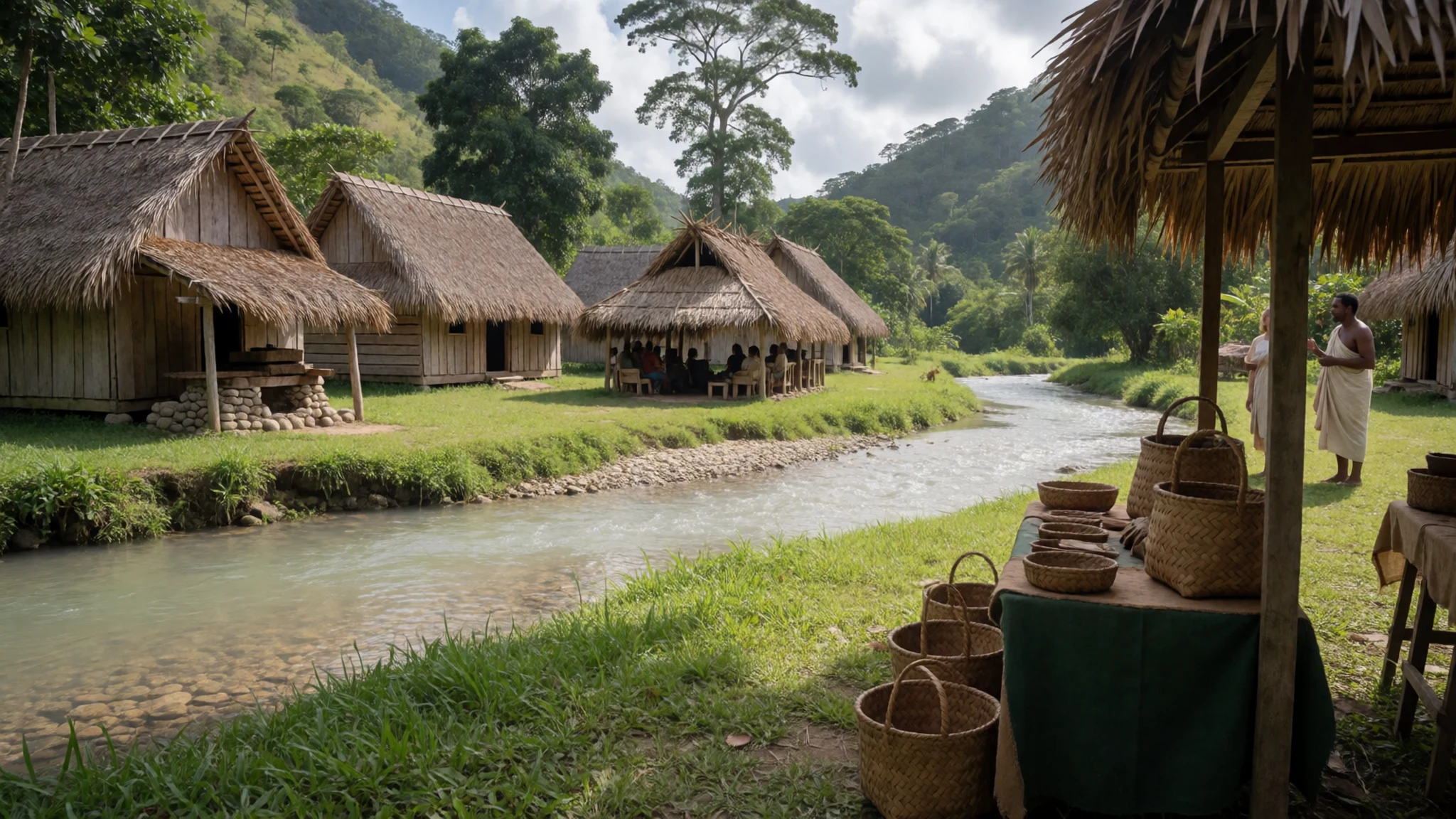
- L'Escalier Tête Chien — Sineku
L'Escalier Tête Chien is a basalt formation on the Kalinago Territory coast near Sinecou, stepping down towards the Atlantic. The French Creole name means the snake's staircase. Local telling links the rock to a great serpent that came ashore and showed the Kalinago where to settle. The stone is uneven and salted by spray, and nothing should be chipped or carried away.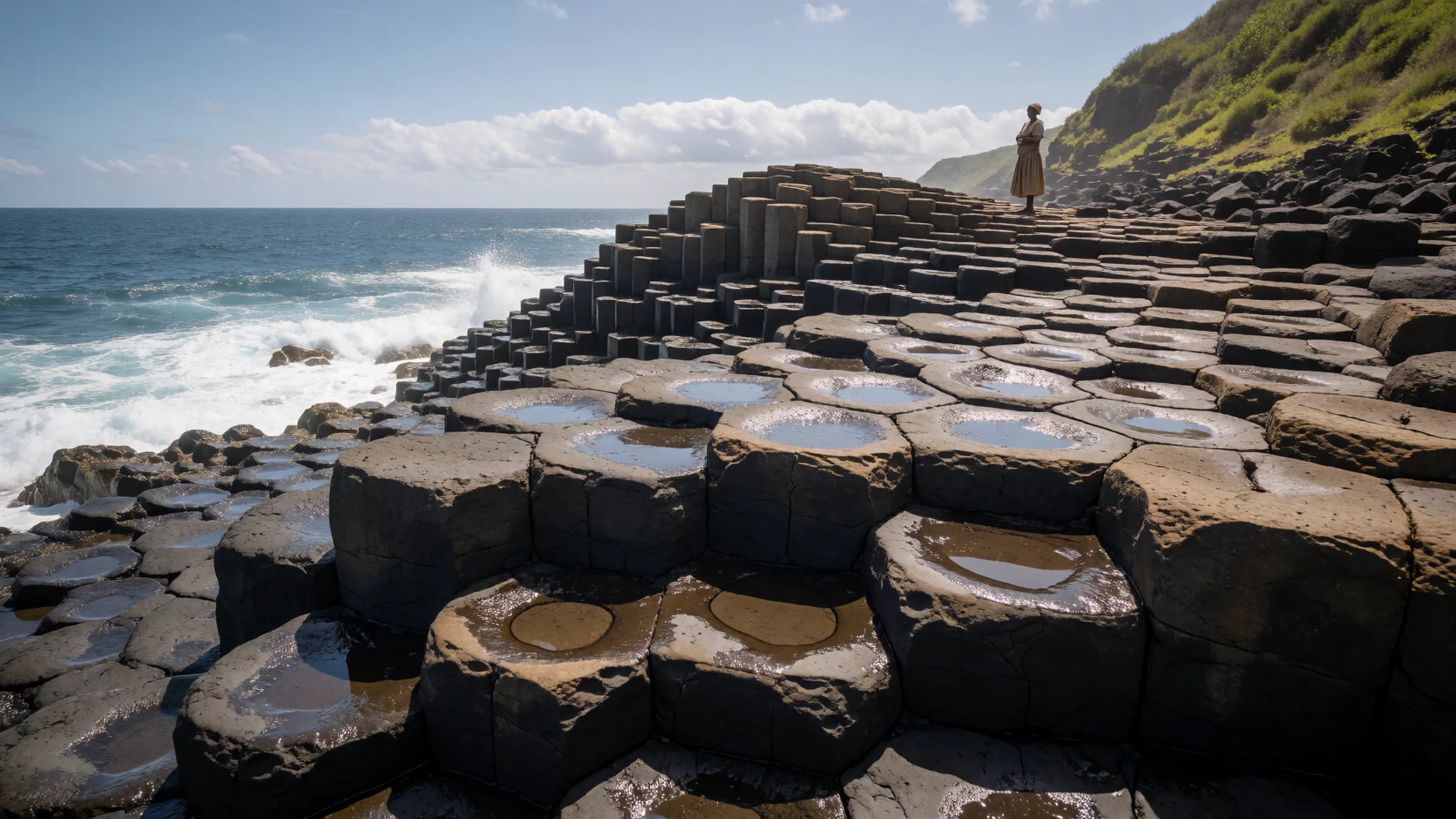
- Larouma workshops — Workshops along the coastal road
Larouma weaving is a craft widely practised in the Kalinago Territory. Women split the reed, scrape it and coil it into baskets, mats and trays, often on a porch or in a small workshop along the road. Patterns pass through families. Buying from the maker is the point of stopping: the work takes days, and the stall is a livelihood.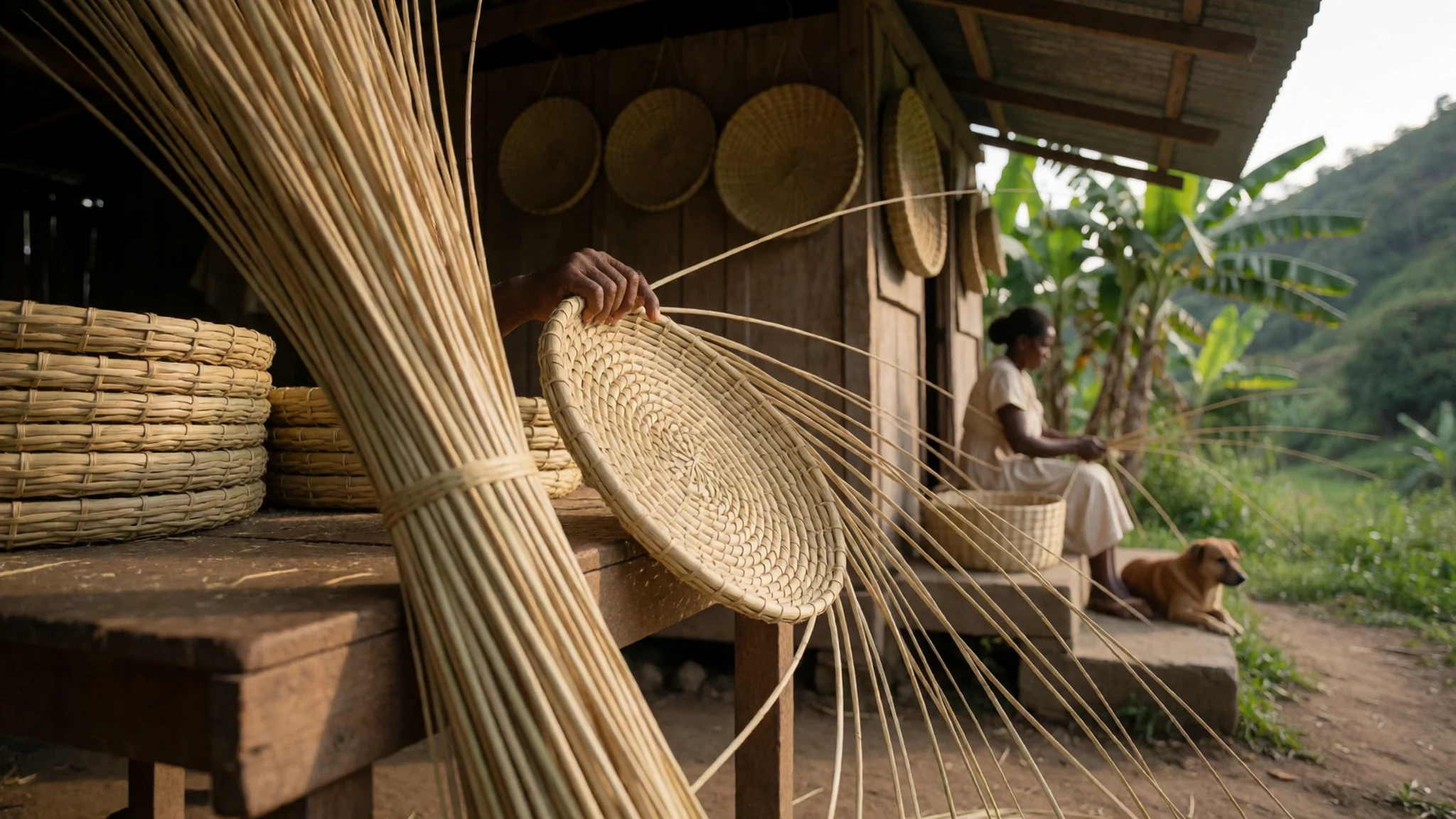
- The Atlantic edge — Atlantic coast between the hamlets
The Atlantic edge of the Kalinago Territory is a rough-water coast, not a swimming beach. From the road between the hamlets the surf shows as white water on dark rock, and fishing is careful work rather than a casual dip. Only two difficult landings reach this Atlantic shore. The swell can pull along the rocks, so local advice comes before anyone enters the water.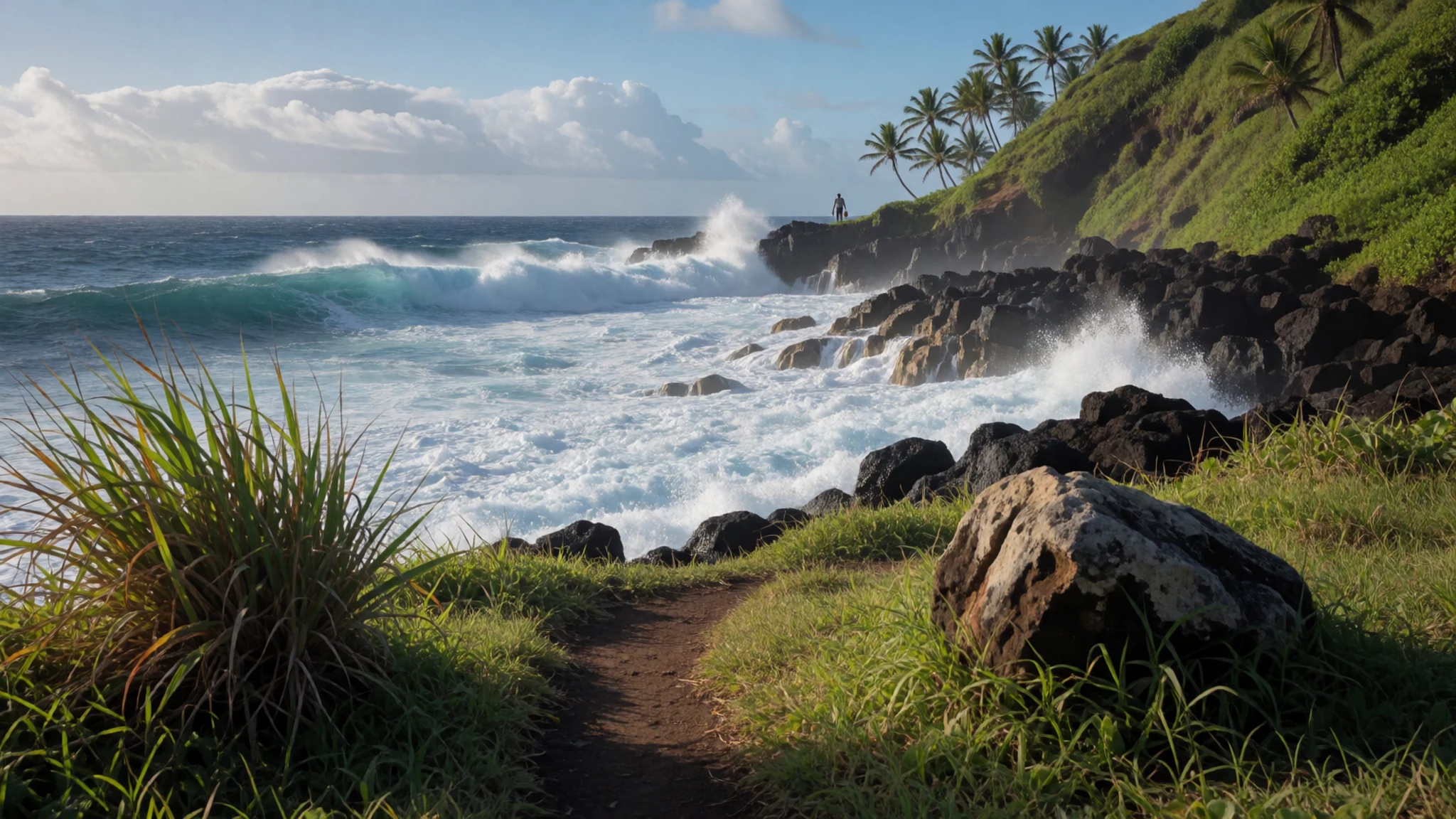
Culture
The Kalinago Territory is governed day to day by the Kalinago Council and an elected chief, a local authority that sits alongside the Dominican state. Salybia is where that public life shows itself: council business, church, school and the conversations that decide festivals and disputes. Catholic practice is the public religion, braided with older respect for the land, the rivers and story-sites such as the serpent stair. English and Kwéyòl share the road; the ancestral language is remembered in words rather than spoken as a full tongue. What visitors usually meet as culture is craft and food knowledge held in families: larouma basketry, cassava bread, boat-building, and songs or dance brought out for a demonstration at the cultural village. None of that is a costume department. The people presenting it live in the houses next door. Chief Anette Sanford's tenure as the first woman in the chief's office is part of the same present tense: a community updating its leadership while keeping its name and its land. Ask before you photograph anyone, and do not take pictures of children or of a ceremony unless a host has agreed.
What to wear
Dress in the Kalinago Territory splits into what is worn for ceremony and what is worn for the week. For cultural presentations, women often appear in a cotton skirt or wrap, beads and a headtie, and men in a short waist-cloth or simple traditional cut, the clothes of a demonstration rather than of the office or the shop. The textile art that defines the place is not a garment mill. It is larouma, a forest reed split fine and woven into baskets, mats and trays, sometimes with calabash and seed work beside it. That basketry is the heirloom visitors can actually take home. Everyday clothes are the clothes of a warm, wet Caribbean island: T-shirts, shorts, cotton dresses, school uniforms, and smarter shirts or dresses for church on Sunday. Rain jackets live by the door. A visitor is most comfortable in light, covering cotton, with a light rain layer and shoes that can take mud, wet rock and short steep paths. Shoulders and knees covered are the right choice at church and at any staged ceremony. Swimwear belongs at the water, not in the village. Slippery soles are a poor match for the coastal stair and for rainforest tracks after rain.
What to eat
- Cassava bread — Home kitchens on the Salybia road and the cultural village
Cassava bread in the Kalinago Territory is a thin round loaf of bitter cassava, grated and pressed until the root is safe to bake. It is dense and mildly nutty, beside fish or boiled provisions. Home kitchens along the Salybia road and the cultural village sell it.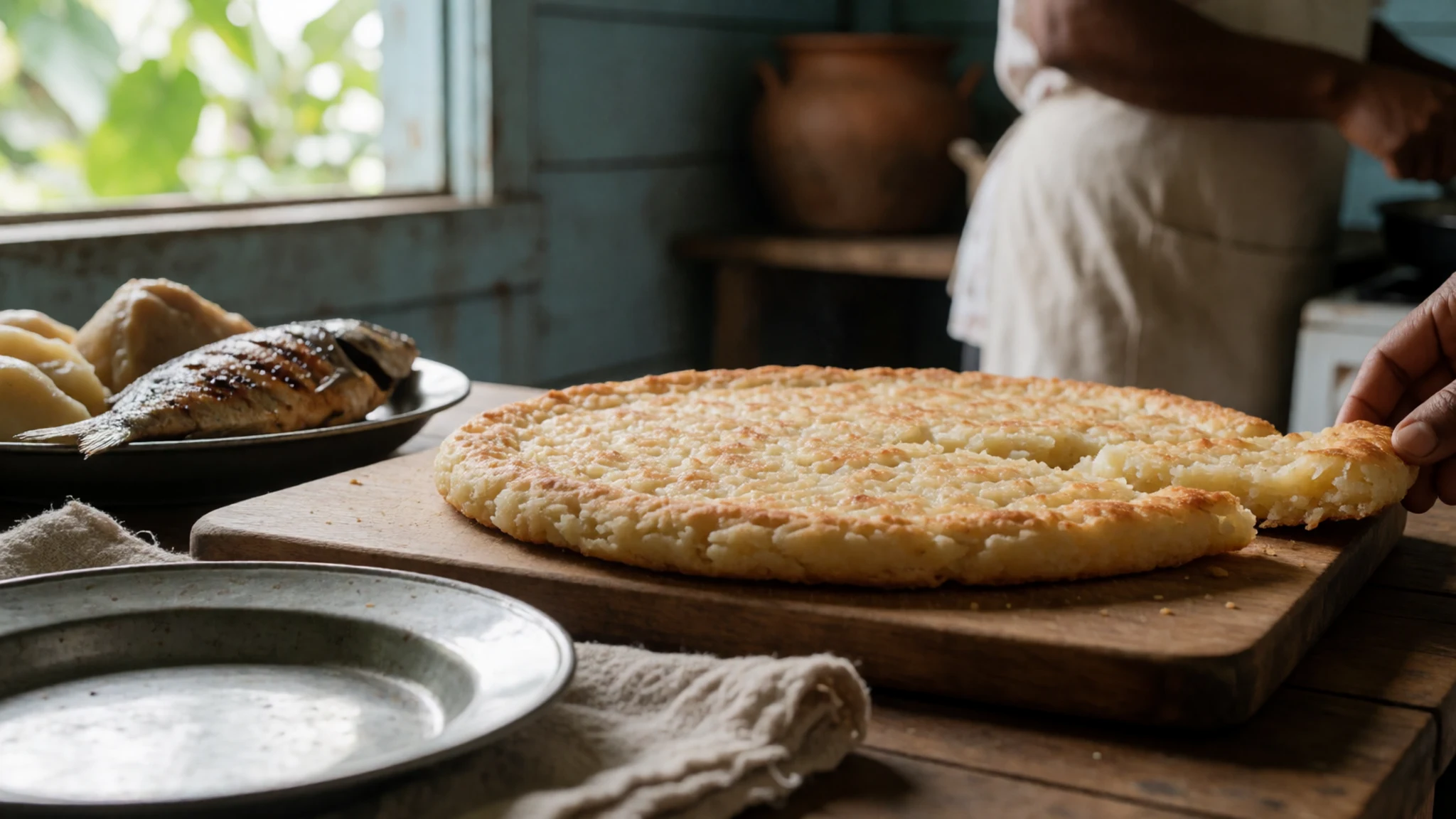
- Titiwi — Village cooks and stalls near Crayfish River
Titiwi are tiny river fish of the Kalinago Territory, caught in the short streams and fried as crisp patties. The taste is delicate and slightly salty, more snack than a full plate. Village cooks and stalls near Crayfish River are the likely place to be offered them.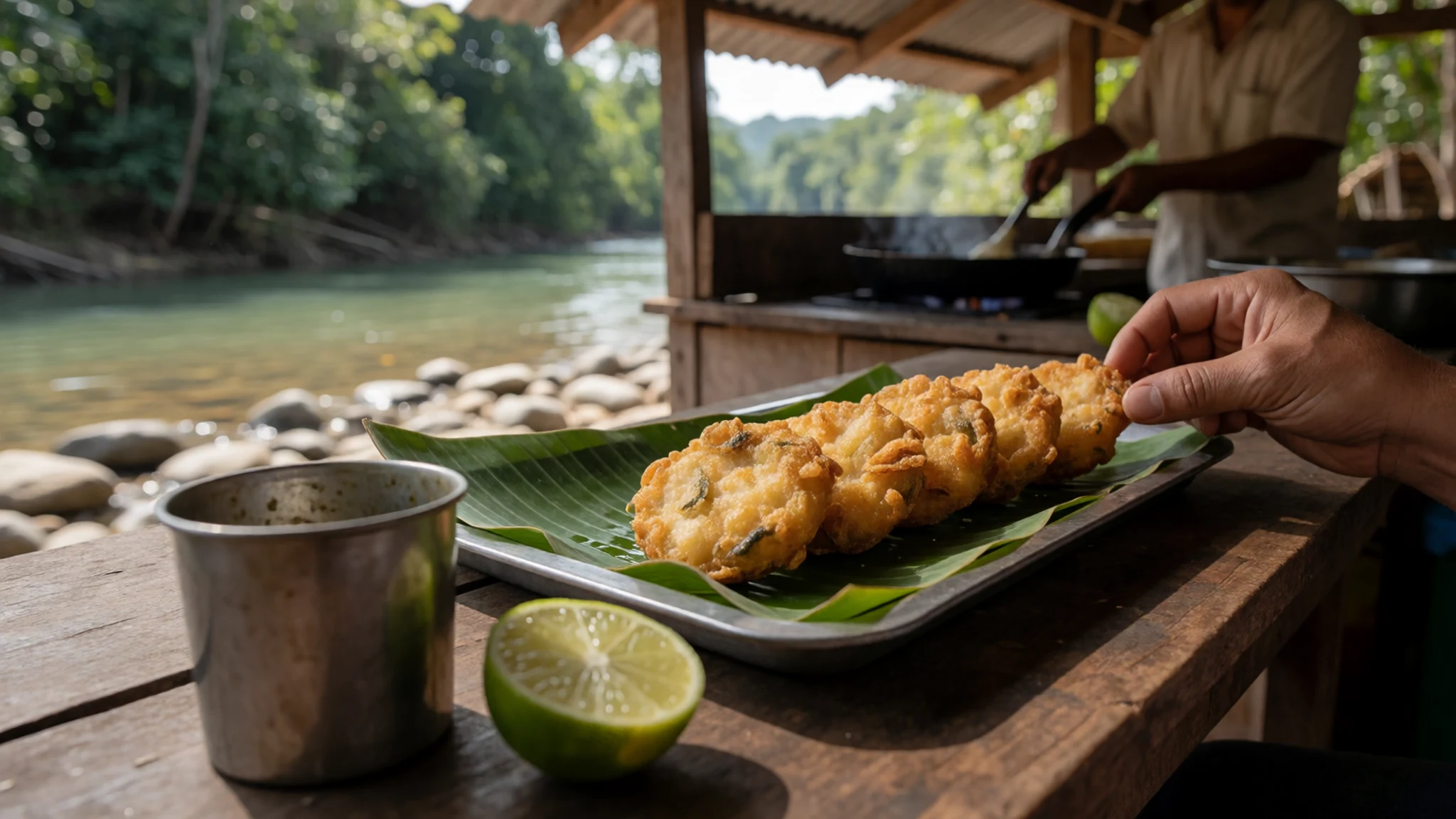
- River crayfish — Home cooks in Crayfish River and Salybia, and the cultural village kitchen
River crayfish from the streams of the Kalinago Territory are boiled or stewed with onion, herbs and hot pepper. The meat is sweet and the seasoning carries the dish. Home cooks in Crayfish River and Salybia, and the cultural village kitchen, prepare them when the catch allows. - Boiled provisions — Small cookshops in Salybia and the other hamlets
Boiled provisions are the everyday plate of the Kalinago Territory: dasheen, tannia, yam, plantain and breadfruit, cooked soft and served with saltfish or a pepper sauce. The meal is filling and plain. Small cookshops in Salybia and the other hamlets serve it at midday. - Roasted breadfruit — Roadside stalls along the coastal road
Roasted breadfruit is a Kalinago Territory staple when the trees are bearing. The whole fruit goes onto a fire, then is split and eaten with butter, saltfish or bush tea. The flesh is soft and smoky. Roadside stalls along the coastal road sell it by the piece in season.
Plan it
Best time. December through April is the easier stretch in the Kalinago Territory: showers pass more quickly, paths dry, and the coast road is less troubled by slips. Even then, this Atlantic side of Dominica stays wetter than the west. May is changeable. From June into November the rain is heavier and the hurricane season is underway, so any plan needs a spare day and a check of the forecast. Weavers and the cultural village receive guests in both halves of the year.
How long. 1–2
Getting there. Douglas–Charles Airport, on the north-east of Dominica, is the nearer flight into the Kalinago Territory; Canefield is the airstrip closer to Roseau. There is no railway. The last leg from either airport, or from Roseau, is by road along the Atlantic coast into Salybia, by minibus or hired car. After rain that road is slow, and daylight is the sensible time to arrive.
Budget. mid
Tips
- Arrange the cultural village ahead, and ask there before planning anything beyond the public road.
- Carry cash. Small workshops and cookshops may not take cards.
- Start early, before heat, showers and the school run fill the road.
- Take local advice before entering the sea. This Atlantic coast is rough.
- Choose footwear with grip. The stair and the valley paths are slick when wet.
Etiquette
- Ask before photographing residents, and never photograph children without a parent agreeing.
- Pay the maker's price for baskets. The work is slow and the stall is a livelihood.
- Stay on the road and public paths. Gardens and houses are private.
- Cover shoulders and knees in church and at any ceremony.
Nearby
Sources
- Wikidata (CC0)
- Wikipedia — Kalinago Territory (CC BY-SA 4.0)
- Wikivoyage — Dominica (CC BY-SA 4.0)