Layou River
Layou River, Dominica
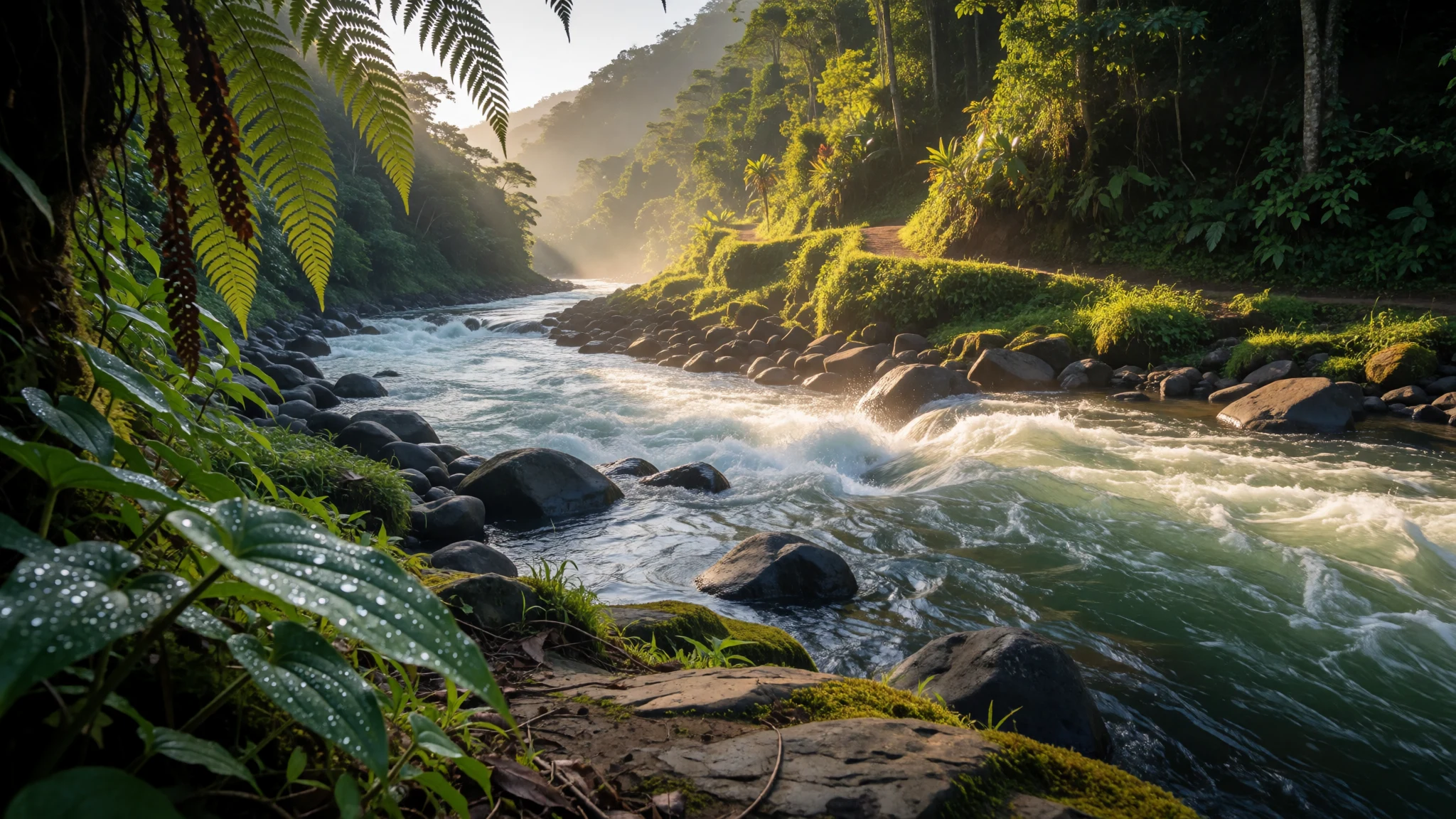
The Layou River is Dominica's longest river, a working stream through farms and forest that suits a slow day on the west coast.
The place
The Layou River crosses the middle of Dominica, a small volcanic island in the eastern Caribbean, and meets the sea on the central west coast close to the town of St. Joseph. Wikipedia gives its length as 27.6 km and describes it as both the longest and the deepest river on the island, which is a modest record on an island of steep ridges and short, fast streams. It begins in the wet interior, where rainforest covers the mountains, and runs westward, gathering tributaries as it goes. The lower valley is where most people meet it: a broad river with stony banks, banana and fruit trees on the flat ground, and low hills closing in on both sides. Its colour follows the weather. After heavy rain upstream the water turns the shade of milky tea and rises quickly; in drier spells it clears and settles into pools. This is a working river more than a spectacle. Villages line the valley, farmers use the level land, and at the mouth river sand and fishing boats meet the Caribbean swell. Nothing is staged for visitors, which is part of the appeal and also means few facilities and little signage. The west coast is the calmer, more sheltered side of Dominica, with dark volcanic sand, and the Layou lets that coast and the forested interior be read as one landscape. It is best treated as a reason to spend an unhurried day in the central west rather than as a single sight to tick off.
Its story
The Layou River has no single famous event attached to it, and it is worth saying so plainly. Its story is the story of the valley around it. Dominica was home to the Kalinago people long before European ships arrived, and rivers like the Layou were routes, water sources and food supplies on an island where the interior is rugged and the coast was the easier way to travel. France and Britain later fought over Dominica for generations, and Britain eventually held it until the island became independent in the twentieth century. Under colonial rule, the fertile land along river valleys was turned to estates growing export crops, and enslaved Africans did the work. Some people escaped into the forested mountains and formed Maroon communities, and the interior's difficult terrain shaped that part of the island's history. Today the valley is quieter. Farming is small-scale, and the river is used for washing, fishing, collecting stones and sand, and local recreation. Dominica has also learned how unforgiving its rivers can be: heavy tropical rain and storms can swell the Layou fast, carry debris down from the hills and change the shape of its banks. Residents read the water carefully. Anyone walking the valley is walking through layers of Kalinago, colonial and Creole life, and the best way to learn more is to talk to people who live beside the river rather than to look for a plaque.
What to see
- The river mouth near St. Joseph — Central west coast, by St. Joseph
Where the Layou reaches the Caribbean, the brown river water spreads into the dark volcanic sand and the sea. It is a good place to watch the change of colour and to see local life: fishing boats, children swimming near the shore, and people going about their day. Take care near the water after rain.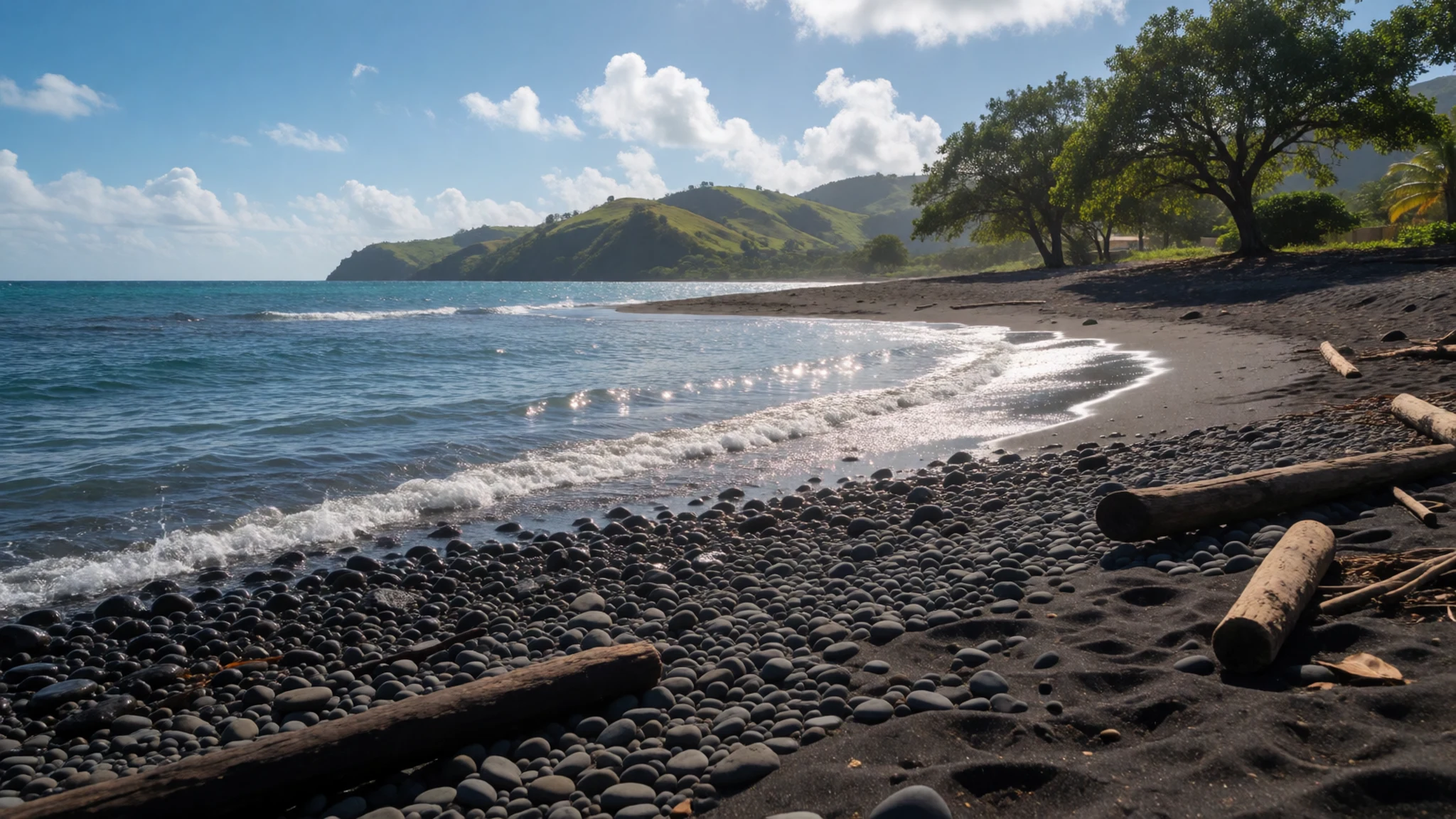
- The lower Layou valley — Inland from St. Joseph
Following the road inland beside the river shows how the landscape changes within a few kilometres: banana plots and fruit trees on the flats, then steeper, greener slopes. Go slowly, stop where there is room to pull over safely, and expect narrow roads, tight bends and the occasional goat or dog in the way.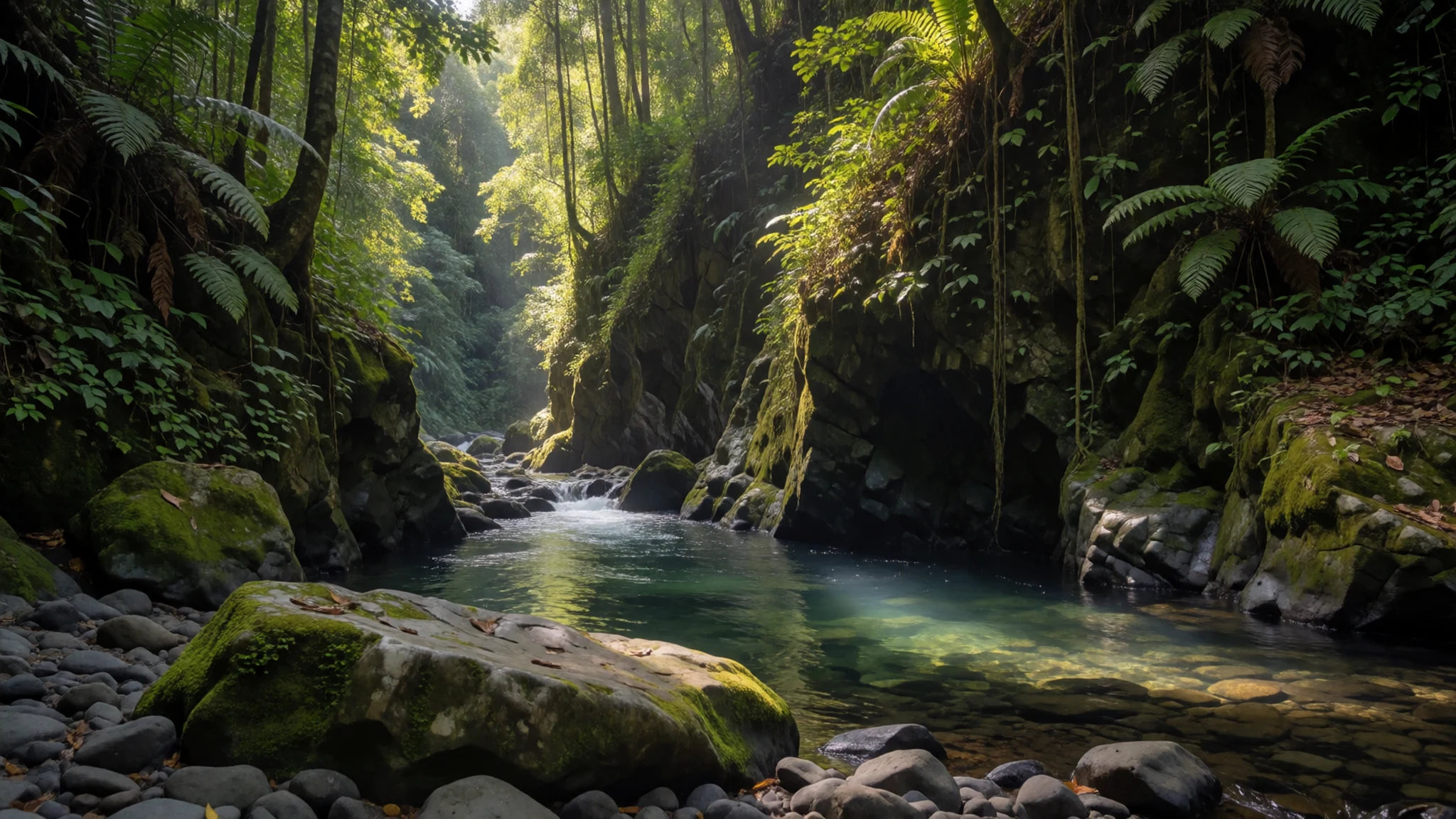
- St. Joseph and the west coast beaches — Central west coast
St. Joseph is a small town rather than a resort, and that suits the area. Along the coast around it, dark sand beaches and rocky points give a chance to swim in calm water on most days, though currents can pick up. Local snack stalls and small shops are enough for a simple lunch stop.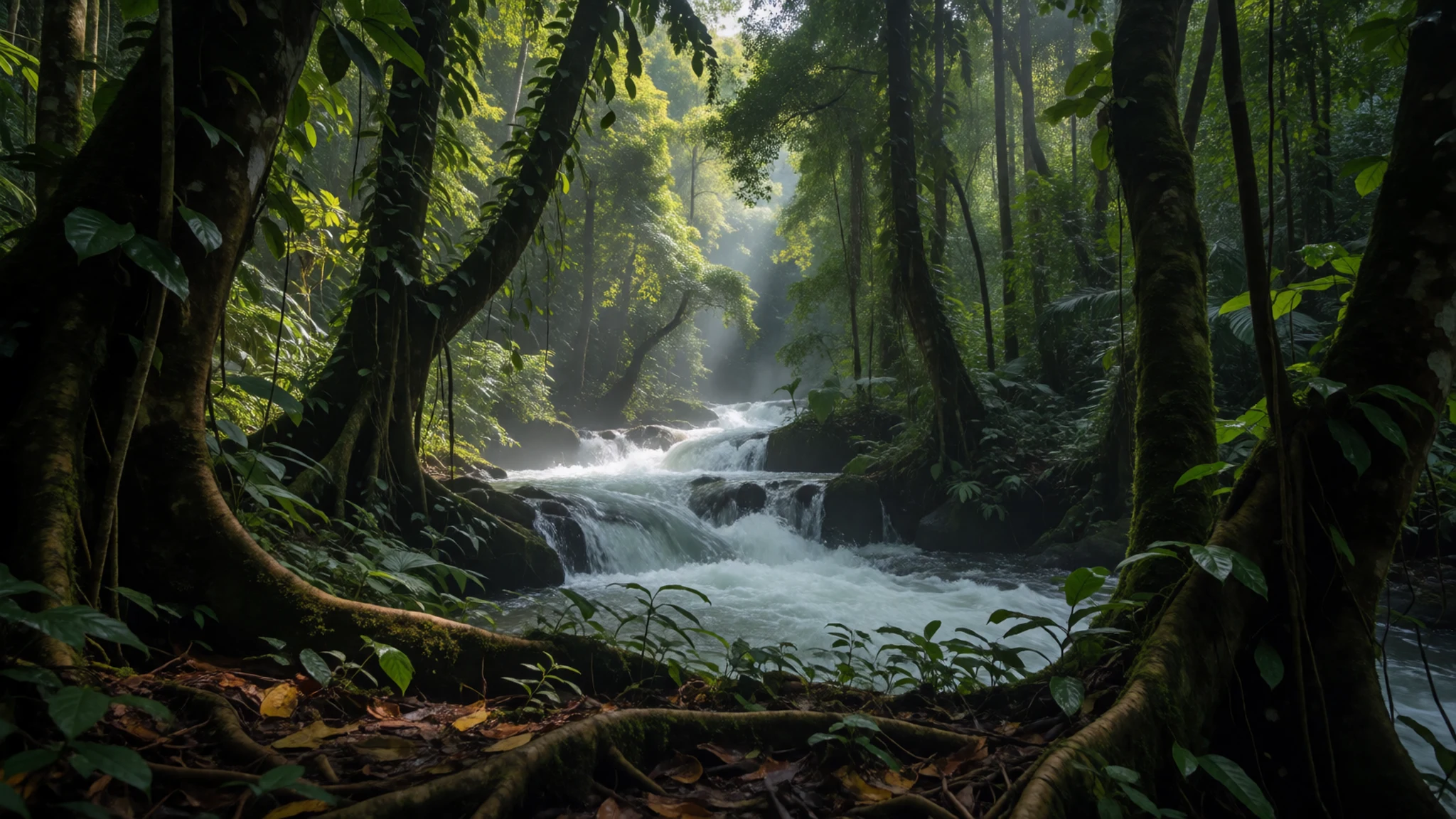
- The forest edge of Morne Trois Pitons National Park — Interior, east of the valley
East of the Layou valley the land climbs into the protected forest of Morne Trois Pitons National Park, where trails lead to pools, waterfalls and volcanic features. Paths can be muddy and steep, and a local guide is sensible for longer hikes. It makes a natural pairing with a day on the river.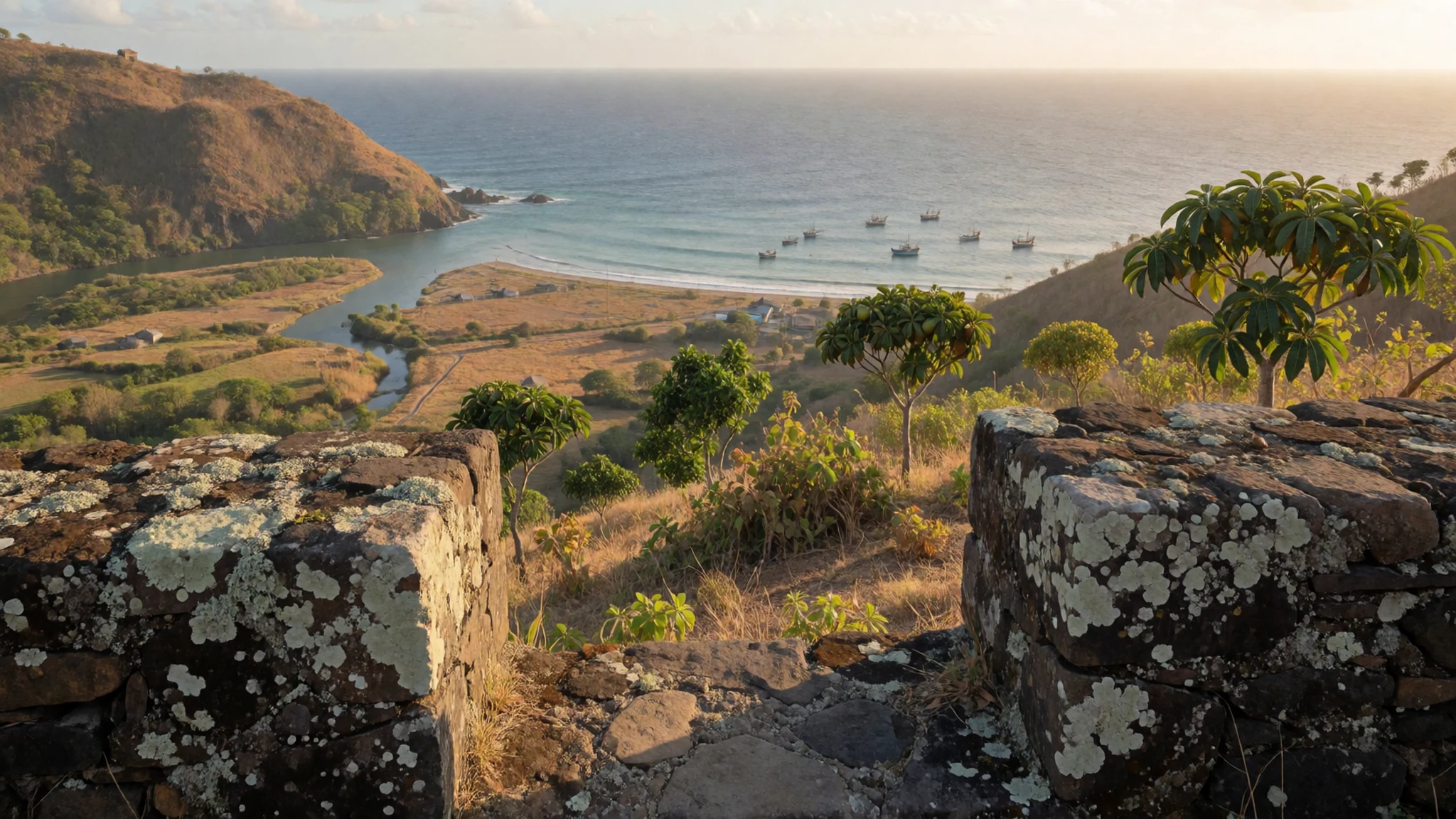
- Roseau — South-west coast
Dominica's capital lies to the south along the west coast, and is the easiest base for reaching the Layou area. Its old streets, waterfront and market give a sense of Creole town life, and it is where most buses, taxis, guides and ferry connections begin. The walk around the centre takes a relaxed half day.
Culture
The Layou River sits in a country with a layered Creole culture, shaped by the Kalinago, by African heritage and by French and British influence. Many Dominicans speak English and Kwéyòl, a French-based Creole, and greetings matter: people along the valley road will say good morning or good afternoon, and expect it back. Church life is strong, Sunday is quiet, and village events often centre on music, food and family. The river itself is part of daily life rather than a sight put on for visitors. People wash clothes, fish, collect stones and bathe in it, and some spots are effectively local ones. Dominica also has a deep respect for its forests and rivers, and a growing nature tourism sector built around them, but the Layou is not packaged like the more famous trails inland. That means contact with visitors is informal, and hospitality tends to be personal: a conversation, a recommendation, sometimes an invitation to taste something from a garden. Music runs through the culture, from Creole and string-band sounds to modern Caribbean styles, particularly around the independence and Creole celebrations in the autumn. The pace is unhurried and humour is dry. On the river and in the villages beside it, ask before you photograph anyone washing, fishing or working, and keep clear of the stretches where people are bathing.
What to wear
The best-known traditional dress of Dominica is the Wob Dwiyet, a Creole dress worn with a madras head tie and a fine shawl or scarf. Madras is a brightly checked cotton, usually in strong reds, yellows and blues, and the way the head tie is folded and knotted has long carried local meaning and style. Lace, ruffles and layered skirts reflect French and African influence alike. You will see the full outfit mainly during the autumn Creole and independence celebrations, at school and community events, and in formal performances rather than on a normal day. Everyday clothing is practical and warm-weather: cotton shirts and tees, light dresses, jeans or shorts, and sandals or trainers, with rain jackets always close by. Farmers and fishers wear older clothes and boots for work. Church-goers dress smartly on Sundays, often in their best. For a visitor, lightweight quick-drying clothes are best in the heat and humidity, plus a light waterproof for sudden showers. Swimwear is fine at the beach but cover up in villages and towns, with a shirt or wrap rather than just a swimsuit. Sturdy sandals with a grip or old trainers suit river stones, which are slippery, and proper walking shoes are needed on forest trails. Sun hat, sunscreen and insect repellent are worth packing.
What to eat
- Callaloo soup — Village eateries and roadside cookshops along the west coast
A smooth green soup made from the leaves of the dasheen plant, often cooked with coconut milk, onion and herbs, and sometimes crab or salted meat. It is a staple Creole comfort dish across Dominica and easy to find at lunch. - Provisions with fish — Fishing villages and Roseau's market area
Locals use the word provisions for boiled starchy roots and fruits such as dasheen, yam, green banana and breadfruit. They usually come alongside fresh or salted fish in a light sauce, a filling plate with a very local feel. - Bakes and saltfish — Bakeries and street stalls in St. Joseph and Roseau
Bakes are fried or baked rounds of dough, eaten warm and often split to hold flaked, seasoned salt cod. They make a cheap, solid breakfast or snack and suit a morning before heading to the river. - Fresh tropical fruit and juice — Roadside fruit stands and the Roseau market
Dominica's volcanic soil grows grapefruit, oranges, mango, passion fruit, soursop and bananas, depending on the season. Fresh juices are widely sold, and a piece of fruit from a market stall is a good snack on a hot day. - Bush tea and cocoa tea — Family-run eateries and guesthouses
Home-style hot drinks made from local leaves or from grated cocoa, spiced with cinnamon and nutmeg, are part of everyday Dominican life. Cocoa tea is rich and sweet, and it is often served for breakfast.
Plan it
Best time. February to May is the drier part of the year, with lower rainfall and clearer rivers, which makes the valley and forest trails easier. June to November is wetter and falls in the Atlantic hurricane season, so the Layou can rise quickly and travel plans can change.
How long. 1–2
Getting there. Fly to Douglas–Charles Airport on the north-east coast, or reach Dominica by ferry from the neighbouring French islands, then travel by taxi, hired car or minibus to Roseau and on to the central west coast near St. Joseph. Expect winding roads and allow generous time.
Budget. mid
Tips
- Check the weather and river level before going, as the Layou rises fast after heavy rain upstream
- Carry some cash, since small shops and village eateries may not take cards
- Bring drinking water, sun protection and insect repellent
- Hire a local guide for forest trails and for any river activity, and ask about current conditions
- Drive carefully on narrow, bendy roads and allow longer than the map suggests
Etiquette
- Greet people with a good morning or good afternoon before asking for anything
- Ask before photographing people washing, fishing or working by the river
- Take your rubbish with you and keep soap and chemicals out of the water
Nearby
Sources
- Wikidata Q74598 (CC0)
- Wikipedia, Layou River (rev 1376892495) (CC BY-SA 4.0)
- Wikivoyage, Dominica (CC BY-SA 4.0)
- Photo: The Layou River in Dominica, Jean & Nathalie, via Wikimedia Commons (CC BY 2.5)

Wildlife
- Parrot (animal)
Picture a parrot so special that a whole island chose it as its national bird: that is the sisserou, or imperial amazon, found only in Dominica. It is critically endangered, with just a small number left in the wild. Beside Layou River, its calls may echo among the tall mahogany and gommier trees. Go with a guide, watch from a respectful distance, speak softly, and never feed it.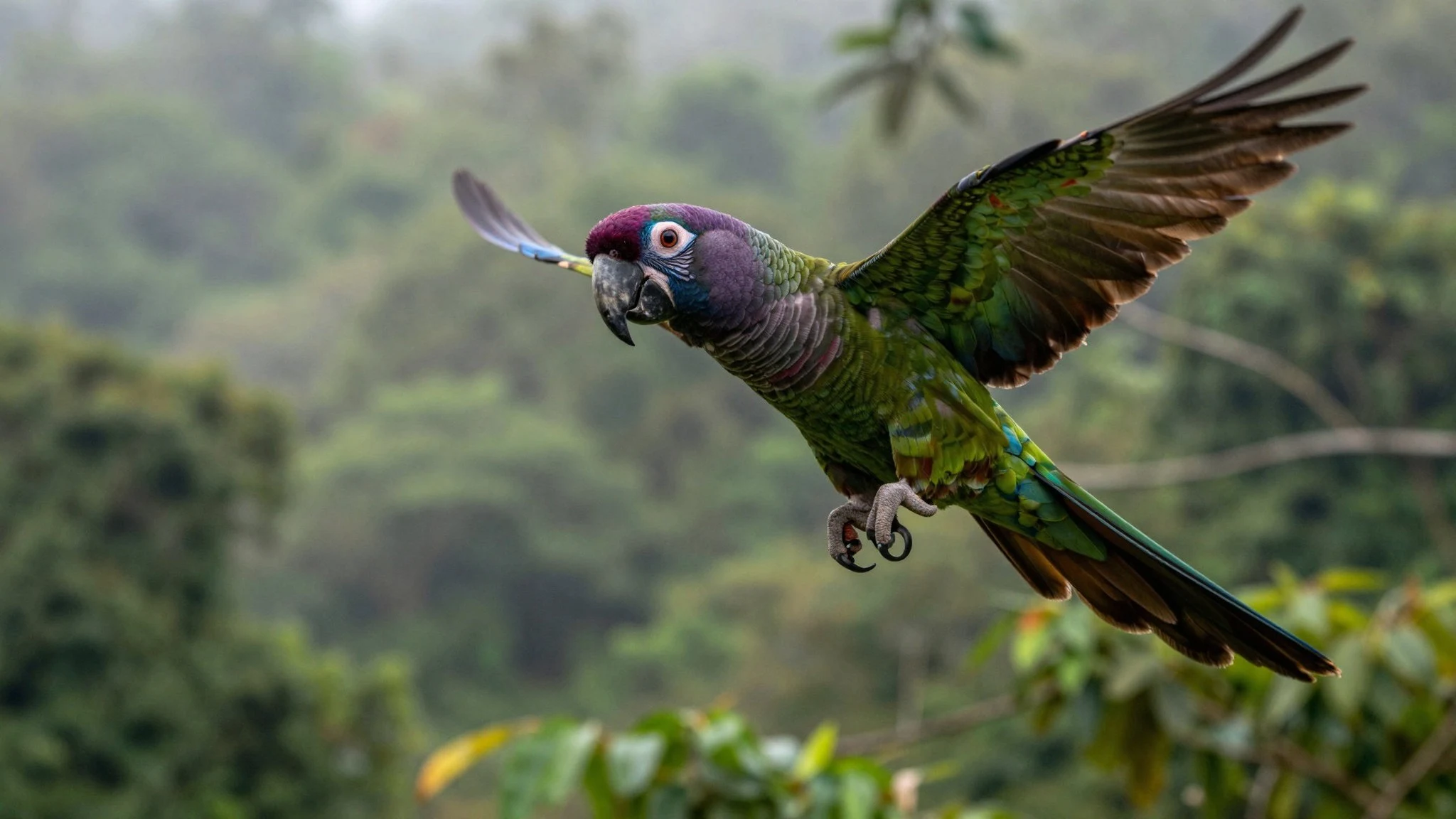
- Native parrot (bird)
Picture a parrot so special that a whole island chose it as its national bird: that is the sisserou, or imperial amazon, found only in Dominica. It is critically endangered, with just a small number left in the wild. Beside Layou River, its calls may echo among the tall mahogany and gommier trees. Go with a guide, watch from a respectful distance, speak softly, and never feed it.