Moremi Game Reserve
Moremi Game Reserve, Botswana
Moremi Game Reserve packs delta water, woodland and savannah into one reserve, so lions, leopards, elephants and wild dogs share the same patch.
The place
Moremi Game Reserve sits on the eastern side of the Okavango Delta in northern Botswana and takes its name from Chief Moremi of the BaTawana people. It is a patchwork rather than a single landscape. Permanent water, seasonal floodplain, lagoons, mopane woodland and acacia forest lie close together, so one morning's drive can run from dry sandy track to reedy channel within minutes. Less than a third of the ground is mainland; the rest is delta, and that shapes both where animals gather and how vehicles get around. Chiefs Island and the Moremi Tongue are the landmarks most often named on maps. To the north-east the reserve meets Chobe National Park, and the whole region forms part of the Kavango–Zambezi Transfrontier Conservation Area, which links five countries. Wildlife is the reason most people come. Elephant, lion, leopard, giraffe, buffalo, wild dog, hyaena and red lechwe all live here, and the bird list runs into the hundreds, from waterbirds on the lagoons to woodland species in the trees. Wooded stretches suit leopards and wild dogs, while the open savannah gives long, easy views of grazers and the predators that follow them. The wild dogs have been followed by a research project for decades, so some wear tracking collars. Moremi is not a quick stop: tracks are sandy, distances feel long, and the water level changes what is possible from one season to the next. The reward is a place where dry land and flooded land trade places, and the animals shift with them.
Its story
Moremi Game Reserve was proclaimed in 1963, and its story is tied to a woman as much as to a name. The reserve honours Chief Moremi III of the BaTawana, whose home territory lay around Ngamiland. His widow, Elizabeth Pulane Moremi, was ruling the area at the time, and she grew worried about how much hunting was thinning the wildlife. Her decision to act is the root of the reserve as it exists. Those who set it up protected the land under the lighter reserve label instead of full national-park status, a choice with real consequences: the BaSarwa, or Bushmen, who had long lived in the area were allowed to remain rather than being moved out. Later, in the 1970s, the former Royal Hunting Grounds of Chief Moremi were folded in, which enlarged the reserve and brought more of the delta's eastern side under one form of protection. Behind that human story sits a physical one. The delta is fed by floodwater that spreads across flat, sandy ground, so islands, channels and lagoons keep rearranging at their own pace. Conservation here has therefore never been about fencing off a fixed patch; it has been about protecting a moving mosaic of water and woodland. Today the reserve sits inside a wider cross-border conservation area, which reflects how little animal movements and river flows care for national lines.
What to see
- Xakanaxa lagoon — Western Moremi
Xakanaxa is a lagoon-and-channel district on the western side of the reserve where much of the water-based viewing happens. Boat trips, where camps offer them, and drives share the same shoreline, so reed beds, hippo pools and kingfishers sit near open grassland. Birders should come early, when the water is calm and the birds are active.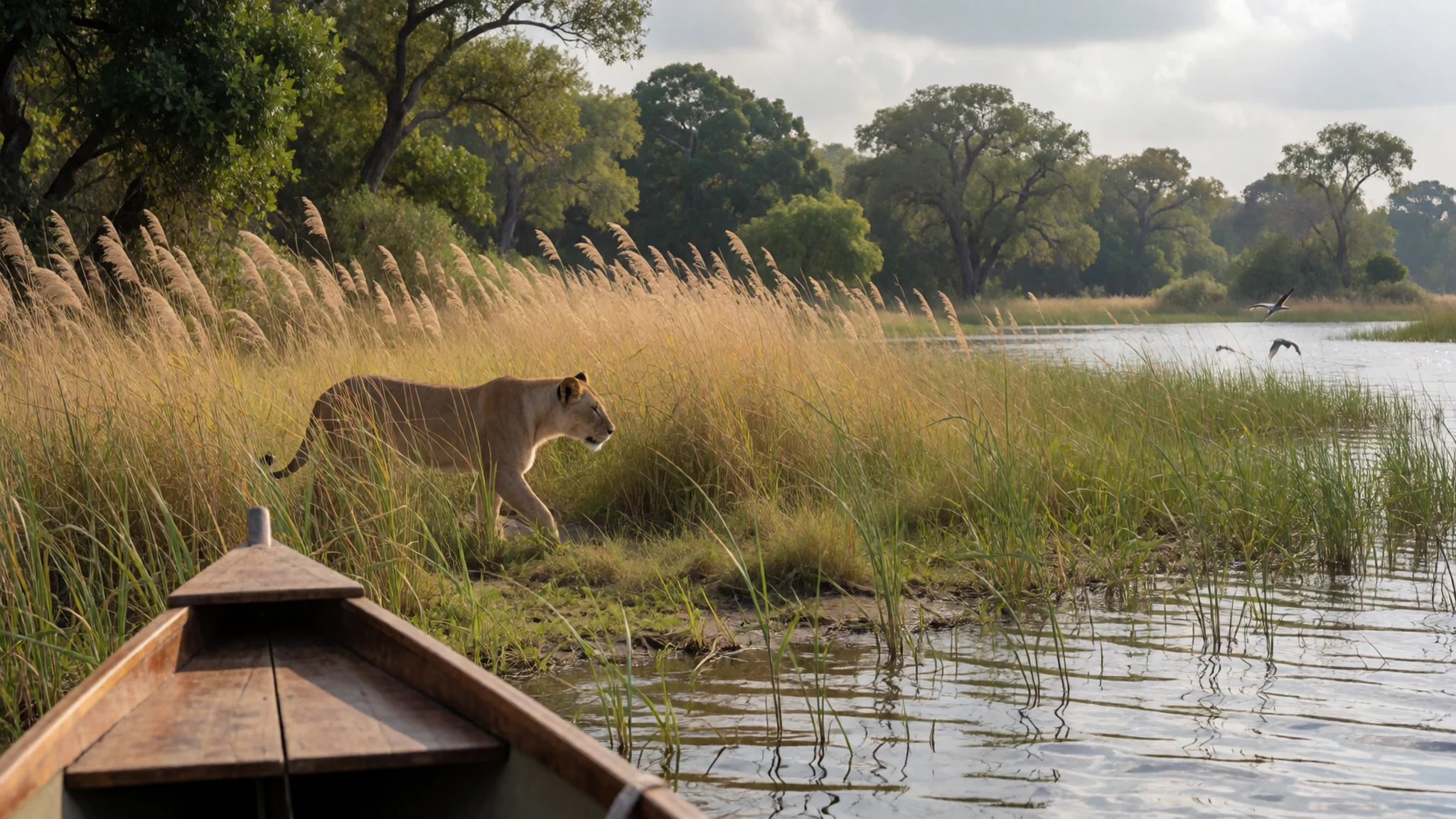
- Woodland wild dogs — Wooded areas of the reserve
Moremi's mopane and acacia woodland shelters wild dogs, which a long-running research project follows, so some wear collars. The thick cover also suits leopards. Sightings depend on luck and a good guide: packs cover ground quickly and may vanish within the hour, so patient scanning of tracks and clearings pays off.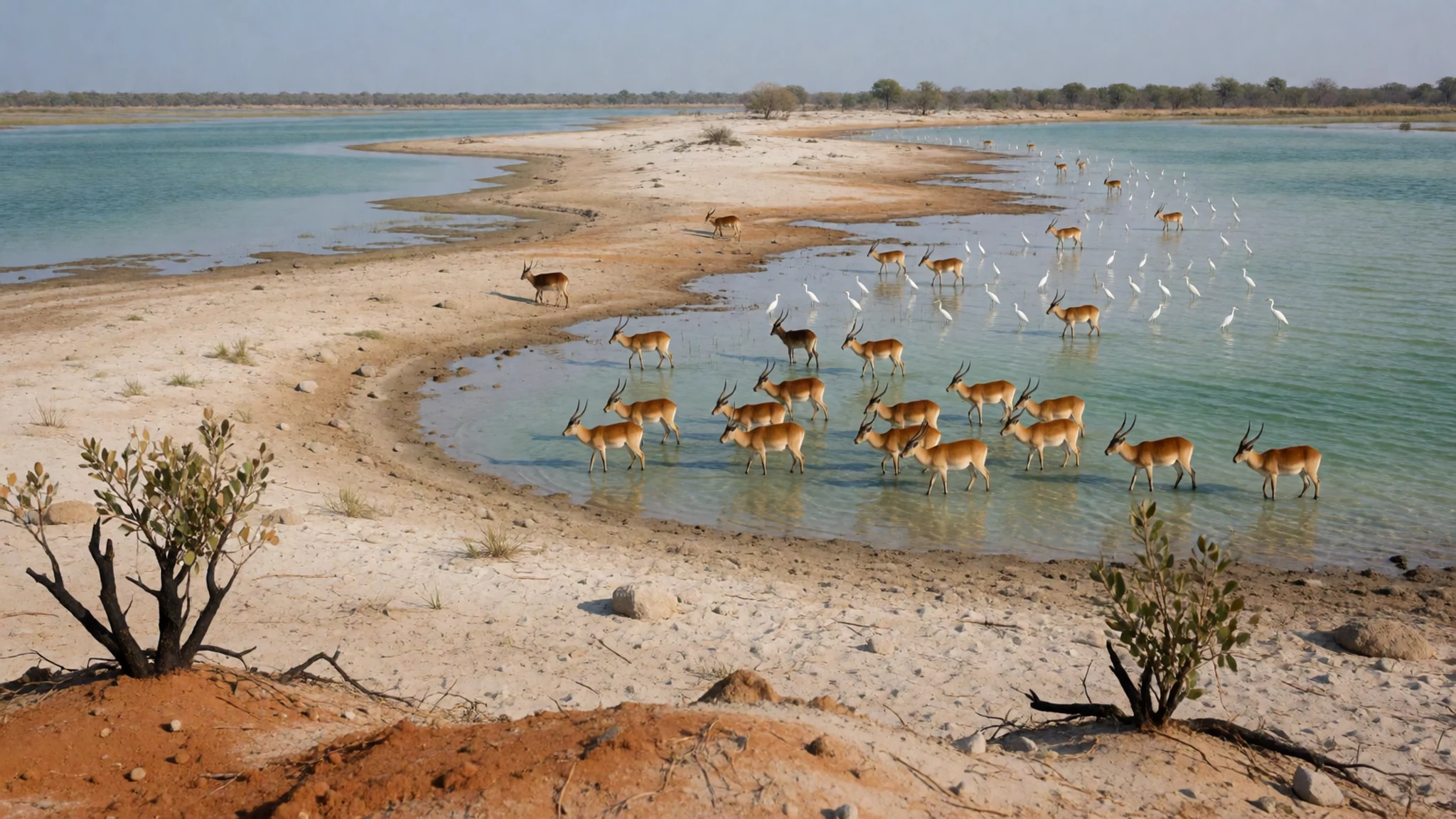
- Leopard country — Woodland edges
Leopards in Moremi Game Reserve are most likely to be found along wooded edges and in the shade of large trees, often at dawn or dusk. They are solitary, well camouflaged and easy to miss. A still, quiet vehicle and a guide who reads the alarm calls of other animals make the difference.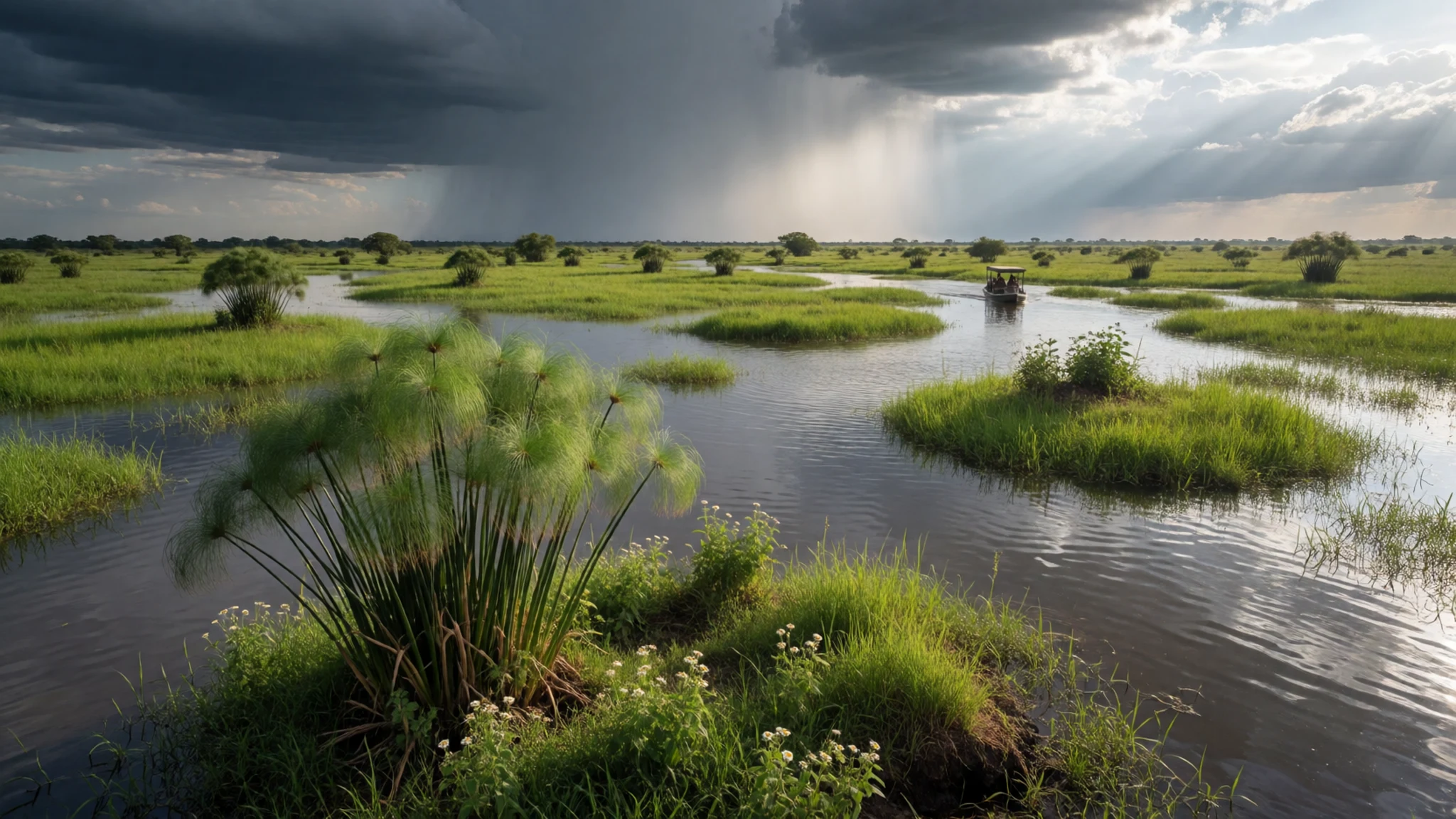
- Elephants on the sandy tracks — Tracks near water
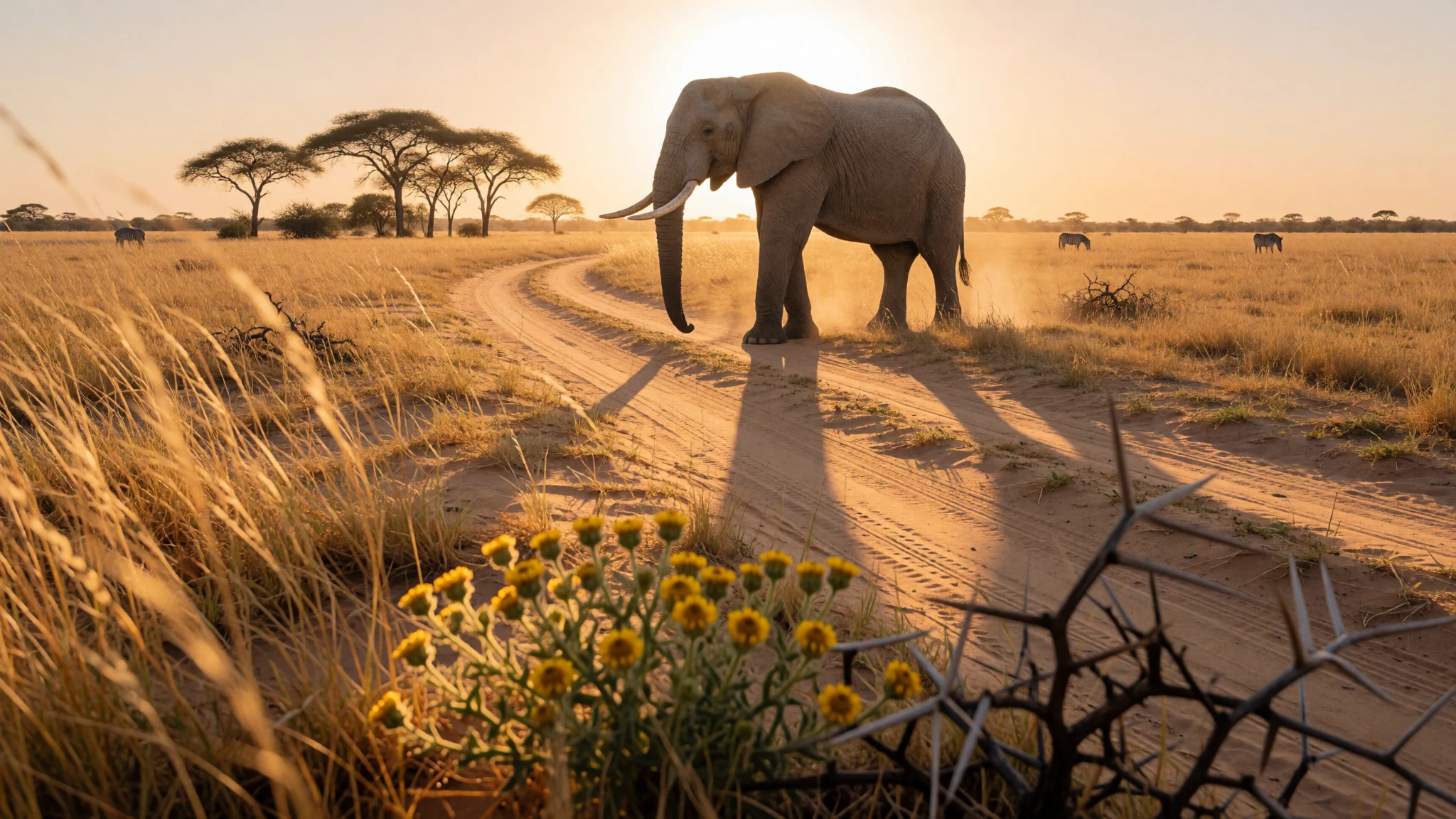
Elephants in Moremi Game Reserve often cross the sandy tracks and can hold up traffic for a while. Vehicles should give them room, switch off the engine and let the herd pass. Families come to drink at channels and lagoons, so drives along the water's edge are good bets in the dry months.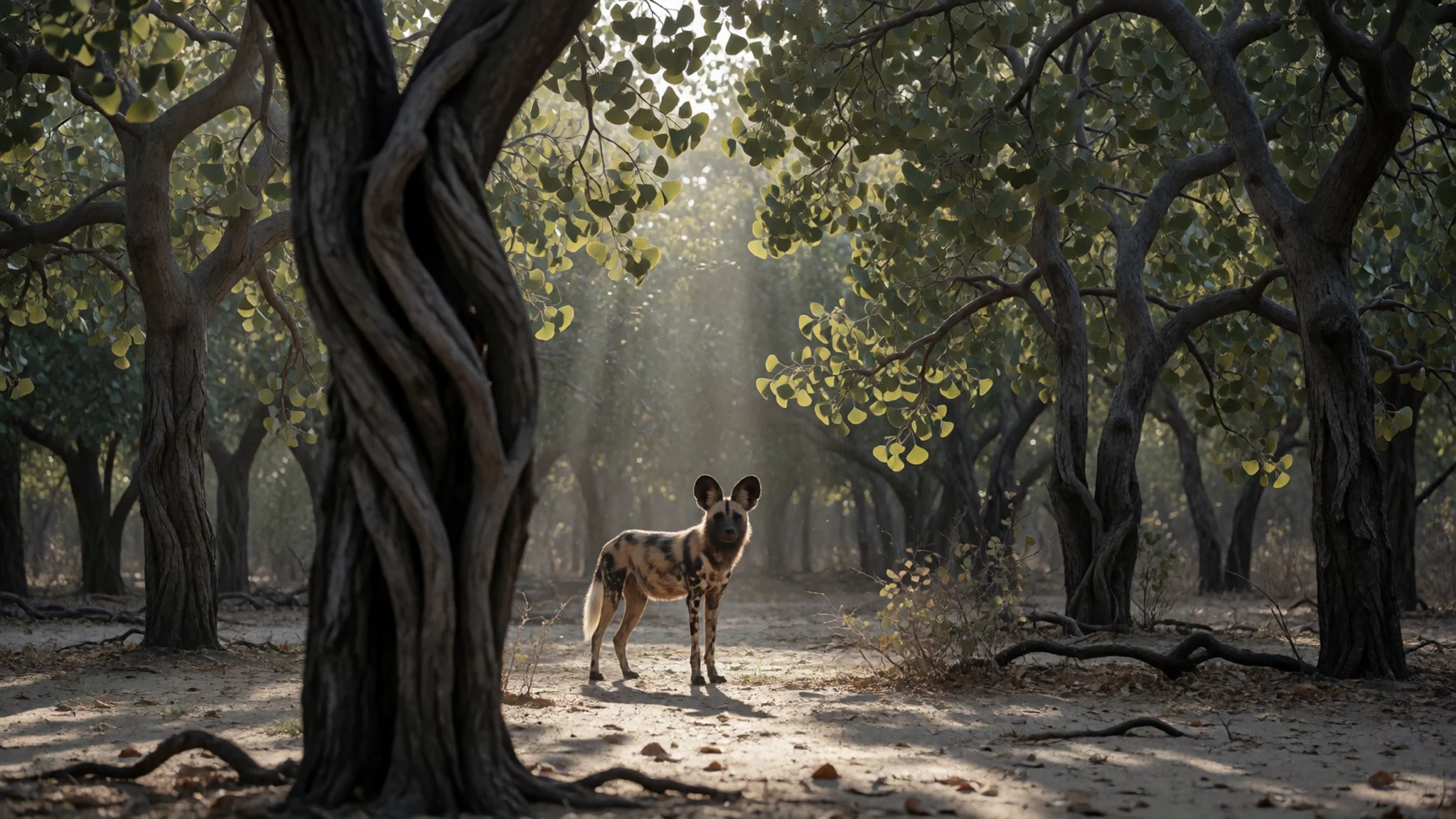
- Lions on the floodplains — Floodplains and island edges
Lions in Moremi Game Reserve use the open floodplains and island edges, where prides can be found resting in shade through the heat of the day and moving at dusk. Hearing roars at night from camp is part of the experience. Buffalo and lechwe herds nearby tell guides where to look.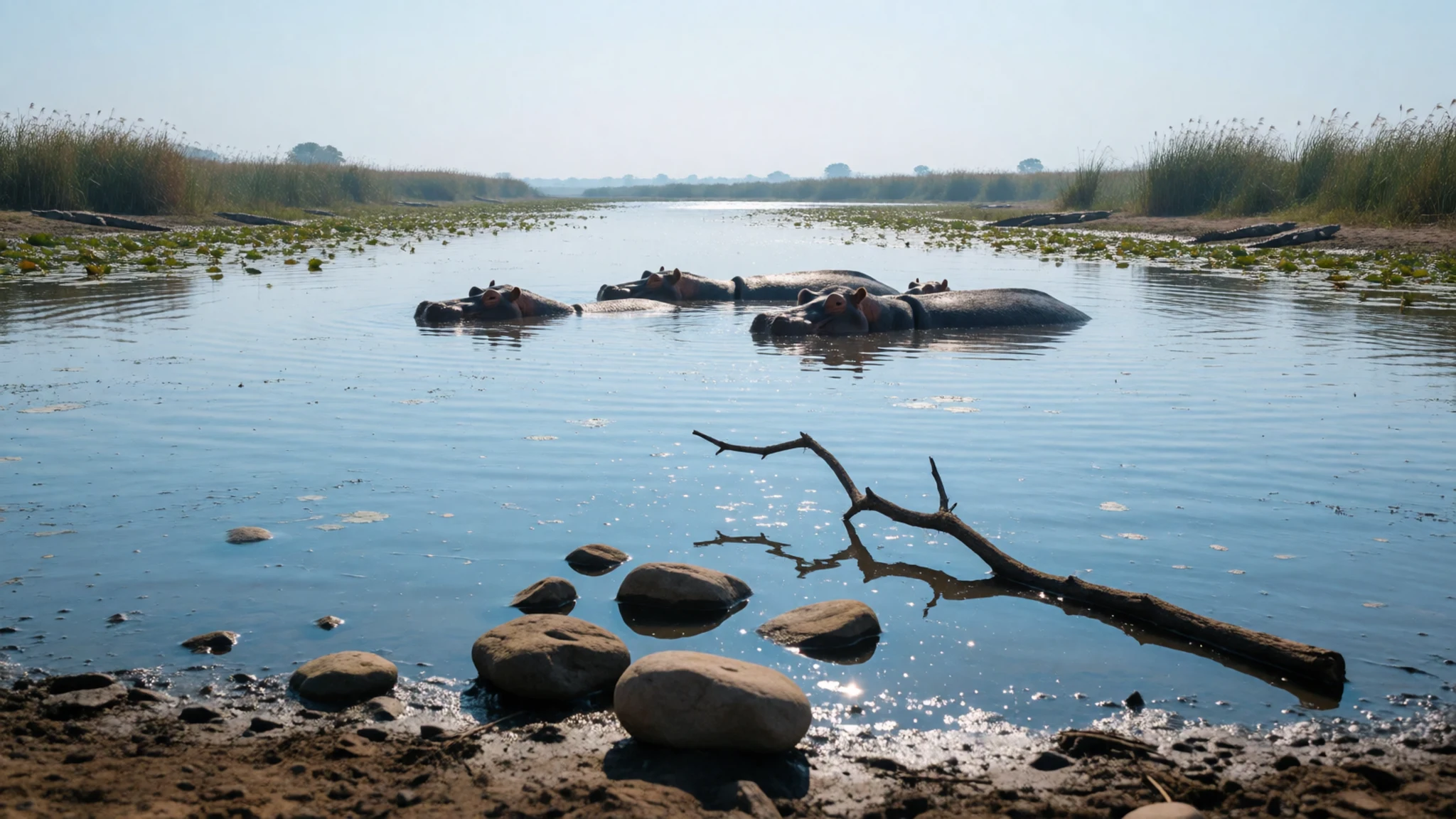
Culture
Moremi Game Reserve carries a human history that visitors often miss while watching animals. It is named after Chief Moremi III of the BaTawana, a Tswana people of the Ngamiland region, and the reserve exists in large part because his widow, Elizabeth Pulane Moremi, pressed for the wildlife to be protected. Setswana is the national language, with English widely used, and greetings matter: a handshake and a spoken 'Dumela' (hello) come before any request. The BaSarwa, or Bushmen, were allowed to remain when the reserve was created, and communities around the delta have long traditions of tracking, plant knowledge and storytelling. Many guides and camp staff come from nearby villages, and their reading of tracks, birds and weather is a skill to respect rather than treat as background. Meals in camp are often shared around a fire, and evening conversation is the main entertainment. Tipping guides and camp staff is customary, and the camp manager can advise on what is usual. Stay inside the vehicle unless your guide says otherwise, keep voices low near animals, and always ask before photographing anyone.
What to wear
Moremi Game Reserve lies in Setswana-speaking country, where traditional dress still appears at weddings, funerals and national celebrations. Women often wear dresses cut from leteisi, a printed cotton cloth, usually with a matching headscarf, and a blanket or shawl may be added in cool weather. Men may wear a patterned shirt, and in rural settings a wrapped blanket. Historically, BaSarwa clothing used tanned animal skins, with beadwork that included beads made from ostrich eggshell. Day to day, most people in Maun and nearby villages wear ordinary modern clothes: jeans, t-shirts, school uniforms and work wear. Guides and camp staff usually wear khaki or olive uniforms. A visitor should dress for the bush. Long trousers and long-sleeved shirts in khaki, olive or tan help against mosquitoes and sun, while bright white and very dark colours are best left at home. Mornings on open vehicles are cold in the dry season, so pack a warm layer, a hat, sunglasses and a scarf for dust. Closed shoes with grip suit sandy tracks and walks from tents. Modesty norms are relaxed in camp, but swimwear belongs at the pool, and in villages covered shoulders and knees are polite.
What to eat
- Seswaa — Celebrations, camp local-night dinners and Maun eateries
Seswaa is beef or goat boiled for hours with salt, then pounded into soft shreds. It is the dish served at weddings, funerals and family gatherings, usually with bogobe or pap. Look for it at celebrations, village events and local-night dinners at camps and eateries in Maun.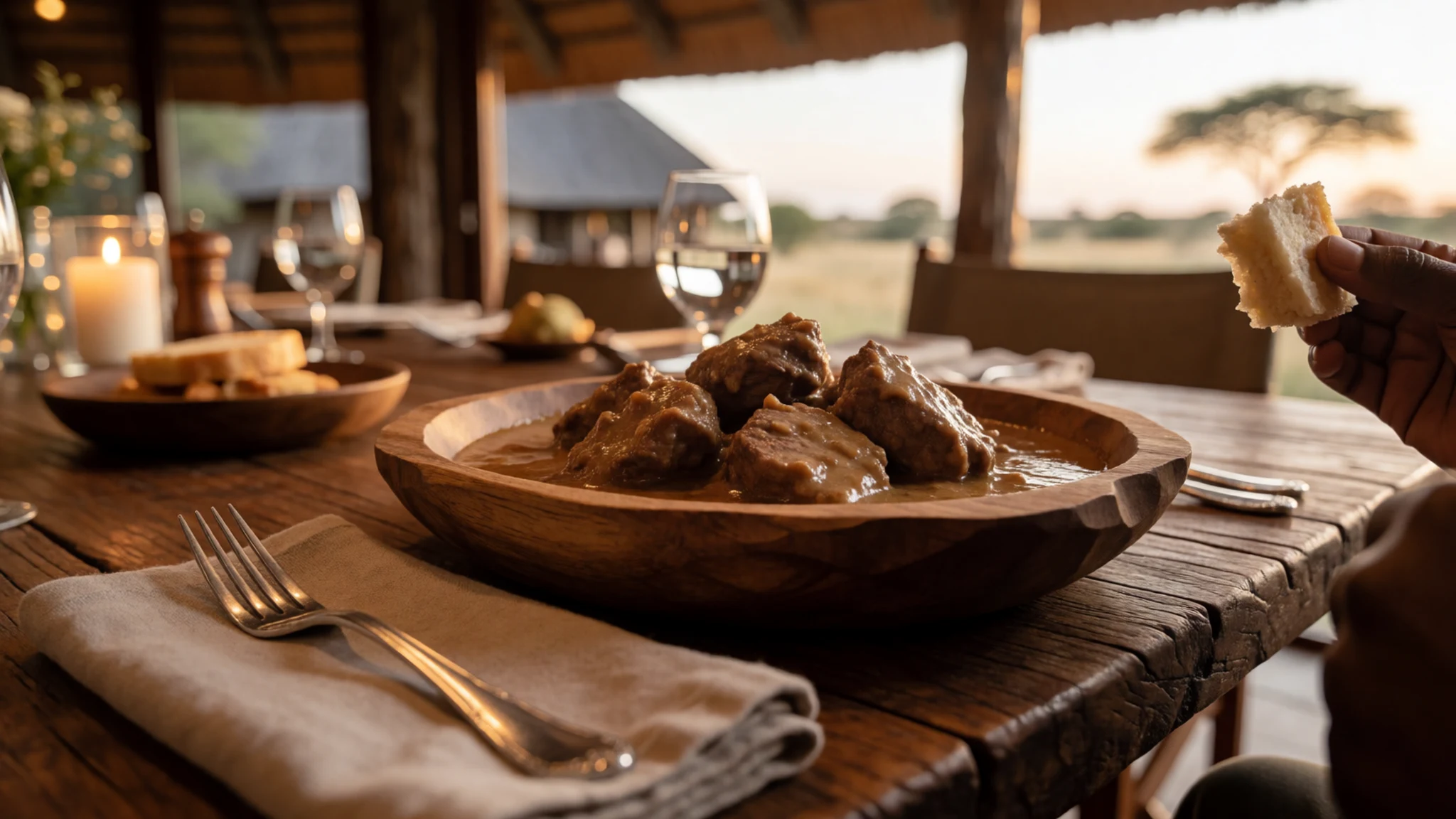
- Bogobe — Local eateries in Maun and village homes
Bogobe is a thick porridge made from sorghum or maize meal. It is eaten plain at breakfast, soured with fermented milk, or alongside stew and greens at lunch and supper. Find it at any local eatery in Maun or in village homes where hospitality is offered.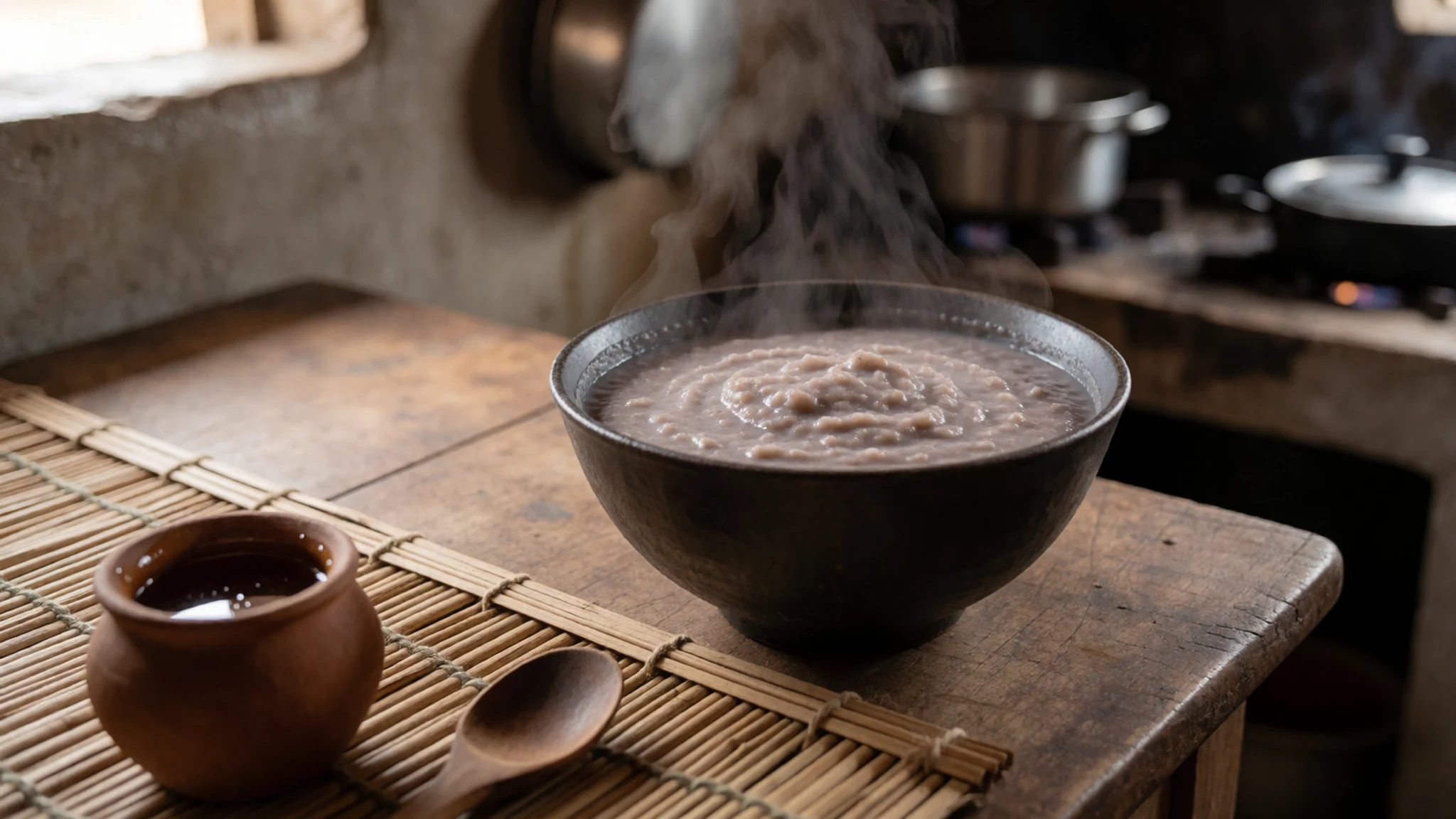
- Morogo — Market stalls and home-style eateries
Morogo is a dish of wild or cultivated leafy greens, usually boiled and then fried with onion and tomato. It sits beside meat and porridge as a side. Look for it at market stalls and in home-style cooking, particularly after rains when leaves are fresh. - Phane — Markets and roadside stalls around Maun
Phane are mopane worms, the caterpillars of a moth that feeds on mopane trees. They are dried or cooked in a sauce and eaten as a salty, chewy snack or with porridge. Try them at markets and roadside stalls around Maun. - Braai — Campsite fires and bar-and-grill eateries
A braai is a wood-fire grill of beef, lamb or boerewors sausage, usually with pap and a tomato relish. It is the common way to cook in camps and at home. Look for one at campsite fires and bar-and-grill eateries in Maun.
Plan it
Best time. May to October is the dry season, with cooler days, cold early mornings and animals drawn to the remaining water. Rains arrive around November and last into March, bringing green landscapes, birds and mud, and some tracks can become impassable.
How long. 3–4
Getting there. Fly to Maun, the usual gateway, then continue by light aircraft to a camp airstrip or by high-clearance four-wheel-drive along sandy tracks to the reserve gates. Check the official site, https://www.moremi.com/, for entry and booking information.
Budget. high
Tips
- Book camps and campsites well ahead for the dry months, as places are limited
- Start drives at first light, when animals are active and the air is cool
- Take malaria precautions before, during and after the visit, as advised by a travel clinic
- Self-drivers should carry enough fuel, water and recovery gear, because tracks are sandy and services are scarce
- Carry some cash and do not rely on card machines in remote camps
Etiquette
- Stay inside the vehicle unless a guide or ranger says it is safe
- Keep voices low, give animals space and never feed wildlife
- Ask before photographing local people
Nearby
Sources
- Wikidata Q353112 (CC0)
- Wikipedia: Moremi Game Reserve (rev 1363557233) (CC BY-SA 4.0)
- Wikivoyage: Moremi Game Reserve (rev 5285973) (CC BY-SA 4.0)
- Ian Sewell, Moremi elephant (CC BY-SA 2.5)
- Africanprince10, Lioness in Moremi game reserve (CC BY-SA 2.5)
- Sheep81, Leopard stalking (CC BY-SA 1.0)
- Hp.Baumeler, Okavangodelta Xakanaxa (CC BY-SA 4.0)
- Adrian Michael, Moremi Gate (CC BY 3.0)
- Adrian Michael, Moremi bridge (CC BY-SA 2.5)
- Jeff Schmaltz, MODIS Land Rapid Response Team, NASA GSFC, Moremi Game Reserve and Makgadikgadi Pans Game Reserve (Public domain)
- Mothusi Sekhomba, Moremi Game Reserve in summer (CC BY-SA 4.0)


Wildlife
- Cape wild dog (animal)
The African wild dog is the biggest wild dog in Africa, a hunter also known as the painted dog, so think of a dog wearing a splashy coat. In Moremi it is rare and elusive, and the dense groves of trees give it, and the leopard, the cover they need, so those shady stands are the places to look. Your guide will know the best times to try. Keep well back, speak softly, let the guide read the animals, and never offer food.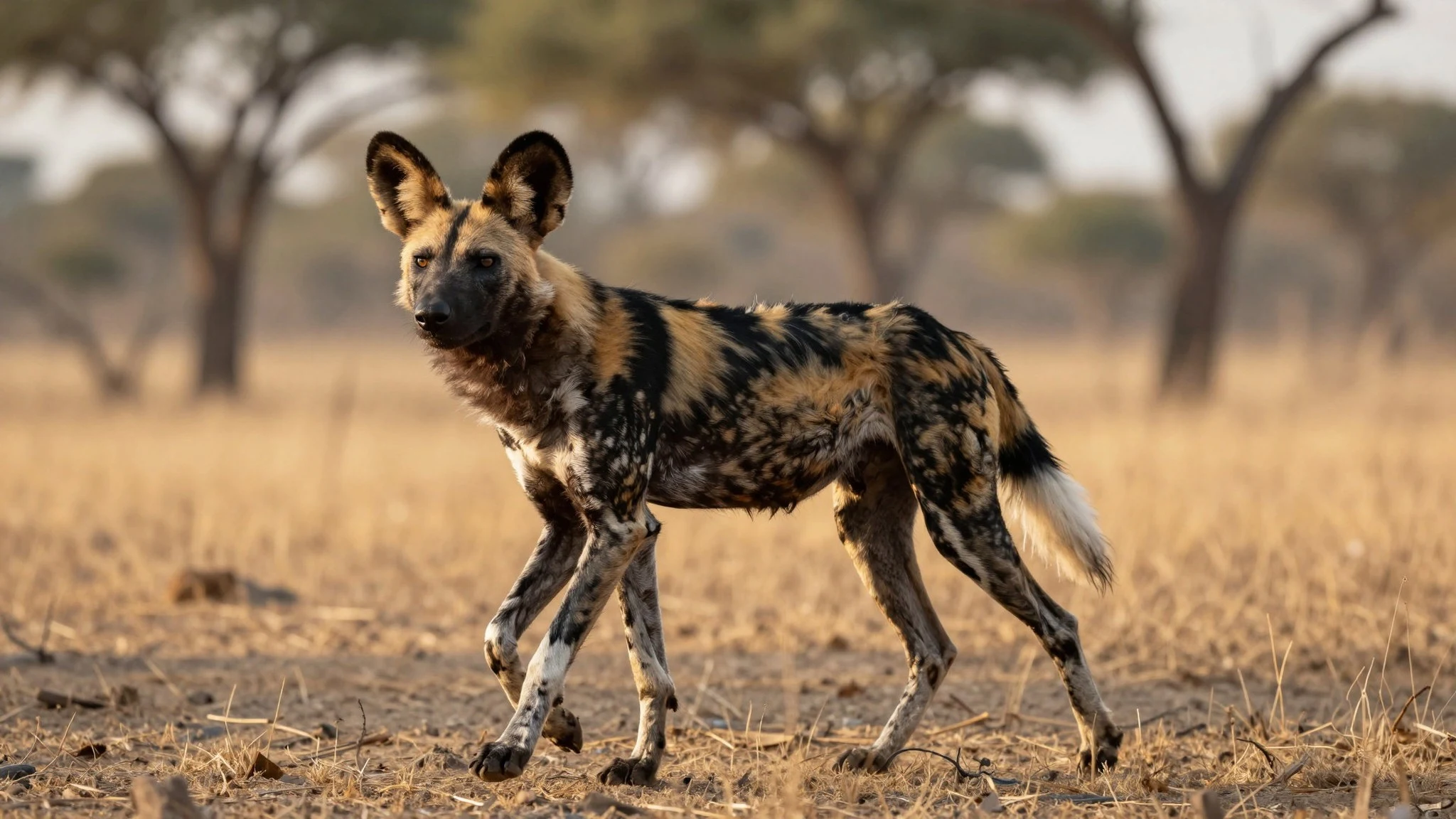
- Hippo (animal)
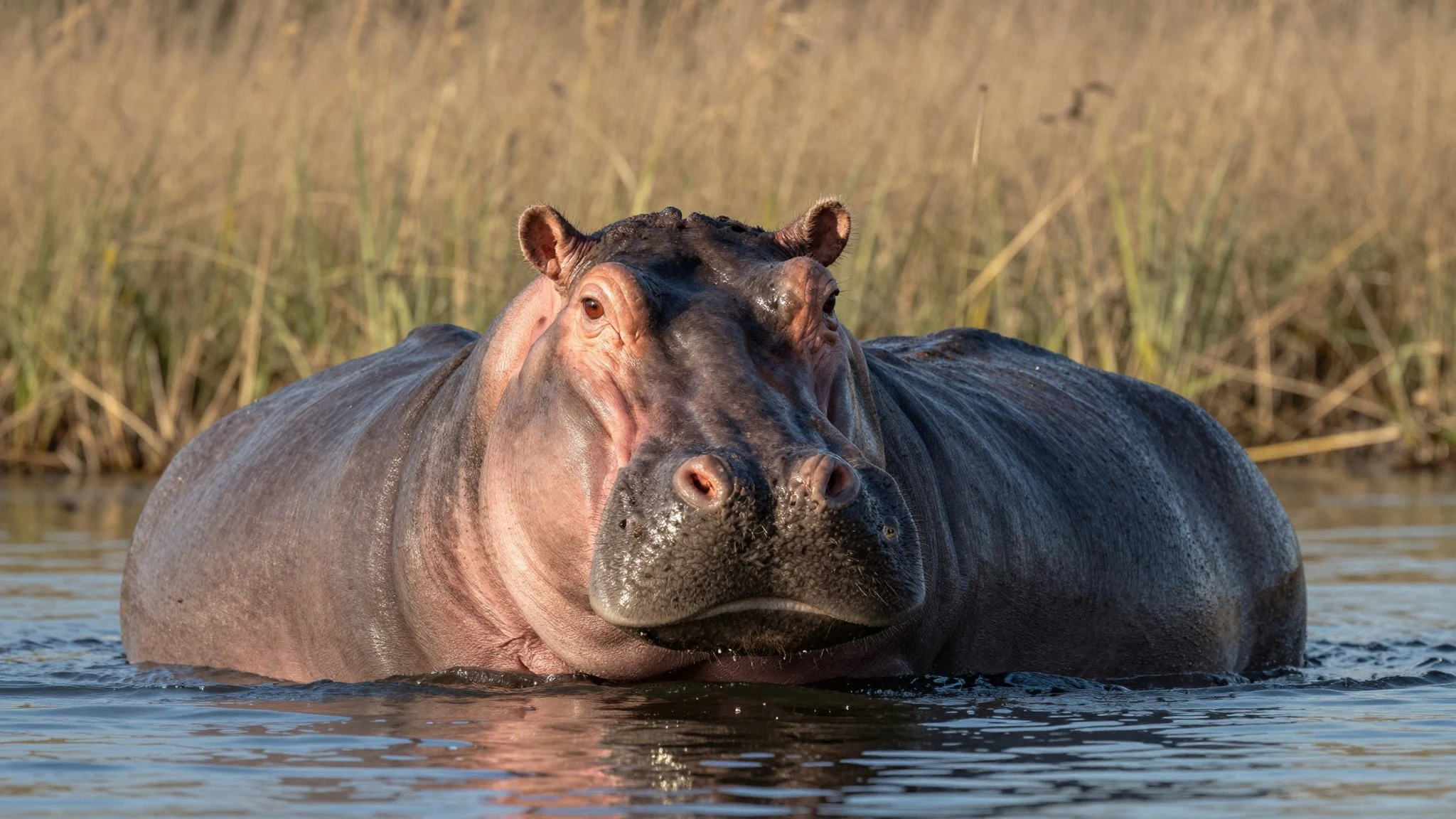
The hippo is a huge mammal that spends its life in and near water, and its name means river horse, so picture a horse that lives in the river. In Moremi the waters are full of hippos and crocodiles, and the reeds around them shelter many water birds. Ask your guide where and when to watch. Keep a respectful distance, stay quiet and calm, and never feed them.