Tsodilo
Tsodilo, Botswana
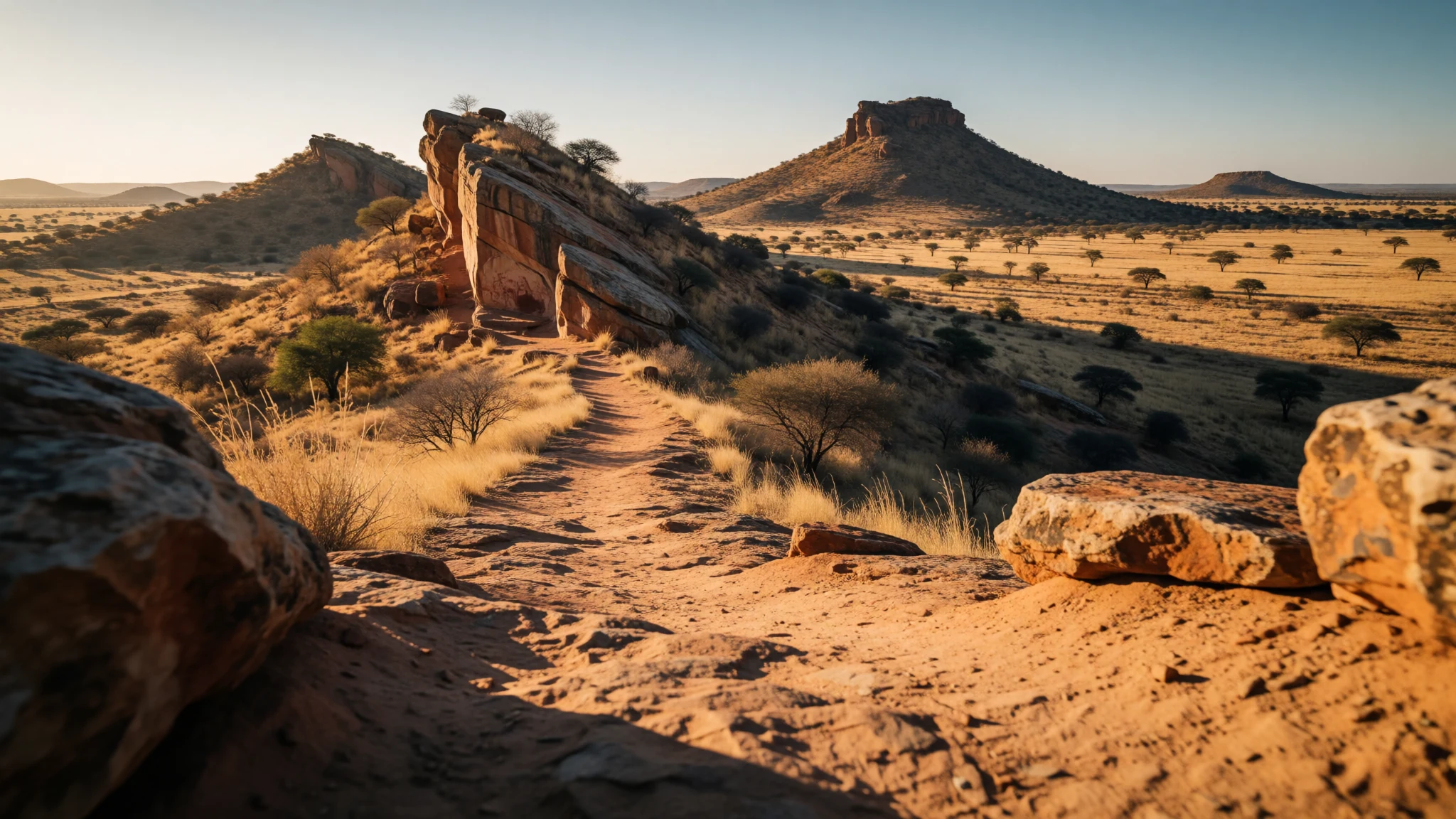
Tsodilo Hills is a high, quiet pocket of rock shelters and paintings, where landscape and meaning overlap in ways that still feel alive.
The place
Tsodilo (Tsodilo Hills, Lefelo la Tsodilo) is an archaeological landscape in Botswana where rock shelters and caves preserve painting traditions and signs of settlement over many millennia. The UNESCO listing links the place to religious and spiritual significance for local communities, and to the sheer depth of human presence reflected in the art and the shelters.
The scene is defined by a cluster of hills rather than a single monument. Visitors most often talk about four chief elevations: the “Male” hill, which is the highest, plus the “Female”, “Child” hills, and an unnamed knoll. The hills sit around 40 km from Shakawe, and the approach is typically via a good graded dirt road.
What stands out on the ground is how the art is embedded into the rock shelters and small caves, not displayed behind glass. Some sites are reached by short walks that wind between hill slopes and sheltered walls. One well-known viewpoint sits close to where a managed campsite is set between the two largest hills, with basic facilities for washing and sleeping. Nearby, there is also a small museum and an airstrip, which helps explain how a remote-looking landscape still supports visits.
The overall feeling is part study trip, part landscape hike, part quiet waiting for the light to shift across pale stone and faded pigment. Even when the day is busy, the hills don’t rush; the place rewards slow looking and careful movement.
Its story
Tsodilo’s story starts with attention: the kind you develop when you realise the paintings aren’t isolated treasures, they’re part of how people have lived with these hills. The landscape combines rock shelters, small depressions and caves, with images that record themes drawn from daily life and beliefs. UNESCO notes the site’s religious and spiritual significance to local peoples, alongside its long record of settlement.
For modern visitors, Tsodilo became widely known partly through earlier description of the paintings by South African writer Laurens van der Post, whose 1958 book The Lost World of the Kalahari introduced the site to broader audiences. That link matters because it explains the name attached to a familiar wall painting: the Laurens van der Post panel, near the managed campsite.
From there, the experience turns practical. The hills are grouped into four main features—Male, Female, Child and an unnamed knoll—and each has its own cluster of shelter walls and accessible painting areas. One commonly visited example is Rhino Cave at the north end of the Female Hill, where painted figures appear in separate walls; in particular, there is a white rhino painting on the north wall, split by a painting that includes a red giraffe.
Tsodilo is not a place of crowds moving like clockwork. It tends to gather small groups, with time spent looking closely rather than taking lots of photos and leaving. The hills feel like they’re holding their own calendar: slow mornings, careful steps on uneven ground, and an instinct to pause because the rock is the museum.
What to see
- Tsodilo Hills Museum and Office — near the campsite
The Tsodilo Hills Museum and Office gives context in a simple, traditional-style building and also acts as the place office. It’s the useful starting point for understanding what you’ll be looking at in the shelters, and for checking practical details before the walks.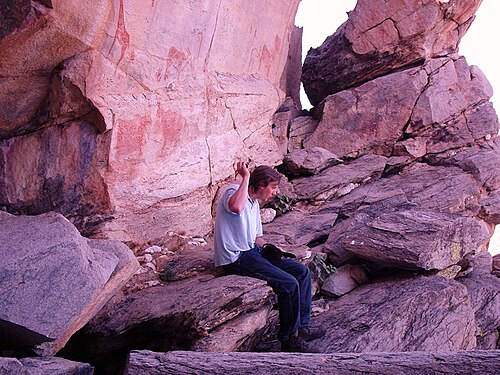
- Laurens van der Post panel — between the two largest hills
A notable panel near the managed campsite connects modern visitors to the site’s wider story. The panel is part of the rock-art landscape around Tsodilo Hills, close enough to pair with a walk to nearby shelter walls rather than treating it as a standalone stop. - Male Hill viewpoints — main hill cluster
The “Male” hill is the highest of the four chief hills, and it anchors how people orient themselves in the Tsodilo landscape. Expect a mix of uphill breathing and short shelter-to-shelter paths, with rock textures changing as the sun moves across pale stone.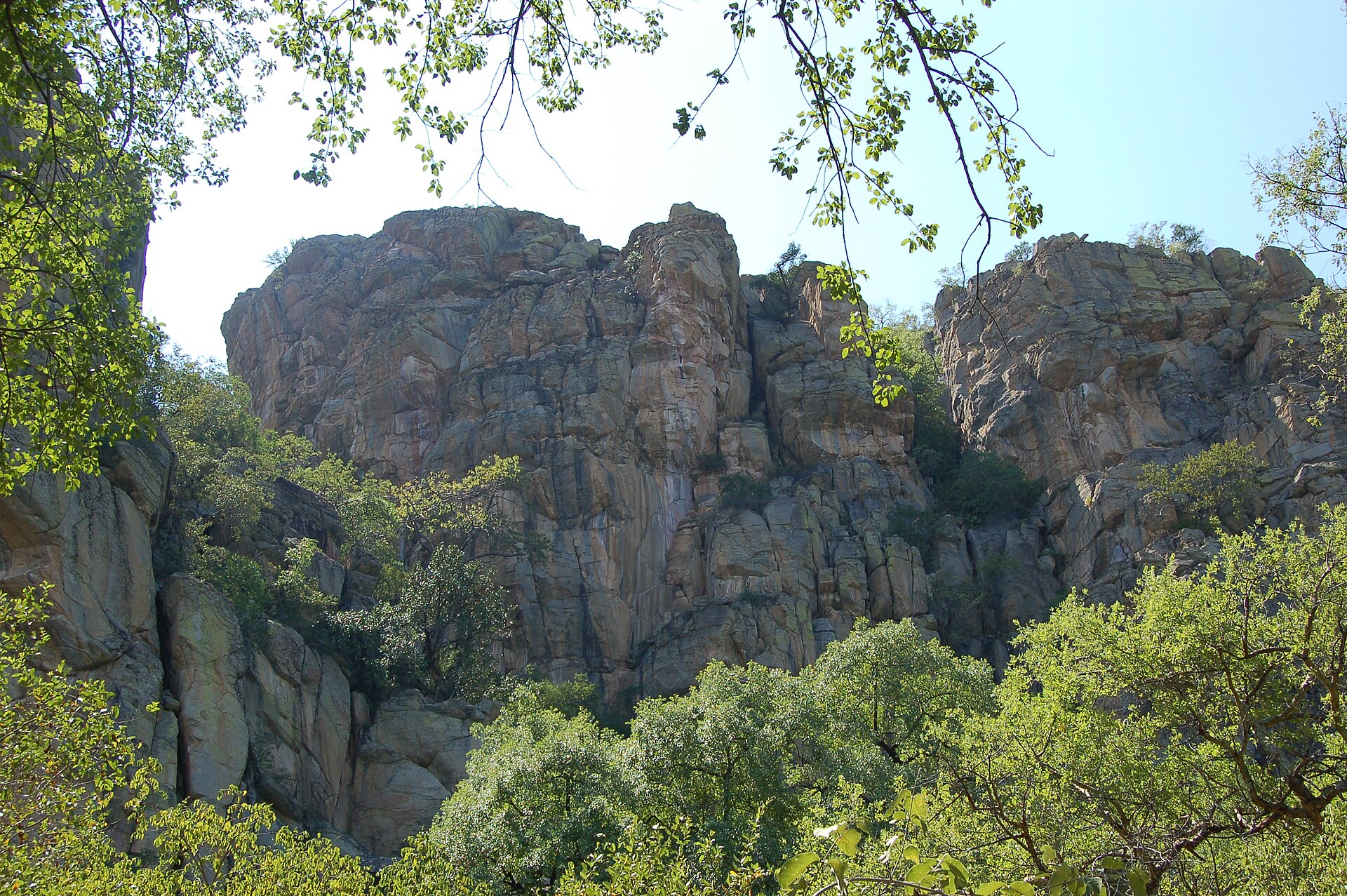
- Rhino Cave (Female Hill) — north end of Female Hill
Rhino Cave sits at the north end of the Female Hill, with two main painted walls. There’s a white rhino painting on the north wall, and a red giraffe painting that splits the scene, making this stop feel like a layered conversation across the rock surface.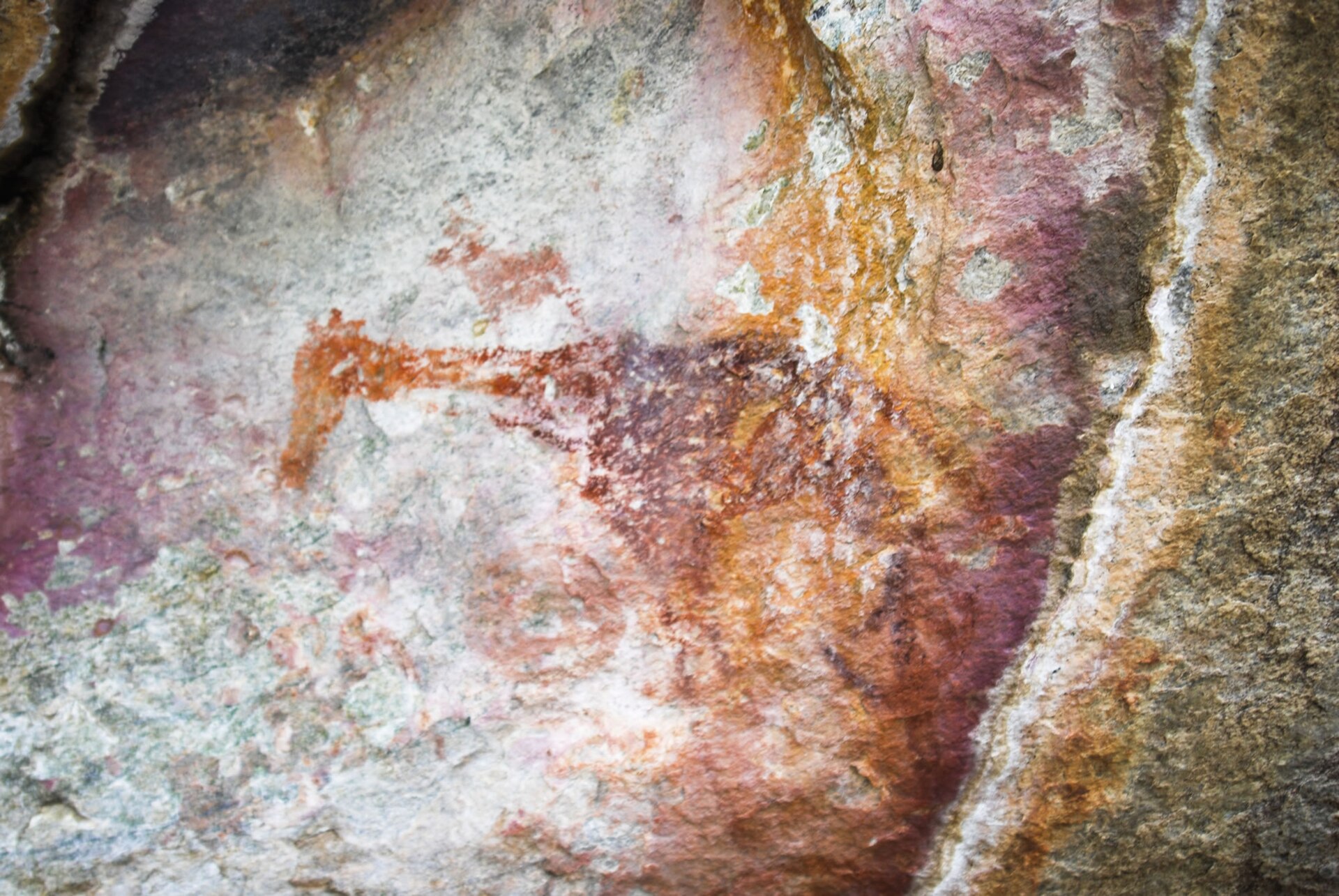
- Red and white rock art shelter areas — across the shelter walls
Tsodilo’s shelters often hold multiple figures and colours in close proximity. The red-and-white style painting is a strong example, showing how pigments and outlines can remain distinct on the rock even after long periods of exposure to sun and wind.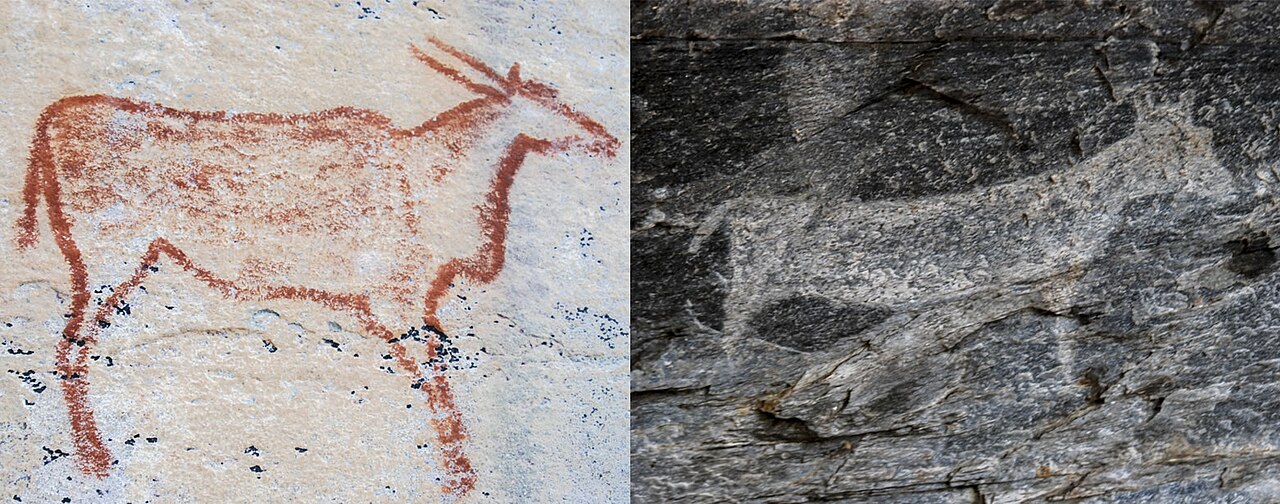
Culture
Tsodilo Hills is a UNESCO World Heritage Site in Botswana, and its cultural importance is tied directly to meaning, not just scenery. The listing acknowledges the deep religious and spiritual importance of the site for local communities, alongside the evidence of human habitation spanning a vast period found within its rock shelters and caves.
Because the paintings are embedded in natural rock features, respect here is more about behaviour than rule-following. The hills are living spaces for communities that continue to relate to the landscape. That’s why visits tend to feel more like guided observing than sightseeing from a safe distance. Even if you’re simply walking between shelter areas, treat the ground and the shelter walls as part of an ongoing cultural setting.
Photographing is usually possible, but it should never override other people’s movement or concentration. Keep voices low in caves and shelter areas, and avoid touching pigment-covered surfaces—even where a wall looks dry and stable. If you’re offered interpretive guidance at the museum or office, listen closely; local context is often the difference between “seeing markings” and understanding why a particular wall matters.
Visitor etiquette: dress modestly for hot, sun-bleached outdoor areas and keep voices down while watching the paintings in the shelters.
What to wear
At Tsodilo Hills, clothing is about sun, dust, and respecting the cultural setting around rock shelters. Daytime weather can be harsh in open areas, so lightweight layers win. People typically wear practical travel clothes—breathable shirts, shorts or trousers, and caps—because you’ll be walking on uneven ground and spending time standing in direct light.
Traditional dress in the region isn’t the main thing you’ll see right on the walking routes, but modesty is still the cue. For visits around the shelters and museum areas, choose clothes that cover shoulders and avoid very short hems, especially at the start of the day when you might be moving between hills and gathering for short walks.
Footwear matters more than fabric. Opt for closed shoes or sturdy sandals with grip, because paths can be dusty and rocky. Bring a light rain layer only if you’re travelling around wetter periods; otherwise, a sunhat and sunglasses do more work than a jacket.
If you want photos, wear colours that don’t clash with pale stone and red rock—neutral tones look natural and also make it easier for you to blend into the landscape while staying respectful.
What to eat
- Picnic supplies from Shakawe — Shakawe before entering Tsodilo
There are no cafes or restaurants in the park, so most people eat using food they bring in. Stock up in Shakawe before you head out, then plan simple meals around the time you’ll spend walking between shelters. - Water and basic snacks on walk breaks — between hills and shelter areas
Expect long stretches of outdoor time with few chances to stop for anything buyable. Pack water and snackable items for breaks, and treat it as part of the rhythm of visiting the rock art rather than an afterthought. - Camp-style simple meals at the campsite — managed campsite between the two largest hills
The managed campsite between the two largest hills supports an overnight stay, so cooking or heating simple meals can be practical depending on your setup. Keep it minimal: utensils, water, and easy foods you can manage in the campsite setting. - Community-style meals in Shakawe accommodations — Shakawe near your accommodation
Most accommodation is in Shakawe, where you can find meal options before and after the hills. Use Shakawe as your main base for eating well, then bring only what you need for the day out to Tsodilo.
Plan it
Best time. March–April and October–November are good for Tsodilo Hills visits because conditions are generally more comfortable for walking; July and August can feel harsher for long outdoor time.
How long. 3–4
Getting there. Get to Shakawe, then continue with the detour described for reaching the park: leave the A35 road and continue on that road for around 0.5–1 hour. Most accommodation sits in Shakawe, nearly a 2-hour drive away.
Budget. mid
Tips
- Start your walks earlier in the day to avoid the strongest light on pale rock shelters.
- Plan around the fact that the rock art is spread across multiple hills and cave areas, not one single stop.
- Use the museum/office as your checkpoint before you head out.
- Bring enough water and simple snacks because there are no cafes or restaurants in the park.
- Keep an eye on what the dirt road conditions look like on the day you’re travelling.
Etiquette
- Move carefully on uneven ground and don’t climb onto or press into painted rock shelters.
- Keep noise low in caves and shelter areas so others can observe in calm.
- Ask before photographing people at the museum/office or during guided moments.
Nearby
Sources
- Wikidata Q214007 (CC0)
- Wikipedia (rev 1370375449) (CC BY-SA 4.0)
- Wikivoyage (rev 4674344) (CC BY-SA 4.0)
- Photo photos/01-laurens-van-der-post-panel.jpg (Public domain)
- Photo photos/02-giraffe-rock-art-painting-tsodilo.jpg (CC BY 3.0)
- Photo photos/03-red-and-white-rock-art-tsodilo.jpg (CC BY 3.0)
- Photo photos/04-animals-rock-art-tsodilo.jpg (CC BY 3.0)
- Photo photos/05-tsodilo-hills-rock-paintings1.jpg (CC BY-SA 2.0)
- Photo photos/06-tsodilo-hills-rock-paintings4.jpg (CC BY-SA 2.0)
- Photo photos/07-tsodilo-hills-rock-paintings5.jpg (CC BY-SA 2.0)
- Photo photos/08-tsodilo-hills-botswana.jpg (CC BY-SA 2.0)


