Chobe National Park
Chobe National Park, Botswana
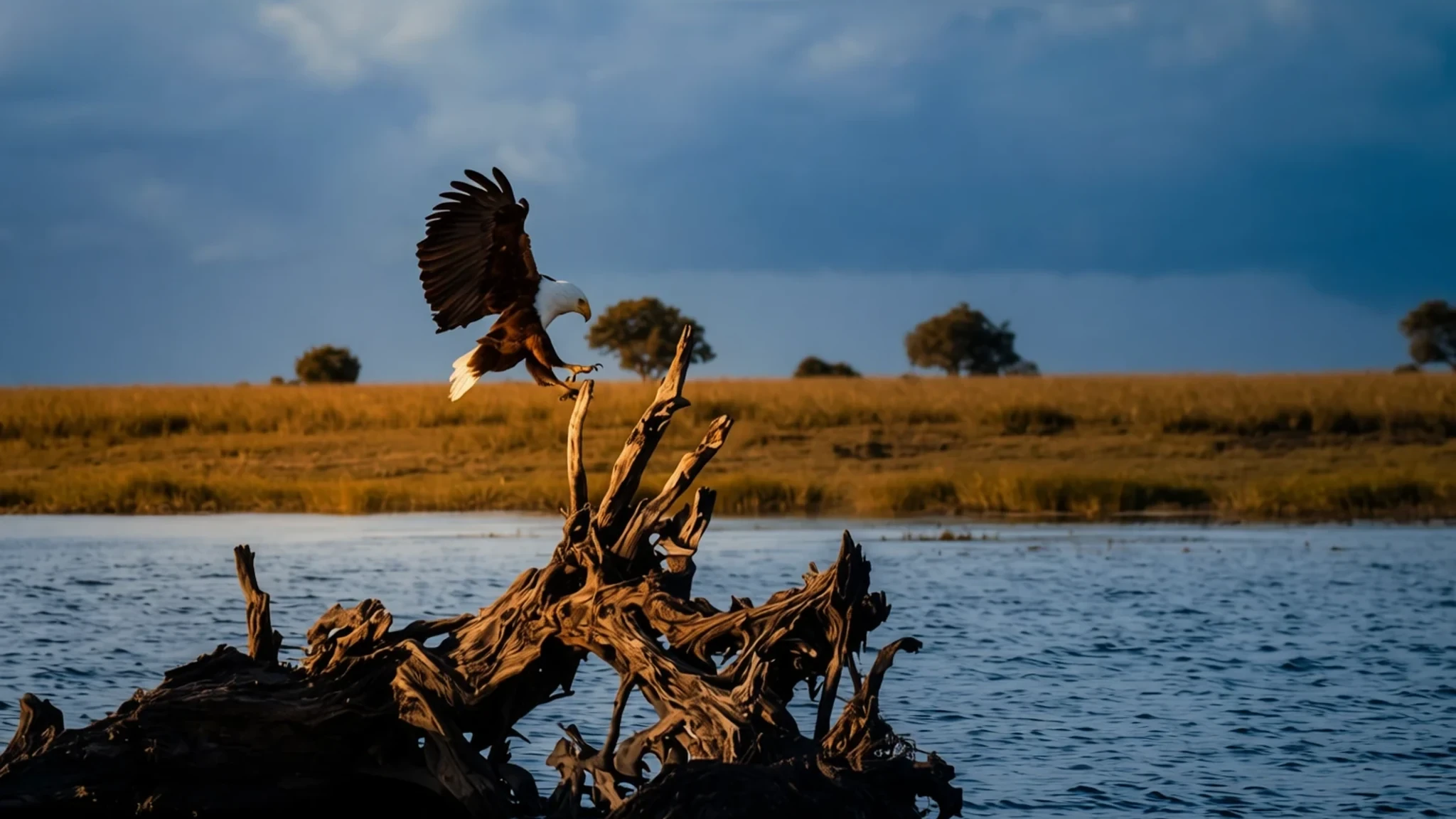
Botswana's first national park, where the Chobe River draws elephants, birds and buffalo to drink in the dry months.
The place
Chobe National Park sits in the north of Botswana and is the country's first national park. It takes in wetlands along the Chobe River, which links to the Zambezi system near Victoria Falls. The park forms part of the Kavango–Zambezi Transfrontier Conservation Area, a wider stretch of land shared across several countries, and its edge touches Namibia's Caprivi Strip. It is best known for its large elephant population and for the lions that hunt there, mostly calves, juveniles and younger adults.
Most of the action gathers in the Serondela area at the north-eastern corner, where lush floodplains meet woodland of hardwoods. Heavy elephant pressure has thinned those trees in places. The floodplains are the only spot in Botswana where you can see the puku antelope, which gives many people a reason to linger there.
The river is the draw. From about May to October, the dry season, herds come down to drink and the banks become busy with animals. Rhinos are no longer inside the park; they were moved to sanctuaries because of poaching. Most other large animals are still here.
The riverfront is also the busiest part of the park, partly because it sits close to Victoria Falls. Expect boats, vehicles and other visitors in peak season, and go early if you can. The park lies in a malaria zone, so see a doctor before you travel.
Its story
The first people known to have lived in this area were the San, known in Botswana as Basarwa. They were nomadic hunter-gatherers who moved constantly to find fruit, water and wild animals. Their paintings survive inside the rocky hills of the park, a reminder that the land was home long before it was protected.
At the start of the twentieth century, the territory that would become Botswana was split into different systems of land tenure. Much of what is now the park was Crown land in the British protectorate of Bechuanaland. The idea of a national park to protect the local wildlife and encourage tourism was first put forward in 1931, and a non-hunting zone around Chobe district followed in 1932.
Progress was slow. Heavy tsetse infestations in 1943 held the plan back, and by 1953 the idea returned, this time as a game reserve. The reserve was created in 1960, smaller than its backers had hoped, and it was later declared a national park.
Industry also left its mark. Several settlements in the region grew around the timber trade, especially at Serondela. The hardwoods along the floodplains have since been thinned by elephants, and the park today is shaped as much by its wildlife as by the people who once worked its timber.
What to see
- The Chobe riverfront — Serondela, north-east of the park
The riverfront at Serondela is the busiest stretch of the park, partly because it lies close to Victoria Falls. Floodplains and dense woodland run down to the water, and the banks fill with animals in the dry season. Drive slowly along the edge, and expect other vehicles and boats nearby. Go early, when the light is soft and the crowds are thinner.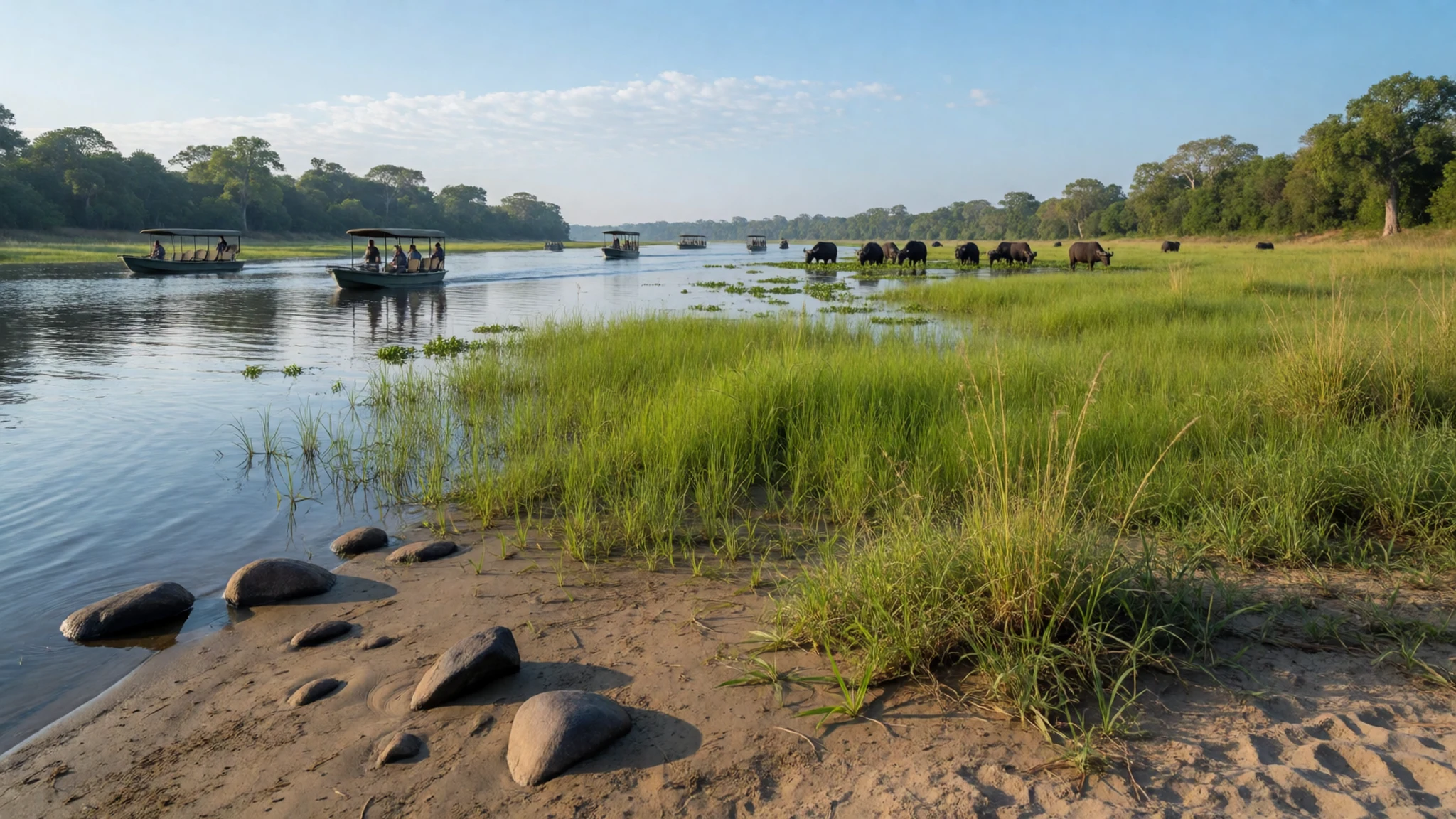
- Elephant herds at the water — Chobe riverfront and floodplains
Elephants are the park's headline animals, and the riverfront is the place to see them at close quarters. Herds come down to drink, bathe and play, and bulls often feed on grass along the banks. Some animals show broken tusks, which is linked to a calcium-poor diet. Keep a respectful distance and never approach on foot.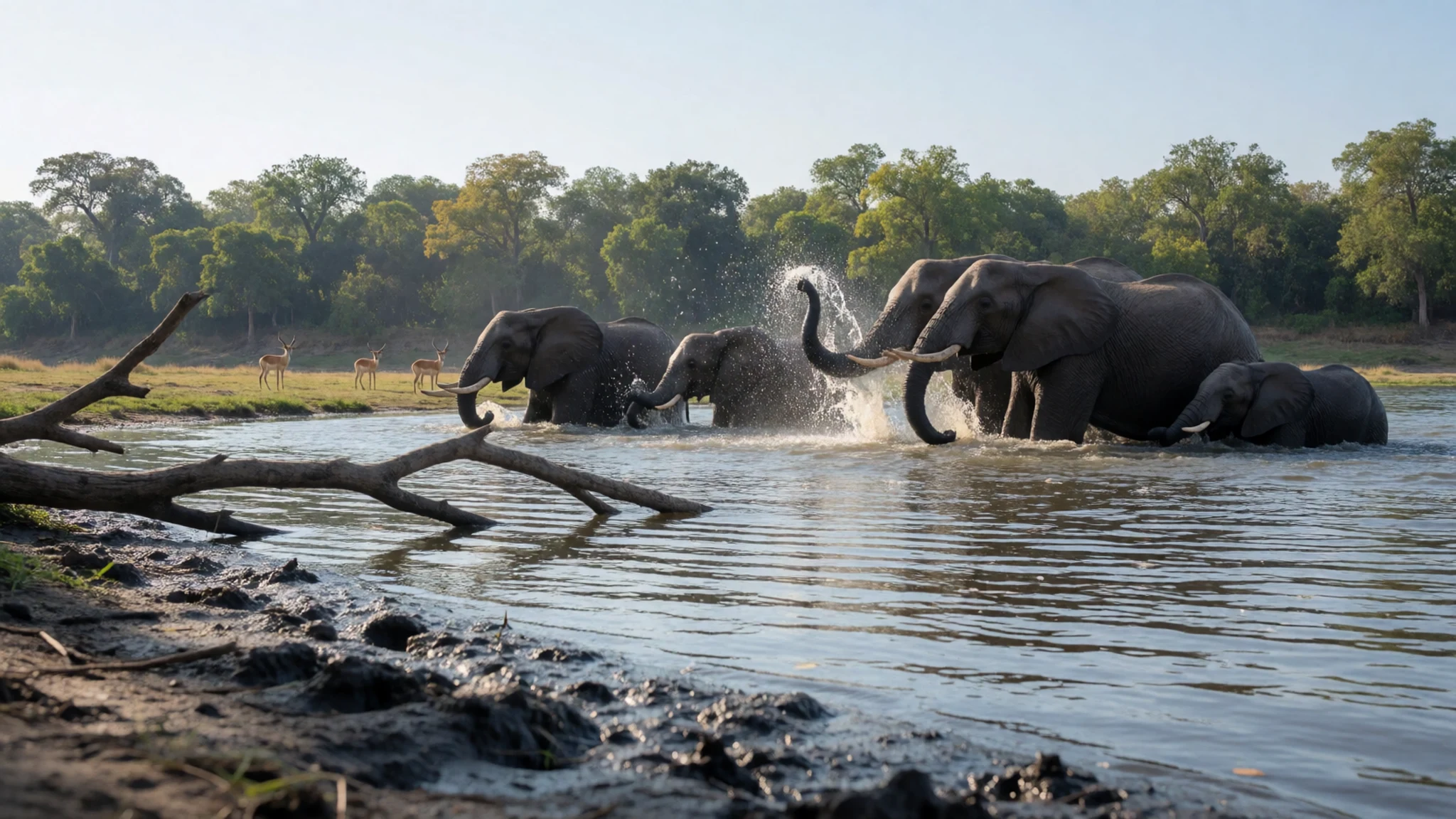
- Birds of the river and marsh — Chobe riverfront and floodplains
The park's birdlife is among its draws, with riverine and marshy habitat giving a wide mix of species. Look for fish eagles perched in the riverside trees, and for storks, plovers and kingfishers along the water. When the floodplains are in flood, spoonbills, ibises, ducks and other waterfowl gather in numbers. Bring binoculars, because many of these birds are easy to miss.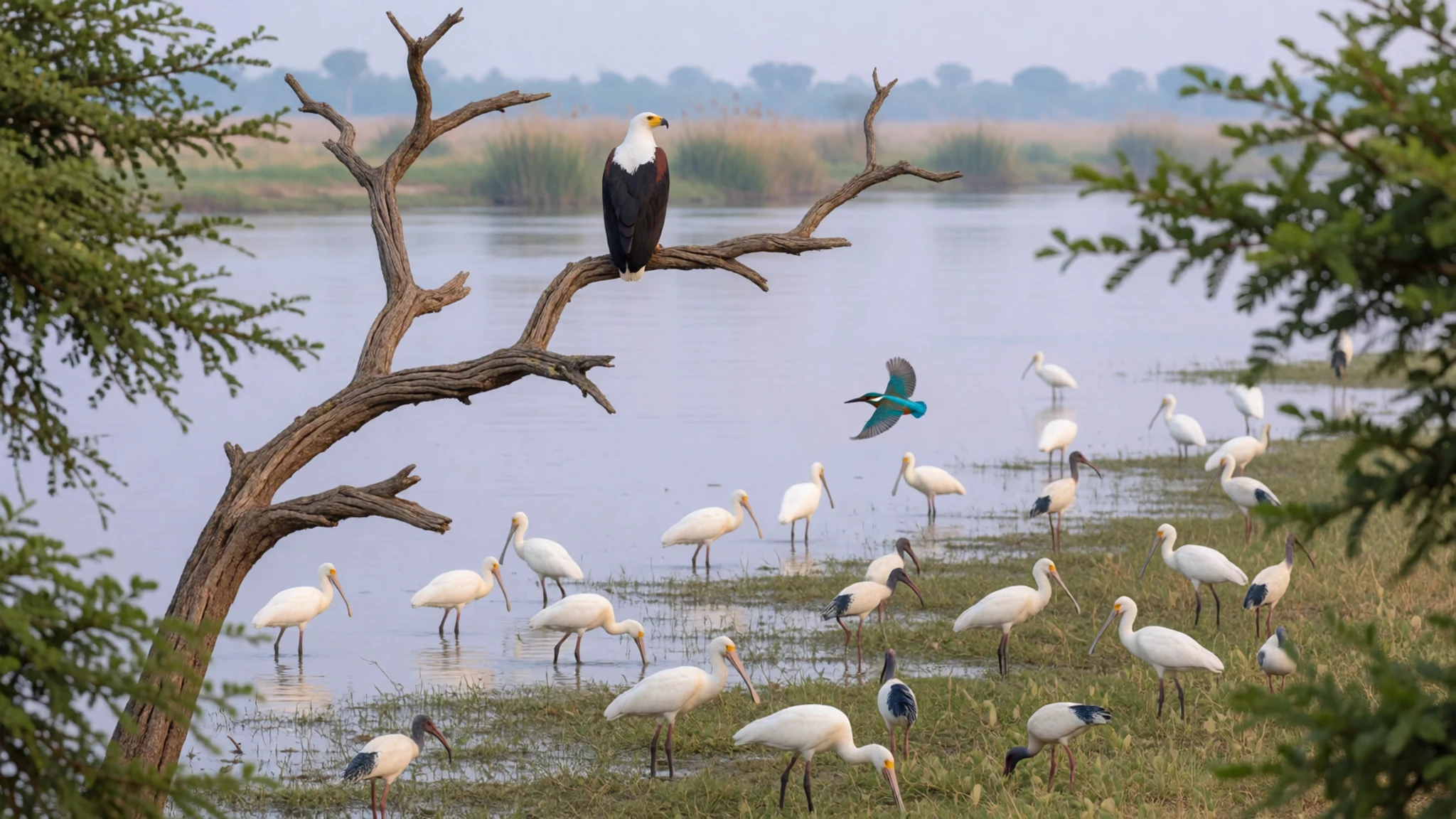
- Wild dogs at Savuti — Savuti, within the park
African wild dogs, also known as painted dogs, have been recorded at Savuti within Chobe National Park. Packs hunt across open country, so you may need a longer drive to find them rather than a stroll along the riverfront. Ask your guide what has been seen recently, because routes change with the season. If a pack is near the track, keep your voice low and stay in the vehicle.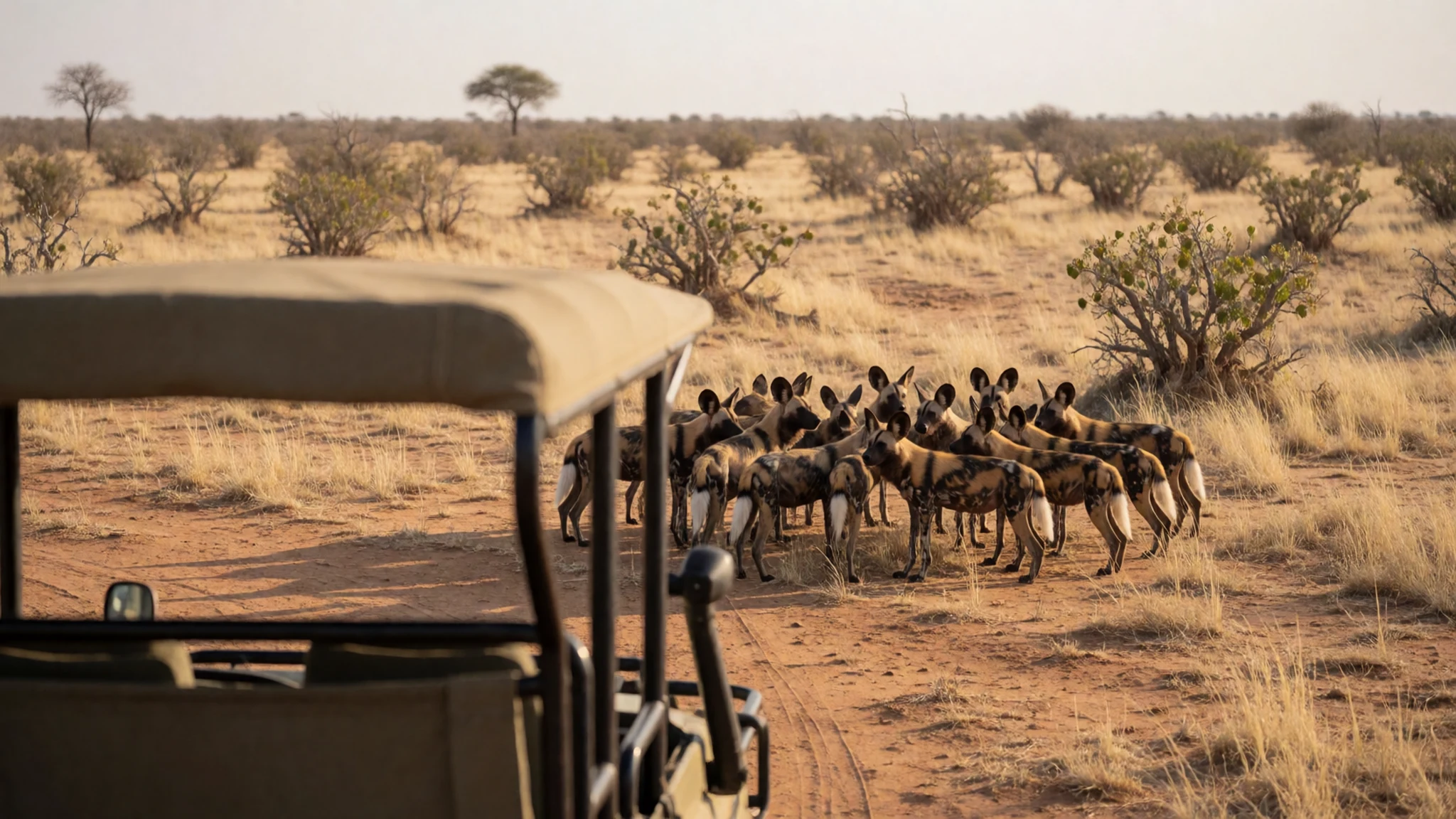
Culture
Chobe National Park is first a wildlife park, and the people who make it work, from guides to boat drivers, are the reason many visitors see so much. The San, known in Botswana as Basarwa, lived here as hunter-gatherers long before the park was proposed, and their rock paintings in the hills are part of the region's heritage. Most visitors stay in Kasane and reach the park as a day trip, so the town is a good place to get a sense of everyday life.
The park's rules put animals first. Stay with your guide, keep to the set routes, and keep voices low at sightings so you do not disturb the herds. Picnic areas are the only places to eat, so pack out everything you bring in. Tipping guides and boat drivers is customary in safari tourism, and it is worth asking your operator how it works before you leave.
Stay in the vehicle or the boat near elephants and buffalo, and never try to interact with the wildlife.
What to wear
Traditional dress in Botswana is built around printed cotton. Many Batswana women have worn long, full skirts and blouses for church, weddings and ceremonies, often in a printed cotton called seshweshwe, which has been widely worn across southern Africa for generations. Men's traditional dress is less common in everyday life today, though it is still seen at formal events.
In and around Kasane, people dress much as they would in any Botswana town: jeans, shirts, T-shirts and dresses, with local styles mixed in for church and celebrations. Those who work with visitors, such as guides and boat drivers, usually wear practical clothing suited to the heat and the river.
For your own packing, choose neutral colours such as khaki, olive or beige for game drives, and avoid bright blue and black, which many guides say attract tsetse flies. Wear long sleeves and trousers at dusk, when mosquitoes are active in a malaria zone. Closed shoes suit walking, sandals suit the boat, and a warm layer helps on cool early-morning drives. A hat and sunscreen are essential at midday.
What to eat
- Seswaa — a local eatery in Kasane
Seswaa is beef or goat pounded slowly until it breaks into soft shreds, seasoned lightly with salt. It is Botswana's best-known dish for family gatherings. Look for it at a local eatery in Kasane, where it is often served with bogobe and morogo.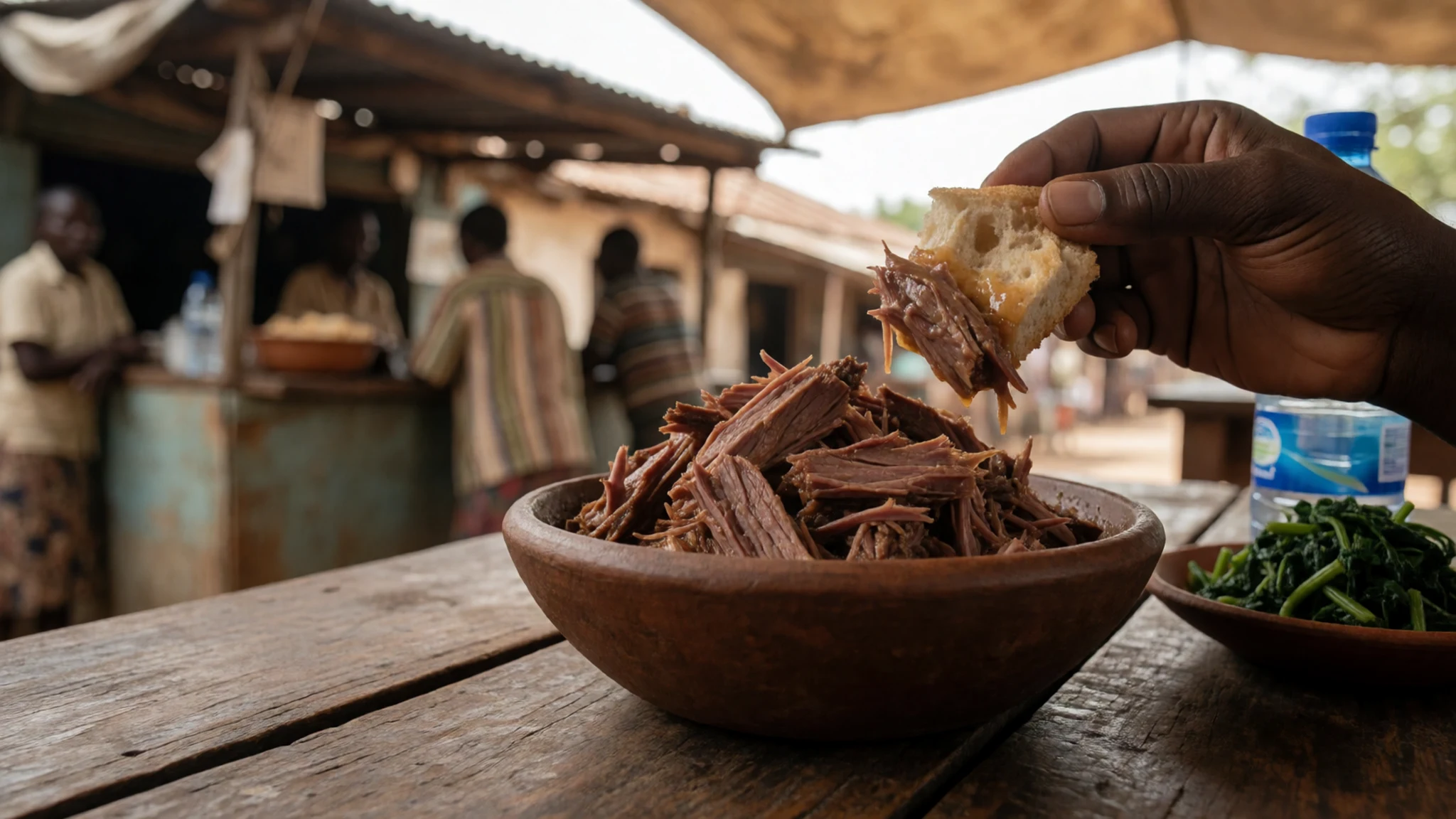
- Bogobe — a home-style eatery or market stall in Kasane
Bogobe is a thick porridge made from sorghum or maize, cooked until it sets soft and firm enough to scoop. It is the everyday staple, eaten with stews, meat and greens. Try it at a home-style eatery in Kasane or at a market stall in town.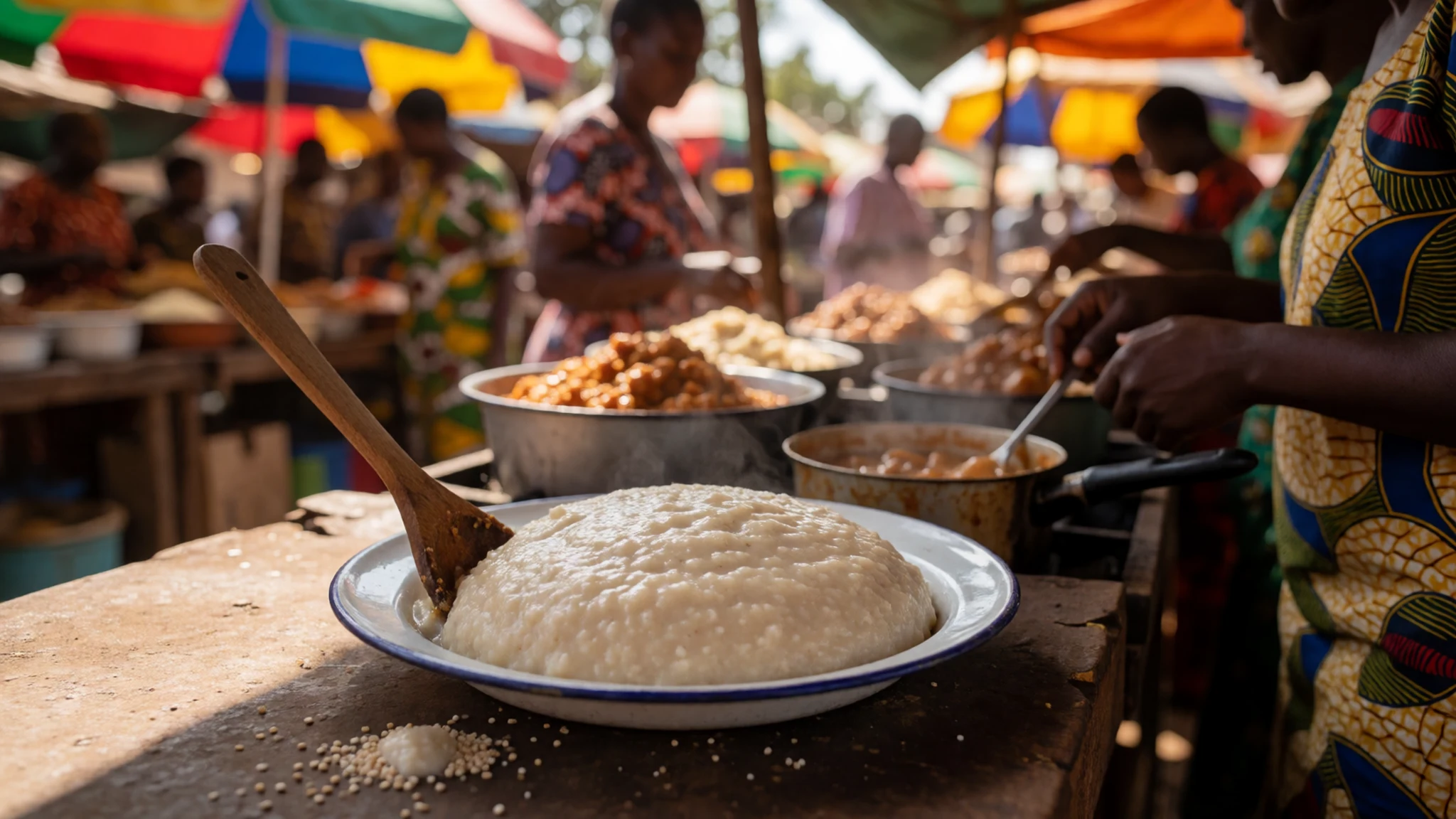
- Morogo — the morning market in Kasane
Morogo is wild spinach, cooked down with onion and a little oil until tender. It is a green side dish that appears beside most Botswana meals. Look for it at the morning market in Kasane, or ask any local eatery whether it is on the menu.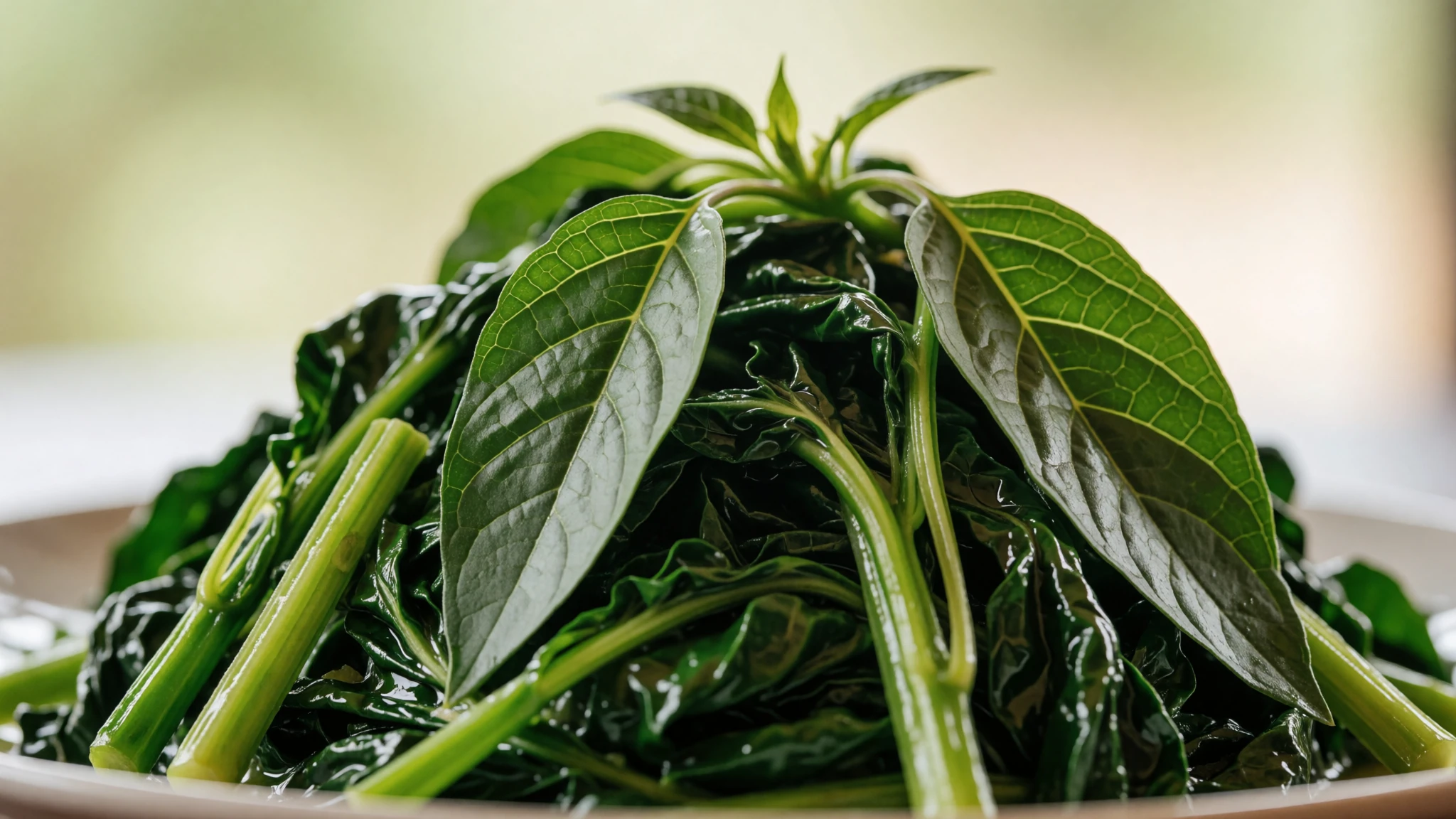
- Grilled river fish — riverside eateries in Kasane
Bream and other river fish are grilled over coals with salt and a squeeze of lemon. Fish is the natural dish of a river town, so look for it at riverside eateries in Kasane. Ask whether the catch came from the river that day.
Plan it
Best time. May to October, the dry season, when herds gather at the Chobe River to drink. Check the official site for current conditions before you book.
How long. 2–3
Getting there. Fly into Kasane Airport, which is minutes from the Sedudu Gate, or into Victoria Falls airport, about 1.5 hours away. Many visitors come on a day trip from Victoria Falls, crossing the river by boat, then a short drive to the gate.
Budget. mid
Tips
- Book a guided tour or boat trip in advance, since guides spot wildlife most people would miss
- Start early; the gates open between 05:30 and 06:00 depending on the month, and the air is cooler
- Check the official site for current gate times and fees before you travel
- Consult a doctor about malaria prophylaxis before you go
- Carry water and sun protection, because nothing is sold inside the park
- Expect crowds on the Serondela riverfront, especially on sunset boat trips
Etiquette
- Stay in the vehicle or boat near animals unless your guide says otherwise
- Never try to interact with wildlife
- Take all your rubbish away with you
Nearby
Sources
- Wikidata Q859389 (CC0)
- Wikipedia: Chobe National Park (rev 1379378506) (CC BY-SA 4.0)
- Wikivoyage: Chobe National Park (rev 5331953) (CC BY-SA 4.0)
- Gnus and Zebras in Chobe National Park, Botswana (Public domain)
- African painted dog at Savuti, Chobe National Park (CC BY 2.5)
- Three Greater Kudu drinking from the Chobe River (CC BY-SA 2.0)
- An African Darter by Chobe River front, drying its wings (CC BY-SA 2.0)
- Zebras in Chobe National Park, Botswana (Public domain)
- African buffalos in Chobe National Park, Botswana (CC BY 3.0)
- A large male elephant feeding on the banks of the Chobe River (CC BY-SA 4.0)
- Angolan giraffes in Chobe National Park, Botswana (CC BY-SA 4.0)


