Gcwihaba
Gcwihaba, Botswana
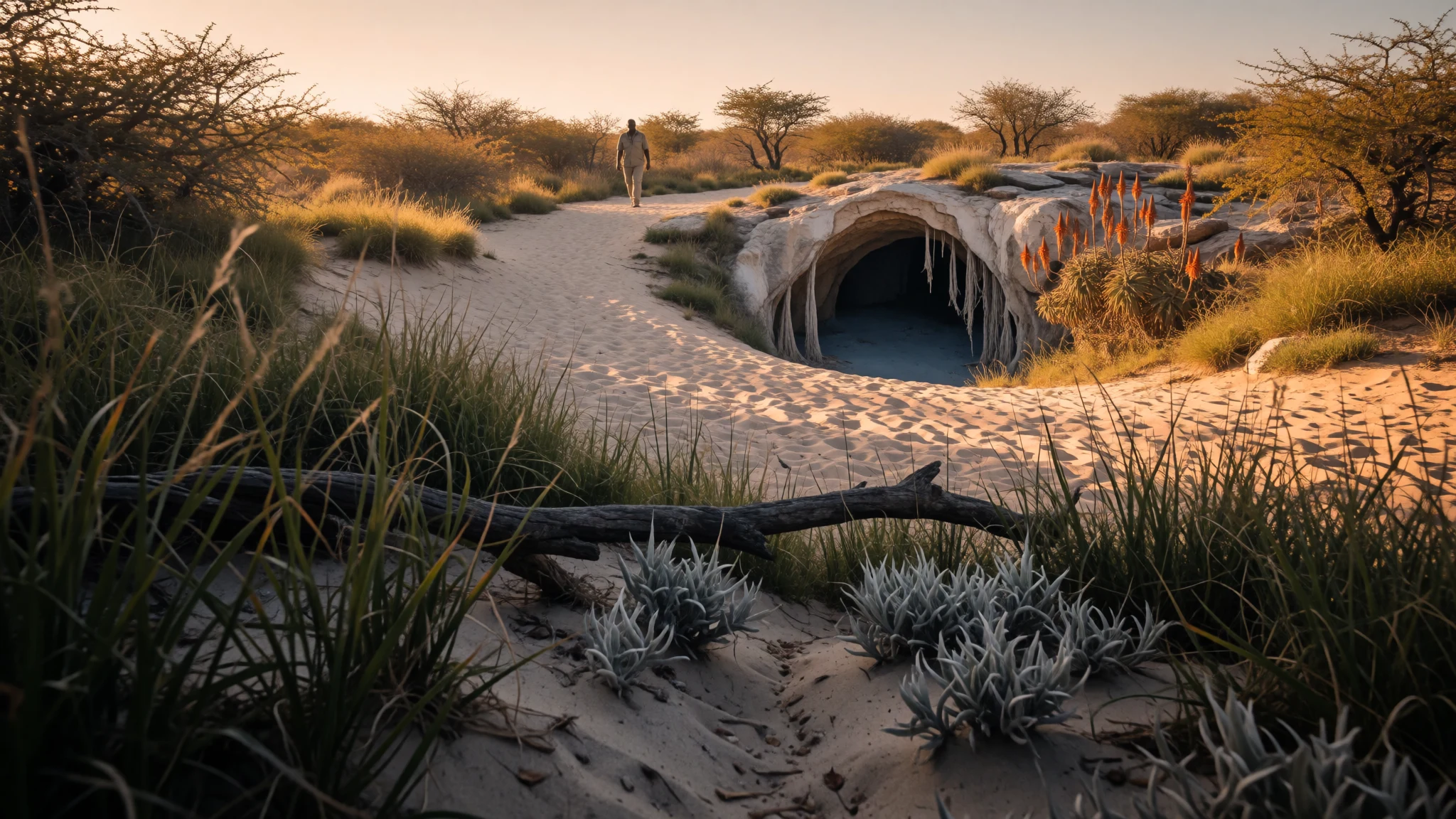
Gcwihaba is a remote Kalahari cave in northwest Botswana where bats roost in the dark and fig roots hang like curtains.
The place
Gcwihaba is a cave system in the far northwest of Botswana, set in Kalahari sand country close to the Namibian border. The name comes from a San word usually rendered as 'hyena's lair', which suits dark openings in dry bush. Nothing here resembles the green channels most people picture when they think of the Okavango; the surroundings are scrubby, flat and quiet, and the caves are the one real feature in a very wide landscape.
Because the area is so cut off, it has developed its own small ecology. Certain aloes and the Namaqua fig grow around the caves and almost nowhere else, and their roots reach down towards the damp air underground. Rüppell's parrots live in the figs, and in Botswana that species is confined to this corner of the country. Elephants pass through the bush, and the birdlife is varied. Biologists are as interested in the small invertebrates, above and below ground, as in anything larger. Inside, two bat species roost in numbers.
The site is a protected national monument, and in 2014 it was formally opened to visitors with a gatehouse, toilet and washing blocks, boreholes, a campsite and an airstrip. That is the extent of the infrastructure. Visitors should expect heat in the warmer months, soft sand on the approach, no shops, and probably no other people. It rewards those who like remoteness and plan carefully, and it is a poor fit for a quick half-day outing from a lodge.
Its story
Gcwihaba has a history that begins long before any written record. The caves sit in what was Kalahari landscape throughout the Pleistocene, and the San name for the place, hyena's lair, shows that local people knew it well. European records start late: in 1932 a farmer from the Ghanzi area, Martinus Drotsky, was taken to the cave, and its main chamber has carried his name ever since.
Archaeologists later dug into the floor to learn whether people had camped here. The top layer of sediment showed little sign of settlement, although it held a few dozen stone tools, most of them travertine. Deeper down lies a band of charcoal from the end of the Pleistocene, and it produced more signs of human activity, including pieces of ostrich eggshell and the bones of African bullfrogs.
A French team led by Laurent Bruxelles also recovered fossils more than a million years old. The team stopped short of claiming that Gcwihaba was a cradle of humankind, so that question remains open rather than settled.
Scientists know the cave for one more reason: it is the type locality of gwihabaite, a mineral named after it. Botswana protects Gcwihaba as a national monument under its monuments and antiquities law, and the opening of visitor facilities in 2014 turned a remote research site into somewhere the public can go, though with effort.
What to see
- Drotsky's Cavern — Gcwihaba caves, northwest Botswana
The main chamber, named after the farmer who was taken to the cave in 1932, is the centre of any visit. The air inside is cooler than the Kalahari scrub outside, and the floors can be loose and slippery with bat guano. Bring a strong headtorch and sturdy shoes, and go with a guide who knows the passages.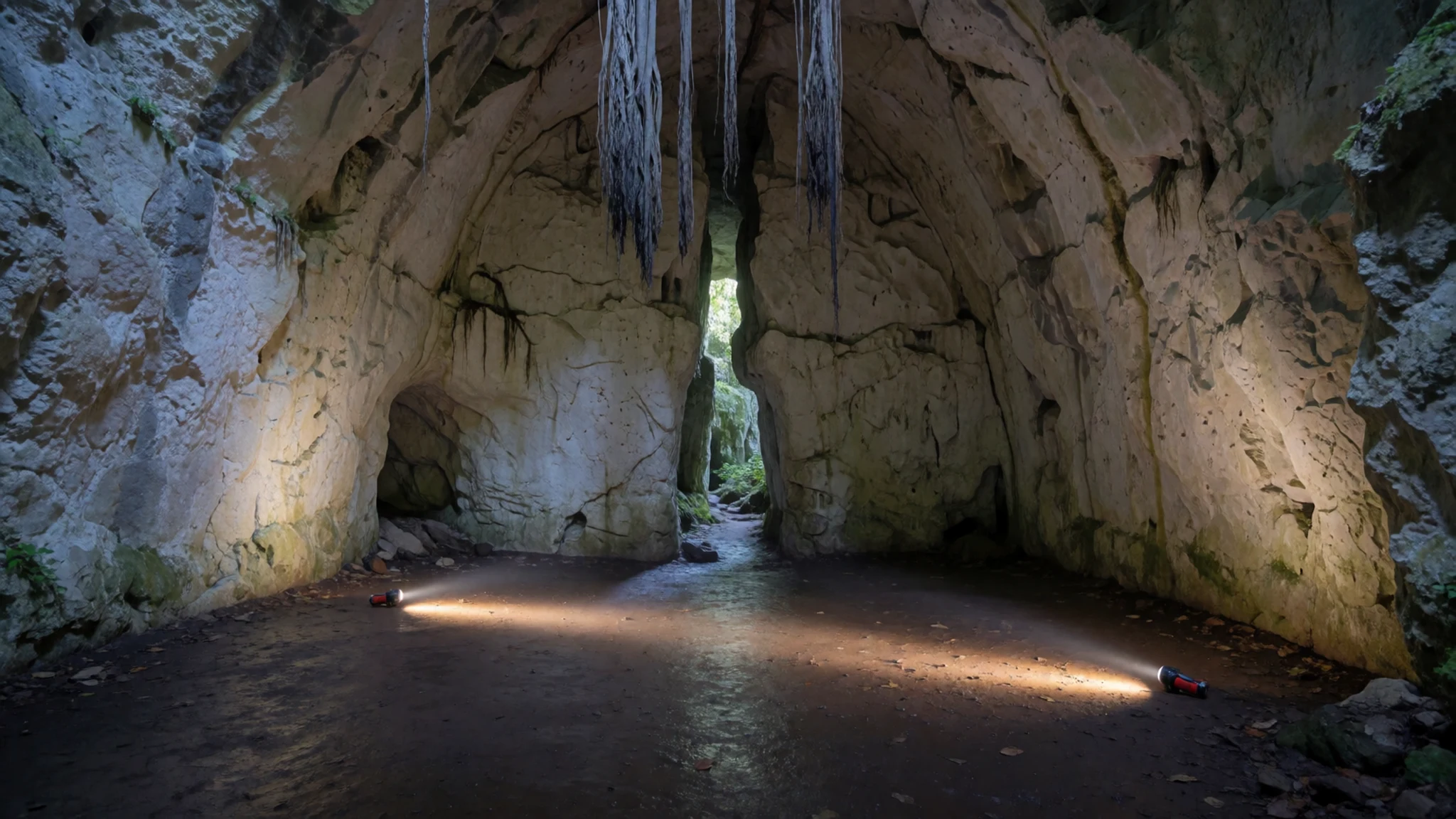
- Fig-root curtains — Gcwihaba caves, northwest Botswana
Namaqua fig roots here are drawn to the damp air inside the caves and have grown down into them, hanging in long curtains. In dry Kalahari country this is a striking sight, and it shows that moisture, not light, is what pulls life underground. Look without pulling or swinging on the roots.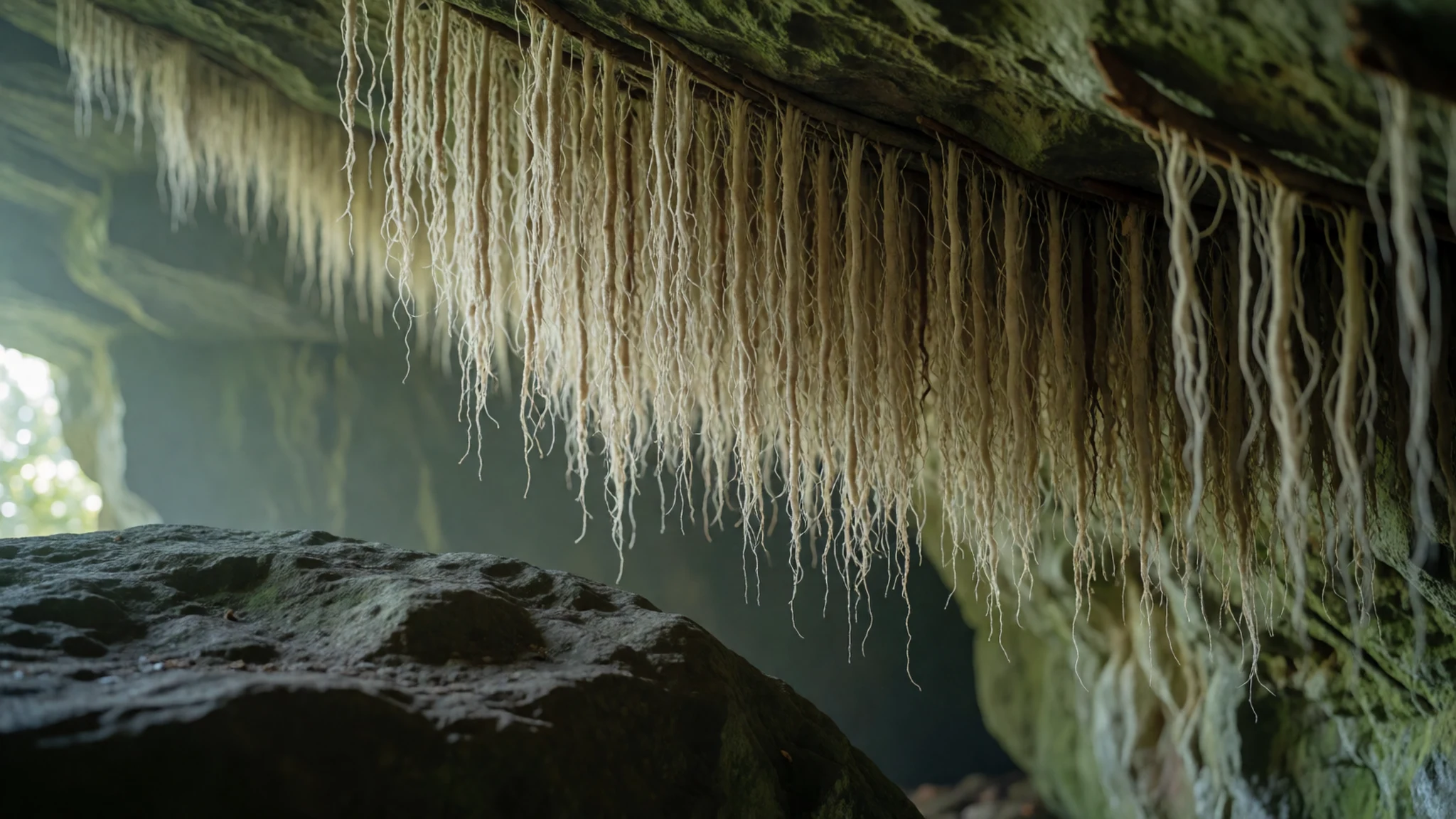
- Commerson's leaf-nosed bats — Gcwihaba caves, northwest Botswana
Large colonies of Commerson's leaf-nosed bats roost here, with a wingspan that can reach 60 cm. The photograph is of the species in Madagascar, not Botswana. Keep voices low and torch beams off the ceiling clusters, since repeated disturbance can drive colonies from a roost, and watch your footing on the guano.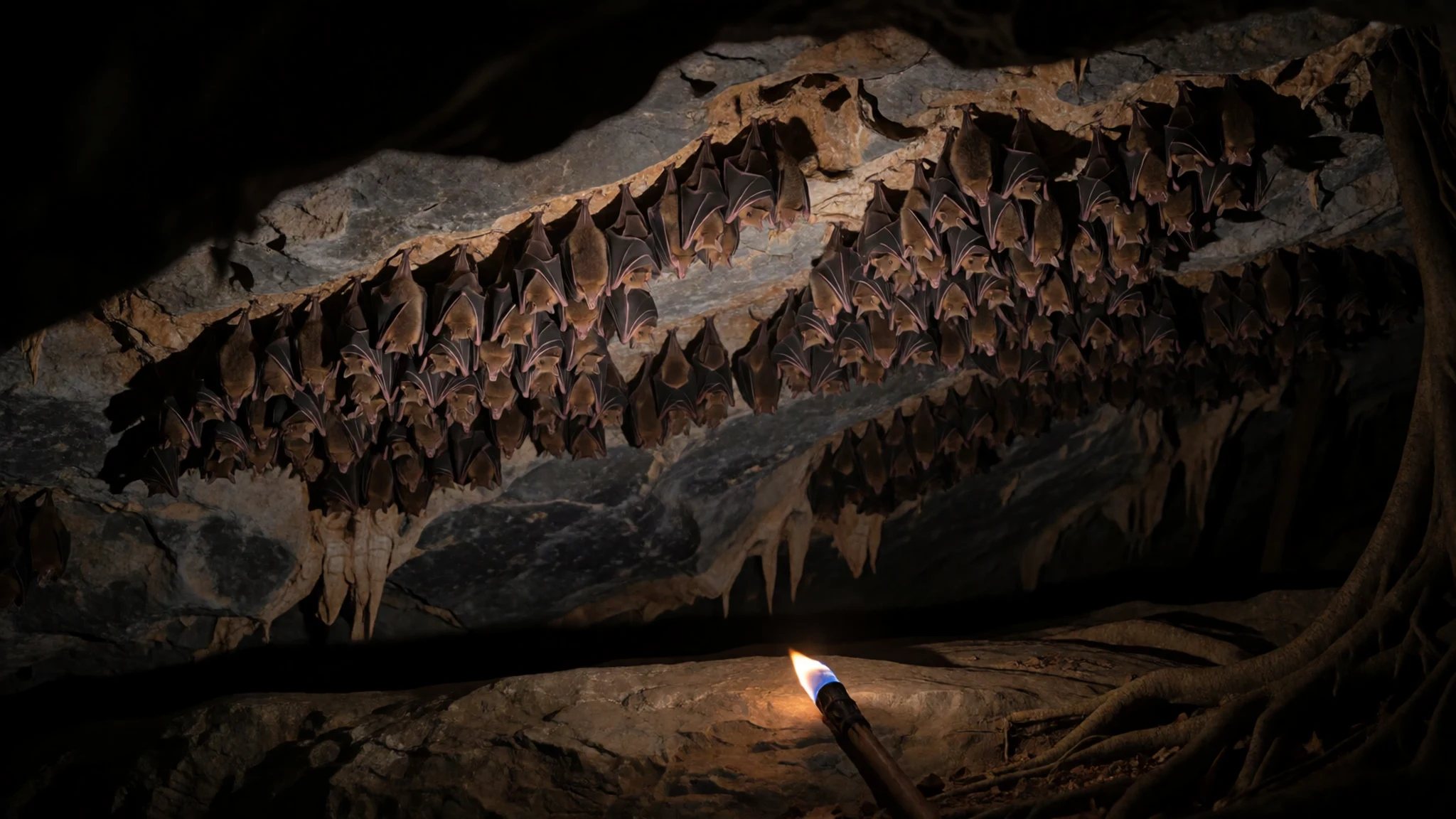
- Common slit-faced bats — Gcwihaba caves, northwest Botswana
Common slit-faced bats share the caves and are easy to recognise by their long ears. The photograph shows one at a camp in South Africa's Kgalagadi park, not at Gcwihaba. A guide can help with spotting them in crevices, and a dimmed torch causes less disturbance than a bright white beam.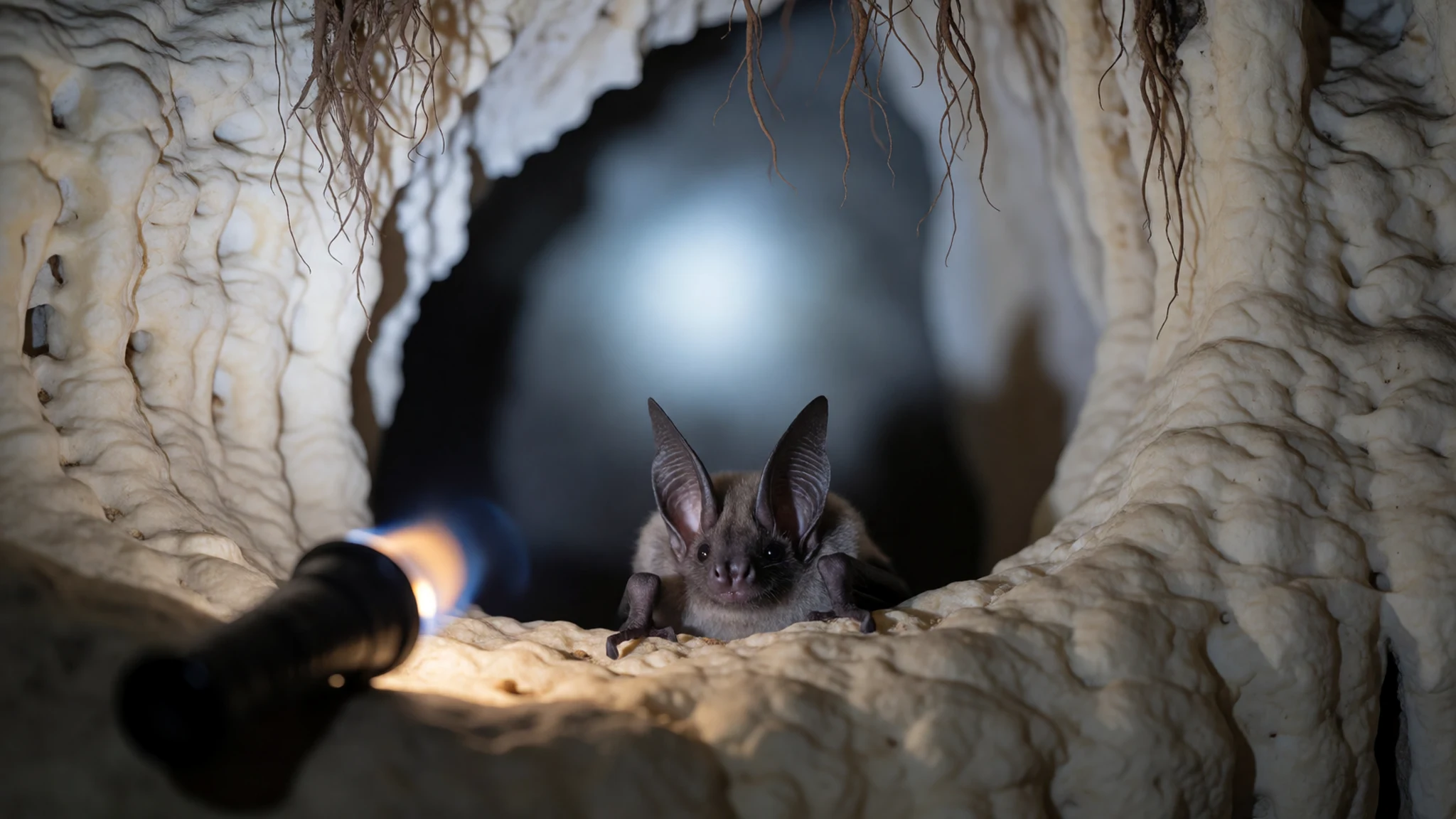
- Fig trees and bush birds — Bush around the caves
Outside the caves, the bush deserves as much time as the darkness. Rüppell's parrots nest in the Namaqua figs, the wider area holds varied birdlife, and elephants pass through. Early morning is the cooler, quieter time to walk near the camp, with a guide, a hat and plenty of water.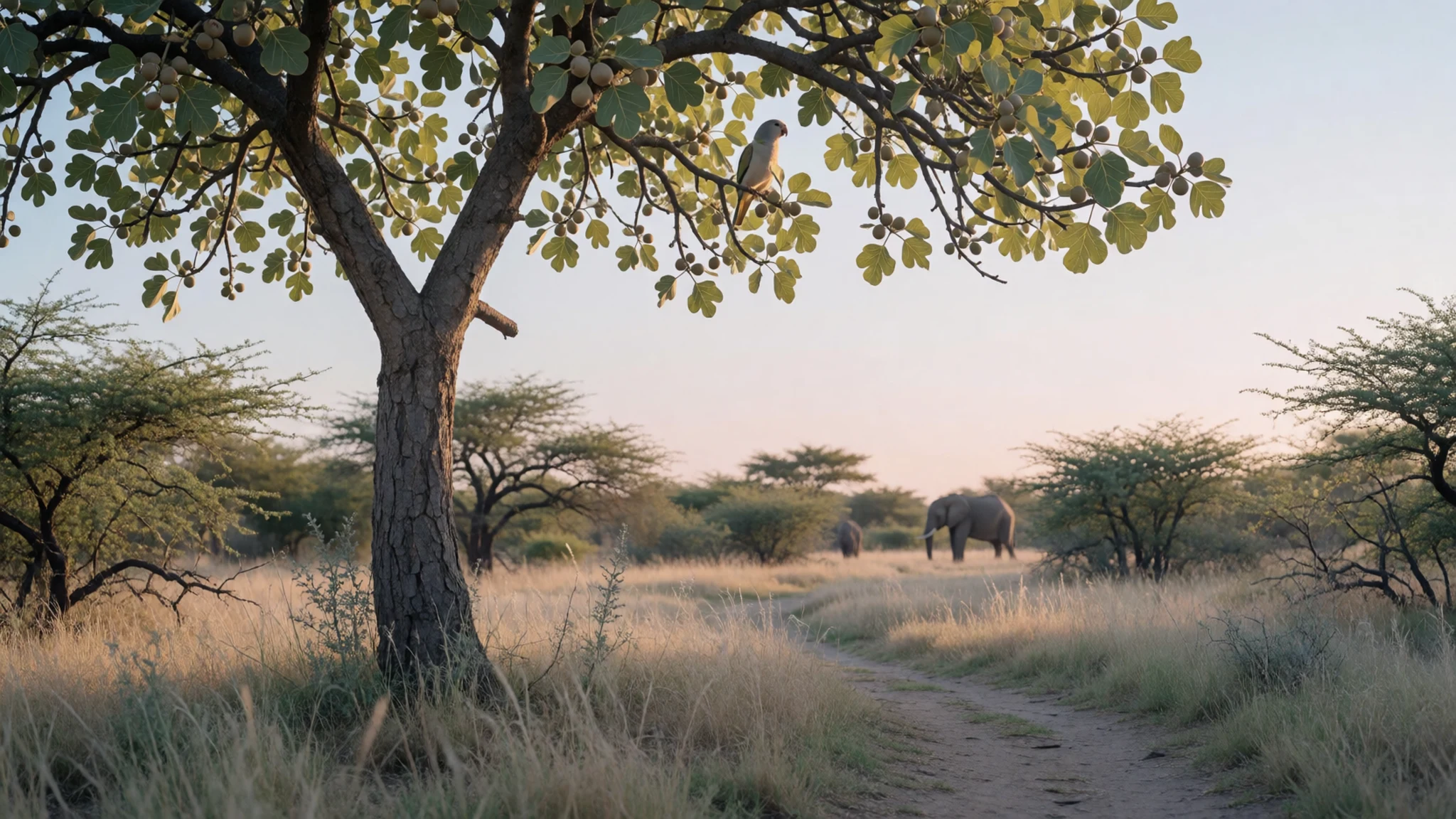
- Campsite and night sky — Visitor facilities at Gcwihaba
The gatehouse, boreholes and campsite opened as a visitor site in 2014. With no town nearby, nights are dark and quiet, which suits stargazing. Food, fuel and spare water must all be brought in, so confirm current access and camping arrangements through an operator in Maun before setting out.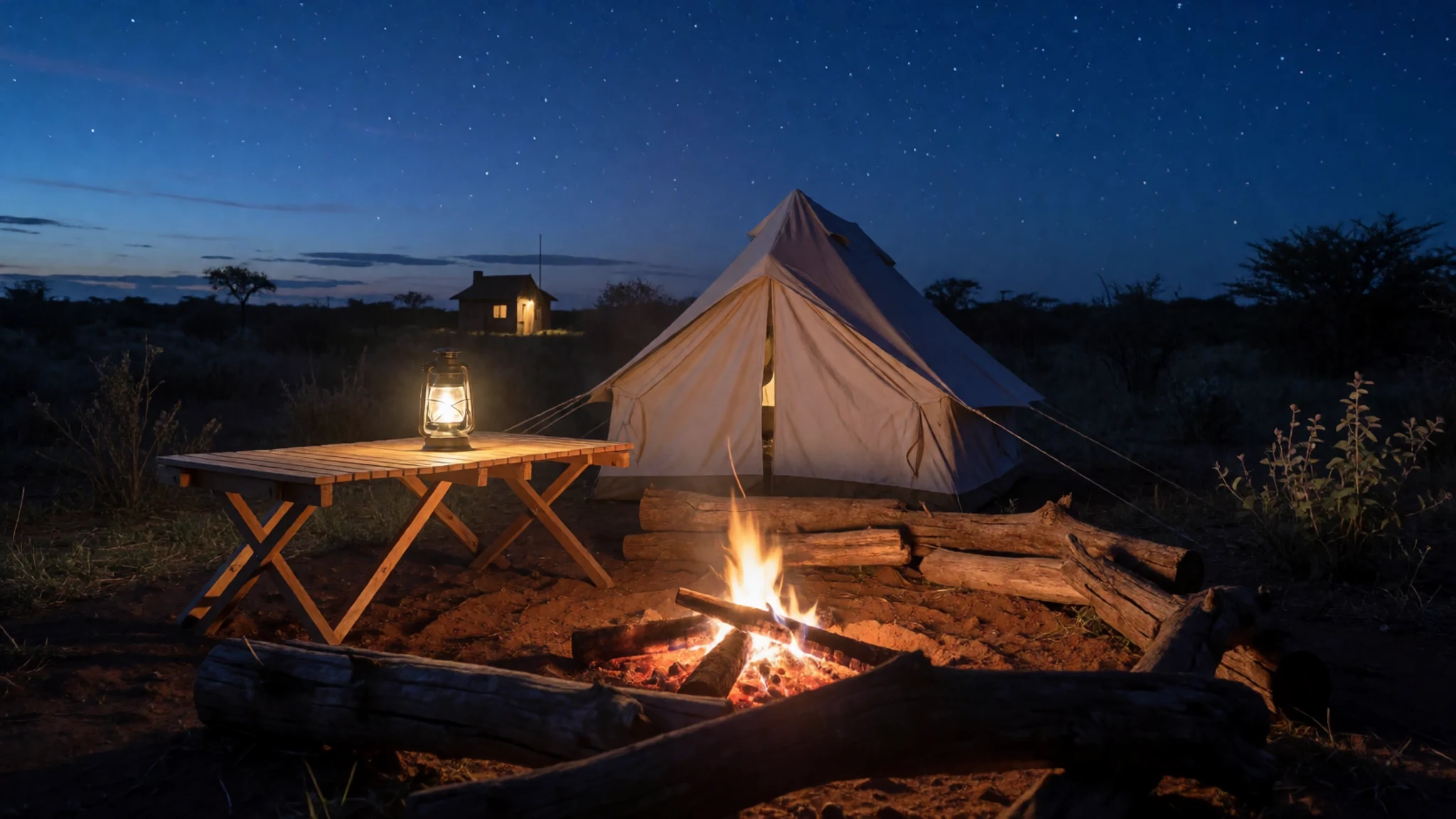
Culture
Gcwihaba carries a San name, and that matters: the caves belong to a landscape that San communities lived in and moved through long before surveyors arrived. The 1932 account of a European being shown the cave is a reminder that local people already knew it. Today the site is a national monument, so its artefacts, charcoal layers and mineral deposits are protected heritage rather than souvenirs.
Elsewhere in Botswana, living culture is easiest to meet in villages and at festivals. D'Kar and Xai-Xai are known for arts, crafts and performances, the national arts festival in mid-July brings many groups together, and the Kwena hold the Dithubaruba Cultural Festival each September in the Kweneng region. These sit far from the cave, in other parts of the country, so they need to be planned as separate stops rather than side trips.
Daily manners in Botswana are warm and a little formal. A greeting, usually 'Dumela' with a handshake, comes before any question or request, whether to a guide, a ranger or a shopkeeper. English is widely spoken alongside Setswana, and sharing food is read as friendliness, so an offered plate is best accepted.
Leave every stone, bone fragment and fig root in the caves exactly where it lies, and ask before photographing people in nearby communities.
What to wear
Gcwihaba lies in San country, where traditional dress was made from tanned animal skin: aprons, wraps and cloaks, softened by hand and sometimes decorated with beads cut from ostrich eggshell, a material that also turns up in the cave's archaeology. In north-western Botswana, Herero women are known for long, full-skirted dresses with a folded headcloth, a style rooted in missionary-era fashion and worn on formal and festival days. Across the country, families often sew matching printed cotton, sometimes called leteisi, for weddings and gatherings.
In everyday life most people wear ordinary modern clothes: jeans, shirts, work and school uniforms, with caps for the sun and jackets or blankets against cold dry-season mornings. Traditional dress mostly appears at ceremonies, festivals and craft demonstrations.
For a visit to the caves, closed shoes or boots with good grip matter most, because of loose rock and slippery guano. Add long trousers, a light layer for the cool underground air, and a headtorch with spare batteries. In the open bush, a wide-brimmed hat, sunglasses, sunscreen and a long-sleeved cotton shirt in neutral colours work best, with a warm fleece for dawn and night in the dry season. A scarf or buff helps with dust. Modesty rules are relaxed, but in villages covered shoulders and knee-length shorts or skirts are courteous.
What to eat
- Seswaa — Village eateries and family gatherings; towns such as Maun
A Botswana dish of beef, goat or lamb boiled slowly with little more than salt, then pounded or shredded until soft. It is usually served with pap or sorghum porridge, and it is the meat people cook for gatherings and celebrations.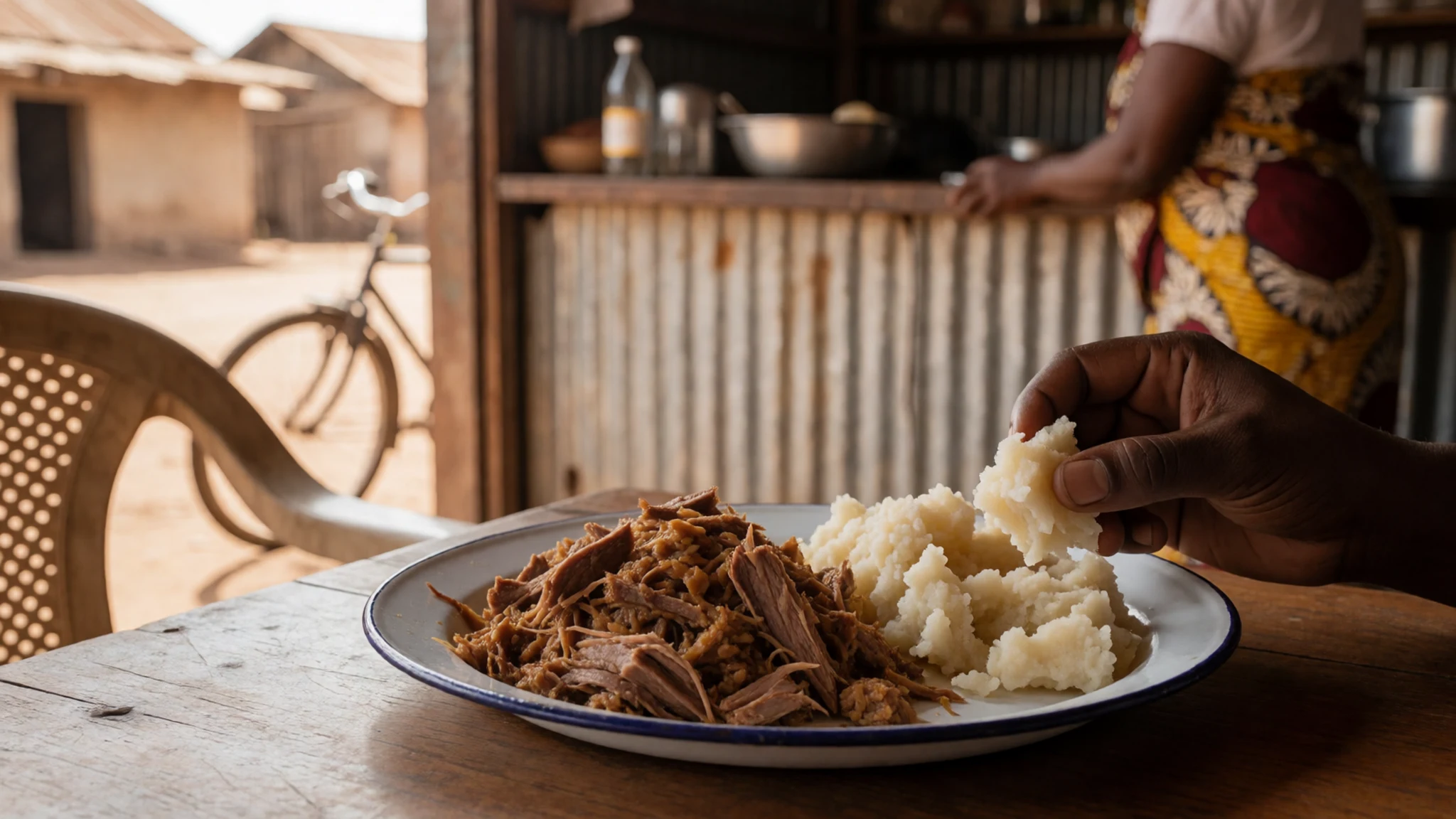
- Bogobe jwa lerotse — Home kitchens and small local eateries
Sorghum porridge cooked with lerotse, a melon that looks like a watermelon. Raw it is crunchy and bland, but cooked it tastes closer to butternut squash. Expect a mild, slightly sweet bowl, usually eaten at home or in small local eateries.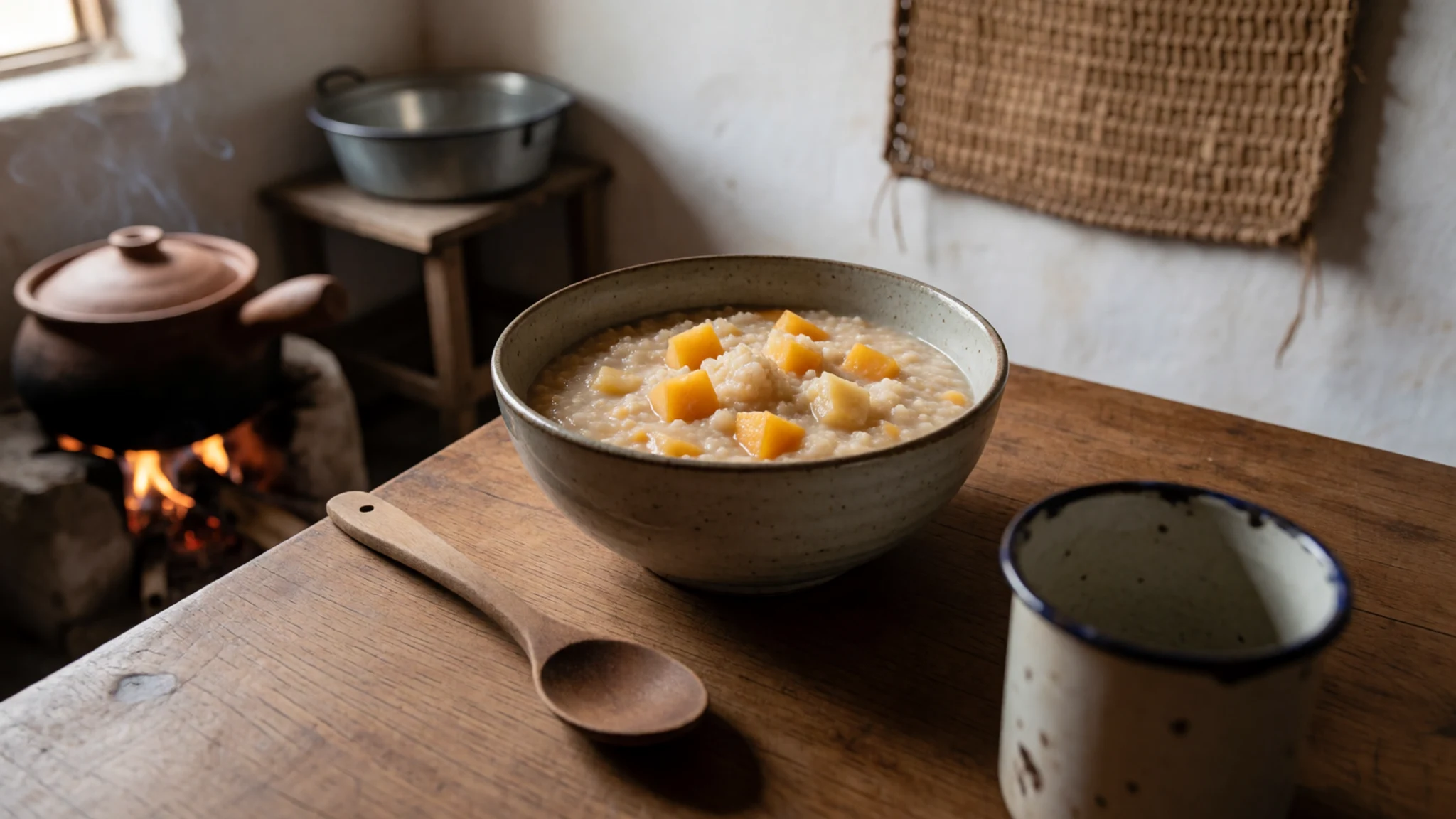
- Pap — Almost any local eatery or family meal
A stiff maize-meal porridge that is the everyday staple, shaped by hand into balls and used to scoop up meat and gravy. Plain and filling, it appears alongside almost any local meal and suits long days in the heat. - Mopane worms — Roadside stalls and town markets
The dried or cooked caterpillars of the mopane tree, eaten as a salty, chewy snack or stewed with onion and tomato. They are an acquired taste. Ask before buying, and look for bags at roadside stalls and markets. - Madila — Village shops and homes
Fermented milk, thick and sour, drunk on its own or stirred into porridge. Served cool, it is a refreshing answer to Kalahari heat, and it is a familiar part of village life across the country.
Plan it
Best time. May to September, the dry and cooler months, when sand tracks are firmer, days are warm rather than extreme and nights can be cold. November to March is the rainy season, when heat, mud and difficult tracks make access harder.
How long. 2–3
Getting there. Fly to Maun, which is reached via Johannesburg, Cape Town or Gaborone. The last leg is a long drive on sand tracks, so a 4x4 with an operator or driver who knows the route is the sensible choice; the site also has an airstrip for chartered flights.
Budget. high
Tips
- Book a guide or operator in Maun ahead of time and confirm current access and campsite arrangements; do not rely on mobile signal.
- Carry all your own water, food and fuel, plus a spare tyre and recovery kit if self-driving, and bring cash as well as cards because there is no town near the site.
- Start walks at first light, before the heat, and carry a headtorch with spare batteries for the caves.
- Check visa rules early: UK passport holders are visa-free for short stays, while Indian passport holders must arrange a visa or e-visa before travel, so confirm on the official Botswana government site.
- Elephants use the surrounding bush, so keep to guided paths and avoid walking at dusk.
Etiquette
- Greet people with 'Dumela' and a handshake before asking questions or taking photographs.
- Keep voices low in the caves and keep torch beams away from roosting bats.
- Leave stones, bones and fig roots where they are, as the site is a protected monument.
Nearby
Sources
- Wikidata Q29905437 (CC0)
- Wikipedia: Gcwihaba (rev 1385885059) (CC BY-SA 4.0)
- Wikivoyage: Botswana (rev 5424464) (CC BY-SA 4.0)
- Frank Vassen, Commerson's Leaf-nosed Bat, Tsimamampetsotsa, Madagascar, via Wikimedia Commons (CC BY 2.5)
- Bernard DUPONT, Common Slit-faced Bat (Nycteris thebaica), via Wikimedia Commons (CC BY-SA 2.0)


Wildlife
- Commerson's leaf-nosed bat (animal)
Picture a bat with wings that can stretch about 60 cm across, and a leaf-shaped nose to match: that is Commerson's leaf-nosed bat. Gcwihaba shelters large colonies that roost together here, so this is the place to look for them. Ask your guide about the best season and hour to visit. Watch with care: keep your distance, speak softly, and let your guide lead the way. Keep lights low so the colony stays calm, and never touch or feed these bats. - Rüppell's parrot (animal)
Rüppell's parrot is a bird that lives in fig trees, a feathered neighbour you find by looking up. In Botswana, this parrot is found only in this corner of the country, so Gcwihaba is a special place to see it. Ask your guide when the birds are most easily seen. Keep a respectful distance, stay quiet and still, and follow your guide's lead. Use binoculars for a closer view, and never offer the birds any food. - Rüppell's parrot (bird)
Rüppell's parrot is a bird that lives in fig trees, a feathered neighbour you find by looking up. In Botswana, this parrot is found only in this corner of the country, so Gcwihaba is a special place to see it. Ask your guide when the birds are most easily seen. Keep a respectful distance, stay quiet and still, and follow your guide's lead. Use binoculars for a closer view, and never offer the birds any food.