Central Kalahari
Central Kalahari, Botswana
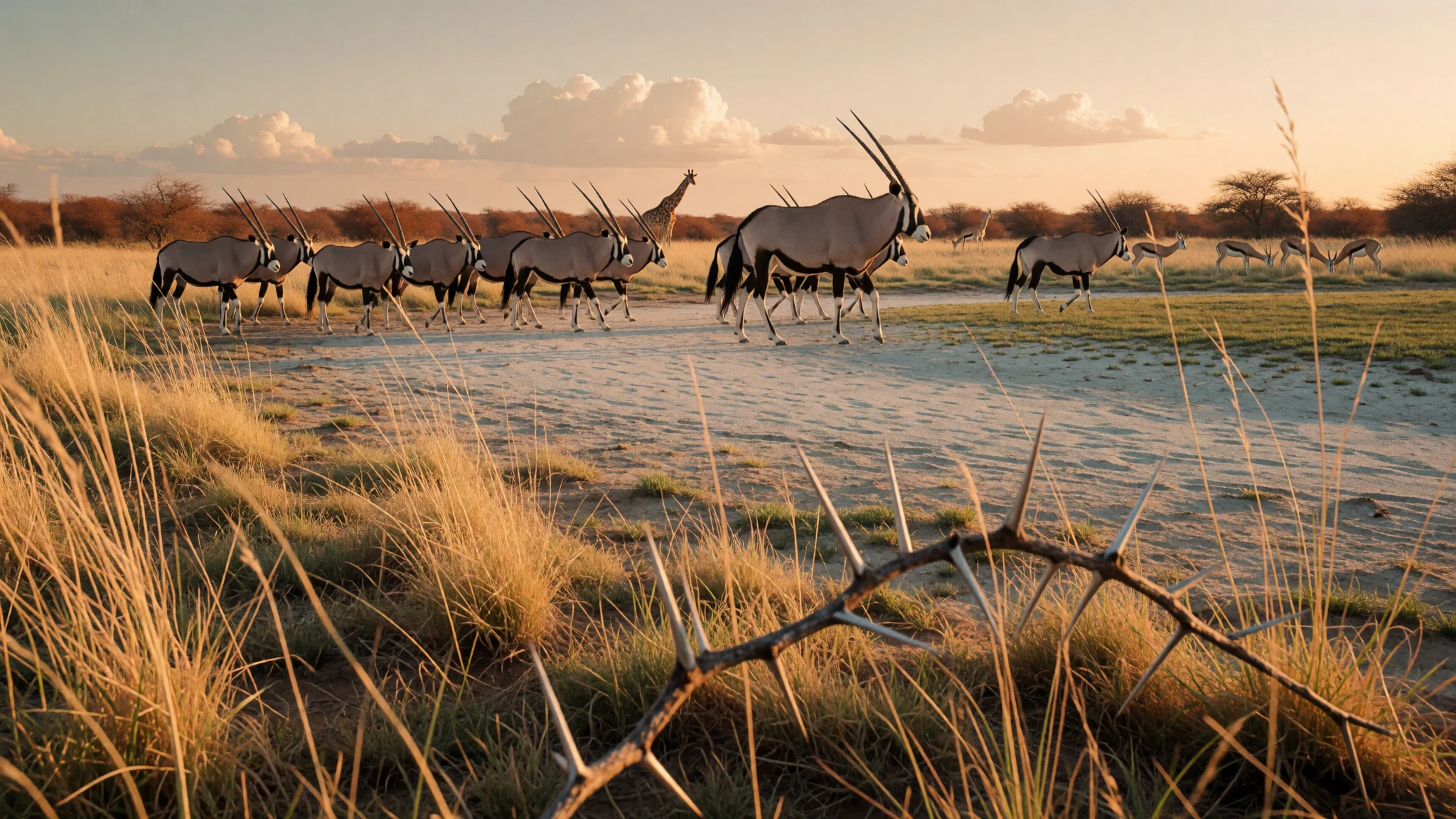
Central Kalahari is a wide sand-and-grass reserve where San communities, gemsbok and dry fossil valleys still set the pace of a day.
The place
Central Kalahari is a game reserve in the middle of Botswana: a wide basin of pale sand, grass and low thorn, not a field of dunes. The land rolls between fossil river valleys, old channels that no longer run, and shallow pans that hold water only after rain. In a generous season the grass stands tall; in a poor one it thins until the sand shows through, so the same track can look like another country entirely. In the warmer months storms build in the afternoon and drop rain in short, hard bursts; between them the sky stays clear and the nights turn cold.
Animals here are built for a country with little standing water. Gemsbok, also called oryx, cross the pans with springbok, hartebeest and wildebeest. Giraffe feed on the taller thorn. Lion, cheetah, leopard and brown hyena hunt or scavenge, often read from tracks in the sand. After rain, pans draw everything in; in the dry months life is thinner and more spread out.
San families, among them Naro, G/wi and G//ana, have read this ground for generations: which plants store water, which pans still hold a little, where game moves. The reserve is also a network of slow sandy tracks and simple camps, with long stretches of grass and sky between sightings.
Its story
Central Kalahari's story is a contest over who may live on land that was set aside for wildlife. San communities were already there when the reserve was drawn: hunting, gathering, and moving between pans according to rain and game. Later, officials argued that people and a game reserve could not share the same ground, and families were moved out to settlements beyond the boundary. Many people experienced the settlements as a loss of hunting rights, of place, and of a way of feeding themselves.
The removals did not end the argument. Residents and their supporters took the government to court, and a ruling recognised that the people who had been moved had been wronged and could go back. Return, though, has been uneven. Water, hunting permits and the practical means of living inside the reserve have stayed in dispute, and some families live between a settlement outside and a small presence on the old pans. Diamond prospecting and mining on the reserve's edge added another pressure: a protected landscape that is also a mineral asset.
Naro and other San groups still carry knowledge of the bi bulb and other plants that hold water, of tracking, and of how to read a pan. Central Kalahari holds both a state reserve managed for wildlife and tourism and an ancestral territory whose people have had to argue, in public, for the right to remain.
What to see
- Deception Valley — northern fossil river valley
Deception Valley is a long, shallow fossil river in the Central Kalahari, grass and sand rather than a gorge. After rain the valley greens and game gathers on the pans; in the dry months herds thin and pale grass takes over. Camps along it suit slow drives at dawn and before dark, when lion and gemsbok move more freely.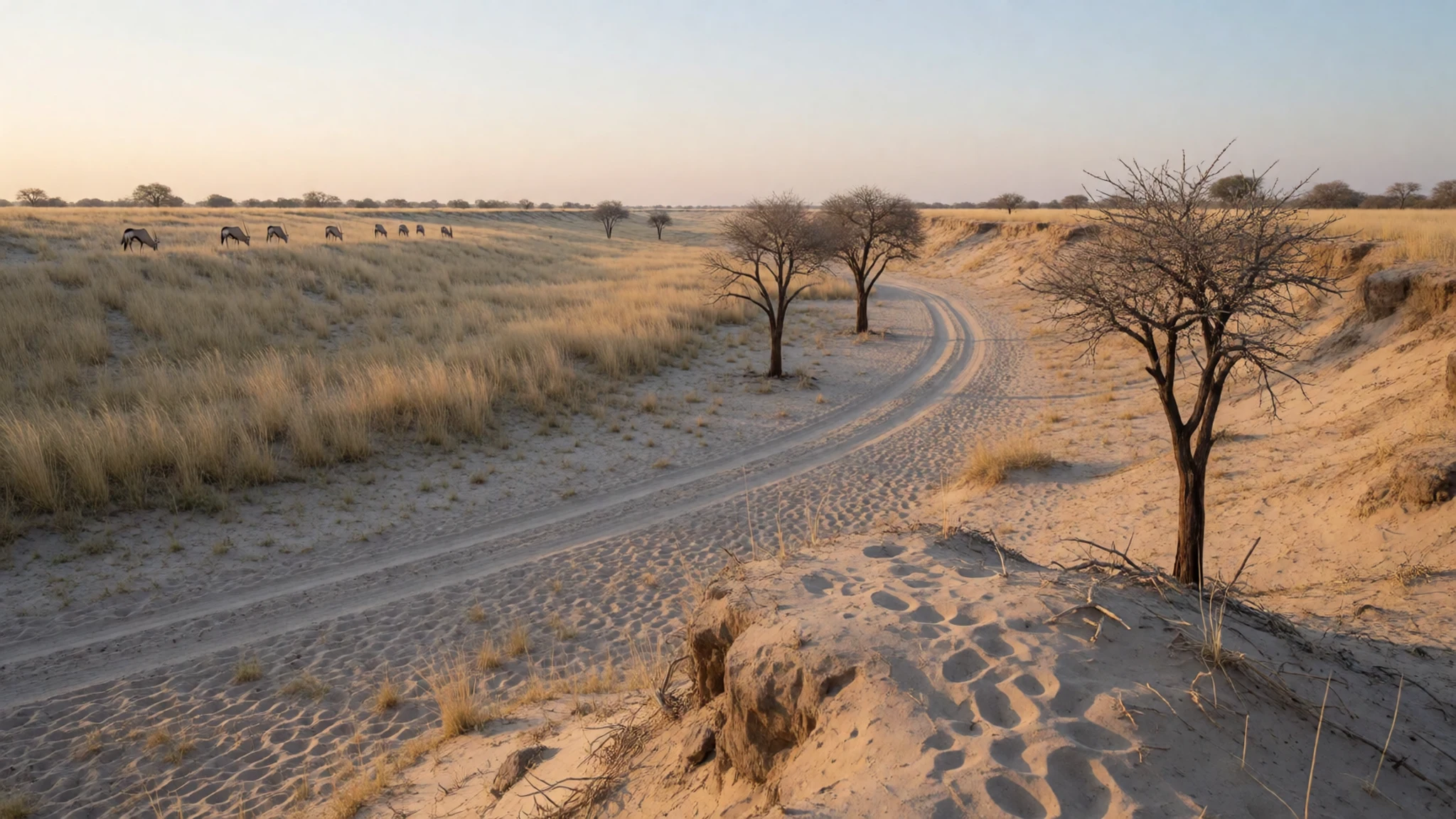
- Sunday Pan and Piper's Pan — pans along Deception Valley
Sunday Pan and Piper's Pan sit in the Deception Valley country of the Central Kalahari, shallow basins that matter because standing water is rare. After storms they draw gemsbok, springbok, wildebeest and the predators that follow. In drier weeks they may be little more than a pale bowl and a scatter of tracks. Guides read the edges for spoor rather than waiting for a guaranteed sighting.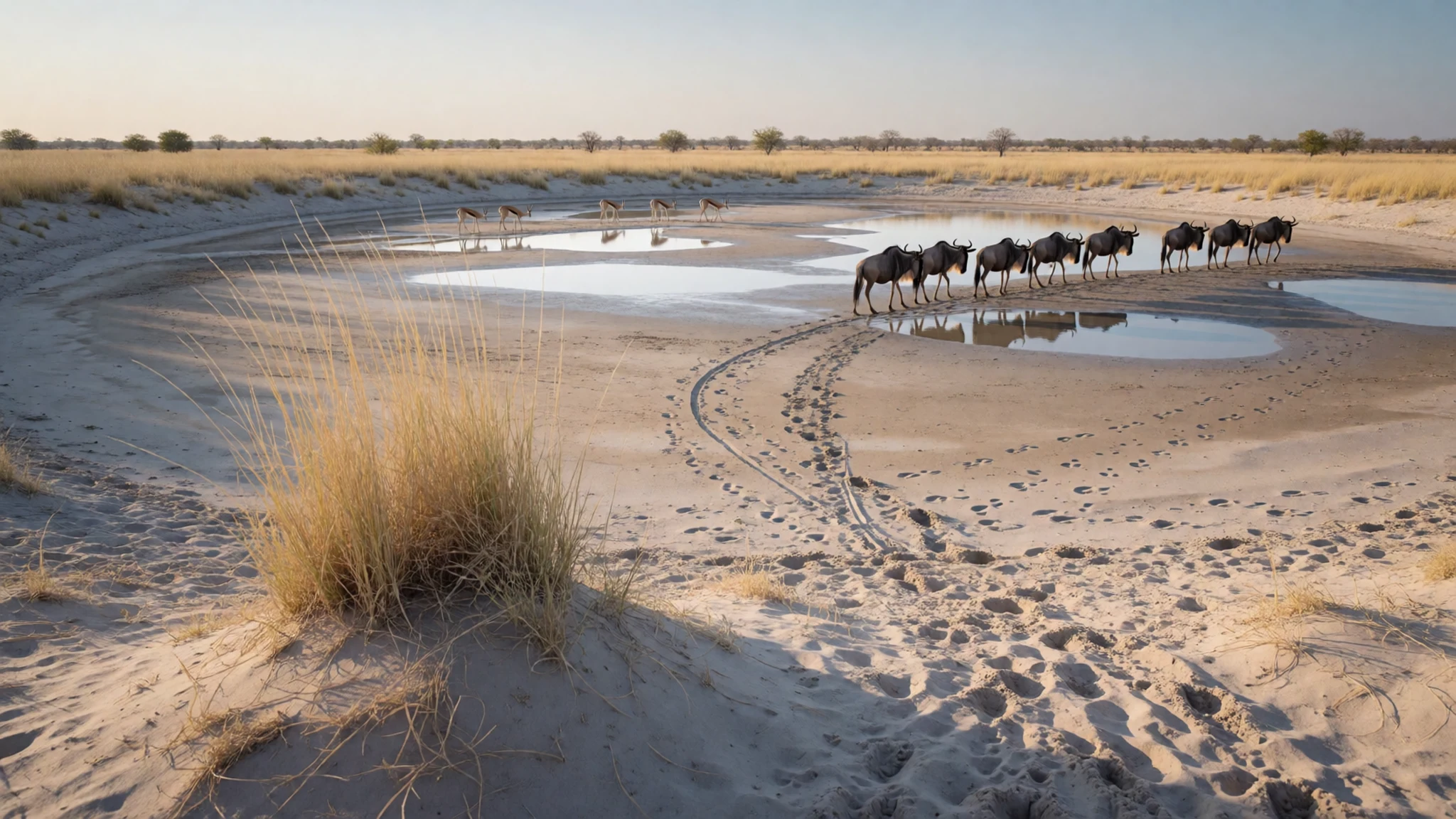
- Gemsbok on the pans — open pans across the reserve
Gemsbok, the southern oryx, are the animal many visitors associate with the Central Kalahari. They cross the pans in small herds, horns long and straight, and they cope with heat and little water better than many antelope. Springbok and red hartebeest share the same flats, and giraffe appear where the thorn is taller. A sighting often starts as a dark line on a pan that resolves, slowly, into animals.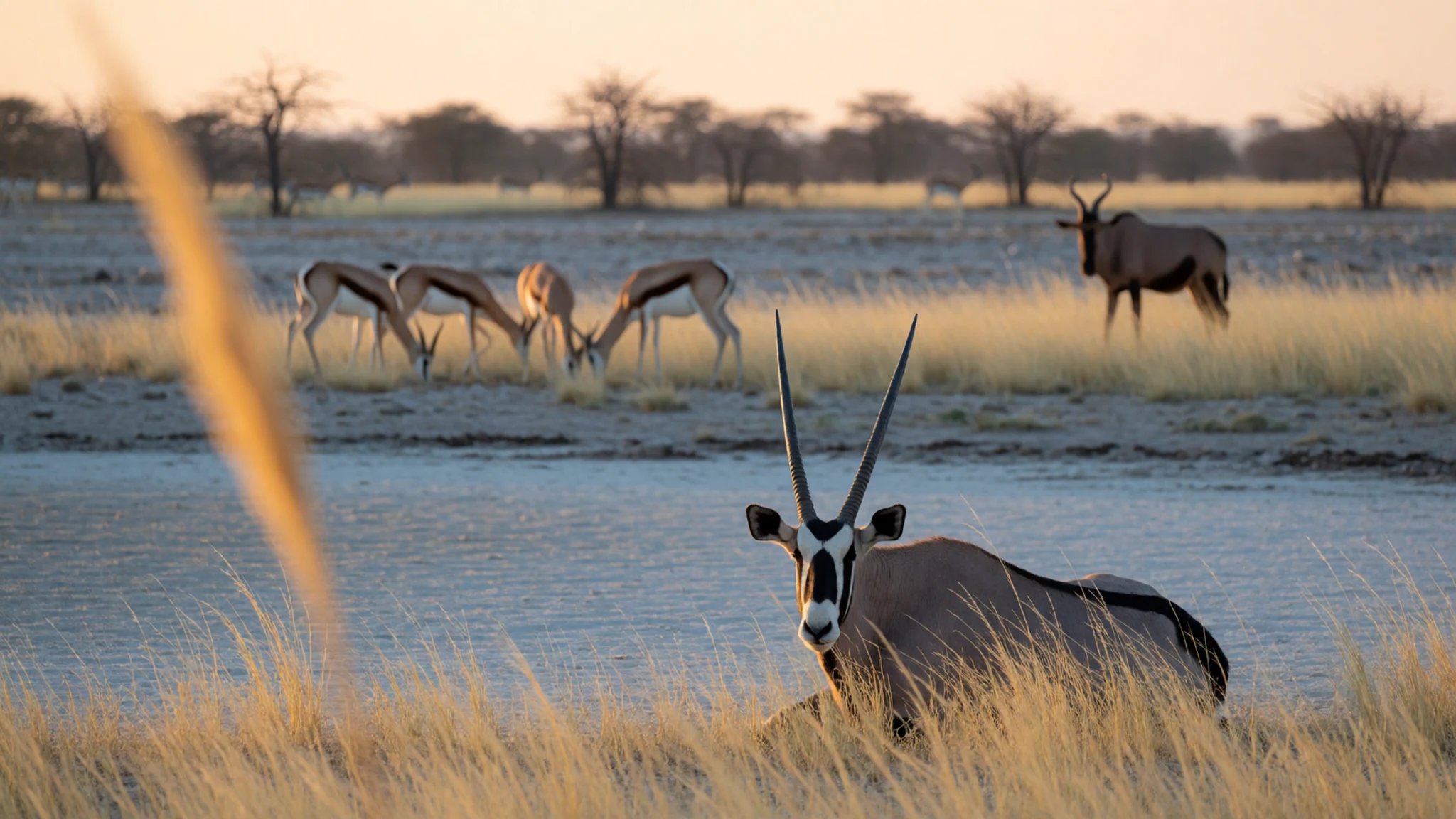
- Passarge Valley — interior valleys of the reserve
Passarge Valley is a fossil drainage in the Central Kalahari, reached on slow sandy tracks away from the busier pans. The driving itself is part of the place: deep sand, occasional calcrete, and long views with no other vehicle in sight. Brown hyena, bat-eared fox and black-backed jackal turn up as often as the larger cats, usually at the edge of the day. Camps here are simple.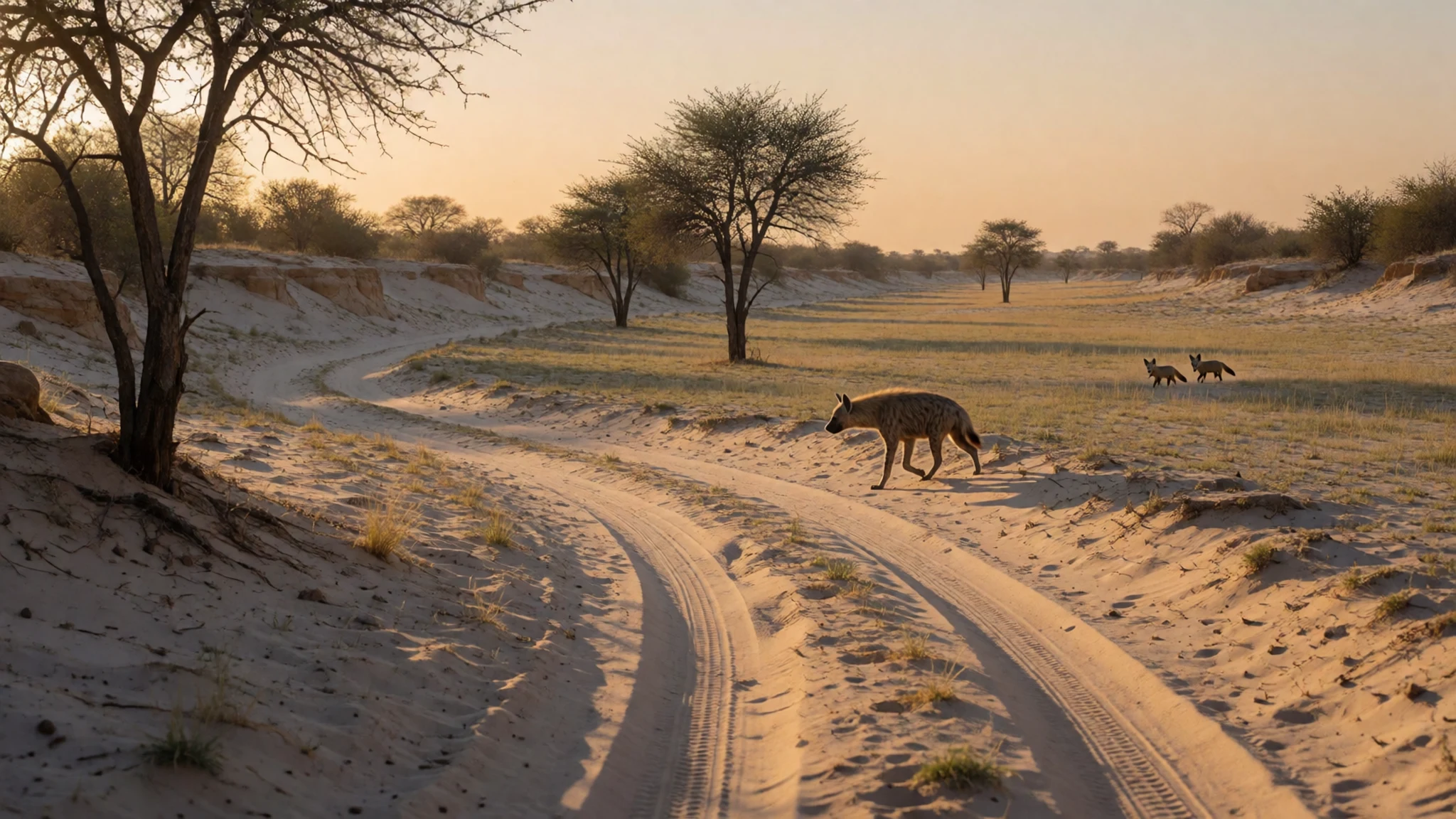
- San knowledge of the pans — ancestral grounds inside the reserve
Naro and other San families know the Central Kalahari as a lived country, not only as a game reserve. The bi bulb and other water-storing plants, the way a pan dries, and the reading of tracks are practical knowledge, still held by people whose grandparents hunted here. Visitors meet this history on a community visit arranged with the hosts, or in the fact that the reserve was never empty country.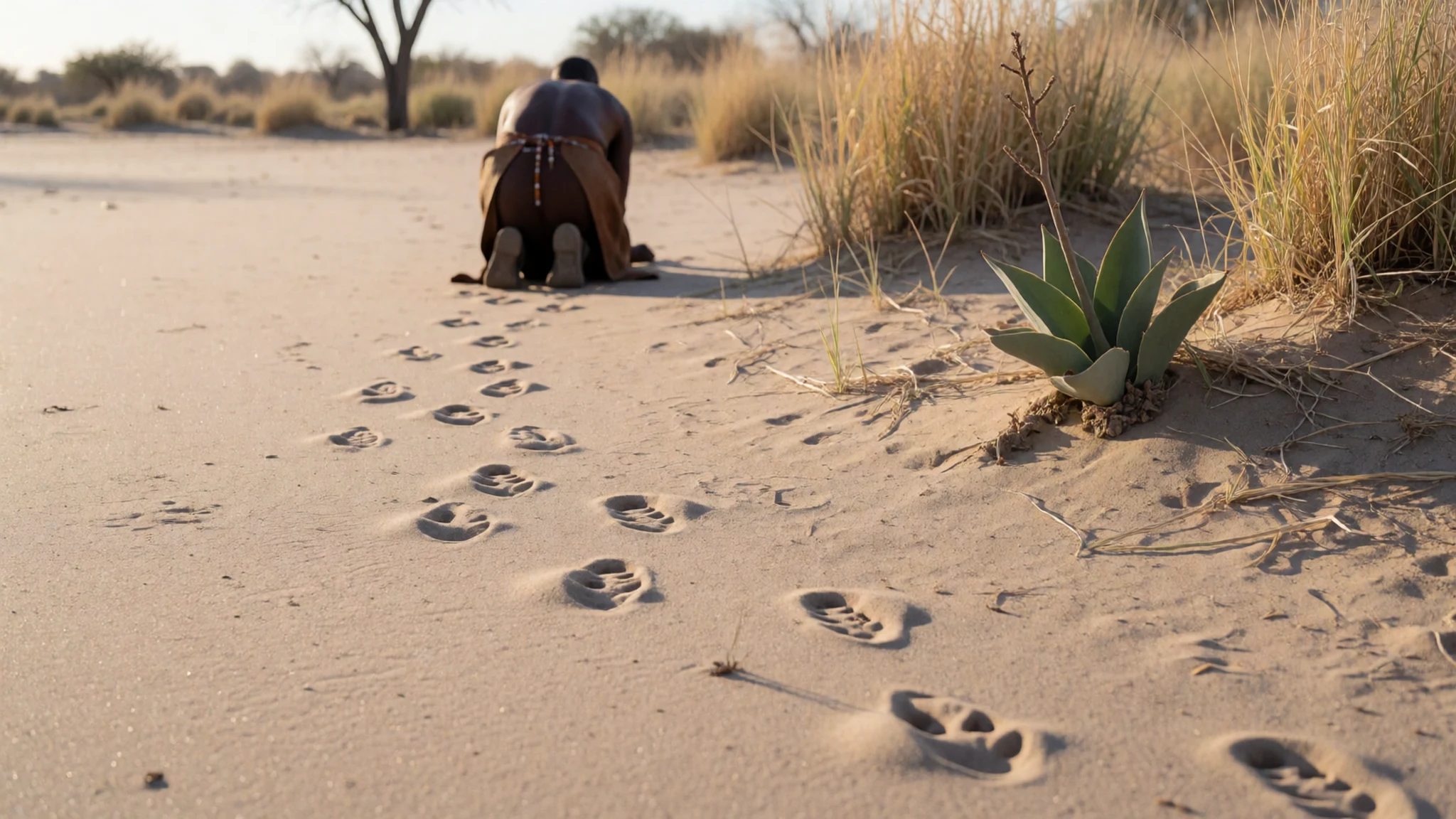
Culture
Central Kalahari culture is San culture first: Naro, G/wi, G//ana and related communities whose languages use click consonants and whose skills were built for a land without taps or permanent rivers. Tracking, digging for water-bearing plants, and sharing meat are not costumes for visitors; they are how people fed families on these pans. Story and place-names sit on particular valleys and trees, so a pan is a memory as well as a waterhole. Relations with the Botswana state have been tense. Conservation policy treated the reserve as a wildlife estate and pressed communities toward settlements outside it, while many San insisted that living here, hunting within agreed limits, and burying their dead on this ground were rights, not privileges. That argument is still part of daily life: who may hunt, who may keep livestock, who gets water, and who speaks for a community. Tourism walks into the middle of it. A respectful visit treats people as hosts, asks before any photograph, and does not treat a settlement or a hunting party as scenery. Ask before you photograph anyone, and do not join a hunt or pick plants unless a host has clearly invited you.
What to wear
Traditional San dress in the Central Kalahari was leather, not woven cloth: skins of antelope worked soft, aprons and cloaks (kaross) for cold nights, and beads of ostrich eggshell, seed or glass. Men and women both used skin clothing; colours were the animal's own, sometimes rubbed with earth pigment. That dress is still made and worn for dance, for ceremony, and when people choose to show it, but it is not everyday uniform.
Day to day, people in and around the reserve wear ordinary southern African clothes: cotton shirts, trousers or skirts, jerseys when the morning is cold, hats against the sun, and practical shoes or bare feet on sand. Cloth is bought in towns such as Ghanzi rather than woven on the pans.
Visitors should dress for sun, sand and a sharp drop in temperature after dark. Long light trousers and a shirt with sleeves protect against thorns, sun and the insects that come with rain. A warm layer is worth carrying even in months that feel hot at noon, because nights on the pans can be bitterly cold. Closed shoes or boots beat open sandals on sandy tracks. In a village or at a community visit, modest everyday clothes are enough; there is no requirement to copy traditional skin dress, and borrowing it for a photograph is a poor idea.
What to eat
- Bogobe — camp kitchens and village fires
Bogobe is the stiff maize or sorghum porridge that anchors a meal in and around the Central Kalahari. It is cooked in a pot over a fire or a gas ring and eaten with meat, wild greens or a simple relish.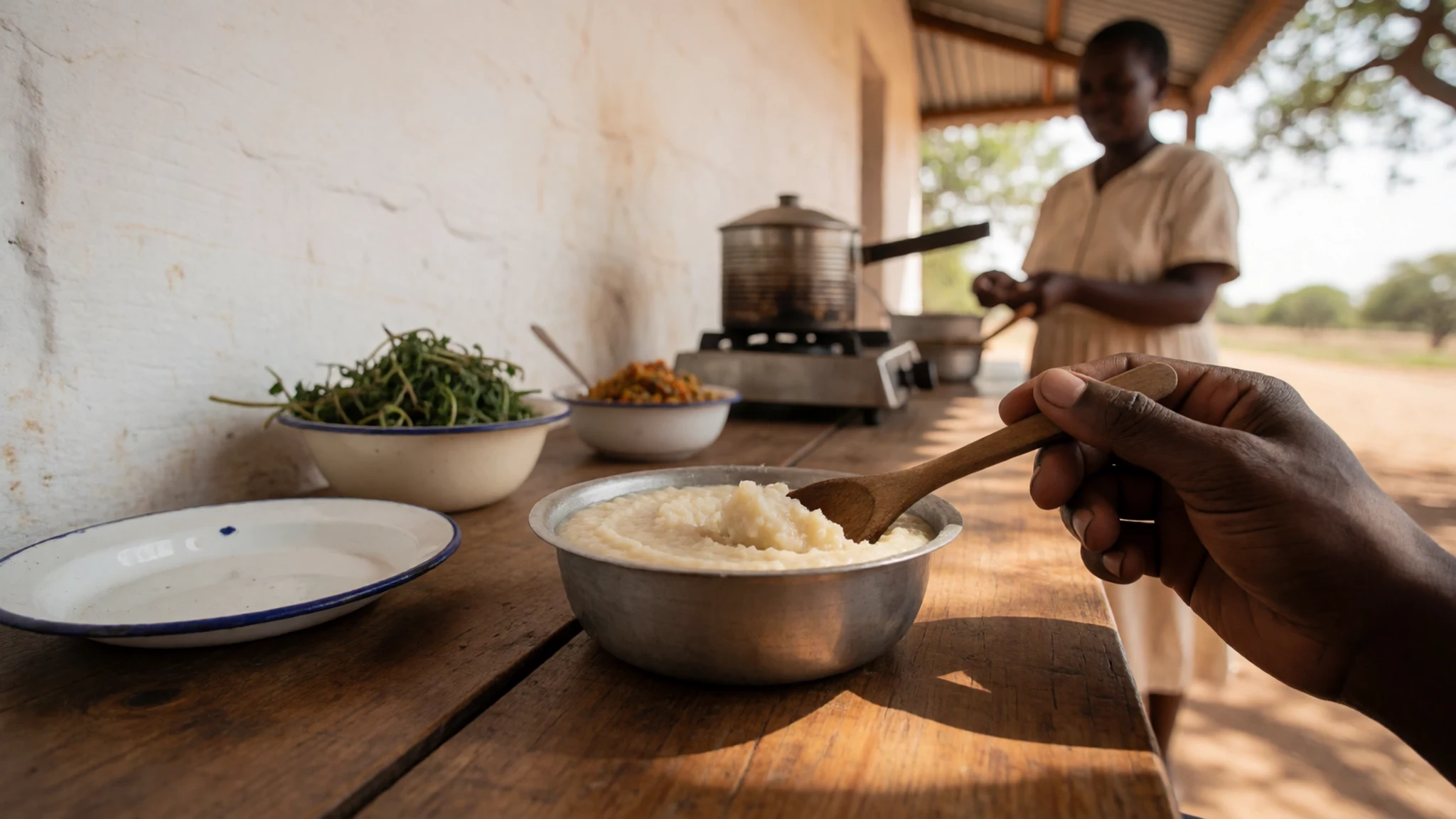
- Seswaa — village gatherings and town eateries on the way in
Seswaa is beef salted, boiled until tender and then pounded, served with bogobe at gatherings and in eateries in the towns around the Central Kalahari. Fresh beef is uncommon inside the reserve, so this is food of settlements near Ghanzi more than of a bush camp.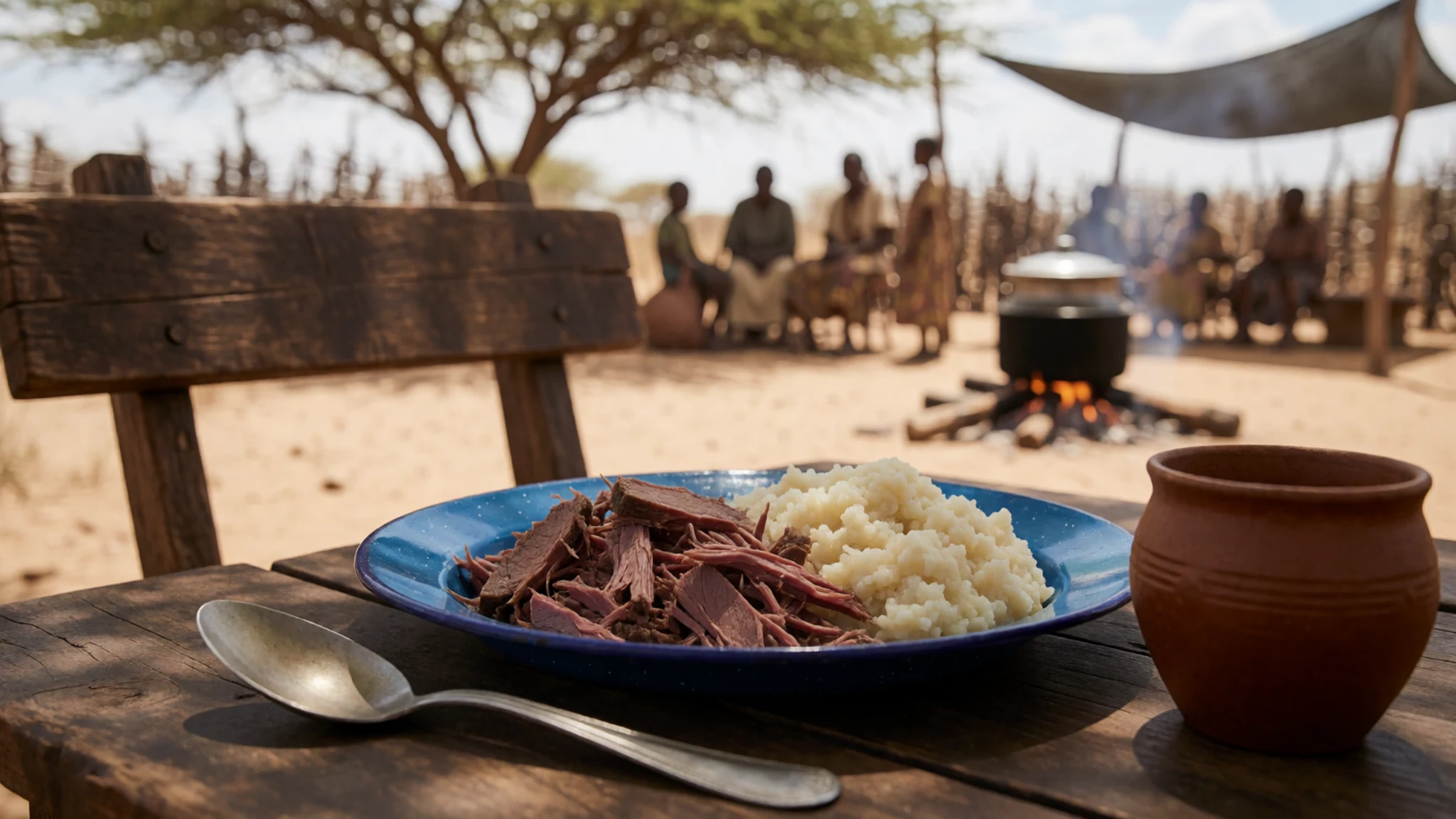
- Segwapa — farm stalls and town shops on the drive in
Segwapa is air-dried meat, close to what other countries call biltong, and it travels well on the long drive into the Central Kalahari. Game or beef is salted and dried until it keeps without a fridge, which matters on sandy tracks. - Tsamma melon — sandy veld after rain, through local knowledge rather than a market stall
The tsamma is a wild melon of the Kalahari sands, eaten around the Central Kalahari for flesh and for the water stored in the fruit. San foragers know which one is ready and which is bitter. - Morama bean — sandy veld after summer rain
The morama is a creeping plant of the Central Kalahari sands. The underground bean is roasted and eaten, and it is rich enough to matter in a season when meat is scarce. People who know the plant dig it; it is not sold from a stall in the reserve. - Mahupu — sandy veld after good rains, shared at a host's fire
Mahupu, the Kalahari truffle, fruits under the sand after good rains and is hunted by eye and by habit rather than bought in the Central Kalahari. The fungus is cooked with porridge or meat when someone finds a patch. It does not appear on a camp menu by request.
Plan it
Best time. In the Central Kalahari the months when rain has filled the pans, roughly the southern summer into early autumn, are the stronger time to see game, because there is little permanent water and herds follow the storms. The cooler dry months make for easier tracks and colder nights, with animals more widely scattered.
How long. 4–5
Getting there. Fly into Maun and continue by light aircraft to a bush strip, or drive a high-clearance vehicle from Maun or Ghanzi to a staffed gate and then on sandy tracks. There is no sealed road through the Central Kalahari. Carry fuel, water and a way to call for help. Gate rules and permits change, so check the official parks information before leaving town.
Budget. high
Tips
- Book camps or a mobile concession ahead for the green months, when pans are holding water.
- Lower your tyre pressures for sand, and carry more fuel and water than the distance suggests; there are no supply shops inside the reserve.
- Drive in the early morning and late afternoon; midday glare and heat make both animals and people flag.
- Sort permits and gate arrangements in Maun or Ghanzi before the last stretch of sand.
Etiquette
- Stay on existing tracks and do not drive onto pans or onto the grass to get closer to animals.
- Ask before you photograph people, and do not treat a settlement or a hunt as a sighting.
- Do not pick melons, bulbs or firewood; water-bearing plants and dead wood are part of how people and wildlife live here.
- Keep voices low at camps after dark, and give other vehicles room at a cat or a herd.
Nearby
Sources
- Wikidata (CC0)
- Wikipedia (CC BY-SA 4.0)
- Wikivoyage (CC BY-SA 4.0)
Wildlife
- Gemsbok (animal)
The gemsbok, also called the oryx, is a large antelope that is wonderfully suited to hot, dry, barren country. In the Central Kalahari you may see it crossing the open pans, often travelling alongside springbok, hartebeest and wildebeest. Watch from a respectful distance and keep quiet in your vehicle, so the herd carries on as it likes. A good guide will read the animals' mood and choose the best spot. Never feed wildlife, however calm it seems. - Brown hyena (animal)
The brown hyena, sometimes called the strandwolf, is the rarest hyena of all, so seeing one is a real treat. In the Central Kalahari it often turns up around the edges of the day, about as regularly as the bigger cats, and often in company with bat-eared foxes and black-backed jackals. Watch from a distance, speak softly and let your guide choose the spot. Never offer it food, as wild animals should stay wild.