Likiep
Likiep, Marshall Islands
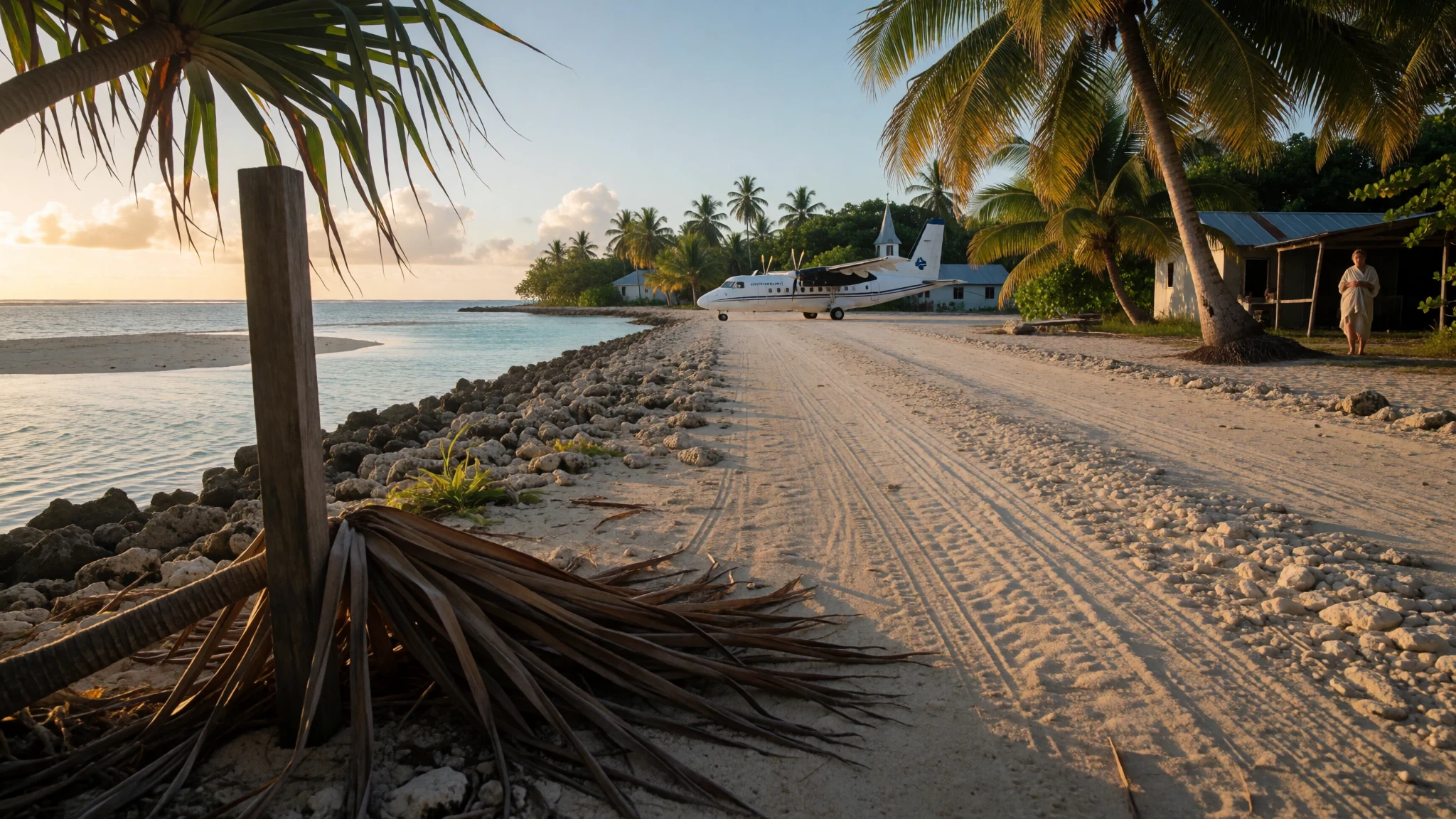
Likiep is a quiet Ratak-chain atoll where lagoon water, a coral airstrip and an old plantation village still set the pace.
The place
Likiep Atoll sits in the Ratak chain of the Marshall Islands, a loose ring of low coral islets around a sheltered lagoon. The land is flat and narrow, barely above the tide, with coconut palms, pandanus and breadfruit crowding the better soil and a reef edge falling away into deep ocean water. There is no hill to climb and no river to follow. The geography is lagoon, reef and sky.
The main settlement stands on Likiep islet, a short walk from the crushed-coral airstrip where the inter-island aircraft lands. Houses, a church, cisterns and a few small shops line the sandy paths. Rainwater cisterns and the lagoon do the work of pipes and harbours. In settled weather, small boats move people, fish and copra between the islets. The ocean side is a different coast: wind, surge and a living reef.
Life follows those limits. Copra, fishing and household gardens still matter, and almost everything manufactured arrives by air or by ship from Majuro. People are few, and they live on a handful of inhabited islets, so the atoll feels like a cluster of family lands rather than a town. Customary ownership runs under every path. An empty beach is still someone's land.
The lagoon changes colour with the clouds. Reef fish, noddies and frigatebirds work the edges. At dusk the airstrip goes quiet. Heat is serious, shade sits under trees or tin roofs, and a squall can close the horizon in minutes. Likiep is a working atoll with a long memory, and the slowness is what stays with a visitor.
Its story
Likiep's story is a plantation story as much as a voyaging one. Marshallese navigators knew the Ratak chain long before foreign charts, reading swell, stars and birds across open water. The atoll later entered the copra trade that reshaped these islands, when traders and chiefly families turned coconut groves into an export crop shipped out as dried meat.
The family name bound to the islet is deBrum. A household of European and Marshallese heritage made Likiep a homestead and a trading base, and left the timber house visitors ask for. Joachim deBrum, of that house, kept a camera and a record of boats, copra, church gatherings and faces. Those pictures show atoll work from the years when dried coconut was the cash crop. Church, warehouse and dwelling still sit together as a plantation village.
German trading rule gave way to a Japanese mandate, then to American administration after the Second World War, and then to the independent Marshall Islands, in free association with the United States. Likiep stayed clear of the bases and of the nuclear testing on other atolls. Its own record is chiefs, copra, church and kin. The coral airstrip used today is a civilian link for the national airline, not a relic of a military field.
A visitor who knows the Marshalls from the capital finds the same elements on Likiep at a walking pace: land through the mother's line, a church ordering the week, and water that is still a road. The house and the photographs give that life a face.
What to see
- Likiep airstrip — Likiep islet
The airstrip on Likiep islet is a band of crushed coral beside the palms, and it is how nearly everyone arrives. Air Marshall Islands brings a turboprop in, lagoon on one side and village paths on the other. People wait in the shade among boxes and copra sacks. Once the aircraft leaves, the strip is simply a wide yard.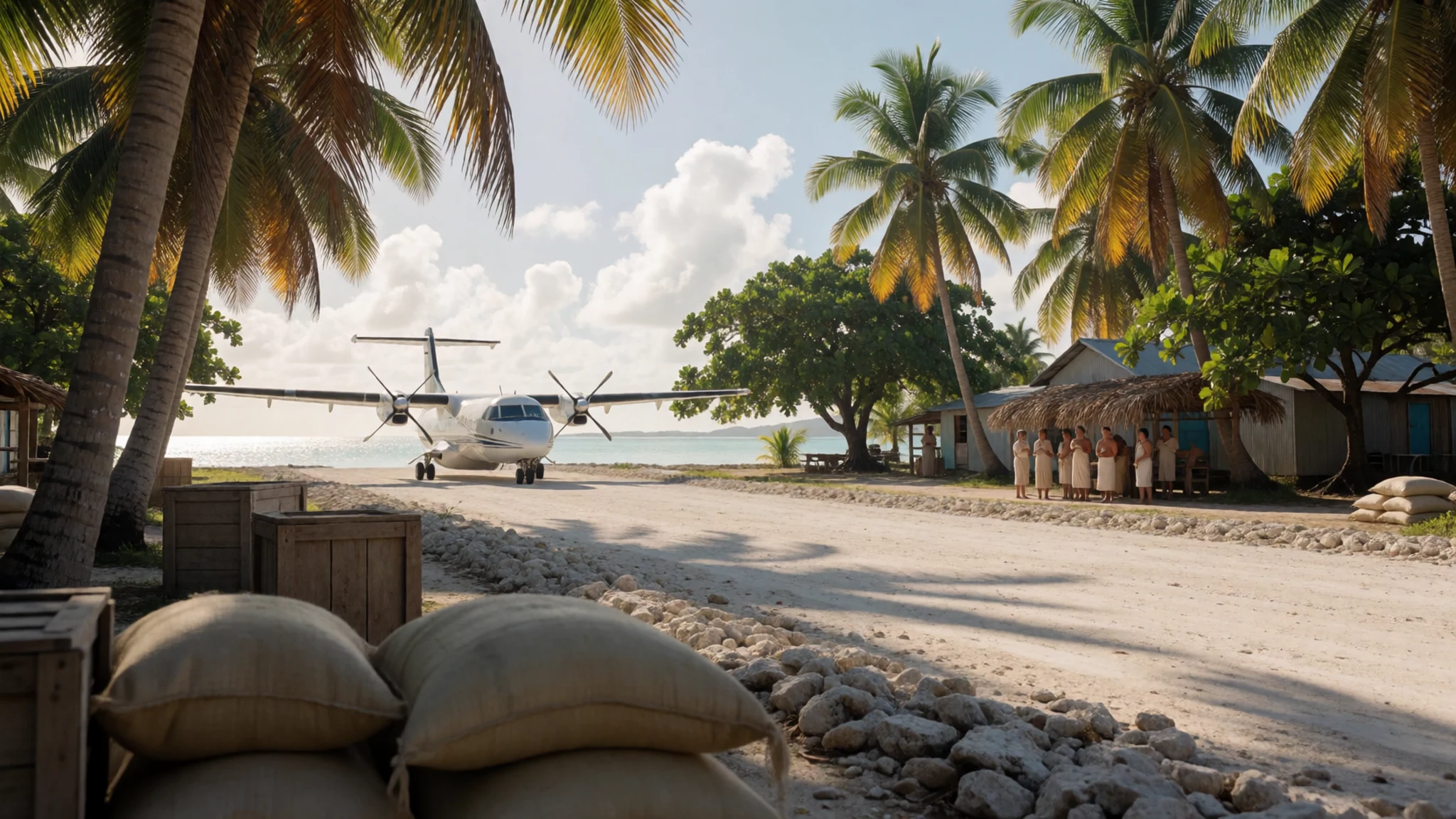
- The lagoon — Lagoon
The lagoon at Likiep is both road and larder. In settled weather, small boats cross between islets with fish, copra and passengers, over water that shifts from pale sandbar to deep colour in the channels. Swimming suits sandy bottom near the settled shore, clear of coral heads and boat tracks.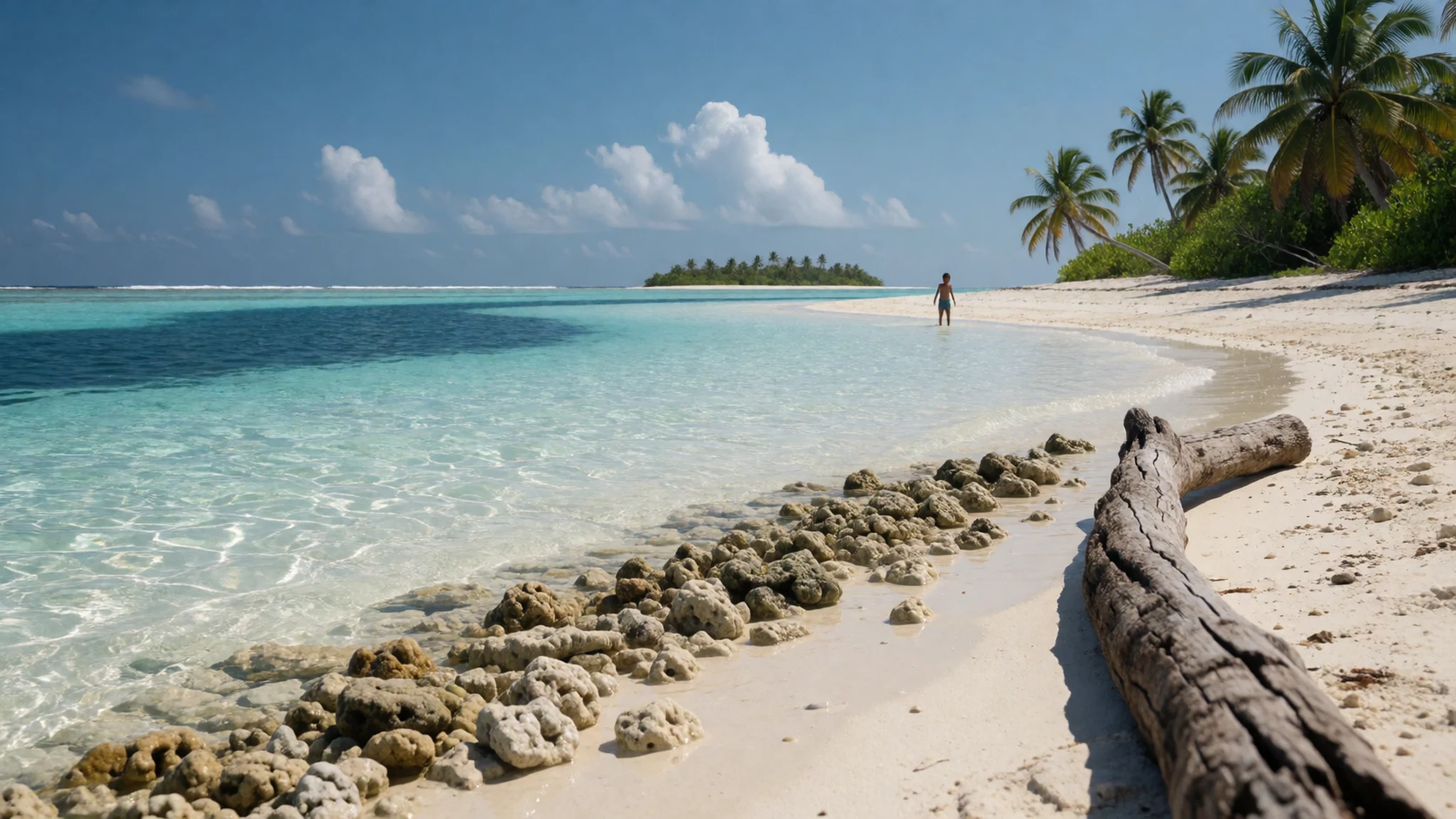
- The deBrum house — Likiep islet
The deBrum house on Likiep islet is the homestead of a trading family of European and Marshallese heritage. Timber walls and a shaded yard still sit with the church and warehouse as a copra village. Joachim deBrum photographed boats, drying coconut and daily life from this household. The rooms are private, and a visit starts with a request made on the islet.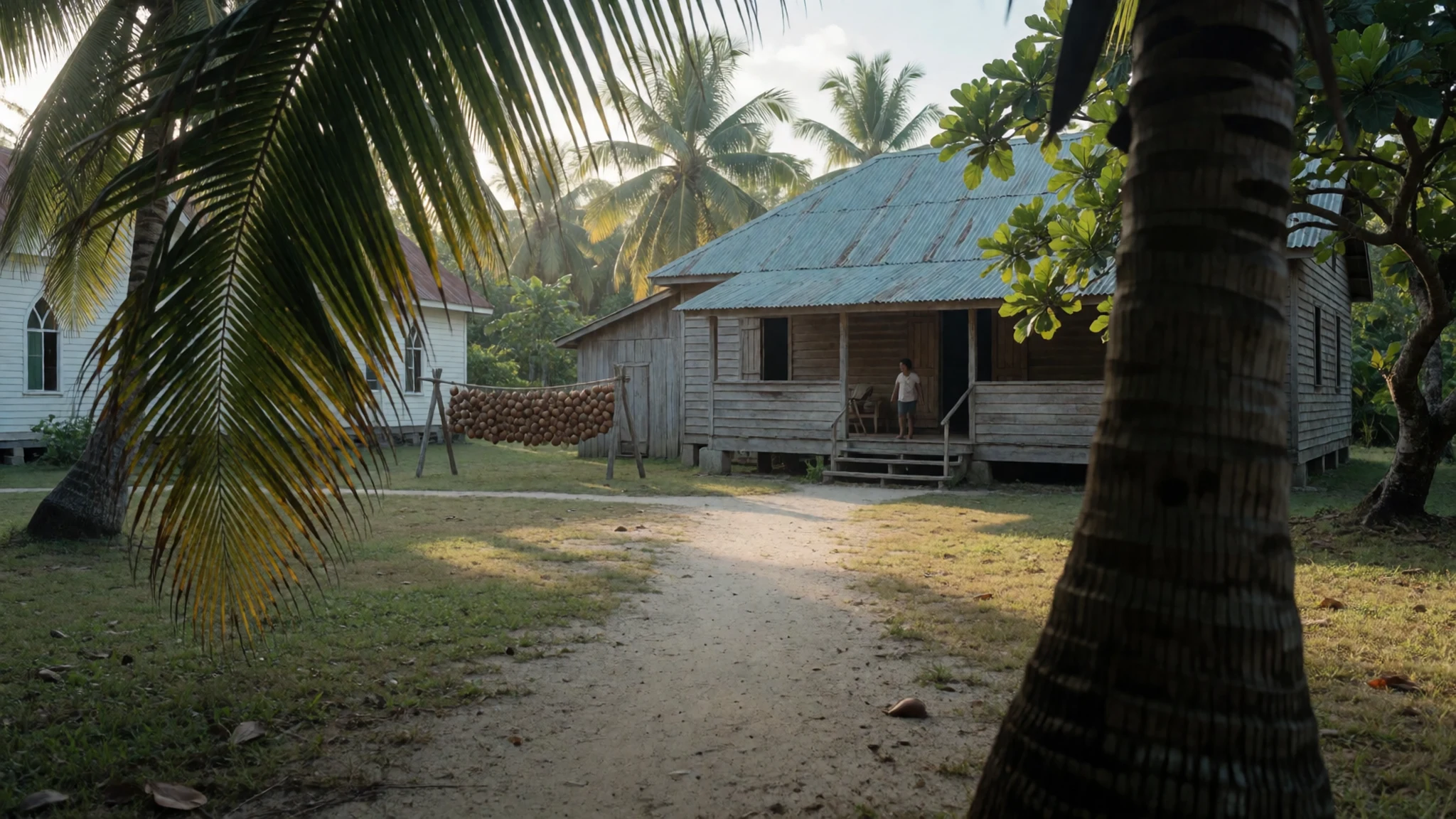
- The ocean reef — Ocean side of the atoll
The ocean side of Likiep is the wild rim, where trade wind and swell meet living coral. Boats fish here when the sea allows, and the water beyond the reef is no casual swimming place. From the beach the contrast is plain: lagoon water laps and ocean water hits. Farther out belongs in a local boat with someone who can read that day's weather.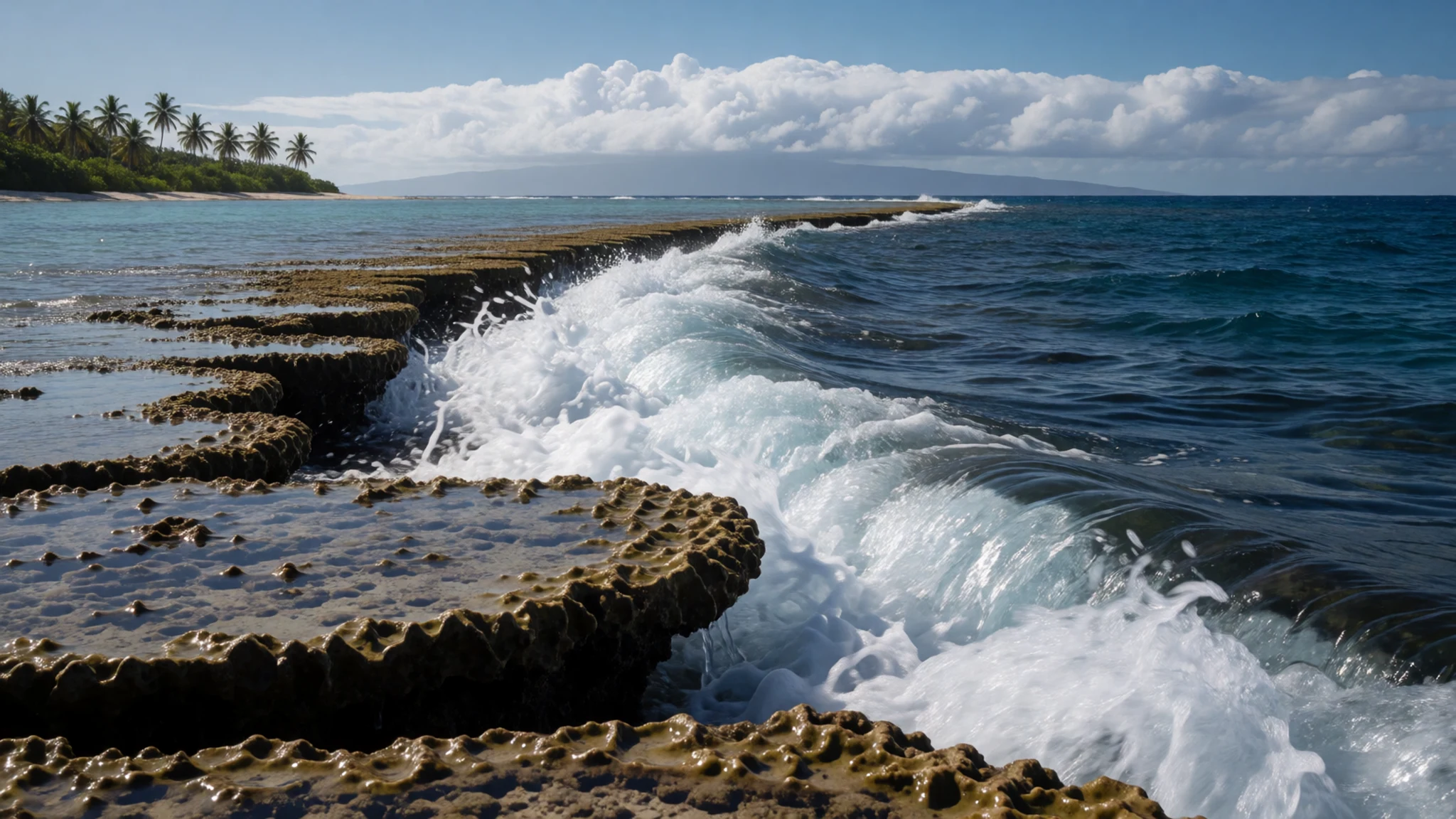
- The church — Likiep islet
The church on Likiep islet anchors the week, a short walk from the houses, cisterns and cookhouses. On ordinary days the yard is a meeting place. On Sunday it belongs to worship, rest and a shared meal. An open service can be joined from the back in covered clothing, with the camera kept away unless a host suggests it.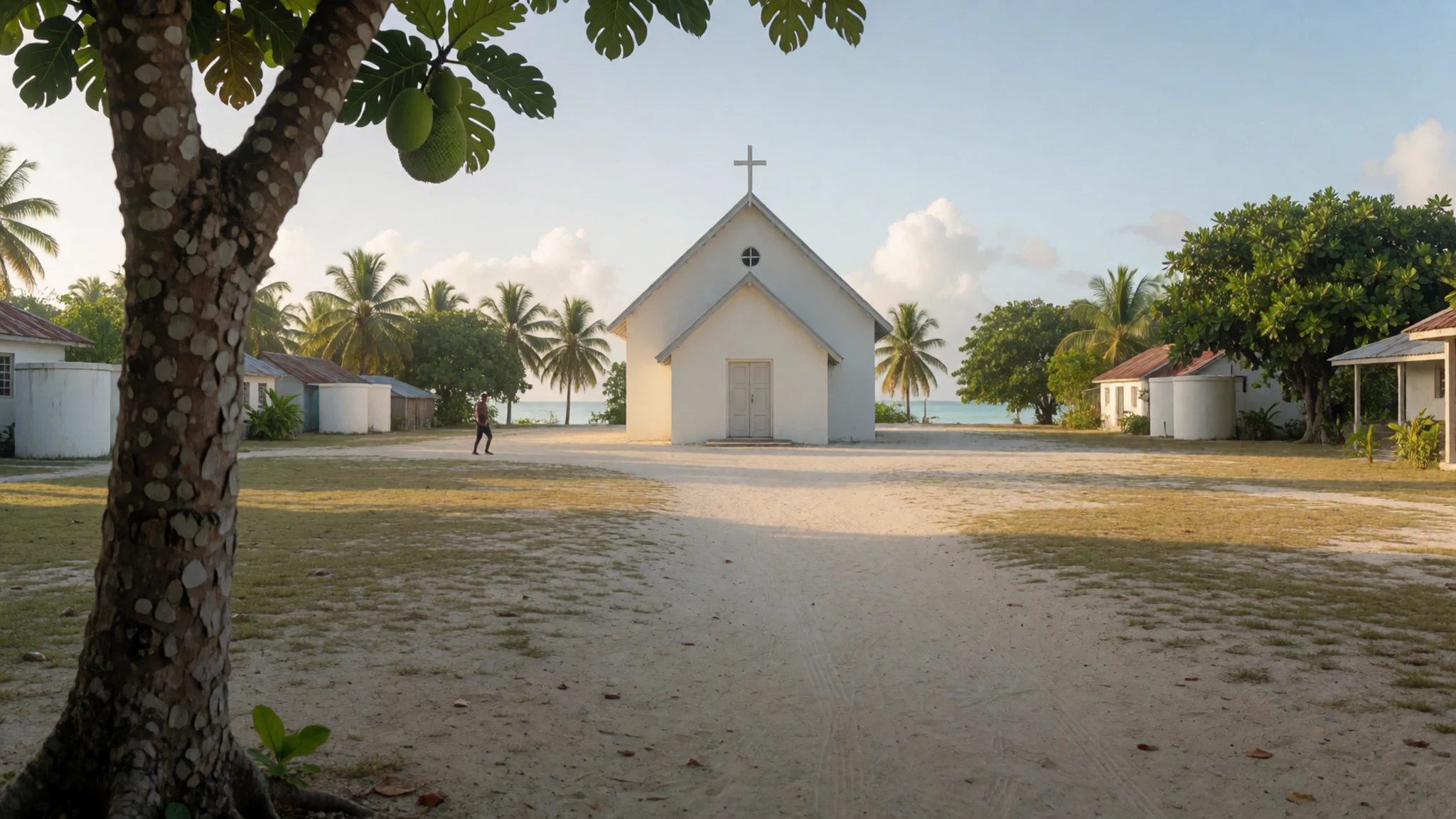
Culture
Likiep runs on Marshallese custom, and land is the heart of it. Rights pass mainly through the mother's line. Three ranks still shape decisions: the iroij, or chief; the alap, who heads a lineage on that land; and the rijerbal, who work it and live from it. A path, a grove or a shore may all be family land. Greeting people and asking is how a stranger stays welcome.
The church week orders time as firmly as the tide. Most families are Protestant, in the Congregational tradition long settled in the Marshalls, and Sunday is for worship, rest and food shared together. A visitor at the back of an open service hears the formal side of Likiep. Older skills remain in daily use: the outrigger, the reading of the reef, and pandanus weaving, including the fine jaki-ed mats brought out for ceremony and for gifts. Marshallese is the language of the path, and English is widely understood.
Conduct is public because the islet is small. News crosses it faster than a boat. Loud music, heavy drinking and brief clothing sit awkwardly with church custom, especially on Sunday.
Dress modestly, ask before photographing people, and take shoes off at the door of a home or the church.
What to wear
On Likiep the textile with a lineage is the jaki-ed, a fine pandanus mat woven by women in geometric patterns. It is wrap, gift and ceremony at once: worn when a family marks a serious occasion, offered to chiefs and guests, and kept as household wealth. The leaf is dried and split, and the pattern is learned by hand. Plainer pandanus wraps once did the work in the groves, and the fibres still appear when a family wants to show a weaver's skill.
Ordinary clothes are imported cotton. T-shirts, shorts, skirts and loose dresses dry quickly in the sun. Rubber slippers are the usual footwear on coral sand and concrete. For Sunday, women often wear a long colourful dress with shoulders covered, and men a collared shirt and trousers. Hats come out at midday.
A visitor does well to copy that range. Light shirts, with a long skirt or trousers for church and for calling at a house, match local habit. Sandals that slip off at a doorway suit the ground. Swimwear stays at the water, with a shirt worn on the walk back through the houses. Sun is direct and coral is sharp, so a rash vest is worth packing. A jaki-ed is a weaver's work, and praise is the right response unless a piece is clearly offered for sale.
What to eat
- Breadfruit — Household cookhouses on Likiep islet
On Likiep, breadfruit, mā in Marshallese, is a staple while the trees are bearing. Households bake it in an earth oven or boil it until soft and mildly sweet, then set it beside fish. The trees shade the paths, so the fruit reaches the cookhouse quickly.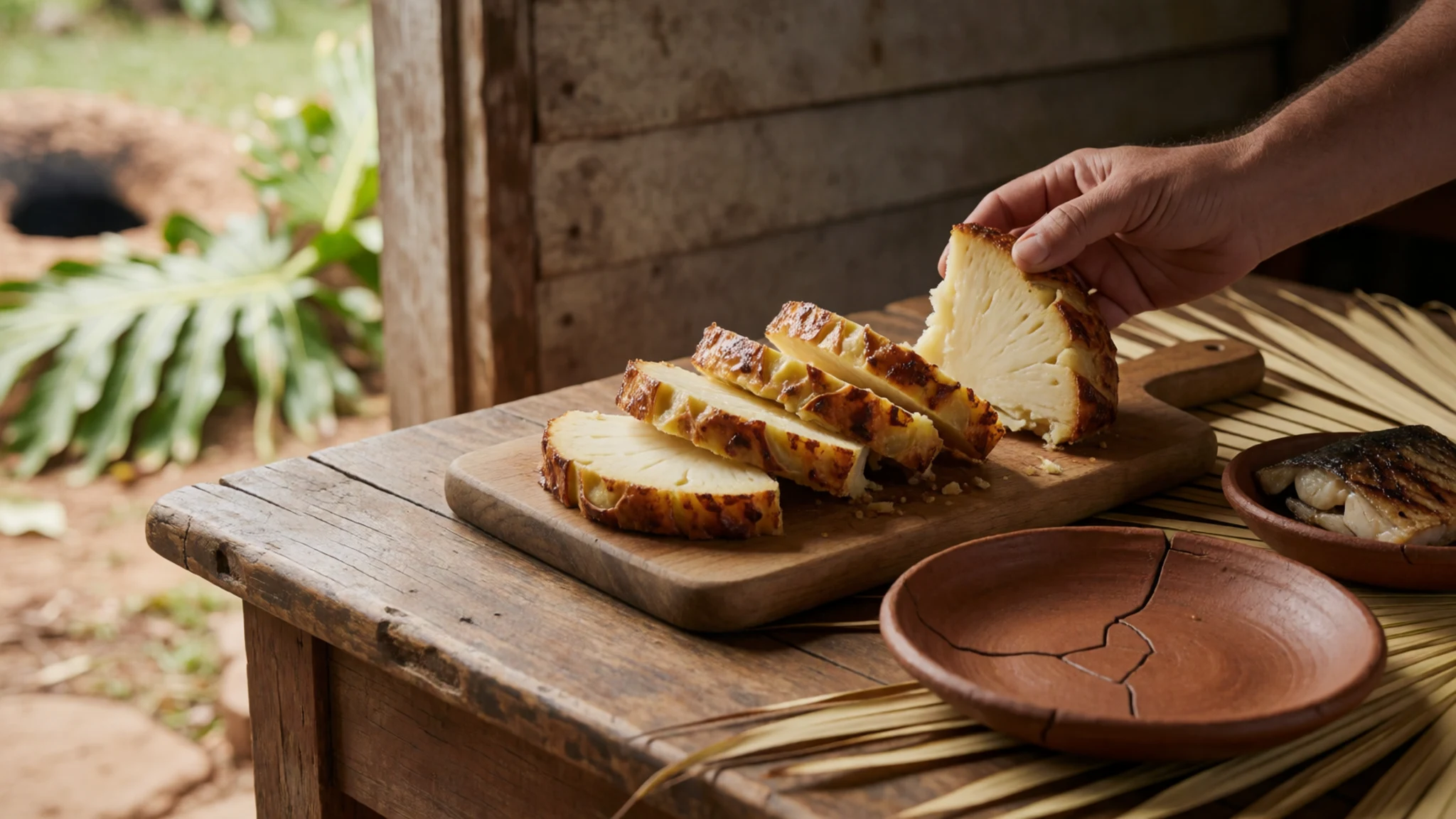
- Bwiro — Household kitchens on Likiep islet
Bwiro is breadfruit kept for the months when the trees are bare. On Likiep it is fermented into a dense paste, then cooked into something sour, filling and dependable. A visitor is more likely to meet it at a family meal than in a shop.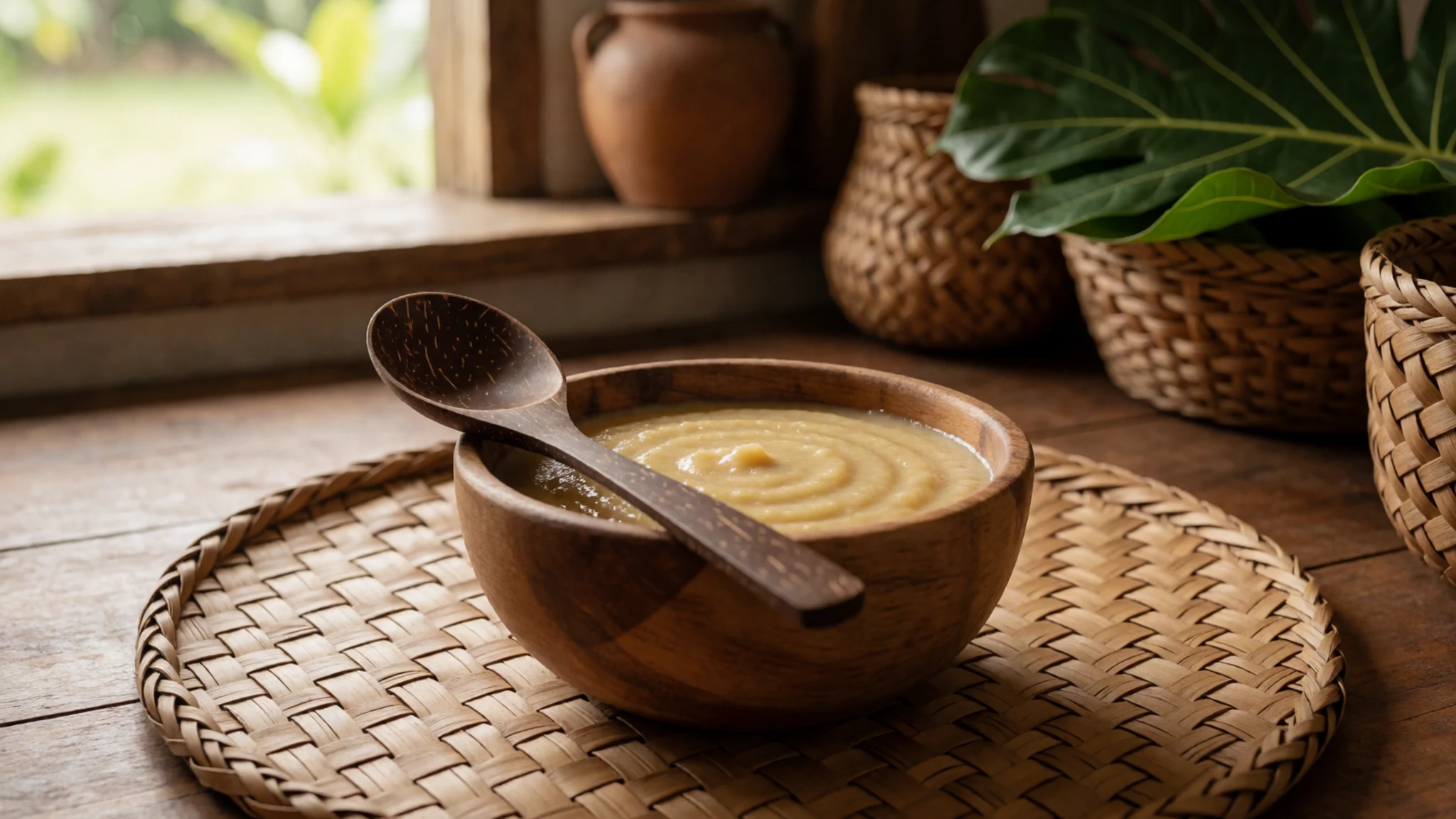
- Reef fish — The boat landing on Likiep islet
Reef fish are the main protein on Likiep, landed by small boats and shared along the shore. Grilled over coconut husk or cooked in coconut cream, they taste of the water they just left. The landing on Likiep islet is where boats bring them in. - Coconut — Household yards on Likiep islet
Coconut is the tree Likiep still works. Drinking nuts are cut green for the water, mature flesh is grated into cream for fish and breadfruit, and dried meat leaves as copra. A household yard is the usual source, and the drink is offered to a guest as a welcome. - Pandanus — Church yard and household kitchens on Likiep islet
Pandanus, bōb in Marshallese, is the other food tree on Likiep. The keys of the fruit are boiled or baked until sweet, and some of the harvest is kept as a paste. It turns up at family meals and at church gatherings on the islet. - Rice — Small stores along the village path on Likiep islet
Rice is the imported staple on Likiep, eaten when breadfruit is finished. Sacks arrive by aircraft or supply ship and sit in the small stores on the village path. Cooked plain, with fish or coconut cream, it is the ordinary plate a household will offer a guest.
Plan it
Best time. Drier months are the easier time on Likiep: the trade winds are steadier and squalls fewer, so boats and aircraft are more reliable. Wetter months mean heavier rain and more waiting. Sun and heat are strong all year, so shade and drinking water matter on every visit.
How long. 2-3
Getting there. International flights reach Majuro, the capital. From there, Air Marshall Islands flies a Dash 8 turboprop onto the coral airstrip at Likiep, and that hop is the last leg. A supply ship also serves the outer atolls when cargo and weather agree. Seats are few. Confirm the flight with the airline, and keep a spare day in Majuro in case the strip is closed by weather.
Budget. high
Tips
- Book the flight from Majuro early; the aircraft is small and often full.
- Bring sunscreen, a hat, medicines and snacks. Village shops are small and restocked by plane or ship.
- Carry US dollars in cash. Card payment should not be expected on the atoll.
- Keep Sunday quiet; many people are at church, and doorstep visits can wait.
- Drinking water is often cistern rainwater. Ask before refilling a bottle.
Etiquette
- Ask before crossing a yard or a beach; land on Likiep is family land under customary tenure.
- Remove shoes before entering a house or the church, and wear covered clothing to a service.
- Greet people on the path before asking for directions or a boat; a request without a greeting lands coldly.
Nearby
Sources
- Wikidata (CC0)
- Wikipedia (CC BY-SA 4.0)
- Wikivoyage (CC BY-SA 4.0)
Wildlife
- Great frigatebird (animal)
The great frigatebird is a large seabird, the big one of the frigatebird family. Around Likiep, look for it along the edges of the reef, where it works the water alongside noddies and reef fish. No particular season or hour is promised, so keep an eye on the reef edge whenever you are out. Watch from a respectful distance, stay quiet and still, ask a local guide where to look, and never feed the birds. - Frigatebird (bird)
The great frigatebird is a large seabird, the big one of the frigatebird family. Around Likiep, look for it along the edges of the reef, where it works the water alongside noddies and reef fish. No particular season or hour is promised, so keep an eye on the reef edge whenever you are out. Watch from a respectful distance, stay quiet and still, ask a local guide where to look, and never feed the birds.