Mejit
Mejit, Marshall Islands
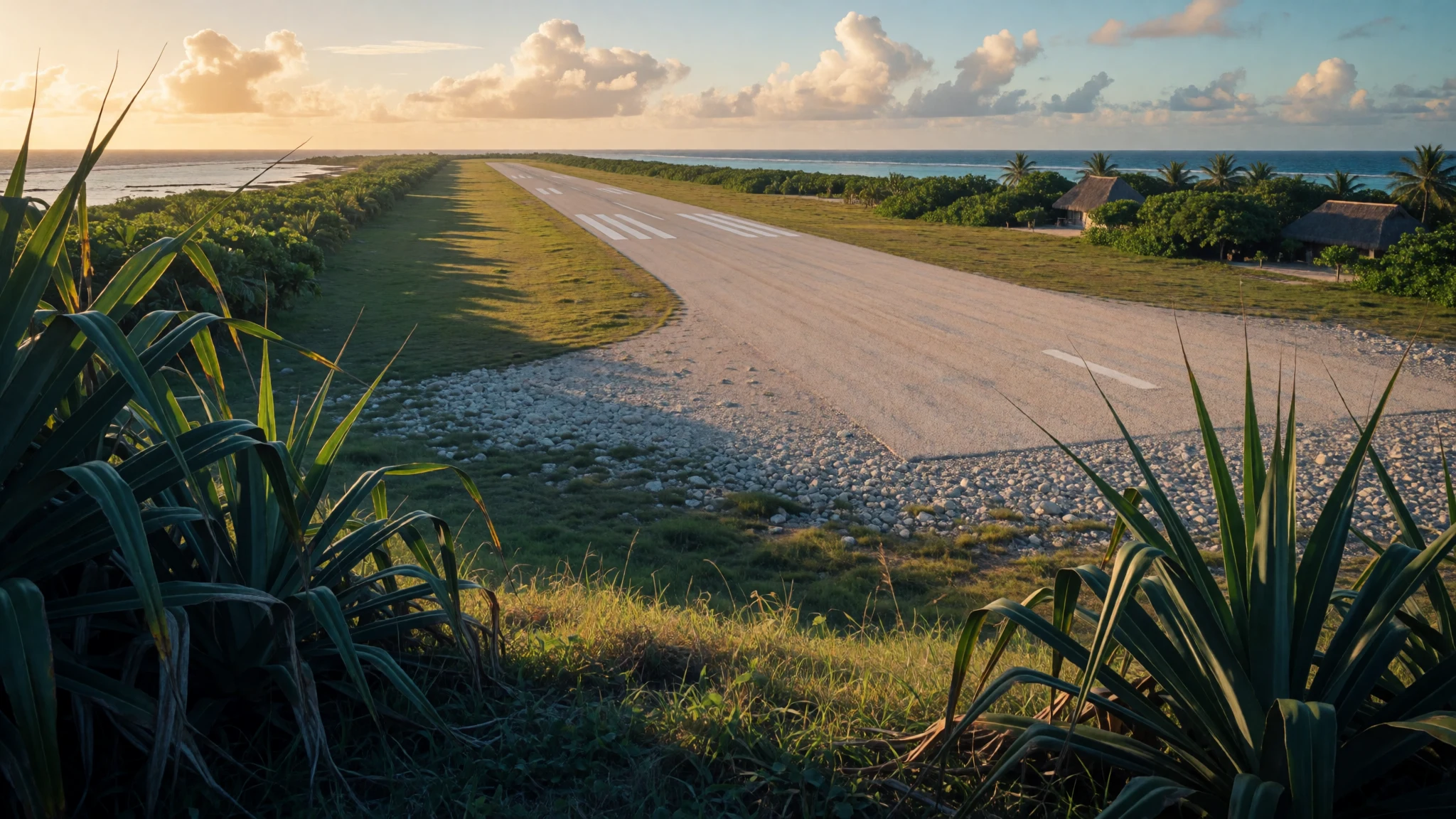
Mejit is a quiet, stony Pacific island with a freshwater lake, hand-woven mats and an airstrip across its middle, for travellers who want remoteness.
The place
Mejit is a small island in the Pacific Ocean and a legislative district of the Ratak Chain in the Marshall Islands. About 348 people live here. Most of the country is made up of low coral atolls, but Mejit is different: its core is stony ground, and a fringing coral reef runs around it, enclosing a narrow lagoon. Positioned to the east of the Ratak group's primary axis, it feels remote even by Marshallese standards. The land is green with pandanus, breadfruit and taro, and islanders have long thought of it as their paradise. A freshwater lake, a rarity in a country where fresh water is scarce, is home to native ducks. Mejit is known for its pandanus leaf mats, woven by hand in the villages. A single airstrip cuts across the island, and Air Marshall Islands serves it, though schedules should be checked directly with the airline. There is no resort scene here. What the island offers is reef, village life and quiet. The wet season runs from May to November and is hot and humid, and the islands lie on the edge of the typhoon belt. Flooding from storm surges and high tides is common, made worse by rising sea level, so the low shores matter more than the island's size suggests. Services are basic, and anything specific is best brought in from Majuro.
Its story
Mejit appears in European records long before any lasting contact. A Spanish ship under Ruy López de Villalobos noted the island in December 1542, and Miguel López de Legazpi's expedition sighted it again on 9 January 1565. The Spaniards called it Los Barbudos, 'the bearded ones', after the long beards of the men they saw. Mejit then dropped out of European attention for a long time. On 1 January 1817 the navigator Otto von Kotzebue, sailing in Russian service, landed and named it New Year's Island, which suited the date. In 1885 the German Empire claimed Mejit along with the rest of the Marshall Islands. After World War I the island passed to Japan under the South Seas Mandate. US forces took it from Japanese control on 2 April 1944, and after the war it came under American administration as part of the Trust Territory of the Pacific Islands. That arrangement lasted until 1986, when the Marshall Islands became independent under a Compact of Free Association with the United States. The wider country still lives with the legacy of nuclear testing on other atolls, which displaced families and caused lasting harm, and some islands remain closed to visitors. Mejit's own story is quieter, shaped by distance, by changing flags and by a community that kept its land, its mats and its customs through each of them.
What to see
- The freshwater lake — Island interior
Mejit's freshwater lake is a rarity in the Marshall Islands, where most islands have little surface water. Native ducks use it, and the greenery around it shows how different this stony island is from a typical atoll. Ask villagers about access and paths first, because the land belongs to families.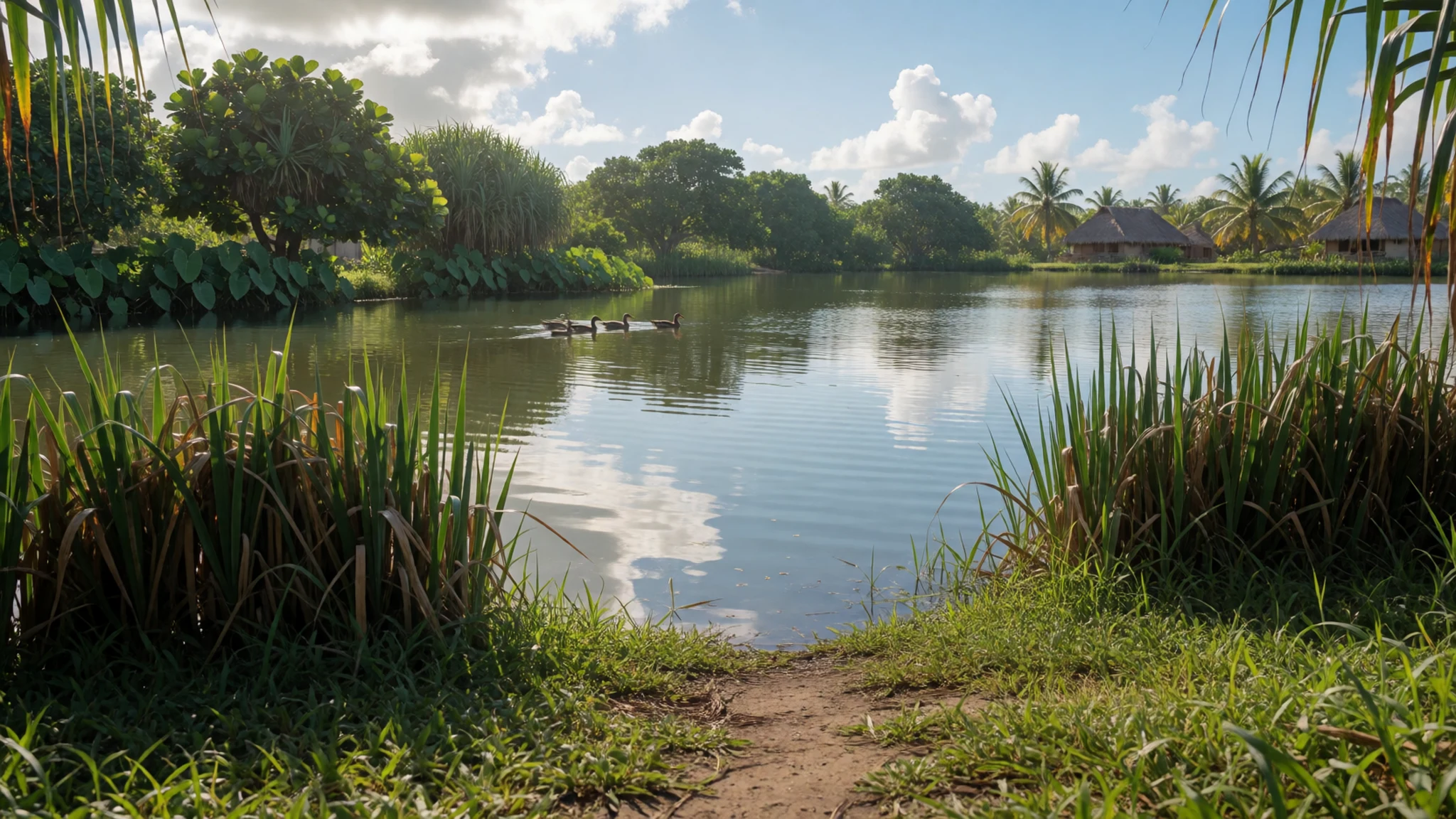
- The fringing reef and lagoon — Shoreline
The coral reef that rings Mejit encloses a narrow lagoon, calm enough for wading and for watching reef fish from the shore. Tides and swell matter, and the reef edge can be sharp underfoot. This is local fishing water, so ask before swimming or snorkelling and never take shells or coral.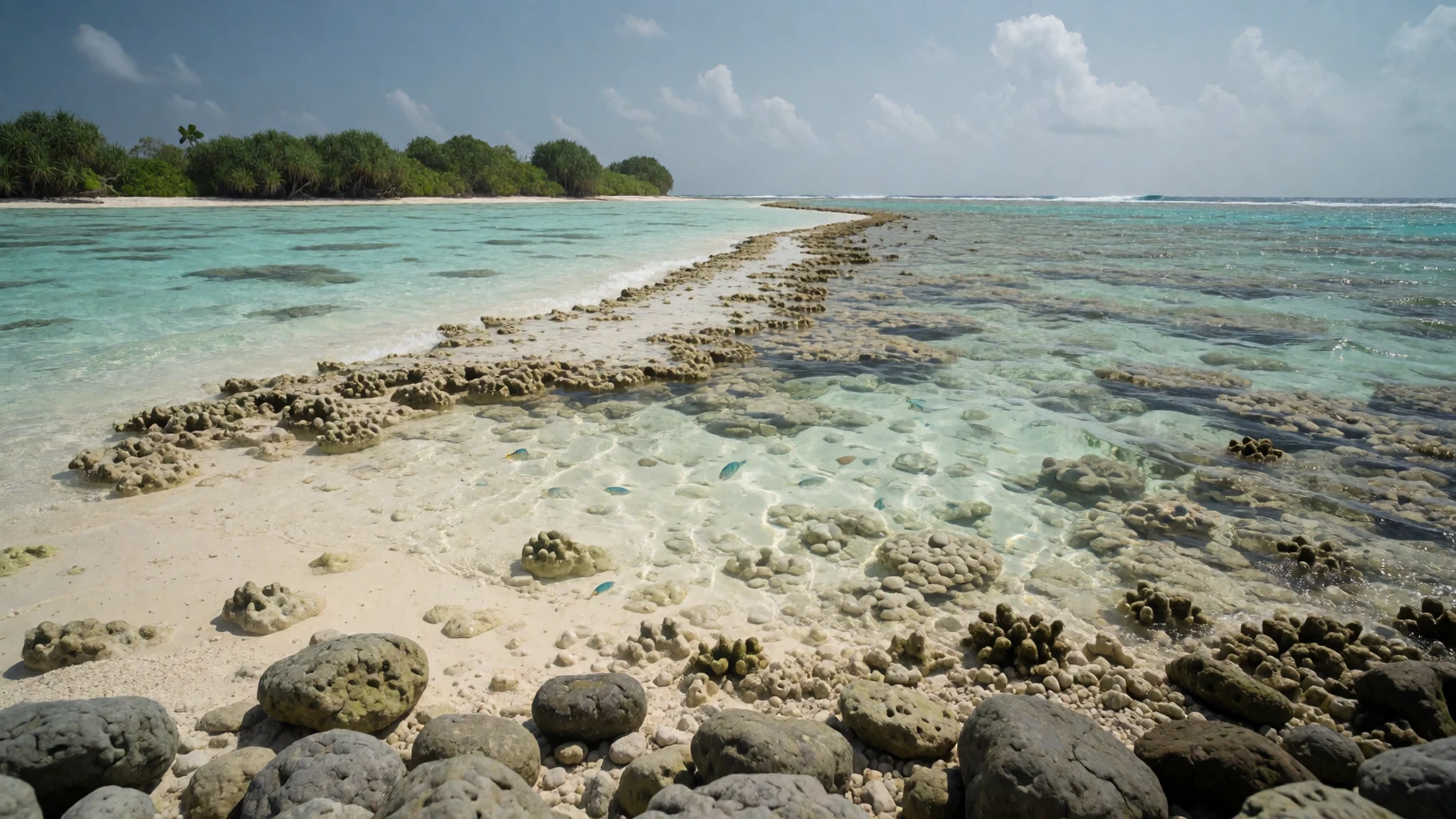
- Pandanus mat weaving — Village homes
Mejit is known for its pandanus leaf mats, and weaving is part of ordinary village life rather than a performance staged for visitors. With an introduction from a host, it may be possible to watch weavers at work or buy a mat directly, which puts the money in the maker's hands.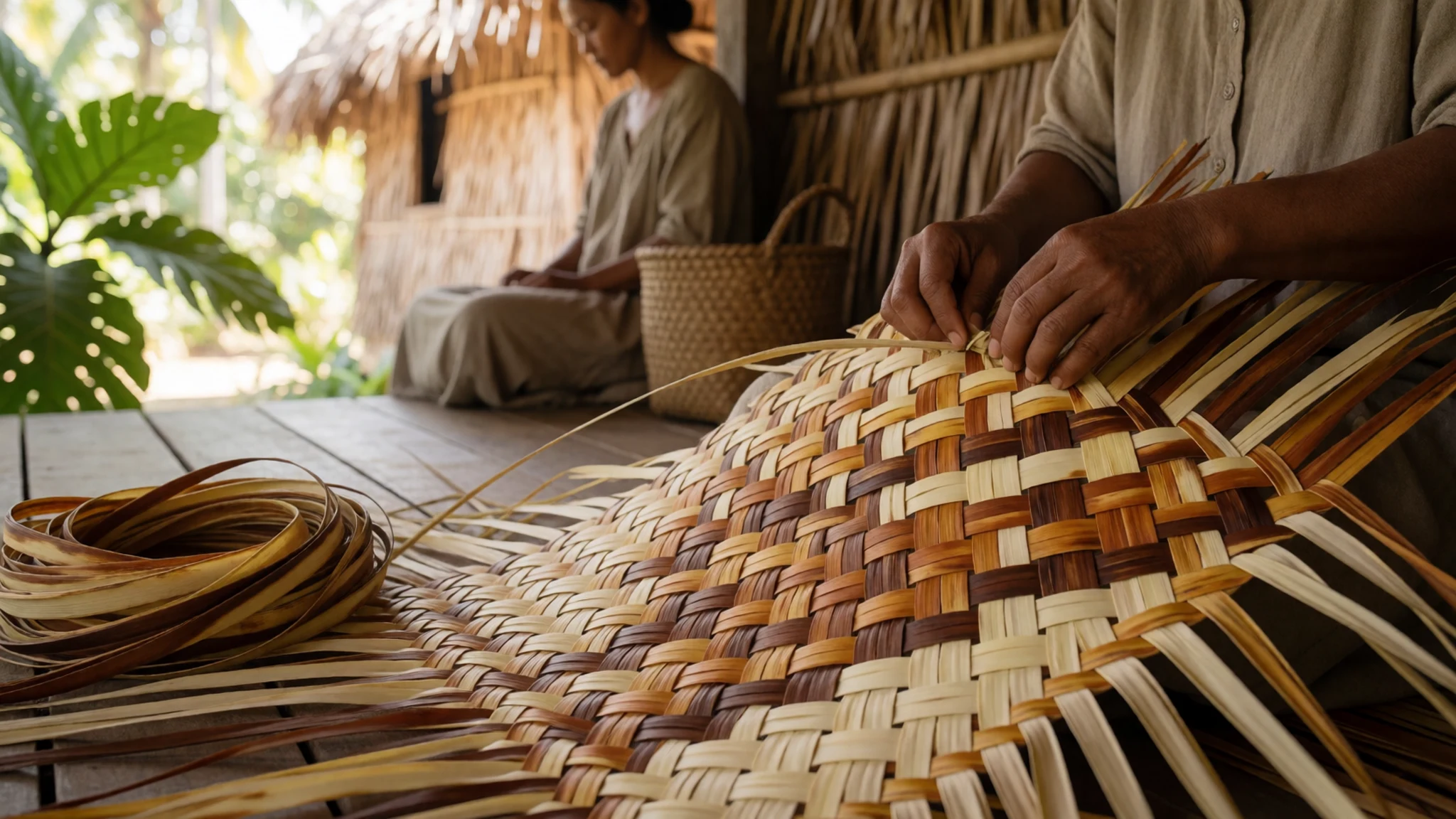
- The airstrip — Centre of the island
The airstrip of Mejit Airport runs straight across the island and doubles as a meeting point for arrivals, departures and news. Walking its edges gives a clear sense of how narrow the island is, with ocean on both sides. Keep well clear whenever a plane is expected.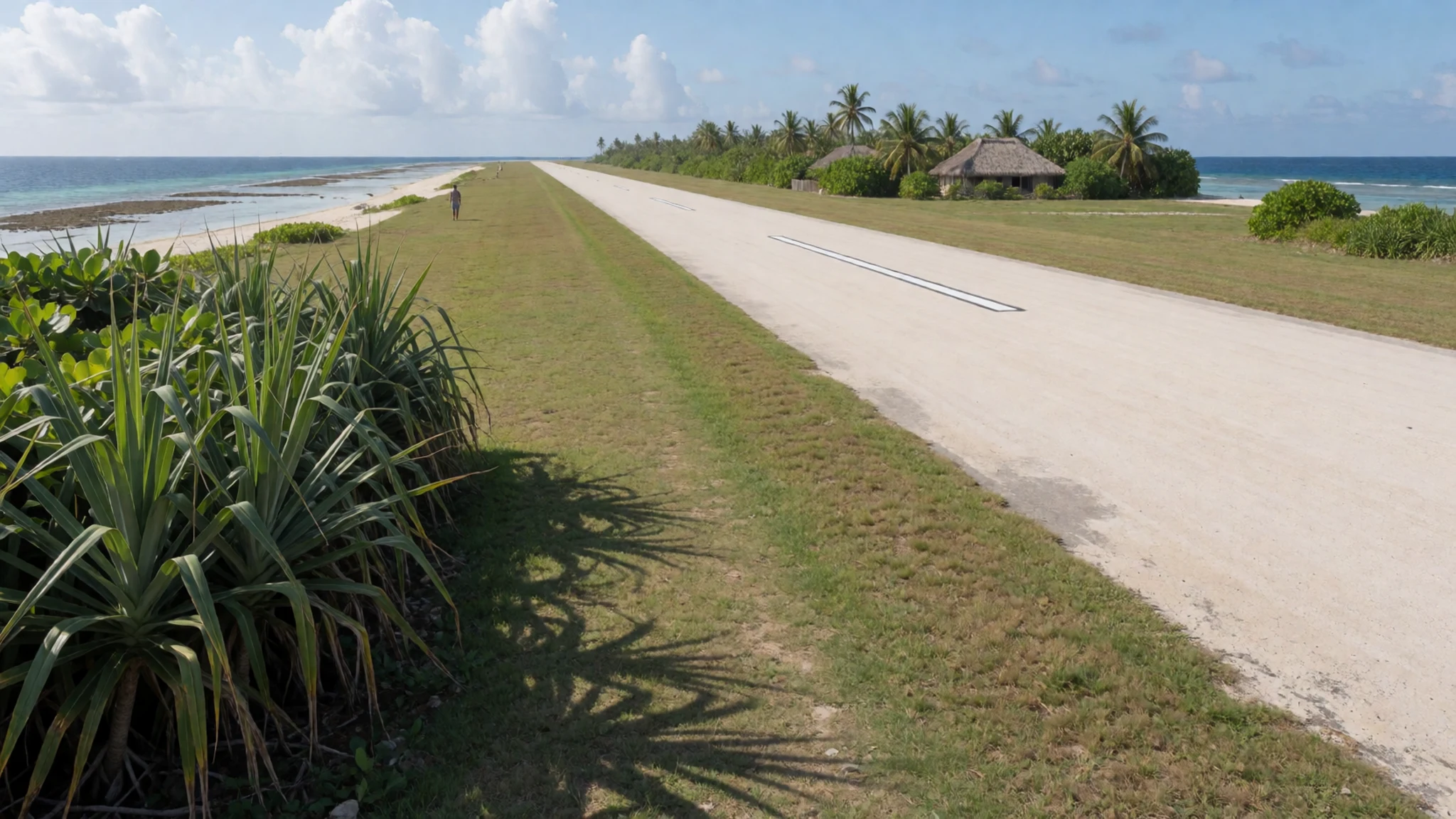
- Breadfruit and taro groves — Inland village paths
The island's interior is lush with breadfruit, pandanus and taro, grown in village plots under shade trees. Walking the paths between houses shows how households live off what the land gives them. Ask permission before stepping into any plot, and never pick fruit without being offered it.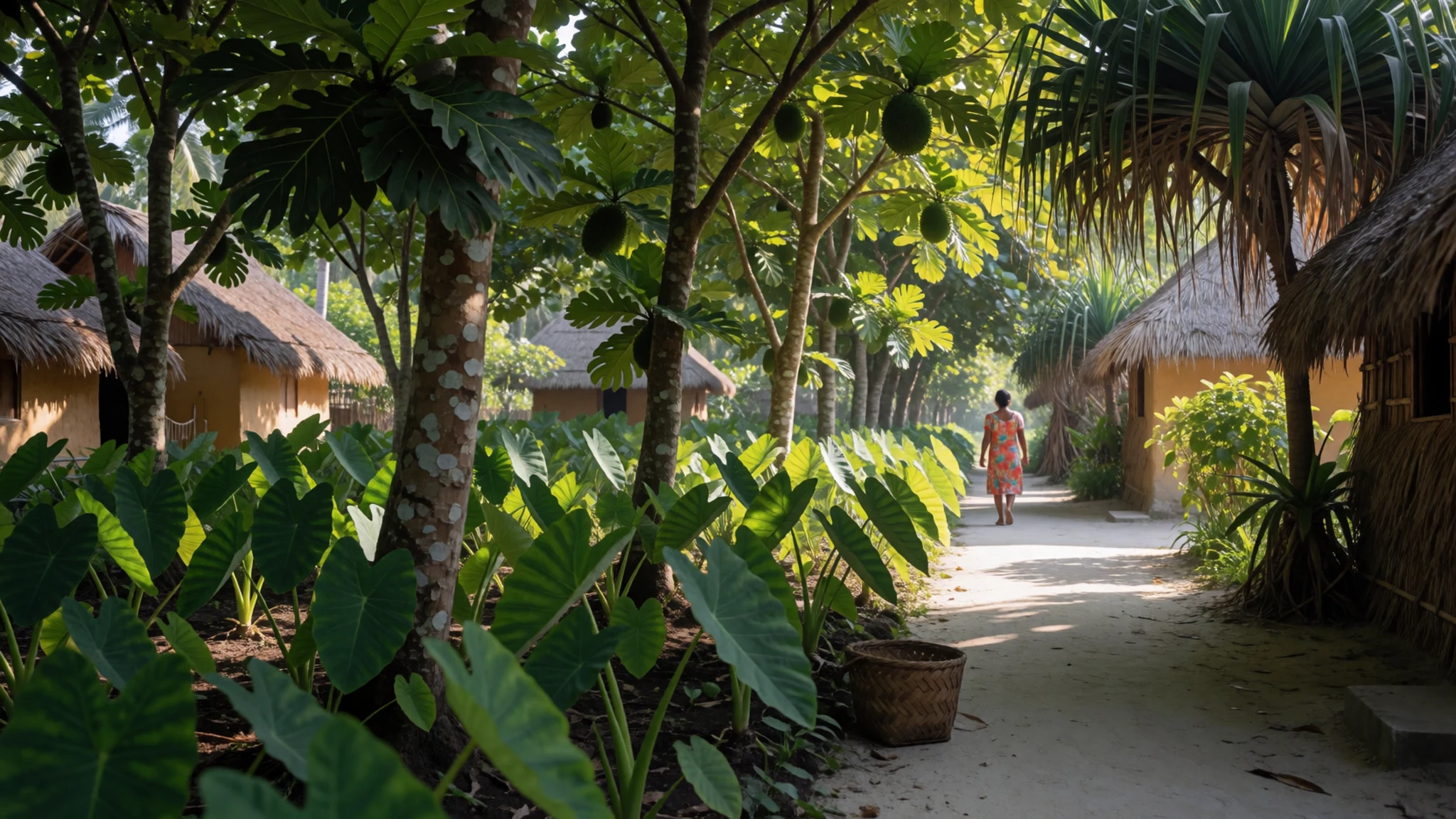
Culture
Mejit is a community of a few hundred people, and daily life revolves around family, church and land that families hold across generations. Land in the Marshall Islands passes through lineage rather than being bought and sold casually, so even an empty-looking stretch of beach or grove usually has an owner. Hospitality is generous, but it works through introductions, and an unannounced visitor is a surprise. Craft is central: pandanus leaf weaving is the island's best-known skill and is handed down within families. Wider Marshallese culture also holds a navigation tradition in which stick charts recorded ocean swell patterns between atolls; examples can be seen at the Alele Museum in Majuro. Sundays are quiet, with church services taking much of the morning. Recent history, including American administration and nuclear testing on other atolls, is never far from conversation, and visitors do best to listen rather than debate. The pace is slow, schedules are loose, and patience is part of travelling here. A friendly 'yokwe', the common Marshallese greeting, goes a long way. Ask a host before photographing people, houses or family land, and dress modestly when attending church.
What to wear
On Mejit, everyday dress is shaped by heat, church and a long tradition of weaving. Traditional clothing was plaited from pandanus and other leaf fibres, and finely woven mats are still made for gifts and ceremonies, so the old textile skill survives even where the garments have changed. Today women commonly wear long, loose cotton dresses in bright prints, often with sleeves, a style that grew out of missionary influence. Men usually wear shirts with shorts or long trousers, and flip-flops are the usual footwear. For church and community occasions people dress more smartly, in their best clean outfits. A visitor should pack light, breathable cotton that covers shoulders and knees, since that is what villages expect. Swimwear belongs on the beach and in the water, not in the village. Sturdy reef shoes protect feet from sharp coral and rough ground, and a wide-brimmed hat and strong sun protection are essential in the equatorial glare. During the wet season from May to November, add a light rain jacket and quick-drying layers, because showers arrive suddenly and the air stays humid.
What to eat
- Breadfruit — Village households and shared meals
Breadfruit is the staple of Mejit's groves, usually roasted, boiled or fried and eaten like a starchy vegetable beside fish. The texture sits somewhere between potato and bread. Availability follows the fruiting seasons, so ask hosts what is ripe.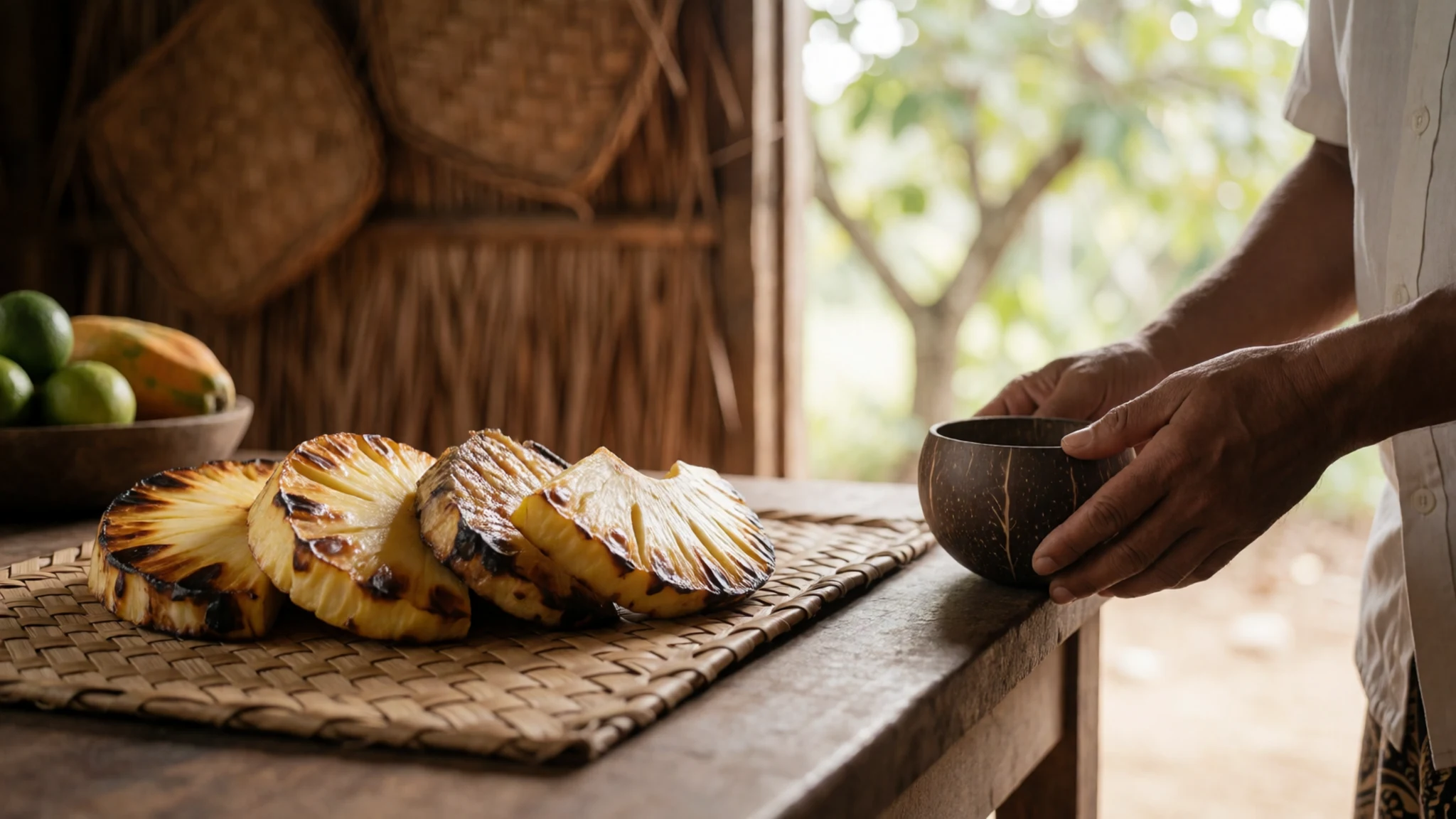
- Taro — Home meals in the villages
Taro is boiled or baked into a dense, filling side dish and often eaten with coconut. It rewards slow cooking and is everyday food rather than restaurant fare, so it usually reaches visitors through a host's kitchen.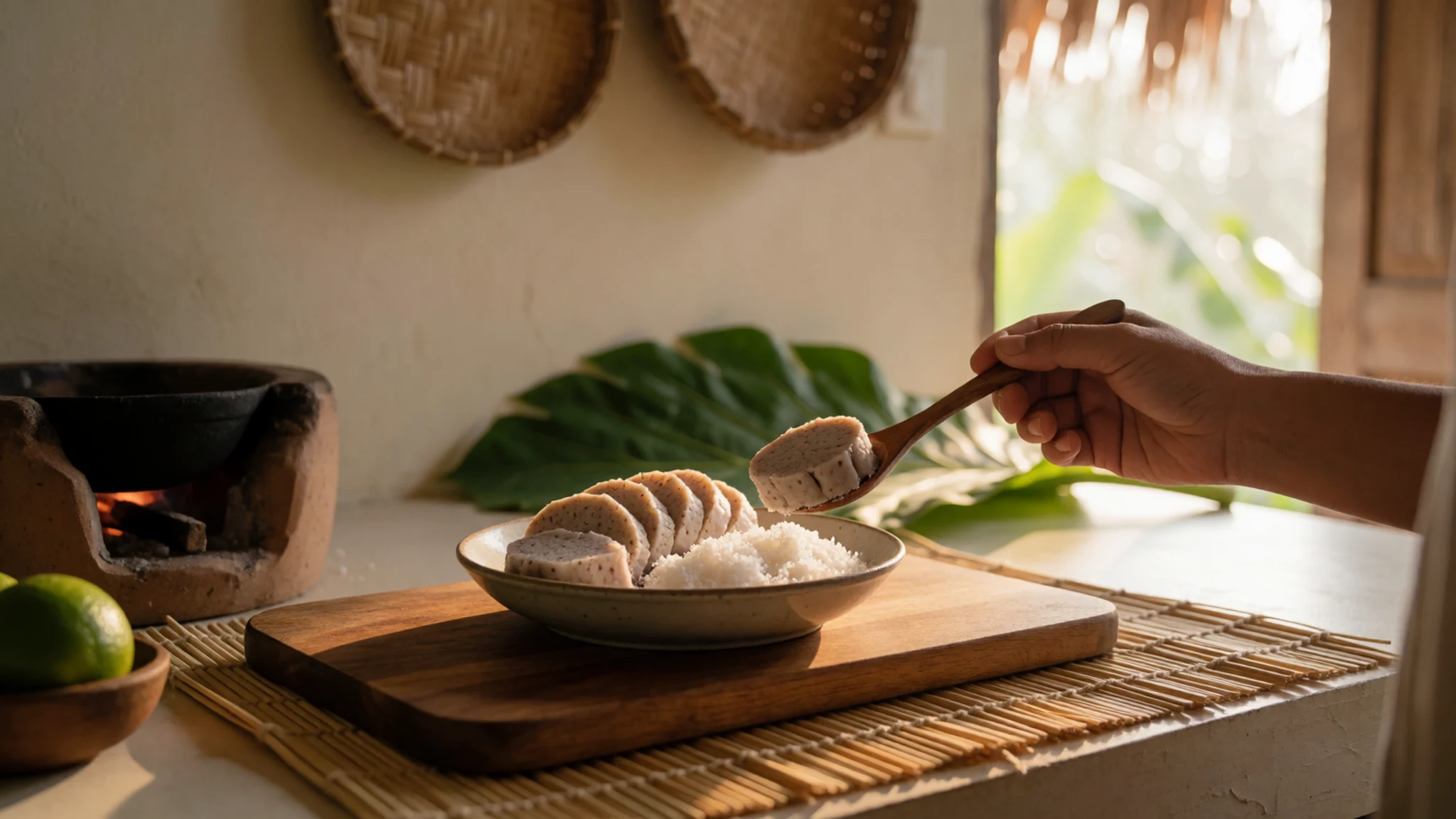
- Pandanus fruit — Village homes when in season
The fruit of the pandanus tree is eaten fresh when ripe and is also made into sweet preserved forms. The flavour is sweet and a little fibrous. Availability depends on the season, so ask locals before expecting it. - Reef and ocean fish — Fishing households and the shore at day's end
Fish from the reef and open sea is the main protein, commonly grilled over coals or cooked with coconut. Catches depend on tide and weather, and overfishing is a concern in the islands, so take only what hosts offer. - Green coconut — Any village
Green coconuts are the easiest cold drink on the island, and mature coconut flesh goes into many dishes. Every tree belongs to someone, so ask before taking a nut and offer thanks when one is cut for you.
Plan it
Best time. December to April, outside the wet season. May to November is hot and humid, and the islands sit on the edge of the typhoon belt, so storms and flooding are likelier then.
How long. 3–4
Getting there. Fly to Majuro, the capital, then take an Air Marshall Islands domestic flight to Mejit Airport, which has the only airstrip on the island. Flights are limited, so confirm schedules directly and allow spare days either side.
Budget. mid
Tips
- Book flights and a host or place to stay well ahead, as Mejit has no resort scene
- Allow buffer days in the plan, since small-island flights can change with weather and loads
- Carry cash in small notes, as cards are unlikely to work away from Majuro
- Bring your own drinking water, sun protection and any medicines from Majuro
- Check entry rules for your passport before booking, using the official Marshall Islands visitor information
Etiquette
- Ask permission before photographing people or entering family land
- Dress modestly in villages and at church
- Take off your shoes at a house door if others have
Nearby
Sources
- Wikidata Q703543 (CC0)
- Wikipedia — Mejit Island (CC BY-SA 4.0)
- Wikivoyage — Marshall Islands (CC BY-SA 4.0)
- Mejit LANDSAT 2000, NASA (Public domain)
- Mejit Island, NASA (Public domain)


Wildlife
- Pacific black duck (animal)
Picture a duck that paddles about from Indonesia to Australia and across the Pacific islands; New Zealanders call it the grey duck. On Mejit, the place to hope for these native ducks is the lake, a rare source of fresh water in a land short of it. Nothing tells us the best season or hour, so ask a local guide. Keep well back, stay quiet, and never offer food. - Pacific black duck (bird)
Picture a duck that paddles about from Indonesia to Australia and across the Pacific islands; New Zealanders call it the grey duck. On Mejit, the place to hope for these native ducks is the lake, a rare source of fresh water in a land short of it. Nothing tells us the best season or hour, so ask a local guide. Keep well back, stay quiet, and never offer food.