Ailuk Atoll
Ailuk Atoll, Marshall Islands
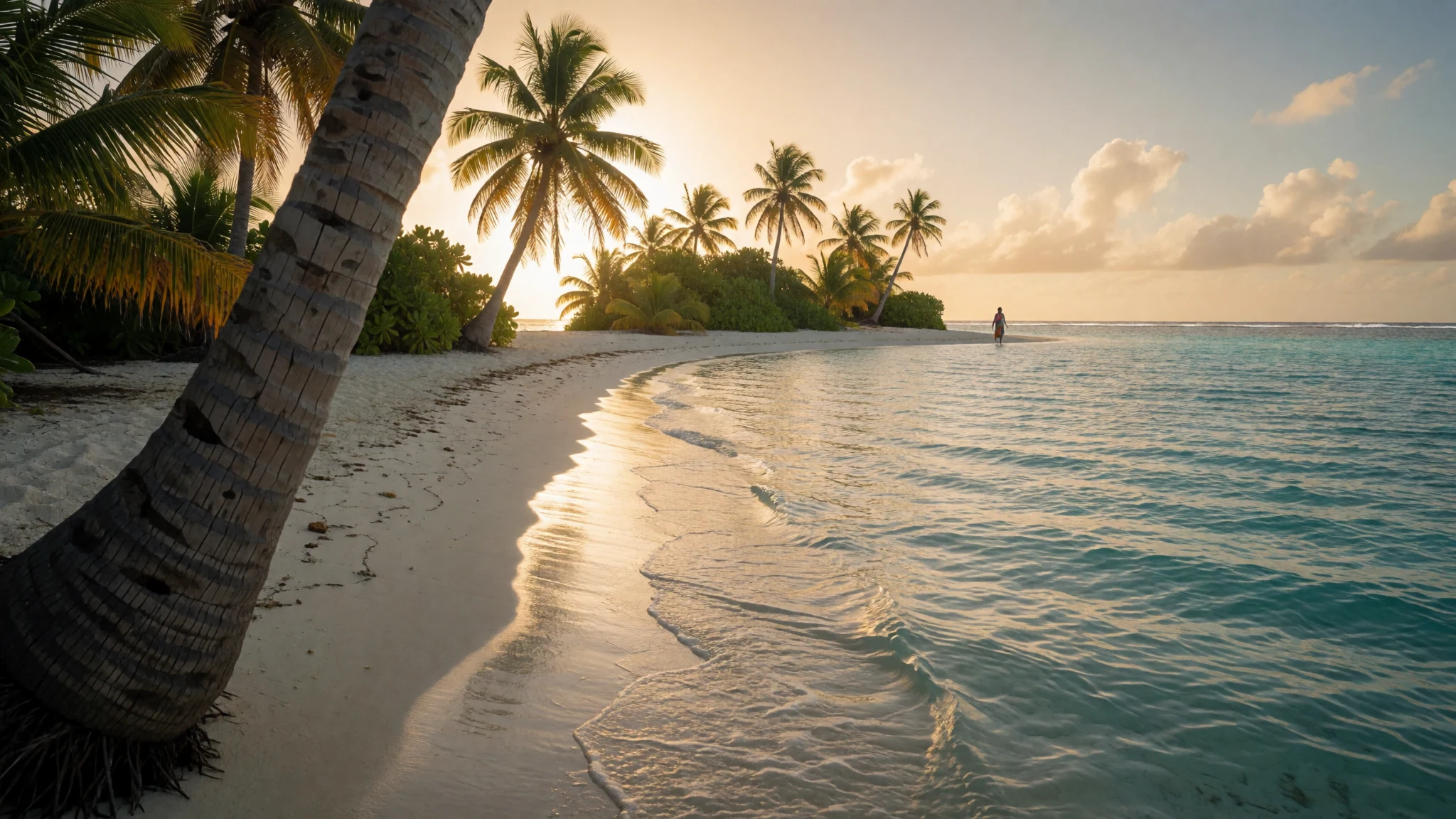
Ailuk Atoll is a quiet ring of 57 coral islets around a vast lagoon, for travellers who want remoteness more than resort comforts.
The place
Ailuk Atoll (Marshallese: Aelok) is a ring of 57 low coral islets in the northern Pacific, forming one legislative district of the Ratak Chain in the Marshall Islands. Together the islets add up to only 5.4 square kilometres of land, yet they enclose a lagoon of 177.45 square kilometres, so water outweighs ground by a wide margin. The atoll lies about 72 kilometres north of Wotje and 92 kilometres south of Utirik, and it is 393 kilometres north of Majuro, the national capital. That distance is the defining fact: Ailuk is reached by deliberate effort, never by stopping on the way to somewhere else. The land is flat, sandy and green with coconut, breadfruit and pandanus, and walking across an islet takes minutes. The sea is the horizon in every direction, lagoon on one side and open ocean on the other. The climate is tropical rainforest type: warm and humid all year, averaging around 27 °C, with the north-east trade winds blowing for most months and keeping the air moving. Sunshine is plentiful, from 239 hours in January to 322 hours in July, though July also brings the most rainy days. Facilities are very simple, hospitality is community-run at best, and the rhythm is set by weather and boats rather than timetables. Ailuk is an inhabited home, not a resort, and what it offers is quiet water, empty shorelines and a close look at atoll life.
Its story
Ailuk Atoll was settled long before any ship recorded it. About 2000 years ago, Oceanic-speaking voyagers who made plain pottery and worked shell into adzes and fishhooks left the Solomon Islands region and spread through central Micronesia, reaching the atolls of the Marshall Islands. Their descendants built a culture around navigation, canoe-building and living from reef and lagoon. European contact came late. A Spanish expedition under Miguel López de Legazpi sighted the atoll on 10 January 1565 and charted it as Los Placeres, 'The Pleasures'. Two of its islets were named San Pedro and San Pablo, after the expedition's flagship and its admiral's second ship. In 1885 the German Empire claimed the whole Marshall group. After the First World War the islands passed to Japan under the South Seas Mandate, and after the Second World War to the United States as part of the Trust Territory of the Pacific Islands, until the Marshall Islands became independent in 1986. A modern footnote came in December 2020, when police found an abandoned fibreglass boat washed up on Ailuk carrying 649 kilograms of cocaine, a seizure officials described as the biggest in the country's history. The ocean currents that carried it are the same ones that have always delivered everything to these shores, from drift logs to castaways.
What to see
- The central lagoon — Lagoon interior
Ailuk Atoll's lagoon covers 177.45 square kilometres, far more than the land around it. Calm, shallow stretches suit swimming and snorkelling, while the colour shifts from pale green over sand to deep blue over coral heads. Local boat rides are the way to see it; ask the community who is available.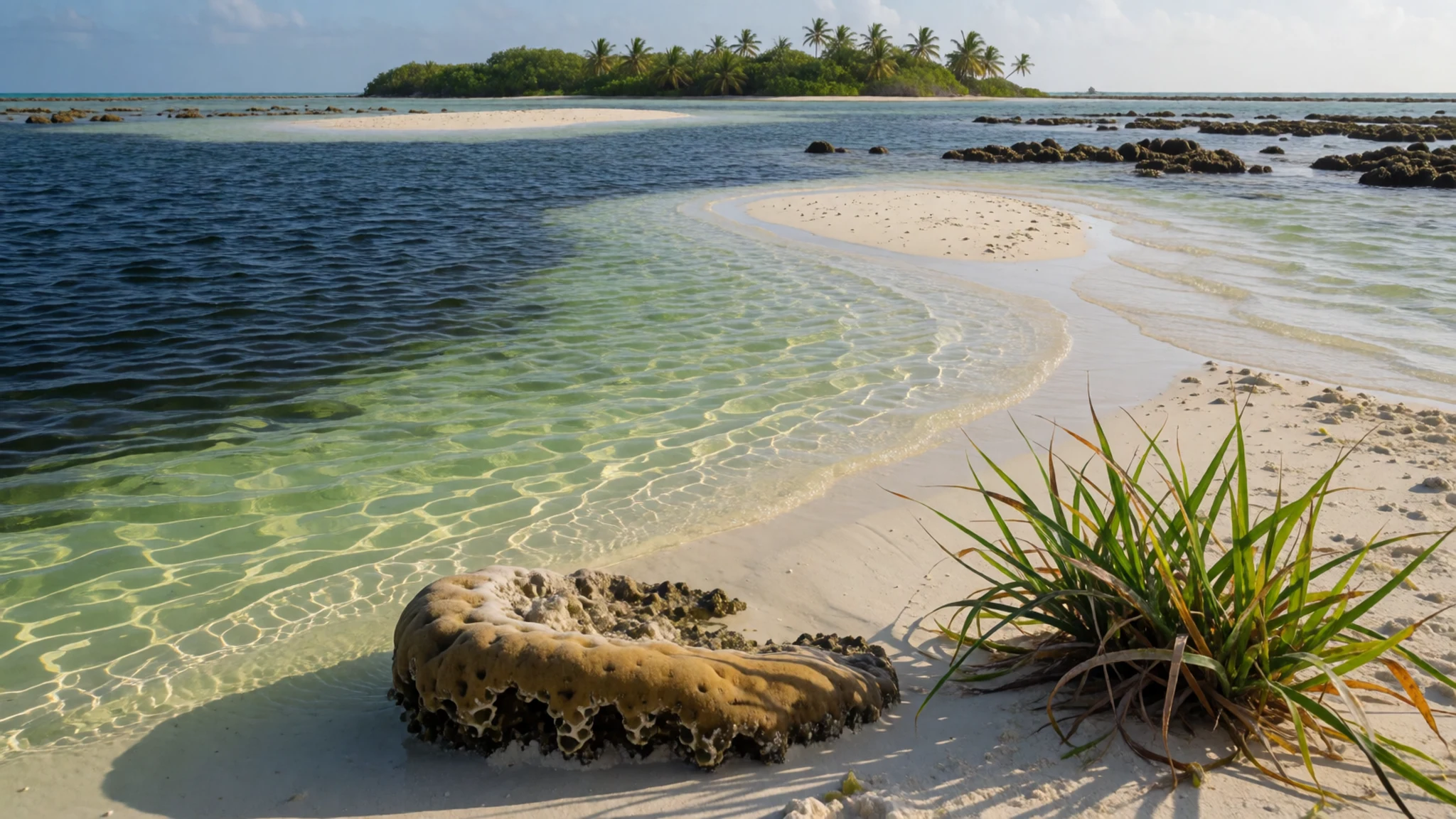
- The village islets — Inhabited islets
Most daily life on Ailuk Atoll clusters on a few inhabited islets, where houses sit among breadfruit trees and coconut palms, and paths are sand. Walking through at a slow pace shows how people store water, dry fish and weave. Ask before photographing homes or people.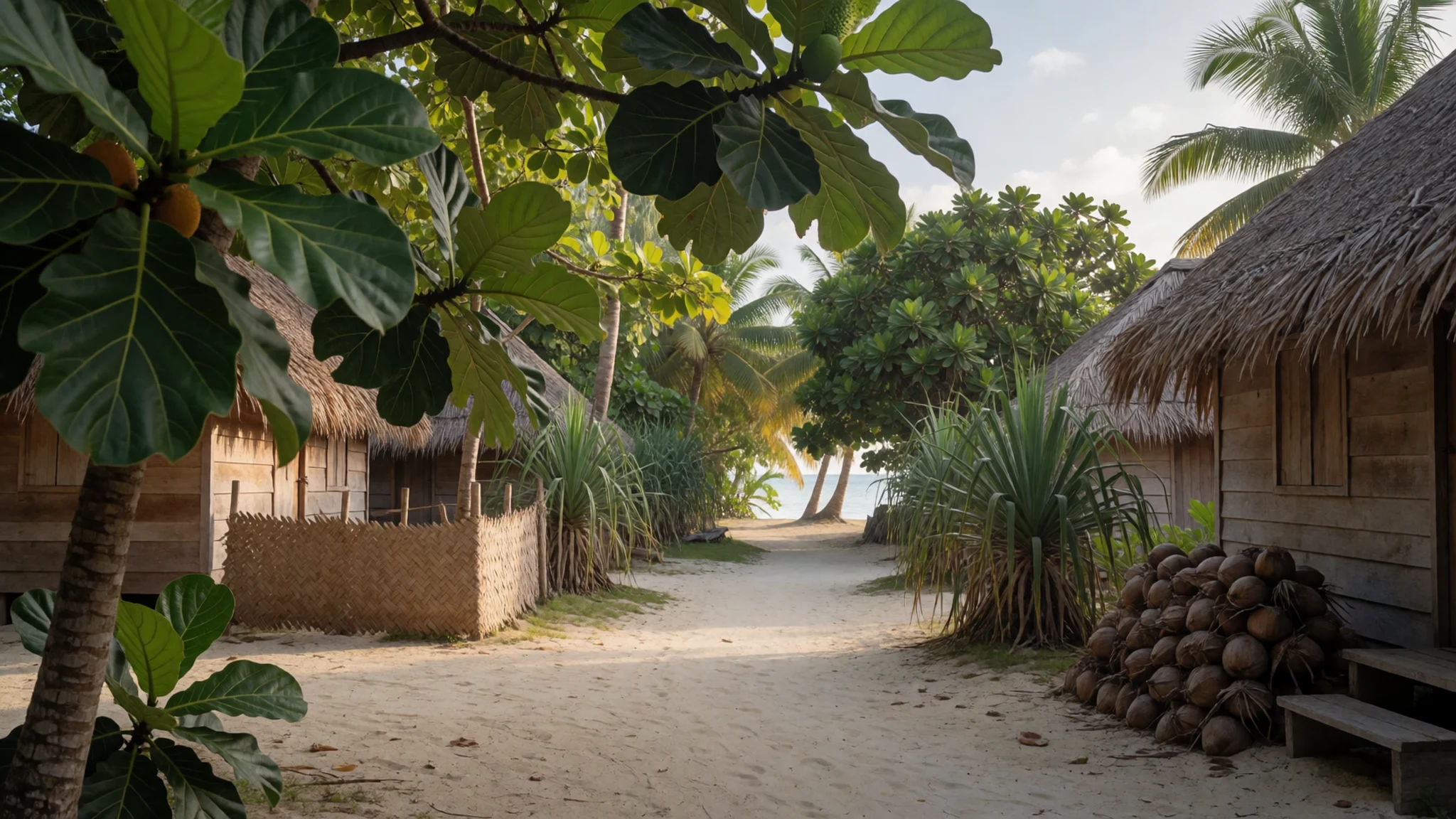
- Ocean-side reef shores — Outer shorelines
The outer edge of Ailuk Atoll faces open Pacific swell, with reef flats, coral rubble and wind-bent trees. These shores are for beachcombing and watching seabirds rather than swimming, since currents and surf can be strong. Go with a local guide who knows the tides.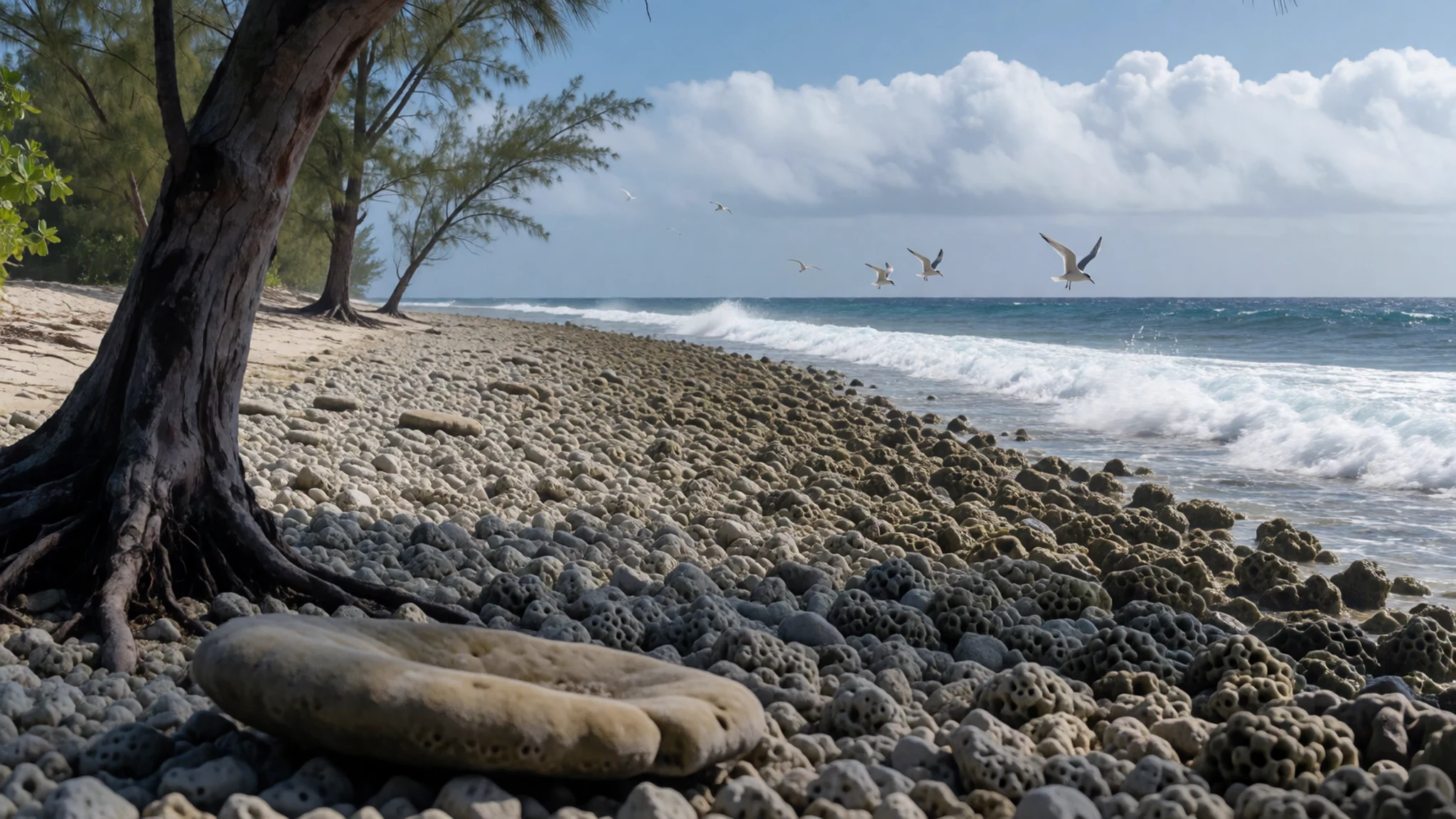
- Uninhabited islets — Outlying islets
Many of the atoll's 57 islets have no permanent residents, only coconut groves, nesting birds and white sand. Boat trips to them can fill a day with picnics and quiet snorkelling. Landowners hold rights to each islet, so access must be arranged through the community, never assumed.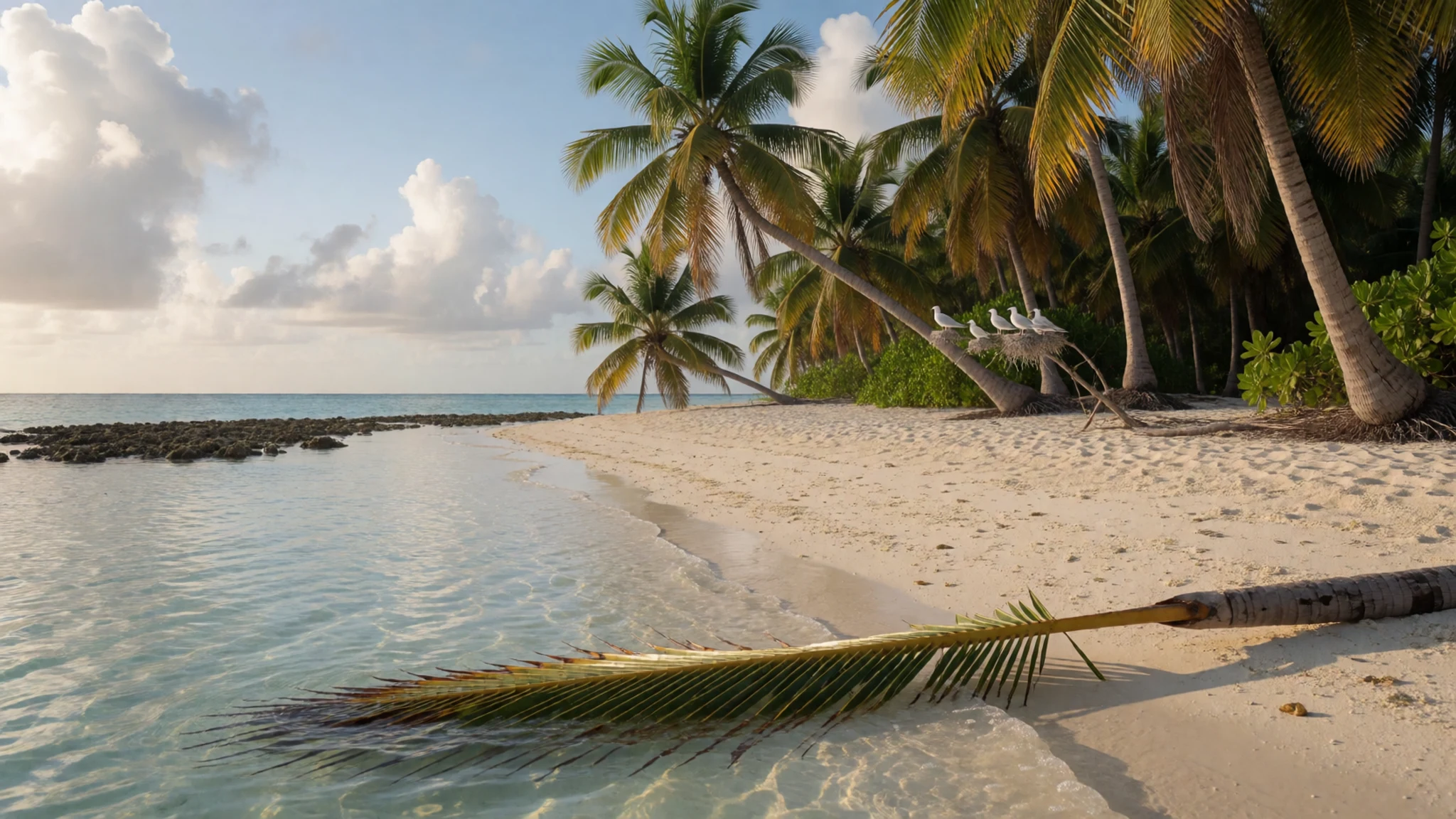
- Sailing canoes and boat building — Village shorelines
Marshallese sailing canoes are a living craft, shaped for lagoon and open-water travel on the trade winds. On Ailuk Atoll, hulls under construction or canoes drawn up on the beach may be visible. Watching how they handle the wind is a lesson in local seamanship.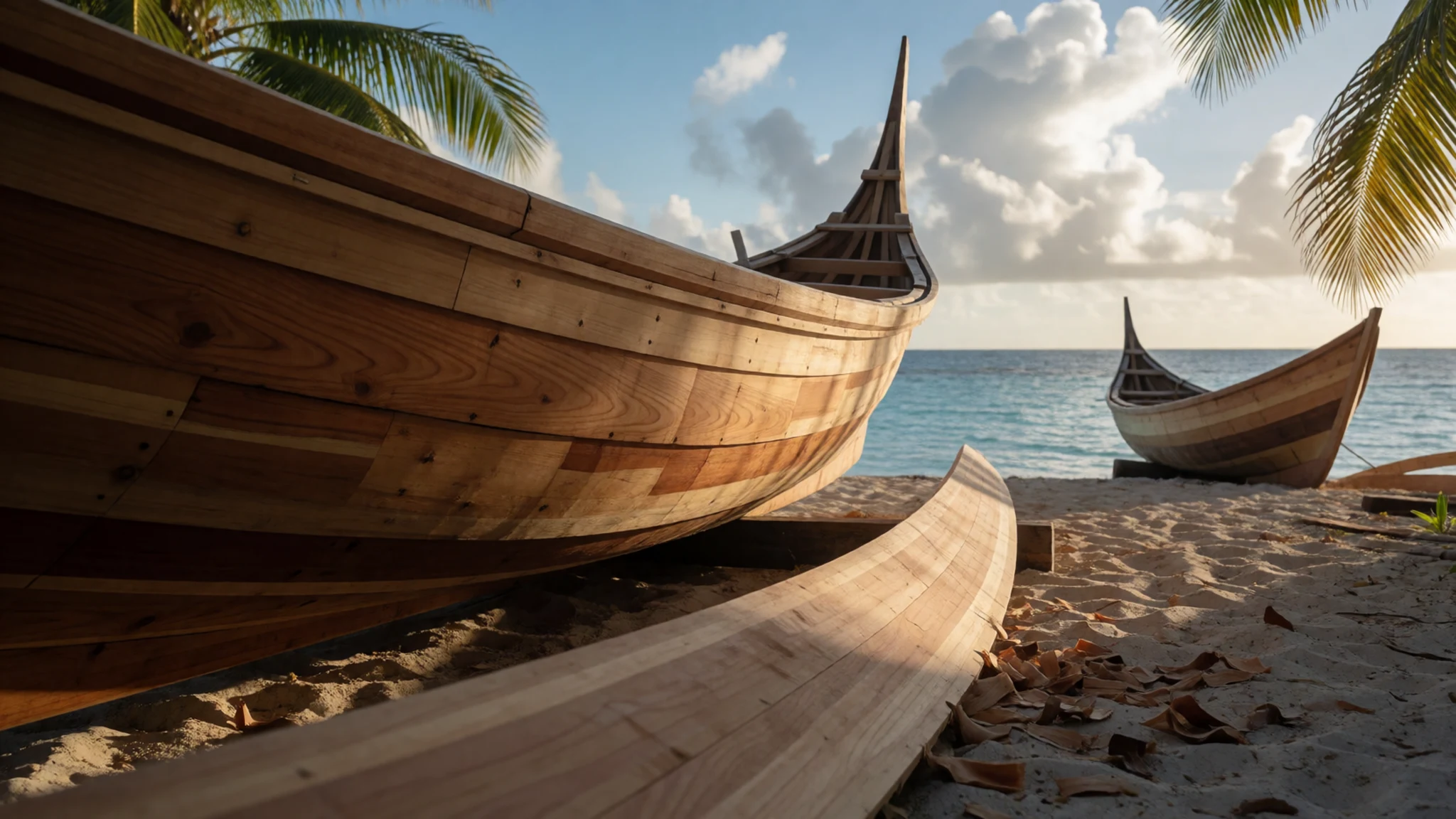
Culture
Ailuk Atoll is a small, close-knit community where family, land and church shape daily life. Land in the Marshall Islands is held through lineages, with traditional chiefs, called iroij, and family heads overseeing who may use which stretch of an islet. For visitors, that means the beach or reef that looks empty almost always belongs to someone. Church is central, services bring people together, and Sundays are generally quiet. Hospitality is real but unhurried; welcome often comes through shared food, conversation and patience rather than organised tours. Handicraft remains a point of pride, particularly weaving from pandanus leaf into mats, baskets and fans, skills handed from older women to younger ones. Sailing and fishing knowledge also passes down through families, a legacy from the voyagers who settled these atolls. Marshallese is the everyday language, and a few greetings in it will be received warmly, though English is also used. Life follows the weather and supply boats, so plans change, and good humour matters more than a fixed schedule. Resources such as fresh water and fuel are limited, and visitors are guests in a place with little margin. Ask permission before walking onto an islet, joining a gathering or taking photographs of people, and dress modestly in the village, especially on Sundays.
What to wear
Ailuk Atoll's traditional clothing grew from pandanus, which women process and weave into fine mats, belts, hats and fans, sometimes worn or displayed at ceremonies and church occasions. Woven goods and shell or flower adornments mark celebrations, and handicraft skill is a mark of pride. Everyday dress today is simple and practical: women usually wear long, loose, brightly printed cotton dresses with sleeves, a style introduced in the missionary era, while men wear shirts with shorts or trousers. Rubber sandals are standard footwear, and hats shade people from the sun. For visitors, modesty matters more than fashion. Choose light cotton or quick-dry fabrics that cover shoulders and knees in the village, with swimwear kept to boats and secluded beaches. A wide-brimmed hat, long-sleeved sun shirt and strong reef-safe sunscreen are needed, since the sun is intense and shade is limited. Bring reef shoes or sturdy sandals for sharp coral rubble, and a light rain jacket for sudden showers. Everything dries quickly in the trade winds, but humidity is constant, so pack spare layers in waterproof bags. Because shops are scarce, carry what you need rather than hoping to buy it on the atoll.
What to eat
- Breadfruit — Family kitchens and community feasts
Breadfruit is a staple on Ailuk Atoll, eaten roasted, boiled or fried when in season. Its starchy flesh works like bread or potato beside fish. It is cooked in family kitchens and at community meals, so a shared meal is the usual way to try it.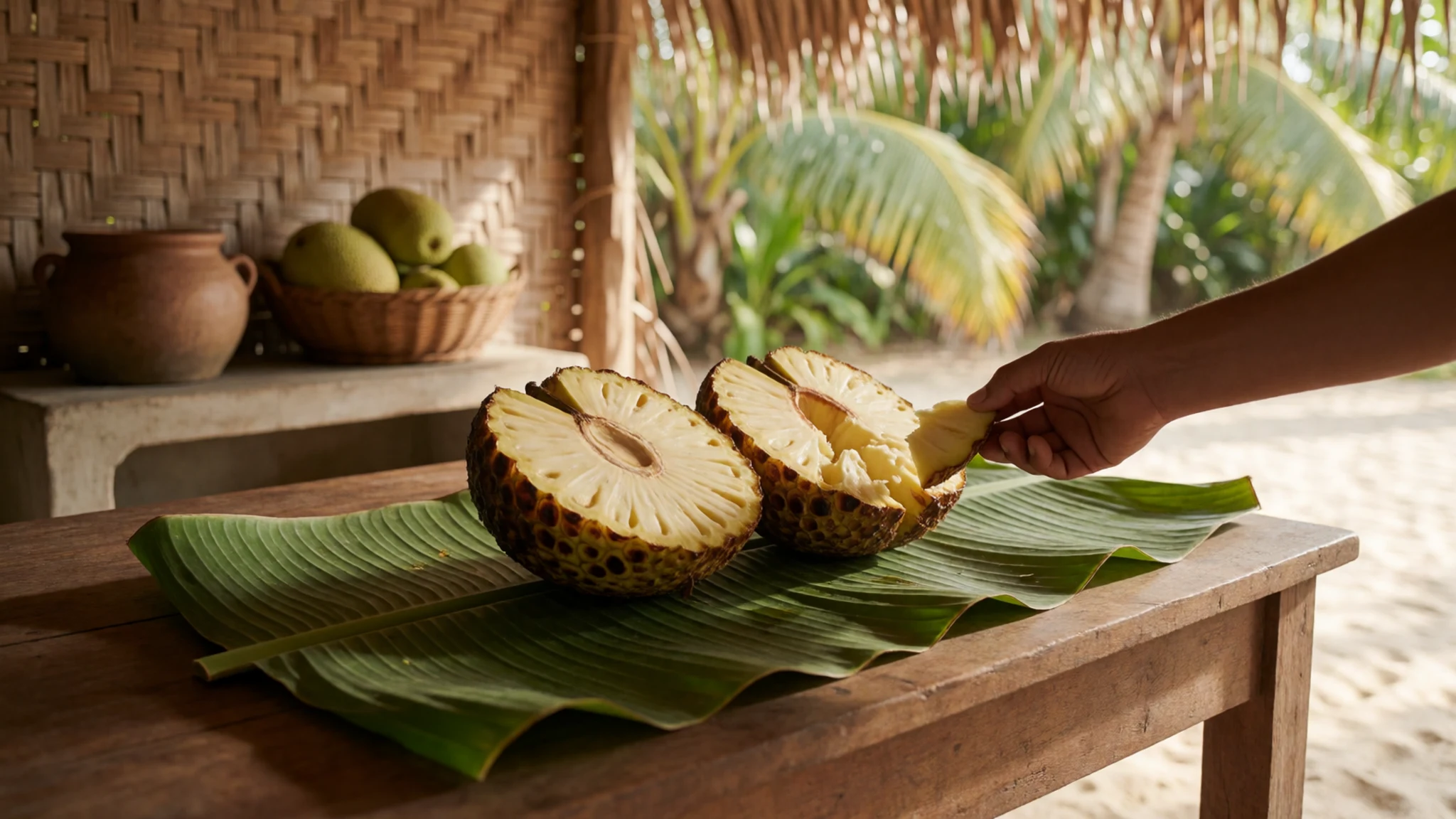
- Fresh reef and lagoon fish — Village homes and the shoreline when boats return
Fish from the lagoon and reef is the main protein, usually grilled over fire, boiled in broth or eaten raw with lime when very fresh. Catches vary with weather and tides, so the menu is whatever the boats bring in that day.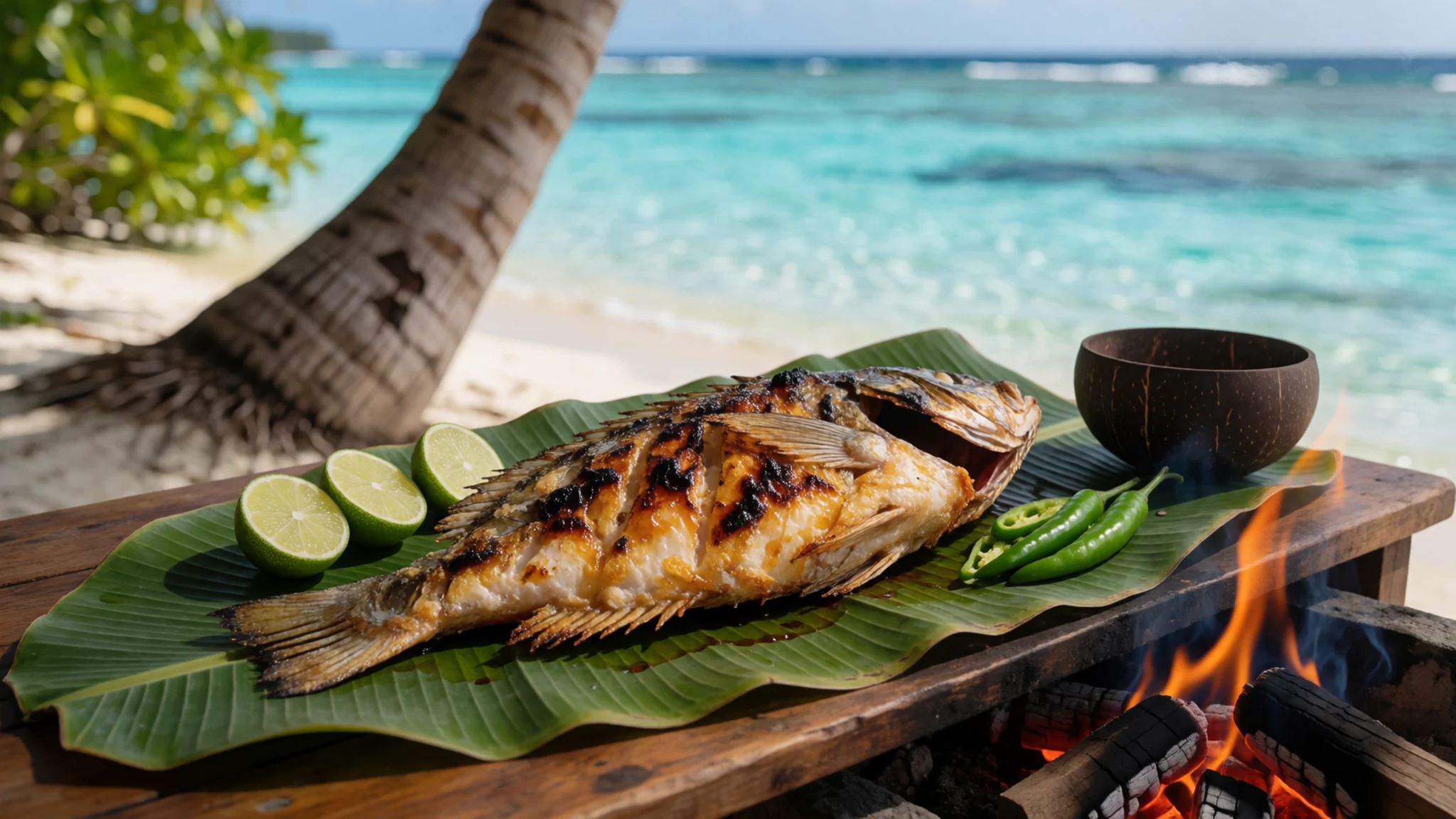
- Pandanus preserve — Family homes; ask in the village
Pandanus fruit is cooked and dried into a dense, sweet preserve that keeps for long periods, historically useful on voyages. It tastes caramel-like and slightly fibrous. Its making is slow, communal work, so it is often shared or given as a gift. - Coconut in every form — Any village, from the trees themselves
Coconut supplies drinking nuts, grated flesh for cooking, oil and sweet sap that can be boiled into syrup. A fresh green coconut cut open on a hot afternoon is the simplest refreshment on Ailuk Atoll, and it is almost always on offer. - Rice with tinned fish or meat — Home meals and village gatherings
Imported rice, flour and tinned foods arrive by supply boat and fill the gaps when local harvests are thin. Rice with tinned fish or corned meat is a common everyday plate. It is plain but filling, and it shows how much the atoll depends on shipping.
Plan it
Best time. January to April is the drier stretch, with about 51–52 mm of rain in January and February, rising through spring; temperatures stay around 24–29 °C all year. August to October is the wettest, with 215–270 mm a month, and July has up to 25 rainy days, so seas and boat plans are less reliable then.
How long. 3–5
Getting there. Fly to Majuro (Amata Kabua International Airport), 393 km south of Ailuk Atoll, then continue by domestic flight or inter-island ship. Services to outer islands are infrequent and change often, so confirm the current schedule with Air Marshall Islands or the national shipping company well ahead. Local boats cover the final hop between islets.
Budget. mid
Tips
- Arrange accommodation and local guides through the atoll's community before you travel, since formal lodging is scarce
- Build slack into your schedule: flights and ships to outer atolls can be delayed or cancelled by weather
- Bring cash in small notes, spare batteries, medication and a first-aid kit, as shops and clinics are very limited
- Carry your own drinking water or a purifier, and take reef shoes, sun protection and insect repellent
- Expect little or no mobile signal and internet; tell family your plan before leaving Majuro
Etiquette
- Ask the community before landing on any islet, since each one belongs to a family
- Dress modestly in the village and keep swimwear to beaches and boats
- Ask before photographing people, homes or church events, and keep Sundays quiet
Nearby
Sources
- Wikidata Q27577556 (CC0)
- Wikipedia: Ailuk Atoll (rev 1363879630) (CC BY-SA 4.0)
- Wikivoyage (CC BY-SA 4.0)