Bikar
Bikar, Marshall Islands
Bikar is an uninhabited Pacific atoll where seabirds and turtles still outnumber people, reached only by those willing to arrange everything themselves.
The place
Bikar Atoll (Marshallese: Pikaar) is a ring of six low islets in the northern Ratak Chain of the Marshall Islands, and nobody lives on it. The islets add up to only about 0.5 square kilometres of land, wrapped around a lagoon of 37.4 square kilometres, so water is the main feature and the land is a thin, broken fringe. The highest ground is about 6 metres above the sea, which explains why storms and cyclones can sweep across it.
The atoll lies 579 kilometres north of Majuro, the national capital, and 115 kilometres north of Utirik, the nearest inhabited atoll. Bokak is 320 kilometres to the north-north-west. That isolation is the whole story: with no settlement and few visitors, the plants and animals here have stayed in comparatively untouched condition.
The climate is semi-arid. Mean annual temperature is about 28 °C, and annual rainfall is under 1,143 mm, falling mostly between July and October. Prevailing winds blow from the north and north-east. There is no reliable fresh water, which is one reason people never settled, and it also means a visit has to be fully self-supported.
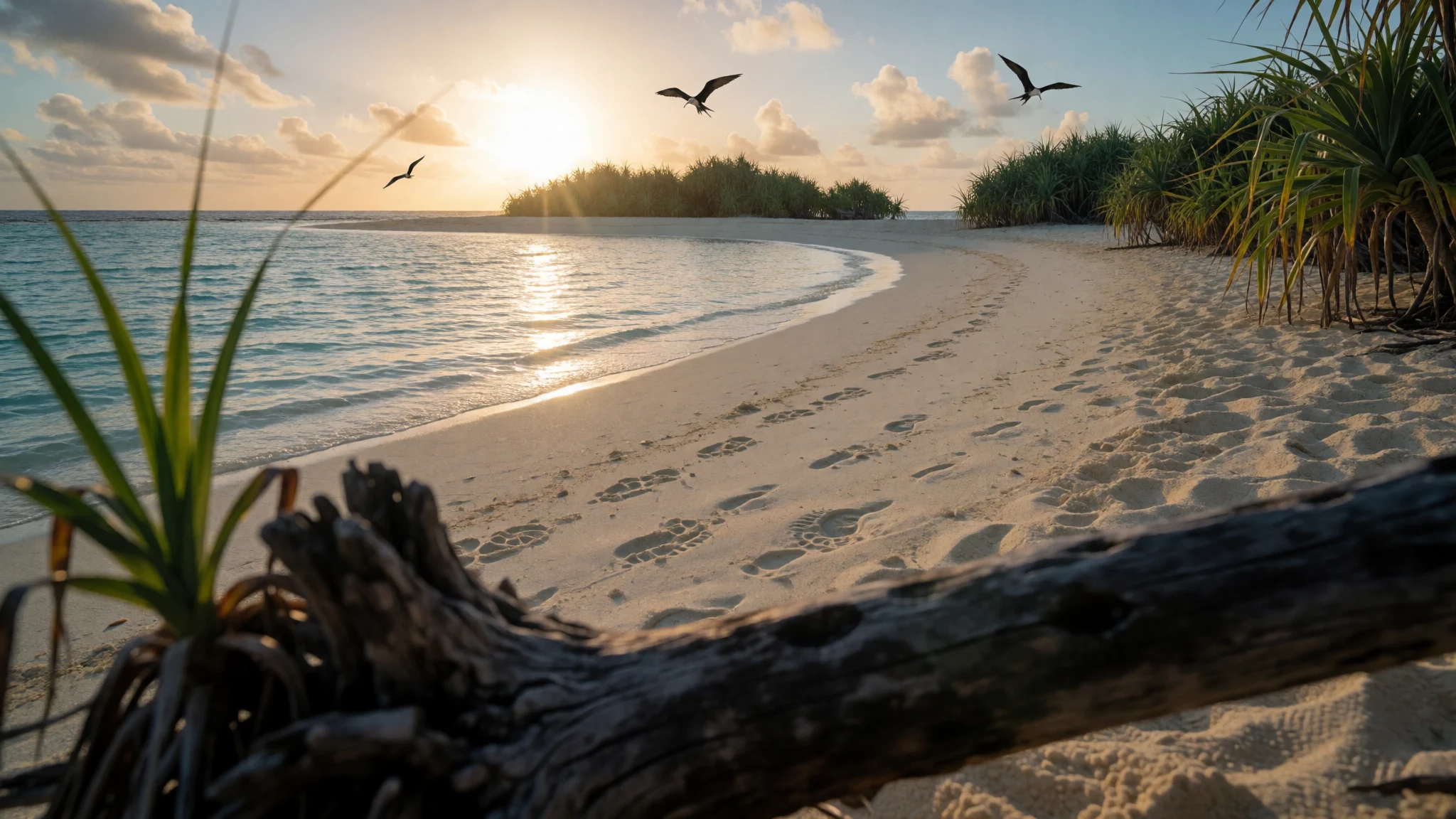
On the ground, expect white coral sand, low scrub, glare, wind and very little shade. There are no shops, paths, shelters or services of any kind. Bikar is a place for naturalists, sailors and the unusually self-reliant, not for anyone wanting a beach holiday with comforts. The reward is a sense of how an atoll looks when it is left to the birds, turtles and tides.
Its story
Bikar Atoll has a human history made of visits rather than residence. People settled the Marshall Islands long ago, and Marshallese from other atolls came to Bikar from time to time, but nothing suggests a permanent community ever lived here. The lack of fresh water and the atoll's exposure to storms ruled out the usual island farming. Instead it was a hunting and gathering ground, mainly for seabirds, eggs and turtles, used by people from the northern Ratak atolls. Custom governed the harvest, and the hereditary chief, the Iroji Lablab, oversaw it.
European ships found it in the nineteenth century. The Russian brig Rurik, under Otto von Kotzebue, called in 1817 while searching for a northern passage. A French corvette, the Danaide, surveyed the atoll in 1840. Then came paperwork: in the 1880s Bikar was sold between Marshallese chiefs and German trading companies, and Germany annexed the Marshall Islands in 1885. Japan took over German government property, Bikar included, in 1914.
The best-known mystery belongs to 1900, when the steel cargo ship Manchester, carrying kerosene from New York towards Yokohama, disappeared. In 1901 wreckage and signs of habitation turned up on Bikar. The likeliest reading is that the ship was wrecked here and the survivors left in lifeboats shortly before the discovery. No trace of the people aboard has ever been found.
What to see
- The lagoon — Centre of the atoll
The 37.4-square-kilometre lagoon is the atoll's main body, a broad sheet of shallow water ringed by reef and islets. From a boat anchored inside, the colour shifts between pale sand flats and darker coral heads. Entering any atoll lagoon calls for a skipper who knows the reef and the weather.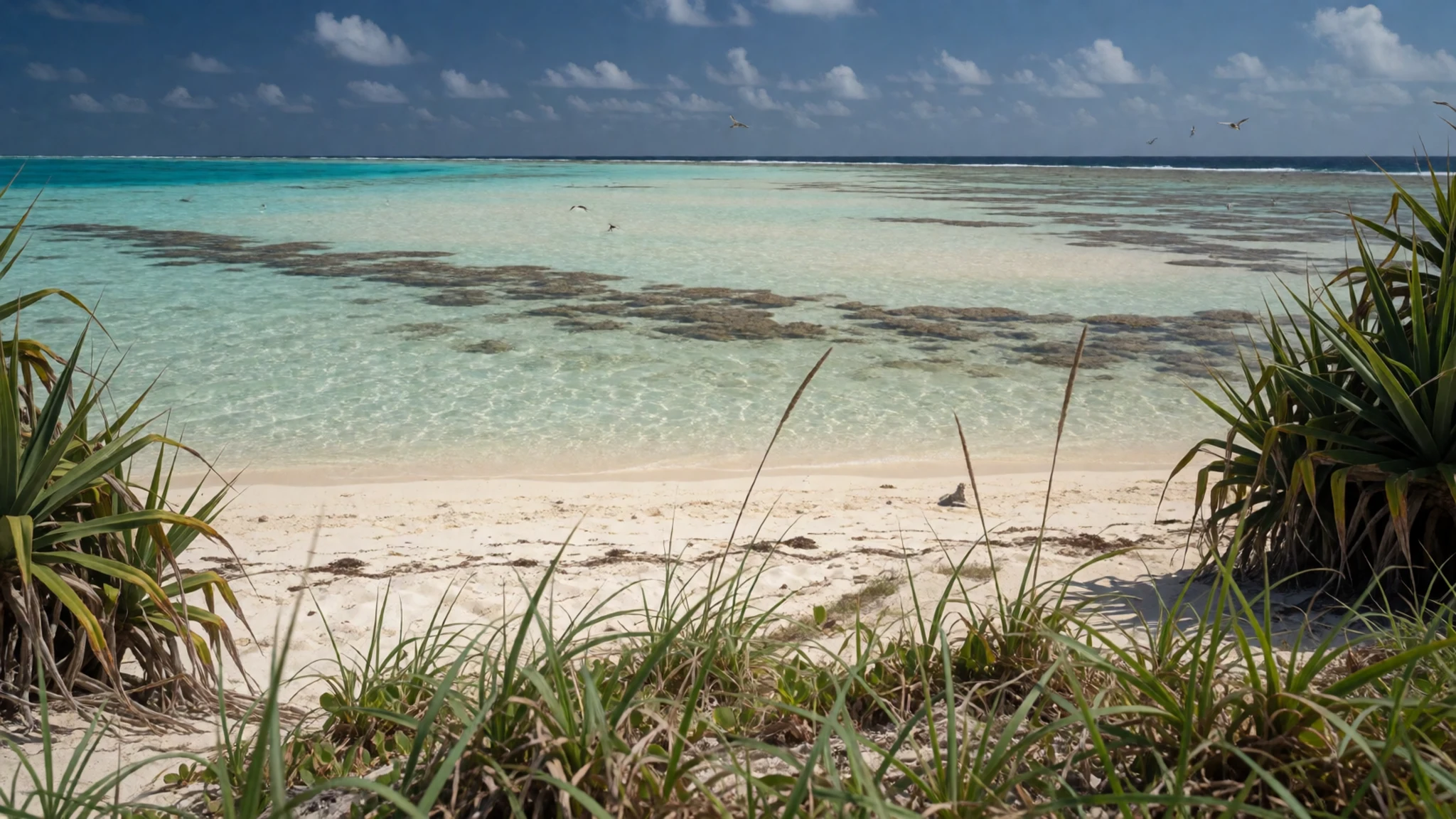
- The six islets — Around the lagoon rim
Six islets make up the dry land, together about 0.5 square kilometres. The enhanced shoreline map shows vegetation, bare sand and reef shallows in separate colours, the easiest way to grasp how little ground there is. On foot, each islet is a short walk over coral sand and low scrub.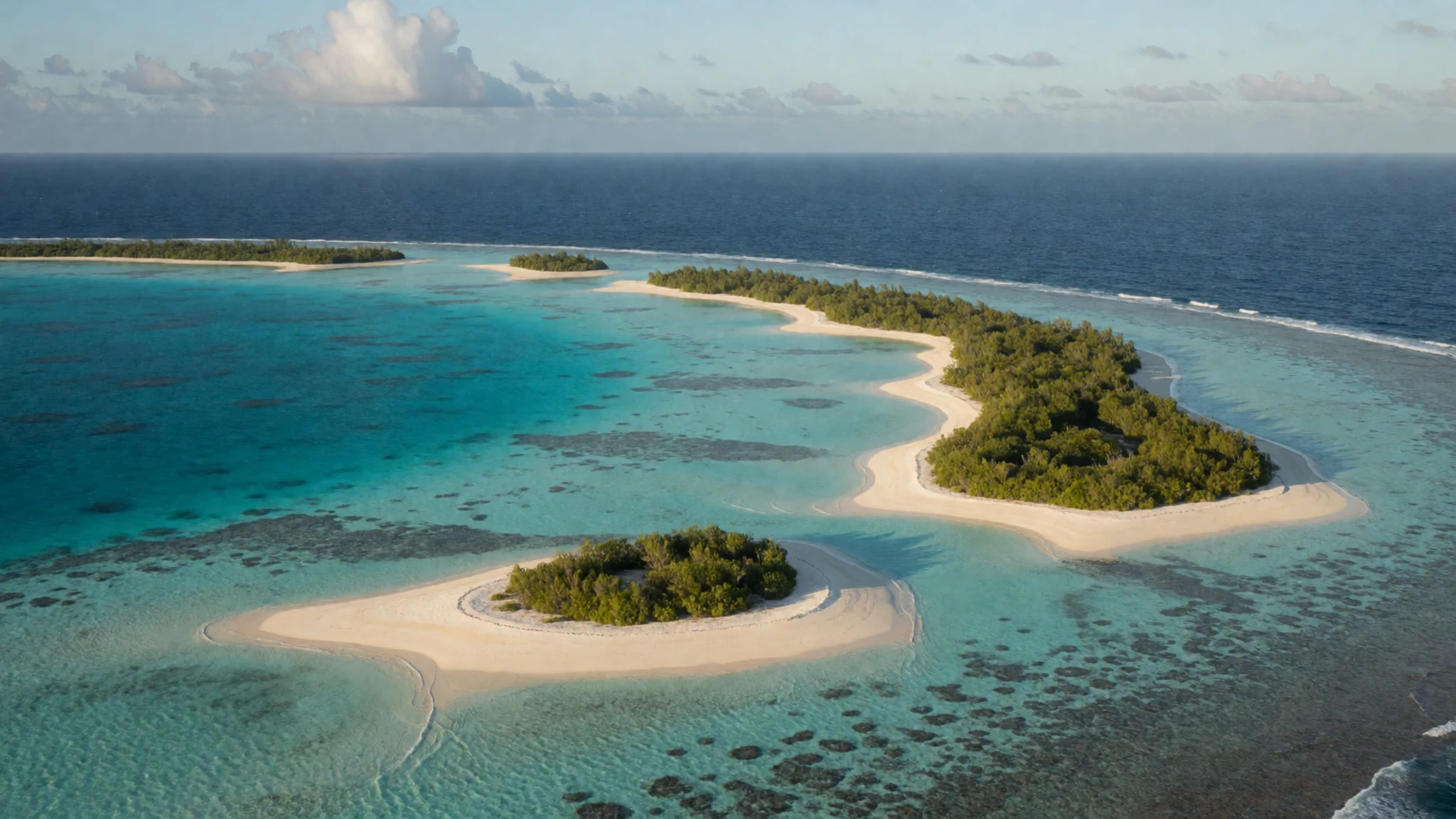
- Seabird and turtle shores — Islet beaches and scrub
People from neighbouring atolls once harvested seabirds, eggs and turtles here, and the islets still matter to those animals because nobody lives on them. Naturalists come for the nesting colonies and the beaches. Species and numbers vary by season, so ask a specialist before planning a trip.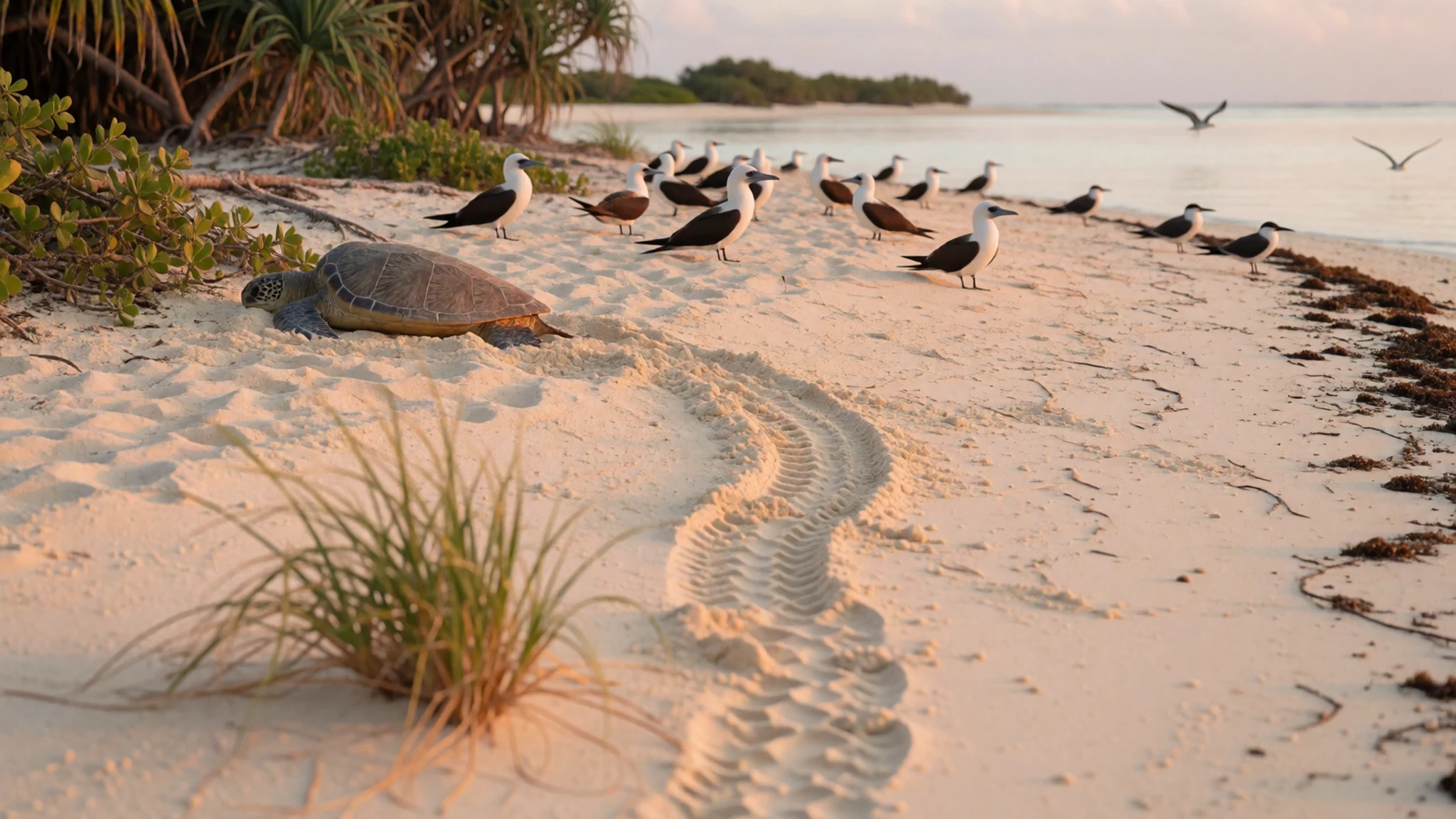
- The Manchester mystery — Islets and reef edge
In 1901 wreckage and signs of habitation were found on Bikar, linked to the steel cargo ship Manchester, which vanished in 1900 on a voyage from New York to Yokohama. Her crew were never traced. Little may remain to see, so the photograph of the ship at anchor is the clearer record.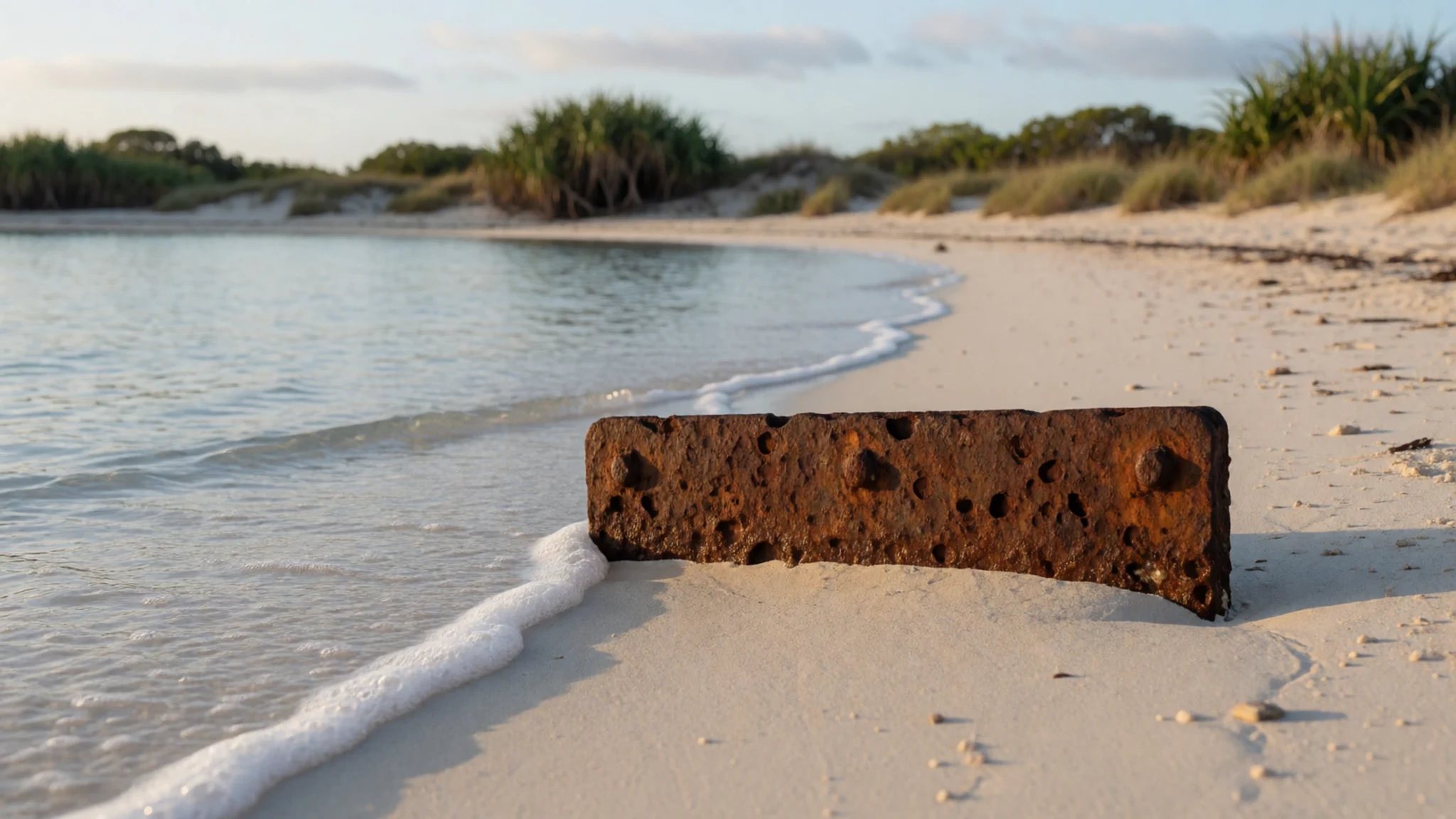
- The outer reef and open ocean — Outer reef
Outside the lagoon the reef meets deep Pacific water, with steady north to north-easterly winds. Snorkelling or diving depends on swell and on a vessel with proper safety gear. There is no rescue service nearby, since the closest inhabited atoll, Utirik, is 115 kilometres away.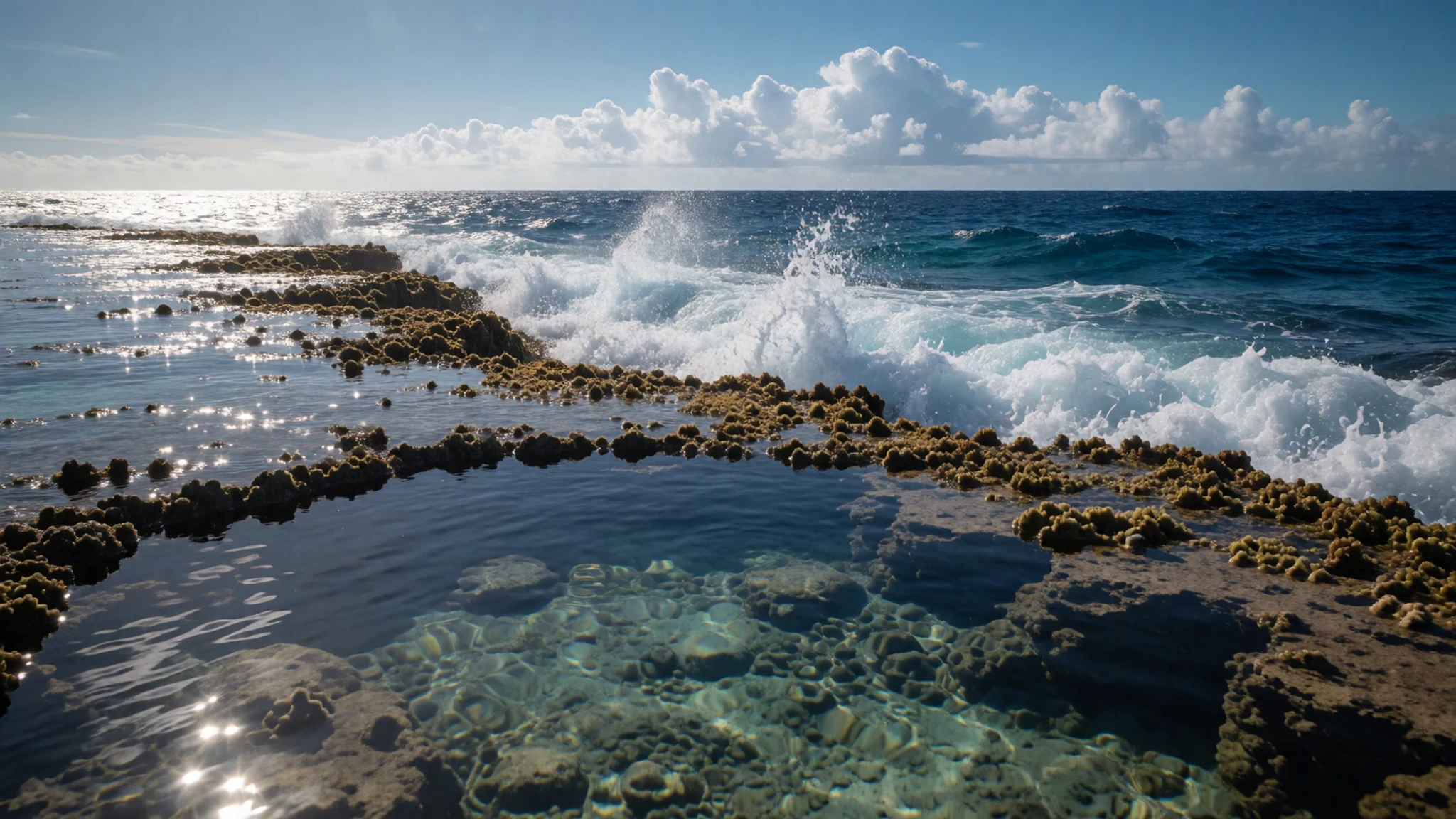
Culture
Bikar Atoll belongs to the Marshallese tradition of the northern Ratak atolls, where land and resources have long been held through chiefly and family rights rather than as open ground. Bikar, Bokak and Toke were traditionally the hereditary property of the Iroji Lablab, and the taking of turtles, birds and eggs was governed by custom. That sense of regulated, shared use still shapes how outsiders are expected to behave.
Marshallese culture is built around the sea. People here navigated between low atolls long before modern instruments, using swell patterns, birds and clouds, and they are known for stick charts that recorded those swells. Canoe building, weaving and fishing remain valued skills, and community life centres on family, church and feasting. The usual greeting is "yokwe", and a friendly, unhurried approach goes a long way.
Because nobody lives on Bikar, the culture a visitor meets is that of the neighbouring inhabited atolls and of Majuro. Hospitality is real, but time runs on island rhythms, and plans can shift with weather and boats. Patience is part of the experience rather than a problem to be solved.
Visitors should arrange permission through the proper Marshallese channels before landing on Bikar, and should take nothing from the islets, including eggs, shells and turtles, because harvesting here has long been governed by customary rights.
What to wear
Traditional dress in the Marshall Islands is closely tied to weaving. Mats plaited from pandanus leaf, and fibre from the coconut palm, were once made into skirts, wraps and ceremonial pieces, and finely woven mats are still given as gifts. Flower crowns, shell and flower necklaces and woven headbands appear at weddings, church events and cultural celebrations rather than in daily life.
Everyday clothing on Majuro and the inhabited atolls is practical for heat and humidity. Women often wear long, loose cotton dresses, a style introduced in the missionary era, with covered shoulders and skirts below the knee. Men wear shorts or trousers with T-shirts or short-sleeved shirts. Rubber sandals are standard footwear. For church and formal occasions people dress up neatly and modestly.
For Bikar itself the main concern is sun and sea. With almost no shade and a mean temperature around 28 °C, visitors need a wide-brimmed hat, sunglasses, light long-sleeved shirts and trousers that dry quickly, and reef shoes for landing on coral and wading in the shallows. Bring a waterproof bag for clothes.
On inhabited atolls and in Majuro, modesty matters. Cover shoulders and knees away from the beach, and keep swimwear for the water. Women in particular should avoid bikinis in villages.
What to eat
- Grilled or raw reef fish — Family meals and fish sellers around Majuro
Reef fish is the everyday protein across the Marshalls, grilled over coals, boiled in soup or eaten raw with lime. Bikar has no kitchens, so any fish eaten on a trip is cooked aboard the boat or bought beforehand on an inhabited atoll.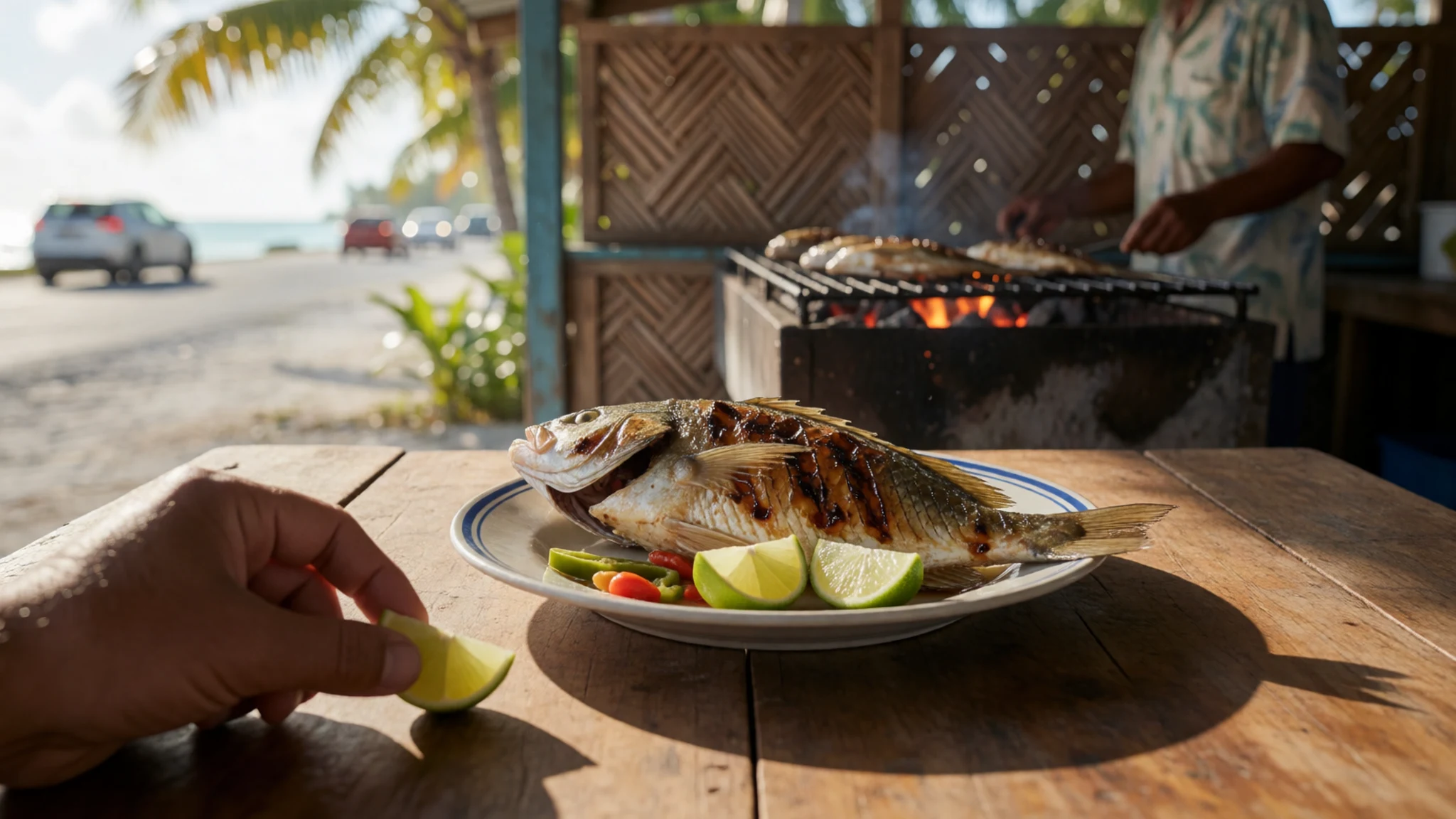
- Breadfruit — Community feasts and home cooking on Majuro
Breadfruit is a staple starch, roasted whole, boiled or sliced and fried, and it takes the place of rice or potato in many meals. It is best met at home-style meals and community feasts rather than anywhere on Bikar itself.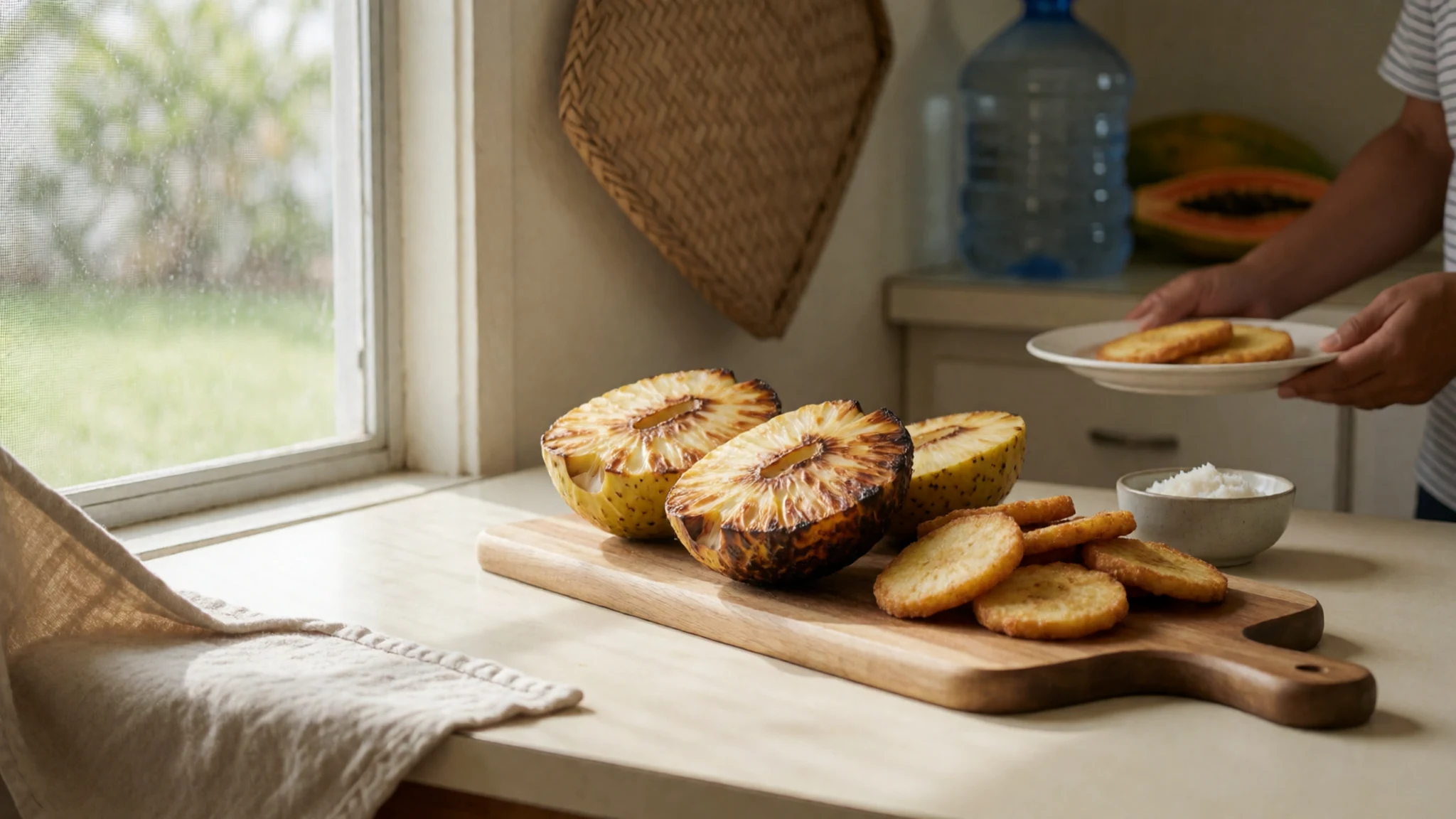
- Coconut in many forms — Roadside stalls and village kitchens on inhabited atolls
Coconut appears as drinking nuts, grated flesh in sweets and cooked dishes, and a thick syrup boiled down from the sap. Fresh nuts are sold by the roadside on inhabited atolls and make a safe, filling drink. - Pandanus preserve — Local markets and craft shops on Majuro
Pandanus fruit is pressed and dried into a sweet, chewy preserve that keeps well on long sea journeys. It is a traditional food and a good thing to ask about, as it is sometimes sold alongside crafts.
Plan it
Best time. December to April is the drier part of the year, before the July–October rains, with north to north-easterly winds throughout. Bikar is semi-arid, with a mean annual temperature of about 28 °C, so it is hot in every month and shade is scarce.
How long. 3–5
Getting there. There is no scheduled transport to Bikar, which is uninhabited. Fly to Majuro, the capital, 579 kilometres to the south, then arrange a private vessel and the necessary permissions. Utirik, 115 kilometres south, is the nearest inhabited atoll. Check with Marshall Islands authorities before planning.
Budget. high
Tips
- Arrange permission and a suitable vessel well ahead; nothing here can be booked on arrival
- Carry all fresh water, food, shade, sun protection and a first-aid kit, as the atoll has none
- Bring a satellite communicator or radio, as no rescue service is nearby
- Expect weather delays and keep flexible dates on both ends of the trip
Etiquette
- Seek permission from the proper Marshallese authorities before landing
- Take nothing from the islets, including eggs, shells and turtles
- Keep clear of nesting birds and leave no rubbish behind
Nearby
Sources
- Wikidata Q697812 (CC0)
- Wikipedia: Bikar Atoll (rev 1385929006) (CC BY-SA 4.0)
- Wikivoyage: Marshall Islands (CC BY-SA 4.0)
- Photo: Bikar Atoll from the ISS, NASA Johnson Space Center (Public domain)
- Photo: Bikar Atoll EVS precision map, Mr Minton (CC BY 2.5)
- Photo: The barque Manchester at anchor (Public domain)
- Photo: Bravo fallout plume, US Department of Energy (Public domain)
- Photo: Bikar Atoll, NASA (Public domain)
- Map: Mappa di Bikar, zuzu macumba (CC BY 3.0)


Wildlife
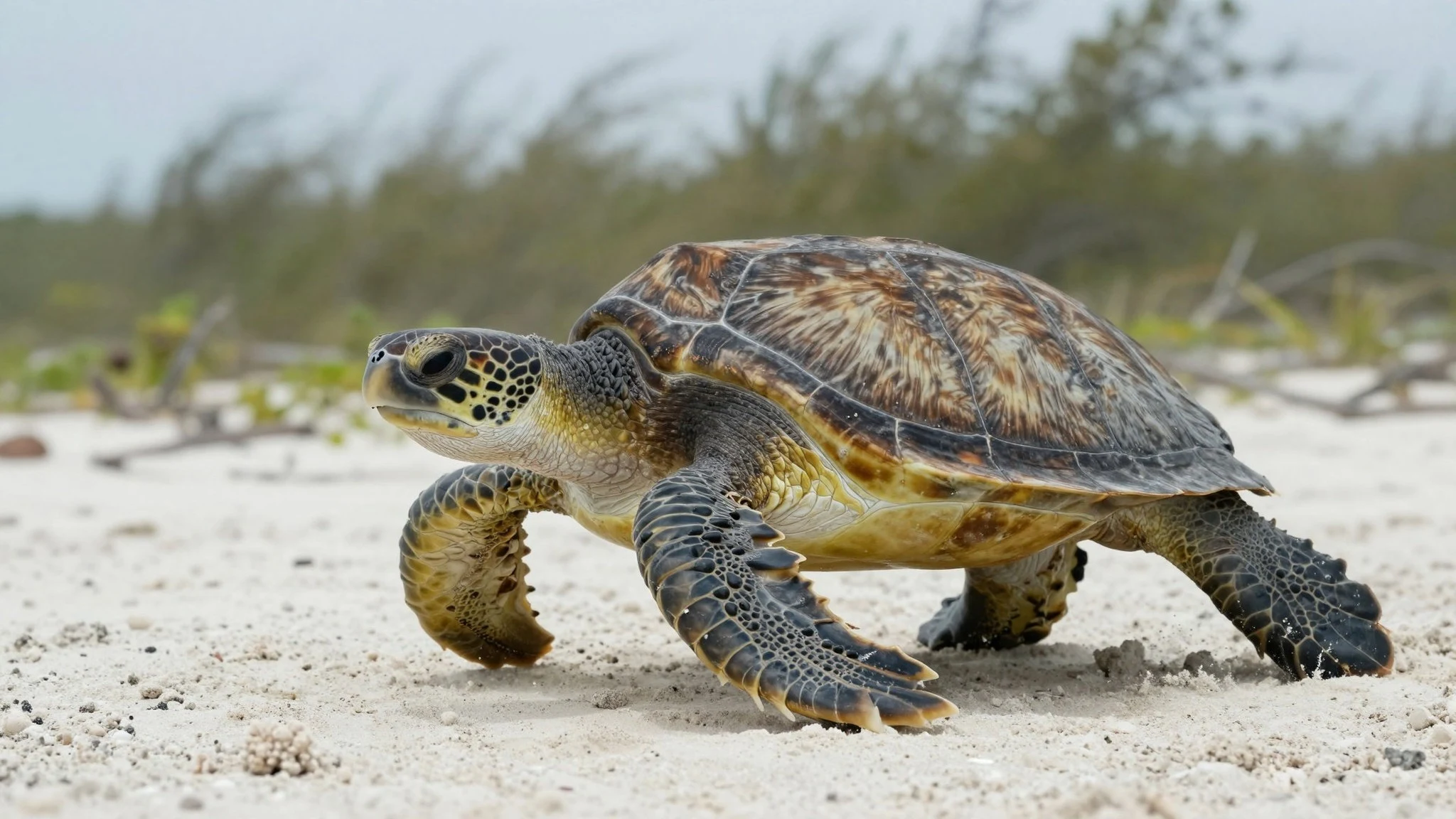
- Green sea turtle (animal)
The green sea turtle is a big, gentle sea reptile named for the green fat beneath its shell, not for its olive-to-black back, because it eats nothing but seagrass. Bikar is uninhabited, and turtles there still outnumber people. Watch from a respectful distance, keep voices low and movements slow, and never feed them. Since getting there is entirely down to you, plan carefully and, if you can, bring a guide.