Ailinglaplap
Ailinglaplap, Marshall Islands
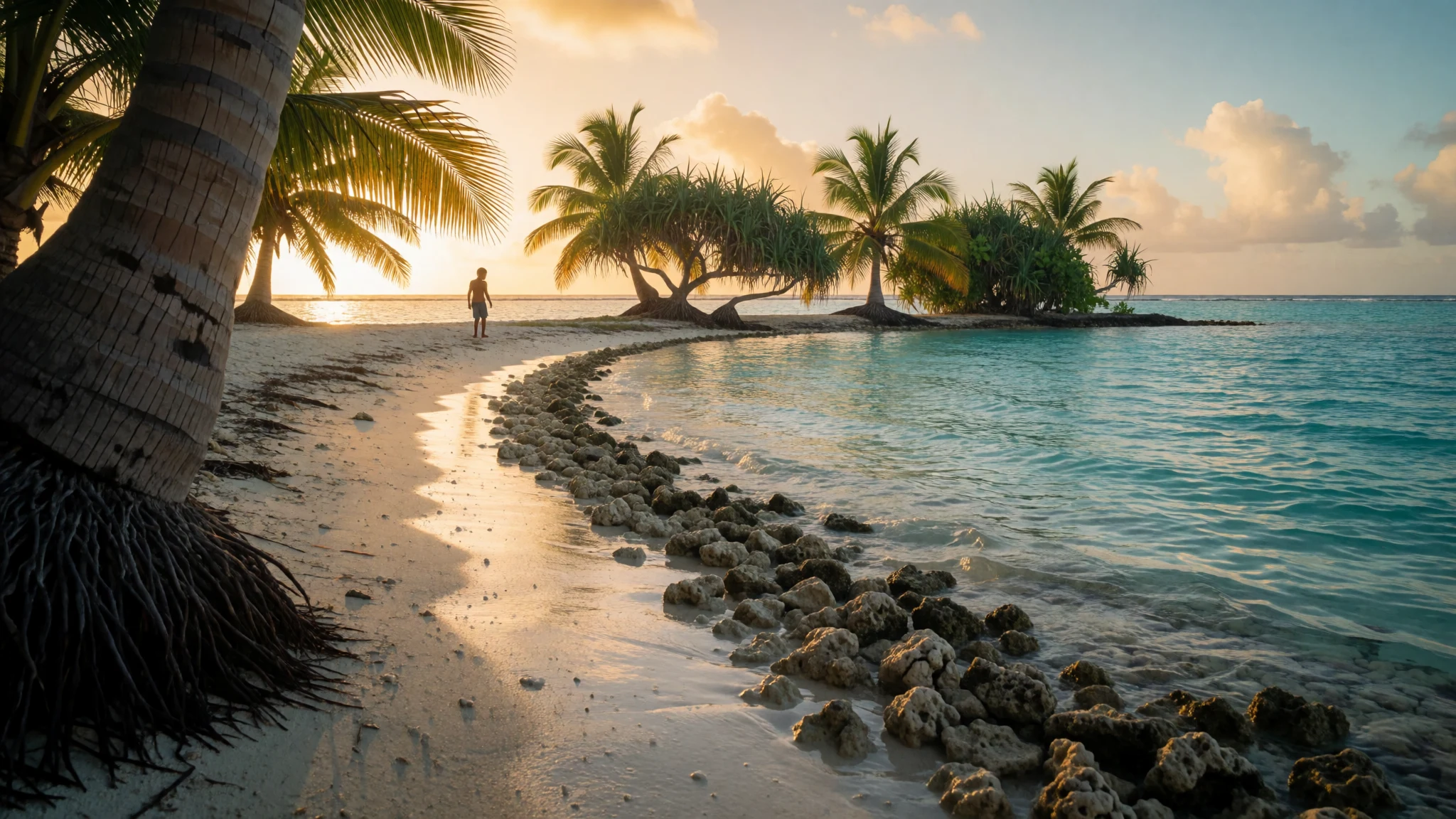
Ailinglaplap is a quiet Marshallese atoll where a vast lagoon, coconut villages and old chiefly traditions replace sights and crowds.
The place
Ailinglaplap is a coral atoll in the Ralik Chain of the Marshall Islands, made up of 56 small islands strung around a lagoon. The land is tiny, about 14.7 square kilometres in all, while the lagoon it encloses spreads over about 750 square kilometres, so most of the atoll is water. The highest ground sits only about 3 metres above the sea, which is why high tides and storm surges are a real worry here. Around 1,700 people live on the atoll, mostly in a few settlements: Wotja at the western end, Jih in the northeast, and Airek and Bigatjelang in the south. Coconut plantations dominate the economy, and copra, the dried flesh of the coconut, has long been the cash crop. The atoll lies about 152 kilometres northwest of Jaluit Atoll, and for most travellers the gateway is Majuro, the national capital. Ailinglaplap also forms a legislative district of its own, and the former president Kessai Note was born on Jeh Island within it. Anyone going should expect a working island community rather than a resort: no strip of beach lodges, few shops, and daily life tied to the lagoon, the reef and the palms. The name is usually translated as 'greatest atoll', a reference to the weight of its legends in Marshallese tradition. It suits patient travellers curious about Pacific life far more than anyone wanting a list of attractions.
Its story
Ailinglaplap sits at the centre of Marshallese oral tradition, and its name, roughly 'greatest atoll', reflects that. Long before outsiders arrived, the atoll was home to important stories and to chiefly families, and today four paramount chiefs, the iroijlaplap, still hold authority here. European contact came late and in passing. In 1797 Captain Thomas Dennet of the British ship Britannia sighted the atoll on a voyage from Australia to China and called it Lambert Island. In 1803 the merchant ship Rolla, a former convict transport heading for Canton, met canoes off islands that may have been these. Real change followed in 1885, when the German Empire claimed the whole Marshall group. Trading stations sprang up across the islands, including here, to buy copra. After the First World War the atoll passed to Japan under a League of Nations mandate, and the Japanese built a military base on it. At the end of the Second World War, the United States took over and governed the islands as part of the Trust Territory of the Pacific Islands. The Marshall Islands became independent in 1986 under a Compact of Free Association with the United States. Ailinglaplap itself was not a nuclear test site, but testing on other atolls between 1947 and 1962 displaced many Marshallese, and compensation claims continue.
What to see
- The lagoon — Whole atoll
Ailinglaplap's lagoon is the real landmark, a sheet of sheltered water ringed by narrow islands and reef. Seen from the air on the approach, it shows as pale turquoise against the deep Pacific. On the water, local boat trips are the way to move about; ask in the village about safe passages and tides.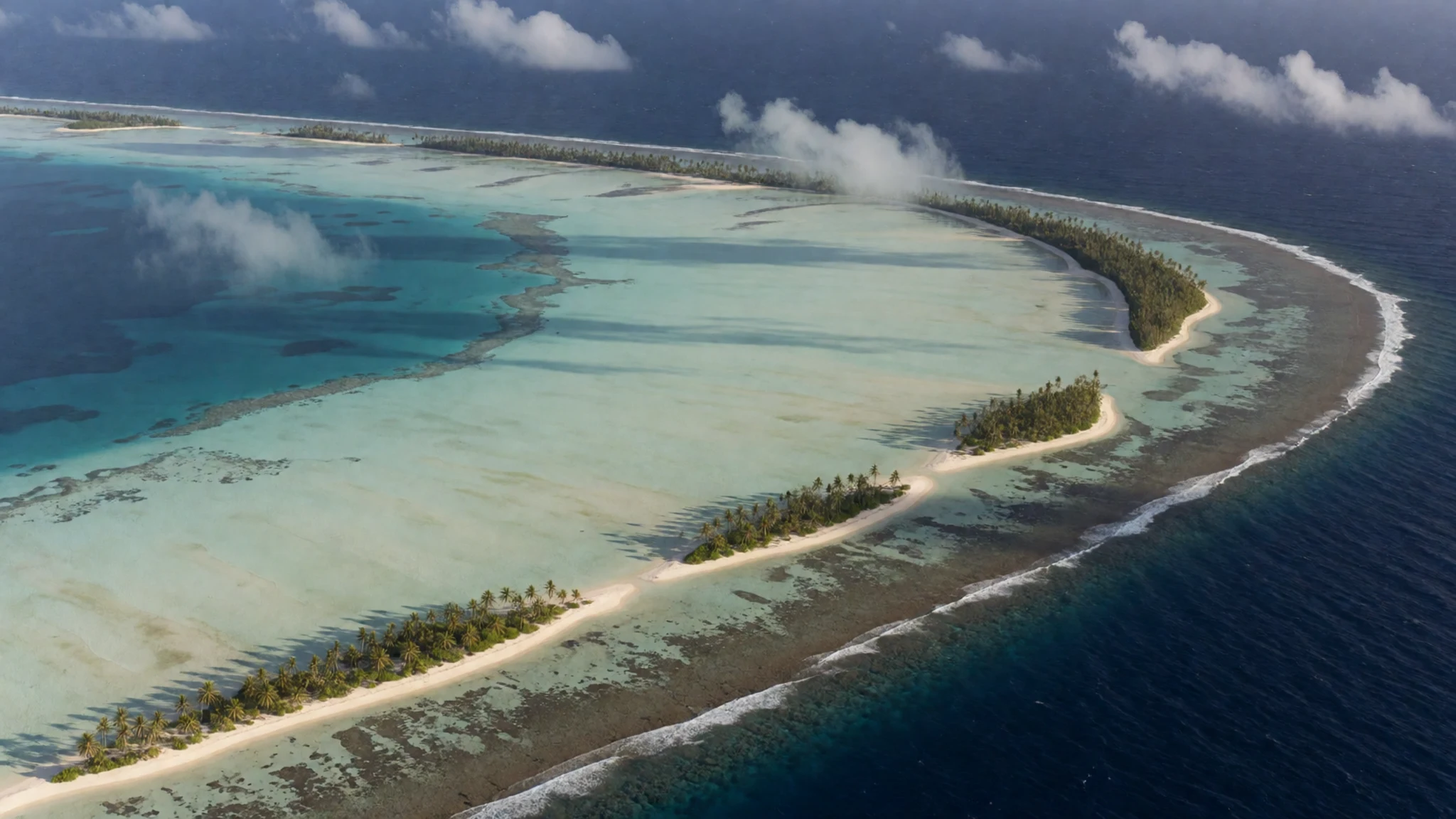
- Wotja — Western end of the atoll
Wotja is the settlement at the westernmost end of the atoll. It is a place to see how an atoll community works: houses close to the shore, coconut groves behind, and canoes and boats pulled up on the sand. Visits depend on the invitation of local families and the council.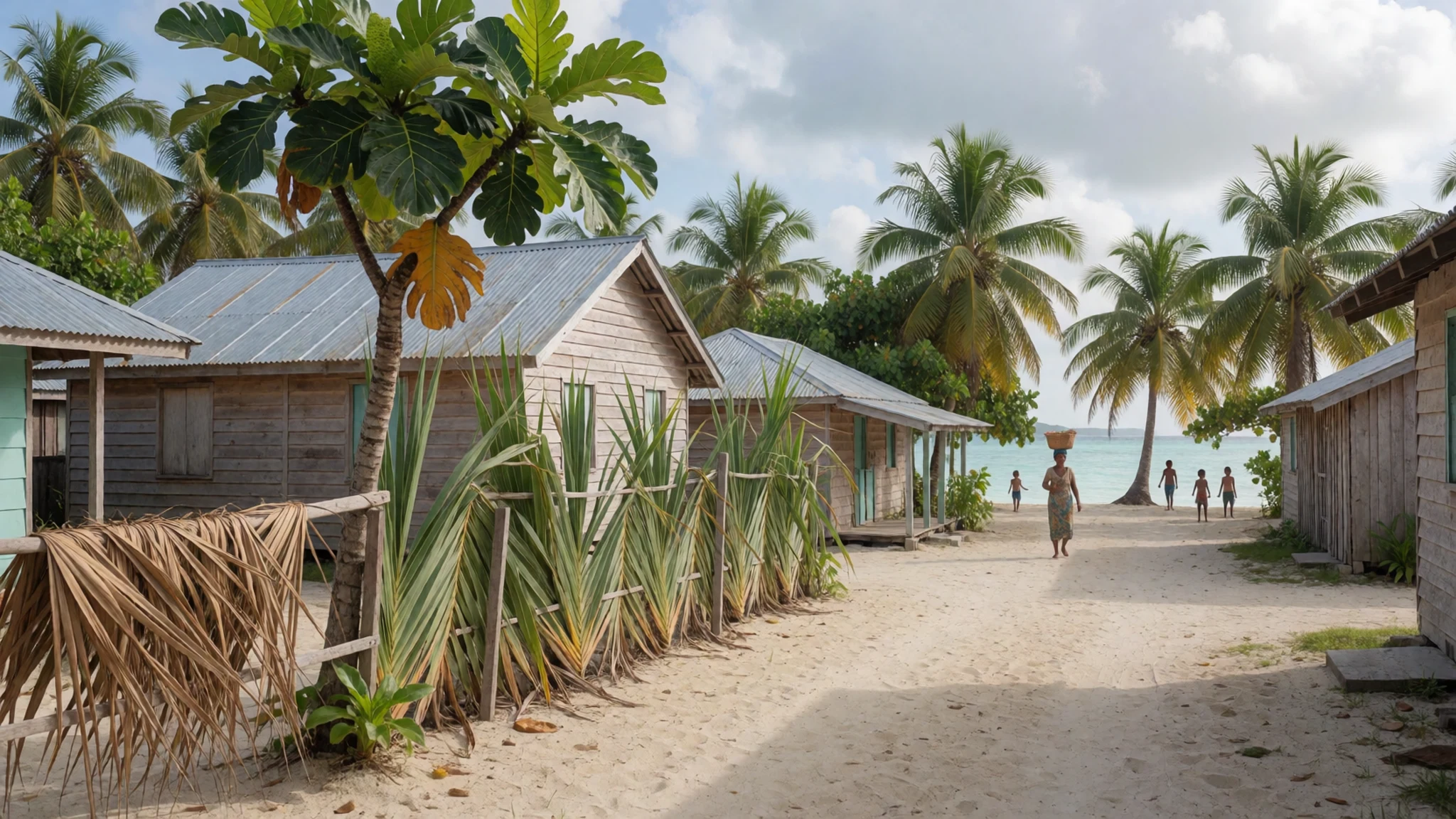
- Jih — Northeast of the atoll
Jih lies in the northeast of Ailinglaplap and is one of its four main population centres. Its character is the usual atoll mix of church, school, small houses and copra work. Walking the lanes at a slow pace, greeting people and accepting offers of coconut water is the whole sightseeing plan.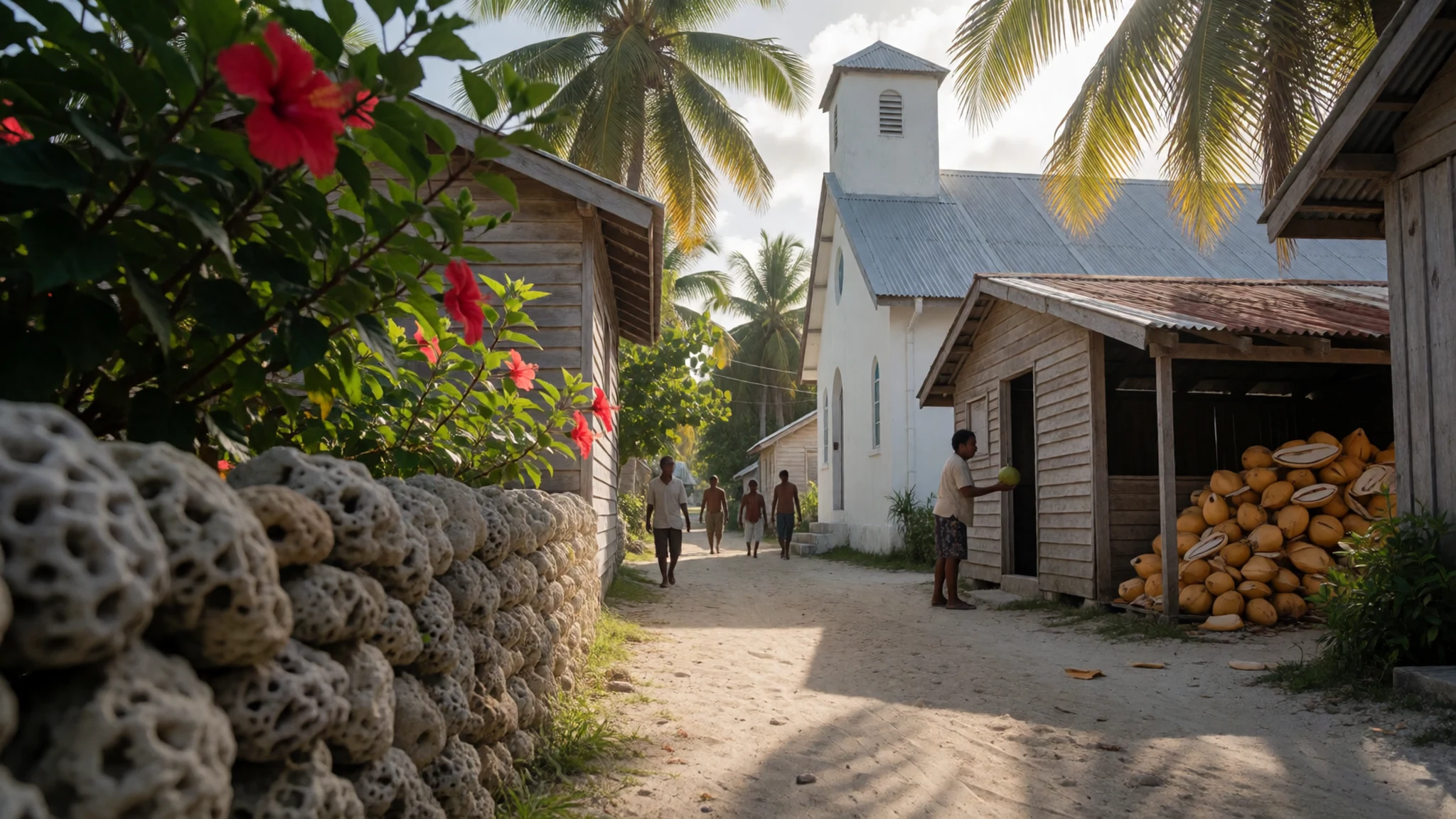
- Airek and Bigatjelang — Southern side of the atoll
Airek and Bigatjelang are the two main settlements on the southern side of the atoll. Their appeal is simple: reef-edge swimming where locals say the water is safe, sunsets over the lagoon, and the sight of copra being cut and dried. Ask before walking onto plantation land.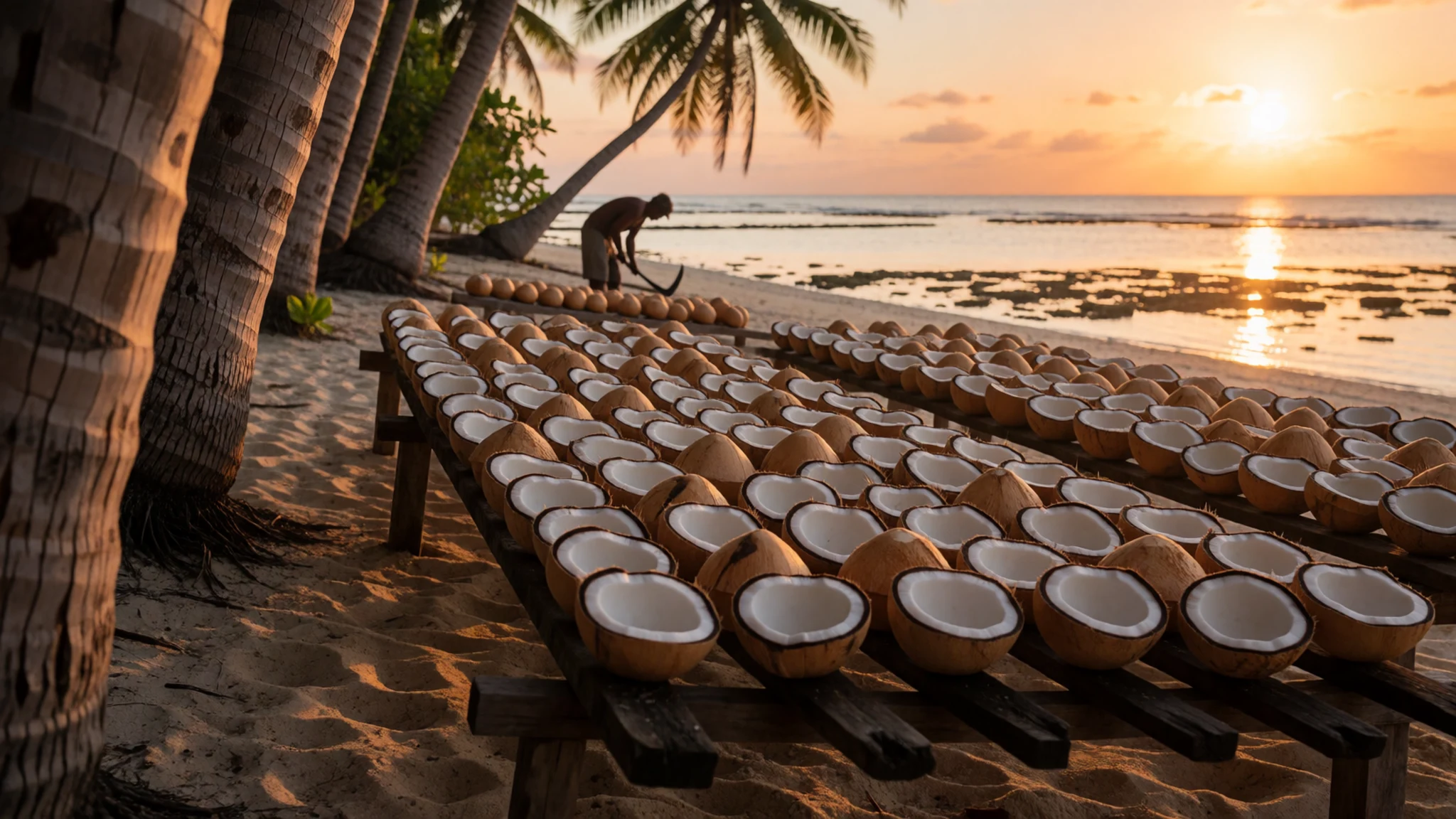
- Alele Museum, Majuro — Uliga, Majuro
On Majuro, the capital, the small Alele Museum and Public Library in Uliga shows objects from Marshallese culture. Its stick charts are worth a look: they record ocean swell patterns between atolls, the knowledge behind the region's long canoe voyages. Check the opening arrangements before going.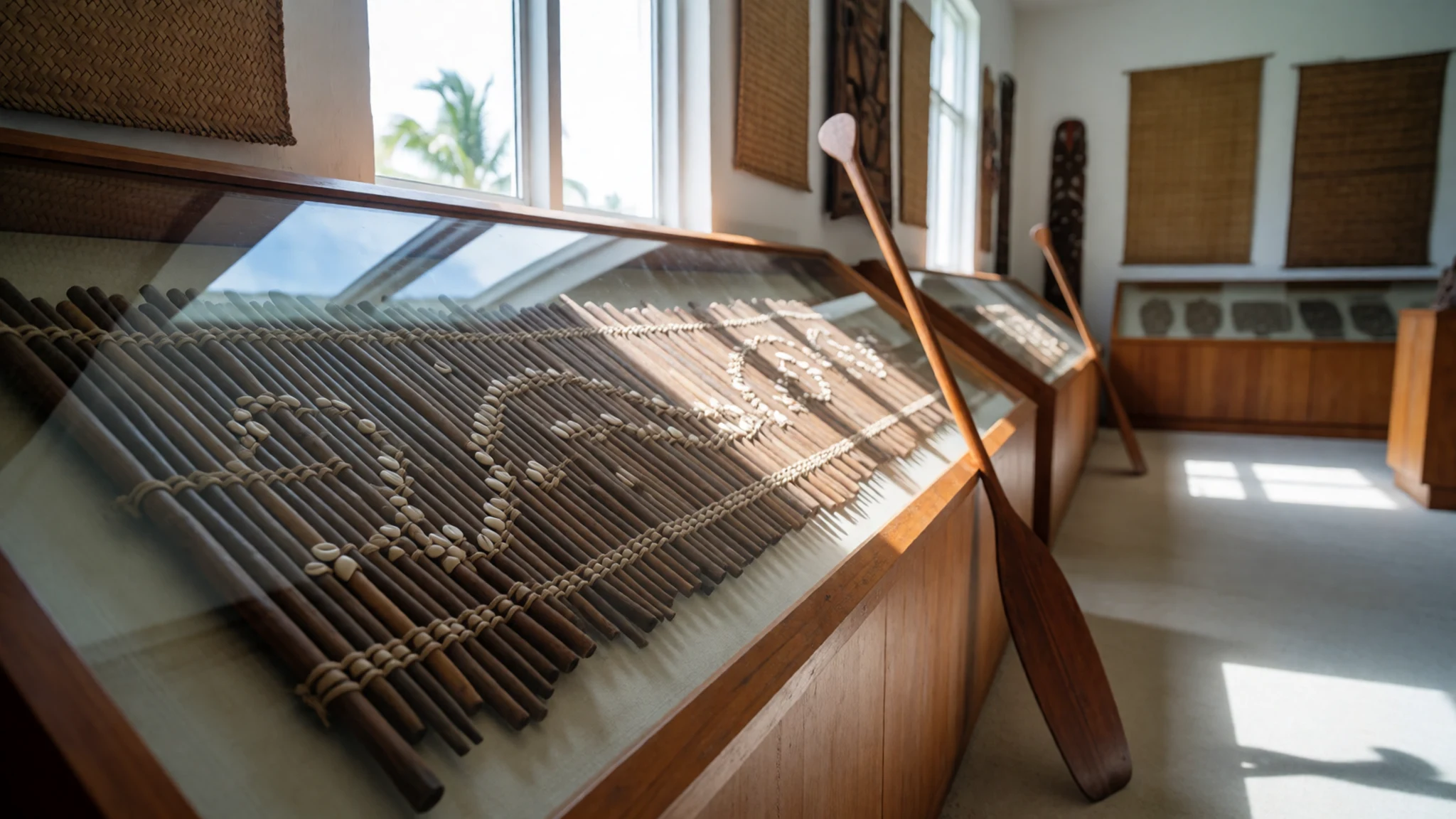
Culture
Ailinglaplap carries a particular weight in Marshallese culture, because many of the nation's best-known legends are tied to it. Land on the atoll is held through family lineages under chiefly authority, and the paramount chiefs, iroijlaplap, still matter in decisions about land and community life. Church is central to the week, and Sunday is quiet. Navigation is the great inherited skill of the Marshalls: stick charts of bent palm ribs and shells once recorded how ocean swells curve around atolls, and canoe-building and sailing knowledge is still taught and celebrated. Fishing, copra cutting and the sharing of food among relatives structure ordinary days. Hospitality is real but unhurried, and visitors are usually received through a family or the local council rather than as anonymous tourists. The atoll's recent history, from German and Japanese rule to American administration and independence, is part of conversation, and so is the shared concern about rising seas on land so low. Marshallese is the everyday language, and a few words of greeting go a long way. Ask the family or council that is hosting you before you swim off a village shore, camp, or photograph people and their homes, and dress modestly in villages.
What to wear
Ailinglaplap's traditional dress draws on materials the atoll itself provides, above all pandanus leaf, which is split and woven into mats, baskets and fans, and coconut fibre, which is twisted into cord. Long, loose cotton dresses introduced during the missionary era are now regarded as the traditional women's outfit and are worn to church and on festive days, often with woven flower or shell headbands and necklaces. For daily life, people wear what suits heat and work: light T-shirts, shorts or wraparound cloths, and rubber flip-flops, with swimwear kept for the water. Men often wear shorts and shirts on the plantations, and women usually keep knees and shoulders covered in the village. A visitor should wear light cotton or quick-dry clothing that covers shoulders and knees, bring a wide-brimmed hat, and pack reef shoes for walking on coral and in the shallows. Swimwear belongs on the beach, with a shirt or wrap over it when walking through a settlement. For church services, bring a modest outfit, with a long skirt or dress for women and long trousers or neat shorts for men. Sun protection matters more than style here: the equator is close, shade is scarce on the sand, and the glare off the lagoon is strong.
What to eat
- Fresh reef and lagoon fish — Family kitchens and village gatherings
Fish is the daily protein on Ailinglaplap, caught from the lagoon and outer reef and cooked simply, often grilled over a fire or boiled, or eaten raw with lime. Ask a host family what was caught that morning. Fish stocks are under pressure, so take only what you are offered.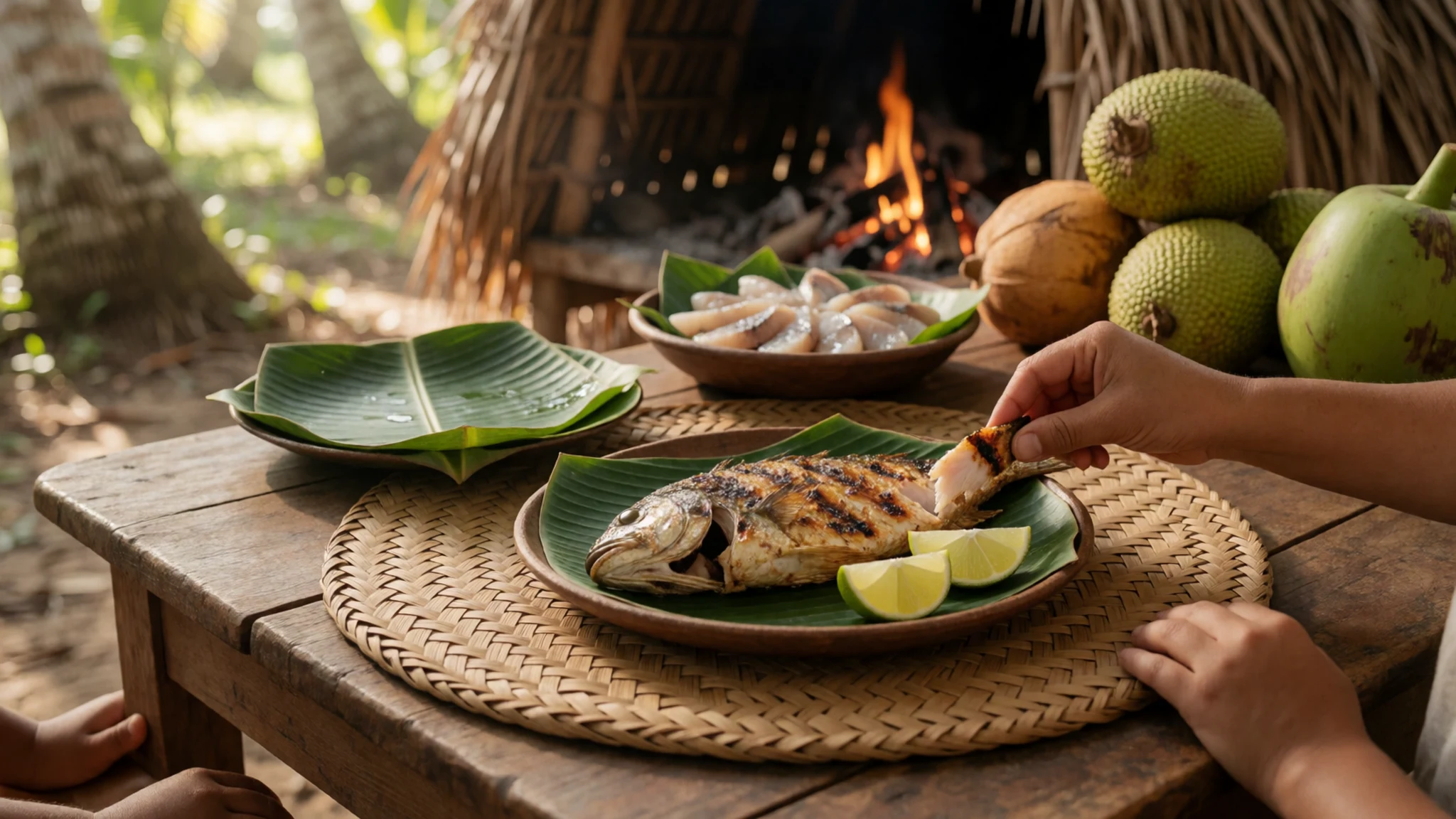
- Breadfruit — Village meals; roadside stands on Majuro
Breadfruit is a staple starch across the Marshall Islands, roasted, boiled or fried, with a texture somewhere between potato and bread. It is seasonal, so availability varies. It often sits beside fish or pork as the filling part of a shared meal.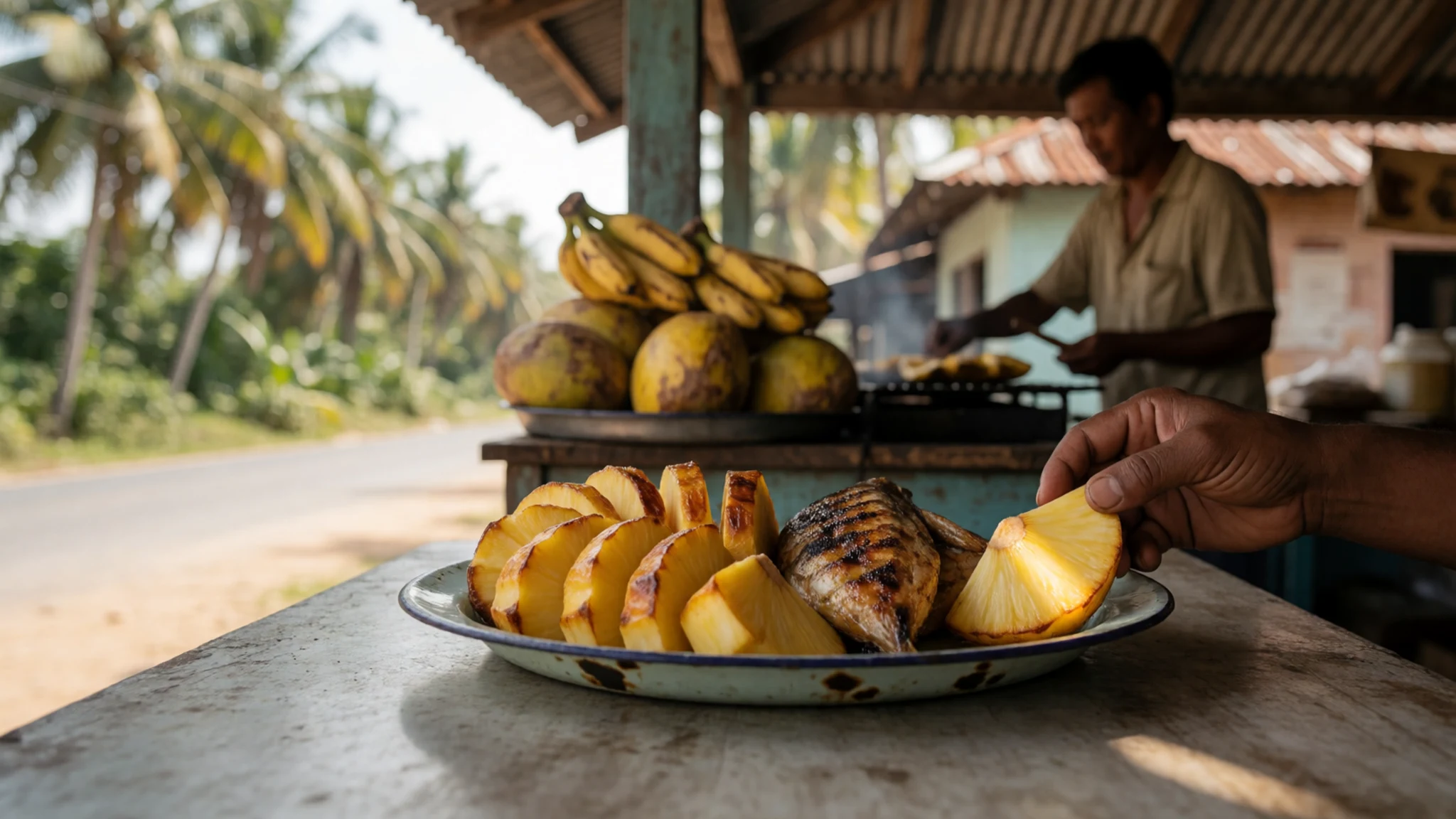
- Pandanus — Village households and community feasts
Pandanus fruit is another traditional food of the atolls, and its leaves are used for weaving. The fruit's sweet, fibrous flesh is eaten fresh or prepared into preserved forms. It is an acquired taste for some, but it tells you a lot about island food. - Coconut — Everywhere on the atoll; plantations near villages
Coconut appears at every meal: drinking nuts for water, grated flesh in cooking, and the dried copra that pays for imported goods. A drinking coconut offered by a host is both refreshment and welcome. Accept it, and ask before cutting nuts yourself. - Pork and chicken — Community feasts and family celebrations
Pigs and chickens are kept in many households and are usually saved for special occasions such as church feasts, weddings and birthdays. They are roasted or boiled and shared out among family. Eating is generous but formal, so wait to be invited to the table. - Sweet potato and cassava — Household gardens and family meals
Root crops such as sweet potato and cassava are grown in small gardens where the coral soil allows. They are boiled or baked and served beside fish, adding to breadfruit as filling staples. Ask a host about garden plots before wandering, since they are carefully tended.
Plan it
Best time. January–April is the usual choice, as the dry season brings calmer weather for boat trips; the wet season from May to November is rainier, so check a current forecast before booking. Storm surges and high tides can flood the low land at any time of year.
How long. 3–5
Getting there. Fly to Marshall Islands International Airport on Majuro, the capital, then continue to Ailinglaplap by the scheduled domestic flight or by boat; check current services with the airline or the local government, as schedules change and some islands are served only occasionally. Within the atoll, travel is by small boat.
Budget. mid
Tips
- Arrange accommodation and transport through a Majuro contact or the local council before leaving, as there is no tourist infrastructure to fall back on
- Bring cash in small notes, plus medicines, sun cream and spare batteries, since shops are small and stock is limited
- Carry drinking water or ask hosts about safe supplies, as fresh water on a low atoll is scarce
- Allow slack in the schedule, since flights and boats can be delayed by weather
- Check entry rules for your passport well in advance with the Marshall Islands authorities
Etiquette
- Ask permission from a family or the council before swimming, camping or taking photographs near homes
- Keep Sundays quiet and dress modestly in villages and at church
- Take only what you are offered from the reef and plantations, and leave no rubbish
Nearby
Sources
- Wikidata Q405165 (CC0)
- Wikipedia: Ailinglaplap Atoll (rev 1363879618) (CC BY-SA 4.0)
- Wikivoyage: Marshall Islands (rev 5374394) (CC BY-SA 4.0)
- Photo: NASA astronaut image of Ailinglaplap Atoll, NASA Johnson Space Center (Public domain)
- Photo: Mappa di Ailinglapalap, zuzu macumba (CC BY 3.0)
- Photo: Herkko Neamon, a nurse from Ailinglaplap, U.S. Navy (Public domain)
- Photo: Physician's assistant Jiku Johnny, U.S. Navy (Public domain)


