Lake Ruhondo
Lake Ruhondo, Rwanda
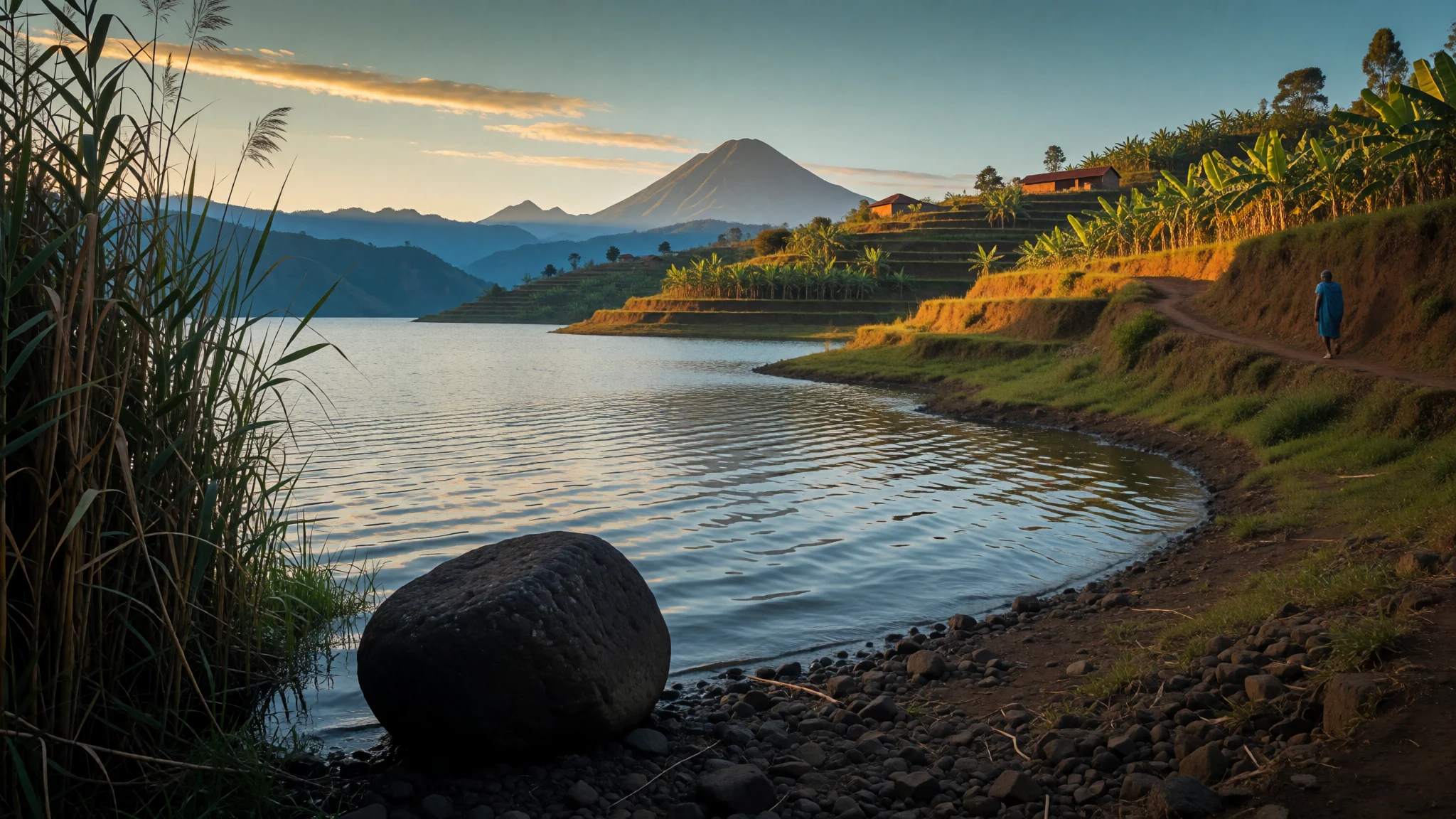
Lake Ruhondo is a quiet volcanic lake in northern Rwanda, ringed by terraced farms, ridgelines and the paddles of small wooden boats.
The place
Lake Ruhondo lies in northern Rwanda at 1,764 m above sea level, on the edge of Musanze and not far from the Ugandan border. It is an irregular lake with many arms, because the valleys it fills were once river courses. Its water comes mostly from its twin, Lake Burera, just upstream, and leaves through the Mukungwa river on the southwest side, which later joins the Nyabarongo. The shoreline touches three districts: Burera, Musanze and Gakenke. Terraced hillsides drop to the water, planted with beans, sorghum, potatoes and banana groves, and the houses are small and scattered rather than gathered into towns. Mornings are often misty. On clear ones the jagged outline of the Sabyinyo volcano shows over the far shore. Boat traffic is modest and local: small wooden boats carry people, sacks and bundles between villages with poor road links. There are no big ferries and no lakefront promenade. That is much of the charm, and also the practical catch, because facilities are thin and a visit works best from a base in Musanze or a lodge near the shore. The lake is better understood as a landscape of farms, hills and water than as a resort. It rewards slow walking and an unhurried boat ride far more than a checklist, and it pairs naturally with its neighbour Burera, which sits only a short strip of land away.
Its story
Lake Ruhondo exists because of volcanoes. Eruptions in the Virunga range sent lava pouring into a river valley, and the flow cooled into a solid barrier. Water that could no longer drain away pooled behind it and, over time, became the lake. Burera formed in much the same way, and a narrow neck of land still separates the two, with Ruhondo taking the overflow. People arrived long after. Hunter-gatherers lived across this region in the Stone and Iron Ages, Bantu-speaking farmers followed, and families gathered into clans and then into kingdoms. The Kingdom of Rwanda later centralised power under its kings, and the northern hills became part of that realm. Farming families have worked these slopes ever since, cutting steep ground into terraces, so the shoreline reads as centuries of labour laid over a volcanic landscape. Rwanda today carries the memory of the 1994 genocide against the Tutsi, and the country has rebuilt in the decades since. Many travellers to the north combine the lake with a visit to a memorial elsewhere, to understand the people whose home this is. Around the water itself, life is mostly about fishing, farming, market days and travelling short distances by boat, much as it has been for generations.
What to see
- A boat trip on the water — Musanze, Burera and Gakenke shores
The best way to understand Lake Ruhondo is from a small wooden boat, which is how local people cross it. Slow paddling past terraced banks, reed edges and landing points gives a sense of the lake's many arms. Arrange it through a Musanze-area lodge or a local guide, and agree the route beforehand.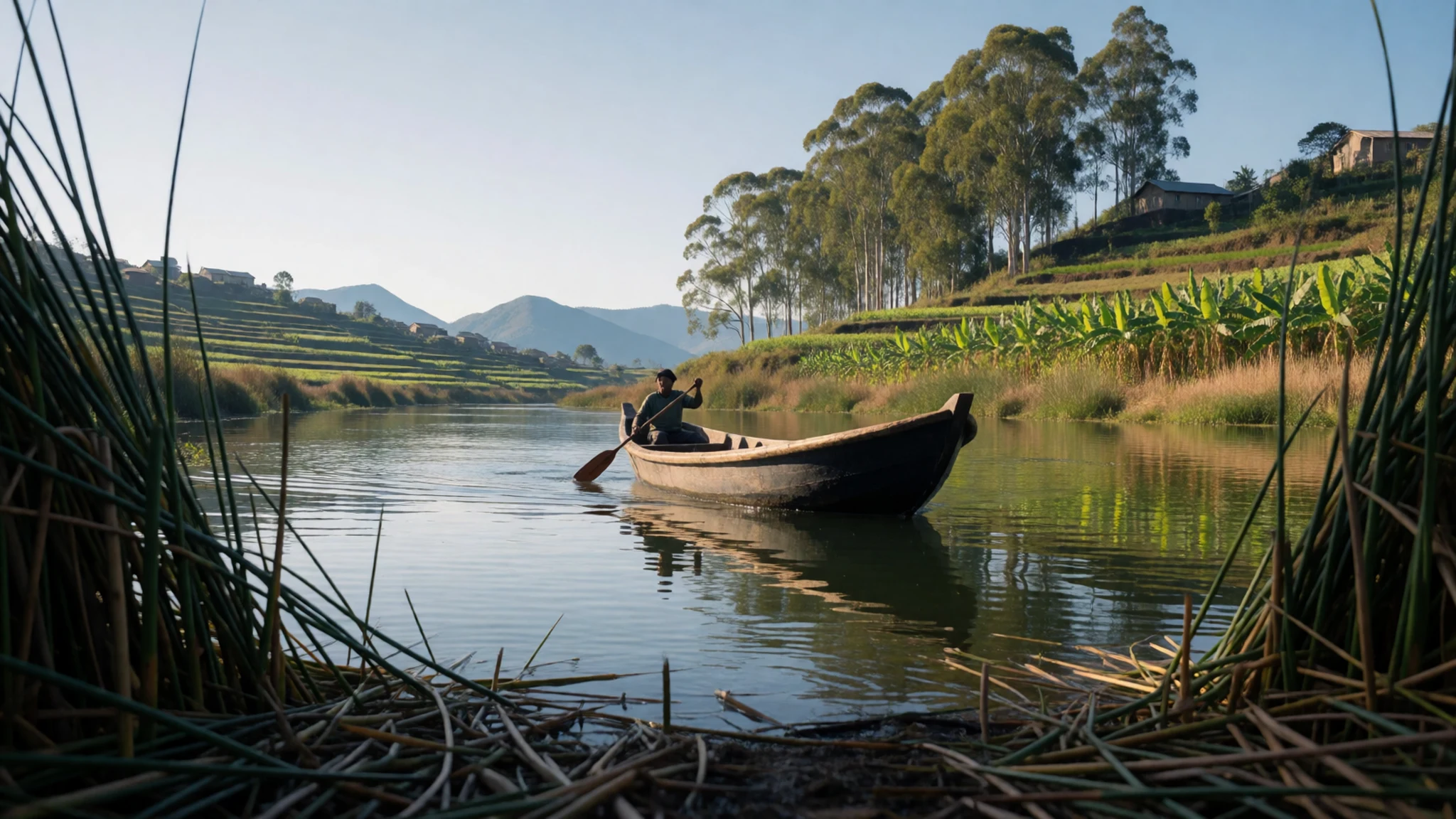
- Ridge views over both lakes — The ridge between Lake Ruhondo and Lake Burera
From the high ground between Ruhondo and Burera, the two lakes can be seen together, one feeding the other, with farmland in a patchwork below. Morning light is clearest and haze builds later. It is a short, rewarding stop for photographs, and a good way to grasp how the land is shaped.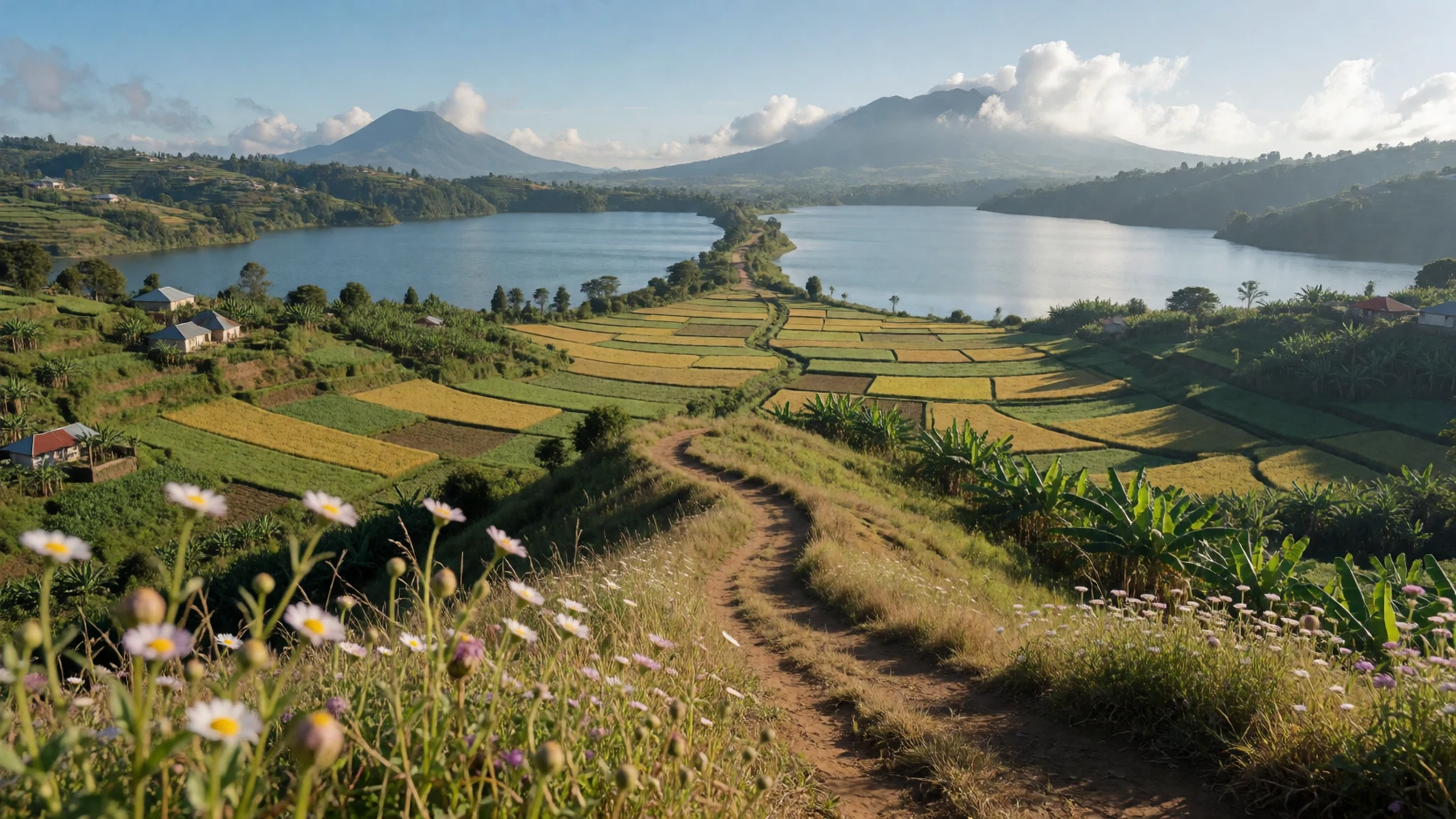
- Sunset from the shoreline — Musanze district shore
Evenings turn the water copper and pink, and the hills go dark against it. Photographers favour the Musanze-district shore for this. Bring a light layer, since the air cools quickly at this height, and plan your return before full dark because village paths have little lighting.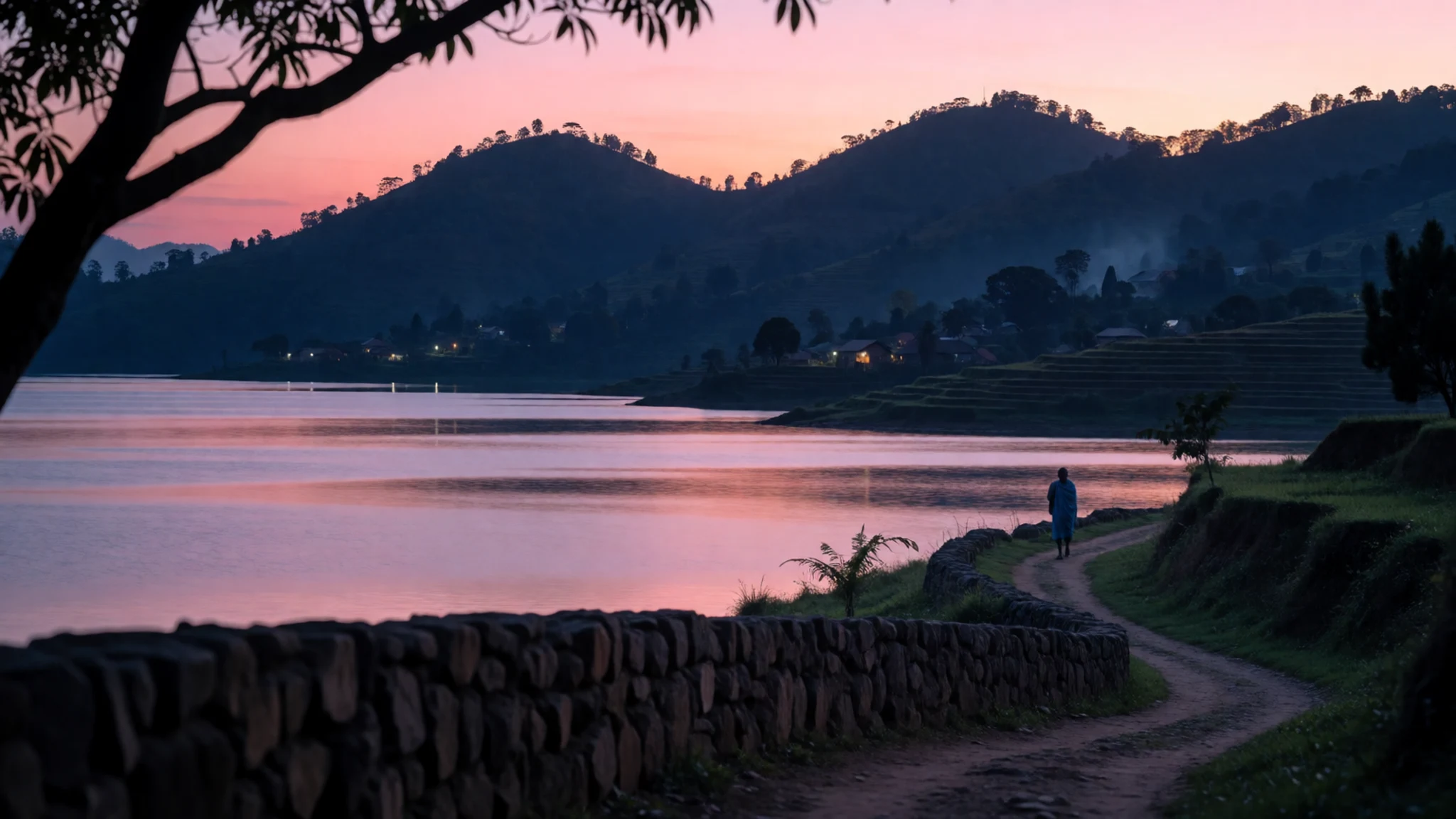
- The volcano skyline — Viewpoints around the lake, Musanze area
On clear days the volcanoes of the Virunga chain rise beyond the lake, with Sabyinyo's jagged crest the easiest to pick out. Cloud often hides them by midday, so go early. A viewpoint above the water frames the lake in the foreground and the peaks behind it.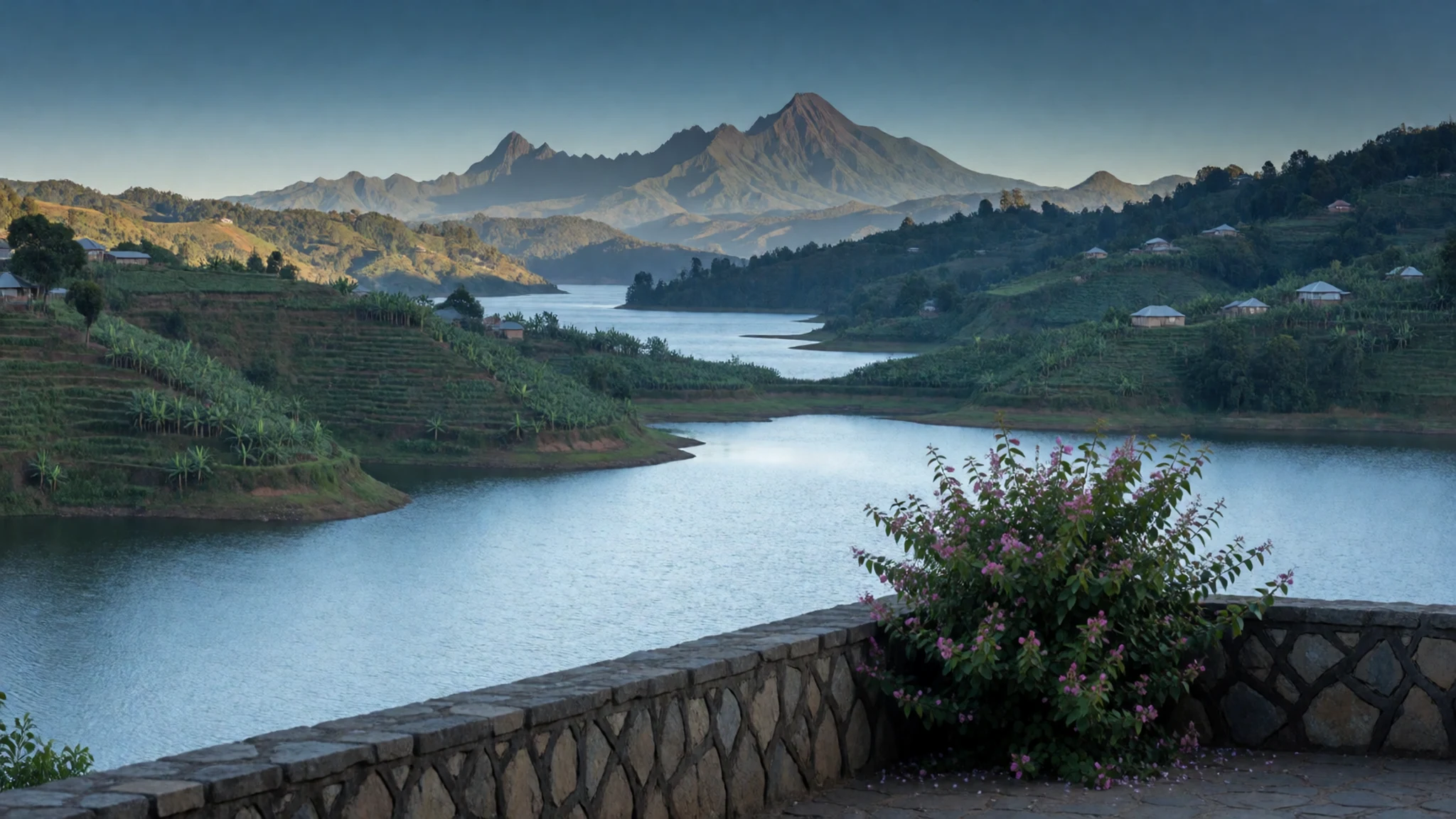
- Kigali Genocide Memorial — Kigali
Many visitors to northern Rwanda spend a day at this memorial in Kigali, which tells the story of the 1994 genocide against the Tutsi and holds the remains of many victims. Allow a quiet, unhurried visit. It is a sober counterpart to the landscapes of the north and gives essential context for the country.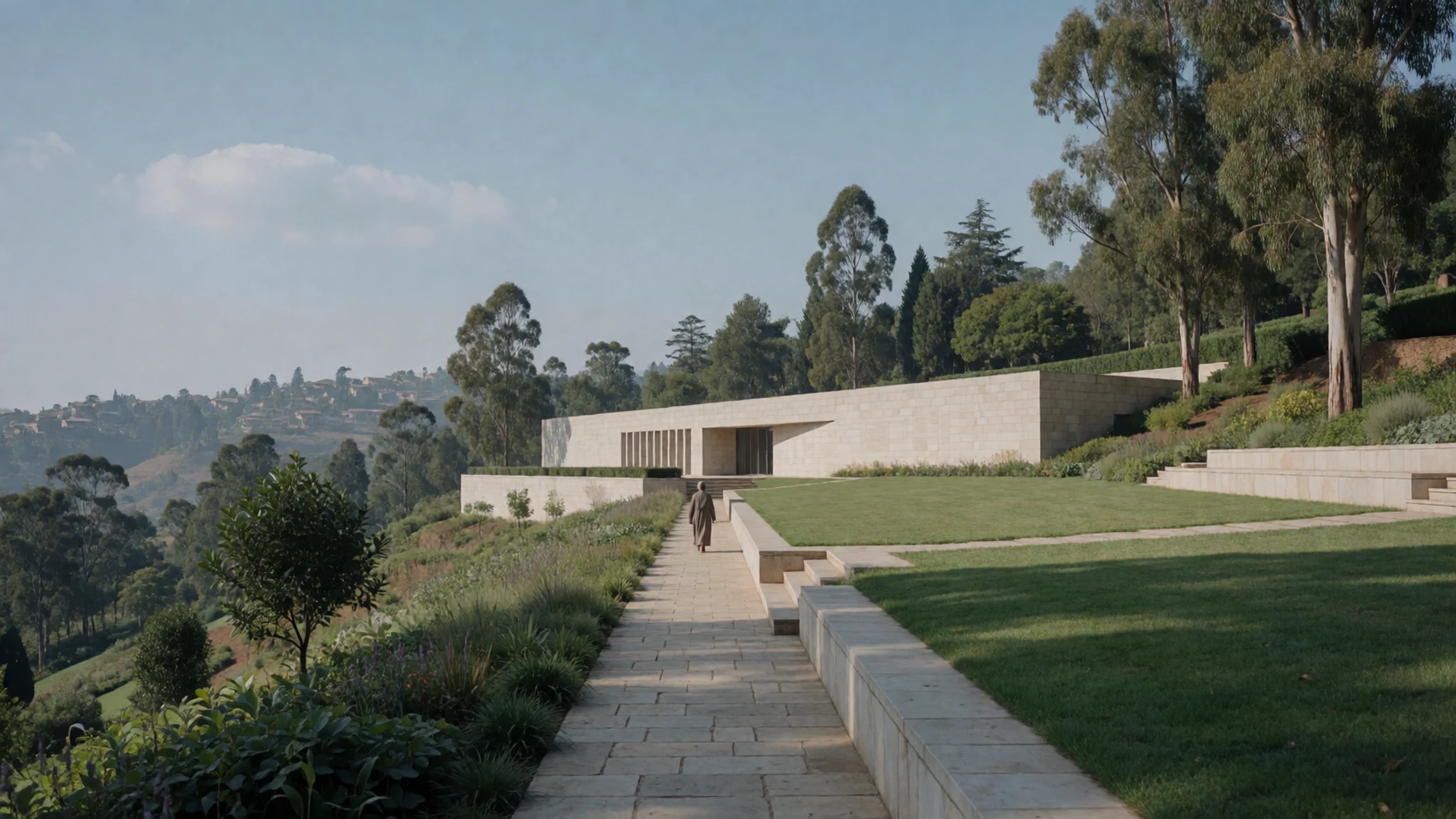
Culture
Lake Ruhondo sits in a part of Rwanda where daily life is rural, family-centred and unhurried. Most people farm small plots on the surrounding hillsides, fish from small boats, and travel by foot, bicycle or minibus to the markets in Musanze. Rwandan society is conservative and private. People tend to be reserved in public, loud arguments and open displays of emotion are frowned upon, and couples rarely show affection in the street, though friends of the same sex may walk hand in hand. Eating or drinking in public places is unusual outside restaurants and eateries, so a snack by the roadside will draw some curiosity. Dress is modest, particularly for women. Bargaining is done quietly: if a price seems too high, patient and courteous persistence works far better than raised voices. Looking an elder directly in the eye can be considered impolite, so a slight lowering of the gaze is a sign of respect. The country is still living with the memory of the genocide and the civil war that preceded it, and people may not wish to discuss it with strangers; let them lead. Greetings matter, and a warm, unhurried hello opens many doors around the lake. Ask before photographing anyone, especially children and people at work, and accept a refusal graciously.
What to wear
Around Lake Ruhondo, traditional Rwandan dress survives mainly for weddings, dance performances and national occasions. Women wear the umushanana, a long, flowing wrap of lightweight cloth draped over one shoulder and tied at the waist, often in soft, bright colours. Men have worn wraps and cloaks, and older tradition used bark cloth and animal skins, but these are now seen mostly in cultural shows. For everyday life, people dress simply and neatly: shirts, trousers, skirts below the knee, and brightly printed wrap cloths known as kitenge or pagne, often tailored locally into dresses and tops. Farmers and boat crews wear sturdy practical clothes and rubber boots, because the shoreline is muddy. Church clothes on Sundays are noticeably smarter. Visitors should dress for a cool, changeable highland climate at 1,764 m: lightweight long trousers, a warm layer for early mornings and evenings, and a waterproof jacket, since rain can arrive suddenly. Choose closed shoes with good grip for steep, slippery village paths, and sandals for the boat only if the footing is dry. In a conservative society, covered shoulders and knees are sensible for everyone, women especially, and shorts, tight skirts and skimpy tops will draw stares. Sun protection matters too, as the equatorial light is strong even on cloudy days.
What to eat
- Goat brochettes — Roadside grills and local bars in Musanze
Skewered, grilled goat is the standard evening meal out in northern Rwanda, sold at small bars and roadside stalls in towns like Musanze. Goat liver is often the local favourite. Expect it with chips or grilled banana and a cold drink.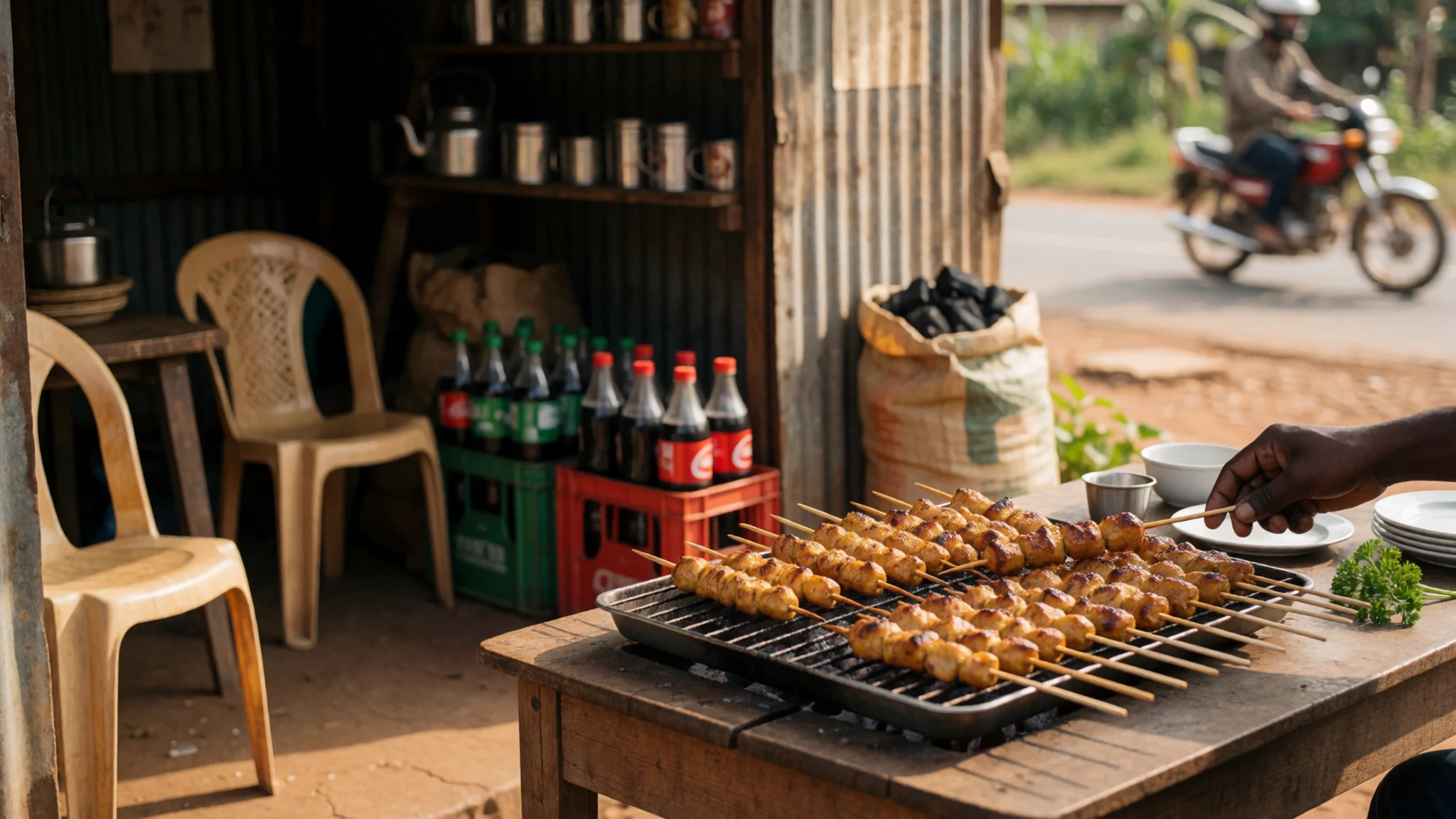
- Fish brochettes — Lakeside eateries and Musanze restaurants
Some eateries near the water offer grilled fish skewers instead of goat, the closest thing to a lake meal here. Ask what the catch is and how fresh it is. Beef and occasionally chicken skewers are also served at larger places.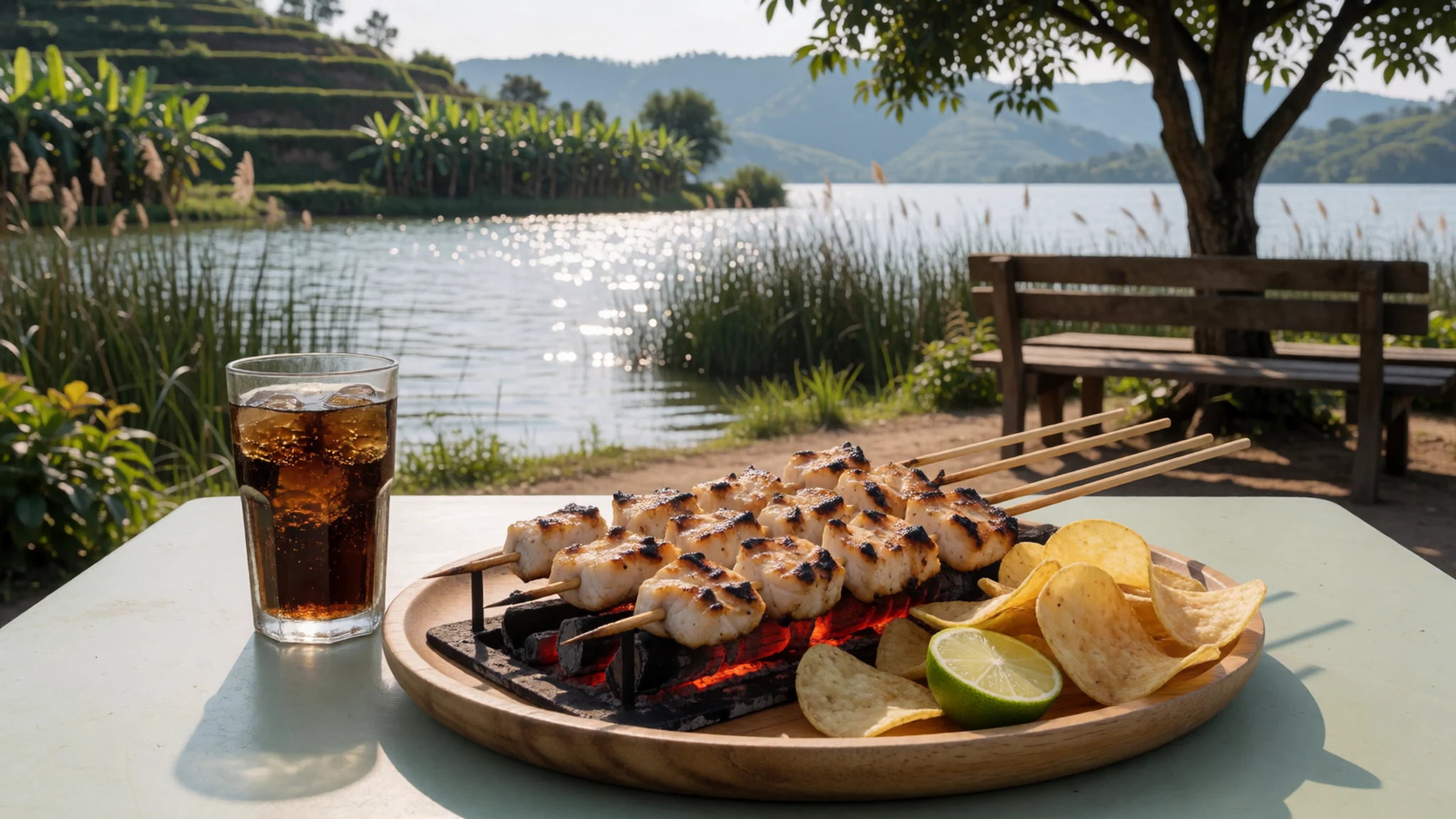
- Ibitoke (matoke) — Local eateries and family kitchens
Ibitoke are starchy cooking bananas, not sweet, and the nearest thing Rwanda has to a staple. They are boiled and served in a sauce of tomato or beans. Some people call them matoke, which is easier for visitors to say. - Grilled or fried ibitoke — Roadside stalls and bar kitchens
The same bananas are also grilled over charcoal or fried into golden chunks. They are the usual side to brochettes, and a fine, filling snack with a little salt and chilli. Look for them beside any busy skewer stall. - Small sweet bananas — Musanze market and roadside fruit sellers
Rwanda's sweet bananas are much smaller than the cooking kind, and ripe ones are soft and fragrant. They make a good breakfast or midday fruit, and are easy to buy by the bunch from sellers in town markets.
Plan it
Best time. June to September is generally the drier stretch, with clearer views of the volcanoes and firmer paths; December to February is also drier. March to May and October to November bring heavier rain, mud and low cloud over the ridges.
How long. 2–3
Getting there. Fly into Kigali International Airport, then travel by road to Musanze, the nearest sizeable town, by private transfer or public minibus. The last leg to the shore is by local road or on foot; ask your lodge to arrange it. Check visa rules with the Rwandan immigration service before you travel.
Budget. mid
Tips
- Go early in the morning, when the lake is calm and the volcanoes are most often clear
- Pack a waterproof jacket and a warm layer, since weather at this height changes quickly
- Carry some cash in small notes, as card machines are rare around the shore
- Agree boat routes and fees before setting off, and ask your lodge to recommend a guide
Etiquette
- Dress modestly, with shoulders and knees covered
- Ask before photographing people, and accept a refusal
- Keep voices low and negotiate calmly if a price seems high
Nearby
Sources
- Wikidata Q15045797 (CC0)
- Wikipedia: Lake Ruhondo (rev 1366268848) (CC BY-SA 4.0)
- Wikivoyage: Rwanda (rev 5427841) (CC BY-SA 4.0)
- Lake Ruhondo exotic view 01 — Muremi (CC BY-SA 4.0)
- Rwanda relief location map — Carport (CC BY 3.0)
- Panaromic of Lake Ruhondo, Rwanda — Atorpey (CC BY 4.0)
- Ruhondo Lake Sunset — Joseph Lionceau (CC BY-SA 4.0)
- Barrage of Ruhondo — Blaise dushime (CC BY-SA 4.0)
- Burera and Ruhondo lakes — Ntwali jay (CC BY-SA 4.0)
- Corner of Ruhondo lake — UWIMPUHWE Va (CC BY 4.0)
- Cyomoro (25) — Tuyishimejosue (CC BY 4.0)


