Lake Burera
Lake Burera, Rwanda
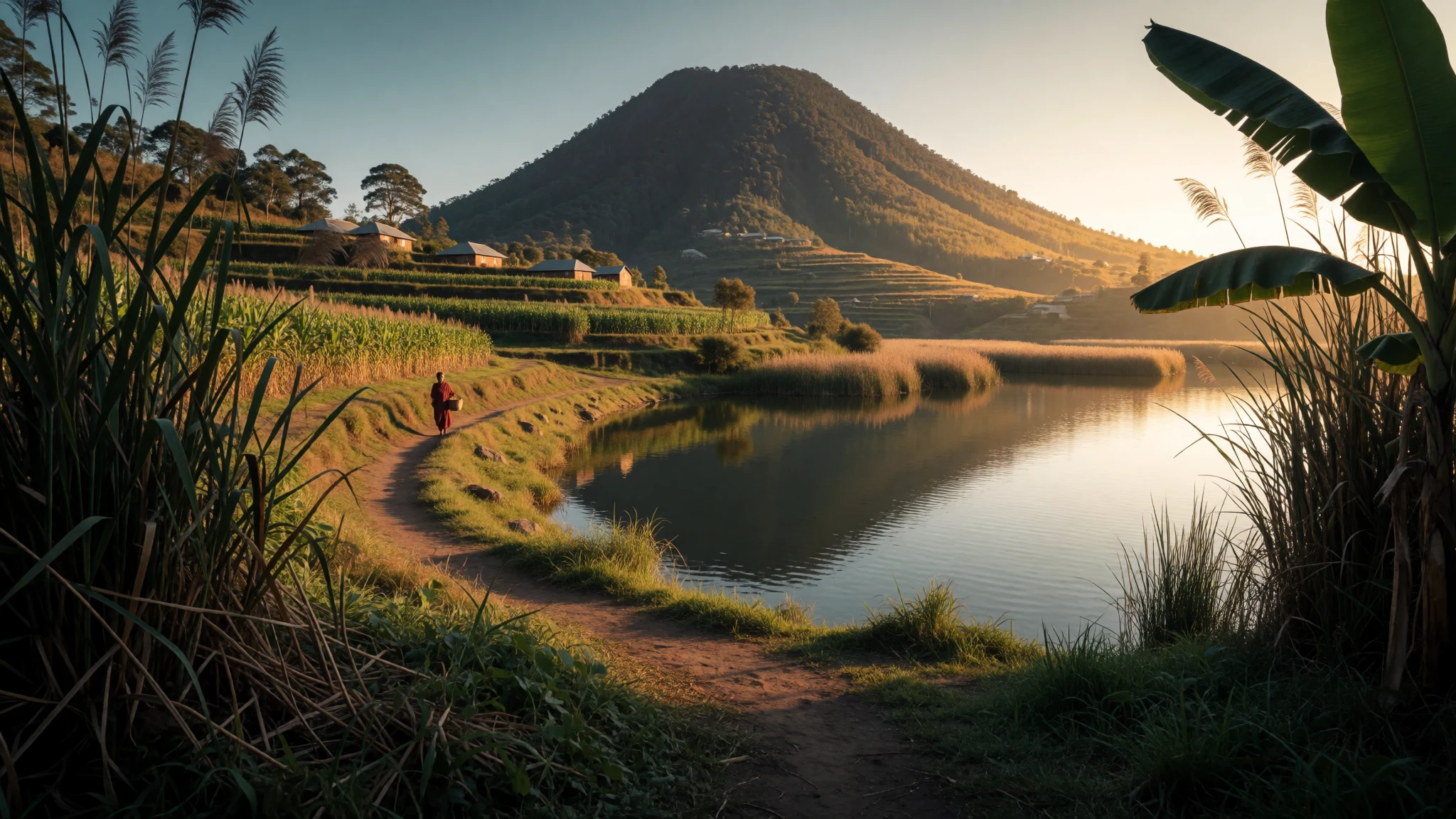
Lake Burera is a quiet lake in northern Rwanda, with island households, terraced hills and a volcano standing over the far shore.
The place
Lake Burera sits in the far north of Rwanda, close to the Ugandan border, at an elevation of 1862 m. The water covers about 55 square kilometres, a long, irregular sheet ringed by terraced hillsides that are farmed almost down to the shoreline. The surrounding district takes its name from the lake, and the area is densely settled. The shore is a patchwork of small plots, eucalyptus, banana groves and footpaths rather than empty wilderness. Musanze, the nearest sizeable town, lies about 25 km to the west and is the usual base for visitors. To the north, the cone of Mount Muhabura rises above the wetlands that fringe the Ugandan side, and on clear evenings it dominates the skyline. Burera has a twin, Lake Ruhondo, a little to the south-west. Water leaves Burera through a short stream called the Ntaruka and tumbles down into its neighbour. Several small islands sit in the lake, and some are lived on, with families reaching the mainland by wooden boat. The landscape is lived-in: fishing canoes, children waving from the path, people carrying loads uphill. Facilities are simple. Boat rides, hill walks and long, unhurried views are the draw, rather than a checklist of attractions. Early mornings tend to give the clearest views of the volcanoes, before cloud builds over the hills.
Its story
The story of Lake Burera is mostly about water running downhill and people building lives around it. The lake drains south-west through the Ntaruka, a stream only about 600 m long that falls roughly 100 m before it reaches Lake Ruhondo. That steep drop was too useful to ignore, and a hydroelectric plant on the stream now produces 11.5 MW, feeding Rwanda's grid from a spot most visitors never notice. Around the shore, the hills have been terraced over generations. Farmers grow bananas and other crops on slopes that would otherwise wash into the lake, and fishing from narrow wooden boats is still part of daily work. The islands carry names such as Birwa, Bushongo, Cyuza, Munanira and Bihosho, and some have households living on them, with boats linking them to markets and schools on the mainland. The wider country carries a heavier history. Rwanda lived through a civil war and then, in 1994, the genocide that targeted the Tutsi, a catastrophe whose effects are still part of national life. Today the northern hills are calm, and recovery shows in new roads, power lines and a strong public emphasis on order and cleanliness. Tourism here is young and small-scale. Memorials in Kigali and elsewhere are where visitors go to understand that past. At Burera the lake itself is ordinary, working water, and that is much of its appeal.
What to see
- A boat trip to the islands — Burera District shoreline
Wooden boats cross from the shore to the small islands scattered across Lake Burera, several of them inhabited. The crossing shows how households live between water and hills, and gives a good low-level view of the terraces. Agree the route and return time with the boatman before leaving.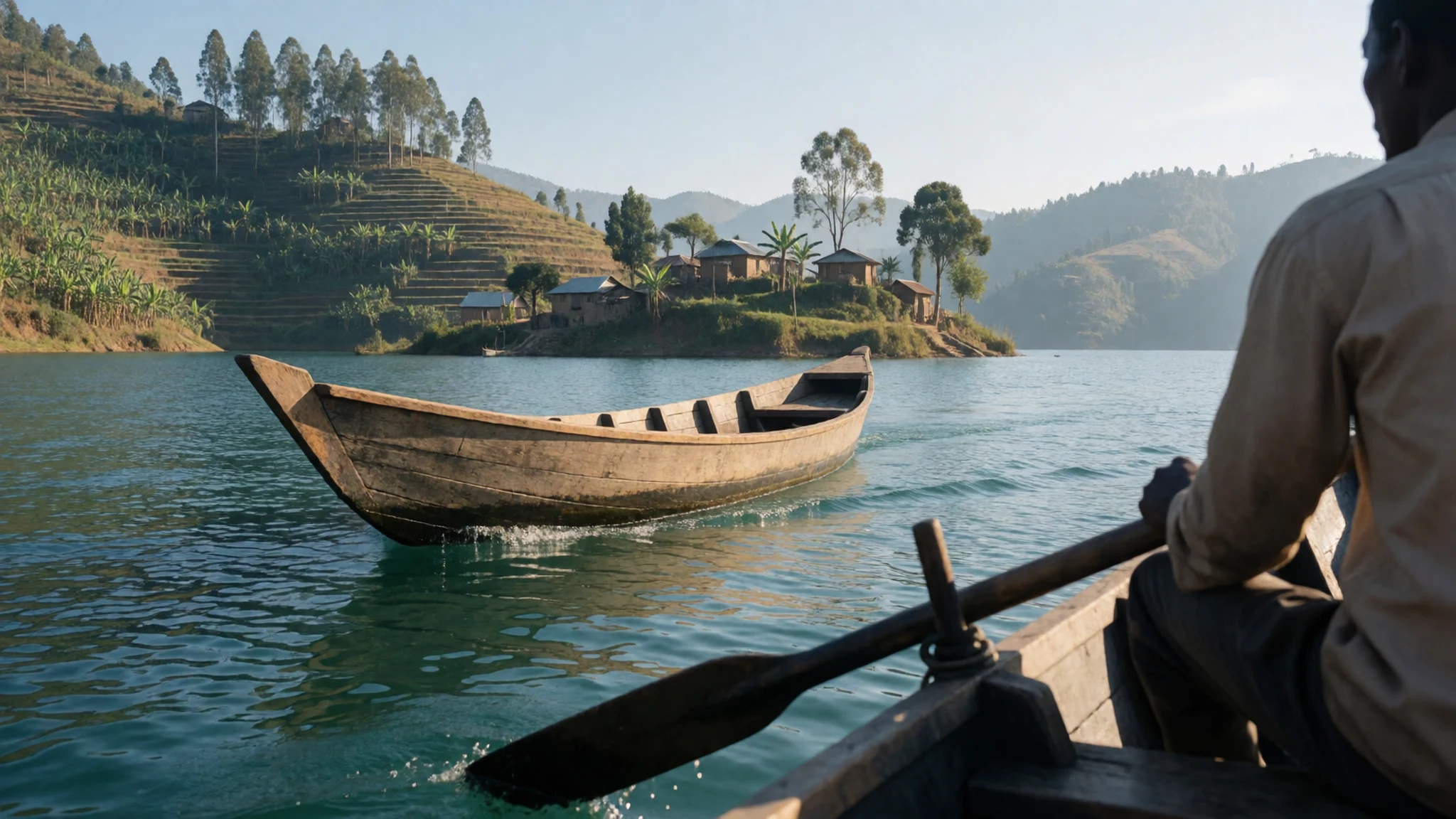
- Mount Muhabura at dusk — northern shore, towards the Uganda border
Muhabura, a volcanic cone on the Ugandan border, closes the view to the north of the lake. Evening light on its slopes and the water is the classic scene, and the cone is clearest in dry months and early in the day. Cloud often hides the summit by midday.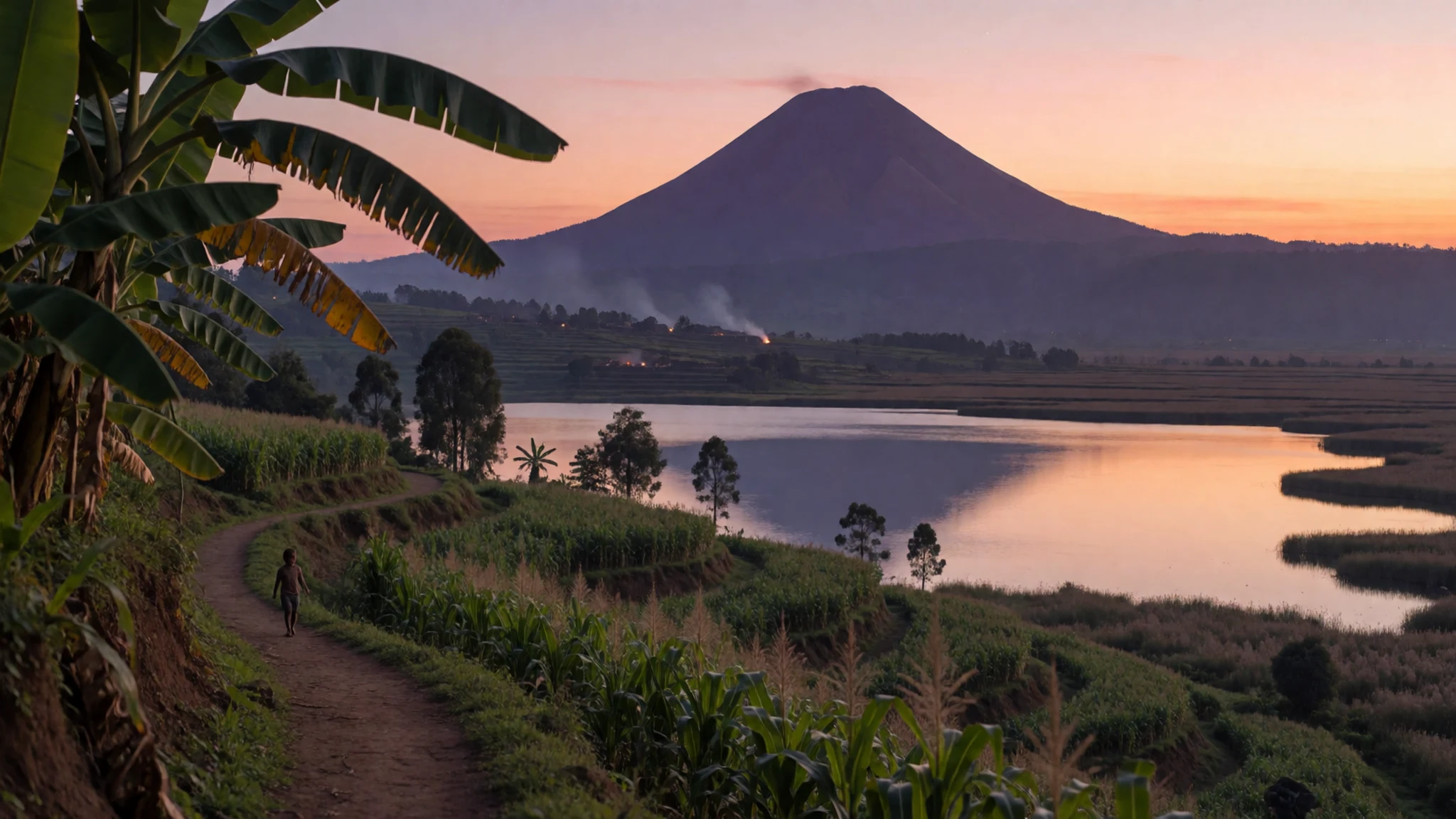
- The Ntaruka stream and power plant — between Lake Burera and Lake Ruhondo
The Ntaruka is the short, steep stream that carries Burera's water down to Lake Ruhondo. A hydroelectric plant on it produces 11.5 MW. It is not a polished attraction, but it explains how the two lakes relate and makes a quick, interesting stop between them.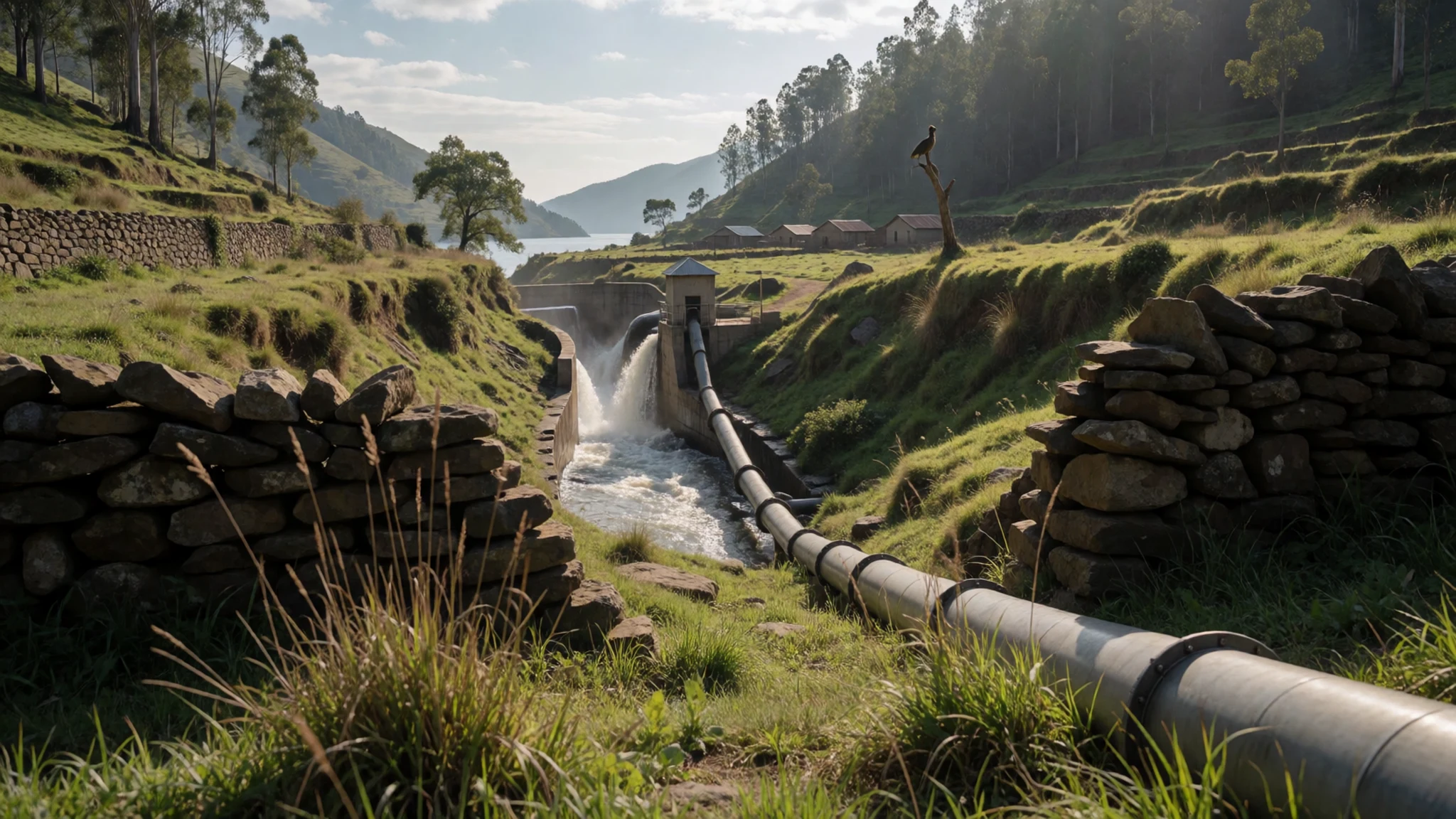
- Lake Ruhondo, the twin — south-west of Lake Burera
Lake Ruhondo lies below Burera and is roughly half its size. Seeing both in a single day makes the drop in the land easy to grasp. Ridge roads and hillside paths give broad views over its irregular, deeply indented shore, and fewer visitors tend to be around.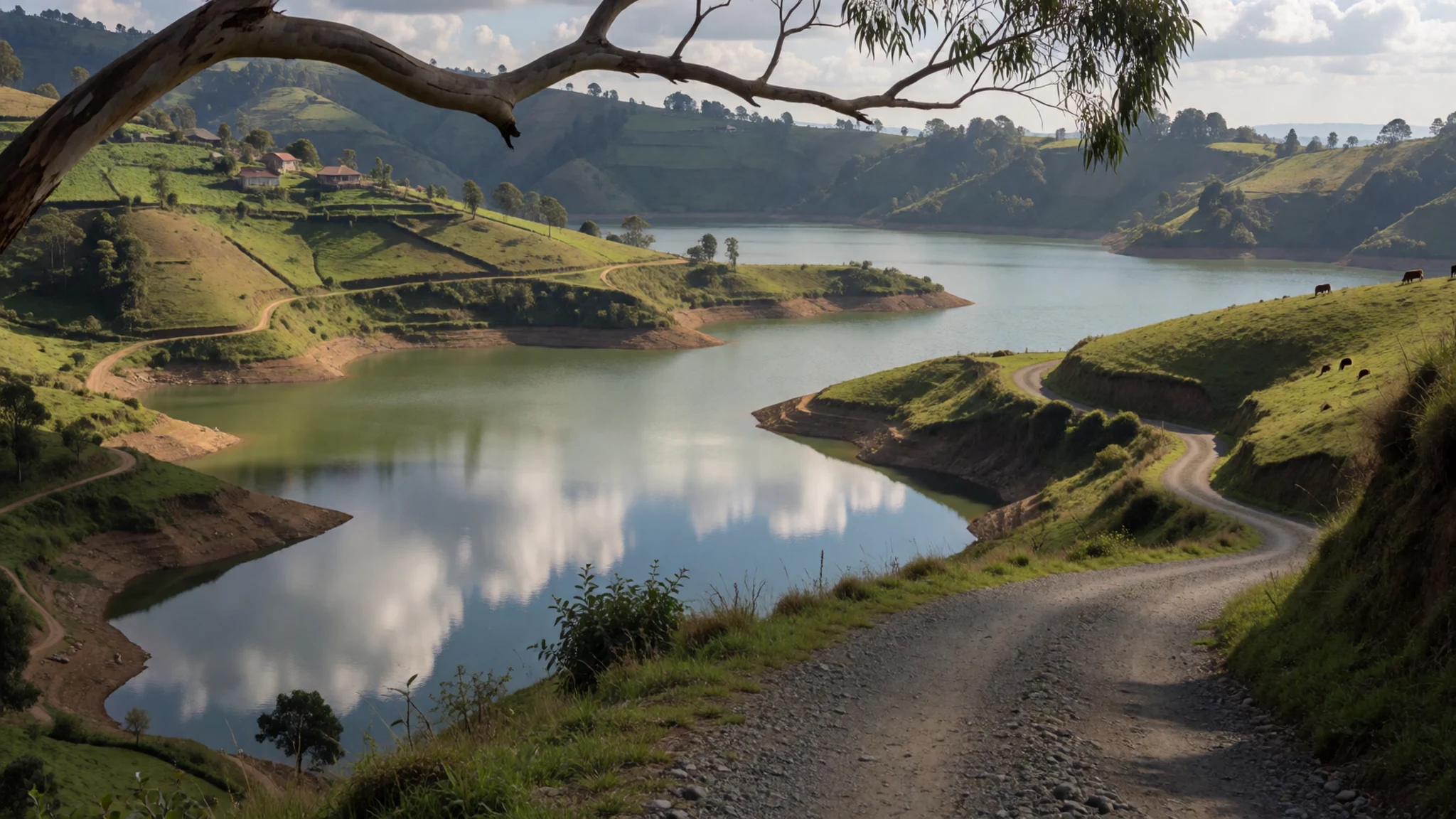
- Hill and terrace walks — hills above the lake shore
Footpaths climb the terraced slopes above the shore, passing banana groves, small farms and schools. A half-day walk gives panoramic views across the water and unplanned conversations with local people. Wear shoes with grip, since clay paths turn slippery after rain, and carry water.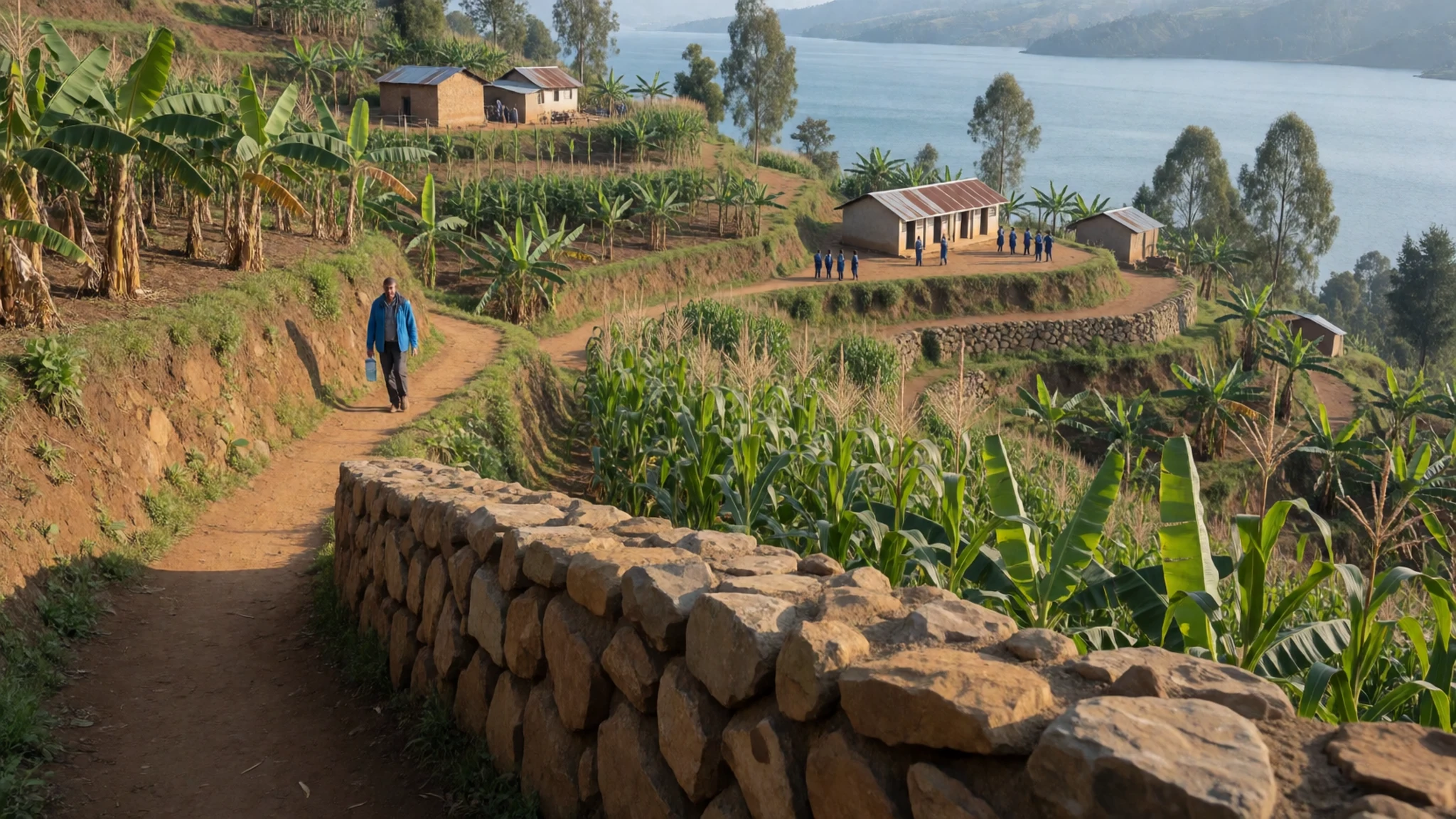
Culture
Lake Burera lies in a conservative corner of a conservative country, and the manners of the northern hills reward patience. Rwandans are generally private and reserved. Raised voices, public arguments and visible displays of strong emotion are frowned upon, so a disagreement over a price or a bill goes better with a quiet, persistent tone than with anger. Eye contact with an elder can come across as impolite. Couples keep affection out of public view, although male friends often walk hand in hand. Eating or drinking in the street is unusual, and people tend to do so indoors, at a restaurant or at home. Smoking is not banned in most bars and restaurants but is not welcomed either, and women are rarely seen smoking or out at bars alone. Dress is modest everywhere. The events of 1994 sit behind everyday life, and Rwandans may speak of them carefully, if at all, so visitors do best to let local people lead and not press for personal stories. Around the lake, community life is close-knit, with neighbours, boat crews and families all knowing one another, so an unhurried greeting goes a long way. Etiquette: greet people first, keep your voice low, avoid eating or drinking as you walk through a village, and ask before photographing anyone, especially on the islands.
What to wear
Traditional dress in Rwanda is now mostly seen at weddings, dance performances and national occasions rather than on ordinary days. Women's ceremonial wear centres on the umushanana, a long draped cloth worn over a fitted underlayer and pinned at the shoulder, usually in bright cotton or silky fabric. Intore dance troupes add beaded headdresses, fibre wigs and flowing waist coverings. Everyday fabrics are bolder: printed cotton known as kitenge is cut into dresses, shirts and wraps. In Burera District most people wear practical clothes, with boots or sandals for farm and lakeside work, jackets for chilly mornings and neat, clean outfits for church on Sundays. Modesty is the norm, so long skirts, trousers and covered shoulders are common, especially among women. Visitors should dress along the same lines: lightweight long trousers or knee-length skirts, tops that cover the shoulders, a warm layer for early mornings at about 1862 m, and a waterproof jacket for sudden showers. Sturdy shoes with grip suit muddy hill paths and boat landings, whereas flip-flops do not. A hat and sunscreen help on the water. Shorts, tight skirts and skimpy tops draw stares and little goodwill.
What to eat
- Goat brochettes — small bars and roadside grills in Musanze and lakeside trading centres
Skewered grilled goat is the everyday Rwandan snack, served in small bars and by roadside vendors. Goat liver is often thought the better cut by locals. It usually comes with chips or grilled banana and a cold drink.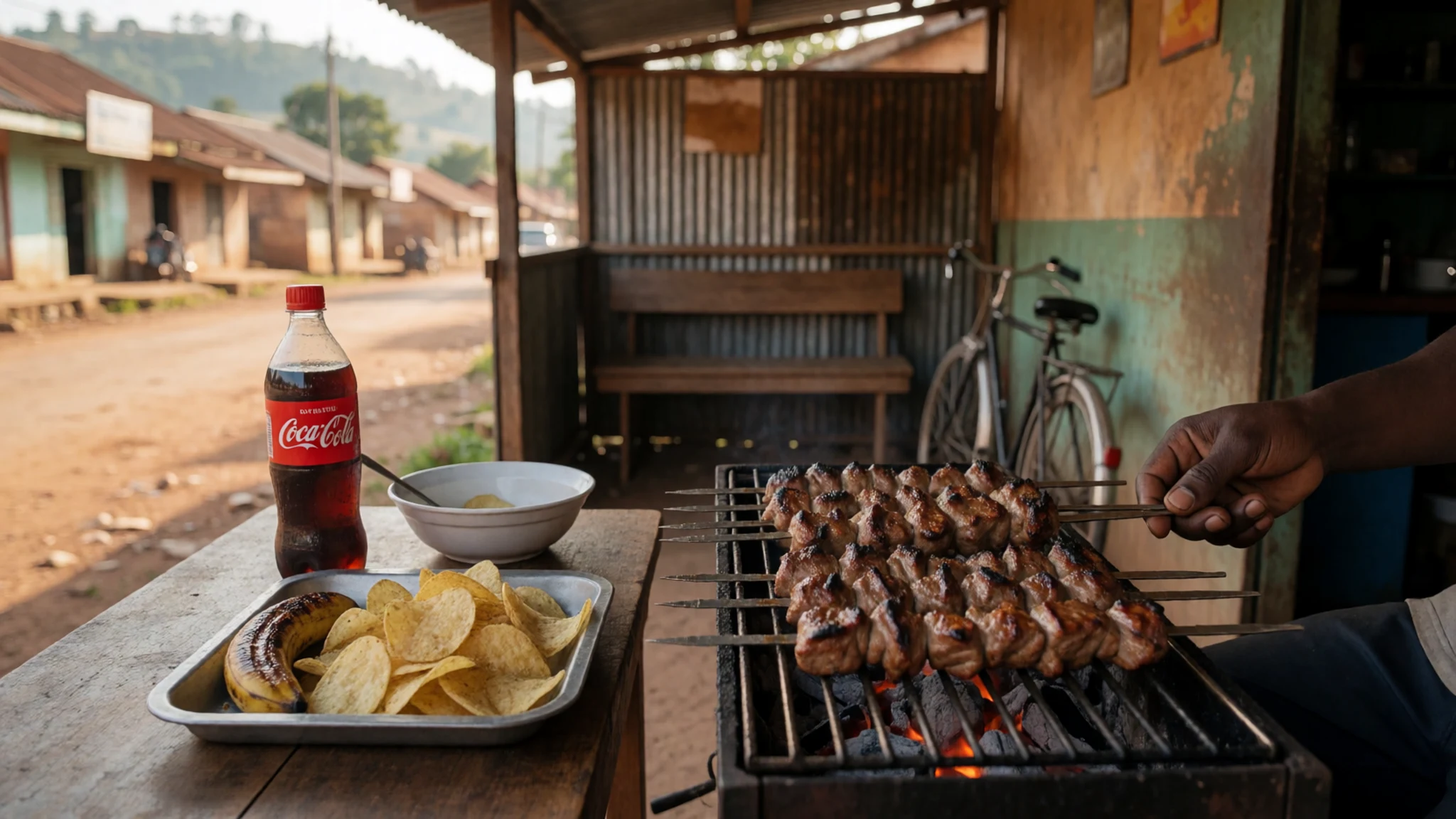
- Beef and fish brochettes — restaurants in Musanze
Larger restaurants may offer beef or fish on skewers, and a few have chicken. They are generally milder than goat and a safer first choice for newcomers. Ask what is available that day, since menus are short.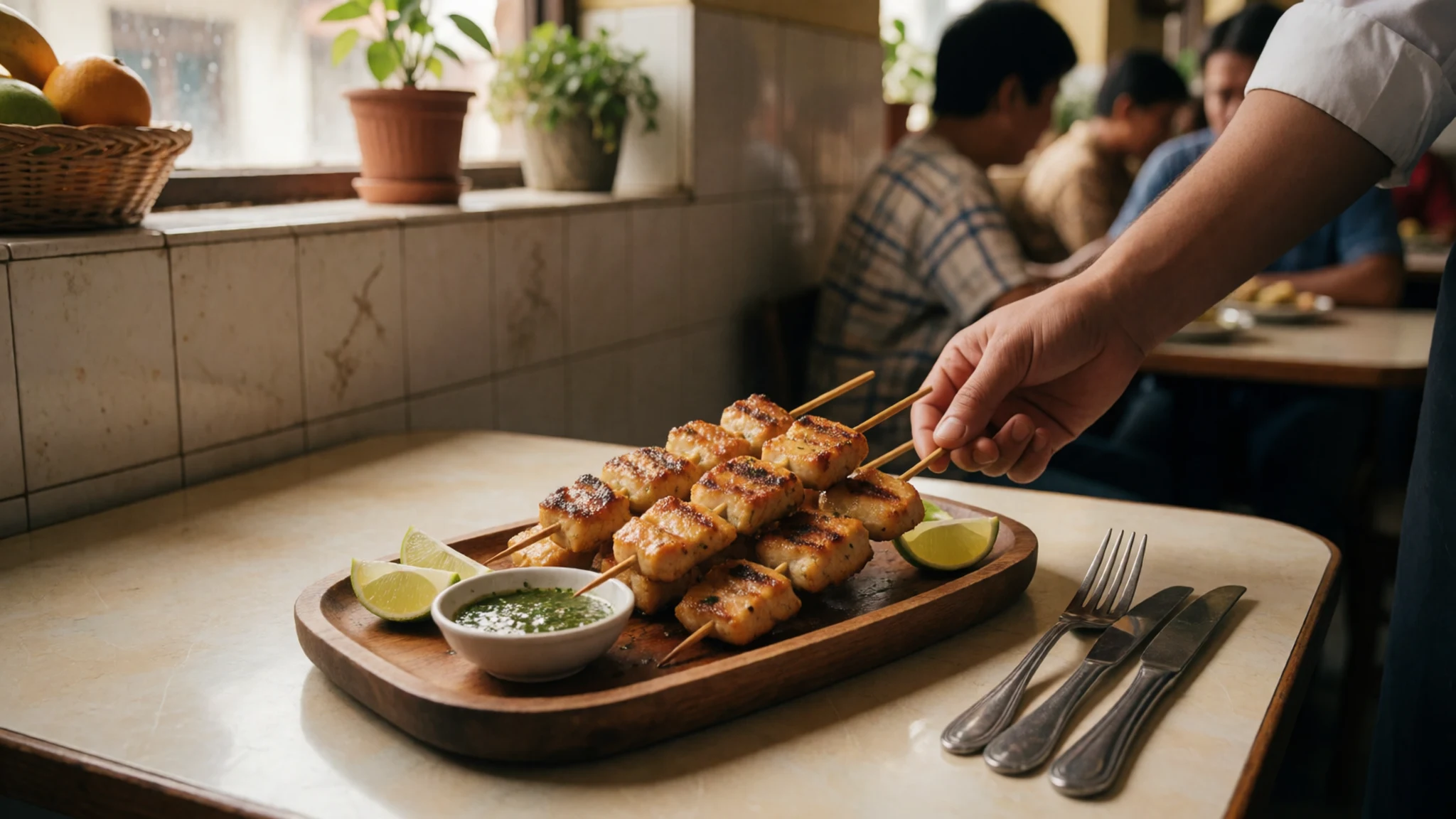
- Ibitoke (matoke) — local eateries and family kitchens across the district
Ibitoke are starchy cooking bananas, not sweet like plantains, and are the nearest thing Rwanda has to a staple. They are boiled in sauce, grilled or fried. Many visitors find the word matoke easier to say. - Frites with grilled banana — any roadside bar-restaurant
Brochettes are normally served with chips, called frites, or with fried or grilled ibitoke. The plate is simple, filling and cheap, and it is the standard meal after a day of walking round the lake. - Zingalo (optional) — very local bars where the grill is busy
Zingalo is goat intestine, sometimes grilled on a skewer, and at very local places it can arrive without being ordered. Anyone who does not want it can say "oya zingalo" when ordering. Adventurous eaters may enjoy it.
Plan it
Best time. June to September is the main dry season and gives the clearest views of Muhabura; December to February is a second, shorter dry spell. Outside these months, rain makes hill paths slippery and cloud often hides the volcano.
How long. 2–3
Getting there. Fly to Kigali International Airport, then take a road transfer or bus to Musanze, the nearest sizeable town, about 25 km west of the lake. From Musanze, a hired car or motorbike taxi covers the last leg to the shore. Check visa rules on the official IremboGov portal before travelling.
Budget. mid
Tips
- Start early for the clearest views of the volcanoes before cloud builds
- Carry some cash, as shoreline villages rarely take cards
- Bring a rain jacket and a warm layer, since the lake sits at about 1862 m
- Agree the boat route, duration and price with the boatman before setting off
- Carry drinking water and sun protection for time on the water
Etiquette
- Dress modestly and greet people before asking for anything
- Ask before photographing people, especially children and island households
- Keep voices low and avoid eating or drinking while walking through villages
Nearby
Sources
- Wikidata Q12360463 (CC0)
- Wikipedia: Lake Burera (rev 1366203764) (CC BY-SA 4.0)
- Wikivoyage: Rwanda (rev 5427841) (CC BY-SA 4.0)
- Olivier wood, View of burera lake (CC BY-SA 4.0)
- Serge, Lac Burera (CC BY-SA 4.0)
- Carport, Rwanda relief location map (CC BY 3.0)
- Johnlove TUYIRINGIRE, Beautiful view of the lake Burera (CC BY-SA 4.0)
- Johnlove TUYIRINGIRE, Boat in Lake Burera Rwanda (CC BY-SA 4.0)
- Rogerirakoze, Burera lake hill view (CC BY-SA 4.0)
- Olivier wood, Burera (CC BY-SA 4.0)
- Rogerirakoze, Lake burera 07082024 (CC BY-SA 4.0)


