Volcanoes National Park
Volcanoes National Park, Rwanda
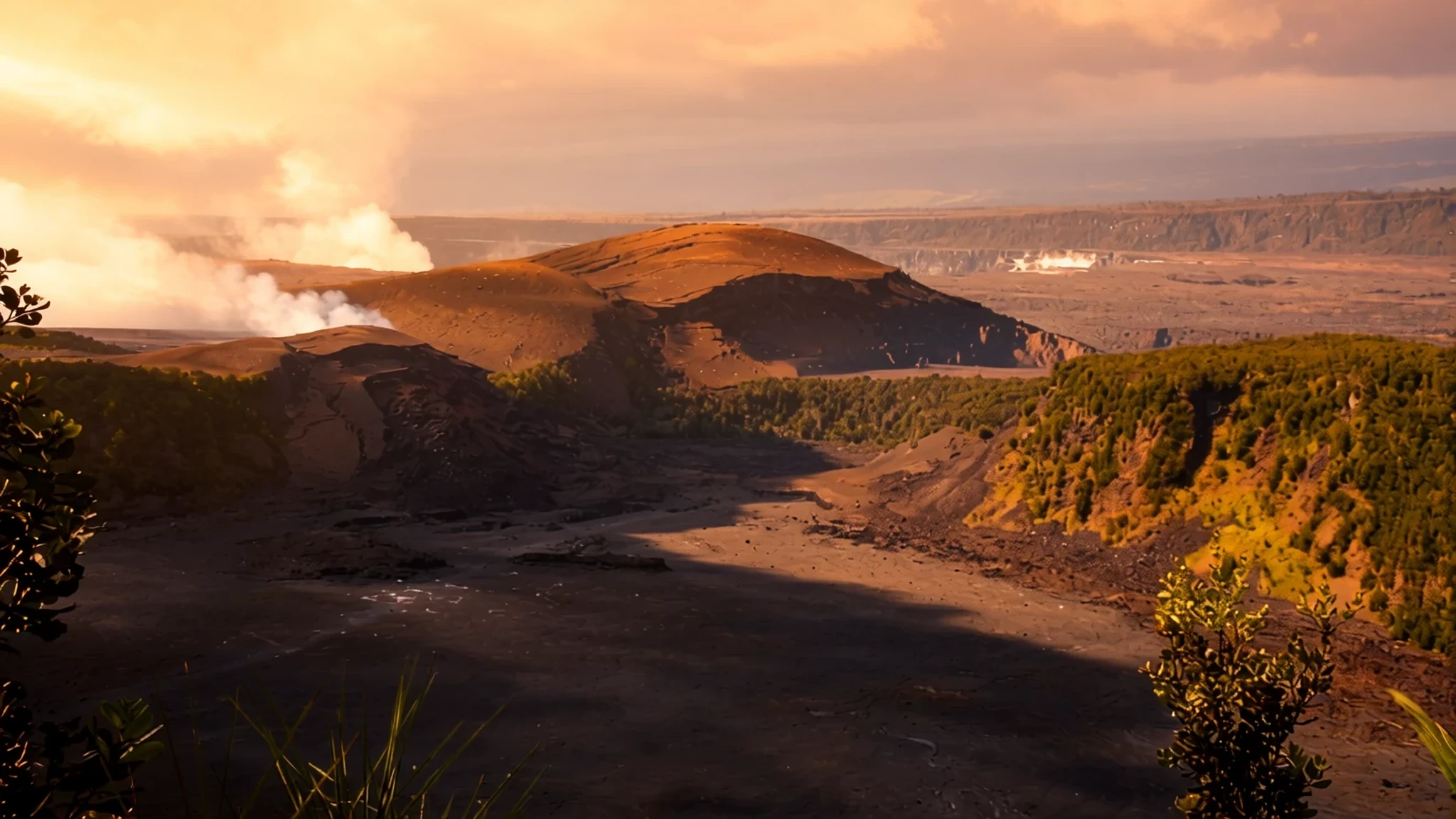
Go for time with mountain gorillas in the Virunga volcanoes' rainforest, a trek that rewards patience and a reasonable level of fitness.
The place
Volcanoes National Park sits in the far northwest of Rwanda, where land rises into a chain of volcanoes that forms part of the Virunga range. The park covers about 160 km² of forest and includes five of the range's eight peaks: Karisimbi, Bisoke, Muhabura, Gahinga and Sabyinyo. Its borders meet Virunga National Park in the Democratic Republic of the Congo and Mgahinga Gorilla National Park in Uganda, so the slopes lie close to the meeting point of three countries.
The landscape shifts quickly with altitude. Lower slopes are farmland and cultivated terraces, then come dense montane forest, then bamboo, and near the summits open grassland, swamp and heath. Visitors come mostly for the mountain gorilla and the golden monkey. Dian Fossey made the park her base for many years, and her research there still shapes how people understand it.
Conditions up high are cool and often damp, and the forest holds cloud even in drier months. The higher slopes feel colder than the lowland heat would suggest. Trekking is demanding, with steep, muddy paths, and the animals move when they choose, so the wildlife rather than the timetable sets the pace.
Its story
Volcanoes National Park began in 1925 as a small area around the slopes of Karisimbi, Bisoke and Mikeno, set aside to protect gorillas from poachers. It was the first national park created in Africa. It grew into the Albert National Park, which the Belgian colonial administration ran across what are now Rwanda and the Congo. By 1929 that larger Albert park covered 8,090 km², and both colonies fell under one administration.
Land use did not stay untouched. In 1958, 700 hectares within the park's boundaries were cleared to create a settlement for people. Between 1969 and 1973, about 1,050 hectares were cleared to grow pyrethrum, a daisy-like crop used in insecticides. During the 1970s and 1980s the Twa people, who had lived in the forest, were moved out of the park. Those decisions still shape debates about conservation and about who should benefit from it.
The park's modern reputation rests on the American researcher Dian Fossey, who arrived in 1967 and built a research centre on the slopes. Over the following years she spent most of her time among the gorillas and became the figure most associated with bringing their plight to outside attention. She was murdered at her home in 1985, a killing many people blame on the poachers she had opposed. Her life was later filmed in Gorillas in the Mist.
What to see
- Park headquarters at Kinigi — Kinigi, near Musanze
The park headquarters at Kinigi is where every trek begins, so you will almost certainly spend time here before heading into the forest. Its main job is logistics: checking in, collecting your permit and meeting your guide. There is coffee and clean toilets, but little else, so arrive with water and a snack.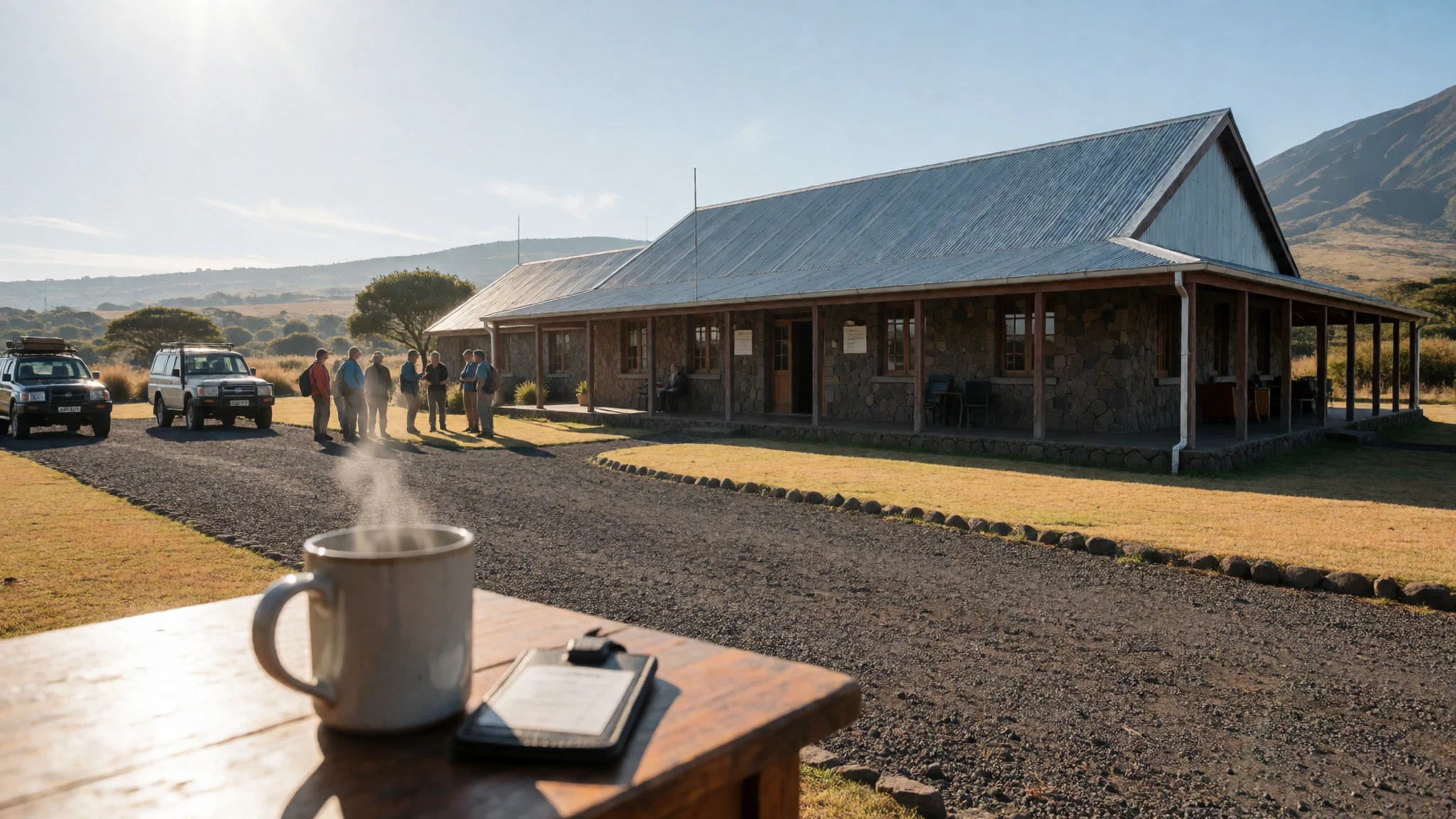
- Gorilla trekking — Forest slopes, guided from park headquarters
Gorilla trekking is the reason most visitors come. Small groups are led by park guides, some of whom are armed, to a gorilla family somewhere in the forest. Once you find them, time with the animals is limited, and the rules keep you at a respectful distance. Expect steep, slippery ground, and book well ahead because places are limited.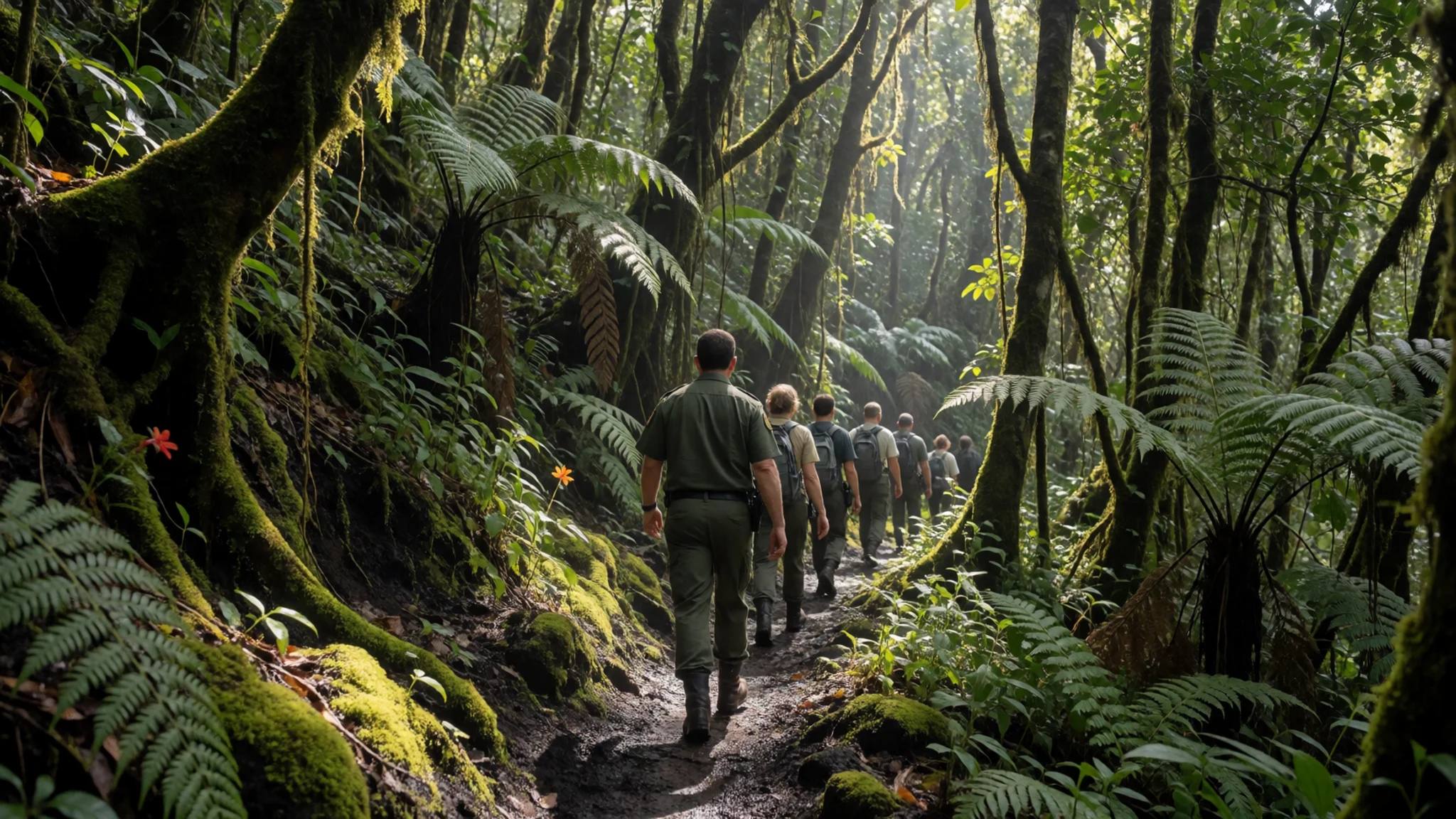
- Golden monkey trekking — Bamboo forest, guided from park headquarters
Golden monkey trekking follows the bamboo belt, where troops of these orange-gold monkeys feed through the day. It is a gentler walk than the gorilla trek, though the ground is still uneven and wet. The monkeys are quick and often high in the canopy, so bring binoculars and patience. Ask your guide how long the trek usually takes before setting out.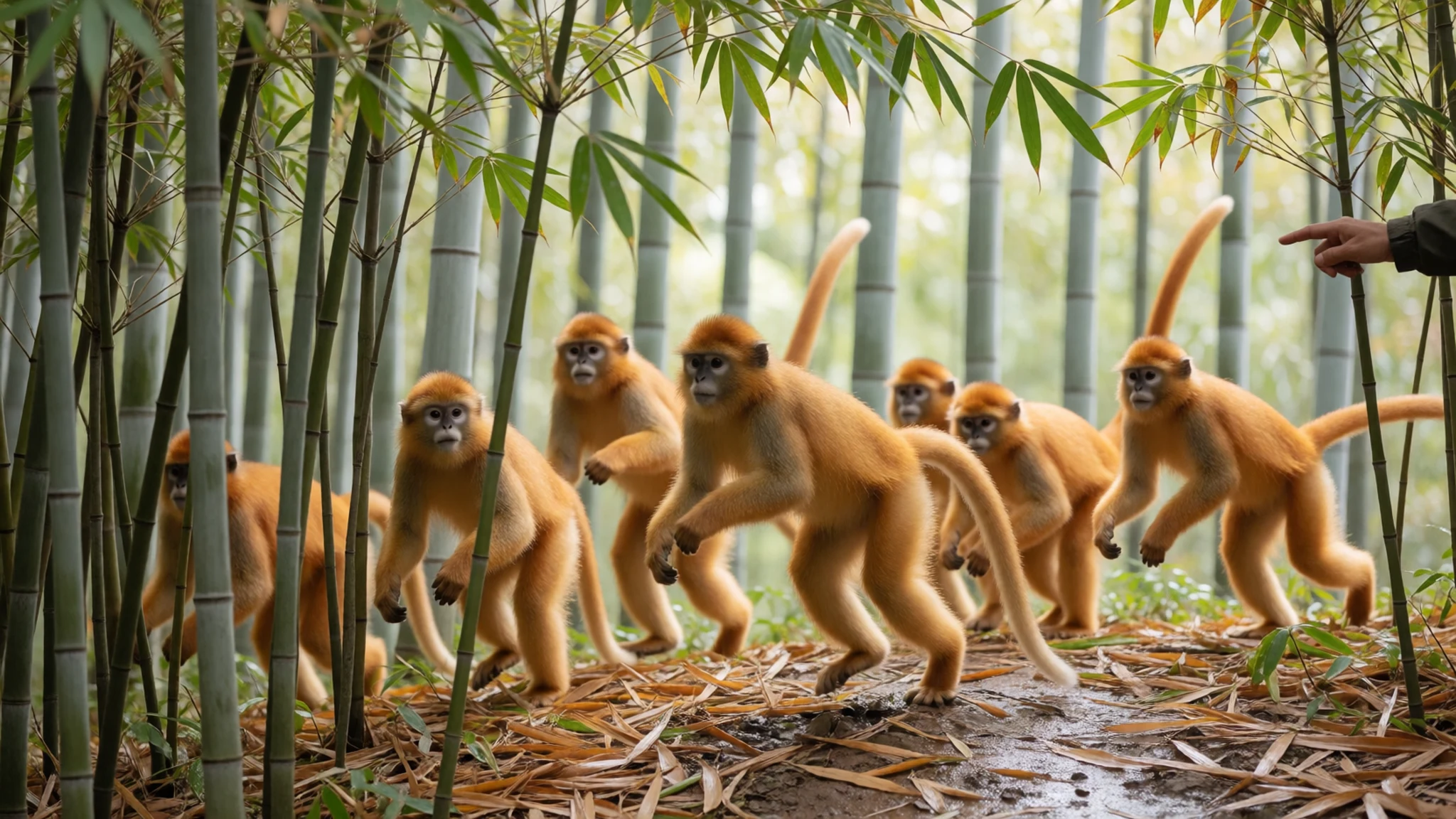
- Hike to Dian Fossey's grave — Forest above park headquarters
The hike to the grave of Dian Fossey climbs through the forest to a place that draws many visitors who want to understand her work. It is a half-day walk, steep in places, so it suits anyone comfortable with uphill trekking. Visitors often pause to think about the gorillas she spent her life defending. Keep your voice low at the grave and follow your guide's lead.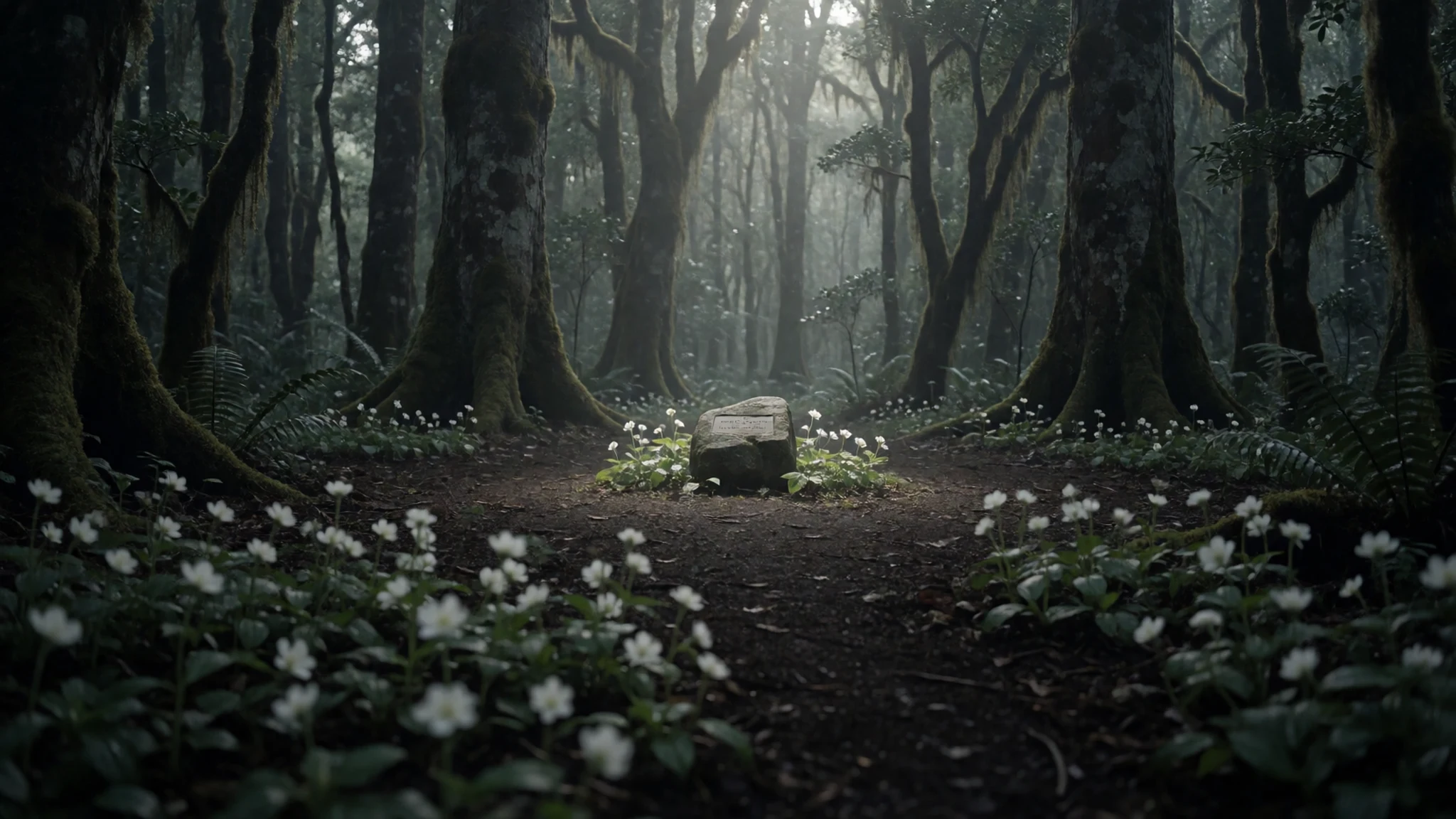
- Hike to Volcano Creator Lake — Higher slopes of the park
The hike to Volcano Creator Lake is a longer day out for walkers who want quieter forest and wider views across the volcanoes. Trails here are rough, cool and often wet, so wear layered clothing and waterproof footwear. Ask your guide whether the route suits your fitness before you commit to it.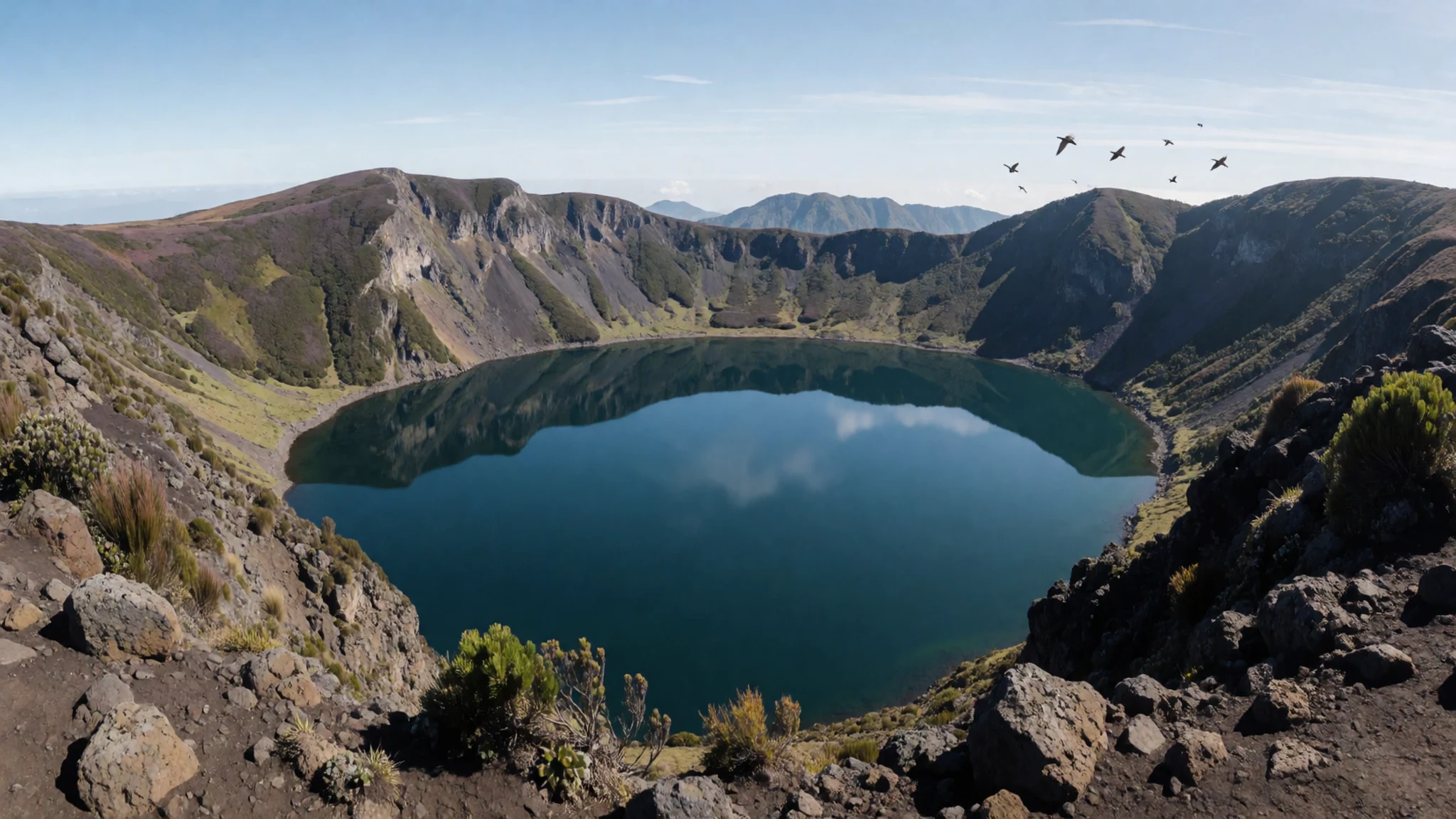
- Ellen DeGeneres Campus — A short distance from park headquarters at Kinigi
The Ellen DeGeneres Campus of the Dian Fossey Gorilla Fund is not part of the national park, but it lies a short distance from park headquarters. It is a museum about the gorillas, the park and Dian Fossey, with indoor and outdoor exhibits, a gift shop and a café with mountain views. It works well as a first stop or an end-of-day visit. A donation is suggested.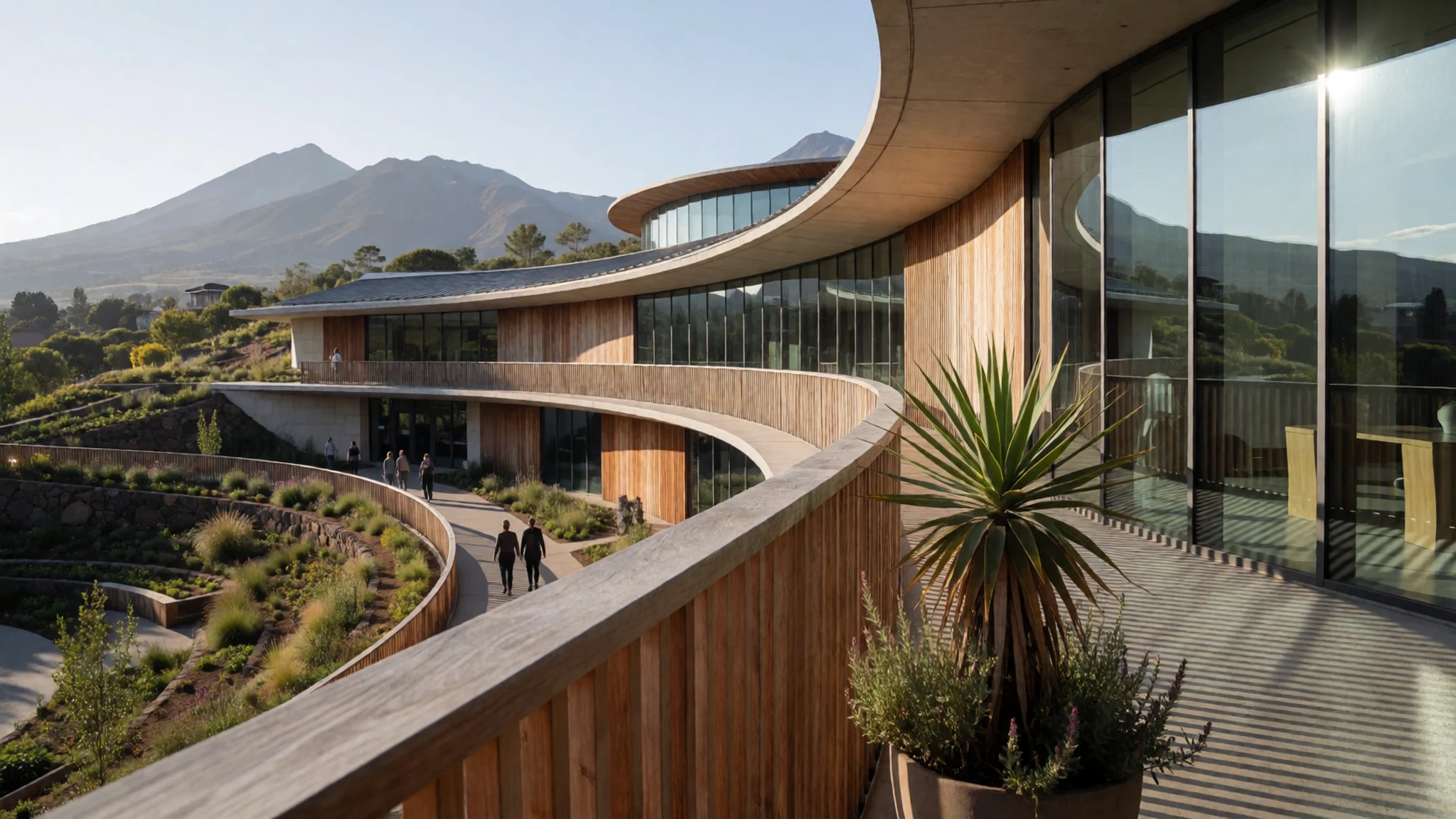
Culture
Volcanoes National Park works within Rwandan customs and within strict rules for the wildlife. Park guides set the pace on every trek, and their instructions come first, even when a gorilla group moves quickly. Visitors are asked to keep their distance from the animals, to stay in small groups, and to leave food in a safe place before approaching. Outside the park, many villages around Musanze are home to farming families, and a polite greeting goes a long way when meeting people. Ask before photographing anyone who is not part of your tour, and avoid pointing a camera at homes or children without permission. Never use flash near the gorillas, and in the park follow your guide's instructions at all times.
What to wear
Around Volcanoes National Park, traditional dress is closer to wrapped cloth than to tailored clothing. Many women have worn the kitenge, a printed cotton fabric wrapped or tied as a skirt or dress, and it remains common for church, weddings and public occasions across East Africa. Hand-woven and ceremonial cloth appears at cultural events, though everyday life favours printed fabric. Men have traditionally worn simple wrapped or tailored garments. Today most people in towns such as Musanze dress in ordinary Western clothes and save fabric for special occasions.
For visitors, the forest matters more than fashion. Long trousers and long sleeves suit the trails, which pass through nettles and wet vegetation. Sturdy waterproof boots with good grip are essential, since paths are steep and muddy. A rain jacket and warm layers help, as the higher slopes can be cold and damp even when the lowlands are warm. Gloves are useful for steadying yourself on branches. Outside the park, visitors should dress modestly, especially for church visits and when entering villages.
What to eat
- Brochettes — Roadside grills in Musanze town
Grilled skewers of beef or goat, known as brochettes, are one of the most common quick meals along the roads into Musanze. They are cooked over charcoal and often served with chips or plantain, eaten standing or at a plain table. Look for smoke rising from a roadside grill in town. Eat them hot.
- Isombe — Local eateries in Musanze and around Kinigi
Isombe is a stew of pounded cassava leaves, cooked with palm oil or peanut and usually served with rice or ugali. It is a filling staple on many local menus in the region, so ask for it at a neighbourhood eatery.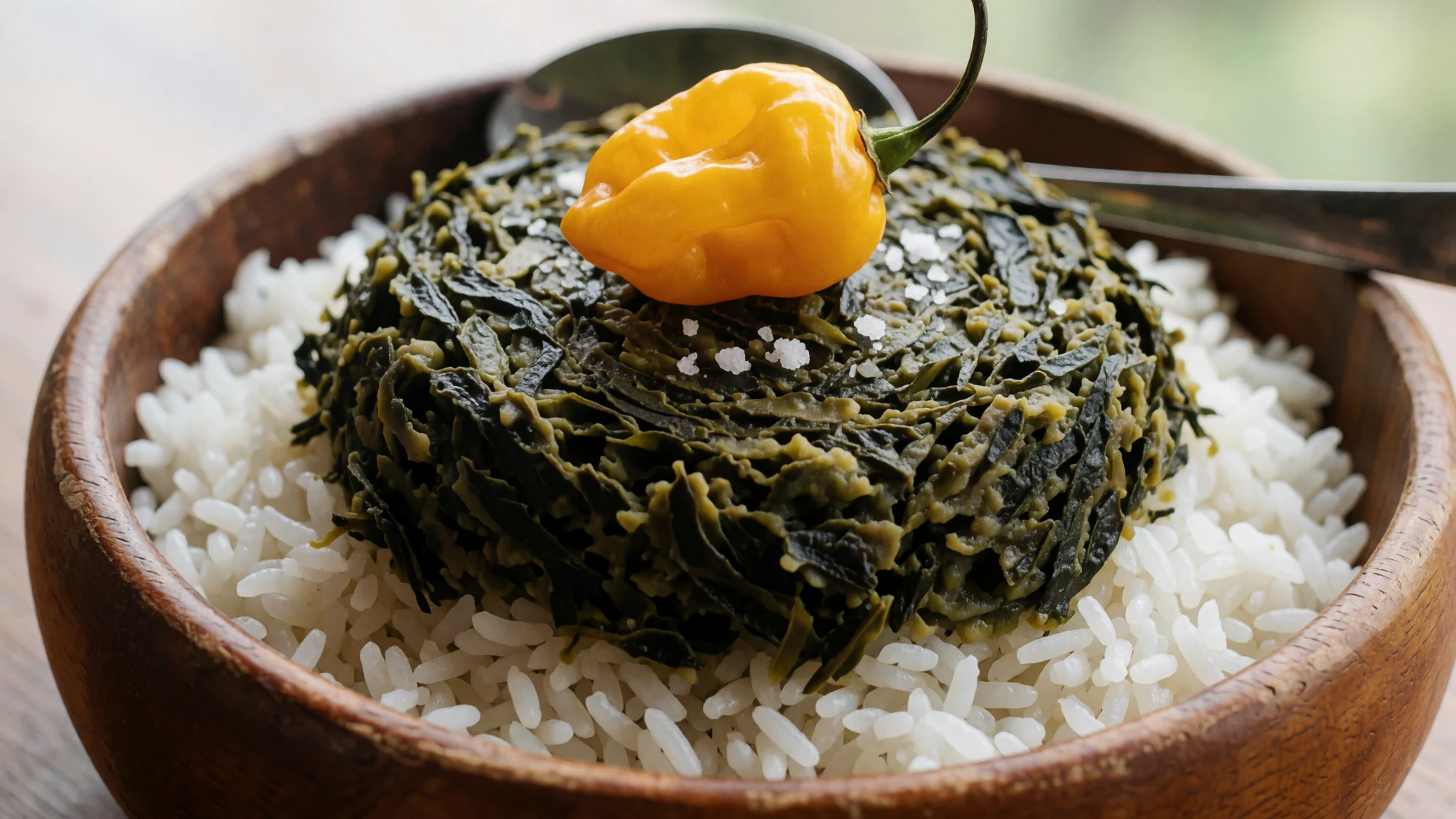
- Ugali with beans — Neighbourhood restaurants in Musanze
Ugali is a firm porridge made from maize or cassava flour, eaten by hand with a bean stew. Many small restaurants in Musanze serve the two together at lunch. It is filling and simple, a sensible choice before a long trek. - Potatoes from the farms — The morning market in Musanze
Potatoes grown on the surrounding farms are cooked simply, boiled or roasted, and sold from street stalls. They make a reliable snack for walkers. The morning market in Musanze is a good place to find them fresh from the fields. - Local coffee — Park headquarters at Kinigi and cafés in Musanze
Rwanda grows a good deal of coffee, and the cup served at park headquarters before a trek is a warm introduction. Free tea and coffee are offered there in the morning before gorilla treks. Local cafés in Musanze serve it strong and often sweet.
Plan it
Best time. The driest months, June to August, are easiest for trekking because the forest paths are less slippery. The rainy months bring mud and heavier cloud, and the trails become harder going.
How long. 2–3
Getting there. Fly into Kigali International Airport, then take a paved road northwest to Musanze. Park headquarters is reached by paved road, but trailheads may need a 4WD, so arrange transport before you reach the visitor centre.
Budget. high
Tips
- Book gorilla and golden monkey permits well ahead, as places are limited
- Arrange transport in advance; your driver can wait for you or return to collect you
- Arrive at headquarters early for check-in on trekking mornings
- Carry plenty of drinking water and warm layers for cool, wet forest
- Ask your guide about route length and difficulty before choosing a hike
Etiquette
- Keep your distance from gorillas and follow your guide's lead
- Leave food and backpacks in the safe area your guide shows you before approaching the animals
- Ask before photographing people you meet in villages
Nearby
Sources
- Wikidata Q932736 (CC0)
- Wikipedia, Volcanoes National Park (rev 1362946374) (CC BY-SA 4.0)
- Wikivoyage, Volcanoes National Park (rev 5358533) (CC BY-SA 4.0)
- Photo 01, Parc National Des Volcans, Dave Proffer (CC BY 2.5)
- Photo 02, Rwandan children at Volcans National Park, Philip Kromer (CC BY-SA 2.0)
- Photo 03, Mountain gorilla, Emmanuelkwizera (CC BY-SA 4.0)
- Photo 04, Pele by D. Howard Hitchcock (Public domain)
- Photo 05, Park ranger in bamboo forest, Emmanuelkwizera (CC BY-SA 4.0)
- Photo 06, Ibirunga bya Gahinga na Bushokoro, Annick Green (CC BY-SA 4.0)
- Photo 07, Ikirunga cya Sabyinyo, Annick Green (CC BY-SA 4.0)
- Photo 08, In Musanze Cave, Dizodidier (CC BY-SA 4.0)


