Rusumo Falls
Rusumo Falls, Rwanda
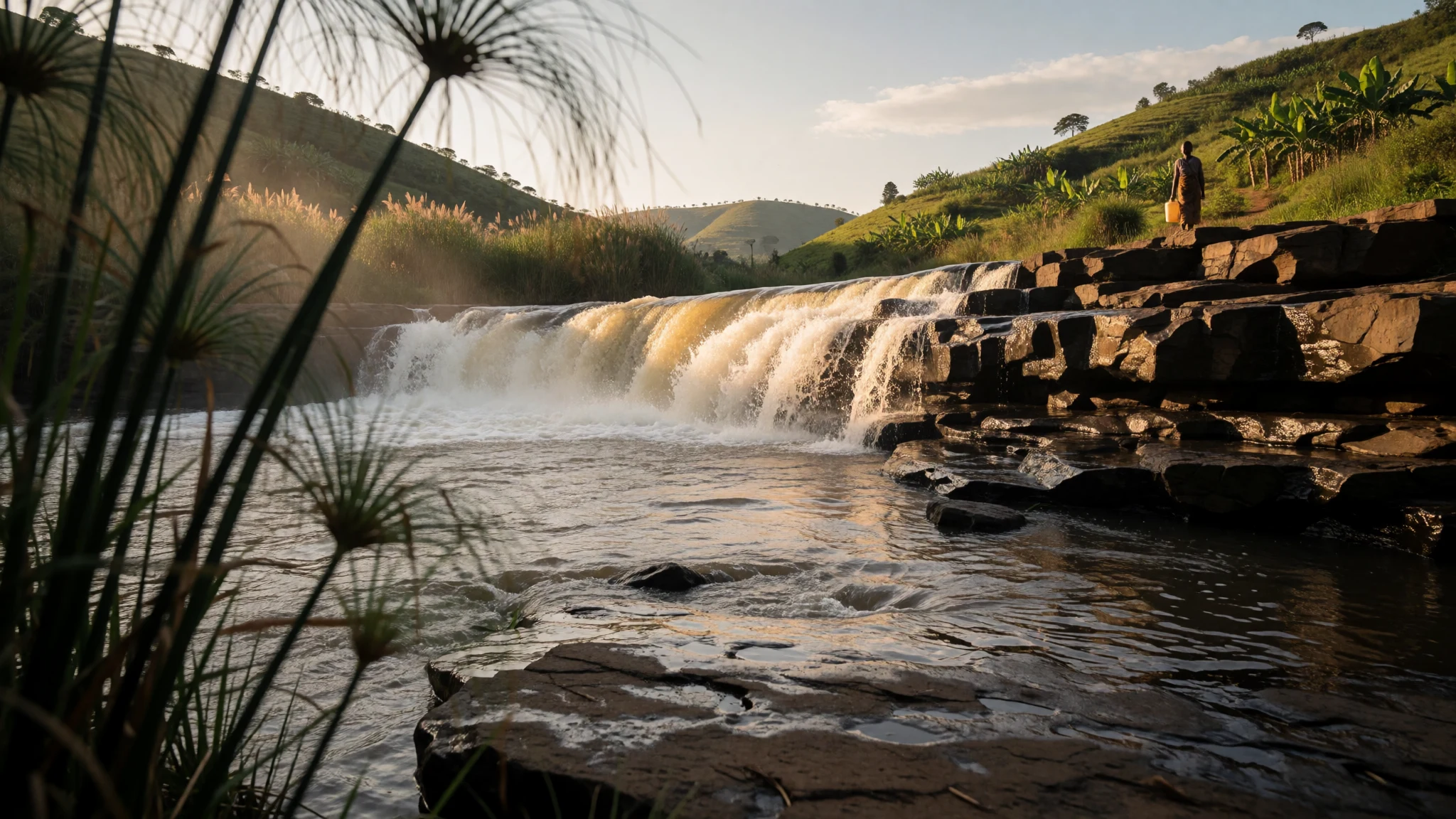
Rusumo Falls is a broad, modest cascade on the Rwanda–Tanzania border, where a far Nile headwater meets a crossing with a long story.
The place
Rusumo Falls lies on the Kagera river in Kirehe district, in eastern Rwanda, exactly where the river forms the boundary with Tanzania. The Kagera is counted among the far headwaters of the Nile, so the water here is at the start of a very long journey north. The drop is modest, about 15 m high and 40 m wide, and it reads as a broad band of white water over rock rather than a single dramatic plunge. The stone underneath is old folded schist and quartz-phyllite, and the river has worked it into ledges and channels that divide the flow into several sheets. Around the falls the country is gentle. Hills are farmed in patches of banana, beans and cassava, and reeds and papyrus crowd the softer stretches of bank. The air is warm, and spray keeps the nearest rocks dark and slippery. This is not a landscaped park. The falls sit beside a working border crossing, so the soundtrack is water mixed with engines, and lorries queue within sight of the river. Visitors who expect a long walk through forest to a viewpoint will be disappointed. Those who enjoy seeing how a landscape, a road and a frontier fit together, and who like their waterfalls with some context, tend to leave satisfied. Water levels change a good deal with the seasons, so the same spot can look quite different from one trip to the next.
Its story
Rusumo Falls matter far more for where they are than for how tall they are. The rock ledges that make the cascade also make the river easier to span here, and this is the one point in the surrounding area where a bridge has been practical. That single fact has pulled roads, traders and officials to the spot, and it explains why a modest waterfall carries real weight in Rwandan history. Goods and people moving between Rwanda and Tanzania, and onward towards the coast, have long had to funnel through the crossing. The place also carries a harder memory. During the genocide against the Tutsi and the upheaval that followed, very large numbers of people fled across the Kagera here, and later many returned the same way. Rwandans associate the crossing with that movement, and visitors should treat the riverside with the quiet it deserves. In more recent years the river's power has drawn attention from the three neighbouring countries that share the basin, and hydropower works have altered the surroundings. Access to parts of the bank can change, so it is sensible to ask locally before wandering. The falls are therefore best understood as a hinge: a natural step in a Nile headwater, a bridge point, a border and a place of memory, all within a short stretch of river.
What to see
- The main cascade — Rusumo, Kirehe district
The cascade is the reason for coming. The Kagera tumbles over dark ledges in several sheets, and the noise carries well up the bank. Look at the way the rock is folded and banded; that is the old schist the river has carved. Mist keeps the stone slick, so stay back from edges.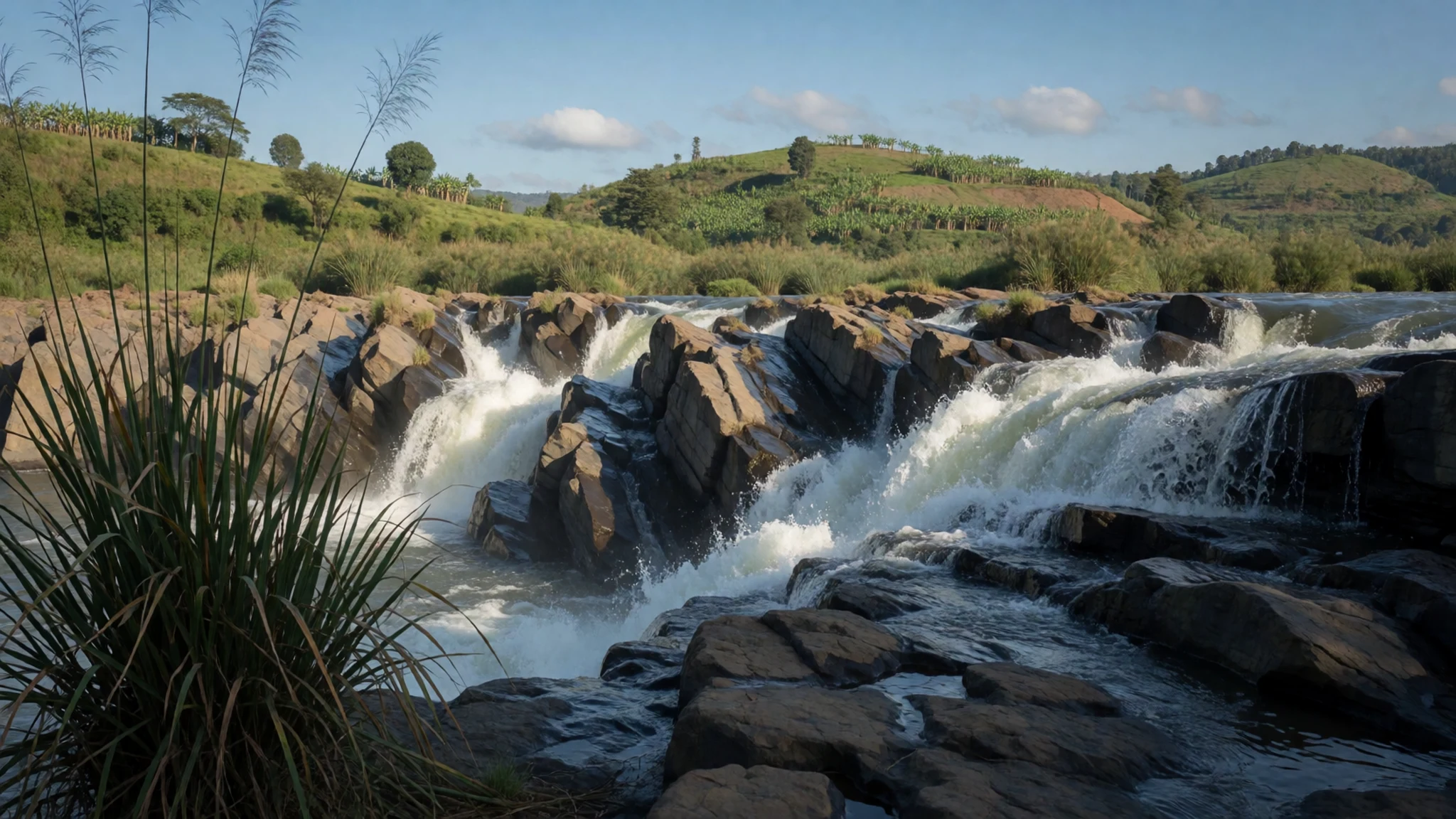
- Side-on views of the falls — Rusumo, Kirehe district
A second angle shows the width of the falls better than a head-on look. From here the water spreads across the full breadth of the river and the pattern of channels becomes clear. This is also a good spot for photographs of the spray against the green hills, in the soft light of early morning.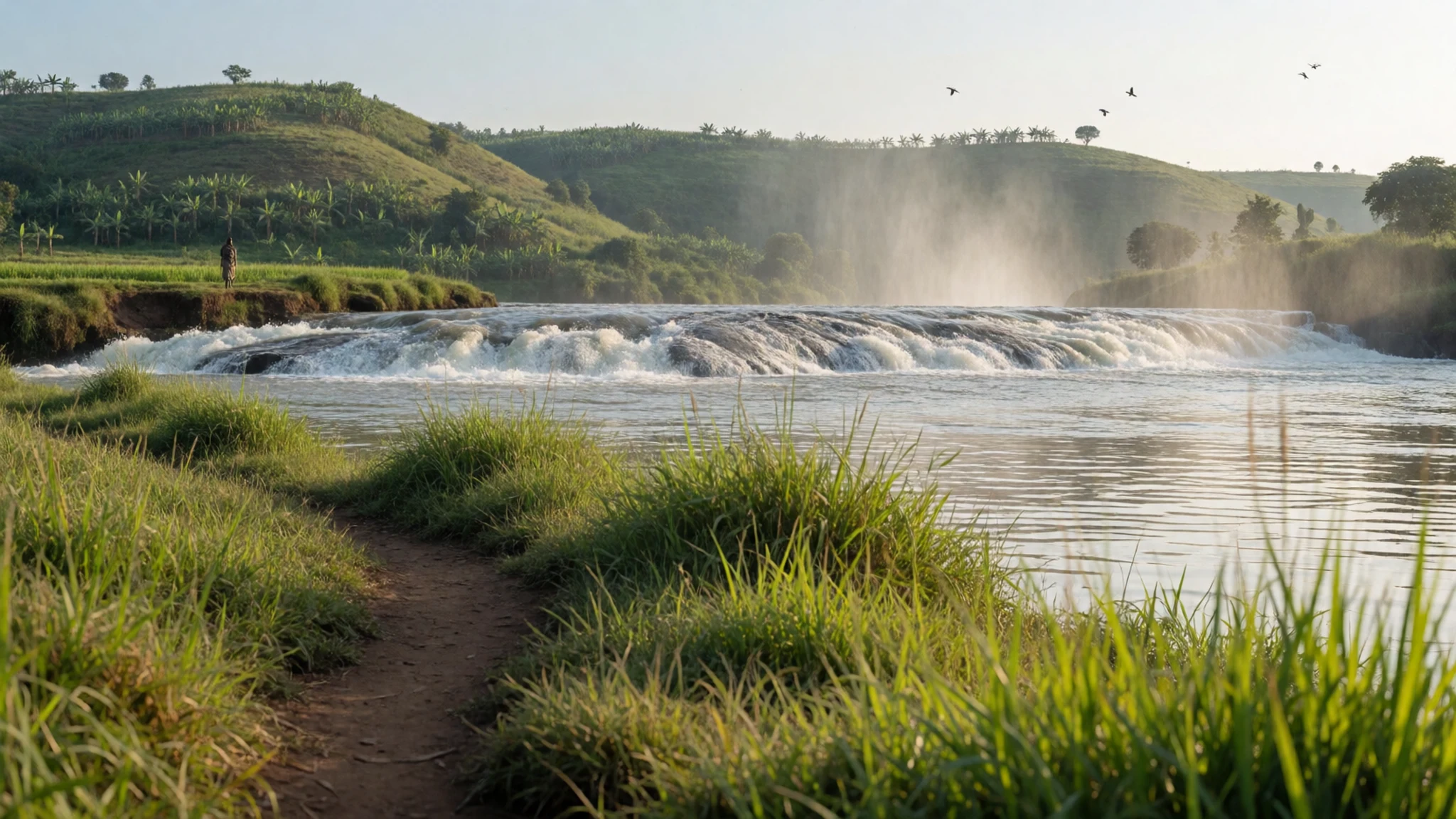
- The river and bridge crossing — Rusumo border crossing
The Kagera is the border here, and the bridge shows why the site matters. Watching the traffic pass between Rwanda and Tanzania explains the place better than any sign. Keep cameras away from officials and the border buildings, and ask a local guide where it is fine to stand.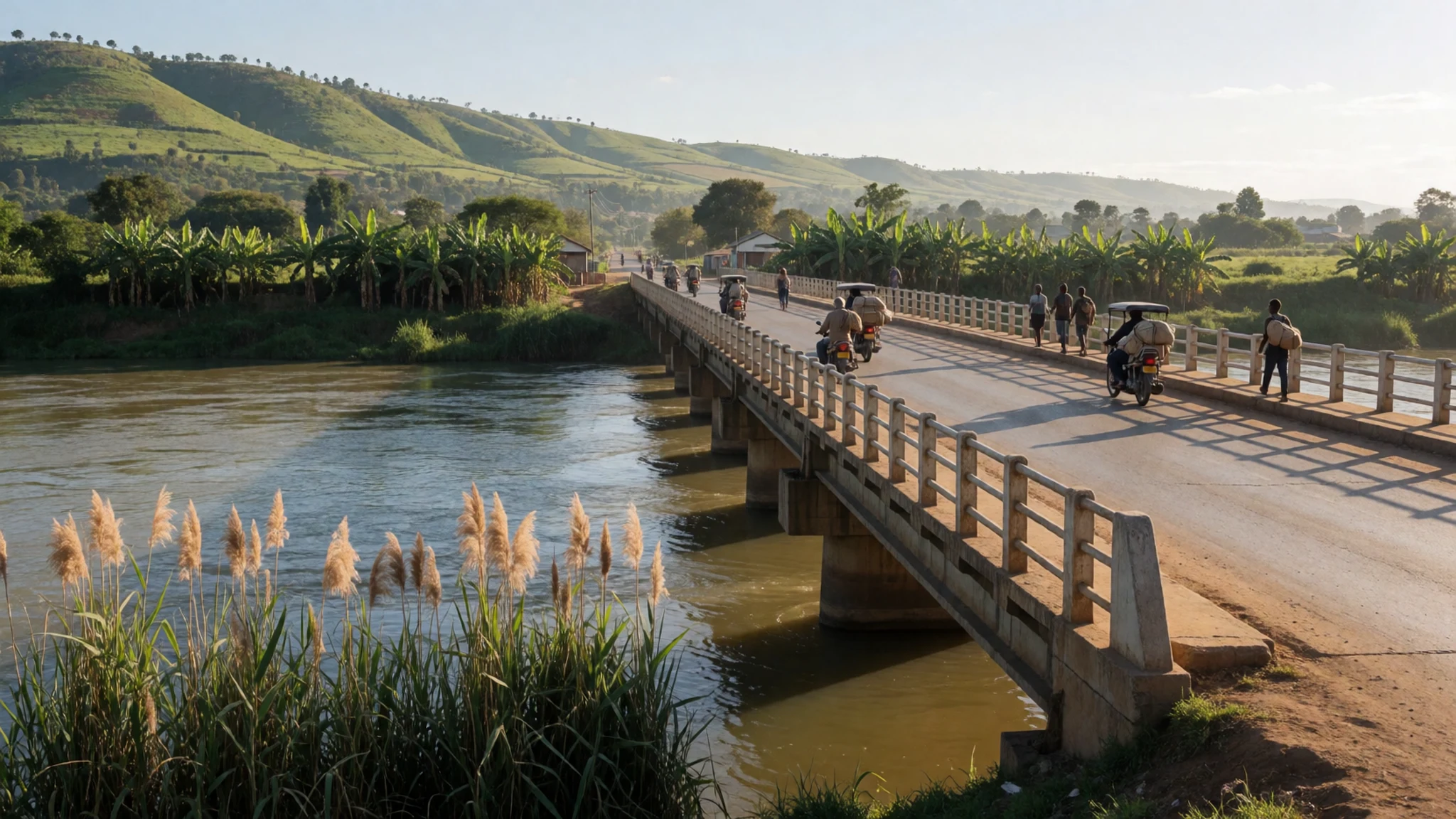
- The river through Kirehe — Kirehe district, eastern Rwanda
Downstream of the drop the Kagera slows and widens between farmed slopes. Small plots come right to the bank, and women fetch water and wash clothes at the edge. This calmer stretch suits a quiet walk, where the pace of rural eastern Rwanda is easy to see.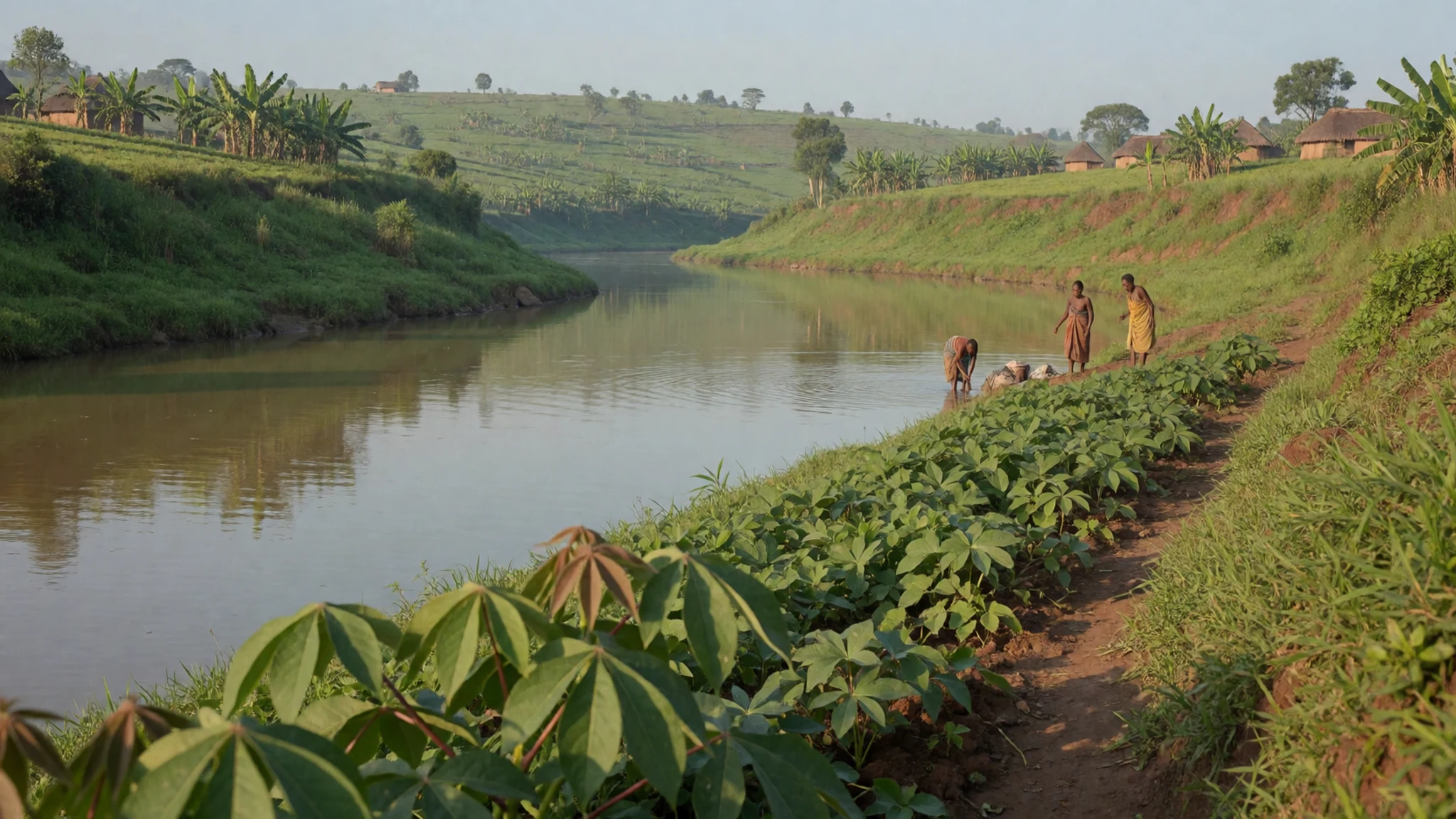
- Umugezi wa Rusumo — Rusumo, Kirehe district
Umugezi wa Rusumo is the local name for the river at this point, and the banks offer a plain view of everyday life: banana groves, footpaths and people crossing on errands. It is a useful reminder that the falls are part of a living landscape, not an attraction set apart.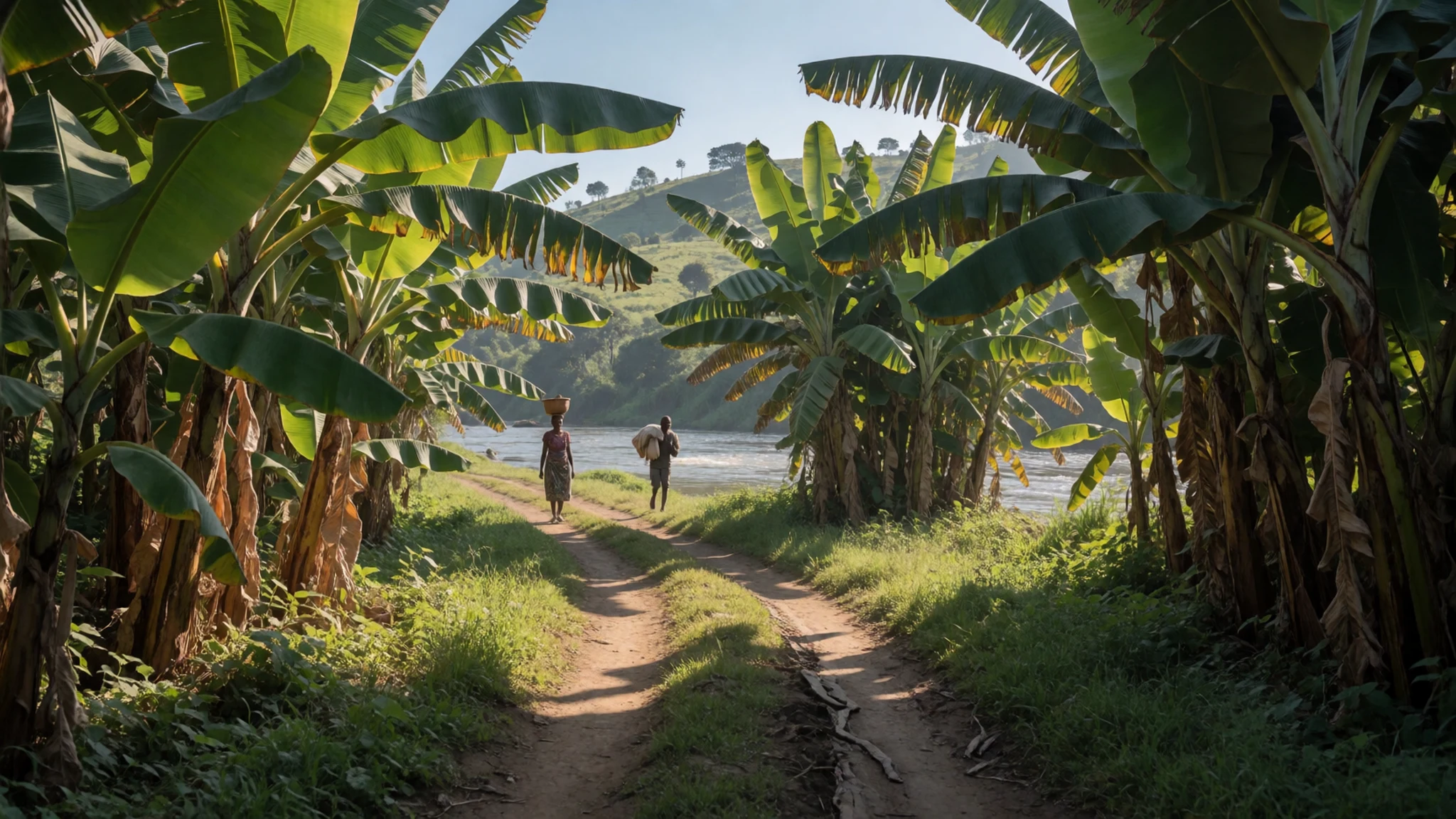
Culture
Rusumo Falls sits in a part of Rwanda where Kinyarwanda is the everyday language, and Kiswahili is heard constantly because of the border trade. Farming shapes life: most families around Kirehe work small plots of banana, beans, maize and cassava, and the rhythm of the day follows the fields and the weather. Rwanda is known for orderliness and cleanliness, and communities hold a monthly morning of shared work called umuganda, when local people clean, repair and build together. Visitors may find roads quiet at that time. Greetings matter, and a handshake with a few polite words in Kinyarwanda or Kiswahili is warmly received. The riverside also carries the memory of the genocide against the Tutsi, when people fled across the Kagera, and Rwandans speak of that period with care. Do not press people for stories; if someone chooses to talk, listen without interrupting. Religion is strong, with churches full on Sundays, and modest, tidy dress is the norm. Because this is a border zone, security staff are present, and their instructions are taken seriously. Do not photograph the bridge, the border post, officials or soldiers, and always ask before taking a picture of anyone.
What to wear
Around Rusumo Falls, traditional Rwandan dress is now mostly kept for weddings, dances and national occasions. The best known piece is the umushanana, a long draped garment worn by women over a wrapped skirt, often in soft cotton or silk-like fabric and pinned at the shoulder. Men's ceremonial wear is less common today. Across the river in Tanzania, women often wear kanga, printed cotton cloths sold in pairs with a proverb along one edge. On an ordinary day in Kirehe people dress simply and neatly. Women wear printed wrap skirts, known in the region as kitenge, or dresses with a headscarf, and men wear shirts and trousers, often second-hand and well pressed. Schoolchildren are in uniform, and rubber boots are common in the fields. Visitors should pack light, breathable layers that cover shoulders and knees, as this is a conservative rural area and the heat is steady. Shoes with a good grip matter more than style, because the rocks near the water are wet and slippery. A cap or hat, sunscreen and a light rain jacket are useful. Plastic carrier bags are banned in Rwanda, so bring a cloth bag instead.
What to eat
- Brochettes — Roadside grills and small bars in Kirehe and Nyakarambi
Skewers of grilled goat, beef or sometimes pork, cooked over charcoal and often served with roasted banana or chips. They are the standard evening meal in small towns, and the smell of charcoal usually leads you to the right place.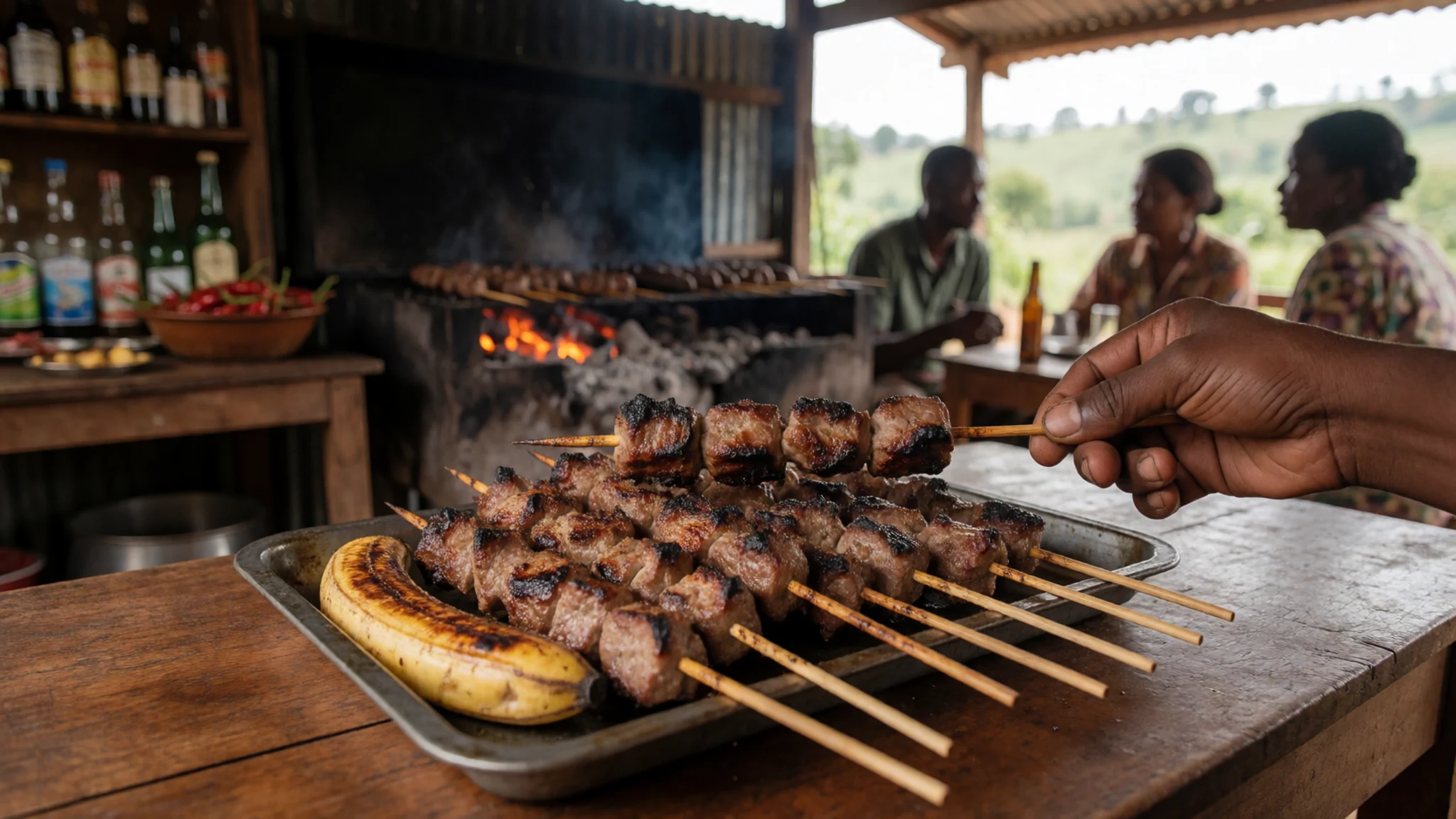
- Isombe — Local eateries serving lunch buffets in trading centres
Cassava leaves pounded and slowly cooked into a thick, dark green stew, often with aubergine, spinach or dried fish. It is earthy and filling, and is usually eaten with rice, boiled potatoes or plantain.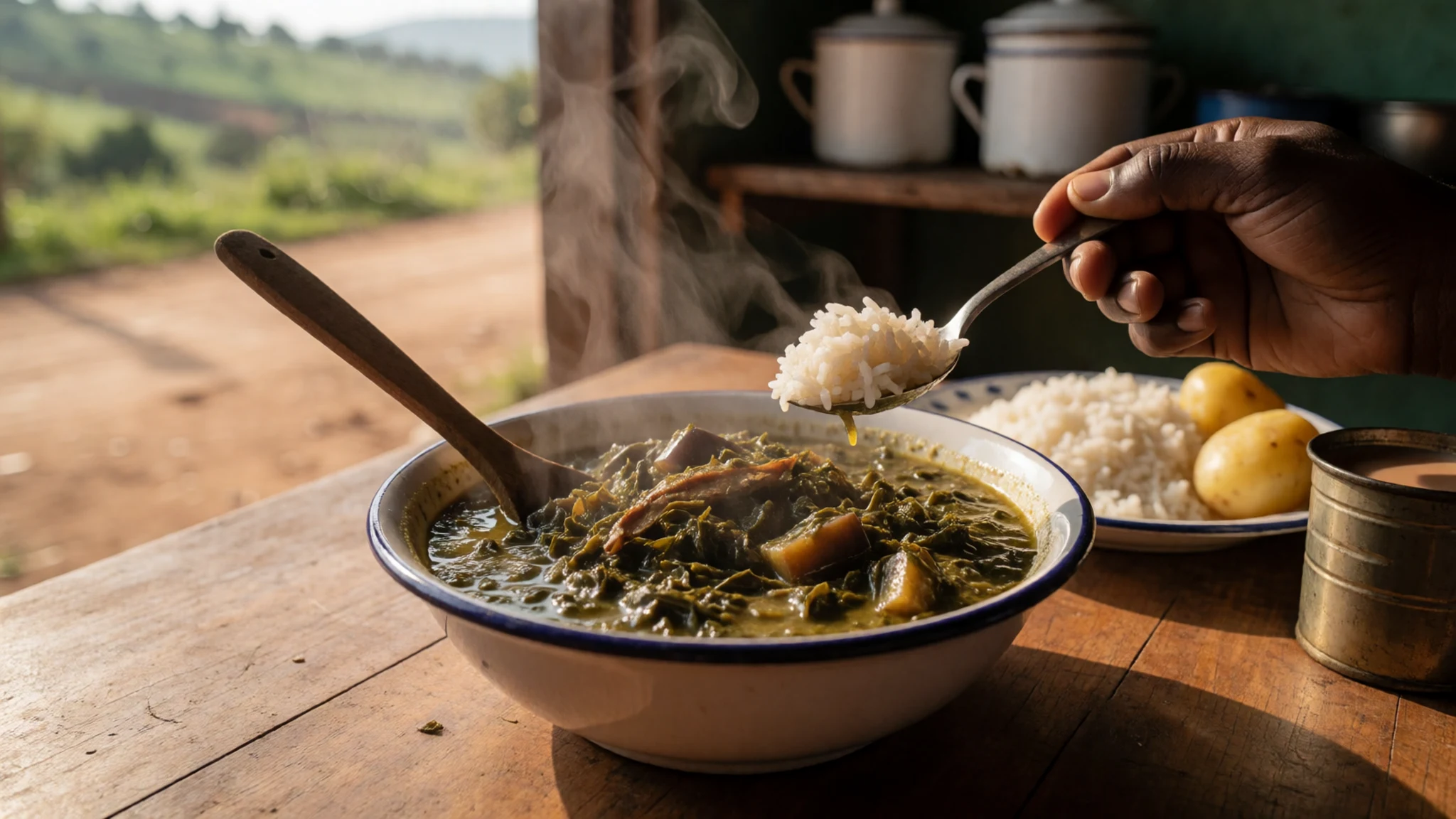
- Grilled tilapia — Eateries near lakes and along the road from Kigali
Whole freshwater fish, grilled or fried until crisp, served with a tomato and onion relish. Fish comes from the lakes and rivers of the region, and it is a good choice if the day has been hot and long. - Ubugari with beans — Simple eateries at local markets
Ubugari is a stiff porridge of cassava or maize flour, shaped by hand and used to scoop up beans, greens or a sauce. Plain and cheap, it is the daily staple for many families and is worth trying once. - Mandazi and tea — Market stalls and tea shops in border towns
Mandazi are light, slightly sweet fried doughs, sometimes spiced with cardamom. Eaten with milky, sweet Rwandan tea, they make a good breakfast or a snack at the end of a morning by the water.
Plan it
Best time. June to September is the main dry season, when roads are easier and paths by the river are less muddy, though the water is lower. The rains in March–May and October–November make the falls fuller and louder but the tracks slippery, and heavy showers can spoil a short visit.
How long. 1
Getting there. Fly to Kigali International Airport, then travel east by road towards Kirehe district and the border at Rusumo; allow most of a day for the journey. Public buses and minibuses run to towns near the border, and a motorbike taxi or hired car covers the last stretch. Check current border and access rules before going.
Budget. low
Tips
- Start early, because the road from Kigali is long and light is softest in the morning
- Carry cash in small notes, as cards are rarely accepted in rural Kirehe
- Bring water, sun protection and a rain jacket, since weather changes fast
- Ask a local guide or official where it is allowed to stand and photograph
- Check the current situation at the border and around the hydropower works before travelling
Etiquette
- Do not photograph the bridge, border post, officials or soldiers
- Ask before photographing people, and greet politely first
- Keep voices low and respectful, remembering what the crossing means to many Rwandans
Nearby
Sources
- Wikidata Q959903 (CC0)
- Wikipedia: Rusumo Falls (rev 1380855927) (CC BY-SA 4.0)
- Photo: RusumoFalls1.jpg, SteveRwanda (CC BY-SA 1.0)
- Photo: RusumoFalls2.jpg, SteveRwanda (CC BY-SA 2.0)
- Photo: Rwanda relief location map, Carport (CC BY 3.0)
- Photo: Rusumo river, UWIMPUHWE Va (CC0 1.0)
- Photo: Rusumofalls.jpg, Malte Christiansen (CC BY-SA 2.0)
- Photo: Umugezi wa Rusumo, UWIMPUHWE Va (CC0 1.0)
- Wikivoyage (CC BY-SA 4.0)


