Kinngait
Kinngait, Canada
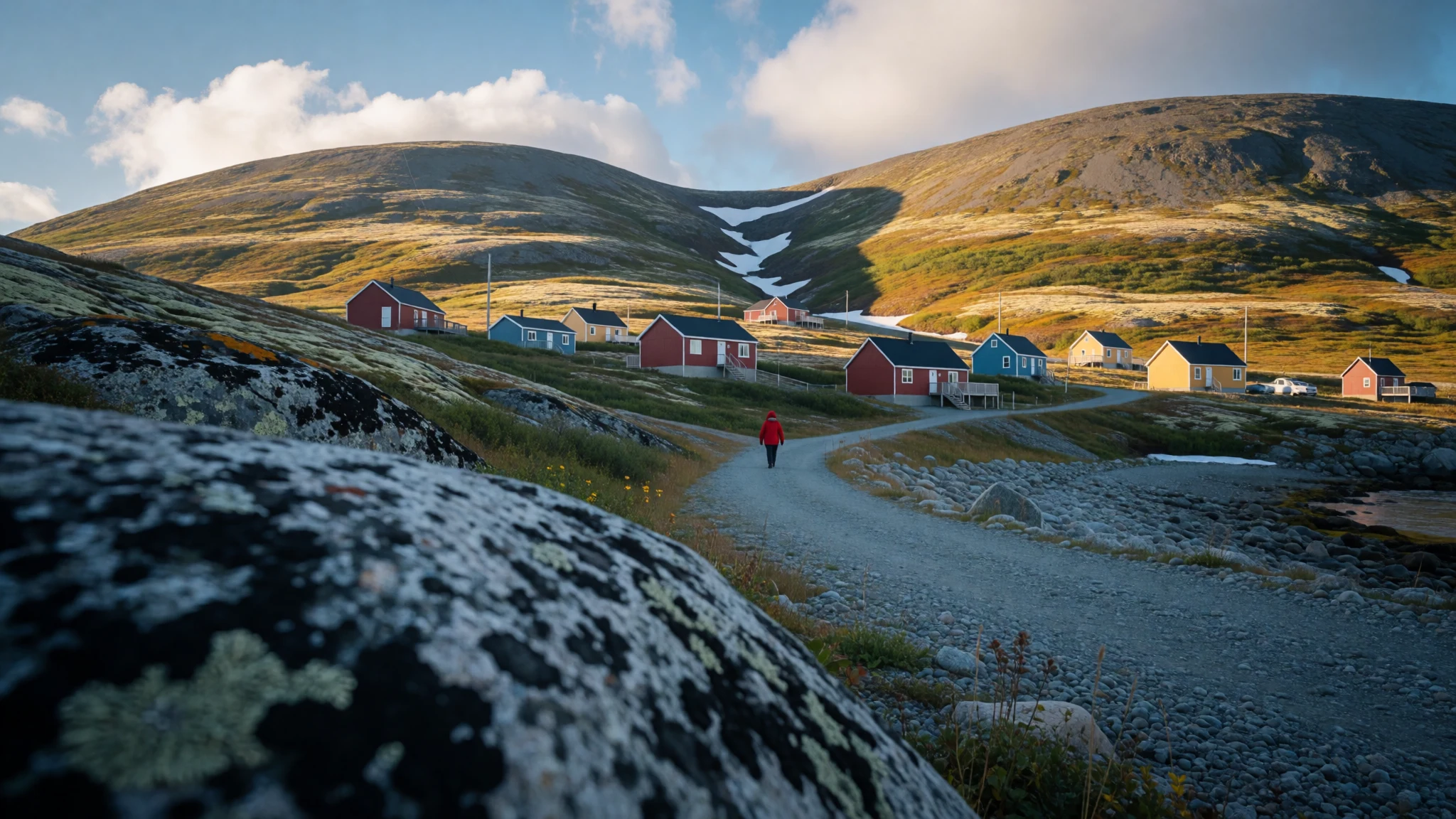
Kinngait is a small Inuit hamlet on the Arctic coast where art, open water and ordinary northern life sit within walking distance.
The place
Kinngait sits on Dorset Island, off the Foxe Peninsula at the southern tip of Baffin Island, in the Qikiqtaaluk Region of Nunavut. The Inuktitut name (ᑭᙵᐃᑦ) is usually explained as 'high mountain' or 'where the hills are', and the hills are the first thing anyone notices: low, rounded and bare, rising behind coloured houses and a working harbour. Until recently the hamlet appeared on maps as Cape Dorset, and older books and flight listings still use that name. About 1,400 people live here, and it feels like a community rather than a destination, with a co-operative, grocers, a school, boats pulled up on the shore and snowmobiles or quad bikes depending on the season. The elevation is about 50 metres, so the sense of height comes from the hills and the open water, not from altitude. Nunavut means 'our land' in Inuktitut, which is spoken every day alongside English. The climate is tundra: summers are short and cool, winters long and cold, and sea ice shapes everything from travel to what is for dinner. No road reaches the hamlet from anywhere. People and nearly all supplies arrive by air or, in the brief summer, by ship, which explains the high prices and the need to plan well ahead. In return, Kinngait offers ordinary Arctic life at walking pace, art made by the people who live there, and wildlife and landscape a short boat ride away. Expect quiet, wind and a great deal of sky.
Its story
Kinngait has been lived in for a very long time. Archaeologists have found remains here of the Thule, ancestors of today's Inuit, and of the Dorset people, known in Inuktitut as the Tuniit, who occupied the Arctic before them. Across the wider region, the first settlers, the Pre-Dorset, came from the west many thousands of years ago, and the Dorset culture followed. The Inuit name for the inlet was Sikusiilaq, after a patch of nearby sea that stays free of ice through the winter. That open water helps explain why people kept returning: animals gather where the ice is thin or absent, and hunters follow them. The European name came in the seventeenth century, when the English captain Luke Foxe, sailing these waters, named the cape after Edward Sackville, Earl of Dorset. It was a label from outside, and it stayed on charts for centuries. Daily life shifted in 1913, when the Hudson's Bay Company opened a trading post. Furs and skins went one way; tea, flour, sugar, tobacco and ammunition came the other. The post drew families off the land towards a fixed settlement, a pattern repeated across the Canadian Arctic. In a community vote, residents later chose between three names: Kinngait, Sikusiilaq and Cape Dorset. They picked the Inuktitut name Kinngait, and the hamlet's official name changed to match. Visitors will still meet all three, in old guidebooks, on photograph captions and in conversation.
What to see
- The printshop and co-operative — Central Kinngait
The West Baffin Eskimo Cooperative is the hub of the hamlet's art world, with a printshop and neighbouring buildings. Kinngait is known for Inuit prints and carvings made by local artists. Opening arrangements for visitors change, so ask in the hamlet or check the community website before planning around a visit.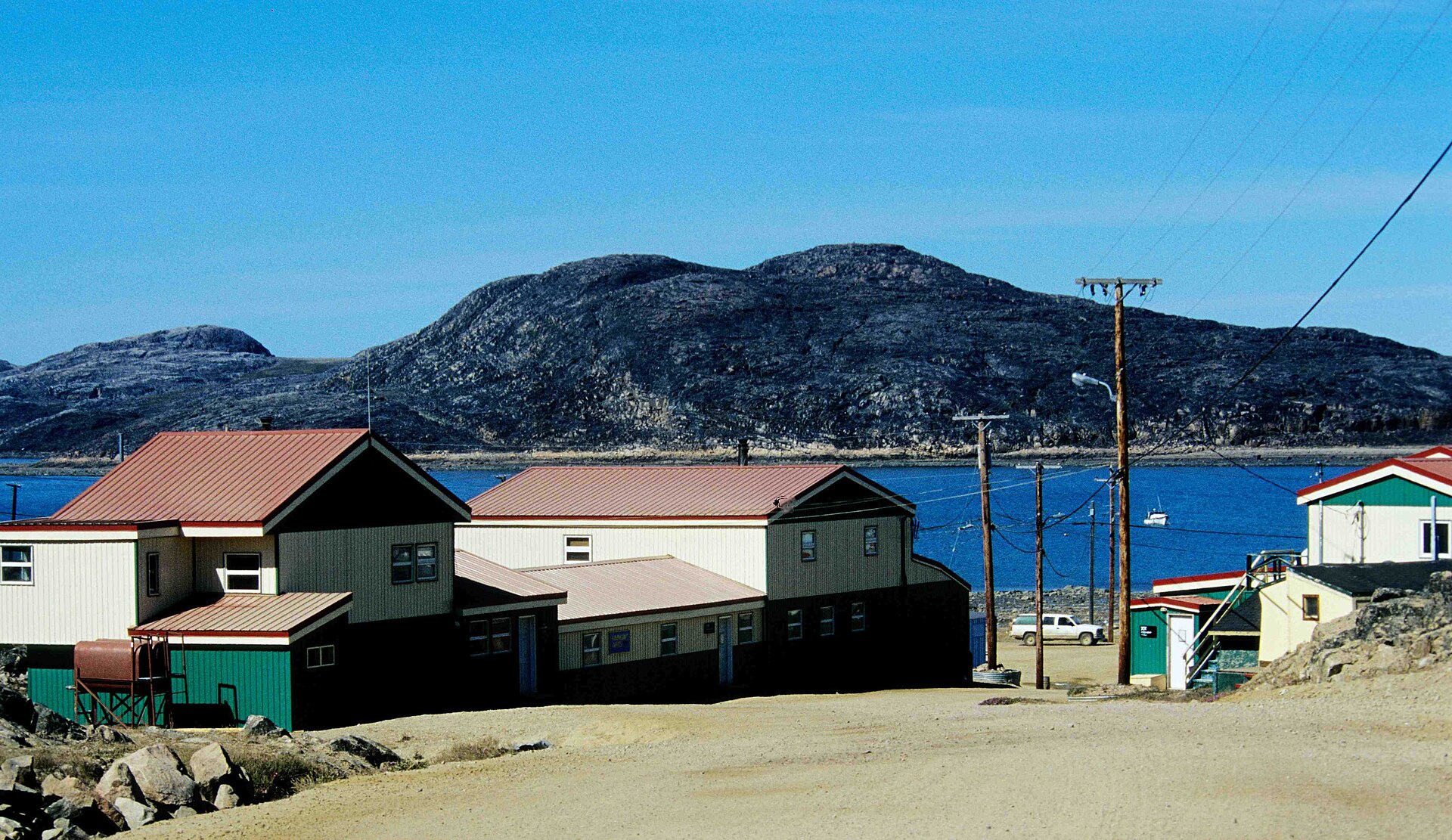
- The harbour and shore — Waterfront
A slow walk along the shoreline shows the hamlet at its most honest: boats on the beach, tidal rock, hills behind, weather moving fast across the water. Light is best early and late. Keep a respectful distance from boats, fishing gear and anything being butchered or dried, which belongs to someone's household.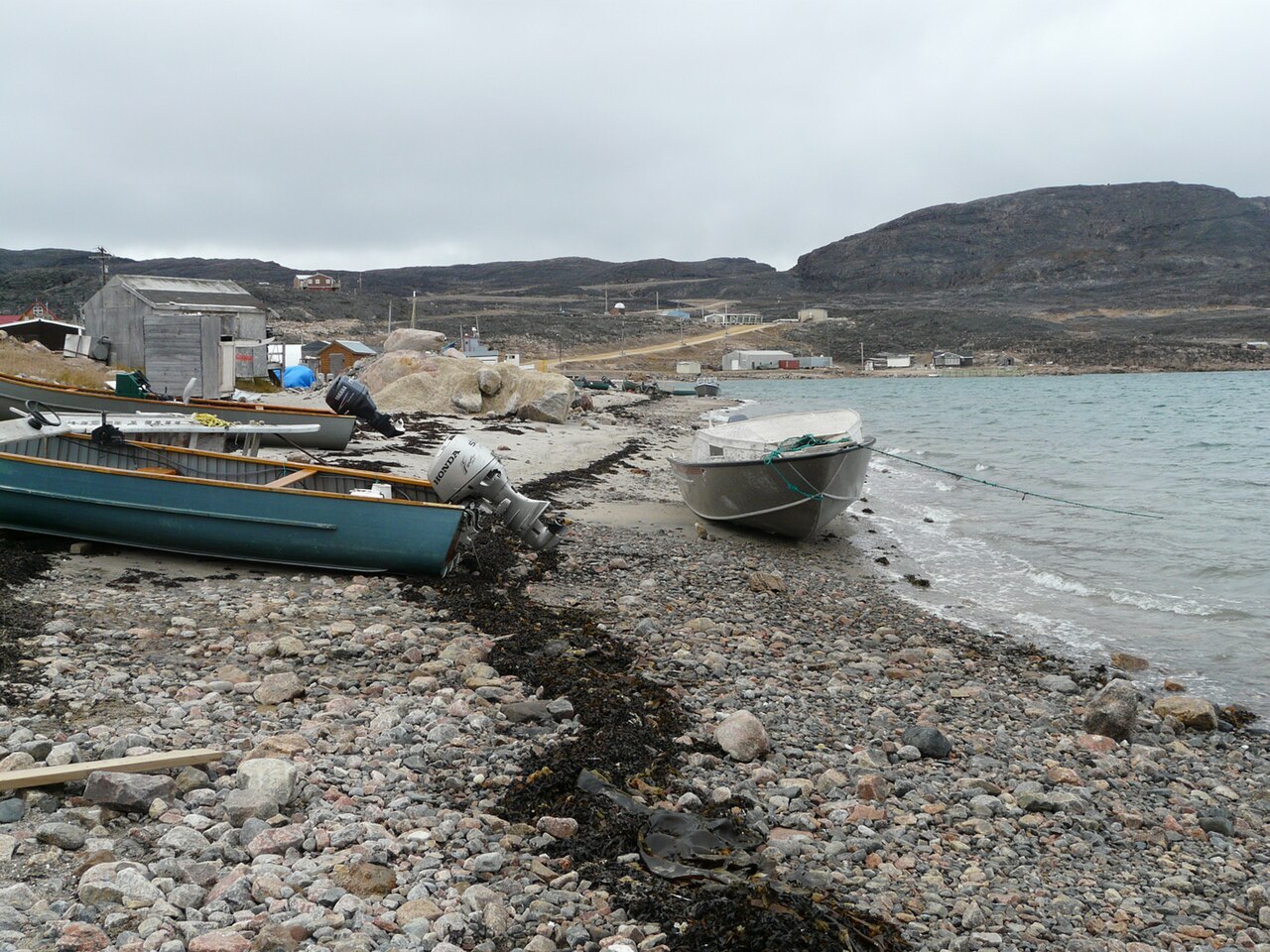
- Mallikjuaq Island by boat — Across the water from town
The island appears in the background of summer photographs of the hamlet, and it is a natural destination for a boat trip when the sea is open. Go with a local guide or outfitter who knows the tides, ice and weather. Walking on the tundra there shows how little has been touched.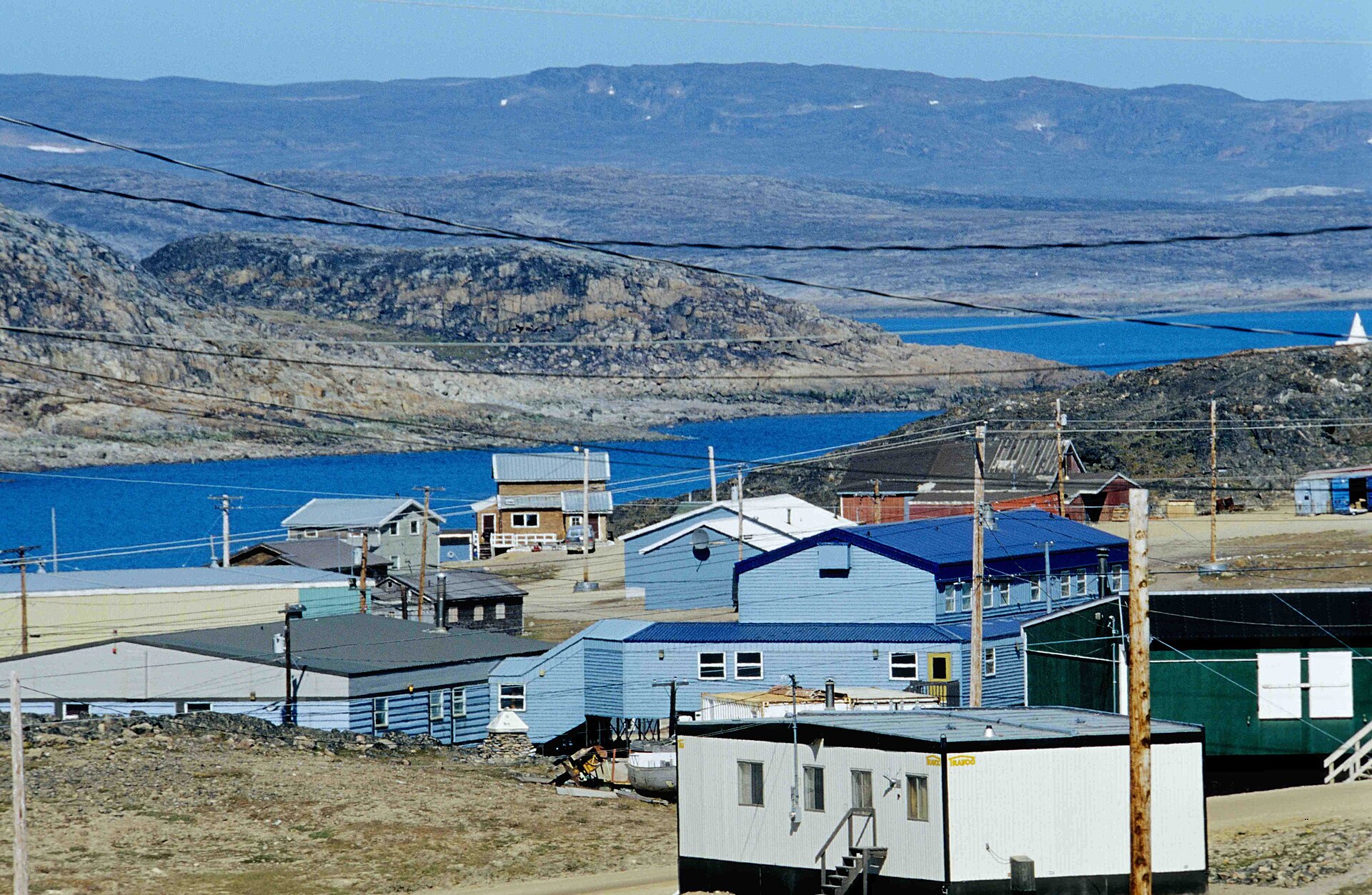
- Hudson Strait ice and wildlife — Waters around Kinngait
Floating ice in Hudson Strait near the hamlet is where seals and walrus are found, and hunting here is still a source of food for many families. Seeing wildlife depends on season, ice and guide availability. Book through a local operator, and treat any hunting you witness as daily life, not a show.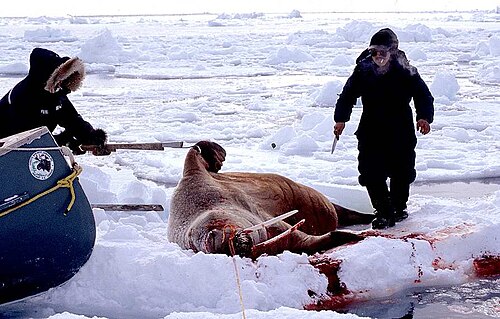
- Northern lights from the edge of town — Just outside the hamlet
The aurora can be seen from October to March, even in the middle of the community, but a short walk out of town gives a darker sky and a stronger display. Winter nights are long and very cold, so dress for standing still, and tell someone where you are going before leaving the houses.
Culture
Kinngait is an Inuit community, and Inuktitut is the everyday language of many households, taught in school and heard on the street, in shops and on the radio. Family, hunting and sharing food sit at the centre of local life. Many households still rely on the land for food, so seal, caribou and Arctic char are part of how people look after each other, not a novelty. The hamlet's reputation for art grew out of the same relationship with the animals, ice and weather, and artists here draw on those subjects constantly. Pace is relaxed and plans bend to weather and flights. Visitors who listen first, ask before assuming and accept that a conversation may take its time are usually welcomed warmly. It is best to avoid opening with questions about hardship or social problems in the Arctic; let people raise them if they wish. Many Nunavut communities restrict alcohol, and bringing drink into a place with a ban can cause real harm, so check the local rules before you travel. Respect for hunters, elders and the land matters more here than any itinerary. Ask permission before photographing people, houses or anything being hunted or butchered, and check the local alcohol rules before bringing any drink into the hamlet.
What to wear
Traditional Inuit clothing in Kinngait was made from caribou and sealskin, sewn by hand to hold in heat and shed wind and wet. The parka, the long insulated mitts and the soft, waterproof kamiik boots were all designed for life on ice and tundra. Women's parkas, known as amautiit, include a pouch for carrying a baby against the back. Sewing these garments is a skill passed between generations, and handmade pieces are still worn for gatherings, celebrations and cold-weather work, as well as treasured as family objects. Day to day, most people now wear what suits the northern weather: insulated jackets, hooded sweatshirts, wool hats, windproof trousers and rubber or insulated boots. Practical clothing matters more than style, and people dress for the wind and the wet. A visitor should pack in layers: a warm base, a fleece or down middle layer, and a windproof, waterproof outer shell. Bring a warm hat, good gloves, sunglasses and sturdy, insulated, waterproof boots with a grippy sole for rock, mud and snow. Even in the short summer the air stays cool, and insects can be a nuisance, so a light head net is worth having. There are no dress codes beyond ordinary modesty; clothes that are plain and sensible fit well.
What to eat
- Arctic char — Local fishers and hunters, home kitchens, or the freezers at the grocers
Arctic char is a cold-water fish related to salmon and trout, eaten here fresh, dried or frozen. It has been a staple in the Arctic for thousands of years. Ask around for a fisher who sells directly, and say yes if a household offers a meal. - Caribou — Bought from hunters or shared in homes
Caribou meat is a long-standing part of the northern diet, cooked as roasts, stews or dried strips. It is sold or shared through local hunters rather than restaurants, so it is worth asking your host, guide or the community office where it can be found. - Seal — Offered by hosts or bought from hunters
Seal is traditional country food, and some Inuit eat it raw or cooked. It is most often shared in homes or at community meals. Accept with thanks if offered, and do not worry about declining politely if it is not to your taste. - Tundra berries — Hillsides in late summer, picked by local families
In the short summer, families pick cranberries, blueberries, crowberries and cloudberries on the hills. They are eaten fresh, in jams and baked goods, or kept for winter. Ask a local before picking, as favourite patches are often known and used by households. - Bannock — Home kitchens and community gatherings
Bannock is a simple, hearty bread, baked or fried, that often turns up beside tea or a bowl of stew at gatherings. It is warm, filling and easy to share, and it makes a good introduction to local home cooking if you are invited to a meal.
Plan it
Best time. July to September, when the sea is open for boats, the days are long and the air is at its mildest, though still cool by southern standards. Aurora can be seen from October to March, but winters are long and cold.
How long. 3–5
Getting there. Fly to Iqaluit, which has scheduled services from Ottawa and Montreal, then take a regional flight to Kinngait's airstrip. Nunavut has no road or rail links to the south, so check schedules with the airlines and allow spare days for weather delays.
Budget. high
Tips
- Book flights and accommodation well ahead, as options are few and prices are high
- Bring any essential supplies, medicines and spare clothing with you, since shipped goods cost a lot
- Hire a local guide or outfitter for boat trips, wildlife and any walk away from the houses
- Save local emergency numbers on arrival: Nunavut has no 9-1-1 service
- Carry water, sunglasses and layers, and tell someone before heading out of the hamlet
Etiquette
- Ask before photographing people, homes or hunting
- Do not bring alcohol into the hamlet without checking local rules
- Buy art directly from makers or the co-operative, and ask before handling works
Nearby
Sources
- Wikidata Q665280 (CC0)
- Wikipedia: Kinngait (rev 1376418813) (CC BY-SA 4.0)
- Wikivoyage: Nunavut (rev 5395276) (CC BY-SA 4.0)
- Early springtime in Cape Dorset, Ansgar Walk (CC BY-SA 2.5)
- Summertime in Cape Dorset, Ansgar Walk (CC BY-SA 2.5)
- West Baffin Eskimo Cooperative Cape Dorset, Ansgar Walk (CC BY-SA 2.5)
- Cape Dorset, Nunavut, Canada, Daniel Christopher (CC BY 3.0)
- Cape Dorset shore, Nunavut, Canada, Daniel Christopher (CC BY 3.0)
- Walrus hunt on ice floe 1999 (20), Ansgar Walk (CC BY 3.0)
- Walrus hunt on ice floe 1999 (21), Ansgar Walk (CC BY 3.0)
- Walrus hunt on ice floe 1999 (22), Ansgar Walk (CC BY 3.0)


Wildlife
- Walrus (animal)
The walrus is a big flippered sea mammal of cold northern waters, and the only living member of its own family. Around Kinngait, look for it on drifting ice out in Hudson Strait, not far from the hamlet, where families still hunt it for food. Ask locally about the best season and hour. Watch from far off with binoculars, keep quiet, go with a local guide, and never feed it.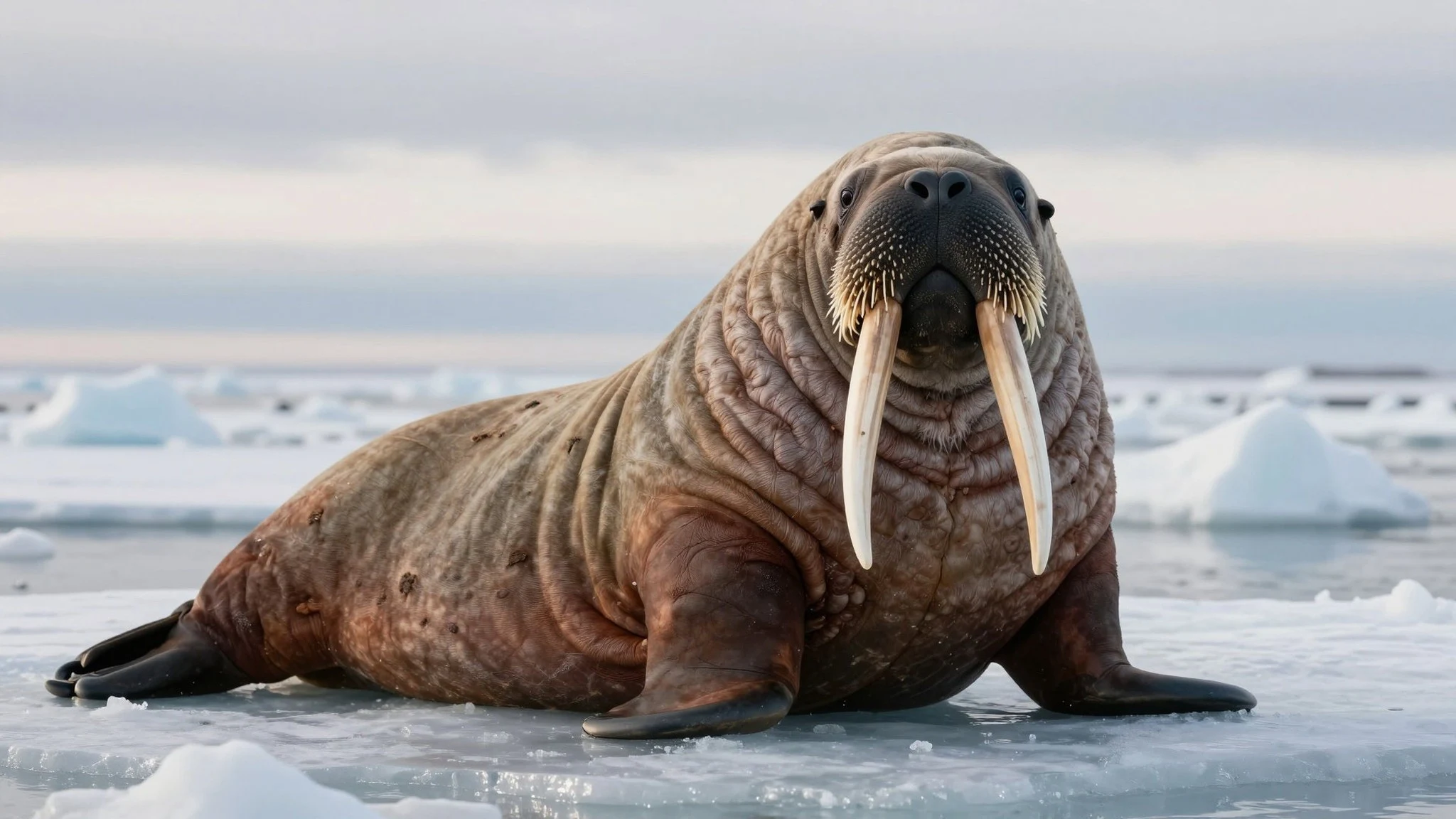
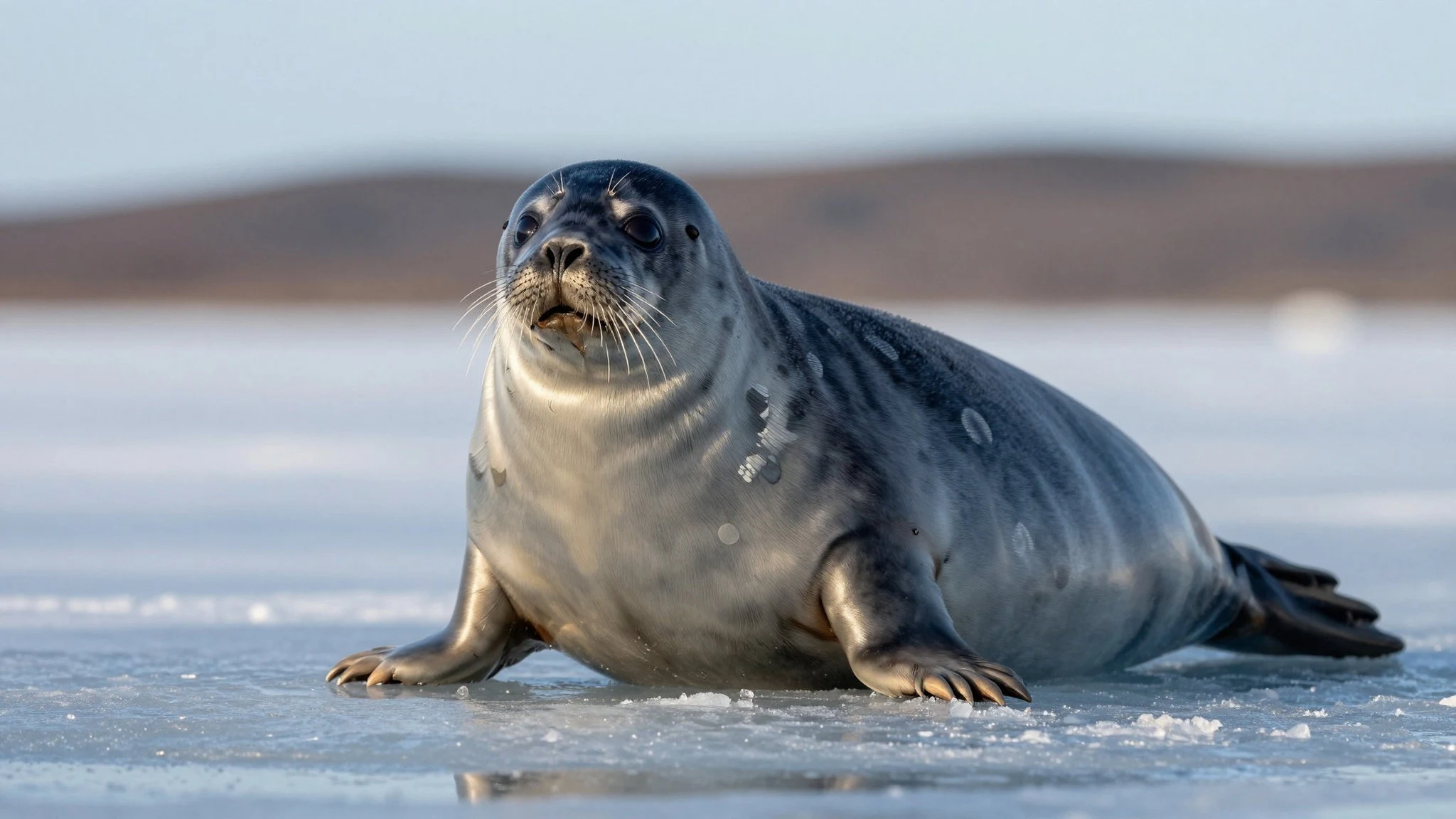
- Ringed seal (animal)
The ringed seal is a small seal with no ear flaps, named for the pale rings that circle the dark spots on its coat. Near Kinngait it is found on drifting ice in Hudson Strait, close to the hamlet, and local families still hunt seals for food. Ask locally about the best season and hour. Watch from a good distance, stay quiet, go with a local guide, and never feed it.