Hua Hin
Hua Hin, Thailand
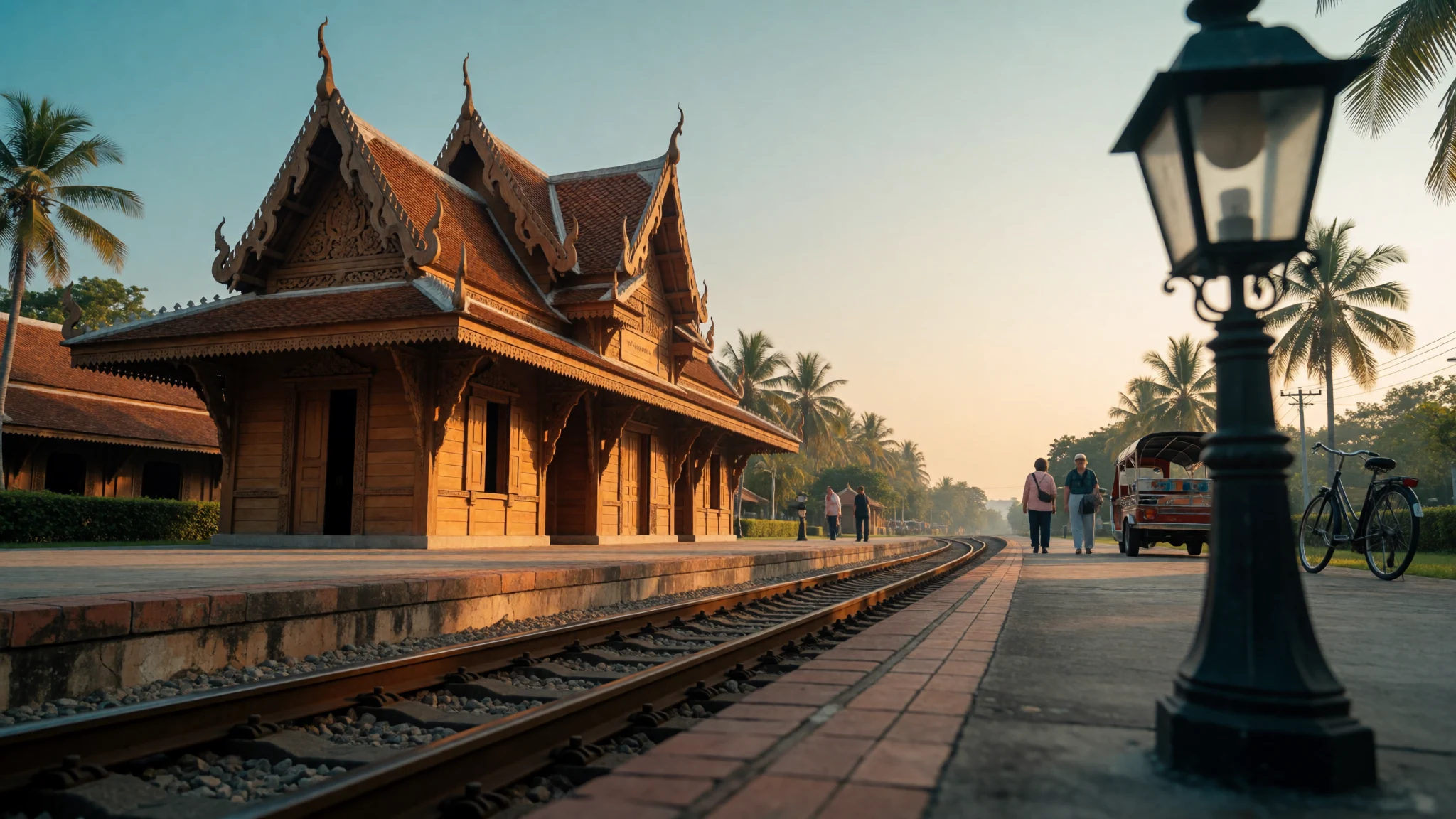
Hua Hin is a royal-favoured Thai seaside town with a long beach, a wooden railway pavilion and easy trips from Bangkok.
The place
Hua Hin sits on the western shore of the Gulf of Thailand, in Prachuap Khiri Khan province, and is the largest city in that province. The municipality has 59,369 residents, small enough that the centre can be crossed on foot in a lazy afternoon, though the strip along the water is crowded with tall accommodation blocks and the main highway is rarely quiet. The town itself is not scenic, and it is better to say so plainly. Its appeal is the combination: a long, fairly clean beach, a fishing-town streak, a royal history and plenty of everyday comforts. The sand runs for several kilometres, but at high tide much of it vanishes in places, so a glance at the tide table saves a wasted walk. The sea is rated fair rather than sparkling, though the beach compares well with some better-known Thai resorts. Beyond the shoreline, the area offers golf courses, spas, caves, small peaks, waterfalls and national parks within reach. Families, couples and long-stay retirees make up much of the crowd, and the mood is calmer than in Pattaya. The clock tower in the centre is the informal hub: minivans drop passengers there, and motorcycle taxis and tuk-tuks wait nearby. A tourist information office stands close to the railway station, at the junction of Petchkasem Road and Damnerkasem Road. Weekends bring visitors from Bangkok, so midweek feels noticeably quieter.
Its story
Hua Hin began as a fishing village called Samore Riang, usually translated as 'rows of rocks' after the boulders along its shore. The later name, Hua Hin (หัวหิน), is often glossed as 'stone head'. The town's fortunes changed when Siam's royal family took to the coast as a seaside retreat. King Prajadhipok helped make it fashionable, and where the monarch holidayed, nobles and wealthy families followed, building their own houses by the sea. The railway south from Bangkok made the journey practical, and the line still shapes the town, since almost every southbound train calls here. Prajadhipok also had Klai Kangwon Palace built, a name meaning 'far from worries'. The palace is in Spanish style, with the sea in front of it, and it is seldom occupied today. That royal link gave Hua Hin a reputation for decorum and a quieter tone than the louder Thai beach towns. Over the decades the fishing boats and royal villas were joined by golf courses, resort towers and a growing community of retirees and expatriates, which explains why menus here lean towards European bakeries and cafés as well as Thai stalls. The town's appeal is further enhanced by its proximity to various royal sites and historical landmarks that tell the story of Thai kingship. The town today is a layered one: part fishing port, part royal retreat, part holiday suburb of Bangkok.
What to see
- Hua Hin Railway Station — Town centre, near Petchkasem Road
Hua Hin Railway Station is a small wooden building that locals are visibly proud of. It began life as a royal pavilion at Sanamchan Palace in Nakhon Pathom province and was rebuilt here in the late twentieth century. Trains still call, so it works as a quick, free stop on any day in town.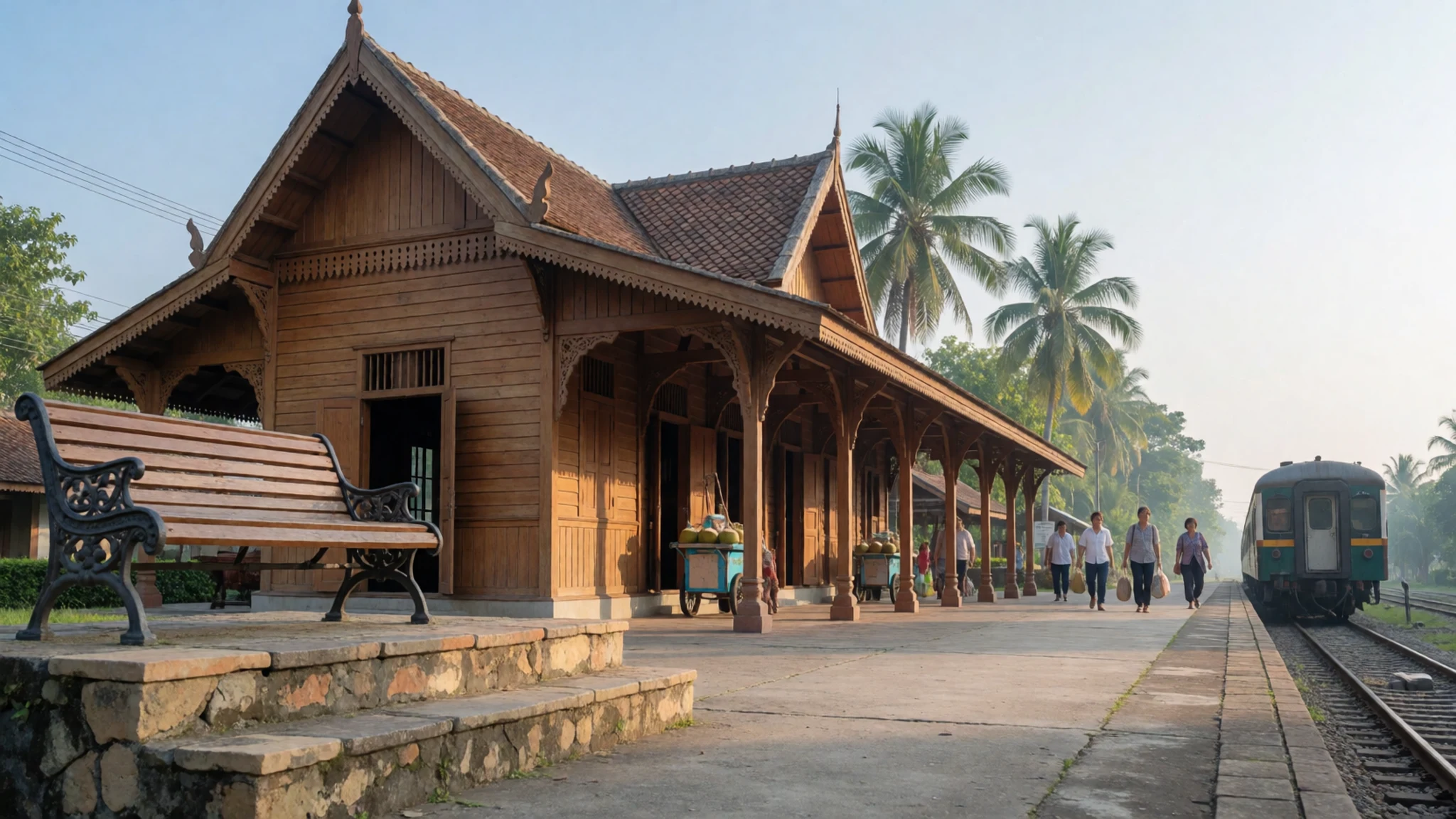
- Khao Takiap — South of Hua Hin, on the coast
Khao Takiap is a hill south of the town, topped with Buddhist temples and giving a wide view back over the resort strip. Early morning is best, when the air is clearer and cooler. A local bus runs there from the centre, and the climb is short enough to manage without special gear.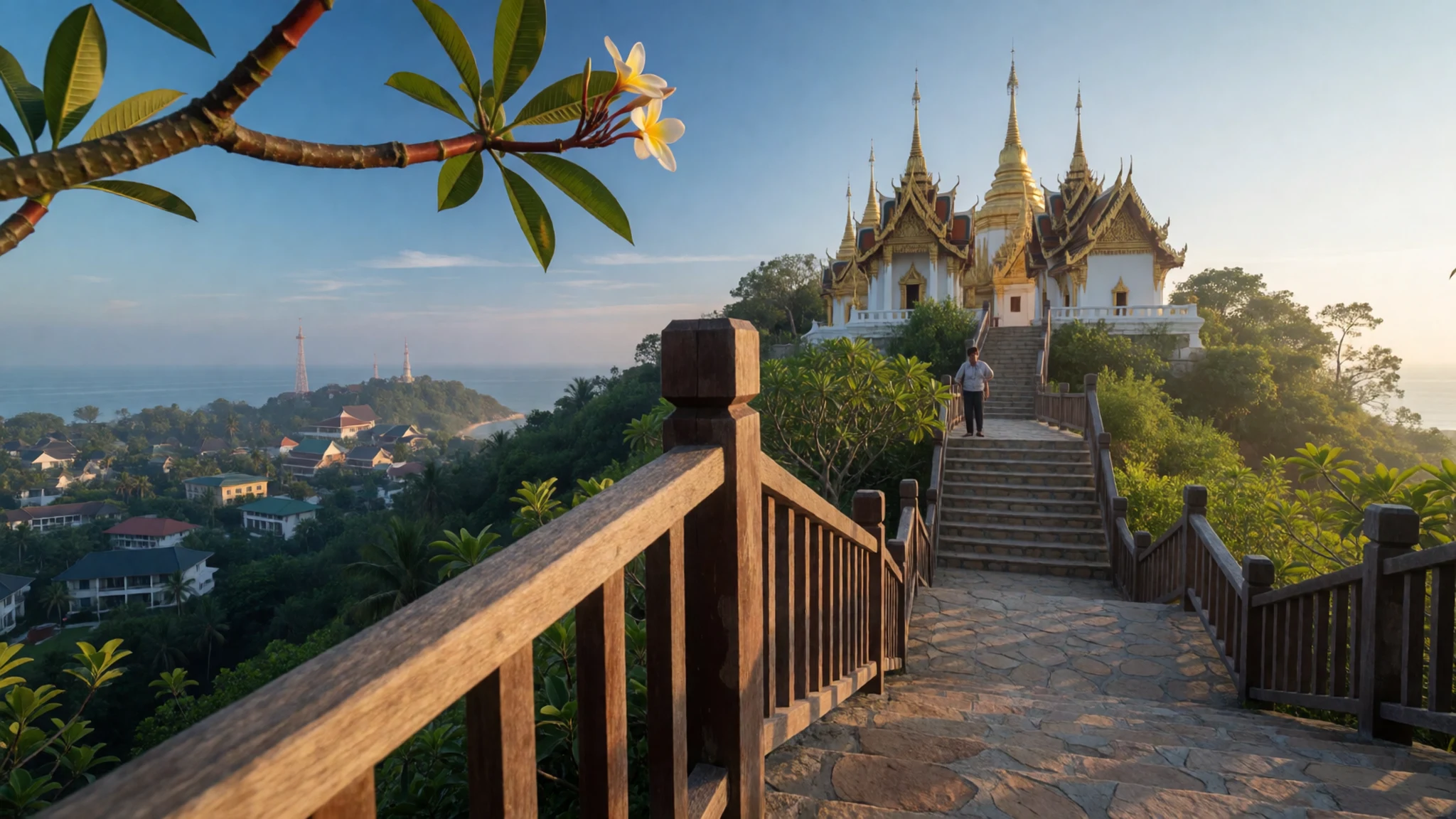
- Klai Kangwon Palace — Northern edge of town, facing the sea
Klai Kangwon Palace is a royal summer residence with the sea in front of it and a broad ornamental garden around it. The building itself is closed to visitors. The outer grounds have been open to walkers at set times, so check the current rules locally and expect a dress code and a passport check.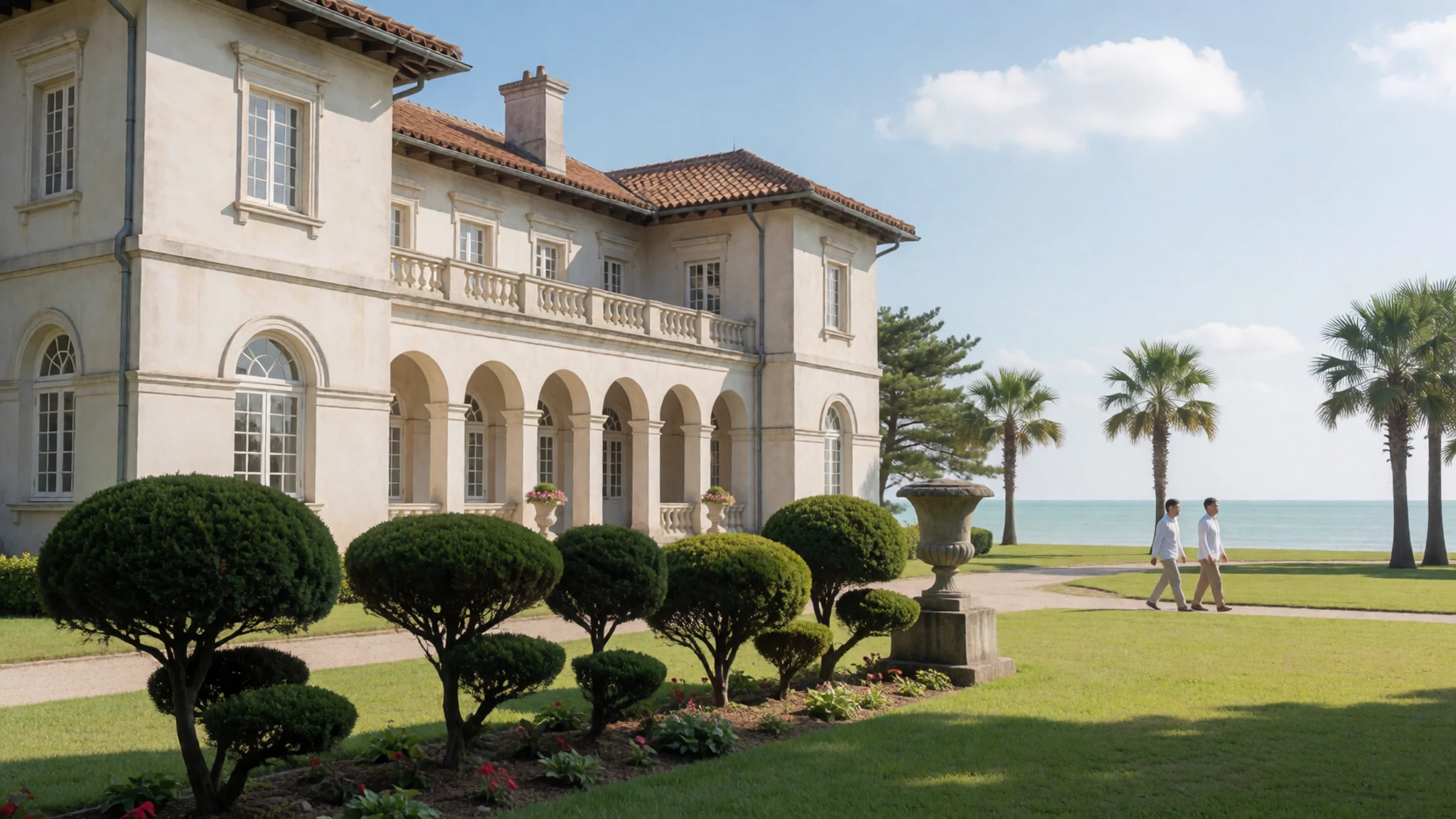
- Rajabhakti Park — South of the town centre
Rajabhakti Park (pronounced roughly rat-cha-pak) is a landscaped memorial built around large statues of Thai kings, running from the Sukhothai period to the ruling Chakri dynasty. It suits a slow walk with some background reading, and it gets hot in the middle of the day, so go early or late.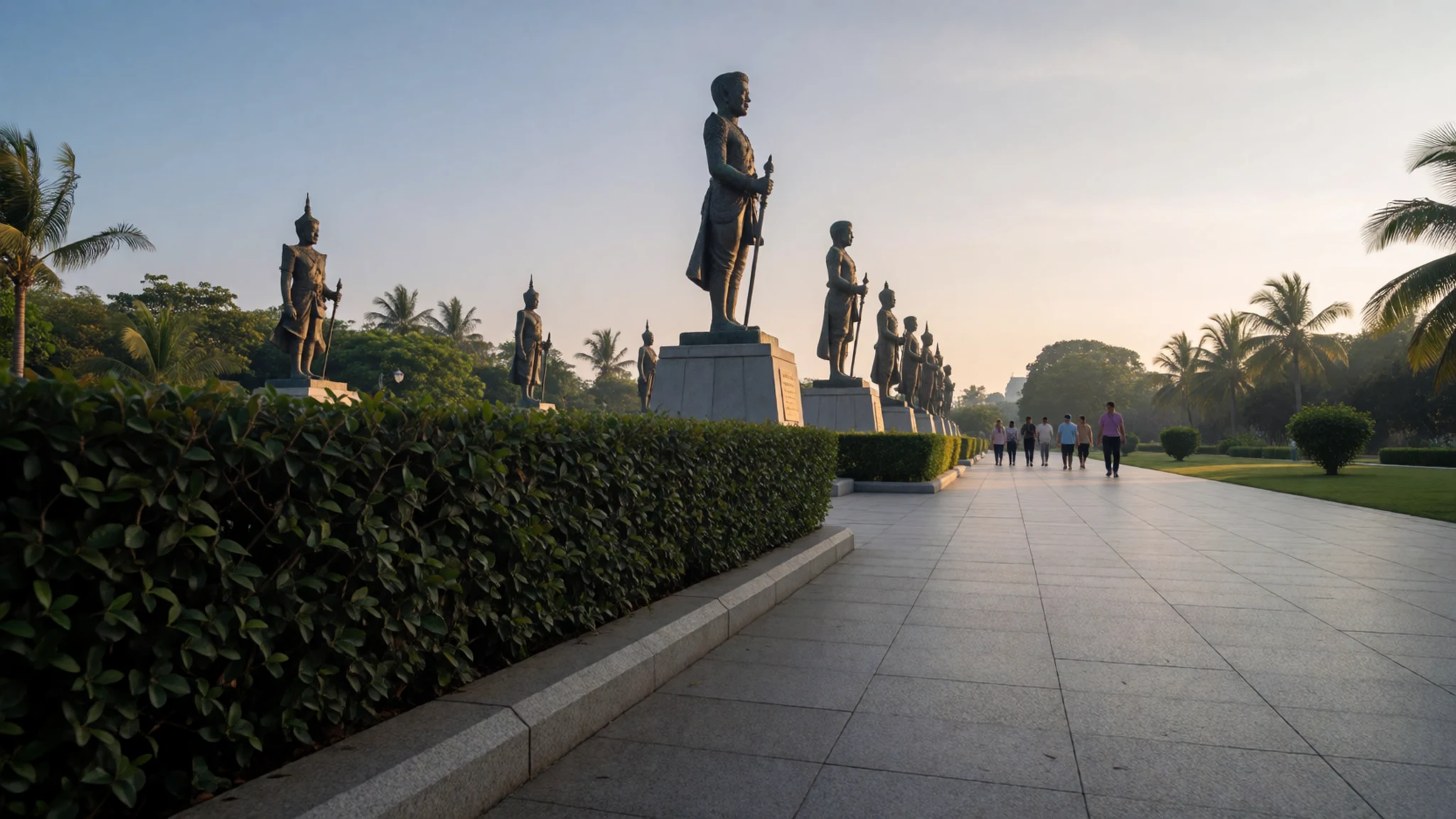
- Khao Hin Lek Fai — West of the town centre
Khao Hin Lek Fai, or Flint Mountain, is a low hill that can be reached by road, while energetic walkers can tackle it on foot. It gives a quieter view over town and coast than the busy seafront does, and the effort is rewarded most in the cooler hours.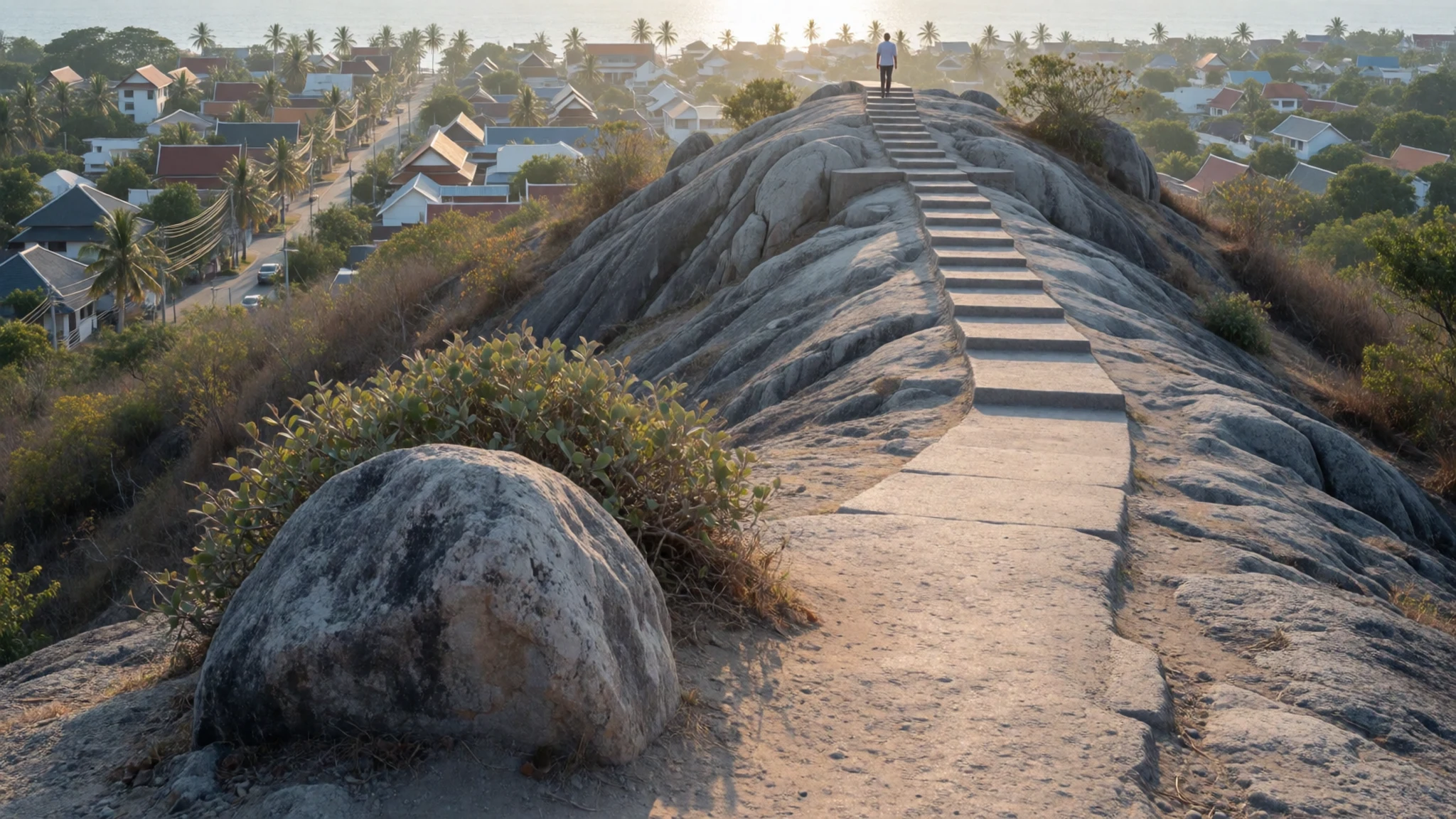
Culture
Hua Hin carries the manners of a royal resort. Thai society holds its monarchy in deep reverence, and in a town shaped by royal holidays that feeling is easy to notice: portraits of the king appear in shops, on streets and in public buildings, and the law treats insults to the royal family as a serious offence, so remarks and jokes on the subject are best avoided. Buddhism runs alongside this. Temples on hills such as Khao Takiap are active places of worship as well as viewpoints, and monks collect alms in the early morning. The usual Thai courtesies apply: a gentle smile, a calm voice, and the wai, a slight bow with palms pressed together, offered in greeting and returned when someone offers it to you. Raising a voice or showing anger is read as losing face. The head is regarded as the highest part of the body and the feet as the lowest, so avoid touching people's heads or pointing your feet at people or images. Beach life is relaxed, but families, retirees and the royal associations keep behaviour fairly low-key compared with Thailand's party coasts. At temples and royal grounds, cover your shoulders and knees, take your shoes off before stepping into a shrine hall, and never point your feet at a Buddha image or a monk.
What to wear
Hua Hin's traditional dress follows the national pattern. Women's formal wear is the chut thai, built on the pha sin, a wrapped or tube-shaped skirt, with a fitted blouse and sometimes a draped silk shawl. Men wear a wrapped lower cloth called pha nung, or trousers with a high-collared jacket. Thai silk and cotton are the usual materials, in plain jewel colours or woven patterns, and the outfits appear at weddings, temple ceremonies and royal or civic occasions. Fisherfolk along the coast have long worn simple cotton wraps, checked cloths and wide straw or cloth hats against the sun. Day to day, locals dress for the heat: t-shirts, light shirts, shorts and sandals, with resort and shop staff in neat uniforms and golfers in polo shirts. Evenings along the seafront and at the markets call for smart-casual wear, nothing more formal. Visitors should pack breathable cotton or linen, a hat, sunglasses, strong sun cream and sandals that slip off easily. A light rain jacket helps in the wetter months. Beachwear belongs on the sand, so cover up when walking through town. For temples such as those on Khao Takiap, bring a shirt that covers the shoulders and trousers or a skirt below the knee. The palace's outer grounds have a stricter code, with closed shoes and sleeves covering the upper arms, so check the rules on the day. Comfortable walking shoes suit the hill paths.
What to eat
- Grilled and steamed seafood — Seafood eateries near the fishing pier and along the beach streets
Hua Hin's fishing past shows up on the plate as grilled fish, steamed crab, prawns and squid, usually served with a sharp chilli and lime dipping sauce. Choose from the catch on display, and ask how it is sold before ordering.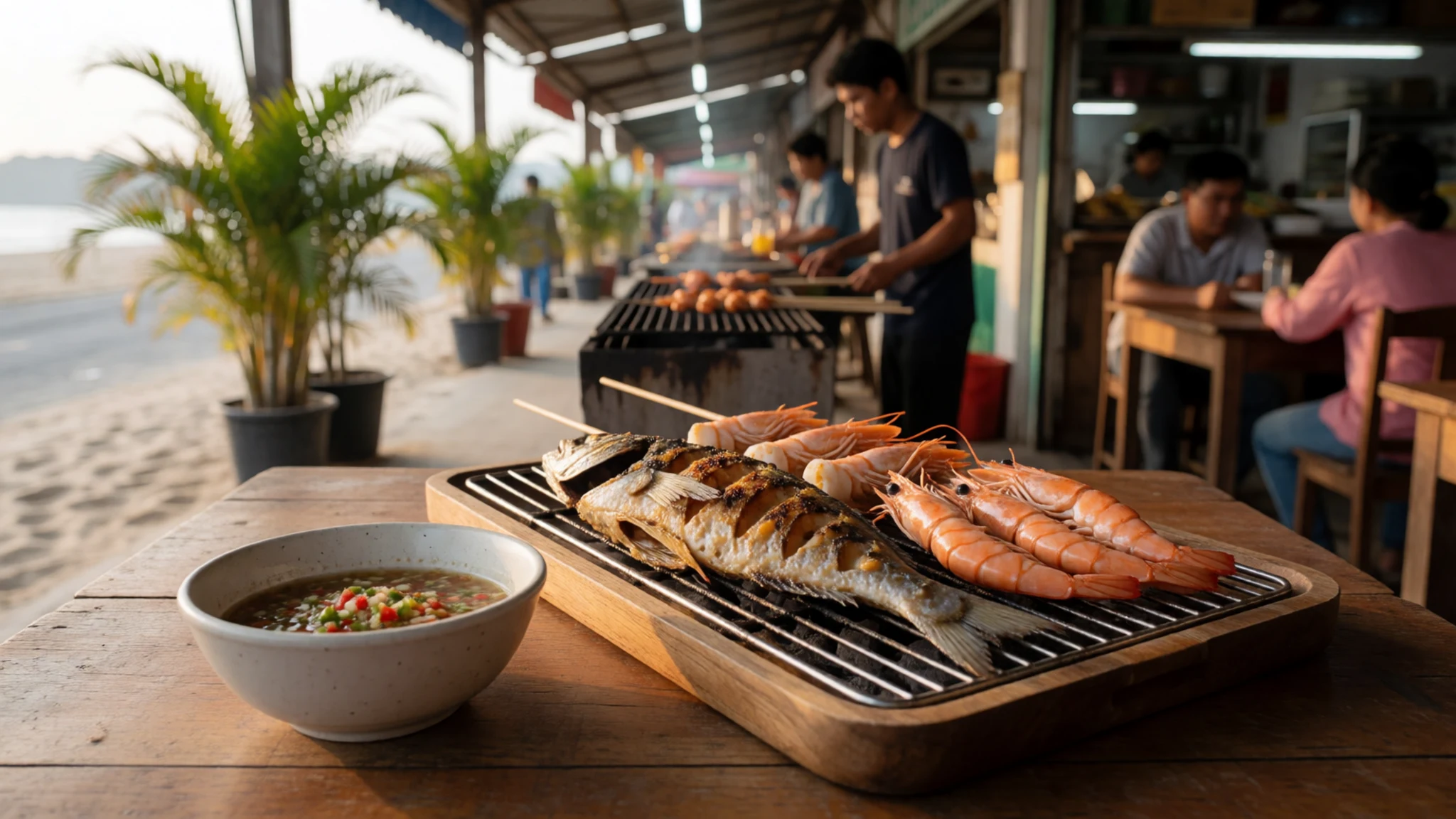
- Som tam — Permanent food stalls in town, such as the jumble of vendors at Baan Khun Por food centre
Som tam is green papaya pounded with chilli, lime, dried shrimp and peanuts, sweet, sour and hot at once. Ask for it mild if chilli is a worry. It pairs well with grilled chicken and sticky rice.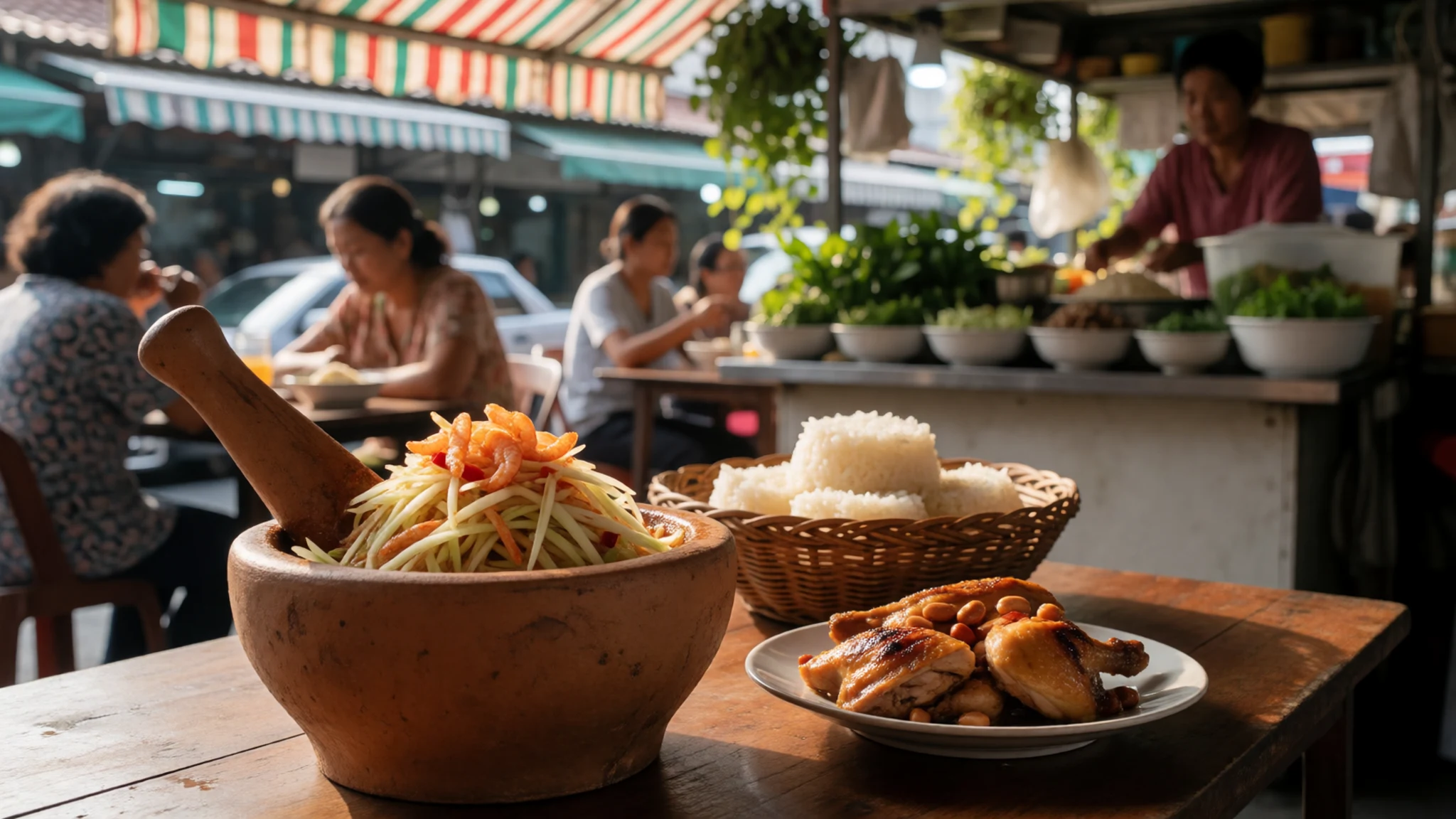
- Khao pad pu — Seafood eateries and busy evening stalls
Crab fried rice is a simple plate of rice wok-fried with egg and sweet crab meat, served with cucumber and a wedge of lime. It is a reliable, mild choice for children and anyone avoiding spice. - Mango with sticky rice — Dessert stalls at the evening night market in the town centre
Mango with sticky rice is slices of ripe mango beside coconut-soaked glutinous rice, finished with a spoonful of coconut cream. It is seasonal, tied to the hot months when mangoes ripen, and best eaten fresh. - French and German bakery bread — Boulangeries and bakeries in the southern part of town
Hua Hin has an unexpected European baking scene, shaped by long-stay residents: croissants, rye loaves, tarts and pastries. Some local restaurants buy their bread from these bakeries, which makes them handy for breakfast or a picnic.
Plan it
Best time. November to February, when the weather is drier and most comfortable. March to May is the hottest period, and the wettest months are September and October, which can mean grey skies and rougher seas.
How long. 2–3
Getting there. Most visitors fly into Bangkok's Suvarnabhumi Airport. From there, coaches run to Hua Hin, and trains from Bangkok take about four hours, with almost every southbound service stopping at the station. For the last leg, walk from the station or take a tuk-tuk or motorcycle taxi; the main bus station sits south of the centre.
Budget. mid
Tips
- Check the tide before planning a beach day, since much of the sand can disappear at high tide
- Expect busier streets and fuller accommodation on weekends, when Bangkok visitors arrive
- Go up Khao Takiap early in the morning for cooler air and a clearer view
- Carry some cash for food stalls and markets, and bring your passport if you plan to visit the palace grounds
- Check the official site, huahin.go.th, or the tourist information office for current events and opening rules
Etiquette
- Cover shoulders and knees at temples, and remove shoes where others have left theirs
- Keep remarks about the royal family respectful
- Wear beachwear on the sand only, and dress modestly in town
Nearby
Sources
- Wikidata Q667576 (CC0)
- Wikipedia: Hua Hin (rev 1380488527) (CC BY-SA 4.0)
- Wikivoyage: Hua Hin (rev 5404270) (CC BY-SA 4.0)
- Photo: Hua Hin Railway Station (Iudexvivorum) (CC0 1.0)
- Photo: Busy Hua Hin (josef knecht) (CC BY 3.0)
- Photo: Hua Hin hotels (Ahoerstemeier) (CC BY 3.0)
- Photo: Gyrodontium sacchari 111474 (Iain Cruickshank) (CC BY 3.0)
- Photo: Gyrodontium sacchari 111475 (Iain Cruickshank) (CC BY 3.0)
- Photo: 500px photo 188691919 (Chi King) (CC BY 3.0)
- Photo: 500px photo 188691921 (Chi King) (CC BY 3.0)
- Photo: 500px photo 188691923 (Chi King) (CC BY 3.0)


