Grasslands National Park
Grasslands National Park, Canada
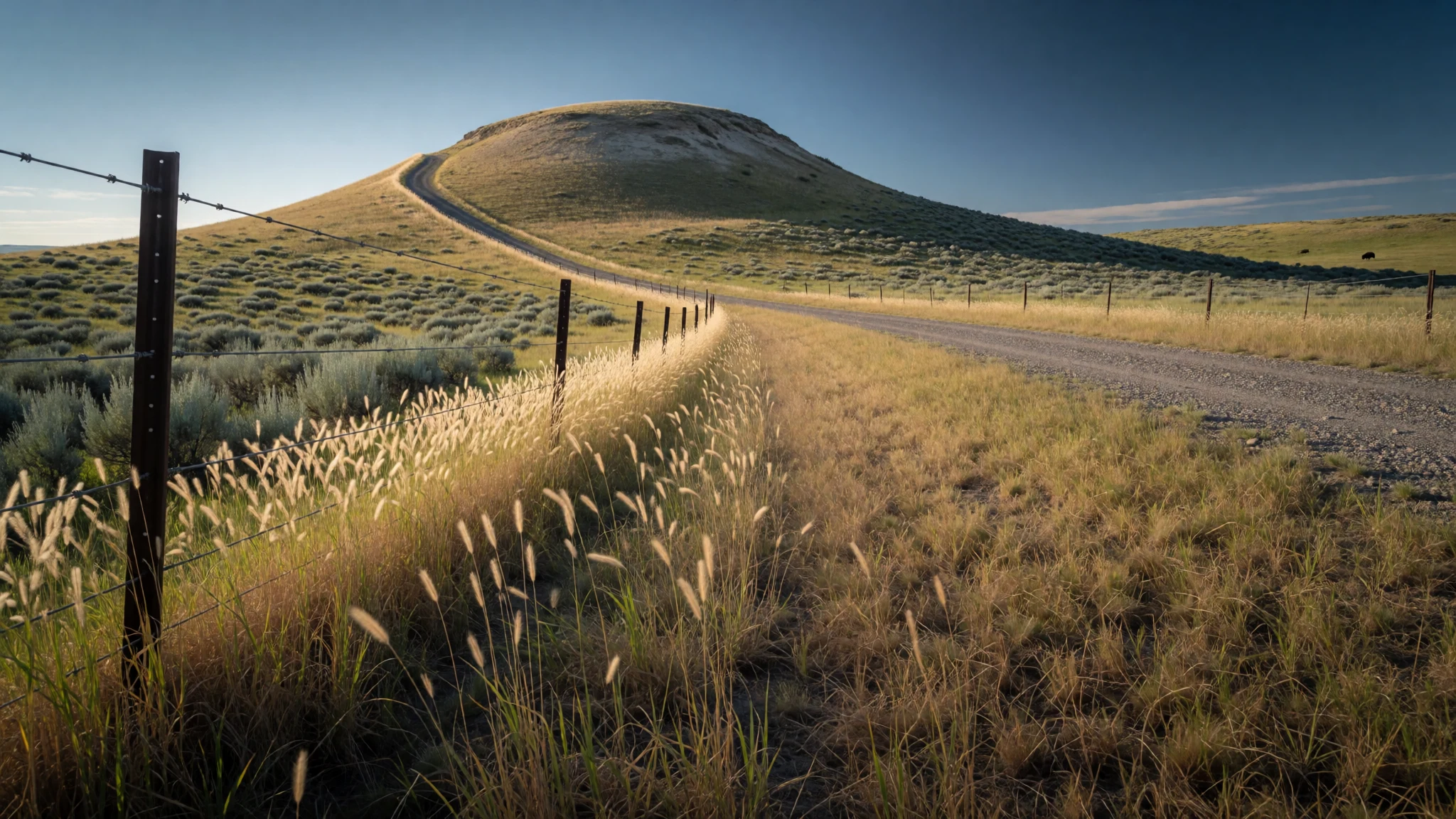
Grasslands National Park offers quiet, unploughed prairie, badlands, bison, prairie dogs and star-filled night skies in Canada's far south, with almost no crowds.
The place
Grasslands National Park sits in the far south of Saskatchewan, hard against the Montana border, and protects dry mixed-grass and shortgrass prairie that has never been ploughed. It comes in two separate parcels, the West Block and the East Block, with the village of Val Marie as the main gateway and visitor reception. The landscape is mostly open: rolling grass, sage-coloured slopes, cottonwoods along the river, and badlands where water has cut into soft ground. Very little of it is flat. Summers are hot and dry, winters hard, and the wind rarely stops, which is why the plants and animals here are specialists. Blue grama grass, needlegrass and silver sagebrush hold the soil, while patches of prickly-pear cactus surprise visitors who expect Canadian forest. You'll see bison, pronghorn, burrowing owls, swift foxes, ferruginous hawks, and prairie rattlesnakes here. The park area is the only place in the country with black-tailed prairie dog colonies. It is a national park of Canada and also a dark-sky preserve, so on a clear night the stars reach right down to the horizon. Crowds are not a problem. Services are few, the dirt roads are long and other visitors are scarce. That is the appeal, and also the catch: the nearest large towns are a long drive away, and every plan has to allow for it.
Its story
Grasslands National Park owes its shape to ice and water. Meltwater from retreating glaciers carved the Frenchman River Valley, left Seventy Mile Butte standing above the plain and cut the badlands of Rock Creek. The same eroded slopes hold the deep past. The first dinosaur bones recorded in western Canada came out of the Killdeer Badlands in 1874, found by the geologist George Mercer Dawson while he worked on the International Boundary Survey. In the East Block, the exposed rock still shows the Cretaceous–Paleogene boundary. People were here long before any surveyor. The park lies on Treaty 4 land and within the wider homeland of the Blackfoot (Niitsítapi), whose hunting life followed the bison herds across the plains on both sides of today's border. In 1877, after Custer's defeat at Little Bighorn, Sitting Bull led about 5,000 Sioux north and sheltered in this country. Later came homesteaders, who ploughed and fenced; most of the surrounding prairie became farmland, and what survives inside the park is a remnant of grassland that once covered far more ground. Bison are slowly returning. A 2022 agreement between the Métis Nation—Saskatchewan and Parks Canada provides for the transfer of 24 animals, a small step towards restoring the herds to land and communities that depended on them.
What to see
- Frenchman River Valley — West Block, near Val Marie
The Frenchman River Valley is the park's green ribbon, a glacial meltwater channel with cottonwoods and willows below dry, grassy slopes. It is the easiest introduction to the West Block, with viewpoints from the road and trails that drop towards the river. Go early, when the light is soft and birds are active.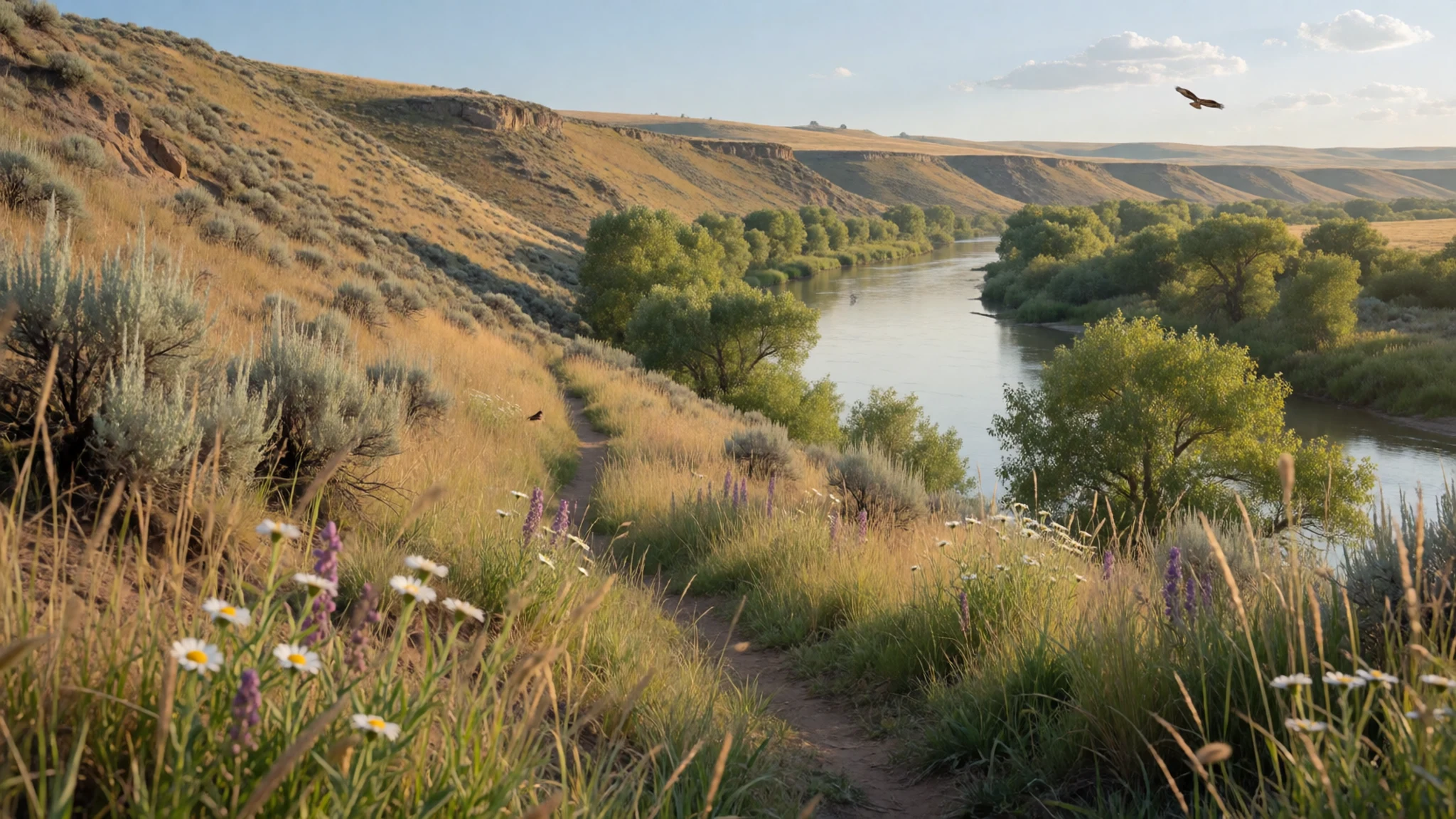
- Seventy Mile Butte — West Block, south of Val Marie
Seventy Mile Butte rises as a bare, rounded hill above the surrounding prairie, and the short climb to the top rewards walkers with a wide view across the valley and over the border country. There is no shade, so carry water, and keep a close eye on the weather.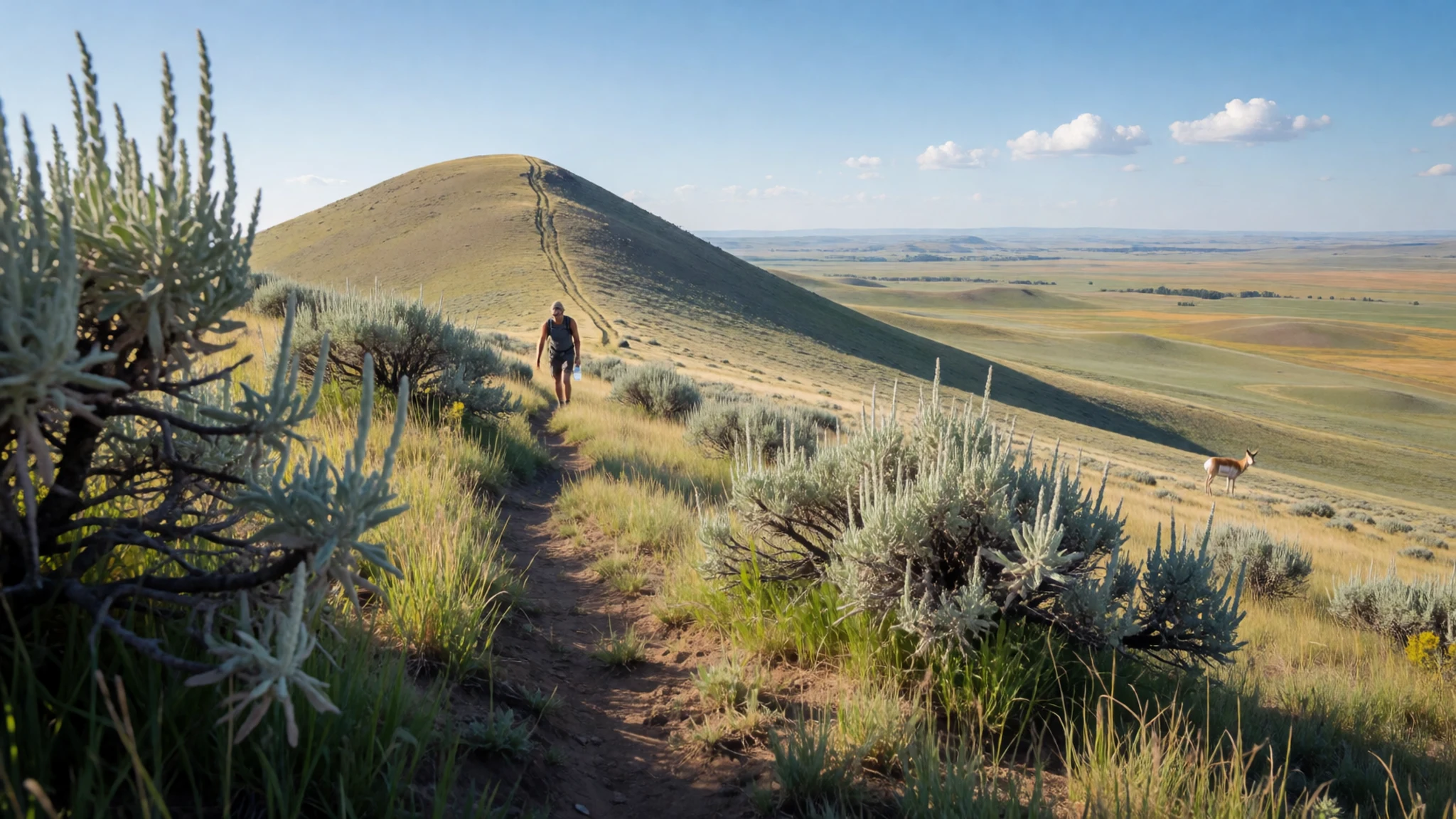
- Valley of 1000 Devils — East Block, near Wood Mountain
The Valley of 1000 Devils is a maze of eroded pinnacles and gullies in the East Block, close to the Rock Creek badlands. This side of the park feels more like wilderness, with few signs and plenty of quiet. Allow time, check conditions first, and stay on marked routes.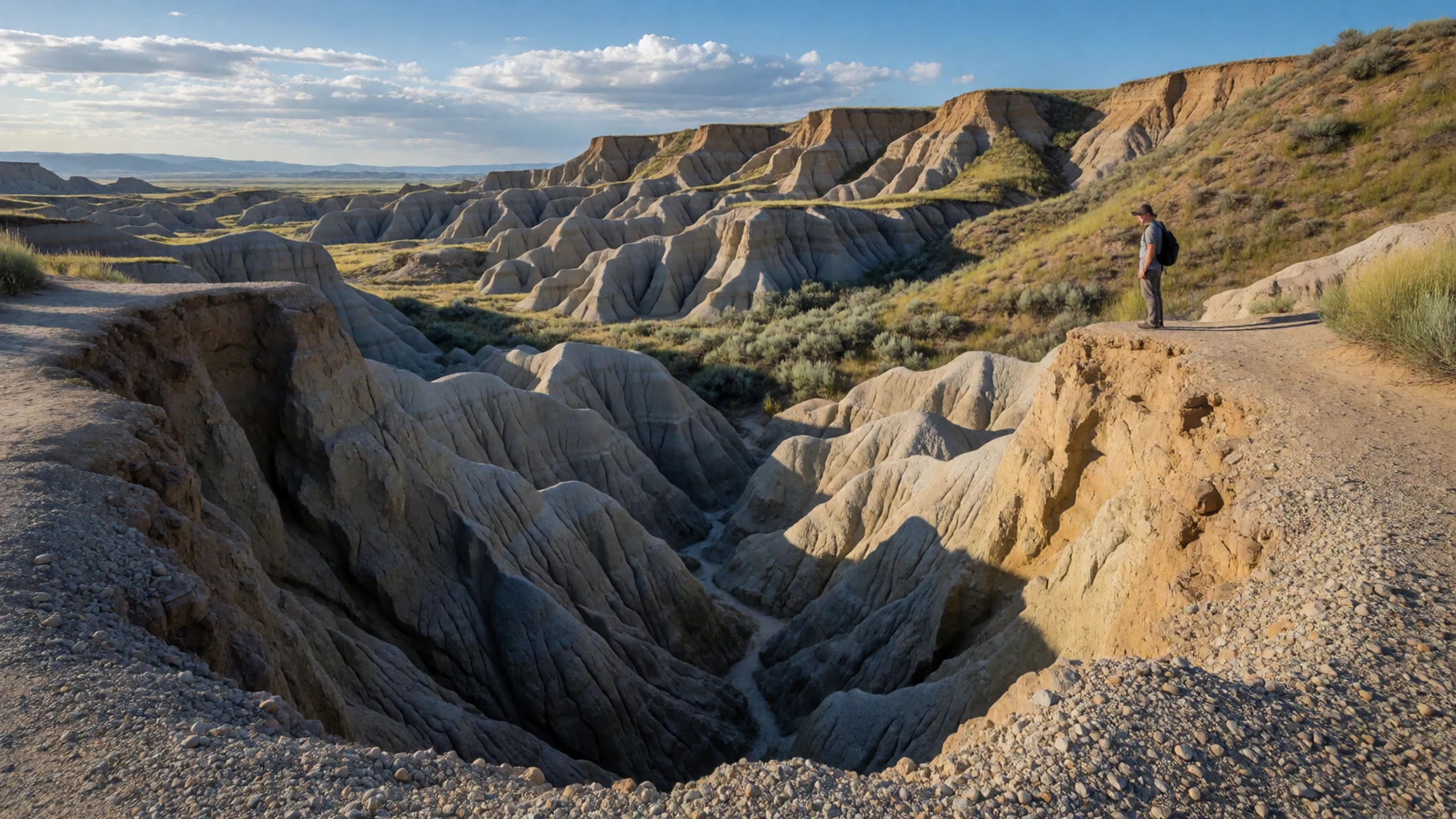
- Prairie dog town — West Block, signed from the main park road
The black-tailed prairie dog colonies in the West Block are the only ones in Canada. The animals live in permanent burrow towns, stand upright to scan for danger, and call to each other constantly. Watch from a distance with binoculars; they are easily mistaken locally for the much commoner ground squirrel.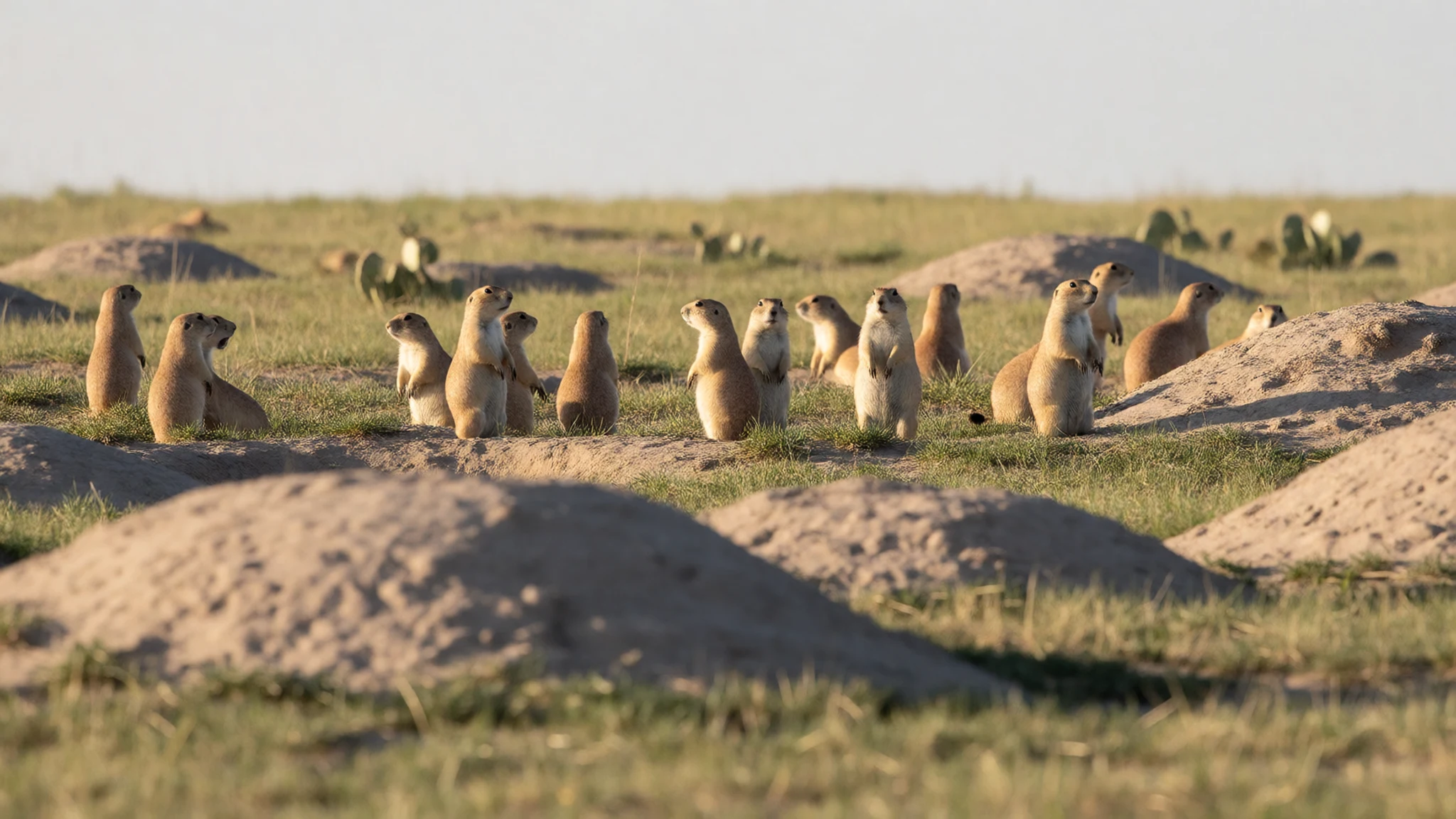
- Bison range — West Block, roaming grassland
A herd of bison roams the West Block grasslands. They are free-ranging and often keep well away from the main road, so sightings take patience, binoculars and luck. If they appear, stay far back, never approach for a photograph and let them move on in their own time.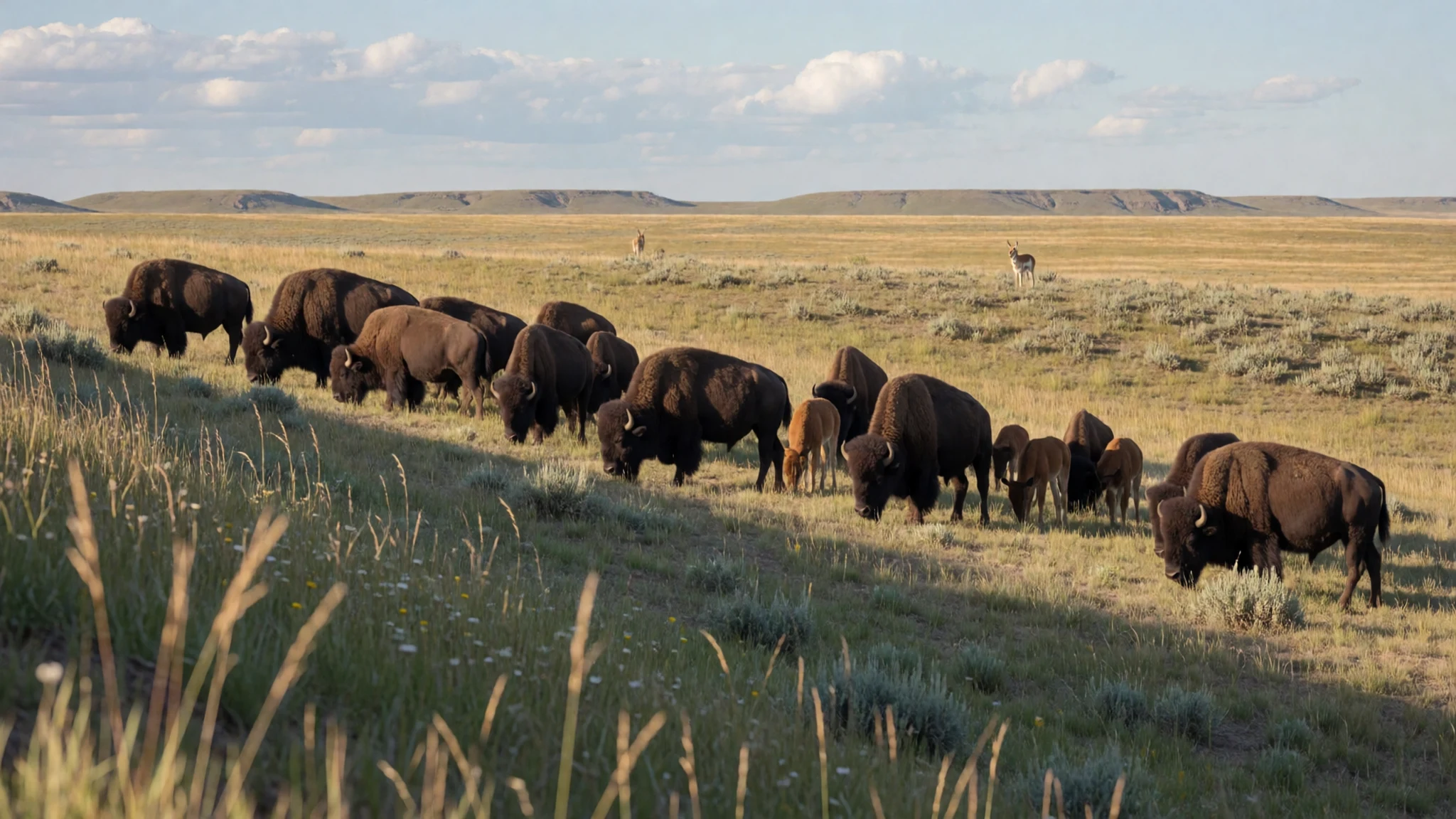
- Prickly-pear and prairie flowers — Dry slopes across both blocks
Plains prickly-pear cactus grows on sun-baked slopes here, flowering in early summer, alongside prairie onion and silver-leaved wolf-willow. Botany is most rewarding on foot, slowly, in late spring and early summer. Wear closed shoes, watch where hands and feet go, and leave every plant where it grows.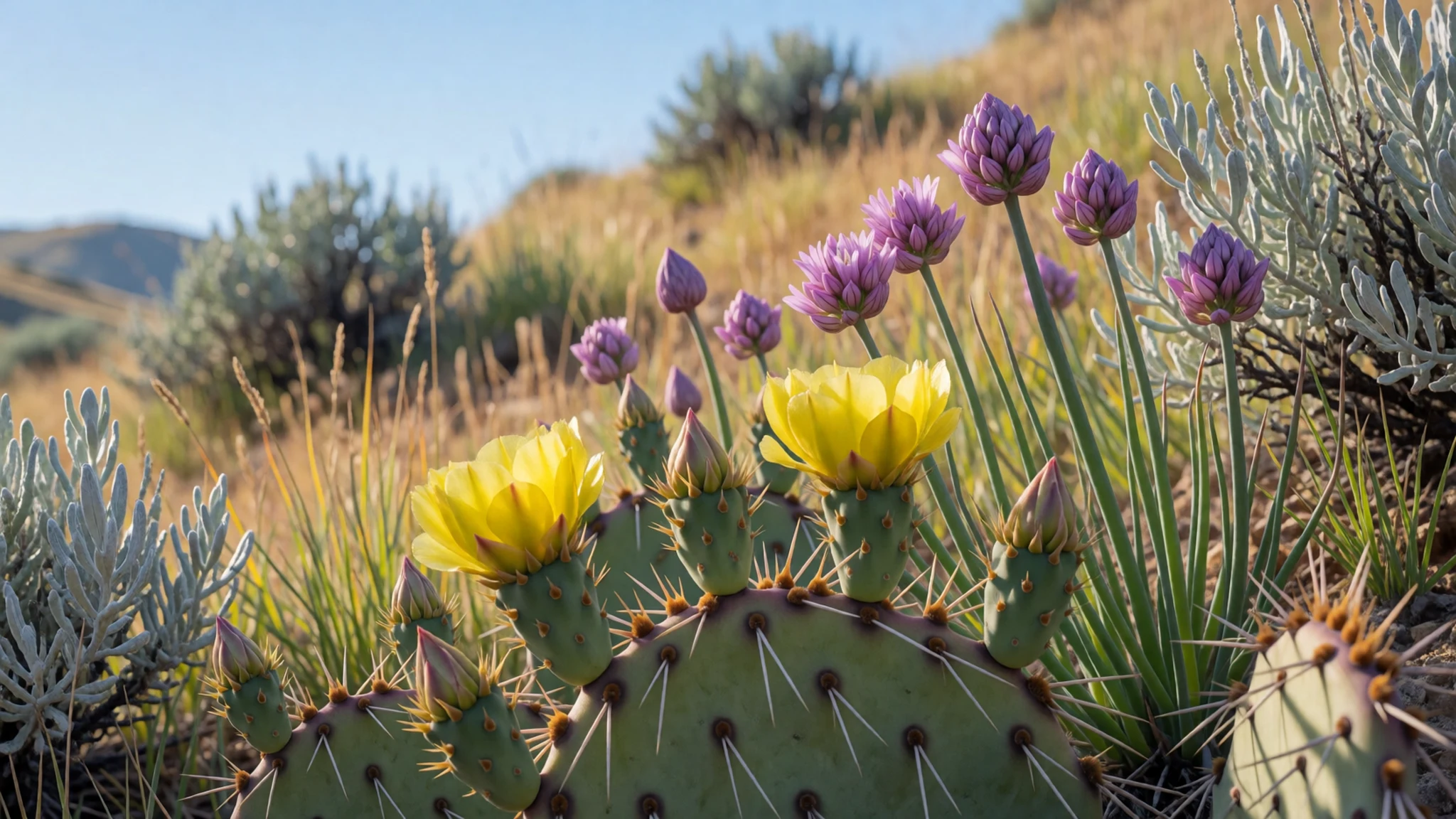
Culture
Grasslands National Park sits in a place shaped by several overlapping stories. The Blackfoot (Niitsítapi) and other Plains nations hunted bison here for generations, and the park lies on Treaty 4 land. Métis communities have their own long connection to the buffalo and the plains, which is why the recent agreement to move bison to Métis stewardship matters locally. Sioux families who followed Sitting Bull north in 1877 are part of the area's memory too. Layered over that is the homesteader heritage of southern Saskatchewan. Many families in the province trace their roots to a first-generation settler who ploughed prairie like this, and ranching and farming still shape life around Val Marie and the surrounding towns. People here tend to be direct, friendly and unhurried, and they take weather, water and fire seriously. Visitors often say the park feels empty, but the landscape is a working memory for many families, and it rewards a respectful, slow approach. Parks Canada runs guided walks and talks in summer that cover grassland ecology and Indigenous perspectives, and they are a good way to learn who the land belongs to. Please keep all wildlife at a distance, stay on marked routes, take every piece of rubbish with you, and never pick plants or move fossils, stones or bones.
What to wear
Grasslands National Park lies in Blackfoot, Métis and Sioux country, and traditional dress here is tied to those peoples. Plains clothing historically used tanned hide, buffalo robes, porcupine quill and later glass beadwork, and beaded moccasins and floral patterns remain a strong tradition. Métis communities are known for the woven wool sash, the ceinture fléchée, and for floral beadwork on hide and cloth. Such dress is worn today mainly at powwows, community celebrations and ceremonies, and is not costume for visitors to copy. In daily life, local people dress for work and weather: jeans, plain shirts, work boots, caps or wide-brimmed hats, and padded jackets or vests when the wind turns cold. Rural Saskatchewan values practical clothing over fashion. Visitors should do the same. In summer the sun and heat are intense, so bring a wide-brimmed hat, sunglasses, light long sleeves and trousers in breathable fabric, and sunscreen. Sturdy, closed, broken-in boots or shoes protect against cactus spines, loose rock and the occasional rattlesnake. Evenings cool quickly and the wind can bite, so pack a fleece and a windproof layer even in July. In spring and autumn add a warmer jacket and a hat. There is no dress code, but modest, practical clothing suits any local gathering.
What to eat
- Saskatoon berry pie — Small-town cafés and bakeries around Val Marie and nearby prairie towns
Saskatoon berries are a prairie fruit, dark purple and slightly almond-like, baked into pies, tarts and jams. The pie is the classic local treat. Ask in a small-town café for what is in season, and expect it to sell out by afternoon.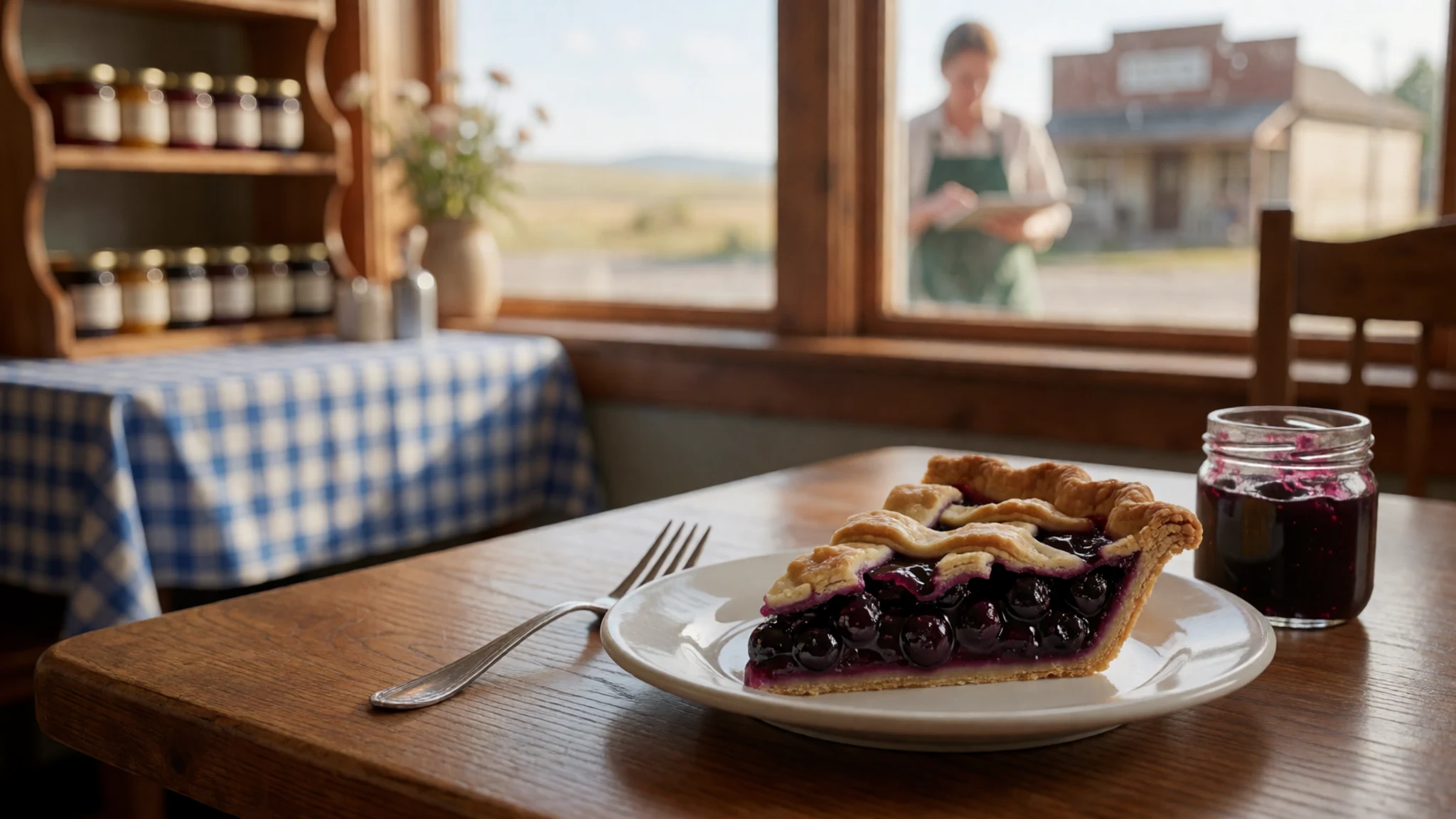
- Bison burger or stew — Cafés and pubs in prairie towns across southern Saskatchewan
Bison meat is lean and rich, and appears as burgers, stew and sausage on menus across the province. It is a fitting meal after a day among the herds' country. Ask whether the meat is locally raised.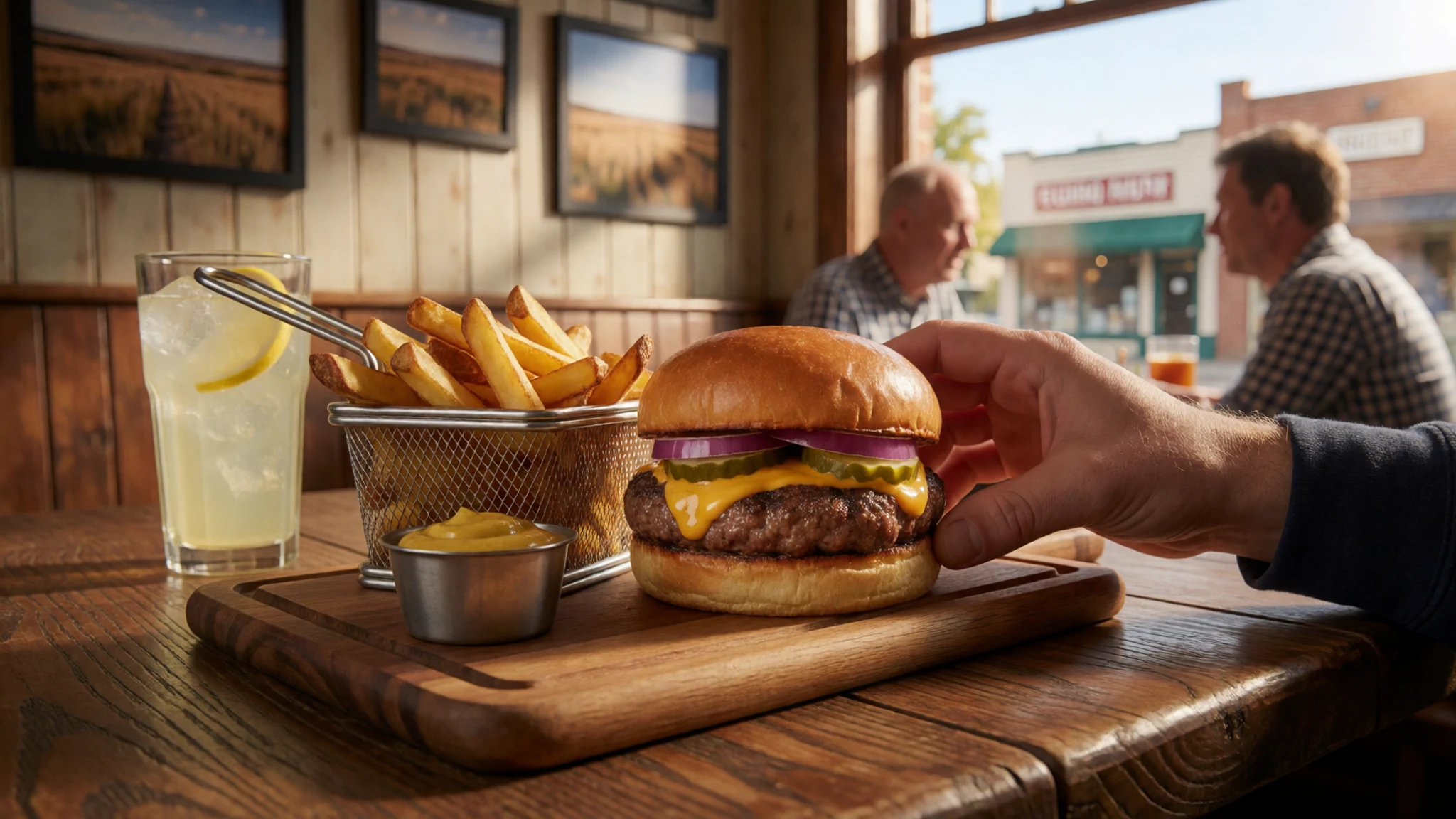
- Perogies — Church-hall suppers and family restaurants in Saskatchewan towns
Filled dumplings brought by Ukrainian and eastern European settlers, stuffed with potato, cheese or sauerkraut and served with fried onions and sour cream. They are a staple of prairie community meals and fundraising suppers, and they travel well in a cool bag. - Cabbage rolls — Community suppers and homestyle eateries in the region
Cabbage leaves wrapped around rice and meat, baked slowly in tomato sauce, are another settler dish that became a prairie classic. Hearty and filling, they suit cold evenings. Look for them at community events and homestyle eateries. - Camp-stove prairie supper — Your own campsite in either block
Open fires are usually banned in the dry summer months, so most visitors cook on a self-contained stove or eat food needing no heating. Bring supplies from town beforehand, since services inside the park are minimal, and carry plenty of water.
Plan it
Best time. Late May to June, when the prairie is green, flowers are out and the heat is manageable, and September, when it is cooler and quieter. July and August are very hot and dry, with fire risk and usually no open campfires; winters are cold and harsh.
How long. 2–3
Getting there. The nearest practical way in is by car. The West Block is about an hour south of Swift Current, with the main visitor reception in Val Marie; the East Block is about an hour south of Assiniboia near Wood Mountain. Regina is the nearest major Saskatchewan city, a long drive from either block. Travellers from the USA can use the border crossings from Montana, with Amtrak's Empire Builder serving Malta and Glasgow.
Budget. low
Tips
- Check the official Parks Canada site (http://www.pc.gc.ca/fr/pn-np/sk/grasslands) for road conditions, campsite booking, fire bans and guided programme dates before travelling.
- Many roads are unsurfaced dirt and become impassable after heavy rain, so check the forecast and carry a spare tyre and extra fuel.
- Bring more water than seems sensible, plus sun protection; shade is rare and summer heat can cause heatstroke.
- Food, fuel and phone signal are limited, so stock up in Val Marie or a larger town and tell someone your route.
- Stay late for the stars; the park is a dark-sky preserve and clear nights are excellent.
Etiquette
- Keep well back from bison and never approach them for a photograph.
- Stay on marked routes, leave plants, fossils and stones alone and carry all rubbish out.
- Respect fire bans and do not light open fires.
Nearby
Sources
- Wikidata Q1543598 (CC0)
- Wikipedia: Grasslands National Park (rev 1373882924) (CC BY-SA 4.0)
- Wikivoyage: Grasslands National Park (rev 5333294) (CC BY-SA 4.0)
- Frenchman River Valley, Caitlin Mroz (Public domain)
- Bison in Grasslands National Park, SK (West Block), 1brettsnyder (Public domain)
- Physical location map of Saskatchewan, Canada, Carport (CC BY 3.0)
- Grasslands National Park view 70 Mile Butte, Cephas (CC BY-SA 4.0)
- Valley of 1000 Devils, Grasslands NP, Other justin (CC BY-SA 4.0)
- Plains prickly-pear cactus, Cephas (CC BY-SA 4.0)
- Prairie onion, Cephas (CC BY-SA 4.0)
- Wolf-Willow, Cephas (CC BY-SA 4.0)


Wildlife
- American bison (animal)
The American bison, often called a buffalo, is a big grazing animal of North America's open grasslands. Long ago its kind roamed a vast belt of rich prairie across much of the continent, and today a herd wanders the West Block grasslands of Grasslands National Park. No best season or hour is given, so ask at the park when you arrive. Watch from a generous distance, keep your voice low, consider a guide, and never feed or approach these powerful animals.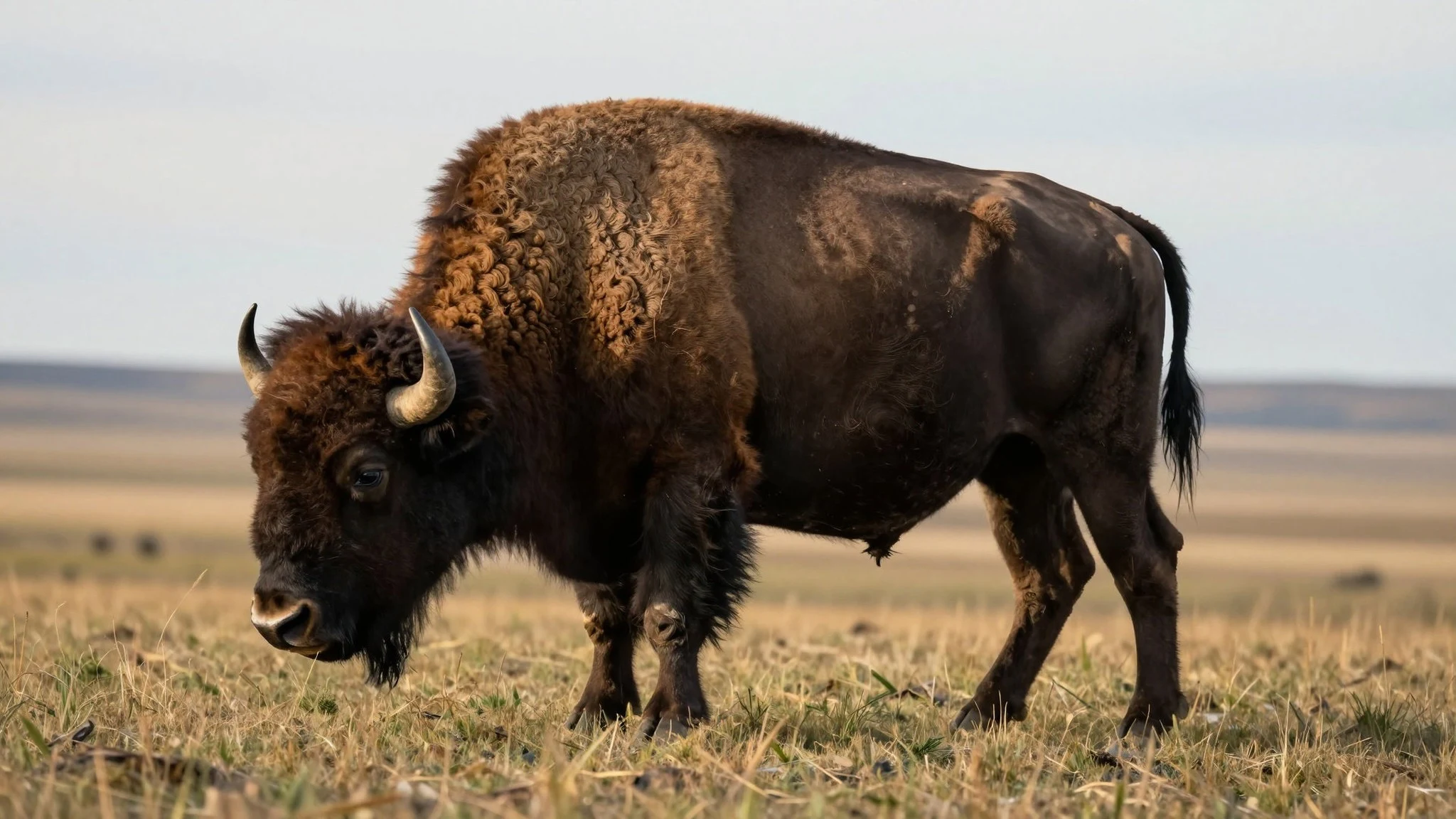
- Black-tailed prairie dog (animal)
The black-tailed prairie dog is a small, sociable rodent that lives in underground towns on the plains. In Canada, the only colonies are in the park's West Block, so that is the place to meet them. They do not truly hibernate, so you may spot one above ground even in midwinter. Watch from a distance, stay quiet and still, think about joining a guide, and never feed them. - Burrowing owl (bird)
The burrowing owl is a small, long-legged owl that spends much of its time on the ground and nests in holes in the earth, often old ones dug by other animals such as prairie dogs or badgers. The reading lists it among the animals you can see in Grasslands National Park, though it names no particular place, season or hour. Watch from far off, stay quiet, go with a guide if you can, and never feed it or approach its burrow. - Ferruginous hawk (bird)
The ferruginous hawk is a big hunting bird with broad wings, one of the buteo hawks, so picture a wide-winged prairie hunter. Grasslands National Park is one of the places where you may spot it, so keep an eye on the sky and the open land. Watch from a respectful distance, ideally with binoculars, keep your voice low and your movements slow, and never feed it. A local guide can help you look in the right places.