Yashilkul
Yashilkul, Tajikistan
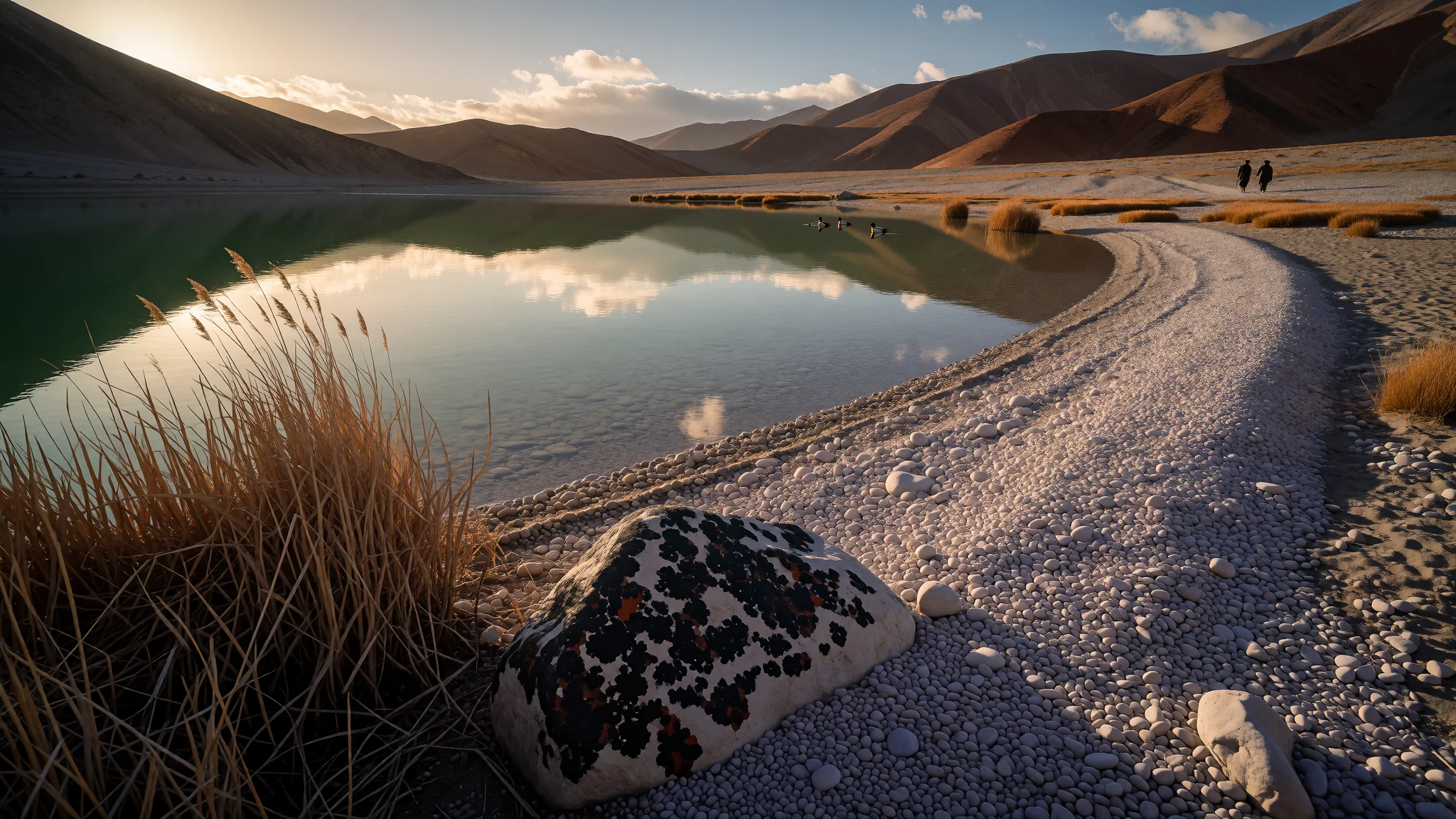
Yashilkul is a still green-blue lake at 3,734 metres in the Pamirs, with bare mountains, wide silence and a neighbouring lake close by.
The place
Yashilkul is a freshwater lake high in the Pamir Mountains of south-eastern Tajikistan, in Gorno-Badakhshan, at 3,734 metres above sea level. It sits in the upper Gunt valley, about 130 kilometres east of Khorugh, the provincial capital, and the road there is a long climb through thin air. The lake covers about 3,600 hectares and reaches 52 metres at its deepest, which makes it a substantial body of water in a landscape this dry. Around it lie sand and pebble plains, patches of wetland and bare mountain slopes in browns, greys and rust. The water shifts with light and cloud, from steel to a deep green-blue, and the name is usually read as 'green lake'. Just 1.5 kilometres away lies Bulunkul, a similar lake, and the two share a stretch of marsh that is recognised as an Important Bird Area. Spelling varies widely: Yashikul, Jaschilkul and Yashilkul all appear on maps and in photo captions, because Tajik has no single English transcription. The setting is austere. There are few trees, little shelter and almost no sound beyond wind and birds. Settlements nearby are small and facilities are basic, so the place suits people who value space and silence over comfort. Nights are cold even when summer days are bright, and most arrivals feel the altitude within the first hours, as a headache, breathlessness or poor sleep.
Its story
The story of Yashilkul is partly a story of names and maps. The word is Turkic in origin, built from 'yashil', meaning green, and 'kul', meaning lake, a pairing that turns up across Central Asia. Tajik writes it Яшилкӯл, while the Russian form, Яшилькуль, still shapes how many maps and older guidebooks print it in the Latin alphabet. That tangle reflects the region's layered past: mountain communities speaking Pamiri languages and Tajik, Russian administration, then Soviet rule, and since independence a gradual shift towards Tajik spellings. For much of that time the lake probably mattered most to herders and travellers using the upper Gunt valley as a corridor eastward, as mountain valleys elsewhere in the Pamirs have long been used. Written history specific to this shore is thin, and it is better to say so than to invent a tale. What the record does show is a modern kind of recognition. Together with Bulunkul and the mountains around them, Yashilkul forms an Important Bird Area, valued for wetlands and shallows that draw waterbirds to a high, dry plateau. Today the road along the valley is the usual way in, and the lake is a stop on journeys across the Pamirs rather than a destination with its own infrastructure. That is much of its appeal, and also the reason visitors need to arrive prepared.
What to see
- The western shore — Western shore of Yashilkul
The western part of Yashilkul is where the lake looks most open, with pale pebble beaches running down to water that changes colour through the day. It is a good place to sit, watch the light move over the mountains and listen to how quiet a high lake can be.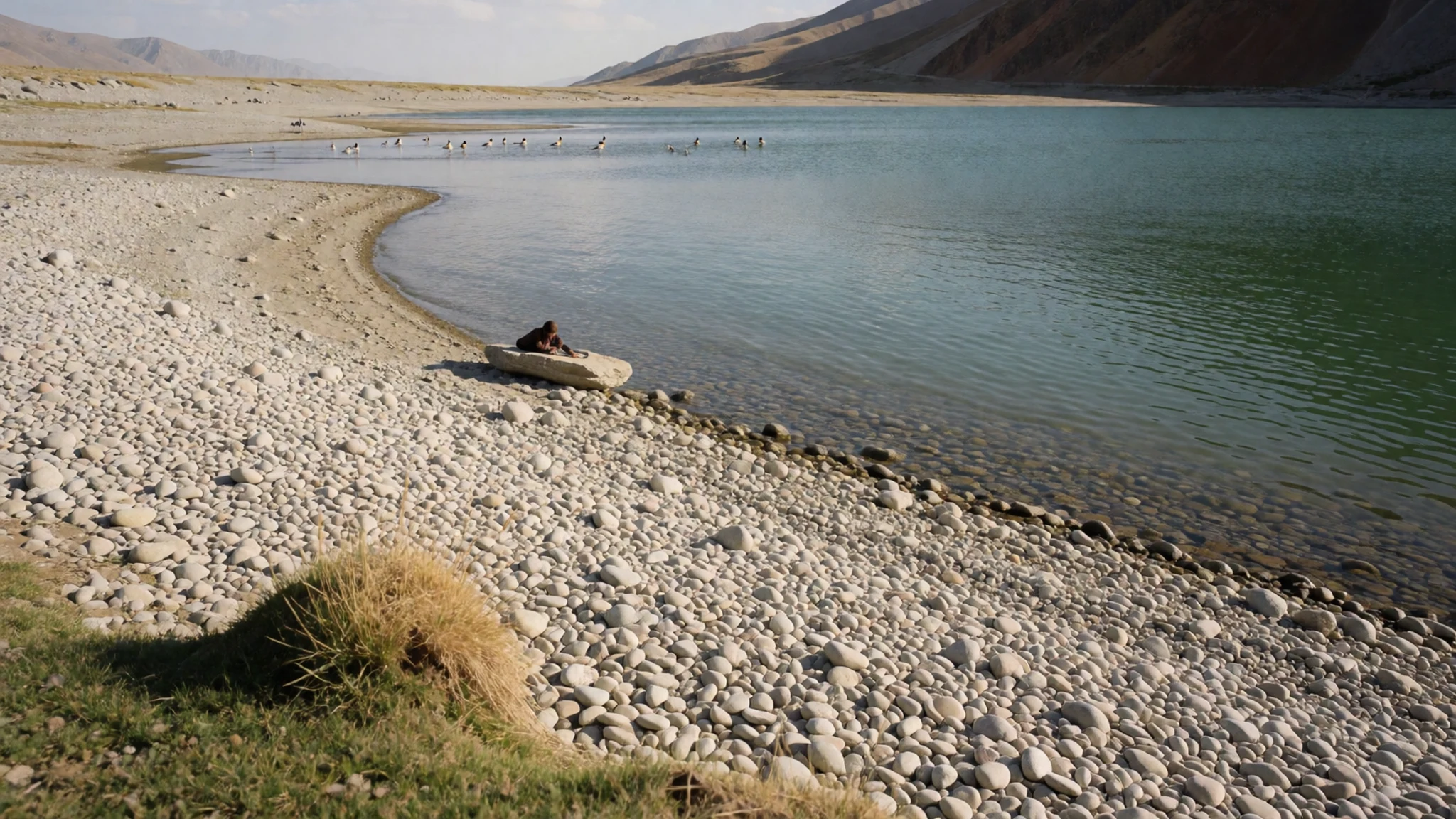
- The view from the south — Southern approach
Approaching Yashilkul from the south gives a wide view across the water to the ranges beyond, which is why many photographs are taken from this side in summer. The slopes are bare, so scale is hard to judge until a vehicle or a person appears on the shore.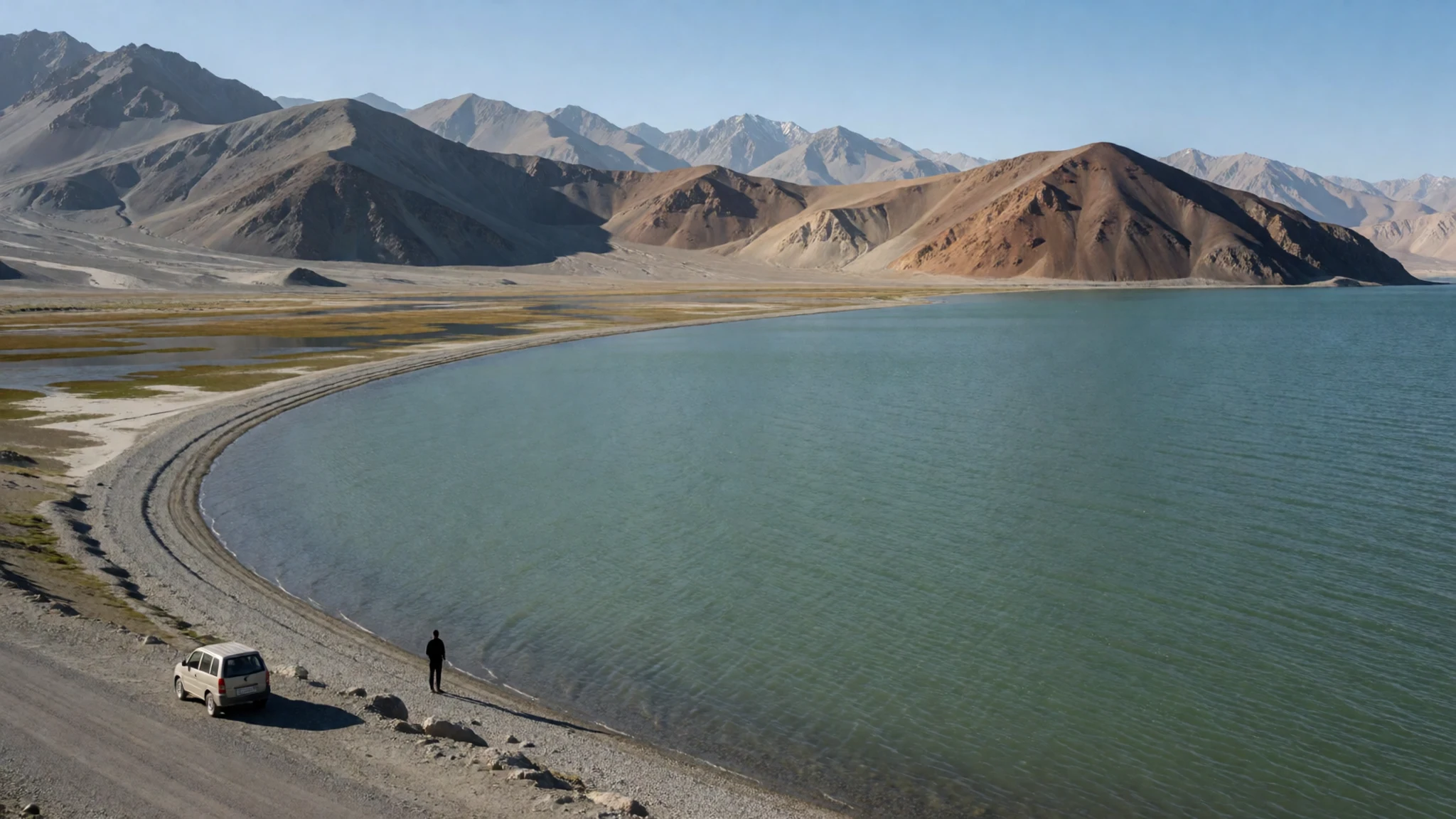
- Bulunkul lake — Next to Yashilkul
Bulunkul is the near neighbour of Yashilkul, only about 1.5 kilometres away, and the two are often visited together. The shared marsh and shallows between them are where waterbirds gather, so binoculars are worth carrying even if birds are not the main reason for the trip.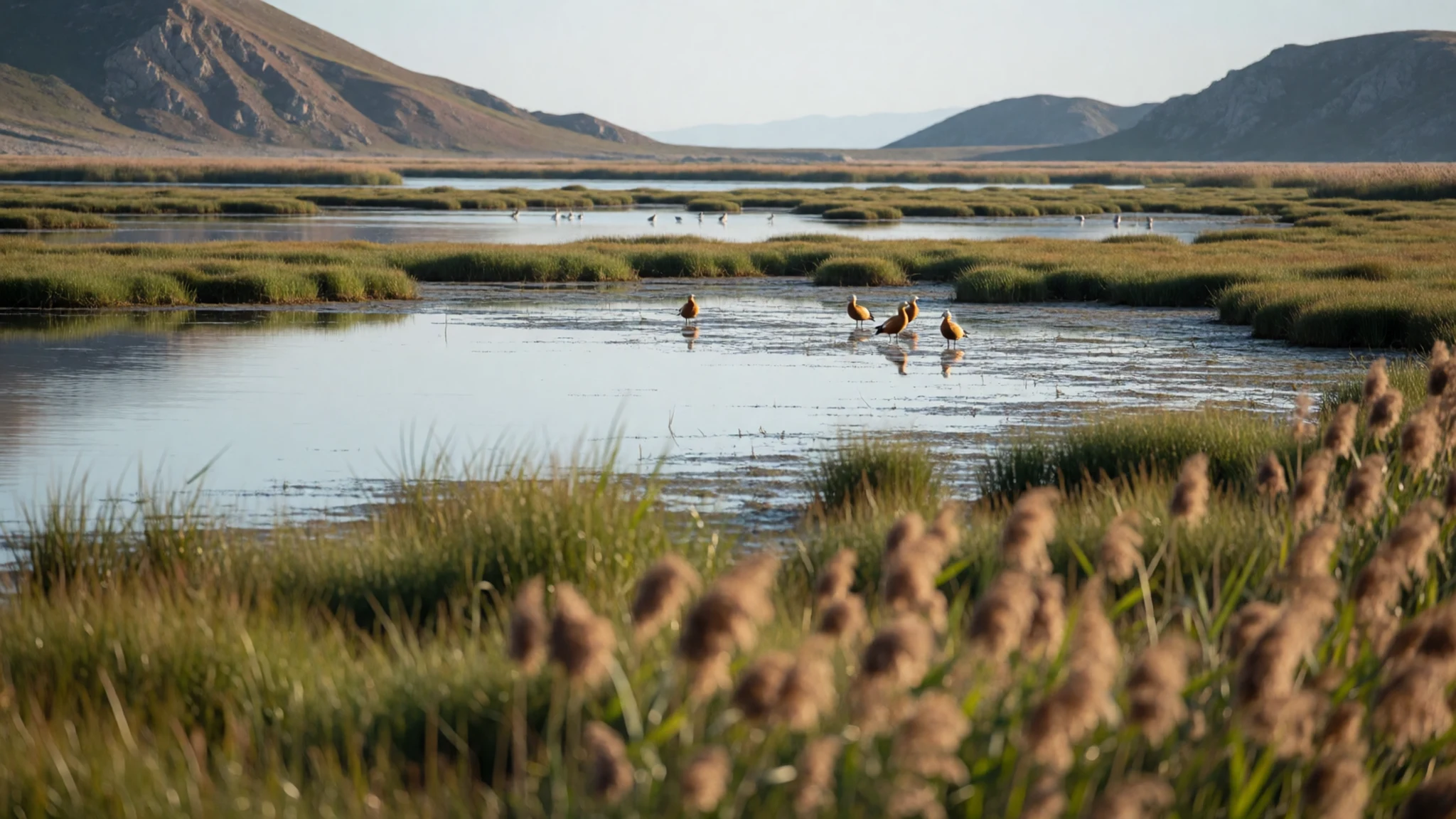
- Wetlands and pebble plains — Plains between the lakes
The ground around the two lakes is a patchwork of wetland, sand and pebbles, and this mix is what earns the area its Important Bird Area status. Walking here is gentle but slow at altitude, and boots are better than sandals on the wet and stony ground.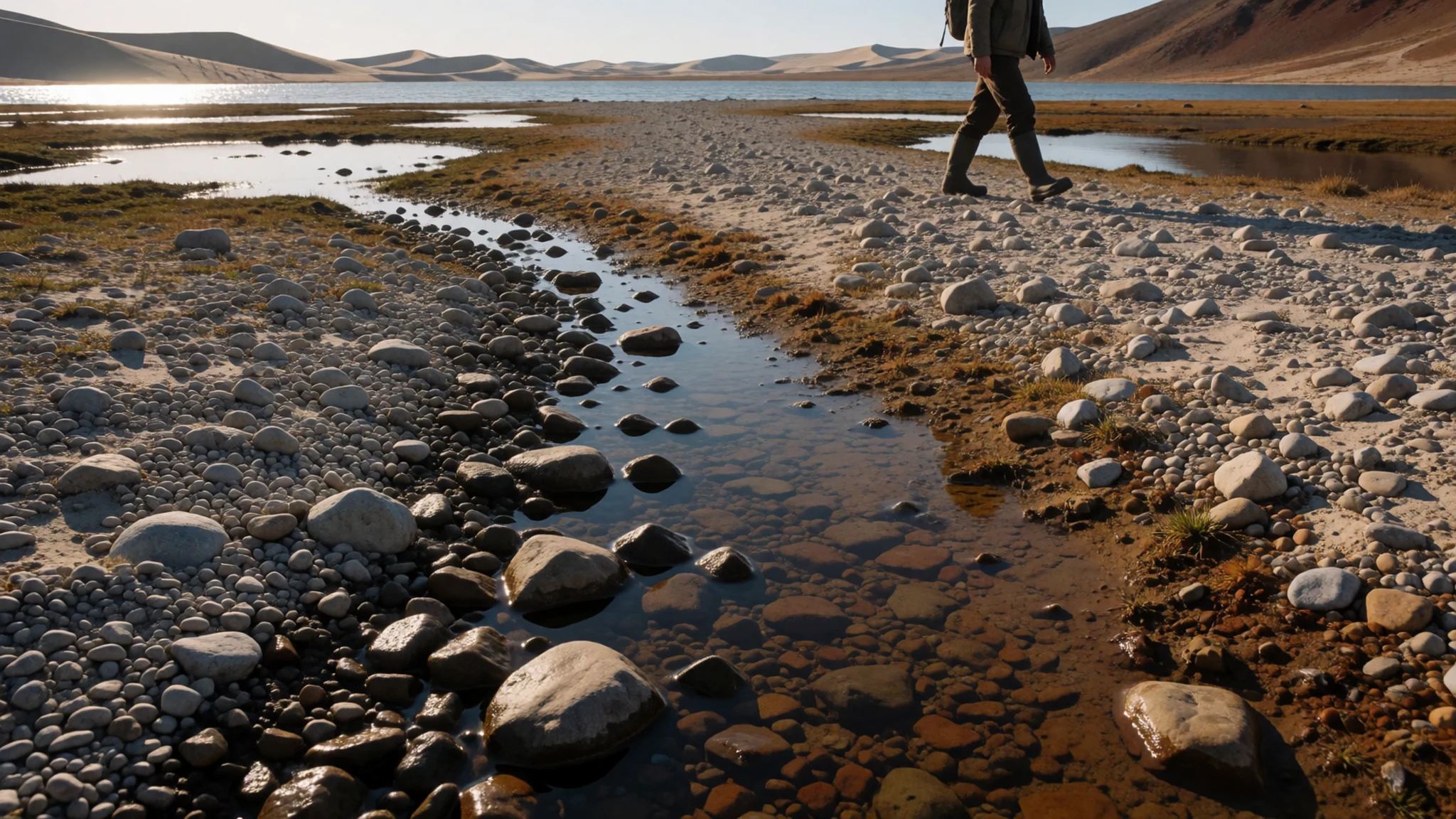
- The upper Gunt valley road — Gunt valley, Gorno-Badakhshan
The drive towards Yashilkul along the upper Gunt valley is a sight in itself, with the Pamirs opening out as the road climbs from Khorugh. Allow time to stop, since the landscape changes in colour and texture over the long drive east.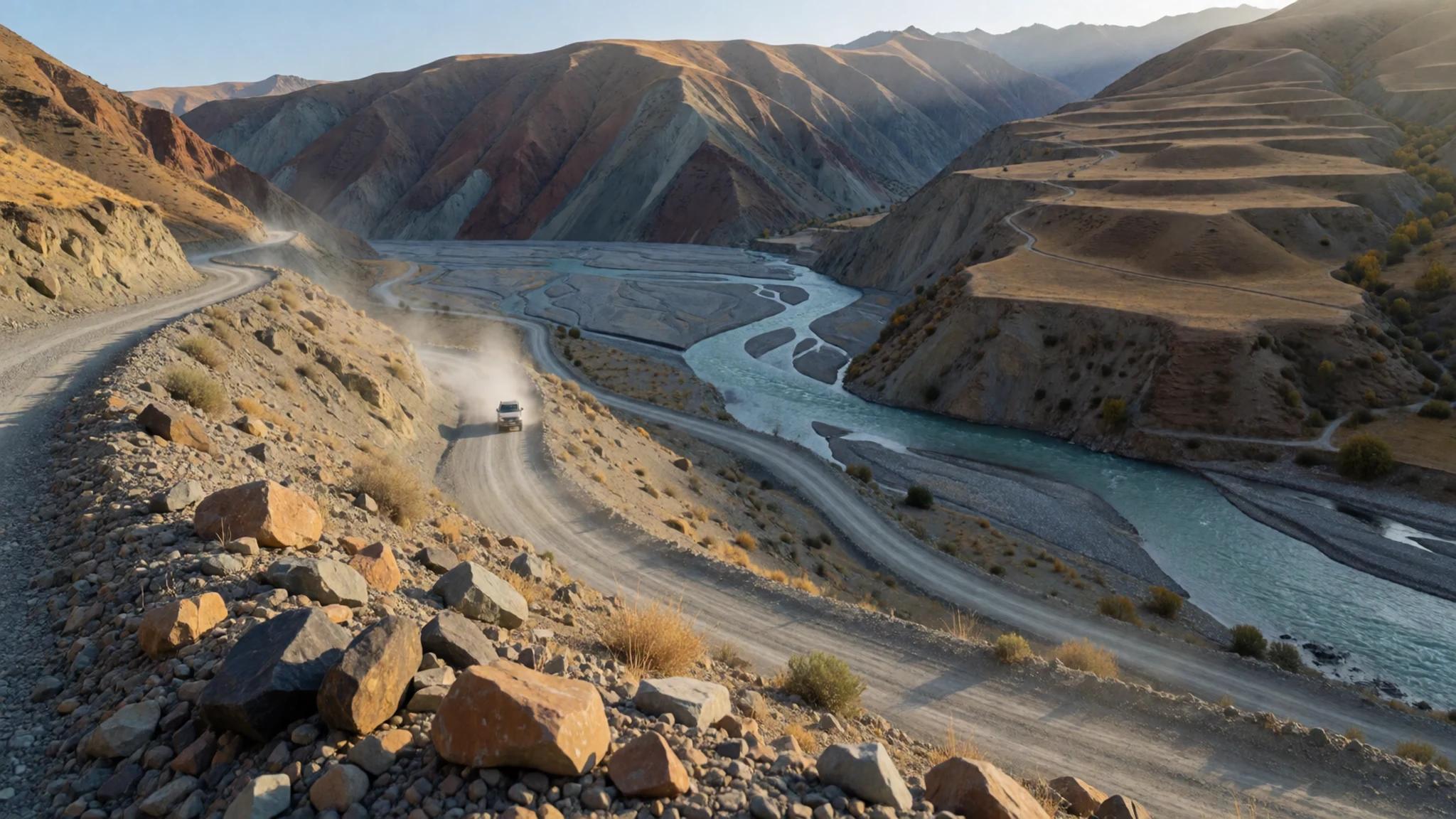
Culture
Yashilkul lies in Gorno-Badakhshan, the Pamiri heartland of Tajikistan, and the manners of the region are those of a conservative mountain society. Tajiks in general are warmly welcoming to visitors, and young people may approach simply to say hello and practise English. Hospitality is central: guests are often offered tea and bread before anything else, and refusing outright can sound curt, so accept a little and thank people sincerely. Mountain households are used to sharing what they have, which also means supplies are limited, and a visitor who arrives with their own snacks, water and a small gift is easier on a host's stores. Many people in the Pamirs follow Ismaili Islam, and daily life tends to be modest and family-centred. Society is conservative, and women are expected to dress fairly modestly in public, though headscarves and face coverings are the exception rather than the norm. For men, shorts attract disapproving stares even in larger cities such as Dushanbe. Around the lake itself there are few people, but herders and drivers passing along the valley road are usually glad to chat, and a few words of Tajik or Russian go a long way. Mosques in Tajikistan are for men, so female visitors should not expect to enter them. When greeting an older person, place your right hand over your heart as a sign of respect, and always ask before photographing anyone.
What to wear
Yashilkul sits in the Pamirs, where traditional dress draws on Tajik and Pamiri habits shaped by cold, altitude and wool. Embroidered skullcaps are the best-known item for men and women, and women's festive dress often uses bright silk or cotton, including ikat-patterned cloth known across Tajikistan as atlas or adras. Hand-knitted woollen socks and thick layers are practical heritage garments in a place with freezing nights, and the finest pieces tend to come out for weddings, festivals and family occasions. In daily life today, most people near the lake wear practical modern clothes: padded jackets, fleece, trousers, sturdy shoes, and a headscarf or cap against sun and wind. Younger people in Khorugh and Dushanbe often dress in a mix of Western and local styles, with traditional pieces kept for celebrations. Visitors should dress for weather first and for modesty second. Pack layers, including a warm insulated jacket, a windproof shell, thermal underlayers, a sun hat, sunglasses and strong sunscreen, because ultraviolet light is intense at this height even when the air is cold. Waterproof hiking boots suit the pebbly, sometimes marshy shore. Out of respect for a conservative society, women should keep shoulders and knees covered and carry a light scarf, while men should wear long trousers rather than shorts.
What to eat
- Osh (plov) — Homestays and roadside eateries along the valley, and Khorugh's market area
Osh is rice cooked with meat, carrots and oil in a cauldron over a fire, and eaten from a shared plate. It is the dish most often served to guests across Tajikistan, and a hearty option after a cold day at the lake.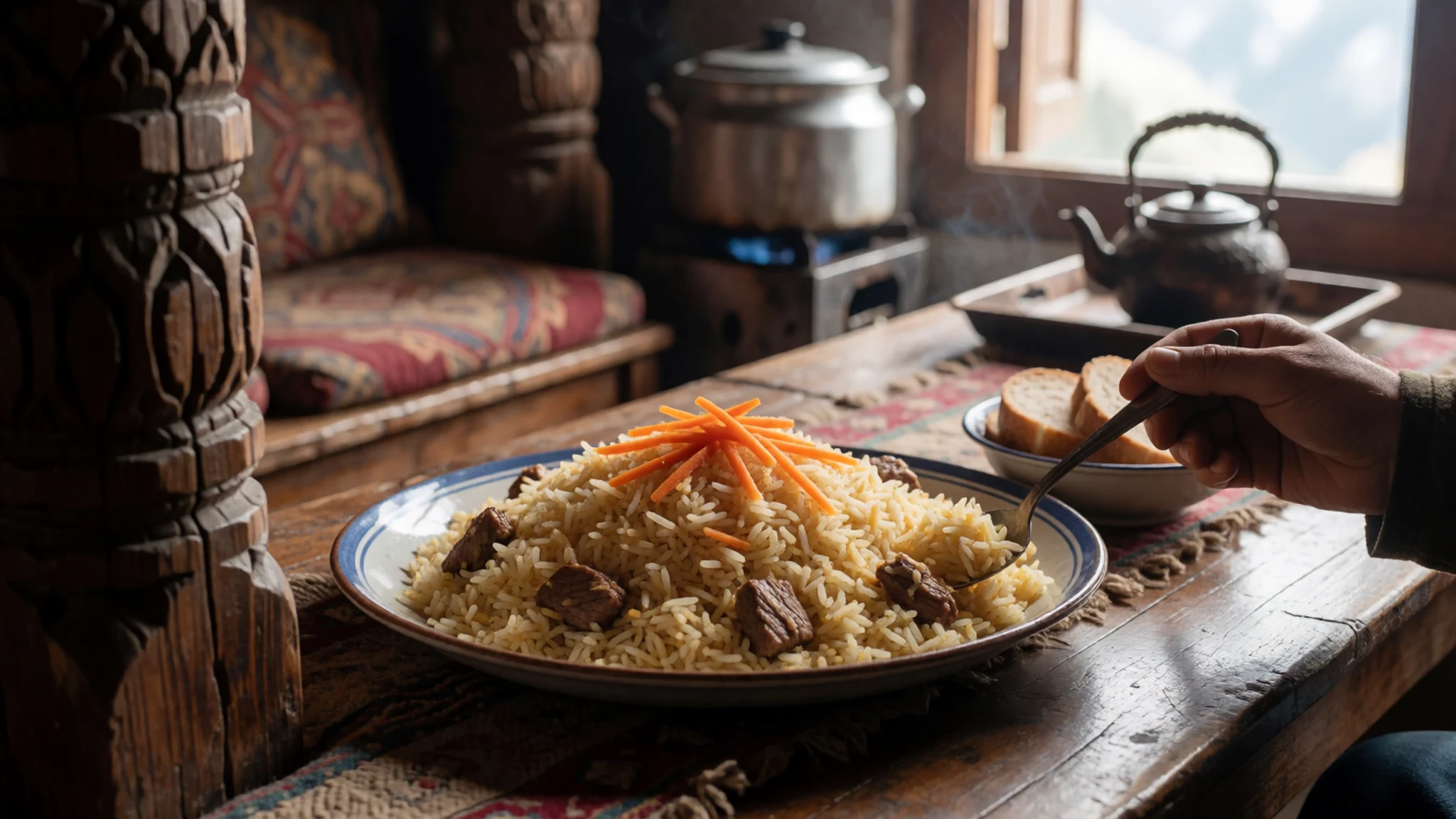
- Qurutob — Family homes and local eateries in Khorugh
Qurutob is flaky bread soaked in a yoghurt-like sauce made from dried sour cheese, topped with fried onions and vegetables, with no meat. It is considered the national dish, though it appears less often on menus than osh.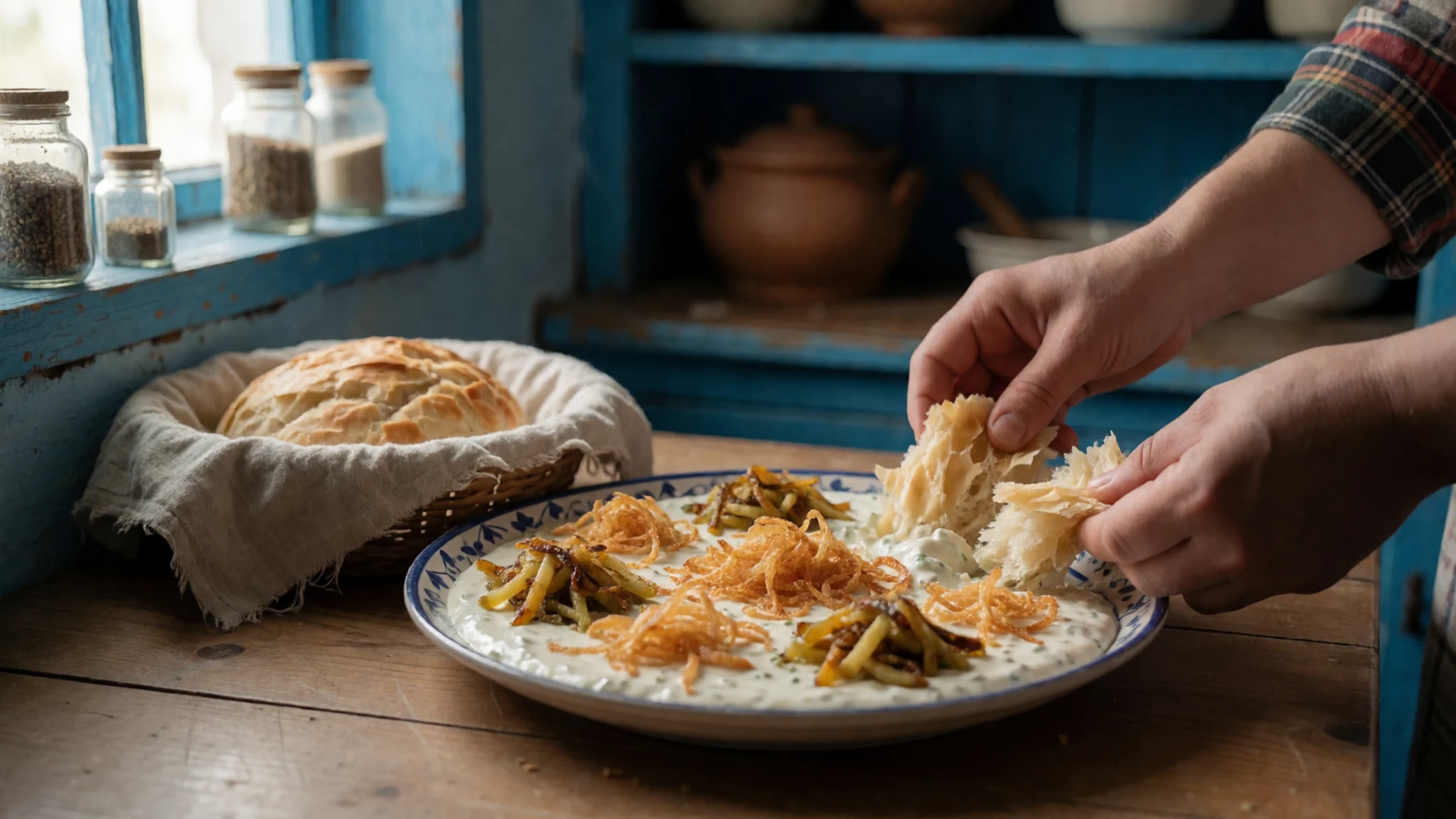
- Laghman — Small eateries and canteens in Khorugh and roadside stops
Laghman is a noodle soup with vegetables and lamb or beef, served hot and filling. Its warmth is welcome at altitude, where evenings turn cold quickly and appetite can be low. - Green tea — Any home, homestay or teahouse
Green tea, sweetened or plain, is drunk throughout the day in Tajikistan and is the country's national drink. Being offered a pot is a sign of welcome, and it is a gentle way to cope with cold and dry mountain air. - Compote — Homestays and local eateries
Compote is a cooled fruit drink made by stewing fruit in water, popular across the former Soviet region. It is refreshing after a day at altitude, but ask whether it was made with safe water.
Plan it
Best time. June to September, when the Pamir roads are generally most reliable and days are warmest; nights stay cold at this altitude, and winter brings snow and difficult travel.
How long. 2–3
Getting there. Fly to Dushanbe, then continue to Khorugh by road or by a domestic flight where one is running, and travel east along the Pamir Highway through the upper Gunt valley; the lake is about 130 kilometres beyond Khorugh and is best reached with a driver in a sturdy vehicle.
Budget. mid
Tips
- Spend a night or two at altitude before the lake, because 3,734 metres affects most people
- Carry bottled water and avoid ice, as tap water is not safe and supplies can be cut off
- Bring cash, snacks and a warm layer, since shops and cards are scarce near the lake
- Apply for the Gorno-Badakhshan permit along with your e-visa, and print the e-visa before you travel
- Check road and weather conditions locally, as mountain routes can change quickly
Etiquette
- Dress modestly, with long trousers and covered shoulders
- Place your right hand over your heart when greeting older people
- Ask before photographing people or their homes
Nearby
Sources
- Wikidata Q2631474 (CC0)
- Wikipedia: Yashilkul (rev 1366934807) (CC BY-SA 4.0)
- Wikivoyage: Tajikistan (rev 5424872) (CC BY-SA 4.0)
- Photo: Westlicher Teil des Jaschilkul, DaMitti (CC BY-SA 4.0)
- Photo: Pamir Mountains, Lake Yashikul, Ninara (CC BY 2.5)
- Photo: View of Tajikistan, ISS Expedition 7, NASA (Public domain)
- Photo: View of Tajikistan, ISS Expedition 15 (5217), NASA (Public domain)
- Photo: View of Tajikistan, ISS Expedition 15 (5218), NASA (Public domain)
- Photo: Yashikul-See von Süden, Kondephy (CC BY-SA 4.0)
- Photo: Yashilkul lake, Kalpak Travel (CC BY 2.5)


