Istaravshan
Istaravshan, Tajikistan
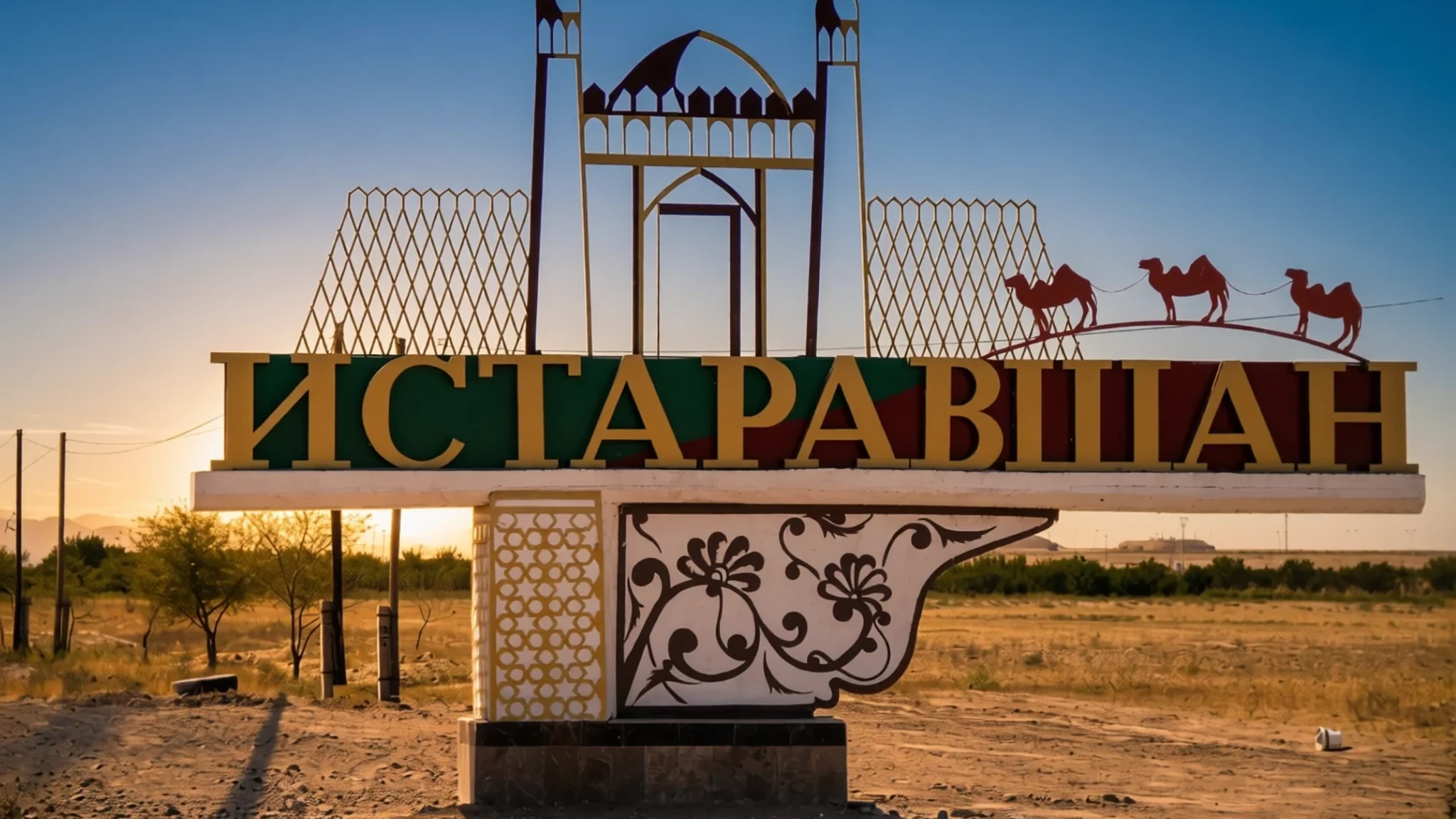
Istaravshan is a working Tajik city of an old town, a citadel hill and a blue-domed mosque.
The place
Istaravshan is a working city in Sughd, in northern Tajikistan, set where the irrigated country of the Fergana basin lifts towards the Turkestan mountains. It is not arranged for visitors as a closed historic park. Families live behind courtyard walls, the bazaar trades through the day, and the citadel hill is still a place people walk up for the view. From Mug Teppe the town falls away to the southwest, roofs packed close, and the mountain line stands behind them when the air is clear. Poplars and irrigation ditches, where they survive, are the softness in that view. The mountains do not belong to the municipality, but they decide the light, the wind and the sense that the city is a pause on a much older route.
Down in the old town the streets stay short and slightly irregular. Brick and plaster houses turn their backs to the lane and open inward to courtyards. A photographed stretch of this quarter is labelled Krupskaya Street, a Soviet name laid over an older pattern of mahallas. Kok Gumbaz, the mosque of the blue dome, is the building other buildings are described against. Its dome, covered in tile, is the colour note in a town of earth tones, dust and poplar shade.
Istaravshan's daily life is that of a regional Tajik centre rather than a capital. Shared taxis, school groups, tea poured in chaikhonas and the noise of the market fill the middle of the day. Heat and dust dominate the high summer; winter is a cold, quiet season for the same streets. Evening pulls people back to the chaikhona and the courtyard, and the mountains turn the same colour as the dust.
Its story
Istaravshan stands on a route that once tied the Zeravshan cities to the Fergana valley, and the town's story is the story of that passage. Classical and local tradition places an ancient fortress here and links it to Cyrus under names such as Cyropolis; the tale is old, and it is wiser to treat it as tradition than as a foundation date. What the ground supports without argument is Mug Teppe, a citadel mound set over the approach from the plain, the kind of hill a garrison would choose and a later city would refuse to abandon.
For a long stretch of its life the settlement was called Ura-Tyube, or Uroteppa. That is the name in older travel writing and on maps drawn before the present official title. Under that name the town belonged to the Islamic world of Central Asia: a market, a fortress, and a place that made objects worth keeping. A gourd-shaped vessel of the 10th century, and a vase of the 10th and 11th centuries inscribed in Kufic with the word al-Yumn, meaning felicity, are both recorded as coming from Istaravshan. They now sit in the National Museum of Tajikistan, a small trace of kilns and trade rather than of kings.
Kok Gumbaz carries the later chapter. The congregational mosque, recognised by its blue dome, was built for a Muslim town that already had streets, and it still stands among houses instead of in an emptied heritage zone. Official usage has since restored the name Istaravshan in place of Ura-Tyube. The renaming did not move the mound or the mosque. Istaravshan's history, told honestly, is continuity of site: the hill, the dome, the lanes, and clay that left for a museum case in the capital.
What to see
- Mug Teppe — Citadel hill above the old town
Istaravshan's Mug Teppe is the citadel mound above the old town, a hill shaped for a fortress and kept as a viewpoint. Roofs run off to the southwest, and the Turkestan mountains close the horizon when the haze allows. The path is short, uneven, hot in summer and slick after rain. Nothing on the summit explains itself with a gallery; the mound and the outlook are the whole visit.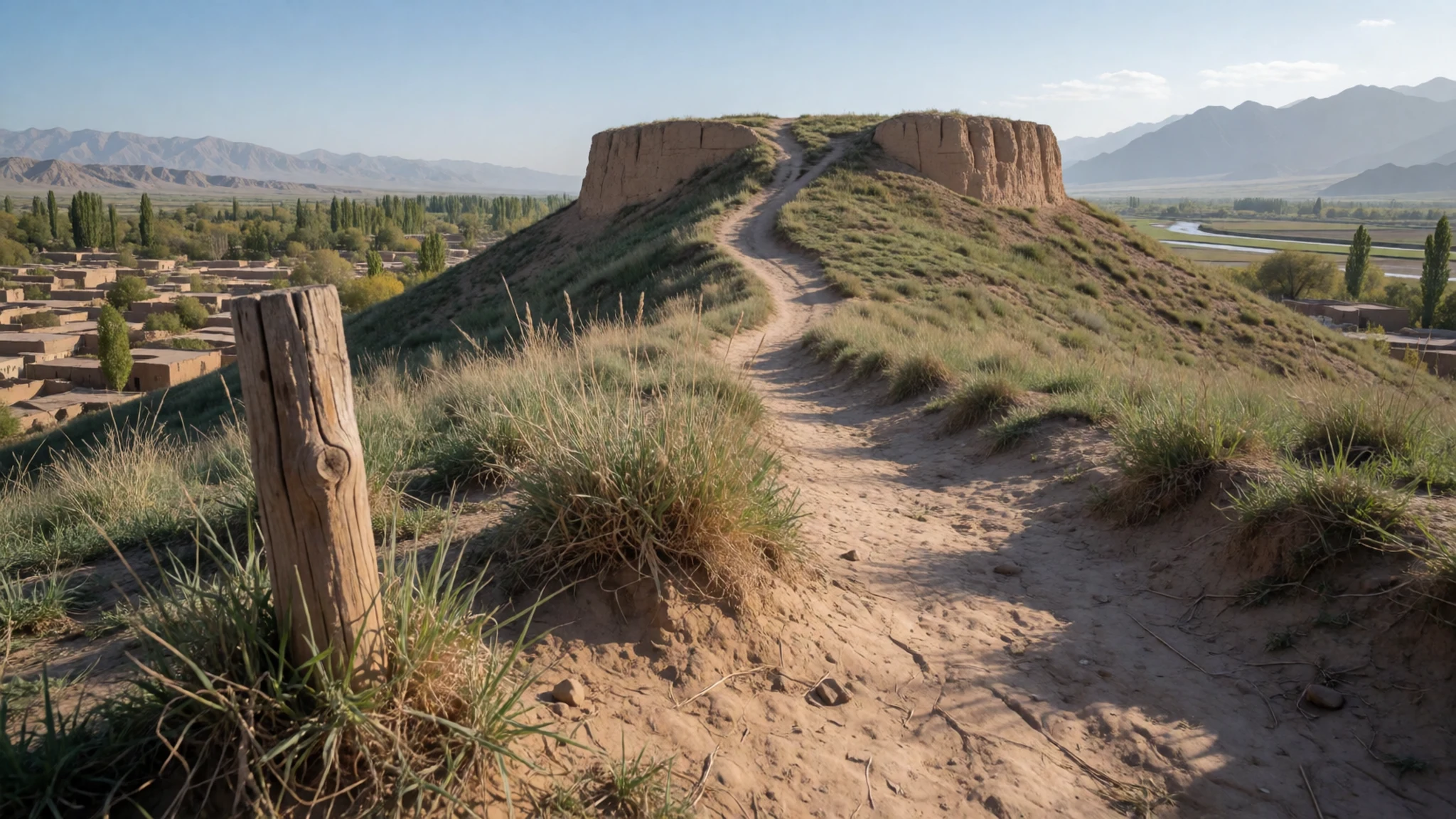
- Kok Gumbaz — Old town
Kok Gumbaz is Istaravshan's congregational mosque, named for the blue dome that locates it among the lanes. Brick, tile and a tall entrance form a complex inside a residential quarter. It remains a place of prayer, so cover shoulders and knees, and leave shoes where the floor steps up. The dome is the landmark, and the houses pressed against the walls keep the visit inside ordinary streets.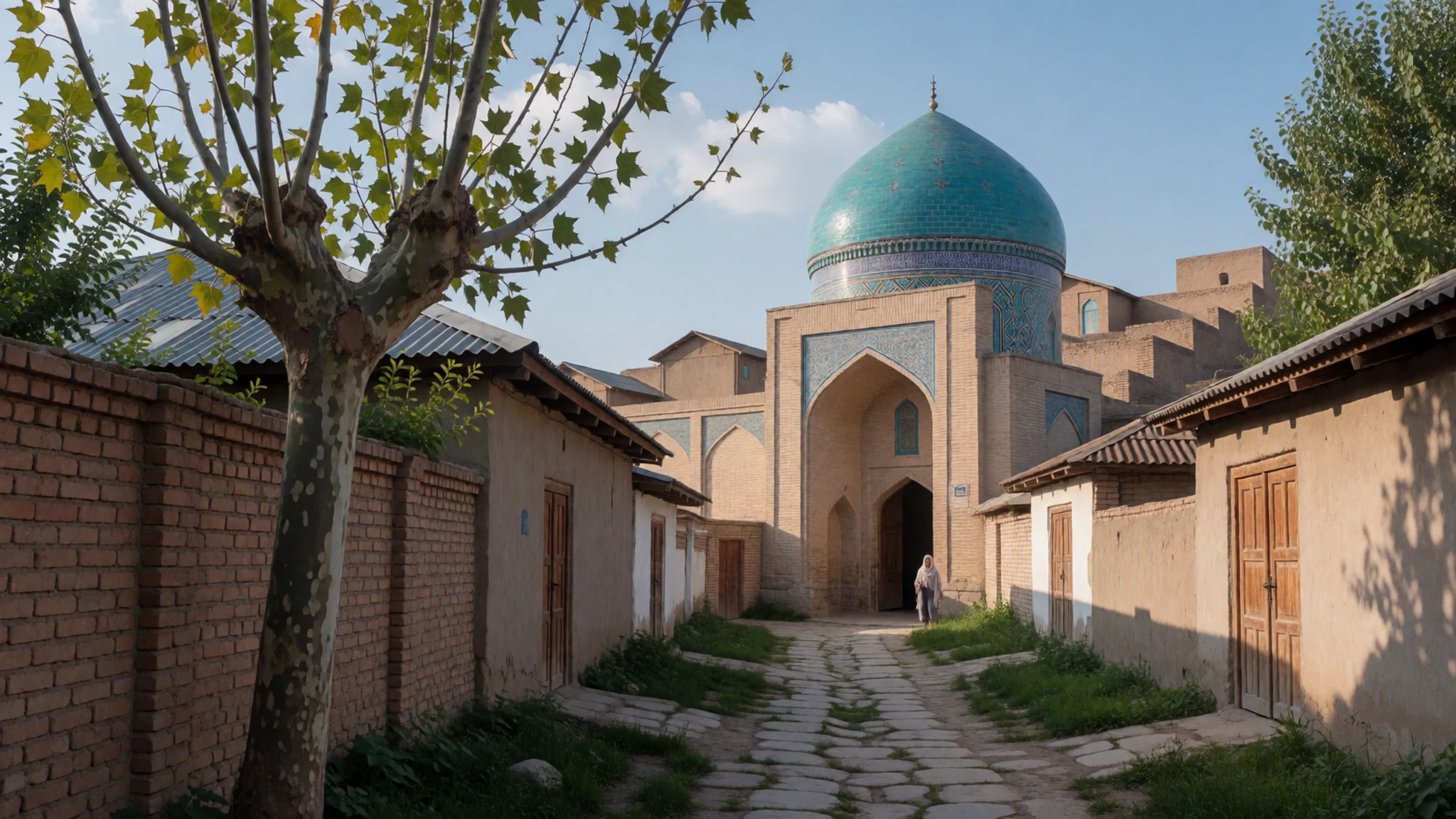
- Old town — Krupskaya Street and the surrounding mahallas
The old town of Istaravshan is a set of lived streets, not a ticketed enclave. On Krupskaya Street, plastered walls, wooden doors and a narrow way show how the mahalla turns inward to its courtyards. Sound gives the quarter away: a radio, a broom, a car easing past. Little is explained on a board. The interest is the street plan, and the plain fact that households still occupy it.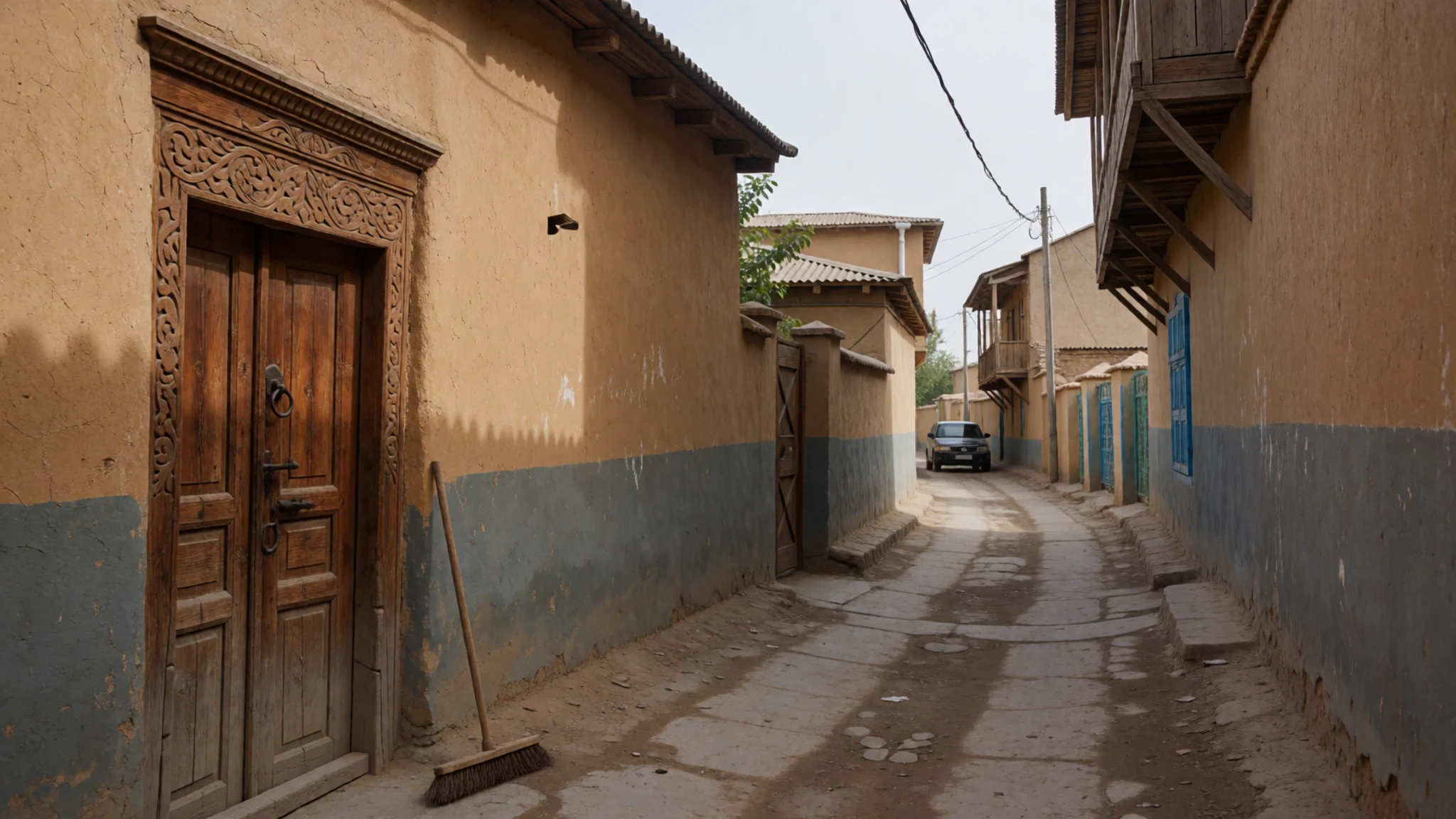
- Southwest view from the citadel — Mug Teppe, looking southwest
From Mug Teppe, looking southwest, Istaravshan reads as a low city of roofs rather than a cluster of monuments. Houses, trees and a few taller buildings give way to open country, with the Turkestan range behind. Morning is the hour when haze is least likely to flatten that outline. The viewpoint sets the scale: a regional town that can be crossed on foot, standing in front of mountains that cannot.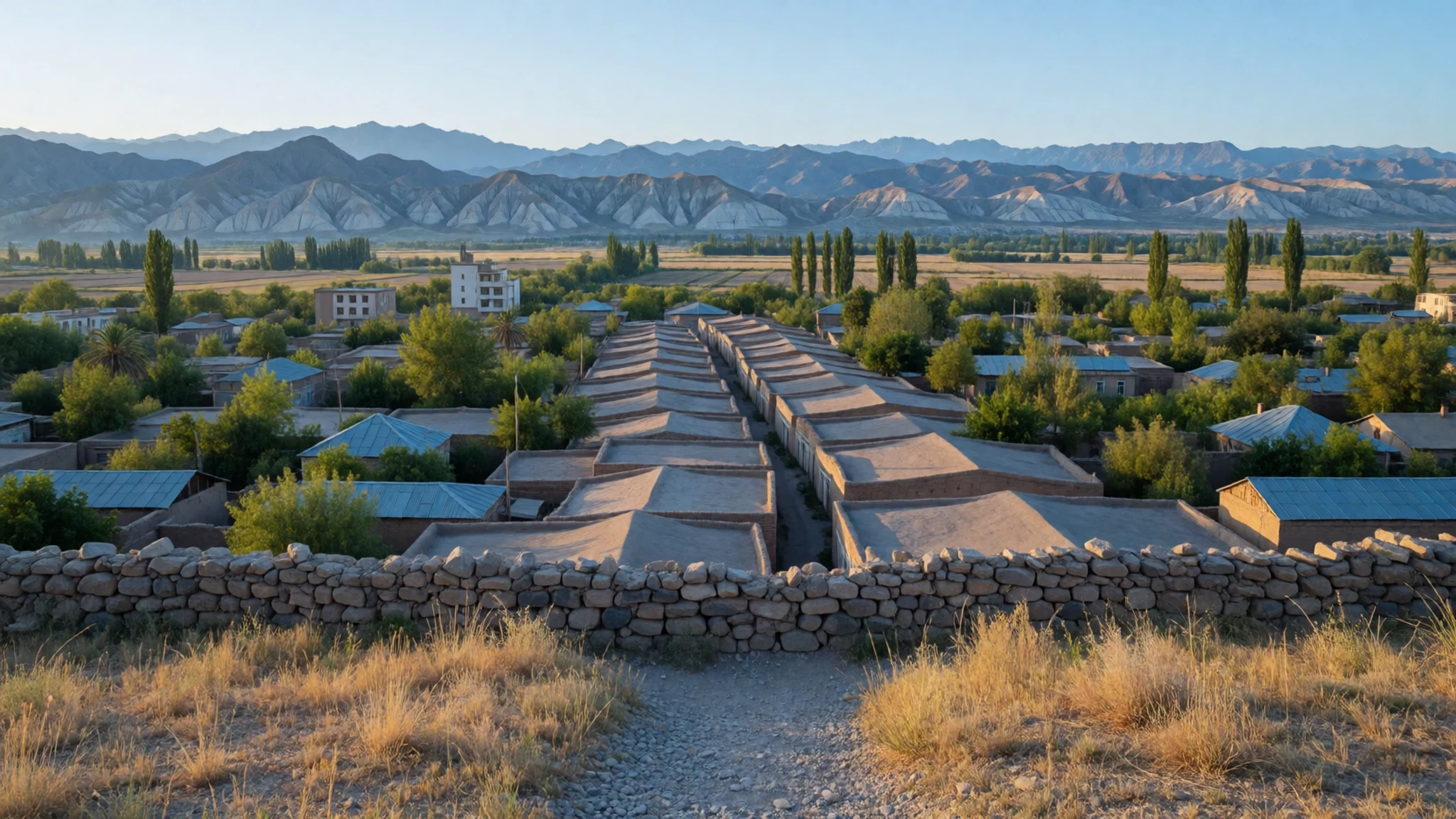
- Town bazaar — Central bazaar
Istaravshan's bazaar is where the city's geography turns into groceries, cloth and lunch. Fruit, bread, rice, spices and household goods share covered aisles and open stalls, and a chaikhona is never far from the noise. It is the place to see a weekday rather than a festival, and to eat without a booking. Watch the footing and ask before photographing a stall.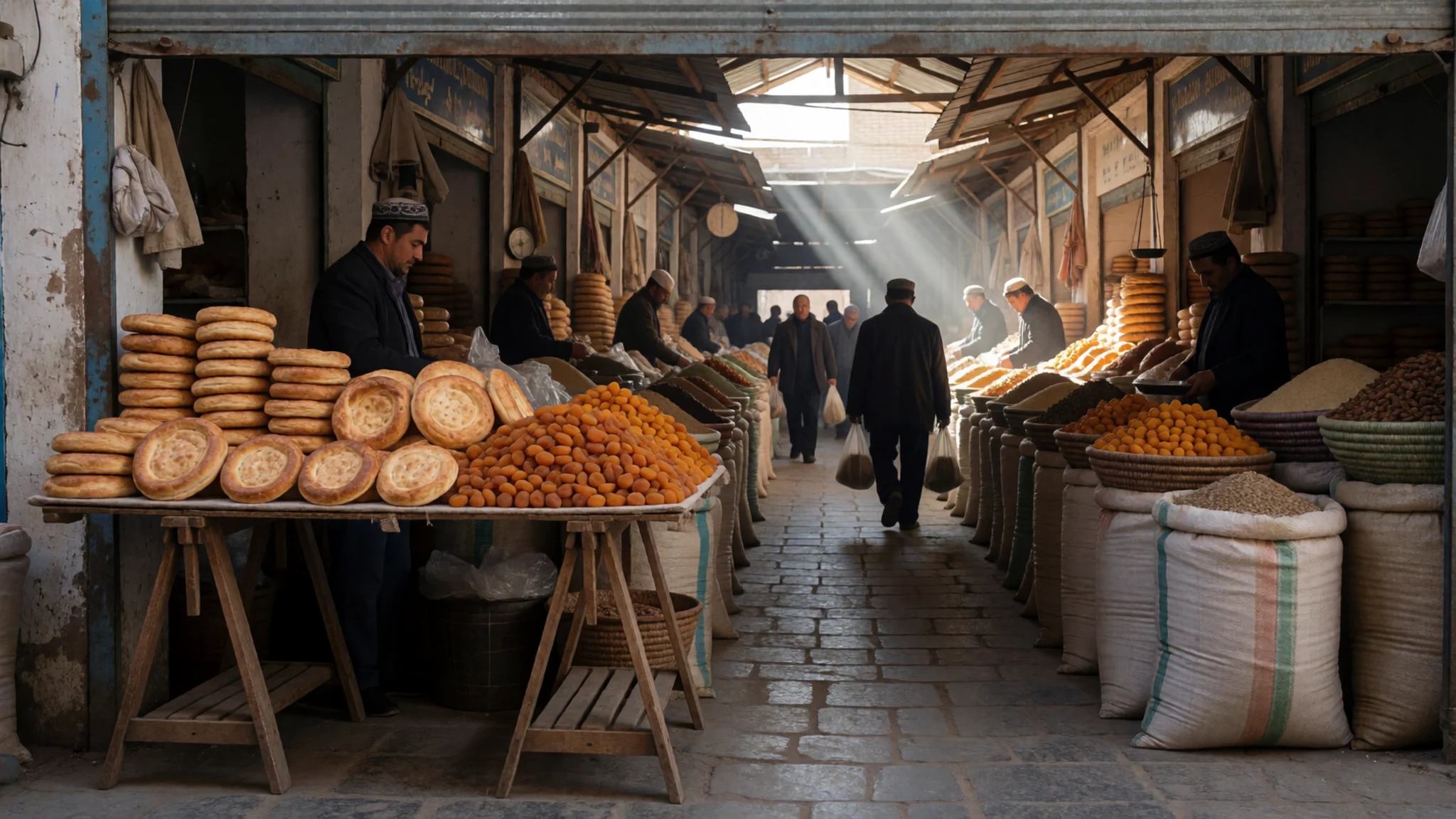
Culture
Istaravshan's public culture is Tajik, Muslim in its weekly rhythm, and still threaded with Russian from the decades when street names were rewritten. The unit that organises social life is the mahalla: a neighbourhood drawn around a mosque, a teahouse and the families who have lived there long enough to be consulted. Hospitality has a fixed shape. Tea arrives before questions do, bread is torn rather than cut in polite company, and a seat offered in a courtyard is not waved off in a hurry. Nowruz in spring, and weddings through the warm months, are when music, atlas silk and visiting fill the lanes. Ordinary weeks are quieter, and the bazaar does the work of a civic square.
Religious practice gathers at Kok Gumbaz and at the smaller mosques of the quarters. The call to prayer marks the day for many, while the streets stay mixed and practical. Women in Istaravshan dress across a wide range, from contemporary coats to a scarf and a long dress, and neither is a costume for outsiders. What a visitor owes the place is attention rather than performance.
Ask before photographing people in Istaravshan, and remove your shoes at a mosque door when you see others doing the same.
What to wear
Istaravshan keeps traditional dress for occasions and wears ordinary city clothes the rest of the time. The textile to know is atlas, the silk ikat of Tajik dress, with soft-edged bands of red, yellow, green, blue and white that seem to shift as the cloth moves. Women put on atlas dresses, often with a light scarf or an embroidered cap, for Nowruz, weddings and family gatherings. Men may add a chapan, a cotton robe sometimes quilted, and a toqi skullcap. Embroidery in the suzani manner, and the tighter chakan stitch, appears on ceremonial robes and on hangings in the house more often than on clothes for a trip to the market.
Weekdays look contemporary. Jeans, dark jackets, sports shoes, suits and long coats with headscarves are all normal in the bazaar and on the way to school. Older men are the ones most likely to wear the toqi from breakfast onward. Younger residents of Istaravshan dress for dust, heat and office work, much as people do in any other Tajik city.
A visitor should plan on modest clothing for Kok Gumbaz and any neighbourhood mosque: shoulders covered, hems below the knee, and a scarf that can go on at the door. Footwear has to slip off quickly and still manage broken paving and the grit of the citadel path. Summer calls for breathable cloth and a hat against the exposed hill; winter calls for a proper coat. Bare shoulders read as misplaced in the old town.
What to eat
- Osh — Chaikhonas beside the bazaar
Osh is the platter Istaravshan puts down when people sit together at midday: rice, carrot, chickpea and meat from a kazan. Chaikhonas beside the bazaar serve it with non and tea, on a shared plate, as ordinary lunch rather than a performance.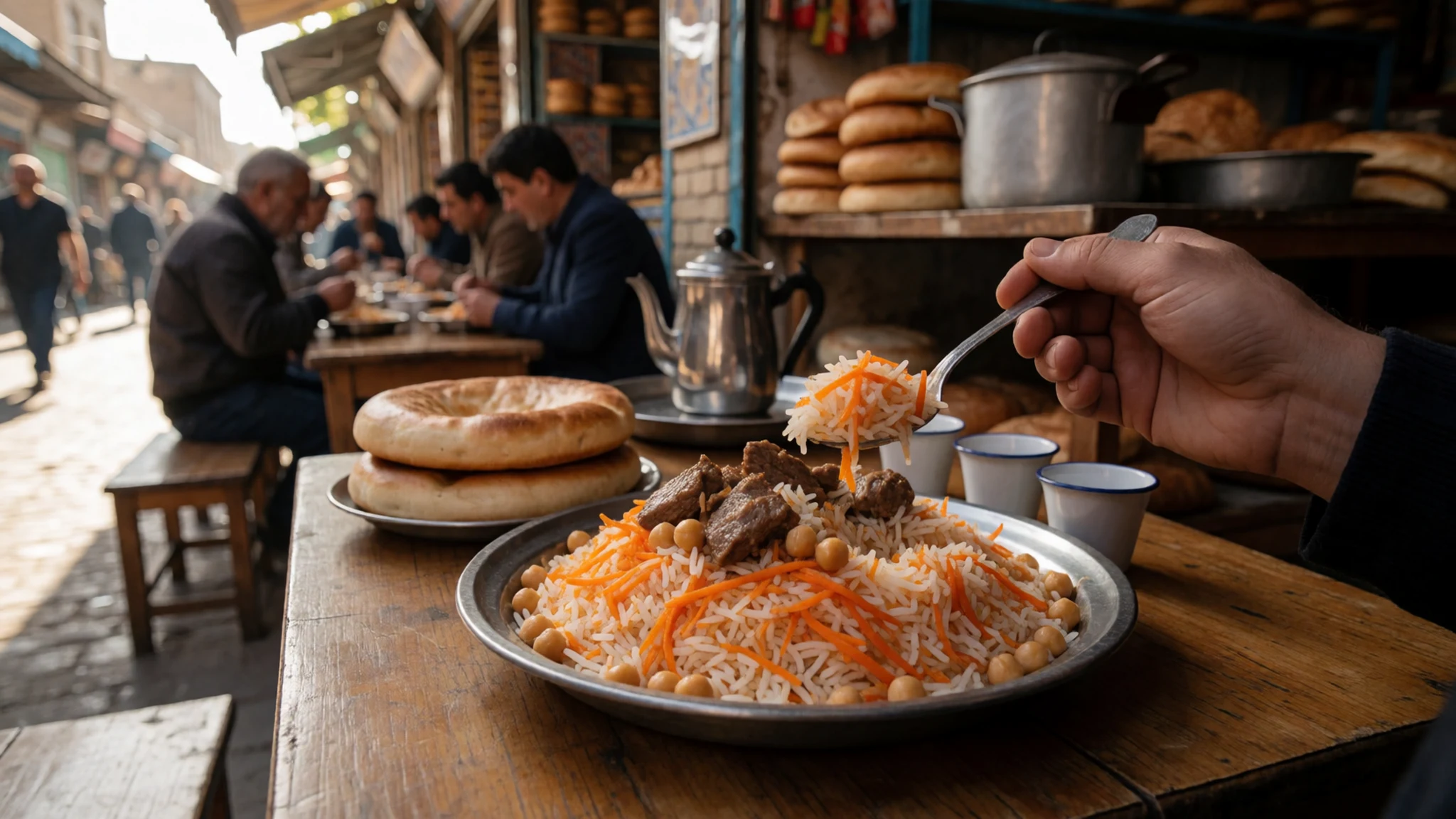
- Qurutob — Neighbourhood chaikhonas
Qurutob is the dish Istaravshan eats when the afternoon is hot. Fatir bread is torn into a bowl, dressed with oil, herbs and salty qurut or yoghurt, and finished by hand. Neighbourhood chaikhonas serve it to regulars. It is cool, sharp and filling.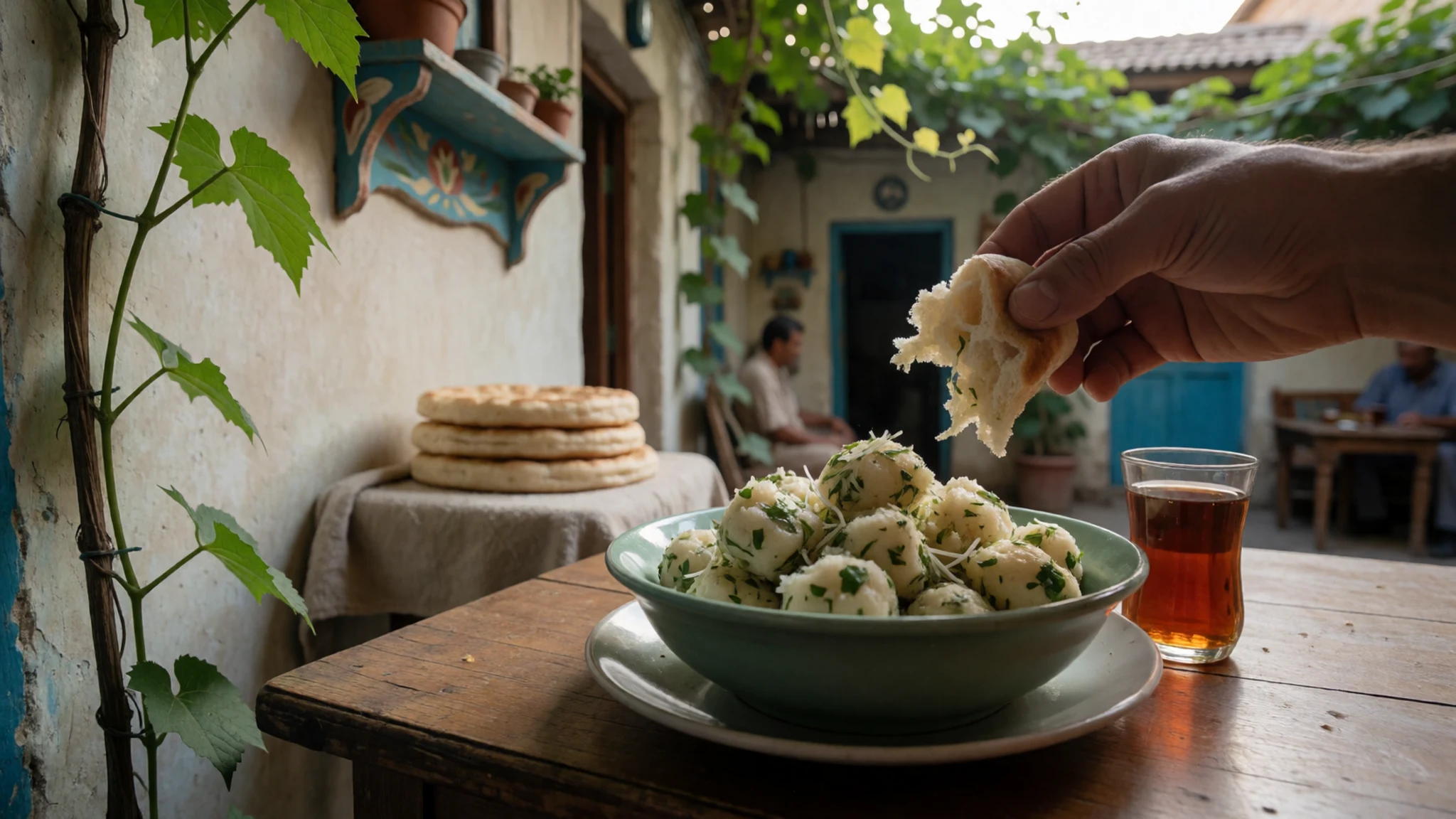
- Sambusa — Tandyr bakeries and stalls along the bazaar
Sambusa in Istaravshan are baked parcels, most often mutton and onion, turned out of tandyr bakeries and from stalls along the bazaar. The right time is morning or early afternoon, while the batch is still warm. They are market food, eaten with tea, standing or on a low bench. - Non — Bakery counters in the old town and the bazaar
Non is the round tandyr loaf Istaravshan sets beside every meal and sells on its own from bakery counters in the old town and the bazaar. The rim is thick, the centre stamped. Buy it by the piece on the way to a chaikhona if the only order is tea. - Shurbo — Plain eateries near the market
Shurbo is the soup Istaravshan's plain eateries near the market serve as a whole lunch. Lamb or beef shares the bowl with potato, carrot and chickpea, and non is there for dipping. It is hot, simple weekday food, and a sound order once the osh has run out.
Plan it
Best time. Spring and autumn are the comfortable seasons for walking Istaravshan's citadel and old town. High summer is hot and dusty, with little shade on Mug Teppe, and winter is cold enough that the lanes quieten early in the afternoon.
How long. 2–3
Getting there. Istaravshan is reached from Khujand, which has the nearest commercial airport. A shared taxi or a bus covers the last leg. From Dushanbe the usual approach is a flight to Khujand, or the long road over the mountains, and then that same local transfer.
Budget. low
Tips
- Climb Mug Teppe in the morning, before heat and haze settle on the hill.
- Carry cash for the bazaar, shared taxis and teahouses.
- Agree the taxi fare before the car moves.
- Wear shoes that come off easily at mosque doors and still cope with rough lanes.
- Take water in summer; the citadel path has little shade.
Etiquette
- Remove your shoes at Kok Gumbaz and at neighbourhood mosques where others have done so.
- Ask before you photograph people, above all stallholders and anyone at prayer.
- Keep shoulders and knees covered at religious sites.
- If tea is offered in a home, accept a bowl or decline gently.
Nearby
Sources
- Wikidata (Istaravshan) (CC0)
- Wikipedia: Istaravshan (CC BY-SA 4.0)
- Wikivoyage: Istaravshan (CC BY-SA 4.0)